
The German Uranium Miners’ Biobank—A Biobank for OMICs Radiation Research
by
 , , and
Maria Gomolka
1,*, 
Martin Bucher
1,
Lukas Duchrow
1,
Beate Hochstrat
1,
Dirk Taeger
2,
Georg Johnen
2 and
Simone Moertl
1 1
Federal Office for Radiation Protection, Department of Effects and Risks of Ionising and Non-Ionising Radiation, 85764 Oberschleissheim, Germany
2
Institute for Prevention and Occupational Medicine of the German Social Accident Insurance, Institute of the Ruhr University Bochum (IPA), 44789 Bochum, Germany
*
Author to whom correspondence should be addressed.
Radiation 2022, 2(1), 62-77; https://doi.org/10.3390/radiation2010005
Submission received: 9 December 2021
/
Revised: 5 January 2022
/
Accepted: 10 January 2022
/
Published: 13 January 2022
(This article belongs to the Special Issue Omics in Radiation Research)
Simple Summary
The uranium miners of the former German mining company “Wismut” (SDAG/SAG Wismut), with about 400,000 employees, represent one of the largest populations of radiation-exposed miners worldwide. A comprehensive bio- and databank of uranium miners was established at the Federal Office for Radiation Protection and is now available for molecular epidemiological research to link radiation-induced perturbations of biological pathways or processes and putative adverse outcome(s), e.g., by OMICs profiling at different biological organization levels. The bio- and databank includes biomaterial and data from more than 1000 individuals. Occupational radiation exposure and dust exposure was assessed over the lifetime working period by a comprehensive job exposure matrix. Biomaterial is available from blood as well as from formalin-fixed lung tissue from different groups, including healthy miners and lung cancer cases. Various experimental data on the OMIC level are also available for subsamples. Materials and anonymized data from this highly informative radiation exposure biobank can be accessed upon request. This report presents the current status of the first worldwide systematic German Uranium Miners’ Biobank.
Abstract
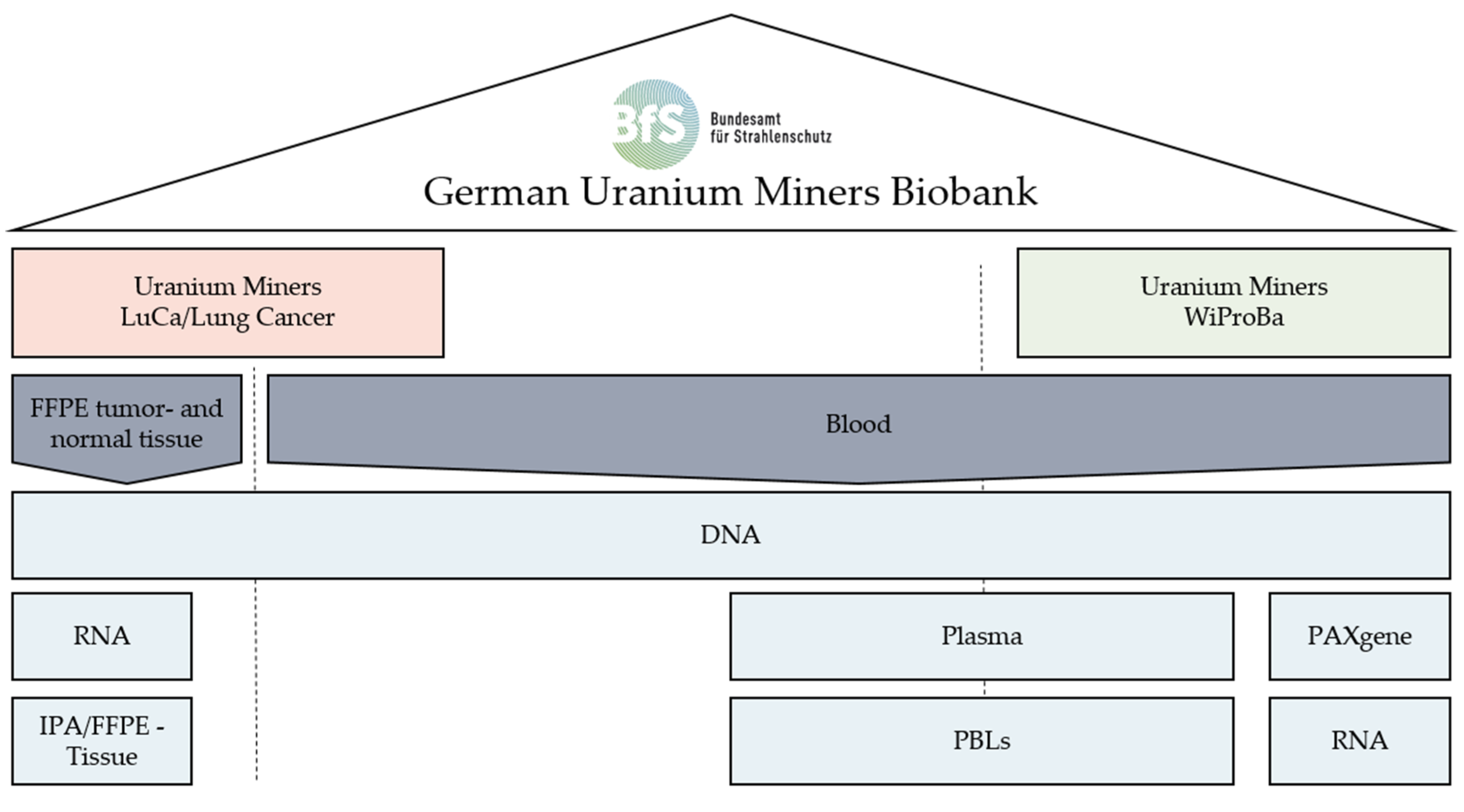
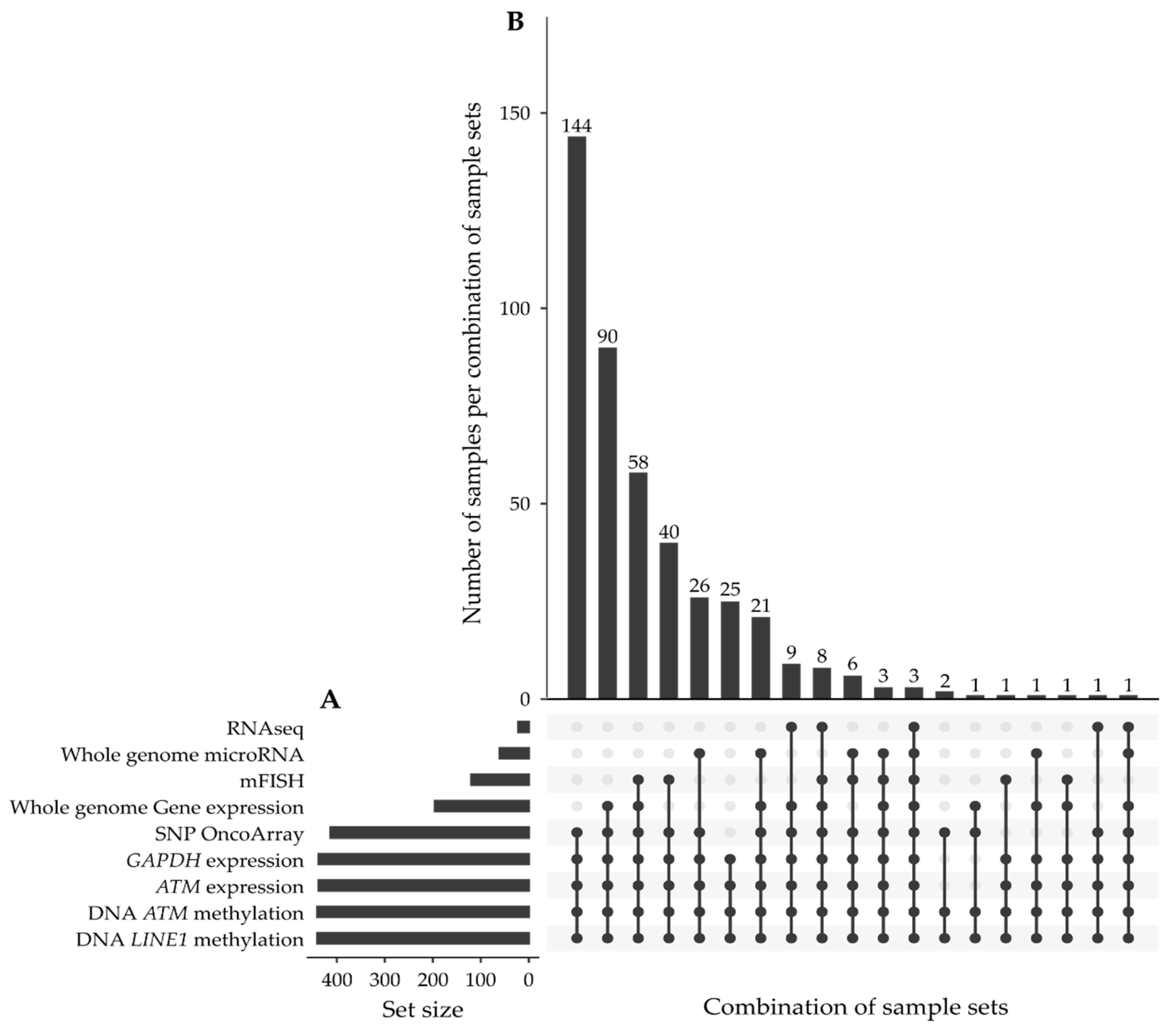
Systematic bio- and databanks are key prerequisites for modern radiation research to investigate radiation response mechanisms in the context of genetic, environmental and lifestyle-associated factors. This report presents the current status of the German Uranium Miners’ Biobank. In 2008, the bio- and databank was established at the Federal Office for Radiation Protection, and the sampling of biological materials from former uranium miners with and without lung cancer was initiated. For this purpose, various biological specimens, such as DNA and RNA, were isolated from blood samples as well as from formalin-fixed paraffin-embedded lung tissue. High-quality biomaterials suitable for OMICs research and the associated data on occupational radiation and dust exposure, and medical and lifestyle data from over 1000 individuals have been stored so far. Various experimental data, e.g., genome-wide SNPs, whole genome transcriptomic and miRNA data, as well as individual chromosomal aberration data from subgroups of biobank samples, are already available upon request for in-depth research on radiation-induced long-term effects, individual radiation susceptibility to lung cancer and radon-induced fingerprints in lung cancer. This biobank is the first systematic uranium miners´ biobank worldwide that is suitable for OMICs research on radiation-exposed workers. It offers the opportunity to link radiation-induced perturbations of biological pathways or processes and putative adverse outcome(s) by OMICs profiling at different biological organization levels.
Keywords:
biobank; radon; uranium; mining; occupational; exposure; radiation effects; health effects; high and low doses; long-term effects