
An Integrated Climate–Spatial Analytical Framework for Assessing 3S Tourism Resilience on the Mediterranean Island of Vis, Croatia


Abstract
1. Introduction
- RQ1: How have observed and projected changes in bioclimatic suitability (CIT 3S and PET) altered the temporal distribution of ideal and acceptable conditions for beach tourism on the Island of Vis, and what implications do these shifts hold for the traditional peak-season tourism model?
- RQ2: How does spatial integration of bioclimatic suitability assessments (CIT and PET) with LU/LC analysis enable the identification of macrozones with different vulnerabilities and adaptive capacities, and what specific diversification and spatial adaptation strategies can be applied for the Island of Vis?
- RQ3: What theoretical and methodological prerequisites are needed to transfer the integrated climate–spatial analytical framework to other small Mediterranean island destinations, and under what conditions does the framework retain validity and utility?
2. Materials and Methods
2.1. Data Description
2.2. Climate Index for Tourism (CIT) Assessment
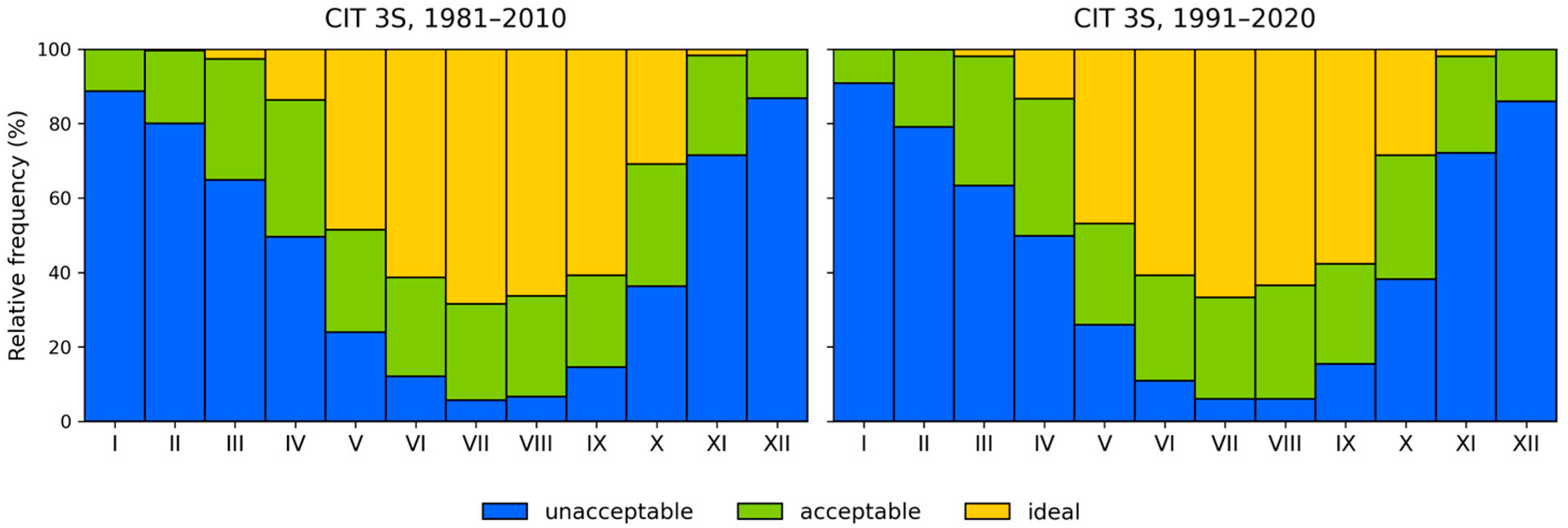
- Unacceptable—climatic conditions limiting tourism activities (CIT = 1, 2, 3);
- Acceptable—conditions allowing tourism participation (CIT = 4, 5);
- Ideal—optimal climatic conditions for tourism (CIT = 6, 7).
2.3. Methodological Framework for LU/LC Data Analysis
3. Results
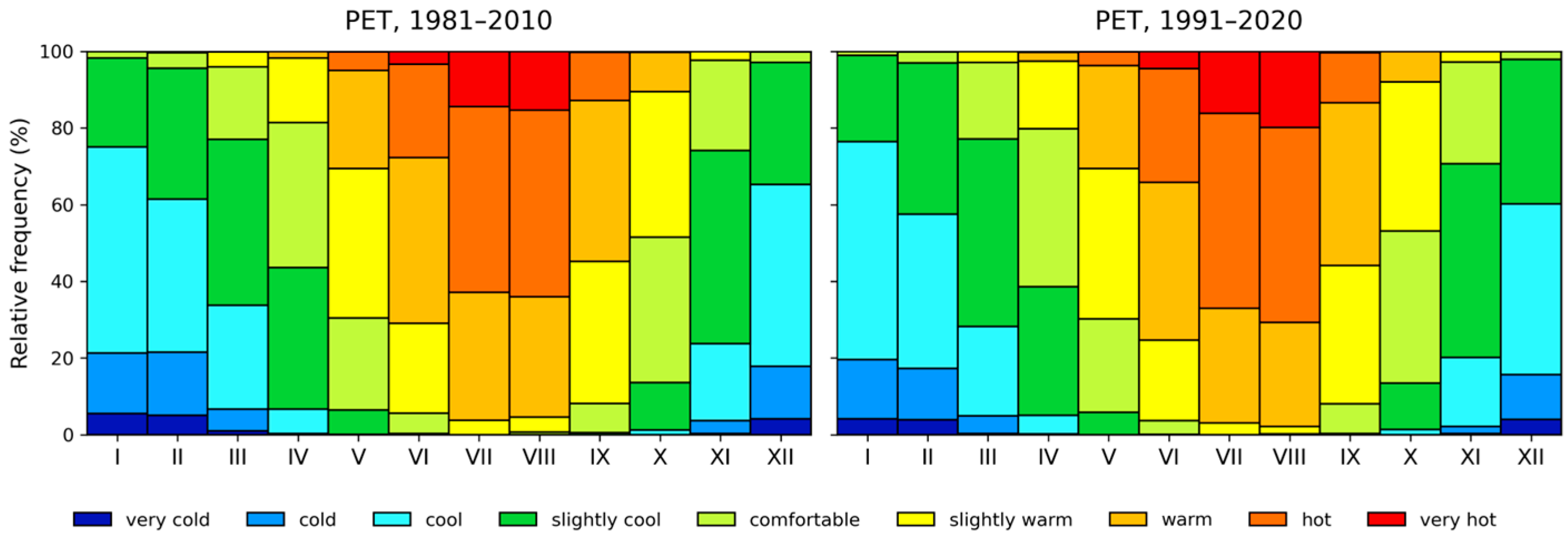
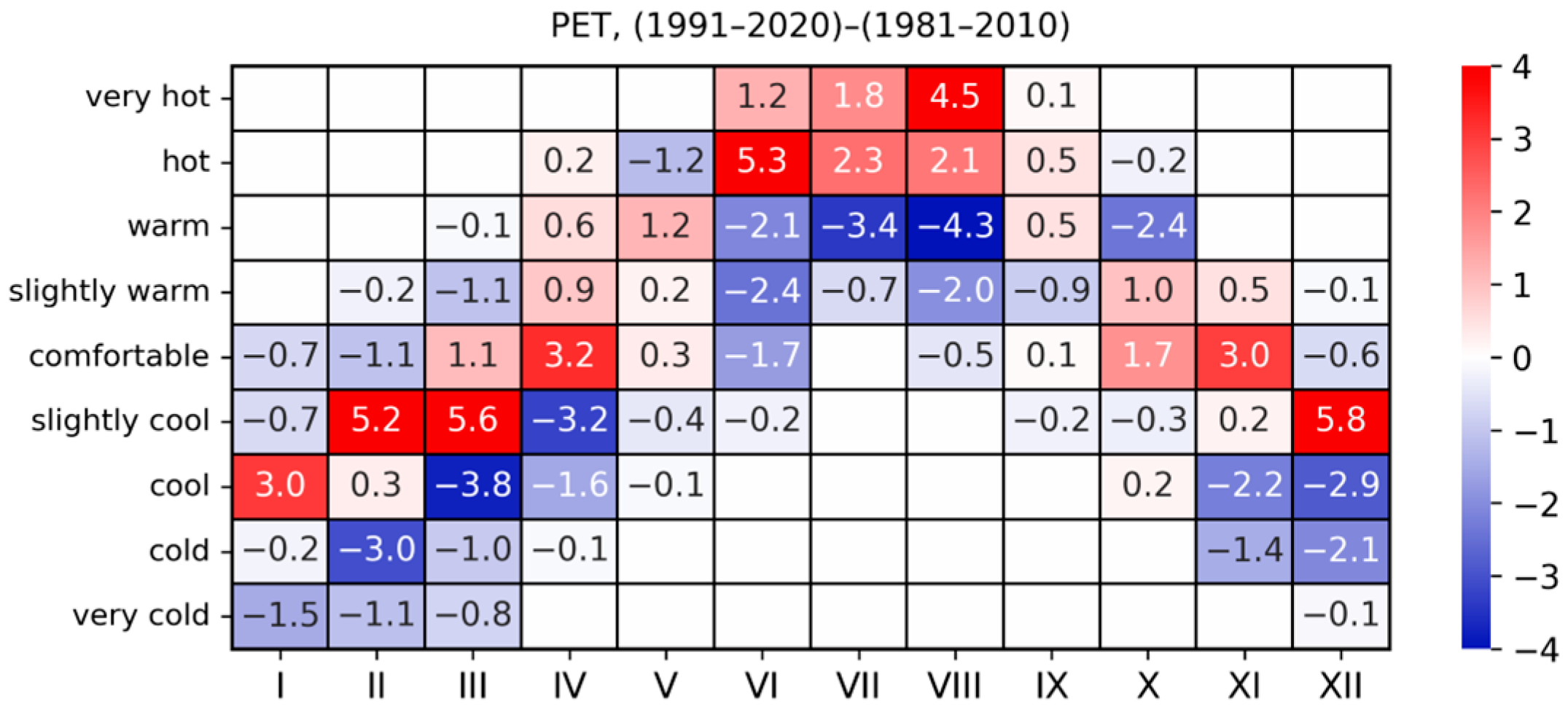
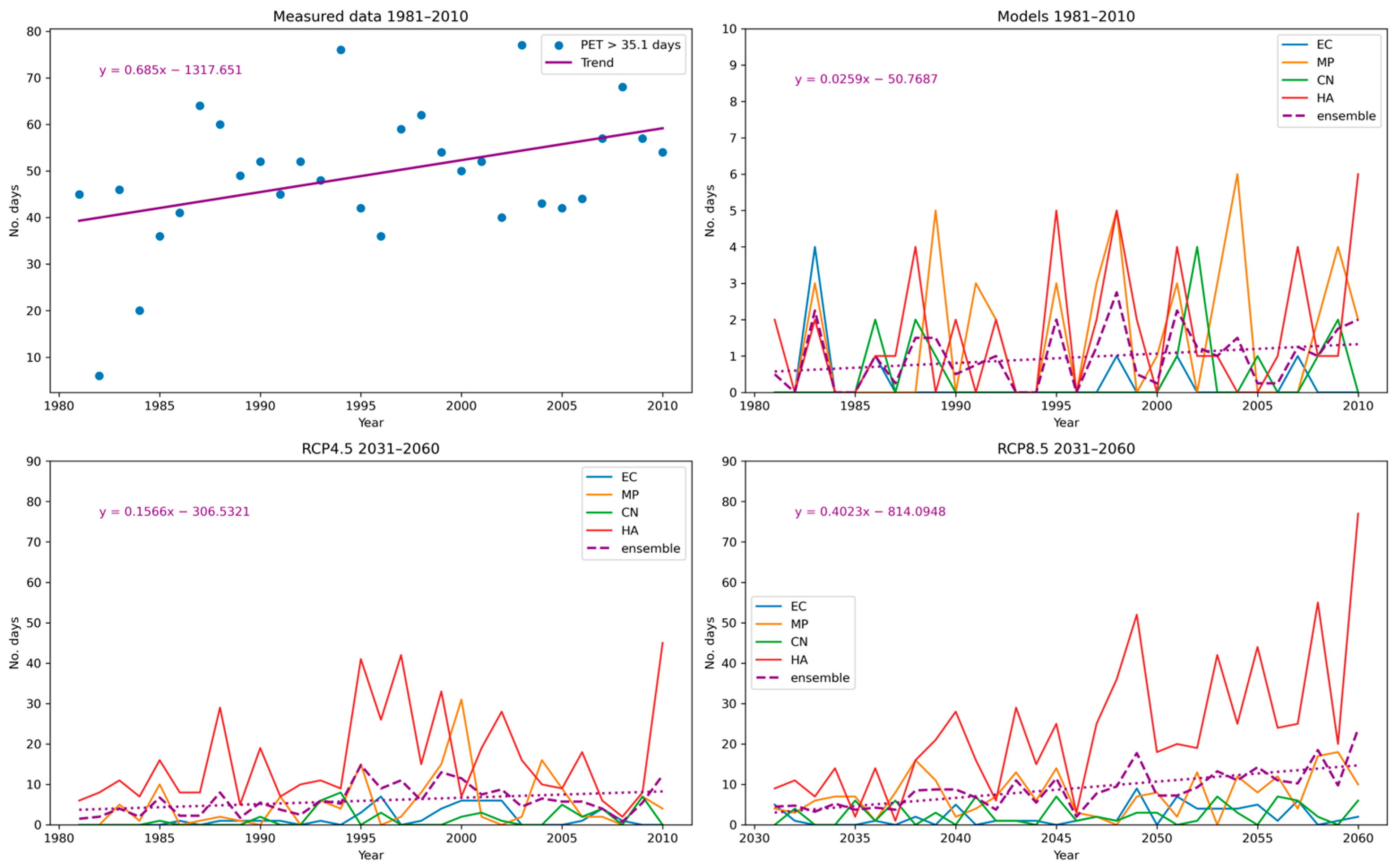
3.1. Thermal Stress Assessment Based on Measured Data
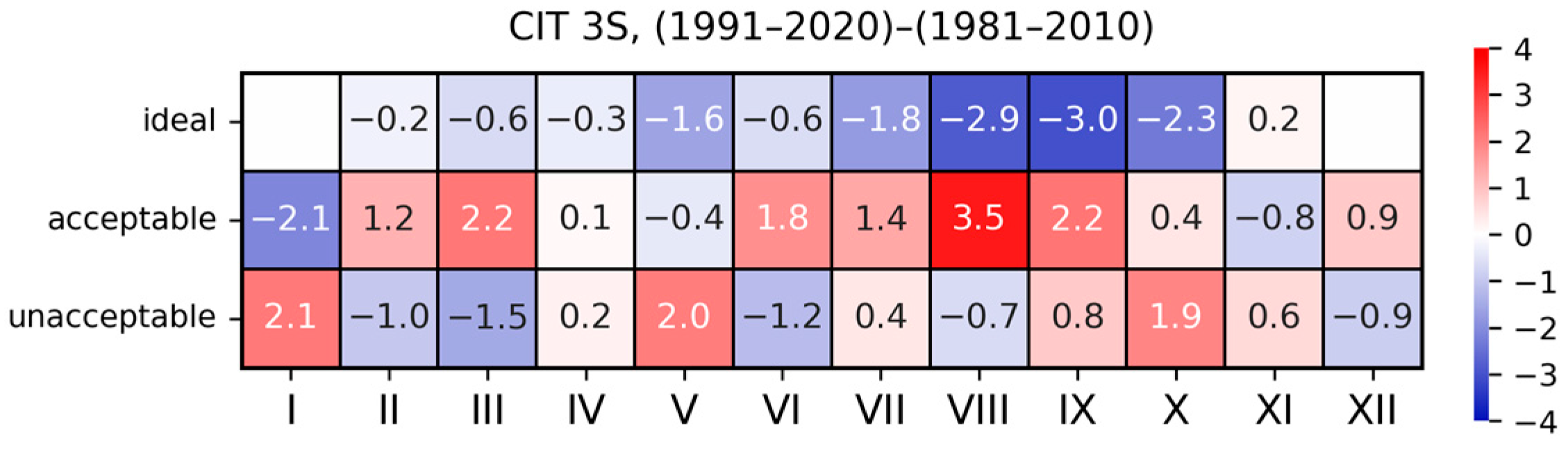
3.2. Assessment of the Touristic Potential for Sun–Sea–Sand Climate Index Based on Observational Data
3.3. Results of the Regional Multi-Model Ensemble
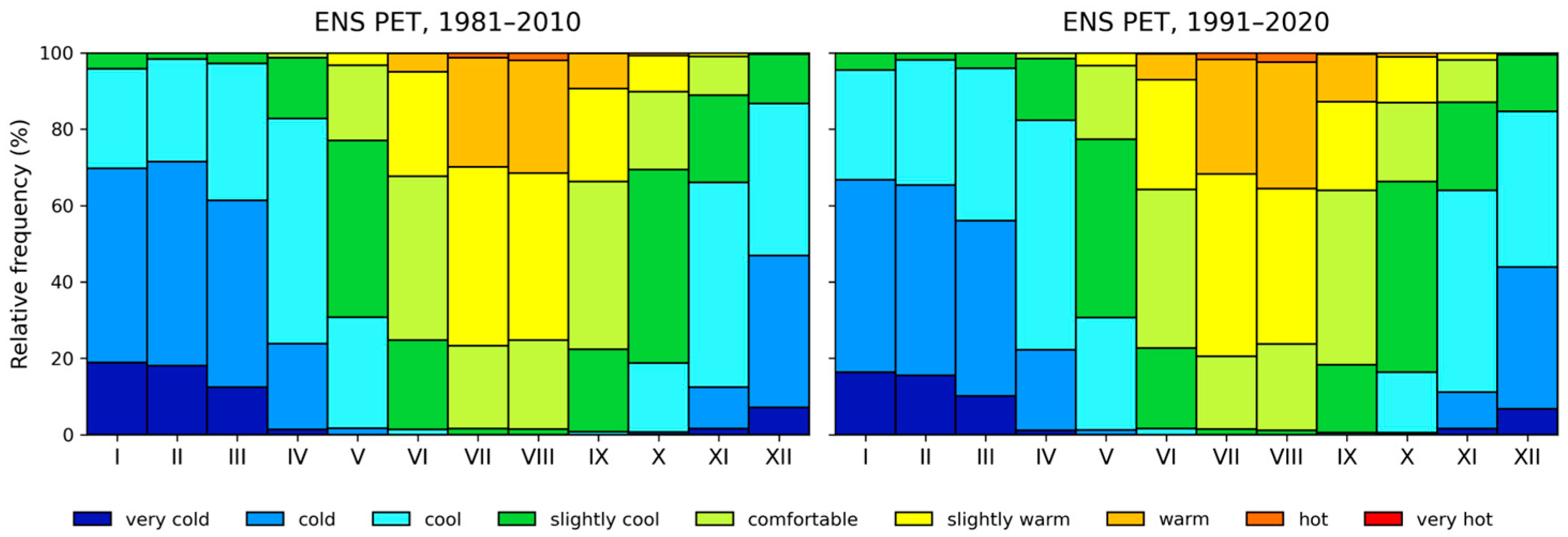
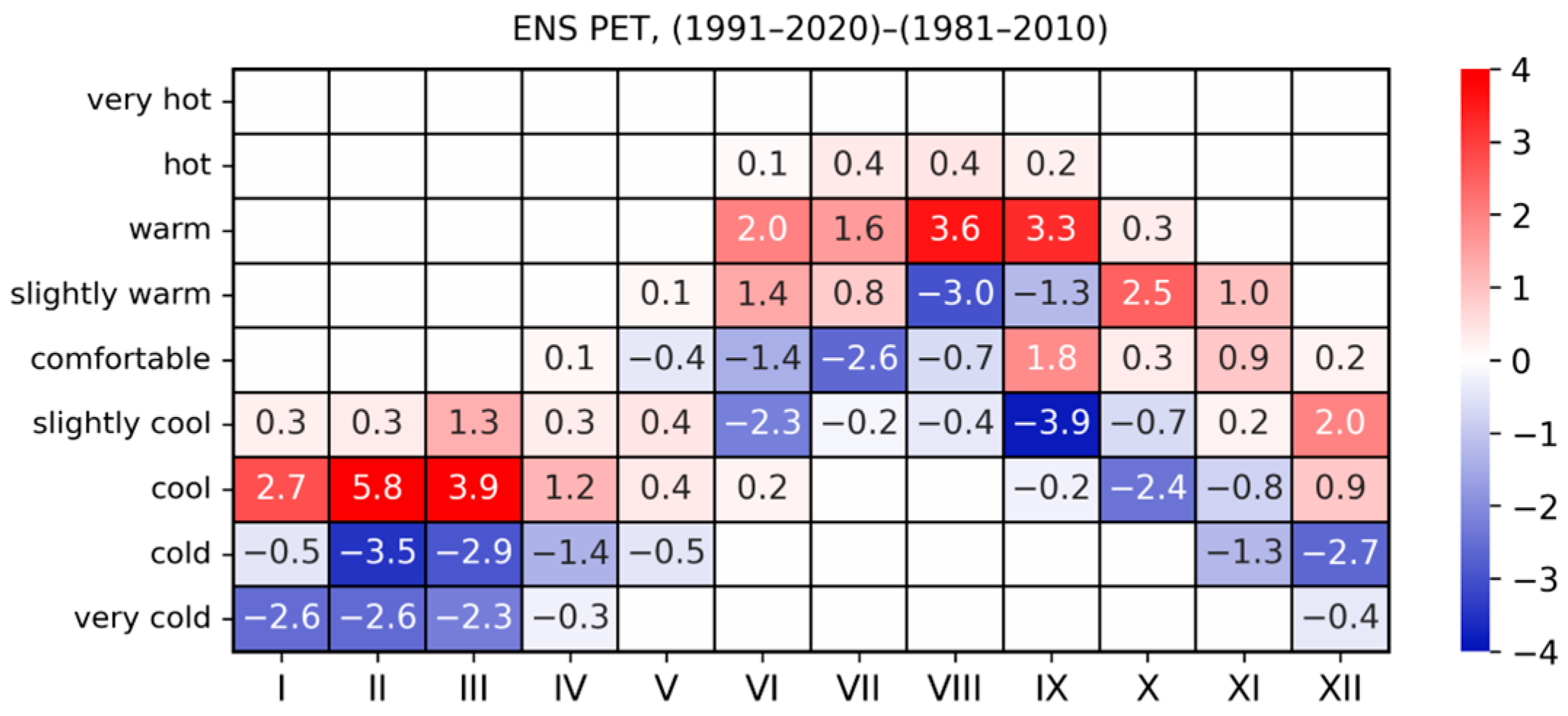
3.3.1. Historical Thermal Stress Assessment Based on Ensemble
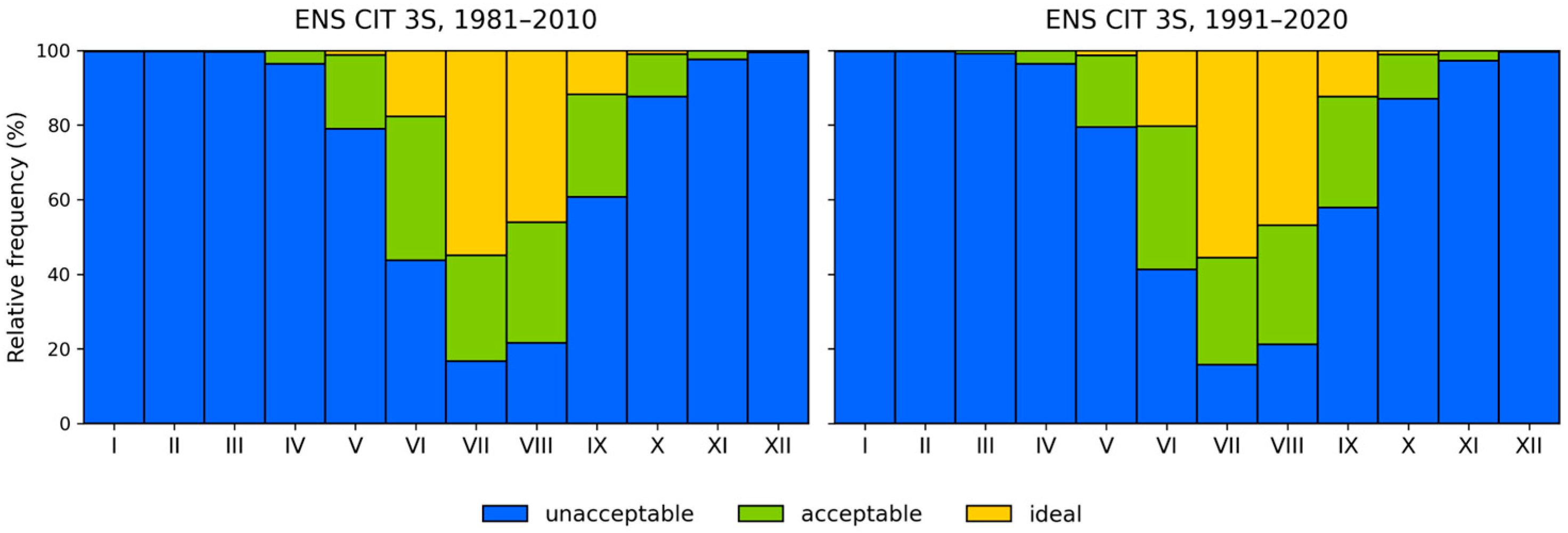
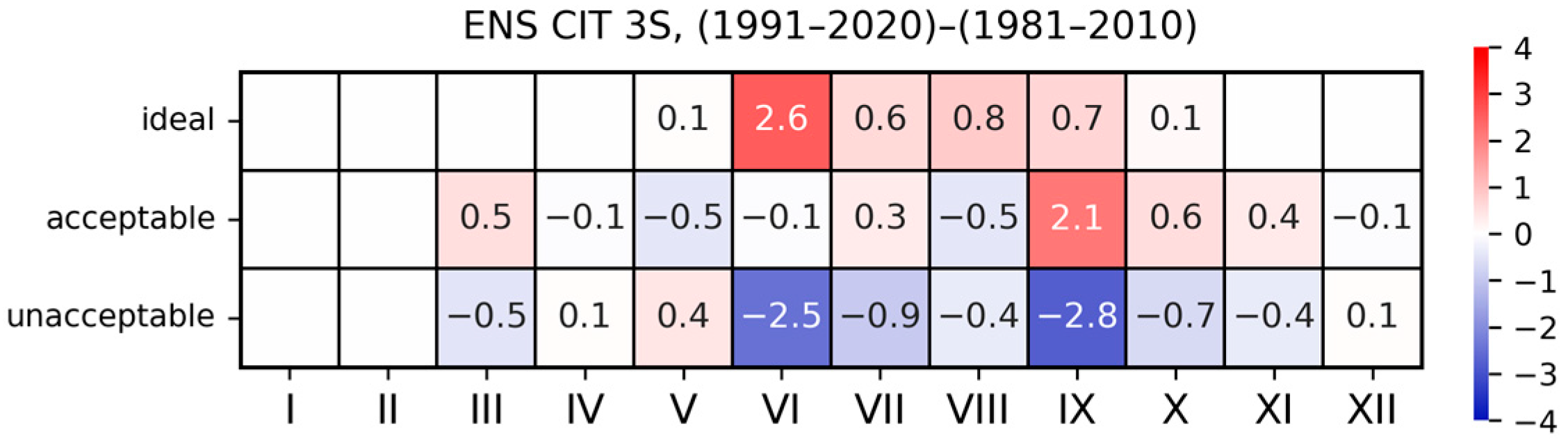
3.3.2. Assessment of the Historical Touristic Potential for CIT 3S Based on Ensemble
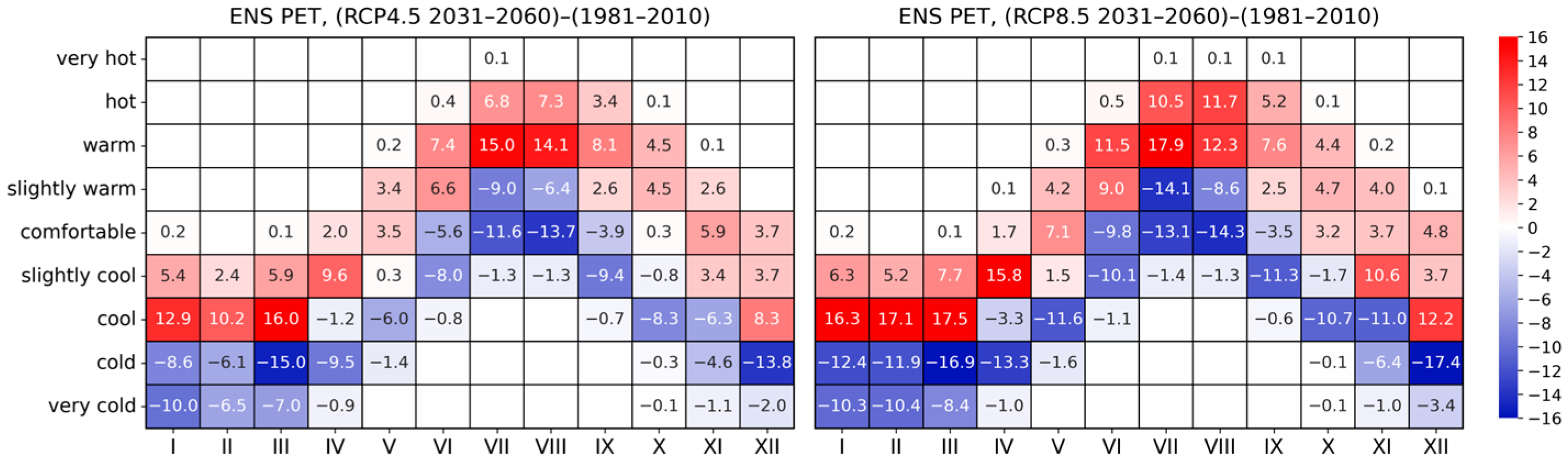
3.3.3. Future Thermal Stress Assessment Based on Ensemble
3.3.4. Assessment of the Future Touristic Potential for CIT 3S Based on Ensemble
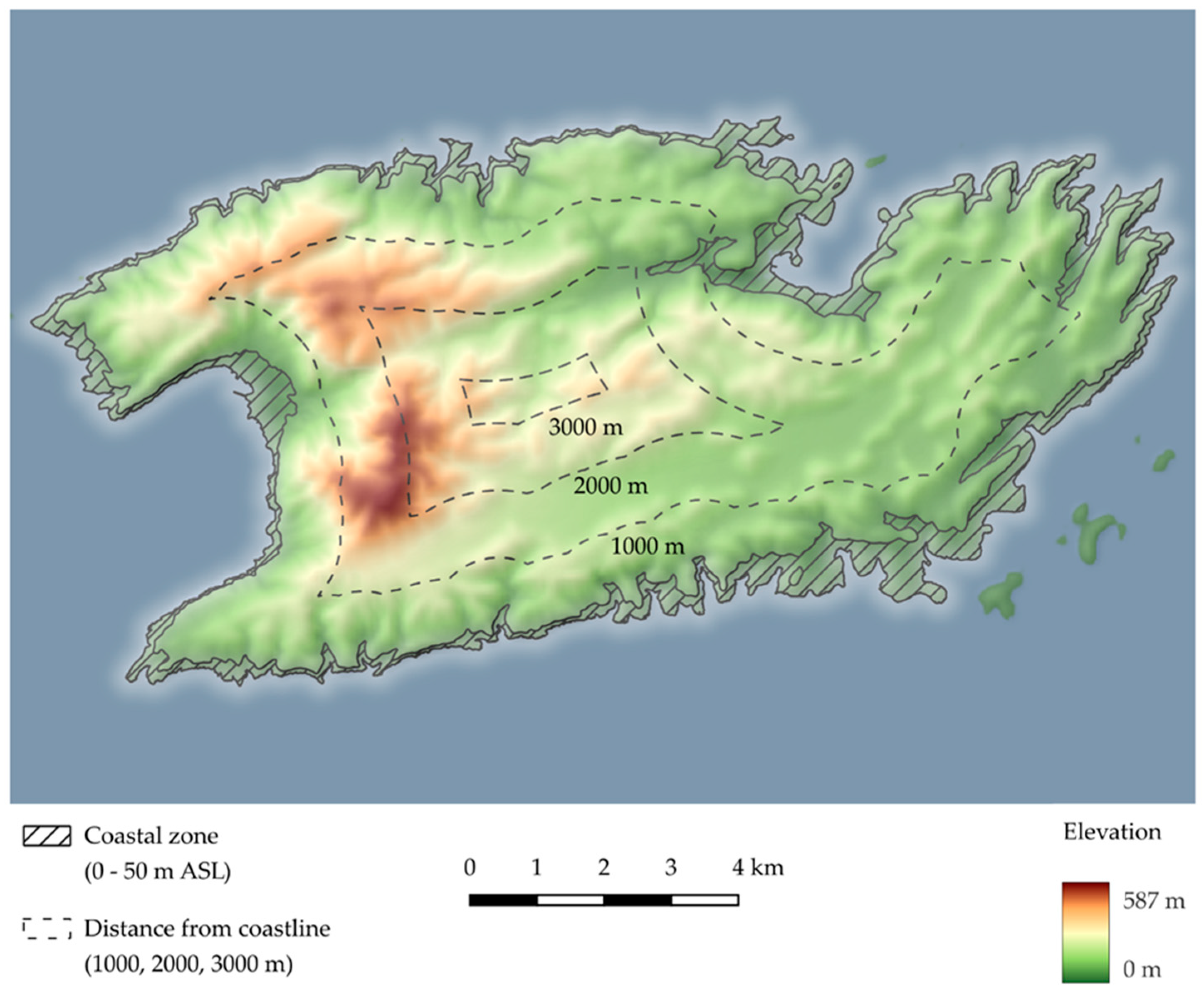
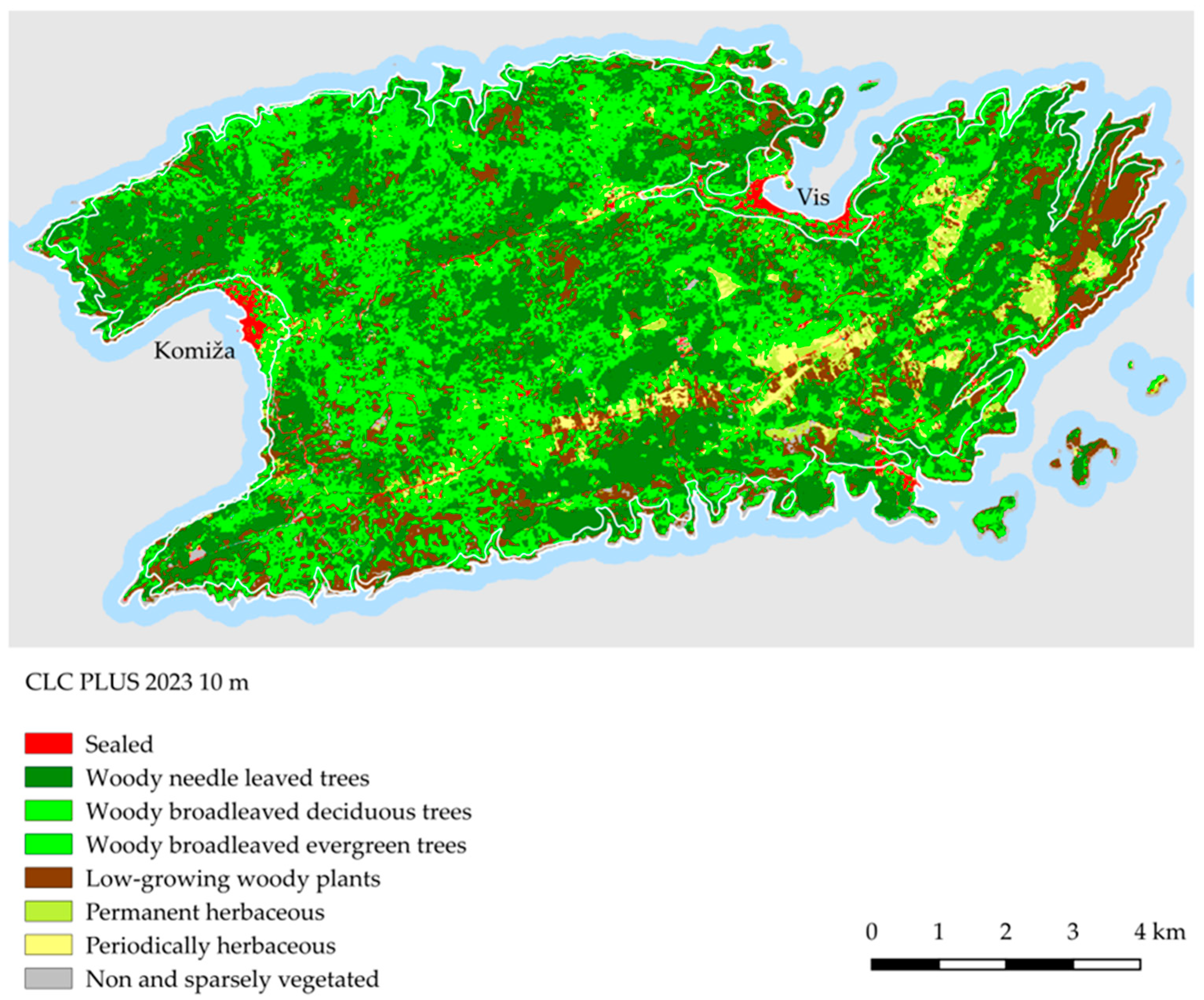
3.4. Results of LU/LC Analysis
4. Discussion
4.1. Temporal Shifts in Bioclimatic Suitability of 3S Tourism
4.2. Spatial Heterogeneity, LU/LC Patterns and Differential Vulnerability
4.3. Resilience, Diversification, and the Transition Beyond 3S Dependence
4.4. Framework Transferability, Methodological Considerations and Limitations
5. Conclusions
Author Contributions
Funding
Institutional Review Board Statement
Informed Consent Statement
Data Availability Statement
Acknowledgments
Conflicts of Interest
References
- Agapito, M., Herceg-Bulić, I., & Güttler, I. (2023). Expected heat load of Dubrovnik, Osijek, Rijeka, Zadar and Zagreb based on the projections of regional climate models. Geofizika, 40(2), 139–159. [Google Scholar] [CrossRef] [Scilit]
- Agulles, M., Melo-Aguilar, C., & Jordá, G. (2022). Risk of loss of tourism attractiveness in the Western Mediterranean under climate change. Frontiers in Climate, 4, 1019892. [Google Scholar] [CrossRef] [Scilit]
- Amelung, B., & Viner, D. (2006). Mediterranean tourism: Exploring the future with the tourism climatic index. Journal of Sustainable Tourism, 14(4), 349–366. [Google Scholar] [CrossRef] [Scilit]
- Amengual, A., Homar, V., Romero, R., Alonso, S., & Ramis, C. (2011). A statistical adjustment of regional climate model outputs to local scales: Application to Platja de Palma, Spain. Journal of Climate, 25(3), 939–957. [Google Scholar] [CrossRef] [Scilit]
- Bafaluy, D., Amengual, A., Romero, R., & Homar, V. (2014). Present and future climate resources for various types of tourism in the bay of Palma, Spain. Regional Environmental Change, 14(5), 1995–2006. [Google Scholar] [CrossRef] [Scilit]
- Belušić, A., Prtenjak, M. T., Güttler, I., Ban, N., Leutwyler, D., & Schär, C. (2018). Near-surface wind variability over the broader Adriatic region: Insights from an ensemble of regional climate models. Climate Dynamics, 50(11–12), 4455–4480. [Google Scholar] [CrossRef] [Scilit]
- Bukvic, A., Rohat, G., Apotsos, A., & de Sherbinin, A. (2020). A systematic review of coastal vulnerability mapping. Sustainability, 12(7), 2822. [Google Scholar] [CrossRef] [Scilit]
- Cabral, J. S., Mendoza-Ponce, A., da Silva, A. P., Oberpriller, J., Mimet, A., Kieslinger, J., Berger, T., Blechschmidt, J., Brönner, M., Classen, A., Fallert, S., Hartig, F., Hof, C., Hoffmann, M., Knoke, T., Krause, A., Lewerentz, A., Pohle, P., Raeder, U., … Zurell, D. (2024). The road to integrate climate change projections with regional land-use–biodiversity models. People and Nature, 6, 716–741. [Google Scholar] [CrossRef] [Scilit]
- CLC Backbone. (2023). European Union’s copernicus land monitoring service information. Available online: https://sdi.eea.europa.eu/catalogue/srv/api/records/b0bd43c6-1fa1-4d88-9c45-98b13a95d0b2 (accessed on 5 April 2026). [CrossRef]
- Copernicus Climate Change Service & World Meteorological Organization. (2024). European state of the climate 2024. Available online: https://climate.copernicus.eu/ESOTC/2024 (accessed on 5 April 2026).
- Croatian Bureau of Statistics. (2022). Population census 2021—Key results. Available online: https://dzs.gov.hr/u-fokusu/popis-2021/88 (accessed on 5 April 2026).
- Croatian Bureau of Statistics. (2025). Tourist arrivals and nights in commercial accommodation establishments, 2024. Available online: https://podaci.dzs.hr (accessed on 5 April 2026).
- Cvitan, L. (2024). Klimatski potencijal turizma Malog Lošinja u dva preklapajuća klimatska razdoblja [Climate tourism potential of Mali Lošinj in two overlapping climate periods]. Hrvatski Meteorološki Časopis, 56(56), 83–103. [Google Scholar] [CrossRef] [Scilit]
- Čavlek, N., Cooper, C., Krajinović, V., Srnec, L., & Zaninović, K. (2019). Destination climate adaptation. Journal of Hospitality & Tourism Research, 43(2), 314–322. [Google Scholar] [CrossRef] [Scilit]
- Davenport, J., & Davenport, J. L. (2006). The impact of tourism and personal leisure transport on coastal environments: A review. Estuarine, Coastal and Shelf Science, 67(1–2), 280–292. [Google Scholar] [CrossRef] [Scilit]
- de Freitas, C. R. (2003). Tourism climatology: Evaluating environmental information for decision making and business planning in the recreation and tourism sector. International Journal of Biometeorology, 48(1), 45–54. [Google Scholar] [CrossRef] [Scilit]
- de Freitas, C. R., Scott, D., & McBoyle, G. (2008). A second generation climate index for tourism (CIT): Specification and verification. International Journal of Biometeorology, 52(5), 399–407. [Google Scholar] [CrossRef] [Scilit] [PubMed]
- Demiroğlu, O. C., Saygili-Araçi, F. S., Paçal, A., Hall, C. M., & Kurnaz, M. L. (2020). Future holiday climate index (HCI) performance of urban and beach destinations in the Mediterranean. Atmosphere, 11(9), 911. [Google Scholar] [CrossRef] [Scilit]
- Denamiel, C., Pranić, P., Ivanković, D., Tojčić, I., & Vilibić, I. (2021). Performance of the adriatic sea and coast (AdriSC) climate component—A COAWST V3.3-based coupled atmosphere–ocean modelling suite: Atmospheric dataset. Geoscientific Model Development, 14(7), 3995–4017. [Google Scholar] [CrossRef] [Scilit]
- Dubois, G., Ceron, J.-P., Gössling, S., & Hall, C. M. (2016). Weather preferences of French tourists: Lessons for climate change impact assessment. Climatic Change, 136(2), 339–351. [Google Scholar] [CrossRef] [Scilit]
- European Environment Agency. (2023). Copernicus land monitoring service: CORINE land cover (CLC) 2023 [Data set]. Copernicus Land Monitoring Service. Available online: https://land.copernicus.eu/ (accessed on 23 March 2026).
- Folke, C. (2006). Resilience: The emergence of a perspective for social–ecological systems analyses. Global Environmental Change, 16(3), 253–267. [Google Scholar] [CrossRef] [Scilit]
- Folke, C., Carpenter, S. R., Walker, B., Scheffer, M., & Chapin, T. (2010). Resilience thinking: Integrating resilience, adaptability and transformability. Ecology and Society, 15(4), 20. [Google Scholar] [CrossRef] [Scilit]
- García, D. H., Rezapouraghdam, H., Hall, C. M., Karatepe, O. M., & Koupaei, S. N. (2025). Spatio-temporal variability of the earth’s surface temperature and the changes in land user/land cover: Implications for sustainable tourism development. Journal of Policy Research in Tourism, Leisure and Events, 17(2), 557–584. [Google Scholar] [CrossRef] [Scilit]
- Gössling, S., Balas, M., Mayer, M., & Sun, Y.-Y. (2023). A review of tourism and climate change mitigation: The scales, scopes, stakeholders and strategies of carbon management. Tourism Management, 95, 104681. [Google Scholar] [CrossRef] [Scilit]
- Grofelnik, H., & Maradin, M. (2023). Challenges of the water supply of Croatian islands in conditions of climate change and tourism growth. Geoadria, 28, 143–172. [Google Scholar] [CrossRef] [Scilit]
- Hall, C. M., Gössling, S., & Scott, D. (Eds.). (2015). The Routledge handbook of tourism and sustainability. Routledge. [Google Scholar] [CrossRef] [Scilit]
- Höppe, P. (1993). Heat balance modelling. Experientia, 49(9), 741–746. [Google Scholar] [CrossRef] [Scilit]
- Hrvatsko Planinarsko Društvo (HPD), Hum. (2026). O nama [About us]. Available online: https://hpd-hum.hr/onama (accessed on 15 January 2026).
- Intergovernmental Panel on Climate Change. (2023). Climate change 2023 synthesis report: Contribution of working groups I, II and III to the sixth assessment report of the intergovernmental panel on climate change (pp. 35–115). IPCC. [Google Scholar] [CrossRef] [Scilit]
- Kotlarski, S., Keuler, K., Christensen, O. B., Colette, A., Déqué, M., Gobiet, A., Goergen, K., Jacob, D., Lüthi, D., van Meijgaard, E., Nikulin, G., Schär, C., Teichmann, C., Vautard, R., Warrach-Sagi, K., & Wulfmeyer, V. (2014). Regional climate modeling on European scales: A joint standard evaluation of the EURO-CORDEX RCM ensemble. Geoscientific Model Development, 7(4), 1297–1333. [Google Scholar] [CrossRef] [Scilit]
- Kotsias, G., & Lolis, C. J. (2025). Air temperature extremes in the Mediterranean region (1940–2024): Synoptic patterns and trends. Atmosphere, 16(7), 852. [Google Scholar] [CrossRef] [Scilit]
- Lionello, P., Abrantes, F., Gacic, M., Planton, S., Trigo, R., & Ulbrich, U. (2014). The climate of the Mediterranean region: Research progress and climate change impacts. Regional Environmental Change, 14(5), 1679–1684. [Google Scholar] [CrossRef] [Scilit]
- Lionello, P., & Scarascia, L. (2018). The relation between climate change in the Mediterranean region and global warming. Regional Environmental Change, 18(5), 1481–1493. [Google Scholar] [CrossRef] [Scilit]
- Lobeto, H., Semedo, A., Lemos, G., Dastgheib, A., Menéndez, M., Ranasinghe, R., & Bidlot, J.-R. (2024). Global coastal wave storminess. Scientific Reports, 14, 3726. [Google Scholar] [CrossRef] [Scilit] [PubMed]
- Malinović-Milićević, S., Micić, J., Denda, S., Popović, L., & Radovanović, M. (2025). Intensification of thermal risk in a changing climate: Findings from prominent tourism destinations along the eastern Adriatic coast. International Journal of Biometeorology, 69, 157–175. [Google Scholar] [CrossRef] [Scilit]
- Matzarakis, A. (2007). Climate, thermal comfort and tourism. In B. Amelung, K. Blazejczyk, & A. Matzarakis (Eds.), Climate change and tourism: Assessment and coping strategies (pp. 139–154). Maastricht–Warsaw–Freiburg. [Google Scholar]
- Matzarakis, A. (2013). Transferring climate information for application and planning: The climate-tourism/transfer-information-scheme. In C. Helmis, & P. Nastos (Eds.), Advances in meteorology, climatology and atmospheric physics [Springer Atmospheric Sciences]. Springer. [Google Scholar] [CrossRef] [Scilit]
- Matzarakis, A., & Amelung, B. (2008). Physiological equivalent temperature as indicator for impacts of climate change on thermal comfort of humans. In M. C. Thomson, R. Garcia-Herrera, & M. Beniston (Eds.), Seasonal forecasts, climatic change and human health (pp. 161–172). Springer. [Google Scholar] [CrossRef] [Scilit]
- Matzarakis, A., & Mayer, H. (1996). Another kind of environmental stress: Thermal stress. WHO Newsletter, 18, 7–10. [Google Scholar]
- Matzarakis, A., Mayer, H., & Iziomon, M. G. (1999). Applications of a universal thermal index: Physiological equivalent temperature. International Journal of Biometeorology, 43(2), 76–84. [Google Scholar] [CrossRef] [Scilit]
- McLaughlin, S., & Cooper, J. A. G. (2010). A multi-scale coastal vulnerability index: A tool for coastal managers? Environmental Hazards, 9(3), 233–248. [Google Scholar] [CrossRef] [Scilit]
- MedECC. (2024). Climate and environmental coastal risks in the Mediterranean (S. Djoundourian, P. Lionello, M. C. Llasat, J. Guiot, W. Cramer, F. Driouech, J. C. Gattacceca, & K. Marini, Eds.). MedECC Secretariat. [Google Scholar] [CrossRef]
- Monioudi, I. N., Velegrakis, A. F., Chatzistratis, D., Vousdoukas, M. I., Savva, C., Wang, D., Bove, G., Mentaschi, L., Paprotny, D., Morales-Nápoles, O., Chatzipavlis, A. E., Hasiotis, T., & Manoutsoglou, E. (2023). Climate change-induced hazards on touristic island beaches: Cyprus, Eastern Mediterranean. Frontiers in Marine Science, 10, 1188896. [Google Scholar] [CrossRef] [Scilit]
- Nastos, P. T., Polychroni, I. D., Kapsomenakis, J., Solomos, S., & Zerefos, C. S. (2023). Bioclimatic Change Impacts on Tourist Destinations in the Mediterranean, by Means of the Assessment of Human Thermal Perception. Environmental Sciences Proceedings, 26(1), 196. [Google Scholar] [CrossRef] [Scilit]
- Nguyen, T. T., Bonetti, J., Rogers, K., & Woodroffe, C. D. (2016). Indicator-based assessment of climate-change impacts on coasts: A review of concepts, methodological approaches and vulnerability indices. Ocean & Coastal Management, 123, 18–43. [Google Scholar] [CrossRef] [Scilit]
- Nicholls, R. J., & Cazenave, A. (2010). Sea-level rise and its impact on coastal zones. Science, 328(5985), 1517–1520. [Google Scholar] [CrossRef] [Scilit]
- Olya, H., & Alipour, H. (2015). Modeling tourism climate indices through fuzzy logic. Climate Research, 66, 49–63. [Google Scholar] [CrossRef] [Scilit]
- Papageorgiou, M. (2025). Spatial planning for tourism destinations resilient to climate change. Tourism and Hospitality, 6(1), 8. [Google Scholar] [CrossRef] [Scilit]
- Parete, G., Bruno, M. F., Calabrese, P., Carlucci, R., Chiarulli, M., D’Onghia, G., Fiore, A., Fratino, U., Longo, C., Longo, F., Scorrano, S., & Gentile, F. (2024). Climate impacts and adaptation strategies for coastal erosion, aquaculture, and tourism along the Adriatic side of Apulia region. Frontiers in Climate, 6, 1378253. [Google Scholar] [CrossRef] [Scilit]
- Perch-Nielsen, S. L., Amelung, B., & Knutti, R. (2010). Future climate resources for tourism in Europe based on the daily tourism climatic index. Climatic Change, 103(3–4), 363–381. [Google Scholar] [CrossRef] [Scilit]
- Reale, M., Giorgi, F., Solidoro, C., Di Biagio, V., Di Sante, F., Mariotti, L., Farneti, R., & Giorgi, F. (2020). The regional earth system model RegCM-ES: Evaluation of the Mediterranean climate and marine biogeochemistry. Journal of Advances in Modeling Earth Systems, 12, e2019MS001812. [Google Scholar] [CrossRef] [Scilit]
- Ruti, P. M., Somot, S., Giorgi, F., Dubois, C., Flaounas, E., Obermann, A., Dell’Aquila, A., Pisacane, G., Harzallah, A., Lombardi, E., Ahrens, B., Akhtar, N., Alias, A., Arsouze, T., Aznar, R., Bastin, S., Beranger, K., Brossier, C. L., Can, A., … Turuncoglu, U. U. (2016). Med-CORDEX initiative for Mediterranean climate studies. Bulletin of the American Meteorological Society, 97(7), 1187–1208. [Google Scholar] [CrossRef] [Scilit]
- Ružić, I., Dugonjić Jovančević, S., Benac, Č., & Krvavica, N. (2019). Assessment of the coastal vulnerability index in an area of complex geological conditions on the Krk Island, northeast Adriatic Sea. Geosciences, 9(5), 219. [Google Scholar] [CrossRef] [Scilit]
- Scott, D., Hall, C. M., & Gössling, S. (2019). Global tourism vulnerability to climate change. Annals of Tourism Research, 77, 49–61. [Google Scholar] [CrossRef] [Scilit]
- Scott, D., Rutty, M., Amelung, B., & Tang, M. (2016). An inter-comparison of the holiday climate index (HCI) and the tourism climate index (TCI) in Europe. Atmosphere, 7(6), 80. [Google Scholar] [CrossRef] [Scilit]
- Speranza, A. (2026). Long-term trend in temperature, precipitation and evapotranspiration in three small Mediterranean Italian islands: Pantelleria, Ponza and Ustica. Theoretical and Applied Climatology, 157, 54. [Google Scholar] [CrossRef] [Scilit]
- Tourist Board of Komiža. (2026). Beaches. Available online: https://www.tz-komiza.hr/beaches (accessed on 15 January 2026).
- Vargas-Pérez, V. A., Chica, M., León, C. J., & Cordón, Ó. (2023). Understanding the impact of climate change in European island tourism by agent-based simulations. SSRN. [Google Scholar] [CrossRef] [Scilit]
- Vautard, R., Gobiet, A., Jacob, D., Belda, M., Colette, A., Déqué, M., Fernández, J., García-Díez, M., Goergen, K., Güttler, I., Halenka, T., Karacostas, T., Katragkou, E., Keuler, K., Kotlarski, S., Mayer, S., van Meijgaard, E., Nikulin, G., Patarčić, M., … Teichmann, C. (2013). The simulation of European heat waves from an ensemble of regional climate models within the EURO-CORDEX project. Climate Dynamics, 41(9–10), 2555–2575. [Google Scholar] [CrossRef] [Scilit]
- Vis Archipelago UNESCO Global Geopark. (2019). Official website. Available online: https://www.geopark-vis.com/ (accessed on 5 April 2026).
- Vousdoukas, M. I., Ranasinghe, R., Mentaschi, L., Plomaritis, T. A., Athanasiou, P., Luijendijk, A., & Feyen, L. (2020). Sandy coastlines under threat of erosion. Nature Climate Change, 10, 260–263. [Google Scholar] [CrossRef] [Scilit]
- Walker, B., Holling, C. S., Carpenter, S. R., & Kinzig, A. (2004). Resilience, adaptability and transformability in social–ecological systems. Ecology and Society, 9(2), 5. [Google Scholar] [CrossRef] [Scilit]



| Thermal Sensation | PET (°C) |
|---|---|
| Very cold | <4 |
| Cold | 4–8 |
| Cool | 8–13 |
| Slightly cool | 13–18 |
| Comfortable | 18–23 |
| Slightly warm | 23–29 |
| Warm | 29–35 |
| Hot | 35–41 |
| Very hot | >41 |
| Coastal Zone (%) | Island of Vis (%) | CLC |
|---|---|---|
| 6.91 | 1.58 | Sealed |
| 26.36 | 35.45 | Woody needle leaved trees |
| none | ≈0 | Woody broadleaved deciduous trees |
| 32.03 | 38.54 | Woody broadleaved evergreen trees |
| 17.54 | 15.91 | Low-growing woody plants |
| 2.72 | 3.76 | Permanent herbaceous |
| 1.04 | 2.11 | Periodically herbaceous |
Disclaimer/Publisher’s Note: The statements, opinions and data contained in all publications are solely those of the individual author(s) and contributor(s) and not of MDPI and/or the editor(s). MDPI and/or the editor(s) disclaim responsibility for any injury to people or property resulting from any ideas, methods, instructions or products referred to in the content. |
© 2026 by the authors. Licensee MDPI, Basel, Switzerland. This article is an open access article distributed under the terms and conditions of the Creative Commons Attribution (CC BY) license.
Share and Cite
Zovko, M.; Valožić, L.; Srnec, L.; Kozarić, I.H.; Ivasić, S. An Integrated Climate–Spatial Analytical Framework for Assessing 3S Tourism Resilience on the Mediterranean Island of Vis, Croatia. Tour. Hosp. 2026, 7, 160. https://doi.org/10.3390/tourhosp7060160
Zovko M, Valožić L, Srnec L, Kozarić IH, Ivasić S. An Integrated Climate–Spatial Analytical Framework for Assessing 3S Tourism Resilience on the Mediterranean Island of Vis, Croatia. Tourism and Hospitality. 2026; 7(6):160. https://doi.org/10.3390/tourhosp7060160
Chicago/Turabian StyleZovko, Mira, Luka Valožić, Lidija Srnec, Ivana Havrle Kozarić, and Sara Ivasić. 2026. "An Integrated Climate–Spatial Analytical Framework for Assessing 3S Tourism Resilience on the Mediterranean Island of Vis, Croatia" Tourism and Hospitality 7, no. 6: 160. https://doi.org/10.3390/tourhosp7060160
APA StyleZovko, M., Valožić, L., Srnec, L., Kozarić, I. H., & Ivasić, S. (2026). An Integrated Climate–Spatial Analytical Framework for Assessing 3S Tourism Resilience on the Mediterranean Island of Vis, Croatia. Tourism and Hospitality, 7(6), 160. https://doi.org/10.3390/tourhosp7060160