1. Introduction
The world of tourism is also experiencing a significant change due to the increased influence of climate change, environmental degradation, and carbon emission on travel behaviour and destination management (
Dutta, 2024;
Paapa & Kambona, 2025). Greenhouse gas emissions related to the tourism industry include transportation, accommodation, and recreational activities (
Kanwal et al., 2024), which makes them one of the major sources of greenhouse gas emissions (
Sun et al., 2024), and as a result, stakeholders have been working towards ensuring sustainability-based practices. Low-carbon tourism has become one of the key frames in this matter, with its focus on minimizing environmental impacts by improving energy efficiency of accommodation, sustainable mobility, responsible consumption, and engagement in conservation-focused tourism (
Guo & Li, 2025;
Siddiqui & Sujood, 2025;
Y. Wang et al., 2024). This paper will particularly concentrate on low-carbon tourism, since it is a feasible and behaviour-oriented route by which sustainability targets can be implemented at the individual tourist level.
In this study, low-carbon tourism is theorized on the basis of four main dimensions, which include: (1) sustainable transportation, (2) environmentally friendly accommodation, (3) responsible consumption, and (4) involvement in environmental conservation. Although previous studies have already determined that these practices will increase the level of tourist satisfaction, it has not been adequately determined how such experiences lead to behavioural consequences in the long term, especially advocacy intentions. This disconnect is commonly known as the satisfaction–advocacy gap, and it indicates the paradox of tourists stating a high level of satisfaction with sustainable experiences and showing little interest in promoting or advocating these destinations (
Sbai & El Hassouni, 2023;
Bilynets et al., 2023).
The empirical environment in Thailand is an excellent one to study this phenomenon because it is both the world’s most sought-after tourist destination and a proactive implementation of sustainable tourism projects (
Manotungvorapun & Gerdsri, 2025). Among the destinations practicing eco-certification, community-based tourism, marine conservation, and green urban transport are Chiang Mai, Phuket, Krabi, and Bangkok, in accordance with the international standards of sustainability (
Chaiyakheta & Chaiyakot, 2025;
Truong et al., 2025;
Phongpradist, 2024). Nevertheless, regardless of such efforts, it is not clear to what degree low-carbon tourists become active supporters, which presents a theoretical and managerial challenge.
To solve this problem, the research combines the Leisure Constraints Theory (
Crawford et al., 1991) and sustainability communication views. The constraints are explored in three dimensions, namely structural, interpersonal, and intrapersonal, that can obstruct the involvement of tourists in low-carbon activities and shape their post-experience attitude (
Darcy et al., 2025). At the same time, the idea of sustainability communication is presented as a multidimensional construct that includes transparency, credibility, and emotional appeal, which might enhance trust and decrease perceptions of greenwashing and provoke feelings of environmental responsibility in tourists (
Alhomaid, 2025;
Li & Lange, 2022). The combination of these views aims to elucidate the effect of enabling and inhibiting factors together in creating satisfaction, advocacy, and behavioural intentions.
The originality of the study is its combined framework, which simultaneously investigates the limitations, sustainability communications, satisfaction, advocacy, and behaviour intentions in the particular environment of low-carbon tourism. As contrasted to the previous research, which is mainly concentrated on satisfaction or revisit intention alone, the given study specifically deals with the issue of the satisfaction and advocacy gap and examines the psychological and contextual processes behind it (
X. Chen & Cheng, 2023;
Liao et al., 2023;
H. Wang et al., 2025;
Rahmafitria & Kaswanto, 2024;
Suhartanto et al., 2026). Moreover, the study adds to the theoretical knowledge by applying Leisure Constraints Theory to sustainable tourism behaviour and establishing communication as a facilitating process between experience and advocacy.
Practically, the conclusions will offer practical information to the destination managers and policymakers in developing more practical sustainability plans. The study will aid in creating better destination branding, improved pro-environmental interaction, and sustainability in the low-carbon tourism industry by determining the aspects that transform contented tourists into active promoters.
2. Literature Review
Recent research on low-carbon tourism has laid more and more stress on the psychological, communicative, structural, and contextual forces that influence tourists in their pro-environmental behavioural intentions. In various geographical environments, research has always shown that multidimensional determinants of low-carbon tourism behaviour include emotions about the environment, communication policies, individual commitments, structural constraints, and destination-specific characteristics.
Some previous studies have emphasized the role of digital and communicative experiences in defining the behavioural intention of low-carbon tourism.
X. Chen and Cheng (
2023) developed a unified model that investigated the outcome of environment-friendly short video experiences on low-carbon tourism behavioural intention of consumers on technological, content, and social levels. Their results confirmed that communication exposure itself was not sufficient; rather, the internalization of the environmental values with emotionality was essential in the process of information translated into intention. Similarly,
Bhattacharyya et al. (
2024) studied the role of sustainability performance communication framing on the behavioural intentions of travellers. Their experimental findings found communicating sustainability performance to be more convincing than non-reporting, and enhancement framing to be more convincing than reduction framing. These results highlighted the strategic importance of communication transparency and framing effects as a fortifier of pro-environmental responses. In support of this,
H. Wang et al. (
2025) extended the same expectancy-confirmation theory to low-carbon travel methods and discovered that the expectation of outcomes made a considerable difference in the satisfaction and memory recall, which later informed the subsequent behavioural intentions. Collectively, these works hypothesized that the communication clarity, the alignment of expectations, and emotional involvement were key processes in low-carbon decision-making.
In addition to communication, personal values and green commitments also turned out to be great predictors of low-carbon travel behaviour.
Shie et al. (
2022) had already shown that personal green commitments had positive influences on low-carbon travel motivation and intent and negative effects on the cultivation of perceived constraints. Similarly, relying on the Theory of Planned Behaviour (TPB),
Liao et al. (
2023) established that subjective norms, behavioural attitude, perceived behavioural control, proactive personality, and perceived consumer effectiveness had a significant impact on predicting low-carbon travel intention.
Jieyao et al. (
2025) also combined TPB with the Theory of Interpersonal Behaviour and established the perceived usefulness, publicity, and education, infrastructure, policies, and perceived behavioural control as significant positive predictors of pro-environmental behavioural intention, and perceived risk was a significant negative predictor of intention. Research has also presented a relevant understanding of destination features and structural impediments to low-carbon tourism in the Thai context.
Janchai and Suvittawat (
2025) had already come up with a structural equation model based on TPB and consumer behaviour theory to test how tourists visiting Khaoyai National Park make decisions. They found that destination characteristics, novel market mix, and creative strategies were a major boost to the perceptions of low-carbon tourism. In the meantime,
Pantaratorn et al. (
2023) have taken an integrated methodology in determining the obstructions to the development of low-carbon tourism in Thailand. They determined three dimensions of barriers through interviews and factor analyses, which were structural, intrapersonal, and interpersonal constraints.
Beyond the scope of the individual tourists,
Wan et al. (
2025) explored the low-carbon transition paths in typical towns, applying the multi-agent game theory and system dynamics. Their study in Zhouzhuan and Tongli indicated that the consumption behaviour of tourists, the environmental consciousness of the residents, and the green investments of enterprises had a combined effect on the low-carbon transformation results. On the same note,
Gao and Deng (
2025) had separated low-cost and high-cost pro-environmental behaviours and were able to show that both were always promoted by environmental emotion and values, with impression management and relationship mobility playing differentiated mediating roles. The Eco-experience Reinforcement Model, suggested by
Suhartanto et al. (
2026), establishes a connection between the environmental quality, community engagement, smart technology, and eco-education and visitor advocacy with two mediators: satisfaction and environmental identity. Similarly,
Rahmafitria and Kaswanto (
2024) determined that ecological attractiveness determined pro-environmental behaviour in motivation, experience, perceived value, and knowledge. Nevertheless, they noted that infrastructures tended to overwhelm ecological activity as an element in influencing attractiveness perceptions.
Mandal et al. (
2026) broadened the discussion to look at the social, economic, and environmental orientations in developing slow tourism experiences in India and the Middle East. Generally, the literature that was available had shown together that low-carbon tourism behavioural intention had been determined by a blend of cognitive appraisal, emotional involvement, communication plans, personal values, socialization, structural limitations, and quality of experiences. Nevertheless, the majority of the works analyzed these determinants either individually or in narrow theoretical perspectives. Not many had merged the same time constraint dimensions, sustainability communication, satisfaction, and advocacy into one model, especially in the Thai context of tourism. In addition, although previous studies had studied in-depth the formation of intentions, there was comparatively little research on the satisfaction–advocacy gap, i.e., why satisfied customers did not necessarily become the active promoters of the low-carbon destinations. Therefore, there has still been a necessity to have a more holistic model that combines the structural constraints, communication processes, emotional processes, and behavioural consequences in the concept of understanding low-carbon tourism behaviour in developing destinations.
2.1. Theoretical Framework and Development of Hypothesis
The study was developed based on the Leisure Constraints Theory (LCT) of
Crawford et al. (
1991) and the Theory of Planned Behaviour (TPB) of
Ajzen (
1991). Through the combination of these two complementary lenses, the study has explained how the perceived constraints and sustainability communication affect the satisfaction, advocacy, and eventually behavioural intentions of the low-carbon tourists in Thailand.
2.1.1. Leisure Constraints Theory
The Leisure Constraints Theory assumes that there are three forms of constraints people face when they enjoy leisure, which include structural, interpersonal, and intrapersonal (
Nyaupane & Andereck, 2008). The structural limitations are the external limitations like cost limitation, time limitation, and facility limitation or unavailability. Social factors, which include social disapproval or the absence of travel companions, are the interpersonal constraints. Intrapersonal constraints are psychological barriers that include such factors as lack of interest, perceived inconvenience, or lack of environmental awareness. Structural limitations to low-carbon tourism in destination locations, including increasing costs of staying in eco-certified hotels or access to sustainable transportation, have also posed an issue to tourists in destinations like Chiang Mai and Phuket. Interpersonal constraints have been the lack of environmental awareness of travel companions, whereas intrapersonal constraints have involved the doubt regarding the relevance of sustainable programmes (
Kornilaki et al., 2019). These limitations have a deteriorating impact on leisure satisfaction, as they decrease the perceptions of freedom and pleasure (
Xu et al., 2020). Thus, in situations where constraints are high, tourists are less inclined to positively evaluate their experience. Based on this theoretical argument, the hypotheses are as follows:
H1. Structural constraints have a strong negative impact on tourist satisfaction;
H2. Interpersonal restrictions negatively affect tourist satisfaction with a significant influence;
H3. Intrapersonal constraints play a significant negative role in tourist satisfaction.
In addition to constraints, perceived barriers have been minimized through the effective communication of sustainability through clarity, transparency, and credibility (
Tolkes, 2020). Uncertainty has been reduced by informational support and increased the knowledge of the tourists regarding low-carbon initiatives. Clear and trustworthy communication has boosted confidence in sustainable services and brought a greater overall satisfaction. Therefore, communication has the facilitative role to ensure that restrictions are overcome and enhance the experience.
H4. Sustainability communication leaves a huge impact of positive influence on tourist satisfaction.
2.1.2. Theory of Planned Behaviour
The
Ajzen (
1991) Theory of Planned Behaviour has been used to explain the behavioural intentions as a role of attitude, subjective norms, and perceived behavioural control. Satisfaction has been broadly defined in tourism research as an attitudinal judgement of previous experience which determines future intentions (
Bowen & Clarke, 2002). Satisfied tourists form positive attitudes towards a destination, which enhances their possibility of revisiting it again and referring others to the destination. In the low-carbon tourism environment in Bangkok and Krabi, satisfaction is the general rating of the tourists of sustainable services, environmental responsibility, and experience value. TPB argues that positive attitudes (satisfaction) reinforce behavioural intentions. Therefore:
H5. There is a strong positive relationship between tourism satisfaction and behavioural intentions.
However, the TPB framework also indicates that social factors impact behavioural intentions. Advocacy, which refers to active support, positive word of mouth, and popular approval, is a social manifestation of positive attitudes (
Sweeney et al., 2020a). Advocacy is not just a passive contentment but a deliberate process leading to the formation of social norms and an impact on other people (
H. Wilkins, 2014). Realistic expectations that result in positive visitor experiences have helped attract more customers, which has promoted sustainable destinations, enhancing normative and boosting revisit and recommendation intentions.
Thus:
H6. There exists a significant positive impact of tourism satisfaction on advocacy.
H7. Advocacy positively influences behavioural intentions to a large extent.
2.1.3. Integration of Theories
The combination of the Leisure Constraints Theory and the Theory of Planned Behaviour enables one to have a better insight into the gap between satisfaction and advocacy. LCT describes the effect of constraints on satisfaction, whereas TPB describes the transformation of satisfaction into intention. Empirical evidence, however, indicates that when tourists are satisfied, they are not necessarily active in advocating and promoting sustainable destinations. This gap suggests that satisfaction is not a sufficient factor to produce high behavioural outcomes.
Advocacy is an intervening factor that exists between satisfaction and behavioural intentions. On a theoretical basis, satisfaction is an internal evaluative attitude with advocacy as a behavioural manifestation of the attitude. TPB states that social and normative actions reinforce attitudes, which in turn strengthen behavioural intentions. As such, the satisfaction of advocacy channels translates to enhanced revisit and recommendation intentions. When advocacy is weak, the satisfaction with behavioural intention has not been fulfilled, leading to the gap between satisfaction and advocacy.
Based on this, the last hypothesis is the following:
H8. Advocacy mediates the association between tourist satisfaction and behavioural intentions among the low-carbon tourists in Thailand.
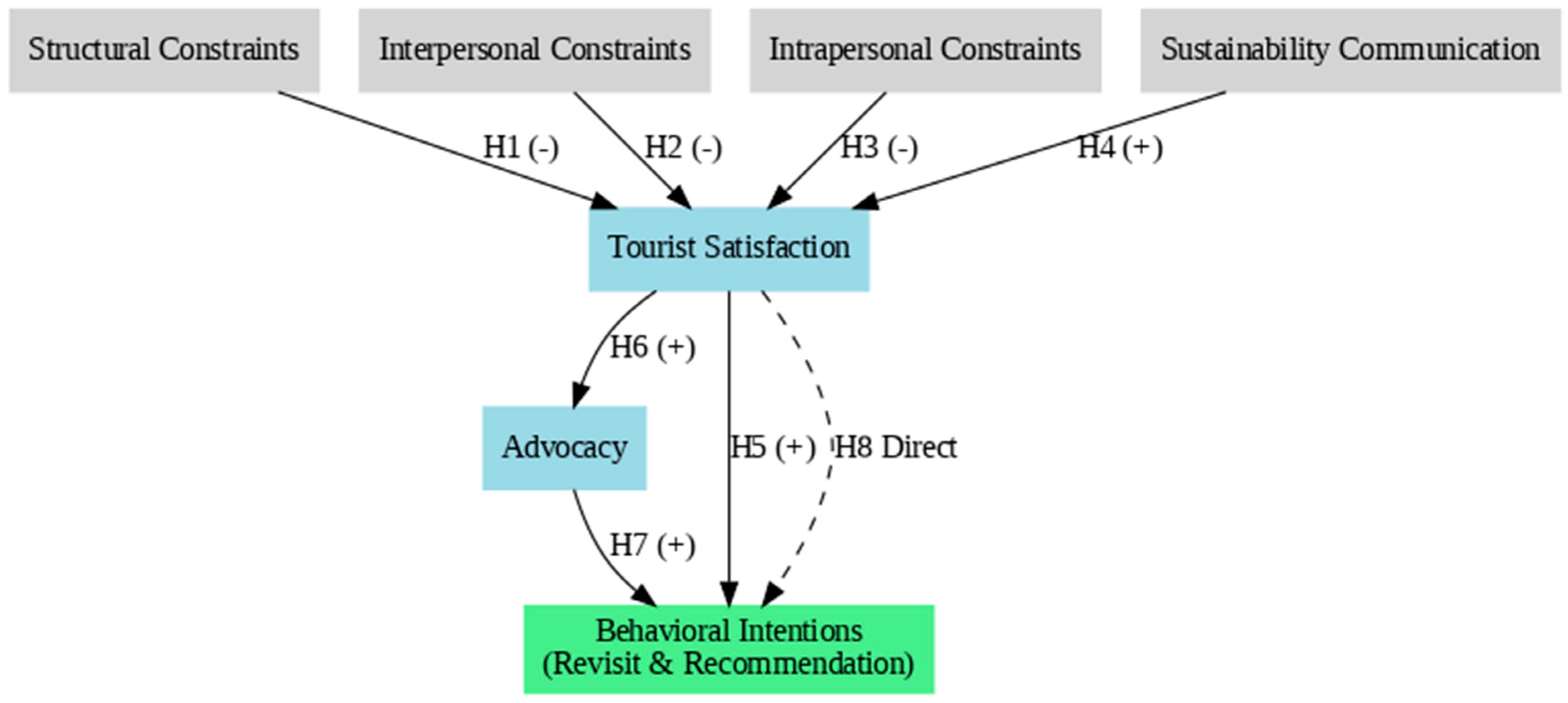
The eight hypothesized relationships in this study demonstrate how tourist freedom to practice low-carbon activities is determined by both factors that stop them and factors that help them. Structural constraints, interpersonal constraints, and intrapersonal constraints (H1–H3) create major obstacles that stop tourists from engaging in sustainable activities because these barriers restrict their freedom and their ability to take part in eco-friendly practices. The constraints create a boundary that increases the required work and introduces unpredictable elements, and causes people to resist through social or psychological means. The function of sustainability communication (H4) acts as an essential enabling tool that helps decrease the detrimental impacts through improving understanding, decreasing doubt, and creating trust between people and environmental programmes. Tourists make better choices through effective communication, which uses clear, transparent, and trustworthy methods to provide them with information that enables their decision-making process. The concept of satisfaction (H5–H6) shows how people assess their experience when they have complete freedom to explore, while presence (H7–H8) shows how people use their freedom through social endorsement and environmental commitment. The framework illustrates how communication improves satisfaction through direct methods, while it helps tourists overcome restrictions that stop them from participating in active environmental protection through low-carbon tourism.
The given framework enhances the Leisure Constraints Theory and the Theory of Planned Behavior by integrating the two and explaining both inhibitory and motivational processes behind low-carbon tourist behaviour. Experience-constrained satisfaction predicts experiential satisfaction, evaluation improves through communication, advocacy reinforces evaluation, and behavioural intentions are reinforced through advocacy. The integrated model offers a systematic account of the means by which tourism experiences low-carbon delivery or does not deliver viable results into pro-environmental behavioural intentions, which results in a longer-term set of results, and therefore it furnishes both theoretical and practical information on the way sustainable tourism in Thailand has been developed.
Figure 1 displays the conceptual framework diagram visualizing the hypothesized relationships.
3. Research Methodology
This paper takes an explanatory sequential design that is mixed-method to examine how the constraints, sustainability communication, satisfaction, advocacy, and behavioural intentions of low-carbon tourists in Thailand are related, and the possibility of understanding the causes of the satisfaction–advocacy gap. The study combines both the quantitative and qualitative methods, offering both statistical generalization and contextual richness. The quantitative phase is used to test hypothesized relationships through regression and mediation analysis, and the qualitative phase is used to develop lived experiences and perceptions of tourists to explain and extrapolate the quantitative results.
3.1. Study Location
The information was gathered in the four key sustainable tourism destinations in Thailand, which include Chiang Mai, Phuket, Krabi, and Bangkok. These are the destinations that were chosen since they are the busiest eco-tourism sites and low-carbon tourism sites in Thailand, and they have certified green hotels, carbon-neutral tours, community-based tourism, and sustainable transport programmes. Chiang Mai is a community-based and cultural eco-tourism site; Phuket and Krabi have marine and island sustainability programmes, and the city of Bangkok is an urban low-carbon tourism site with a green mobility system. The request for data on various destinations enhances external validity and enhances generalizability in the various tourism scenarios in Thailand.
3.2. Target Population and Sampling
The target population was international and domestic tourists who took at least one low-carbon tourism activity during their visit. Low-carbon tourists were described as a kind of travellers who stayed at eco-certified hotels, took public or low-emission transit, took part in a sustainable tour, or displayed environmentally responsible behaviour during their stay. The research used purposive sampling to select eligible participants and then employed systematic intercept sampling at eco-friendly hotels, sustainable attractions, and green tourism centres located in the chosen cities. A preliminary filter question served as the initial screening tool, which helped researchers identify respondents who had taken part in low-carbon tourism activities. The researchers collected data from a total of 480 respondents. This number is established based on structural equation modelling requirements, which require 10 to 15 responses for each observed indicator, and statistical power analysis, which used β = 0.80 and α = 0.05, and the need to conduct mediation analysis with adequate statistical precision. The research maintained 452 valid responses for final analysis after data cleaning, which involved the removal of incomplete questionnaires and all multivariate outliers identified through Mahalanobis distance analysis. The results obtained from the study exceed the minimum threshold needed to conduct multivariate regression and mediation testing, which enables the study to produce strong statistical outcomes.
3.3. Research Instrument and Measurement
The structured self-administered questionnaire, which was based on previously tested scales, was used to collect data. The tool was originally written in English and was translated into Thai through a back-translation process that guaranteed language and conceptual consistency (
Brislin, 1970). The measurement of all constructs was done on a 7-point Likert scale (1 = strongly disagree, 7 = strongly agree), which is extensively advised to use in behavioural and attitudinal research because it is sensitive and reliable (
Hair et al., 2019).
The content validity of the measurement items was based on the established literature. The Structural, Interpersonal, and Intrapersonal Constraints were assessed using Leisure Constraints Theory scales (
Crawford et al., 1991;
Nyaupane & Andereck, 2008), where the three categories of constraints assessed were external, social, and psychological barriers to participation. The items of Sustainability Communication (COM) were based on sustainability communication and green marketing literature and focused on clarity, transparency, and credibility (
Delmas and Burbano, 2011;
Font et al., 2017;
Tolkes, 2020). The scale of Tourist Satisfaction (SAT) was carried out with the help of the established tourism satisfaction scales that reflected the overall evaluative judgement of experience (
Oliver, 1980;
Bowen & Clarke, 2002). Advocacy (ADV) was conceptualized in terms of word-of-mouth intention and recommendation behaviour, which was adjusted to the previous tourism and service marketing research (
Sweeney et al., 2020b;
K. G. Wilkins, 2014). Behavioural Intentions (BI) such as revisit intentions and recommendation intentions were determined according to the Theory of Planned Behaviour (
Ajzen, 1991) and the tourism behavioural intention research (
C. F. Chen & Tsai, 2007). The constructs were contextualized to indicate the real experience of the tourists with the low-carbon tourism infrastructure, such as eco-certified accommodation, sustainable transportation, and environmentally friendly tour services. To determine the level of clarity and reliability, a pilot study was carried out among 40 respondents in Chiang Mai. The alpha values (0.78 to 0.91) of the Cronbach-alpha were above 0.70, which is the recommended level of internal consistency (
Nunnally & Bernstein, 1994). Minor wording and item order changes were made based on pilot feedback.
3.4. Data Collection Procedure
The data collection was conducted in three months (June 2025–August 2025) in Thailand in key low-carbon tourism locations. The respondents were contacted during actual service contact, at such places as eco-certified hotels, green tourism offices, and green transportation hubs. This methodology is consistent with suggestions of how to gather experience-based answers in tourism studies (
Veal, 2018). A briefing was given to the participants regarding the purpose of the study and their anonymity and voluntary participation. There were no incentives to eliminate bias in the response. The respondents were asked to respond with respect to their present or latest experience of travel, especially on the infrastructure available, the environmental practices, and the communication that they received when visiting the area. The number of questionnaires sent was 520, and 480 questionnaires were returned (92.3% response rate). Upon screening of data (missing values and response bias) and multivariate outliers, 452 valid responses were kept. The SPSS 29 and AMOS 26 were used to code and analyze data, according to the general steps of quantitative research (
Hair et al., 2019).
3.5. Data Analysis Strategy
The analysis was performed in a multi-step process that was in line with the structural equation modelling (SEM) practice. To profile respondents, first, descriptive statistics were calculated. Cronbach alpha and composite reliability (CR) were used to determine reliability, and values of more than 0.70 were acceptable (
Hair et al., 2019). To evaluate the model fit and validity, the confirmatory factor analysis (CFA) was performed. The indices of model fit were within the recommended values (CFI.90; RMSEA.08) (
Hu & Bentler, 1999). Factor loading (>0.70) and average variance extracted (AVE > 0.50) were used to determine convergent validity (
Fornell & Larcker, 1981). The Fornell–Larcker criterion was used to test the discriminant validity. Regression and mediation analyses were employed to test the hypotheses, and this is in line with the TPB-based behavioural modeling (
Ajzen, 1991). The role of advocacy in the relationship between satisfaction and behavioural intentions was determined by measuring mediation effects.
Satisfaction–Advocacy Gap Analysis
Paired-sample
t-tests were used to investigate the difference in the mean between two variables of satisfaction (SAT) and advocacy (ADV) to analyze the satisfaction–advocacy gap. This is in line with previous tourism research on attitude–behaviour gaps (
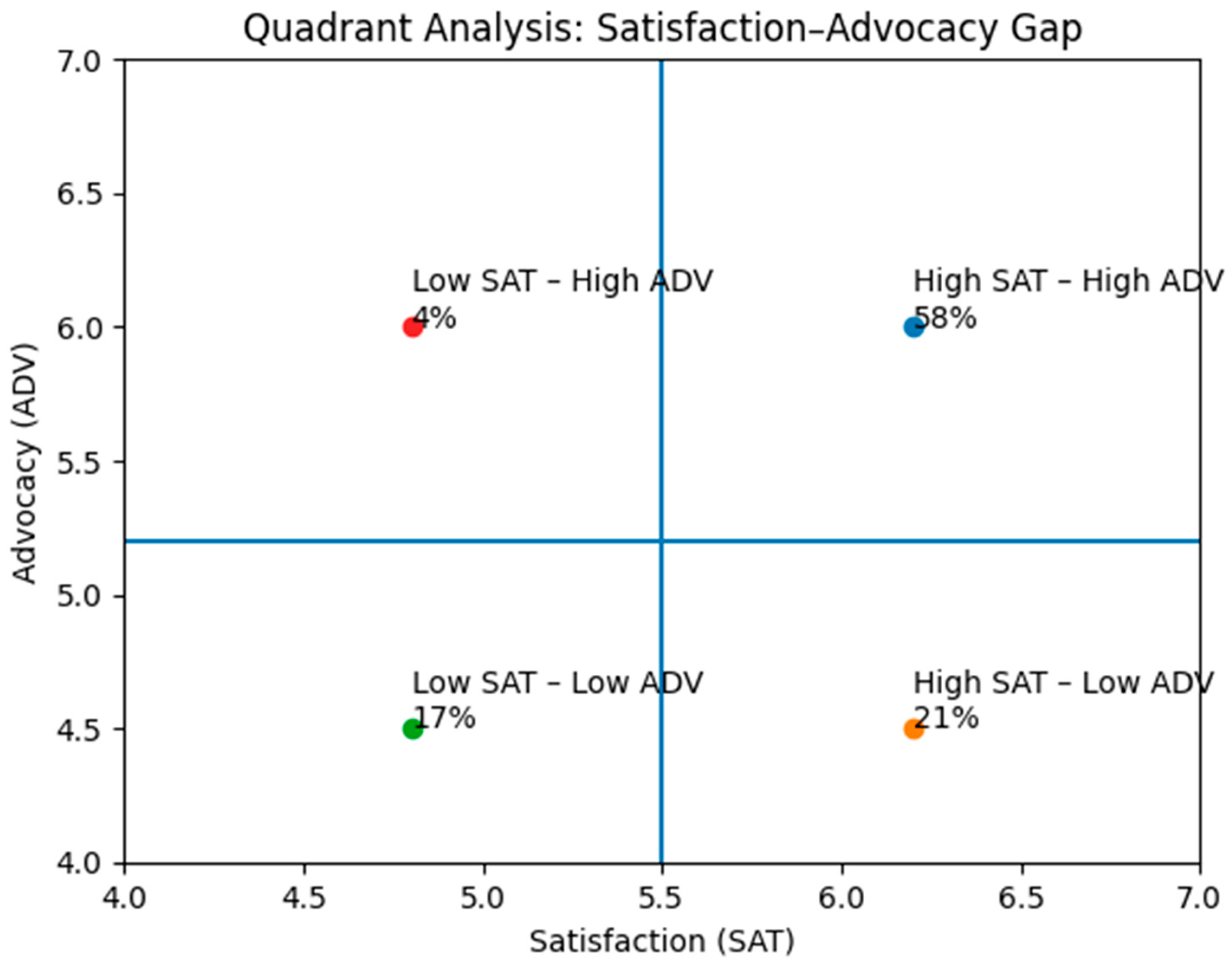
Babin et al., 2005). Quadrant analysis also helped in finding segments of highly satisfied tourists who are low advocates. The analysis shows a very important behavioural disconnect, in which positive appraisals do not always translate into real promotion. The results are consistent with existing studies that indicate that satisfaction is not a sufficient motivator to carry out word-of-mouth without other motivational or situational factors (
Oliver, 1999).
3.6. Qualitative Analysis
After the quantitative stage, a qualitative stage was carried out to describe and put the statistical results into context. The paper took a phenomenological approach to understand subjective experiences of the low-carbon experiences by tourists, as well as the decisions taken on advocacy behaviour. Out of 452 survey respondents, 32 volunteered to be follow-up interviewed and sampled on maximum variation, so that there was diversity in terms of age, nationality, and purpose of travelling. In the four destinations, eight interviews were carried out. All the interviews took a maximum of 35 to 50 minutes and were either face-to-face or through video conferencing.
The semi-structured interview questions were structured in terms of perceptions of the sustainability communication, personal reasons to patronize low-carbon tourism, perceived impediments to referring to sustainable destinations, and emotional or cognitive reactions to the environmental initiatives. All of the interviews were audio-taped and transcribed verbatim and analyzed by thematic analysis, with consent. The analysis was conducted in six phases, namely familiarization, initial coding, theme generation, theme review, theme definition, and reporting. NVivo 14 was employed to assist with the organization and system coding of the themes.
The credibility was guaranteed using several measures. Member checking was used to increase credibility by having the participants peruse the summary interpretations. Details in terms of context supported transferability. Reliability was ensured by keeping a record of the decisions made during the coding process (audit trail), and confirmability was reinforced by peer debriefing of the research colleagues.
The combination of quantitative and qualitative results was done at the level of interpretation. Statistically significant predictors of behavioural intentions were found using quantitative results, and the mediating role of advocacy was validated. The qualitative results were more valuable in understanding why not all satisfied tourists actively promoted low-carbon destinations. New themes were the distrust of greenwashing, a lack of social influence motivation, forces of environmental fatigue, and the uncertainty of the effectiveness of personal recommendations. This triangulation strengthened the explanatory validity and added value to theoretical knowledge.
Field research for this study was conducted across four major low-carbon tourism destinations in Thailand—Chiang Mai, Phuket, Krabi, and Bangkok—selected for their active implementation of sustainable tourism practices. Data were collected over a three-month period (June–August 2025) through on-site surveys administered at eco-certified hotels, sustainable attractions, green transportation hubs, and community-based tourism centres. A systematic intercept approach was used to engage tourists who had participated in at least one low-carbon tourism activity, ensuring that responses were grounded in real-time experiences. Participants were approached during or immediately after their service encounters, enhancing the ecological validity of the data. Prior to participation, respondents were informed about the purpose of the study and assured of anonymity and voluntary participation. This field-based data collection approach allowed for the capture of authentic perceptions regarding constraints, sustainability communication, satisfaction, and behavioural intentions, thereby strengthening the empirical relevance and contextual richness of the study.
3.7. Ethical Considerations
The research was conducted in line with the ethical research standards. Participation was voluntary, informed consent was taken, and no information that has been identified as personal was gathered. The data were stored safely and utilized for an academic purpose. The respondents had the permission to drop out at any stage without any punishment.
5. Discussion
The research results of this study provide all-encompassing empirical data on the reasons why tourists prefer low-carbon tourism in Thailand and a clear understanding of the satisfaction–advocacy gap. The structural model was also found to be highly explanatory, with a variance in satisfaction of 62%, advocacy of 55%, and behavioural intent of 71%. These findings substantiated the fact that low-carbon tourism behaviour was predetermined by the enabling (sustainability communication) and inhibiting (structural, interpersonal, and intrapersonal constraints) factors, whereas advocacy was a key mechanism that converted satisfaction into behavioural intention. Quantitative and qualitative results were integrated to enhance the knowledge of how and why satisfied tourists failed to become their active advocates all the time.
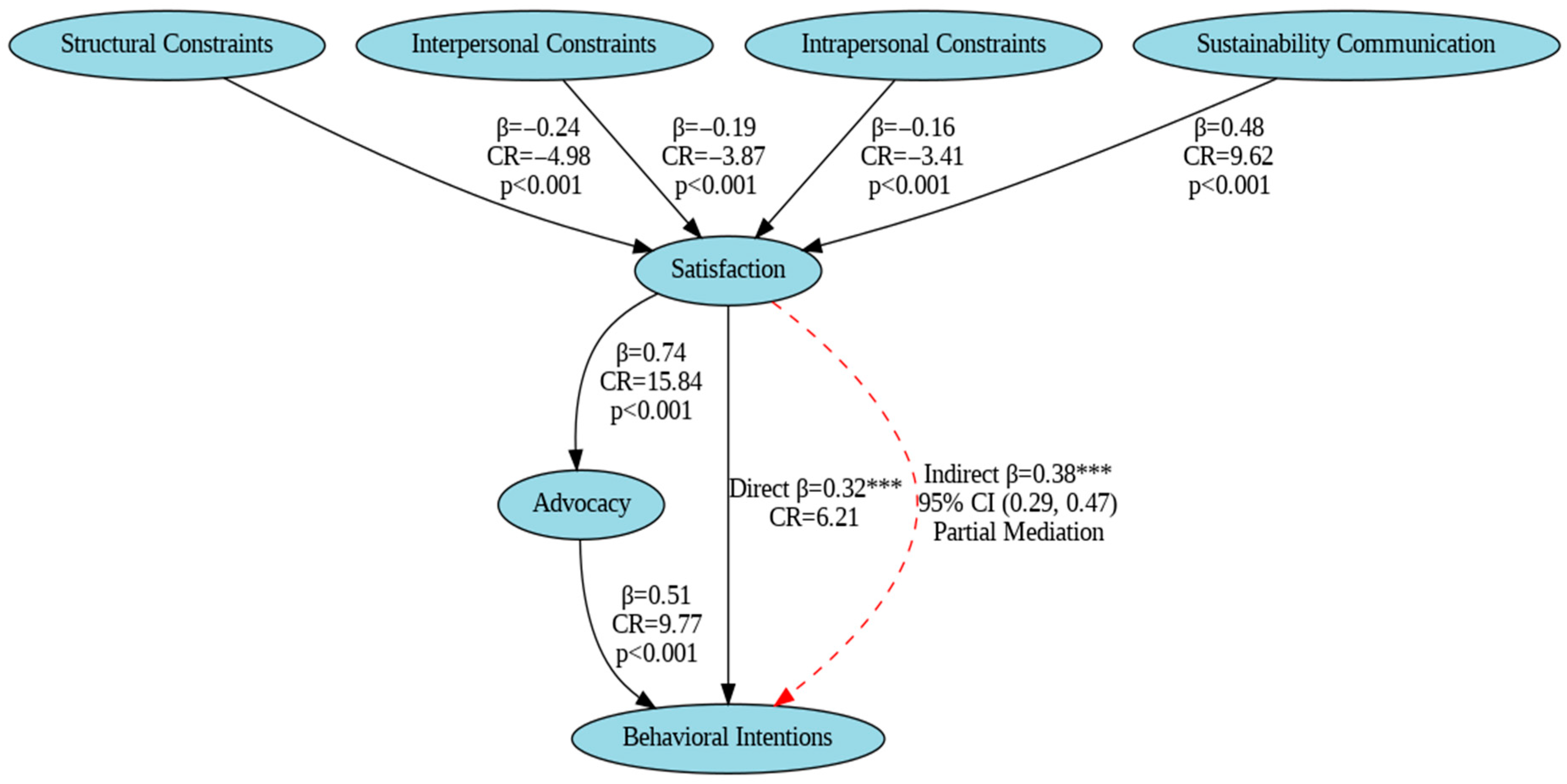
Among the key results, the role of sustainability communication was overwhelming in improving satisfaction (β = 0.48). This reinforced previous studies, which have affirmed the need to have credible and open lines of environmental communication to influence pro-environmental behaviour. It has been shown that the relationship between digital sustainability exposure and low-carbon behavioural intention was mediated by environmental education and emotional engagement (
X. Chen & Cheng, 2023). On the same note,
Bhattacharyya et al. (
2024) also demonstrated that sustainability communication framing had a significant impact on behaviour intention based on perceived commitment to sustainability. The current results were consistent with these studies since they established that clarity and credibility of communication enhanced the evaluative experience of tourists. The qualitative findings, however, built upon such findings and showed that communication not only impacted satisfaction but also dictated the willingness of tourists to advocate. The finding that mistrust of green claims and concerns about greenwashing act as significant barriers to advocacy emerged from both the empirical results and supporting literature. Respondents who demonstrated lower credibility and transparency assessments of sustainability communication showed decreased advocacy intentions despite their moderate to high satisfaction with their overall experience. Tourists who doubt the authenticity of environmental claims, which include eco-certifications and sustainability messaging, will show lower willingness to recommend the destination. Mistrust in this situation does not decrease satisfaction with the experience, but it makes satisfaction harder to convert into advocacy, which creates the satisfaction–advocacy gap. This issue serves as an important research direction because it shows more than its final conclusion. The future research will investigate how various communication methods, which include third-party certifications, digital transparency tools, and participatory engagement platforms, influence tourist perceptions of greenwashing while building trust, which leads to increased advocacy for sustainable destinations. Therefore, the positive impact of communication on the determination of satisfaction was observed, but the perceived authenticity of the communication determined whether the satisfaction led to advocacy.
The constraint-based views were further supported by the negative impact of structural, interpersonal, and intrapersonal constraints on satisfaction, supporting the relevance of the constraint-based views in sustainable tourism research studies. The most significant negative influence (β = −0.24) was structural constraints, which means that logistical factors, including cost, accessibility, and infrastructure limitations, continued to be at the heart of the issues. These results resonated with
Pantaratorn et al. (
2023), who found structural, intrapersonal, and interpersonal limitations to be the key barriers in the development of low-carbon tourism in Thailand. Likewise,
Shie et al. (
2022) also found that green commitment alleviated perceived constraints, which implies that psychological empowerment has alleviated structural impediments. The present research displayed this line of questioning in that constraints not only impacted intention but also directly lowered satisfaction, which diluted the advocacy potential. The qualitative theme of advocacy fatigue and practical constraint also demonstrated the limitation of promotional behaviour by the psychological and situational factors, even in satisfied tourists.
The other major contribution of the research was the power of satisfaction on advocacy (β = 0.74) and the greater impact of advocacy on behavioural intentions (β = 0.51) as opposed to the direct effect of satisfaction (β = 0.32). This observation corroborated the claims made by
Suhartanto et al. (
2026), who pointed out the dual mediation power of satisfaction and environmental identity when influencing advocacy behaviours. The mediation analysis of the current study established that advocacy mediated the satisfaction–behavioural intention relationship to some extent, which is its behavioural activation aspect. That is, the satisfaction, per se, was not able to ensure both the revisit and recommendation intentions, but instead, advocacy acted as a mental intermediary between positive evaluations and behavioural intentions being realized. This result was also echoed by
Gao and Deng (
2025), who distinguished the two types of low-cost and high-cost pro-environmental behaviours and highlighted the mediation of the psychological processes, including relationship mobility and value alignment. Advocacy in the research was also a more advanced engagement behaviour that needed more intense psychological activation.
One of the most important findings was the gap between satisfaction and advocacy. Despite a high level of satisfaction (M = 5.58), there was a relatively low level of advocacy (M = 5.21), and 21% of participants fit into the category of a high level of satisfaction and low level of advocacy. The paired-sample t-test was used to establish that this gap was significant. The qualitative results were a good explanation for this dissimilarity. The theme of Appreciative but Passive Satisfaction showed that a large number of tourists also viewed sustainability as a personal decision as opposed to a public one. This was in line with the research by
Liao et al. (
2023), who established that subjective norms had a greater impact on intention compared to personal attitudes. Unless the social environments supported sustainability advocacy, the beliefs of satisfaction have been internalized and not externalized. On the same note,
Jieyao et al. (
2025) emphasized that perceived behavioural control and infrastructure were significant in the development of pro-environmental intention. The current qualitative results indicated that a lack of digital interaction and uncertainty regarding the personal influence lowered the involvement in advocacy.
The role of normative alignment was also supported by the theme of social influence and identity signalling. Advocacy behaviour was found to be dependent on social receptivity and value congruence, in line with the results of
Gao and Deng (
2025) on the moderating role of goal congruence. Their environmental social networks were considered to be environmentally aligned, and this is why tourists selectively advocated low-carbon experiences. In areas where luxury or convenience was valued by peer groups, advocacy was suppressed. This observation is built on
Mandal et al. (
2026), who highlighted the contingent impacts of authenticity and novelty-seeking in the development of sustainable travel experiences. In the current analysis, identity alignment and perceived audience compatibility also had a moderating effect on the satisfaction–advocacy relationship.
Theoretically, the study was important because it incorporated the Leisure Constraints Theory with the communication-based and identity-based frameworks in a coherent model. Although the environmental emotions (
X. Chen & Cheng, 2023), destination characteristics (
Janchai & Suvittawat, 2025), structural barriers (
Pantaratorn et al., 2023), or even the experiential mediators (
Suhartanto et al., 2026) were investigated in previous research, few studies had directly explored the constraints, communication, satisfaction, advocacy, and behavioural intentions in the Thai context. The mixed-methods method also enhanced the explanations with depth since it inspired the psychological and social mechanisms behind the quantitative patterns. The results proved that satisfaction was a necessary but not sufficient prerequisite of advocacy, and believable communication, social congruity, and perceived efficacy were obligatory stimulants.
In practice, the findings implied that destination managers in Thailand ought to focus more on clear and evidence-based sustainability-related communication to minimize mistrust. It has offered quantifiable carbon reduction information, third-party certifications, and observable eco-practices, which has increased credibility and spurred the masses to support it. Through marketing strategies, emotional connection and identity affirmation have also been instilled, and tourists become interested in perceiving advocacy as a part of their self-concept instead of an optional promotion. In addition, the issue of structural obstacles, including the affordability of costs and infrastructure, has enhanced full satisfaction and diminished resistance in the process of sustainable travel adoption.
The study has a number of limitations, regardless of the contributions. First, the cross-sectional design did not allow causal inference. The longitudinal study has been able to study the development of advocacy over time. Second, self-reported data have been affected by the social desirability bias. Third, the sample was also not comprehensive and was focused on selected destinations in Thailand, which was not suitable to reflect all other low-carbon contexts. To improve external validity, future studies should include experimental designs, cross-cultural comparison, and behavioural tracking techniques.
6. Conclusions
The research investigates low-carbon tourist behaviour in Thailand through its two core elements, which combine structural and interpersonal and intrapersonal barriers with sustainability communication and satisfaction and advocacy elements in one complete framework. The study results reveal strong model validation through data analysis, which included 452 respondents from Chiang Mai, Phuket, Krabi, and Bangkok. The most powerful element that predicted satisfaction regarding sustainability communication appeared as a positive factor, while structural obstacles created the most considerable negative impact. Tourist satisfaction had a major impact on both advocacy and behavioural intentions because advocacy served as a partial mediator between these two factors, which confirmed its vital function in developing environmental dedication. The research presents an essential finding through its discovery of a major satisfaction–advocacy gap, which shows that individuals who experience high satisfaction levels will not engage in active marketing of low-carbon travel destinations. The qualitative insights revealed multiple underlying patterns, including passive satisfaction, scepticism toward environmental claims, social identity misalignment, and advocacy fatigue. The findings demonstrate that positive experiences do not automatically lead to advocacy; instead, deeper psychological and social processes determine who becomes an advocate. The study recognizes theoretical limitations that exist despite its two major contributions. The combination of Leisure Constraints Theory and the Theory of Planned Behaviour established a strong explanatory framework, which fails to describe the complete range of advocacy behaviour because it does not include emotional engagement, moral norms, and identity-based motivations. The framework assumes that the tourist decision-making process follows a straight path, which starts with constraints and ends with behavioural outcomes, whereas tourists make decisions through an ongoing process. The study results show that self-reported measures create response bias, while the cross-sectional design restricts researchers from studying how causal relationships develop through time. The research shows that organizations must deliver better low-carbon experiences because satisfactory low-carbon experiences do not create advocacy among customers. Destination managers need to establish trust with customers through honest communication, which includes handling greenwashing issues and developing platforms that encourage tourists to share their experiences. When sustainability initiatives match tourists’ social identities and personal beliefs, advocacy receives a boost, which leads to greater visitor satisfaction and active promotion by tourists. The study has two main limitations, which arise from its cross-sectional design and its dependence on self-reported data. The study needs to use both longitudinal research methods and cross-cultural studies because these approaches will require multiple psychological elements to achieve better results in understanding how advocacy behaviour develops. Future research can build on this study by adopting longitudinal designs to better understand how satisfaction and advocacy evolve over time, as well as by incorporating additional theoretical perspectives, such as the value-belief-norm theory or identity theory, to capture deeper motivational drivers. The researchers need to conduct comparative studies across different cultural and geographical settings to test whether their research findings are applicable in various contexts. The researchers should use experimental methods and mixed-method approaches to evaluate their communication strategies and engagement interventions, which target the satisfaction–advocacy gap.