1. Introduction
Architectural heritage is one of the destination’s most powerful cultural assets, shaping not only its visual identity but also the emotional and symbolic meanings visitors construct as they engage with its spaces (
Cheng et al., 2024;
Cusumano, 2024). Through the centuries, monuments, buildings, and urban infrastructures have served as tangible narratives of collective memory, embodying historical trajectories and aesthetic values that transcend generations. Beyond their material dimension, these spaces influence how individuals interpret, feel, and remember the places they visit, often generating emotional responses that endure long after the experience has concluded (
Battini et al., 2024;
Royo-Vela & Garzón-Paredes, 2023).
Although heritage tourism has been studied extensively from economic, cultural, and managerial perspectives, a notable gap persists in understanding the emotional processes triggered by architectural environments. In many destinations, decisions about heritage preservation, tourism development, and urban planning continue to rely on cognitive or functional assessments, with limited attention to the emotional responses that built heritage can evoke. Yet, emotions fundamentally shape how individuals perceive authenticity, beauty, safety, and cultural value—dimensions that directly influence tourist satisfaction and their willingness to revisit or recommend a site (
Li et al., 2024).
Research has shown that emotional reactions to heritage can operate as powerful mediators between the visitor and the cultural environment. Positive emotions such as happiness, fascination, or surprise tend to strengthen attachment to heritage sites and encourage pro-preservation behaviors. Conversely, emotions like fear, discomfort, or sadness may reduce interest in certain destinations or alter the perceived attractiveness of urban spaces (
Battini et al., 2024). Understanding these emotional mechanisms is therefore essential for developing heritage strategies that resonate with diverse audiences and contribute to the sustainable promotion and conservation of historical assets.
However, despite the relevance of emotions in the tourism experience, their scientific assessment remains a methodological challenge. Traditional tools—mainly self-report surveys, interviews, or post-visit questionnaires—depend heavily on memory, introspection, and subjective interpretation, which limits their capacity to capture the immediacy and complexity of emotional reactions as they occur (
Shi et al., 2021). Emotions are dynamic and often subtle; they fluctuate within milliseconds and are influenced by visual, spatial, and contextual cues that participants may not consciously recognize or articulate. As a result, conventional methods may not adequately represent the authentic emotional experience triggered by architectural heritage.
To address these limitations, the present study employs automated facial-expression recognition—a neuroscience-based tool that enables objective, real-time measurement of emotional activation. This technology offers a precise classification of basic emotions, allowing researchers to observe spontaneous reactions without interrupting or influencing the participant’s perceptual flow. In the context of architectural heritage, such an approach provides an opportunity to uncover how design elements, stylistic features, or historical connotations can elicit distinct emotional patterns (
Wang et al., 2024).
The study focuses on five of the most influential architectural styles that define the cultural landscape of Spain and many other European countries: Gothic, Renaissance, Baroque, Modernism, and Contemporary. Each style embodies unique aesthetic principles, symbolic meanings, and spatial compositions. Gothic architecture, for example, is characterized by verticality, shadows, and dramatic spatial tension; Renaissance forms emphasize balance and proportion; Baroque architecture seeks movement, ornament, and sensory richness; Modernism incorporates organic lines and symbolic abstraction; and Contemporary architecture often challenges traditional expectations through innovation and conceptual experimentation. Although previous works have addressed cognitive or aesthetic evaluations of these styles, the emotional responses they elicit remain insufficiently explored (
Royo-Vela & Garzón-Paredes, 2023).
This research builds upon a growing body of neuromarketing literature suggesting that sensory stimuli, cognitive and emotional processes significantly shape the interpretation of historical heritage (
Garzón-Paredes & Royo-Vela, 2021). While earlier studies have relied on electroencephalography (EEG) or eye-tracking to understand attention, cognitive load, visual engagement or emotional responses, the present study advances this line of inquiry by incorporating automated facial-expression analysis as a complementary tool for identifying precise emotional states (
Royo-Vela & Garzón-Paredes, 2023). This methodological innovation allows for capturing the nuances of human emotional experience within architectural spaces, expanding the analytical possibilities of heritage, tourism, and emotions research.
The primary objective of this study is to examine how different architectural styles evoke specific emotional responses in observers through a controlled experimental design. To achieve this objective, participants were exposed to a series of standardized architectural heritage images representing both architectural styles and infrastructure typologies. In total, 55 visual stimuli were used in the experiment, allowing for a systematic comparison of emotional reactions across different architectural contexts.
Emotional responses were captured in real time using automated facial-expression recognition technology, which enabled the detection and classification of core emotional states while participants observed the architectural stimuli. This approach allows researchers to identify subtle emotional reactions that may not be captured through traditional self-report techniques (
Rucka & De Cock, 2024).
By combining an experimental protocol with real-time emotion detection, the study seeks to identify emotional patterns associated with architectural styles and heritage typologies, while also exploring potential gender-based differences in emotional activation. This methodological approach contributes to advancing the study of emotional engagement with architectural heritage and provides new insights for heritage tourism management and the interpretation of built environments (
Xu, 2024).
Despite the growing body of research examining emotions in tourism and heritage contexts, important gaps remain in understanding how specific architectural styles trigger emotional responses. Much of the existing literature relies primarily on subjective evaluation methods such as surveys or post-visit interviews, which may not accurately capture spontaneous emotional reactions occurring during the perceptual experience of architectural environments. Moreover, relatively few studies have implemented controlled experimental designs capable of isolating the influence of architectural stimuli on emotional activation.
To address these limitations, the present study adopts an experimental approach that combines standardized visual stimuli with automated facial-expression recognition technology to objectively measure real-time emotional responses. By integrating neuroscience-based emotion detection with statistical analysis of emotional patterns across architectural styles and heritage typologies, this research contributes a methodological advancement to the study of emotional engagement with architectural heritage. In doing so, the study aims to deepen the theoretical understanding of how built environments influence human emotional experience and to provide empirical evidence that can inform heritage tourism management and architectural interpretation strategies.
2. Literature Review and Hypotheses Setting
The academic literature on cultural tourism, architectural heritage, environmental psychology, and emotional responses to architecture provides the conceptual foundation for this study. Although each of these fields has produced important theoretical and empirical advances, a gap persists in understanding much better how tourists emotionally engage with architectural heritage—particularly when emotional responses are measured through emerging technologies such as automated facial-expression recognition. As
Hosany and Gilbert (
2010) argue, tourist experiences extend far beyond the physical act of visiting a place; they involve emotional, psychological, and multisensory dimensions that shape how individuals interpret and interact with cultural environments. Emotions, therefore, function not as peripheral reactions but as core drivers influencing both immediate impressions and long-term destination perceptions and images (
Hosany et al., 2015).
Heritage tourism research has expanded significantly in recent years, emphasizing how visitors engage with historical and cultural landmarks (
Bastiaansen et al., 2018;
Flavián et al., 2021;
Graziano & Privitera, 2020;
Kang et al., 2020;
Kim et al., 2020;
Lakshmi & Ganesan, 2010;
Royo-Vela & Garzón-Paredes, 2023;
Trang et al., 2023;
Yuce et al., 2020). In this context, architectural heritage represents a particularly powerful stimulus due to its ability to evoke aesthetic, symbolic, affective, and identity-based reactions (
Shi et al., 2021). Recent studies highlight that heritage sites can trigger a broad spectrum of emotions—from admiration, awe, and nostalgia to discomfort, fear, or sadness—depending on the architectural style, historical context, and personal associations of the viewer (
Battini et al., 2024;
Royo-Vela & Garzón-Paredes, 2023). These emotional responses have been shown to influence satisfaction, attachment, and behavioral intentions such as revisitation or recommendation (
Li et al., 2024).
Despite these insights, the literature remains limited in explaining how specific architectural elements produce emotional reactions, and even fewer contributions have incorporated objective measurement techniques. Traditional tools such as surveys or interviews often fail to capture spontaneous, low-intensity, or unconscious emotional expressions. In contrast, facial-recognition technologies can capture fine-grained emotional responses in real time, providing a more accurate and ecologically valid representation of how individuals emotionally experience architectural environments (
Weismayer & Pezenka, 2024).
Environmental psychology offers a complementary perspective by examining how built environments shape human perception, behavior, and emotion. Architectural aesthetics—including the verticality of Gothic cathedrals, the symmetry of Renaissance façades, or the ornamental richness of Baroque structures—have been linked to differentiated emotional reactions influenced by personal, cultural, and contextual factors (
Moon & An, 2024;
Royo-Vela & Garzón-Paredes, 2023). Yet, as multiple scholars note, much of the literature still relies on subjective or retrospective self-report techniques, which may overlook the immediacy and dynamism of emotional experience (
Wang et al., 2024). This limitation underscores the need for methodological innovation capable of capturing both conscious and unconscious emotional activation.
Parallel to these developments, the digitalization of architectural heritage has gained traction in research and practice. Digital modeling and virtual reconstructions support preservation efforts, expand educational possibilities, and enable immersive tourism experiences (
Fascia et al., 2024). When combined with automated facial-expression analysis, these technologies permit unprecedented precision in studying emotional engagement with architectural spaces, strengthening the analytical depth of heritage tourism research (
Weismayer & Pezenka, 2024).
Recent contributions demonstrate the potential of integrating technological tools into affective heritage research. Studies using facial-expression recognition reveal subtle emotional reactions that traditional methods may overlook, offering a more nuanced understanding of how individuals connect with cultural environments (
Rawnaque et al., 2020). Such insights are particularly relevant for heritage conservation, museum and exhibit design, tourism experience development, and destination management (
Rucka & De Cock, 2024).
By incorporating facial-recognition technologies, the present study contributes to the broader academic debate on emotional engagement in heritage tourism and expands the methodological toolkit available for analyzing affective responses in built environments (
Garzón-Paredes & Royo-Vela, 2021,
2022). Prior literature suggests that emotional reactions are shaped by both individual factors—such as personality, lifestyle, prior experience, and socio-demographics—and broader normative or social contexts (
Izaguirre-Torres et al., 2020). Together, these factors interact with sensory stimuli, activating the nervous system and triggering cognitive processes that lead to emotional states guiding decision-making and behavioral responses (
Garczarek-Bąk et al., 2021;
Royo-Vela & Garzón-Paredes, 2023).
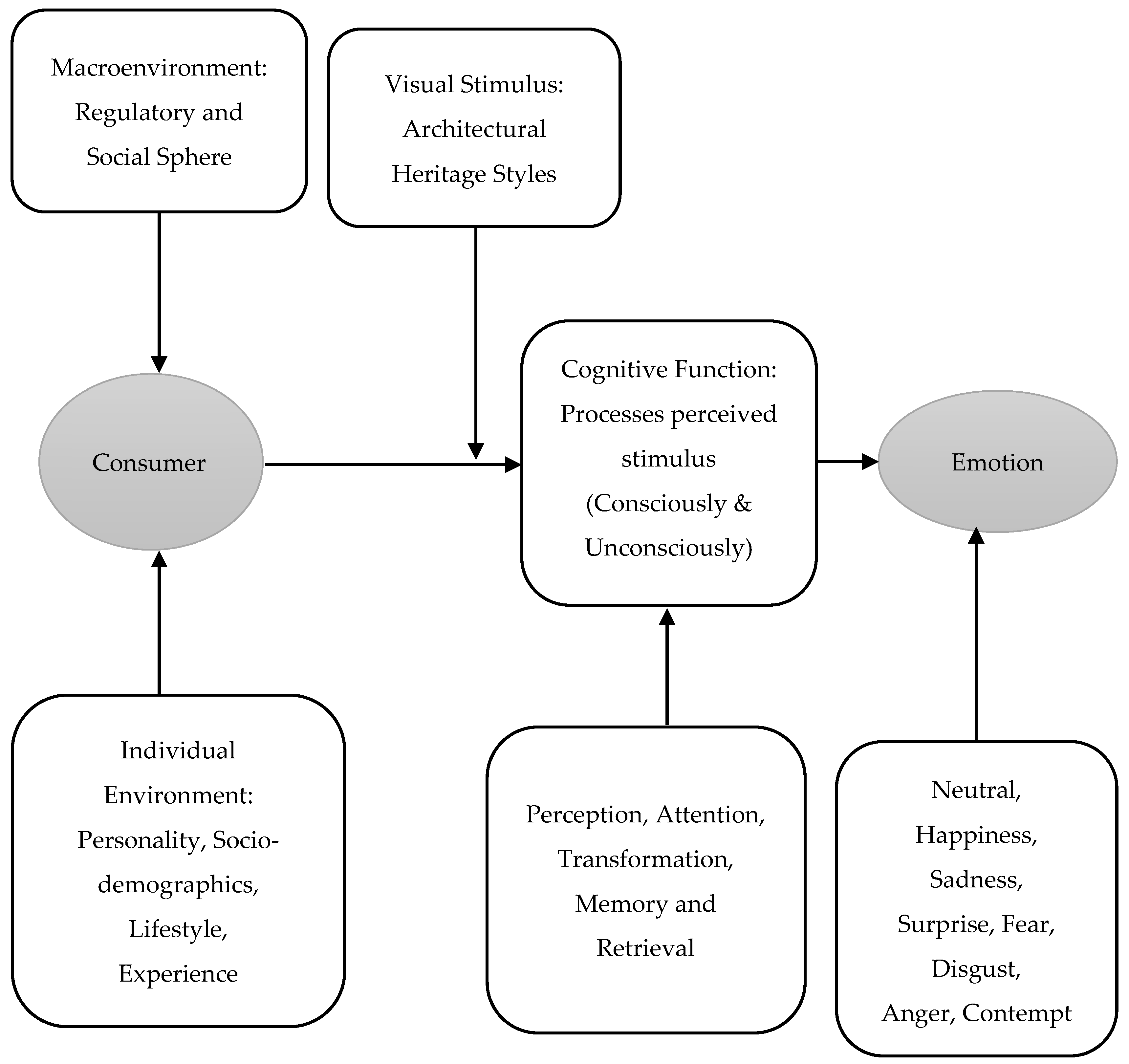
Taken together, the reviewed literature highlights the need to explore architectural heritage through the lens of emotional response and demonstrates the potential of advanced technologies to uncover previously unobserved dimensions of the visitor experience. The conceptual relationships emerging from this body of work are summarized in
Figure 1, which illustrates the proposed emotional-processing model underlying visitor responses to architectural heritage.
Historical and ornamental architectural styles—including Gothic, Baroque, and Renaissance—are characterized by dramatic ornamentation, monumental scale, verticality, equilibrium, and rich symbolic meaning, often eliciting intense emotions such as awe, surprise, admiration, and fear due to their sensory richness and historical resonance (
Li et al., 2024;
Battini et al., 2024;
Bettarello et al., 2023;
Cusumano, 2024;
Wang et al., 2024). In contrast, Modernist and Contemporary architectural styles emphasize simplicity, functional clarity, minimal ornamentation, and openness, generally generating calmer affective states such as tranquility, neutrality, or mild happiness (
Ren & Djabarouti, 2023;
Fascia et al., 2024;
Moon & An, 2024). Given these marked differences in emotional elicitation, stronger and more intense emotional responses are expected for older architectural styles compared to their modern counterparts, with older styles (Baroque, Renaissance, and Gothic) associated with emotions such as surprise and fear, whereas Modernist and Contemporary styles will be associated with happiness and neutrality. Therefore, the following hypothesis is established:
H1. Older architectural styles (Baroque, Renaissance, and Gothic) will be associated with stronger emotional responses—particularly surprise and fear—than Modernist and Contemporary styles, which will be associated with calmer emotions such as happiness and neutrality.
Royo-Vela and Garzón-Paredes (
2023) verified that the emotional response to heritage exists and depends on the number of cognitive stimuli or heritage assets to which the visitor is subjected. Different architectural spaces carry distinct symbolic, functional, and experiential meanings. Churches and other sacred buildings often evoke heightened emotional states—such as awe, reverence, or tranquillity—due to their historical, cultural, and spiritual significance (
Bettarello et al., 2023;
Higuera-Trujillo et al., 2021;
Shi et al., 2021;
Walter, 2023). In contrast, urban structures such as streets, squares or façades tend to generate more moderate emotions associated with daily use or social interaction (
Ren & Djabarouti, 2023). Architectural features such as scale, lighting, materiality, and ornamentation further modulate emotional responses (
Walter, 2023). Therefore, the next hypothesis is set:
H2. Emotional responses to architectural heritage will vary significantly depending on the type of architectural asset. Historical Religious architecture, such as cathedrals or churches, is associated with more intense emotional responses than historical civil architecture, such as streets, bridges, squares, quarters or façades.
Research also shows that men and women may perceive, express, and regulate emotions differently within cultural contexts. These differences stem from biological, cognitive, and sociocultural mechanisms that shape emotional sensitivity and regulatory strategies (
Fischer et al., 2018;
Goubet & Chrysikou, 2019). Individuals who more effectively reappraise or restructure negative stimuli tend to demonstrate greater flexibility in managing emotions in complex environments such as heritage sites (
Gross & John, 2003). Consequently, gender is expected to moderate emotional responses to architectural stimuli (
Goubet & Chrysikou, 2019), and the following hypothesis is proposed:
H3. Men and women have different emotional responses to architectural heritage.
To provide a stronger theoretical foundation for understanding emotional reactions to architectural heritage, this study adopts the Stimulus–Organism–Response (SOR) framework, originally proposed by Mehrabian and Russell (
Mehrabian & Russell, 1974). The SOR model explains how environmental stimuli influence individuals’ internal states, which subsequently shape behavioral or evaluative responses. This framework has been widely applied in environmental psychology, marketing, tourism studies, and consumer behavior research to explain how physical environments affect emotional and cognitive processing.
Within this theoretical perspective, the stimulus (S) refers to external environmental factors capable of triggering psychological reactions. In the context of this research, architectural heritage elements—particularly architectural styles and built heritage typologies—constitute the primary stimuli presented to participants through standardized visual images.
The organism (O) represents the internal processes that occur when individuals are exposed to environmental stimuli. These processes include emotional activation, perceptual interpretation, and cognitive evaluation. In this study, the organismic state is operationalized through the real-time detection of emotional responses using automated facial-expression recognition technology, which identifies core emotions such as happiness, sadness, surprise, fear, disgust, anger, contempt, and neutral states.
Finally, the response (R) reflects the outcome of these internal processes, manifested as emotional reactions or evaluative responses toward the stimulus. In the context of architectural heritage, these responses correspond to the emotional patterns elicited by different architectural styles and heritage typologies. By examining these emotional reactions, the study seeks to identify how architectural aesthetics influence affective engagement with built environments.
Applying the SOR framework enables a structured interpretation of the experimental design used in this research. Architectural heritage images act as environmental stimuli (S), emotional processing captured through facial recognition represents the organismic state (O), and the resulting emotional responses constitute the behavioral output (R). This theoretical structure provides a coherent foundation for analyzing how architectural heritage influences emotional experience within heritage tourism contexts.
3. Materials and Methods
This study employed a non-probabilistic judgmental sampling strategy, selecting participants based on their socioeconomic characteristics and their availability and willingness to engage in the experiment. Although this non-probabilistic approach presents inherent limitations, specific efforts were made to diversify the sample by including individuals of different ages, genders, and cultural backgrounds. This approach yielded a heterogeneous participant pool suitable for empirical research and capable of providing preliminary insights that future studies may generalize more robustly. Sample size was determined through a priori power analysis to ensure adequate statistical power (0.80) to detect emotional differences across architectural styles at an alpha level of 0.05. The analysis indicated that a minimum of 200 participants was required to achieve reliable and interpretable effects. Finally, we gathered a sample of 645 individuals for the study. Participants ranged in age from 19 to 50 years old. The sample was primarily composed of individuals with university or postgraduate education, reflecting the academic context in which the experiment was conducted. All participants were Latin American, mainly from South American countries, and the experimental sessions were carried out in Quito, Ecuador. This demographic profile provides a relatively homogeneous cultural background while still allowing for variability in individual emotional responses to architectural heritage stimuli. Conducting the experiment within a controlled laboratory setting ensured consistent environmental conditions for all participants. The sample profile can be seen in
Table 1.
Emotional responses were classified into eight categories—neutral, happiness, sadness, surprise, fear, disgust, anger, and contempt—which represent core universal emotions validated across cultures. These emotional categories have been extensively documented in environmental psychology and neuromarketing research as relevant affective reactions elicited by architectural and spatial stimuli (
Royo-Vela & Garzón-Paredes, 2023). Emotions such as surprise and fear often arise from encounters with dramatic or unfamiliar architectural forms, while happiness or sadness may emerge from personal memories or cultural associations. Their inclusion is therefore theoretically grounded and aligned with previous research on emotional responses in built environments (
Rawnaque et al., 2020).
Participants were exposed to standardized images of selected architectural heritage sites within a controlled experimental setting. The experiment was conducted in the physiology laboratory of the university, where environmental conditions such as lighting, temperature, and ambient noise were carefully controlled to ensure consistency across sessions. Architectural stimuli were projected onto a screen using a digital projector, allowing all participants to observe the images under identical viewing conditions.
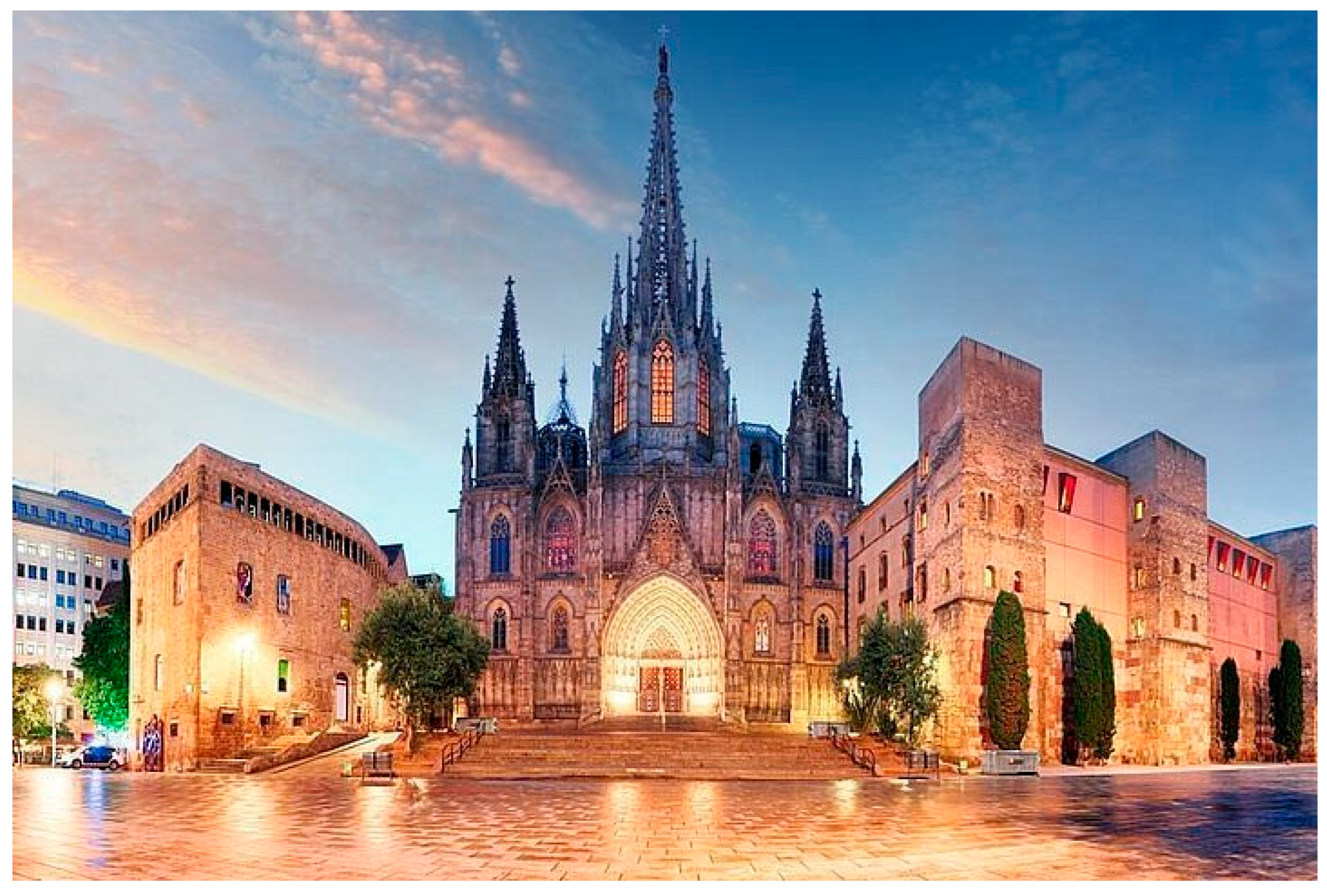
Representative examples of the architectural stimuli used in the experiment are presented in
Figure 2, illustrating the visual material shown to participants during the experimental procedure.
Each stimulus was displayed for 15 s, and the order of presentation was randomized to minimize potential sequence effects. Short resting intervals were incorporated between stimulus sequences to reduce fatigue and maintain stable emotional responses.
The experimental sessions were carried out over a period of approximately three months, during which the target sample size was gradually achieved. On average, 10 to 12 participants took part in the experiment per day, ensuring that the experimental procedure could be conducted under consistent and controlled conditions for all participants. (
Shrestha & Dunn, 2019). (A detailed description of the architectural stimuli categories is provided in
Appendix A).
To maintain experimental rigor, environmental conditions were tightly controlled. Lighting, temperature, and ambient noise were standardized across sessions, ensuring that observed emotional responses could be attributed solely to the architectural stimuli rather than contextual distractions. Before exposure to the architectural stimuli, participants completed a brief self-report questionnaire designed to assess their initial emotional state. The questionnaire consisted of two questions administered prior to the experimental task. First, participants were asked to identify their current emotional state from the set of basic emotions used in the study (neutral, happiness, sadness, surprise, fear, disgust, anger, and contempt). Second, participants were asked to rate the intensity of their current emotional state using a numerical scale from 1 to 10, where higher values indicated stronger emotional intensity.
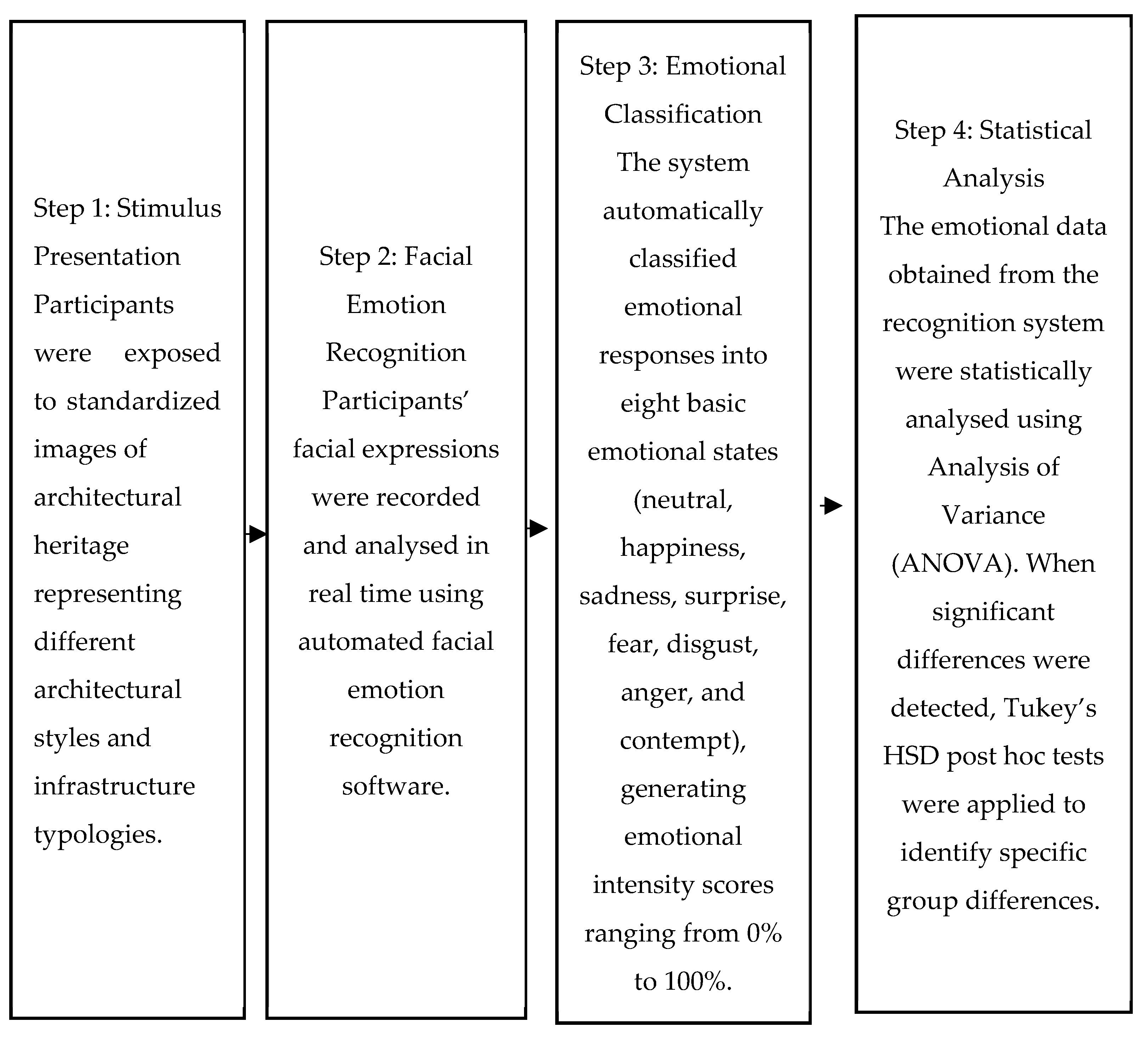
This preliminary measure was used only to obtain a baseline emotional profile of participants prior to the experiment and was not included as a variable in the statistical analysis. Additional control questions assessed participants’ familiarity with the architectural styles and their prior experience with heritage environments. These measures allowed the researchers to account for individual predispositions and potential confounding variables (See
Figure 3).
The emotional detection process was performed using Facial Emotion Recognition software developed by VSB–Technical University of Ostrava (VSB-TUO). This system uses neural network-based classifiers to detect and analyze facial expressions in real time. The software automatically identifies and classifies core emotional states—including neutral, happiness, sadness, surprise, fear, disgust, anger, and contempt—by analyzing facial muscle movements captured through the device’s front camera.
The system performs real-time emotional detection and direct classification of emotional states, allowing the experiment to capture spontaneous emotional reactions while participants observed the architectural stimuli (
Rawnaque et al., 2020). Following data collection, emotional scores were processed and statistically analyzed. ANOVA tests were conducted to examine differences in emotional responses across architectural styles, structural types, and gender. When significant effects were detected, Tukey’s HSD post hoc tests were performed to identify specific group differences. The combined use of objective emotional-recognition metrics and subjective self-reports enhanced the robustness of the findings and provided a comprehensive framework for understanding affective engagement with architectural heritage.
4. Results
This section presents the empirical findings derived from the ANOVA analyses conducted to test the proposed hypotheses. The results are organized according to the hypotheses formulated in
Section 2, explicitly indicating whether each hypothesis is supported by the data. References to the corresponding tables are provided to facilitate interpretation.
Regarding Hypothesis H1, which proposed that older architectural styles (Baroque, Renaissance, and Gothic) would be associated with stronger emotional responses—particularly surprise and fear—than Modernist and Contemporary styles, results revealed meaningful patterns in the emotional responses associated with different architectural styles, although not all emotions exhibited statistically robust distinctions (see
Table 2). For Neutral, the
p-value (
p = 0.0521) suggested a marginal trend toward significance, with the Modernist style being associated with more neutral reactions and the Baroque style eliciting fewer. Although the post hoc comparisons did not yield statistically significant pairwise differences, the pattern indicates a potential stylistic influence that warrants further examination in future studies.
In contrast, Happiness demonstrated clear and statistically significant variation across architectural styles (p = 0.000297). Participants reported higher levels of happiness when viewing Modernist architecture, followed by Gothic elements, whereas Renaissance and Baroque styles produced comparatively lower happiness levels. These differences were supported by post hoc tests, confirming the robustness of the effect.
For Sadness, the ANOVA showed a trend toward significance (p = 0.086), with Modernist architecture surprisingly being associated with higher levels of sadness and Gothic architecture the lowest. However, as with Neutral, post hoc analyses did not detect significant pairwise differences, suggesting that the observed variation may be subtle or context dependent.
The emotion Surprise exhibited one of the strongest effects in the analysis (p < 0.001). Baroque architecture was associated with the highest levels of surprise, followed by Gothic and Renaissance, whereas Modernist architecture was associated with markedly lower levels of surprise. Post hoc comparisons confirmed the magnitude and direction of these differences, highlighting the expressive and ornate character of historical styles as features strongly associated with these emotional patterns.
Similarly, Fear also displayed a highly significant effect (p < 0.001). Baroque architecture was associated with the strongest fear responses, followed by Renaissance and Gothic, while Modernist architecture was associated with the lowest levels of fear. These differences remained significant in post hoc analyses, reinforcing the role of stylistic complexity and historical symbolism in eliciting stronger negative affect.
For Disgust, the ANOVA again showed a highly significant effect (p < 0.001). Renaissance architecture was associated with the highest disgust responses, followed by Baroque and Gothic, with Modernist architecture eliciting the lowest levels. This pattern suggests that certain stylistic features may provoke aversive or discomfort-related reactions, consistent with prior findings on emotional valence in built environments.
Finally, Contempt also showed statistically significant variation across architectural styles (p < 0.001), indicating that stylistic differences influence even more subtle forms of negative affect. These findings collectively demonstrate that architectural style is associated with the emotional landscape of observers, with historical styles generally producing more intense emotional reactions—both positive and negative—than more modern architectural styles such as Modernist expressions.
The association between architectural style and emotional activation becomes particularly evident when examining the patterns across specific emotions. Modernist architecture was associated with pronounced emotional variability, showing both the highest levels of happiness and unexpectedly elevated levels of sadness and disgust. This duality suggests that its minimalist aesthetic may be associated with positive affect in some observers while also being linked to negative reactions in others, possibly related to perceptions of coldness or a lack of ornamentation. In contrast, Baroque architecture showed the strongest association with high-arousal emotions such as surprise and fear, reflecting its dramatic visual complexity and symbolic intensity. Renaissance architecture, meanwhile, was associated with comparatively higher levels of disgust and lower levels of happiness, indicating a more ambivalent or less affectively engaging response profile. Taken together, these results reinforce prior findings suggesting that architectural form is associated with emotional experience (
Rucka & De Cock, 2024) and further highlight the differentiated affective signatures of historical versus modern styles (see
Table 2).
Overall, the results provide empirical support for Hypothesis H1. Older architectural styles—particularly Baroque and Gothic—were associated with higher levels of high-arousal emotions, such as surprise and fear, whereas Modernist architecture was associated with more neutral or positive emotional states, such as happiness. These findings suggest that architectural style is associated with differences in emotional intensity and valence in the perception of architectural heritage.
Results did not support Hypothesis H2 (see
Table 3). The ANOVA examining emotional responses across different types of architectural structures revealed that, for most emotions, the type of heritage site did not produce statistically significant variation. For Neutral, the
p-value (
p = 0.907) indicated a complete absence of differences among buildings, streets, bridges, façades, neighborhoods, squares, and churches, with adjusted means ranging narrowly from 0.262 (building) to 0.294 (square). Post hoc analyses confirmed the lack of meaningful distinctions.
Similarly, Happiness did not differ significantly across structure types (p = 0.476), despite minor fluctuations in adjusted means—bridges elicited the highest average happiness (0.1255), whereas squares elicited the lowest (0.0869). These differences were not statistically meaningful, as confirmed by post hoc tests. A comparable pattern emerged for Sadness (p = 0.528), where adjusted means were again closely aligned, ranging from 0.0929 (building) to 0.1188 (façade), with no significant pairwise contrasts.
In contrast, Surprise was the only emotion to exhibit statistically significant variation among structure types (p = 0.0189). Neighborhoods generated the highest adjusted mean (0.1087), while squares produced the lowest (0.0748). However, although the omnibus test indicated an overall effect, post hoc analyses did not identify statistically significant pairwise differences, suggesting that the observed variation may be diffuse rather than attributable to specific structural categories.
Other emotions—including Fear, Disgust, Anger, and Contempt—did not show significant differences across structure types, indicating that emotional responses in this study were more strongly associated with architectural style than with the functional category of the built environment.
Finally, and regarding Hypothesis H3 (see
Table 4 and
Table 5), the analysis examining the interaction between architectural style and emotional responses, segmented by gender, revealed significant differences across several emotional dimensions in the case of men (see
Table 3). Architectural style was significantly associated with sadness (
p < 0.001), surprise (
p < 0.001), disgust (
p < 0.01), and anger (
p < 0.001). Specifically, Modernist architecture was associated with higher levels of sadness, whereas Baroque architecture elicited markedly stronger surprise responses. Renaissance architecture generated the highest mean levels of disgust, and anger was most strongly expressed in response to Modernist stimuli, suggesting that stylistic features linked to minimalism or stark geometric design may intensify certain negative affective reactions.
In contrast, emotions such as neutrality, happiness, fear, and contempt did not vary significantly by architectural style. This pattern indicates that although architectural style is strongly associated with shaping high-arousal or negatively valenced emotions, its capacity to modulate more neutral or positive emotional states appears comparatively limited. These findings are consistent with previous research suggesting that architectural forms tend to evoke stronger emotional differentiation in reactions associated with surprise, awe, or discomfort, whereas their association with positive affect is more subdued and context dependent.
In the analysis segmented by women (see
Table 5), architectural style was significantly associated with a wide range of emotional responses. Neutrality, happiness, surprise, fear, disgust, and contempt all varied significantly as a function of style. For Neutrality (
p < 0.05), Modernist architecture was associated with the highest levels, followed by Baroque, whereas Gothic and Renaissance styles yielded lower neutrality scores, suggesting increased affective engagement with historical forms. Happiness (
p < 0.01) was more pronounced in response to Modernist and Gothic styles, while Baroque architecture elicited comparatively lower levels of positive affect.
The emotion Surprise (p < 0.001) was most strongly associated with Baroque architecture, followed by Gothic, whereas Modernist structures were associated with the lowest levels of surprise, reflecting the stylistic exuberance and ornamentation of historical forms. A similar pattern emerged for Fear (p < 0.001), with Baroque styles producing the highest fear responses and Modernist styles showing significantly lower levels, further underscoring the emotional potency of dramatic historical aesthetics.
Disgust (p < 0.001) was most strongly associated with Renaissance architecture, followed by Baroque, while Modernist architecture produced the lowest levels of this emotion. Finally, Contempt (p < 0.001) was most strongly associated with Modernist structures, followed by Gothic, whereas Baroque and Renaissance styles elicited comparatively lower contempt responses.
Collectively, these results demonstrate that architectural style shows a clear association with women’s emotional processing of built environments. Modernist architecture tends to be associated with more extreme responses—particularly contempt and neutrality—whereas Baroque architecture was associated with heightened levels of surprise and fear, reflecting the expressive complexity and symbolic richness characteristic of historical architectural styles. These findings highlight a clear emotional differentiation across styles and align with prior research suggesting that stylistic features of architecture possess varying capacities to evoke intense emotional reactions (
Royo-Vela & Garzón-Paredes, 2023).
Taken together, these findings provide support for Hypothesis H3, confirming that men and women exhibit significantly different emotional responses to architectural heritage. Moreover, the results suggest that women display greater emotional sensitivity across a broader range of emotions, whereas men show stronger differentiation primarily in high-arousal and negatively valenced emotions. Thus, Hypothesis H3, which proposed gender-based differences in emotional responses to architectural heritage, is supported.
5. Discussion
The findings of this study support two of the proposed hypotheses. In particular, Hypothesis H1 was confirmed, demonstrating that architectural style—especially historical styles—is associated with emotional activation. Likewise, Hypothesis H3 was supported, revealing clear gender-based differences in emotional processing of architectural heritage. The results suggest that gender differences are more pronounced in high-arousal and negatively valenced emotions.
The findings of this study offer valuable insights into the emotional responses elicited by different architectural styles, providing empirical support for the proposed Hypotheses H1 and H3. Emotions such as surprise, fear, disgust, and happiness varied significantly across architectural styles, whereas neutrality, sadness, and contempt exhibited weaker associations. These patterns align with prior work in heritage tourism and environmental psychology, which emphasizes the capacity of built environments—particularly those rich in historical symbolism and aesthetic complexity—to be associated with differentiated emotional reactions.
Implications for Heritage Site Management and Visitor Experience Design—A central contribution of this study lies in its practical applicability to the management, interpretation, and experiential design of heritage sites. Understanding how architectural styles are associated with emotional activation can help heritage managers and tourism operators to curate experiences that resonate more deeply with visitors. Styles such as Baroque and Gothic, which consistently evoke high-arousal emotions like fear and surprise, can serve as focal points for thematic tours that foreground the dramatic, spiritual, or historical narratives embedded in these structures. Guided routes emphasizing verticality, ornamentation, and symbolic richness may thereby enhance emotional engagement and strengthen visitors’ appreciation of these sites.
Conversely, modern architectural elements—associated in this study with more neutral or positive emotional states—can be strategically employed as moments of emotional decompression within tourism circuits. Incorporating minimalist or contemporary spaces into heritage itineraries could provide visitors with psychological relief between encounters with more intense historical environments. Thoughtfully designed rest areas, viewing platforms, or interpretive centers inspired by modernist principles may thus help balance the emotional rhythm of the visitor experience.
Designing Tours to Maximize Positive Emotional Outcomes—The results also highlight opportunities to intentionally structure tours to maximize positive affective responses. Given that Modernist architecture showed higher happiness levels among participants, tour designs might begin or conclude with modern or contemporary spaces to generate a sense of emotional elevation or closure. Additionally, the integration of interactive technologies—such as multimedia installations, projection mapping, or augmented reality—could enhance visitor engagement and be associated with stronger emotional responses, such as surprise and admiration, in spaces where these reactions are more commonly observed, such as Gothic cathedrals or Baroque squares.
Such strategies align with experiential tourism frameworks that emphasize emotional peaks, narrative coherence, and sensory immersion as drivers of visitor satisfaction and memorability.
Strategies for Heritage Conservation and Communication—The emotional impact of architectural styles also carries important implications for heritage conservation. Styles associated with stronger emotional activation—particularly Baroque and Gothic—may foster deeper psychological attachment among visitors, strengthening public support for preservation initiatives. Heritage managers may leverage these emotional connections in communication campaigns, emphasizing the expressive and symbolic dimensions of architectural heritage to cultivate stewardship and advocacy.
Furthermore, understanding how different types of built heritage influence emotional responses can inform interpretive strategies. Although structural typology did not significantly affect emotional intensity in this study, H2 was not supported by results, churches and other religious sites nonetheless emerged as emotionally salient spaces in prior literature. Emphasizing historical narratives, sacred symbolism, or sensorial elements (e.g., acoustics, lighting) may therefore enhance emotional engagement even when quantitative differences across infrastructure types are minimal. For heritage types that elicited relatively subdued emotional reactions—such as bridges or façades—interpretive enhancements like audiovisual guides, artistic lighting, or curated storytelling could enrich visitor experience and foster a stronger affective bond with the site.
Implications for Urban Design and Heritage Tourism Planning—At the broader urban scale, the findings underscore the potential to design tourism circuits that intentionally orchestrate emotional variation. Cities with diverse architectural heritage can develop routes that oscillate between the awe-inspiring intensity of Gothic or Baroque landmarks and the calm or happiness associated with Modernist or Contemporary spaces. This emotional pacing may improve visitor satisfaction and sustain engagement throughout longer visits.
In addition, public spaces adjacent to heritage sites—parks, squares, promenades—can incorporate contemporary design elements to facilitate emotional transitions, allowing visitors to process and integrate the intense experiences of monumental architecture. As the typology of heritage structures showed limited influence on emotional responses, these auxiliary spaces offer flexibility in design without compromising their role within the heritage tourism ecosystem.
Emerging Technologies and the Future of Heritage Experience Design—The integration of emerging technologies such as virtual reality (VR) and augmented reality (AR) opens new avenues for applying these findings. VR and AR can recreate lost or inaccessible architectural environments, allowing visitors to experience emotions such as awe or surprise that physical constraints might otherwise limit. Similarly, emotion-driven personalization—where VR/AR systems adapt content based on the styles that elicit stronger responses in each visitor—could revolutionize heritage interpretation and educational programs.
These technologies also offer possibilities for simulating restorations, visualizing architectural changes over time, or enhancing storytelling with emotional cues aligned with the aesthetic and symbolic features of architectural styles.
In sum, this study advances the understanding of how architectural styles are associated with emotional responses within heritage tourism contexts. By identifying the emotional signatures associated with different styles and highlighting their relative influence compared with structural typology, the findings provide a foundation for more emotionally informed management, conservation, and experience-design strategies. The integration of emotional analytics into heritage tourism development represents a promising direction for both academic research and practical innovation, contributing to a richer, more affectively engaging understanding of architectural heritage.
6. Conclusions
The results indicate that architectural heritage is associated with distinct emotional responses among observers, suggesting that different architectural styles may be linked to varying patterns of emotional activation. In particular, styles such as Baroque and Renaissance appear to be related to higher levels of emotional intensity—especially emotions such as surprise and disgust—while Modernist architecture tends to be associated with more neutral emotional states and higher levels of happiness. These findings highlight the potential relationship between architectural aesthetics and emotional engagement with built heritage environments.
From a theoretical perspective, this research contributes to the growing body of work on the emotional dimensions of heritage tourism by integrating real-time emotion measurement through facial recognition technology. This methodological innovation enhances the precision and ecological validity of emotional assessment and provides a valuable framework for examining the affective impact of architectural styles. The identification of gender-based differences in emotional responses further enriches theoretical understanding by revealing how distinct demographic groups interact with and interpret cultural heritage, broadening the conceptual foundations of emotion-driven tourism research.
The study also carries significant practical implications. Heritage tourism managers, planners, and conservation specialists can leverage the emotional signatures identified here to design more engaging, strategically structured visitor experiences. Architectural styles that evoke positive emotions—such as happiness, awe, or admiration—can be emphasized within interpretive narratives or tour sequencing, while emotionally intense styles such as Baroque may be highlighted to create memorable experiential peaks. These emotional insights can also inform conservation priorities, supporting architectural preservation strategies that reinforce visitors’ affective connection to heritage sites and foster long-term stewardship.
Despite its contributions, this study presents several limitations that should be considered when interpreting the results. First, the sample consisted primarily of Latin American participants, mainly from South American countries. Although this provides a relatively consistent cultural context for the experiment, it may limit the generalizability of the findings to populations from other cultural or geographical backgrounds where architectural symbolism and emotional perception may differ.
Second, emotional responses were measured using automated facial-expression recognition technology, which detects and classifies emotional states based on facial muscle movements. While this method allows for real-time and objective measurement of emotional activation, facial recognition systems may not fully capture the complexity of internal emotional experiences or culturally mediated expressions of emotion. Future research could complement facial-recognition techniques with additional physiological or self-report measures to obtain a more comprehensive understanding of emotional responses to architectural heritage. Future studies should expand the cultural diversity of participant samples, incorporate multisensory methodologies (e.g., soundscapes, textures, or virtual reconstructions), and investigate the long-term emotional effects of repeated or prolonged exposure to architectural environments. Such extensions would deepen the theoretical and practical relevance of emotion research in heritage tourism, enabling a more holistic understanding of how architectural heritage shapes human experience. By pursuing these avenues, future work can build upon the foundations established in this study, enhancing the effectiveness of heritage interpretation, management, and conservation strategies while advancing the academic discourse on the emotional power of architecture.
7. Future Research Directions
Cross-Cultural Expansion and Sample Diversity—Future research should replicate this study across culturally diverse populations to examine how geographical, historical, and social differences shape emotional responses to architectural styles. Such comparative analyses would help determine whether emotional reactions to heritage architecture are universal or culturally contingent. Expanding demographic diversity would deepen theoretical understanding while enhancing the external validity of emotional models within built environments.
Contextual and Environmental Modulators—Emotional responses to architecture are likely influenced by contextual variables such as lighting conditions, weather, seasonality, time of day, and the contrast between urban and rural settings. Future studies should explore how these factors modulate sensory perception and emotional activation in heritage spaces. Integrating environmental psychology perspectives would allow heritage managers and architects to optimize visitor experiences under varying environmental conditions.
Temporal Dynamics of Emotional Experience—Longitudinal research examining how emotional responses evolve over repeated exposures or extended interactions with heritage environments would provide valuable insights into emotional adaptation and memory formation. Initial affective reactions may differ significantly from long-term evaluations, with implications for how individuals develop attachment, familiarity, and place identity. These findings could inform planning strategies for sustained engagement with heritage sites.
Multisensory Integration in Architectural Experience—Given that human emotional experience is inherently multisensory, future research should incorporate auditory, olfactory, and tactile stimuli to develop a more holistic understanding of how individuals perceive architectural heritage. Soundscapes, ambient smells, or textural cues may amplify emotional resonance and contribute to more immersive visitor experiences. Such approaches would support the development of sensory-rich architectural and interpretive designs.
Emotion Across Demographic Segments—Future studies should systematically examine how demographic factors—such as age, education, professional background, or socioeconomic status—influence emotional responses to architecture. These insights could guide the design of more inclusive and adaptive heritage conservation and tourism strategies, tailored to the needs and preferences of different population groups.
Emerging Technologies and Digital Emotional Reconstruction—Virtual reality (VR), augmented reality (AR), and mixed reality (MR) technologies offer transformative opportunities for exploring how digital simulations of architectural spaces evoke emotional responses. Comparative studies between physical and virtual encounters with heritage architecture could shed light on the fidelity of emotional replication in digital environments. These findings may support innovative models for remote heritage education, accessibility, and preservation.
Comparative Analysis of Natural and Built Environments—A promising avenue for future inquiry lies in comparing emotional responses to architectural settings with those elicited by natural environments. Understanding how nature and built form interact to influence emotional well-being may enrich architectural and urban design practices. Research grounded in biophilic design principles—integrating natural elements into constructed spaces—could reveal strategies for enhancing positive emotional outcomes within heritage and non-heritage contexts alike.
Future research should address this limitation by incorporating a broader and more balanced range of religious architectural assets, such as cathedrals, monasteries, convents, or pilgrimage sites. Comparing multiple religious structures with an equivalent number of civil heritage assets would allow for a more robust examination of emotional differences and may reveal effects that were not observable in the present study.