Article

Creative Tourism in a Peripheral Rural Destination: Latent Experiential Portfolios and Early-Stage Development

by
Evelina Gulbovaitė
1,
Aušra Liorančaitė-Šukienė
1,*,
Jūratė Dabravalskytė-Radzevičė
1 and
Martynas Radzevičius
2
1
Department of Tourism and Leisure Management, Business Faculty, Kauno Kolegija Higher Education Institution, LT-50468 Kaunas, Lithuania
2
Department of Communication, Business Faculty, Kauno Kolegija Higher Education Institution, LT-50468 Kaunas, Lithuania
*
Author to whom correspondence should be addressed.
Tour. Hosp. 2026, 7(4), 101; https://doi.org/10.3390/tourhosp7040101

Submission received: 31 January 2026 / Revised: 20 March 2026 / Accepted: 1 April 2026 / Published: 4 April 2026

Abstract

Creative tourism is increasingly discussed as a pathway for tourism development in rural and peripheral destinations, yet empirical evidence remains uneven and is still drawn mainly from contexts where it is already explicitly labelled and institutionally supported. This article examines whether and how creative tourism-aligned practices are present in Kupiškis District, a peripheral rural municipality in north-eastern Lithuania where creative tourism has not been formally institutionalised as a tourism development category. The study adopts a qualitative single-case design combining a multi-stakeholder focus group and semi-structured interviews with municipal, intermediary, and private-sector actors. The findings reveal a meaningful but weakly integrated experiential base shaped by educational activities, water-based leisure, symbolic narratives, routes, and micro-entrepreneurial initiatives. Although these practices are rarely named locally as creative tourism, they display several of its defining characteristics, including participatory learning, host involvement, small-scale interaction, and local embeddedness. The study suggests that the main development challenge lies not in the absence of creative resources, but in limited coordination, weak articulation, and the difficulty of translating dispersed practices into coherent and consistently bookable visitor experiences. The article conceptualises this condition as a latent experiential portfolio and, in doing so, makes three contributions: it offers a sensitising concept for describing pre-consolidation stages of creative tourism where relevant practices exist but remain only partly articulated; it supports a practice-based rather than label-based identification of creative tourism in weakly institutionalised settings; and it extends the empirical scope of creative tourism research to a peripheral rural case in the Baltic region.

1. Introduction

Across Europe, rural and remote destinations face persistent demographic and developmental pressures, including population decline, uneven service provision and limited accessibility (OECD, 2020, 2025; European Parliament, 2021; European Commission, 2025a). These structural conditions intensify the search for viable development pathways in rural and non-metropolitan contexts (Council of the European Union, 2023). Tourism is often considered one such pathway, yet tourist activity remains unevenly distributed (Eurostat, 2024, 2025). Inland and low visitor volume municipalities typically attract smaller and more seasonal flows and therefore occupy relatively marginal positions within wider tourist geographies (European Commission, 2024, 2025a, 2025b). This makes smaller-scale tourism forms based on local distinctiveness especially relevant for peripheral rural contexts (Richards, 2019; Duxbury et al., 2021).
Creative tourism offers a useful lens for examining such settings because it foregrounds active participation, learning, and co-creative interaction rather than the passive consumption of cultural assets (Richards, 2002; Richards & Wilson, 2006; Tan et al., 2013). In rural and peripheral destinations, this perspective is especially relevant because development is more likely to depend on locally embedded resources, host–guest interaction, and small-scale stakeholder initiatives than on scale or iconic attractions (Garrod et al., 2006; Richards, 2019; Duxbury et al., 2021).
This perspective is particularly important in smaller places, where development often depends less on isolated attractions than on the articulation of endogenous assets, local networks, and integrated forms of territorial coordination (Ray, 1998; Garrod et al., 2006; Saxena et al., 2007; Cawley & Gillmor, 2008). Empirical studies in rural and peripheral settings suggest that creative tourism can support product diversification, placemaking, and local identity formation when local culture is organised as lived and interactive practice rather than displayed only for observation (Blapp & Mitas, 2018; Dias et al., 2020; Gato et al., 2020; Santos et al., 2022; Castanho et al., 2023). Such outcomes, however, do not arise automatically from local distinctiveness alone, but depend on mediation, coordination, and organisational capacity, particularly in settings where tourism offers are dispersed and institutional capacity is limited (Bakas et al., 2019, 2023; Duxbury et al., 2021; Remoaldo et al., 2022; Zhou et al., 2023; Hutárová et al., 2021; Harfst et al., 2024).
Much of the empirical literature has examined destinations where creative tourism is already visible, labelled, and relatively well organised, often through recognised initiatives, organised networks, or structured development programmes (Bakas & Duxbury, 2018; Bakas et al., 2019; Remoaldo et al., 2020a; Duxbury et al., 2021; Marujo et al., 2021; Santos et al., 2022; Castanho et al., 2023; Liu & Kou, 2024; Baixinho et al., 2023; Lima-Almeida et al., 2025; Richards et al., 2025). As a result, the field says much more about creative tourism after it has been assembled and recognised than about earlier-stage rural and peripheral settings in which similar participatory and experience-based practices may exist before they are formally articulated, coordinated, or institutionalised as tourism (Duxbury & Richards, 2019; Duxbury et al., 2019, 2021; Richards et al., 2025). This matters because a label-driven starting point risks overlooking participatory and experience-based practices that remain locally meaningful yet weakly legible as tourism in policy, marketing, and destination development terms. Understanding how creative tourism may exist prior to formal institutionalisation is important for two reasons. Firstly, it helps to clarify the conditions under which creative tourism emerges as a developmental logic rather than a predetermined category. This refines the current understanding of creative tourism in its early stages, moving beyond well-known, strongly branded cases. In practice, it provides a basis for identifying and supporting participatory tourism practices in destinations where they already exist, but are not clearly reflected in planning, marketing or coordination.
Review and bibliometric studies further suggest that creative tourism research remains geographically uneven, with publication output and recurring empirical attention concentrated in a relatively narrow set of countries, themes, and case settings (Galvagno & Giaccone, 2019; Álvarez-García et al., 2019; Remoaldo et al., 2022; Faria et al., 2024; Islam & Sadhukhan, 2024; Sharma et al., 2025; Richards et al., 2025). This gap is particularly relevant in Central and Eastern Europe and the Baltic region, where rural and peripheral destinations often depend on endogenous cultural resources but face weak coordination, limited visibility, and modest institutional capacity (Hutárová et al., 2021; Meyer et al., 2022; Dembovska et al., 2023; Harfst et al., 2024). This makes it important to examine not only whether creative tourism is explicitly named, but how it becomes recognisable in practice through participatory learning, relational co-production, small-scale interactive formats, and local embeddedness (Tan et al., 2013; Bruin & Jelinčić, 2016; Duxbury & Richards, 2019).
To examine these issues, this article presents a qualitative case study of Kupiškis District Municipality in north-eastern Lithuania, a peripheral rural setting in which creative tourism has not been formally articulated as a strategic direction in local tourism policy or practice. Rather than assuming that creative tourism must be explicitly named by local stakeholders, the study investigates whether creative tourism-aligned practices are already present in the local offer, how they are organised, and what limits their consolidation into more visible and consistently bookable visitor experiences. The analysis shifts attention from clearly articulated creative tourism destinations to earlier stages of experiential development, where local assets, stakeholder initiatives, and shared narratives may exist but remain only partially integrated.
The article makes three contributions. First, it introduces the notion of a latent experiential portfolio as a way of capturing how locally embedded practices, spaces, skills, and narratives may hold experiential and creative value through participation and learning while remaining only partially visible as tourism. Second, it provides an empirically grounded account of how creative tourism-aligned practices can be identified in an earlier-stage setting where the concept is not formally recognised, named, or supported through dedicated policy instruments. Third, it extends the geographical and developmental scope of creative tourism research by adding evidence from a peripheral rural setting in Lithuania.
The study addresses three research questions:
-
RQ1. In what forms do creative tourism-aligned practices exist in a peripheral rural destination such as Kupiškis District?
-
RQ2. How do local stakeholders understand, organise, and communicate such experiences in relation to tourism, local identity, and visitor engagement?
-
RQ3. What conditions support or constrain the consolidation of experiences into a more visible and coherent creative tourism offer?
To address these questions, the study adopts a qualitative single-case study design combining a multi-stakeholder focus group and semi-structured interviews, analysed through reflexive thematic analysis.

2. Theoretical Background

2.1. Creative Tourism: Conceptual Boundaries and Core Characteristics

Creative tourism emerged as cultural tourism increasingly shifted from the consumption of cultural products towards more participatory and experience-based forms. In its classic formulation, Richards and Raymond (2000) defined creative tourism as tourism that offers visitors the opportunity to develop their creative potential through active participation in learning experiences characteristic of the destination. This definition redirects attention from cultural consumption towards participation, learning, and engagement, positioning visitors not merely as spectators of local culture but as participants in processes of making, learning, performing, and interpretation (Richards & Wilson, 2006; Richards, 2002, 2009; Richards & Marques, 2012; Tan et al., 2013). In this sense, creative tourism is increasingly understood as participatory, relational, and embedded in local cultural practice rather than as an extension of passive cultural consumption (Duxbury & Richards, 2019; Duxbury et al., 2021). Tourists thus become contributors to experience production, while local actors take on facilitative and mediating roles in shaping the encounter (Richards, 2009).
Conceptual precision is necessary because creative tourism overlaps with, but should not be conflated with, adjacent tourism forms. Compared with cultural tourism, it places stronger emphasis on learning-by-doing, participation, and direct involvement in local practices rather than observation at a distance (Richards, 2010, 2011). It also overlaps with experiential tourism, but the two are not equivalent. Experiential tourism is a broader category and does not necessarily require creativity, skill development, or co-creation between visitors and hosts (Smith, 2006; Prebensen et al., 2014). Bruin and Jelinčić (2016) argue that participatory experience tourism functions as a wider umbrella, of which creative tourism is a more specific and more demanding variant. A related distinction can also be drawn in relation to community-based tourism. Although both emphasise participation and local embeddedness, community-based tourism is more centrally concerned with community process and the distribution of local benefits than with creativity and learning as defining mechanisms (Mayaka et al., 2018).
A similar need for clarity arises in relation to co-creation. Tourism research has used this term across a wide range of contexts and phases of the tourism experience, often without clearly distinguishing between participation, interaction, and collaborative value formation (Binkhorst & Den Dekker, 2009; Campos et al., 2018). Phi and Dredge (2019) caution that tourism scholarship often groups analytically distinct collaborative processes under a single conceptual category, while Grönroos (2011) similarly argues that interaction alone should not automatically be equated with co-creation. In this article, co-creation is understood more narrowly as an actively relational process in which hosts and visitors shape the experience together through participation and interaction (Prebensen et al., 2014; Phi & Dredge, 2019). This narrower usage helps distinguish creative tourism from broader forms of participation or experiential engagement.
Subsequent work has moved beyond narrow activity-based definitions. Instead, creative tourism has been identified through recurring characteristics. These include active participation, hands-on learning, creative engagement, host facilitation, and strong links to local knowledge, skills, and everyday cultural life (Tan et al., 2013; Duxbury & Richards, 2019; Duxbury et al., 2021; M. Carvalho et al., 2021). In empirical practice, creative tourism often takes the form of workshops, craft-based activities, gastronomy, storytelling, and other small-scale interactive encounters in which experiential value is shaped through participation and host–guest interaction (Tan et al., 2013; Duxbury et al., 2021; Bakas et al., 2023; Jurėnienė & Liorančaitė-Šukienė, 2025). Creative tourism is therefore best treated not as a fixed list of activities, but as a bounded analytical category defined through a recurring combination of participatory learning, relational co-production, small-scale interactive format, and strong local embeddedness.
Table 1 summarises the conceptual boundaries of creative tourism in relation to adjacent tourism forms and highlights the analytical dimensions used in this article.
As Table 1 indicates, creative tourism shares certain features with adjacent tourism forms, yet remains distinct in its emphasis on participatory learning, relational co-production, small-scale interactive participation, and locally embedded experiential value. This emphasis on active engagement also links creative tourism to the wider experience economy perspective. Pine and Gilmore (1999) argued that economic value increasingly derives from memorable and personally meaningful experiences rather than goods or services alone. They proposed that businesses create value by staging encounters that engage consumers on emotional, sensory and cognitive levels. This concept is relevant to creative tourism in two ways. Firstly, it helps to explain why participatory and learning-based formats can generate disproportionate value: in experience economy logic, the quality and personal significance of the encounter matters more than the volume of provision. Secondly, it provides an important conceptual contrast. The experience economy framework was originally formulated in relation to commercially produced, often standardised experiences (Pine & Gilmore, 1999), while creative tourism is more specifically grounded in local culture, host facilitation, and co-creative interaction (Richards, 2009; Tan et al., 2013). In rural and peripheral settings, this distinction is particularly significant because the experiential value of creative tourism is usually produced through informal, contextualised, and interpersonal encounters rather than through designed staging environments.
More broadly, creative tourism can also be discussed alongside creativity-led territorial development. Florida (2002) argued that a region’s ability to attract and retain creative talent is increasingly important for its competitiveness, while Landry (2000) emphasised that cities and places can be reimagined through creative problem-solving, cultural resources, and participatory innovation. These perspectives are relevant because they established creativity as a territorial development resource rather than just an individual attribute. However, the creative class and creative city frameworks were primarily developed in relation to urban and metropolitan contexts, and their application to rural and peripheral areas is limited. Creative tourism in peripheral areas differs from these models. Rather than depending on attracting external creative professionals, it activates locally embedded cultural resources, skills, and everyday practices through participatory tourism encounters (Richards, 2009, 2019). In peripheral destinations, creativity is less about competitive positioning and more about mobilising endogenous assets through interaction, learning and experience design (Duxbury et al., 2021). This distinction is analytically important for this study, which examines settings where creativity operates through modest, community-embedded practices rather than the institutional infrastructures emphasised in creative city or creative economy models.

2.2. Creative Tourism in Rural and Peripheral Settings

Although early creative tourism research was more strongly associated with urban contexts, increasing attention has been directed towards smaller, rural, and non-metropolitan destinations (Richards, 2019; Duxbury et al., 2021; Richards et al., 2025). Over time, the field has expanded from activity-level definitions to more systemic and place-based perspectives: creative tourism is increasingly examined as a development logic embedded in places, shaped by placemaking processes, cultural networks, and collaboration among local actors (Richards, 2020; Duxbury & Richards, 2019; Benhaida et al., 2024; Sharma et al., 2025; Duxbury et al., 2025). Recent bibliometric analyses indicate growing thematic prominence of sustainability-related agendas and creative-economy linkages within creative tourism research (Zou et al., 2024; Sharma et al., 2025), connecting it to place-making and regenerative-oriented debates in smaller communities and peripheral contexts (Richards, 2020; Duxbury et al., 2021). In such settings, creative tourism is particularly relevant because it can be developed through local cultural assets, skills, and social relations rather than through major infrastructure or high visitor volumes (Blapp & Mitas, 2018; Gato et al., 2020; Remoaldo et al., 2020b). Its value lies not only in differentiating the destination, but also in mobilising locally meaningful resources that may already exist in practice yet remain only partly articulated as tourism offers (Richards, 2019; Richards et al., 2025).
This interpretation is strengthened by broader rural theory. Rural tourism scholarship argues that rural tourism should be understood not as a collection of isolated products, but as a coordinated system linking enterprises, institutions, communities, and place-based resources (Saxena et al., 2007; Cawley & Gillmor, 2008; Lane & Kastenholz, 2015). The notion of countryside capital similarly reframes rural development around the stewardship and activation of landscape, heritage, local knowledge, and social relations as interdependent assets (Garrod et al., 2006). Ray’s (1998) territorial perspective further suggests that local culture and identity gain developmental significance not merely by being present, but by being actively articulated and collectively mobilised. Taken together, these perspectives help explain why creative tourism in rural areas depends less on singular flagship attractions than on the capacity to connect dispersed practices, meanings, and actors into legible and meaningful offers.
In rural and peripheral contexts, creative tourism is frequently framed as a revitalisation and community development pathway that mobilises local cultural resources and social relations through modest, community-embedded encounters (Souca, 2019; Dias et al., 2020; Qu & Zollet, 2024; Jurėnienė & Liorančaitė-Šukienė, 2025). Compared with urban destinations, these contexts often face lower visibility and weaker marketing infrastructures, yet they may possess dense cultural repertoires and relational assets that can be activated through small-scale participatory formats (Bakas et al., 2019; Remoaldo et al., 2020b). Importantly, translating local cultural resources into viable creative tourism offers frequently requires enabling conditions such as resource mobilisation, consensus-building, and supportive structures that strengthen local entrepreneurial capacity (Dias et al., 2020; Souca, 2019; R. M. F. Carvalho et al., 2024; Duxbury et al., 2021). At the same time, non-metropolitan positioning should not be reduced to a simple question of distance from urban centres. Peripheral tourism development is often shaped by thin institutional capacity, limited stakeholder bases, weak visibility, and uneven dependence on external markets and policy structures (Chaperon & Bramwell, 2013; Salvatore et al., 2018; Harfst et al., 2024). Work on remote tourism sharpens this point by distinguishing remoteness from peripherality and showing that some places are challenged less by geographical separation itself than by the practical difficulty of building viable connections, networks, and channels of recognition (Schmallegger et al., 2010). For rural creative tourism, this shifts analytical attention from the mere presence of resources to the work of mediation, coordination, networking, and visibility.
Empirical research suggests that rural creative tourism does not necessarily rely on entirely different participatory formats than creative tourism elsewhere. Rather, its distinctiveness lies in the conditions under which such formats are organised and experienced. In rural and peripheral settings, participatory activities are typically smaller in scale, more informal, more closely embedded in everyday local life, and more dependent on interpersonal proximity, situated knowledge, and locally mediated exchange (Blapp & Mitas, 2018; Duxbury et al., 2021; Bakas et al., 2023). Across diverse rural regions, participatory workshops, craft-making, culinary practices, collaborative artistic production, small-scale heritage activities, storytelling, and re-enactments frequently constitute the experiential core of rural creative tourism offers (Bakas & Duxbury, 2018; Bakas et al., 2019; Ferreira et al., 2019; Akdemir et al., 2024; Suriyankietkaew et al., 2025; Salsabila et al., 2025; Blapp & Mitas, 2018; Noivo et al., 2022). These formats tend to emphasise learning by doing, informality, interpersonal proximity, and situated exchange, which can intensify emotional engagement and strengthen place meanings (Akdemir et al., 2024; Guo et al., 2023; Blapp & Mitas, 2018). In small towns and peripheral areas, festivals and events may also function as co-creative spaces when visitors are invited into performance, making, and shared meaning-making rather than remaining spectators (Richards, 2019; Duxbury et al., 2021; Álvarez-García et al., 2019).
This is important because the small scale of rural creative tourism should not be interpreted simply as a limitation. On the contrary, modest participatory formats may support intimacy, flexibility, experimentation, and learning-rich interaction between residents and visitors (Duxbury et al., 2021; Bakas et al., 2023). In many cases, experiential value emerges not through formalised pedagogical design, but through informal, relationship-based interaction and participation in locally situated practices (Blapp & Mitas, 2018; Noivo et al., 2022). Rural creative tourism is therefore better understood not as a fixed product category, but as a mode of organising interaction around endogenous resources, local knowledge, and everyday cultural life (Richards, 2019; Duxbury et al., 2021).
At the same time, the literature also highlights persistent structural and managerial constraints. Even where participatory practices are present, their translation into viable tourism offers often depends on enabling conditions such as local resource mobilisation, stakeholder consensus, entrepreneurial support, and coordination structures capable of connecting dispersed initiatives (Souca, 2019; Dias et al., 2020; R. M. F. Carvalho et al., 2024; Duxbury et al., 2021). Awareness and uptake in small-town and rural settings may rely strongly on interpersonal networks and social media rather than formal tourism channels, implying that communication must convey relational, experiential, and learning value rather than merely describing activity content (Remoaldo et al., 2020b; R. M. F. Carvalho et al., 2024). A network-based perspective further suggests that creative tourism may generate multidimensional territorial benefits, including job creation, heritage safeguarding, and social capital formation, while still facing limitations in expanding product sales and extending visitors’ length of stay (Remoaldo et al., 2020b; R. M. F. Carvalho et al., 2024).
Overall, the literature indicates that in rural and peripheral settings creative tourism is simultaneously a value-generating experiential practice and a coordination-sensitive development pathway. Its emergence depends not only on the existence of cultural resources, but also on the ability to connect dispersed practices, meanings, and actors under conditions of limited visibility, weaker infrastructure, and peripheral constraint.

2.3. Placemaking and Emergent Destination Coherence

The presence of participatory practices is a necessary but not sufficient condition for creative tourism development. Whether such practices become anchored in place, connected through shared narratives, and rendered visible as a coherent destination depends on processes that extend beyond the practices themselves. Placemaking is relevant here because it helps explain how dispersed local resources, meanings, and activities acquire recognisable experiential coherence (Richards, 2020; Gato et al., 2020).
In tourism research, placemaking refers to the active construction of place meanings through cultural resources, narratives, encounter design, and shared symbols (Richards, 2020, 2021; Gato et al., 2020). Within creative tourism, placemaking links dispersed cultural resources such as skills, heritage, landscapes, and social practices to participatory formats that visitors can engage with and understand (Duxbury et al., 2021). It also aligns experience offerings into shared narratives that articulate local identity, distinguish the place, and create coherence across otherwise fragmented initiatives (Gato et al., 2020; Richards, 2020). This is especially relevant in rural and peripheral settings, where offers are often small-scale and spatially dispersed, and where narrative alignment may support coherence without imposing standardisation (Cruz et al., 2019; Gato et al., 2020). Research on rural arts and cultural initiatives similarly shows that locally embedded activities can strengthen place identity, community vitality, and cultural capacity (Duxbury & Campbell, 2011; Balfour et al., 2018). Studies of rural festivals further suggest that bottom-up cultural events can mobilise latent heritage and support local renewal where community engagement is strong (Qu & Cheer, 2021).
Rather than considering narratives as marketing add-ons, the placemaking literature emphasises their organising capacity. Shared storylines can coordinate multiple micro-offers into legible visitor journeys and communicate value propositions rooted in local identity (Richards, 2020; Gato et al., 2020; Duxbury et al., 2021). At the same time, placemaking benefits depend on inclusive processes and the translation of symbolic capital into tangible community value. Without some coordination, narrative-led initiatives may remain episodic or unevenly distributed). Studies also point to the role of brokers and intermediaries who translate between community meanings, visitor imaginaries, and market expectations, strengthening the communicability of place-based experiences (Cruz et al., 2019; Gato et al., 2020). This resonates with work on tourist attraction systems and destination integration, which shows that dispersed offerings gain coherence when understood as interconnected components of a wider destination rather than isolated elements (Lew, 1987; Pearce, 2014).
Destination theory adds a more dynamic perspective on how such coherence emerges. Destinations are not fixed or self-evident units. They may be understood as business units, socio-cultural formations, or relational experience systems, and their meaningful boundaries rarely coincide neatly with administrative ones (Framke, 2002; Saraniemi & Kylänen, 2011; Pearce, 2014). This is particularly relevant in rural municipalities, where tourism offers are often dispersed across villages, landscapes, institutions, and micro-providers. The key issue is therefore not only whether participatory practices exist, but whether they are sufficiently connected and legible to function as a destination offer (Pearce, 2014).
From a destination development perspective, such coherence does not emerge automatically. It depends on processes of mediation, brokerage, and alignment through which heterogeneous activities become narratively and symbolically connected. Actor–network approaches argue that destinations are assembled through relations among people, material settings, and meanings rather than simply planned into existence (Ren et al., 2010). Assemblage thinking similarly treats destinations as multiple and emergent formations rather than as stable structures (Briassoulis, 2017). Evolutionary perspectives add that destinations develop through path-dependent yet open-ended processes rather than through linear planning alone (Sanz-Ibáñez & Anton Clavé, 2014). In rural settings, tourism may therefore take shape gradually through experimental projects, informal collaboration, recurrent events, and shifting interpretations of local value. The key question is not simply whether creative tourism exists, but how far dispersed practices have become visible, connected, and assembled into a recognisable destination offer. Destination development in peripheral settings therefore depends not only on the existence of attractive experiences, but also on coordination capacity, intermediary brokerage, information flows, and the ability to align dispersed actors without eliminating local diversity (Duxbury et al., 2025; Harfst et al., 2024).
This coordination challenge also resonates with destination governance perspectives, which emphasise that tourism development depends not only on resources and products, but on the institutional arrangements, stakeholder relations, and decision-making processes through which destinations are managed and shaped (Bramwell & Lane, 2011; Chaperon & Bramwell, 2013). In peripheral settings, governance capacity is often limited by thin institutional structures, fragmented actor bases, and uneven access to information and coordination mechanisms (Harfst et al., 2024). For creative tourism, this means that the transition from dispersed experiential practices to a more coherent destination offer depends partly on whether enabling governance conditions (including intermediary structures, information flows, and follow-up mechanisms) are in place or can be developed.
This article does not consider creative placemaking as a standalone policy field or cultural sector. Rather, it uses placemaking as an analytical lens for examining how symbolic resources, local narratives, and participatory practices become organised into a recognisable experiential configuration.

2.4. Identifying Creative Tourism and the Latent Experiential Portfolio

Rather than emerging as fully developed and standardised products, creative tourism initiatives in rural and peripheral settings often take shape through pilots, prototypes, modest offers, and loosely connected micro-networks. Typical organisational forms include stand-alone offers, small thematic series, and localised networks that connect several micro-providers (Duxbury et al., 2021). This small-scale character is often linked to limited infrastructure, constrained marketing capacity, and reliance on project-based or seasonal demand (Remoaldo et al., 2020b). At the same time, it can enable low-threshold innovation, experimentation, and close host–guest interaction (Álvarez-García et al., 2019; Duxbury et al., 2021; Remoaldo et al., 2020a; Zhou et al., 2023). Within this landscape, micro-entrepreneurs act not only as service providers but also as curators of cultural practice and facilitators of interaction (Bakas et al., 2019; Ferreira et al., 2019; Zhou et al., 2023).
The literature also points to the fragility of such early-stage development. In rural and peripheral contexts, creative tourism may be vulnerable to funding cycles, individual burnout, uneven cooperation, and weak coordination across actors (Remoaldo et al., 2020b; R. M. F. Carvalho et al., 2024). This reinforces the importance of intermediary structures and collaborative arrangements that can support continuity and reduce dependence on a small number of individuals, especially where initiatives remain dispersed and seasonal (Bakas et al., 2019; R. M. F. Carvalho et al., 2024; Richards et al., 2025).
An additional complication is that participatory cultural practices are not always locally recognised or labelled as creative tourism. They may instead be framed through heritage, community-based tourism, rural development, cultural programmes, or education, which affects recognition, coordination, and support (Cruz et al., 2019; Remoaldo et al., 2020a; Gato et al., 2020). A label-driven approach therefore risks overlooking tourism-relevant practices that are already participatory, place-based, and interaction-rich, yet remain weakly articulated as tourism in policy, marketing, and destination development terms (Cruz et al., 2019; Islam & Sadhukhan, 2024). This makes a criteria-based analytical approach especially important in early-stage settings.
In this article, the notion of a latent experiential portfolio is used to refer to locally embedded practices, skills, spaces, stories, and social relations that may support creative-tourism-like experiences through participation and learning, while remaining only partly articulated, coordinated, visible, or formally recognised as tourism (Garrod et al., 2006; Dissart & Marcouiller, 2012; Richards et al., 2025). It is not proposed as a general theory of destination development, but as a sensitising concept for identifying tourism-relevant experiential potential prior to full packaging, branding, or institutionalisation. The notion draws on countryside capital, which highlights the experiential value of interdependent rural assets (Garrod et al., 2006), Ray’s (1998) territorial perspective, which stresses that local culture becomes a developmental resource only when actively articulated and mobilised, and experiencescape theory, which shows that tourism experiences emerge through combinations of settings, narratives, and participation rather than through discrete attractions alone (Dissart & Marcouiller, 2012). Studies on storytelling in tourism further demonstrate how physical settings, narrative construction, and host performance combine to stage distinctive experiences (Mei et al., 2018). What unites these perspectives is the recognition that experiential value may already be present in a place before it is formally recognised, packaged, or institutionalised as tourism.
It is useful to clarify how this notion relates to adjacent concepts used in tourism and development research. A fragmented creative ecosystem (e.g., Duxbury et al., 2025) typically describes a configuration of creative actors and organisations that are present in a territory but insufficiently connected to function as a coordinated system. The emphasis falls on actors and their relationships. Early-stage network formation (e.g., Bakas et al., 2019) similarly foregrounds the connections among entrepreneurs and intermediaries, often tracking how collaborative ties emerge and stabilise over time. A loosely coupled destination system (e.g., Pearce, 2014; Briassoulis, 2017) draws attention to the structural and relational properties of destinations as organisational wholes, where components exist but interact weakly. The latent experiential portfolio concept shares ground with all three but shifts the analytical focus. Rather than starting from actors, networks, or system properties, it foregrounds the experiential practices, place-based meanings, and participatory formats that may already hold tourism-relevant value before they are assembled into visible, coordinated, or externally legible destination offers. In this sense, the concept is primarily experiential and interpretive rather than structural or network-based: it asks what kind of experiential substance exists, and how far it has been articulated, rather than how the actors are connected.
Accordingly, this study identifies creative tourism-aligned practices not through formal labelling, but through their substantive characteristics. In the empirical analysis, particular attention is paid to participatory learning, host–guest interaction, small-scale interactive formats, and local embeddedness, while also distinguishing such practices from the enabling narratives, places, and organisational conditions that may support their articulation as tourism.

3. Materials and Methods

3.1. Research Design and Case Elaboration

This study adopts a qualitative single-case study design to examine how creative tourism-aligned practices emerge in a peripheral rural municipality where the term “creative tourism” is rarely used, and no dedicated creative tourism strategy is evident. A single-case design is appropriate for exploratory, context-rich inquiry where the phenomenon is closely intertwined with its setting and where the aim is analytical understanding rather than statistical generalisation (Flyvbjerg, 2006; Yin, 2014).
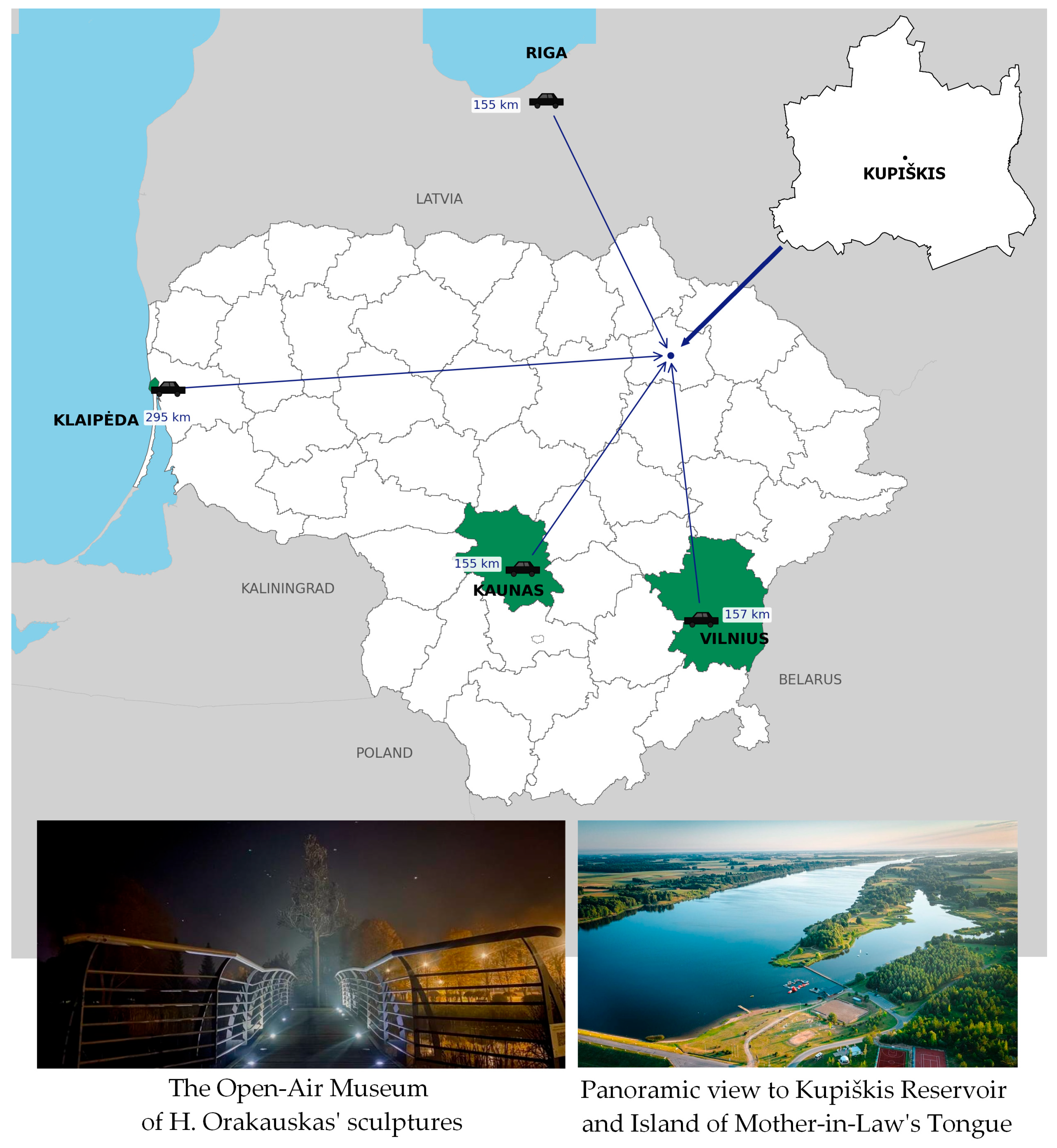
The case is Kupiškis District Municipality in north-eastern Lithuania (see Figure 1). It represents a peripheral rural context within a Central and Eastern European setting, characterised by low-density settlement patterns, demographic pressures, and comparatively modest tourism flows (Kupiškio turizmo informacijos centras, 2024). At the same time, it constitutes an information-rich case for examining implicit creative tourism in weakly institutionalised form. The municipality combines landscape assets, local heritage, educational activities, craft practices, community events, and symbolic narratives that may support participatory and experience-based tourism, even if these are not formally organised under the label of creative tourism. The case is therefore relevant for examining how creative tourism may emerge outside established networks, labels, and policy frameworks.

3.2. Data Collection and Participant Selection

Data collection combined two qualitative methods: a multi-stakeholder focus group and semi-structured interviews. This enabled comparison between collectively articulated understandings of local tourism development and more detailed accounts from key actors involved in experience provision, intermediation, and local governance (Guest et al., 2013).
The focus group was conducted in May 2024 at Adomynė Manor in Kupiškis District and involved 19 participants from across the local tourism and place-development field. Participation was based on an open invitation circulated among relevant local stakeholders, resulting in voluntary attendance rather than targeted sampling. Participants included local entrepreneurs and service providers, cultural workers, NGO representatives, municipal staff, and intermediary organisations, including the Local Action Group and the Kupiškis Tourism and Business Information Centre. The purpose of the focus group was not statistical representativeness, but the elicitation of a broad range of locally situated perspectives on tourism experiences, place identity, and development constraints. The discussion lasted approximately two hours and addressed existing tourism offers, participatory and co-creative elements in current practices, place identity and symbolic resources, and constraints and future visions for destination development (Guest et al., 2013). Detailed data sources, units of analysis and participants descriptions are represented in Table 2.
Between June and September 2024, eight semi-structured interviews were conducted with key informants selected through purposive sampling. Selection was guided by three criteria: direct involvement in tourism development, tourism intermediation, or experience provision; familiarity with local initiatives, resources, and development constraints; and the ability to reflect from a strategic, organisational, or practice-based perspective. The interview dataset comprised one small-group interview with two municipal representatives (coded MUN), one small-group interview with four Tourism and Business Information Centre staff members (coded TIC), one interview with the Local Action Group representative (coded LAG), and five individual interviews with private-sector providers (coded B1–B5). The private-sector interviewees represented different segments of small-scale rural experience provision, including water-based leisure, educational activities, mobile entertainment and events, accommodation, and slow or educational tourism. Interviews lasted approximately 30 to 120 min.
Interviews followed a semi-structured protocol using broad open-ended questions rather than a fixed questionnaire, which supported comparability while allowing locally specific interpretations to emerge (Guest et al., 2013; Brinkmann, 2014). The term creative tourism was not imposed as an interview category; instead, follow-up probes explored how respondents described participatory experiences, local distinctiveness, host–guest interaction, coordination, and visibility in their own terms. Questions addressed the informant’s role; examples of experiential, participatory, or creative formats; use or avoidance of the “creative tourism” label; interpretations of place identity and symbolic resources; and reflections on coordination, seasonality, and scale constraints.
Interviews were conducted in Lithuanian, audio-recorded, transcribed verbatim, and anonymised. They were analysed in Lithuanian, while illustrative quotations included in the article were translated into English by the research team. To preserve meaning, translations prioritised semantic equivalence over literal wording; minor edits were made where necessary for readability without altering content.
The focus group was documented through structured near-verbatim notes taken independently by two members of the research team and consolidated immediately after the session into a single written protocol. It is therefore treated as note-based evidence rather than a full transcript and used primarily to capture shared understandings, collective framings, and areas of convergence or tension across stakeholders, rather than to analyse interactional dynamics in detail.

3.3. Data Analysis

The analysis followed reflexive thematic analysis as an iterative and interpretive approach to identifying patterned meaning across the qualitative material (Braun & Clarke, 2019). It began with repeated reading of the interview transcripts and the focus group protocol, supported by analytic note-taking. Initial codes were generated inductively in relation to participatory practices, co-creation, spatial activation, symbolic narratives, local innovation, and affective experience, and were subsequently refined through repeated engagement with the dataset.
Candidate themes were developed through interpretive attention to similarities, differences, and tensions across stakeholder categories (MUN; TIC; LAG; B1–B5; FG). In a later phase, these themes were considered in dialogue with the theoretical framework presented in Section 2. Theory was therefore used as a sensitising frame for interpretation rather than as a deductive coding scheme. The notion of a latent experiential portfolio likewise informed interpretation as a sensitising concept rather than a predefined classificatory category (Bowen, 2006).
To illustrate how this process worked in practice, one example of theme construction can be given. Initial codes such as “shared doing”, “cooking together”, “small-group session”, “host presence in delivery, and “no hired staff” were grouped under a broader theme of small-scale formats and host involvement, as these codes shared an emphasis on direct interpersonal engagement and deliberately limited scale. Similarly, codes such as “route mapping”, “reservoir as anchor”, “loop towards manor”, and “cycling path” were consolidated under routes, loops, and spatial connection, reflecting a recurring pattern in which respondents described efforts to link dispersed places and activities into more legible visitor pathways. Across the dataset, this iterative process of code grouping, comparison, and theme refinement continued until the research team judged that the themes offered a coherent and analytically productive account of the material.
Results are presented narratively, with illustrative quotations selected to show how the themes were expressed across participant groups.

3.4. Trustworthiness and Ethics

Credibility was strengthened through the use of multiple qualitative sources and through attention to similarities, differences, and tensions across stakeholder groups. Analytical transparency was supported through documentation of coding and theme development decisions and through the use of illustrative quotations across participant groups (Braun & Clarke, 2019; Nowell et al., 2017).
Because the focus group was not audio-recorded and transcribed verbatim, it was used primarily as supplementary contextual material alongside the interview transcripts. This limitation was taken into account in interpretation, and focus group material was used mainly to support the identification of shared framings and stakeholder-level convergences or tensions.
All participants provided informed consent prior to participation. Interview excerpts were anonymised, and quotations were translated from Lithuanian into English by the authors with attention to preserving meaning and context.

4. Results

The empirical findings are organised around the analytical dimensions of the latent experiential portfolio introduced in Section 2.4. Each section examines a different aspect of the local experience base: its dispersed resource and activity configuration (Section 4.1), its participatory and educational formats (Section 4.2, Section 4.3 and Section 4.4), its micro-entrepreneurial character (Section 4.5 and Section 4.6), and its symbolic narratives (Section 4.7). Across all sections, attention is directed both to what is present and to what limits consolidation into a coherent and consistently bookable destination offer.

4.1. A Diverse but Weakly Integrated Experience Base

Across the focus group and interviews, local stakeholders described Kupiškis District as a destination with a wide and distributed base of activities, services, and symbolic resources. At the same time, respondents repeatedly pointed to the difficulty of connecting these elements into a coherent and externally communicable offer. This view was visible early in the focus group, where participants noted that Kupiškis still lacks a clear and externally legible differentiator: “Kupiškis lacks one clear ‘hook’ that would differentiate it nationally and internationally… questions remain about how to present Kupiškis beyond the locality and what symbolism, souvenirs, or representative gifts could be used” (FG notes). At the same time, this concern was not framed as a lack of attractions, but as a difficulty of presenting existing elements in a recognisable way.
The focus group also referred directly to the problem of coordination and information flow. According to the notes, participants emphasised that “It would be desirable for information to ‘flow’ into the Tourism and Business Information Centre, and for the system to have a clear overall coordinator” (FG notes). Similar concerns appeared in the interviews. One respondent stated: “The main problem is that everyone works separately… they do not even know whom to tell that they are organising an event… and how to publicise it. There is no system…” (LAG). Another institutional respondent summarised the same issue more sharply: “There is absolutely no governance structure.” (TIC). These accounts indicate that local actors see the district as containing many separate activities and initiatives, but lacking a clear mechanism for combining and communicating them.
Substantively, the material points to a wide and distributed experience base. In the focus group, stakeholders referred to “the Kupiškis reservoir and related water activities”, “a considerable amount of educational activities, authentic cultural and culinary heritage”, and “local events, exhibitions, town celebrations” (FG notes). Mobility was also discussed as part of the experience base, including the statement that “A cycling route stretches from Latvia through Kupiškis” (FG notes). These examples suggest that variety is not seen as a weakness in itself. Rather, respondents repeatedly described it as a potential strength that remains difficult to assemble into one destination-facing proposition.
The dataset further shows that stakeholders can already identify concrete service hubs and experience nodes that function as recognisable parts of the local offer. In the focus group, participants named specific micro-offer hubs such as “Brolių medus, Renata’s gardens, Hops house, Outcrop, House on water (campsite… café…, fishing)” (FG notes). This perception was echoed in an interview, where one respondent remarked: “We have all the parts; we just need to assemble them coherently” (TIC). The material therefore points to a resource-rich but weakly coordinated portfolio in which the central problem concerns how dispersed elements might be linked into more visible, communicable, and consistently bookable visitor journeys.
Notably, local actors rarely used the label “creative tourism” itself. Instead, they described local practices through the vocabularies of education, nature- and water-based leisure, routes and loops, local events, and identity symbols. At the empirical level, however, these same practices were repeatedly associated with direct involvement, learning, host presence, and local distinctiveness.

4.2. The Reservoir as a Central Activity and Experience Hub

Across the focus group and interviews, the reservoir area recurred as one of the most important points of reference in local tourism development. Rather than being treated as a passive natural feature, it was described as a place around which multiple activities, services, and experiential possibilities could be organised. One private-sector respondent expressed this especially clearly: “I always saw the reservoir as Kupiškis’ attraction centre—as a theme to latch onto” (B5).
This statement positions the reservoir not only as a physical attraction, but also as a shared orientation point in local thinking about tourism. Interviews also pointed to concrete efforts to activate the reservoir through infrastructure and services. One provider stated: “We built a wakeboard park, boat rentals, and a building by the reservoir. For eight years nobody used it, but we saw potential” (B5). This account suggests a long-term process of developing the reservoir area as a site of visitor activity rather than simply appreciating it as scenery. It also shows that local actors linked the reservoir to investment decisions and to attempts to create a stronger experiential offer over time.
The focus group described the reservoir not as a single attraction, but as a cluster of experience possibilities. Participants referred to “Reservoir recreation. Water activities—boat, yachts, kayaks, catamarans” and also to “A cycling path around the reservoir, cycling routes” (FG notes). Educational and experience-oriented activities were also linked to this area in the notes, including references to “Creative and educational activities. Many tours, various educational sessions” (FG notes). Across these examples, the reservoir appears less as a stand-alone attraction than as a space to which multiple activity types can be attached.
Several sources also suggest that the reservoir helps connect otherwise dispersed parts of the local supply. Respondents repeatedly associated it with routes, movement, return visits, accommodation, and event development. One municipal representative acknowledged that the reservoir area has been the primary site of tourism activation, though driven largely by private rather than public initiative: “The reservoir has been activated to some degree, but that is mostly down to private business initiative” (MUN). It appears in the dataset as both a physical setting and a shared symbolic reference point through which local actors describe what Kupiškis already is and what it could become more coherently in the future.
These accounts indicate that the reservoir functions as a central spatial anchor in the district’s tourism landscape. Its significance in the material lies not only in the activities located there, but in its repeated role as a common point around which other experiences can be imagined, linked, and communicated. As one institutional actor summarised: “We have all the parts; we just need to assemble them coherently” (TIC).

4.3. Routes, Loops, and Repeat Participation

A further recurring theme in the dataset concerns the mobilisation of local resources into routes, loops, and repeatable experience structures. Respondents referred to route-making not simply as a matter of signposting or promotion, but as a practical way of organising movement through the district and connecting otherwise separate places and activities. One private-sector actor described this very concretely: “I mapped the objects around the reservoir, created routes; the route is a loop towards Stirniškiai manor” (B5). This account shows route-making as an activity of ordering and linking, rather than merely listing what exists.
The same respondent also associated routes and activity formats with repeated participation over time: “I used to organise public kayak trips for locals; people came from Rokiškis, Anykščiai, Utena and rented equipment” (B5). Another example referred to cycling-related invitations that later led to attendance at other events: “We invited cycling enthusiasts from Ukmergė and Panevėžys. We got acquainted, and then they came to other events” (B5). These statements indicate that routes and open participation formats were used not only to attract first-time visitors, but also to build familiarity and return engagement.
Across the material, routes were therefore described as practical structures that connect places, stories, and activities over space and time. They were associated with loops, sequence, movement, and recurrence. In addition, institutional actors referred to the increasing inclusion of routes in brochures, maps, and destination materials, suggesting that at least some route-based knowledge is being translated into more stable visitor-facing formats.
What emerges here is not a fully standardised route system, but a local effort to connect dispersed resources through itineraries, loops, and repeated participation formats. The evidence suggests that route-making is one of the main practical ways in which local actors try to move from separate resources toward more recognisable visitor journeys.

4.4. Spatial Activation and Governance-Related Constraints

Another pathway of experience development described in the material concerns the activation of underused sites through relatively modest infrastructural interventions that make gatherings, events, and small-scale activities possible. Respondents referred to several places whose tourism relevance increased not through large-scale investment, but through the gradual addition of enabling conditions such as electricity, access, event use, or small service functions.
One provider described the activation of a local island through a practical proposal that later gained institutional support: “I proposed the Uošvienės liežuvio island as a venue for events. Now the municipality rents the island. The island got going; we installed electricity” (B5). This account links place activation to modest infrastructure and formalised use arrangements rather than to large capital development. The same logic appeared elsewhere in the data, where respondents referred to underused places becoming more relevant once a basic function, event role, or visitor-facing use was introduced.
The material also includes examples in which event development was strongly tied to collective participation rather than passive attendance. One interviewee described a format based on catching and preparing food together: “I organised crayfish catching competitions… 200 people participated… We cooked crayfish together” (B5). Here, the experience is described not only as an event taking place in space, but as one built through shared activity, embodied involvement, and co-presence. Similar references across the dataset linked local places to gatherings, seasonal events, and community-oriented formats in which the site itself became meaningful through use.
At the same time, respondents repeatedly pointed to the governance conditions under which such activation unfolds. One interviewee summarised the situation in strongly practical terms: “There are activities, there is willingness, but… those documents just lie in offices and do not move” (B1). Municipal respondents also acknowledged that implementation often moved slowly, even when community initiative was visible. According to one municipal account, “We know the community is active, but the documents take time… that’s the system” (MUN). These statements suggest that the activation of new or underused sites depends not only on local initiative, but also on whether administrative processes allow those initiatives to move forward.
Governance-related constraints also appeared in relation to small-scale mobile and event-based services. One provider explained that public space fees could exceed the realistic earnings of a small temporary attraction: “I can earn a maximum of 100 euros per day from a bouncy castle, but the fee alone can reach 150 euros” (B3). In the interview, this was directly linked to reduced participation in local events and a shift toward neighbouring districts with lower costs. The material therefore indicates that the activation of experience-ready venues in Kupiškis depends not only on ideas and willingness, but also on access conditions, implementation tempo, and the practical affordability of using local space.

4.5. Entrepreneurial Prototyping and Project-Based Experimentation

A pronounced entrepreneurial orientation is visible in how respondents described the development of new experiences. Activities were frequently narrated as pilots, prototypes, or project-based initiatives that required testing, adjustment, and the gradual accumulation of material conditions. Rather than describing finished products from the outset, interviewees often spoke about trying ideas, building partial elements, and exploring whether certain formats could work in practice.
One respondent outlined an education-oriented expansion in operational terms: “We are preparing a project now; we want to start fishing education activities for children… we will buy boats, motorboats, modern equipment, and there will be shelters.” (B1). This account shows that experience development was linked to specific equipment, spatial arrangements, and planned support structures. It also indicates that learning-oriented formats were treated as something that could be deliberately built and prepared rather than simply improvised.
The material also contains more ambitious examples of entrepreneurial imagination combined with implementation difficulty. A detailed account concerning Žento sala illustrates this especially well: “The biggest challenge and difficulty is Žentas Island in the reservoir… it would be possible to clear the windfallen trees, make a path around the island, build a few cabins, create a ‘wow’ effect, and add a bunker element… there are activities, there is willingness, but the documents lie in offices and do not move.” (B1). This quote shows that respondents were not only naming resources but actively imagining their transformation into structured experience formats. At the same time, it demonstrates how such ideas may remain suspended when formal permissions, land use decisions, or institutional follow-up do not materialise.
This problem was also described from a system-level perspective. One respondent stated: “We see creative ideas fail because of administrative standstill” (LAG). Another summarised the fragility of experimentation in a more concise way: “Prototypes give us a chance to test, but without follow-up, they vanish” (TIC). These accounts suggest that pilot activity and experimentation are not absent in Kupiškis; rather, they are present but vulnerable. Respondents repeatedly associated prototyping with project cycles, temporary momentum, and the risk that ideas remain unfinished once institutional support or coordination weakens.
The focus group material also referred to prototyping through gastronomy, educational activities, and routes, for example in the mention of “a route of 15 non-repeating places… five local prototypes… and the educational format ‘Arts of Flavours’” (FG notes). This indicates that local actors are already experimenting with multi-site and thematic structures. The evidence therefore shows that entrepreneurial prototyping is an active part of local tourism development, but that its consolidation depends heavily on follow-up, continuity, and coordination beyond the initial project or testing phase.

4.6. Small-Scale Formats, Seasonality, and Visibility

A distinct characteristic of the dataset is the emphasis on micro-formats, small-group interaction, and weekend-oriented temporal rhythms. Rather than relying on one dominant flagship attraction, providers described tourism activity through multiple stations, short-distance movement, intimate formats, and combinations of accommodation, education, and leisure within relatively short stays.
One respondent described this logic explicitly through a station-based model: “I plan to have 12 rest areas (stations)… Over the weekend they choose 2–3 overnight stays, and 3–4 educational sessions take place” (B4). The same interview also linked these formats to sensory and locally specific elements, such as “breakfasts with herbs, roots…” (B4). Another example referred to a designed emotional experience within a route-like structure: “At the seventh stop, participants are asked to shout out everything that is weighing on their hearts” (B4). These examples indicate that some local actors are already thinking in terms of multi-stop, intimate, and embodied experience sequences rather than singular attractions.
The material also suggests that small-group formats are seen as advantageous in local conditions. One provider expressed this directly: “Businesses that offer educational activities for small groups win” (B5). Small scale was not presented only as a limitation, but also as a way to preserve direct contact, manageable participation, and host presence. This was particularly clear in one interview where authenticity was explicitly linked to limited expansion: “We want to maintain authenticity and do not want to hire additional human resources for expansion. We run the business ourselves—two twin brothers—and without our direct involvement the image of our business would lose meaning.” (B2). Here, the respondent clearly associated value with direct involvement and treated scale expansion as potentially diminishing the experience.
Respondents also described local innovation as quiet, adaptive, and often seasonally embedded. One interviewee gave a particularly vivid winter example: “We are the only ones in Lithuania with cabins on the ice… and in winter you sit under your shirt, get cold, and fish” (B1). This suggests that local actors do not rely only on standard formats, but also experiment with distinctive seasonal adaptations tied to local practices and environmental conditions.
Visibility in this context was also described through relatively informal channels. One actor referred to the rapid spread of a small fishing-related video: “A video of a child catching a pike-perch reached 36,000 people in two weeks… now [the page] has 4500 Facebook followers” (B1). Demand itself was described as strong but unevenly distributed over time. One provider stated: “Weekends are fully booked all summer; even in September they remain occupied, while weekdays still have gaps” (B1). Municipal respondents also referred to the catalytic role of particular private initiatives, including a camping site near the reservoir that was seen as increasing local tourism activity after opening (MUN).
The material thus shows that local tourism activity is organised through modest-scale experience formats, strong host involvement, and pronounced temporal concentration. It also indicates that visibility often depends on organic communication channels, seasonal innovation, and a limited number of enabling service nodes.

4.7. Identity Narratives as Experiential Design Material

Beyond nature and activity-based offers, respondents repeatedly referred to symbolic resources and shared narratives as material that could be translated into visitor-facing formats. In the dataset, narratives were not discussed only as abstract identity markers, but as possible routes, installations, educational formats, themed stops, festivals, and recurring motifs that could help make the destination more distinctive. These narratives and their experiential operationalisation are described in Table 3.
This symbolism was stated explicitly at the institutional level. One respondent argued that “The district definitely should have symbolism and its own slogan… that can be adapted” (TIC). In the focus group, this discussion became more concrete. One of the clearest examples concerned giants as a local theme: “Giants as a theme—the land of giants, a giants’ legend as part of Kupiškis’ identity… the idea is to materialise giants through footprints, pipes, and other scattered items” (FG notes). This example shows that symbolism was being discussed in practical, spatial, and experience-oriented terms rather than only in abstract branding language.
A second narrative axis concerned flax. Focus group participants referred to “Flax and a flax route… flax symbolism is depicted in the coat of arms” (FG notes), and also mentioned the idea of “planting a flax field” (FG notes). Here again, symbolism was linked to a visual attraction, route element, and possible experiential anchor. Jewish heritage was discussed in similarly operational terms, for example in the suggestion to “highlight the legacy of the Kupiškis Jewish community through objects and educational activities” (FG notes). Rather than treating heritage only as historical background, respondents described it as something that could be materialised through specific educational and object-based formats.
A further example concerned humour and event atmosphere. Focus group participants referred to “a humour prism in events” and gave the example of the “Mother-in-law’s Tongue” festival (FG notes). In another narrative line, wedding traditions were presented as a locally meaningful repertoire that could be translated into distributed experience design. One respondent suggested that “symbolism could be linked to Kupiškėnų vestuvės through “stations” marking different wedding anniversaries and even a central ceremony location on the island” (TIC).
Across these examples, narrative resources were repeatedly discussed as usable material for visitor-facing formats. At the same time, respondents also indicated that such narratives required guidance, curation, and stronger direction if they were to become more than isolated ideas. This need was finalised by one Tourism and Business Information Centre representative: “Show us the path, the direction” (TIC). The material therefore suggests that local narratives are already treated as part of the district’s experiential potential, but that their translation into stable and communicable formats remains incomplete.
To synthesise the empirical material in relation to the analytical framework introduced earlier, Table 4 summarises how the core characteristics of creative tourism are reflected in the Kupiškis case.
The results indicate that the strongest empirical evidence concerns participatory learning, relational co-production, small-scale interaction, and local embeddedness, although these elements remain only partly consolidated at destination level.

5. Discussion

The findings suggest that creative tourism in Kupiškis District is best understood not as a clearly consolidated destination offer, but as a dispersed and only partly articulated experiential base. Across the empirical material, local actors referred to educational activities, water-based leisure, symbolic narratives, small entrepreneurial initiatives, and experience nodes that already display several characteristics associated with creative tourism, including participation, host involvement, local embeddedness, and small-scale interaction. At the same time, these practices remain unevenly visible, weakly coordinated, and only partly translated into coherent destination-level offers. Creative tourism in Kupiškis therefore appears to exist primarily as an empirically observable set of practices rather than as a fully articulated tourism category.
This helps explain why the destination should be understood neither as lacking experiential resources nor as a fully developed creative tourism destination. Rather, the findings point to an intermediate condition in which relevant practices are already present, but remain only partly assembled into a recognisable and consistently bookable visitor offer. Read through the analytical lens developed in this article, the case suggests the presence of a latent experiential portfolio: a locally grounded configuration in which experiential substance exists prior to full institutionalisation, branding, or destination-level consolidation. In this study, the term does not denote a separate model of destination development, but serves as a sensitising concept for describing situations in which tourism-relevant experiential practices are present yet remain only partly articulated, coordinated, communicated, or rendered bookable as tourism.
The case also draws attention to a developmental condition that is less visible in much of the existing empirical literature. A large share of creative tourism research has examined recognised initiatives, organised networks, certified practices, or structured programmes in destinations where the field is already relatively visible and institutionalised (Bakas et al., 2019; Duxbury et al., 2021; Remoaldo et al., 2022; Baixinho et al., 2023). By contrast, the present findings point to a pre-consolidation stage in which stakeholders recognise experiential value but have limited capacity to stabilise, connect, and communicate it at destination level. In this respect, the case makes the pre-network and pre-formatting phase of creative tourism development more visible, showing how dispersed participatory practices may persist before they are assembled into routinised and clearly communicable destination offers (Duxbury & Richards, 2019; Duxbury et al., 2021; Richards et al., 2025).
A further implication concerns the way such practices are understood locally. Respondents rarely described them explicitly as creative tourism. Instead, they spoke in the language of education, family leisure, water-based activities, routes, local stories, and attractive experiences. The absence of the label did not imply the absence of the underlying logic. What emerged from the interviews and focus group closely parallels mechanisms emphasised in creative tourism scholarship, especially learning by doing, host–guest interaction, small-group participation, and strong local embeddedness (Tan et al., 2013; Bruin & Jelinčić, 2016; Duxbury & Richards, 2019). This supports a practice-based rather than label-based identification of creative tourism. At the same time, the findings suggest that not all destination elements should be treated as creative tourism in a direct sense. Features such as the reservoir, local routes, symbolic narratives, and underused sites are better understood as enabling conditions, spatial anchors, or supporting structures through which creative tourism may become more legible and more easily assembled. This distinction helps avoid an overly expansive use of the concept.
The findings further suggest that destination coherence in Kupiškis depends less on one dominant product than on a small number of connective mechanisms. The reservoir functions as a central spatial and symbolic anchor around which multiple activity types and experiential formats may be organised. Route-making likewise appears to work not only as wayfinding or promotion, but also as a practical means of linking places, sequencing experiences, and encouraging repeated engagement. Identity narratives, in turn, help translate dispersed resources into more legible experiential threads, although symbolic richness alone does not produce tourism offers without curation and operational translation. Together, these findings suggest that in peripheral rural settings the consolidation of creative tourism may depend on how dispersed practices, meanings, and settings are connected rather than on the existence of a single flagship attraction or strongly formalised destination structure (Gato et al., 2020; Richards, 2020, 2021; Duxbury et al., 2021).
The analysis also points to the importance of coordination, continuity, scale, and temporal fit. Respondents referred to interrupted follow-up after projects, uneven communication between actors, slow administrative procedures, and the absence of a clear coordinating structure. In Kupiškis, this appears less as a lack of ideas or creative resources than as a difficulty in maintaining continuity and assembling existing elements into more stable destination configurations. From a governance perspective, the Kupiškis case illustrates a condition in which bottom-up initiative is relatively strong, but institutional follow-through remains weak. This resembles what destination governance literature describes as a coordination gap: a situation where local actors generate ideas, activities, and experimental offers, but where the institutional arrangements needed to connect, sustain, and make them visible are underdeveloped or slow to respond (Bramwell & Lane, 2011; Chaperon & Bramwell, 2013). In peripheral contexts, this gap may be especially pronounced because the actor base is thinner, intermediary structures are fewer, and administrative processes are not calibrated for the pace of small-scale entrepreneurial experimentation (Harfst et al., 2024). The case therefore suggests that governance should be understood not only as a background condition, but as a central variable that shapes whether emergent experiential practices become durable destination structure or remain episodic and vulnerable. At the same time, several respondents valued direct host presence, manageable group size, and intimacy as central parts of the experience. This suggests that, in peripheral rural settings, small scale may function not only as a structural limitation but also as a condition of authenticity. Stronger coordination should therefore not be understood simply as standardisation or expansion, but as the possibility of making dispersed practices more visible and coherent without undermining the qualities that make them meaningful in the first place. The findings also indicate that visibility depends not only on communication and promotion, but on temporal alignment, demand rhythms, and the availability of compatible formats across different times of the week and season (Remoaldo et al., 2020a).
Taken together, these observations suggest that peripheral creative tourism may follow a developmental logic that is qualitatively different from models derived from metropolitan or programme-led contexts. In Kupiškis, the strongest evidence of creative tourism characteristics appeared in settings where scale was deliberately limited, host involvement was direct, and experiential value was tied to interpersonal proximity and locally situated knowledge. This raises the possibility that, in peripheral rural destinations, authenticity and participation may function not only as experiential qualities but also as organising principles that shape the scale, form, and developmental trajectory of creative tourism. If this interpretation holds, it implies that the consolidation of creative tourism in such settings should not be equated with conventional scaling or professionalisation, but rather with the strengthening of visibility, coordination, and narrative coherence around practices that remain intentionally small in scale. This would represent a mode of creative tourism development distinct from both the project-based model (Duxbury et al., 2021) and the urban creative-cluster model associated with larger destinations (Richards, 2011).
In broader terms, the findings extend the existing understanding of creative tourism in three ways. First, they show that a practice-based identification of creative tourism—grounded in participatory learning, relational co-production, small-scale interaction, and local embeddedness—can reveal meaningful creative tourism characteristics in settings where the concept is not formally used. This supports a shift from label-driven to criteria-driven identification, which is especially important in under-researched or weakly institutionalised contexts. Second, the findings challenge the implicit assumption that creative tourism becomes analytically visible only when it is already organised, certified, or programmatically supported. In Kupiškis, creative tourism characteristics were most clearly present in informal, modest, and host-led formats rather than in externally recognised initiatives. Third, the case suggests that the key bottleneck in peripheral creative tourism development may not be the absence of creative resources or participatory practices, but the limited capacity to articulate, coordinate, and render them legible at destination level. This reframes the development challenge from content creation to content articulation—a distinction that may be relevant for other peripheral rural destinations facing similar conditions.
Figure 2 synthesises the interpretive logic of the case. It should be read not as a universal developmental model, but as an empirically grounded summary of how a latent experiential portfolio may, under supportive conditions, become more legible and actionable through coordination, formatting, and improved destination-level visibility.
The study should nevertheless be read with caution. As a single-case qualitative study, it offers analytical transferability rather than statistical generalisability. The evidence is also stakeholder-centred and does not capture visitor perspectives in equal depth. In addition, the study presents a developing destination at one point in time, so longitudinal research would be needed to assess whether these practices stabilise, disappear, or become more explicitly articulated over time. Even so, the case contributes to current debates on creative tourism in peripheral settings by bringing evidence from an under-researched Baltic rural context into a literature still dominated by better-known and more explicitly developed examples. Most importantly, it highlights the value of examining creative tourism not only where it is already visible and formally named, but also where it exists in weaker and more dispersed forms prior to full institutionalisation. Future research could usefully examine whether similar pre-consolidation patterns appear in other peripheral rural destinations and how coordination, narrative curation, and visitor interpretation shape the longer-term consolidation of such practices.

6. Conclusions

This study suggests that creative tourism-aligned practices do exist in Kupiškis District, but not as a clearly consolidated destination offer. Rather, they appear in dispersed, small-scale, participatory, and place-embedded forms linked to educational activities, water-based leisure, symbolic narratives, routes, and micro-entrepreneurial initiatives. Although these practices are rarely named locally as creative tourism, they display several of its core characteristics, including participation, host involvement, local embeddedness, and small-group interaction. The main constraint is therefore not the absence of relevant resources, but the limited articulation, coordination, and formatting of dispersed practices into recognisable and consistently bookable visitor experiences.
Conceptually, the study contributes in three ways. First, it introduces the notion of a latent experiential portfolio to describe a pre-consolidation condition in which tourism-relevant experiential practices and meanings are present but not yet assembled into a coherent destination offer. Second, it supports a practice-based identification of creative tourism beyond formal labels and established programmes. Third, it adds empirical evidence from a peripheral rural municipality in the Baltic region, extending the geographical scope of current creative tourism scholarship.
In relation to the three research questions, the findings can be summarised as follows. Regarding RQ1, creative tourism-aligned practices in Kupiškis District take the form of educational activities, water-based leisure combined with learning, culinary and craft-related formats, small-group experiential encounters, and routes that connect dispersed local assets. These practices are not labelled as creative tourism by local actors, but they display its core characteristics, particularly participatory learning, host involvement, and strong local embeddedness. Regarding RQ2, local stakeholders understand and communicate these experiences primarily through the vocabularies of education, family leisure, local heritage, and routes rather than through the language of creative tourism. This means that relevant practices are locally meaningful but weakly legible as tourism in policy, marketing, and coordination terms. Regarding RQ3, the main conditions supporting creative tourism include the presence of a central spatial anchor (the reservoir), local entrepreneurial initiative, symbolic narrative richness, and emerging route-making practices. The main constraints include weak coordination, limited information flows among actors, slow administrative follow-up, and the absence of a clear destination-level coordinating structure. Together, these findings indicate that the central development challenge in Kupiškis is not the creation of new creative resources, but the articulation, coordination, and visibility of practices that already exist.
The findings also carry practical relevance for peripheral rural destinations where participatory tourism practices exist but remain weakly coordinated and implicitly framed. In such settings, development may depend less on creating new attractions than on strengthening coordination, narrative alignment, packaging capacity, and low-threshold support for micro-entrepreneurs. For municipalities, tourism information centres, and local action groups, the idea of a latent experiential portfolio may be useful in identifying and supporting creative practices that already exist in dispersed form but remain weakly visible as tourism.
More broadly, this study underscores the importance of recognising creative tourism not only where it is explicitly named and institutionally supported, but also where it exists in informal, dispersed, and weakly articulated forms. In many peripheral rural destinations, participatory and experience-based practices may already be present in local life—through education, craft, gastronomy, routes, and community events—without being identified as tourism-relevant by local actors or external stakeholders. The latent experiential portfolio perspective developed in this article offers a way of making such practices analytically visible and practically actionable. If creative tourism policy and research continue to focus primarily on well-established and explicitly branded cases, they risk systematically overlooking the developmental potential that already exists in the settings that may benefit from it most.
The study is limited by its single-case design and by its primary reliance on local institutional and entrepreneurial perspectives, which means that visitor-side experiences are not captured in equal depth. Future research could examine how such practices are perceived by visitors, how similar dynamics unfold in other peripheral rural destinations, and under what conditions dispersed experiential practices become more explicitly coordinated, communicated, or institutionalised over time.

Author Contributions

Conceptualization, E.G. and A.L.-Š.; methodology, E.G.; validation, E.G., A.L.-Š. and J.D.-R.; formal analysis, E.G. and A.L.-Š.; investigation, E.G., A.L.-Š., J.D.-R. and M.R.; data curation, E.G., A.L.-Š. and J.D.-R.; writing—original draft preparation, E.G., A.L.-Š. and J.D.-R.; writing—review and editing, E.G., A.L.-Š. and M.R.; visualization, J.D.-R. and M.R.; supervision, E.G.; project administration, J.D.-R. All authors have read and agreed to the published version of the manuscript.

Funding

This research received no external funding.

Institutional Review Board Statement

Ethical review and approval were waived for this study due to the internal regulations of Kauno kolegija Higher Education Institution in effect at the time the study was conducted.

Informed Consent Statement

Informed consent was obtained from all subjects involved in the study.

Data Availability Statement

The original contributions presented in this study are included in the article. Further inquiries can be directed to the corresponding author.

Conflicts of Interest

The authors declare no conflicts of interest.

References

  1. Akdemir, H., Sousa De São José, J. M., & Gonçalves, M. A. P. R. (2024). Social inclusion of older artisans through creative tourism. Anatolia, 35(4), 688–701. [Google Scholar] [CrossRef]
  2. Álvarez-García, J., Maldonado Erazo, C. P., del Río Rama, M. d. l. C., & Sánchez Fernández, M. D. (2019). Creative tourism in small cities and rural areas: A bibliographic review. Enlightening Tourism: A Pathmaking Journal, 9(1), 63–94. [Google Scholar] [CrossRef]
  3. Baixinho, A., Santos, C., Couto, G., de Albergaria, I. S., da Silva, L. S., Damião Medeiros, P., & Neves Simas, R. M. (2023). Sustainable creative tourism on islands and the pandemic: The Creatour Azores project. Island Studies Journal, 18(2). [Google Scholar] [CrossRef]
  4. Bakas, F. E., & Duxbury, N. (2018). Development of rural areas and small cities through creative tourism: The CREATOUR project. Anais Brasileiros de Estudos Turísticos, 8(3), 74–84. [Google Scholar] [CrossRef]
  5. Bakas, F. E., Duxbury, N., & Vinagre De Castro, T. (2019). Creative tourism: Catalysing artisan entrepreneur networks in rural Portugal. International Journal of Entrepreneurial Behavior & Research, 25(4), 731–752. [Google Scholar] [CrossRef]
  6. Bakas, F. E., Silva, S., & Duxbury, N. (2023). The structure and dynamics of creative tourism: An ePortfolio approach. Tourism, Culture and Communications, 25(1), 1–16. [Google Scholar] [CrossRef]
  7. Balfour, B., Fortunato, M. W.-P., & Alter, T. R. (2018). The creative fire: An interactional framework for rural arts-based development. Journal of Rural Studies, 63, 229–239. [Google Scholar] [CrossRef]
  8. Benhaida, S., Safaa, L., Perkumienė, D., & Labanauskas, G. (2024). Creative tourism: Two decades of conceptual evolution and characterization. Administrative Sciences, 14(8), 172. [Google Scholar] [CrossRef]
  9. Binkhorst, E., & Den Dekker, T. (2009). Agenda for co-creation tourism experience research. Journal of Hospitality Marketing & Management, 18(2–3), 311–327. [Google Scholar] [CrossRef]
  10. Blapp, M., & Mitas, O. (2018). Creative tourism in Balinese rural communities. Current Issues in Tourism, 21(11), 1285–1311. [Google Scholar] [CrossRef]
  11. Bowen, G. A. (2006). Grounded theory and sensitizing concepts. International Journal of Qualitative Methods, 5(3), 12–23. [Google Scholar] [CrossRef]
  12. Bramwell, B., & Lane, B. (2011). Critical research on the governance of tourism and sustainability. Journal of Sustainable Tourism, 19(4–5), 411–421. [Google Scholar] [CrossRef]
  13. Braun, V., & Clarke, V. (2019). Reflecting on reflexive thematic analysis. Qualitative Research in Sport, Exercise and Health, 11(4), 589–597. [Google Scholar] [CrossRef]
  14. Briassoulis, H. (2017). Tourism destinations as multiplicities: The view from Assemblage Thinking. International Journal of Tourism Research, 19(3), 304–317. [Google Scholar] [CrossRef]
  15. Brinkmann, S. (2014). Unstructured and semi-structured interviewing. In P. Leavy (Ed.), The Oxford handbook of qualitative research (pp. 277–299). Oxford University Press. [Google Scholar] [CrossRef]
  16. Bruin, A., & Jelinčić, D. A. (2016). Toward extending creative tourism: Participatory experience tourism. Tourism Review, 71(1), 57–66. [Google Scholar] [CrossRef]
  17. Campos, A. C., Mendes, J., Oom do Valle, P., & Scott, N. (2018). Co-creation of tourist experiences: A literature review. Current Issues in Tourism, 21(4), 369–400. [Google Scholar] [CrossRef]
  18. Carvalho, M., Kastenholz, E., & Carneiro, M. J. (2021). Co-creative tourism experiences: A conceptual framework and its application to food & wine tourism. Tourism Recreation Research, 48(5), 668–692. [Google Scholar] [CrossRef]
  19. Carvalho, R. M. F., Costa, C., & Ferreira, A. M. (2024). Multidimensional benefits of creative tourism: A network approach. Urban Science, 8(4), 196. [Google Scholar] [CrossRef]
  20. Castanho, R. A., Santos, C., & Couto, G. (2023). Creative tourism in islands and regional sustainable development: What can we learn from the pilot projects implemented in the Azores territory? Land, 12(2), 498. [Google Scholar] [CrossRef]
  21. Cawley, M., & Gillmor, D. A. (2008). Integrated rural tourism: Concepts and practice. Annals of Tourism Research, 35(2), 316–337. [Google Scholar] [CrossRef]
  22. Chaperon, S., & Bramwell, B. (2013). Dependency and agency in peripheral tourism development. Annals of Tourism Research, 40, 132–154. [Google Scholar] [CrossRef]
  23. Council of the European Union. (2023). A long-term vision for the EU’s rural areas: Council approves conclusions. Available online: https://www.consilium.europa.eu/en/press/press-releases/2023/11/20/a-long-term-vision-for-the-eu-s-rural-areas-council-approves-conclusions/ (accessed on 20 January 2025).
  24. Cruz, A. R., Perestrelo, M., Gato, M. A., & Costa, P. (2019). Connecting the dots: Contributions to the creative tourism dynamics in Portugal. Tourism & Management Studies, 15(SI), 23–32. [Google Scholar] [CrossRef]
  25. Dembovska, I., Klavinska, A., Dimanta-Svilpe, Z., & Raupeliene, A. (2023). Factors in the development of smart villages regarding tourism in the Baltic states. Worldwide Hospitality and Tourism Themes, 15(5), 549–560. [Google Scholar] [CrossRef]
  26. Dias, Á., González-Rodríguez, M. R., & Patuleia, M. (2020). Developing poor communities through creative tourism. Journal of Tourism and Cultural Change, 19(4), 509–529. [Google Scholar] [CrossRef]
  27. Dissart, J.-C., & Marcouiller, D. W. (2012). Rural tourism production and the experiential scape. Tourism Analysis, 17(6), 691–704. [Google Scholar] [CrossRef]
  28. Duxbury, N., Bakas, F. E., Vinagre de Castro, T., & Silva, S. (2021). Creative tourism development models towards sustainable and regenerative tourism. Sustainability, 13(1), 2. [Google Scholar] [CrossRef]
  29. Duxbury, N., & Campbell, H. (2011). Developing and revitalizing rural communities through arts and culture. Small Cities Imprint, 3(1), 111–122. [Google Scholar]
  30. Duxbury, N., De Castro, T. V., & Silva, S. (2025). Culture–tourism entanglements: Moving from grassroots practices to regenerative cultural policies in smaller communities. International Journal of Cultural Policy, 31(4), 497–516. [Google Scholar] [CrossRef]
  31. Duxbury, N., & Richards, G. (Eds.). (2019). Towards a research agenda for creative tourism: Developments, diversity, and dynamics. In A research agenda for creative tourism. Edward Elgar Publishing. [Google Scholar] [CrossRef]
  32. Duxbury, N., Silva, S., & De Castro, T. V. (2019). Creative tourism development in small cities and rural areas in Portugal: Insights from start-up activities. In D. A. Jelinčić, & Y. Mansfeld (Eds.), Creating and managing experiences in cultural tourism (pp. 291–304). World Scientific. [Google Scholar] [CrossRef]
  33. European Commission. (2024). Where do tourists flock in winter? EU’s warmer regions win big. Available online: https://joint-research-centre.ec.europa.eu/jrc-news-and-updates/where-do-tourists-flock-winter-eus-warmer-regions-win-big-2024-12-20_en (accessed on 20 November 2025).
  34. European Commission. (2025a). Rural vision. Available online: https://rural-vision.europa.eu/rural-vision_en (accessed on 20 November 2025).
  35. European Commission. (2025b). Unbalanced tourism: Which European destinations are potentially vulnerable? Available online: https://transport.ec.europa.eu/news-events/news/unbalanced-tourism-which-european-destinations-are-potentially-vulnerable-2025-04-29_en (accessed on 9 March 2026).
  36. European Parliament. (2021). How to tackle population decline in Europe’s regions? Available online: https://www.europarl.europa.eu/topics/en/article/20210414STO02006/what-solutions-to-population-decline-in-europe-s-regions (accessed on 13 September 2025).
  37. Eurostat. (2024). EU sees bigger share of tourists from outside Europe. Available online: https://ec.europa.eu/eurostat/web/products-eurostat-news/w/ddn-20241024-2 (accessed on 13 September 2025).
  38. Eurostat. (2025). EU sees record number of tourism nights in 2024. Available online: https://ec.europa.eu/eurostat/web/products-eurostat-news/w/ddn-20250117-1 (accessed on 20 March 2025).
  39. Faria, C., Remoaldo, P. C., Alves, J. A., & Silva Lopes, H. (2024). A bibliometric analysis on creative tourism (2002–2022). Journal of Tourism and Cultural Change, 22(3), 333–359. [Google Scholar] [CrossRef]
  40. Ferreira, J., Sousa, B. M., & Gonçalves, F. (2019). Encouraging the subsistence artisan entrepreneurship in handicraft and creative contexts. Journal of Enterprising Communities: People and Places in the Global Economy, 13(1/2), 64–83. [Google Scholar] [CrossRef]
  41. Florida, R. (2002). The rise of the creative class: And how it’s transforming work, leisure, community and everyday life. Basic Books. [Google Scholar]
  42. Flyvbjerg, B. (2006). Five misunderstandings about case-study research. Qualitative Inquiry, 12(2), 219–245. [Google Scholar] [CrossRef]
  43. Framke, W. (2002). The destination as a concept: A discussion of the business-related perspective versus the socio-cultural approach in tourism theory. Scandinavian Journal of Hospitality and Tourism, 2(2), 92–108. [Google Scholar] [CrossRef]
  44. Galvagno, M., & Giaccone, S. (2019). Mapping creative tourism research: Reviewing the field and outlining future directions. Journal of Hospitality & Tourism Research, 43(8), 1256–1280. [Google Scholar] [CrossRef]
  45. Garrod, B., Wornell, R., & Youell, R. (2006). Re-conceptualising rural resources as countryside capital: The case of rural tourism. Journal of Rural Studies, 22(1), 117–128. [Google Scholar] [CrossRef]
  46. Gato, M. A., Costa, P., Cruz, A. R., & Perestrelo, M. (2020). Creative tourism as boosting tool for placemaking strategies in peripheral areas: Insights from Portugal. Journal of Hospitality & Tourism Research, 46(8), 1500–1518. [Google Scholar] [CrossRef]
  47. Grönroos, C. (2011). Value co-creation in service logic: A critical analysis. Marketing Theory, 11(3), 279–301. [Google Scholar] [CrossRef]
  48. Guest, G., Namey, E. E., & Mitchell, M. L. (2013). Collecting qualitative data: A field manual for applied research. SAGE. [Google Scholar] [CrossRef]
  49. Guo, R., Kou, I. E., & Jiang, Q. (2023). Unlocking the creative potential: A case study of Luoyang city’s creative tourism development. Sustainability, 15(20), 14710. [Google Scholar] [CrossRef]
  50. Harfst, J., Syrbe, R.-U., Kern, C., Wirth, P., Sandriester, J., Pstrocka-Rak, M., & Dolzblasz, S. (2024). Cultural tourism and governance in peripheral regions. International Journal of Tourism Research, 26(4), e2733. [Google Scholar] [CrossRef]
  51. Hutárová, D., Kozelová, I., & Špulerová, J. (2021). Tourism development options in marginal and less-favored regions: A case study of Slovakia’s Gemer region. Land, 10(3), 229. [Google Scholar] [CrossRef]
  52. Islam, N., & Sadhukhan, S. (2024). Progress in creative tourism research: A review for the period 2002–2023. Asia Pacific Journal of Tourism Research, 29(4), 377–398. [Google Scholar] [CrossRef]
  53. Jurėnienė, V., & Liorančaitė-Šukienė, A. (2025). Taste as identity: The role of culture heritage in Lithuanian tourism experiences. Global Journal of Tourism Leisure and Hospitality Management, 2(5), 555598. [Google Scholar] [CrossRef]
  54. Kupiškio turizmo informacijos centras. (2024). 2024 metų lankytojų statistikos ataskaita. Available online: https://www.infokupiskis.lt/puslapiai/statistika/ (accessed on 13 September 2025).
  55. Landry, C. (2000). The creative city: A toolkit for urban innovators. Earthscan. [Google Scholar]
  56. Lane, B., & Kastenholz, E. (2015). Rural tourism: The evolution of practice and research approaches—Towards a new generation concept? Journal of Sustainable Tourism, 23(8–9), 1133–1156. [Google Scholar] [CrossRef]
  57. Lew, A. A. (1987). A framework of tourist attraction research. Annals of Tourism Research, 14(4), 553–575. [Google Scholar] [CrossRef]
  58. Lima-Almeida, L. F., Chim-Miki, A. F., Carvalho, R. M. F., & Da Costa, R. A. (2025). Creative tourism development in Brazil: An analysis of governmental plans. Tourism Planning & Development. [Google Scholar] [CrossRef]
  59. Liu, T., & Kou, I. E. (2024). Determinants for the development of creative tourism: A stakeholder perspective. Heliyon, 10(13), e33727. [Google Scholar] [CrossRef]
  60. Marujo, N., Borges, M. D. R., Serra, J., & Coelho, R. (2021). Strategies for creative tourism activities in pandemic contexts: The case of the ‘Saídas de Mestre’ project. Sustainability, 13(19), 10654. [Google Scholar] [CrossRef]
  61. Mayaka, M., Croy, G., & Wolfram Cox, J. (2018). Participation as motif in community-based tourism: A practice perspective. Journal of Sustainable Tourism, 26(3), 416–432. [Google Scholar] [CrossRef]
  62. Mei, X., Hågensen, A., & Kristiansen, H. S. (2018). Storytelling through experiencescape: Creating unique stories and extraordinary experiences in farm tourism. Tourism and Hospitality Research, 19(1), 104–113. [Google Scholar] [CrossRef]
  63. Meyer, C., Gerlitz, L., & Klein, M. (2022). Creativity as a key constituent for smart specialization strategies (S3), what is in it for peripheral regions? Co-creating sustainable and resilient tourism with cultural and creative industries. Sustainability, 14(6), 3469. [Google Scholar] [CrossRef]
  64. Noivo, M. A., Lopes Dias, Á., & Jiménez-Caballero, J. L. (2022). Connecting the dots between battlefield tourism and creative tourism: The case of the Peninsular War in Portugal. Journal of Heritage Tourism, 17(6), 648–668. [Google Scholar] [CrossRef]
  65. Nowell, L. S., Norris, J. M., White, D. E., & Moules, N. J. (2017). Thematic analysis: Striving to meet the trustworthiness criteria: Striving to meet the trustworthiness criteria. International Journal of Qualitative Methods, 16(1), 1–13. [Google Scholar] [CrossRef]
  66. OECD (Organisation for Economic Co-Operation and Development). (2020). Rural well-being: Geography of opportunities. Available online: https://www.oecd.org/content/dam/oecd/en/publications/reports/2020/10/rural-well-being_8d2d0140/d25cef80-en.pdf (accessed on 18 October 2025).
  67. OECD (Organisation for Economic Co-Operation and Development). (2025). Rural innovation pathways. Available online: https://www.oecd.org/content/dam/oecd/en/publications/reports/2025/11/rural-innovation-pathways_2336e9dd/c86de0f4-en.pdf (accessed on 20 November 2025).
  68. Pearce, D. G. (2014). Toward an integrative conceptual framework of destinations. Journal of Travel Research, 53(2), 141–153. [Google Scholar] [CrossRef]
  69. Phi, G., & Dredge, D. (2019). Collaborative tourism-making: An interdisciplinary review of co-creation and a future research agenda. Tourism Recreation Research, 44(3), 284–299. [Google Scholar] [CrossRef]
  70. Pine, B. J., II, & Gilmore, J. H. (1999). The experience economy: Work is theatre & every business a stage. Harvard Business School Press. [Google Scholar]
  71. Prebensen, N. K., Vittersø, J., & Dahl, T. I. (2014). Value co-creation significance of tourist resources. Annals of Tourism Research, 42, 240–261. [Google Scholar] [CrossRef]
  72. Qu, M., & Cheer, J. M. (2021). Community art festivals and sustainable rural revitalisation. Journal of Sustainable Tourism, 29(11–12), 1756–1775. [Google Scholar] [CrossRef]
  73. Qu, M., & Zollet, S. (2024). Regenerative creative tourism and community revitalization. Journal of Responsible Tourism Management, 4(1), 22–38. [Google Scholar] [CrossRef]
  74. Ray, C. (1998). Culture, intellectual property and territorial rural development. Sociologia Ruralis, 38(1), 3–20. [Google Scholar] [CrossRef]
  75. Remoaldo, P., Matos, O., Freitas, I., Gôja, R., Alves, J. A., Ribeiro, V., Pereira, M., & Xavier, C. (2022). An international overview of certified practices in creative tourism in rural and urban territories. Journal of Hospitality & Tourism Research, 46(8), 1546–1573. [Google Scholar] [CrossRef]
  76. Remoaldo, P., Matos, O., Gôja, R., Alves, J., & Duxbury, N. (2020a). Management practices in creative tourism: Narratives by managers from international institutions to a more sustainable form of tourism. Geosciences, 10(2), 46. [Google Scholar] [CrossRef]
  77. Remoaldo, P., Serra, J., Marujo, N., Alves, J., Gonçalves, A., Cabeça, S., & Duxbury, N. (2020b). Profiling the participants in creative tourism activities: Case studies from small and medium sized cities and rural areas from Continental Portugal. Tourism Management Perspectives, 36, 100746. [Google Scholar] [CrossRef]
  78. Ren, C., Pritchard, A., & Morgan, N. (2010). Constructing tourism research: A critical inquiry. Annals of Tourism Research, 37(4), 885–904. [Google Scholar] [CrossRef]
  79. Richards, G. (2002). From cultural tourism to creative tourism: European perspectives. Tourism, 50(3), 225–234. Available online: https://www.researchgate.net/publication/254817127_From_Cultural_Tourism_to_Creative_Tourism_European_Perspectives (accessed on 9 March 2026).
  80. Richards, G. (2009). Creative tourism and local development. In R. Wurzburger, A. Pattakos, & S. Pratt (Eds.), Creative tourism: A global conversation (pp. 78–90). Sunstone Press. [Google Scholar]
  81. Richards, G. (2010). Increasing the attractiveness of places through cultural resources. Tourism, 10(1), 47–58. [Google Scholar] [CrossRef]
  82. Richards, G. (2011). Creativity and tourism: The state of the art. Annals of Tourism Research, 38(4), 1225–1253. [Google Scholar] [CrossRef]
  83. Richards, G. (2019). Creative tourism: Opportunities for smaller places. Tourism & Management Studies, 15, 7–10. [Google Scholar] [CrossRef]
  84. Richards, G. (2020). Designing creative places: The role of creative tourism. Annals of Tourism Research, 85, 102922. [Google Scholar] [CrossRef]
  85. Richards, G. (2021). Making places through creative tourism? In N. Duxbury (Ed.), Cultural sustainability, tourism and development: (Re)articulations in tourism contexts (pp. 36–48). Routledge. [Google Scholar]
  86. Richards, G., Adie, B. A., Onderwater, L., Palang, H., Pozzi, A., Raffay-Danyi, Á., Rudan, E., Saarinen, J., Šegota, T., Smolčić Jurdana, D., Špoljarić, T., Terziyska, I., Garibaldi, R., Turnšek, M., Zadel, Z., Zocchi, D. M., Halkier, H., Ivanov, S., Ivanova, M., … Richards, G. (2025). Cultural and creative tourism in rural and remote areas: European perspectives. Tourism: An Interdisciplinary International Journal, 73(4), 771–798. [Google Scholar] [CrossRef]
  87. Richards, G., & Marques, L. (2012). Exploring creative tourism: Editors’ introduction. Journal of Tourism Consumption and Practice, 4(2), 1–11. [Google Scholar]
  88. Richards, G., & Raymond, C. (2000). Creative tourism. ATLAS News, 23, 16–20. Available online: https://research.tilburguniversity.edu/files/94861051/Richards_and_Raymond.doc (accessed on 18 January 2025).
  89. Richards, G., & Wilson, J. (2006). Developing creativity in tourist experiences: A solution to the serial reproduction of culture? Tourism Management, 27(6), 1209–1223. [Google Scholar] [CrossRef]
  90. Salsabila, A. P., Prayitno, G., Wicaksono, A. D., Nugraha, A. T., Siankwilimba, E., & Dinanti, D. (2025). Inclusive creative tourism through Batik Ciprat: Empowering individuals with intellectual disabilities in Karangpatihan village—Indonesia. Tourism and Hospitality, 6(4), 177. [Google Scholar] [CrossRef]
  91. Salvatore, R., Chiodo, E., & Fantini, A. (2018). Tourism transition in peripheral rural areas: Theories, issues and strategies. Annals of Tourism Research, 68, 41–51. [Google Scholar] [CrossRef]
  92. Santos, C., Couto, G., Albergaria, I. S. D., Silva, L. S. D., Medeiros, P. D., Simas, R. M. N., & Castanho, R. A. (2022). Analyzing pilot projects of creative tourism in an ultra-peripheral region: Which guidelines can be extracted for sustainable regional development? Sustainability, 14(19), 12787. [Google Scholar] [CrossRef]
  93. Sanz-Ibáñez, C., & Anton Clavé, S. (2014). The evolution of destinations: Towards an evolutionary and relational economic geography approach. Tourism Geographies, 16(4), 563–579. [Google Scholar] [CrossRef]
  94. Saraniemi, S., & Kylänen, M. (2011). Problematizing the concept of tourism destination: An analysis of different theoretical approaches. Journal of Travel Research, 50(2), 133–143. [Google Scholar] [CrossRef]
  95. Saxena, G., Clark, G., Oliver, T., & Ilbery, B. (2007). Conceptualizing integrated rural tourism. Tourism Geographies, 9(4), 347–370. [Google Scholar] [CrossRef]
  96. Schmallegger, D., Carson, D., & Tremblay, P. (2010). The economic geography of remote tourism: The problem of connection seeking. Tourism Analysis, 15(1), 127–139. [Google Scholar] [CrossRef]
  97. Sharma, I., Lim, W. M., & Aggarwal, A. (2025). Creative tourism: Reviewing the past and charting the future. Benchmarking: An International Journal, 32(11), 109–149. [Google Scholar] [CrossRef]
  98. Smith, M. K. (2006). Issues in cultural tourism studies. Routledge. [Google Scholar]
  99. Souca, M. L. (2019). Revitalizing rural tourism through creative tourism: The role and importance of the local community. Marketing—From Information to Decision Journal, 2(2), 43–50. [Google Scholar] [CrossRef]
  100. Suriyankietkaew, S., Krittayaruangroj, K., Thinthan, S., & Lumlongrut, S. (2025). Community capitals framework for sustainable development: A qualitative study of creative tourism in Ban Chiang world heritage site. Sustainability, 17(8), 3311. [Google Scholar] [CrossRef]
  101. Tan, S.-K., Kung, S. F., & Luh, D. B. (2013). A model of creative experience in creative tourism. Annals of Tourism Research, 41, 153–174. [Google Scholar] [CrossRef]
  102. Yin, R. K. (2014). Case study research: Design and methods (5th ed.). SAGE. [Google Scholar]
  103. Zhou, L., Cheng, X., Wall, G., & Zhang, D. (2023). Entrepreneurial networks in creative tourism place-making: Dali village, Wuhan, China. Tourism Geographies, 25(1), 220–242. [Google Scholar] [CrossRef]
  104. Zou, T., Xi, X., & Hu, X. (2024). Mapping the evolution and future directions of creative tourism: A comprehensive bibliometric analysis. Asia Pacific Journal of Tourism Research, 30(1), 72–91. [Google Scholar] [CrossRef]
Figure 1. Kupiškis District location in Lithuania (Kupiškio turizmo informacijos centras, 2024).
Tourismhosp 07 00101 g001
Figure 2. Interpretive synthesis derived from the Kupiškis case: from latent experiential practices to greater destination visibility and bookability. Note: The notion draws attention to experiential elements that may already exist locally but remain only partly connected, visible, or institutionally recognised as tourism.
Tourismhosp 07 00101 g002
Table 1. Conceptual boundaries of creative tourism in relation to adjacent tourism forms.
DimensionCultural TourismExperiential TourismCommunity-Based TourismCreative Tourism
Primary orientationHeritage and cultural consumptionMemorable and immersive experienceCommunity process, participation, and local benefitParticipatory learning and creative engagement
Visitor roleObserver or audienceImmersed participantCommunity-engaged visitorActive participant and co-creator
Core value logicInterpretation of cultureAffective and sensory experienceLocal participation and collective benefitParticipatory learning and relational co-production
Typical mode of engagementObservation and interpretationImmersion and experienceCommunity interaction and benefit-sharingSmall-scale interactive participation
Relation to placeCultural setting as object of visitationExperience settingCommunity as host and beneficiaryLocal embeddedness in skills, practices, and everyday life
Source: Authors’ elaboration based on Richards (2002, 2010, 2011), Smith (2006), Binkhorst and Den Dekker (2009), Tan et al. (2013), Prebensen et al. (2014), Bruin and Jelinčić (2016), Mayaka et al. (2018), and Duxbury and Richards (2019). Note: The figure is intended as a heuristic comparison rather than a rigid typology. Creative tourism overlaps with adjacent tourism forms, but is distinguished here by participatory learning, relational co-production, small-scale interactive formats, and strong local embeddedness.
Table 2. Data sources, units of analysis, and participants.
Data SourceTiming & SettingUnits (n)Participants (n)Stakeholder CompositionCoding in Text 1
Multi-stakeholder focus groupMay 2024, Adomynės Manor (Kupiškis District)1 session19Local entrepreneurs and service providers; cultural workers; NGO leaders; municipal staff; intermediary organisations (incl. Local Action Group; Tourism & Business Information Centre)FG
Semi-structured interviewsJun–Sept 2024 (Kupiškis District)8 interviews12Kupiškis district municipal representatives: small-group interview (n = 2). MUN;
Tourism and Business Information Centre staff: small-group interview (n = 4). TIC;
Local Action Group representative (n = 1)LAG;
Private-sector actors: 5 individual interviews B1–B5
1 FG—focus groups, TIC—Tourism & Business Information Centre; MUN—Municipality; LAG—Local Action Group; B1—water-based leisure (cabins; fishing); B2—educational activities (local products); B3—mobile entertainment/events; B4—accommodation (slow/educational tourism); B5—accommodation, water-based leisure.
Table 3. Identity narratives and their experiential operationalisation in Kupiškis District.
Narrative AxisSymbolic ResourceExperiential FormatCurrent Status
GiantsLocal mythology, Alekna (Olympic champion)Footprints, pipes, photo points distributed across destinationConceptual
FlaxCoat of arms, craft historyFlax route, planted flax field as visual attractionPartially developed
Jewish HeritageHistorical community (~42% pre-WWII)Objects, educational activitiesProposed
HumourLocal character, island nameMother-in-law’s Tongue” festivalEvent-based
WeddingTradition of Kupiškis WeddingAnniversary stations, ceremony location on island, sculpture parkEmerging
GreimasSemiotician born in regionBearded little creature” motifFragmentary
Table 4. Core characteristics of creative tourism and empirical evidence from Kupiškis District.
Core CharacteristicsAnalytical Expectation from the LiteratureEmpirical Evidence from Kupiškis District
Participatory learningVisitors engage through learning by doing, skill development, or guided educational involvementFishing education initiatives; educational sessions; gastronomy-related formats such as Arts of Flavours; proposals for hands-on activities for children
Relational co-productionExperience value is created through direct host–guest interaction and shared doing rather than one-way deliverySmall-group educational activities; communal preparation and shared consumption (e.g., crayfish events); direct host involvement in experience delivery
Small-scale formatsExperiences are organised in intimate, host-led, manageable formats rather than mass-scale provisionSmall-group sessions; station-based and route-based micro-formats; weekend micro-circuits; explicit preference for maintaining authenticity over expansion
Local embeddednessExperiences are anchored in local resources, meanings, stories, and environmental or cultural settingsReservoir-centred activities; routes linked to local sites; giants, flax, Jewish heritage, humour, and wedding traditions as locally grounded narrative material
Disclaimer/Publisher’s Note: The statements, opinions and data contained in all publications are solely those of the individual author(s) and contributor(s) and not of MDPI and/or the editor(s). MDPI and/or the editor(s) disclaim responsibility for any injury to people or property resulting from any ideas, methods, instructions or products referred to in the content.