Article

A Study on Deriving Experiential Attributes of Online Guided Tours: A Convergent Approach Using Participant Reviews and the Experience Economy Theory


College of Liberal Arts, Kyonggi University, 154-42, Gwanggyosan-ro, Yeongtong-gu, Suwon-si 16227, Gyeonggi-do, Republic of Korea
Tour. Hosp. 2026, 7(2), 44; https://doi.org/10.3390/tourhosp7020044

Submission received: 20 December 2025 / Revised: 30 January 2026 / Accepted: 3 February 2026 / Published: 10 February 2026
(This article belongs to the Special Issue Digital Transformation in Hospitality and Tourism)

Abstract

Online guided tours have become an essential form of non-contact tourism, yet the experiential attributes shaping participants’ digital tour experiences remain underexplored. This study aims to identify the core experiential dimensions of online guided tours by analyzing user-generated review data and interpreting the findings through the experience economy framework. A dataset of 1506 participant reviews was collected from major online guided tour platforms and analyzed using text mining techniques, including TF-IDF and Latent Dirichlet Allocation (LDA). The results reveal the following seven experiential attributes: entertainment, education, esthetics, escapism, presence, interactivity, and digital environment. These findings indicate that online guided tours extend beyond traditional 4E experience dimensions, incorporating digitally mediated elements such as real-time communication and platform-driven immersion. The proposed “4E + 3D Model” captures the hybrid nature of digital tourism experiences, combining classic experiential factors with technology-enabled components. This study contributes to tourism experience research by empirically validating an expanded experiential structure suitable for digital contexts. It also demonstrates the value of user-generated review analysis for deriving authentic experiential insights. The results provide practical implications for enhancing online guided tour design, emphasizing real-time interactivity, digital esthetics, and system stability to improve participant experiences in virtual tourism settings.

1. Introduction

The COVID-19 pandemic has brought about significant structural changes across the global tourism industry. With physical movement restricted, tourists have experienced new forms of non-contact tourism that can replace traditional, face-to-face tourism activities. In this process, online-based tourism services have rapidly expanded (UNWTO, 2021). In particular, “Online Guided Tours”—where participants explore tourist destinations via video communication with local guides through real-time video platforms—emerged as a representative form of non-contact tourism that gained significant attention during the pandemic (Y. J. Lee et al., 2022; Travel Times, 2021).
Unlike virtual tourism, which involves simply watching pre-recorded videos, online guided tours are experiential tourism content characterized by real-time interaction and participation (J. S. Kim, 2021). Participants can react instantly to the guide’s explanations or engage in Q&A via chat within the online environment, creating a sense of presence. This participatory experience constitutes a new tourism experience formed through technological mediation, establishing a distinct “Digital Experience” domain that differs from traditional tourism centered on physical movement (Gretzel et al., 2015).
Even as the pandemic eases into an endemic phase, online tours are establishing themselves as sustainable tourism content beyond mere substitutes. Their accessibility without time or space constraints provides new tourism opportunities for groups with limited physical mobility, such as the elderly, people with disabilities, and overseas residents (Yang et al., 2021). Within the tourism industry, there is an active movement to develop this as a pillar of inclusive tourism and smart tourism.
However, despite this industrial expansion, academically, there is a significant lack of research that empirically clarifies the experiential structure of online tours and the experiential attributes of tourists. Previous studies have primarily focused on virtual tourism, augmented reality (AR) tourism, or online tourism (Guttentag, 2010; Tussyadiah et al., 2018; J. S. Kim, 2021). Furthermore, most of these studies rely on qualitative studies, survey-based quantitative approaches or subjective interpretations of researchers. Virtually none of the studies have derived empirical properties based on real-world user engagement experiences. In particular, studies exploring empirical factors by leveraging voluntary user-generated content (UGC), such as review data, are still in their infancy (D. S. Kim & Lee, 2022).
The online guided tour, which will be covered in this study, is a form of non-contact tourism, which refers to a tour conducted with a guide in real-time online. In other words, it represents a hybrid type of tourism experience that cannot be fully explained by the existing virtual tourism or experiential economy framework because it integrates real-time interaction, live narration, and digital mediated immersion. This interactive structure suggests that experiential value is dynamically co-created rather than passively consumed, highlighting a research gap in existing virtual tourism studies. This clearly raises the need for empirical classification based on experience in the context of digital mediation.
This study aims to empirically clarify the experiential structure of non-contact tourism by deriving the experiential attributes of online guided tours using participant review data and interpreting them within the framework of the experience economy theory. Specifically, in Phase 1, the literature review is conducted to derive experiential attribute items. In Phase 2, review data posted on online platforms are collected, and text mining and LDA (Latent Dirichlet Allocation) topic modeling are applied to derive the final experiential attribute items. This approach holds methodological significance as it complements traditional literature-based experiential factor research by exploring data-driven experiential attributes reflecting the language and emotions of actual participants.
Furthermore, this study aims to systematically derive the experiential attributes of virtual tours based on the experience economy theory (Pine & Gilmore, 1999). The experience economy theory applies to tourism and service industries. Through research on diverse experiences in the tourism industry, its validity as a measurement element has been verified (Gilmore & Pine, 2002; M. J. Kim & Lee, 2014; Stamboulis & Skayannis, 2003). Furthermore, experience economy theory views tourism experiences not as simple service consumption but as “engaging experiences”, providing a framework for identifying core attributes that trigger tourists’ cognitive, emotional, and behavioral responses.
Previous studies (Hahn et al., 2017; Yang et al., 2021) have reported that virtual tourism or online tours encompass various experiential dimensions such as immersion, realism, and interactivity. However, research deriving experiential attributes based on actual participant feedback data remains relatively scarce. This study distinguishes itself from previous research by being an early attempt to derive experiential attributes reflecting actual tourists’ experiences using post-tour data. Furthermore, it provides a conceptual complement reflecting that online guided tours are not merely substitutes for offline tourism but represent a new genre of tourism experience mediated by digital media. Specifically, this study has the following detailed research objectives.
First, I analyze actual participant feedback data to explore the key attributes of the online guided tour experience. Second, I reinterpret the derived experience attributes from the perspective of experience economy theory to propose an experience model in the digital environment. Third, based on the analysis results, I propose practical implications for future online-guided tour planning and platform service improvements.

2. Theoretical Background

2.1. Concepts of Non-Contact Tourism and Online Guided Tours

Non-contact tourism encompasses all forms of tourism that utilize information and communication technology (ICT) to experience tourism activities without physical travel (Gretzel et al., 2015). Following the COVID-19 pandemic, the digital transformation of the tourism industry accelerated, leading to the emergence of various forms of tourism content mediated online. Representative examples include VR (Virtual Reality)-based virtual travel, AR (augmented reality)-enhanced experiences, and online guided tours via real-time video platforms.
Online guided tours are often discussed alongside virtual tours, VR-based tourism experiences, and tourism live streaming due to their shared reliance on digital platforms. However, online guided tours are conceptually distinct in terms of how experiential value is generated. While conventional virtual tours and VR experiences primarily emphasize visual immersion and one-way information delivery (Guttentag, 2010; Tussyadiah et al., 2018), online guided tours are characterized by real-time interaction between guides and participants, enabling bidirectional communication, spontaneous feedback, and shared meaning-making during the experience (Deng et al., 2021; Dybsand, 2022).
In this context, experiential value does not emerge solely from technological immersion or destination representation, but from socially mediated interaction and temporal co-presence between participants and guides. As such, online guided tours represent a form of digitally mediated and co-created tourism experience in which experience formation is driven by interaction dynamics rather than passive content consumption. Table 1 provides a conceptual comparison of different types of non-contact tourism, highlighting their key characteristics and distinguishing features.
As such, online guided tours can be defined as a new experiential tourism type that combines the technological characteristics of existing non-contact tourism with social interaction and engagement. This represents an extension of tourism’s core elements—“sense of presence” and “relational exchange”—into the online space, making it a crucial subject for future research on digital experiential tourism (Gretzel & Koo, 2021).

2.2. Usefulness of Tourism Experience Attributes and Review Data

Tourism experiential attributes refer to the key experiential elements that tourists perceive and emotionally respond to during tourism activities (Pine & Gilmore, 1999). Traditionally, tourism experience research has primarily relied on qualitative approaches, such as surveys or interviews, to derive experiential factors (Boswijk et al., 2007). However, user-generated content (UGC), such as reviews, social media posts, and blogs, has recently gained attention as substantive data reflecting tourists’ actual experiences (Xiang et al., 2017; D. S. Kim & Lee, 2022).
The advantages of analyzing review data are as follows. First, it enables large-scale data collection, ensuring sample diversity and empirical validity. Second, it allows for the natural extraction of emotional, attitudinal, and satisfaction factors through participants’ spontaneous language use (Magnini et al., 2011). Third, combining quantitative techniques (e.g., topic modeling, sentiment analysis) enables the statistical structuring of subjective experiences (J. S. Kim, 2021).
Accordingly, analyzing tourism experiences using large-scale user-generated review data is regarded as a methodological approach that complements traditional survey-based research.
Particularly when studying non-contact, digitally based experiences like online guided tours, analyzing actual user’s online reviews holds research value due to higher validity compared to field surveys (Pantelidis, 2010; Ryu & Han, 2010; Z. Zhang et al., 2010).

2.3. Experience Economy Theory and the Application of Virtual Tours

Pine and Gilmore’s experience economy framework has provided a foundational lens for understanding experiential value in tourism, particularly through the four experiential realms of entertainment, education, esthetics, and escapism (Pine & Gilmore, 1999; Oh et al., 2007). While this framework remains theoretically robust, its original formulation was grounded in physically co-present, place-based consumption contexts. In digitally mediated environments such as online guided tours, experiential value is not only shaped by content and setting but also by real-time interaction, mediated social presence, and the active role of guides in facilitating engagement (Gretzel et al., 2015; Deng et al., 2021).
Accordingly, the experiential characteristics of online guided tours extend beyond the scope of traditional experience economy dimensions, suggesting the need for an expanded perspective that incorporates digital mediation and interaction-driven experience formation. This study positions online guided tours as an extension of experience economy theory into digitally co-created tourism contexts rather than a departure from existing experiential frameworks.
Therefore, the existing 4E factors alone cannot fully explain their experiential characteristics (Gretzel et al., 2015). Recent studies have attempted to extend or modify the 4E theory to analyze digital tourism experiences. For example, Yang et al. (2021) proposed involvement, sense of presence, and telepresence as satisfaction factors for virtual travel, while Repo and Pesonen (2022) and S. K. Lee and Park (2019) also introduced presence as a new dimension. Meanwhile, from a technical perspective, Argyriou et al. (2020) suggested dialog, scenes, and gamification as factors for virtual travel quality. Building on these discussions, this study analyzes the experiential attributes of online guided tours by applying an expanded experiential model that incorporates the traditional 4E elements alongside factors unique to the digital environment (presence and interactivity).
This aims to explore the experiential structure perceived by online guided tour participants across the following seven dimensions: “Entertainment–Education–Esthetics–Immersion–Presence–Interactivity–Digital Experience”. This can be seen as an attempt to validate the modern extension of the experience economy theory as an attempt to validate its modern extension.

2.4. Synthesis of Previous Research and Distinctiveness of This Study

Previous studies have addressed satisfaction, immersion, and behavioral intentions in virtual/online tourism and digital experiential tourism; however, most were conducted primarily through quantitative surveys, resulting in insufficient identification of the specific attributes of experiential factors (Tussyadiah et al., 2018; J. S. Kim, 2021). Furthermore, many studies applying experience economy theory have been limited to theoretical verification without utilizing actual experience data (Oh et al., 2007). Therefore, this study differs from previous research in the following aspects.
First, it attempts an empirical approach using post-big data, moving beyond the exploration of experiential factors centered on existing literature and qualitative research. Second, it combines digital experience factors with the traditional 4E framework to propose an experience model (4E + α) suitable for the online tour context. Third, it presents the derived experiential attributes as a practical research foundation that can be extended to future analyses of tourist behavioral intentions and tourism product design. This approach is expected to overcome the limitations of existing research and contribute to the academic establishment of non-contact and digital tourism.

3. Research Method

3.1. Research Procedure and Research Subjects

This study adopted a mixed-method design combining literature review and big data analysis to derive experiential attribute factors for online guided tour products. This mixed-method approach was judged to yield logically and statistically sound results (Kwag & Lee, 2018) by utilizing traditional and newly proposed methods in a complementary manner.
First, this study derives items applicable to online guided tours through prior research. Second, it utilizes review data to identify experiential attribute factors and interprets them within the framework of experiential economics theory. This procedure complements existing experiential factor exploration research, which relied on surveys or interviews, by designing a data-driven empirical research approach that reflects the language and emotions of actual users (Xiang et al., 2017; D. S. Kim & Lee, 2022). The overall process of the study proceeds as shown in Figure 1.

3.1.1. Derivation of Primary Attributes for Online Guided Tours

This study derived primary experiential attributes as shown in [Table 2], referencing the literature and various reports on virtual tours and experiential attributes traditionally used in the tourism field. While including the four factors proposed in existing experiential economy theory, the original 4E framework struggles to explain the immersion or digital characteristics provided by online guided tour. Therefore, drawing on prior research, I added interaction experience, digital experience, and sense of presence as suitable experiential characteristics for online guided tours, resulting in a total of seven factors. Subsequently, I will utilize big data analysis of participant reviews to integrate these and derive the final items.

3.1.2. Secondary Derivation of Online Guided Tour Experience Attributes

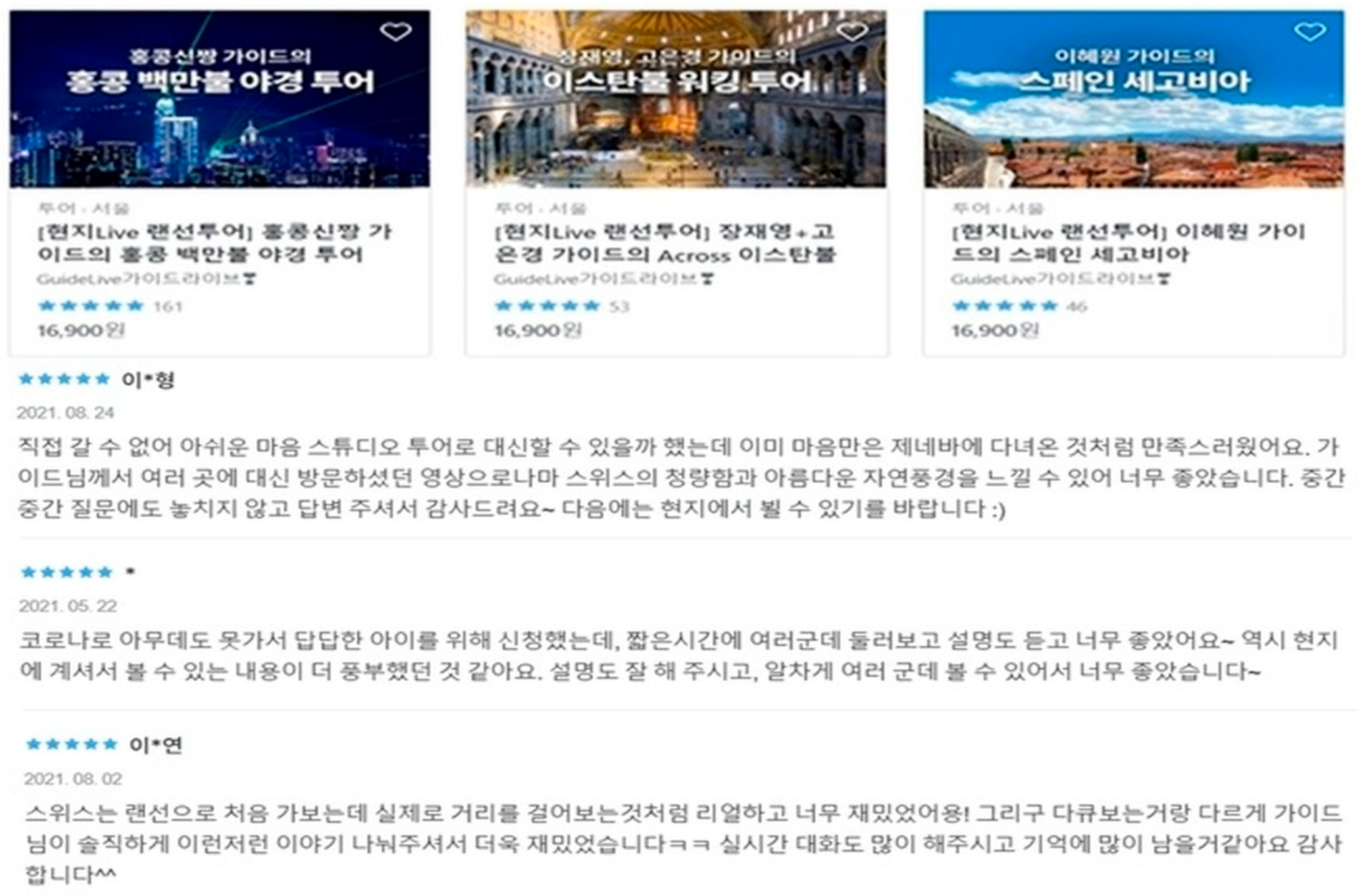
The scope of this study for big data analysis was limited to overseas travel products with customer reviews posted as of the data collection date, sold by major travel agencies offering online guided tours in Korea. Figure 2 presents a screenshot of an online guided tour product page from a Korean travel platform, including associated user reviews.
Tourists who completed online guided tours tend to leave relatively free and honest reviews about the products (W. M. Lee, 2010; Choi, 2012) and can express feelings about the experience, such as joy, pleasure, immersion, and emotion. Therefore, they can be considered an appropriate research subject (J. S. Kim, 2021).

3.2. Measurement Tools and Analysis Methods

Study Procedure and Data Collection

The big data analysis applied in this study employs data crawling and text mining techniques. Text mining is a technique for analyzing text composed of unstructured/semi-structured data (S. R. Kim & Gang, 2014; H. J. Kim et al., 2021), with the advantage of identifying core discussions and expressions that are actually and potentially occurring within the text (Park & Song, 2013; H. J. Kim et al., 2021). The text mining process broadly consists of the following two stages: the data processing stage and the data analysis stage.
The big data analysis process for this study can be broken down into stages. First, I selected OTA sites to extract online reviews for deriving virtual tour experience attributes. Among major domestic virtual tour OTA sites, I chose the site offering the most diverse products and possessing the largest volume of reviews to collect review data. This analysis was performed on publicly available anonymized user-generated reviews, and no personal or identifiable information was collected or processed. Step 2 involves data processing for text analysis of the extracted data. During data processing, natural language is divided into components such as morphological analysis, verb analysis, semantic analysis, and pragmatic analysis through part-of-speech tagging, and stop words (typos, symbols, etc.) are removed (D. H. Lee et al., 2021). This study aims to extract nouns, adjectives, adverbs, and verbs, and derives the optimal number of factors (topics) through LDA analysis in three stages.
This study aims to extract nouns, adjectives, and verbs. Step 3 derives the optimal number of factors (topics) through LDA analysis. For each topic derived in this process, keywords with a high probability of appearing in that topic are organized in descending order of probability, as shown in [Table 3]. According to the fundamental principle of the LDA model, the importance of a word w is evaluated by the product of the probability P(wt) that word w is generated from topic t, and the probability P(td) that document d belongs to topic t.
P ( w | d ) = t = 1 T P ( t | d ) P ( w | t )
In this model, T denotes the total number of topics, and each topic is assumed to generate words independently. Therefore, the probability of word w being generated in a given document d is represented as the sum of the probability of each topic in the document d can be calculated by summing the probability of the word being generated within that topic. In topic modeling applications, topics are typically represented by a probability distribution over all words, and words with higher probability weights are interpreted as more representative of that topic (e.g., high-probability keywords indicating core semantic content) (Blei et al., 2003). This approach has been widely used in text mining research, where tables summarizing topics with their representative keywords are presented to aid interpretation (keyword ranking by topic proportion) and to support subsequent semantic analysis of thematic structures (Gretzel et al., 2015).
Finally, the items extracted through the literature review an the newly extracted items from the big data analysis are combined. Through expert discussions, the final online tour experience attribute items are derived. The big data analysis process is shown in Figure 3 below.

4. Results and Discussion

4.1. Data Collection and Morphological Analysis

The review data analyzed in this study were generated by participants immediately following their online guided tour experiences and primarily reflect experiential evaluations rather than objective destination information. Prior tourism and hospitality research has demonstrated that post-experience online reviews capture tourists’ emotional responses, perceived interaction quality, and experiential meanings formed during service encounters (Xiang et al., 2017; Pantelidis, 2010). Consistent with this perspective, the reviews examined in this study frequently include expressions related to emotions, guide performance, real-time interaction, and immersive engagement. Accordingly, the review texts provide an appropriate empirical basis for identifying experiential attributes perceived by participants in online guided tours.
To achieve the objectives of this study, the analysis was conducted in the following three main stages: data collection, data mining, and LDA topic modeling analysis. The reviews utilized for analysis were selected from Companies M and Z, which operate the largest number of online guided tour products. The review data targeted all products conducted as real-time live tours among the online guided tour products currently operated on these sites. The sample collection was carried out by collecting all the review data accumulated by the data collection date of 20 July 2024, obtaining a total of 1506 reviews, 1450 from Company M and 56 from Company Z.
The present study employed the Okt (Open Korean Text) software (0.6.0 ver.) for data preprocessing. Since Okt was developed based on colloquial language, it was deemed suitable for analyzing texts rich in colloquial expressions like the postings (Seo & Cho, 2024). The analysis first involved removing stop words and segmenting sentences. Subsequently, compound word generation and part-of-speech tagging were performed. A mapping procedure was then conducted to classify words and expressions according to the seven key experiential elements identified in the literature review. The top 10 words for each experience attribute are shown in Table 4.
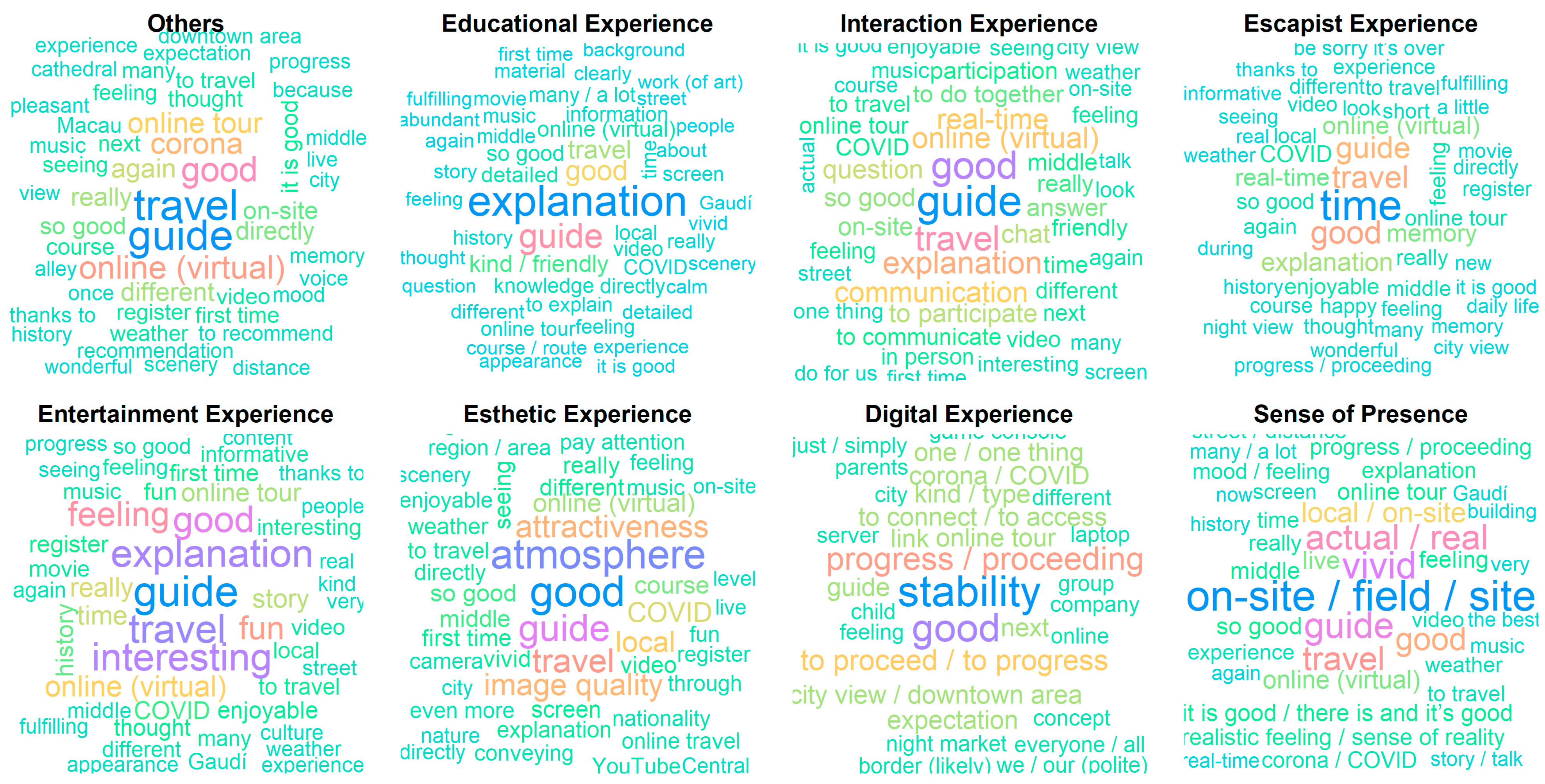
Expressions that did not align with these seven categories were designated as “other”. To visually and intuitively present the core keywords, a word cloud (see Figure 4) was generated using the top 50 words derived from the keyword frequency analysis. As the data used in this study were written in Korean, the extracted words were translated into English and visualized using the R program.
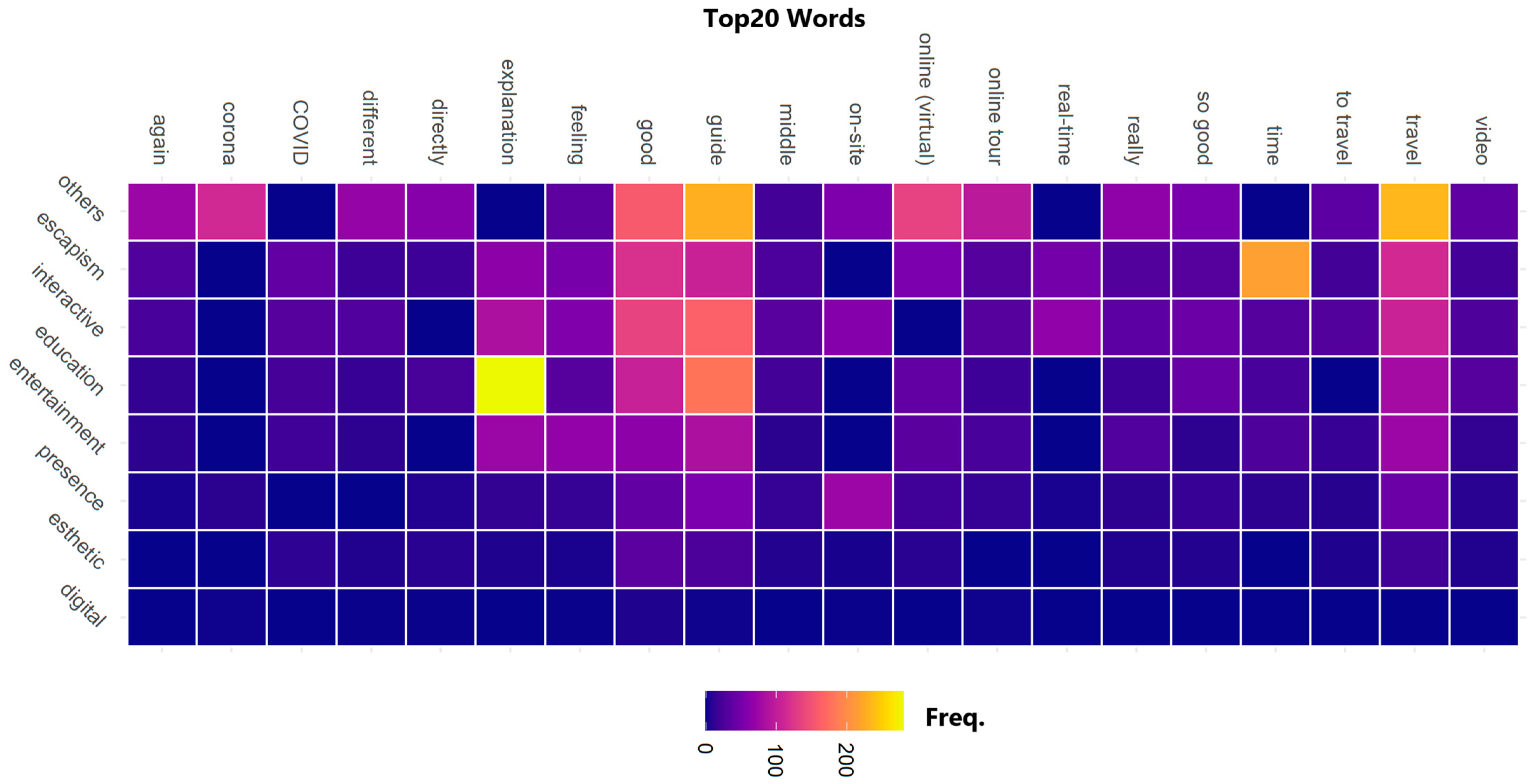
The heatmap analysis was conducted to compare the relative importance across experiential factors, with the top 20 words selected based on overall frequency to ensure readability. As shown in Figure 5, common keywords such as “guide,” “travel,” and “good” exhibit strong color intensity across most sheets, while factor-specific keywords like “explanation” (educational experience) and “communication” (interactive experience) are distinctly differentiated. This quantitative visualization, when compared with the preceding word clouds, confirms the relative significance of key keywords for each experiential type.

4.2. TF-IDF Analysis

The topics extracted through LDA analysis are interpreted as experiential dimensions perceived by participants during their online guided tour experiences. Rather than representing isolated functional attributes or purely semantic clusters, the identified topics reflect recurring patterns of experiential meaning shaped by interaction with guides, content delivery, and the digital tour environment. Previous tourism and hospitality studies have demonstrated that latent topics derived from user-generated content can effectively capture tourists’ experiential perceptions and value structures (Xiang et al., 2017; Deng et al., 2021). Accordingly, the results presented in this section are discussed as key experiential components that structure participants’ online guided tour experiences.
In most LDA topic modeling analyses, the number of topics is typically selected to be within 10 (B. C. Lee & Kim, 2020). However, there is no statistical solution for deriving the optimal number of topics in topic modeling analysis. The decision on the number of topics depends on the interpretability of the generated topics and their usefulness in relation to the research question (B. C. Lee & Kim, 2020). Therefore, this study conducted a preliminary analysis using eight topics as follows: the seven topics derived from prior research plus one additional category (Other). The top words identified in the analysis are shown in Table 5.

4.3. LDA Analysis Results

LDA topic modeling was applied to 1506 preprocessed user reviews, resulting in eight latent topics. The optimal number of topics was determined using coherence score validation (K = 8, C = 0.54). Topic interpretation was based on co-occurrence patterns and probability-weighted keywords within each topic. To minimize interpretive subjectivity, topic labeling followed the probabilistic structure of the LDA outputs, emphasizing high-probability terms, their relative weight distributions, and internal conceptual coherence. Model robustness was further assessed by estimating iterative LDA models with varying topic numbers (K = 6–10). Across these model specifications, core experiential dimensions consistently emerged, with only minor variations in keyword composition, indicating the stability of the selected topic structure.
Experiential attributes were derived through a structured, multi-step interpretive process. First, high-probability keywords were extracted from each topic based on their probability weights and co-occurrence patterns within the LDA outputs. Second, these keywords were grouped into semantic clusters reflecting coherent experiential meanings, following established approaches in tourism and hospitality text-mining research (Pantelidis, 2010; Xiang et al., 2017). Third, each semantic cluster was interpreted as a distinct experiential attribute by considering keyword relevance, internal conceptual coherence, and consistency with the tourism experience literature. Through this process, the experiential attributes presented in Table 6 represent stable and interpretable dimensions of online guided tour experiences rather than arbitrary keyword groupings.
The following <Table 7> summarizes the LDA results for each experience factor.
Among these, topics T1 to T7 were interpreted as the seven major experiential attributes consistent with the experience economy theory. Topic T8 was classified as a post-experience evaluative attribute and excluded from the experiential structure analysis in this study.

4.4. Interpretation by Experience Factor

4.4.1. Entertainment Experience

Participants positively evaluated the guide’s humorous delivery, spontaneous conversations, and the on-site atmosphere during the tour. Expressions like “It was fun and time flew by” and “Tikitaga was enjoyable” frequently appeared in the reviews. This reflects the emotional pleasure and satisfaction proposed in the entertainment dimensions by Pine and Gilmore (2011). The entertainment value of online tours is differentiated from simple viewing content by the participatory fun derived from real-time interaction (Deng et al., 2021).

4.4.2. Educational Experience

Words related to learning, such as “informative explanation,” “detailed explanation,” and “learned new facts,” appeared with high frequency. This indicates that the guide’s expertise and commentary content provided intellectual satisfaction, aligning with Pine and Gilmore’s (2011) educational dimension. Participants’ reviews confirmed that online guided tour attendees experienced knowledge acquisition, cultural understanding, and cognitive experiences without physically visiting the sites (Guttentag, 2010).

4.4.3. Esthetic Experience

Reviews frequently included expressions related to visual appreciation, such as “The scenery was beautiful,” “The video composition is beautiful,” and “I envy the clear sky.” This aligns with existing research (Oh et al., 2007; Hosany & Witham, 2010) indicating that visual and esthetic stimuli elicit emotional responses in tourists. Online guided tours suggest that audiovisual elements like screen composition, camera movement, and background music function as digital esthetics.

4.4.4. Escapism Experience

Participants used expressions such as “time flew by,” “it felt like being there in person,” and “a healing experience.” This demonstrates that immersive emotions in online spaces act as a substitute for realism. In particular, the statement “I want to continue these trips even after COVID-19” suggests the potential for non-contact experiences to function as sustainable immersive experiences beyond mere substitutes (Tussyadiah et al., 2018).

4.4.5. Presence

Keywords related to “presence” included “vivid,” “feels like being there,” and “as if I were actually there.” These represent core factors of the “sense of presence” perceived in online environments, enhancing the potential to substitute for actual tourism experiences (Slater & Wilbur, 1997). As seen in the review stating, “I was happy with the vivid experience, as if I were walking there myself,” it was confirmed that technological presence leads to emotional engagement. If escapism is the perspective of psychological deviation, presence can be said to be the perspective of “being” mediated by technology.

4.4.6. Interactivity

Keywords related to interaction included “chat,” “interact,” “respond,” and “conversation.” This reflects the essential nature of virtual tours, where real-time exchange between participants and guides determines the quality of the tourism experience (Gretzel et al., 2015). Comments in reviews such as “I was surprised when the guide called my name” and “My sense of participation was high because they answered my questions immediately” support the interactive value of participatory experiences.

4.4.7. Digital Environment

Keywords related to the digital environment included “link,” “optimization,” and “connection.” This too reflects an essential characteristic of online guided tours, highlighting how the process of accessing and navigating the online environment can impact on the quality of the tourism experience. Comments like “We were flustered by unstable connections” and “The server was not stable” confirm that the connection environment is a crucial factor in digital experiences.

4.5. Discussion on Linkage with Experience Economy Theory

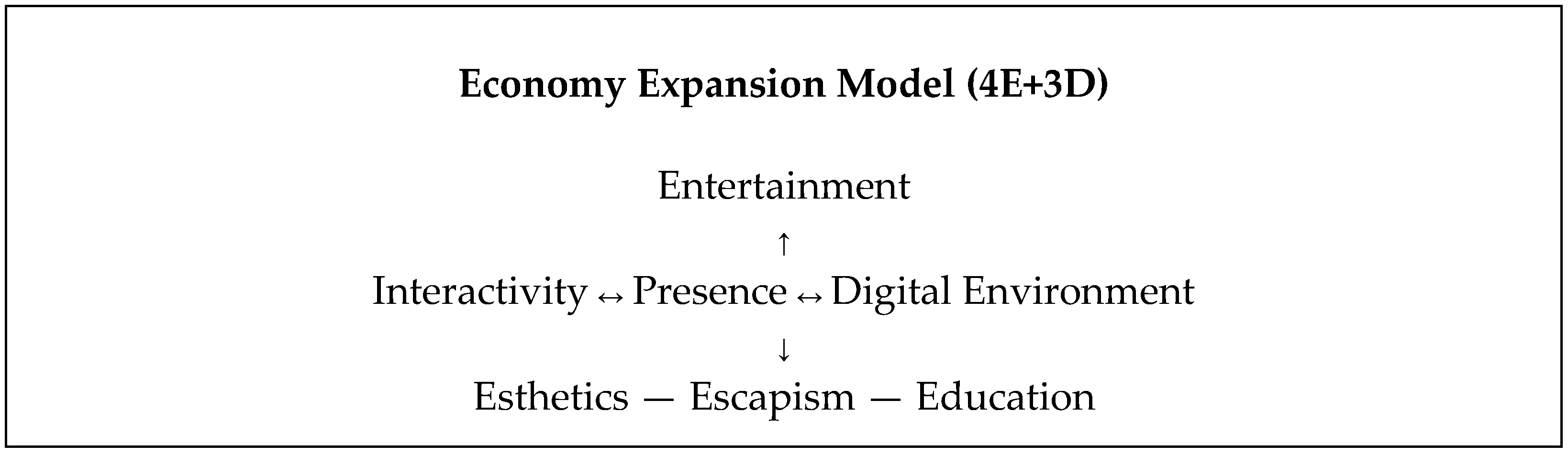
This study not only empirically confirmed the 4E factors (entertainment, education, esthetics, and escapism) proposed in Pine and Gilmore’s (1999) experience economy theory but also presented an expanded experiential model (4E + 3D) by integrating three additional factors emerging in the digital environment—presence, interactivity, and digital experience—presenting an expanded experiential model (4E + 3D). Figure 6 illustrates the proposed extended 4E + 3D model for digitally mediated tourism experiences.
Unlike the existing 4E framework, which presupposes offline experiences, this model operates within digital spaces. It holds significance as a new framework explaining the structure of experienced non-contact, real-time, and mediated experiences. In particular, presence and interactivity are key factors mediating the “sense of participation” and “emotional connection” in online tourism, and they are noted as potential variables that could influence tourists’ satisfaction, re-participation intentions, and word-of-mouth behavior in the future.
As this study adopts an exploratory and inductive approach, the proposed experiential structure should be interpreted as a pattern-based framework rather than a statistically validated measurement model. The robustness of the identified attributes is supported by both the stability of topic modeling results across alternative specifications and their theoretical alignment with prior studies on experience economy, telepresence, immersion, and digital interaction.
Notably, the emergence of digitally mediated attributes such as presence, interactivity, and digital environment reflects experiential mechanisms that are less visible in traditional face-to-face tourism contexts but have been repeatedly emphasized in the recent digital tourism literature. These findings suggest that online guided tours generate experiential value through both experiential outcomes (e.g., entertainment, education) and technologically mediated conditions that shape how such experiences are perceived.

5. Conclusions and Implications

5.1. Research Summary

Based on the theory of the experience economy, the first research goal of this study is to identify the core experiential attributes of online guided tours in a digitally mediated environment by analyzing user review data from participants in contactless tourism experiences. The second research goal is to derive implications for improving the design of online guided tours and the delivery of platform-based services based on the empirical findings. With regard to this first research objective, the findings indicate that the four experiential dimensions proposed by Pine and Gilmore (1999)—entertainment, education, esthetics, and escapism—are also applicable to online guided tours. In addition, the following three further experiential attributes were empirically identified: presence, interactivity, and digital environment. These findings are elaborated and interpreted in detail in the following section.
First, the findings indicate that experiential value in online guided tours is not structured around a single dominant element. Instead, experiential evaluations emerge through a multidimensional configuration of attributes encompassing affective dimensions (e.g., entertainment and esthetics), cognitive dimensions (e.g., education), and interaction-related dimensions (e.g., interactivity and presence). These attributes consistently appeared across topics derived from LDA modeling, suggesting that participants assess online guided tours through a complex experiential lens rather than solely on informational or technical criteria.
Second, the results demonstrate that experiential value in digital tourism environments is generated through dynamic interaction processes, including real-time communication between guides and participants and active participant engagement during the tour, rather than being driven exclusively by informational content or technological immersion (Li & Jiang, 2023). In this regard, online guided tour experiences can be understood as being shaped by interrelated experiential dimensions formed through real-time interaction, guide-mediated participation, and emotionally resonant content delivery (Campos et al., 2018; H. Zhang et al., 2018).
This study empirically derived experiential attributes for online guided tours—which rapidly emerged in the post-COVID-19 context—using participant review data and interpreted them through the lens of experience economy theory (Pine & Gilmore, 1999). Through LDA topic modeling, seven experiential attributes—entertainment, education, esthetics, escapism, presence, interactivity, and digital environment—were identified and systematized into the proposed 4E + 3D model, extending Pine and Gilmore’s (1999) framework to digitally mediated contexts (Oh et al., 2007; Neuhofer et al., 2015).
The findings addressing the second research objective are discussed in the Practical Implications Section.

5.2. Academic Significance

This study contributes to the tourism experience literature by examining the applicability of experience economy theory within digitally mediated tourism contexts. While Pine and Gilmore’s (1999) 4E framework conceptualizes experiences through entertainment, education, esthetics, and escapism, it was originally developed in predominantly physical and face-to-face consumption environments. The findings of this study suggest that, in the context of online guided tours, additional experiential conditions related to digital mediation and real-time interaction play an important role in shaping participant experiences.
By empirically identifying presence, interactivity, and digital environment as salient experiential dimensions derived from participant review data, this study proposes the 4E + 3D model as an extension of original experience economy framework to non-contact tourism setting. Presence reflects participants’ perceived sense of co-existence and social co-existence and social connectedness in digitally mediated tours, while interactivity highlights the experiential significance of real-time communication between guides and participants. The digital environment dimension captures how platform usability, audiovisual quality, and technological stability are experienced by participants not merely as background conditions, but as integral elements shaping the overall tourism experience.
In this regard, the study helps to refine existing experience-based tourism theories by illustrating how experiential value in online guided tours is structured through a combination of emotional engagement, guided interaction, and technologically enabled environments. Rather than replacing the original 4E dimensions, the proposed framework complements them by accounting for experiential mechanisms that are specific to digitally mediated tourism contexts.
This study offers the following academic contributions. First, it offers an empirically grounded extension of experience economy theory by situating the 4E framework within online and non-contact tourism environments, where presence, interactivity, and digital conditions emerge as meaningful experience dimensions (Gretzel et al., 2015).
Second, unlike previous studies that primarily relied on surveys or interviews, this research empirically extracted experiential factors by analyzing actual user review data using text mining and LDA. This represents an application of a big data-driven approach (data-driven tourism research) to tourism experience studies, demonstrating the potential for expanding tourism research methodologies (Xiang et al., 2017).
Third, while previous virtual/online tourism research was technology-centric, this study systematized the experiential structure of online tours from a “participant experience” perspective, thereby providing a theoretical foundation for future research on tourist behavioral intentions, satisfaction, and immersion.

5.3. Practical Implications

The findings of this study offer diverse practical implications for the non-contact tourism and digital tourism content industries. Particularly, as the tourism paradigm shifts from “site-centered” to “experience-centered” post-COVID-19, online guided tours demonstrate sustainable potential as a new form of experience-based tourism content. With respect to the second research objective, the practical implications are presented as follows.
The findings suggest that participatory content design is an important consideration in online guided tours. Interactivity emerged as a salient experiential dimension, indicating that participants do not perceive these tours merely as passive viewing experiences. Rather, experiential value appears to be enhanced when real-time communication and engagement with guides and other participants are available. From a practical perspective, this suggests that platform planners and content providers may consider incorporating interactive features—such as real-time Q&A sessions, brief participatory tasks during tours, or moderated chat interactions—as potential design options to support engagement and immersion. However, the relevance and effectiveness of such features are likely to depend on tour formats, participant characteristics, and platform-specific conditions.
Second, the findings indicate that digital esthetics may play an important role in shaping participants’ emotional responses and satisfaction in online guided tours. This extends beyond technical video quality to include broader esthetic elements such as content direction, lighting, color composition, and background sound. For example, camera framing of tourist sites, the pacing of visual transitions, and the use of ambient local sounds may influence perceived immersion and aesthetic appreciation. Accordingly, collaboration between tour guides and audiovisual professionals may be considered as one possible approach to enhancing the overall sensory quality of online guided tour content.
Third, the results suggest that educational and entertainment elements function in a complementary manner within online guided tour experiences. Participants appear to value Education experiences that are engaging and enjoyable, rather than information delivery alone. An edutainment-oriented approach—such as combining historical explanations with local stories, cultural symbols, or anecdotes—may help stimulate both cognitive interest and emotional engagement, although the optimal balance may vary across content types and audiences.
Fourth, the findings indicate the potential of online guided tours to support more inclusive forms of tourism participation. In line with previous research (Yang et al., 2021), such tours may offer alternative access opportunities for individuals with physical, temporal, or geographical constraints. To support this potential, accessibility features such as subtitles, multilingual options, or simplified interface design may be considered. However, the extent to which online guided tours can effectively contribute to inclusive tourism requires further empirical validation across diverse user groups and contexts.
Finally, from a digital transformation perspective, the results provide exploratory insights into how online guided tours may evolve within broader smart tourism ecosystems. The integration of emerging technologies—such as VR, AR, or AI-based translation and recommendation tools—may enhance immersion and personalization (Gretzel & Koo, 2021). Nevertheless, such developments should be interpreted as future possibilities rather than immediate prescriptions, given the exploratory nature of the present study.
Taken together, these practical implications suggest that online guided tours may be understood as experience-oriented tourism products rather than mere substitutes for offline tourism. At the same time, the implications offered here should be interpreted as directional guidance derived from exploratory analysis, and further research is required to assess their applicability across different platforms, cultural contexts, and tourism settings.

5.4. Limitations and Future Research Directions

This study attempted to expand the methodological scope of tourism experience research and transition experience theory into the digital realm but requires future refinement. First, although this study analyzed all available review data collected within the defined sampling period, the overall sample size remains relatively limited, which may constrain the generalizability of the findings. In addition, the empirical data were derived from user reviews of online guided tours offered by a small number of platforms operating within a single national context. As a result, the experiential attributes identified in this study may reflect platform-specific service designs, technological environments, and culturally embedded user expectations. These contextual characteristics limit the direct transferability of the findings to other regional or cultural settings. Future research should therefore extend the analysis to multiple platforms and cross-national datasets to enhance external validity and address potential regional bias.
Second, while this study focused on an exploratory approach to derive experiential factors, subsequent quantitative model analysis is required to validate the structural relationships among the derived factors. Third, topic modeling based on post-data struggles to adequately capture the subtle nuances of sentiment due to its keyword-based approach. Therefore, future research should explore hybrid text analysis combining sentiment analysis with emotional intensity analysis. Finally, interpreting themes derived from LDA inevitably involves a certain degree of researcher judgment. Therefore, future studies are encouraged to further validate the proposed empirical attributes through confirmatory methods such as scale development, experimental design, or behavioral outcome modeling. In particular, the proposed 4E + 3D framework should be regarded as an extensible experiential structure rather than a finalized typology, open to refinement as digital tourism technologies and consumption contexts continue to evolve.

Funding

This work was supported by the Ministry of Education of the Republic of Korea and the National Research Foundation of Korea (NRF-2023S1A5A8074497).

Institutional Review Board Statement

Not applicable.

Informed Consent Statement

Not applicable.

Data Availability Statement

The original contributions presented in the study are included in the article, further inquiries can be directed to the corresponding author.

Conflicts of Interest

The authors declare no conflicts of interest.

References

  1. Argyriou, L., Economou, D., & Bouki, V. (2020). Design methodology for 360 immersive video applications: The case study of a cultural heritage virtual tour. Personal and Ubiquitous Computing, 24(6), 843–859. [Google Scholar] [CrossRef]
  2. Blei, D. M., Ng, A. Y., & Jordan, M. I. (2003). Latent dirichlet allocation. Journal of Machine Learning Research, 3, 993–1022. [Google Scholar]
  3. Boswijk, A., Thijssen, T., & Peelen, E. (2007). The experience economy: A new perspective. Pearson Education. [Google Scholar]
  4. Campos, A. C., Mendes, J., do Valle, P. O., & Scott, N. (2018). Co-creating animal-based tourist experiences. Tourism Management, 63, 100–114. [Google Scholar] [CrossRef]
  5. Chiao, H. M., Chen, Y. L., & Huang, W. H. (2018). Examining the usability of an online virtual tour-guiding platform for cultural tourism education. Journal of Hospitality, Leisure, Sport & Tourism Education, 23, 29–38. [Google Scholar] [CrossRef]
  6. Choi, J. M. (2012). The effect of positive online reviews on the formation of consumer confidence in purchasing decision. Journal of Marketing Stuides, 20(3), 91–108. [Google Scholar]
  7. Deng, Z., Benckendorff, P., & Wang, J. (2021). Travel live streaming: An affordance perspective. Information technology & tourism, 23(2), 189–207. [Google Scholar]
  8. Dybsand, H. N. H. (2022). The next best thing to being there: Participant perceptions of virtual guided tours. Current Issues in Tourism, 27(1), 45–58. [Google Scholar] [CrossRef]
  9. Gilmore, J. H., & Pine, B. J. (2002). Differentiating hospitality operations via experiences: Why selling services is not enough. Cornell Hotel and Restaurant Administration Quarterly, 43(3), 87–96. [Google Scholar] [CrossRef]
  10. Gretzel, U., & Koo, C. (2021). Smart tourism cities. Asia Pacific Journal of Tourism Research, 26(4), 352–364. [Google Scholar] [CrossRef]
  11. Gretzel, U., Sigala, M., Xiang, Z., & Koo, C. (2015). Smart tourism: Foundations and developments. Electronic Markets, 25(3), 179–188. [Google Scholar] [CrossRef]
  12. Guttentag, D. A. (2010). Virtual reality: Applications and implications for tourism. Tourism Management, 31(5), 637–651. [Google Scholar] [CrossRef]
  13. Ha, D. H. (2012). The effects of tourist’s experiences on enjoyment, emotional attachment, and loyalty in the museum: Focused on Gyeongju National Museum. Korea Journal of Hospitality and Tourism Research, 21(5), 255–275. [Google Scholar]
  14. Hahn, S. E., Sparks, B., Wilkins, H., & Jin, X. (2017). E-service quality management of a hotel website. Journal of Hospitality Marketing & Management, 26(7), 694–716. [Google Scholar] [CrossRef]
  15. Hosany, S., & Witham, M. (2010). Dimensions of cruisers’ experiences, satisfaction, and intention to recommend. Journal of Travel Research, 49(3), 351–364. [Google Scholar] [CrossRef]
  16. Jeoung, S. S., & Lee, J. Y. (2011). The analysis on the perceived performance and satisfaction by the types of museum visitors’ motivations: Case of National Museum Visitors. Korea Journal of Tourism and Hospitality Research, 25(2), 175–193. [Google Scholar]
  17. Kim, D. S., & Lee, B. C. (2022). Extracting experience dimensions of wellness tourism using social big data. Journal of Hotel & Resort, 21(1), 291–310. [Google Scholar]
  18. Kim, H. J., Kim, D. S., & Chung, N. H. (2021). The impact of mobility app’s institution-based trust on app satisfaction, perceived value of destination experience and travel satisfaction. The Journal of Internet Electronic Commerce Research, 21(1), 605–613. [Google Scholar] [CrossRef]
  19. Kim, J. S. (2021). A study on the meaning of the delight factors of tourists participating in the Lan 線 tour: Focusing on review analysis. Journal of Tourism Studies, 33(4), 77–96. [Google Scholar] [CrossRef]
  20. Kim, M. J., & Lee, T. H. (2014). Influence of experience on tourist–destination brand relationship and brand loyalty: Focusing on Suwon Hwaseong. Journal of Photo Geography, 24(3), 105–117. [Google Scholar] [CrossRef]
  21. Kim, S. R., & Gang, M. M. (2014). Big data analysis technologies: Current status and future directions. Communications of the Korean Institute of Information Scientists and Engineers, 32(1), 8–17. (In Korean) [Google Scholar]
  22. Kwag, D. H., & Lee, B. C. (2018). Development of service scale on new perspective by using big data. The Journal of Event & Convention Research, 14(3), 101–121. [Google Scholar] [CrossRef]
  23. Lee, B. C., & Kim, D. S. (2020). Deriving the determinants of hotel service quality using OTA reviews—LDA Topic modeling. The Journal of Hotel and Resort, 19(4), 41–58. [Google Scholar]
  24. Lee, D. H., Lee, S. J., Lim, D. K., & Park, J. K. (2021). Analysis of research trends based on text mining in the journal of Korean Society of Environmental Engineering. Journal of Korea Society Environment Engineering, 43(2), 101–109. [Google Scholar] [CrossRef]
  25. Lee, S. K., & Park, N. (2019). Effects of virtual reality content in tourism on the perception of experiential values and intention to visit: The mediating role of feelings of presence. Journal of Cybercommunication Academic Society, 36(1), 89–125. [Google Scholar] [CrossRef]
  26. Lee, W. M. (2010). The effect of online postscripts about product using on purchasing decisions in the internet shopping mall. The Business Studies, 11(3), 45–65. [Google Scholar]
  27. Lee, Y. J., Han, A. R., Park, S. H., & Seo, H. J. (2022). The causal relationships among COVID-19 Stress, leisure constraints, and happiness. Journal of the Korea Convergence Society, 13(5), 347–356. [Google Scholar] [CrossRef]
  28. Li, S., & Jiang, S. (2023). The technology acceptance on AR memorable tourism experience—The empirical evidence from China. Sustainability, 15(18), 13349. [Google Scholar] [CrossRef]
  29. Liu, X., Zhang, L., & Chen, Q. (2022). The effects of tourism e-commerce live streaming features on consumer purchase intention: The mediating roles of flow experience and trust. Frontiers in Psychology, 13, 995129. [Google Scholar] [CrossRef] [PubMed]
  30. Magnini, V. P., Crotts, J. C., & Zehrer, A. (2011). Understanding customer delight: An application of travel blog analysis. Journal of Travel Research, 50(5), 535–545. [Google Scholar] [CrossRef]
  31. MyRealTrip. (2022). Available online: https://www.myrealtrip.com (accessed on 15 June 2022).
  32. Neuhofer, B., Buhalis, D., & Ladkin, A. (2015). Smart technologies for personalized experiences: A case study in the hospitality domain. Tourism Management, 47, 335–346. [Google Scholar] [CrossRef]
  33. Oh, H., Fiore, A. M., & Jeoung, M. (2007). Measuring experience economy concepts: Tourism applications. Journal of Travel Research, 46(2), 119–132. [Google Scholar] [CrossRef]
  34. Pantelidis, I. S. (2010). Electronic meal experience: A content analysis of online restaurant comments. Cornell Hospitality Quarterly, 51(4), 483–491. [Google Scholar] [CrossRef]
  35. Park, J. H., & Song, M. (2013). A study on the research trends in library & information science in Korea using topic modeling. Journal of the Korean Society for Information Management, 30(1), 7–32. [Google Scholar] [CrossRef]
  36. Pine, B. J., & Gilmore, J. H. (1999). The experience economy. Harvard Business Press. [Google Scholar]
  37. Pine, B. J., & Gilmore, J. H. (2011). The experience economy. Harvard Business Press. [Google Scholar]
  38. Radder, L., & Han, X. (2015). An examination of the museum experience based on Pine and Gilmore’s experience economy realms. Journal of Applied Business Research, 31(2), 455. [Google Scholar] [CrossRef]
  39. Repo, R., & Pesonen, J. (2022, January 11–14). Identifying the main service elements for customer-oriented live guided virtual tours. ENTER22 e-Tourism Conference (pp. 213–225), Tianjin, China. [Google Scholar] [CrossRef]
  40. Ryu, K., & Han, H. (2010). Influence of the quality of food, service, and physical environment on customer satisfaction and behavioral intention. Journal of Hospitality & Tourism Research, 34(3), 310–329. [Google Scholar] [CrossRef]
  41. Seo, B., Lee, Y., & Cho, H. (2024). Measuring news sentiment of Korea using transformer. Korean Economic Review, 40(1), 149–176. [Google Scholar] [CrossRef]
  42. Shin, D. J. (2010). The effects of experiential factors on enjoyment, satisfaction and behavioral intention in an event: An application of pine & gilmore’s experience theory. The Journal of Tourism Research, 34(9), 251–270. [Google Scholar]
  43. Slater, M., & Wilbur, S. (1997). A framework for immersive virtual environments (FIVE): Speculations on the role of presence in virtual environments. Presence: Teleoperators and virtual environments, 6(6), 603–616. [Google Scholar] [CrossRef]
  44. Song, H. J., Choi, Y. J., & Lee, C. K. (2011). A study of festival visitors’s loyalty based on experience economy—The case of Boryeong Mud Festival. International Journal of Tourism Management and Sciences, 25(6), 179–185. [Google Scholar]
  45. Stamboulis, Y., & Skayannis, P. (2003). Innovation strategies and technology for experience-based tourism. Tourism Management, 24(1), 35–43. [Google Scholar] [CrossRef]
  46. Travel Times. (2021, April 22). Luring 25,000 people, online tour marketing kicks into high gear. Available online: http://www.traveltimes.co.kr/news/articleView.html?idxno=111788 (accessed on 14 February 2023).
  47. Tussyadiah, I. P., Wang, D., Jung, T. H., & Tom Dieck, M. C. (2018). Virtual reality, presence, and attitude change: Empirical evidence from tourism. Tourism Management, 66, 140–154. [Google Scholar] [CrossRef]
  48. UNWTO. (2021). International tourism highlights: March 2021. UNWTO. [Google Scholar] [CrossRef]
  49. Xiang, Z., Du, Q., Ma, Y., & Fan, W. (2017). A comparative analysis of major online review platforms. Tourism Management, 58, 51–65. [Google Scholar] [CrossRef]
  50. Xie, C., Yu, J., Huang, S. S., & Zhang, J. (2022). Tourism e-commerce live streaming: Identifying and testing a value-based marketing framework. Tourism Management, 91, 104513. [Google Scholar] [CrossRef]
  51. Yang, T., Lai, I. K. W., Fan, Z. B., & Mo, Q. M. (2021). The impact of a 360° virtual tour on the reduction of psychological stress caused by COVID-19. Technology in Society, 64, 101514. [Google Scholar] [CrossRef]
  52. Ye, C., Zheng, R., & Li, L. (2022). The effect of visual and interactive features of tourism live streaming on tourism consumers’ willingness to participate. Asia Pacific Journal of Tourism Research, 27(5), 506–525. [Google Scholar] [CrossRef]
  53. Yoon, S. M., & Lee, C. K. (2017). Examining the relationships among the festival experience, perceived quality, perceived value, and affective commitment based on the perspective of experience economy(4Es): Focusing on the 2016 Seoul Lantern Festival. International Journal of Tourism Management and Science, 32(5), 79–96. [Google Scholar] [CrossRef]
  54. Zhang, H., Gordon, S., Buhalis, D., & Ding, X. (2018). Experience value co-creation on destination online platforms. Journal of Travel Research, 57(5), 571–587. [Google Scholar] [CrossRef]
  55. Zhang, Z., Ye, Q., Law, R., & Li, Y. (2010). The impact of e-word-of-mouth on the online popularity of restaurants. International Journal of Hospitality Management, 29(4), 694–700. [Google Scholar] [CrossRef]
Figure 1. Research procedure.
Tourismhosp 07 00044 g001
Figure 2. Online guided tour products and reviews (example). (Source: MyRealTrip, 2022).
Tourismhosp 07 00044 g002
Figure 3. Bigdata analysis process.
Tourismhosp 07 00044 g003
Figure 4. Word cloud analysis by experience factor.
Tourismhosp 07 00044 g004
Figure 5. Keyword frequency heatmap by experience factors.
Tourismhosp 07 00044 g005
Figure 6. Online guided tour experience.
Tourismhosp 07 00044 g006
Table 1. Conceptual comparison of non-contact tourism types.
ConceptVR TourismOnline TourismOnline Guided Tour
Mediating meansVR/AR technology-basedWeb/platform video contentReal-time streaming (Zoom, YouTube Live, etc.)
InteractivityLimitedOne-wayTwo-way (real-time communication between guide and participant)
Experience
characteristics
Visual
immersion
Information-centeredEmotional and social interaction-focused
Topic engagementLowMediumHigh
Featured cases360° VR tourOnline exhibitions and museumsReal-time virtual tours (Seoul Tourism Organization, etc.)
Table 2. Derivation of preliminary items for virtual tour experience attributes.
CategoryExperience FactorOperational DefinitionPrior
Research
Entertainment
experience
Fun, enjoyment, pleasantness, captivating, interesting,
excitement
The pleasant state participants
experience through online guided tours
Jeoung and Lee (2011),
Song et al. (2011),
Yoon and Lee (2017),
Ha (2012),
Shin (2010),
Radder and Han (2015)
Educational
experience
Knowledge enrichment,
new information,
learning opportunities
Perception of the knowledge/learning experience
Escapist
experience
Another world, forgetting daily life, mood change, escaping reality, nostalgia, stress reliefThe state where participants feel separated from reality while participating in an online guided tour
Esthetic
experience
Charming, visual composition, exotic, atmosphereThrough the local scenery
provided on screen, a state of
being captivated by the charm
Social
experience
Interaction, comfort,
conversation, togetherness,
communication
A state of feeling physically and psychologically intimateRepo and Pesonen (2022), Yang et al. (2021)
PresenceVividness, immersion,
on-site feeling, telepresence,
three-dimensionality
During participation in an online guided tour, the participants feel as if they are actually presentS. K. Lee and Park (2019),
Yang et al. (2021)
Digital (platform)
experience
Optimization, novelty,
gamification, usefulness,
accessibility, convenience
The totality of novel experiences provided by the digital technology environmentArgyriou et al. (2020), Chiao et al. (2018), Hahn et al. (2017)
Source: re-arrangement of author based on previous studies.
Table 3. Keyword extraction by topic (example).
Topic1: Recreational
Experience
Topic2: Educational
Experience
Topic3: Deviant
Experience
Topic (n)
keywordβkeywordβkeywordβ
Fun0.225Knowledge-rich0.213Charming0.261
Pleasure0.165Information0.189Atmosphere0.216
Cheerfulness0.148learning0.136exotic0.189
Table 4. Top 10 words by experience factor (frequency).
EducationalInteractiveEscapismEntertainmentEstheticPresenceDigitalOthers
Description (281)Guide (163)Time (218)Guide (86)Good (35)Field (75)Stable (7)Travel (235)
Guide (230)Good (187)Good (122)Travel (75)Atmosphere (32)Lively (59)Connection (6)Guide (230)
Good (106)Travel (108)Travel (115)Description (74)Guide (27)Guide (56)Good (6)Good (157)
Travel (80)Description (86)Guide (107)Interesting (72)Travel (21)Real (51)Progress (4)Online (136)
Kind (62)Online (78)Explanation (86)Good (65)Charming (18)Travel (46)Proceed to do (3)COVID-19 (114)
Too good (42)Real-time (68)Memories (56)Heart (55)Picture quality (17)Good (40)Online tour (2)Online tour (96)
Online (39)Communication (66)Online (56)Fun (49)Local (15)Local (28)Next (2)Again (75)
Detailed (38)Question (52)Real-time (51)Online (35)Online (12)Lan cable (20)Connect (2)Other (70)
Knowledge (31)Chat (51)Enjoyable (34)Real-time (31)Schedule (10)Live (19)Links (2)Really (67)
Table 5. Top 30 words from TF-IDF analysis.
WordTF-IDFWordTF-IDFWordTF-IDF
Guide73.12650Really28.46966Traveling21.15526
Travel70.54577Friendly25.03460Mood21.13244
Good66.90802Again24.71045Middle20.93723
Description60.88060Direct24.48993Other20.92032
Online 42.94073Feeling24.13278Vivid20.30307
Time39.63686Fun23.37420Actual19.40428
Too good34.07684Real time22.47005First time18.49997
Local33.97087Site22.43997Next18.17661
Corona32.69073Video22.28268Music18.10921
Online guided tour29.86258Enjoyable22.19052Experience17.89920
Table 6. LDA topic modeling analysis results by experience attribute factor.
TopicNameScoreTopicNameScore
EntertainmentInteresting7.4393EducationWorthwhile7.4369
Exciting7.4393Learning7.4369
Overwhelming7.4393Stimulating6.7438
Immersion7.4393Education6.5206
Attractive7.4393Good explanation6.3383
Fun7.0338Curiosity5.7322
Heartily 6.7462Understand5.4220
Sightseeing6.5230Ask5.3575
Pleasant6.3407Information4.6961
pleasure6.1865Knowledge4.5465
EstheticCharming7.4337EscapismStress7.4385
Atmosphere7.4337Time travel7.4385
Mystery7.4337Emotion6.7454
Unique7.4337Reality6.7454
Intense7.0282New world6.7454
Admire6.3335Healing6.5222
To be moved6.1809World6.5222
Gorgeous6.0474Feeling good6.0522
Pretty5.4878Daily life5.7338
Unique5.4878Resolution5.5667
PresenceTeleportation7.4321InteractivityInteract7.4385
Realistic7.4321Communication7.4385
Empathy7.4321Respond7.4385
Live_good7.4321Participate7.4385
Live broadcast7.4321Together7.0330
Immersion7.0266Sharing7.0330
Fairy tale6.7389Chat7.0330
Fantasy6.3335Comfort5.9344
Clear6.3335Conversation5.6467
Vivid6.3333Participation4.3704
DigitalOptimization7.3851OthersPreview7.4369
Game7.3851Guidebook7.4369
Amazing 7.3851Unique7.0314
Response time7.3851Paid7.0314
Access6.9797Cost effectiveness7.0314
Convenience6.9797Free6.5206
Stability present6.9797Background6.5206
Unique6.9797Special5.8275
Connect6.6920Curiosity5.7322
Link6.6920Schedule5.3575
Online5.1879Price5.0855
Table 7. Summary of LDA analysis results by experience attribute factor.
TopicTop KeywordInterpreted MeaningCorresponding
Experience Factor
T1Fun, thrilling, charming, sights, enjoymentGuide’s humor, laughter among
participants, etc. Emotion-centered
enjoyment
Entertainment
T2Learning, stimulation,
education, curiosity,
information, knowledge
Knowledge transmission and learning-value-centered experienceEducation
T3Mystery, unique, pretty, glamourous, atmosphereVisual esthetics, appreciation of media
expression
Esthetics
T4Focus, immersion,
realism, within time
An emotional state of separation from
reality through immersion in the tour
Escapism
T5Teleportation, vividness,
empathy, vibrancy
Real-time broadcasting delivers a tangible sense of presence and on-site immersion recognitionPresence
T6Communication,
interaction, response,
conversation, chat
Real-time interactive experience between guides and participantsInteractivity
T7Link, online, game
optimization, connection
Connection environment-related
experiences occurring in online
environments experience
Digital environment
T8Paid, free, value, price,
preview, guidebook
Service usage evaluation, factors related
to reuse intention
Service
Disclaimer/Publisher’s Note: The statements, opinions and data contained in all publications are solely those of the individual author(s) and contributor(s) and not of MDPI and/or the editor(s). MDPI and/or the editor(s) disclaim responsibility for any injury to people or property resulting from any ideas, methods, instructions or products referred to in the content.