Article

Critical Factors in Planning and Evaluating Hydrotherapy Tourism: Evidence from an Attractive Destination, Sareyn, Northwest Iran


1
Department of Public Administration and Tourism, Faculty of Social Sciences, University of Mohaghegh Ardabili, Ardabil 5951816687, Iran
2
Department of Urban and Rural Planning, Faculty of Social Sciences, University of Mohaghegh Ardabili, Ardabil 5951816687, Iran
3
Department of Natural Resources, Faculty of Agriculture and Natural Resources, Water Management Research Center, University of Mohaghegh Ardabili, Ardabil 5951816687, Iran
*
Author to whom correspondence should be addressed.
Tour. Hosp. 2026, 7(2), 43; https://doi.org/10.3390/tourhosp7020043

Submission received: 12 December 2025 / Revised: 30 January 2026 / Accepted: 5 February 2026 / Published: 10 February 2026

Abstract

Hydrotherapy tourism is a significant and long-standing area of interest, with countries worldwide employing innovative strategies to attract tourists. It not only offers desirable benefits but also plays a role in the development of tourist destinations. This research aims to identify critical success factors for tourist attraction in a prominent destination in northwest Iran, particularly in Ardabil Province (Sareyn county). It utilizes a mixed-method approach, employing the Partially Mixed Sequential Dominant Status Design methodology across three phases: qualitative, qualitative, and quantitative. The study employs sequential methods including scoping review, Delphi, and surveys to achieve its objectives. Data collection involved utilizing reputable scientific databases in the initial phase. Subsequently, 15 experts underwent purposeful selection for interviews and three rounds of Delphi surveys in the second phase. In the third phase, data collection was conducted through a questionnaire tool. Initially, approximately 141 relevant studies were identified, narrowed down to 11 primary ones using the scoping review checklist. Then, experts utilized the qualitative Delphi method to confirm and extract effective indices, resulting in 6 components and 50 indices. Finally, 61 experts provided feedback on confirming or rejecting these components and indices in the quantitative survey phase. The quantitative survey highlighted key factors influencing hydrotherapy tourism in Sareyn, such as supportive services, community backing, and smart destination management. Prioritizing healthcare, safety, reputation enhancement, and digital initiatives, like modern infrastructure, specialized apps, and social media engagement, is essential. These elements significantly impact tourist satisfaction and engagement, shaping Sareyn County’s hydrotherapy tourism. Strengthening these factors can boost its appeal, economic contribution, and status as a leading tourist destination in Ardabil Province and beyond.

1. Introduction

1.1. Background

Over the past six decades, tourism has experienced continuous expansion and diversification, evolving into one of the largest and fastest-growing economic sectors worldwide, contributing to 10% of the global gross domestic product (UNWTO, 2016; Hanvoravongchai & Paweenawat, 2025). In recent years, due to ongoing social changes and the emergence of high-stress lifestyles, there has been a demand for leisure and recreational opportunities as an alternative and common method for treating physical ailments (Chrobak et al., 2020). While many tourist destinations across various domains focus on providing diverse services and products, hydrotherapy tourism destinations are now considered among the primary providers of Health and Wellbeing-related services (B. Chen et al., 2023; Bozhkova, 2025). Hydrotherapy tourism, known as a form of health tourism and referred to by various titles such as Spa tourism, Wellness tourism, and Hot spring tourism, is one of the most popular types of tourism, attracting thousands of domestic and international travelers annually (Yen et al., 2018; L. Chang & Beise-Zee, 2013). With the rapid growth of both the economy and health-related tourism worldwide, hydrotherapy tourism has become a favored activity during holiday seasons, both in warm and cold climates (Mi et al., 2019; Riad, 2024). The hot springs industry generates approximately two million jobs annually, with an output value of around $200 billion (Medai et al., 2022). The development of hot springs resources plays a crucial and positive role in increasing employment, improving financial income, enhancing the sustainable development of local industries, and achieving economic prosperity. The immense market demand and promising prospects have transformed these vital resources into a lucrative investment opportunity (Hou & Huang, 2010).
Today’s travelers seek unique experiences and are less interested in purchasing standardized products/services. Therefore, to meet these new demands, tourist destinations must prioritize achieving tourist satisfaction (Flint et al., 2011; Salazar Duque & Osorio Espín, 2024). On the other hand, attracting tourists and related concepts are among the most important components of the tourism system (Hernández et al., 2021). Competitive destination theories also suggest that destinations can be more competitive when they utilize their primary resources and attractions to create greater value in products and services for tourists (Crouch, 2011; Gu et al., 2022). However, this requires thorough examination and analysis. critical success factors are aspects that must be well managed to achieve success and should be emphasized in dynamic areas such as tourism (Marais et al., 2017).
Hydrotherapy, facilitated through natural hot springs or artificial hot tubs and pools, is not only appealing to arthritic patients and clinical settings but also holds recreational and leisure value for other tourists and visitors (Romanova et al., 2015; Fonsêca et al., 2024; Ernawati et al., 2025). Reviewing the research literature reveals that studies in this field have predominantly focused on the utilization and management of hot spring tourism resources, service quality, sustainable hot spring businesses, tourism competitiveness, destination image, and tourist satisfaction (Liu et al., 2019; N. Chen et al., 2015; Wu et al., 2015; Young et al., 2015). Moreover, quantitative studies have been conducted to identify critical success factors or determinants in hydrotherapy tourism for attracting tourists (Mi et al., 2019). On the other hand, in hydrotherapy tourism, the prevalent literature has examined the relationships between service quality, emotions, destination image, revisit intention, and customer satisfaction (Mi et al., 2019), while overlooking critical dimensions such as critical success factors in attracting tourists.

1.2. The Dimensions of Hydrotherapy Tourism and Its Characteristics

Currently, there is no unified definition for hydrotherapy tourism or hot springs (Wang, 2006). For instance, from a social development perspective, it is believed that hot springs tourism is an activity conducted at hot springs locations away from a person’s permanent residence during leisure periods (Mi et al., 2019). In the study by Wu et al. (2015), hot springs tourism was defined as a specific type of tourism where tourists expect to experience a unique ambiance and cultural atmosphere at hot springs destinations, aiming to maintain health and enjoy leisure vacations. The use of hot and mineral water has a long-standing tradition (San José Arango, 2016), as people have historically sought hot springs for health improvement and recreational purposes (San José Arango, 2016). On the other hand, SPAs often provide experiences related to hydrotherapy tourism destinations, improving physical and mental well-being and offering high-quality healthy food (Anaya-Aguilar et al., 2021). Medical SPAs specifically offer cosmetic surgery methods and other related services. These establishments should not be confused with traditional SPAs that offer preventive medical treatments like hydrotherapy (Tabacchi, 2010). It is worth noting that initial researchers focused on physiotherapy of hot spring resources, while medical researchers analyzed the performance and medical value of hot spring resources (Wightman & Wall, 1985).

1.3. Hot Springs, Types and Specifications as a Tourism Attraction

Geothermal resources like hot springs, along with the characteristics associated with them, play a significant role as visual attractions across several tourism sectors. Recreational activities, such as those in national parks and hot springs, are reliant on natural resources that are sustainable and renewable for promoting health and well-being (Joson et al., 2024). The suitability of hot springs for human use, particularly for therapeutic purposes, depends on factors such as accessibility, temperature, mineral content, and water quality stability (Tirinsi et al., 2024). Hot springs, defined as natural water springs that naturally flow from the earth’s surface with a high mineral content and temperatures higher than 4 degrees Celsius, have been utilized since ancient times due to their therapeutic properties derived from their mineral content and warmth (Anaya-Aguilar et al., 2021; Abdulatif, 2024). While historically associated with recreation, health, and well-being, these facilities are now being increasingly utilized considering other dimensions related to water management, economics, and medicine (San José Arango, 2016; Anaya-Aguilar et al., 2021).
Below is a list of types of hot springs and mineral resources used for tourist attraction (Erfurt-Cooper, 2010):
-
Geothermal Springs or Hot Springs: Typically known for their therapeutic and healing benefits, these are found worldwide.
-
Mineral Springs: Can be cold or hot and have therapeutic properties. They can also be consumed internally. Mineral waters and natural geothermal waters are used in balneology, hydrotherapy, and crenotherapy, which can be combined under the umbrella of thermalism.
-
Saline Springs: In some countries (e.g., Germany), highly saline geothermal waters are also used for many thermal spa facilities. Saline spring SPAs have their own place in health and wellness treatments, being useful for skin diseases and joint problems, and having significant applications for physical hydrotherapy.
-
Extreme Hot Springs: If cooled or mixed to a safe temperature for human use, they can be utilized as hot springs. Other related features of geothermal attractions include geysers, boiling lakes, hot rivers, and hot waterfalls (Erfurt-Cooper, 2010).
According to the European Historical Thermal Town Association (EHTTA), the importance and attention to “hydrotherapy tourism and health tourism” are increasing, primarily related to medical treatments and healthy lifestyles (EHTTA, 2020). From the perspective of health tourism demand, this type of tourism can be distinguished between wellness and healthcare (Anaya-Aguilar et al., 2021). Wellness is pursued more by individuals who are “healthy,” and its primary goal is prevention. However, healthcare is more for clients or consumers who may be seeking services similar to medical treatments or participating in this type of tourism to maintain their health (Mueller & Kaufmann, 2001). Therefore, SPA applicants may have medical and health objectives. These two groups have different motivations because members of the first group require treatment for medical conditions, while the second group is motivated by caring for their existing health (Dimitrovski & Todorović, 2015). In response to these demands, the spa sector has grown significantly in recent decades, and their related facilities have become significant sources of income for hotels and resorts (Anaya-Aguilar et al., 2021).
Hot springs resources, which are usable for both tourism and recreational activities, are not only considered as large steam pools and “health SPAs” but also as mechanisms for cultural and technological transfer (Lee & King, 2010). Compared to sightseeing tours or other types of tourism, consumers of hot springs tourism seek greater satisfaction (Mi et al., 2019). A hot spring is defined as a spring with water temperature significantly higher than the surrounding air temperature (Mahajan & Balachandran, 2016). Hot springs tourism is literally a combination of hot spring and tourism. As an emerging tourism subject under the dominance of participation and experience, hot springs tourism is an important part of leisure tourism that integrates health maintenance, leisure, culture, and other functions (F. H. Chen et al., 2011).
A prominent feature of this type of tourism is the lack of cost for obtaining its raw materials or structure. That is, these springs contain natural hot waters for which no costs or actions are incurred for procurement or processing (Chisala, 2021; Khalaji et al., 2017). Specifically, tourist facilities like mineral springs that integrate thermal treatments with general health and in some countries, thermal tourism increasingly intertwines with other forms of tourism such as sports, recreation, and culture (De Carlo, 2013).

1.4. Literature Review

The concept of hydrotherapy or hot springs tourism has expanded to encompass not only the health and therapeutic domain but also cultural, relaxation, leisure, and vacation aspects (Lo et al., 2015). Various studies have been conducted in this area; Lee and King’s (2008) study in Asia showed that recreation in natural hot springs is commonly used for vacations, leisure, connection with nature, experiencing cultural traditions, and seeking alternative methods for treatment, rehabilitation, and prevention. Different countries have taken actions in this regard. For example, in China, hot springs resorts typically offer services related to hot springs, such as massage, traditional Chinese medicine/treatment, hydrotherapy, and other therapies (Liu et al., 2019; Heung & Kucukusta, 2013). In Japan, most hot springs are offered in the Japanese style, providing hot springs or mineral water for bathing or recreation (Liu et al., 2019). However, the recent decade’s approach has focused more on the sustainability of this type of tourism. Liu et al.’s (2019) study showed that tourists in Asia often seek inner peace (or mental relaxation), and they pay more attention to relaxation and experiencing tranquility. Consequently, with the increasing importance of this type of tourism, evaluating critical success factors in attracting tourists has become very pronounced. As a result, researchers have examined various approaches, which are mentioned below. With the growing awareness of the therapeutic value of hot springs, people have begun to attach importance to the commercial and economic value of hot springs, especially in the tourism industry, mainly focusing on tourists’ behavioral and demand characteristics (Deng, 2007). Some researchers have also conducted research on tourists’ travel motivations; geographic features in customer marketing; and evaluating visitors’ perceptions of hot springs (Denizci Guillet & Kucukusta, 2016; Loureiro et al., 2013; Nilsen, 2013). In addition to focusing on the value of hot springs resources, researchers have further addressed topics related to factors affecting the development of hot springs tourism, such as hot springs branding, regional economic and ecological development in a macro context (Kucukusta & Guillet, 2016; K. Y. Chen, 2014; K. Chang & Chen, 2011). Furthermore, studies have been conducted on the advantages and disadvantages of hot springs resorts, services, and activities at hot spring destinations, and other related matters (K. Y. Chen, 2014; K. H. Chen et al., 2013; Kitajima et al., 2012). Additionally, research has been conducted on consumer preferences and quality, customer satisfaction, and attention to market segments (Wu et al., 2015; Lo et al., 2015; K. Chang & Chen, 2011).
Limited studies have been conducted on the critical success factors in hydrotherapy tourism. Critical success factors include backgrounds, characteristics, conditions, events, activities, strategic elements, or limited variables that, due to their importance, should be considered to have tangible effects (Williams & Saayman, 2013; Marais et al., 2017). The simplest definition of critical success factors includes elements that ensure success, business prosperity, and achievement of management goals (Avcikurt et al., 2011; Dubelaar et al., 2005). In the tourism field, Mi et al. (2019) considered factors such as “consumer emotions, comfort, environmental quality, facilities, food, hot spring season quality, target consumers, perceived value, price, satisfaction, service quality, and special resources” as important and fundamental factors in hydrotherapy tourism. Chrobak et al. (2020) introduce factors such as “evaluation of local services and information resources, personal information and experiences, awareness of the area and landscape, awareness of geological features in the hot springs area” as critical success factors in tourism. Kerdpitak & Heuer identify factors such as “trust, service quality, interpersonal relationships, facility quality, tourist satisfaction” as critical success factors in attracting tourists.

1.5. Aim and Scope

It is evident that there is a significant research gap in this area requiring in-depth discussion and investigation. Despite the potential for hydrotherapy tourism in Iran, the city of Sareyn in Ardabil Province stands out as the largest and most significant hub of hot springs in the country and the Middle East, attracting various tourists and visitors annually (Mostafazadeh et al., 2025). Therefore, the focal point of the current research is hydrotherapy tourism through hot springs in Sareyn. In broader terms, this study defines hot springs tourism as a general term for leisure, health preservation, and other recreational activities conducted at hot springs locations supported by natural environments, cultural customs, and quality services. The aim of this research is to assess the critical factors influencing the success of tourism development in attracting tourists to hydrotherapy destinations in Sareyn. In this regard, creating a framework for utilizing the city’s potential and actual capacities in tourism is another objective of the current study.

2. Materials and Methods

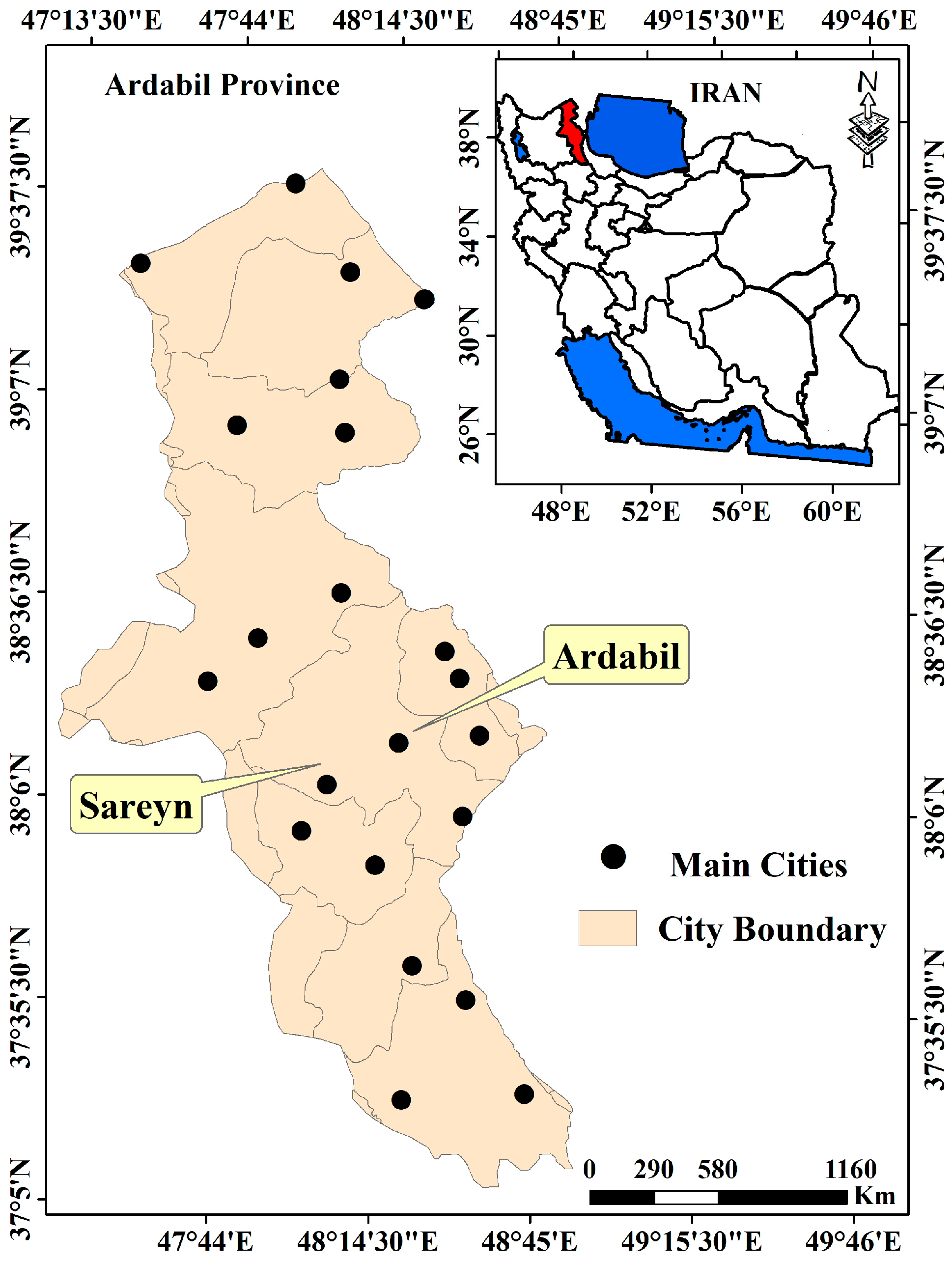
The study area is Sareyn, a prominent hydrotherapy tourism destination in northwest Iran characterized by a diverse spectrum of facilities, from traditional public baths to modern spa complexes, catering to a wide range of tourist preferences and budgets (Figure 1). Hydrotherapy tourism in Sareyn is characterized by a diverse range of facilities that cater to various tourist preferences and budgets, from simple traditional baths to modern, fully equipped complexes. At one end of the spectrum, specialized spa hotels and residential-therapeutic complexes provide modern amenities such as indoor pools, private jacuzzis, accommodation, restaurants, massage, and supervised hydrotherapy treatments, targeting health tourists seeking comprehensive, multi-day wellness experiences. At the other end, more traditional public baths offer a direct, authentic experience of the natural hot springs, often with separate pools for men and women and simpler amenities at a lower cost. Additionally, some local villas and guesthouses offer private or semi-private access to hot spring water. While the level of amenities may be less than in spa hotels, they preserve the authenticity and direct connection to the spring (such as the Gamishgoli hot spring) and typically have lower costs. In addition to these two main models, some local villas or guesthouses also provide private or semi-private access to a spring or hot water. Overall, Sareyn’s infrastructure includes a mix of both aforementioned types. It should be added that the quality and modernity of these facilities in Sareyn are not uniform, representing a spectrum from the most equipped centers to simpler public pools. This diversity in infrastructure and service levels allows Sareyn to attract a wide range of visitors with different motivations and budgets.
The most important hydrotherapy complexes in Sareyn include Gamishgoli, Sabalan, Panlu (at Ershad Hotel), Royal Park, Iranians, Shahr-e Aftab, Ghahveh Sui and Goz Sui, Dareh Lar Sui, Besh Bajilar, Zheneral, Nooh Cheshmeh, and Shafa. The Gamishgoli pool is Sareyn’s most abundant mineral spring, with a discharge rate of 85 L per second and water at 46 °C. It features a 400 m2 open-air pool (1.3 m deep) and facilities including showers and chlorinated footbaths. The water is classified as chloride, sodium bicarbonate, and calcic thermal water.
Specialized, supervised hydrotherapy using mineral hot springs treats conditions like arthritis, joint issues, and skin/respiratory ailments. Modern spas and hotels provide therapeutic massages, while crenotherapy and balneology harness the water’s chemical properties (e.g., sulfur, chloride, sulfate) for treatment. Visitors can choose from modern therapeutic complexes with pools, jacuzzis, and restaurants, or experience authentic traditional public baths at lower cost. Private access to springs is also available in local accommodations. Cultural programs introduce regional crafts and customs, alongside participation in local events and festivals. Sareyn’s springs are rich in minerals like sulfur, calcium, magnesium, and sulfates, which aid in treating skin, muscular, and joint conditions. The warm mineral water enhances circulation, reduces stress, and promotes relaxation. The variety in temperature and chemical composition caters to diverse therapeutic needs. In summary, Sarein is a comprehensive health and wellness destination. Beyond swimming, it offers specialized therapies, a range of accommodations, cultural activities, and smart infrastructure. The natural mineral content and heat of its springs significantly contribute to physical and mental well-being.
The present study is of an applied nature, utilizing a mixed approach known as the Partially Mixed Sequential Dominant Status Design, which has been carried out in three phases of qualitative-qualitative-quantitative. In this research, three methods, namely “Scoping Review-Delphi-Survey,” have been employed sequentially. Initially, relevant studies on the topic of hydrotherapy tourism were examined using the scoping review qualitative method, and the extracted factors or items were considered as criteria for investigation in the Delphi method. Then, using the Delphi method (in different rounds) and obtaining opinions from experts and specialists, the main critical success factors in attracting tourists to hydrotherapy tourist destinations were identified, and a list of them was compiled. Subsequently, through the quantitative survey method, prioritization and validation or rejection of these factors were examined, which will be elaborated on in detail in the subsequent stages of each phase.
To ensure methodological transparency and replicability, the data collection for this three-phase mixed-methods study was executed according to a pre-defined schedule in the calendar year 2024. The sequential phases were implemented as follows: the Scoping Review (Phase 1) was completed from January to March; the qualitative Delphi rounds with experts (Phase 2) were carried out from April to June; and the final Quantitative Survey (Phase 3) was distributed and analyzed in July and August. This clear temporal framework establishes the chronology and logical progression of the research process.

2.1. Phase One (Using the Scoping Review Method)

In this stage, relevant studies on the research topic were extracted through searches of domestic and international scientific databases. These studies were identified and extracted from reputable scientific databases (Web of Science, Emerald, ScienceDirect, ProQuest, Google Scholar). Then, using the scoping review approach, components and indicators related to the research topic were extracted (Table 1). The scoping review method is one of the research methods that uses a systematic review mechanism to identify and synthesize an existing or emerging body of literature on a given topic (Thomas et al., 2017).

Scoping Review: Search Strategy and Procedure

To ensure methodological transparency and rigor, the scoping review followed a structured and documented procedure. The systematic search was conducted across five major international scientific databases: Web of Science (WOS), Emerald, ScienceDirect, ProQuest, and Google Scholar. The search was performed during a defined period from 15 January to 10 March 2024. The search strategy utilized a combination of keywords and Boolean operators to capture the relevant literature comprehensively. The core keywords included: (“hydrotherapy tourism” OR “hot spring tourism” OR “spa tourism” OR “wellness tourism”) AND (“critical success factor” OR “key factor” OR “determinant” OR “driver”) AND (“tourist attraction” OR “destination development” OR “planning”). No restrictions were placed on the publication date of journals to ensure a broad review of the evolving literature. The search primarily targeted peer-reviewed journal articles in the fields of tourism, hospitality, health studies, and destination management.
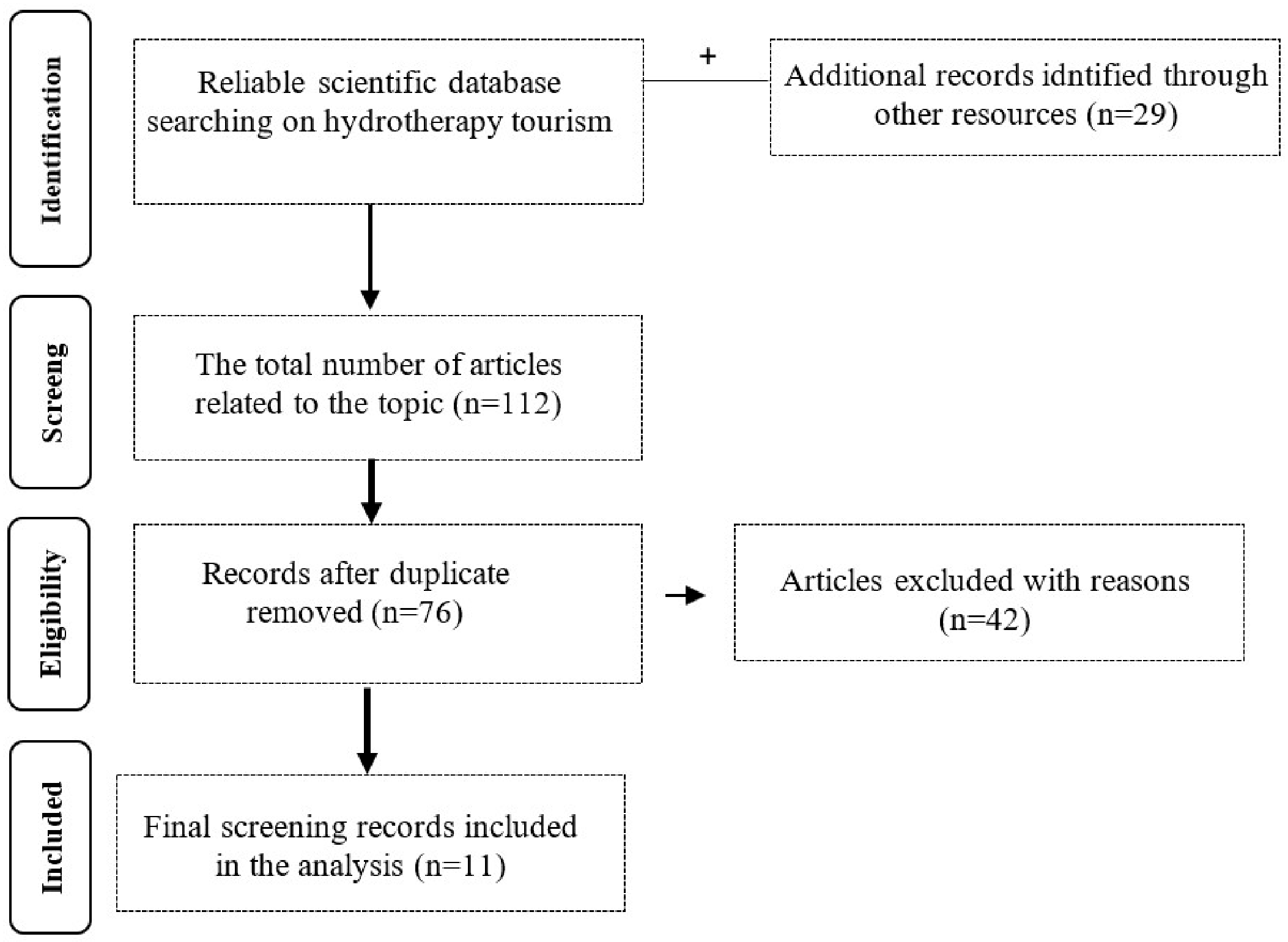
Initially, the search yielded 141 potentially relevant records. These were then screened against the scoping review checklist (PRISMA-ScR framework) based on their titles and abstracts. Subsequently, full-text versions of the shortlisted articles were retrieved and assessed for eligibility, resulting in the final set of 11 primary studies included for in-depth analysis, as summarized in Table 1. This meticulous process was designed to systematically map the key concepts and evidence related to critical success factors in hydrotherapy tourism.

2.2. Phase Two (Delphi Technique)

In this phase of the research, the components and indicators extracted from the previous phase were sent to experts in the field of hydrotherapy tourism to express their opinions on their relationship with critical factors or success factors in attracting hydrotherapy tourism in the city of Sareyn. In this stage, many factors were eliminated or modified, and by adopting an inductive approach (from parts to whole), the most essential factors were extracted. The participants in the survey were a combination of university professors and hydrotherapy tourism experts with research and practical experience in this field. These participants were identified and selected through purposive sampling. The process of interviewing participants and extracting critical success factors in attracting tourists to hydrotherapy tourism destinations was conducted in three rounds of the Delphi method, and the components and key indicators were determined. The Delphi method is one of the qualitative and widely used methods to find consensus on various complex subjects. This method has various types and approaches that can be applied depending on the nature and subject of the research. Delphi has multiple rounds. In each round, participants are asked to express their opinions on the subject (Dragostinov et al., 2022). As Barrett and Heale (2020) have stated, “the questions of each round are somewhat based on previous results, allowing each response to evolve over time in line with previous results.” In this method, the number of experts varies depending on the topic, as well as the time and resources available to the researcher (Dragostinov et al., 2022). The main feature of this method is the anonymity of experts or participants in it (Barrett & Heale, 2020). Often, different opinions have been presented regarding the number of Delphi rounds, and most researchers believe that three rounds are sufficient for this method (Stone Fish & Busby, 2005).

Delphi Technique: Expert Panel, Procedure, and TimelineIn the Third

Expert Panel Composition and Sampling:
The Delphi panel was carefully composed of 15 experts whose professional work and research are directly focused on hydrotherapy, health tourism, and regional tourism development in Iran, with specific knowledge of the Sareyn destination. Participants were identified and selected through a purposive sampling strategy, which is standard in qualitative Delphi studies to ensure the inclusion of information-rich cases with relevant expertise. The panel comprised a diverse mix of university academics (specializing in tourism management, health tourism, and hospitality) and practitioners/executives (including managers of hydrotherapy facilities, tourism destination marketing officers, and regional tourism policy officials). To qualify, experts needed a minimum of 10 years of professional or research experience in related fields.
Demographic and Expertise Profile:
The panel included 11 males and 4 females. Their professional roles were distributed as follows: 7 university professors, 5 senior managers of hot spring resorts and tourism complexes in the Ardabil province, and 3 officials from the Ardabil Cultural Heritage, Tourism, and Handicrafts Department. All academic members held PhDs, and practitioners held at least a master’s degree. Their average experience in hydrotherapy/tourism fields was 14 years, ensuring deep, context-specific insights.
Delphi Procedure and Timeline:
The Delphi process was conducted over a defined period and consisted of exactly three iterative rounds, not “several” as previously ambiguously stated. This aligns with the common practice that three rounds are sufficient to achieve consensus.
-
Round 1: An open-ended electronic questionnaire, listing the 65 initial factors derived from the scoping review, was sent to the 15 experts. They were asked to rate the relevance of each factor and suggest additions or modifications.
-
Round 2: A revised questionnaire, incorporating the feedback from Round 1, was redistributed. Experts re-evaluated the items, leading to the elimination of 15 variables.
-
Round 3: The final set of 50 indicators, organized into 6 thematic components, was sent for confirmation and final approval. Consensus was achieved at this stage, concluding the Delphi process. Anonymity was maintained throughout all rounds to minimize dominance and group bias.

2.3. Phase Three (Quantitative Survey Method)

In the third phase, the factors extracted from the previous stage were examined using the quantitative survey method. The survey method is one of the most important quantitative methods, often using questionnaires to collect numerical data and information (Groves et al., 2009). Researchers conduct statistical inferences about the study population with the aim of statistical inference. Such inferences heavily depend on the survey questions used (De Leeuw et al., 2012). In this stage, while confirming or rejecting the factors extracted from the previous stage, prioritization of factors based on their importance was also carried out. In this phase, experts and professionals from both academic and executive fields (hydrotherapy tourism) were selected using stratified sampling, and their opinions on the key factors were obtained using a questionnaire tool. The software used in this phase were IBM SPSS Statistics (Version 19) and SmarPLS3 V3.2.9.

Quantitative Survey: Sampling, Instrument Development, and Data Collection

Sampling and Participants: A stratified sampling method was used to survey a second panel of experts distinct from the Delphi panel. The sample comprised two strata: (1) Academics in tourism/hospitality and (2) Practitioners/Executives in hydrotherapy tourism. Questionnaire: The instrument was developed directly from the Delphi results, featuring the finalized 50 indicators across 6 components. Respondents rated each item’s importance on a 5-point Likert scale (1 = Very Low to 5 = Very High). A pre-test with three external experts ensured clarity and content validity. Data Collection: A complementary face-to-face paper questionnaire to maximize reach. All responses were consolidated into a single dataset for analysis in SmartPLS3.

3. Results

During the initial phase, key studies were pinpointed and retrieved through a comprehensive examination of reputable Iranian and international scientific databases. Employing the scoping review method and a checklist approach facilitated the identification of all pertinent studies, culminating in a total of 141 articles. The process of article selection and review is visually depicted in Figure 2.
In Table 1, it is observed that 11 articles were reviewed and confirmed for inclusion in the flowchart, and relevant analyses were conducted on them. The scoping review methodology encompasses various types and approaches, often involving systematic review and meta-analysis, consisting of abstract, methods, results, discussion, and references, though financial resources were not considered in this study. In Table 1, the confirmed articles eligible for final analysis are presented.
As shown in Table 1, most studies refer to factors that encompass both the tourist community and the local community. However, the crucial point here is that, apart from 1 or 2 studies which briefly mention tourist attraction in hydrotherapy tourist areas, other studies have mostly focused on tourist satisfaction, decision-making factors, and challenges. Studies aiming to investigate the critical success factors in attracting tourists to hydrotherapy tourist destinations are very few. Therefore, to identify the critical success factors, each of the above items was sent to relevant experts in the next phase to precisely identify these factors. A total of 65 factors were sent to experts identified through purposive sampling, and they expressed their opinions on these factors in three consecutive rounds. The subsequent steps are described below.
The selection of panel members participating in the anonymous Delphi survey process is undoubtedly the most critical aspect of Delphi research studies (Diamond et al., 2014). There is no standard size for panel members, and in published studies, it varies, usually between 10–100 individuals (Niederberger & Spranger, 2020). As mentioned before, using purposive sampling, 15 experts were selected as interviewees and participated in three rounds of Delphi. The strength of the Delphi process lies in the anonymity of the panel during survey rounds, controlled feedback, and iterative discussions. Anonymous survey rounds have the advantage over face-to-face or group encounters in reducing dominance and group conformity. With this explanation, the first round commenced, and an electronic file containing criteria and relevant descriptions regarding hydrotherapy tourism in Sareyn city was sent to the experts. They provided their opinions within approximately two weeks. Analysis of the repetitive and successive rounds provided an opportunity to evaluate data to achieve consensus and stability between two successive rounds. Repetitive and interactive survey rounds for collecting qualitative information improve the framing of useful phrases. Therefore, after adjusting and eliminating some items, the modified file was resent to the relevant experts for them to complete the survey again and confirm or modify their initial responses. The Delphi review process was repeated several times until consensus was reached. In the second stage, which lasted about a month, all files were received again. However, this process is normal because more rounds lead to decreased participation and increased survey costs, which in this study were conducted in three successive rounds. In the next step, after carefully examining the items and categorizing them into components and indices, the respective file was resent to the experts. In addition to confirming the categorization and its contents, they also provided their opinions on other components and indices that should be considered here.
Based on the results of the Delphi method, out of the 65 variables examined, 15 variables did not obtain the necessary score in three rounds of Delphi, and the remaining 50 variables were identified as primary indicators and entered the analysis phase of the third stage of the research.
This stage lasted for three weeks, and all experts declared important and key issues, which are presented in Table 2.
As shown in the above Table 2, experts have considered various components and indicators. These are identified as critical success factors in attracting tourists to the tourist-friendly destination of Sareyn, based on the strategic and geographical location of this region. Since these factors are derived from the opinions of experts, it is necessary to undertake essential actions regarding their validation, rejection, and prioritization. Therefore, in the third phase, using a quantitative survey method, the components and indicators were sent in the form of a questionnaire to the second group of experts (individuals other than the previous experts). These experts were selected using stratified sampling, and their responses to the 61 received questionnaires were analyzed, with the results of this phase discussed further in the study.
In Table 3, The mean and standard deviation of the extracted components and indicators effective in attracting tourists in hydrotherapy tourism destinations is shown.
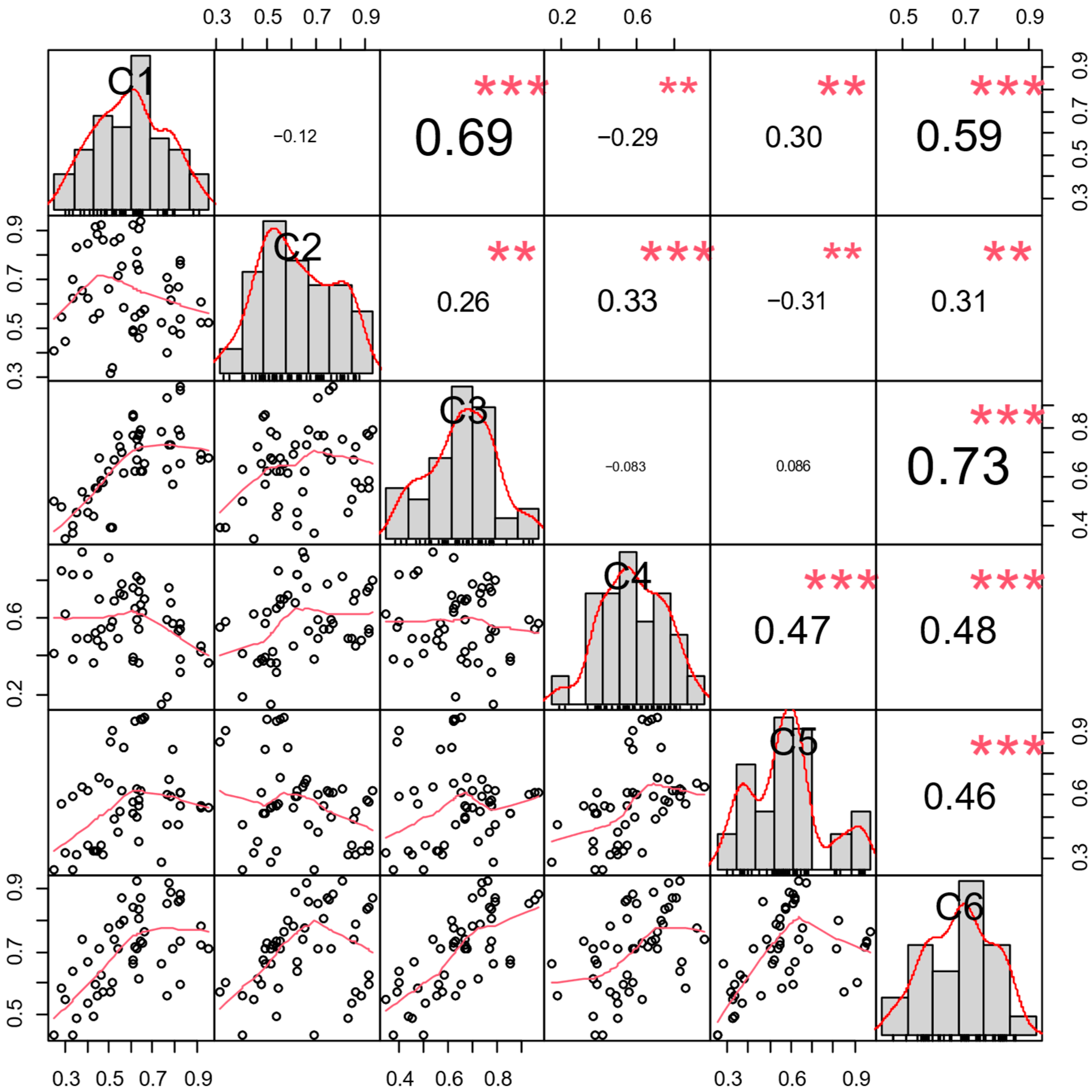
As seen in Table 3, indicators such as Provision of ancillary facilities and amenities, Ensuring the safety and security of tourists, increasing innovation capabilities at the destination, Formulating and implementing effective strategies, Accessibility of information about the destination, Ensuring the quality and health of hydrotherapy-based activities are of greater importance and rank higher compared to other indicators. The degree of correlation between the components is depicted in Figure 3.
As shown in Figure 3, the correlation of all the components is evaluated at high range. It means that the correlation between the components is high and significant.
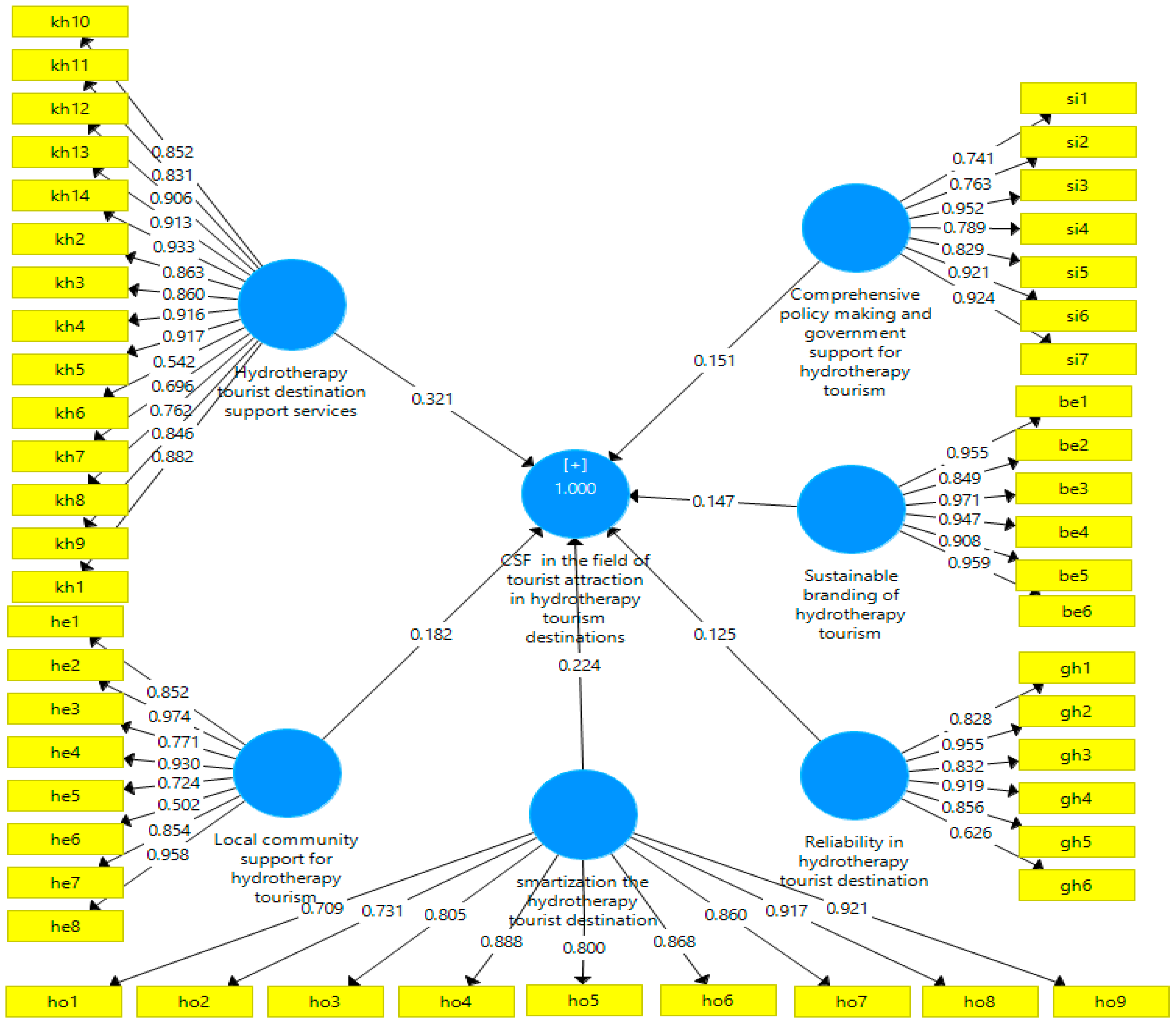
In Figure 4, the importance coefficient and the mean of each set of factors are differentiated.
As seen in Figure 4, all factor loadings and path coefficients are acceptable, and among the extracted components, the hydrotherapy tourist destination support services component has a significantly higher impact and importance compared to other components.
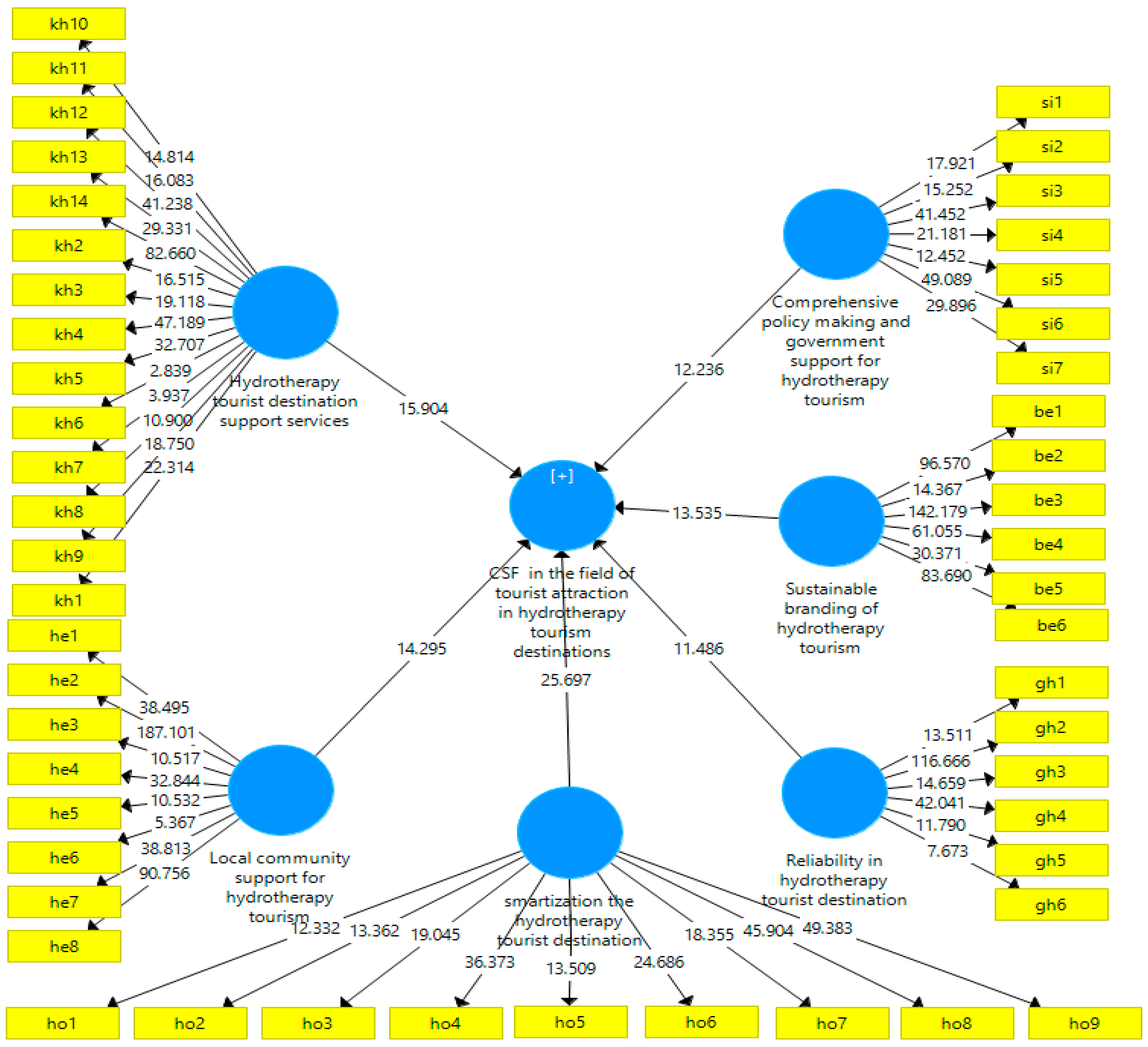
The coefficients of the model and the significant of the factors influencing the development of hydrotherapy tourism has been shown in Figure 5.
As presented in Figure 5, all coefficients of the factors affecting hydrotherapy tourism in the model are standardized and fall within a significant range. Table 4 and Table 5 present the fit indices of the confirmatory factor analysis, and the discriminant validity of the indicators, respectively. In Table 4, the fit indices of confirmatory factor analysis for the researched components are shown.
According to the results in Table 4, the Cronbach’s alpha coefficients for all components are above 0.70, which fall within an acceptable range. Additionally, the composite reliability and homogeneous reliability (rho_A) coefficients for all components are also above 0.70, indicating high reliability for all components. The average variance extracted (AVE) is used to assess the convergent validity of the components, and it is confirmed for all components. The Q2 predictive relevance index indicates the model’s predictive power on dependent variables, which is confirmed for all components as well. In Table 5, the components’ discriminant validity is presented.
Divergent validity essentially demonstrates the uniqueness of a measurement tool. According to the values presented in Table 5, divergent validity for all components has been confirmed. Based on the results, the goodness-of-fit (GoF) index value is calculated to be 0.774 Since the GoF assesses both structural and measurement fit simultaneously, it has three domains based on its value. In the first domain, if the values range from 1.0 to 2.5, the goodness-of-fit will be weak. If the values range from 2.5 to 3.6, the goodness-of-fit will be moderate, and if it exceeds 3.6, the goodness-of-fit will be strong, which has been evaluated as strong in this study.

3.1. Implications

In the present study, solutions have been proposed to identify the critical success factors in attracting tourists to hydrotherapy destinations in the city of Sareyn. Many of these new solutions have not been addressed in previous studies, which is a strength of the current research compared to previous studies. One particular result of this research is the emphasis on considering the factor of “community support for tourism,” which has not been mentioned in other studies. In fact, without the influential and receptive support of this community, attracting tourists and even managing them cannot be expected. Another specific outcome, presented as an effective and practical suggestion, is the establishment of a hydrotherapy tourism destination management organization in Sareyn city. With its great potential in attracting hydrotherapy tourists, this city can effectively attract tourists and manage tourism by forming such an organization, leading to the sustainability of businesses and economic revenues in this sector. Overall, given that the critical success factors in attracting tourists to hydrotherapy destinations require a multidimensional and comprehensive approach, it is necessary to consider each of these components in the planning and management of tourism. Therefore, practical recommendations can be formulated and implemented in this regard to accelerate the improvement of hydrotherapy tourism and attract more interested tourists to important cities like Sareyn and other similar cities in Ardabil province and other similar regions.
The Caucasian Mineral Waters region in Russia is recognized as one of the oldest and most systematically developed balneological resorts in the world. With a formal history of over 220 years (since 1803) and a history of spring discovery dating back to the 14th century, it is not merely a tourist destination but a “natural laboratory” and an “extensive hospital” comprising more than 130 sanatoriums and treatment centers that host approximately 730,000 people annually (Fillimonova et al., 2022). Systematic balneological research in this region also began in the mid-19th century with the establishment of the “Russian Balneological Society” and a dedicated chemical laboratory in “Pyatigorsk.” This long-standing history, coupled with the distinctive therapeutic properties of its springs (such as the “Narzan” waters of Kislovodsk for cardiovascular issues and “Essentuki” for digestive ailments), makes it a valuable case study in health tourism (Malkhazova et al., 2022; Povolotskaya et al., 2024).
The primary reason for selecting Sareyn in the present research methodology was a deliberate focus on “identifying unique and context-specific success factors.” The aim was to develop an operational framework for local planners and managers, directly benefiting from the experiences of regions with similar socio-economic conditions, tourism patterns (such as an emphasis on short-term stays and general tourism alongside health tourism), and governance models. Consequently, the reviewed literature mainly concentrated on domestic Iranian studies and successful regional examples (such as Anatolia in Turkey or East Asia) that face similar challenges and opportunities. Certainly, employing analytical frameworks and success criteria derived from a historically established region like the Caucasus could enhance the analytical richness and validity of the study’s results. The long-term approach of that region in areas such as training specialized personnel, converting research into standard therapeutic protocols, and diversifying services based on a natural resource can provide valuable benchmarks for assessing the current state and charting the future roadmap for Sareyn.
According to the General Directorate of Cultural Heritage, Tourism, and Handicrafts of Ardabil Province, Sareyn hosted over 1.5 million tourists in 2022. In the first nine months of 2023, the number of tourists visiting Sareyn reached 1.2 million people, indicating the sustained prosperity of tourism in the region. Furthermore, estimates suggest that the volume of investment in the therapeutic tourism and hotel construction sector in Sareyn in recent years has reached hundreds of billions of Tomans, signifying significant financial absorption in this sector.

3.2. Limitations and Future Directions

While this research aims to discover critical success factors for tourist attraction in hydrotherapy tourism, its scope is limited to a specific region in northwest Iran, which may restrict the generalizability of results to other tourist destinations. The study’s methodology, although comprehensive, relies heavily on expert opinions gathered through the Delphi method and survey tools, which may introduce biases and limit the objectivity of the results. Additionally, the reliance on existing literature and expert opinions may overlook emerging trends and innovative strategies in hydrotherapy tourism, potentially excluding valuable insights that could impact the effectiveness of tourist attraction efforts in Sareyn County and similar regions. Future research directions could explore the long-term effects of implementing the identified critical success factors on hydrotherapy tourism development, considering evolving tourist preferences and global trends. Additionally, comparative studies across different regions could provide insights into the transferability and effectiveness of strategies in enhancing hydrotherapy tourism, contributing to a more comprehensive understanding of its dynamics and potential for sustainable growth.
The primary market for Sareyn’s hydrotherapy tourism is domestic Iranian tourists, who travel primarily from major cities for health and leisure on short, family-oriented trips. Good domestic infrastructure supports this core market. Regionally, Sareyn attracts visitors from neighboring countries like Azerbaijan due to cultural and geographical proximity. However, attracting tourists from distant markets (e.g., Europe, East Asia) faces challenges such as visa policies, international image, and global competition. It requires long-term investment in targeted marketing and international service standards. While the critical success factors identified (like safety, reputation, service quality, and smartization) are universally important, a focused strategy for international markets should emphasize international digital marketing, multilingual staff, service standardization, and specialized health travel packages. Thus, the study’s framework offers a foundation for future strategies to expand into international tourism.

4. Conclusions

The main objective of the current research is to identify and examine the critical success factors in attracting tourists to hydrotherapy destinations in Sareyn city. The current study presents the critical success factors in attracting tourists to hydrotherapy destinations in the tourist-friendly city of Sareyn, which, due to the high number of indicators, is among the few studies that have fully and accurately identified and explained these factors. The current study outlines the critical success factors for attracting tourists to hydrotherapy destinations within the tourist-friendly environment of Sareyn city. It stands out as one of the few research endeavors that have comprehensively and precisely pinpointed these factors, owing to its extensive array of indicators.
Based on the components and indicators extracted in the Delphi method, it can be concluded that factors such as “supportive services for hydrotherapy destination, local community support for hydrotherapy tourism, smart destination management for hydrotherapy tourism, destination reliability for hydrotherapy tourism, sustainable branding of hydrotherapy tourism, comprehensive policy and government support for hydrotherapy tourism” are critical success factors in attracting tourists to hydrotherapy destinations in Sareyn city. These factors can be considered fundamental tools for influencing tourist satisfaction and encouraging their engagement in hydrotherapy or hot springs tourism. The research results indicate that among the components, the component hydrotherapy tourist destination support services, and among the indicators, indicators related to Provision of ancillary facilities and amenities, Ensuring the safety and security of tourists, increasing innovation capabilities at the destination, Formulating and implementing effective strategies, Accessibility of information about the destination, Ensuring the quality and health of hydrotherapy-based activities are of greater importance and priority compared to other factors.
Considering the ongoing changes and the digitalization trend in many activities today, it is evident that the primary approach and mechanism in this area, reflecting its primary need, are smart destination initiatives. The advancement of electronic and digital equipment, on one hand, and the emergence of new audiences and technology-driven approaches on the other have led to changes in the needs of smart hydrotherapy destination initiatives. Factors such as “modern communication facilities; renovation and development of mobile and digital communication infrastructure; development of specialized hydrotherapy tourism applications; creation and development of smart destination projects; provision of high-speed internet; access to attractive sites; media advertising and suitable domestic and international visualization; development of tourism social media (TSM); development of smart tourism destinations” can be considered as key factors in this field.
Destination attractions, supportive services for hydrotherapy destinations, local community support for hydrotherapy tourism, destination reliability for hydrotherapy tourism are related to the actions of hydrotherapy destination activities that have been identified as key components. In fact, in a hydrotherapy-friendly community in Sareyn county, these components need to be integrated and interconnected to create destination attractiveness in the minds of tourists, as well as effective approaches in sustainability. Sustainable branding of hydrotherapy tourism is also one of the components that is identified as a critical success factor in attracting tourists to hydrotherapy destinations and is significantly associated with destination attractiveness. Sustainable branding, which is one of the fundamental needs of Sareyn county, not only reflects the strengths and fundamental opportunities of this county but also has significant impacts on the socio-economic dimensions of the hydrotherapy-friendly community of Sareyn and creates flexibility in attracting tourists. Comprehensive policy-making and government support for hydrotherapy tourism are also key components in this area. Focusing on policies and strategies related to hydrotherapy tourism is very important because the tourism and hospitality industry is complex and interconnected through various networks. Therefore, it is necessary to effectively formulate and implement relevant policies and strategies. This component plays a shaping and organizing role in attracting tourists, leading to coordination and interaction among various sectors in hydrotherapy tourism and regulating and formulating related processes and mechanisms.

Author Contributions

Conceptualization, J.M., B.I. and R.M.; methodology, J.M., B.I. and R.M.; software, J.M.; validation, J.M., B.I. and R.M.; formal analysis, J.M. and R.M.; data curation, J.M., B.I.; writing—original draft preparation, J.M. and R.M.; writing—review and editing, R.M. and J.M.; visualization, J.M.; supervision, J.M., B.I. and R.M. All authors have read and agreed to the published version of the manuscript.

Funding

This research received no external funding.

Institutional Review Board Statement

Informed Consent Statement

Informed consent was obtained from all subjects involved in the study.

Data Availability Statement

All data generated or analyzed during this study are included in this published article.

Acknowledgments

We would like to express our sincere gratitude to the University of Mohaghegh Ardabili for the logistical support, which significantly contributed during the research work.

Conflicts of Interest

The authors declare no conflicts of interest.

References

  1. Abdulatif, K. (2024). Exploration of thermal resource utilisation characteristics in treatment and wellness tourism through international experience. Central Asian Journal of Innovations on Tourism Management and Finance, 5(6), 326–331. [Google Scholar] [CrossRef]
  2. Anaya-Aguilar, R., Gemar, G., & Anaya-Aguilar, C. (2021). Challenges of spa tourism in Andalusia: Experts’ proposed solutions. International Journal of Environmental Research and Public Health, 18(4), 1829. [Google Scholar] [CrossRef]
  3. Avcikurt, C., Altay, H., & Ilban, M. O. (2011). Critical success factors for small hotel businesses in Turkey: An exploratory study. Cornell Hospitality Quarterly, 52(2), 153–164. [Google Scholar] [CrossRef]
  4. Barrett, D., & Heale, R. (2020). What are Delphi studies? Evidence-Based Nursing, 23(3), 68–69. [Google Scholar] [CrossRef]
  5. Bozhkova, R. (2025). The impact of urban life on health and the role of balneological, SPA and wellness tourism enterprises in promoting well-being. Икономика и Управление, 22(1), 109–117. [Google Scholar]
  6. Brandão, F., Liberato, D., Teixeira, A. S., & Liberato, P. (2021). Motives for thermal tourism: An application to North and Central Portugal. Sustainability, 13(22), 12688. [Google Scholar] [CrossRef]
  7. Chang, K., & Chen, M. (2011). Applying the Kano model and QFD to explore customers’ brand contacts in the hotel business: A study of hot spring hotel. Total Quality Management & Business Excellence, 22(1), 1–27. [Google Scholar] [CrossRef]
  8. Chang, L., & Beise-Zee, R. (2013). Consumer perception of healthfulness and appraisal of health-promoting tourist destinations. Tourism Review, 68(1), 34–47. [Google Scholar] [CrossRef]
  9. Chen, B., Zhu, Y., He, X., & Zhou, C. (2023). Analysis of high-quality tourism destinations based on spatiotemporal big data—A case study of Urumqi. Land, 12(7), 1425. [Google Scholar] [CrossRef]
  10. Chen, F. H., Hsu, T. S., & Tzeng, G. H. (2011). A balanced scorecard approach to establish a performance evaluation and relationship model for hot spring hotels based on a hybrid MCDM model combining DEMATEL and ANP. International Journal of Hospitality Management, 30(4), 908–932. [Google Scholar] [CrossRef]
  11. Chen, K. H., Liu, H. H., & Chang, F. H. (2013). Essential customer service factors and the segmentation of older visitors within wellness tourism based on hot springs hotels. International Journal of Hospitality Management, 35, 122–132. [Google Scholar] [CrossRef]
  12. Chen, K. Y. (2014). Improving importance-performance analysis: The role of the zone of tolerance and competitor performance, the case of Taiwan’s hot spring hotels. Tourism Management, 40, 260–272. [Google Scholar] [CrossRef]
  13. Chen, N., Ruan, W., & Yuan, Q. (2015). The research of spatial-temporal evolution and satisfaction factors in integrated hot spring resorts. International Journal of Tourism Sciences, 15(1-2), 1–15. [Google Scholar] [CrossRef]
  14. Chisala, C. (2021). Maximising the use of thermal springs for local economic development in rural Zambia: A case study of Chinyunyu thermal springs, Rufunsa District [Unpublished Ph.D. thesis]. University of South Africa. [CrossRef]
  15. Chrobak, A., Ugolini, F., Pearlmutter, D., & Raschi, A. (2020). Thermal tourism and geoheritage: Examining visitor motivations and perceptions. Resources, 9(5), 58. [Google Scholar] [CrossRef]
  16. Crouch, G. (2011). Destination competitiveness: An analysis of determinant attributes. Journal of Travel Research, 50(1), 27–45. [Google Scholar] [CrossRef]
  17. De Carlo, A. F. (2013). Towards alternative forms of tourism. The Polish experience. In F. Manca (Ed.), Tourism and tourist promotion around the world: A linguistic and socio-cultural perspective (pp. 31–46). Università del Salento-Coordinamento SIBA. Available online: https://aisberg.unibg.it/retrieve/e40f7b88-ad3f-afca-e053-6605fe0aeaf2/Tourism_Manca_bianchi.pdf#page=38 (accessed on 12 July 2024).
  18. De Leeuw, E. D., Hox, J. J., & Dillman, D. A. (2012). The cornerstones of survey research. In E. D. De Leeuw, J. J. Hox, & D. A. Dillman (Eds.), International handbook of survey methodology (pp. 1–17). Routledge. [Google Scholar]
  19. Deng, W. (2007). Using a revised importance-performance analysis approach: The case of Taiwanese hot springs tourism. Tourism Management, 28(5), 1274–1284. [Google Scholar] [CrossRef]
  20. Denizci Guillet, B., & Kucukusta, D. (2016). Spa market segmentation according to customer preference. International Journal of Contemporary Hospitality Management, 28(2), 418–434. [Google Scholar] [CrossRef]
  21. Diamond, I. R., Grant, R. C., Feldman, B. M., Pencharz, P. B., Ling, S. C., Moore, A. M., & Wales, P. W. (2014). Defining consensus: A systematic review recommends methodologic criteria for reporting of Delphi studies. Journal of Clinical Epidemiology, 67(4), 401–409. [Google Scholar] [CrossRef]
  22. Dimitrovski, D., & Todorović, A. T. (2015). Clustering wellness tourists in spa environment. Tourism Management Perspectives, 16, 259–265. [Google Scholar] [CrossRef]
  23. Dragostinov, Y., Harðardóttir, D., McKenna, P. E., Robb, D. A., Nesset, B., Ahmad, M. I., Romeo, M., Lim, M. Y., Yu, C., Jang, Y., Diab, M., Cangelosi, A., Demiris, Y., Hastie, H., & Rajendran, G. (2022). Preliminary psychometric scale development using the mixed methods Delphi technique. Methods in Psychology, 7, 100103. [Google Scholar] [CrossRef]
  24. Dubelaar, C., Sohal, A., & Savic, V. (2005). In order to understand the comprehensive advantages of e-commerce solutions, organizations need to identify the critical success factors. Technovation, 25(11), 1251–1262. [Google Scholar] [CrossRef]
  25. Erfurt-Cooper, P. (2010, April 25–29). The importance of natural geothermal resources in tourism [Paper presentation]. Proceedings World Geothermal Congress 2010, Bali, Indonesia. Available online: https://www.researchgate.net/publication/286313945_The_Importance_of_Natural_Geothermal_Resources_in_Tourism (accessed on 5 March 2024).
  26. Ernawati, N. M., Mudana, I. G., Sari, P. Y. W., Indrawati, Y., & Pamularsih, T. R. (2025). Exploring hydrotourism: Health and wellbeing. Journal of Commerce, Management, and Tourism Studies, 4(2), 199–209. [Google Scholar] [CrossRef]
  27. European Historical Thermal Town Association. (2020). European route of thermal heritage and thermal towns. Available online: http://ehtta.eu/portal/wp-content/uploads/2010/09/EHTTA_european_route.pdf (accessed on 12 April 2024).
  28. Fillimonova, E., Kharitonova, N., Baranovskaya, E., Maslov, A., & Aseeva, A. (2022). Geochemistry and therapeutic properties of Caucasian mineral waters: A review. Environmental Geochemistry and Health, 44(7), 2281–2299. [Google Scholar] [CrossRef] [PubMed]
  29. Flint, D. J., Blocker, C. P., & Boutin, P. J., Jr. (2011). Customer value anticipation, customer satisfaction and loyalty: An empirical examination. Industrial Marketing Management, 40(2), 219–230. [Google Scholar] [CrossRef]
  30. Folgado-Fernández, J. A., Di-Clemente, E., Hernández-Mogollón, J. M., & Campón-Cerro, A. M. (2018). Water tourism: A new strategy for the sustainable management of water-based ecosystems and landscapes in Extremadura (Spain). Land, 8(1), 2. [Google Scholar] [CrossRef]
  31. Fonsêca, F. O., Ferreira, F. A., & Meneses, D. (2024). Therapeutic tourism—Health and well-being: Potential, interfaces, and singularities of thermal springs in Brazil and Portugal. In International conference on tourism, technology and systems, Madeira, Portugal, October 30–31 (pp. 449–459). Springer Nature. [Google Scholar]
  32. Groves, R. M., Fowler, F. J., Jr., Couper, M. P., Lepkowski, J. M., Singer, E., & Tourangeau, R. (2009). Survey methodology (2nd ed.). John Wiley & Sons. [Google Scholar]
  33. Gu, X., Sheng, L., & Lei, C. (2022). Specialization or diversification: A theoretical analysis for tourist cities. Cities, 122, 103517. [Google Scholar] [CrossRef]
  34. Hanvoravongchai, P., & Paweenawat, J. (2025). Economic and environmental dynamics in Southeast Asia: The impact of tourism, gross domestic product, foreign direct investment, and trade openness on carbon dioxide emissions. Journal of Energy and Environmental Policy Options, 8(1), 51–65. [Google Scholar]
  35. Hernández, J. M., Santana-Jiménez, Y., & González-Martel, C. (2021). Factors influencing the co-occurrence of visits to attractions: The case of Madrid, Spain. Tourism Management, 83, 104236. [Google Scholar] [CrossRef]
  36. Heung, V. C., & Kucukusta, D. (2013). Wellness tourism in China: Resources, development and marketing. International Journal of Tourism Research, 15(4), 346–359. [Google Scholar] [CrossRef]
  37. Hou, G. L., & Huang, Z. F. (2010). Tourists’ behavioral characteristics of Nanjing Tangshan hot spring resort and it’s tourism product optimization strategies. Geography Research and Management for Sustainable Development, 1, 143–146. [Google Scholar]
  38. Huang, X., Zhang, Y., & Li, C. (2022). Assessing the compensatory potentiality of hot spring tourism in the COVID-19 post-pandemic environment. Sustainability, 14(14), 8579. [Google Scholar] [CrossRef]
  39. Joson, G. H. G., Pyke, J., Delacy, T., & Davidson, C. (2024). Wellness in the spa industry: An investigation of hot spring tourism in Australia. In V. Katsoni, & A. Cassar (Eds.), Sustainable development and resilience of tourism: Wellbeing and quality of life perspectives (pp. 63–79). Springer International Publishing. [Google Scholar]
  40. Kerdpitak, C., & Heuer, K. (2016). Key success factors of tourist satisfaction in tourism services provider. Journal of Applied Business Research, 32(4), 1237–1242. [Google Scholar] [CrossRef]
  41. Khalaji, M., Kalantari, M., Shafiee, Z., & Hosseini, M. A. (2017). The effect of hydrotherapy on health of cerebral palsy patients: An integrative review. Iranian Rehabilitation Journal, 15(2), 173–180. [Google Scholar] [CrossRef]
  42. Kitajima, M., Tahira, H., Takahashi, S., & Midorikawa, T. (2012). Understanding tourists’ in situ behavior: A cognitive chrono-ethnography study of visitors to a hot spring resort. Journal of Quality Assurance in Hospitality & Tourism, 13(3), 247–270. [Google Scholar] [CrossRef]
  43. Kucukusta, D., & Guillet, B. D. (2016). Lifestyle segmentation of spa users: A study of inbound travelers to Hong Kong. Asia Pacific Journal of Tourism Research, 21(2), 239–258. [Google Scholar] [CrossRef]
  44. Lee, C. F., & King, B. (2010). International competitiveness in hot springs tourism: An application of the analytical hierarchy process approach. Tourism Analysis, 15(5), 531–544. [Google Scholar] [CrossRef]
  45. Lee, C. F., & King, B. E. (2008). Using the Delphi method to assess the potential of Taiwan’s hot springs tourism sector. International Journal of Tourism Research, 10(4), 341–352. [Google Scholar] [CrossRef]
  46. Liu, X., Fu, Y., & Li, J. (2019). The effect of on-site experience and place attachment on loyalty: Evidence from Chinese tourists in a hot-spring resort. International Journal of Hospitality & Tourism Administration, 20(1), 75–100. [Google Scholar] [CrossRef]
  47. Lo, A., Wu, C., & Tsai, H. (2015). The impact of service quality on positive consumption emotions in resort and hotel spa experiences. Journal of Hospitality Marketing & Management, 24(2), 155–179. [Google Scholar] [CrossRef]
  48. Loureiro, S. M. C., Almeida, M., & Rita, P. (2013). The effect of atmospheric cues and involvement on pleasure and relaxation: The spa hotel context. International Journal of Hospitality Management, 35, 35–43. [Google Scholar] [CrossRef]
  49. Mahajan, G. B., & Balachandran, L. (2016). Sources of antibiotics: Hot springs. Biochemical Pharmacology, 134, 35–41. [Google Scholar] [CrossRef]
  50. Malkhazova, S., Orlov, D., Shartova, N., Starikov, S., & Puzanova, T. (2022). Healing springs in regions. In Healing springs of Russia (pp. 81–119). Springer International Publishing. [Google Scholar]
  51. Marais, M., Du Plessis, E., & Saayman, M. (2017). Critical success factors of a business tourism destination: Supply side analysis. Acta Commercii, 17(1), a423. [Google Scholar] [CrossRef]
  52. Medai, N., Okamoto, N., Ogasawara, Y., & Hihara, K. (2022). Factors contributing to tourism demand at major Japanese hot springs. PLoS ONE, 17(11), e0274681. [Google Scholar] [CrossRef]
  53. Mi, C., Chen, Y., Cheng, C. S., Uwanyirigira, J. L., & Lin, C. T. (2019). Exploring the determinants of hot spring tourism customer satisfaction: Causal relationships analysis using ISM. Sustainability, 11(9), 2613. [Google Scholar] [CrossRef]
  54. Mihai, V. C., Dumitras, D. E., Oroian, C., Chiciudean, G. O., Arion, F. H., & Mureșan, I. C. (2023). Exploring the factors involved in tourists’ decision-making and determinants of length of stay. Administrative Sciences, 13(10), 215. [Google Scholar] [CrossRef]
  55. Mijajlović, M., Puška, A., Stević, Ž., Marinković, D., Doljanica, D., Jovanović, S. V., Stojanović, I., & Beširović, J. (2020). Determining the competitiveness of spa-centers in order to achieve sustainability using a fuzzy multi-criteria decision-making model. Sustainability, 12(20), 8584. [Google Scholar] [CrossRef]
  56. Mostafazadeh, R., Madani, J., Nemati, V., & Aghvami Moghadam, P. (2025). Factors influencing geothermal-based health tourism development: A thematic analysis in natural hot spring destinations of northwest Iran. Tourism and Hospitality, 6(4), 189. [Google Scholar] [CrossRef]
  57. Mueller, H., & Kaufmann, E. L. (2001). Wellness tourism: Market analysis of a special health tourism segment and implications for the hotel industry. Journal of Vacation Marketing, 7(1), 5–17. [Google Scholar] [CrossRef]
  58. Niederberger, M., & Spranger, J. (2020). Delphi technique in health sciences: A map. Frontiers in Public Health, 8, 457. [Google Scholar] [CrossRef]
  59. Nilsen, B. T. (2013). The role of the body and body ideals in the production and consumption of spa experiences. Scandinavian Journal of Hospitality and Tourism, 13(2), 139–152. [Google Scholar] [CrossRef]
  60. Nistoreanu, P., & Aluculesei, A. C. (2021). Can spa tourism enhance water resources and turn them into a national brand? A theoretical review about the Romanian case. Information, 12(7), 270. [Google Scholar] [CrossRef]
  61. Pessot, E., Spoladore, D., Zangiacomi, A., & Sacco, M. (2021). Natural resources in health tourism: A systematic literature review. Sustainability, 13(5), 2661. [Google Scholar] [CrossRef]
  62. Povolotskaya, N. P., Slepykh, V. V., Reps, V. F., & Senik, I. A. (2024). Natural health-improving potential and pathogenic risks of the climate and urbanization of the Caucasian Mineral Waters Resorts. Russian Meteorology and Hydrology, 49(2), 168–175. [Google Scholar] [CrossRef]
  63. Riad, M. A. (2024). Comparing health tourism patterns globally is an introduction to enhancing the quality of the urban environment in Egypt. SVU-International Journal of Engineering Sciences and Applications, 5(2), 184–208. [Google Scholar] [CrossRef]
  64. Romanova, G., Vetitnev, A., & Dimanche, F. (2015). Health and wellness tourism. In A. George, & V. Kallio-Tavin (Eds.), Tourism in Russia: A management handbook (pp. 231–287). Emerald Group Publishing. [Google Scholar]
  65. Salazar Duque, D., & Osorio Espín, M. A. (2024). The influence of personality and desires on motivation for selecting tourist destinations. Mercados y Negocios, 25(53), 51–80. [Google Scholar] [CrossRef]
  66. San José Arango, C. (2016). Curhoteles: El turismo de salud. Universidad de Sevilla. [Google Scholar]
  67. Stone Fish, L., & Busby, D. (2005). The Delphi method. In D. Sprenkle, & F. Piercy (Eds.), Research methods in family therapy (2nd ed., pp. 238–253). Guilford Press. [Google Scholar]
  68. Tabacchi, M. H. (2010). Current research and events in the spa industry. Cornell Hospitality Quarterly, 51(1), 102–117. [Google Scholar] [CrossRef]
  69. Thomas, A., Lubarsky, S., Durning, S. J., & Young, M. E. (2017). Knowledge syntheses in medical education: Demystifying scoping reviews. Academic Medicine, 92(2), 161–166. [Google Scholar] [CrossRef] [PubMed]
  70. Tirinsi, M., El Guerrouj, B., Moubchir, T., Taibi, M., Hammouda, N., Elbouzidi, A., Chaabane, K., & Melhaoui, M. (2024). The quality stability assessment of a thermal spring used for therapeutic purposes. Ecological Engineering & Environmental Technology, 25(8), 184–199. [Google Scholar] [CrossRef]
  71. United Nations World Tourism Organization [UNWTO]. (2016). Tourism highlights (2016th ed.). UNWTO. Available online: https://www.unwto.org (accessed on 18 July 2024).
  72. Wang, Y. P. (2006). Research on the basic components of hot spring tourism. Tourism Tribune, 21(10), 59–62. [Google Scholar]
  73. Wightman, D., & Wall, G. (1985). The SPA experience at Radium hot springs. Annals of Tourism Research, 12(3), 393–416. [Google Scholar] [CrossRef]
  74. Williams, K., & Saayman, M. (2013). Relationship between travel motives and key success factors of visitors at a jazz festival. South African Journal for Research in Sport, Physical Education and Recreation, 35(1), 183–202. [Google Scholar]
  75. Wu, H. C., Ai, C. H., Yang, L. J., & Li, T. (2015). A study of revisit intentions, customer satisfaction, corporate image, emotions and service quality in the hot spring industry. Journal of China Tourism Research, 11(4), 371–401. [Google Scholar] [CrossRef]
  76. Yen, C. L., Kyutoku, Y., & Dan, I. (2018). Exploring tourists’ perceptions of traditional and contemporary hot springs hotels in Japan. International Journal of Hospitality & Tourism Administration, 19(4), 336–360. [Google Scholar] [CrossRef]
  77. Young, H. K., Jen, L. D., & Byung, W. C. (2015). Involvement, satisfaction, perceived value, and revisit intention: A case study of a food festival. Journal of Culinary Science & Technology, 13(2), 133–158. [Google Scholar] [CrossRef]
Figure 1. The geographic location of the study area in the Ardabil province and Iran.
Tourismhosp 07 00043 g001
Figure 2. Scoping review flow chart of the systematic literature review on hydrotherapy tourist attraction.
Tourismhosp 07 00043 g002
Figure 3. The correlation matrix of the components, (Notes: C1: Comprehensive policy making and government support for hydrotherapy tourism, C2: Hydrotherapy tourist destination support services, C3: Local community support for hydrotherapy tourism, C4: Reliability in hydrotherapy tourist destination, C5: Sustainable branding of hydrotherapy tourism, C6: Smartization in the hydrotherapy tourist destination). (Significance levels are indicated by asterisks: ** p < 0.01, *** p < 0.001).
Tourismhosp 07 00043 g003
Figure 4. Factor loadings and path coefficients of each of the influencing factors in attracting tourists in hydrotherapy tourism destinations.
Tourismhosp 07 00043 g004
Figure 5. The coefficients of the model and the significant of the factors influencing in attracting tourists in hydrotherapy tourism destinations.
Tourismhosp 07 00043 g005
Table 1. Scoping review on critical success factors in attracting tourists to hydrotherapy tourist destinations.
TopicContent (Shortened)MethodResults (Shortened)Resource
Geotourism: Visitors’ Motivations & PerceptionsPotential of SPAs for geotourism; assessing visitor motivations and interest.SurveyRelaxation, attractiveness, infrastructure, and awareness improve tourism appeal.(Chrobak et al., 2020)
Determinants of Satisfaction in Hot Springs TourismImportance of identifying factors affecting customer satisfaction.Data-grounded theoryKey satisfaction drivers: environmental quality, amenities, comfort, food, and service.(Mi et al., 2019)
Competitiveness of SPA Centers for SustainabilityEvaluation of hot springs’ status for sustainable medical tourism.Fuzzy MCDMMain criteria: accommodation, advertising, F&B, recreation, natural conditions.(Mijajlović et al., 2020)
Critical Success Factors in Tourist SatisfactionIdentifying real factors shaping tourist satisfaction and marketing.SurveyTrust, staff relations, service quality, and facilities strongly influence satisfaction.(Kerdpitak & Heuer, 2016)
Post-COVID Compensatory Potential of Hot Springs TourismRising interest in hot springs for post-pandemic health recovery.SurveyExperience quality boosts destination marketing and attraction after COVID-19.(Huang et al., 2022)
Aquatic Tourism & Sustainable Water ManagementStrategic role of water resources in tourism and ecosystem wellbeing.MixedWater-centered tourism enhances life quality, conservation, and visitor satisfaction.(Folgado-Fernández et al., 2018)
SPA Tourism as a National Brand (Romania)Potential of therapeutic waters and balneology for national branding.Online qualitative analysisImportance of wellness, hydrotherapy infrastructure, stakeholder training, product branding.(Nistoreanu & Aluculesei, 2021)
Motives for Hot Spring Tourism (Portugal)Identifying tourist motivations in hydrothermal destinations.SurveyHealth, relaxation, stress relief, and family time drive visits; ties to travel habits.(Brandão et al., 2021)
Challenges of Hot Springs Tourism in AndalusiaAssessing operational and policy challenges in hot springs tourism.DelphiNeed for policies, better facilities, innovative tech, and competitive strategies.(Anaya-Aguilar et al., 2021)
Natural Resources in Health TourismRole of natural resources in sustainable health tourism.Systematic reviewHighlights collaboration, policy, technology, and sustainability as key areas.(Pessot et al., 2021)
Factors in Tourist Decision-making & Length of StayIdentifying elements shaping destination choice and stay duration.SurveyPreferences differ by gender; stay length linked to age/income; destination and services matter.(Mihai et al., 2023)
Table 2. Components and indicators of critical success factors in attracting tourists to hydrotherapy tourism destinations.
ComponentsIndices
Hydrotherapy tourist destination support services Establishment and development of sustainable resorts and accommodations; Adequate and efficient accommodation facilities; Quality and diversity of amenities; Development of new and modern facilities; Sufficient transportation networks; Availability and quality of local transportation; Modern healthcare and medical facilities; Effective management of destination services; Accessibility to the destination; Provision of available facilities for tourists’ use; Tourism supply and demand management; Quality management of destination information; Availability of destination information.
Local community support for hydrotherapy tourismAttitudes of the local community towards tourists; comprehensive community education; willingness of the local people to cooperate and interact; compatibility and harmony; social responsibility; creating environmental awareness; promoting and encouraging various cultural and local activities; diversity of entertainment in the local community.
Smartization in the hydrotherapy tourist destinationModern communication facilities; modernization and development of mobile and digital communication infrastructure; development of specialized tourism hydrotherapy applications; creation and development of smart tourism destination projects; provision of high-speed internet; access to attractive sites; media advertising and appropriate domestic and international visualization; development of Touristic social media (TSM); development of smart tourist destination.
Reliability in hydrotherapy tourist destinationEnsuring the safety and security of tourists; availability of law enforcement and security forces; increasing innovation capabilities at the destination; ensuring the quality and health of hydrotherapy-based activities; provision of ancillary facilities and amenities; management and guaranteeing the quality and pricing of facilities and destinations.
Sustainable branding of hydrotherapy tourismEffective management of tours; tour guide skills; organizing special events; targeted and systematic marketing and advertising; enhancing the quality of tourist experiences; creating conditions for reflecting positive tourist feedback; enhancing the reputation of the tourist destination
Comprehensive policy making and government support for hydrotherapy tourismDestination management and governance; formulation and implementation of policies and strategies related to destination management; managerial and political stability; interaction and coordination among relevant institutions and authorities; Public-Private Partnership (3P); providing appropriate financial and economic facilities to the host community; formulation and implementation of effective strategies.
Table 3. The mean and standard deviation of the extracted components and indicators effective in attracting tourists in hydrotherapy tourism destinations.
No.IndexMeanSDNo.IndexMeanSD
1Establishing and developing sustainable accommodations4.16390.6104726Developing smart tourism projects4.27870.91526
2Providing adequate and efficient lodging facilities4.09840.6246327Providing high-speed internet access3.93441.15281
3Ensuring quality and diversity of amenities4.14750.6281228Access to attractive sites3.81971.16201
4Developing new and modern facilities4.13110.5909129Appropriate domestic and international media advertising3.91801.00491
5Accessibility to the destination4.21310.5806530Developing Touristic social media (TSM).4.19671.01357
6Adequate transportation networks3.98360.8849131Developing smart tourist destination3.72131.15659
7Availability and quality of local transportation4.14750.6541232Ensuring the safety and security of tourists4.40980.93768
8Modern healthcare management and services4.13110.7410733Access to law enforcement and security forces4.37700.68712
9Modern medical facilities4.19670.6276934Increasing innovation capabilities at the destination4.40980.91973
10Effective management of destination services4.08200.5858135Ensuring the quality and health of hydrotherapy-based activities4.34430.70440
11Provision of facilities for tourists’ use.4.19670.6005536Provision of ancillary facilities and amenities4.44260.69581
12Management of tourism supply and demand.4.11480.6082337Management and assurance of the quality and pricing of destination facilities4.19670.92772
13Quality management of destination information4.19670.5721238Effective management of tours3.91801.15895
14Accessibility of information about the destination4.14750.5726039Tour guide skills4.26230.72805
15Attitude of local people towards tourists4.29510.6414640Organizing special events; targeted and systematic marketing and advertising3.83611.25406
16Comprehensive training for the local community3.93440.7717741Enhancing the quality of tourist experience.4.04921.08668
17Willingness of the local people to cooperate and interact3.88520.8185042Facilitating the reflection of positive tourist feedback.4.22950.66817
18Adaptation and harmony4.00000.7958243Enhancing the reputation of the tourist destination3.98361.16178
19Social responsibility3.83610.6875244Management and governance of the tourist destination4.19670.77071
20Creating environmental awareness4.31150.7197445Formulation and dissemination of policies related to the tourist destination3.81970.86618
21Promotion and encouragement of cultural and local activities4.31150.6202446Stability of management and politics4.34430.91077
22Diversity of entertainment in the local community3.96720.7951447Interaction and coordination among responsible institutions and agencies4.08200.95385
23Modern communication facilities3.77050.6926648Public-private partnership (3P)4.06561.19539
24Development of mobile and digital communication infrastructures3.72130.8392749Providing appropriate financial and economic facilities to the host community4.16391.03570
25Development of specialized mobile applications for hydrotherapy tourism3.77050.8444650Formulating and implementing effective strategies4.39340.86176
Table 4. Confirmatory factor analysis fit indices for key research components.
Cronbach’s Alpharho_AComposite ReliabilityAverage Variance Extracted (AVE)Q2 = 1 − SSE/SSO
CSF in the field of tourist attraction in hydrotherapy tourism destinations0.9820.9850.9830.5430.487
Comprehensive policy making and government support for hydrotherapy tourism0.9340.9390.9470.7210.602
Hydrotherapy tourist destination support services0.9670.9750.9710.7110.608
Local community support for hydrotherapy tourism0.9320.9560.9460.6950.582
Reliability in hydrotherapy tourist destination0.9140.9300.9350.7100.569
Sustainable branding of hydrotherapy tourism0.9700.9800.9760.8700.761
Smartization in the hydrotherapy tourist destination0.9450.9480.9540.7000.597
Table 5. Discriminant validity of the researched components in attracting tourists in hydrotherapy tourism destination.
Comprehensive Policy Making and Government Support for Hydrotherapy TourismHydrotherapy Tourist Destination Support ServicesLocal Community Support for Hydrotherapy TourismReliability in Hydrotherapy Tourist DestinationSustainable Branding of Hydrotherapy TourismSmartization in the Hydrotherapy Tourist Destination
Comprehensive policy making and government support for hydrotherapy tourism0.849
Hydrotherapy tourist destination support services0.6010.843
Local community support for hydrotherapy tourism0.7860.7370.833
Reliability in hydrotherapy tourist destination0.4390.7070.5720.843
Sustainable branding of hydrotherapy tourism0.6470.5180.6060.6820.933
Smartization in the hydrotherapy tourist destination0.8030.7910.7730.7890.7400.836
Disclaimer/Publisher’s Note: The statements, opinions and data contained in all publications are solely those of the individual author(s) and contributor(s) and not of MDPI and/or the editor(s). MDPI and/or the editor(s) disclaim responsibility for any injury to people or property resulting from any ideas, methods, instructions or products referred to in the content.