1. Introduction
Gastronomic identity (GI) is grounded in intangible elements such as geographic and climatic conditions that determine the availability of food resources, as well as in cultural factors including religion, history, ethnic diversity, tradition, customs, beliefs, and value systems. The combination of these elements produces distinctive flavors that define the recognize ability of a particular cuisine (
Suna & Alvarez, 2019;
Güleç & Yılmaz, 2023;
Ondieki, 2025). GI can also be viewed through the intertwined combination of gastronomic culture and religion, as well as through the quality and composition of food, hospitality facilities, and gastronomic events. These elements exert the strongest influence on the formation and recognition of a destination’s identity (
Suna & Alvarez, 2019;
Kalenjuk Pivarski et al., 2024a;
Kovalenko et al., 2023). Contemporary society recognizes culture and cultural heritage as one of the key foundations for the formation and preservation of a destination’s identity (
Di Pietro et al., 2018). Gastronomy represents a bridge that connects the identity and historical circumstances of a given area and, as such, has developed into an important element that links tradition with the contemporary era (
Lin et al., 2021;
Rivza et al., 2022). The factors that shape GI are closely interwoven, and GI increasingly occupies a central place in research focused on gastronomy and cultural heritage (
Arana & Zúñiga, 2022;
Paunić et al., 2024). This growing interest contributes to the development of diverse theoretical and methodological approaches to the study of GI. Although
Lin et al. (
2021) highlight the importance of the topic, research on gastronomy as a form of cultural and identity-related intangible heritage of tourist destinations remains relatively scarce.
Due to its geographical, historical, and economic characteristics, there is a clear need for a more detailed examination of the Mačva District. This area of the Republic of Serbia, bordered by the Drina River to the west and the Sava River to the north, is located in a highly fertile part of the plain, which has enabled continuous settlement since the earliest periods. In addition to its rich cultural and historical heritage and numerous traditional events that represent potential for the development of cultural tourism, the region is also characterized by intensive agricultural production, which provides a foundation for the development of rural tourism. All of these elements highlight the importance of researching the tourism potential of Mačva, particularly in the context of enhancing the tourism offer and increasing visitation (
Local strategy for rural development: Mačvanskaravnica 2020–2023, 2020).
The subject of this research is the examination of the GI of Mačva, as part of Western Serbia, with particular attention to domestic tourists’ perceptions of GI and the factors that influence its formation, as well as to the impact of the identified factors on consumer behavior in the purchase of traditional food.
The purpose of this research is to determine how domestic tourists perceive the GI of the Mačva region, to identify the factors shaping this identity, and to assess the extent to which socio-demographic and perceptual characteristics influence the likelihood of purchasing traditional food products.
The aim of this study is to develop an analytical framework that enables the identification and evaluation of the factors contributing to the formation of the GI of the Mačva region, as well as to analyze their influence on how domestic tourists perceive traditional food and exhibit consumer behavior related to its consumption and purchase. The research was conducted in the Mačva region and draws on the findings and methodological approaches of similar studies in this field (
Paunić et al., 2024;
Kalenjuk Pivarski et al., 2024a).
To address the stated research purpose and systematically examine the GI the Mačva region, the study is guided by the following research questions:
Q1: What do tourists perceive as the defining elements of GI?
Q2: Which factors shape the GI of the region?
Q3: Which socio-demographic and perceptual factors of GI influence tourists’ intention to purchase traditional food?
3. Materials and Methods
3.1. The Research Location
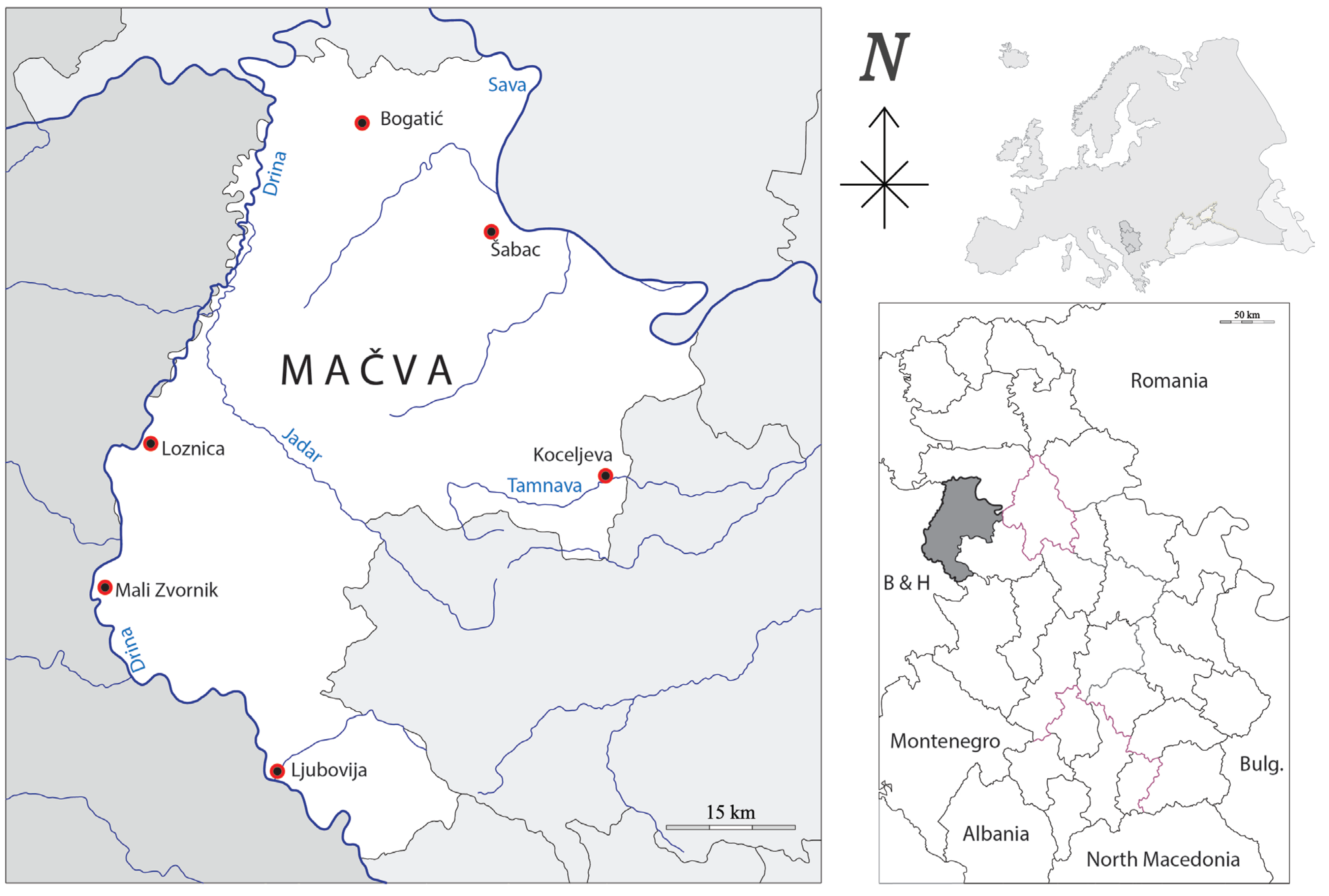
The Mačva district represents a region of the Republic of Serbia located in the western part of the country, with its administrative center in the city of Šabac. The research was conducted in the Mačva region, an area of economic, cultural, and gastronomic significance for Western Serbia (
Mačva district—Official internet presentation, n.d.,
http://macvanski.okrug.gov.rs/, accessed on 4 November 2025). Eight municipalities were included in the study: Šabac, Bogatić, Loznica, Vladimirci, Koceljeva, Mali Zvornik, Krupanj, and Ljubovija. The analysis focused on the GI of the entire Mačva area, as well as on identifying local specificities that contribute to its distinctiveness. The research area is presented in
Figure 1.
3.2. Questionnaire Design
The questionnaire was designed with the aim of collecting relevant data on the perceptions, attitudes, and behaviors of domestic tourists regarding the GI of Mačva. The conceptual framework for developing the questionnaire was based on findings from previous research in the fields of GI and consumer behavior (
Verner et al., 2023;
Baby & Joseph, 2023;
Paunić et al., 2024;
Kalenjuk Pivarski et al., 2024a,
2024b). The final version of the questionnaire consists of three sections:
Data were collected on gender, age, place of residence, educational level, employment status, and monthly income. These indicators enabled a more detailed understanding of the structure of the surveyed population and contributed to profiling consumers within the tourism and hospitality sector.
- 2.
Perceptions of the region’s GI
The aim was to identify the general level of agreement with specific statements and to determine the dominant perceptions related to the recognizability, valuation, and potential for enhancement of the region’s gastronomic offer. A total of 18 statements were formulated, which respondents evaluated on a five-point Likert scale (from 1—“strongly disagree” to 5—“strongly agree”). This approach made it possible to measure a full spectrum of perceptions from complete disagreement to complete agreement thereby providing deeper insights into expectations related to the gastronomic potential of Mačva.
- 3.
Perceptions regarding the consumption and purchase of traditional food
In the third part of the survey, respondents indicated whether they were inclined to purchase and consume traditional products while traveling, by answering “yes” or “no” to the corresponding questions. In this way, data were collected on respondents’ perceptions of gastronomic products that constitute an integral part of the local identity and the region’s tourism offer.
The operationalization of variables was guided by established theoretical and empirical approaches to gastronomic identity in tourism and hospitality research. Previous studies conceptualize gastronomic identity as a multidimensional construct encompassing cultural heritage, authenticity, promotion of gastronomy, and its role in local economic and social development (e.g.,
Paunić et al., 2024;
Kalenjuk Pivarski et al., 2024a;
Baby & Joseph, 2023;
Verner et al., 2023). Building on these frameworks, the present study conceptualized gastronomic identity through a set of observable indicators reflecting both symbolic and functional dimensions of gastronomy within a destination context.
An initial pool of items was generated based on a review of the relevant literature and adapted to the specific context of the Mačva region. The selection of variables was aligned with the first research question, which aims to identify the defining elements of gastronomic identity, and therefore focused on attributes related to cultural and gastronomic heritage, gastronomic authenticity and promotion, and economic and social development. All items were measured using a five-point Likert scale, ranging from 1 (“strongly disagree”) to 5 (“strongly agree”).
3.3. Questionnaire Validation Testing
The questionnaire items were formulated to be clear, unambiguous, and easily understood by a broad population of respondents. Prior to conducting the main research, the instrument was pilot-tested on a smaller sample (N = 30) to assess the clarity of the formulations and the reliability of the measurement scales used. Based on the pilot test results, minor adjustments were made to the wording of the statements in order to enhance the clarity, internal consistency, and precision of the instrument.
The selection of variables and the structure of the questionnaire were based on previously established determinants of gastronomic identity, ensuring an adequate level of validity and reliability of the instrument. The formulated statements were adapted to the specific characteristics of the study area and the features of the gastronomic identity of the Mačva region. In accordance with the research topic, particular attention was given to attributes relevant for the hospitality sector, which play a key role in recognizing and developing the gastronomic tourism offer.
The internal consistency of the Likert scale was assessed using Cronbach’s alpha coefficient, with values ranging from 0.91 to 0.92, indicating a high level of internal reliability and confirming the appropriateness of applying the instrument in the main study.
3.4. Conducting Research
The research was conducted on a sample of 458 adult domestic visitors to the Mačva region, who represent key actors in the process of selecting and purchasing gastronomic products that form an integral part of the region’s overall gastronomic offer. The sample included different groups of domestic tourists, providing a diverse and balanced representation of respondents. This study focuses exclusively on domestic visitors in order to provide a realistic insight into their attitudes and consumer behavior related to traditional food consumption.
Data were collected between August 2024 and September 2025 using a structured questionnaire administered through a face-to-face intercept survey approach. Data collection was conducted on a rolling basis during organized gastronomic and cultural tourism events across the territory of the above-mentioned municipalities until September 2025. The questionnaires were distributed in person by the researchers during organized gastronomic and cultural tourism events in the territory of the above-mentioned municipalities. The survey was conducted on-site, under real conditions of the destination’s tourism offer. Respondents completed the questionnaire independently, with the possibility of obtaining additional clarification when necessary, and the average completion time ranged from 10 to 15 min. Prior to participation, respondents were informed about the aim and purpose of the study and were assured of the anonymity and confidentiality of the collected data, while participation was entirely voluntary. Consequently, the sample should be interpreted as analytical rather than statistically representative, and the findings should be generalized with appropriate caution.
3.5. Statistical Data Analysis
The statistical analysis was conducted using R software (version 4.3.2). The analytical procedure comprised several interrelated stages, aligned with the research objectives: descriptive statistics, exploratory factor analysis (EFA), confirmatory factor analysis (CFA), and logistic regression. In the descriptive phase, measures of central tendency and dispersion were applied to evaluate respondents’ attitudes toward statements rated on a five-point Likert scale, while frequencies and percentage distributions were presented for categorical variables. This step provides insight into the basic characteristics of the sample and the distribution of responses, representing an essential prerequisite for conducting subsequent multivariate analyses (
Field, 2018). To identify the latent dimensions of respondents’ attitudes toward the region’s gastronomic identity, exploratory factor analysis (EFA) was employed. This technique enables the reduction of a large number of variables into a smaller set of factors representing common underlying constructs (
Hair et al., 2019). The Principal Axis Factoring (PAF) method was applied, as it is suitable for uncovering latent constructs, while Oblimin rotation allowed for correlations among the factors, consistent with the assumption of interrelated cultural, economic, and social dimensions (
Costello & Osborne, 2005). Prior to conducting the EFA, the full dataset was randomly split into two independent subsamples: 60% of respondents (n = 274) were used exclusively for EFA, while the remaining 40% (n = 184) were reserved for CFA. This split-sample design prevents inflation of construct validity by ensuring that the factor extraction and factor confirmation are performed on different datasets. The suitability of the data for factor analysis was assessed using the Kaiser–Meyer–Olkin (KMO) measure and Bartlett’s test of sphericity. Factor retention was guided by the Kaiser–Guttman criterion (eigenvalues > 1) and the results of parallel analysis (
Horn, 1965). The internal reliability of the extracted factors was examined using Cronbach’s alpha coefficient, with values above 0.70 considered an acceptable threshold (
Nunnally & Bernstein, 1994).
Based on the EFA results, a confirmatory factor analysis (CFA) was conducted to examine the degree of correspondence between the empirical data and the proposed three-factor structure. Given the ordinal nature of the 5-point Likert items, the CFA model was estimated using the WLSMV estimator, which is recommended for categorical indicators, rather than Maximum Likelihood. Model fit was evaluated using several indices—χ
2/df, Comparative Fit Index (CFI), Tucker–Lewis Index (TLI), Normed Fit Index (NFI), Incremental Fit Index (IFI), Relative Fit Index (RFI), and Root Mean Square Error of Approximation (RMSEA)—in accordance with the recommendations of
Hu and Bentler (
1999), who suggest that CFI and TLI values ≥ 0.90 and RMSEA ≤ 0.08 indicate a good model fit. Additionally, convergent validity was confirmed by calculating Composite Reliability (CR) and Average Variance Extracted (AVE), with CR ≥ 0.70 and AVE ≥ 0.50 considered acceptable thresholds (
Fornell & Larcker, 1981).
To assess the comparability of the measurement model across gender, multigroup CFA was conducted. Full metric invariance was not supported; however, following the recommendations of
Byrne et al. (
1989), partial metric invariance was established by freeing the loadings of items S10 and S13. This allowed valid comparisons between male and female respondents.
To assess potential common method bias, Harman’s single-factor test was performed using an unrotated exploratory factor analysis including all 18 items. The first factor accounted for 58% of the total variance, which is slightly above the conventional 50% threshold; however, the one-factor solution demonstrated very poor fit (χ2(135) = 991.98, p < 0.001; RMSEA = 0.118; TLI = 0.85). These results indicate that a single latent factor cannot adequately account for the covariance among the indicators. Therefore, the covariance structure is not driven by a dominant methodological factor, suggesting that common method bias is unlikely to pose a threat to the validity of the findings.
In the final phase, a binary logistic regression was conducted to examine the influence of socio-demographic characteristics and perceptual factors on the probability of purchasing traditional food from the Mačva region. This method allows for estimating the likelihood of occurrence of a specific category of the dependent variable (
Hosmer et al., 2013). Two models were estimated: (1) a theory-driven model including all socio-demographic predictors and the three latent factors, and (2) an additional stepwise model selected using Akaike’s Information Criterion (AIC), applied given the exploratory nature of the study. The model’s calibration was evaluated using the Hosmer–Lemeshow test, while its discriminatory ability was assessed through Receiver Operating Characteristic (ROC) analysis. Pseudo-R
2 measures (Cox–Snell and Nagelkerke) were also reported to quantify the improvement over the null model.
4. Results
4.1. Analysis of the Socio-Demographic Characteristics of Respondents
The analysis began with descriptive statistics of the respondents’ socio-demographic characteristics (
Table 1). The gender structure of the sample shows an almost even distribution, with men accounting for 47.2% and women for 52.8% of all participants. The largest share of respondents belongs to the 31–45 age group (39.3%), while the smallest proportion consists of individuals over 60 years of age (7.6%). Regarding place of residence, the sample is dominated by respondents from urban areas (80.8%), whereas those from rural areas constitute 19.2%. The educational structure indicates that most respondents hold a university degree or higher education (39.3%), while the smallest share consists of those with completed secondary education (23.6%). In terms of employment status, the majority are employed (71.0%), followed by students (12.9%), retirees (7.9%), and unemployed individuals (8.3%). With respect to monthly income, more than half of the respondents (53.1%) earn more than 91,000 RSD, whereas only 9.4% earn less than 46,360 RSD. This structure reflects a sample largely composed of economically active and educated individuals from urban environments.
4.2. Exploratory and Confirmatory Factor Analysis
To gain a more detailed understanding of respondents’ perceptions regarding the current state and development potential of the GI of Mačva, a descriptive statistical analysis of responses to the formulated research statements was conducted. This analysis enables the identification of the general level of respondent agreement with individual statements, as well as insight into the dominant perceptions related to the recognizability, evaluation, and potential enhancement of the region’s gastronomic offer. The results of the descriptive statistics are presented in
Table 2, which provides an overview of the key statistical parameters for each analyzed statement: the mean value (M) and standard deviation (SD). These indicators serve as the basis for identifying general trends in respondents’ answers, as well as for further interpretation and analysis of relationships among variables within the research model.
Based on the results presented in
Table 2, it can be observed that respondents expressed the highest level of agreement with the statements that the gastronomic culture and tradition of the locality reflect the culture of the region (Mean = 3.90) and that the Mačva region is characterized by dishes and beverages with unique and recognizable local flavors (Mean = 3.88). A high level of agreement was also recorded for the statements that the region possesses a rich gastronomic heritage preserved by the local population (Mean = 3.87) and that Mačva has an authentic gastronomic culture and tradition (Mean = 3.86).
The lowest level of agreement was reported for the statements that food routes have been established in the region and are visited by tourists (Mean = 3.25) and that tourists have the opportunity to participate in the preparation of local dishes during their stay (Mean = 3.46), indicating potential for improving interactive tourism activities. The values of the standard deviations indicate moderate variability in responses, with the greatest variability observed for the statement regarding the existence of organized food routes (SD = 1.215), while the most consistent responses were recorded for the statement that the offer of local food is complemented by the courtesy of the staff (SD = 0.998).
To examine the structure and internal coherence of respondents’ attitudes regarding the gastronomic identity (GI) of the Mačva region, an Exploratory Factor Analysis (EFA) was conducted. EFA was performed on a randomly selected 60% subsample (n = 274) to avoid inflating construct validity by using the full sample for both EFA and CFA.
Before conducting EFA, the suitability of the data for factorization was assessed. The Kaiser–Meyer–Olkin measure indicated excellent sampling adequacy (KMO = 0.960), and Bartlett’s test of sphericity was statistically significant (χ
2 = 3941.62, df = 153,
p < 0.001), confirming that the correlation matrix was appropriate for factor extraction (
Table 3).
To determine the optimal number of factors, a parallel analysis was conducted. Based on the intersection of the empirical and randomly generated eigenvalues, as well as the criterion of retaining eigenvalues greater than one (the Kaiser–Guttman criterion), it was established that three factors should be retained. This three-factor structure explains a total of 67% of the variance, indicating a strong ability of the identified factors to account for the relationships among the statements.
The Principal Axis Factoring (PAF) method was applied for the extraction of latent dimensions, with Oblimin rotation used to achieve a more interpretable structure, given the expected interdependence of the dimensions. For item retention, a minimum loading threshold of 0.30 was applied, and items were required to load substantially higher on their primary factor than on any other factor (cross-loadings < 0.30), in line with recommendations by
Hair et al. (
2019). The rotated factor loadings are presented in
Table 4.
Based on the results presented in
Table 4, a clearly distinguished and theoretically coherent three-factor structure emerged. The first factor consists of six statements reflecting the cultural and identity-related aspects of Mačva’s gastronomic heritage. The highest loadings were observed for statements such as “The gastronomic culture and tradition of the locality reflect the culture of the region” (0.838) and “Gastronomic culture and tradition reflect all the ethnic groups living in Mačva” (0.832), which emphasize the cultural rootedness and authenticity of the regional cuisine. Although some items refer to development-related outcomes, respondents appear to perceive these outcomes as an integral part of the cultural role of gastronomy within the region, rather than as purely economic attributes. This suggests that gastronomic heritage is understood not only as a symbolic cultural asset, but also as a socially embedded practice linked to local development. This factor can therefore be interpreted as Cultural–gastronomic heritage. The second factor comprises six statements connected to gastronomic events, the promotion of local products, and experiential aspects of tourism. High loadings were recorded for statements such as “There are agricultural households in the region that sell their products directly to tourists” (0.895) and “Presenting local agricultural, food, and gastronomic products at events contributes to establishing a concept of sustainable tourism in the region” (0.813). This dimension reflects respondents’ perceptions of gastronomy as both an experiential and promotional tool, and may be defined as Authenticity and promotion of gastronomy. The third factor captures the economic and developmental dimensions of gastronomy. The strongest indicator was “In their written menus, hospitality providers specifically highlight authentic and local gastronomic products” (0.906), followed by statements such as “Food routes have been established in the region, which tourists visit” (0.730). These findings underscore the economic and developmental role of gastronomy in supporting tourism growth and local cooperation. This factor may therefore be interpreted as Economic–social development. All three dimensions demonstrated excellent internal consistency, with Cronbach’s alpha values between 0.91 and 0.92, confirming the reliability and internal coherence of the extracted factors.
Following the exploratory factor analysis, a confirmatory factor analysis (CFA) was performed on the second subsample to validate the three-factor structure. Given the ordinal nature of the 5-point Likert items, the model was estimated using the WLSMV estimator, which is recommended for categorical indicators. The CFA results demonstrated an excellent overall model fit, as shown in
Table 5.
The confirmatory factor analysis demonstrated an excellent fit of the three-factor model to the data. The χ
2/df ratio was 0.93, well below the recommended cutoff of 3.0, indicating a very good correspondence between the empirical and model-implied covariance matrices. Incremental fit indices also showed outstanding values (CFI = 1.000; TLI = 1.000; IFI = 1.000; NFI = 0.997; RFI = 0.996), all exceeding the commonly accepted threshold of 0.90. The absolute fit indices further support the adequacy of the model. The SRMR value (0.038) indicates a low level of residual error, while the RMSEA estimate was 0.000 (90% CI: 0.000–0.028), suggesting a close model fit. Overall, the combination of incremental and absolute fit indices confirms that the proposed three-factor structure demonstrates excellent statistical and theoretical adequacy. In addition to global model fit, Composite Reliability (CR) and Average Variance Extracted (AVE) were calculated to assess construct reliability and convergent validity, with the results presented in
Table 6.
The high values of composite reliability (CR ranging from 0.928 to 0.939) indicate strong internal consistency of the measured items within each factor, while the AVE values (0.696–0.769) confirm that the latent constructs explain more than 60% of the variance of their indicators. This provides evidence of the convergent validity of the measurement model. The intercorrelations among the latent factors are positive and statistically significant (r = 0.83–0.86), which is consistent with theoretical expectations suggesting that the cultural, social, and economic dimensions of gastronomic tourism are interrelated. These results confirm that the three-factor model adequately describes respondents’ perceptions regarding the role of gastronomic identity in tourism development in the Mačva region. To complement the assessment of convergent validity (CR and AVE), discriminant validity was examined using the Heterotrait–Monotrait Ratio (HTMT). The HTMT matrix for the three factors identified in the CFA is presented in
Table 7.
The HTMT values ranged from 0.56 to 0.60, substantially below the recommended threshold of 0.85, indicating strong discriminant validity among the three latent constructs. These results confirm that Cultural–gastronomic heritage, Authenticity and promotion of gastronomy, and Economic–social development represent empirically distinct but related dimensions of the gastronomic identity of the Mačva region.
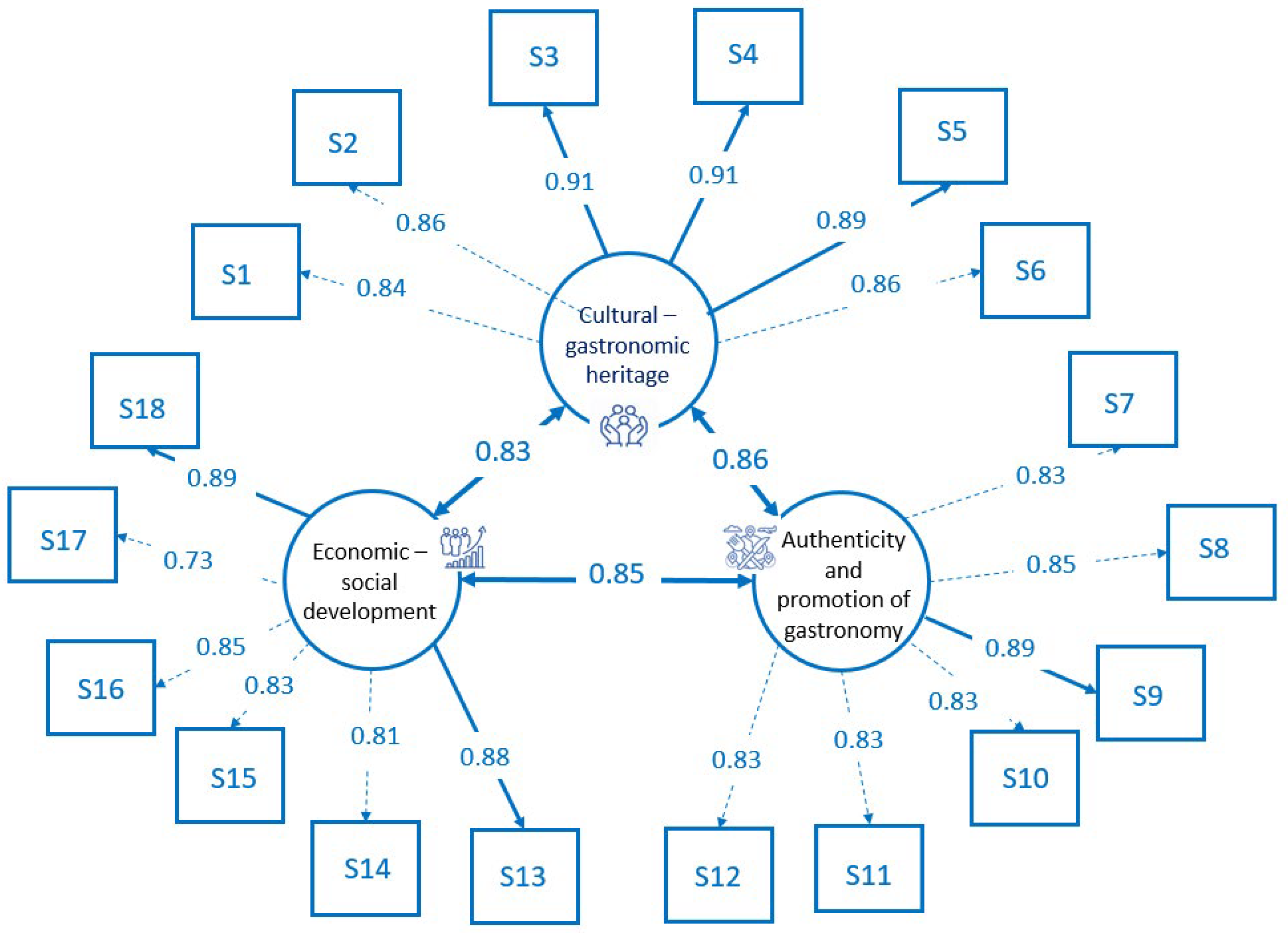
Figure 2 presents the confirmed three-factor model, which includes the latent dimensions Cultural-gastronomic heritage (F1), Authenticity and promotion of gastronomy (F2), and Economic–social development (F3).
Each latent dimension is strongly associated with its corresponding manifest indicators, with all standardized loadings substantially exceeding the recommended 0.50 threshold and reaching high values (0.73–0.91), indicating excellent convergent validity. All loadings are statistically significant (p < 0.001), confirming that the observed variables reliably capture their intended constructs. The relationships among the latent constructs are positive, strong, and statistically significant. The highest correlation is observed between Cultural–gastronomic heritage (F1) and Authenticity and promotion of gastronomy (F2) (r = 0.86), followed by the correlations of F2 with Economic–social development (F3) (r = 0.85) and F1 with F3 (r = 0.83). This pattern demonstrates that the cultural, promotional, and socio-economic dimensions of gastronomic identity are deeply interconnected. Overall, these associations indicate that gastronomic identity in the Mačva region operates as an integrated system in which cultural heritage, authenticity, and socio-economic development reinforce one another, jointly contributing to the region’s tourism potential and sustainable development.
Full metric invariance was not supported (Δχ
2 = 33.39,
p = 0.004), indicating that several factor loadings differed across gender. Modification indices revealed that the largest sources of non-invariance were associated with items S10 and S13. Following the recommendations of
Byrne et al. (
1989), a partial metric invariance model was estimated in which the loadings F1 = ~S10, F3 = ~S10, and F2 = ~S13 were freely estimated across groups. The partial metric model showed no degradation in fit relative to the configural model (Δχ
2 = 0, Δdf = 0,
p = 1.00), supporting partial metric invariance. This indicates that, except for a small number of non-invariant items, the measurement structure is comparable across gender, allowing meaningful comparisons of latent factors between men and women.
4.3. Binary Logistic Regression
To examine the influence of socio-demographic characteristics and perceptual factors on consumers’ intention to purchase traditional food products from the Mačva region, a binary logistic regression analysis was conducted. The theory-driven model including all socio-demographic variables and perceptual factors was treated as the primary analytical model. The theoretical model included gender, age group, education level, employment status, monthly income, place of residence, as well as the three latent factors obtained through confirmatory factor analysis (socio-cultural, ecological, and economic–social). As a supplementary robustness check, an additional stepwise variable selection procedure based on Akaike’s Information Criterion (AIC) was applied to identify the most parsimonious subset of predictors. This approach retained only the predictors that significantly improved model fit, resulting in a simplified yet statistically robust model. The resulting model demonstrates good calibration, as indicated by the Hosmer–Lemeshow test (χ
2 = 3.26, df = 8,
p = 0.917), and shows an acceptable discriminatory ability (AUC = 0.64). The overall classification accuracy is 75.5%, confirming that the model adequately distinguishes respondents with higher and lower purchase intentions. Pseudo-R
2 values (Cox–Snell R
2 = 0.046; Nagelkerke R
2 = 0.071) indicate modest but expected explanatory power for behavioral logistic models, serving primarily as measures of improvement over the null model. Multicollinearity diagnostics indicated no concern, as all Variance Inflation Factor (VIF) values were well below commonly accepted thresholds, confirming the stability of the regression estimates. The results of the stepwise model are presented in
Table 8.
The results indicate that gender and the factor of economic–social development are statistically significant predictors of the intention to purchase traditional food. The economic–social development factor shows a positive and significant effect (B = 0.319, p = 0.020), meaning that higher perceptions of the economic and social contribution of gastronomic development increase the likelihood of purchasing traditional products. In terms of magnitude, respondents score 1.38 times higher odds of purchasing intention for each one-unit increase in this factor (95% CI: 1.05–1.80). Gender also demonstrates a significant influence (B = 0.464, p = 0.038), indicating that men are approximately 1.59 times more likely than women to express an intention to purchase traditional food (95% CI: 1.003–2.47). These findings confirm that, although perceptual factors exert a certain influence, socio-demographic characteristics primarily gender still play a key role in shaping consumers’ intentions to purchase traditional food products.
5. Discussion
GI represents an integration of cultural, historical, and social influences reflected in the ways food is produced, prepared, and consumed, making it one of the key forms of intangible cultural heritage (
de Miguel Molina et al., 2016;
Lin et al., 2021). According to
Kalenjuk Pivarski et al. (
2024a), the identification of GI factors that influence the development of food-based tourism is considerably facilitated by analyzing the attitudes of respondents who participated in the study. A more detailed analysis of the sample structure from the Mačva region shows that the largest share of respondents belongs to the 31–45 age group, and that the sample predominantly consists of economically active and educated individuals from urban areas.
The analysis of data related to the first research question (Q1) showed that respondents predominantly perceive the gastronomic culture and tradition of Mačva as an important reflection of the region’s cultural identity. Respondents emphasized the uniqueness and recognizability of local flavors, as well as the richness of the gastronomic heritage that the local population actively preserves. These results are consistent with the findings of
Lin et al. (
2021) and
Ellis et al. (
2018), who identify gastronomy as one of the main indicators of a destination’s cultural identity, with local food serving as a key symbol of cultural authenticity and distinctiveness.
Although gastronomic routes and event-based and participatory gastronomic activities, have already been recognized as priority directions of development (
Suna & Alvarez, 2019;
Kalenjuk Pivarski et al., 2024a), the results indicate that these segments are still insufficiently developed and insufficiently recognized. Similar findings have been reported in studies conducted in geographically comparable areas (
Paunić et al., 2024;
Kalenjuk Pivarski et al., 2024a), where it was established that opportunities for visitors to actively participate in the preparation of local dishes remain limited. These insights point to the need for the region to intensify efforts in developing food routes and interactive experiences. As
Ellis et al. (
2018) notes, food and food-related activities represent a key component of the tourism offer, making it essential to understand their role as a selling point in tourism marketing and destination management strategies.
The perception of Mačva’s GI fully confirms its authenticity and recognizability within the region’s gastronomic offer. There is no doubt that local food represents an essential element of sustainable tourism and one of the key indicators of the authenticity of local culture (
Zhang et al., 2019). Accordingly, local restaurants are encouraged to highlight the diversity of dishes and the use of various ingredients in order to attract visitors (
Kim et al., 2022). Mačva is perceived as a region with unique and recognizable local flavors of food and beverages, suggesting a clearly established awareness of the importance of gastronomy as part of cultural identity. These results are consistent with the findings of
Kalenjuk Pivarski et al. (
2024a), who emphasize that authentic gastronomic heritage is one of the key pillars in shaping a region’s gastronomic identity. In addition, respondents pointed out that the courtesy and approachability of the staff significantly enhance the overall visitor experience, which aligns with the findings of
Alhelalat et al. (
2017), showing that personal aspects of service and the quality of interaction have a strong impact on guest satisfaction and their intention to revisit. The combination of an authentic gastronomic offer and high-quality service emerges as one of the most important factors in building a positive image of the GI of Mačva.
The obtained results indicate that tourists perceive cultural tradition, local products, and gastronomic events as key elements through which the region’s gastronomic identity is constructed. This supports the first hypothesis (H1) and confirms that these elements play a central role in shaping the region’s gastronomic identity from the perspective of visitors.
To address the second research question (Q2), the analysis of the collected data indicates the existence of a three-dimensional structure of the GI of the Mačva region, encompassing the factors of cultural–gastronomic heritage, authenticity and promotion of gastronomy, and economic–social development. This structure aligns with contemporary theoretical and empirical insights on the nature of GI in the context of tourism development.
The first factor, labeled cultural–gastronomic heritage, comprises elements related to the authenticity of the local cuisine, the preservation of tradition, and the recognizability of the region through its gastronomy. These findings are consistent with studies by
Rivza et al. (
2022) and
Paunić et al. (
2024), which indicate that gastronomic heritage is not only part of the tourism offer but also an important aspect of everyday diet that contributes to the preservation of cultural identity and the sustainable development of local communities. The results confirm that gastronomic heritage functions as a key cultural resource that contributes to the construction and strengthening of regional identity. This is in line with the findings of
Lin et al. (
2021),
Paunić et al. (
2024), and
Kalenjuk Pivarski et al. (
2024a), who emphasize that gastronomy represents an important cultural resource and a tool for enhancing regional recognizability.
The second factor, labeled authenticity and promotion of gastronomy, reflects the importance of gastronomic events and the promotion of local products as mechanisms for preserving and enhancing the region’s GI. These findings are consistent with the research of
Kalenjuk Pivarski et al. (
2024a) and
Yang et al. (
2020), with
Yang et al. (
2020) noting that the successful promotion of a destination through gastronomic events depends on visitors’ motivation and the extent of their prior knowledge about the event. In this context, social interactions emerge as a key mechanism for strengthening cultural identity and increasing the visibility of the region. This result aligns with the findings of
Rachão et al. (
2019,
2020), who emphasize that activities such as gastronomic workshops, collaborative food preparation, and direct interaction with local producers contribute to co-creating the experience, increasing tourists’ willingness to pay for such activities, and fostering destination loyalty.
The third factor, labeled Economic–social development, relates to the economic and developmental aspects of the region’s gastronomic offer. These findings align with studies indicating that gastronomy represents an important driver of economic growth and regional tourism attractiveness, with the authenticity and quality of local products emerging as key development factors (
Kalenjuk Pivarski et al., 2024b). The importance of cooperation between hospitality providers and the local community is particularly emphasized, which is also confirmed by
Đurkin Badurina et al. (
2023), who note that limitations in this cooperation and the insufficient development of food routes reduce the region’s recognizability. The introduction of systems for labeling local products and the development of thematic gastronomic routes represent important mechanisms for increasing the visibility and economic impact of gastronomy (
Duda, 2024), as demonstrated by examples from other countries such as the “wine route” in Poland (
Jęczmyk, 2019) and the “olive route” in Spain (
Folgado-Fernández et al., 2019). The proposed three-factor structure is fully consistent with the findings of
Paunić et al. (
2024), who note that the factors shaping GI encompass the geographical and cultural characteristics of the region. The results are also compatible with research by
Grubor et al. (
2022) and
Kalenjuk Pivarski et al. (
2024a), which emphasize that ethnic cuisines, local recipes, and gastro-tourism events (
Kalenjuk Pivarski et al., 2023) constitute key elements of cultural authenticity. Although gastronomy possesses substantial cultural and developmental potential, several authors (
Leoti et al., 2023) point out that, in practice, it is still insufficiently recognized within the economic, social, and political development strategies of destinations.
The factor structure thus confirms the existence of a three-dimensional model of the region’s GI heritage, authenticity and promotion, and economic–social development. These results indicate that the cultural and economic dimensions of gastronomy are perceived as interrelated and complementary components of destination identity formation, thereby supporting the second hypothesis (H2), which proposes a three-factor structure of the region’s GI: cultural and gastronomic heritage, the authenticity and promotion of gastronomy, and economic and social dimensions of development.
To address the final research question (Q3), an analysis was conducted to examine the influence of socio-demographic and perceptual factors on the likelihood of purchasing traditional food. The results revealed that gender is a statistically significant predictor, with men being more inclined to purchase traditional products than women. This finding partially departs from studies suggesting that women are more involved in gastronomic activities and culinary tourism (
Okumus et al., 2021;
Šmugović et al., 2025), but aligns with research confirming the existence of gender-based differences in consumer behavior (
Vlontzos et al., 2018). In the context of the Mačva region, this may reflect local cultural and social behavior patterns, in which men exhibit a greater propensity for direct purchasing of traditional products and participation in market-related activities. The economic–social development factor demonstrated a positive and statistically significant effect on purchase intention, indicating that tourists who perceive gastronomy as an element contributing to the broader economic and social development of the region are more likely to purchase traditional products. The obtained findings are supported by previous studies (
Kalenjuk Pivarski et al., 2023,
2024b;
Moura et al., 2025), which indicate that the perception of gastronomy as a factor contributing to the economic and social development of a destination positively influences tourist behavior, particularly their propensity to purchase traditional products, in this context, economic aspects, including the generation of additional income for the local community, improvements in living standards, and the encouragement of sustainable forms of agricultural production, are recognized as significant incentives for both tourists and stakeholders in the hospitality sector. Although previous research suggests that socio-demographic characteristics such as age (
Yılmaz, 2023;
Vlontzos et al., 2018), education level (
Yılmaz, 2023), and income (
Defta et al., 2025) may influence tourist consumption behavior, in the present study these socio-demographic characteristics, except for gender, as well as certain perceptual dimensions, did not demonstrate a statistically significant influence on the intention to purchase traditional products. These findings indicate that purchase intention is not determined by the general tourist profile, but rather by specific value-based attitudes and perceptions related to gastronomy and its developmental significance.
The obtained results further indicate that socio-demographic and perceptual factors partially influence the intention to purchase traditional food products during a tourist visit. Although both gender and the economic–social development factor are statistically significant predictors, gender appears to exert a relatively stronger effect on purchase intention, thereby partially confirming the third hypothesis (H3).
6. Conclusions
In line with the research findings and with the aim of addressing the first research question (Q1), the results indicate that domestic tourists perceive the GI of the Mačva region as a synthesis of cultural, economic, and social elements that shape the destination’s overall tourist attractiveness. According to tourists’ perceptions, the region is characterized by a distinct gastronomic heritage, in which local flavors and traditional food preparation techniques constitute the core of cultural authenticity. From the tourists’ perspective, the gastronomy of Mačva reflects the cultural identity of the local community, while the combination of tradition, locally sourced products, and direct interaction with hosts emerges as a key determinant in the formation of a positive destination image. At the same time, tourists identify an insufficient level of development of gastronomic routes and limited opportunities for interactive engagement in the preparation of traditional dishes, which are not directly supported by the empirical model.
In this context, the findings suggest that Mačva possesses substantial potential for development as a gastronomic destination, based on the integration of gastronomic heritage with contemporary gastronomic trends; however, these recommendations are normative and not fully confirmed by the statistical analysis. The development of gastronomic routes, the design of integrated programs connecting local producers, hospitality providers, and cultural institutions, as well as the active involvement of tourists in the preparation and tasting of traditional dishes, represent practical suggestions that require further empirical verification to assess their actual impact on tourist behavior and destination recognition.
Regarding Q2,the results indicate that the GI of the region is shaped by a combination of cultural, social, and economic factors. The analysis of GI factors confirms the existence of a clearly defined model that integrates cultural heritage, authenticity and gastronomic promotion, and economic–social development. Cultural–gastronomic heritage represents the foundation of Mačva’s identity, encompassing the preservation of tradition, local cuisine, and the symbolic representation of the region through food. Authenticity and the promotion of gastronomy through social interaction emerge as key mechanisms for strengthening cultural identity and destination recognition. At the same time, economic–social development contributes to creating conditions for a sustainable gastronomic offer by fostering cooperation between hospitality providers and local producers, thereby supporting the growth of the region’s tourism sector. The GI of the region should function as an integrated system that connects cultural, social, and economic functions within a unified developmental pathway. As a dynamic concept, the GI unites cultural tradition and economic interests in a way that enhances tourism competitiveness. Mačva, as a region with a rich gastronomic heritage, has the capacity to position itself through innovative approaches to gastronomic tourism as an authentic and sustainable destination that successfully combines tradition and development.
In response to the third research question (Q3), the obtained results indicate that tourists’ intention to purchase traditional food products during a tourist visit is not determined exclusively by their general socio-demographic profile, but rather by selective personal characteristics and subjective perceptions regarding the role of gastronomy in destination development. Among the socio-demographic factors, gender emerges as a statistically significant predictor, indicating that individual tourist characteristics condition the way in which the region’s gastronomic identity is translated into concrete consumer behavior. At the same time, perceptual factors influence purchase intention primarily through value-based attitudes that view gastronomy as a resource for the region’s economic and social development. Tourists who recognize the broader developmental significance of gastronomy show a greater willingness to support local producers through the purchase of traditional products, highlighting the connection between consumer decisions and the broader social and economic context of the destination. In contrast, other socio-demographic characteristics, such as age, education level, and income, as well as certain perceptual dimensions of gastronomic identity, did not demonstrate a statistically significant effect. These findings confirm that purchase intention is not the result of general tourist profiling, but rather of individually formed value orientations and perceptions related to the developmental role of gastronomy.
6.1. Theoretical Implications
Local tradition and cultural authenticity are recognized as key elements of the region’s GI; however, it is essential to systematically integrate them through the development of gastronomic activities and comprehensive tourism programs. It is advisable to design tourism packages that include visits to local producers and the purchase of traditional products, workshops on the preparation of traditional dishes, tasting events, and culturally oriented activities. Strengthening cooperation between local hospitality providers and producers enhances the interactivity and authenticity of the tourist experience, thereby positioning the region as a distinctive gastronomic destination. Given that gastronomy represents a symbolic expression of local identity, it is necessary to develop a unique regional brand based on the GI model and to introduce geographical indications for characteristic products. A visual identity that links food with cultural heritage contributes to building the region’s image and reinforcing consumer trust in the quality of local offerings. The application of the three-dimensional GI model heritage, authenticity and promotion, and economic–social development can thus serve as a mechanism for achieving economic progress in the region. Consumers tend to approach traditional food pragmatically and subjectively, which requires marketing strategies grounded in emotion, experiential value, and authenticity. For this purpose, market segmentation based on consumer motives is essential, as it enables the adaptation of gastronomic offerings to the specific needs of each segment. Continuous research on tourist perceptions of the quality and value of local products further supports the region’s strategic positioning and helps guide future marketing activities.
6.2. Suggestions for Future Research
The present study focused on domestic tourists; therefore, future research should consider including samples of international visitors to identify potential differences in the perception of the region’s GI and to explore the specific cultural determinants that shape their attitudes and motivations. A comparison between domestic and foreign tourists would provide a deeper understanding of how gastronomy functions as an element of cultural exchange and a driver of tourist attractiveness. Such research approaches would contribute to the development of more targeted promotional strategies aimed at international markets, as the valorization of gastronomic heritage can substantially influence the attraction of foreign visitors and support the positioning of Mačva as a recognizable gastronomic destination. Nonetheless, the findings of this study offer a valuable empirical foundation for further and more comprehensive research in the field of gastronomic tourism and the development of cultural identity in tourism destinations.
6.3. Research Limitations
The study is geographically confined to the Mačva region, which limits the extent to which the findings can be generalized. The region’s geographical and cultural specificities may influence the perception of GI and thereby restrict the applicability of the results to other destinations. Including multiple regions in future research would enable the identification of variations in gastronomic patterns, levels of authenticity, and different models of gastronomic branding. Such an approach would contribute to a more comprehensive understanding of GI as a factor of sustainable destination development and would allow for the formulation of more universal guidelines applicable to broader tourism development contexts.
In addition to the geographical limitation, several methodological limitations should be acknowledged. The study is based on self-reported data, which may be subject to socially desirable responses. Furthermore, the cross-sectional design does not allow for causal inference. Data collection in tourist centers and during events may have introduced sample bias by over-representing visitors with a higher interest in local gastronomy. Finally, the binary nature of the dependent variable (yes/no) may have led to an imbalance between response categories. These limitations should be considered when interpreting the results and suggest directions for future research.




 ,
,