Article

Architectural and Cultural Influences on Thai Tourists’ Revisit Intentions: A Case Study of Koh Perd Fishing Village, Chanthaburi, Thailand


by
Patanapong Pongtanee
and
Therdchai Choibamroong
*
Graduate School of Tourism Management, National Institute of Development Administration, Bangkok 10240, Thailand
*
Author to whom correspondence should be addressed.
Tour. Hosp. 2025, 6(5), 228; https://doi.org/10.3390/tourhosp6050228
Submission received: 6 September 2025 / Revised: 21 October 2025 / Accepted: 23 October 2025 / Published: 3 November 2025

Abstract

The COVID-19 pandemic has severely affected Thailand’s economy, forcing many workers to return to their hometowns and engage in agricultural activities. Community-Based Tourism (CBT) has become a significant strategy to mitigate these effects by leveraging local cultural resources. This study aims to (1) assess the potential of cultural resources for tourism development in Koh Perd fishing village, Chanthaburi, Thailand, and (2) examine the determinants of revisit intentions among Thai tourists. To address the first objective, qualitative research was conducted through in-depth interviews with 15 Thai tourists, analyzed using coding analysis, while a quantitative survey of 400 respondents assessed the perceptions of cultural resources. The findings indicate that the village’s historic houses (Ruen Ran Kha) are perceived as the most valuable tourism assets, followed by cultural authenticity and aesthetics, respectively. For the second objective, data from 400 Thai tourists were analyzed using Exploratory Factor Analysis (EFA), Confirmatory Factor Analysis (CFA) and multiple regression. The results reveal that destination attractions, marketing and accessibility, and safety and security are significant factors influencing revisit intentions.

1. Introduction

The COVID-19 outbreak has affected the world in every aspect. Tourism is one of the sectors that has experienced the most severe disruptions. Thailand has also suffered due to the coronavirus, with the number of tourists in 2020 decreased by 83.2 percent from 2019 (Office of the National Economic and Social Development Council, 2021a) and tourism sector’s GDP of 6.78 percent in 2020, decreased from 18.21 percent in 2019 (Office of the National Economic and Social Development Council, 2021b). This economic decline has not only impacted the national GDP but also brought about significant consequences at the social level. It was found that most people became unemployed due to the economic stagnation caused by COVID-19. Those who came to work in Bangkok had to return to their hometowns and shift to employment in the agricultural sector. To effectively respond to both economic and social challenges, it is crucial to identify alternative sources of employment that can support local livelihoods. Consequently, creating opportunities beyond the agricultural sector is an important strategy to mitigate COVID-19 impacts. One promising solution is the development of tourism through the utilization of cultural resources within communities. “Development of the tourism sector through the utilization of cultural resources within the community” is an effective approach to addressing this issue, as Thailand possesses abundant cultural resources with significant potential nationwide. In particular, the cultural resources found in fishing villages offer substantial opportunities for development. Thailand is a peninsula, flanked by the Gulf of Thailand and Andaman Sea, and has a potential of natural resources and unique cultural resources. Given this geographic and cultural richness, the development of coastal areas is a key factor for the development of Thai tourism.
The development of the tourism sector through the utilization of cultural resources in the community in the coastal area can enhance Thailand’s potential to attract more tourists improve the quality of life of the local residents with tourism enhancement. Moreover, younger generation within the community can benefit from tourism development based on cultural resources as it provides opportunities for local employment. Once the community’s income is equitably distributed, there is no crucial reason to leave their native towns in pursuit of capitalist employment.
In addition to revitalizing local economies, this approach contributes to addressing broader demographic challenges. The development of community-based tourism, underpinned by cultural resources, represents a strategic approach to addressing the economic challenges faced by grassroots communities while simultaneously mitigating the adverse effects of urbanization, which may present significant challenges for Thailand in the future. Urbanization, closely linked to internal migration and uneven development, is a growing concern. Urbanization is a complex social and economic process that brings about substantial environmental changes, as individuals from rural areas migrate to urban centers in search of greater social and economic opportunities. This migration results in shifts in population structure and social dynamics, such as changes in the balance between urban and rural populations, alterations in occupational patterns, and transformations in lifestyle, culture, and behavior within urban settings. Furthermore, urbanization places increasing pressure on the capacity of cities to accommodate essential infrastructure and public services. According to data from the United Nations, in 1950, only 16.5% of Thailand’s population resided in urban areas, compared to rural areas. By 2018, this proportion had risen to 50.0%, and projections suggest that by 2050, Thailand’s urban population will reach 69.5% (United Nation, 2018).
Given the challenges and opportunities in developing cultural tourism in Thailand, this study reviews existing literature related to tourists’ travel decision-making and revisit intentions. The review reveals that most prior research has primarily focused on factors influencing the initial decision to visit. For example, Roman et al. (2021) studied the social and economic factors affecting the travel decisions of Poles and Nepalis during the COVID-19 outbreak and Feongkeaw (2013) investigated factors influencing travel decision-making during weekends and long holidays among working-age individuals in the Thai context. These studies mainly analyzed the behavior of tourists visiting a destination for the first time. However, relatively few studies have examined factors that influence tourists’ revisit intention, which is critical for tourism planning, policy formulation, marketing strategies, and the sustainable development of tourism.
Moreover, the literature review reveals that studies focusing on travel decision-making and revisit intentions in the context of island destinations remain limited. Among these, research related to cultural tourism on small islands is especially scarce. This is despite the fact that small islands are considered high-potential destinations due to their rich natural resources. In the case of Thailand, small islands also possess distinctive forms of cultural capital that are highly attractive to tourists. Furthermore, a review of the literature on factors influencing revisit intentions reveals studies such as those by Zhou et al. (2022), which indicate that the authenticity of cultural capital directly affects on tourists’ revisit intentions. Similarly, research conducted by Fang and Ko (2025) demonstrates that perceived authenticity, place attachment, and visitor engagement significantly influence revisit intention. Based on these findings, the present study aims to examine these factors, along with other relevant variables that may affect tourists’ intention to revisit, such as destination attraction, marketing, accessibility, safety, security, infrastructure, and service.

2. Study Area

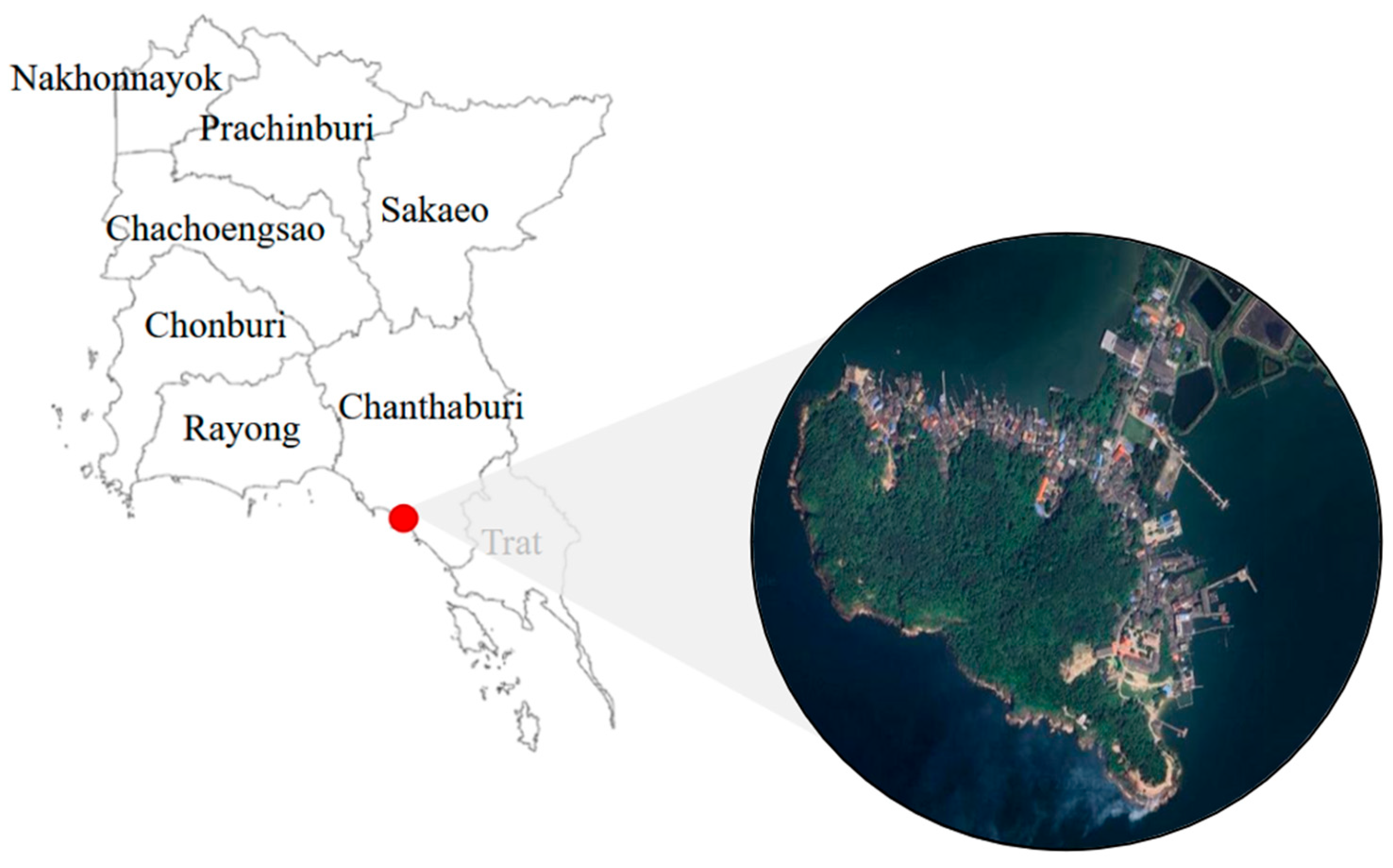
The study area of this study is Koh Perd fishing village, located in the Koh Perd subdistrict (Tambon), Laem Sing district of Chanthaburi province (Figure 1). Koh Perd fishing village was once an island completely surrounded by the sea. The origin of its name, “Ped”, is explained by two possible theories: (1) The Maritime Theory: Historically, Chinese traders traveling on junk boats would make overnight stops at the island during their voyages. Due to the open and expansive nature of the surrounding sea, they referred to it as “Ped” (meaning “open” in Thai) Island. (2) The Health Crisis Theory: Some accounts suggest that Chinese settlers on the island suffered devastating outbreaks of malaria and cholera, leading to significant loss of life. Survivors eventually fled the island, and it came to be called “Ped”. To ward off misfortune and bring prosperity, the inhabitants later changed the name to “Pred,” which eventually evolved into the present-day “Perd” (Koh Perd Subdistrict Administrative Organization, 2019).
The transformation of Koh Perd began during the tenure of M.R. Kukrit Pramote, the 13th Prime Minister of Thailand. During this period, government funds were allocated for the construction of a road linking the mainland to Koh Perd, effectively ending its isolation. This infrastructure development marked the start of Koh Perd’s transition from a rural fishing community to a more urbanized area. Today, Koh Perd subdistrict comprises seven villages and spans an area of 22.712 square kilometers (approximately 14,080 rai).
Despite its increasing urbanization, Koh Perd remains a culturally significant and environmentally sensitive area. Therefore, Koh Perd has been chosen as the research area for this study due to its unique position as both a growing cultural tourism destination and a high-risk zone for development. Its proximity to several large-scale government projects, such as the Eastern Economic Corridor (EEC) initiative—spanning Chachoengsao, Chonburi, and Rayong provinces—and the Special Economic Zone (SEZ) in Sakaeo and Trat provinces, makes it a focal point for economic and infrastructure development (Office of the National Economic and Social Development Board, 2022). These initiatives, along with the increasing trend of Community-Based Tourism (CBT), have positively impacted Koh Perd by attracting more tourists and generating economic opportunities for the local community. However, in the absence of a comprehensive tourism development plan, the rapid growth in visitor numbers risks overwhelming the village’s limited tourism resources and infrastructure. This duality of opportunities and challenges makes Koh Perd an ideal case study for examining the sustainability of tourism development and the factors influencing tourists’ decisions to revisit.

3. Literature Reviews

3.1. Community-Based Tourism (CBT)

Community-Based Tourism (CBT) is a participatory approach to community-driven tourism development that aims to foster sustainable practices and improve residents’ quality of life (Designated Areas for Sustainable Tourism Administration (Public Organization), 2015). This approach highlights the importance of meaningful engagement between local populations and visitors, which makes it particularly relevant for rural areas. Additionally, CBT seeks to strengthen local economies by supporting indigenous service providers and suppliers, thereby minimizing financial leakage, enhancing fair income distribution, and addressing economic disparities across regions. Various terms describe community-based tourism (CBT) worldwide. In Asia, for example, eco-tourism is considered a component of CBT. Despite different labels, CBT, eco-tourism, sustainable tourism, and rural tourism share common goals: conserving cultural heritage, safeguarding natural resources, and enhancing local economies (Asker et al., 2010). This study recognizes the potential of CBT as a tool to conserve cultural capital, promote tourism development, and enhance the quality of life for local communities.

3.2. Cultural Tourism

Cultural tourism is a type of travel that promotes engagement with cultural assets, both tangible and intangible. It involves experiences that allow visitors to discover, understand about, and value cultural expressions such as art, architecture, heritage sites, traditional cuisine, literature, music, and other forms of cultural identity (United Nations World Tourism Organization, 2017). Cultural tourism aligns closely with CBT, as both emphasize learning about the tangible and intangible cultural capital embedded within local communities. Both types of tourism focus on preserving cultural heritage alongside responsible tourism development. Considering Thailand’s abundant and diverse cultural assets, cultural tourism and CBT serve as vital tools for national development.
The development of cultural tourism destinations should focus on enhancing tourists’ ability to perceive the quality of the cultural resource in the area. Perceived quality refers to the customer’s perception of the overall quality or superiority of a product or service in relation to its intended purpose (Aaker, 2012). This can be achieved through the following five components: (1) Brand awareness: promoting tourists’ ability to recognize and recall the uniqueness of the cultural tourism destination, such as through promotional media that clearly reflect the identity of the area. (2) Brand Association: creating connections between the destination and cultural stories to foster memorable impressions and perceptions. (3) Perceived quality: enhancing the tourist experience by providing high-quality services. (4) Brand loyalty: building lasting impressions that encourage tourists to revisit or recommend the destination to others. (5) Brand asset: developing cultural capital as a valuable tourism resource, transforming it into sustainable tourism assets.

3.3. The Assessment of the Cultural Resources

Cultural resources are physical and tangible elements shaped by human activities in the past. These resources include historic buildings, sites, objects, stone inscriptions, canals, landscapes, and more, which provide insights into past social and environmental conditions (United States Department of Agriculture, n.d.). According to the World Wide Fund for Nature (2019), cultural resources can be classified into three types: (1) tangible resources, which refer to physical artifacts such as monuments, buildings, archaeological sites, sacred spaces, crafts, antiques, and cultural landscapes; (2) intangible resources, which include non-material cultural elements like traditional knowledge, lifestyles, language, beliefs, rituals, folklore, and traditional arts; and (3) natural resources, which are natural elements that influence culture and beliefs. Additionally, Lord (2002) categorized cultural tourism products into three organizational types: Institutional, such as historic sites, museums, galleries, performing arts venues, theaters, and science centers, Heritage and Lifestyle, such as heritage districts, monuments, streetscapes, language, customs, and cuisine; and Events, such as encompassing special events, exhibitions, festivals, fairs, and competitions.
Many scholars have studied and developed criteria to assess the potential of cultural resources across various contexts. This study consolidates key factors used to evaluate cultural resource potential, as follows: (1) Value of cultural resources, which refers to economic value (Lipe, 1984; Li & Xu, 2003). (2) Uniqueness refers to the distinctive characteristics that make a cultural asset singular, with no direct equivalent, and is a criterion established by Ministry of Tourism and Sports (2014) for evaluating the quality of cultural attractions, these factors are consistent with other research (Li & Xu, 2003). (3) Identity refers to the defining attributes that shaped by the interpretations of external observers (Joseph, 2012; Nilvised & Pewnim, 2015). (4) Authenticity is characterized by qualities that denote being ancient, historical, genuine, and preserved across generations (Adhivish, 2018; Nilvised & Pewnim, 2015). (5) Aesthetics is an essential component of cultural resource, as outlined in The Australian ICOMOS Charter for Places of Cultural Significance 2013 (The Burra Charter) (Australia ICOMOS Incorporated International Council on Monuments and Sites, 2013) and it is used as a factor in evaluating the value of cultural resource (Nilvised & Pewnim, 2015; Li & Xu, 2003) (6) Knowledgeable people who can pass on knowledge and wisdom to others is a factor highlighted by Adhivish (2018) in evaluating the potential of cultural resources, particularly in formulating guidelines to support Community-based Tourism (CBT). Furthermore, Ministry of Tourism and Sports (2014) has outlined criteria for evaluating cultural attractions, with particular emphasis on public participation, including (7) The capacity to continuously transmit and knowledge wisdom, similar to the study of Li and Xu (2003), and (8) Engagement with the local community.
Policy and governance play a critical role in shaping the future of cultural resources. National and international regulations, such as the Convention for the Safeguarding of the Intangible Cultural Heritage (UNESCO, 2003), offer guidelines for protecting cultural heritage, but their application is often inconsistent across regions. For instance, while the Eastern Economic Corridor (EEC) development in Thailand offers economic benefits, it also presents risks to cultural heritage sites in nearby communities, including Koh Perd. In this context, local communities, scholars, and policymakers must collaborate to develop sustainable tourism models that integrate cultural heritage protection with modern development needs. The assessment of cultural resources requires a multifaceted approach, utilizing both qualitative and quantitative methods to capture the full spectrum of a community’s heritage. Ethnographic research, interviews with local stakeholders, and tourist surveys are commonly employed to gain insights into how cultural resources are perceived and valued by both locals and visitors.
Regarding the assessment of cultural resources in the post-COVID-19 context, a review of the literature reveals that there is a lack of research explicitly examining the evaluation of cultural capital in this specific context. Most existing studies focus primarily on the management of cultural tourism resources within the framework of the new normal era.

3.4. Factors Affecting Tourists’ Decision to Revisits

This research focuses on understanding tourists’ intentions to revisit destinations; therefore, the study of tourist behavior is a critical area of inquiry. According to a comprehensive literature review, tourist behavior can be categorized into four primary dimensions: (1) the cognitive and emotional processes tourists undergo when evaluating products and services; (2) the motivations influencing travel decisions and destination preferences; (3) the impact of external factors such as social environment, cultural context, family, branding, and media exposure; and (4) the strategies employed to effectively engage tourists and address their needs. By examining these dimensions, organizations can better enhance service quality, formulate evidence-based policies, and implement strategies that improve visitor satisfaction and foster memorable experiences (Caldito et al., 2015). This is consistent with the concept of consumer behavior, which describes how individuals respond in different situations involving the search, purchase, use, evaluation, and disposal of products and services (Ling, n.d.). According to Priest et al. (2013), consumer behavior includes both emotional and psychological processes, along with the actions taken by individuals when choosing, obtaining, utilizing, and discarding products and services to meet their personal needs. Additionally, some scholars highlight three essential stages within consumer behavior: acquisition, consumption, and disposal (Macinnis & Folkes, 2010).
This research also reviews previous studies concerning tourist satisfaction. Tourist satisfaction is defined as the level of fulfillment that travelers experience when the services and products they receive align with their expectations during a trip (Severt et al., 2007). It results from comparing what tourists actually encounter at a destination with what they expected beforehand (Pizam et al., 1978). In a study by Ahmad et al. (2021), satisfaction among Thai tourists visiting Nakhon Si Thammarat—an area recognized for its cultural heritage—was assessed. The survey collected responses from 356 participants and evaluated nine key aspects: accessibility, accommodation, entrance fees, safety and security, attractiveness of the destination, conduct of tourism staff, warmth of local people, quality of information, and overall satisfaction. The results indicated that the mean satisfaction scores for these nine categories showed little variation. In addition, the research of Tuzova and Stastna (2020), which analyzed tourist satisfaction within the cultural tourism sector in South Moravia, found that visitors regarded cultural attractions, security, cleanliness, and the hospitality of local residents as the primary factors contributing to their overall satisfaction.
Additionally, this study conducts a comprehensive review of the literature on factors influencing travel decisions and the intention to revisit, focusing on both Thai and international tourists, with the aim of identifying relevant variables for analysis. The specifics are outlined as follows.
Roman et al. (2021) studied social and economic factors affecting the travel decision of Poles and Nepalis during the COVID-19 outbreak. This study collected data from 1138 samples (957 Polish and 181 Nepalese). The factors examined in this study include security, price, location, the uniqueness of the offer, reputation of the destination, promotion, and recommendations from others. The results of this study revealed that both countries prioritized security, price, and location when selecting travel destinations. Similarly, the study by Shaikh et al. (2020) identified safety and security as key factors influencing tourists’ travel decisions. The research examined four factors affecting travel decision-making: terrorism, safety and security, the role of media, and perceived risk. The findings indicated that, within the context of Pakistan, the role of media, safety and security, and terrorism significantly impacted travel decision-making. Furthermore, Mim et al. (2022) investigated the factors influencing tourists’ destination selection decisions within the context of Bangladesh. The study examined six variables: destination familiarity, destination image, safety and security, travel motivation, social media, and reference groups. The results revealed that all variables, except for travel motivation, had a significant and positive impact on destination choice in Bangladesh. In addition, Zhang and Chen (2018) examined the determinants of tourists’ decision-making in cultural tourism. The results confirmed that publicity and promotion, price, cultural connotation, environment and atmosphere, and emotional demand are significant factors affecting tourists’ decisions in cultural tourism.
In the Thai context, several researchers have examined the factors influencing travel decisions. Feongkeaw (2013) reviewed the factors affecting travel decision-making during weekends and long holidays for working-age individuals, using seven factors: product, price, place, promotion, people, process, and physical evidence. The study was conducted in Bangkok, a city known for its numerous cultural attractions. The findings, based on a sample of 400 participants, revealed that the product factor had the greatest influence on travel decisions, followed by the price and promotion factors, respectively. In addition, Nuankaew et al. (2019) also investigated the factors influencing travel decisions, with a focus on the northern region of Thailand. The study sampled 354 Thai tourists and collected data from six tourist attractions: Wat Prathat Cho Hae, Phae Muang Phi Forest Park, Khum Chao Luang Muang Phrae, Phayao Lake, Wat Si Khom Kham, and Phuklong Hill. The factors examined in the study included: reputation of tourist attractions, beauty of tourist attractions, atmosphere of tourist attractions (peaceful, pleasant, and relaxing), convenience of access to the attractions, cleanliness of tourist attractions, appropriate publicity for tourist attractions, reasonable and worthwhile travel expenses, and availability of advice or information about the attractions. The results indicated that the beauty of the tourist attractions was the most important factor for visitors, followed by the reputation and atmosphere of the attractions. Additionally, Suriyasri (2021) explored the factors influencing demand for cultural tourism in the upper northeast region of Thailand, focusing on four key factors: services, products, activities, and tourist attractions. The results of the survey indicated that tourists considered tourist attractions to be the most important factor, followed by products and tourism activities, respectively. Another relevant study by Yarntossin (2021) examined the factors influencing travel decisions among private company employees in Bangkok after the initial COVID-19 pandemic. This study identified five factors: physiological needs, safety needs, tourist attractions, economic factors, and laws and regulations. The findings revealed that the most significant factors affecting travel decisions were physiological needs, followed by safety needs and economic factors.
Based on the literature review, this study outlines 20 factors that influence tourists’ decisions to revisit, as follows: safety, security, perceived risks, expenses used for travelling, promotion, recommendations from others, destination familiarity, travel motivation, social media, attraction, transportation from home to attraction, transportation in tourism area, tourist welcoming gesture, providing good services, cleanliness, information accessibility, cultural resource in attraction, tourism activity, economy, and regulation in tourist attraction.

4. Objectives and Methodology

The research methodology employed in this research is organized based on specific objectives. For objective 1: to assess the potential of cultural resources for developing to be a tourist attraction at Koh Perd fishing village used a qualitative approach, involving interviews with 15 Thai tourists visiting Koh Perd fishing village. The data were analyzed using coding analysis. Additionally, a questionnaire with 400 samples was used to assess the potential of cultural resources.
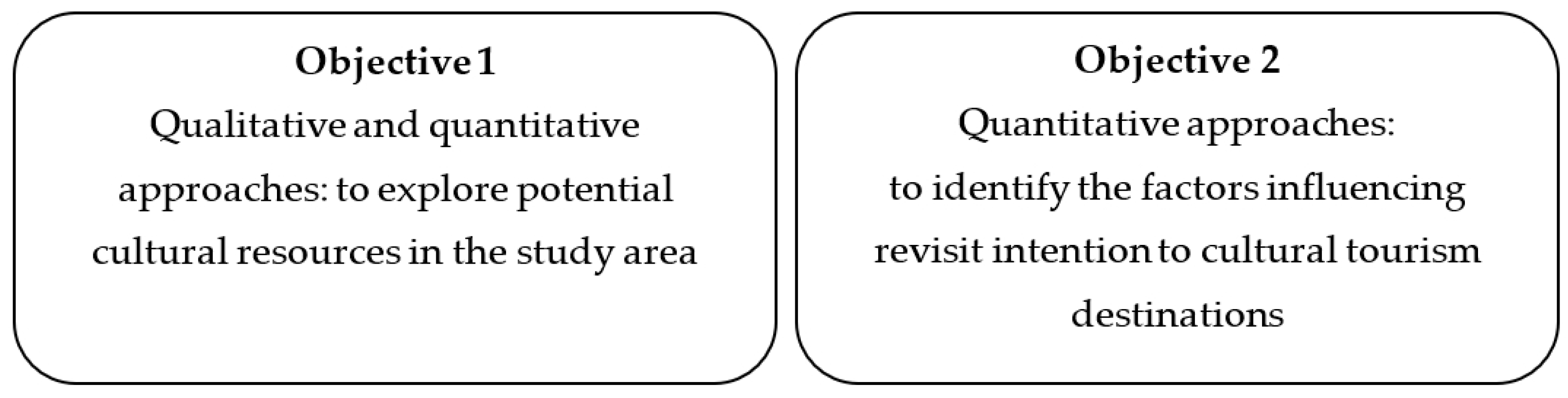
In objective 2: to study factors affecting Thai tourist’s decision to revisit Koh Perd fishing village, a quantitative research design was applied. A sample of 400 respondents was surveyed, and Exploratory Factor Analysis (EFA), Confirmatory Factor Analysis (CFA) and multiple regression analysis were conducted to analyze the data. The objectives of the study are shown in Figure 2.

4.1. Conceptual Research Framework

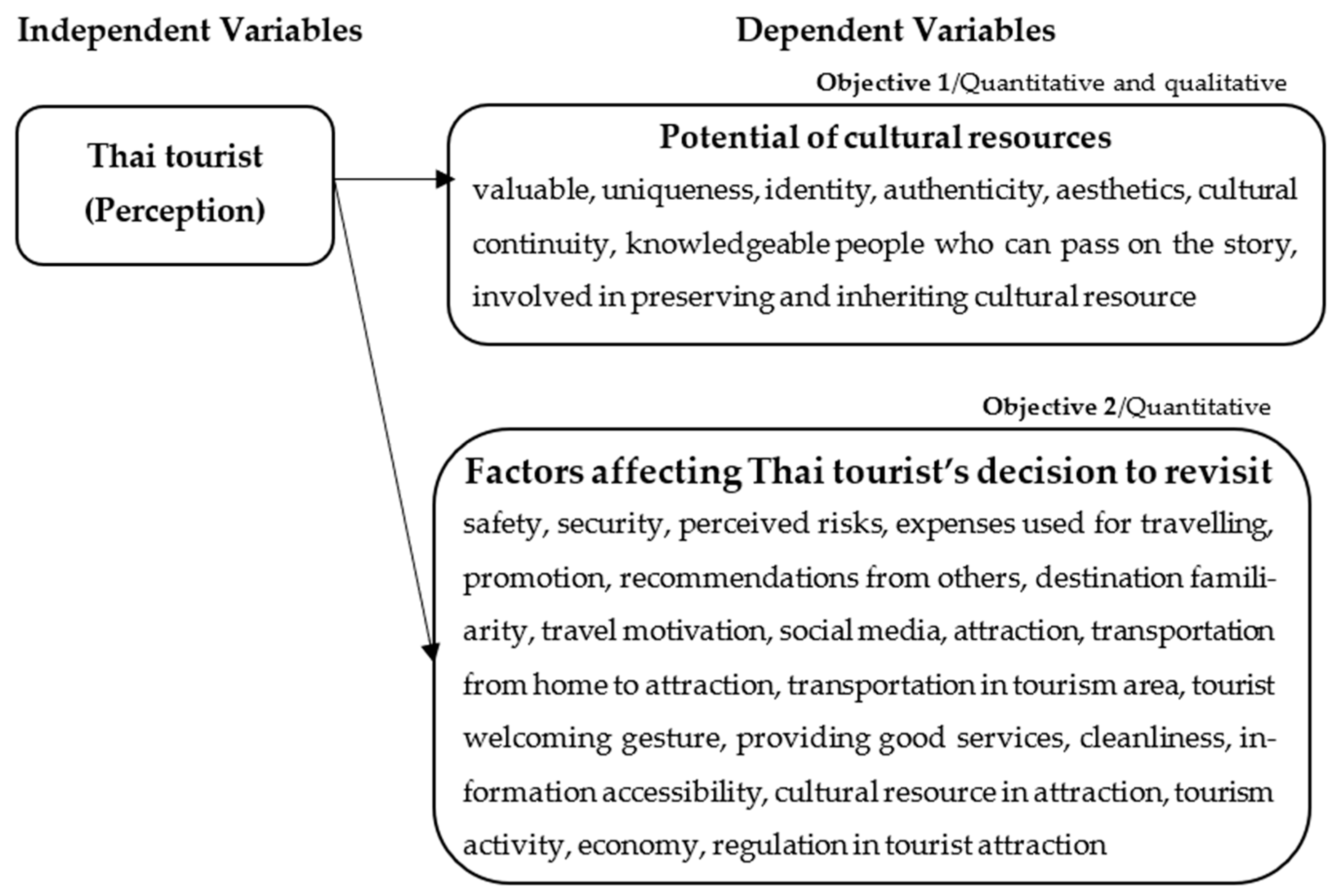
Based on the study objectives, the Conceptual Research Framework is detailed in Figure 3. The variables under the Potential of Cultural Resources are derived from a literature review of Lipe (1984), Li and Xu (2003), Ministry of Tourism and Sports (2014), Joseph (2012), Nilvised and Pewnim (2015), Adhivish (2018), Australia ICOMOS Incorporated International Council on Monuments and Sites (2013). Meanwhile, the variables under Factors Affecting Thai Tourists’ Decision to Revisit are based on studies by Roman et al. (2021), Shaikh et al. (2020), Mim et al. (2022), Zhang and Chen (2018), Feongkeaw (2013), Nuankaew et al. (2019), Suriyasri (2021), and Yarntossin (2021).

4.2. Questionnaire Design

This study employed a structured questionnaire as the research instrument, comprising predetermined items aimed at obtaining data to rigorously address the research objectives. The questionnaire was developed based on a review of previous studies in tourism and hospitality research that investigated cultural resources (Lipe, 1984; Li & Xu, 2003; Ministry of Tourism & Sports, 2014; Joseph, 2012; Nilvised & Pewnim, 2015; Adhivish, 2018; Australia ICOMOS Incorporated International Council on Monuments and Sites, 2013) and visit and revisit intention (Roman et al., 2021; Shaikh et al., 2020; Mim et al., 2022; Zhang & Chen, 2018; Feongkeaw, 2013; Nuankaew et al., 2019; Suriyasri, 2021; Yarntossin, 2021). The variables were adapted from validated measurement scales and adjusted to fit the Koh Perd context. All items were measured on a five-point Likert scale ranging from 1 (strongly disagree) to 5 (strongly agree). To ensure clarity and content validity, the questionnaire was reviewed by 3 experts in tourism management and piloted with 30 tourists prior to large-scale distribution. Minor wording adjustments were made based on the feedback received.

4.3. Sampling Strategy and Data Collection

Two phases of data collection were conducted: (1.) Qualitative Phase: For objective 1, purposive sampling was used to conduct in-depth interviews with 15 Thai tourists visiting Koh Perd fishing village. (2.) Quantitative Phase: For objectives 1 and 2, a structured questionnaire was administered to Thai tourists who had visited Koh Perd fishing village. Purposive sampling was again applied, as the study required respondents with actual visitation experience. Data collection was carried out on-site at the pier, local market, and community attractions by trained research assistants. Respondents were approached during their visit and invited to voluntarily complete the questionnaire. A total of 400 usable responses were collected, which exceeded the minimum requirements for EFA and CFA (Hair et al., 2010).

4.4. Data Analysis

Qualitative data from interviews were analyzed using coding analysis to identify key cultural resource themes. The coding analysis approach, consisted of three stages: (1) Open Coding, (2) Axial Coding, and (3) Selective Coding (Wongsa, 2020) (Figure 4).
Quantitative study employed a sample of 400 respondents, selected through purposive sampling. As the research focuses on revisit intention, participants were specifically chosen based on their prior visit to the Koh Pred fishing village within the past 6 months. This sampling criterion was applied to ensure the accuracy, validity, and contextual relevance of the study’s findings. In part of analysis, quantitative data were analyzed in three stages: (1) Descriptive statistics were used to summarize perceptions of cultural resources, (2) EFA was applied to identify underlying factor structures, followed by CFA to confirm the validity of the measurement model and (3) multiple regression analysis was then conducted to test the influence of identified factors on tourists’ decision to revisit Koh Perd. The objectives and methodology are shown in Table 1.

5. Results and Discussion

5.1. The Potential of Cultural Resources in Koh Perd Fishing Village

The Koh Perd fishing village possess a diverse range of cultural resources, including its local history, the Damrongsilp fish sauce factory, the Koh Perd temple, traditional fishing practices, historic buildings and architecture, the Koh Perd god shrine. In this study, a total of 15 tourists visiting the village were interviewed. The data were analyzed using a coding analysis. The findings indicate that the Ruen Ran Kha (old houses) in Koh Perd fishing village are important cultural assets, with substantial potential for community development.
An example of tourists’ opinions on the cultural resources in Koh Perd fishing village and the coding analysis are presented in Table 2.
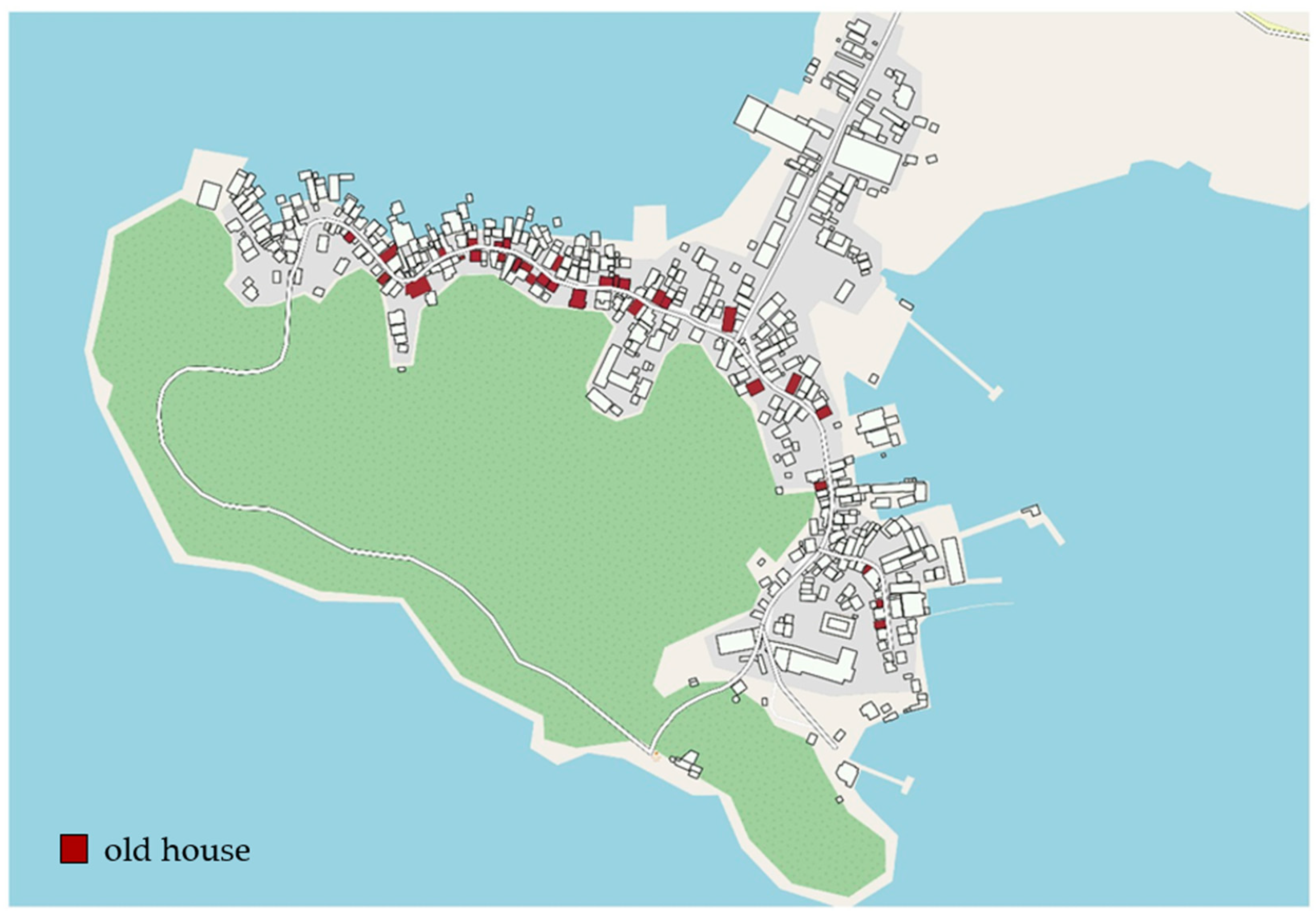
Ruen Ran Kha typically comprises one or two stories, with their long sides parallel to the road. The fronts of these houses facing the road are used for commercial purposes, with storefronts opening onto the road. The doors are characterized by a folding door design. Internally, the space is employed for the display of merchandise. In some cases, the roofs are extended to cover the front area, creating a sheltered space for the storefront (Table 3). In addition, this study conducted a survey of Ruen Ran Kha in the Koh Perd fishing village and found that there is currently a total of 32 houses (Figure 5).
In addition, this research had 400 Thai tourists visiting Koh Perd fishing village completed a questionnaire regarding the cultural resources in the Koh Perd fishing village. The findings revealed that the most important aspect identified was cultural resources in the village were valuable, with a mean score of 3.745 (S.D. 0.837), follow by authenticity and aesthetics with a mean score of 3.650 (S.D. 0.964), and 3.587 (S.D. 1.142), respectively. On the other hand, the issue with the lowest average was the continuous inheritance of cultural resources in Koh Perd fishing village, with a mean score of 2.997 (S.D. 1.044). Accordingly, the analysis of S.D. indicates that while respondents expressed diverse opinions, the variation remains within an acceptable range (S.D. = 0.000–1.500) (Vanichbuncha, 2011). The highest S.D. (1.142) was observed for aesthetics value, suggesting a wide range of opinions regarding the aesthetic value of cultural resources. In contrast, the item with the lowest S.D. (0.837) is perceived value (S.D. = 0.837), indicating that respondents tended to share a similar viewpoint on the value of cultural resources in the area. The evaluation of cultural resources potential within Koh Perd fishing village is presented in Table 4

5.2. Factors Affecting Thai Tourist’s Decision to Revisit Koh Perd Fishing Village

Based on the literature review, this study outlined 20 factors that influenced tourists’ decisions to revisit, as follows: safety, security, perceived risks, expenses used for travelling, promotion, recommendations from others, destination familiarity, travel motivation, social media, attraction, transportation from home to attraction, transportation in tourism area, tourist welcoming gesture, providing good services, cleanliness, information accessibility, cultural resource in attraction, tourism activity, economy, and regulation in tourist attraction (all 20 variables were included in the questionnaire). Due to the large number of factors identified from the literature review, this study employed Exploratory Factor Analysis (EFA) to categorize the variables. Before conducting the Exploratory Factor Analysis (EFA), the normality of the 20 observed variables collected from 400 questionnaire responses was examined using skewness and kurtosis statistics. The results indicated that all variables were normally distributed, with skewness values less than 3 and kurtosis values less than 10 (Vanichbuncha, 2011). Therefore, the data were considered suitable for further analysis. Subsequently, the suitability of the data for factor analysis was tested using the Kaiser-Meyer-Olkin (KMO) Measure of Sampling Adequacy and Bartlett’s Test of Sphericity. The results, shown in Table 5, revealed a KMO value of 0.877, which exceeded the recommended threshold of 0.50, and a statistically significant Bartlett’s Test (p < 0.05). These findings confirmed that the data were appropriate for EFA. To identify the underlying factor structure, the total variance explained was examined, as presented in Table 6. The results showed that four components with eigenvalues greater than 1 were extracted, accounting for 57.951% of the total variance.
The results in Table 5 confirmed that the data were suitable for factor analysis. To identify the underlying factor structure, the total variance explained was examined, as shown in Table 6.
This study used a factor loading of 0.40, as a loading below 0.40 indicates that the variable has an unclear relationship with the factor; therefore, the variable should be excluded from the analysis to ensure statistically significant grouping (Hair et al., 2010). Furthermore, this study excluded variables with similar loadings on two factors (cross-loading) because they could not be clearly assigned to a specific factor group (Vanichbuncha, 2011). The results from the EFA revealed that the 20 variables were categorized into 4 groups: (1) Destination Attraction, (2) Marketing and Accessibility, (3) Safety and security, and (4) Facility and service (Table 7). The factors excluded from the analysis were perceived risks, attraction, information accessibility, economy, and regulation in tourist attraction. The variable “Providing good services,” which demonstrated a negative factor loading, indicated an inverse relationship with the factor. However, the variable still showed a significant association with the factor. Therefore, in this study, it was not excluded from the analysis.
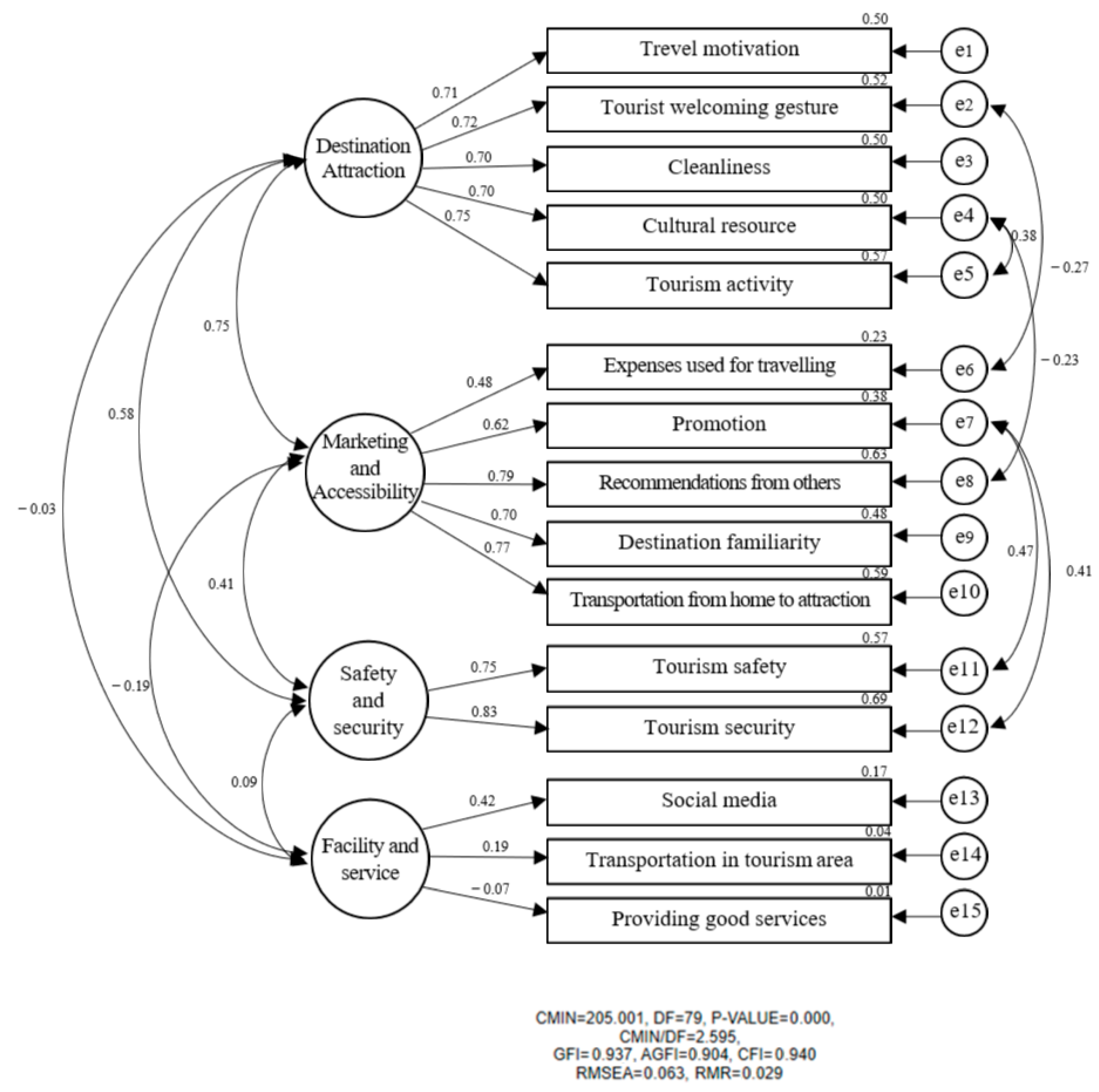
Subsequent to the grouping process through EFA, Confirmatory Factor Analysis (CFA) was performed to validate the results of the variable categorization. The findings indicated that variables with factor loadings below 0.3 (Hair et al., 2010), namely expenses for traveling, social media, transportation in the tourism area, and provision of quality services, were excluded from further analysis in this study. The CFA model is presented in Figure 6.
The results of the CFA indicated that the model was statistically significant, with a p-value of 0.000, which aligns with the framework proposed by Hair et al. (2010), where a p-value less than 0.05 is considered “statistically significant.” Furthermore, the model demonstrated adequate fit, as assessed through the values of CMIN/DF, GFI, AGFI, CFI, and RMSEA, as detailed in Table 8.
From regression weight table (Table 9), all observed variables showed statistically significant relationships with their respective latent factors (p < 0.001), indicating that the observed variables are significantly associated with the latent factors. However, the observed variables—Transportation in tourism area and providing good services—were not statistically significant (p > 0.05), suggesting that these indicators are inappropriate or misaligned within their respective factor groups. As a result, these two variables were removed from the model. The reference indicators for each latent factor were as follows: Tourism activity for the Destination attraction, Recommendations from others for the Marketing and accessibility, and Safety for the Safety and security factor, each of which was fixed at an estimate of 1 to set the measurement scale of the latent construct.
Following the CFA, variables with a loading factor below 0.7 were excluded, as they did not exhibit a significant relationship between the observed variables and the latent factors, in accordance with the guidelines provided by Hair et al. (2010). The factors with loading factors below 0.7 and excluded from the analysis were expenses used for travelling and social media (Table 10).
Additionally, the results of convergent validity assessment for each latent construct (Table 11), including Composite Reliability (CR) and Average Variance Extracted (AVE) indicated that all three constructs achieved acceptable levels of internal consistency. According to Hair et al. (2010), the acceptable thresholds for convergent validity are CR ≥ 0.70 and AVE ≥ 0.50. The CR values ranged from 0.771 to 0.842, exceeding the recommended threshold of 0.70. This suggests that the observed indicators for each construct consistently measured the same underlying concept. Regarding AVE, two constructs: Destination attraction (0.517) and Safety and security (0.629), met the threshold of 0.50, indicating that more than 50% of the variance in the observed indicators is explained by the latent variable. However, the Marketing and Accessibility construct reported a slightly lower AVE value (0.463), which is marginally below the recommended threshold. Despite this, its CR value of 0.807 exceeded 0.70, indicating adequate convergent validity (Fornell & Larcker, 1981). According to Hair et al. (2010), a construct can still be considered acceptable if CR is high even when AVE is slightly below 0.50, provided that indicator loadings are significant and substantial. Therefore, the measurement model demonstrated acceptable convergent validity overall, confirming that the indicators sufficiently represent their corresponding latent constructs.
From convergent validity assessment revealed that both Destination attraction (CR = 0.842, AVE = 0.517) and Safety and security (CR = 0.771, AVE = 0.629) had values exceeding the minimum recommended thresholds, namely Composite Reliability (CR) ≥ 0.70 and Average Variance Extracted (AVE) ≥ 0.50, as suggested by Hair et al. (2010). This indicates that these two constructs demonstrate acceptable levels of convergent validity. Although Marketing and accessibility showed a CR of 0.807, which is above the threshold, its AVE was slightly below the recommended value at 0.463. However, according to Hair et al. (2010), if the CR is sufficiently high and the indicator loadings are statistically significant, the construct can still be considered to exhibit acceptable convergent validity.
In the assessment of discriminant validity, all three pairs of constructs were found to be correlated. The correlation between Destination attraction and Marketing and accessibility was 0.752 (below 0.769), the correlation between Destination attraction and Safety and security was 0.578 (below 0.769), and the correlation between Marketing and accessibility and Safety and security was 0.405 (below 0.680). Based on the results of the convergent and discriminant validity assessments, the model was considered appropriate for further analysis. In this study, to investigate the influence of each variable on tourists’ revisit intention, multiple regression analysis was employed.
The three remaining factor groups (Destination attraction, Marketing and accessibility, and Safety and security) were subjected to multiple regression analysis. The results of the analysis indicated that the R Square value of 0.230 suggested that the model accounts for 23% of the variance in the dependent variable, reflecting a statistically meaningful trend. The Adjusted R Square, at 0.224, confirmed the model’s stability after controlling for the number of predictors and sample size. The Standard Error of the Estimate, at 0.5011, indicated an acceptable level of prediction error. Additionally, the residuals were found to be independent, as evidenced by a Durbin-Watson value of 1.733. These results suggested that the model provides a solid foundation for further refinement and development (Table 12).
The variance of the residuals testing, as observed from the scatterplot of Regression Standardized Residual and Regression Standardized Predicted Value, it was found that the majority of values were in the range of +2 to −2. Therefore, it can be considered that the variance of the residuals is constant.
Based on the ANOVA table (Table 13), the Sig. value of 0.001 suggests that at least one factor significantly influences tourists’ decision to revisit.
The coefficients table revealed that the significant factors influencing Thai tourists’ decision to revisit Koh Perd fishing village included (1) Destination attraction, (2) Marketing and accessibility, and (3) Safety and security. An analysis of the standardized coefficients showed that destination attraction had the highest Beta value at 0.282, indicating the strongest positive influence on the dependent variable. This was followed by marketing and accessibility (Beta = 0.152) and safety and security (Beta = 0.151), reflecting that all factors contribute positively to tourists’ revisit intentions. Furthermore, an examination of multicollinearity indicated no issues, as the Variance Inflation Factor (VIF) values were all below 10, and the Tolerance values were close to 1 (Table 14).
The multiple regression equation for the study examining the factors influencing Thai tourists’ decision to revisit Koh Perd Fishing Village, Laem Sing, Chanthaburi, is as follows:
Revisit = 1.101 + 0.358 Destination attraction + 0.123 Marketing and accessibility + 0.133 Safety and security

6. Discussion

The study found that the cultural resource most highly valued by tourists was the old houses (Ruen Ran Kha), which were perceived as valuable, authentic, and aesthetic. According to the survey, there are currently 32 such houses in the Koh Perd fishing village.
Regarding factors influencing revisit intention, the analysis revealed that Destination Attraction, Marketing and Accessibility, and Safety and Security significantly influenced Thai tourists’ intentions to revisit the cultural tourism destination. A detailed examination of these three factors showed that Destination Attraction had the strongest influence, followed by Marketing and Accessibility, and Safety and Security.
The Destination Attraction factor had the greatest impact on revisit intention. It comprised variables such as Travel Motivation, Tourist Welcoming Gesture, Cultural Resources, Cleanliness, and Tourism Activities. The result aligned with the tourism behavior theory, which states that motivations influence travel decisions and destination preferences (Caldito et al., 2015). It also supported Yarntossin (2021), who found that psychological needs significantly affected travel decisions of private company employees in Bangkok post-COVID-19. However, it contradicted the findings of Mim et al. (2022), who reported that motivation did not significantly influence travel decision-making. The positive effect of tourist welcoming gestures and cultural resources also agreed with Ahmad et al. (2021), while cleanliness corresponded with Tuzova and Stastna (2020), and tourism activities aligned with Suriyasri (2021). Based on these findings, destination management should focus on enhancing the cleanliness of tourist sites, preserving the authenticity of cultural heritage, and improving local welcoming gestures to leave a positive impression and increase revisit motivation.
The Marketing and Accessibility factor ranked second in influence. It included Promotion, Destination Familiarity, Transportation, and Recommendations from Others. These results corresponded with Zhang and Chen (2018), who examined cultural tourism decisions in China, and Feongkeaw (2013), who conducted research in Thailand. The findings also supported Mim et al. (2022), who identified destination familiarity as a critical determinant in Bangladesh. To strengthen marketing and accessibility, stakeholders should develop promotional campaigns that align with tourist preferences, improve transportation infrastructure to cultural sites, and encourage positive word-of-mouth through enhanced tourist experiences.
The Safety and Security factor became increasingly important among Thai tourists in the post-COVID-19 context. The finding supported Maslow’s theory (Maslow, 1943), which posits that safety needs are fundamental human requirements. It was also consistent with Ahmad et al. (2021) and Roman et al. (2021), who found that perceived safety significantly affected revisit intentions. Hence, tourism management should prioritize safety measures, establish clear safety standards, and promote awareness of secure travel environments to reinforce tourists’ confidence in revisiting the destination.

7. Conclusions

The findings of this study indicate that the old houses (Ruen Ran Kha) in Koh Perd fishing village represent significant cultural resources with potential for tourism development. These houses primarily serve commercial purposes. One of the most distinctive features of the Ruen Ran Kha is the folding doors, a rare architectural element that enhances their value as cultural assets for tourism. Currently, there are 32 Ruen Ran Kha houses in the village. The research also revealed that tourists recognize the cultural resources in Koh Perd fishing village as valuable, authentic, and aesthetically significant. Additionally, the continuous inheritance of these cultural resources is an important aspect that warrants further development to ensure their long-term sustainability.
Factors influencing tourists’ decisions to revisit include destination attraction, marketing and accessibility, and safety and security. In light of these factors, stakeholders should focus on enhancing the quality of tourism destinations by preserving cultural resources within attractions to maintain their authenticity and aesthetic value, ensuring the cleanliness of these sites, diversifying tourism activities, and acting as welcoming hosts to foster tourist motivation. Furthermore, tourism stakeholders must enhance access to tourism destinations through the implementation of targeted and appropriate promotional strategies designed to create a positive impression, thereby fostering destination familiarity and facilitating word-of-mouth promotion. Additionally, stakeholders should focus on improving physical accessibility, particularly through the development of transportation infrastructure, to ensure that all demographic groups can access these sites. Moreover, it is essential to prioritize safety and security within tourism destinations to instill confidence among tourists and encourage repeat visits.

8. Limitations and Future Study Directions

This study has several limitations that should be addressed in future research. (1) The qualitative data were collected through interviews with Thai tourists who visited Koh Perd fishing village to assess the area’s cultural resources. However, the sample size may have been limited and insufficient to reflect the views of the broader tourist population. In addition, there is a possibility of response bias that may affect the reliability of the findings. Therefore, future studies should consider increasing the sample size to enhance the generalizability of the results. (2) The questionnaire contained a large number of items, which may have caused respondent fatigue and led to inaccurate or inconsistent responses. It is recommended that future studies develop and use more concise and focused questionnaires addressing only the key issues. (3) Both EFA and CFA were conducted using the same sample group, which may have affected the robustness of the model. Future research should use separate samples for EFA and CFA to enhance the validity of the measurement model. (4) This study primarily focused on Thai tourists, which may limit the applicability of the findings to other contexts. Future research should include international tourists and other demographic groups to ensure that the findings can be applied across different populations and cultural settings.

Author Contributions

Conceptualization, P.P. and T.C.; Methodology, P.P.; Data curation, P.P.; Formal analysis, P.P.; Investigation, P.P.; Visualization, P.P.; Resources, T.C.; Supervision, T.C.; Validation, T.C.; Writing—original draft, P.P.; Writing—review and editing, T.C. All authors have read and agreed to the published version of the manuscript.

Funding

The authors declare that this research received no external funding.

Institutional Review Board Statement

The study was conducted in accordance with the Declaration of Helsinki, and approved by the Institutional Review Board of the National Institute of Development Administration (NIDA), Thailand, under protocol ID No. ECNIDA 2023/0111, date of approval: 3 August 2023).

Informed Consent Statement

Informed consent was obtained from all subjects involved in the study.

Data Availability Statement

The data presented in this study are available on request from the corresponding author due to privacy and confidentiality agreements with participants.

Acknowledgments

I would like to express my sincere gratitude to my advisor and all the informants for their invaluable support and contributions, which have been essential to the successful completion of this research.

Conflicts of Interest

The authors declare no conflicts of interest.

References

  1. Aaker, D. A. (2012). Building strong brands. Simon and Schuster. [Google Scholar]
  2. Adhivish, H. (2018). Guidelines to promote community-based cultural tourism of the Tai Dam community, Ban Don subdistrict, U–Thong district, Suphan Buri province. Journal of Social Research, 41(2), 141–176. [Google Scholar]
  3. Ahmad, N. R., Phoksawat, K., & Lertkri, P. (2021). Tourist satisfaction in Nakhon Si Thammarat province, Thailand: A comparative study. Walailak Journal of Social Science, 14(4), 1–20. [Google Scholar]
  4. Asker, S., Boronyak, L., Carrard, N., & Paddon, M. (2010). Effective community based tourism: A best practice manual for Peru 2010. Griffith University. [Google Scholar]
  5. Australia ICOMOS Incorporated International Council on Monuments and Sites. (2013). The burra charter. Available online: https://australia.icomos.org/wp-content/uploads/The-Burra-Charter-2013-Adopted-31.10.2013.pdf (accessed on 26 January 2024).
  6. Caldito, L. A., Dimanche, F., & Ilkevich, S. (2015). Tourist behaviour and trends. Available online: https://www.researchgate.net/publication/302139612_Tourist_Behaviour_and_Trends (accessed on 15 May 2024).
  7. Designated Areas for Sustainable Tourism Administration (Public Organization). (2015). Community-based tourism. Cocoon and Co. [Google Scholar]
  8. Fang, Q., & Ko, W. (2025). Beyond satisfaction: Authenticity, attachment, and engagement in shaping revisit intention of palace museum visitors. Sustainability, 17(19), 8803. [Google Scholar] [CrossRef]
  9. Feongkeaw, C. (2013). Factors affecting the travel decision making of working age people during weekend and long holiday in Bangkok metropolis [Master’s thesis, Faculty of Sports Science, Chulalongkorn University]. [Google Scholar]
  10. Fornell, C., & Larcker, D. F. (1981). Evaluating structural equation models with unobservable variables and measurement error. Journal of Marketing Research, 18(1), 39–50. [Google Scholar] [CrossRef]
  11. Google Earth. (n.d.). [Screenshot of Koh Perd, Koh Perd subdistrict, Laem Sing district, Chanthaburi, Thailand on Google Earth] [Map]. Google Earth. Available online: https://www.google.com/maps/place/%E0%B9%80%E0%B8%81%E0%B8%B2%E0%B8%B0%E0%B9%80%E0%B8%9B%E0%B8%A3%E0%B8%B4%E0%B8%94+%E0%B8%95%E0%B8%B3%E0%B8%9A%E0%B8%A5+%E0%B9%80%E0%B8%81%E0%B8%B2%E0%B8%B0%E0%B9%80%E0%B8%9B%E0%B8%A3%E0%B8%B4%E0%B8%94+%E0%B8%AD%E0%B8%B3%E0%B9%80%E0%B8%A0%E0%B8%AD+%E0%B9%81%E0%B8%AB%E0%B8%A5%E0%B8%A1%E0%B8%AA%E0%B8%B4%E0%B8%87%E0%B8%AB%E0%B9%8C+%E0%B8%88%E0%B8%B1%E0%B8%99%E0%B8%97%E0%B8%9A%E0%B8%B8%E0%B8%A3%E0%B8%B5/@12.4092091,102.1250228,1473m/data=!3m1!1e3!4m6!3m5!1s0x3104797e8698f5d5:0x6586d2c04780b9ea!8m2!3d12.4062629!4d102.1604131!16s%2Fg%2F11twdqtcp0?authuser=0&entry=ttu&g_ep=EgoyMDI1MTAyMC4wIKXMDSoASAFQAw%3D%3D (accessed on 24 October 2025).
  12. Hair, J. F., Black, W. C., Babin, B. J., & Anderson, R. E. (2010). Multivariate data analysis: A global perspective (7th ed.). Pearson Education. [Google Scholar]
  13. Joseph, J. E. (2012). Cultural identity. In C. A. Chapelle (Ed.), The encyclopedia of applied linguistics. Wiley-Blackwell. [Google Scholar]
  14. Jöreskog, K. G., & Sörbom, S. D. (1984). Advances in factor analysis and structural equation models. Rowman & Littlefield Publishers. [Google Scholar]
  15. Kline, R. B. (2016). Principles and practice of structural equation modeling (4th ed.). The Guilford Press. [Google Scholar]
  16. Koh Perd Subdistrict Administrative Organization. (2019). Local development plan (2018–2022). Available online: https://kohperd.go.th/public/list/data/detail/id/101/menu/1196/page/1/catid/2 (accessed on 26 March 2024).
  17. Li, D., & Xu, X. (2003). Construction and empirical study on the value assessment system of traditional cultural resources: Taking Shandong province in China as an example. Frontiers in Humanities and Social Sciences, 3(8), 11–18. [Google Scholar] [CrossRef]
  18. Ling, P. (n.d.). Introduction to consumer behavior. Available online: https://www.scribd.com/document/506677123/intro-to-Consumer-behaviour (accessed on 15 January 2024).
  19. Lipe, W. D. (1984). Value and meaning in cultural resources. In H. Cleere (Ed.), Approaches to the archaeological heritage. Cambridge University Press. [Google Scholar]
  20. Lord, B. (2002). Cultural tourism and museums. Available online: https://www.lord.ca/Media/Artcl_CltTourismMSeoulKorea2002.pdf (accessed on 23 March 2024).
  21. Macinnis, D. J., & Folkes, V. S. (2010). The disciplinary status of consumer behavior: A sociology of science perspective on key controversies. Journal of Consumer Research, 36(6), 899–914. [Google Scholar] [CrossRef]
  22. Maslow, A. H. (1943). A theory of human motivation. Available online: https://psychclassics.yorku.ca/Maslow/motivation.htm (accessed on 18 January 2024).
  23. Mim, M., Hasan, M. M., Hossain, A., & Khan, H. Y. (2022). An examination of factors affecting tourists’ destination choice: Empirical evidence from Bangladesh. SocioEconomic Challenges, 6(3), 48–61. [Google Scholar] [CrossRef]
  24. Ministry of Tourism & Sports. (2014). Guideline of cultural tourism quality assessment. Ministry of Tourism & Sports. [Google Scholar]
  25. Nilvised, D., & Pewnim, M. (2015). Cultural resource manangement for a source of learning at watbowonnivetvihara. Veridian E-Journal, Silpakorn University, 8(3), 889–904. [Google Scholar]
  26. Nuankaew, W., Nuankaew, P., Promthian, N., Panngam, N., & Maungmo, W. (2019). Factors affecting tourism decisions in Northern Thailand. Journal of Project in Computer Science and Information Technology, 5(1), 95–103. [Google Scholar]
  27. Office of the National Economic and Social Development Board. (2022). The thirteenth national economic and social development plan (2023–2027). Available online: https://www.nesdc.go.th/en/the-national-economic-and-social-development-plan/the-thirteenth-plan-2023-2027/ (accessed on 8 May 2024).
  28. Office of the National Economic and Social Development Council. (2021a). NESDC economic report 2021. Available online: https://www.nesdc.go.th/wordpress/wp-content/uploads/2025/06/article_20210215163427.pdf (accessed on 4 February 2024).
  29. Office of the National Economic and Social Development Council. (2021b). Report on the results of the master plan under the national strategy, topic 5. Available online: https://drive.usercontent.google.com/download?id=1xsI-WUTKDaZJ_2mLrG83qI7y1appOGfT&export=download&authuser=0 (accessed on 9 February 2024).
  30. Pizam, A., Neumann, Y., & Reichel, A. (1978). Dimensions of tourist satisfaction with a destination area. Annals of Tourism Research, 5, 314–322. [Google Scholar] [CrossRef]
  31. Priest, J., Carter, S., & Statt, D. A. (2013). Consumer behaviour. Edinburgh Business School, Heriot-Watt University. [Google Scholar]
  32. Roman, M., Bhatta, K., Roman, M., & Gautam, P. (2021). Socio-economic factors influencing travel decision-making of poles and nepalis during the COVID-19 pandemic. Sustainability, 13(20), 11468. [Google Scholar] [CrossRef]
  33. Schumacker, R. E., & Lomax, R. G. (2010). A beginner’s guide to structural equation modeling. Routledge Taylor & Francis Group. [Google Scholar]
  34. Severt, D., Wong, Y., Chen, P., & Breiter, D. (2007). Examining the motivation, perceived performance and behavioral intentions of convention attendees: Evidence from a regional conference. Tourism Management, 28, 399–408. [Google Scholar] [CrossRef]
  35. Shaikh, A. S., Dars, A., Memon, K., & Kazi, A. G. (2020). A study of factors affecting travel decision making of tourists. Journal of Economic Info, 7(1), 1–10. [Google Scholar] [CrossRef]
  36. Suriyasri, J. (2021). Factors influencing demand for cultural tourism in the upper northeast region1. Jourmal of Management Science Udon Thani Rajabhat University, 3(3), 67–83. [Google Scholar]
  37. Tuzova, K., & Stastna, M. (2020). Analysis of tourist’s satisfaction with cultural tourism: Case study South Moravia. Available online: https://www.mendelnet.cz/artkey/mnt-202001-0050_Analysis-of-tourist-8217-s-satisfaction-with-cultural-tourism-Case-study-South-Moravia.php?back=/magno/mnt/2020/mn1.php?secid=24 (accessed on 15 March 2024).
  38. UNESCO. (2003). Convention for the safeguarding of the intangible cultural heritage. United Nations Educational, Scientific and Cultural Organization. Available online: https://unesdoc.unesco.org/ark:/48223/pf0000132540 (accessed on 8 May 2024).
  39. United Nation. (2018). World urbanisation prospects 2018. Available online: https://population.un.org/wup/ (accessed on 8 May 2024).
  40. United Nations World Tourism Organization. (2017). Tourism definitions. Available online: https://www.unwto.org/glossary-tourism-terms (accessed on 4 June 2024).
  41. United States Department of Agriculture. (n.d.). Cultural resources. Available online: https://www.nrcs.usda.gov/our-agency/cultural-resources (accessed on 27 May 2024).
  42. Vanichbuncha, K. (2011). Advanced statistical analysis with SPSS for windows (9th ed.). Chulalongkorn. [Google Scholar]
  43. West, R. F., Meserve, R. J., & Stanovich, K. E. (2012). Cognitive sophistication does not attenuate the bias blind spot. Journal of Personality and Social Psychology, 32(4), 493–568. [Google Scholar] [CrossRef] [PubMed]
  44. Wongsa, S. (2020). Qualitative research with grounded theory procedures: Concept, method, and caution. Art Pritas Journal, 15(1), 117–130. [Google Scholar]
  45. World Wide Fund for Nature. (2019). Standard on cultural resources. Available online: https://wwfint.awsassets.panda.org/downloads/10__standard_on_cultural_resources.pdf (accessed on 1 May 2024).
  46. Yarntossin, T. (2021). Factors affecting decision making to travel in Thailand of private company employees in Bangkok after the first pandemic of COVID-19. Independent Study, College of Management, Mahidol University. [Google Scholar]
  47. Zhang, Y., & Chen, H. (2018). An empirical study on the influencing factors of tourists’ cultural tourism decision-making. Advances in Social Science, Education and Humanities Research, 177, 363–370. [Google Scholar]
  48. Zhou, G., Chen, W., & Wu, Y. (2022). Research on the effect of authenticity on revisit intention in heritage tourism. Frontiers in Psychology, 13, 883380. [Google Scholar] [CrossRef] [PubMed]
Figure 1. Koh Perd fishing village. Source: Adapted from Google Earth (n.d.).
Tourismhosp 06 00228 g001
Figure 2. Objectives of the study.
Tourismhosp 06 00228 g002
Figure 3. Conceptual Research Framework.
Tourismhosp 06 00228 g003
Figure 4. Coding analysis.
Tourismhosp 06 00228 g004
Figure 5. The old houses (Ruen Ran Kha) in Koh Perd fishing village.
Tourismhosp 06 00228 g005
Figure 6. CFA Model.
Tourismhosp 06 00228 g006
Table 1. Objectives and Methodology.
ObjectiveMethodologySample SizesSamplingData Analysis
1. To assess the potential of cultural resources for developing to be a tourist attraction at Koh Perd fishing villageQualitative15
samples
Purposive Sampling
(Thai tourist visiting
Koh Perd)
Coding
Analysis
Quantitative400
Samples
Purposive Sampling
(Thai tourist visiting
Koh Perd)
Descriptive
statistics
2. To study factors affecting Thai tourist’s decision to revisit Koh Perd Fishing villageQuantitative400
Samples
Purposive Sampling
(Thai tourist visiting
Koh Perd)
EFA, CFA,
Multiple
Regression
Table 2. The results of the coding analysis.
Open CodingCodesAxial CodingSelective Coding
1.“…The old houses in Koh Perd fishing village are unique, have distinct identities, and still retain their original features. These houses, which serve as shop-houses, have a design that differs from other areas, such as their folding doors…”
  • old houses
  • unique
  • identity
  • retain the original
  • differing design
  • folding door
  • old houses (Ruen Ran Kha) (7 opinions)
  • uniqueness (3 opinions)
  • identity/differing design (2 opinions)
  • value (2 opinions)
  • authenticity/retain the original (2 opinions)
  • potential to develop to be tourism attractions (2 opinions)
  • folding door (1 opinions)
The old shop-houses (Ruen Ran Kha) in Koh Perd fishing village are distinguished by their uniqueness, identity, value, authenticity, and potential for development into a tourist attraction.
2.“…I believe that the historic houses (Ruen Ran Kha) possess considerable value and could be transformed into architectural attractions for tourists. They exhibit a distinct identity and uniqueness that differentiates them from other regions…”
  • old houses
  • value
  • potential to develop to be tourism attractions
  • identity
  • uniqueness
3.“…The traditional nature of the old houses makes the cultural resources in the community valuable…”
  • old houses
  • valuable
4.“…The beach and sea of Koh Perd fishing village are not distinguishable from other locations; however, the community’s atmosphere and the historic structures within the village are what distinguish it…”
  • old buildings
  • unique
5.“…Koh Perd fishing village remains relatively unknown to tourists, allowing it maintain a peaceful atmosphere without the visitors. Additionally, the region’s antiquated architecture has the potential to draw in cultural visitors.…”
  • old architecture
  • potential to develop to be tourism attractions
6.“…The Ruen Ran Kha within Koh Perd fishing village continue to preserve their value and authenticity, despite the fact that some have been modified. These houses may function as a cultural asset that attracts visitors…”
  • Ruen Ran Kha
  • value
  • authenticity
7.“…Ruen Ran Kha are an architectural style commonly found in the central region of Thailand, but most people have renovated such buildings to make modern structures. Therefore, preserving Ruen Ran Kha is essential to ensure the sustainability of tourism. …”
  • Ruen Ran Kha
Table 3. The old houses (Ruen Ran Kha) in Koh Perd fishing village.
Old Houses (Ruen Ran Kha)Side Elevation PlanFront Elevation Plan
Tourismhosp 06 00228 i001Tourismhosp 06 00228 i002Tourismhosp 06 00228 i003
Tourismhosp 06 00228 i004Tourismhosp 06 00228 i005Tourismhosp 06 00228 i006
Tourismhosp 06 00228 i007Tourismhosp 06 00228 i008Tourismhosp 06 00228 i009
Table 4. The evaluation of cultural resources potential within Koh Perd fishing village.
No.Potential of Cultural ResourcesMeanS.D.
1.Cultural resource in Koh Perd fishing village is valuable3.7450.837
2.Cultural resource in Koh Perd fishing village is unique3.4520.951
3.Cultural resource in Koh Perd fishing village has an identity3.2100.901
4.Cultural resource in Koh Perd fishing village has authenticity3.6500.964
5.Cultural resource in Koh Perd fishing village has aesthetics3.5871.142
6.Cultural resource in Koh Perd fishing village has been inherited continuously2.9971.044
7.Koh Perd fishing village has knowledgeable people who can pass on the story of cultural resource to others3.5421.114
8.Local people in Koh Perd fishing village are involved in preserving and inheriting cultural resource3.0371.026
Table 5. KMO and Bartlett’s Test.
KMO and Bartlett’s Test
Kaiser-Meyer-Olkin Measure of Sampling Adequacy0.877
Bartlett’s Test of SphericityApprox. Chi-Square3831.602
Df190
Sig.0.000
Table 6. Total Variance Explained.
Total Variance Explained
ComponentTotalRotation Sums of Squared Loadings
% of VarianceCumulative %
14.55622.78222.782
23.83419.17141.953
32.04810.24152.194
41.1515.75757.951
Table 7. Grouping according to the results of the EFA.
FactorsVariablesFactor Loading
1
Destination Attraction
(5 variables)
Travel motivation0.702
Tourist welcoming gesture of local people 0.664
Cleanliness0.652
Cultural resource in attraction0.812
Tourism activity0.825
2
Marketing and Accessibility
(5 variables)
Expenses used for travelling0.577
Promotion0.645
Recommendations from others0.716
Destination familiarity0.659
Transportation from home to attraction0.736
3
Safety and Security
(2 variables)
Tourism safety0.827
Tourism security0.825
4
Facility and Service
(3 variables)
Social media0.466
Transportation in tourism area0.732
Providing good services−0.556
Table 8. Model Goodness of fit.
CategoryExplicationAccepted FitSourceModel
1. p-valueLikelihood RatioSignificant
p-values expected
Hair et al. (2010)0.000
2. CMIN/DFGoodness of Fit Index3 to 1Kline (2016)2.595
3. GFIGoodness of Fit indexAbove 0.90Jöreskog and Sörbom (1984)0.940
4. AGFIAdjusted Goodness of Fit indexClose to 0.95Schumacker and Lomax (2010)0.904
5. CFIComparative Fit IndexAbove 0.90West et al. (2012)0.937
6. RMSEARoot Mean Square Error of Approximation0.03–0.08Hair et al. (2010)0.063
Table 9. Regression weight.
EstimateS.E.C.R.p
Travel motivation<—Destination attraction0.8570.06413.354***
Tourist welcoming gesture<—Destination attraction0.9050.06613.646***
Cleanliness<—Destination attraction0.9260.07013.301***
Cultural resource in attraction<—Destination attraction0.8760.05117.194***
Tourism activity<—Destination attraction1.000
Expenses used for travelling<—Marketing and accessibility0.5470.0599.217***
Promotion<—Marketing and accessibility0.7060.05912.017***
Recommendations from others<—Marketing and accessibility1.000
Destination familiarity<—Marketing and accessibility0.8060.05913.735***
Transportation from home to attraction<—Marketing and accessibility0.8770.05715.276***
Safety<—Safety and security1.000
Security<—Safety and security0.9210.0959.670***
Social media<—Facility and service1.000
Transportation in tourism area<—Facility and service0.4410.4610.9580.338
Providing good services<—Facility and service−0.1570.260−0.6040.546
*** p < 0.001.
Table 10. Variables derived from CFA.
FactorsVariablesFactor
Loading
R2
1
Destination Attraction
(5 variables)
Travel motivation0.710.50
Tourist welcoming gesture of local people 0.720.52
Cleanliness0.700.50
Cultural resource in attraction0.750.50
Tourism activity0.750.57
2
Marketing and
Accessibility
(5 variables)
Promotion0.790.38
Recommendations from others0.700.63
Destination familiarity0.750.48
Transportation from home to attraction0.710.59
3
Safety and security
(2 variables)
Tourism safety0.750.57
Tourism security0.830.69
Table 11. Model Validity Measure.
CRAVEDestination
Attraction
Marketing and AccessibilitySafety and
Security
Destination
Attraction
0.8420.5170.769
Marketing and Accessibility0.8070.4630.752 ***0.680
Safety and
security
0.7710.6290.578 ***0.405 ***0.793
*** p-value < 0.001.
Table 12. Model summary.
ModelRR SquareAdjusted R SquareStd. Error of the
Estimate
Durbin Watson
10.4790.2300.2240.50111.733
Table 13. ANOVA.
Table 13. ANOVA.
Model Sum of SquaresdfMean SquareFSig.
1Regression29.67639.89239.3950.001
Residual99.4353960.251
Total129.111399
Table 14. Coefficients.
Unstandardized
Coefficients
Standardized CoefficientstSig.95.0% Confidence Interval for BCollinearity
Statistics
ModelBStd. ErrorBetaLower
Bound
Upper BoundToleranceVIF
(Constant)1.1010.197 5.5980.0000.7141.488
Destination Attraction0.3580.0710.2825.0380.0000.2180.4980.6191.615
Marketing and Accessibility0.1230.0450.1522.7240.0070.0340.2120.6271.595
Safety and security0.1330.0440.1513.0450.0020.0470.2190.7881.269
Disclaimer/Publisher’s Note: The statements, opinions and data contained in all publications are solely those of the individual author(s) and contributor(s) and not of MDPI and/or the editor(s). MDPI and/or the editor(s) disclaim responsibility for any injury to people or property resulting from any ideas, methods, instructions or products referred to in the content.