
Article

Effects of Different Feed Types on Intestinal Microbial Community Diversity and Intestinal Development of Newborn Siamese Crocodiles

1
Anhui Provincial Key Laboratory of the Conservation and Exploitation of Biological Resources, Wuhu 241000, China
2
College of Life Sciences, Anhui Normal University, Wuhu 241000, China
3
Anhui Provincial Bureau of Chinese Alligator National Nature Reserve, Xuancheng 242099, China
*
Authors to whom correspondence should be addressed.
These authors contributed equally to this work.
J. Zool. Bot. Gard. 2026, 7(1), 1; https://doi.org/10.3390/jzbg7010001
Submission received: 1 November 2025 / Revised: 18 December 2025 / Accepted: 19 December 2025 / Published: 23 December 2025

Abstract

Conventional alligator farming, characterized by reliance on chilled fish meat, faces significant challenges, including risks of bacterial contamination and nutritional imbalances. These issues heighten increasing disease susceptibility and threaten industry sustainability, underscoring the critical need for developing nutrient-dense, low-pathogenicity compound feeds. This study conducted a comparative analysis of newborn Siamese crocodiles fed either chilled fish meat or compound feed formulation. Intestinal microbial samples from both cohorts underwent 16S rRNA gene high-throughput sequencing to evaluate differences in microbial composition, diversity, and predicted functionality. The compound feed, specifically formulated for this investigation, possessed the following nutritional composition: crude protein 52.42%; digestible crude protein/digestible energy 16 mg/kcal; crude fat 12.31%; ash 17.42%; crude fiber 0.45%; starch 7.69%; digestible energy 3450 kcal/kg; lysine 3.66%; threonine 1.92%; methionine 1.27%; arginine 3.07%; total essential amino acids 22.97%; calcium 2.51%; total phosphorus 1.8%; available phosphorus 0.98%. Bioinformatics analysis revealed that the compound feed group exhibited numerically higher richness and alpha diversity indices within the intestinal microbiota compared to the chilled fish group. The microbial communities in both groups were dominated by the phyla Proteobacteria, Bacteroidetes, Fusobacteriota, and Firmicutes, collectively representing over 50% of the relative abundance. Functional prediction indicated that the compound feed group possessed the highest relative abundance in metabolic pathways associated with cofactor and vitamin metabolism, carbohydrate metabolism, amino acid metabolism, terpenoid and polyketide metabolism, lipid metabolism, and replication and repair. In contrast, the chilled fish group exhibited significant functional alterations in glycan biosynthesis and metabolism, translation, nucleotide metabolism, transcription, and biosynthesis of other secondary metabolites. Histomorphological analysis demonstrated greater villus height and crypt depth in the compound diet group compared to chilled fish group, although no significant differences were observed in crypt depth or the villus-to-crypt depth ratio. Collectively, these findings indicate that the compound feed enhances intestinal microbial diversity and optimizes its functional structure. Furthermore, while no statistically significant difference in small intestinal villus height was detected, the results suggest a potential positive influence on intestinal development. This investigation provides a scientific foundation for compound feed development, supporting sustainable breeding practices for Siamese crocodiles.

1. Introduction

The Siamese crocodile (Crocodylus siamensis), a freshwater species inhabiting tropical and subtropical wetlands, typically attains a maximum length of approximately 3.5 m [1,2]. This species is classified as Critically Endangered by the IUCN Species Survival Commission Crocodile Specialist Group due to habitat destruction and overfishing [3]. Siamese crocodiles occupy diverse freshwater environments, including rivers, lakes, and swamps [4]. China initiated introduction and breeding programs in 1993, and by 2005, the State Forestry Administration designated Siamese crocodiles among the first wild animals approved for commercial utilization, catalyzing rapid expansion of the domestic captive breeding industry. Dietary management constitutes a critical aspect of breeding Siamese crocodiles in husbandry, as feed composition significantly influences growth performance and health status. Traditionally, chilled fish meat has served as the primary feed source owing to its high protein content. However, this practice presents significant limitations. Chilled fish may harbor deleterious substances such as heavy metals, environmental pollutants, and parasites, posing potential health risks to crocodiles. Heavy metals, including mercury, lead, and cadmium, which often bioaccumulate in fish from contaminated aquatic systems, can induce growth retardation and immunosuppression with chronic exposure [5]. Furthermore, the utilization of chilled fish meat exhibits low feed conversion efficiency and is considered an inefficient utilization of natural resources [6]. Environmentally, substantial reliance on chilled fish feed may intensify pressure on marine fisheries, potentially perturbing marine ecosystem equilibrium.
As the aquaculture industry continues to expand rapidly, the limitations of traditional feed resources and environmental pollution concerns have become increasingly apparent. This has prompted researchers to actively explore alternative feed options. Comprehensive analysis of the yellow catfish (Pelteobagrus fulvidraco) demonstrated that an artificial compound feed containing 12% lipid and 50% protein constituted the optimal formulation. This specific nutritional profile effectively balanced growth performance while maintaining health status and product quality. These findings indicate that strategic adjustment of artificial compound feed nutritional components represents an effective approach for optimizing aquaculture outcomes, providing a significant reference for developing species-specific compound feeds [7]. Moreover, research on aquatic feed alternative technologies has revealed that optimized functional additives within artificial compound feeds can substantially enhance the balance of fish intestinal microbiota [8]. This underscores a critical mechanism whereby feed formulation interacts with gut microbial communities, exerting significant influences on animal health, growth performance, and product quality. The intestine plays a pivotal role in the animal digestive system, with its homeostasis being essential for efficient nutrient assimilation, immune function, and overall physiological integrity [9,10]. Feed additives serve a crucial function in animal nutrition by promoting a healthy intestinal flora equilibrium and stimulating the proliferation of beneficial bacteria, thereby enhancing disease resistance. For instance, incorporating specific prebiotic oligosaccharides can selectively stimulate beneficial bacteria such as Bifidobacterium and Lactobacillus, consequently improving gut health [11]. These additives offer particular advantages in aquaculture due to their non-toxic nature, absence of residue accumulation, and lack of contribution to antimicrobial resistance. Consequently, developing efficient and environmentally sustainable specialized compound feed for Siamese crocodiles (Crocodylus siamensis) constitutes primary research. However, relevant studies on Siamese crocodiles, highly carnivorous reptiles possessing unique fat metabolism requirements, remain scarce. The impact of dietary composition on the intestinal microbiota of Siamese crocodiles is poorly understood. To address this knowledge gap, our study employed Illumina sequencing of 16S rRNA genes derived from intestinal flora to investigate how chilled fish meat and compound feed affect microbial community diversity and intestinal development in Siamese crocodiles. This research aims to establish a theoretical foundation for formulating effective and ecologically sustainable specialized feed for these reptilian species.

2. Materials and Methods

2.1. Ethics

The animal protocols used in this study were in accordance with the Measures for the Administration of the Permit for Experimental Animals provided by the Ministry of Science and Technology of the People’s Republic of China (2nd ed. No. 593, 2001). Humane animal care and handling procedures were approved by the Guide for the Care and Use of Laboratory Animals, prepared by the Ethics Committee of Anhui Normal University.

2.2. Experimental Setup

A total of 16 newborn Siamese crocodiles (Crocodylus siamensis) were used in this experiment. All individuals were obtained from a local aquaculture market, which serves as a legal and conventional supplier of farm-raised crocodilians in the region. Prior to the trial, each crocodile underwent a health screening and was subjected to a two-week acclimatization period in the controlled incubators to ensure it was healthy and adapted to the captive conditions, thereby meeting its basic physiological requirements for the study. Eight individuals were assigned to the compound feed group and the other eight to the chilled fish group. Both experimental groups were maintained in environmentally controlled incubators (internal dimensions: 80 cm × 50 cm × 40 cm) under constant temperature (30 ± 1 °C) and relative humidity (70 ± 5%) conditions. A 12 h light/12 h dark photoperiod was implemented to simulate natural tropical diurnal cycles. These environmental parameters are consistent with the optimal range for survival and growth of Siamese crocodile hatchlings, as established by standard husbandry guidelines for the species. Feeding occurred once nightly, and incubator water was replenished every 48 h. This compound feed was custom-developed by our research team specifically for neonatal Siamese crocodiles (Crocodylus siamensis) in this study. Its core nutritional components include crude protein 52.42%; digestible crude protein/digestible energy 16 mg/kcal; crude fat 12.31%; ash 17.42%; crude fiber 0.45%; starch 7.69%; digestible energy 3450 kcal/kg; lysine 3.66%; threonine 1.92%; methionine 1.27%; arginine 3.07%; total essential amino acids 22.97%; calcium 2.51%; total phosphorus 1.8%; and available phosphorus 0.98%. Additionally, functional additives—sodium butyrate chelate and compound Bacillus—were supplemented in the feed. The feed formulation was contracted to a certified manufacturer specializing in aquatic and reptile nutrition for customized processing, ensuring consistent quality. The formulation methodology encompassed three key aspects: Firstly, conventional nutritional parameters (dry matter, total ash, and energy content) of traditional crocodilian feedstuffs (including silver carp, ducklings, and freshwater mussels) were quantified. Daily nutrient intake by crocodiles was calculated to establish core nutritional requirements. Secondly, protein, lipid, and amino acid profiles were adjusted according to neonatal Siamese crocodile physiology and benchmarked against optimal ratios established for aquatic compound feeds. Thirdly, the formula was optimized to ensure nitrogen content and energy intake in the compound feed group matched those of the fresh fish diet group, thereby eliminating nutrition-related confounding factors. To account for the substantially higher moisture content in chilled fish compared to the dry pellet formulation, feeding quantities were standardized to ensure isonitrogenous and isoenergetic intake between groups. Specifically, the compound feed group received 5 g per feeding, while the chilled fish group received 20 g per feeding. Both groups were provided feed ad libitum. Frozen fish specimens utilized in the study were procured from a local market and stored at −20 °C to preserve nutritional integrity and quality throughout the experimental period.

2.3. Sample Collection and Processing

The culture experiment was initiated on 15 July 2023, and concluded on 15 September 2023, spanning a total duration of 60 days. This period comprised a 14-day pre-feeding phase followed by a 46-day feeding treatment period. During the feeding treatment, newly hatched Siamese crocodile hatchlings were allocated into two distinct groups: one receiving compound feed and the other chilled fish meat. Upon completion of the experiment, after a 24 h fasting period, samples were collected from both groups. Each crocodile underwent sterilization and was positioned on a sterile surface. A sterile swab was inserted 1 cm into the cloaca and rotated sequentially in clockwise and counterclockwise directions for a full revolution before transfer into a sterile tube for storage at −80 °C. Concurrently, small intestinal jejunum tissue (with a length of approximately 3 to 4 cm) was cut from each sample. This tissue segment was immediately fixed in 10% neutral buffered formalin and preserved for subsequent histological analysis. Following fixation in 10% neutral buffered formalin, the intestinal tissues underwent gradient alcohol dehydration, clearing, and paraffin embedding. Serial sections, 5 μm thick, were prepared using a rotary microtome and mounted onto glass slides. Subsequent conventional Hematoxylin and Eosin (H&E) staining was performed according to standard protocols, encompassing dewaxing, rehydration, hematoxylin staining, differentiation in hydrochloric acid–ethanol, bluing under running water, eosin counterstaining, dehydration, clearing, and mounting with neutral balsam. Following drying, the sections were subjected to microscopic examination and morphometric analysis.

2.4. Measurement Indicators and Methods

To examine the morphological structure of intestinal villi, four sections per group underwent random selection. From each section, five intact villi and five crypts were randomly chosen for morphological analysis. Villus height (VH) and crypt depth (CD) were quantified using a micrograph analysis system. Subsequently, the villus height-to-crypt depth ratio (VH/CD) was calculated for each experimental group.

2.5. DNA Extraction and 16S rRNA Amplicon Sequencing

Intestinal microbial samples, exclusively isolated from the contents of the small intestinal jejunum, were collected in quantities of 150–200 mg and transferred to 2 mL centrifuge tubes. In Section 2.3, the collected cloacal swab samples were initially designated as backup specimens and were excluded from the analysis of microbiota composition in this study. (1) Add 1.2 mL of BUFFER SSL and vortex vigorously for 1 min to ensure thorough homogenization. (2) Incubate the mixture in a 70 °C water bath for 10 min, followed by centrifugation at ≥14,000× g for 10 min at room temperature. Transfer 250 μL of the supernatant to a fresh tube. (3) Add 20 μL of Proteinase K and 250 μL of BUFFER AL, invert the tube several times to mix, and incubate at 70 °C for 10 min. (4) Add 250 μL of anhydrous ethanol and mix thoroughly. Transfer the lysate to a HiPure DNA Mini Column I and centrifuge at 10,000× g for 30 s to 60 s. (5) Sequentially wash the column with 500 μL of BUFFER GW1 and 650 μL of BUFFER GW2. Centrifuge the column at 13,000× g for 2 min to dry the membrane completely. (6) Elute genomic DNA by adding 50–200 μL of preheated (70 °C) BUFFER AE. Store eluted DNA at −20 °C for subsequent analysis. The V3-V4 hypervariable region of the bacterial 16S rRNA gene (approximately 466 bp) was amplified via PCR using primers 341F (5′-CCTACGGGNGGCWGCAG-3′) and 806R (5′-GGACTACHVGGGTATCTAAT-3′). Following library preparation, paired-end (PE250) high-throughput sequencing was performed on the Illumina NovaSeq 6000 platform (NovaSeq 6000 S2 Reagent Kit v1.5, Illumina, Inc., San Diego, CA, USA).

2.6. Data Analysis

Bioinformatic analyses of 16S rRNA amplicon sequencing data were conducted using the BioTrust Cloud Platform (Guangzhou Kidio Biotechnology Co., Ltd., Guangzhou, China). Individual intestinal microbial samples underwent 16S rRNA amplicon sequencing without pooling, specifically analyzing biological replicates to ensure data accurately reflected inter-individual microbiota differences. Key analytical steps included: (1) clustering Operational Taxonomic Units (OTUs) with Usearch V8.1.1831 at a 97% sequence similarity threshold; (2) identification of group-specific biomarker species was conducted using the LEfSe analytical tool (Linear Discriminant Analysis Effect Size, LEfSe, Huttenhower Lab, Cambridge, MA, USA) to identify microbial groups exhibiting significant inter-group differences, thereby determining the season-specific dominant groups within the amphibian intestinal microbial community; and (3) employing PICRUSt2 to predict bacterial and archaeal community functional profiles, specifically annotating and analyzing KEGG (Kyoto Encyclopedia of Genes and Genomes, Kyoto University, Kyoto, Japan) metabolic pathways, aligning with the study’s functional prediction objectives. Alpha diversity indices (Chao1, Shannon, Simpson, Sobs, Ace) were calculated using QIIME 2 software (version 2023.7; QIIME 2 Development Team, Boulder, CO, USA). Among these, the Sobs index quantifies observed OTUs, directly reflecting community richness. The Ace and Chao1 indices estimate total species richness, with Chao1 exhibiting greater sensitivity to rare OTUs. The Shannon index integrates species richness and evenness, where higher values indicate greater diversity. The Simpson index emphasizes species evenness, with values approaching 1 signifying more uniform species distribution. Welch’s t-test, implemented in SPSS 26.0 (IBM Corporation, Armonk, NY, USA), was specifically applied for inter-group comparisons of alpha diversity indices (criterion for no significant difference: * p * > 0.05), chosen for its suitability for small sample sizes and potential variance heterogeneity. Beta diversity analysis utilized Bray–Curtis distances to evaluate inter-group bacterial community structural differences, visualized via Principal Coordinates Analysis (PCoA). ANOSIM tests assessed the statistical significance of microbiota differences between groups.
Statistical analyses and data visualization employed Excel 2010 for basic data collation; SPSS 26.0 for specific statistical tests, including independent-samples t-tests for intestinal morphological indices (villus height, crypt depth); Welch’s t-tests (consistent with alpha diversity comparisons) for KEGG pathway abundance comparisons; and ANOSIM tests for beta diversity verification. GraphPad Prism 10 (GraphPad Software, LLC, San Diego, CA, USA) generated all graphical representations, encompassing dilution curves, alpha diversity index bar charts, PCoA plots, phylum- and genus-level OTU Venn diagrams, phylum- and genus-level species relative abundance stacked bar charts, LEfSe analysis plots, and functional abundance heatmaps.

3. Experimental Results and Analysis

3.1. Analysis of Intestinal Morphological Development

In a comparison between the chilled fish group and the compound feed group, the compound feed group demonstrated a trend toward increased villus height; however, no significant differences were observed in crypt depth or the villus height-to-crypt depth ratio between the two groups, as detailed in Table 1.
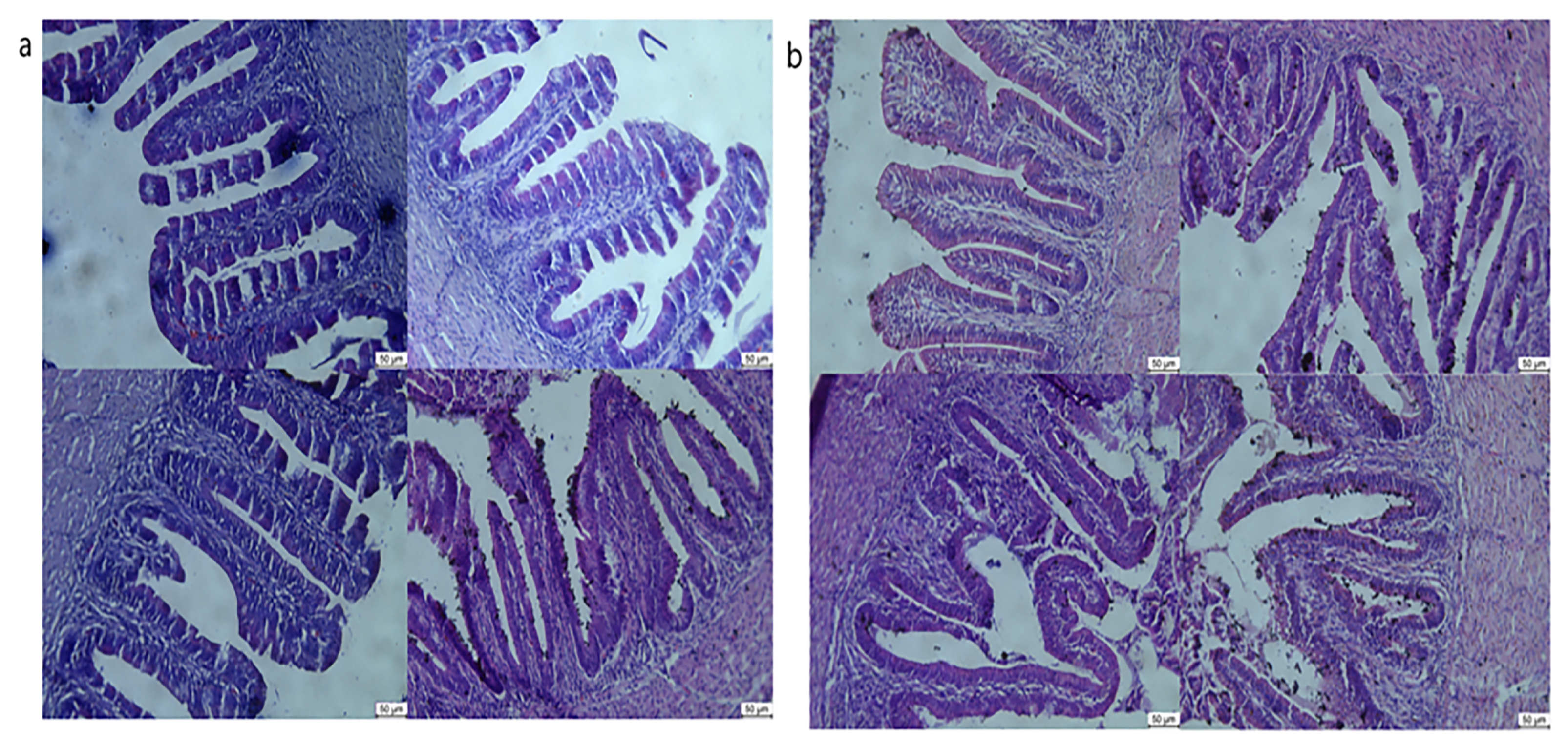
As illustrated in Figure 1, the intestinal villi in the chilled fish group exhibited partial damage, characterized by a disrupted mucosal structure and an indistinct boundary between the intestinal muscle layers (Figure 1b). Conversely, the Siamese crocodile in the compound feed group demonstrated an intact intestinal mucosal structure, featuring organized and uniform mucosal layers, clearly delineated muscle layers, and distinct textures (Figure 1a).
As illustrated in Figure 1, the intestines of the chilled fish specimens exhibited significant damage to select villi, disordered mucosal layer architecture, and poorly defined boundaries of the intestinal muscle layer (Figure 1b). Conversely, the intestinal mucosal structure in Siamese crocodile specimens fed the compound diet remained structurally intact., These specimens demonstrated orderly arranged and uniform mucosal layers, sharply delineated muscle layers, and discernible tissue textures (Figure 1a).

3.2. Analysis of Gut Microbial Diversity in Siamese Crocodiles

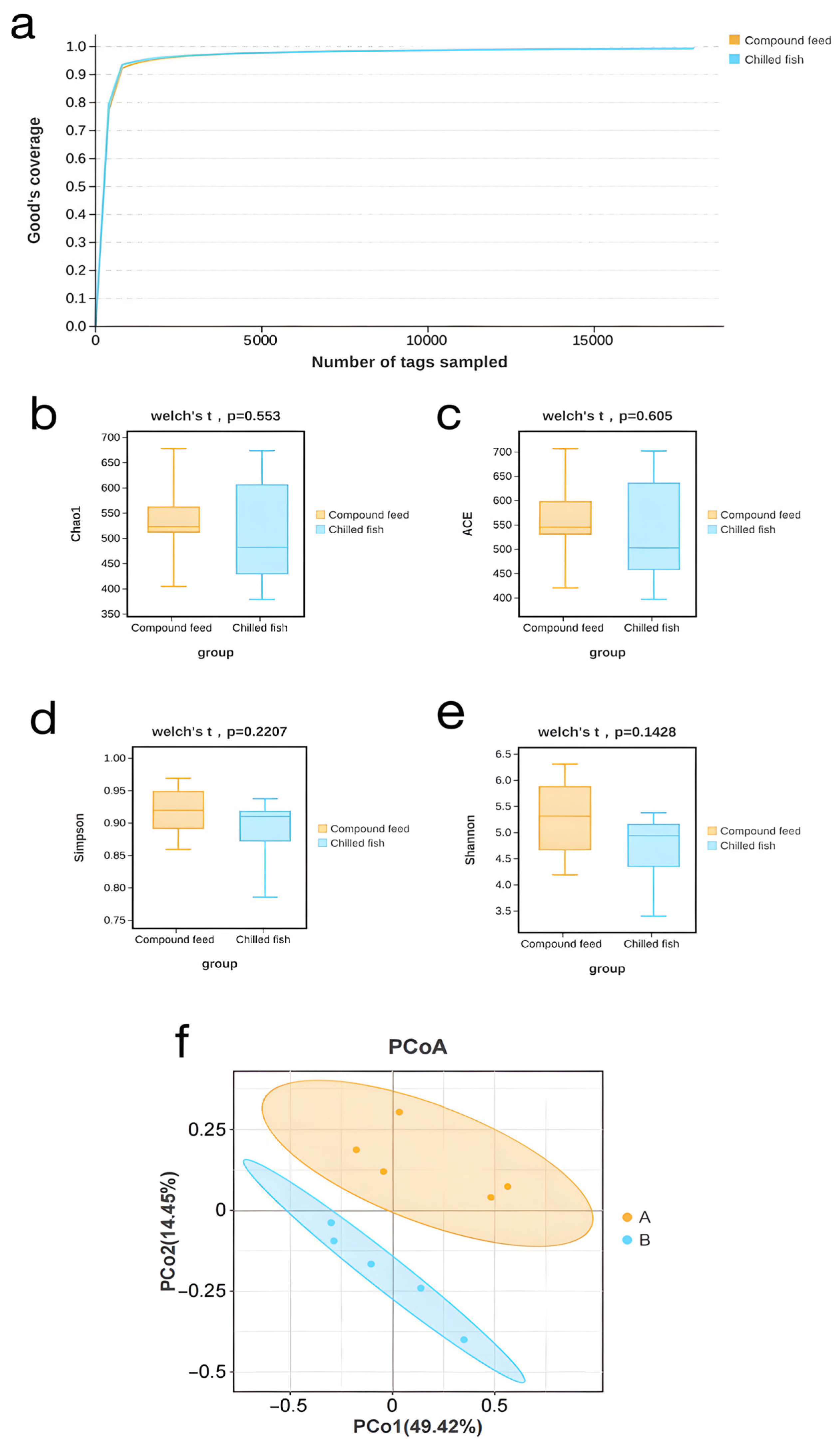
The dilution curve analysis demonstrated that both the compound feed group and the chilled fish group attained plateaus in their respective dilution curves; Goods’ coverage values exceeded 0.99 for samples collected from nearly all areas, signifying adequate sequencing depth (Figure 2a). Based on the data presented in Table 2, the compound feed group exhibited the highest values for the Sobs, Ace, Chao1, Shannon, and Simpson indices. Although the α-diversity indices were higher in the compound feed group compared to the chilled fish group, the t-test revealed no statistically significant difference between the two groups.
Independent-samples t-tests revealed no significant differences in the Alpha diversity indices between the two groups, including the Chao1 index (t = 0.62, df = 12.8, p = 0.553; Figure 2b), Ace index (t = 0.52, df = 13.1, p = 0.605; Figure 2c), Shannon index (t = 1.53, df = 11.9, p = 0.1428; Figure 2d), and Simpson index (t = 1.25, df = 13.3, p = 0.2207; Figure 2e). Between the two groups, all p-values were greater than 0.05. However, there was a notable difference in gut microbial composition, with the compound feed group exhibiting greater richness.
Principal Coordinate Analysis (PCoA) employing Bray–Curtis distances was performed to visualize beta diversity, revealing a modest separation trend between samples from the compound feed group and the chilled fish group in the PCoA space (Figure 2f). To further assess the significance of beta diversity differences, ANOSIM analysis, utilizing Bray–Curtis distances, was conducted with the full dataset comprising 8 samples per group (no exclusions). The analysis yielded an R-value of 0.066 and a p-value of 0.16 (Figure 2f), indicating that inter-group differences in microbial community structure were marginally greater than intra-group differences (R > 0), yet this divergence did not achieve statistical significance. This observation may be attributable to the abbreviated feeding duration or minor individual variations among samples, which constrained the development of distinct community divergence driven by dietary factors.

3.3. Analysis of Gut Microbial Community Composition

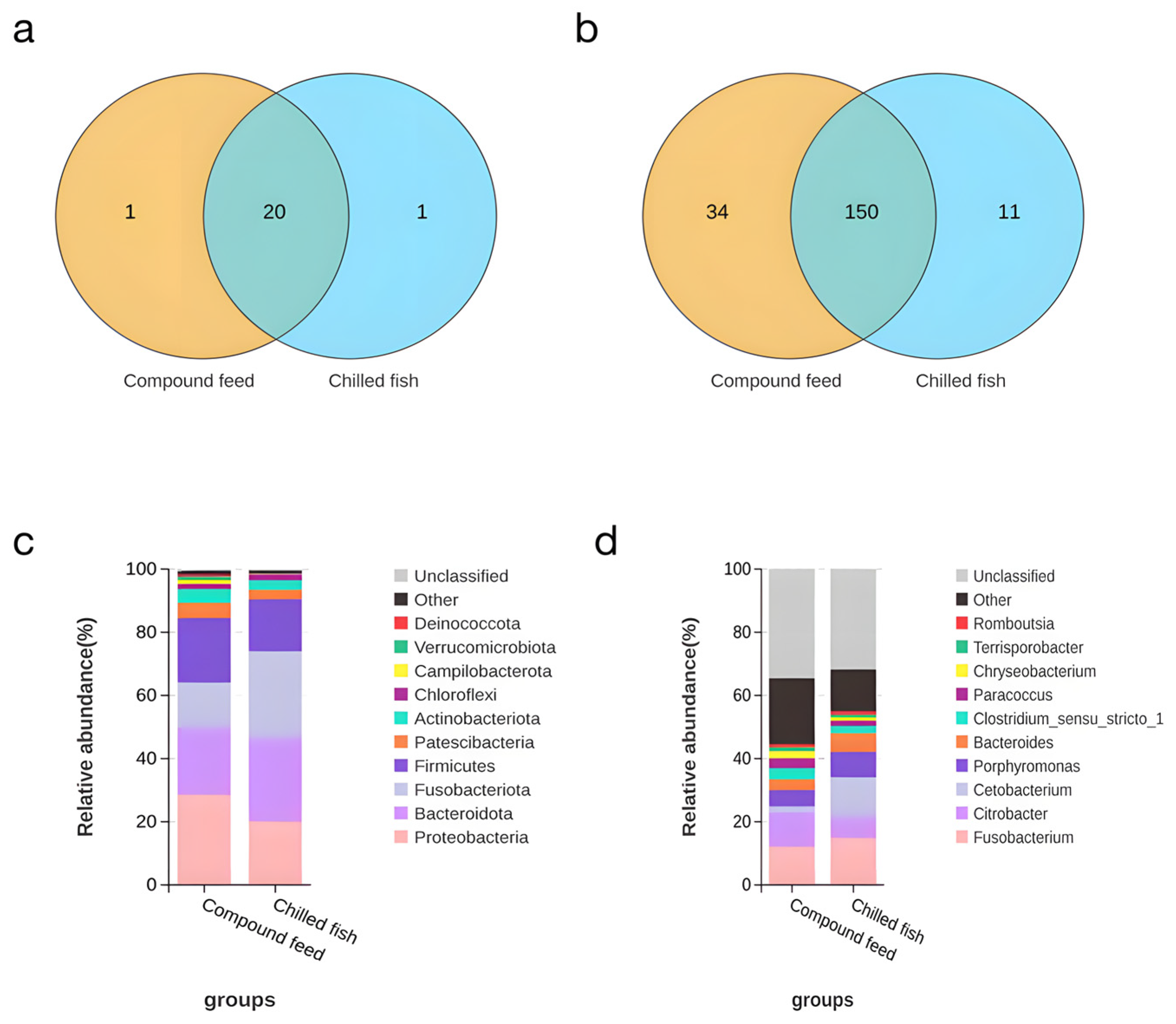
The distribution of gut microbial operational taxonomic units (OTUs) was analyzed using Venn diagrams at both the phylum (Figure 3a) and genus (Figure 3b) levels for the compound feed and chilled fish groups. At the phylum level, each group possessed one unique taxon, while 20 taxa were shared, indicating common core microbial communities. At the genus level, the compound feed group exhibited 34 taxa compared to 11 taxa in the chilled fish group. Collectively, 150 OTUs were identified across all samples, demonstrating considerable microbial diversity. A comparative analysis at the phylum and genus levels was conducted to assess the impact of compound feed on the intestinal microbiota of Siamese crocodiles. Figure 3c,d illustrates the relative abundances of the ten most abundant bacterial phyla; the remaining phyla collectively constituted approximately 1% of the total abundance. Dominant phyla in both the compounded feed and chilled fish groups were Proteobacteria, Bacteroidetes, Fusobacteriota, and Firmicutes, jointly representing over 50% of the total relative abundance. Within the compounded feed group, Proteobacteria exhibited the highest relative abundance (28.53%), followed by Bacteroidetes (21.28%) and Firmicutes (20.37%). Conversely, in the chilled fish group, the highest relative abundances were observed for Fusobacteriota (27.50%), Bacteroidetes (26.40%), and Proteobacteria (20.10%).
At the genus level, unclassified genera and minor taxa collectively exceeded 50% of the composition in both groups, beyond the ten major genera depicted. Notably, within the compounded feed group, Clostridium spp. displayed the highest relative abundance (12.10%), followed by Citrobacter (10.70%) and Porphyromonas (5.00%). In contrast, the chilled fish group was characterized by a higher prevalence of Clostridium spp. (14.90%), Cetobacterium (12.60%), Porphyromonas (8.00%), Citrobacter (6.70%), and Bacteroides (5.90%).

3.4. Differential Analysis of Bacterial Groups

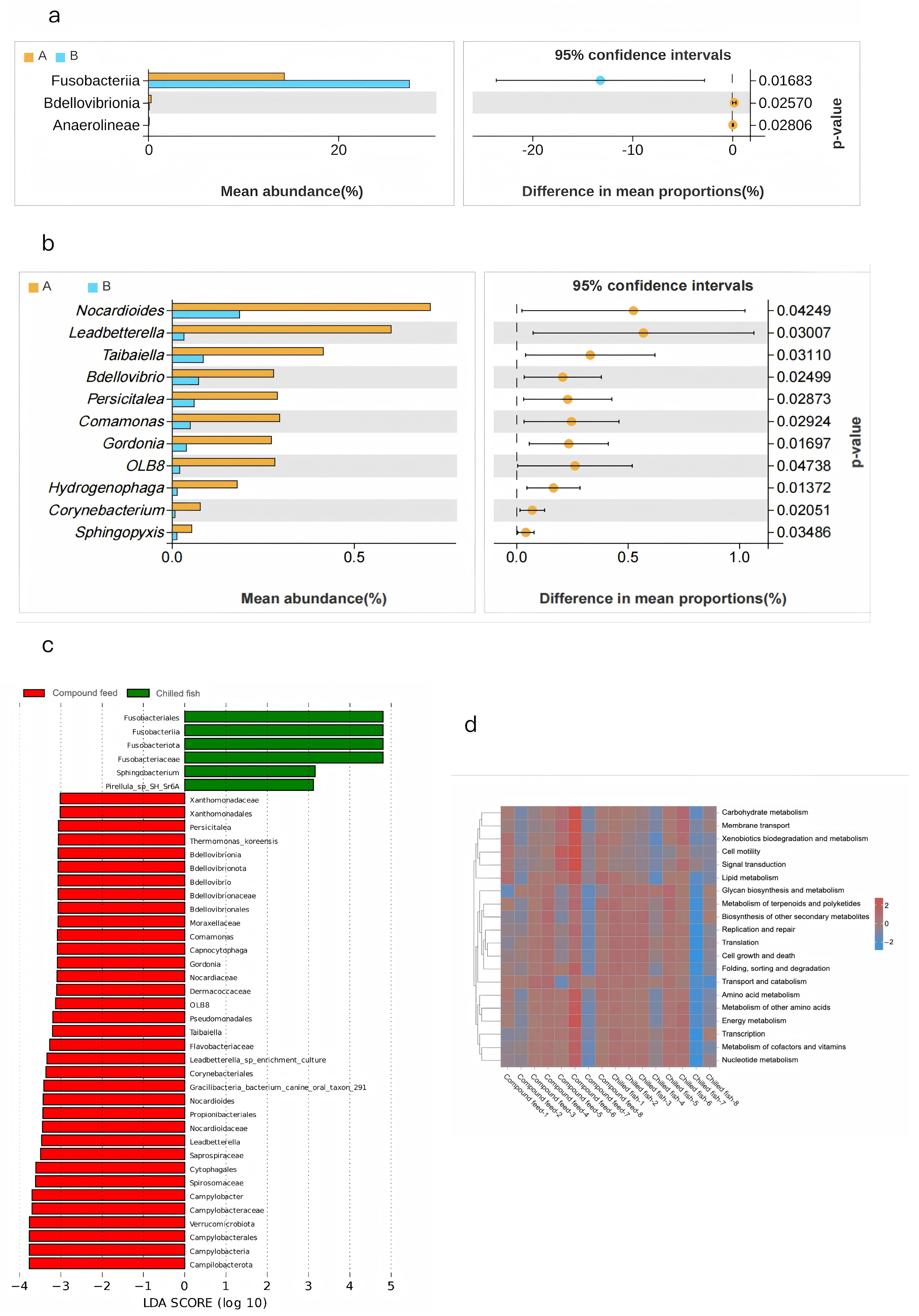
To analyze differences in intestinal microorganisms among feed groups, Welch’s t-test was applied to compare species relative abundance at phylum and genus levels. Concurrently, LEfSe analysis (linear discriminant analysis threshold LDA > 3; significance level p < 0.05) was employed to identify characteristic differentially expressed species and elucidate significantly enriched taxonomic units within each group. At the phylum level, significant variations were observed in the relative abundances of Proteobacteria, Fusobacteriota, and Bdellovibrionota between the chilled fish group and compound feed group. Specifically, the chilled fish group exhibited significantly higher abundances of Proteobacteria and Bdellovibrionia compared to the compound feed group. Furthermore, within the chilled fish group, Proteobacteria and Vibrio phagocytophilus (a member of Bdellovibrionia) demonstrated elevated prevalence relative to the compound feed group. Conversely, Fusobacteriota was significantly more abundant in the compound feed group than in the chilled fish group, as illustrated in Figure 4a.
At the genus level, the top 11 differentially abundant genera were Nocardioides, Leadbetterella, Taibaiella, Vibrio phagocytophaga (Bdellovibrio), Perscitatalea, Comamonas, Gordonia, OLB, Hydrogenophaga, Corynebacterium, and Sphingopyxis. All exhibited significantly higher abundance in the compound feed group relative to the chilled fish group (Figure 4b).
To further investigate the impact of compounded feed on Siamese crocodile intestinal flora, LEfSe analysis was utilized to examine differences across all taxonomic levels and identify subgroup-distinct species. Linear discriminant analysis (LDA > 3) performed on intestinal flora samples from both feeding groups revealed significant differences (p < 0.05; Figure 4c). Significantly differing species primarily belonged to the phyla Clostridia (including Fusobacteriaceae and Fusobacteriales), Fusobacteria, Sphingobacterium, and Pirellula sp. SH Sr6A. Group A was characterized by dominant species including Bdellovibrio (Proteobacteria), four Mycobacterium species, four branching bacilli (phylum Bdellovibrionota), and Verrucomicrobia. At the genus level, the significantly dominant genera included Corynebacterium, Propionibacterium, Taibaiella, OLB8, Leadbetterella sp. enrichment culture, Persicitalea, Capnocytophaga, and Comamonas.

3.5. Predictive Analysis of Bacterial Community Function

The PICRUSt2 software was employed to predict the functional profiles of intestinal microbial communities in both the compound feed group and the chilled fish group. Relative abundance and compositional differences in KEGG level 2 metabolic pathways between the two groups were assessed via Welch’s t-test (Figure 4d). A total of 20 core KEGG level 2 metabolic pathways, encompassing nutrient metabolism, genetic information processing, and cellular processes, were identified. The intestinal microbiota in the compound feed group demonstrated significantly elevated relative abundance in the functional pathways of lipid metabolism (p = 0.043) and cell motility (p = 0.046). Furthermore, this group exhibited a tendency towards higher relative abundance in multiple additional functional pathways, including cofactor and vitamin metabolism, carbohydrate metabolism, amino acid metabolism, terpenoid and polyketide metabolism, replication and repair, metabolism of other amino acids, energy metabolism, folding, sorting and degradation, membrane transport, xenobiotic biodegradation and metabolism, signal transduction, and transport and catabolism. Conversely, the chilled fish group demonstrated a tendency towards higher relative abundance in the functional categories of glycan biosynthesis and metabolism, translation, nucleotide metabolism, transcription, biosynthesis of other secondary metabolites, and cell growth and death, though these differences did not reach statistical significance.

4. Discussion

4.1. Effects of Different Baits on the Development of Intestinal Morphology

The intestinal tract serves as the principal organ for nutrient digestion and absorption in animals, with its morphological structure critically influencing nutrient utilization efficiency and intestinal barrier function maintenance. Intestinal injury compromises morphological integrity and tight junction barrier function, consequently diminishing digestive and absorptive capacity [12]. Villus height (VH), crypt depth (CD), and the villus height-to-crypt depth ratio (VH/CD) constitute key morphological indicators reflecting intestinal development and functional status, as evidenced by studies on dietary fiber modulation of intestinal function in mice [13]. Specifically, villus height governs digestive and absorptive efficiency, whereas crypt depth correlates with intestinal epithelial cell renewal and barrier maintenance. Increased crypt depth is associated with reduced mucosal surface area and chronically elevated intestinal permeability, underscoring its significance for intestinal function. The VH/CD ratio, calculated as villus height divided by crypt depth, represents a critical morphological index for evaluating small intestinal digestive/absorptive efficiency and overall intestinal health: a higher ratio typically denotes intact intestinal mucosal structure and robust absorptive function, while a lower ratio often indicates mucosal damage and diminished nutrient absorption efficiency [14]. In the present study, statistical analyses failed to detect significant differences in VH, CD, or VH/CD ratio between the compound feed and chilled fish groups, although notable trends and morphological distinctions were observed. Numerically, VH in the compound feed group (342.48 ± 14.34 μm) exceeded that in the chilled fish group (298.24 ± 19.95 μm) by 14.8%, suggesting potential enhancement of nutrient absorption capacity. Crucially, histomorphological examination revealed distinct structural differences: the compound feed group exhibited intact intestinal mucosa with well-organized, uniform mucosal layers, well-demarcated muscle layers, and preserved villus architecture. Conversely, the chilled fish group displayed partial villus damage, disorganized mucosal layering, and indistinct intestinal muscle layer boundaries. These morphological disparities directly demonstrate the protective effect of compound feed on intestinal barrier structure—nutritionally balanced compound feed reduces mucosal damage and promotes structural integrity maintenance [15]. The enhanced intestinal morphology observed in the compound feed group may be attributed to two principal factors. Firstly, the compound feed possesses a nutritionally balanced formulation: the proportions of crude protein (52.42%), crude fat (12.31%), and total essential amino acids (22.97%) are specifically designed to meet the growth requirements of newborn Siamese crocodiles, thereby avoiding vitamin/mineral deficiencies and potential harmful substances present in chilled fish [16]. The absence of statistically significant differences in VH, CD, and VH/CD ratio warrants consideration of experimental conditions. The relatively small sample size (n = 8 per group) may have limited statistical power to detect subtle morphological differences. Furthermore, the 60-day feeding period might be insufficient to fully manifest the long-term effects of dietary intervention on intestinal development in newborn Siamese crocodiles—given their slow reptilian growth rate, extended feeding trials may be necessary to observe significant morphological alterations. Additionally, Siamese crocodile intestinal morphogenesis may be modulated by multiple factors, including feed physical properties, feeding frequency, and environmental conditions, meriting further investigation.

4.2. Effects of Different Feed Types on the Diversity and Function of Siamese Crocodile Intestinal Flora

The gut microbiota constitutes a complex bacterial community engaged in a symbiotic relationship with its host, profoundly influencing diverse physiological processes including nutrient metabolism, infection resistance, and immune system development [17]. Investigations of the gut–brain axis further underscore the pivotal role of the gut microbiota in modulating brain development and behavior, wherein the immune system serves as a critical mediator [18,19]. This intricate interplay is indispensable for maintaining intestinal immune homeostasis and preventing aberrant immune responses. In the present study, T-test analysis revealed no statistically significant differences in the alpha diversity indices, including Chao1, Ace, Shannon, and Simpson. This indicates that the richness and α-diversity of the gut microbiota in Siamese crocodiles subjected to distinct dietary regimes exhibited no significant variation. This absence of significant differences may be attributed to the overall similarity in species composition between the two experimental groups and the inherent limited sensitivity of α-diversity indices in detecting subtle shifts in community structure. However, Principal Coordinates Analysis (PCoA) demonstrated a clear separation between the microbial communities of the compound feed group and the chilled fish group, signifying significant differences in microbial community structure (β-diversity). These results suggest that dietary variations primarily influence the composition and functional potential of the gut microbiota by altering the relative abundance of specific microbial taxa, rather than exerting a pronounced effect on overall species richness and α-diversity. This observation aligns with findings from prior research [20]. Thus, when assessing the impact of various interventions on microbial communities, β-diversity analysis constitutes a critical methodological approach, offering enhanced sensitivity for detecting structural alterations and providing essential insights into microbial community dynamics.
The Welch’s t-test revealed significantly higher abundances of Bdellovibrionia and Anaerolineae in the compound feed group. Notably, the function and stability of Bdellovibrio bacteriovorus (predatory bacterium) remain unaffected by its habitat, enabling it to maintain intestinal microbial balance and support host immune homeostasis [21]. As constituents of the gut microbiome, chloromycetes play a crucial role in sustaining microbial equilibrium through multiple mechanisms. For instance, they competitively inhibit pathogenic bacteria’s growth by limiting nutrients and spatial resources, thereby reducing the risk of intestinal infections. Furthermore, Chloroflexi can produce short-chain fatty acids (SCFAs), such as butyric, which serve as an energy source for intestinal epithelial cells, modulate host immune responses, and enhance intestinal barrier integrity [22]. Consequently, the presence of Bdellovibrio phagocytophytes and Chloroflexi is vital for preserving gut microbial balance. In contrast, the chilled fish group exhibited the highest abundance of Fusobacteriaceae, a family that can include pathogenic species capable of tissue invasion under specific conditions. Functional prediction analysis using PICRUSt2 confirmed the influence of compound feed on the functional profile of the intestinal microbial community in Siamese crocodiles. The microbial community in the compound feed group demonstrated greater functional diversity and possessed more unique functional capabilities. Specifically, the compound feed group exhibited significant enrichment in lipid metabolism and cell motility pathways, which may be attributed to the standardized nutritional composition of the compound feed. The disparity in the lipid metabolism pathway can be primarily attributed to the standardized content and structural composition of crude fat within the compound feed. This precisely formulated lipid source provides stable and suitable substrates for intestinal microorganisms, enhancing their efficiency in lipid decomposition and utilization. This microbial metabolic activity may subsequently influence host energy allocation or adipose tissue deposition. Conversely, chilled fish meat lacks standardized fat content control, and its lipid composition is variable, failing to provide consistent conditions for microbial lipid metabolism. These findings align with research in aquatic animals, indicating that dietary lipid source and content significantly alter intestinal microbiota composition and function. Furthermore, the intestinal microbiota reciprocally influences host lipid homeostasis by regulating processes such as lipid breakdown and metabolite production [23]. The difference in the cell motility pathway relates to the nutritional comprehensiveness of the compound feed. Its balanced ratio of digestible energy (3450 kcal/kg), total essential amino acids (22.97%), and minerals, including calcium (2.51%) and available phosphorus (0.98%) provides a stable nutritional foundation for the intestinal mucosal immune microenvironment. Microorganisms enriched in this group may regulate the migration of intestinal immune cells or the renewal of intestinal epithelial cells via the cell motility pathway, thereby supporting intestinal barrier integrity [24]. In contrast, chilled fish meat provides only a singular protein source and is deficient in key nutrients such as essential amino acids and minerals, thereby failing to support the normal functional expression of intestinal microorganisms within the cell motility pathway.

4.3. Effects of Different Types of Feeds on the Gut Microbial Composition of Siamese Crocodiles

Research has indicated that dietary variations significantly alter the structure and distribution of intestinal microorganisms [20]. In both the compound feed and chilled fish groups, Proteobacteria, Bacteroidetes, Fusobacteriota, and Firmicutes were identified as the dominant bacterial phyla. Previous studies emphasize the critical role these dominant phyla play in enhancing intestinal enzyme activity [25]. However, Proteobacteria is recognized as one of the less stable phyla within the gut microbiota, exhibiting high susceptibility to external environmental factors [26]. The multi-nutrient composition of compound feed, comprising crude protein (52.42%), starch (7.69%), and crude fiber (0.45%), establishes a stable growth environment for Proteobacteria. Starch and crude fiber function as supplementary carbon sources, forming balanced nutritional substrates in conjunction with crude protein. This mitigates potential community imbalance within Proteobacteria resulting from exclusive reliance on protein. Furthermore, the precise ratio of digestible crude protein to digestible energy (16 mg/kcal) meets the nutritional requirements of diverse Proteobacteria taxa, facilitating their stable colonization and proliferation within the intestinal tract [27]. Conversely, chilled fish meat relies solely on a single protein source as its primary nutrient and lacks carbohydrates and crude fiber components. Consequently, it fails to provide diverse nutritional substrates for Proteobacteria, thereby impeding the colonization and growth of this phylum. Notably, Firmicutes abundance was significantly higher in the compound feed group compared to the chilled fish group. This observation aligns with established knowledge: Firmicutes in animal intestinal microbes are recognized for their superior capacity to ferment and metabolize carbohydrates and lipids, alongside their contribution to anti-inflammatory effects [28]. Additionally, Bacteroidetes play an active role in critical metabolic processes within the animal intestine [29], primarily by enhancing host enzyme activity and facilitating carbohydrate degradation [30]. These findings underscore the importance of maintaining a balanced Firmicutes-to-Bacteroidetes ratio for optimal intestinal health in animals, a balance that synergizes with the host’s environmental adaptation mechanisms [28]. From the perspective of crocodilian growth, compound feed enhances species diversity within Siamese crocodile microbiota and promotes the proliferation of beneficial bacteria. This contributes to the regulation of intestinal microecological balance and overall health improvement. Furthermore, while the current findings indicate potential associations, it is evident that distinct dietary patterns may indirectly influence intestinal development by modulating the relative abundance of specific microbial communities, such as the Firmicutes and Bacteroidetes phyla. The chilled fish meat diet exhibits significant nutritional limitations: freeze–thaw cycles induce protein denaturation, leading to low utilization efficiency of essential amino acids like lysine. This prevents achieving the precise nutritional balance attainable with compound feed. Additional deficiencies include poor fat quality, absence of starch and crude fiber, and insufficient vitamin content. These factors collectively contribute to a reduction in beneficial intestinal bacteria in Siamese crocodiles, manifested as decreased intestinal villus height [31]. Relevant studies confirm that feed type regulates intestinal microbial community structure and development [10,32], consistent with our β-diversity results. However, this study did not fully establish a connection between this microbial modulation and significant intestinal developmental changes. This limitation may stem from factors such as a small sample size and a 60-day feeding period potentially insufficient to detect subtle developmental differences among neonatal Siamese crocodiles.
Clostridium, widely recognized as a pathogenic genus, exhibits proinflammatory properties and demonstrates a positive correlation with inflammatory bowel disease [33]. In this study, significant variations in bacterial abundance were observed within the chilled fish group, particularly concerning the taxonomic levels of Fusobacteriaceae and its associated subclasses, orders, and families. This dysbiosis may contribute to the heightened incidence of inflammatory pathologies observed in this cohort. Previous experimental evidence has established the colonization capacity and pathogenic potential of Fusobacteriaceae within murine intestinal tracts. Furthermore, an increased abundance of Clostridia has been mechanistically linked to the progression of intestinal inflammation and disease pathogenesis. These collective findings suggest that the chilled fish feeding regimen may elevate disease susceptibility in Siamese crocodiles [34]. At the genus level, Fusobacterium, Citrobacter, and Porphyromonas constituted the dominant genera in both the compound feed group and the chilled fish meat group. However, the relative abundance of Fusobacterium was significantly lower in the compound feed group, a difference directly attributable to the distinct nutritional compositions of the two feed types. Starch in the compound feed supplied sufficient carbohydrate substrates for dominant bacterial phyla such as Firmicutes and Bacteroidetes, enabling these carbohydrate-efficient bacteria to gain a competitive advantage in nutrient acquisition and thereby inhibiting Fusobacterium proliferation. Conversely, chilled fish meat contained negligible starch or other carbohydrates, failing to support the growth of these beneficial dominant bacteria, which consequently facilitated the excessive proliferation of detrimental bacteria, including Fusobacterium [35]. Furthermore, functional amino acids present in compound feed, such as arginine, could further suppress the metabolic activities of pathogenic bacteria like Clostridium. In contrast, chilled fish meat, lacking these functional components, did not exhibit such bacteriostatic effects [36].
Furthermore, Nocardia is an aerobic actinomycete that has been proven to play a crucial role in maintaining the stability of the intestinal barrier and preventing gastrointestinal diseases. This has been confirmed in relevant studies [37]. The difference in Nocardioides abundance between the two groups was particularly striking, with this species being most prevalent in the compound feed group. This observation underscores the significant influence of compound feed on promoting intestinal health in animals.

5. Conclusions

This study investigated the comparative effects of chilled fish meat and a formulated compound feed (crude protein: 52.42%, crude fat: 12.31%, digestible energy: 3450 kcal/kg) on intestinal microbial diversity and development in neonatal Siamese crocodiles (Crocodylus siamensis). Key findings are as follows: (1) The compound feed preserved intestinal morphological integrity, characterized by intact mucosal layers and distinct muscle layer boundaries, whereas chilled fish meat resulted in partial villus damage and disorganized mucosa; however, no significant differences were detected in villus height, crypt depth, or the villus height-to-crypt depth ratio (VH/CD). (2) Compared to the chilled fish group, the compound feed group exhibited marginally higher alpha diversity and distinct beta diversity, indicative of separated microbial community structures, with enrichment of beneficial taxa (e.g., Nocardioides, Proteobacteria, Firmicutes) and reduction in potentially pathogenic taxa (e.g., Fusobacteriaceae). (3) Functional prediction analysis revealed significantly higher abundances of lipid metabolism and cell motility pathways in the compound feed group, along with tendencies towards increased cofactor and vitamin metabolism, as well as carbohydrate metabolism pathways.
Future research should prioritize: (1) optimization of crude fat, starch, and functional amino acid proportions in the compound feed to enhance intestinal development; (2) extension of the experimental duration (e.g., to one year) and increase in sample size to validate long-term impacts on growth performance and gut health; and (3) investigation into the molecular mechanisms underlying the ‘feed–microbiota–intestinal axis’, such as the regulatory roles of beneficial bacteria like Nocardioides in intestinal barrier function.

Author Contributions

All authors contributed to the study conception and design. X.Z.: Conceptualization, data curation, formal analysis, methodology, visualization, writing—original draft, writing—review and editing. J.W.: Conceptualization, data curation, formal analysis, methodology, visualization, writing—original draft, writing—review and editing. C.W.: Writing—review and editing. F.Y.: Writing—review and editing. P.L.: Writing—review and editing. Y.Z. (Yuan Zhang): Writing—review and editing. S.L.: Writing—review and editing. Y.Z. (Yongkang Zhou): Investigation, resources. Y.W.: Investigation. X.W.: Funding acquisition, supervision, writing—review and editing. H.N.: Conceptualization, funding acquisition, supervision, writing—review and editing. All authors have read and agreed to the published version of the manuscript.

Funding

This research was funded by the National Natural Science Foundation of China, Grant Numbers 32170525 and 32370542.

Data Availability Statement

Data will be made available on request.

Acknowledgments

The completion of this study is inseparable from the support and help of all parties. First of all, I would like to thank the National Natural Science Foundation of China (project Nos: 32170525 and 32370542) for providing important financial support for this study. I would also like to thank all the authors listed in this paper for their guidance and assistance in the design of experiments, data collection and analysis, and the acquisition and raising of experimental animals. In addition, I would like to thank Guangzhou Gidio Biotechnology Co., Ltd. for providing the bioinformatics analysis platform and all the personnel involved in sample collection and experimental operations, whose hard work laid the foundation for the smooth development of this study. Finally, I would like to thank my tutor, Haitao Nie. He gave me great support and help in the writing and revision of this article.

Conflicts of Interest

The authors declare no conflict of interest.

References

  1. Bezuijen, M.R.; Cox, J.H., Jr.; Thorbjarnarson, J.B.; Phothitay, C.; Hedemark, M.; Rasphone, A. Status of siamese crocodile (Crocodylus siamensis) schneider, 1801 (reptilia: Crocodylia) in laos. J. Herpetol. 2013, 47, 41–65. [Google Scholar] [CrossRef]
  2. Sam, H.; Hor, L.; Nhek, R.; Sorn, P.; Heng, S.; Simpson, B.; Starr, A.; Brook, S.; Frechette, J.L.; Daltry, J.C. Status, distribution and ecology of the Siamese crocodile (Crocodylus siamensis) in Cambodia. Cambodian J. Nat. Hist. 2015, 2015, 153–164. [Google Scholar]
  3. Platt, S.G.; Van Tri, N. Status of the Siamese crocodile in Vietnam. Oryx 2000, 34, 217–221. [Google Scholar] [CrossRef]
  4. Platt, S.G.; Lynam, A.J.; Temsiripong, Y.; Kampanakngarn, M. Occurrence of the Siamese crocodile (Crocodylus siamensis) in Kaeng Krachan National Park, Thailand. Nat. Hist. Bull. Siam Soc. 2002, 50, 7–14. [Google Scholar]
  5. Ramos, P. Parasites in fishery products—Laboratorial and educational strategies to control. Exp. Parasitol. 2020, 211, 107865. [Google Scholar] [CrossRef]
  6. Cao, L.; Naylor, R.; Henriksson, P.; Leadbitter, D.; Metian, M.; Troell, M.; Zhang, W. China’s aquaculture and the world’s wild fisheries. Science 2015, 347, 133–135. [Google Scholar] [CrossRef]
  7. Liu, S.; Liu, S.; Sun, Z.; Fang, Z.; Gong, Y.; Huang, X.; Zhang, H.; Chen, N.; Li, S. Effects of dietary lipid and protein levels on growth, body composition, antioxidant capacity, and flesh quality of mandarin fish (Siniperca chuatsi). Aquac. Int. 2025, 33, 78. [Google Scholar] [CrossRef]
  8. Tian, L.; Zhou, X.Q.; Jiang, W.D.; Liu, Y.; Wu, P.; Jiang, J.; Kuang, S.-Y.; Tang, L.; Tang, W.-N.; Zhang, Y.-A.; et al. Sodium butyrate improved intestinal immune function associated with NF-κB and p38MAPK signalling pathways in young grass carp (Ctenopharyngodon idella). Fish Shellfish Immunol. 2017, 66, 548–563. [Google Scholar] [CrossRef]
  9. Meene, A.; Gierse, L.; Schwaiger, T.; Karte, C.; Schröder, C.; Höper, D.; Wang, H.; Groß, V.; Wünsche, C.; Mücke, P.; et al. Archaeome structure and function of the intestinal tract in healthy and H1N1 infected swine. Front. Microbiol. 2023, 14, 1250140. [Google Scholar] [CrossRef] [PubMed]
  10. Huang, L.; Deng, L.; Liu, C.; Huang, E.; Han, X.; Xiao, C.; Liang, X.; Sun, H.; Liu, C.; Chen, L. Fecal microbial signatures of healthy Han individuals from three bio-geographical zones in Guangdong. Front. Microbiol. 2022, 13, 920780. [Google Scholar] [CrossRef] [PubMed]
  11. Gänzle, M.G.; Follador, R. Metabolism of oligosaccharides and starch in lactobacilli: A review. Front. Microbiol. 2012, 3, 340. [Google Scholar] [CrossRef]
  12. Yuan, X.; Wang, C.; Huang, Y.; Dai, Y.; Desouky, H.E. A comparative study on intestinal morphology and function of normal and injured intestines of Jian carp (Cyprinus carpio var. Jian). Aquaculture 2020, 528, 735496. [Google Scholar] [CrossRef]
  13. Hunt, J.E.; Hartmann, B.; Schoonjans, K.; Holst, J.J.; Kissow, H. Dietary fiber is essential to maintain intestinal size, L-cell secretion, and intestinal integrity in mice. Front. Endocrinol. 2021, 12, 640602. [Google Scholar] [CrossRef]
  14. Clarke, R.M. The effect of growth and of fasting on the number of villi and crypts in the small intestine of the albino rat. J. Anat. 1972, 112, 27. [Google Scholar] [PubMed]
  15. Shi, Y.; Liu, Y.; Xie, K.; Zhang, J.; Wang, Y.; Hu, Y.; Zhong, L. Sanguinarine improves intestinal health in grass carp fed high-fat diets: Involvement of antioxidant, physical and immune barrier, and intestinal microbiota. Antioxidants 2023, 12, 1366. [Google Scholar] [CrossRef] [PubMed]
  16. Staton, M.A.; Edwards, H.M., Jr.; Brisbin, I.L., Jr.; Joanen, T.; McNease, L. Protein and energy relationships in the diet of the American alligator (Alligator mississippiensis). J. Nutr. 1990, 120, 775–785. [Google Scholar] [CrossRef]
  17. Purchiaroni, F.; Tortora, A.; Gabrielli, M.; Bertucci, F.; Gigante, G.; Ianiro, G.; Ojetti, V.; Scarpellini, E.; Gasbarrini, A. The role of intestinal microbiota and the immune system. Eur. Rev. Med. Pharmacol. Sci. 2013, 17, 323–333. [Google Scholar] [CrossRef]
  18. Collins, S.M.; Surette, M.; Bercik, P. The interplay between the intestinal microbiota and the brain. Nat. Rev. Microbiol. 2012, 10, 735–742. [Google Scholar] [CrossRef]
  19. Fung, T.C.; Olson, C.A.; Hsiao, E.Y. Interactions between the microbiota, immune and nervous systems in health and disease. Nat. Neurosci. 2017, 20, 145–155. [Google Scholar] [CrossRef] [PubMed]
  20. Ingerslev, H.-C.; Jørgensen, L.v.G.; Strube, M.L.; Larsen, N.; Dalsgaard, I.; Boye, M.; Madsen, L. The development of the gut microbiota in rainbow trout (Oncorhynchus mykiss) is affected by first feeding and diet type. Aquaculture 2014, 424, 24–34. [Google Scholar] [CrossRef]
  21. Bonfiglio, G.; Neroni, B.; Radocchia, G.; Marazzato, M.; Pantanella, F.; Schippa, S. Insight into the Possible Use of the Predator Bdellovibrio bacteriovorus as a Probiotic. Nutrients 2020, 12, 2252. [Google Scholar] [CrossRef]
  22. Hu, F.; Zhang, T.; Liang, J.; Xiao, J.; Liu, Z.; Dahlgren, R.A. Impact of biochar on persistence and diffusion of antibiotic resistance genes in sediment from an aquaculture pond. Env. Sci. Pollut. Res. Int. 2022, 29, 57918–57930. [Google Scholar] [CrossRef] [PubMed]
  23. Wu, S.; Pan, M.; Zan, Z.; Jakovlić, I.; Zhao, W.; Zou, H.; Ringø, E.; Wang, G. Regulation of lipid metabolism by gut microbiota in aquatic animals. Rev. Aquac. 2024, 16, 34–46. [Google Scholar] [CrossRef]
  24. Kamada, N.; Núñez, G. Regulation of the immune system by the resident intestinal bacteria. Gastroenterology 2014, 146, 1477–1488. [Google Scholar] [CrossRef] [PubMed]
  25. Smriga, S.; Sandin, S.A.; Abundance, A.F. Abundance, diversity, and activity of microbial assemblages associated with coral reef fish guts and feces. Fems Microbiol. Ecol. 2010, 73, 31–42. [Google Scholar] [CrossRef]
  26. Faith, J.J.; Guruge, J.L.; Charbonneau, M.; Subramanian, S.; Seedorf, H.; Goodman, A.L.; Clemente, J.C.; Knight, R.; Heath, A.C.; Leibel, R.L.; et al. The long-term stability of the human gut microbiota. Science 2013, 341, 1237439. [Google Scholar] [CrossRef]
  27. Yuan, H.; Hu, N.; Zheng, Y.; Hou, C.; Tan, B.; Shi, L.; Zhang, S. A comparison of three protein sources used in medium-sized Litopenaeus vannamei: Effects on growth, immunity, intestinal digestive enzyme activity, and microbiota structure. Fishes 2023, 8, 449. [Google Scholar] [CrossRef]
  28. Stojanov, S.; Berlec, A.; Štrukelj, B. The influence of probiotics on the firmicutes/bacteroidetes ratio in the treatment of obesity and inflammatory bowel disease. Microorganisms 2020, 8, 1715. [Google Scholar] [CrossRef]
  29. Wang, B.; Wang, J.; Du, W.; Shang, S. Camphor seed kernel oil beneficial effects the gut microbiota of the non-alcoholic fatty liver disease mice. Front. Biosci.-Landmark 2022, 27, 19–27. [Google Scholar] [CrossRef]
  30. Waite, D.W.; Taylor, M.W. Characterizing the avian gut microbiota: Membership, driving influences. and potential function. Front. Microbiol. 2014, 5, 223. [Google Scholar] [CrossRef]
  31. Gimmel, A.; Baumgartner, K.; Bäckert, S.; Tschudin, A.; Lang, B.; Hein, A.; Marcordes, S.; Wyss, F.; Wenker, C.; Liesegang, A. Effects of storage time and thawing method on selected nutrients in whole fish for zoo animal nutrition. Animals 2022, 12, 2847. [Google Scholar] [CrossRef]
  32. Li, T.; Long, M.; Gatesoupe, F.-J.; Zhang, Q.; Li, A.; Gong, X. Comparative analysis of the intestinal bacterial communities in different species of carp by pyrosequencing. Microb. Ecol. 2015, 69, 25–36. [Google Scholar] [CrossRef]
  33. Zhao, Y.; Wang, B.; Zhao, X.; Cui, D.; Hou, S.; Zhang, H. The effect of gut microbiota dysbiosis on patients with preeclampsia. Front. Cell. Infect. Microbiol. 2023, 4, 1022857. [Google Scholar] [CrossRef]
  34. Saito, K. Studies on the habitation of pathogenic escherichia coli in the intestinal tract of mice. i. comparative experiments on the habitation of each type of resistant pathogenic escherichia coli under an administration of streptomycin. Paediatr. Jpn 1961, 65, 385–393. [Google Scholar] [CrossRef]
  35. McCarthy, R.E.; Pajeau, M.; Salyers, A.A. Role of starch as a substrate for Bacteroides vulgatus growing in the human colon. Appl. Environ. Microbiol. 1988, 54, 1911–1916. [Google Scholar] [CrossRef] [PubMed]
  36. Zhang, B.; Gan, L.; Shahid, M.S.; Lv, Z.; Fan, H.; Liu, D.; Guo, Y. In vivo and in vitro protective effect of arginine against intestinal inflammatory response induced by Clostridium perfringens in broiler chickens. Poult. Sci. 2019, 98, 5123–5132. [Google Scholar] [CrossRef] [PubMed]
  37. Binda, C.; Lopetuso, L.R.; Rizzatti, G.; Gibiino, G.; Cennamo, V.; Gasbarrini, A. Actinobacteria: A relevant minority for the maintenance of gut homeostasis. Dig. Liver Dis. 2018, 50, 421–428. [Google Scholar] [CrossRef]
Figure 1. Intestinal Tissue Morphology of the Compound Feed Group (a) and the Chilled Fish Group (b) (400×).
Jzbg 07 00001 g001
Figure 2. Analysis of Gut Microbial Diversity in Siamese Crocodiles. (a) Dilution Curve. (b) t-test Analysis (Chao1 index). (c) t-test Analysis (ACE index). (d) t-test Analysis (Shannon index). (e) t-test Analysis (Simpson index). (f) β-Diversity Analysis. For visual clarity, closely located data points from 1 to 2 samples are represented as a single point in the PCoA plot. All statistical analyses were performed on the full dataset of 8 independent samples per group.
Jzbg 07 00001 g002
Figure 3. Analysis of Gut Microbial Community Composition. (a) Venn Diagram of OTUs at Phylum Level. (b) Venn Diagram of OTUs at Genus Level. (c) Relative Abundance of Species at Phylum Level. (d) Relative Abundance of Species at Genus Level.
Jzbg 07 00001 g003
Figure 4. Microbial diversity and functional prediction analysis. (a) Species Analysis of Horizontal Differences in Gates. (b) Species Diversity Analysis by Level Differences. (c) LEfSe Identified the Most Differentially Abundant Taxa in Different Diet Groups. (d) PICRUSt2 Functional Classification Statistics of Intestinal Microbiota in Different Feeding Groups.
Jzbg 07 00001 g004
Table 1. The effect of different baits on the intestinal development of Siamese crocodiles.
GroupCompound Feed GroupChilled Fish GroupT-Valuedfp-Value
Villus Height (μm)342.48 ± 14.34298.24 ± 19.951.8012.70.09
Crypt Depth
(μm)
79.94 ± 8.9962.4 ± 5.381.6711.40.12
VH/CD Ratio4.29 ± 0.274.91 ± 0.39−1.3012.50.22
Note: Data are presented as mean ± SE.
Table 2. Analysis of microbial diversity in the two groups of samples.
GroupSobs IndexAce IndexChao1 IndexShannon IndexSimpson Index
Compound Feed Group500.50 ± 90.87562.74 ± 88.26540.26 ± 84.595.27 ± 0.790.92 ± 0.04
Chilled Fish Group 468.13 ± 112.27535.98 ± 112.36510.32 ± 110.444.70 ± 0.690.89 ± 0.05
Note: Data are presented as mean ± SE.
Disclaimer/Publisher’s Note: The statements, opinions and data contained in all publications are solely those of the individual author(s) and contributor(s) and not of MDPI and/or the editor(s). MDPI and/or the editor(s) disclaim responsibility for any injury to people or property resulting from any ideas, methods, instructions or products referred to in the content.