


Abstract
This review examines the emerging concepts of hydrogen production and storage directly within hydrocarbon reservoirs (in situ), evaluating their technical feasibility, infrastructure requirements, challenges, and potential role in net-zero strategies. The in situ hydrogen production involves injecting substances, like water or gases, into the reservoir where they react with the natural materials underground. Heat and catalysts can also help speed up chemical reactions. Techniques such as methane reforming, steam gasification, and aquathermolysis show promise for producing hydrogen efficiently while keeping carbon emissions low. There are several benefits when producing and storing hydrogen underground, including lower costs, less need for surface equipment, and reduced gas emissions. However, there are still certain challenges to this process, such as finding the optimal reaction conditions and keeping the reservoir stable over time. This review outlines key technological breakthroughs, real-world applications, and future research directions for in situ hydrogen generation and storage initiatives to help meet net-zero emission goals by 2050.
1. Introduction, Hydrogen Basics and Production Methods
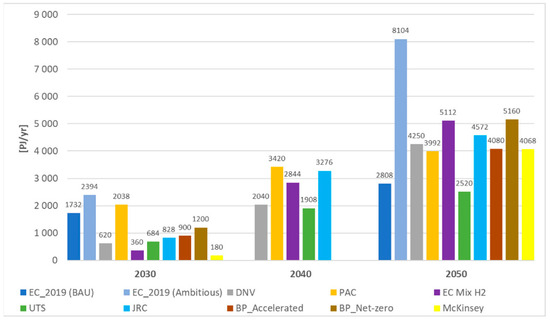
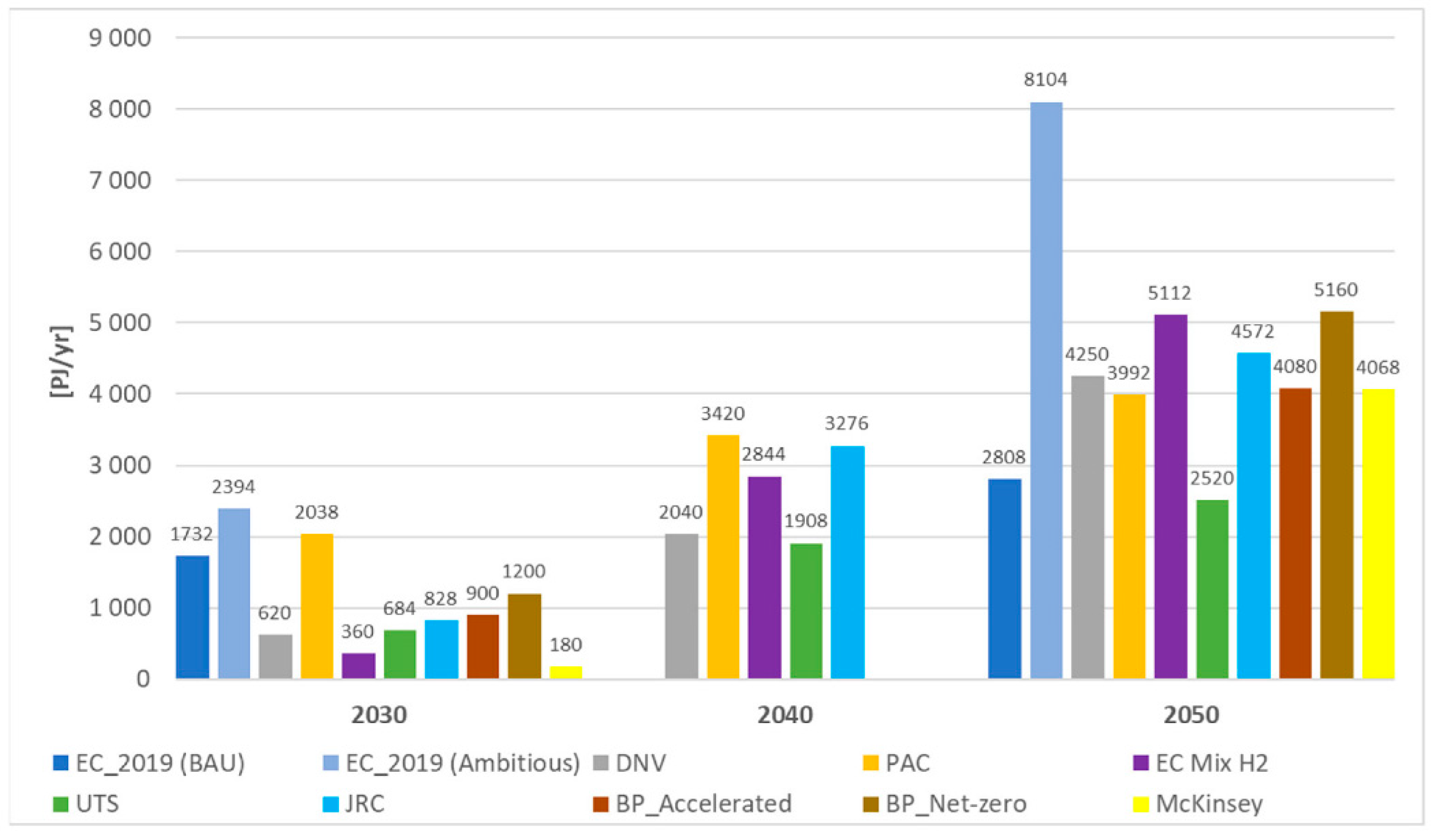
Energy production has always been central to social and economic progress. In recent decades, the search for renewable and sustainable alternatives to fossil fuels has intensified in response to greenhouse gas emissions, declining hydrocarbon reserves, and international environmental agreements, such as the Kyoto Protocol and the Paris Agreement [1]. This transition has also been shaped by increasing energy demand, market challenges, and security concerns in countries that are dependent on oil and gas imports. Against this backdrop, hydrogen has gained attention as a promising solution to gradually replace coal, natural gas, and oil as a major energy carrier and fuel for different uses, like transportation and industry. It also offers long-term energy storage capabilities that could help stabilize the electricity grid. It is regarded as a key technology for reducing CO2 emissions in the European Union’s strategies and in the national policies of its member states, like Poland and Germany [2,3]. Even though projections for the growth of hydrogen demand/production vary, they all predict an overall increasing trend until 2050. A summary of several such projections under different assumptions is depicted in Figure 1 [2].
Figure 1.
EU hydrogen demand projections from several studies (reproduced from [2]; Creative Commons CC-BY license).
Hydrogen 2 is an odorless, non-toxic, and highly flammable gas with low viscosity, and is one of the most abundant elements in the universe. It has a wide range of applications, including powering vehicles through fuel cells, supporting chemical manufacturing, and acting as a clean energy carrier. While the discovery and extraction of fossil fuel resources are becoming increasingly challenging and expensive, hydrogen offers an alternative for carbon-free power generation supported by ongoing research projects and rapidly advancing technologies [1,4,5,6,7,8]. As these technologies become more common and affordable, hydrogen is expected to play a bigger role in strengthening the global energy system.
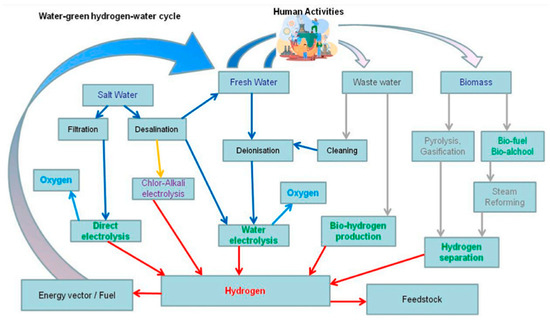
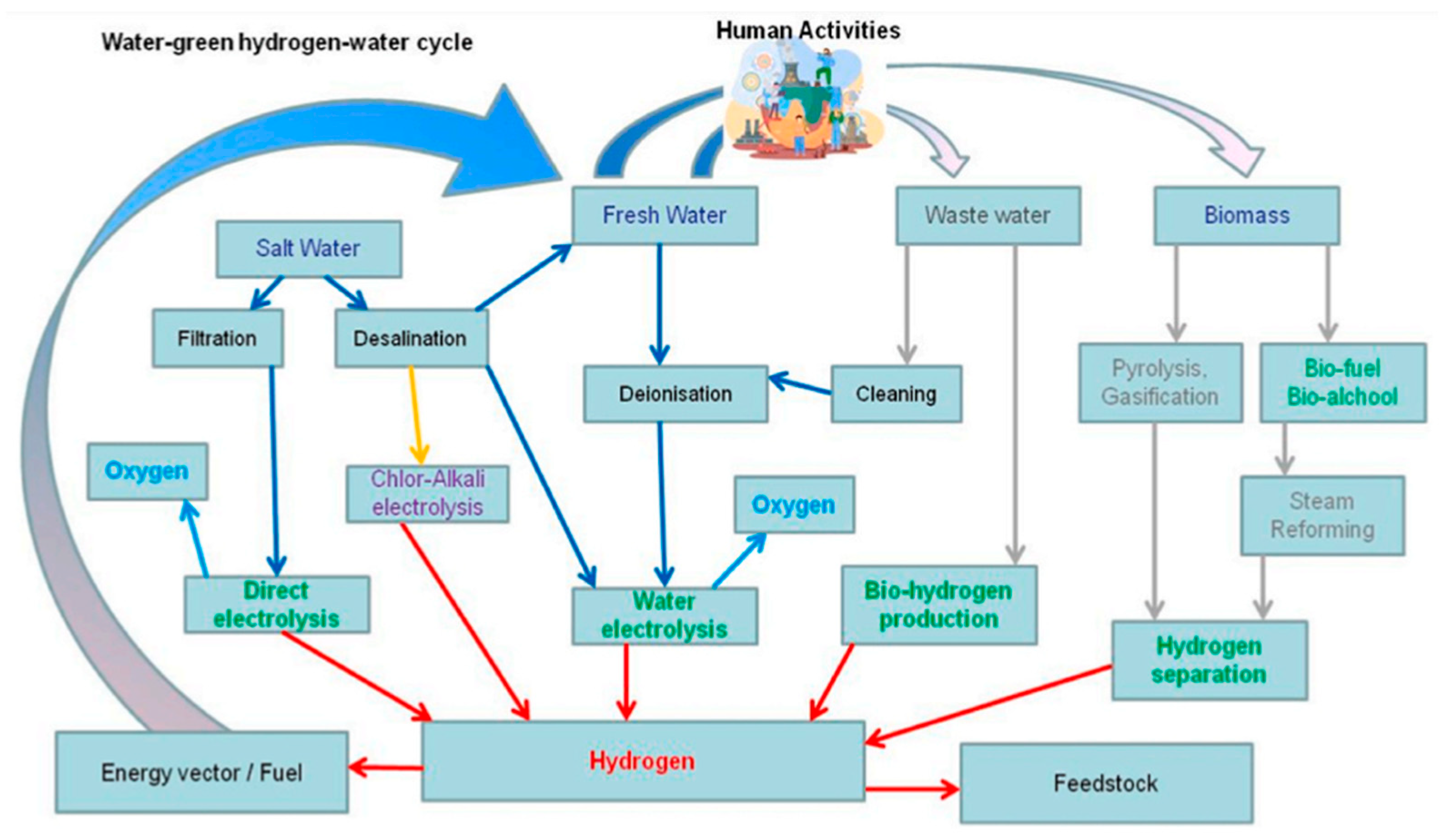
Currently, thermochemical methods like steam methane reforming (SMR), coal/biomass gasification, oxidation, and pyrolysis dominate industrial output in producing hydrogen. These methods usually release high CO2, and the hydrogen produced is classified as black/brown (from coal gasification) or gray (from SMR and oxidation). When this process also involves carbon capture and storage (CCS), it is classified as blue hydrogen. If electricity used for biomass gasification comes from renewal resources, the resulting hydrogen may be classified as green. For details of these processes or the corresponding color classifications, including other color codes (like turquoise, pink, and white), one can refer to [3,4,8,9,10,11,12], among others. An alternative technology using electrochemical routes like electrolysis can produce green hydrogen by relying on renewable energy sources like wind and solar. Electrolysis, which splits water into hydrogen and oxygen using electricity, offers a low-carbon pathway, but currently at higher costs [5,8,13,14]. Biohydrogen produced from biological processes in algae, bacteria, and photosynthetic cells has also been considered as an environmentally friendly alternative despite unresolved economic and technical challenges [3,8,15]. Some obstacles with implementing the latest technologies on a large scale for hydrogen production from renewable sources or carbon-neutral technologies include post-treatment of products, fire risks, biomass storage, and microorganism mutation or infection issues. Additional challenges involve constraints and costs related to infrastructure, transportation, freshwater availability, safety, and operational limitations [1,3,12,14,16]. Alternatives to freshwater usage and more efficient approaches to water-green hydrogen-water cycles have been discussed in the recent literature [12,16]. Figure 2 below illustrates an efficient cycle with water, hydrogen, and oxygen paths that recovers a portion of freshwater for activities like irrigation and urban purposes [12].
Figure 2.
The water-green hydrogen-water cycle with only water (blue arrows), only hydrogen (red arrows), and only oxygen paths (light blue arrows) as well as other mixed paths that would eventually lead to water, oxygen or hydrogen (yellow or grey arrows). Reproduced from [12]; Creative Commons CC-BY_NC-ND license.
2. In Situ Hydrogen Generation in Reservoirs
In situ hydrogen generation (ISHG) is an advanced technique that produces hydrogen directly within natural geological formations, such as hydrocarbon reservoirs, while minimizing carbon emissions. One promising strategy in turning old petroleum reservoirs into sources of hydrogen involves producing syngas, which contain over 16% hydrogen, through in situ methods like in situ combustion (ISC), in situ gasification (ISG), and breaking down leftover hydrocarbons. Hydrogen is then separated using a special membrane placed in the well, which filters out hydrogen while leaving other gases behind [4,11,17,18].
2.1. A Review of Studies for ISC and ISG Methods
ISHG mechanisms typically rely on triggering chemical reactions between injected reactants and reservoir hydrocarbons. Methods such as ISC and ISG can be combined with catalysts to further enhance hydrogen yields. These approaches, sometimes called in situ combustion gasification (ISCG), aim not only to generate hydrogen but also to upgrade heavy oil in its place by decreasing oil viscosity and density. The resulting hydrogen can then be extracted to the surface or can be stored underground, e.g., in salt caverns, saline aquifers, depleted oil/gas fields, or in the same reservoir along with gases like nitrogen and carbon dioxide [17,19]. Successful in situ production depends on factors such as effective catalysts, adequate geothermal conditions, sufficient water supply, efficiency of membranes, and porous rock structures. The process of efficiently recovering hydrogen involves steps like assessing reservoir conditions, injecting reactants, initiating reactions, and conducting detailed pilot tests [4,17,20]. The feasibility of hydrogen storage in an underground reservoir and the efficient deliverability of stored hydrogen depend on additional variables and conditions that include pressure and capacity constraints, permeability structure, and accurate multiphase transport modeling in porous media. This last item is particularly important since multiphase flow models and empirical studies for hydrogen have not yet reached the level of maturity established for current oil–water and CO2–water systems [19].
The experiments of [21] used a combustion tube to examine the effects of combining cyclic steam-air stimulation with a nickel-based catalyst on heavy oil. They studied the limits and impact of temperature, pressure, and core models. They found the heat from ISC could surpass 800 °C, allowing for the potential of oil gasification and the production of quantities of hydrogen. The results indicated that temperatures exceeding 550 °C are essential for the conversion of methane to hydrogen, reaching up to 70.8% hydrogen content at 800 °C with reactive core models. Their innovation shows the potential for producing hydrogen and upgrading heavy oil while also reducing carbon emissions by utilizing underground gas fields.
Relying on such enhanced oil recovery (EOR) methods, hydrogen can be produced through processes like aquathermolysis, pyrolysis, partial oxidation, reforming of oil, gasifying coke, cracking methane, and water–gas shift reactions. These methods not only improve oil upgrading and production, but they also generate hydrogen, contributing significantly to global sustainability efforts [4,8,17,18,21,22,23,24].
The temperature, reaction time, material type, catalyst type, and oil-to-water ratio are important factors for hydrogen production. Their effects during high-temperature and high-pressure oil gasification have been studied in [22]. Besides hydrogen, gases like methane and carbon dioxide were also produced through reactions like water–gas shift, oxidation, aquathermolysis, and pyrolysis. The study found that higher temperatures and more water (relative to oil) boosted hydrogen production by enhancing reactions like SMR, as oxygen mainly reacted with the oil and not hydrogen. Over time, hydrogen levels were stabilized due to carbon monoxide presence, while total gas output increased. Metallic oxides were shown to be effective catalysts for hydrogen generation in [22].
By focusing on ISG via heavy oil pyrolysis, ref. [23] reported on the effectiveness of different clay minerals as catalysts on ISHG thanks to their desirable adsorption capacity, ion-exchange capability, and acidity. These findings can help improve on-site hydrogen production from heavy oil gasification. Transforming oil reservoirs into hydrogen sources and using techniques like ISC and ISG offer promising paths toward cleaner energy.
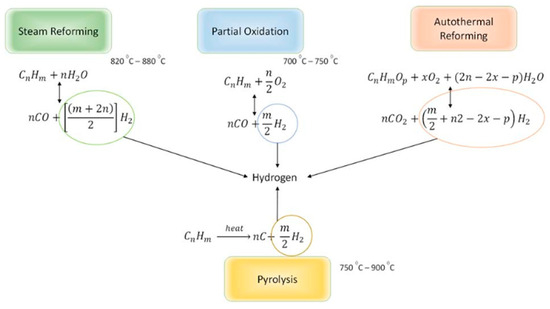
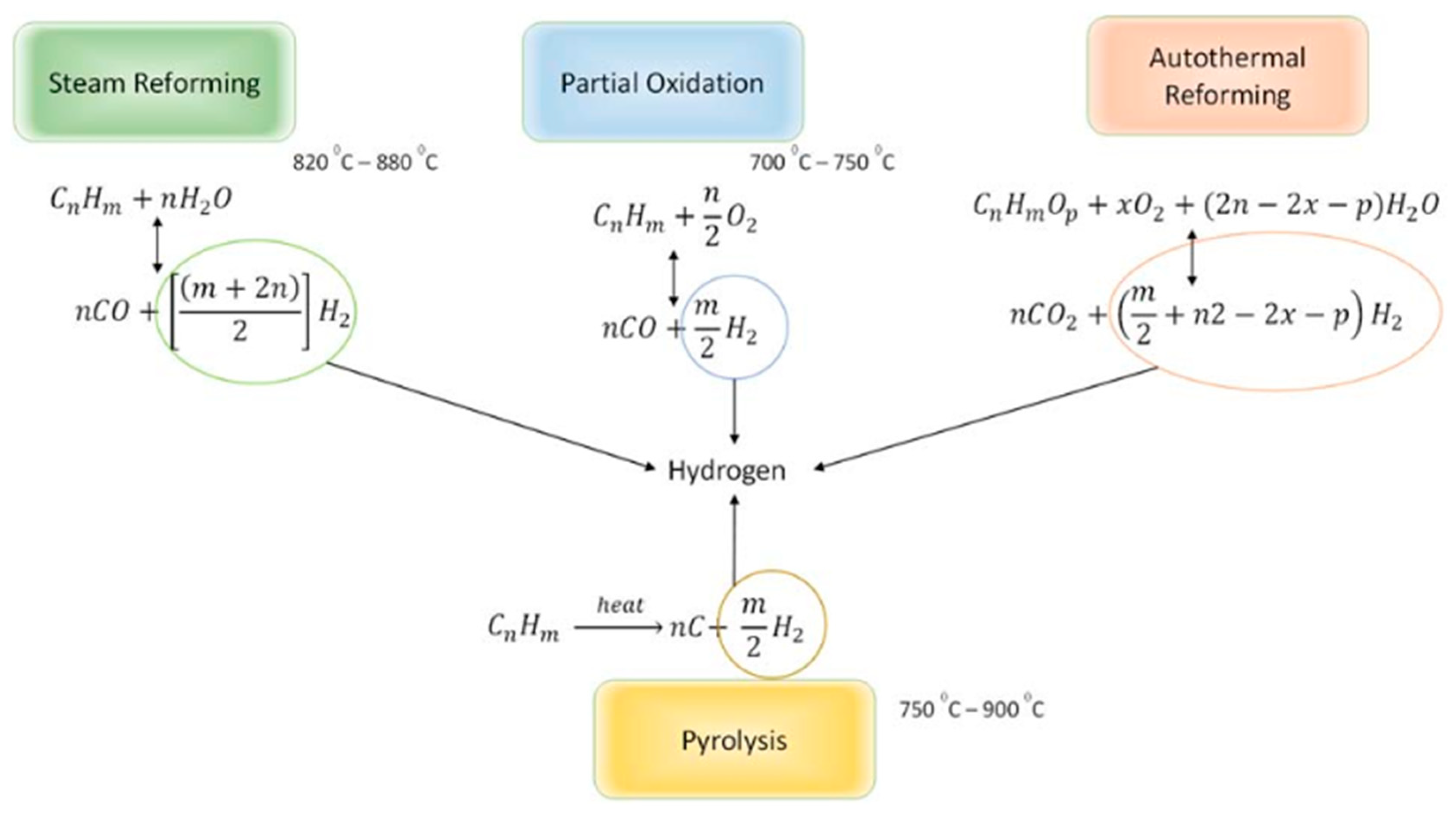
Generating hydrogen from hydrocarbons involves water (steam), oxygen, or heat [24]. The relevant chemical equations for steam reforming (that requires water and heat), partial oxidation (requiring oxygen and heat), autothermal reforming (ATR), and pyrolysis (under high temperature) from [24] are summarized in Figure 3 below. For additional chemical equations, reactions, and conditions (including the gasification process as well as the impact of other reservoir conditions), one can refer to [4,17,20,21,24].
Figure 3.
Hydrogen forming reactions from hydrocarbons in four different methods (reproduced from [24]; Creative Commons CC-BY_NC 3.0 license).
When heavier hydrocarbons are subjected to pyrolysis, they typically break down into smaller hydrocarbons. Because pyrolysis does not require water or air (see Figure 3), there is no production of CO or CO2, thereby decreasing the amount of trapped CO2 within the subsurface during the ISHG process [24].
The ISHG mechanisms impose specific operational, thermal, and material constraints on wells and surface facilities. High reaction temperatures, reactive gas mixtures, and subsurface separation requirements necessitate dedicated well designs and facility configurations capable of maintaining integrity, efficiency, and safety. Accordingly, the following subsection outlines the key facility and well requirements needed to enable practical implementation of ISHG technologies.
2.2. Membrane Technologies for In Situ Hydrogen Separation
Membrane-based separation is frequently proposed as a key enabler for ISHG, particularly for downhole or near-well hydrogen extraction. Commonly discussed membrane types include palladium-based metallic membranes, ceramic membranes, and polymeric membranes. Palladium and Pd-alloy membranes offer high hydrogen selectivity and purity through interstitial or complex hydrides. Their desirable hydrogen absorption and solution–diffusion mechanisms make them attractive for achieving fuel-cell-grade hydrogen [25]. However, their relatively higher cost and durability issues (e.g., due to hydrogen embrittlement) has hindered their widespread use [26]. Ceramic membranes, such as mixed proton–electron-conducting oxides, are also of interest for high-temperature operation despite being more expensive than other membranes like polymeric membranes, which are generally limited to lower-temperature applications and are less suitable for direct subsurface deployment [27].
Despite their great potential, the application of membranes under real reservoir conditions presents significant challenges. Elevated temperatures, pressure fluctuations, exposure to reactive species (e.g., CO, CO2, H2S, and hydrocarbons), and the presence of water vapor can degrade membrane performance through fouling, embrittlement, or loss of selectivity [26]. Sulfur-containing compounds are particularly detrimental to metallic membranes, while ceramic membranes may suffer from thermal stress and mechanical fragility. These factors raise concerns regarding long-term durability, maintenance, and replacement in downhole environments where access is limited. As a result, membrane performance in ISHG systems must be evaluated beyond laboratory-scale selectivity and permeability metrics. Practical deployment requires balancing achievable hydrogen purity against operational robustness and lifecycle cost. In many cases, membrane-based separation may need to be complemented by surface-level purification to meet strict end-use requirements. These considerations highlight that membrane technology, while critical, remains a key bottleneck for the field-scale implementation of ISHG.
3. Facility and Well Requirements of In Situ Hydrogen Generation
On-site hydrogen generation requires well designs that can withstand high thermal and corrosive stress. Corrosion-resistant alloys, high-integrity cement, and advanced separation membranes are critical to maintain both production efficiency and reservoir safety. To achieve these goals, it is crucial to design well completions that can maintain their integrity in challenging environments and control the flow of gas from the reservoir to the surface efficiently.
3.1. Some Recent Experiments
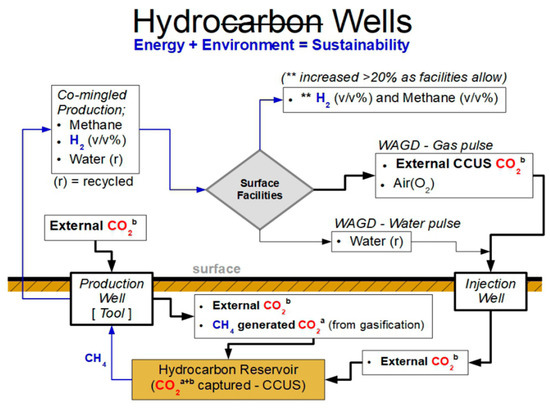
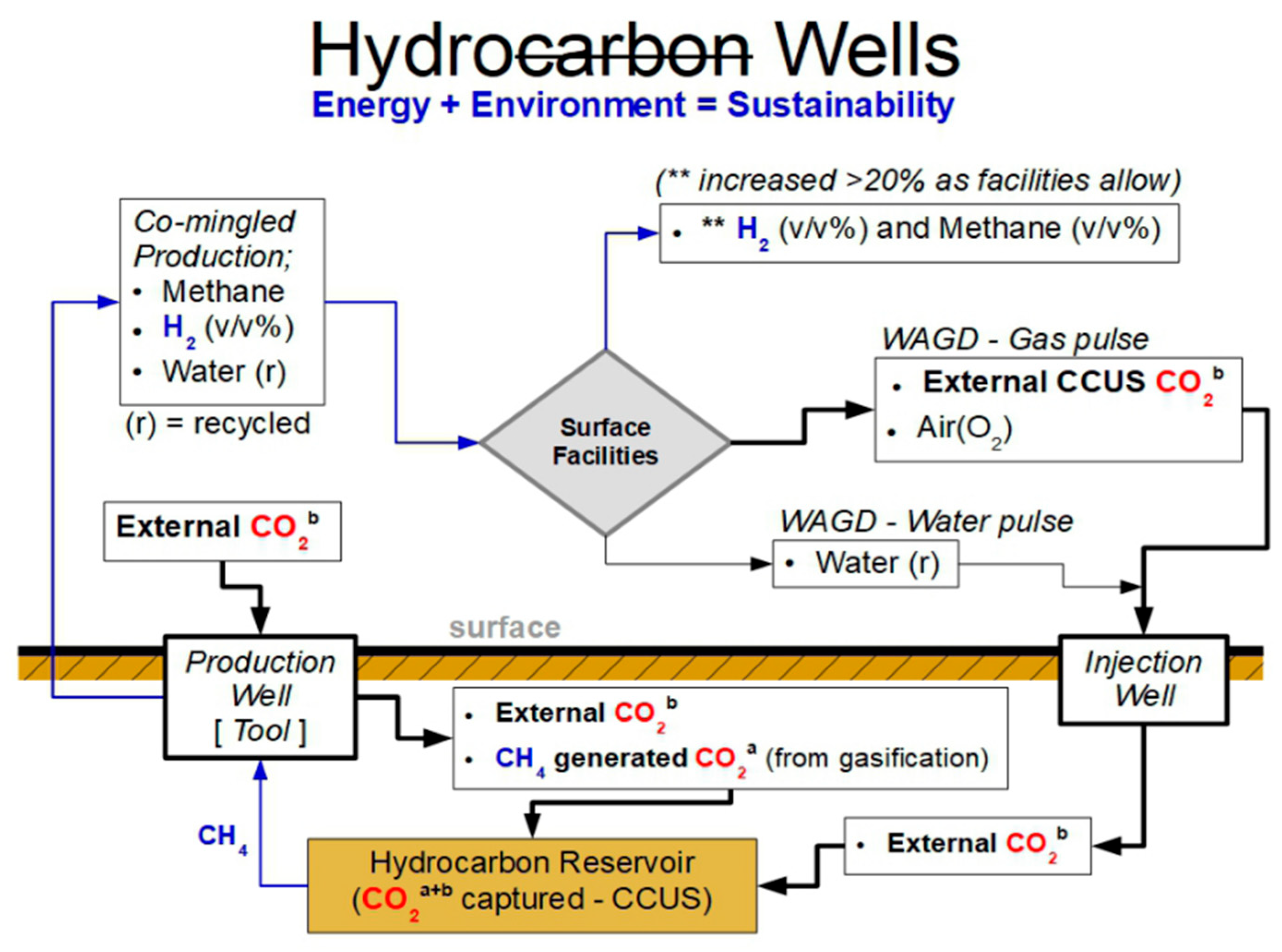
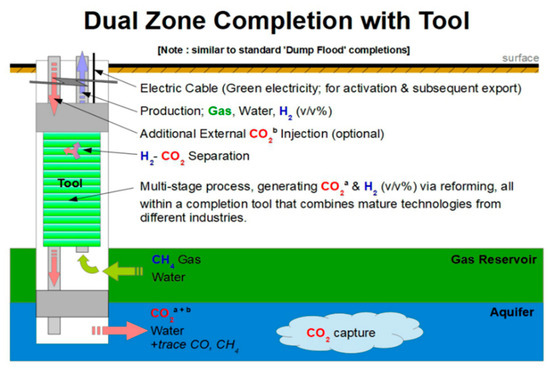
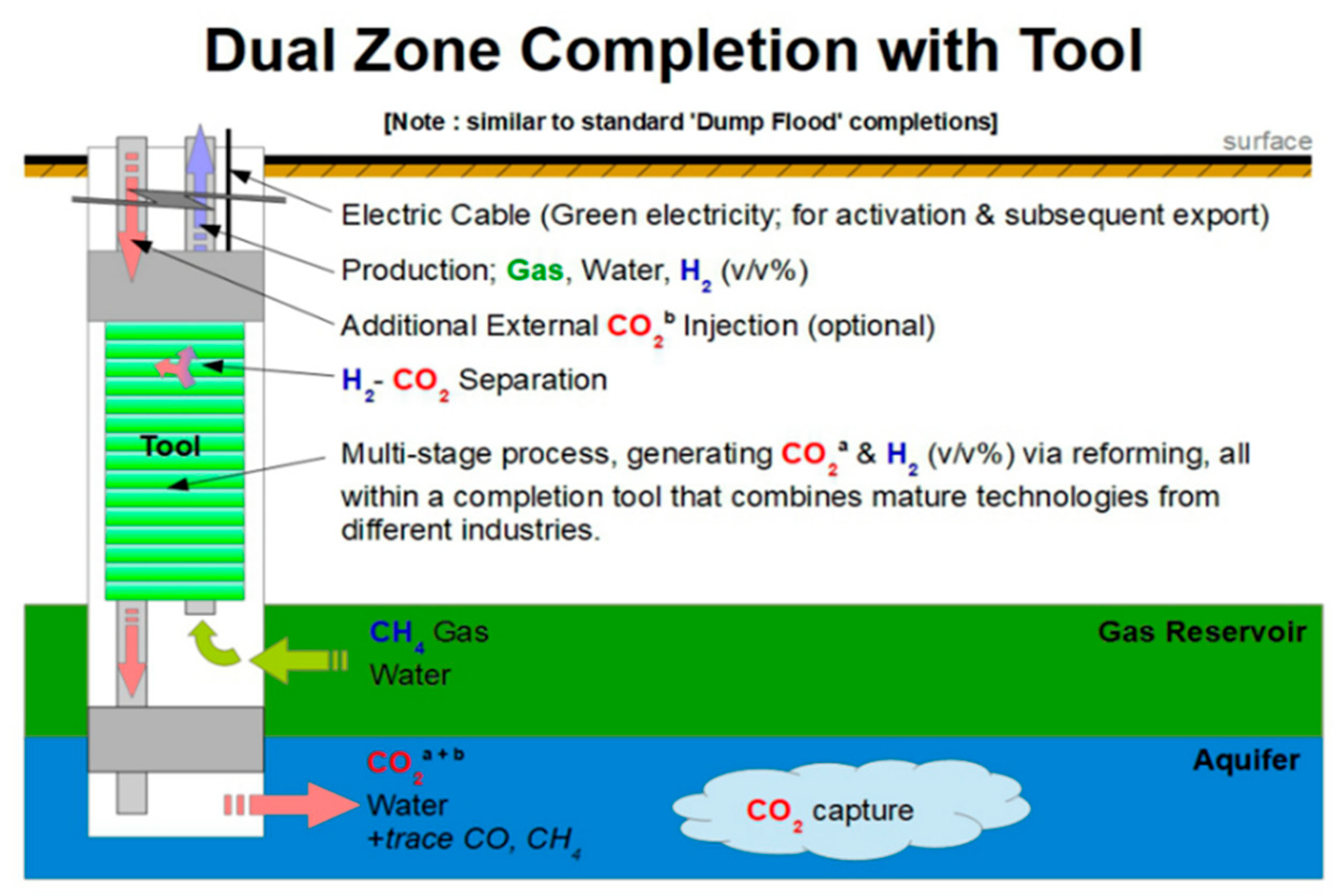
A new approach described in [28] thoroughly examines the conditions and specifications for effective ISHG and CCS in natural gas wells. This method employs a gasification process in the wellbore by utilizing a completion string to transform hydrocarbons within the well. By harnessing the temperatures and pressures within the reservoir, it reduces the energy needed for the procedure. The facility consists of elements such as a source of ignition powered by a cable, two tubing strings for injecting water, and an electrochemical membrane for separating hydrogen to maintain high purity and pressure. The extracted hydrogen is moved to the surface while any CO2 and the waste produced are reinjected back into the subsurface geology to reduce environmental effects and to keep operational expenses low [28]. Figure 4 illustrates the flow chart of this gasification process in a natural gas well, showcasing how hydrogen is produced and how fluids injected from the surface move within the dual-tubing string. It emphasizes the roles that CO2 generated during gasification and CO2 injected from external sources have in improving the gasification process and EOR potential. Moreover, Figure 5 depicts a dual zone operation using the gasification tool in [28], highlighting the process of separating hydrogen from CO2 and other by-products. The system’s flexible structure enables it to be tailored to the features of reservoirs to improve feasibility.
Figure 4.
Flow diagram for a specific wellbore tool setup in the wellbore gasification process, where CO2a is CO2 generated by the methane gasification process, CO2b is CO2 externally sourced and injected from the surface, and WAGD is the water alternating gas drive (reproduced from [28]; Creative Commons CC-BY 4.0 license).
Figure 5.
Dual zone completion with wellbore gasification tool. Here, CO2a is CO2 generated by the methane gasification process, and CO2b is CO2 externally sourced and injected from the surface (reproduced from [27]; Creative Commons CC-BY 4.0 license).
The research conducted in [9,11] analyzes hydrogen production through an ATR reactor. Utilizing finite element method for conventional governing equations, they numerically study an ATR reactor where the endothermal SMR reaction takes place in the same rectangular channel with the exothermal methane combustion reaction. They use patterned Ni/Al2O3 and Pt/Al2O3 catalytic layers that outperform traditional continuous thin-layer setups when compared side by side. This new configuration improves hydrogen yield by 3.6%, reduces the length of the activated zone by 38% compared to traditional ATR setups, and decreases oxygen consumption by 5%, resulting in a more streamlined and cost-effective operation. Operating at temperatures ranging from 1100 to 1450 °C and pressures between 40 and 50 bars, this ATR reactor is well-suited for smaller-scale facilities. The modular and scalable nature of this design enhances its feasibility, aiding in the shift towards a hydrogen-based economy with reduced environmental impact, offering a sustainable and efficient method for hydrogen production, within reservoir-based energy systems [9].
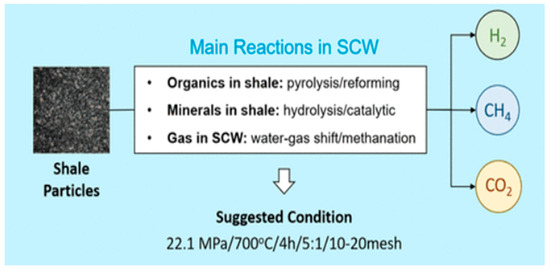
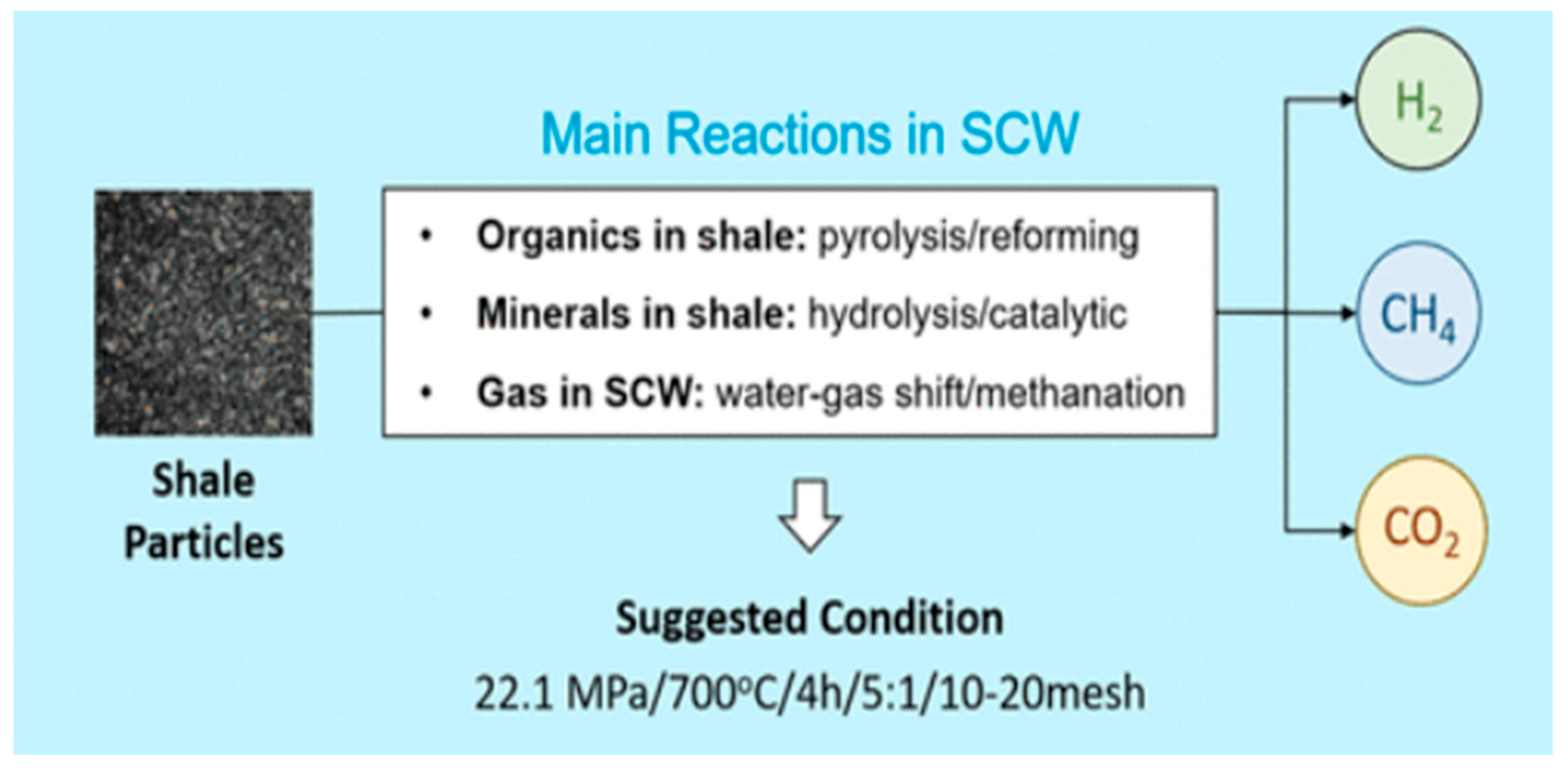
Moreover, ref. [11] examines the infrastructure and conditions required for hydrogen generation within reservoirs by emphasizing the gasification of rich shale using supercritical water. The study evaluates shale’s potential as a source of hydrogen-rich gas by leveraging supercritical water as both a heat carrier and an organic solvent, with careful consideration of key parameters such as temperature (ranging from 500 to 700 °C), pressure (between 22 and 28 MPa), reaction duration (up to 12 h), water-to-shale mass ratio (varying from 1:1 to 10:1) and shale particle size (ranging from 5 to 150 mesh) in a batch reactor. In addition to producing hydrogen, carbon dioxide, and methane through gasification reactions, certain inorganic minerals are found in shale, such as carbonates, which can act as catalysts and significantly boost the production of carbon dioxide. The research revealed that temperature and reaction duration played roles in determining the amount and type of gases produced, with higher temperatures favoring endothermic reactions and speeding up the water gas shift process. Additionally, pressure increases showed a minor negative effect on the gasification process. The optimal conditions were identified as a temperature of 700 °C, a pressure of 22.1 MPa, a 5:1 water-to-shale mass ratio, a reaction period of 4 h, and a shale particle size range of 10 to 20 mesh (Figure 6). These discoveries lay the groundwork for creating and managing facilities for on-site hydrogen generation from shale deposits, underscoring the significance of management and overreaction conditions to achieve selective hydrogen production.
Figure 6.
Supercritical water gasification of organic-rich shale (reproduced from [11] with permission from American Chemical Society).
3.2. Toward Normalized Performance Metrics for ISHG Technologies
Many experimental and numerical studies reviewed in this work report hydrogen production in terms of concentration (vol%) or conversion efficiency of hydrocarbons. While these metrics are useful for understanding reaction mechanisms and process feasibility at a laboratory or pilot scale, they do not readily enable direct comparison across different ISHG pathways. This limitation arises primarily from wide variability in factors like reservoir conditions, experimental configurations, injected reactants, reaction durations, and reporting conventions adopted in the literature.
For meaningful benchmarking against state-of-the-art hydrogen production technologies, normalized performance indicators such as hydrogen mass produced per unit reservoir volume (kg H2/m3), energy efficiency (MJ H2 produced per MJ of injected thermal or chemical energy), and carbon retention per unit hydrogen produced (kg CO2 retained per kg H2) would be highly desirable. However, the majority of existing ISHG studies do not report sufficient subsurface-scale data, such as effective reaction volumes, sweep efficiency, or long-term production profiles, to robustly derive these normalized metrics. As a result, direct quantitative normalization remains challenging at the current stage of technological development.
Nevertheless, the comparative synthesis presented in this review enables a qualitative normalization by systematically contrasting ISHG pathways based on relative hydrogen yield, operating temperature windows, carbon retention potential, scalability, and technology readiness levels (TRLs). As ISHG technologies advance toward pilot- and field-scale deployment, future studies should prioritize standardized reporting frameworks that include mass- and energy-based metrics alongside reservoir-scale parameters. Such harmonized metrics will be critical for assessing the true techno-environmental performance of ISHG and for positioning these technologies within the broader hydrogen production landscape. Table 1 below lists some of these normalized metrics, along with their current availability in the literature.
Table 1.
Recommended normalized metrics for future ISHG studies.
4. Applications in Different Reservoirs and Success Stories
Many practical applications and studies for generating hydrogen on-site have centered around using steam and oxygen for converting natural gas into hydrogen and carbon dioxide which can then be captured and stored. The success of these techniques depends on factors such as the presence of catalysts, effective management of heat conditions in the reservoir, and the safe handling of any resulting by-products.
4.1. Field Data, Experiments and Laboratory Analysis
In [29], the authors investigated ISHG within subsurface reservoirs, addressing the growing demand for hydrogen in the energy sector. Their study employed combustion tube experiments to simulate hydrogen production from methane under reservoir-like pressure and temperature conditions using ISC technology. Based on laboratory data, the authors developed a kinetic reaction model that was calibrated via history matching techniques and validated through numerical simulations. Repeated simulations were utilized for accurate predictions of temperature profiles, cumulative gas output, and concentrations of key components (H2, CH4, CO, and CO2). By integrating experimental results with field-scale modeling, the research illustrated the feasibility of leveraging existing oil and gas infrastructure for efficient hydrogen production. The findings underscored the potential of ISC-based ISHG as a scalable and practical solution for clean energy applications. The study also acknowledged certain challenges and future directions that included addressing strong nonlinearity, uncertainties or limited understanding of coupled reactions, and computational cost, among others.
Traditional refinery procedures and ISHG techniques were discussed and compared in [30]. This paper pointed out similarities between ISHG and various refinery processes like vacuum residue gasification, solvent deasphalting, and hydrogen addition methods, such as slurry-phase hydrocracking and aquaconversion techniques. Moreover, it emphasized the distinctive nature of ISHG using the reservoir itself as a reactor, which poses challenges in controlling temperature and pressure compared to ex situ upgrading processes that rely on purpose-built reactors. The study also discussed EOR approaches that aligned well with ISHG principles, including steam injection, cyclic steam stimulation, steam-assisted gravity drainage, steam flooding, and ISC. Furthermore, catalytic aquathermolysis was explored to achieve in situ upgrading by utilizing steam along with designed catalysts to convert heavy fractions and decrease viscosity. The research highlighted that numerous EOR methods draw inspiration from refinery operations and suggested opportunities for innovation in ISHG by capitalizing on these resemblances. By conducting simulations and laboratory tests, they confirmed the validity of kinetic models and finely tuned conditions for ISHG, showcasing temperature profiles, gas yield, and concentrations of gas components (such as H2, CH4, CO, and CO2) These models were adapted for field use to evaluate strategies that leverage existing infrastructure for enhanced hydrogen production.
Drawing on field data and laboratory analyses, ref. [31] underscored the critical importance of maintaining long-term integrity in underground gas storage (UGS) wells, particularly those repurposed for storing natural gas, carbon dioxide, or hydrogen. The study emphasized the need for robust barrier systems, like casing and cement sheaths, that can endure fluctuating pressure and temperature conditions; it identified common failure mechanisms including casing corrosion, cement debonding, and formation instability. Special attention was given to the challenges of converting legacy production wells for UGS use, where repeated injection and withdrawal cycles heighten the risk of structural degradation. The research advocated for continuous monitoring, improved cement formulations, and advanced modeling techniques to ensure safe and sustainable UGS operations. These insights are vital as the industry scales up hydrogen storage to meet future energy demands while minimizing environmental risks.
Traditional steam injection methods have drawbacks like higher amounts of water use, cost, and emissions when compared with ISC, which uses heat from oil–oxygen reactions to extract oil more efficiently and with less water. However, ISC methods have their own challenges, including complex oxidation behavior, unpredictable performance, poor design, and unfavorable oil properties, which have slowed its widespread adoption. The studies in [4,32] explored ISC as a method to recover heavy oil and bitumen while also producing hydrogen. They discussed crude oil reactions during ISC experiments, as well as the relevant computational and numerical methods. In particular, ref. [4] discussed scientific, technological, and environmental challenges which include the lack of comprehensive reaction models to explain the entire ISCG process. In [32], the authors provided a review of recent experiments and field projects with both successes and difficulties in applying ISC. They also discussed the progress and prospects of advanced numerical methods in reaction kinetic models and field-scale applications of ISC.
The collective results from these studies underscore the possibilities of in situ technologies within the energy industry while also reducing environmental impacts. By incorporating ISC methods efficiently and taking advantage of well-established refinery procedures, the sector can achieve more sustainable and economically feasible utilization of heavy oil deposits. Ongoing research and advancements in these areas are vital to fully harness their potential to meet energy requirements.
4.2. Comparative Assessments and Technological Maturity
The comparative assessment presented in Table 2 provides a structured synthesis of the major ISHG pathways discussed throughout this review. While Section 2 and Section 4 described these approaches in detail, Table 2 enables a direct comparison in terms of hydrogen yield, operational temperature window, carbon retention potential, scalability, and technological maturity or technology readiness level (TRL). ISCG and ISC-based hybrid approaches have emerged as relatively mature options, benefiting from decades of experience in EOR and subsurface combustion processes. These methods typically operate at high temperatures (600–900 °C), enable moderate to high hydrogen yields, and offer strong potential for subsurface carbon retention through reinjection or in-reservoir containment of CO2, positioning them at an intermediate TRL (TRL 4–5).
Table 2.
Comparative assessment of ISHG pathways.
In contrast, aquathermolysis-assisted ISHG, in situ reforming, and supercritical water gasification approaches operate at comparatively lower temperature ranges.Moreover, they rely more heavily on catalytic enhancement and precise control of reaction conditions. These pathways showed promising hydrogen yields at the laboratory and pilot scales. However, they face challenges related to reaction selectivity, heat management, and long-term reservoir integrity. As a result, they are generally situated at TRL 3–4, where feasibility has been demonstrated under controlled conditions, but field-scale validation remains limited. Pyrolysis-based ISHG methods, while attractive due to their high carbon retention potential and minimal CO2 generation, have currently exhibited lower scalability and technological maturity, largely due to the difficulty of sustaining uniform high-temperature conditions in heterogeneous reservoirs.
Emerging concepts such as microwave-assisted catalytic hydrogen generation in shale reservoirs have demonstrated high hydrogen conversion efficiencies at the laboratory scale, highlighting their potential as future ISHG solutions. However, these techniques remain at early development stages (TRL 2–3), with significant uncertainties related to energy efficiency, subsurface energy delivery, and reservoir-scale implementation. Overall, the comparative synthesis has underscored that ISHG technologies should not be viewed as a single homogeneous solution, but rather as a spectrum of approaches at different maturity levels. Advancing these technologies toward commercial deployment will require targeted pilot studies, improved reaction and transport models, and integrated assessments of scalability, well integrity, and long-term reservoir behavior.
4.3. Techno-Economic and Lifecycle Context of In Situ Hydrogen Generation
While several studies highlighted the potential cost advantages of ISHG, a direct techno-economic comparison with established surface-based hydrogen production pathways remains limited. Conventional SMR and ATR have benefited from technological maturity and relatively low capital costs, but these incur substantial lifecycle emissions unless coupled with CCS. Recent techno-economic and lifecycle analyses indicated that the inclusion of CCS can significantly increase the levelized cost of hydrogen from SMR and ATR, while also introducing additional infrastructure and long-term liability considerations.
Electrolysis-based hydrogen production, particularly when powered by renewable electricity, can offer low lifecycle carbon emissions, but it is currently constrained by high capital expenditure, electricity costs, and system efficiency losses. Multiple lifecycle assessments reported that the competitiveness of electrolysis has been highly sensitive to electricity price and capacity factor, limiting its economic viability in many regions under present conditions [33]. These findings can provide important context for evaluating emerging subsurface hydrogen concepts.
In this framework, ISHG was frequently positioned as a potentially cost-competitive alternative due to the elimination of surface reactors, reduced compression and transportation requirements, and inherent subsurface carbon retention. However, the absence of field-scale deployments and standardized techno-economic assessments introduced substantial uncertainty. At present, ISHG should be viewed as a mid- to long-term complementary option rather than a direct replacement for mature hydrogen production technologies. In addition to future pilot projects, harmonized lifecycle and techno-economic analyses will be essential to robustly quantify the competitiveness of ISHG relative to SMR, ATR, and electrolysis pathways.
4.4. Hydrogen Transport, Diffusion, and Well Integrity Considerations
Beyond hydrogen generation itself, hydrogen transport and diffusion into surrounding rock formations, cement, and well materials represent critical challenges for the long-term feasibility of ISHG. Due to its small molecular size and high diffusivity, hydrogen can readily migrate through pore networks, microfractures, and cementitious materials, potentially altering their effective permeability and compromising containment. Recent studies have demonstrated that hydrogen diffusion into reservoir rocks and engineered materials may induce microstructural changes that affect both transport properties and mechanical integrity in UGS shales, particularly under elevated temperature and pressure conditions typical of ISHG environments [30,34].
Hydrogen–rock interactions may lead to permeability alteration through mechanisms such as adsorption–desorption effects, pore-scale diffusion, and microfracture development. These processes can influence hydrogen recovery efficiency by increasing losses to the surrounding formation and by modifying flow pathways over time. Moreover, hydrogen diffusion into cement and wellbore materials has been shown to degrade cement–casing bonding and increase porosity, thereby elevating the risk of leakage during long-term operations [35]. Such effects are especially relevant for repurposed wells originally designed for hydrocarbon production rather than hydrogen exposure [30].
Recent analyses, including detailed investigations of hydrogen diffusion behavior and its implications for subsurface containment and infrastructure integrity, have underscored the importance of incorporating hydrogen transport considerations into ISHG design and assessment frameworks [34]. These findings highlighted that hydrogen should not be treated solely as a generated species, but as an active agent that interacts with geological and engineered systems. Addressing hydrogen diffusion and material compatibility through improved cement formulations, barrier systems, and monitoring strategies will be essential for ensuring safe, efficient, and sustainable ISHG at the field scale.
5. ISHG and Hydrogen Storage in Unconventional Shale Reservoirs
Unconventional shale reservoirs are increasingly being considered within the hydrogen value chain due to their widespread availability. However, shale formations can serve two fundamentally different roles: (i) as reactive systems for ISHG, and (ii) as passive geological media for underground hydrogen storage (UHS). Although both applications may utilize similar subsurface assets, such as horizontal wells and hydraulic fractures, the governing physical processes, operational requirements, and risk profiles differ substantially. Exploring ISHG in shale formations faces significant challenges. The inherently low permeability, brittleness, and fragile structure of shale make the injection of reactants and extraction of gases difficult. Moreover, preserving structural integrity during hydraulic fracturing or other stimulation methods introduces additional technical risk. Nonetheless, adapting existing shale gas infrastructure and leveraging operational insights from unconventional oil/gas practices may provide a foundation for pilot hydrogen production and storage schemes if geological, economic, and engineering constraints are carefully managed. This potential was evidenced in the works of [20,21,36,37], among others. These studies are briefly summarized below. To avoid conceptual ambiguity, ISHG and hydrogen storage applications are distinguished and discussed separately in the following subsections.
5.1. Shale Reservoirs for ISHG
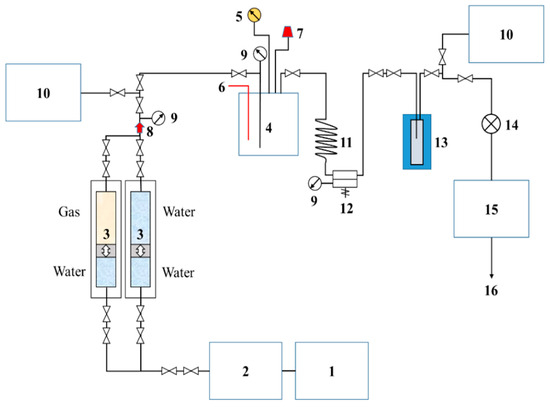
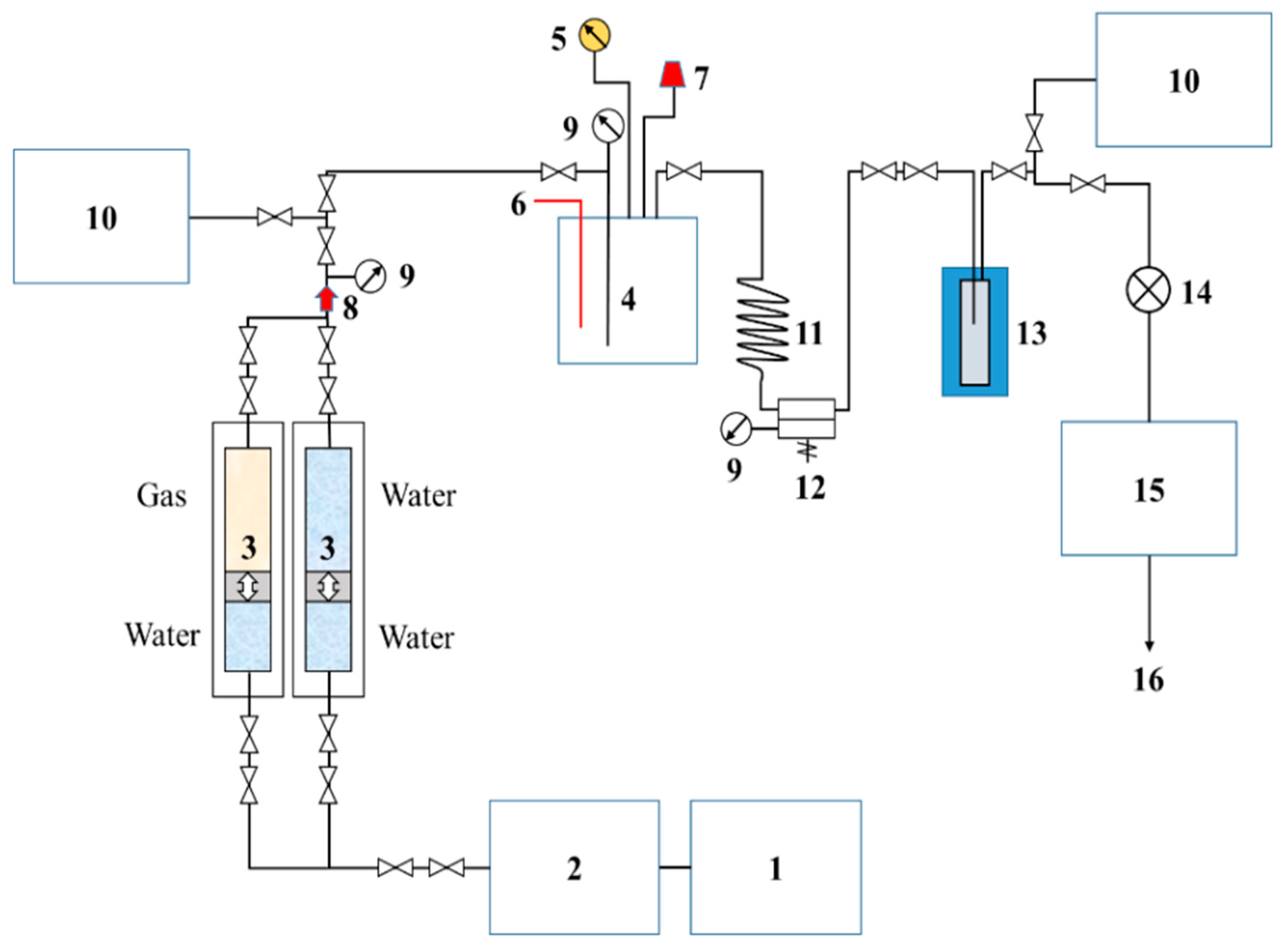
When shale reservoirs are employed for ISHG, the formation acts as an active reactor in which hydrogen is produced through thermochemical or catalytic conversion of hydrocarbons. These processes are governed primarily by reaction kinetics, heat transfer, catalyst effectiveness, and the interaction between fractures and the surrounding matrix. High temperatures, like those typically exceeding 450 °C, are required to initiate methane cracking, steam reforming, aquathermolysis, or pyrolysis reactions, making thermal delivery and control a central challenge in shale-based ISHG. Experiments conducted in [20] simulated shale reservoir conditions at Russia’s Promyslovskoye gas field confirmed the observations stated above. They injected a catalyst precursor into the zone with hydrocarbons and then increased the temperature to aid in SMR and methane cracking. By using Ni-based catalysts prepared off-site, they achieved promising methane conversion rates of up to 5.8%, emphasizing the importance of catalyst preparation and specific conditions for hydrogen production. These results highlight the practicality and economic advantages of ISHG in shale reservoirs by reducing costs and improving sustainability in hydrogen production. Figure 7 below describes their autoclave installation used in these experiments.
Figure 7.
The scheme of autoclave installation used in experiments with 1: computer; 2: pump (Quizix); 3: piston column; 4: autoclave (reactor); 5: digital pressure gauge; 6: thermocouple; 7: bursting disk; 8: check valve; 9: manometer; 10: vacuum pump; 11: condenser (cooler); 12: back pressure regulator; 13: separator; 14: gas meter; 15: gas chromatograph; and 16: ventilation system with gas afterburning (reproduced from [20]; Creative Commons CC-BY license).
The experiments conducted by [21], as also briefly summarized in Section 2 earlier, aimed to achieve both ISHG and heavy oil upgrading. They treated an oil-saturated sandpack under reservoir conditions and considered several processes. The hydrogen production was mainly attributed to aquathermolysis, pyrolysis, and oil thermal cracking in addition to secondary processes, like water–gas shift reactions and coke gasification, further confirming the findings of other works like [17,23]. Moreover, some proportion of hydrogen generated was utilized as part of the reactions with hydrocarbons in the next stages of the experiments for oil upgrading.
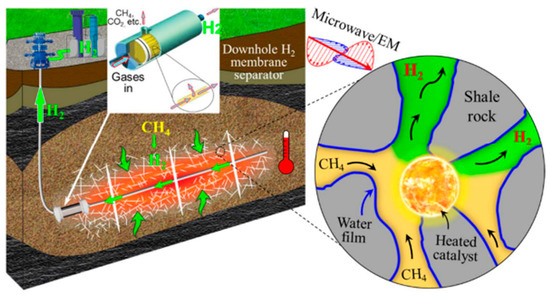
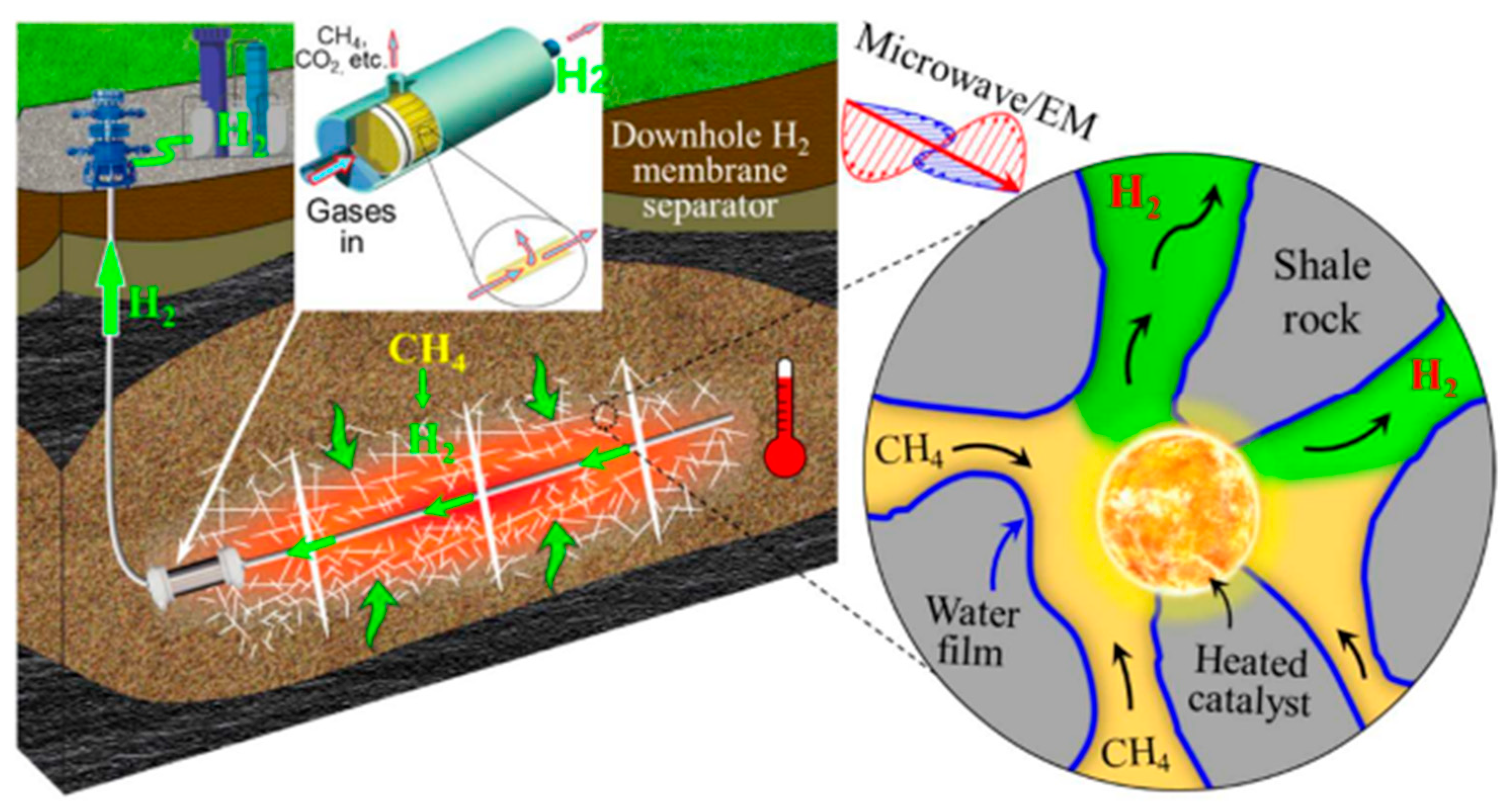
Experimental and numerical studies demonstrate that hydrogen generation in shale reservoirs is technically feasible under controlled conditions. Catalytically enhanced methane conversion experiments highlight the importance of catalyst type, distribution, and stability, while also revealing limitations related to conversion efficiency and scalability. Advanced approaches such as microwave-assisted catalytic heating further illustrate the potential to selectively enhance hydrogen production by exploiting the electromagnetic properties of shale minerals and metal-based catalysts. However, sustaining uniform high-temperature conditions in heterogeneous shale formations remains a significant obstacle, particularly at the reservoir scale. For example, the experiments in [36] studied the interactions between microwaves and shale samples combined with iron-based catalysts. Their results demonstrated significant increases in methane conversion when Fe and Fe4O3 (magnetite) particles were present (40.5% methane conversion with Fe catalyst at a reaction temperature of 500 °C, and 100% methane conversion with Fe4O3 catalyst at 600 °C). In this model, electromagnetic energy was delivered via a dipole antenna, reaction rates were accelerated using suitable proppants, and hydrogen was extracted via downhole hydrogen membrane separators. Figure 8 below illustrates the schematic of ISHG from shale gas in their experiments. One can also refer to Appendix A: Supplementary data in [36] for additional diagrams about the setup of the microwave reactor and its components (like the microwave heating system, quartz tube reactor, and gas sample collection system necessary for analyzing gas products and monitoring temperature changes). This innovative approach capitalizes on the qualities of shale minerals and effective energy absorption by iron catalysts, suggesting a promising avenue for eco-friendly hydrogen production directly from shale reserves. Such advancements align with the ongoing initiatives which aim to reduce carbon emissions in the energy sector.
Figure 8.
The schematic for in situ hydrogen production from shale gas reservoirs via microwave-assisted catalytic heating and downhole hydrogen membrane separators (reproduced from [36] with permission).
From a risk perspective, shale-based hydrogen generation introduces challenges that are distinct from those in conventional reservoirs. Thermal stress, mineral alteration, coke formation, and fracture conductivity degradation may adversely affect reservoir performance and long-term well integrity. As a result, most shale-focused ISHG concepts currently remain at early technology readiness levels (TRL 2–4), where feasibility has been demonstrated at the laboratory or pilot scale, but field-scale validation is still lacking. Further progress will require integrated studies combining thermal modeling, reaction kinetics, geomechanics, and fracture-reservoir interaction to assess the viability of sustained hydrogen generation in shale environments.
5.2. Shale Reservoirs for Underground Hydrogen Storage
In contrast to hydrogen generation, UHS in shale reservoirs does not involve in situ chemical reactions. Instead, it is governed by multiphase flow, diffusion, adsorption, and geomechanical behavior. In this application, depleted shale gas reservoirs and inactive horizontal wells are repurposed as containment systems for hydrogen injected from surface facilities. This approach offers a cost-effective and environmentally sustainable alternative to conventional storage methods, such as salt caverns and aquifers. The primary objective is safe and efficient cyclic injection and withdrawal, rather than the chemical transformation of hydrocarbons.
Studies investigating hydrogen storage in shale formations emphasize the role of low permeability, strong capillary forces, and existing well infrastructure in providing effective containment. Numerical simulations suggest that depleted shale gas wells may offer favorable storage characteristics, including minimal cushion gas requirements and strong sealing capacity [36,37]. However, hydrogen’s small molecular size and high diffusivity introduce risks related to leakage, wellbore integrity, and long-term containment, particularly under repeated pressure cycling.
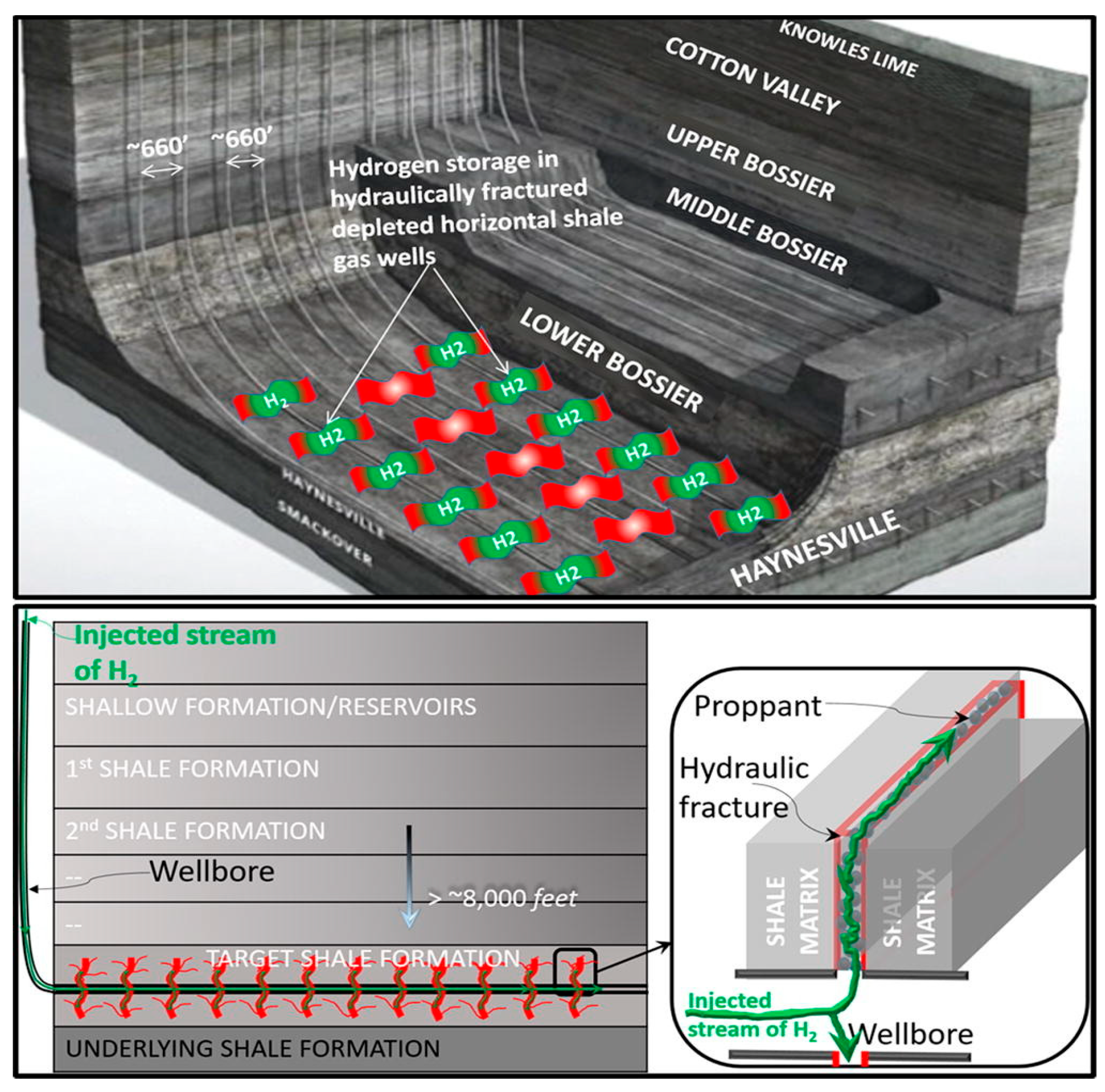
The potential of repurposing depleted shale gas wells in the Haynesville shale region for UHS was investigated in [37]. Using a suitable numerical model, the study demonstrated that hydrogen can be stored and retrieved efficiently from these wells. Most of the hydrogen injected was contained in hydraulic fractures surrounded by ultra-tight rock matrix (Figure 9). Simulation results estimated a current storage capacity of 0.4 million tons, projected to grow to 32.6 million tons by 2050. The strategy leverages on existing infrastructure, including compressor stations, which could help reduce capital and operational costs. Additional benefits included low water content and enhanced sealing properties, addressing common challenges in other geological formations. These findings support the viability of using inactive shale wells to scale hydrogen storage in a practical, affordable, and environmentally responsible manner.
Figure 9.
A multi-cycle hydrogen storage design in hydraulically fractured depleted horizontal shale gas wells. Upper panel depicts geology of Haynesville shale where hydraulic fractures are in red; the lower panel shows hydrogen containment in hydraulic fractures within impermeable rock matrix where the flow of injected H2 is shown in green (reproduced from [37] with permission).
A similar study was performed in [38] where a multiscale model was proposed for hydrogen transport and storage in partially depleted shale reservoirs. The paper also discussed the effects of gas diffusion, adsorption, slip flow, and continuous flow. After driving a computationally effective semi-analytical solution, the model was validated with a commercial numerical simulator. A hydrogen storage capacity assessment was conducted at high injection pressures using a shale reservoir in the Appalachian Basin.
Compared to shale-based hydrogen generation, storage-focused applications generally exhibit higher technology readiness levels (TRL 4–6), largely due to their reliance on well-established subsurface gas storage principles. Nevertheless, uncertainties remain regarding hydrogen–rock interactions, adsorption behavior, and the long-term performance of legacy wells exposed to hydrogen. Addressing these issues will require improved material selection, enhanced monitoring strategies, and further experimental validation under representative subsurface conditions.
Overall, the distinction between shale reservoirs used for hydrogen generation and those used for hydrogen storage is critical for accurately assessing technical feasibility and risk. While both applications hold promise within the evolving hydrogen economy, they are governed by fundamentally different physical processes and maturity levels. Recognizing this distinction enables more targeted research strategies and supports realistic expectations for the role of shale reservoirs in future hydrogen systems.
5.3. Hydrogen Separation, Purity, and Downstream Utilization Considerations
Although membrane-based and in-well separation concepts are frequently proposed for ISHG, achievable hydrogen purity under real reservoir conditions remains a critical uncertainty. Produced gas streams typically contain varying amounts of CO, CO2, residual hydrocarbons, and water vapor. Depending on reservoir composition and dominant reaction pathways, there may also be traces of H2S, NH3, and H3PO4. While laboratory studies demonstrate high hydrogen selectivity under controlled conditions, field-scale operations face challenges related to pressure fluctuations, temperature gradients, membrane fouling, and gas–solid interactions, all of which may reduce separation efficiency over time.
Incomplete hydrogen separation has direct implications for both ISHG performance and downstream utilization. The presence of CO and sulfur-containing species is particularly problematic for fuel cells, where even trace concentrations can poison catalysts and significantly reduce efficiency and lifetime [39]. For pipeline transportation and underground storage, contamination may also affect material compatibility and corrosion behavior, necessitating additional surface-level purification or blending steps. As a result, ISHG concepts that rely on downhole separation must be evaluated, not only in terms of hydrogen yield but also in terms of achievable and maintainable purity levels.
Overall, the sensitivity of ISHG systems to incomplete separation underscores the need for realistic purity targets aligned with their intended end use. While lower-purity hydrogen may be acceptable for certain industrial applications or blending scenarios, high-purity hydrogen required for fuel cells or dedicated hydrogen infrastructure will likely require supplementary surface processing. Explicit consideration of separation efficiency, contamination risks, and end-use requirements is therefore essential when assessing the practical viability of ISHG concepts.
5.4. Environmental and Safety Considerations for UHS
Beyond technical feasibility, UHS raises important environmental and safety considerations that must be carefully addressed. Hydrogen leakage through faults, fractures, or compromised wellbores represents a primary risk, particularly given hydrogen’s high diffusivity and low molecular weight. Even small leakage rates can impact storage efficiency and pose safety concerns at the surface. Recent studies emphasize that legacy wells, especially those not originally designed for hydrogen service, may present elevated leakage risks due to aging cement, corrosion, and repeated pressure cycling during injection and withdrawal operations [31].
Microbial activity within subsurface formations constitutes another environmental consideration. Certain microorganisms can consume hydrogen as an energy source, potentially leading to hydrogen losses and the production of undesired by-products such as methane or hydrogen sulfide [40]. These biogeochemical processes may alter reservoir chemistry over time and complicate long-term storage performance, particularly in formations with favorable conditions for microbial growth. While such effects are generally slow, they become increasingly relevant for long-duration or large-scale hydrogen storage projects.
Cement integrity and wellbore materials also play a critical role in ensuring safe containment. Experimental and field-based studies indicate that hydrogen exposure can increase cement porosity, weaken cement–casing bonding, and exacerbate micro-annulus formation, thereby increasing leakage pathways [40]. These risks highlight the importance of hydrogen-compatible cement formulations, robust barrier systems, and continuous monitoring strategies. Collectively, environmental and safety considerations reinforce that underground hydrogen storage, while promising, requires a conservative design philosophy and thorough risk assessment to ensure long-term operational safety and environmental protection.
5.5. Regulatory and Social Acceptance Considerations
Beyond technical and economic feasibility, the large-scale deployment of ISHG and UHS is strongly influenced by regulatory frameworks and social acceptance. Current subsurface regulations in many jurisdictions are primarily designed for hydrocarbon production, CO2 storage, or natural gas storage, and may not fully address the unique risks associated with hydrogen, such as high diffusivity, leakage potential, and material compatibility [41]. The absence of hydrogen-specific subsurface standards can create uncertainty for permitting, liability allocation, and long-term monitoring requirements, potentially slowing project development.
Social acceptance represents an additional challenge, particularly in regions with heightened public sensitivity to subsurface operations. Concerns related to leakage, safety, induced seismicity, and environmental impacts may affect public perception, especially when legacy oil and gas infrastructure is repurposed for hydrogen applications. Transparent risk communication, stakeholder engagement, and the demonstration of safe pilot projects are therefore essential to build public trust and acceptance.
Overall, regulatory clarity and societal acceptance should be viewed as integral components of ISHG development rather than external constraints. Early alignment between technology development, regulatory adaptation, and public engagement can significantly reduce deployment barriers and facilitate the responsible integration of in situ hydrogen technologies into future energy systems.
6. Conclusions
ISHG in hydrocarbon reservoirs represents a promising yet still emerging pathway for low-carbon hydrogen production, particularly when evaluated within the broader context of energy transition and net-zero emission targets. As reviewed in this study, several in situ approaches, including ISCG, aqua thermolysis-assisted processes, pyrolysis, methane reforming, and supercritical water gasification, demonstrate strong theoretical and experimental potential for hydrogen generation while leveraging existing subsurface resources and infrastructure. These approaches offer unique advantages such as reduced surface footprint, integrated carbon retention, and synergies with EOR or reservoir repurposing strategies. However, their feasibility is strongly influenced by reservoir conditions, reaction control, well integrity, and hydrogen separation and recovery mechanisms.
From a technology readiness perspective, most ISHG concepts currently reside in the early to intermediate TRL range (approximately TRL 2–5). Laboratory-scale experiments and combustion tube studies validating reaction pathways, catalyst performance, and hydrogen yields correspond to TRL 2–3, where fundamental principles and proof-of-concept demonstrations have been established. Bench-scale and pilot-scale investigations, including kinetic modeling, numerical simulations, and controlled reservoir-condition experiments, advance certain techniques such as ISC-based hydrogen generation and catalytic gasification toward TRL 4–5. At this stage, system integration, reaction stability, and hydrogen purity can be demonstrated under representative conditions, but full field-scale deployment remains limited.
Field implementation and commercial deployment (TRL 6–8) remain largely aspirational for in situ hydrogen generation. While analogous technologies such as ISC for heavy oil recovery, underground gas storage, and subsurface CO2 injection are already deployed at the commercial scale, direct hydrogen generation and long-term hydrogen handling in reservoirs face unresolved challenges. These include controlling high-temperature reactions in heterogeneous formations, managing multiphase flow and hydrogen migration, ensuring long-term wellbore and cement integrity under hydrogen exposure, and deploying reliable downhole separation technologies. Current field studies and numerical feasibility analyses suggest that pilot-scale demonstrations in mature or depleted reservoirs may represent a realistic next step toward advancing TRLs.
Overall, this review highlights that ISHG is not yet a fully mature technology, but rather a strategic mid-term opportunity that could complement surface-based hydrogen production methods as technological readiness improves. Continued progress will depend on integrated research efforts combining laboratory experimentation, reservoir-scale modeling, pilot field trials, and advances in materials, catalysts, and well completion design. With targeted development and systematic TRL advancement, ISHG could evolve into a viable component of the future hydrogen economy, particularly in regions with extensive legacy hydrocarbon infrastructure and strong decarbonization mandates.
Author Contributions
Conceptualization, M.H.O. and C.T.; methodology, M.H.O.; investigation, M.H.O., C.T. and C.Ç.; resources, M.H.O., C.T. and C.Ç.; writing—original draft preparation, M.H.O. and C.T.; writing—review and editing, C.Ç.; visualization, C.T. and C.Ç.; supervision, M.H.O.; project administration, C.Ç. and C.T. All authors have read and agreed to the published version of the manuscript.
Funding
This research received no external funding.
Data Availability Statement
No new data sets were created in this study.
Acknowledgments
The authors thank the three anonymous referees and the associate editor for their constructive feedback and recommendations.
Conflicts of Interest
Mr. Temizel is affiliated with the company of TerraPacific, Austin, TX 78731, USA, but the content of this review paper doesn’t pose any conflict of interest. The other authors declare no conflicts of interest, either.
Abbreviations
The following abbreviations are used in this manuscript:
| ATR | Autothermal reforming |
| EOR | Enhanced oil recovery |
| ISC | In situ combustion |
| ISG | In situ gasification |
| ISCG | In situ combustion gasification |
| ISHG | In situ hydrogen generation |
| SMR | Steam methane reforming |
| TRL | Technology readiness level |
| UGS | Underground gas storage |
| UHS | Underground hydrogen storage |
References
- Tingas, E.A.; Taylor, A.M. Hydrogen: Where it can be used, how much is needed, what it may cost. In Hydrogen for Future Thermal Engines; Tingas, E.A., Ed.; Springer: Berlin/Heidelberg, Germany, 2023; pp. 3–64. [Google Scholar]
- Tatarewicz, I.; Skwierz, S.; Lewarski, M.; Jeszke, R.; Pyrka, M.; Sekuła, M. Mapping the future of green hydrogen: Integrated analysis of Poland and the EU’s development pathways to 2050. Energies 2023, 16, 6261. [Google Scholar] [CrossRef] [Scilit]
- Koch, H.J. Biological hydrogen synthesis as an alternative energy of the future without environmental pollution. Rom. J. Ecol. Environ. Chem. 2024, 6, 92–100. [Google Scholar] [CrossRef] [Scilit]
- Ifticene, M.A.; Yan, K.; Yuan, Q. Fueling a carbon-zero future: Igniting hydrogen production from petroleum reservoirs via in-situ combustion gasification. Energy Convers. Manag. 2023, 298, 117770. [Google Scholar] [CrossRef] [Scilit]
- Mendrela, P.; Stanek, W.; Simla, T. Sustainability assessment of hydrogen production based on nuclear energy. Int. J. Hydrogen Energy 2024, 49, 729–744. [Google Scholar] [CrossRef] [Scilit]
- Jayaprabakar, J.; Hari, N.S.S.; Badreenath, M.; Anish, M.; Joy, N.; Prabhu, A.; Rajasimman, M.; Kumar, J.A. Nano materials for green hydrogen production: Technical insights on nano material selection, properties, production routes and commercial applications. Int. J. Hydrogen Energy 2024, 52, 674–686. [Google Scholar] [CrossRef] [Scilit]
- Baquero, J.E.G.; Monsalve, D.B. From fossil fuel energy to hydrogen energy: Transformation of fossil fuel energy economies into hydrogen economies through social entrepreneurship. Int. J. Hydrogen Energy 2024, 54, 574–585. [Google Scholar] [CrossRef] [Scilit]
- Angelico, R.; Giametta, F.; Bianchi, B.; Catalano, P. Green Hydrogen for Energy Transition: A Critical Perspective. Energies 2025, 18, 404. [Google Scholar] [CrossRef] [Scilit]
- Cherif, A.; Nebbali, R.; Sheffield, J.W.; Doner, N.; Sen, F. Numerical investigation of hydrogen production via autothermal reforming of steam and methane over Ni/Al2O3 and Pt/Al2O3 patterned catalytic layers. Int. J. Hydrogen Energy 2021, 46, 37521–37532. [Google Scholar] [CrossRef] [Scilit]
- Midilli, A.; Kucuk, H.; Topal, M.E.; Akbulut, U.; Dincer, I. A comprehensive review on hydrogen production from coal gasification: Challenges and opportunities. Int. J. Hydrogen Energy 2021, 46, 25385–25412. [Google Scholar] [CrossRef] [Scilit]
- Liang, X.; Zhao, Q.; Dong, Y.; Guo, L.; Jin, Z.; Liu, Q. Experimental investigation on supercritical water gasification of organic-rich shale with low maturity for syngas production. Energy Fuels 2021, 35, 7657–7665. [Google Scholar] [CrossRef] [Scilit]
- Squadrito, G.; Maggio, G.; Nicita, A. The green hydrogen revolution. Renew. Energy 2023, 216, 119041. [Google Scholar] [CrossRef] [Scilit]
- dos Santos, K.G.; Eckert, C.T.; De Rossi, E.; Bariccatti, R.A.; Frigo, E.P.; Lindino, C.A.; Alves, H.J. Hydrogen production in the electrolysis of water in Brazil, a review. Renew. Sustain. Energy Rev. 2017, 68, 563–571. [Google Scholar] [CrossRef] [Scilit]
- Risco-Bravo, A.; Varela, C.; Bartels, J.; Zondervan, E. From green hydrogen to electricity: A review on recent advances, challenges, and opportunities on power-to-hydrogen-to-power systems. Renew. Sustain. Energy Rev. 2024, 189, 113930. [Google Scholar] [CrossRef] [Scilit]
- Das, D.; Veziroǧlu, T.N. Hydrogen production by biological processes: A survey of literature. Int. J. Hydrogen Energy 2001, 26, 13–28. [Google Scholar] [CrossRef] [Scilit]
- Gao, F.-Y.; Yu, P.-C.; Gao, M.-R. Seawater electrolysis technologies for green hydrogen production: Challenges and opportunities. Curr. Opin. Chem. Eng. 2022, 36, 100827. [Google Scholar] [CrossRef] [Scilit]
- Okere, C.J.; Sheng, J.J. Review on clean hydrogen generation from petroleum reservoirs: Fundamentals, mechanisms, and field applications. Int. J. Hydrogen Energy 2023, 48, 38188–38222. [Google Scholar] [CrossRef] [Scilit]
- Song, P.; Li, Y.; Yin, Z.; Yuan, Q. Hydrogen generation from heavy oils via in-situ combustion gasification. In SPE Western Regional Meeting; SPE: Richardson, TX, USA, 2023; p. D031S007R003. [Google Scholar]
- Appiah Kubi, E.; Rahnema, H.; Koray, A.-M.; Shabani, B. Underground Hydrogen Storage: Steady-State Measurement of Hydrogen–Brine Relative Permeability with Gas Slip Correction. Gases 2025, 5, 26. [Google Scholar] [CrossRef] [Scilit]
- Afanasev, P.; Popov, E.; Cheremisin, A.; Berenblyum, R.; Mikitin, E.; Sorokin, E.; Borisenko, A.; Darishchev, V.; Shchekoldin, K.; Slavkina, O. An experimental study of the possibility of in-situ hydrogen generation within gas reservoirs. Energies 2021, 14, 5121. [Google Scholar] [CrossRef] [Scilit]
- Afanasev, P.; Smirnov, A.; Ulyanova, A.; Popov, E.; Cheremisin, A. Experimental Study of Catalytically Enhanced Cyclic Steam-Air Stimulation for In-Situ Hydrogen Generation and Heavy Oil Upgrading. Catalysts 2023, 13, 1172. [Google Scholar] [CrossRef] [Scilit]
- Pu, W.; Tang, X.; Li, L.; Liu, R.; Yang, Y. Experimental investigation on in-situ hydrogen generation from depleted heavy oil reservoir by gasification. Pet. Sci. Technol. 2024, 42, 5005–5022. [Google Scholar] [CrossRef] [Scilit]
- Luo, C.; Liu, H.; Hassanzadeh, H.; Zhou, S. In-Situ Hydrogen Generation through Heavy Oil Pyrolysis Catalyzed by Clay Minerals. SPE J. 2025, 30, 5077–5085. [Google Scholar] [CrossRef] [Scilit]
- Ikpeka, P.M.; Ugwu, J.O. In situ hydrogen production from hydrocarbon reservoirs–modelling study. RSC Adv. 2023, 13, 12100–12113. [Google Scholar] [CrossRef] [Scilit]
- Wang, Q.; Zhang, S.; Guo, J.; Chen, P. Advances in highly hydrided palladium. Front. Mater. 2024, 11, 1365526. [Google Scholar] [CrossRef] [Scilit]
- Paglieri, S.N.; Way, J.D. Innovations in palladium membrane research. Sep. Purif. Methods 2002, 31, 1–169. [Google Scholar] [CrossRef] [Scilit]
- Kanth, M.S.; Lakshmi Sandhya Rani, S.; Raja, V.K. Advancing ceramic membrane technology in chemical industries applications by evaluating cost-effective materials, fabrication and surface modification methods. Hybrid Adv. 2025, 8, 100380. [Google Scholar] [CrossRef] [Scilit]
- Gillick, S.R.; Babaei, M. In-Situ Hydrogen Production from Natural Gas Wells with Subsurface Carbon Retention. SPE J. 2024, 29, 2119–2129. [Google Scholar] [CrossRef] [Scilit]
- Askarova, A.G.; Afanasev, P.A.; Popov, E.Y.; Cheremisin, A.N.; Malaniy, S.E.; Volkov, D.A.; Cheremisin, A.N. In Situ Generation of Clean Hydrogen in Gas Reservoirs: Experimental and Numerical Study. In Proceedings of the SPE Gas & Oil Technology Showcase and Conference, Dubai, United Arab Emirates, 7–9 May 2024; SPE: Richardson, TX, USA, 2024; p. D022S001R002. [Google Scholar]
- Shi, H.; Ran, L.; Ancheyta, J. In-situ upgrading of heavy crude oils inspired by ex-situ petroleum refining processes. Fuel 2024, 365, 131113. [Google Scholar] [CrossRef] [Scilit]
- Wood, D.A. Chapter 19. Well integrity for underground gas storage relating to natural gas, carbon dioxide, and hydrogen. In The Fundamentals and Sustainable Advances in Natural Gas Science and Eng, Sustainable Natural Gas Drilling; Wood, D.A., Cai, J., Eds.; Elsevier: Amsterdam, The Netherlands, 2024; Volume 4, pp. 551–576. [Google Scholar]
- Yang, M.; Chai, M.; Yuan, S.; Feng, T.; Wang, S.; Zhang, J.; Feng, Q.; Chen, Z.; Wei, T.; Wu, G.; et al. In-situ combustion for heavy oil and oil sands recovery: Recent progress, field applications, and future perspectives. Energy Fuels 2024, 38, 10395–10420. [Google Scholar] [CrossRef] [Scilit]
- Bhandari, R.; Trudewind, C.A.; Zapp, P. Life cycle assessment of hydrogen production via electrolysis—A review. J. Clean. Prod. 2014, 85, 151–163. [Google Scholar] [CrossRef] [Scilit]
- Banerjee, T.; Balasubramanian, G. Hydrogen diffusion induced dislocation transformations in a nickel superalloy. Fuel 2025, 384, 134064. [Google Scholar] [CrossRef] [Scilit]
- Kutchko, B.G.; Strazisar, B.R.; Lowry, G.V.; Thaulow, N. Degradation of Well Cement by CO2 under Geologic Sequestration Conditions. Environ. Sci. Technol. 2007, 41, 4787–4792. [Google Scholar] [CrossRef] [Scilit]
- Yan, K.; Jie, X.; Li, X.; Horita, J.; Stephens, J.; Hu, J.; Yuan, Q. Microwave-enhanced methane cracking for clean hydrogen production in shale rocks. Int. J. Hydrogen Energy 2023, 48, 15421–15432. [Google Scholar] [CrossRef] [Scilit]
- Singh, H. Hydrogen storage in inactive horizontal shale gas wells: Techno-economic analysis for Haynesville shale. Appl. Energy 2022, 313, 118862. [Google Scholar] [CrossRef] [Scilit]
- Wang, Y.; Sun, Q.; Chen, F.; Wang, M. Multiscale Model for Hydrogen Transport and Storage in Shale Reservoirs. SPE J. 2024, 29, 3238–3264. [Google Scholar] [CrossRef] [Scilit]
- Choi, S.; Jong, I.; Lee, S. Advanced Strategies for Mitigating Catalyst Poisoning in Low and High Temperature Proton Exchange Membrane Fuel Cells: Recent Progress and Perspectives. Crystals 2025, 12, 129. [Google Scholar] [CrossRef] [Scilit]
- Heinemann, N.; Alcalde, J.; Miocic, J.M.; Hangx, S.J.T.; Kallmeyer, J.; Ostertag-Henning, C.; Hassanpouryouzband, A.; Thaysen, E.M.; Strobel, G.J.; Schmidt-Hattenberger, C.; et al. Enabling large-scale hydrogen storage in porous media—The scientific challenge. Energy Environ. Sci. 2021, 14, 853–864. [Google Scholar] [CrossRef] [Scilit]
- Bade, S.O.; Tomomewo, O.S.; Meenakshisundaram, A.; Ferron, P.; Oni, B.A. Economic, social, and regulatory challenges of green hydrogen production and utilization in the US: A review. Int. J. Hydrogen Energy 2024, 49, 314–335. [Google Scholar] [CrossRef] [Scilit]

Disclaimer/Publisher’s Note: The statements, opinions and data contained in all publications are solely those of the individual author(s) and contributor(s) and not of MDPI and/or the editor(s). MDPI and/or the editor(s) disclaim responsibility for any injury to people or property resulting from any ideas, methods, instructions or products referred to in the content. |
© 2026 by the authors. Licensee MDPI, Basel, Switzerland. This article is an open access article distributed under the terms and conditions of the Creative Commons Attribution (CC BY) license.