3.1. Review of U.S. Patents
The United States accounts for the largest number of patented developments. The earliest documented attempts to apply solar energy to gasification processes also originated in the U.S.
The patent by Antal [
7] (1976) is recognised as basic and among the earliest patented solar gasification technologies. This patent discloses a method for producing synthesis gas from solid organic waste by employing concentrated solar radiation as the sole heat source. The process combines pyrolysis and gasification of organic feedstocks with subsequent catalytic conversion, enabling the transformation of waste materials into energy-rich gases such as hydrogen (H
2), carbon monoxide (CO), and methane (CH
4). The significance of this invention lies both in its demonstration of concentrated solar energy as a driver of chemical transformations and in its potential application to waste management.
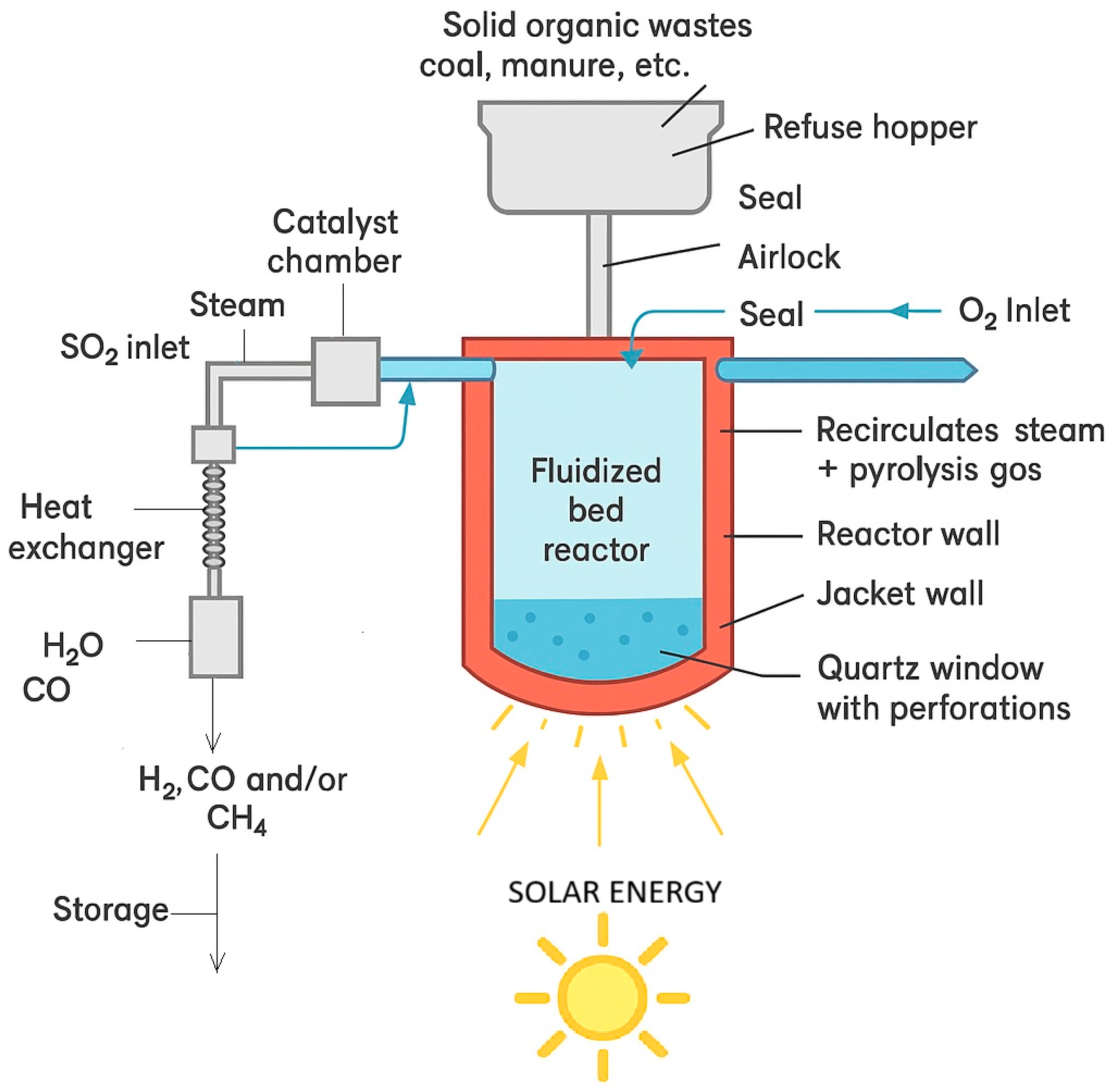
The installation described in Patent [
7] and schematized in
Figure 1 comprises a solar furnace at the top of the tower, which uses a field of heliostats to focus direct solar radiation on a fixed focal point located at the base of a vertically oriented fluidised bed gasifier reactor. Solar energy enters the reactor through perforated quartz windows, where it is absorbed by the surface of solid fuel particles, effectively converting radiant energy into localised heat in the reaction zone. The process begins with the introduction of pre-ground solid organic matter into the reactor through a hopper with an air lock. The waste is impregnated with a catalyst, such as cobalt molybdate or sodium bicarbonate (NaHCO
3), which is applied to the surface of the raw material by means of water impregnation and subsequent drying. Under the influence of a solar-heated environment (usually 600–700 °C), the organic fraction undergoes endothermic pyrolysis, resulting in the formation of volatile gases (CO, CO
2, CH
4, H
2) and a carbon-containing residue. At the same time, the fuel undergoes catalytic gasification through reactions with a preheated working medium (steam, CO
2 or a combination thereof), which is introduced under pressure through the base of the reactor in a countercurrent to maintain fluidisation and improve mass and heat transfer.
Technology limitation: Implementation of the technology requires the use of expensive catalysts; for maximum efficiency, inorganic impurities must be removed, which increases the cost of raw material preparation. The fluidised bed is essential for the operation of the described plant, but it is unstable and requires additional attention to maintain. The original design [
7] considered only a fluidised-bed gasifier. Subsequently, Gregg [
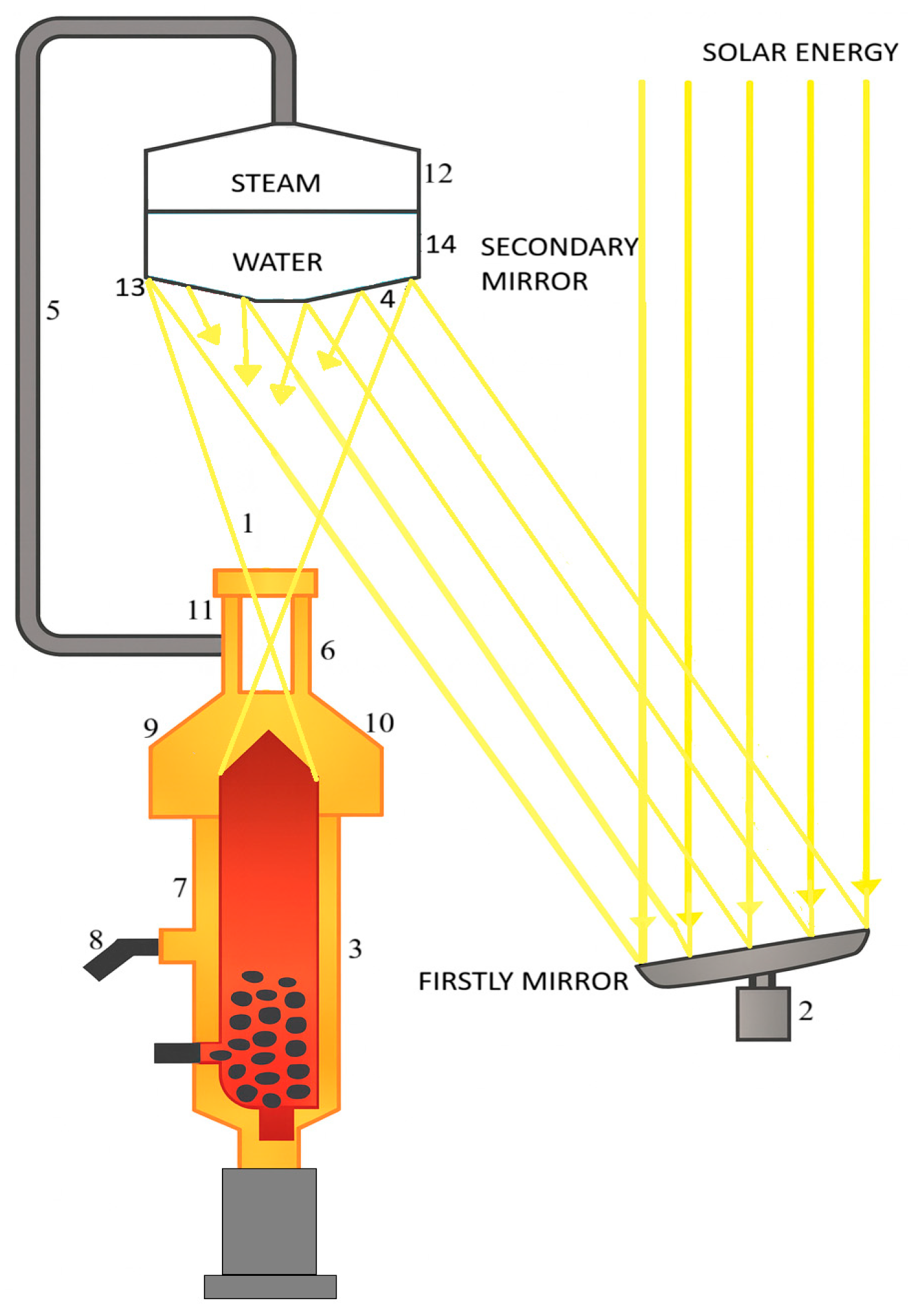
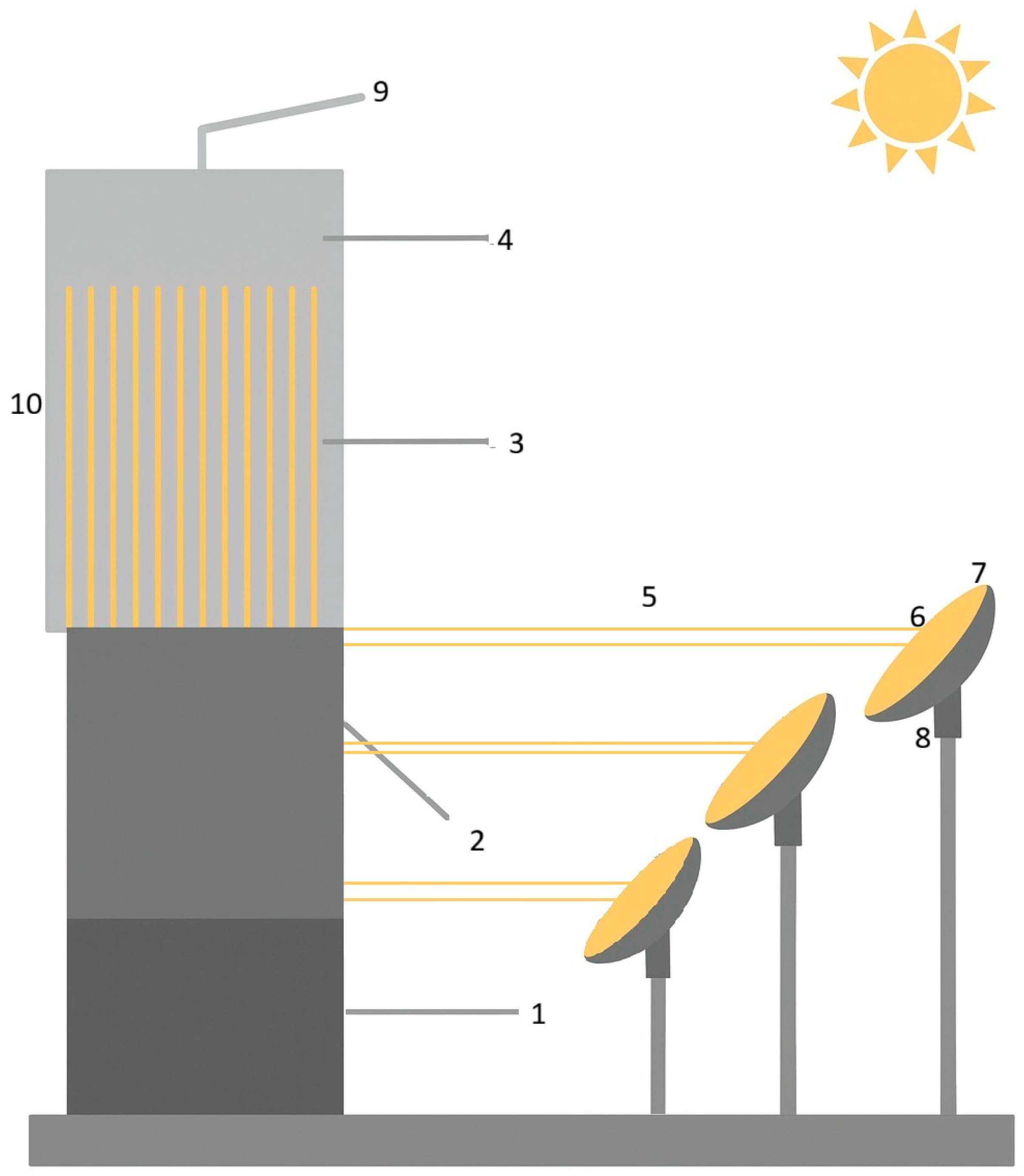
8] expanded the concept to incorporate moving-bed gasifiers and introduced an additional mirror positioned at the top of the tower, which are schematized in
Figure 2. This mirror was designed to receive concentrated solar radiation reflected by ground-based heliostats, re-concentrate it, and redirect it toward the quartz window of the gasifier. In addition, the system provided heat recovery from the secondary mirror for steam generation [
9]. One of the evident drawbacks of early designs was the rapid dust deposition on the quartz window during coal use, which obstructed solar radiation from entering the reactor bed. To address this, Frosch and Qader [
10] proposed the introduction of a refractory honeycomb shell separating the solar window from the gasifier. This shell simultaneously functioned as a preheater for the gasification medium, composed of steam mixed with a portion of the generator gas. Their system also incorporated recovery and recirculation of the spent alkali metal catalyst, along with a backup reactor to maintain heat supply to the fluidised bed under conditions of insufficient solar input. In subsequent work, Aiman and Gregg (1983) [
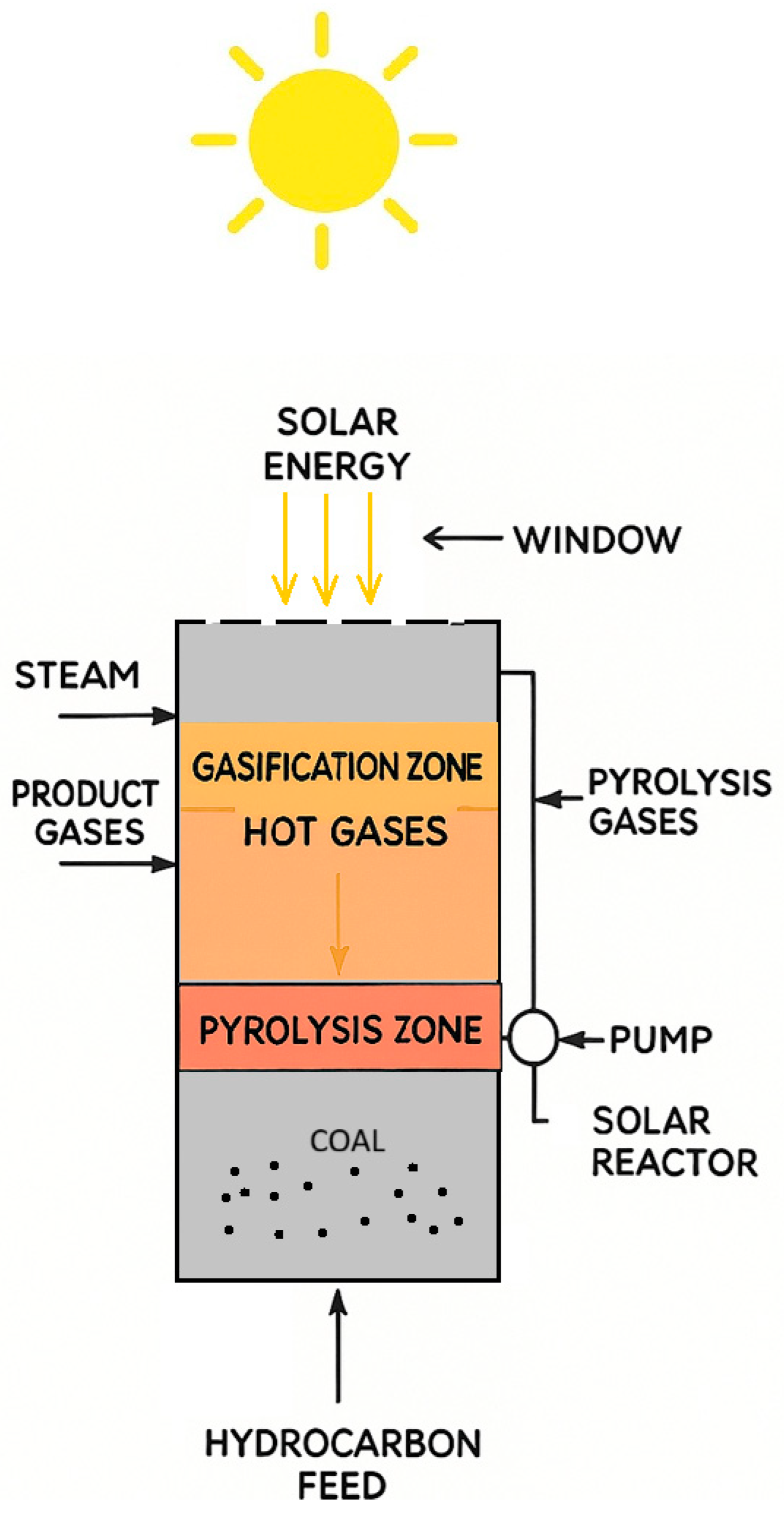
8] eliminated the use of catalysts by developing a three-zone gasifier–comprising a coal zone, a pyrolysis zone, and a gasification zone–operating at 900–1100 K and 40 atm. Unlike the previous patent [
8], coal is considered a raw material. The invention describes a gasification technology based on hydrocarbon conversion under the influence of solar energy, a significant part of which is converted into the chemical energy of new gas compounds.
Coal (or biomass) is converted into a gaseous product. Coal is fed into a solar reactor, and solar energy is directed into the reactor onto the charred coal, creating a gasification front and a pyrolysis front. The gasification zone is formed significantly above the coal level in the reactor. The pyrolysis zone is formed directly above the coal level. Water vapour fed into the reactor adjacent to the gasification zone reacts with coal to form a gaseous product that is burned. Solar energy provides the energy for the endothermic steam-coal reaction. Hot gaseous products flow from the gasification zone to the pyrolysis zone to heat the coal. The gases are removed from the pyrolysis zone and reintroduced into the reactor zone adjacent to the gasification zone. In this process, hydrocarbons are removed from the gas by converting steam into hot coal. The gaseous product is removed from the reactor area between the gasification zone and the pyrolysis zone [
8].
Technology limitation: the system requires complex equipment to focus solar energy in two separate areas and maintain circulation of the pseudo-liquefied layer by redirecting the gas flow from the gasification zone to pyrolysis using a forced draft fan, which consumes additional electricity.
The invention described in Douglas Y. Jakahi [
11] is based on the principles outlined in the Antal patent [
7], developing and improving upon its approach. However, unlike the patent [
7], where the main gasification medium was gas (steam, CO
2), the invention [
11] uses molten salt, which increases heat transfer efficiency and catalyses the process. Technology reduces equipment costs and allows the reactor to be placed at ground level, eliminating the need for expensive support structures.
The supply of concentrated solar radiation keeps the medium in a molten state and achieves temperatures at which the carbon material reacts with steam to form a gaseous product. Additionally, the gasification medium may include alloying additives that improve solar radiation absorption [
11]. The reactor design includes a chamber with a molten gasification medium and is equipped with a transparent window at the top through which solar radiation is directed downward from a horizontal reflector. A special partition system forms two chambers: an upper chamber containing the window and a lower chamber partially immersed in the gasification medium, with an opening for the synthesis gas to exit. This configuration prevents the window from meeting the aggressive medium and ensures process stability.
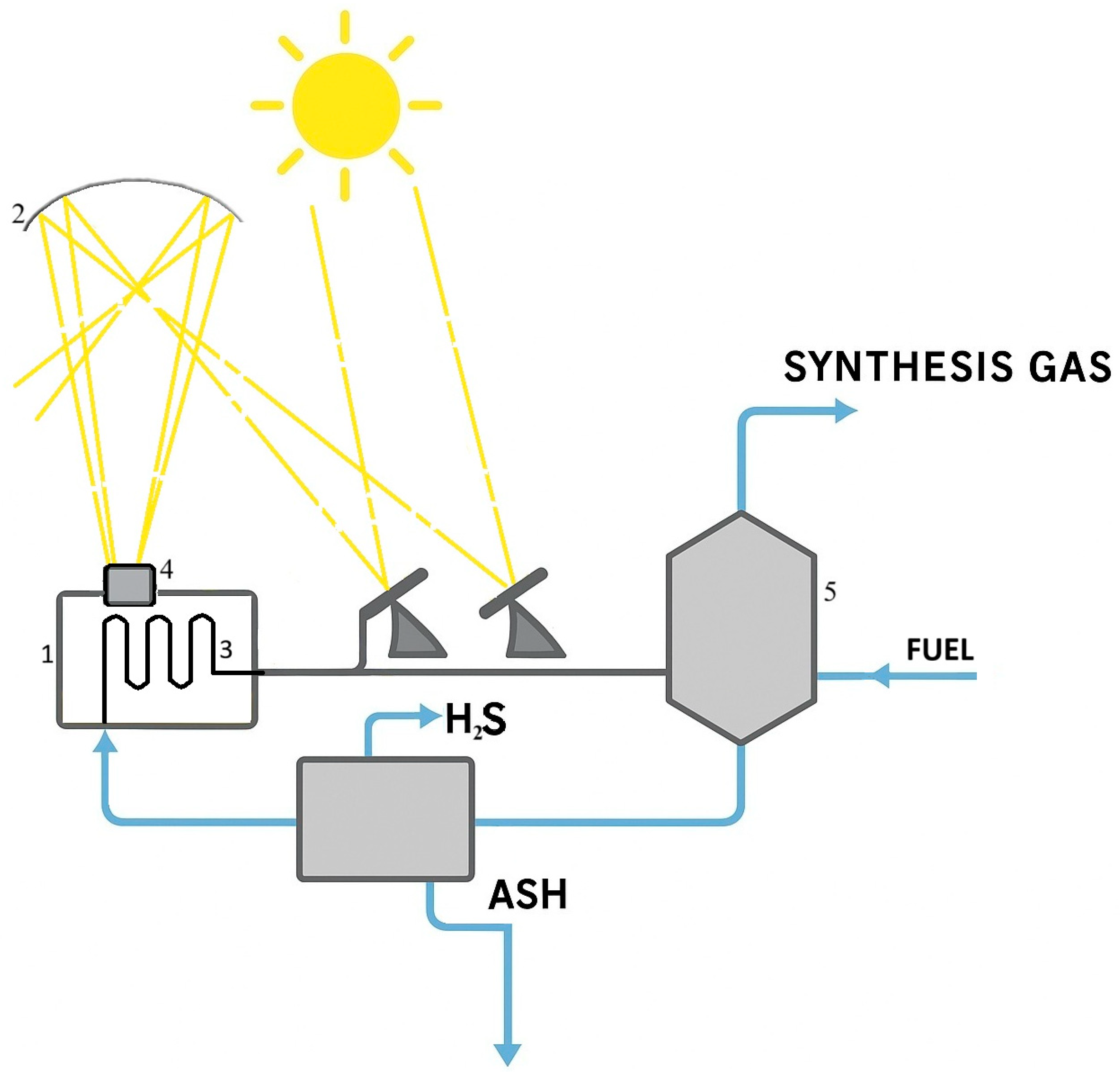
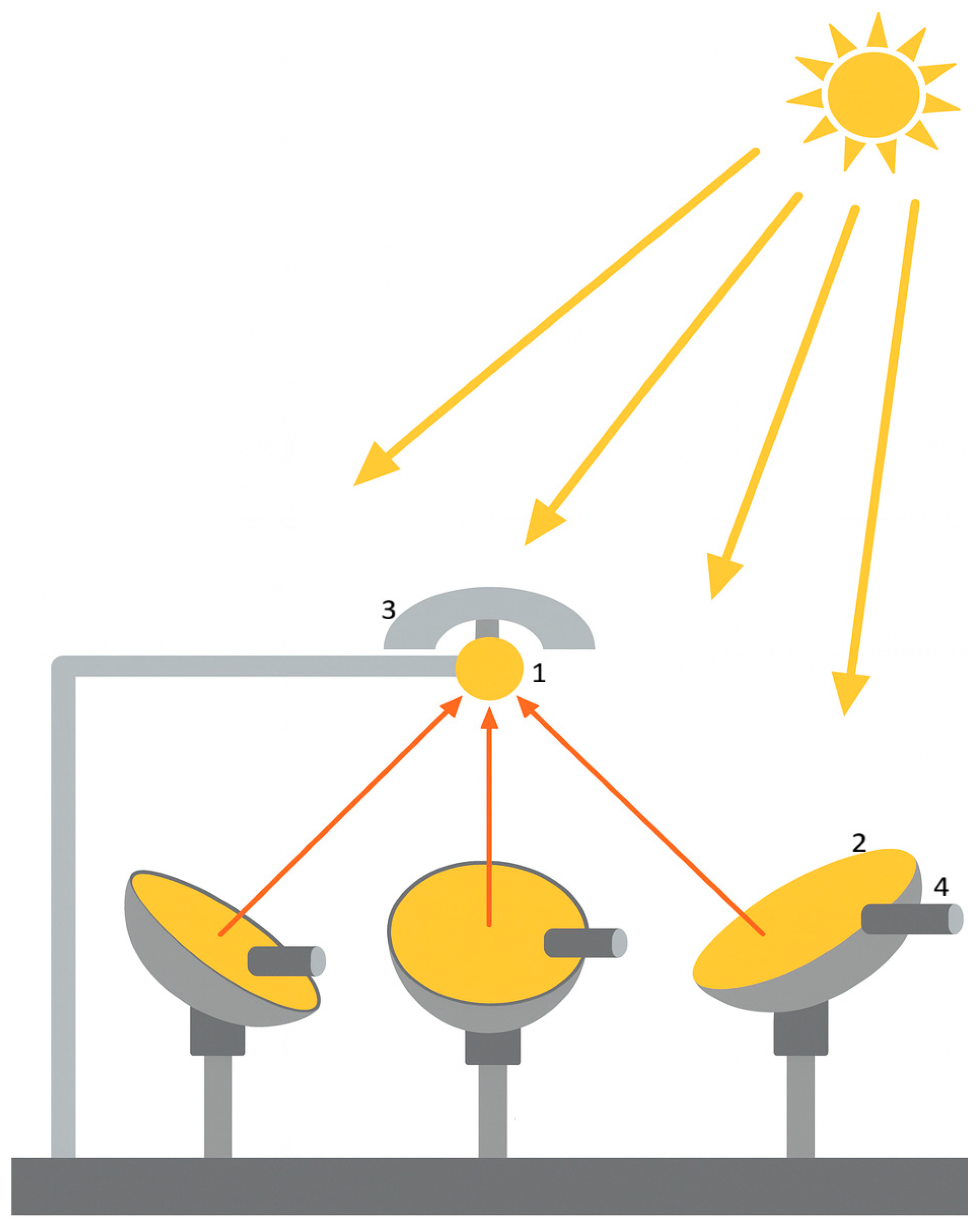
Figure 3 shows a general diagram of the installation, including the reactor with the molten gasification medium, the horizontal reflector, and the solar radiation delivery system.
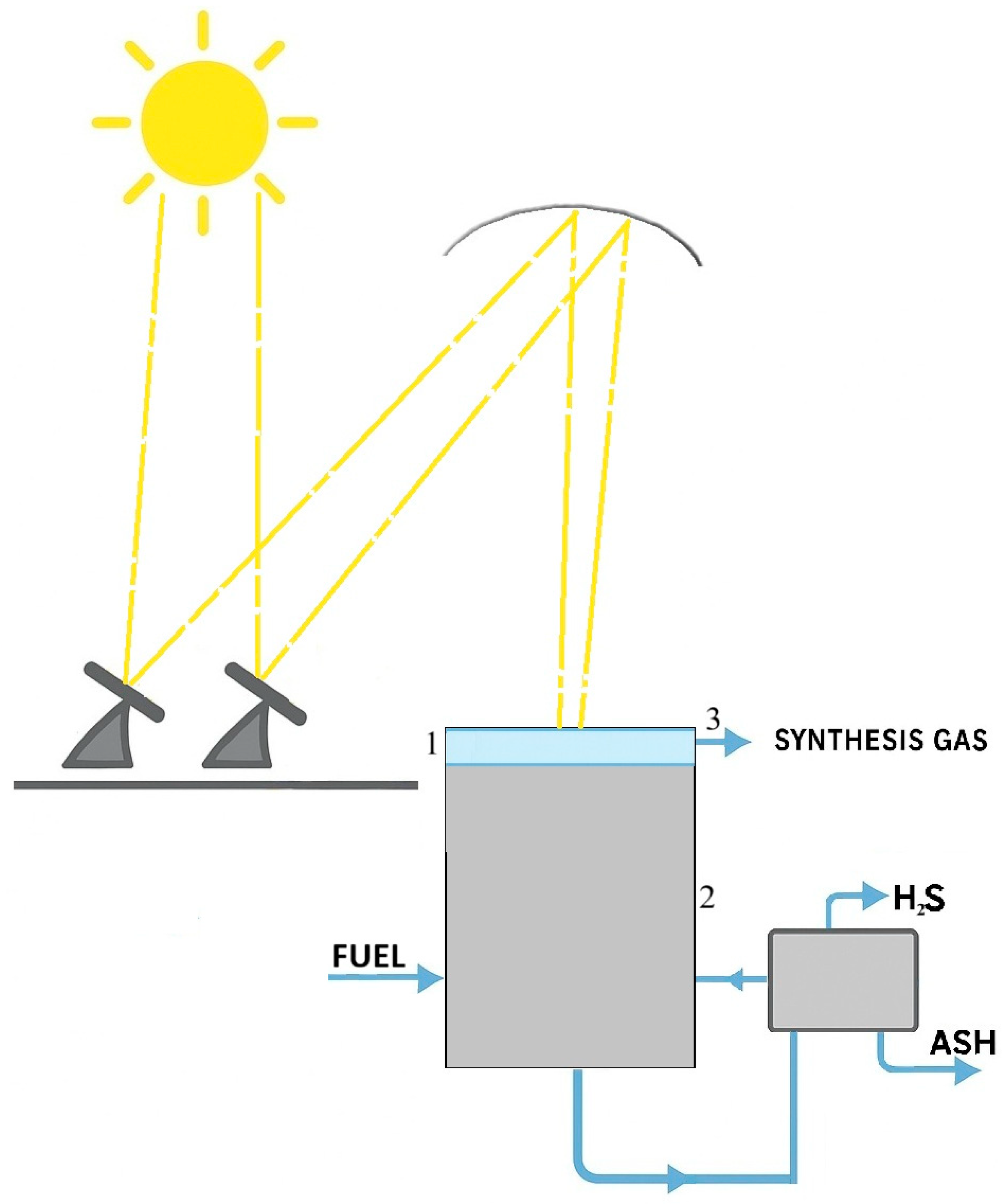
Figure 4 details the reactor design, in particular, the partition system that protects the transparent window from contact with the aggressive medium.
In
Figure 3 the reflector 2 directs concentrated solar radiation into the central receiver 1. The radiation passes through a transparent window 4 at the top of the receiver and impinges on the tubes 3 located within it. Window 4 serves to minimise heat loss from the receiver, while the tubes are heated to high temperatures by the incident solar flux. Molten salt circulating through these tubes is thereby heated and subsequently transported via pipelines to the gasification reactor vessel 5, where the stored solar heat is transferred to the gasification process.
In the configuration illustrated in
Figure 4, molten salt is heated by solar radiation transmitted through the transparent window 1 and absorbed directly within the combined heating and gasification vessel 2. The upper section 3 of vessel 2 is designed as a ring-shaped dome containing an outlet pipe for the collection and discharge of synthesis gas. The molten salt level in vessel 2 is regulated to prevent contact with the transparent window 1, thereby avoiding its exposure to the high-temperature and potentially corrosive molten medium. These design characteristics eliminate the need for auxiliary components such as additional pipes, pumps, and valves.
Technology limitation: although molten salts have high heat capacity, their thermal conductivity can be a limiting factor for rapid and uniform heating of the entire reaction medium; molten salts and carbon-containing materials can cause intense corrosion of reactor walls and pipelines; transparent windows can become contaminated or cloudy due to reaction product deposits, especially in the case of coal, which reduces the efficiency of solar radiation transfer; molten salts require special storage and transportation conditions, as they can crystallize when the temperature drops, leading to pipeline blockages.
Patent [
12] describes a system in which an aqueous dispersion of carbonaceous material is introduced into a reactor in such a way that water droplets surrounding the carbonaceous material particles are formed. These droplets pass through a high-temperature focal zone created by concentrated solar radiation. When the particles cross this zone, rapid heating causes gasification reactions, converting the carbonaceous material into synthesis gas.
The installation described in Patent [
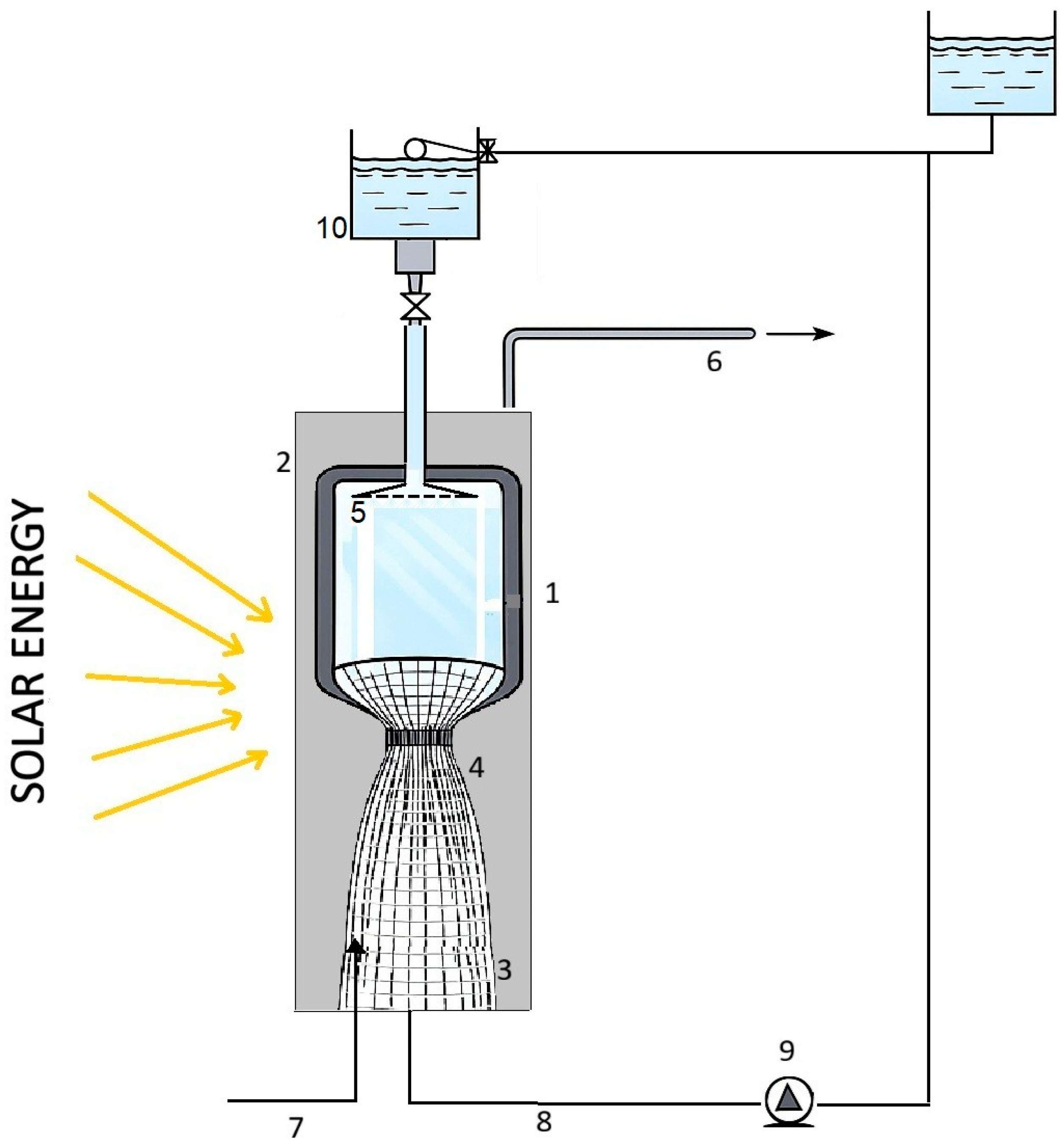
12] and schematized in
Figure 5 comprises a vertically oriented tubular solar reactor (1) with upper and lower sections (2, 3) fabricated from a transparent, heat-resistant material such as quartz. The reactor is designed to receive concentrated solar radiation, focused by an external solar concentrator system into an internal high-temperature focal zone (4). An aqueous suspension of finely ground carbonaceous feedstock is introduced from a constant-pressure reservoir (10) via a spray head equipped with precision nozzles (5), producing a downward spray or droplet stream that traverses the focal zone. The reactor includes an upper gas outlet (6) for continuous removal of synthesis gas and a lower Section (3) equipped with a gas injection port (7) allowing the introduction of a countercurrent flow of steam, CO
2, or recycled synthesis gas to control the residence time of the reacting particles. Unreacted solid particles are collected at the bottom and recirculated through a loop (8), including a pump (9) and a check valve. This invention presents a two-phase (liquid-solid) reaction system, directly irradiated by concentrated solar flux–unlike previous approaches that relied on indirect heating or fixed solid beds. The use of water droplets enables rapid heat transfer to the embedded carbon particles while minimising the thermal load on the liquid volume.
Technology limitation: The use of water-coal suspensions (WCS) adds to complexity and operating costs. Furthermore, there are difficulties in spraying WCS through nozzles designed for fuel oil. High temperatures impose severe limitations on the transparent window, which must withstand thermal stress and intense flow without deteriorating in performance.
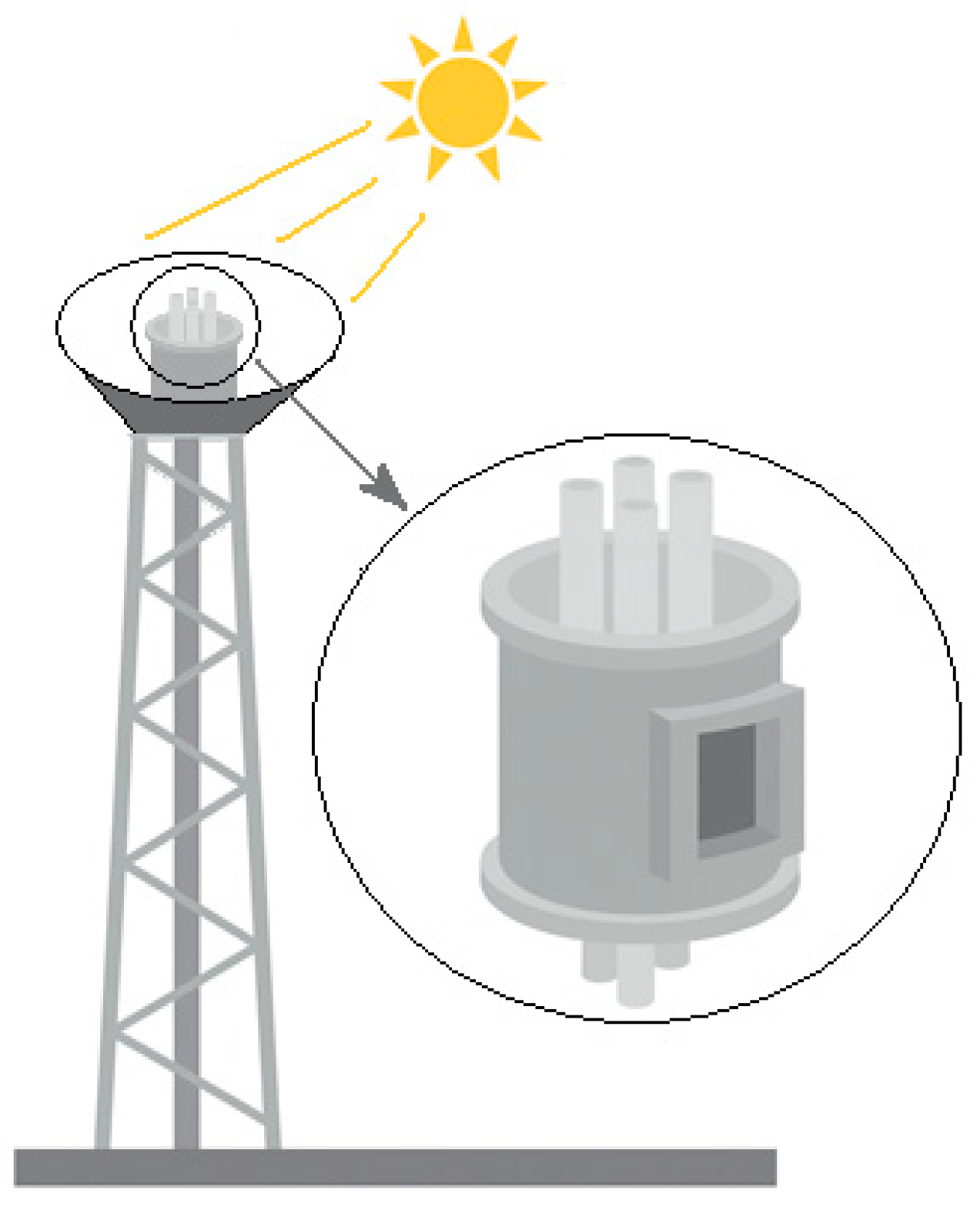
The installation described in Patent [
13] was schematized in
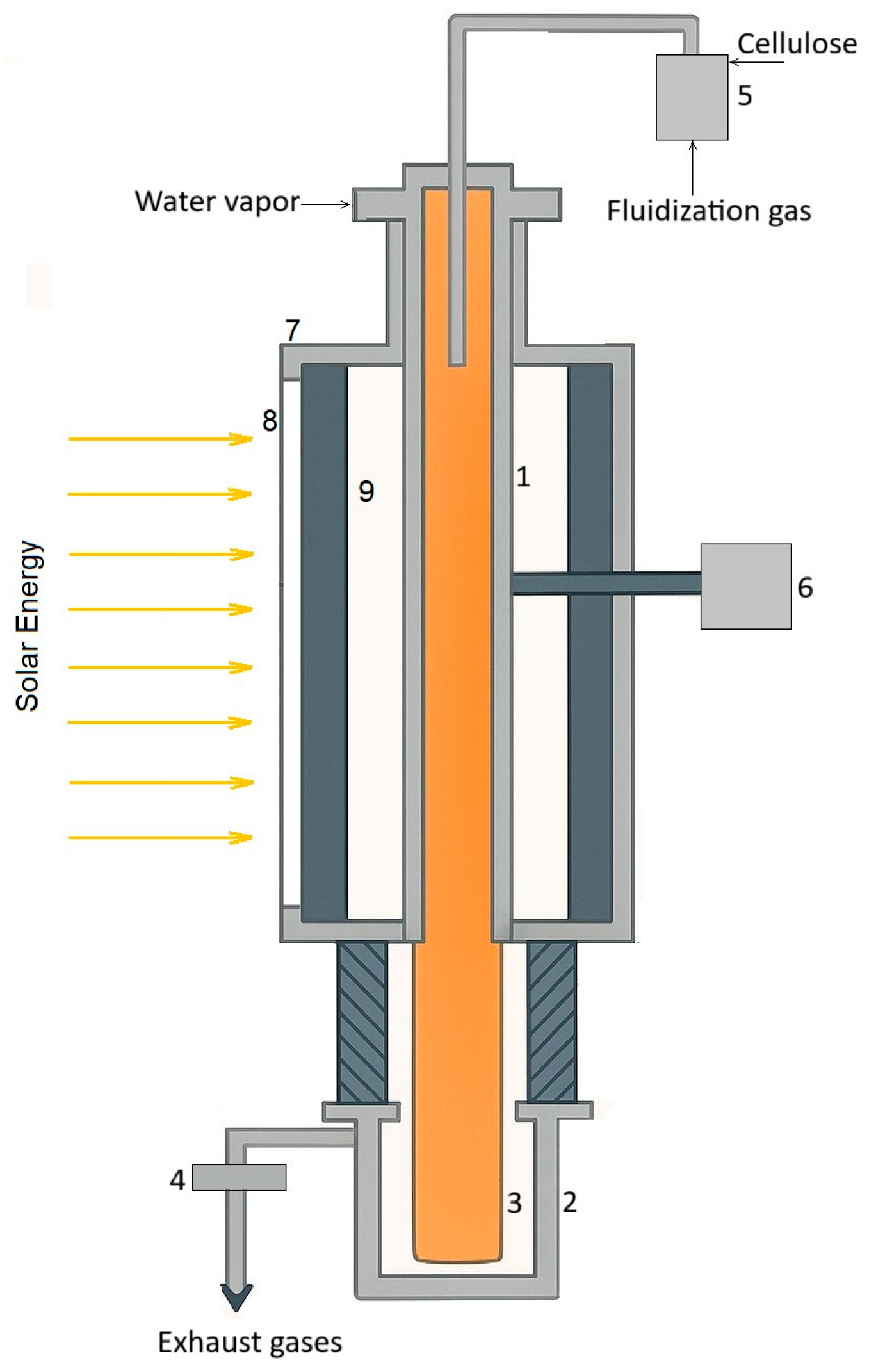
Figure 6. Biomass is pyrolysed and/or gasified in a solar thermal reactor system at elevated temperatures. The system is based on a multi-tube solar reactor consisting of an outer shell and one or more inner reaction tubes (shells). These inner shells are either directly or indirectly exposed to solar flux–focused sunlight delivered through a solar concentrator system (e.g., a heliostat field).
In a direct heating configuration, solar radiation passes through a transparent window and falls directly onto biomass particles carried by a carrier gas inside the reaction tube. The biomass is fed into the reactor in the form of finely dispersed particles (usually <200 μm) carried by an inert or reactive gas such as steam or CO
2. When heated by the sun to temperatures ranging from 950 °C to 1400 °C, the biomass undergoes rapid pyrolysis or gasification with a residence time of less than 5 s and a heating rate exceeding 1000 °C/s. These rapid conditions prevent the formation of condensable resin species and promote high selectivity for synthesis gas production. The resulting gas stream can be further processed by water gas conversion or Fischer-Tropsch synthesis for the catalytic production of hydrogen or liquid fuel, as proposed in patent [
14] based on the high-temperature multi-tube solar reactor shown in
Figure 7.
The system is based on a solar receiver mounted on a tower and equipped with several entrained flow reaction tubes. A heliostat field focuses sunlight onto an aperture in the receiver, achieving a flux density > 1000 times the concentration. Inside the reactor, biomass gasification and optional steam methane reforming (SMR) take place, resulting in pure synthesis gas with an optimised H2:CO ratio (2.1–2.8:1).
Technology limitation: Reactor components, in particular transparent windows, are at risk of contamination from resin condensate, especially when coal is used as a raw material.
In another U.S. patent [
10], solar radiation is introduced into a refractory honeycomb (original) shell that surrounds a fluidised bed reactor. Solar energy is focused on the honeycomb structure, which stores and distributes thermal energy. The system also has preheating paths for steam and recycled product gas, a catalyst regeneration unit, and a backup furnace for non-solar operation. This integrated design provides highly efficient continuous gasification with reduced raw material and energy consumption compared to conventional methods.
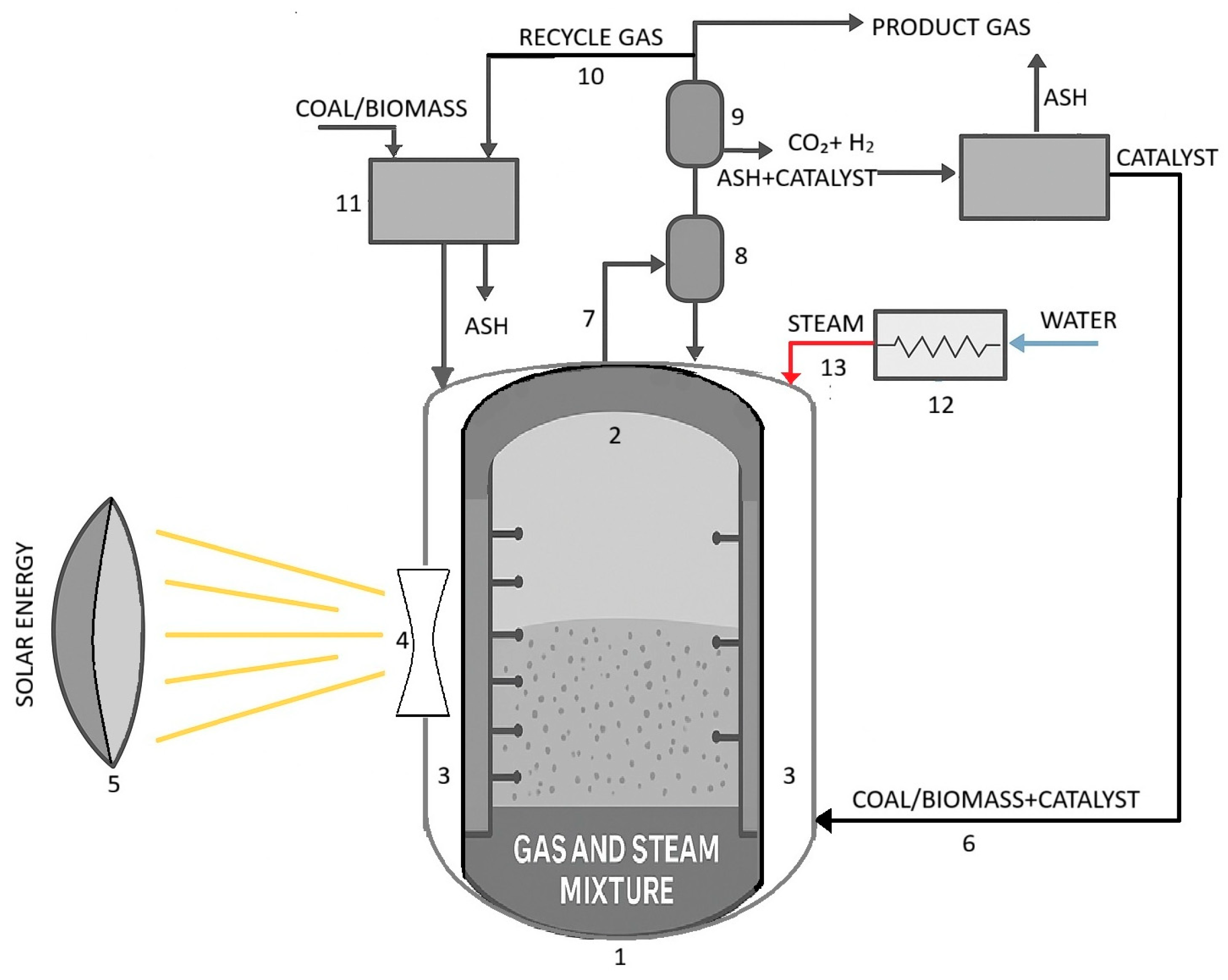
The installation described in Patent [
10] and schematized in
Figure 8 includes a reactor (1), a reaction zone (2) surrounded by a refractory honeycomb shell (3), and an insulating casing with a solar window (4) through which solar radiation from a concentrator (5) enters the honeycomb structure. Carbonaceous feedstock (coal or biomass) is fed into the reactor (arrow 6), and steam and fluidising gas are preheated as they pass through the honeycomb shell, after which they enter the reaction zone for gasification. The synthesis gas and ash are discharged through a pipe (7), the ash is captured in a cyclone (8), and the gas is purified in a scrubber (9). Part of the gas is recirculated (10) back for use as fluidising gas. A backup furnace (11) is provided for start-up and operation in the absence of sunlight. The high-heat-capacity refractory honeycomb shell is a new solar heat absorption zone, by means of which the present invention heats the fluidising gas and steam to the desired temperatures for gasification. Water is initially introduced into steam generator (12), where steam is formed. The steam passes through pipeline (13) into the refractory honeycomb shell. The refractory honeycomb shell is maintained at the desired temperature (up to 1093 °C) by introducing high-intensity solar radiation from the solar concentrator (5) through the solar window (4) into the high-heat-capacity refractory honeycomb shell.
Technology limitation: There is no description of the heat energy source for steam generation. Due to the direct contact between the solid fuel flow and the honeycomb shell, it is likely to become dusty and accumulate condensate of ash-oil components, which will lead to a deterioration in the throughput capacity of the glass window (4).
Unlike previous inventions, patent [
15] uses a series of heliostats to direct sunlight onto a secondary mirror mounted on a tower, which redirects the radiation through a quartz window into a gasification reactor. The installation described in Patent [
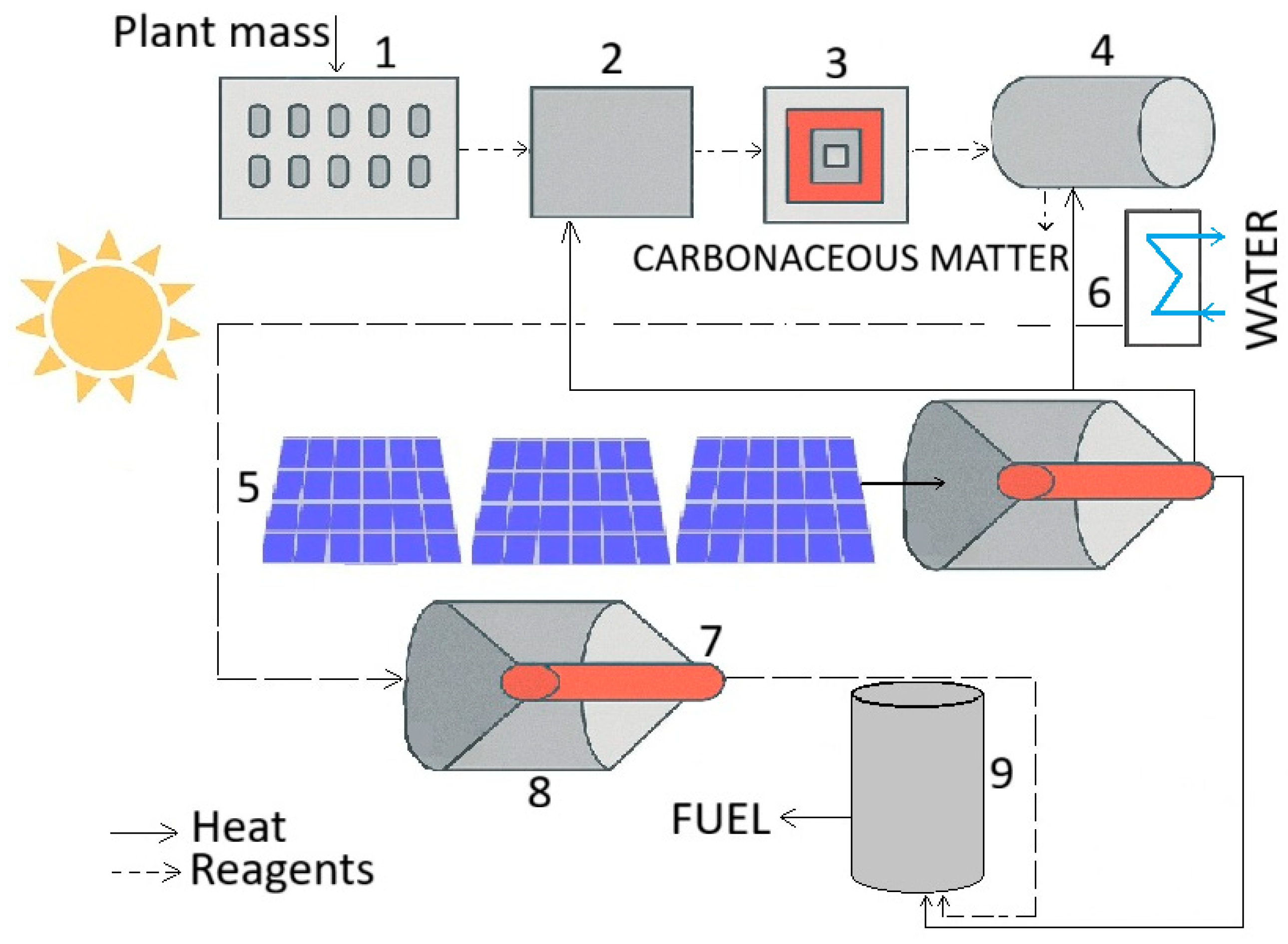
15] was schematized in
Figure 9. The reactor has a vertically or horizontally moving layer (compacted or fluidised) of coal, where steam reacts with heated coal to produce combustible gases. A new aspect is the integration of a steam generator at the rear of the secondary mirror, which uses absorbed solar energy to generate process steam, thereby increasing efficiency. The design minimises window contamination by solid particles and optimises heat distribution.
Approximately 20% of the incident solar flux can be productively used to produce the steam required for the gasification reaction. Neglecting scattering losses, the secondary mirror thus becomes a nominally 100% efficient element, the absorbed solar radiation produces steam in the upper part of the tower where it is needed, and the remaining reflected solar radiation is directed through the inlet window into the reactor, where it triggers the endothermic gasification reaction of steam and coal. Thus, the requirement for the reflectivity of the secondary mirror is reduced to approximately 80%, which can be easily achieved with conventional metal reflective surfaces. Typically, the reflectivity of mirrors deteriorates over time [
15].
Technology limitation: The difficulty of concentrating the rays in the gasification zone (the focus will “drift”) due to the limited mobility of the steam generator, as well as the complicated system of reflectors, the adjustment of which will require a movable reflector support structure.
3.2. Review of European Patents
Although most patents in this field are concentrated in the United States, attention should also be directed to developments originating in Europe and Asia. A global patent search identified only a single invention from the European Union addressing this subject. Patent [
16] proposes an alternative approach to enhancing the efficiency and environmental performance of coal gasification through the integration of solar energy. Examination of this patent provides a comparative perspective, underscoring the technological distinctions between U.S. and European approaches to incorporating renewable energy sources into coal conversion systems.
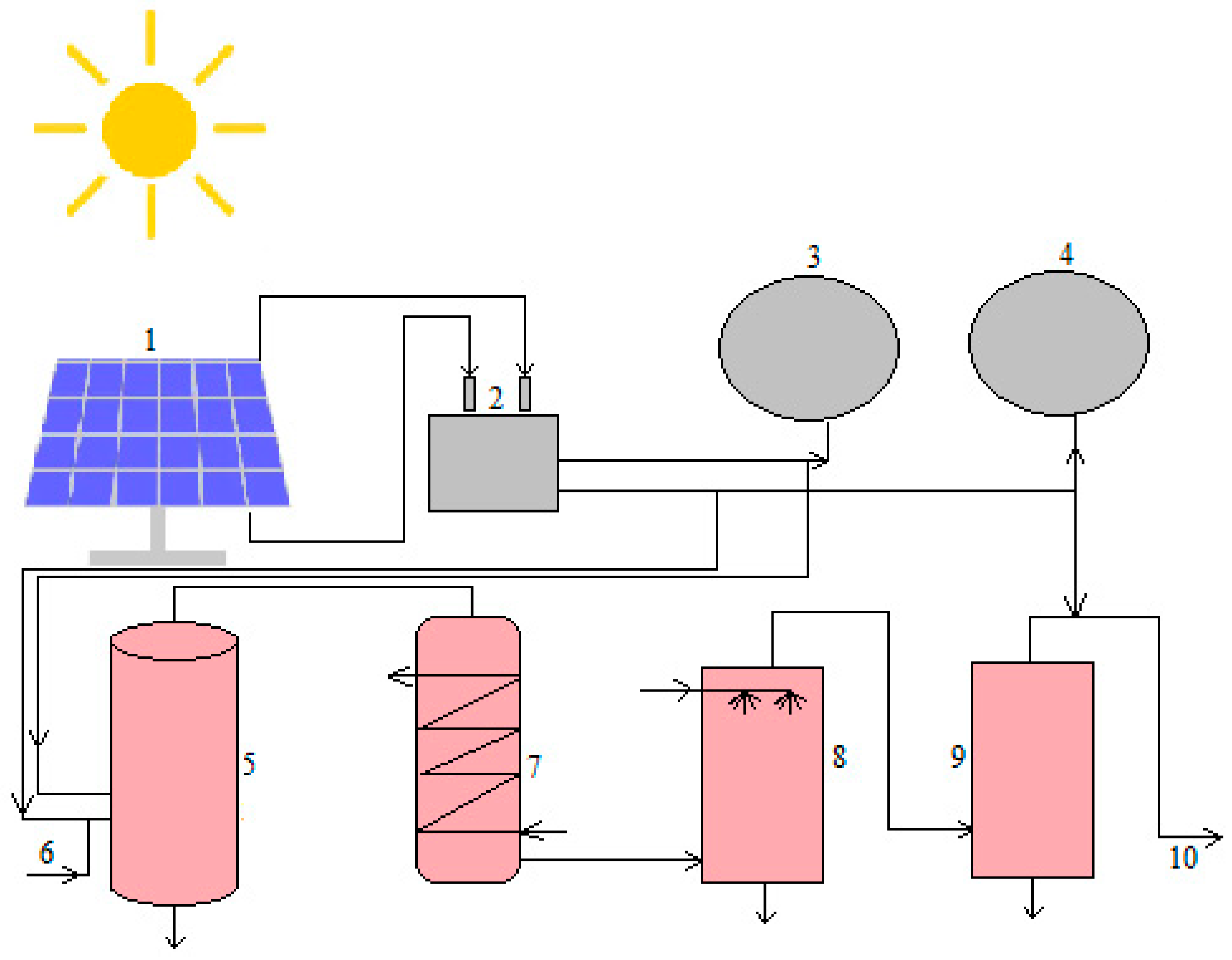
The installation described in Patent [
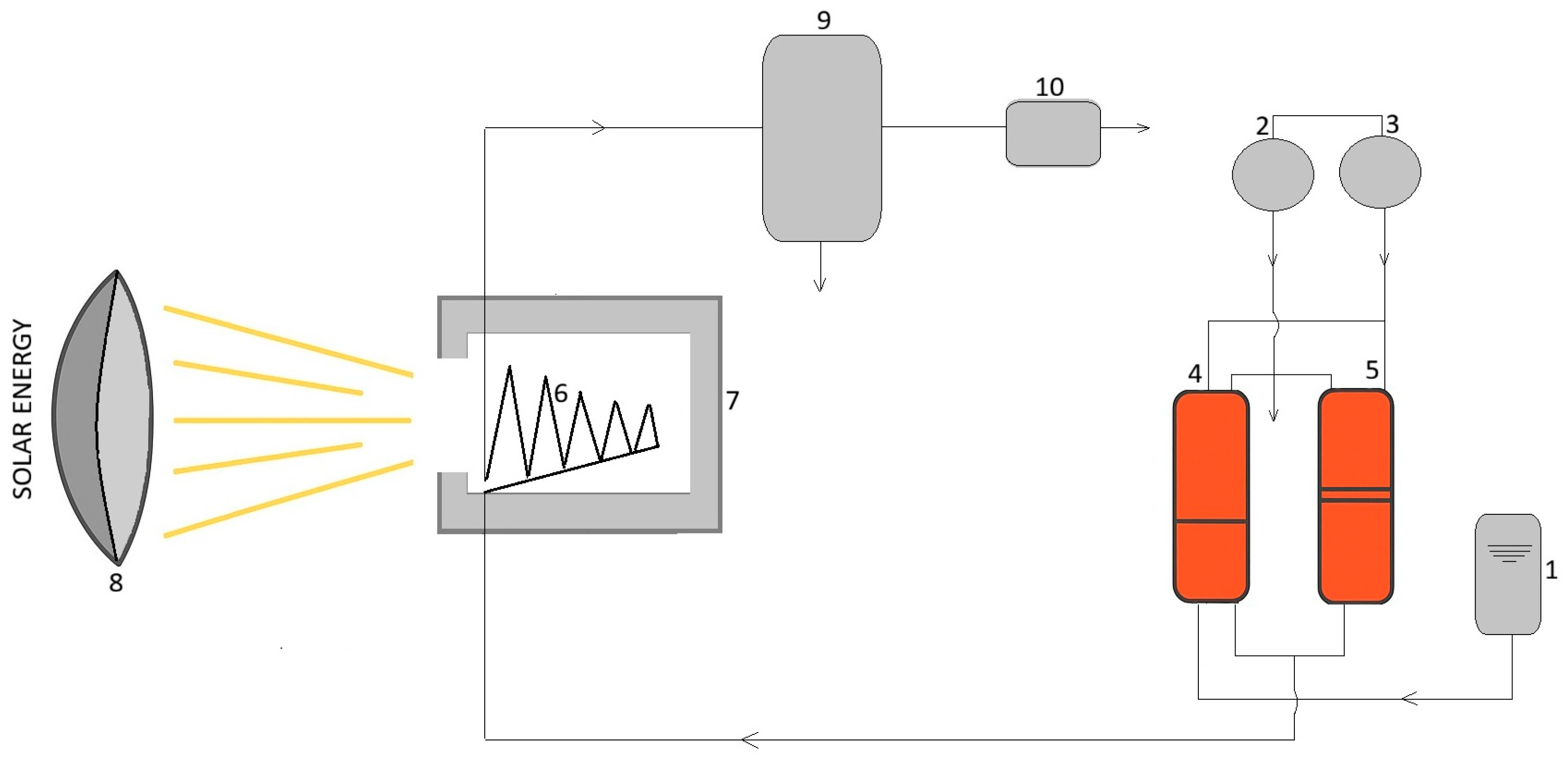
16] was schematized in
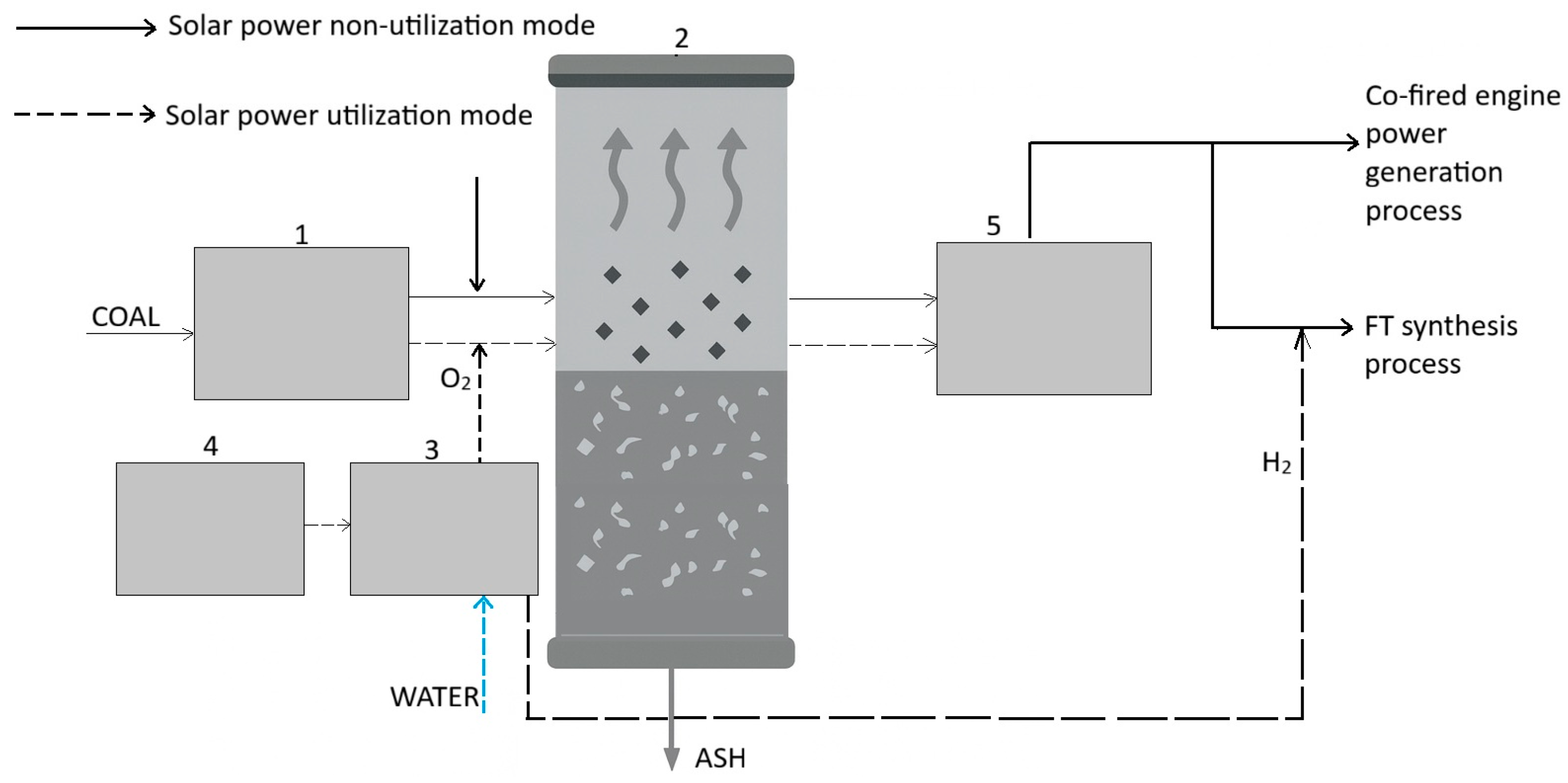
Figure 10. The main innovation is the replacement of direct thermal exposure to sunlight for fuel gasification with the generation of electrical energy through solar panels for water electrolysis. The oxygen is then fed into the gasifier, and the hydrogen into the synthesis gas. This partially eliminates the need to burn fuel, significantly increasing thermal efficiency and reducing CO
2 emissions. Moreover, the method involves the partial addition of hydrogen (a product of electrolysis) to increase the calorific value of the resulting gas by 21–22% and/or to produce ultra-high-temperature steam for improved steam reforming. At the same time, CO
2 emissions are comparable to those of petroleum fuel, which is a significant step forward in decarbonised fossil fuel energy systems.
The system uses solar energy to generate direct current through photovoltaic panels or solar thermal collectors (1), which power an electrolyzer (2) that splits water into oxygen and hydrogen, which are stored in gas holders (3, 4). Crushed coal is fed into a high-pressure, high-temperature gasification reactor (5), where it reacts with oxygen and superheated steam (produced via a steam line heated by the sun or waste heat 6) to produce synthesis gas (CO + H2). The synthesis passes through heat recovery (7), purification (8), and acid gas removal (9) units before exiting as clean product gas (10). The process allows for the efficient use of solar energy, converting it into both reactive gases (O2, H2) and thermal energy, resulting in a cleaner and more sustainable coal-to-gas conversion process.
Technology limitation: The technology uses solar energy for water electrolysis rather than directly for gasification. Thus, solar energy undergoes two conversions (light ⟶ electricity, electricity ⟶ oxygen, hydrogen). Each stage has its own losses. With single-stage use (light ⟶ heat), losses are reduced. Supplying pure oxygen to the gasifier requires high material costs compared to air. The production and storage of hydrogen and oxygen in pressurised vessels create safety risks and a complex design.
3.4. Review of Chinese Patents
Along with other countries, China is a leader in both the number of patent applications and the number of scientific publications in the field of coal application and processing.
The installation described in Patent [
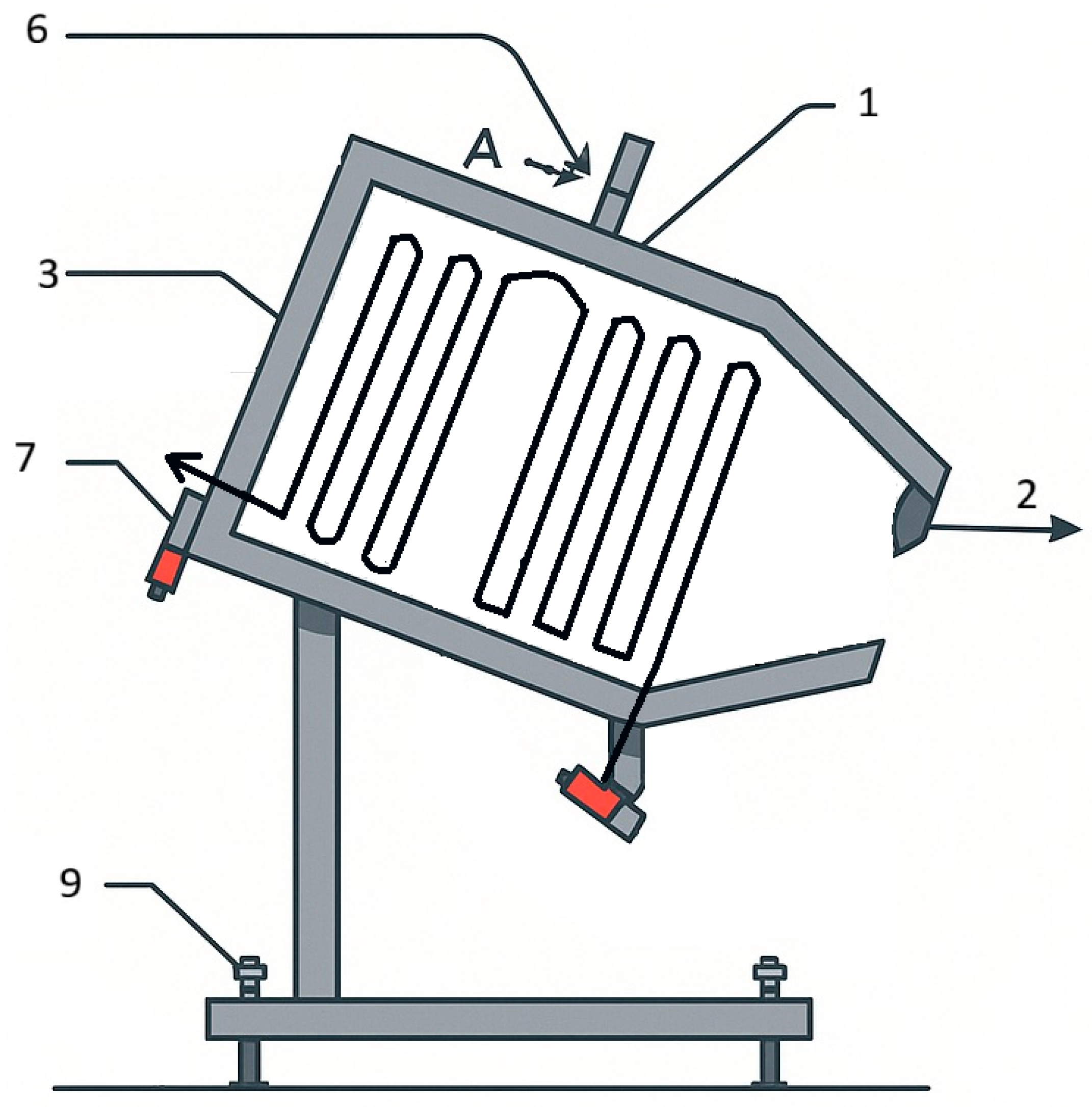
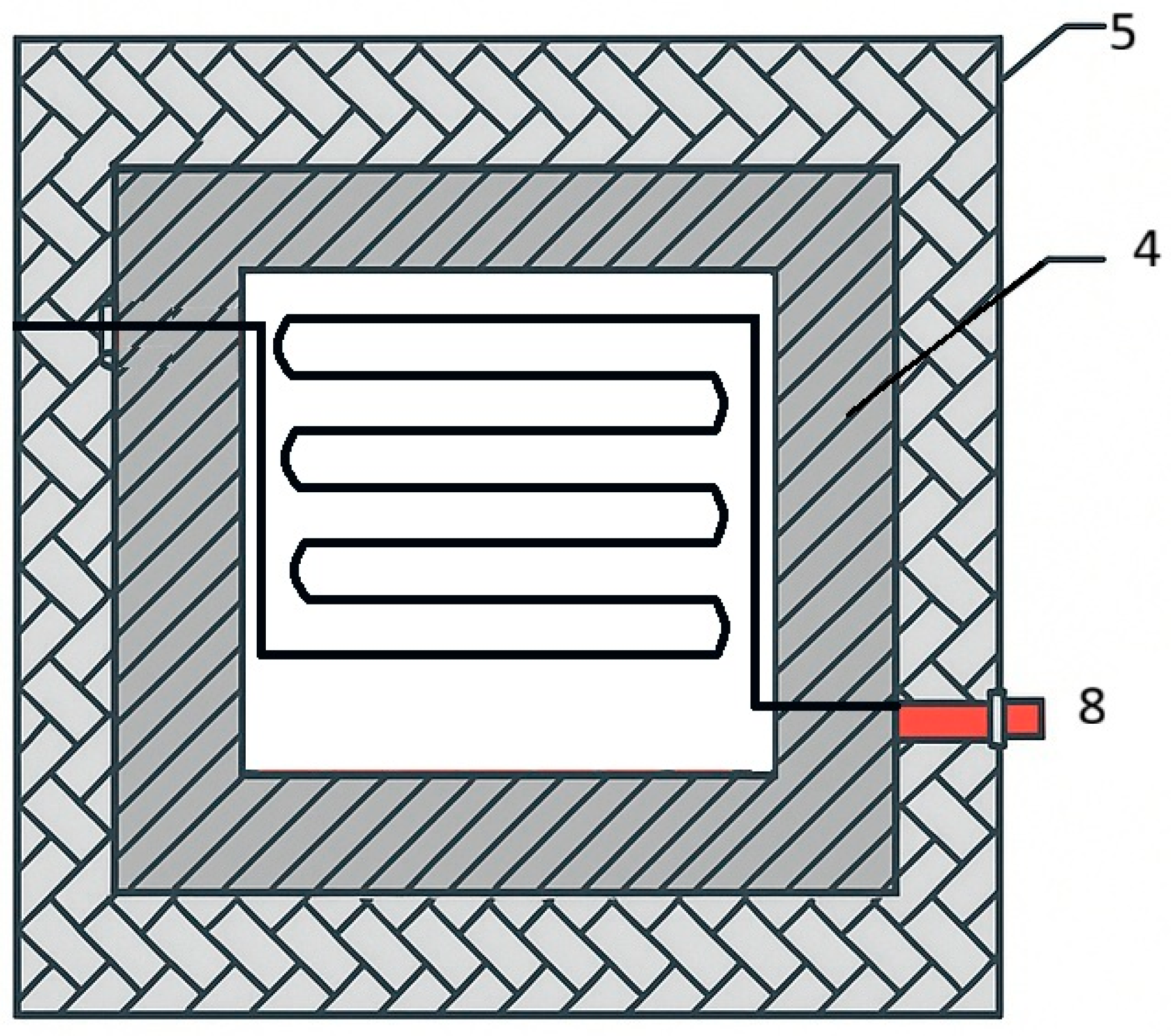
18] from Xi’an Jiaotong University and schematized in
Figure 12 discloses a solar-powered supercritical steam gasification reactor for producing hydrogen from biomass. This invention is a new system that combines a solar thermal receiver with a serpentine supercritical water reactor, allowing direct solar heating of biomass and pulp mixtures. The system incorporates a secondary conical concentrator to enhance solar flux at the aperture and improve overall energy efficiency.
The installation described in Patent [
18] and schematized in
Figure 12 shows a cavity solar absorber (marked with the number 1) installed on a tower and supported by a metal frame structure (tower). The absorber is tilted at an angle that corresponds to the azimuth axis of the heliostat tracking system, which maximises the incidence of solar radiation. A conical secondary solar concentrator (2) is in the opening (light collector) of the absorber to increase the density of the solar flux. A serpentine tubular reactor (3) is built into the cavity, divided into a preheating section and a reaction section. The walls of the absorber cavity are constructed of refractory bricks (4) in
Figure 13 and wrapped with thermal insulation (5). Also shown are several thermocouples (6, 7, 8) embedded in the insulation and wall thermocouples (3) for temperature control, as well as an auxiliary electric heater located at the base of the cavity. An adjustable screw base (9) allows for precise adjustment of the angle of inclination. This configuration emphasises the integration of direct solar heat input with the operation of a high-pressure, high-temperature reactor.
Technology limitation: the design contains a coil with a large number of sharp turns (180 °C), which will contribute to the precipitation of coal particles (in the case of coal use) at the turn from the flow. Installation requires additional costs for the pump drive and devices for creating a water-coal suspension. The reactor operates under high temperature and pressure conditions necessary to maintain supercritical parameters, which increases the complexity of the system, material costs, and safety issues.
The installation described in Patent [
19] and schematized in
Figure 14 describes a fixed-point grid biomass gasification system that integrates point-focusing solar mirrors with biomass gasification technology. The system employs a dynamic tracking mechanism to maintain optimal solar energy concentration on stationary gasification units, thereby improving process efficiency and reducing operating costs.
The technology includes an array of point-focusing solar mirrors (2) that concentrate sunlight onto one or more stationary biomass gasification units (1) at temperatures of 200–1000 °C. Each mirror is mounted on a dual-axis tracking system (horizontal and vertical axes) controlled by an integrated electronic system (4), which ensures continuous focal alignment as the sun moves. Secondary reflectors (3) optionally increase the concentration of energy. In this patent, solar energy is used as the primary heat source to control the biomass gasification process. Solar thermal energy either directly heats the biomass or indirectly transfers heat through a heat exchanger, replacing or supplementing traditional fossil fuel-based heating methods. This solar-based approach improves sustainability by reducing dependence on external energy sources while maintaining the efficiency of high-temperature gasification.
Technology limitation: Although the design overcomes the limitations of traditional tower and dish systems by enabling the scaling of distributed applications, practical implementation may face challenges in maintaining precise focal alignment under varying environmental conditions and integrating secondary focusing optics.
Another Chinese patent [
20] schematized in
Figure 15 presents a method for converting Eichhornia crassipes (water hyacinth) into combustible gas through biomass gasification using solar energy. The method of converting water hyacinth involves converting energetic “water hyacinth” into “gas” by compressing and heating it with solar energy at a certain water content. This method consists of the following: build a large-scale gasifier in or near a water source (e.g., a lake), install water hyacinth and add it to the gasifier’s biomass hopper with a certain water content, isolate it from oxygen (air), and at the same time collect sunlight to create high temperatures. The cooled fuel gas contains biomass energy and solar energy. Uncooled fuel gas can be directly used for combustion and power generation. The proposed system combines biomass pretreatment through mechanical dehydration and anaerobic conditions with solar thermal energy to achieve high-temperature gasification.
Solar radiation is concentrated using parabolic mirrors and redirected using a rotating “light transmission head” to achieve a temperature inside the reactor exceeding 700 °C. Under these conditions, organic components (C, H, O, N compounds) undergo thermal cracking, resulting in a synthesis gas mixture rich in H
2, CO, CH
4, and NH
3. In
Figure 15, component (1) is the base of the gasifier, providing structural support. Component (2) is the absorber heating chamber containing heating tubes (3) integrated into the biomass chamber (4), where compressed water hyacinth is located. Concentrated solar rays (5) are directed into a rotating light transmission head (6) system, which receives sunlight (7) reflected from a parabolic mirror (8). The resulting gas exits through the gas outlet (9), and liquid byproducts are discharged through the liquid outlet (10).
Technology limitation: The complexity of creating a “hyacinth” device. The formation of ammonia, NH3, during subsequent combustion will cause harmful nitrogen oxide emissions.
Patent [
21] schematized in
Figure 16 describes an innovative approach to producing hydrogen from biomass through supercritical water gasification (SCWG) using direct solar energy as a heat source. This method incorporates a multi-tray solar concentrator system with a supercritical water reactor, achieving high hydrogen yield without dependence on external fuel sources. Compared to other traditional solar thermochemical hydrogen production methods (which typically require >1200 °C), this method successfully reduces the reaction temperature to below 350 °C, thereby simplifying material selection and reducing costs.
The technology uses a system in which biomass mixed with water is pumped under high pressure into a reactor (6), where supercritical gasification takes place. The reactor is in an absorber chamber (7), which is heated by a multi-parabolic solar concentrator system (8). These dishes automatically track the movement of the sun and focus its energy on absorption, achieving intense, localised heating. The direct use of solar energy provides the heat necessary to maintain supercritical conditions (over 374 °C and 22 MPa) in the reactor, which allows for the efficient conversion of biomass into hydrogen-rich gas without external heating sources.
Technology limitation: Like invention [
18], the complexity of creating and maintaining critical parameters. In addition, an open window for sunlight to enter the reactor (6) will cause heat loss through convection of hot air flow.
3.6. Author’s Concept of a Solar Gasifier
Based on a review of patents from various countries on fuel gasification using solar energy and an analysis of the advantages and disadvantages of the inventions presented, this article proposes a proprietary concept for a device for steam gasification of coal using solar heat, suitable for conditions in Kazakhstan and Central Asia. The described device has been filed with the Patent Office of the Republic of Kazakhstan, as noted in
Section 6. Patents. As shown in the above review, most authors use solar heat directly in the gasifier or through photovoltaics for water electrolysis with subsequent introduction of oxygen and hydrogen separately at different stages. The main idea is to obtain high-temperature steam (800–900 °C) using solar heat in the first stage, which, as shown by inventions [
10,
15], is quite possible, and then use this steam in a coal gasifier simultaneously as a heat source (heat carrier) and directly as steam itself.
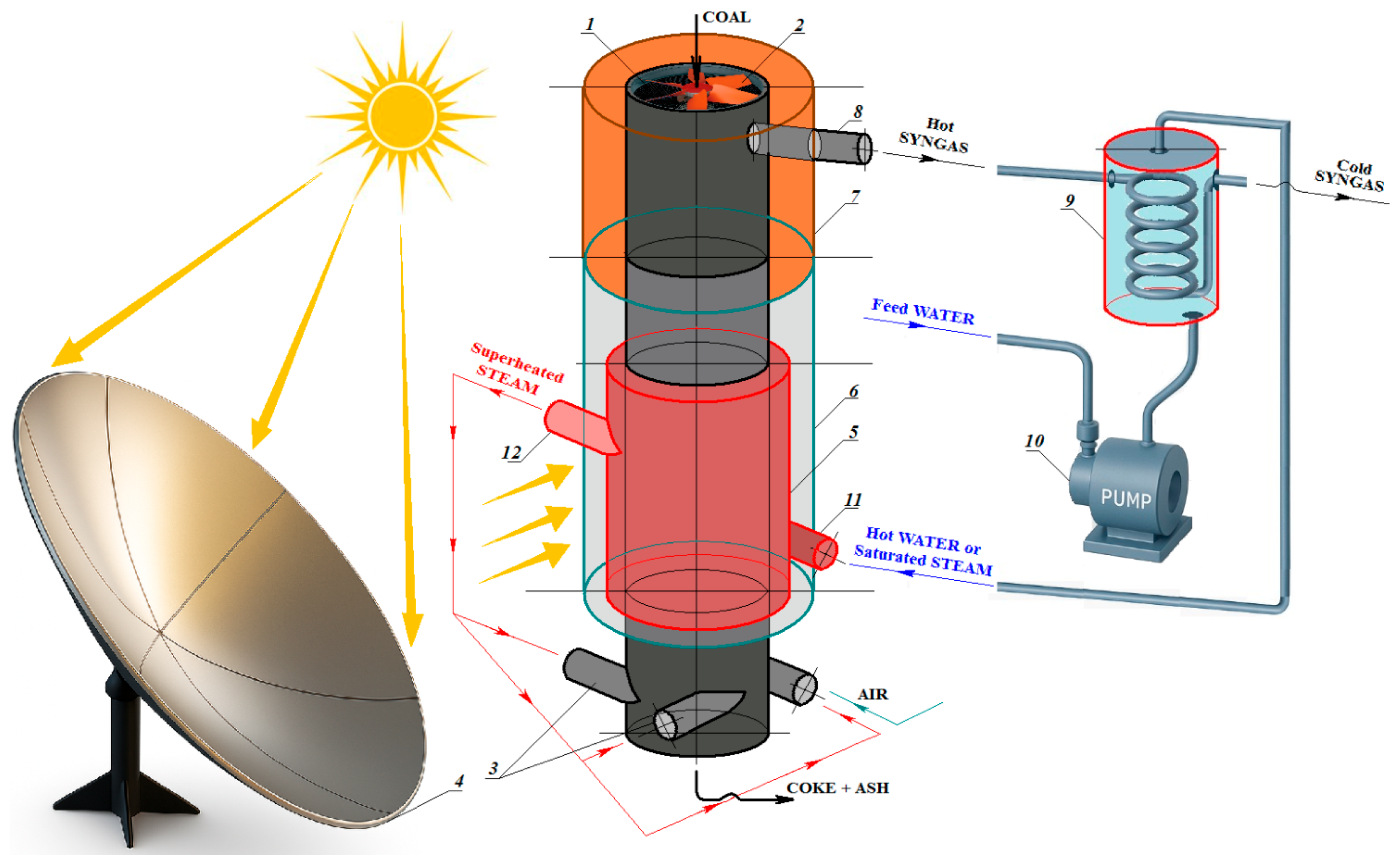
The installation schematized in
Figure 18 operates as follows: crushed coal is fed into the upper part of the gasifier (1) by means of a low-power fan (2). The fan acts as a natural backflow preventer for the synthesis gas flow, preventing it from escaping through the upper part of the gasifier (1). Superheated steam is fed tangentially into the lower part of the device through a pipeline (3) in counterflow to the coal. To obtain steam, it is proposed to install a parabolic dish solar reflector (4), which focuses solar energy onto a water heat exchanger, which is a vertical pipe-in-pipe type pipeline (5). The water in the inter-pipe space of the heat exchanger will evaporate under the action of concentrated solar radiation, forming superheated steam. In the inner pipe of the heat exchanger, crushed coal flows by gravity and absorbs the heat remaining after steam formation, passing through the inner wall of the heat exchanger. The superheated steam enters the lower part of the gasifier reactor tangentially (3). The tangential flow is created to intensify turbulence and accelerate the process to draw in the coal dust and retain it in the reaction zone so that the dust has time to react and does not fall under the force of gravity. The steam temperature is about 900 °C, which is the main condition for steam gasification. The lower part (directly the reaction zone (5)) of the gasifier is insulated by a glass cylindrical wall (6), while the upper outlet (for gas synthesis) part of the gasifier is thermally insulated with mineral wool (7) to minimise heat loss from the structure and prevent heat leakage. The glass partition (6) creates a “greenhouse” inside: sunlight passes through the glass by radiation and is absorbed by the metal wall (5); the glass prevents heat from escaping back into the environment by convection. Synthesis gas collects at the top of the gasifier and exits through a special pipeline (8). The outgoing synthesis gas has a high temperature of at least 600 °C [
23] for biomass and at least 900 °C [
7] for coal [
24,
25], which creates favourable conditions for its utilisation in a special recuperator (9) by analogy with patents [
9,
16]. Recovery significantly increases the overall energy efficiency of the gasification process and reduces the temperature of the synthesis gas for subsequent purification from dust, etc. To do this, hot synthesis gas is fed into the heat exchanger (9) inside the pipeline. Feed water is fed into the intertube space of this heat exchanger. As a result, the water is heated and partially boils, while the gas cools down. As a result of recovery, the water reaches a boiling state or a water-vapour mixture. The feed pump (10) creates the necessary excess pressure in the system, which causes the steam-water mixture to move, followed by the synthesis gas. After the heat exchanger, the steam-water mixture enters the intertube space of the reaction zone (5) through the inlet pipe (11), where the steam is superheated and reaches the required temperature. The steam is then fed through the outlet pipe (12) to the lower part of the internal pipeline of the gasifier (1) and provides steam gasification. Upon completion of the gasification process, coke [
26] + ash are discharged downward. In the absence of solar energy (at night), the gasifier operates in a traditional mode with partial coal combustion. For this purpose, air is fed into the gasifier together with steam.
Technology limitation: The proposed technology utilizes solar energy and does not include heat storage system. At night and in cloudy conditions, the device will switch to gasifier mode with burning fossil fuels, resulting in greenhouse gas emissions. Work about these limitations is planned for the near future.