1. Introduction
Procrastination is commonly conceptualized as an irrational, conscious, and sometimes intentional tendency to delay starting or completing tasks or postpone making decisions, whether important or not, despite the negative and deleterious effects that this practice may have, potentially causing harm to the individual in question or others [
1,
2,
3]. Conceptions of procrastination imply inaction, postponement, delays, and difficulty in decision-making [
4]. However, there is no consensus definition of procrastination nor established pathophysiology or motivation. It is believed that cognitive aspects, personality, and motivational processes may be intertwined with ‘putting things off until later’. Rozental and Carlbring (2014) state that procrastination is not considered a psychiatric condition. Thus, determining its occurrence is complicated, precluding the use of diagnostic criteria or a structured clinical interview [
5]. Some subjective discomfort or suffering is important and should always be considered when evaluating individuals with a repetitive procrastinatory pattern; distress may be manifested as, for instance, interpersonal problems, physical illness, stress, anxiety, depression, and financial difficulties [
5].
It is theorized that some individuals experience failure in self-regulating their emotions and aversive feelings—such as anxiety—towards some tasks, with procrastination being the peak of this erratic processing [
6]. These individuals may exhibit what we call an anxiety trait, defined as an aspect of personality where nervousness, apprehension, or tension is a stable personality trait in an individual [
7]. Previous studies have revealed a positive effect in the association between procrastination and the anxiety trait [
8,
9], potentially with an underlying neural basis. Supporting this, in Broadbent’s selective attention filter theory, it is believed that there is limited attention capacity, with only relevant stimuli being attended to or processed [
10,
11]. However, individuals with greater trait anxiety show lower prefrontal cortex activation [
12] and greater difficulty inhibiting irrelevant stimuli [
13], which may interfere with decision-making, balancing task aversion, and determining an incentive for a given outcome and lead to dysfunctional procrastination. A Chinese study observed that individuals with higher trait anxiety tended to procrastinate more due to lower individual self-control capacity and demonstrated a positive correlation between hippocampus–frontal cortex connection activity and levels of anxiety and procrastination [
14]. Procrastination, although not an official Research Domain Criteria (RDoC) construct [
15], can be interpreted as a transdiagnostic phenomenon resulting from the dysfunctional interaction of multiple domains, such as cognitive systems (difficulty initiating or maintaining tasks, failure to inhibit distractions, and poor organization); arousal/regulatory systems (task avoidance due to emotional overload or perceived aversiveness); negative valence systems (fear of failure, perfectionism, and avoidance of evaluation or discomfort); positive valence systems (preference for immediate gratification over long-term goals, poor future-oriented motivation, etc.); and systems for social processes (fear of judgment, low self-esteem, and avoidance of socially evaluative situations).
In addition to the lack of a consensus definition of procrastination, this behavior is quite common and, when chronic, can lead to worsened productivity, poorer academic and professional performance, and even damage to health and personal well-being. A study showed that about 20% of adults in the general population are affected by chronic procrastination [
16], while in students, this rate can reach up to 50% (2). Aside from the lack of a defined concept, there is also an existing gap concerning the motivations that lead to procrastination and its potential relation to dysfunctional attempts at emotional regulation to alleviate unwanted emotions [
17].
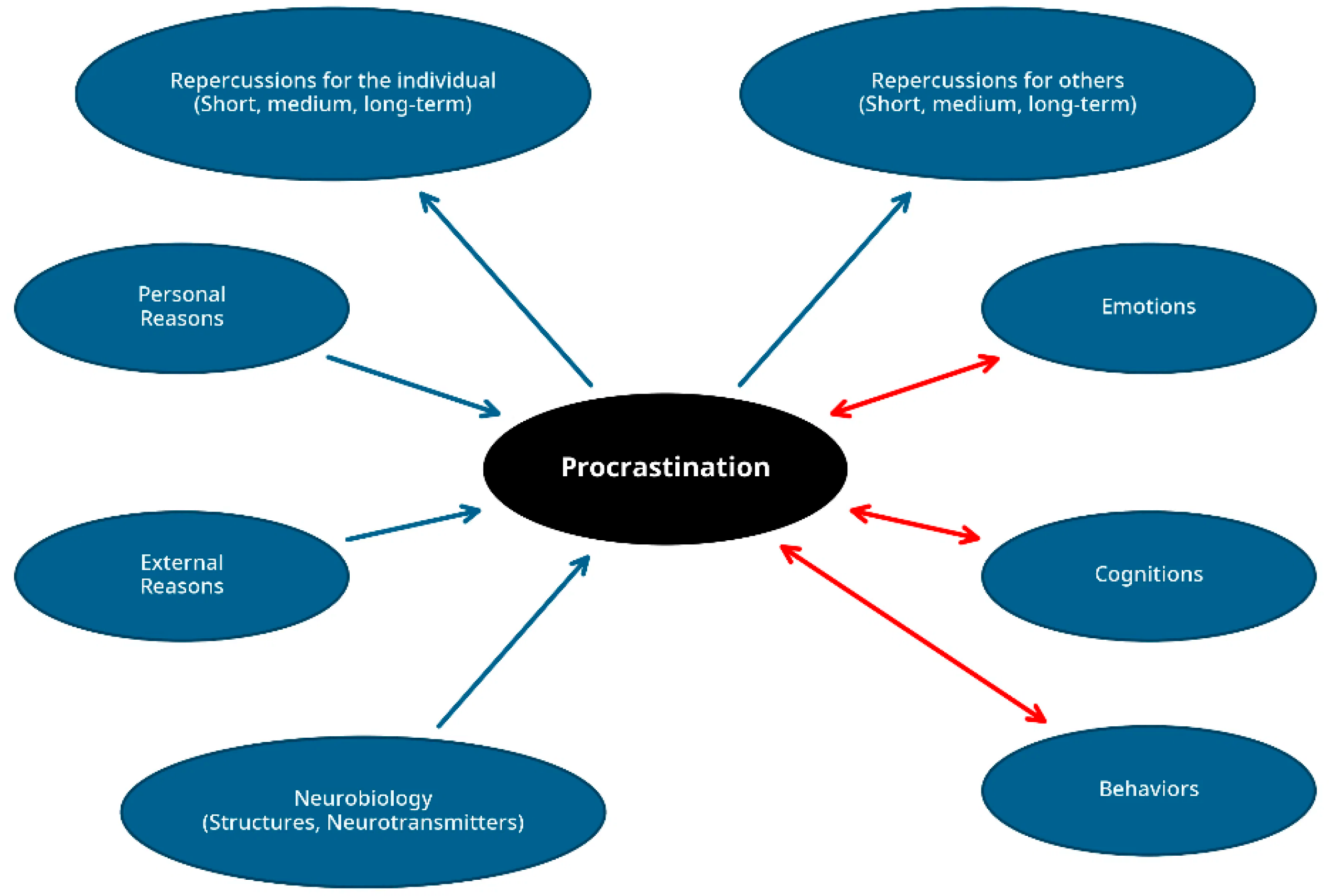
Figure 1 summarizes the main motivations for and aspects of understanding the procrastination construct.
Additionally, procrastination may be exhibited in various psychiatric disorders, such as major depressive disorder [
18,
19], attention deficit hyperactivity disorder (ADHD) and obsessive–compulsive disorder (OCD). In DSM-5, procrastination is mentioned only once in the chapter on OCD and Related Disorders as an associated feature supporting the diagnosis [
20]. Although the association between ADHD and procrastination has received increasing scientific attention lately, the empirical literature remains relatively limited, particularly regarding formally diagnosed clinical samples. Early evidence from Ferrari and Sanders (2006) demonstrated that adults with ADHD reported significantly higher rates of decisional and behavioral procrastination across multiple life domains compared to adults without ADHD [
21]. Subsequent studies using dimensional ADHD symptom measures in university and community populations confirmed a positive correlation between inattention severity and procrastination, with inattention showing a more robust association than hyperactivity or impulsivity [
22,
23]. More recently, Netzer Turgeman and Pollak (2025) found that procrastination partially mediates the relationship between ADHD symptoms and reduced quality of life across physical, psychological, social, and environmental domains in adults [
24]. Collectively, these studies provide scientific grounding for the ADHD–procrastination association; however, the majority rely on non-clinical or subclinical populations assessed via self-report instruments, limiting their generalizability to formally diagnosed psychiatric samples.
Beyond ADHD and OCD, there is growing evidence that procrastination cuts across a broader spectrum of psychopathological conditions, which is precisely what justifies its characterization as a transdiagnostic construct. From a theoretical standpoint, the concept of transdiagnostic processes refers to psychological mechanisms—such as emotion dysregulation, rumination, experiential avoidance, and perfectionism—that operate across multiple diagnostic categories rather than being disorder-specific [
25]. Procrastination shares these same transdiagnostic underpinnings: a structural-equation-modeling study demonstrated that perfectionism, emotion dysregulation, negative affect, worry, rumination, and experiential avoidance—all recognized transdiagnostic factors—formed part of a causal pathway toward procrastination [
26].
Empirically, the links between procrastination and internalizing and externalizing psychopathology are supported by genetic data. A twin study (n = 764) found that procrastination was positively correlated with both internalizing disorders (including major depressive disorder and generalized anxiety disorder) and externalizing disorders (including substance use and antisocial features) and that these associations were driven by shared genetic influences, mediated by fear of failure and neuroticism for internalizing disorders and by impulsivity for externalizing disorders [
27]. These findings suggest that procrastination may share a common neurogenetic architecture with a wide range of psychiatric conditions rather than being confined to any single diagnostic category.
In major depressive disorder (MDD), procrastination manifests through psychomotor retardation, anergia, and impaired self-regulation, contributing to task avoidance and goal abandonment even in the context of preserved motivation [
19]. In anxiety disorders—including generalized anxiety disorder, social anxiety disorder, and panic disorder—procrastination has been conceptualized as a mood-regulatory avoidance behavior: the anticipation of aversive emotional states causes individuals to defer tasks, temporarily reducing distress but perpetuating the anxiety cycle [
28]. In Borderline Personality Disorder (BPD), occupational dysfunction has been directly associated with avoidance of specific tasks and procrastination, even after comorbid depressive and anxiety disorders are controlled for [
29]. The behavioral mechanism in BPD appears to involve emotional dysregulation and impulsivity—two core BPD features that are functionally equivalent to the self-regulatory failure underlying procrastination [
30]. In substance use disorders, procrastination has also been identified as a significant correlate: in a sample of adult marijuana users undergoing relapse prevention, over 94% reported procrastination as a problem related to their substance use, an observation consistent with the shared genetic variance between procrastination and externalizing psychopathology noted above [
27].
At the neurobiological level, a prospective twin cohort study leveraging neuroanatomical imaging found that adolescent neurodevelopmental deviations within the nucleus accumbens predicted adult psychopathological procrastination, with a moderate heritability estimate (h
2 = 0.47), suggesting that clinically relevant procrastination represents a heritable phenotype linked to reward-processing neurocircuitry implicated across multiple psychiatric conditions [
31]. Taken together, these data support conceptualizing procrastination not as a categorical feature of any single disorder but as a transdiagnostic phenotype rooted in shared neurocognitive and emotional regulatory deficits—particularly in domains of self-regulation failure, emotion dysregulation, and intolerance of aversive internal states—that manifest differentially across diagnostic contexts, with ADHD and OCD representing two of the most clinically documented and theoretically rich expressions of this transdiagnostic construct.
ADHD is a neurodevelopmental disorder characterized by persistent attention and motor activity changes—hyperactivity and/or impulsivity—leading to overall impairment in an individual. OCD, on the other hand, is characterized by the presence of recurring obsessions and/or compulsions that impair an individual [
31]. Despite distinct pathophysiological and clinical differences, both can result in procrastination as a deleterious consequence.
Thus, three central gaps emerge from the literature:
Conceptual ambiguity (the absence of a unified, clinically relevant definition);
Measurement inconsistency (proliferation of instruments with limited psychometric validation and poor comparability);
Underrepresentation of clinical populations (disproportionate reliance on student samples, limiting generalizability of the psychiatric context).
These gaps underscore the need for a comprehensive mapping of how procrastination has been defined, assessed, and associated with psychopathological constructs. Thus, this scoping review aims to analyze the descriptive transdiagnostic psychopathology of procrastination (especially in the OCD and ADHD context), as well as the presence or absence of associated symptoms, motivations, and consequences of procrastination, resulting in a consensual definition.
2. Methodology
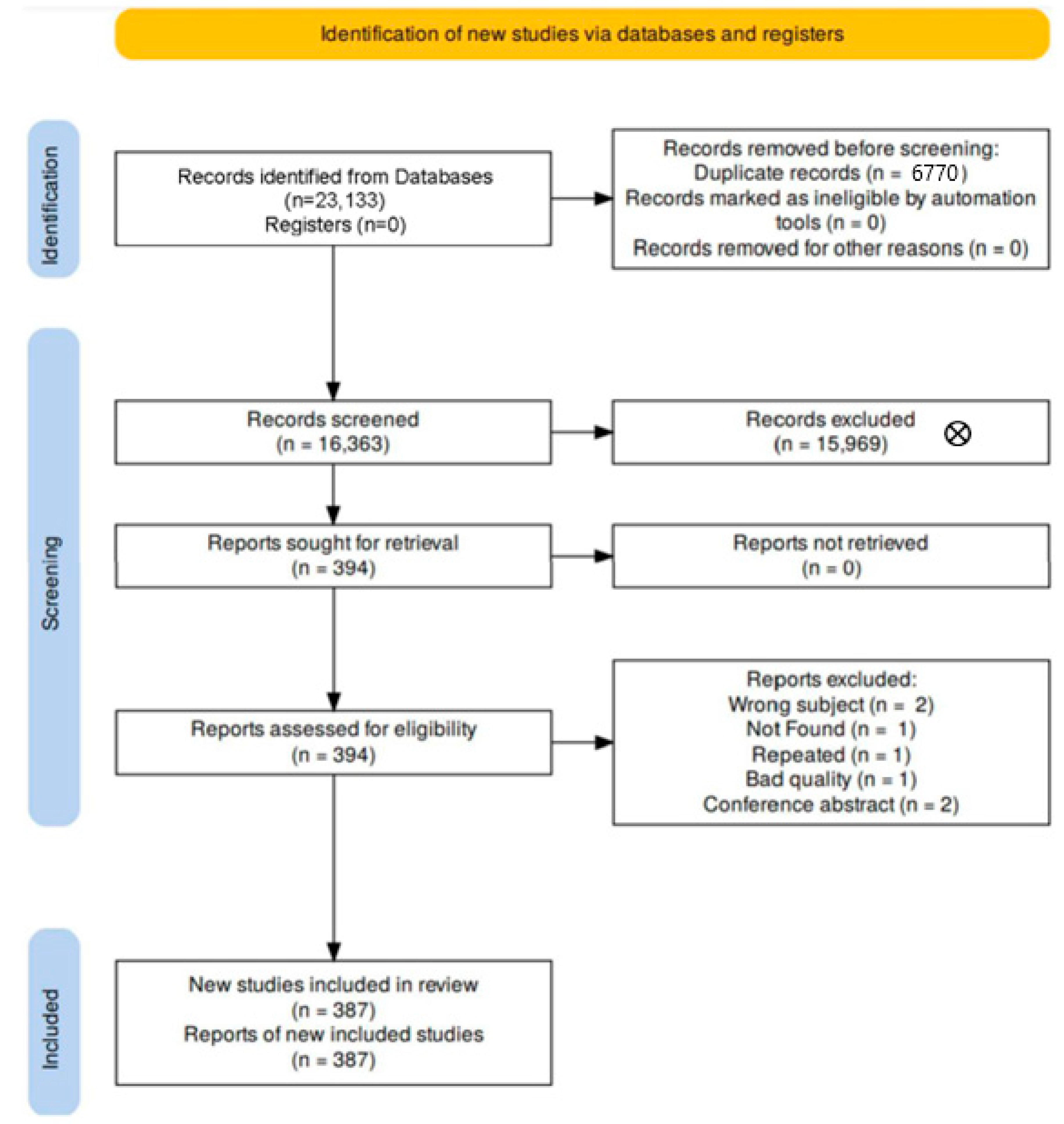
A comprehensive search strategy was developed to capture all the relevant literature on procrastination and its association with psychopathology. After a search conducted using Mesh Terms (procrastination; procrastination and obsessive–compulsive disorder; and procrastination and attention deficit and hyperactivity disorder), 16,363 articles were found. The search was performed using PubMed, Scopus, Web of Science, and SciELO, and the records retrieved from each database were exported and imported into the Rayyan platform [
32]. Rayyan was used for reference management during screening, including duplicate identification and removal. After deduplication, two reviewers (MSMB and VRX) independently screened titles and abstracts according to the predefined eligibility criteria. Records deemed potentially relevant proceeded to full-text assessment, which was also conducted independently by the same two reviewers. Any disagreements at either stage were resolved by discussion and, when necessary, adjudication by a third senior reviewer (YAF). Following final inclusion, data extraction was performed using a standardized spreadsheet developed specifically for this review. To ensure data quality and consistency, a random 15% sample of the extracted data was independently cross-checked by a senior reviewer (YAF), with discrepancies resolved by consensus. This approach was adopted because of the large number of included studies and is consistent with methodological recommendations for scoping reviews, which allow flexibility in data-charting procedures when appropriate quality control measures are applied.
Eligibility criteria, search strategy, and screening procedures were established before the initiation of the review and remained unchanged throughout the process. During title/abstract and full-text screening, minor operational clarifications occasionally needed to be made to ensure consistent application of the predefined criteria across reviewers; however, these did not constitute modifications of the eligibility criteria themselves. Discrepancies between reviewers were resolved through discussion and, when necessary, adjudication by a senior reviewer (YAF). To assess the reliability of the screening process, inter-rater agreement was calculated using Cohen’s kappa coefficient (κ = 0.81), indicating substantial agreement. The review protocol was not prospectively registered in PROSPERO, as this platform does not accept scoping reviews; however, it was registered on the Open Science Framework platform (
https://osf.io/px9u7, License CC0 1.0 Universal, accessed on 25 April 2026). We adhered to the Preferred Reporting Items for Systematic Reviews and Meta-Analyses Extension for Scoping Reviews (PRISMA-ScR) guidelines to ensure transparency and reproducibility. The PRISMA items checklist is described in the
Supplementary Materials.
Figure 2 summarizes this process according to the recommendations of the PRISMA-ScR (PRISMA, 2020) [
33]. The template data collection forms; data extracted from included studies; and data used for all analyses can be made available by the authors for assessment upon making a reasonable request.
The inclusion criteria consisted of research conducted on humans, published in English, Portuguese, and or Spanish, from 1973 to 2024. The exclusion criteria encompassed research conducted on animals, poster’s abstracts publications, conferences in scientific conclaves, and letters to the author. To minimize publication bias, database searches were conducted across four major electronic databases. Formal gray literature searching was not performed; this is acknowledged as a limitation of the present review.
During the screening phase, the 15,969 excluded records were rejected based on title and abstract review, primarily due to the following reasons: they were studies not involving human subjects; published in languages other than English, Portuguese, or Spanish; poster abstracts, conference proceedings, or letters to the editor; or articles in which procrastination was not addressed as a primary or secondary construct.
Subsequently, data extraction from the articles was carried out using a standardized spreadsheet specially designed for this review. Some of the extracted variables are given below:
Article Data: Authors; year; journal; journal impact factor; language; research design; existence of a sample group (and sample size) of individuals diagnosed with OCD and/or ADHD, as well as assessment of other psychiatric populations (and sample size); presence of a control group (and sample size); differentiation of procrastination between genders (and rate of women); description of the mean age of the sample (with mean age and SD); marital status (and % of individuals with spouses); and description of occupation (and % of individuals with some form of occupation).
Clinical Data: Use of a scale to assess procrastination and which scale, whether procrastination was defined, if the study used another author’s definition or its own definition, which author conceived the definition, transcription of the definition of procrastination, if the study associates procrastination with any other psychopathological factors and which ones, if the study associates procrastination with any sociodemographic aspects and which ones, and if the study associates procrastination with any clinical aspects and which ones.
Data Synthesis and Statistical Analysis
Data synthesis was primarily descriptive, in line with the objectives of a scoping review. Categorical variables were described as absolute values (n) and relative values (%). Continuous variables were assessed for distribution using the Kolmogorov–Smirnov test and expressed as means and standard deviations (SDs) or weighted means. Minimum and maximum values were also used.
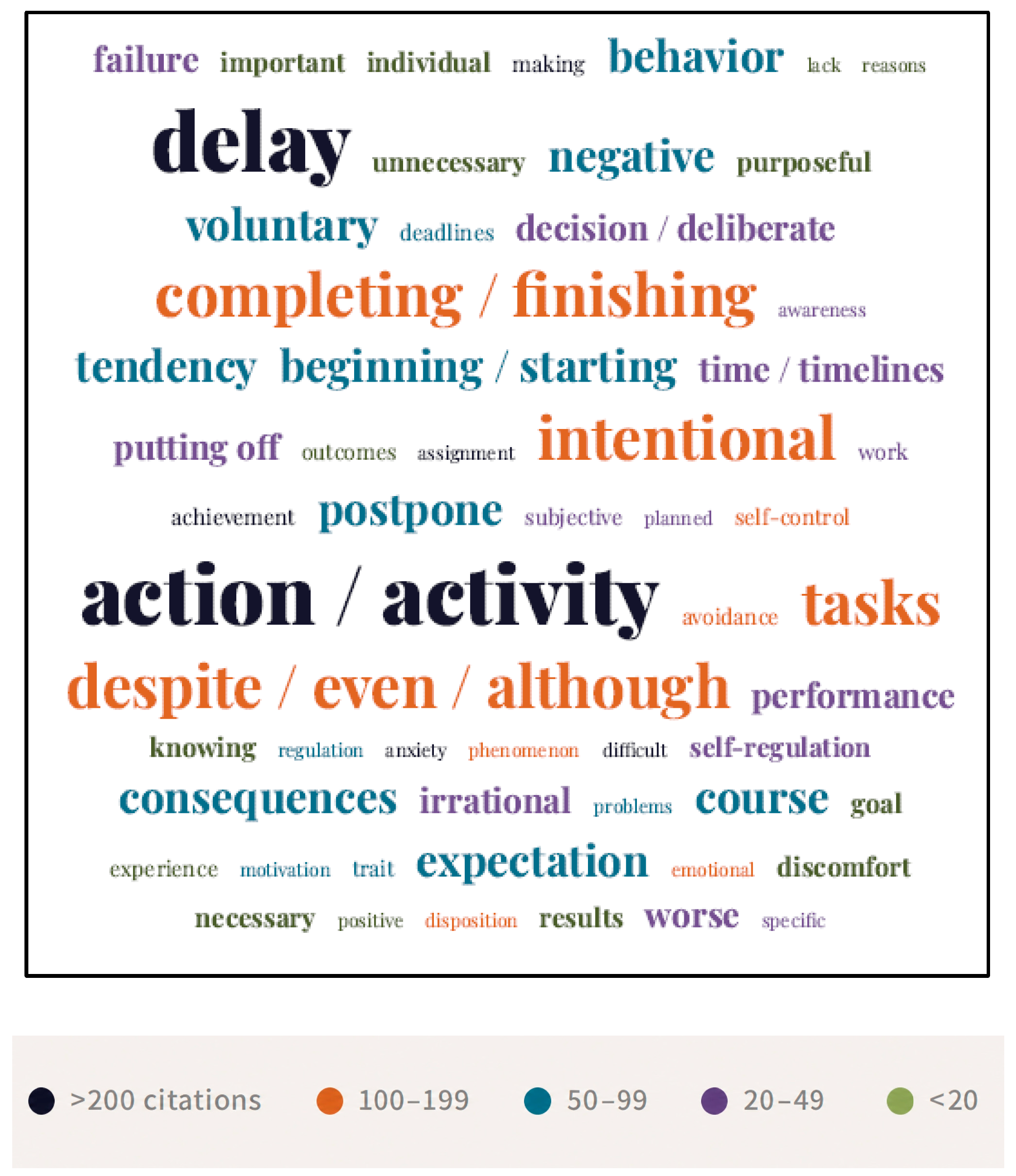
Following the extraction of the most frequently used terms across the reviewed definitions, a qualitative grouping procedure was conducted to reduce redundancy and overlap. Translations were applied when necessary, and terms were standardized into English. A frequency threshold (85th percentile) identified the 64 most recurrent terms. These were retained for subsequent analyses. To visually represent the most frequent conceptual descriptors, a word cloud was generated using WordClouds.com, while frequency tables were used to summarize the top terms and their original sources. As a secondary and exploratory step, we employed two freely available large language models (LLMs) (ChatGPT [
34] and Gemini [
35]) to generate synthetic definitions of procrastination based on the 64 most recurrent terms extracted from the literature. The objective was to illustrate whether computational language models converge with the conceptual elements most frequently identified in published studies. The same prompt was given for both LLMs: “Use all 64 words that I will attach below to build the concept of procrastination.”
3. Results
After the pre-selection of these articles, only 394 articles remained. After data extraction, seven were excluded (see
Figure 2), leaving 387 articles to be reviewed. There has been an increase in procrastination research in the recent decade: 80.9% of the selected studies were published between 2013 and 2023.
The 387 publications were distributed across 192 journals, with the top 10 most-used being Frontiers in Psychology, Personality and Individual Differences, Current Psychology, Propósitos y Representaciones, Journal of Research in Personality, Frontiers in Psychiatry, Psychological Reports, International Journal of Environmental Research and Public Health, European Journal of Personality, Journal of Prevention and Intervention in Community, North American Journal of Psychology, and Psicología, Conocimiento y Sociedad.
The prevalences of the languages used were as follows: English, 86.8% (n = 335); Spanish, 9.3% (n = 36); and Portuguese, 3.9% (n = 15). The predominant research design was cross-sectional (76.2%) (n = 295), followed by instrument/scale validation design (5.7%) (n = 22) cohort studies (4.9%) (n = 19), and integrative reviews (3.1%) (n = 12). It is worth noting that 3.1% (n = 12) of the studies were systematic reviews on procrastination, but only 1.3% (n = 5) conducted meta-analyses.
Regarding the populations studied, 1.3% of the studies (n = 5) used populations with ADHD, with a total of 831 participants. Only 0.02% of the studies (n = 1) used a population with OCD, with a sample size of 65 participants. Another 1.8% of the studies (n = 7) used populations with other disorders or symptoms, such as depression and anxiety. The remaining 96.4% of the studies (n = 374) involved students (mainly university students), workers, or the general population.
3.1. Pooled Descriptive Statistics
In total, there were 53,714 females in the population, with a mean prevalence of 63.98% (SD = 14.19). Across studies reporting gender differences, procrastination was slightly higher in males (r ≈ 0.04). The mean age was described in 74.2% (n = 287) of the articles (mean age = 24.24 years (mean SD = 4.16 years)), ranging from 14 to 68 years old. Marital status was described in 10.6% of the articles (n = 41), in which 39.97% (5231 individuals) reported having a spouse/sexual partner. In 72.6% of the publications (n = 281), it was described that 95.2% of the 19,173 subjects (n = 19,173) had an occupation (working as students or professionals).
3.2. Cited Scales and Instruments
In 83.5% (n = 323) of the articles, at least one scale was used to assess procrastination. Specifically, 40 different scales were applied, which were cited a total of 359 times (some articles used more than one scale). The 10 most cited scales were, in descending order, Lays’s General Procrastination (13.1%; n = 47), the Adult Inventory of Procrastination Scale (12.3%; n = 44), the Academic Procrastination Scale (11.1%; n = 40), the Procrastination Assessment Scale—Students (8.9%; n = 32), the Tuckman Procrastination Scale (8.4%; n = 30), the Pure Procrastination Scale (8.1%; n = 29), the Decisional Procrastination Scale (5%; n = 18), the Active Procrastination Scale (3.9%; n = 14), Busko’s Academic Procrastination Scale (3.9%; n = 14), the Irrational Procrastination Scale (3.9%; n = 14), and the Aitken Procrastination Inventory (3.3%; n = 12).
Supplementary Table S2 summarizes the main psychometric characteristics of these instruments, including internal reliability (with Cronbach’s α values typically being >0.80), factor structure (unidimensional vs. multidimensional), test–retest stability, cross-cultural adaptations, and identified limitations.
Most of the papers, i.e., 87.1% (n = 337), define procrastination, with the most cited words used to define procrastination listed below and summarized in the word cloud (
Figure 3). The 433 words were grouped into 383 terms (the 64 most used are highlighted, along with the number of citations, in
Table 1. The complete table with all the terms is in
Supplementary Material Table S3.
Out of 387 articles, 78.8% (n = 305) use definitions coined by other authors (98 authors were cited), with the most frequently cited ones highlighted in
Table 2.
3.3. LLM’s Definition of Procrastination
According to ChatGPT [
34], the definition of “Procrastination” is as follows:
“Procrastination is the delaying or postponing intention of actions, tasks, or activities, despite knowing the negative consequences and being aware of the importance or necessity of completing them. It involves postponing decision making and the start or completion of tasks, often resulting in poorer performance, missing deadlines, irrational time management, and emotional distress.
This phenomenon is characterized by a lack of self-regulation and a tendency to avoid the discomfort associated with engaging in necessary but undesirable activities. Procrastination can be present in personal and professional contexts, impacting motivation, emotional experience, and overall achievement.
Reasons for procrastination can include lack of awareness, difficulty with self-regulation, anxiety, avoidance of problems, and the preference for engaging in more immediately rewarding activities. The postponing of tasks is often planned, with subjective outcomes affecting the individual’s ability to achieve specific goals and obtain positive results.
Procrastination contrasts with purposeful and goal-oriented behavior because it involves delaying tasks even when one is aware of the negative effects and the need to complete them. It is a common human experience that can be addressed through increased self-awareness, effective time management, and enhanced self-regulation skills”.
According to Gemini [
35], the definition of “procrastination” is as follows:
“Procrastination is a voluntary and irrational delay of an intended action or task, even knowing the likely negative consequences. It is a failure in self-regulation, characterized by the avoidance of necessary or important tasks, often associated with feelings of discomfort or anxiety.”
The key elements of procrastination, as outlined by Gemini, are intentional delay, awareness of consequences, irrationality, self-regulation failure, and negative emotions. It also emphasized that (1) the act of procrastination is a common phenomenon, but chronic procrastination can lead to negative impacts on personal and professional life; (2) procrastination is a behavior that can be changed with effort and strategies; (3) understanding the underlying causes of procrastination, such as fear of failure, perfectionism, or difficulty starting tasks, can help change behavior; and (4) in rare cases, procrastination can have positive outcomes, as some individuals thrive under pressure and intentionally delay tasks to create a sense of urgency.
3.4. Related Psychopathological Aspects
Only 191 (49.4%) of the articles sought for or found psychopathological aspects associated with procrastination. Twenty-eight (7.2%) associated psychopathological conditions were described, with the top 10, in descending order, being anxiety, depression, ADHD, stress, having more physical health problems/worse cardiovascular health/poor perceived health, burnout/academic burnout, low testosterone levels, sleep disorders, chronic fatigue, sadness, low motivation, and compulsions.
Just 21.4% (n = 83) of the publications sought for and/or found sociodemographic aspects associated with procrastination (the main ones are highlighted in
Table 3).
4. Discussion
4.1. The Exploratory Consensual Definition of Procrastination
Both LLMs produced definitions that emphasized voluntary but irrational delay, self-regulation failure, emotional discomfort, and awareness of negative consequences. Interestingly, ChatGPT provided a broader and more behaviorally nuanced definition, whereas Gemini offered a more concise formulation and uniquely highlighted the potential adaptative aspects of procrastination.
But neither AI emphasized the fact that to be considered pathological, procrastination must be a repetitive behavioral pattern that fails to result in learning, despite the harm caused by previous experiences.
Table S4 (Supplementary Material) resumes this comparison between ChatGPT 4.0 and Gemini 2.
While innovative, this approach must be interpreted with caution. LLMs are not yet validated scientific tools, and their outputs reflect training biases and lack methodological transparency. Therefore, these results should not be considered part of the formal review methodology; rather, they should be considered an illustrative exercise that highlights the potential of computational tools for future work in construct validation. The recent literature demonstrates that approaches based on machine learning and natural language processing (NLP) have been used to investigate the validity of psychopathological constructs, both in terms of diagnostic differentiation and dimensional analysis, as well as the validity of psychometric instruments. Studies show that machine learning algorithms, such as Random Forest, Support Vector Machine, and deep-learning-based models, can identify patterns in clinical, neurobiological, and linguistic data that correspond to classic psychopathological constructs, such as depression, anxiety, and risk of psychosis. These approaches have been able to distinguish diagnostic groups, identify specific linguistic markers, and even suggest subtypes or transdiagnostic dimensions [
36,
37,
38]. In the psychometric context, AI strategies have been used to assess the construct validity and criterion validity of clinical scales, demonstrating that computational models can provide an additional layer of evidence to traditional validation by inferring relationships between items and theoretical constructs and replicating clinical rules across different samples [
39,
40]. However, the literature highlights important limitations: most studies are still in the exploratory phase, with few clinically validated models; there is a lack of methodological standardization, there is a risk of bias in the input data, and there are challenges regarding the interpretability of models and the generalization of findings to diverse populations [
36,
40,
41].
4.2. Assessment of Procrastination
Almost all the papers published in English in psychology-related journals presented a cross-sectional design, which reflects descriptive aspects of the papers, such as some scale validation studies. We also found a great variety of applied scales (a total of 40), which may indicate that there is no consensus about how to assess procrastination. The three most used were Lay’s General Procrastination Scale [
42], the Adult Inventory of Procrastination Scale [
43], and the Academic Procrastination Scale [
44].
Instruments used to assess procrastination exhibit a variety of psychometric qualities that are fundamental to their validity and usefulness in clinical and research contexts. Most widely used scales demonstrate high internal reliability, indicating consistency among the items that comprise the instrument, showing that the items cohesively measure the procrastination construct [
45]. Several studies employed confirmatory and exploratory factor analyses to demonstrate that the scales exhibit robust, often multidimensional, factor structures, reflecting different facets of procrastination, such as decisional and behavioral procrastination, and time management difficulties [
45]. Some scales demonstrate satisfactory temporal stability, indicating that scores remain consistent over time in stable populations. Although self-report scales exhibit moderate concurrent validity, there are inconsistencies regarding their ability to predict actual procrastination behaviors, such as delaying completing tasks [
46]. Some scales have been validated in different languages and cultural contexts, maintaining good psychometric properties, which reinforces their applicability across diverse populations [
47]. While most instruments demonstrate acceptable reliability, their validity in distinguishing between normative delay and clinically maladaptive procrastination remains limited. Only a minority explicitly assessed the functional impairment or negative consequences associated with procrastination, highlighting the need for refined tools in clinical contexts. New proposals suggest the inclusion of scales that specifically assess these consequences for better clinical discrimination [
48]. In general, the instruments remain more speculative regarding predictive validity and distinguishing between different types of delay.
4.3. Sociodemographic and Clinical Features of the Reviewed Papers
As for our main results, an analysis of the sociodemographic profiles of individuals prone to procrastination noted in the literature reveals a multifaceted picture, with some studies reporting statistically significant associations but small effects and others reporting no or only inconsistent associations. A robust meta-analysis involving over 100,000 participants demonstrated that men have a slightly greater tendency to procrastinate, both in general and academic contexts, relative to women, although the magnitude of this difference is small (r ≈ 0.04) [
49]. However, other classic sociodemographic factors, such as socioeconomic status, nationality, multiculturalism, family size, and educational background, showed no significant associations with the tendency to procrastinate in broad quantitative analyses [
49].
Age is a relevant factor: procrastination seems to be more prevalent in younger individuals, especially between the ages of 14 and 29, with a progressive decline throughout adulthood and old age [
50]. Within this younger group, men tend to procrastinate more than women, but this gender difference does not persist in older age groups [
50]. Furthermore, as our results have shown, procrastination is associated with unemployment and a lack of marital relationships, suggesting that contextual factors of social and occupational stability may influence procrastination behavior [
50].
In university populations, procrastination is highly prevalent, but there is no consensus on whether there are striking differences according to gender or age within this group, although the severity of procrastination is associated with greater psychological distress and poorer quality of life [
51].
The clinical profile of a procrastinator, as indicated by our results and outlined in the literature, is strongly associated with deficits in self-regulation, impulsivity, difficulty with attentional control, and problems with emotional regulation [
52,
53].
As we expected, there is a higher prevalence of symptoms of anxiety, depression, stress, fatigue, and lower life satisfaction among procrastinators, especially in domains related to work, income, and interpersonal relationships [
54]. The severity of the condition can vary, with subgroups ranging from mild to severe procrastinators, including a subgroup in which procrastination is strongly associated with depression. Furthermore, impulsiveness and difficulties regulating negative emotions are central factors, suggesting that procrastination may function as a short-term emotion regulation strategy, to the detriment of long-term goals [
52,
53]. Low self-discipline, lower self-efficacy, disorganization, and task aversion are also frequently observed characteristics [
52]. Unfortunately, we could not assess such features.
4.4. Procrastination and ADHD
Although only five papers investigating procrastination in ADHD patients were found, there seems to be an association between the two. Procrastination in people with ADHD is strongly related to deficits in executive functions, such as difficulties with time management, organization, problem-solving, and emotional regulation. These executive functions act as mediators between ADHD symptoms and the tendency to procrastinate, with deficits in self-management of time and organization/problem-solving being particularly relevant [
55,
56,
57].
Furthermore, procrastination is frequently observed in adults with ADHD and may be an important target for interventions, especially when there are associated internalizing symptoms, such as depression and anxiety [
58,
59].
In the neuropsychological context, procrastination in ADHD may also be related to delay aversion and difficulty postponing rewards, phenomena mediated by alterations in brain regions such as the amygdala and dorsolateral prefrontal cortex [
58,
60]. Individuals with ADHD tend to prefer immediate rewards and have greater difficulty sustaining effort on long-term tasks, which contributes to procrastination [
58,
60]. Among the symptom domains of ADHD, inattention appears to have a more robust correlation with procrastination than impulsivity or hyperactivity [
61]. This suggests that difficulty maintaining focus, following instructions, and completing tasks is directly linked to the tendency to postpone activities.
4.5. Procrastination and OCD
In contrast to ADHD, the literature on procrastination in OCD remains relatively scarce but conceptually relevant. Three transdiagnostic constructs appear to link OCD and procrastination: compulsivity, perfectionism, and intolerance of uncertainty.
It is already well established that OCD is characterized by obsessions and/or compulsions that take up time and cause significant functional impairment, often accompanied by avoidance behaviors and difficulties initiating or completing tasks due to interference from obsessive–compulsive symptoms [
62,
63]. Neuropsychological studies demonstrate that individuals with OCD have deficits in executive control mechanisms, especially in tasks that require suppression of automatic behaviors and selection of goal-directed tasks. This deficit in task control can contribute to difficulties initiating or completing tasks, which can manifest clinically as procrastination [
63]. Furthermore, the need for perfectionism and the fear of making mistakes can lead to avoidance or postponement of tasks, as an individual may feel that they will not be able to perform the activity “perfectly” or without risk of error, perpetuating the cycle of procrastination. It is important to differentiate OCD from OCPD. In OCPD, perfectionism and rigidity can lead to procrastination due to excessive concern with details and an inability to consider a task “finished,” resulting in frequent delays and postponements [
20,
64]. However, in classic OCD, procrastination tends to be more related to direct interference from obsessions and compulsions, as well as avoidance of situations that may trigger anxiety [
65,
66].
4.6. Procrastination and Other Psychopathological Conditions: Beyond ADHD and OCD
An important conceptual distinction must be made between psychopathological conditions formally associated with procrastination and psychopathological symptoms that frequently co-occur with it. The former—such as major depressive disorder (MDD), generalized anxiety disorder (GAD), and borderline personality disorder (BPD)—represent structured diagnostic categories in which procrastination appears as a functional manifestation of the disorder’s core features. The latter—such as sadness, low motivation, chronic fatigue, and decreased testosterone levels—represent dimensional or dimensional-spectrum phenomena that may precede, accompany, or result from procrastination and whose relationship with procrastination is mediated by shared neurobiological pathways, particularly dopaminergic and neuroendocrine systems.
Regarding
low motivation and sadness, these are not merely mood states incidentally associated with procrastination. Both represent alterations in the brain’s reward valuation system, rooted in dopaminergic dysregulation. Procrastination has been neurobiologically linked to reduced activity of the anterior cingulate cortex (ACC) and mesocorticolimbic dopaminergic circuits—the same networks that underpin motivational drive, error-monitoring, and reward anticipation [
53]. When dopamine-mediated reward signaling is impaired, the subjective value of future-oriented tasks diminishes relative to immediate alternatives, producing what is behaviorally observed as procrastination and phenomenologically experienced as low motivation, anhedonia, or persistent sadness [
67]. This neurobiological overlap explains why procrastination clusters with depressive symptomatology: both may reflect a common underlying deficit in dopaminergic reward processing, even in the absence of a full MDD diagnosis. Procrastination should therefore be understood not merely as a personality trait but as a behavioral expression of motivational dysregulation that may amplify or be amplified by depressive symptoms in a bidirectional fashion [
68].
Regarding
chronic fatigue, this association is mechanistically grounded in the interaction between cognitive control, motivational systems, and dopaminergic pathways. Fatigue—particularly mental or cognitive fatigue—has been conceptualized as a cost–benefit state in which the brain recalibrates effort allocation based on depleted regulatory resources [
69]. Under conditions of fatigue, the perceived cost of engaging with aversive or demanding tasks increases, lowering the threshold for avoidance and procrastination. Importantly, chronic fatigue syndrome has been associated with reduced reward sensitivity and low putamen activity—findings consistent with dopaminergic dysfunction in the striatum [
70]. This shared neurobiology suggests that chronic fatigue and procrastination may co-occur not by coincidence but because both reflect failures of the motivational control network to sustain goal-directed effort under depleted conditions.
Regarding
low testosterone levels, the association with procrastination identified in the reviewed studies warrants clarification. Testosterone modulates brain regions implicated in reward-seeking, assertive, goal-directed behavior and motivational drive, including the orbitofrontal cortex, amygdala, and striatum [
71]. Low testosterone—whether due to age-related androgen decline, functional hypogonadism, or other causes—has been associated with depressive symptoms, fatigue, inertia, listlessness, and reduced drive [
71], all of which are independently associated with procrastination. Furthermore, genetic variation in dopamine availability, which interacts with androgenic signaling, has been shown to modulate action control and trait-like procrastination in a sex-dependent manner [
72]. The testosterone–procrastination link is therefore likely
indirect and mediated by the overlap between hypogonadal symptoms (low motivation, fatigue, and dysphoria) and the motivational substrates of procrastination rather than reflecting a direct hormonal effect on delay behavior per se. Future clinical studies should investigate whether interventions targeting testosterone deficiency in symptomatic individuals reduce procrastination as a secondary outcome.
Taken together, these mechanistic connections reinforce the conceptualization of procrastination as a transdiagnostic behavioral phenotype. Across MDD, anxiety disorders, BPD, and chronic fatigue—and mediated by dopaminergic, neuroendocrine, and self-regulatory systems—procrastination represents a final common behavioral pathway of motivational dysregulation rather than a personality trait fixed to any single disorder.
4.7. Limitations
Because the aim of this study was to explore the transdiagnostic psychopathological aspects of ADHD and OCD associated with procrastination and attempt to build a consensual definition of the procrastination construct, the authors did not conduct a formal assessment of the methodological quality or risk of bias of the included studies. While this approach is consistent with PRISMA-ScR recommendations, it limits interpretation of the findings, as no judgment about the robustness of individual studies could be made. Consequently, the results should be considered descriptive and exploratory, providing a broad mapping of the literature rather than a critical appraisal of evidence quality. By using research based primarily on samples of university students, the procrastination construct may have been built biasedly, hindering adequate clinical generalization to psychiatric samples. However, the applications of the procrastination concepts suggested here closely resemble those used in clinical practice, but they still need to be tested in clinical samples. The analysis of definitions with LLMs, although innovative, lacks the robust methodological validity of a scientific review. We chose to keep the LLM-generated definitions in the results only as an illustrative exercise and to facilitate reading and propose the use of consensual definitions in accordance with the current literature. Additionally, a systematic search of gray literature was not conducted, which may have introduced publication bias toward studies published in indexed peer-reviewed journals. Future scoping reviews on this topic should incorporate gray literature searches with dual-reviewer verification to enhance comprehensiveness. Although several methodological safeguards were implemented, including the use of a standardized and piloted data extraction form and independent verification of a random subset of the extracted data, some limitations should be acknowledged. Data extraction was primarily conducted by a single reviewer, with partial cross-checking conducted by a senior reviewer employed rather than full duplicate extraction. While this approach is acceptable for a scoping review methodology and was adopted to ensure feasibility given the large number of included studies, it may have introduced a risk of extraction bias or minor inaccuracies. Nevertheless, the consistency of the extracted variables, the structured nature of the data-charting process, and the targeted quality control procedures likely mitigated this risk. Future studies may benefit from full duplicate data extraction, which could further enhance methodological rigor.
4.8. Clinical Implications
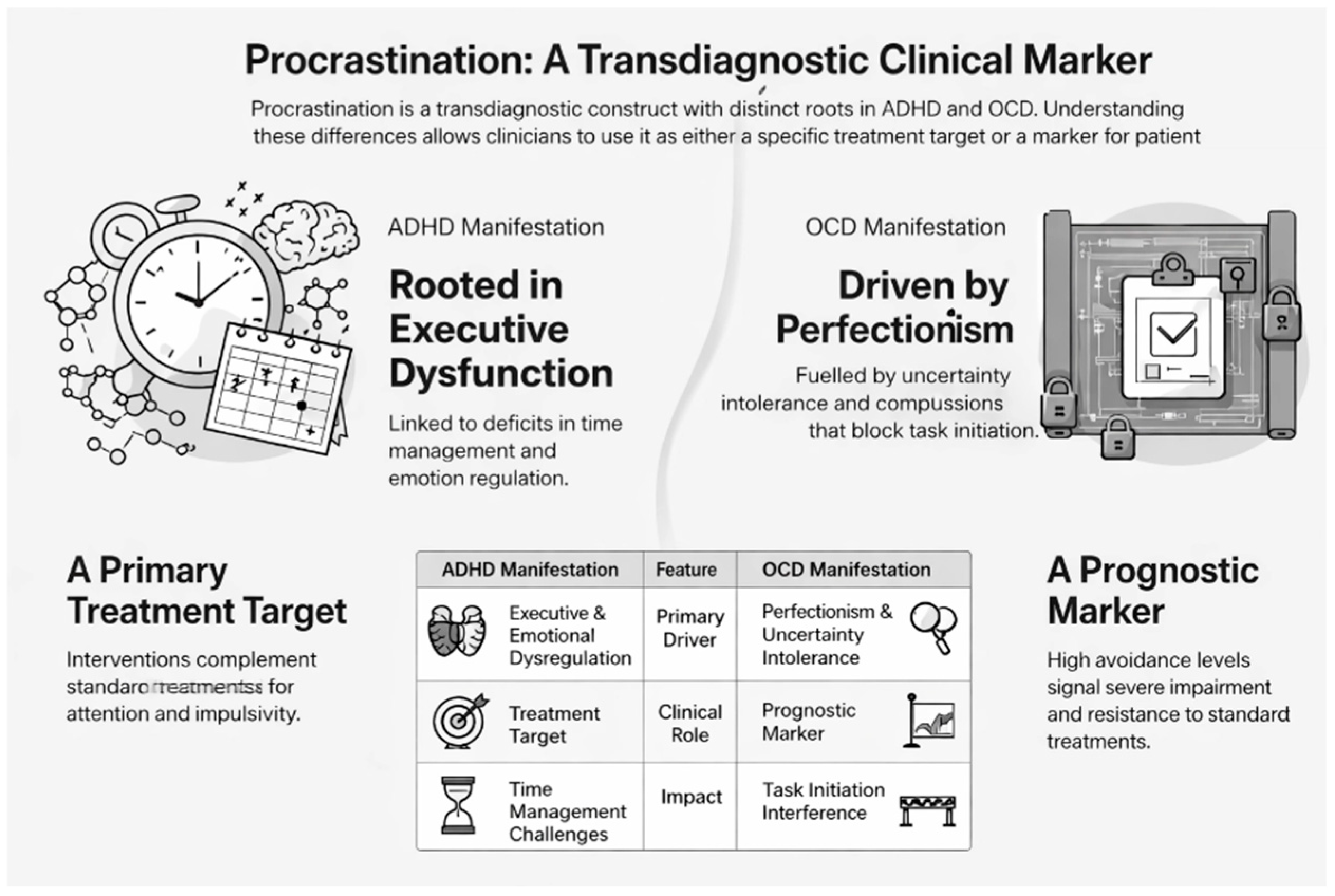
Our findings suggest that procrastination can be better understood as a transdiagnostic construct, with clear relevance for clinical practice. In ADHD, procrastination appears closely linked to executive dysfunction, time management difficulties and emotion regulation deficits. These features suggest that procrastination may serve as a treatment target, complementing established interventions focused on attention and impulsivity. In OCD, procrastination is often driven by perfectionism, intolerance of uncertainty, and compulsions that interfere with task initiation and completion. In these cases, procrastination may function as a prognostic marker, as patients with higher levels of task avoidance may experience more severe impairment and resistance to standard treatments.
Figure 4 illustrates such clinical implications.
4.9. Future Perspectives
This review reveals several directions that warrant prioritization in future research on procrastination as a transdiagnostic construct.
First, the development and psychometric validation of a clinically oriented procrastination scale remain a central unmet need. As our findings demonstrate, the 40 instruments currently in use were developed almost exclusively in student and community samples, and most lack evidence of validity in formal psychiatric settings. A new instrument should be capable of distinguishing between normative delay and clinically maladaptive procrastination, incorporate functional impairment criteria, and demonstrate sensitivity to change in response to treatment. Such a tool would allow procrastination to be meaningfully tracked as a secondary outcome in clinical trials targeting ADHD, OCD, major depressive disorder, and other conditions in which it is theoretically implicated.
Second, future studies should systematically examine procrastination in formally diagnosed clinical populations across a broader range of DSM-5 and ICD-11 categories. The near-exclusive reliance on university student samples—which accounted for the majority of the 387 studies reviewed here—severely limits the generalizability of existing findings to psychiatric contexts. Prospective studies and clinical cohorts should investigate whether procrastination severity predicts treatment response, functional recovery, and quality of life across diagnostic groups, including mood disorders, anxiety disorders, borderline personality disorder, and chronic fatigue syndrome. Such evidence would provide the empirical foundation necessary to formally establish procrastination as a transdiagnostic construct rather than an inferred one.
Third, the neurobiological underpinnings of clinically relevant procrastination deserve targeted investigation. Emerging evidence links psychopathological procrastination to adolescent neurodevelopmental deviations in the nucleus accumbens, dopaminergic reward circuitry, and prefrontal–amygdala regulatory pathways—all structures implicated across multiple psychiatric disorders. Future neuroimaging studies should examine whether procrastination severity in clinical samples correlates with measurable dysfunction in these circuits and whether reductions in procrastination following intervention are accompanied by detectable neurobiological changes. This line of research could consolidate procrastination as a dimensional, neurocognitively grounded phenotype.
Fourth, the therapeutic implications of this framework should be tested in clinical trials. If procrastination is indeed a transdiagnostic behavioral expression of self-regulation failure, emotion dysregulation, and motivational impairment, then interventions targeting these mechanisms—such as cognitive–behavioral therapy for emotion regulation, time management interventions, acceptance and commitment therapy, and exposure-based approaches targeting avoidance—may produce improvements in procrastination as a secondary benefit across different diagnostic conditions. Conversely, reducing procrastination as a primary target may improve broader symptom burden and functional outcomes in disorders where it is a prominent feature, particularly ADHD. Randomized controlled trials with procrastination as a pre-specified outcome measure are needed to test these hypotheses.
Fifth, the application of machine learning and natural language processing to procrastination research holds exploratory promise, as illustrated in the present study’s use of large language models to synthesize definitional terms. Future work could leverage these computational approaches more rigorously—for instance, to identify latent subtypes of procrastinators in clinical datasets, to assess convergent validity across existing instruments, or to develop automated screening tools for use in routine clinical practice. Such methods, however, should be validated against clinician-rated outcomes and interpreted with appropriate caution given current limitations in model transparency and generalizability.
Finally, cross-cultural and epidemiological research is needed to determine whether the prevalence and clinical correlates of procrastination vary meaningfully across populations, healthcare systems, and cultural contexts. The current evidence base is heavily weighted toward English-language, Western, educated, and high-income samples. Normative data from diverse populations—including Latin American, Asian, and African settings—would be essential for any future effort to establish universal diagnostic criteria or clinical thresholds for procrastination.




 ,
,