Article

A Delphi Study to Identify Effective Self-Help and Kindness Strategies for Subthreshold Depression


by
Nanako Hanai
1,*,
Satsuki Fujieda
1,2,
Yuki Hongo
1,3 and
Kenichi Asano
4
1
Graduate School of Comprehensive Human Sciences, University of Tsukuba, 1-1-1 Tennodai, Tsukuba 305-8577, Ibaraki, Japan
2
NTT Medical Center Tokyo, 5-9-22 Higashi-Gotanda, Shinagawa-ku, Tokyo 141-8625, Japan
3
Department of Sports Medicine, Japan Institute of Sports Sciences (JISS), 3-15-1 Nishigaoka, Kita-ku, Tokyo 115-0056, Japan
4
Department of Psychology, Institute of Human Sciences, University of Tsukuba, 1-1-1 Tennodai, Tsukuba 305-8577, Ibaraki, Japan
*
Author to whom correspondence should be addressed.
Psychiatry Int. 2026, 7(3), 118; https://doi.org/10.3390/psychiatryint7030118
Submission received: 29 January 2026 / Revised: 3 April 2026 / Accepted: 29 April 2026 / Published: 1 June 2026
(This article belongs to the Section Mental Health)

Abstract

Subthreshold depression (SD) is a significant risk factor for major depressive disorder. However, individuals with SD often do not seek professional help. This study aimed to identify a consensus-based list of self-help and “acts of kindness” (AK) strategies that are both helpful and feasible for individuals with SD while clarifying the perception gaps between clinical experts and individuals with lived experience. A three-round e-Delphi process was conducted with 51 clinical psychologists and 191 individuals with SD. The participants evaluated 187 initial strategies for helpfulness and feasibility using a 5-point Likert scale. After three rounds, five self-help strategies (e.g., “getting fresh air”) and one AK strategy reached a consensus for helpfulness. Conversely, 10 self-help and 11 AK strategies were endorsed for feasibility. A significant perception gap was identified: experts reported higher helpfulness than the SD panel, whereas the SD panel rated the feasibility of AK strategies significantly higher than the experts. These findings highlight a discrepancy between professional expectations and lived experience, suggesting that AK may serve as accessible, low-threshold options for mood improvement in clinical settings.

1. Introduction

Major depressive disorder (MDD) is a prevalent mood disorder characterized by significant psychological and physical impairment. In developed nations, the 12-month and lifetime prevalence rates of MDD are estimated at 5.5% and 14.6%, respectively [1]. Within the Japanese context, a synthesis of epidemiological data on common mental disorders from the 2000s to 2010s [2] indicates an overall 12-month prevalence of 2.5% and lifetime prevalence of 6.2%.
According to the diagnostic criteria [3], an MDD diagnosis requires the presence of five or more symptoms during the same two-week period, representing a change from previous functioning. At least one of the symptoms must be (1) depressed mood or (2) loss of interest or pleasure. These symptoms encompass a broad range of affective, cognitive, and somatic manifestations, including significant weight or appetite changes, sleep disturbances (insomnia or hypersomnia), psychomotor agitation or retardation, fatigue, feelings of worthlessness or excessive guilt, diminished cognitive capacity, and recurrent thoughts of death or suicidal ideation.
Beyond its core symptomatology, MDD is highly comorbid with various physical and mental health conditions. Individuals with MDD have a higher incidence of cardiovascular disease, diabetes, cancer, and neurodegenerative diseases than the general population [4]. Furthermore, high rates of comorbidity with anxiety disorders are also well documented [5]. Critically, MDD is associated with elevated suicide risk and high recurrence rates. A meta-analysis [6] revealed that individuals with MDD face an 8.62 times higher suicide risk than that of the general population. A 10-year follow-up study of 318 patients with unipolar MDD [7] found that approximately two-thirds of the participants experienced at least one recurrence, with the risk of subsequent episodes increasing by 16% with each prior recurrence. Given these substantial clinical and societal burdens, preventive interventions are urgently needed before subclinical symptoms escalate to full-blown MDD.

1.1. Subthreshold Depression

Subthreshold depression (SD) is characterized by clinically significant depressive symptoms that do not meet the full diagnostic criteria for MDD [8,9]. SD is conceptually understood as part of a symptomatic continuum with MDD [10]. According to a recent scoping review [9], SD exhibits a higher prevalence than MDD and serves as a critical risk factor for the subsequent onset of clinical depression [9,11].
Despite its clinical importance, a standardized operational definition for identifying SD remains elusive, leading to the use of diverse assessment tools across studies. Commonly employed instruments include the Patient Health Questionnaire-9 (PHQ-9) [12], which extracts nine items corresponding to the MDD criteria, and the Beck Depression Inventory-II [13], a 21-item scale measuring symptom severity. Other researchers have utilized scales such as the Center for Epidemiologic Studies Depression Scale [14] or diagnostic algorithms based on the criteria of the Diagnostic and Statistical Manual of Mental Disorders. Regarding the PHQ-9, which offers the advantage of brevity, current recommendations suggest a score between 5 and 9 as the criterion for SD, whereas a score of 16 or higher is recommended for the Center for Epidemiologic Studies Depression Scale [9].
Psychotherapeutic interventions, including problem-solving therapy, behavioral activation, and cognitive behavioral therapy, have demonstrated the highest efficacy for SD [15], positioning psychotherapy as the first-line treatment. Nevertheless, a significant barrier remains: individuals with SD often do not seek professional medical help [16]. Even among those meeting the full MDD criteria—whose symptoms are more severe—only approximately 30% utilize mental health services [17]. Jorm and Griffiths [18] attributed this low help-seeking behavior to the pervasive belief that psychological problems should be managed independently. Takenaka [18] argued that, in light of these challenges, learning self-management strategies and incorporating them in daily life—essentially achieving behavioral change—is vital for prevention of MDD. Consequently, the implementation of self-help strategies has been strongly advocated [18].

1.2. Overview and Role of Self-Help Strategies

Self-help strategies refer to self-initiated activities performed by individuals to manage mental health conditions or alleviate symptoms [19]. These self-help strategies can be broadly categorized into guided self-help strategies, which are performed under professional instruction, and informal self-help strategies, which are conducted independent of professional guidance [18]. Informal strategies offer several advantages: they are effective for those who avoid professional support; may enhance self-efficacy in individuals with depression or anxiety; and provide low-cost, accessible, and efficient interventions [18].
Furthermore, Norcross [20] noted that self-help strategies can facilitate “natural recovery” prior to formal clinical contact and serve as essential tools for maintaining treatment gains and preventing relapse after professional support has concluded. Thus, self-help strategies are versatile, functioning as both primary prevention for MDD onset and secondary prevention for recurrence.
In clinical settings, these strategies can also complement professional treatment to enhance overall efficacy [18]. Norcross [20] emphasized that self-help strategies, which can be easily integrated into daily life, are less likely to encounter resistance than interventions requiring exclusive reliance on external resources or groups. Such strategies can be naturally integrated into the recovery process, analogous to adjunctive pharmacotherapy. For instance, they can be utilized as distraction for emotion regulation or rumination reduction [20] or incorporated within the framework of behavioral activation [21].
While self-help encompasses a wide array of behaviors, it also includes both beneficial and potentially harmful actions (e.g., excessive alcohol consumption). Therefore, evidence-based recommendations are essential [19]. However, rigorous research on effective strategies remains scarce [22], with existing empirical studies limited by small samples or methodological flaws, making definitive conclusions difficult [10]. To address these gaps, Morgan and Jorm [23] and Takenaka et al. [24] utilized the Delphi method—an iterative process used to reach a consensus among experts [25]—to establish a consensus on effective strategies.

1.3. Self-Help Strategies for Depression: The Delphi Approach

Morgan and Jorm [23] and Takenaka et al. [24] utilized the Delphi method to reach a consensus on the efficacy (helpfulness) and feasibility of self-help strategies. Morgan and Jorm [23] compared a panel of individuals with lived experience of depression with a clinical expert panel. Although 48 strategies reached consensus for helpfulness, a significant discrepancy emerged regarding feasibility: experts endorsed 11 items as highly feasible, whereas the lived-experience panel endorsed only 2.
Similarly, Takenaka et al. [24] compared a general adult panel with experts. Interestingly, the expert panel rated fewer items as feasible than the general adult group. These findings suggest that feasibility assessments are highly sensitive to sample characteristics (e.g., clinical vs. non-clinical populations). Furthermore, Jorm et al. [16] demonstrated that the use of self-help strategies varies by symptom severity. Individuals with mild symptoms tend to use daily activities (e.g., exercise and music), whereas those with moderate-to-severe symptoms shift toward complementary therapies or professional help. As the self-help strategies used are expected to differ by symptom severity, it is necessary to categorize symptoms by severity and examine appropriate strategies for each level. Despite the importance of early intervention, no Delphi study has identified effective self-help strategies for individuals with SD.

1.4. Closing the Gap Between Experts and Individuals with Lived Experience

Morgan and Jorm [23] found a significant gap in feasibility, where individuals with lived experience of depression rated strategies lower than expert ratings. This feasibility gap poses a potential risk to the therapeutic alliance. Morgan and Jorm [23] reported that individuals with lived experience raised concerns that if they were unable to implement a recommended strategy, it could exacerbate their feelings of worthlessness and hopelessness, thereby worsening their depressive symptoms. Therefore, minimizing this perception gap is imperative. The Delphi method is uniquely suited for this purpose, as iterative feedback allows both groups to reconsider their ratings in light of the other’s perspective, producing strategies that are both clinically sound and practically viable.

1.5. Acts of Kindness as a Self-Help Modality

Emerging evidence suggests that “acts of kindness” (AK)—prosocial behaviors intended to benefit others at some personal cost [26,27]—can significantly alleviate symptoms of depression and anxiety. Meta-analyses indicate that AK interventions improve subjective well-being across diverse demographics [28,29]. Beyond enhancing positive affect, AK can reduce depression and anxiety symptoms and improve social connectedness, outperforming cognitive reappraisal in clinical samples [27]. While both self-kindness and prosocial AK have been shown to reduce depressive symptoms, AK demonstrates a unique capacity to reduce anxiety and loneliness, which self-focused kindness may not achieve as effectively [30]. Although Japanese research [31] reports similar benefits among students, there is a lack of structured, evidence-based strategy lists for clinical application.
The therapeutic mechanism of AK can be conceptualized as an active, prosocial form of self-regulation. According to Response Styles Theory [32], rumination—the repetitive, passive focusing on one’s distress—is a core maintenance factor for depression. AK provides a functional alternative to this maladaptive cycle by requiring individuals to shift their attention outward toward others. Cregg and Cheavens [27] suggest that AK interventions alleviate depressive symptoms by specifically mediating a reduction in public self-absorption. In this sense, AK functions as a sophisticated distraction-based self-help strategy; it shares a common mechanism with traditional self-help techniques by disrupting the cycle of self-focused distress and redirecting cognitive resources toward external, positive engagement.
Beyond these attentional shifts, AK facilitates mental health through its unique interpersonal dimensions. Mediation analyses indicate that the psychological gains of AK are primarily driven by enhanced social connection [30]. Unlike solitary self-help strategies, AK inherently requires interpersonal engagement, thereby improving social functioning and fostering a sense of social belonging. Furthermore, engaging in AK may enhance one’s “meaning in life”—the existential belief that one’s life is valuable and impactful. AK may also foster a “meaning in life.” Although Miles et al. [33] initially found no significant impact in their pre-registered analysis, exploratory findings focusing on participants with high intervention adherence revealed that AK can indeed strengthen the sense that one’s life possesses value.
In summary, this study evaluates AK alongside traditional self-help strategies because of this dual-pathway mechanism: AK not only shares the self-regulatory benefits of distraction common to self-help, but also provides unique interpersonal and existential benefits—such as enhanced social functioning and life significance—that are often absent in individualistic self-help modalities.

1.6. The Present Study

This study aimed to identify a consensus-based list of self-help and kindness strategies that are both helpful and feasible for individuals with SD. While previous research has underscored the significance of subthreshold depression (SD) as a critical target for depression prevention, a notable gap persists in the literature: no Delphi study to date has specifically focused on identifying effective self-help strategies for this population. To address this limitation, the present study employed a rigorous e-Delphi consensus process to establish a list of evidence-based self-help strategies tailored to the needs of individuals with SD.
Furthermore, extending beyond the predominantly individualistic focus of traditional self-help, we incorporated “acts of kindness” (AK)—a prosocial strategy with burgeoning empirical support for mood enhancement—as a novel component for prevention. By evaluating both self-help and AK strategies, this study seeks to expand the repertoire of accessible, low-intensity interventions for early mental health support.
Using a three-round e-Delphi survey with a panel of individuals with SD and clinical psychology experts, we sought to bridge the gap between professional recommendations and lived experience. Additionally, to quantify the recognition gap, chi-square tests were employed to compare the evaluations of both groups across the initial survey rounds. Ultimately, this research contributes to the development of practical, evidence-based tools for the primary prevention of major depressive disorder.

2. Materials and Methods

2.1. Study Design

This study employed a multi-round Delphi consensus design. The Delphi method is used to reach a consensus by conducting multiple anonymous surveys with a group of experts, providing feedback on their responses, and repeating this iterative process [25]. First, an initial list of self-help and kindness strategies was developed through a comprehensive literature review and AI-assisted item generation. Subsequently, two distinct panels—individuals with SD and clinical psychology experts—evaluated these strategies for “helpfulness” (efficacy) and “feasibility” across three iterative survey rounds. The final output was a consensus-based list of effective self-help and kindness strategies, validated by both lived experience of individuals with SD and the expertise of clinical experts.

2.2. Development of the Initial Strategy List

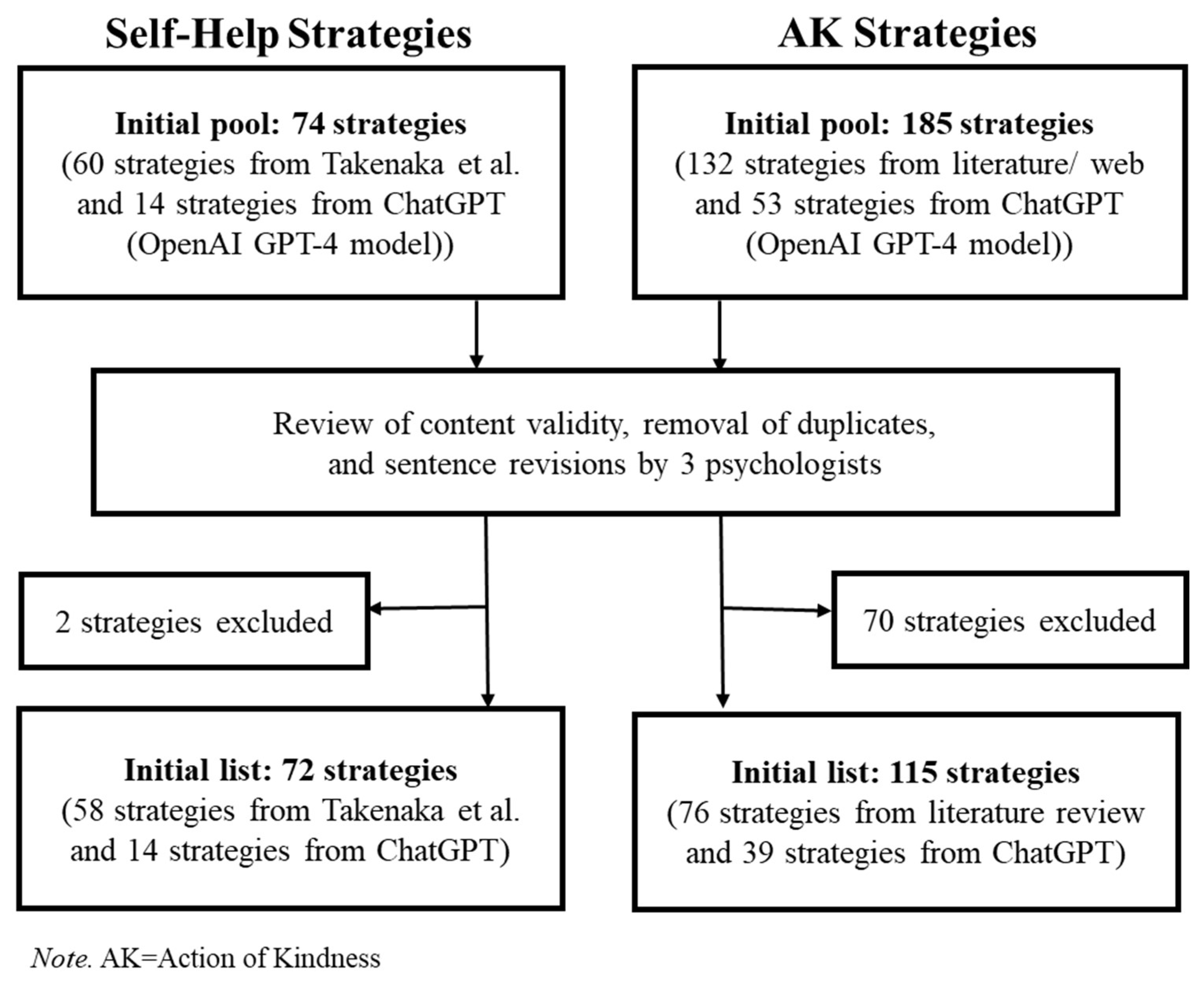
Figure 1 illustrates the step-by-step process used to construct the initial list prior to the Delphi rounds.

2.2.1. Self-Help Strategies

The initial pool of self-help strategies was derived primarily from the 60 items established by Takenaka et al. [24]. To encompass emerging contemporary strategies, 14 additional items were generated using ChatGPT (OpenAI, GPT-4 model). The specific prompts are provided in the Supplementary Materials (Table S4). This process resulted in a preliminary pool of 74 items.

2.2.2. Acts of Kindness Strategies

For AK strategies, a systematic search was conducted via Google and academic databases using keywords such as “acts of kindness,” “helping behavior,” “prosocial behavior,” and “altruistic behavior” in Japanese. This search yielded 132 strategies from empirical studies [34,35,36,37,38], relevant books [39], and credible web-based resources [40,41,42]. To further diversify the list, 53 additional items were generated using ChatGPT (GPT-4), resulting in 185 items. The specific prompts are provided in the Supplementary Materials (Table S4). This process resulted in a preliminary pool of 185 items.

2.2.3. Refinement and Finalization

The consolidated pool of 259 items (literature-derived and AI-generated) was reviewed by a panel of three psychologists (one faculty member and two doctoral students). This review focused on consolidating overlapping items, clarifying ambiguous phrasing, and ensuring clinical relevance, and verifying whether each item strictly adhered to the theoretical definitions of “self-help strategies” or “acts of kindness” to ensure conceptual validity. A key principle during this refinement was the prioritization of conceptual parsimony and generalizability. Specifically, when AI-generated items overlapped with literature-based ones, the latter were prioritized. For instance, an AI-generated item specifying a context, such as ‘Giving a small compliment, such as “That’s a nice outfit,” to someone you pass by’ was subsumed under the broader, more universal literature-derived item, ‘Praising someone.’ In such cases, we adopted the literature-based item because it represents a more generalizable strategy, whereas the AI-generated version was limited to a specific context. This systematic screening ensured that the final item pool was theoretically grounded, culturally appropriate, and practically applicable.
Following this refinement, the final list for the first Delphi round comprised 187 items:
  • Self-Help (72 items): 58 items from Takenaka et al. [24] and 14 AI-generated items.
  • Acts of Kindness (115 items): 76 items from the literature and 39 AI-generated items.

2.3. Participants and Panel Selection

Two distinct panels were recruited for the Delphi process. In selecting these panels, professional expertise and high motivation were prioritized; a minimum of 30 participants is generally recommended to buffer against attrition across successive rounds [43].

2.3.1. Selection of Clinical Psychology Expert Panel

The expert panel consisted of professionals holding dual certifications as public and clinical psychologists in Japan. Participants were recruited using snowball sampling, which is effective for reaching specialized professional populations.

2.3.2. Selection of Subthreshold Depression Panel

The SD panel was recruited from the general adult population who were registered monitors of the online survey platform Questant (Macromill, Inc., Tokyo, Japan; accessed in February 2025). An invitation for research participation was distributed to the monitors via the platform. Individuals who expressed interest responded to the study content. To identify individuals with SD from among them, we administered the Japanese version of the PHQ-9 [44]. Following the systematic review by Volz et al. [9], participants scoring between 5 and 9—the most frequently utilized range for defining SD—were included.

2.4. Procedure and Consensus Criteria

The survey was conducted using Questant, an online survey platform. The Delphi process consisted of three rounds, with approximately three-week intervals between each round.

2.4.1. Evaluation Metrics and Instructions

Participants evaluated each strategy across two dimensions—helpfulness (efficacy for mood improvement) and feasibility (ease of implementation)—using a 5-point Likert scale. Following the instructional protocol of Takenaka et al. [24], the SD panel was asked, “How helpful (or feasible) would the following method be for you when you are experiencing symptoms such as feeling down, heavy-hearted, or unmotivated? For the expert panel, the prompt was modified to refer to “people in general” rather than the participants themselves.

2.4.2. Consensus Thresholds (Endorsement Criteria)

Endorsement was operationally defined as the top two ratings on the Likert scale (i.e., “4: Helpful/Feasible” and “5: Very Helpful/Extremely Feasible”). In accordance with the established literature, different consensus thresholds were applied:
  • Self-Help Strategies: A threshold of 70% agreement was set, following Takenaka et al. [24].
  • Acts of Kindness Strategies: Considering that the clinical utility of AK is less widely recognized, a more inclusive threshold of 51% was adopted, which is the second most common criterion used in Delphi studies [25]. This lower threshold was necessitated by the specific clinical landscape in Japan, where empirical research and clinical recognition of AK interventions remain significantly limited compared to Western contexts. Since 2006, only a few Japanese studies have explored AK, and their findings regarding clinical efficacy have been inconsistent [45]. Given this lack of established evidence in the domestic literature, a 70% threshold risked prematurely excluding potentially effective strategies that are not yet widely known. Therefore, a 51% majority consensus was utilized to broaden the scope of this exploratory study and ensure that promising AK items were captured for future validation.

2.4.3. Iterative Feedback and Item Generation

Items that met the threshold in both panels were immediately included in the final list. Items endorsed by only one panel were reevaluated in the subsequent round. Additionally, in Round 1, experts were invited to propose supplementary strategies based on their clinical experience via open-ended questions. These newly suggested items were then integrated into Round 2 for evaluation by both panels.

2.5. Overview of Delphi Survey Rounds

The Delphi process was conducted in three sequential stages to refine and finalize the strategy list.

2.5.1. Round 1: Baseline Evaluation and Item Generation

Round 1 focused on demographic data collection and the baseline evaluation of 187 strategies.
  • Demographics: General participants reported their age, sex, occupation, and history of psychiatric treatment. Expert participants reported their age, sex, and years of clinical experience.
  • Patient Health Questionnaire-9 (Japanese Version): To identify the SD panel, we utilized the Japanese version of the PHQ-9 [44]. This validated scale comprises nine items (e.g., “Little interest or pleasure in doing things”) rated on a 4-point scale (0: Not at all to 3: Nearly every day).
  • Evaluation of Initial Strategies: All participants rated the helpfulness and feasibility of the initial 187-item pool.
  • Expert Solicitation of Additional Strategies: Experts were asked open-ended questions to propose additional strategies that they perceived as helpful and feasible in clinical practice.

2.5.2. Round 2: Reevaluation and Integration

Round 2 was administered to participants who completed Round 1. This round involved:
  • Reevaluation: Strategies that reached the consensus threshold in only one of the two panels in Round 1 were presented again for assessment.
  • New Item Assessment: Strategies proposed by the expert panel in Round 1 were evaluated by both panels for the first time.

2.5.3. Round 3: Final Consensus Building

Round 3 was administered to participants who completed Round 2. This final round focused on the reevaluation of items that still lacked bilateral consensus after Round 2.

2.6. Ethical Considerations

This study was conducted in accordance with the Declaration of Helsinki and approved by the Research Ethics Committee of the Institute of Human Science, University of Tsukuba (protocol code 筑2025-13A and date of approval: 16 April 2025). At the beginning of the survey, participants were informed about the iterative nature of the Delphi method (three rounds) and the feedback process. They were assured of data confidentiality and their right to withdraw at any time without penalty. To protect privacy, options such as “Prefer not to say” were provided for sensitive demographic questions.

2.7. Statistical Analysis

Data were analyzed using R (version 4.0.2; R Foundation for Statistical Computing, Vienna, Austria) and SPSS statistics (version 29.0.2.0; IBM Corp., Armonk, NY, USA). To investigate the discrepancies in perceptions between the SD and expert panels, chi-square tests were performed using 2 × 2 contingency tables. Following the methodology of Takenaka et al. [24], the 5-point Likert ratings were dichotomized: ratings of 4 and 5 were categorized as “Endorsed,” whereas ratings of 1 and 2 were categorized as “Non-endorsed.” These analyses were applied to the initial 187 items (Round 1) and additional expert-proposed items (Round 2).

3. Results

3.1. Participant Characteristics

3.1.1. Clinical Psychology Expert Panel

In Round 1, the clinical expert panel consisted of 51 professionals (15 males and 36 females; mean age = 34.1 years, SD = 8.2). Regarding clinical experience, 7 participants had 1 year of experience, 16 had 2–4 years, 4 had 5–9 years, 19 had 10–19 years, and 5 had 20 years or more. The mean duration of clinical experience was 8.9 years (SD = 7.38).

3.1.2. Subthreshold Depression Panel

A total of 1105 general adults initially participated in the survey. To ensure data quality, we excluded respondents with missing PHQ-9 data or those who failed the “dummy item” (attention check), resulting in a valid sample of 735 individuals.
Table 1 presents the distribution of PHQ-9 scores among these 735 respondents. Based on our inclusion criteria (PHQ-9 scores of 5–9), 191 individuals (104 males and 87 females; mean age = 48.6 years, SD = 11.8) were identified as the SD panel and participated in the Delphi process.
Detailed demographic information of the 191 participants, including their occupation and psychiatric treatment history, is summarized in Table 2.

3.2. Retention and Attrition Rates

Table 3 summarizes the participation and retention rates across the three Delphi rounds. Taking the number of Round 1 participants as 100%, the retention rates were calculated for subsequent rounds.
  • Expert Panel: Forty-five of the 51 experts participated in Round 2 (88.2%). In Round 3, 41 experts remained, representing 80.4% of the original pool.
  • Subthreshold Depression Panel: Of the 191 individuals, 120 participated in Round 2 (62.8%), and 101 completed all three rounds (52.9%).
To address potential selection bias resulting from attrition within the SD panel, we compared the baseline characteristics (e.g., age, sex, and PHQ-9 scores) between those who completed all rounds (completers, n = 101) and those who did not (non-completers, n = 90). Independent samples t-tests and chi-square tests revealed no significant differences between the two groups in age (t (189) = 1.959, p = 0.052, Cohen’s d = 0.28), sex (χ2 (1) = 0.086, p = 0.773), occupation (χ2 (6) = 7.64, p = 0.265), or PHQ-9 score (t (189) = 0.424, p = 0.672, Cohen’s d = 0.06). Psychiatric history was not statistically compared due to the minimal number of participants with a history of treatment. Although some attrition occurred during the Delphi rounds, baseline comparisons between completers and non-completers suggested no systematic selection bias.

3.3. Evaluation and Selection of Self-Help Strategies

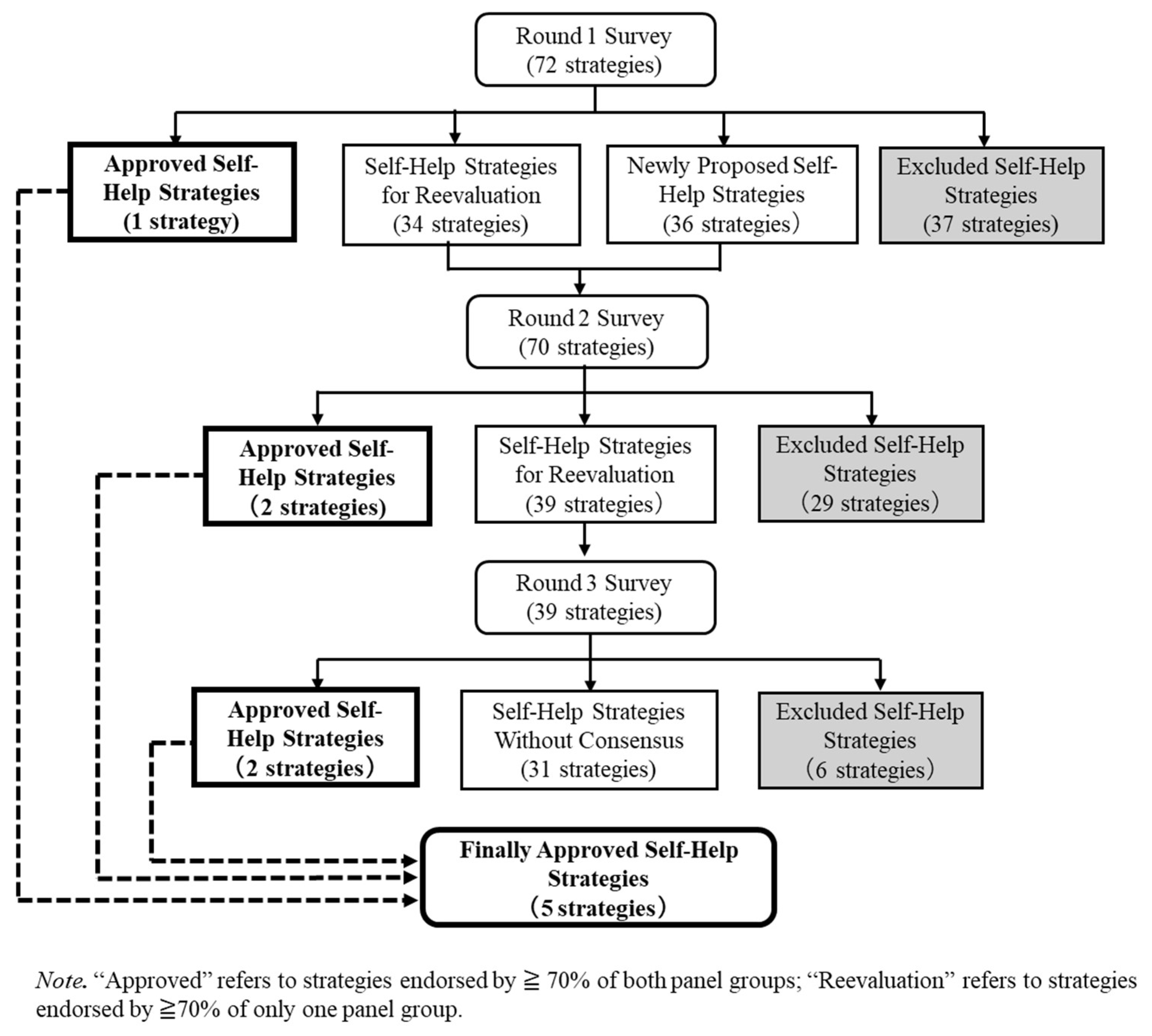
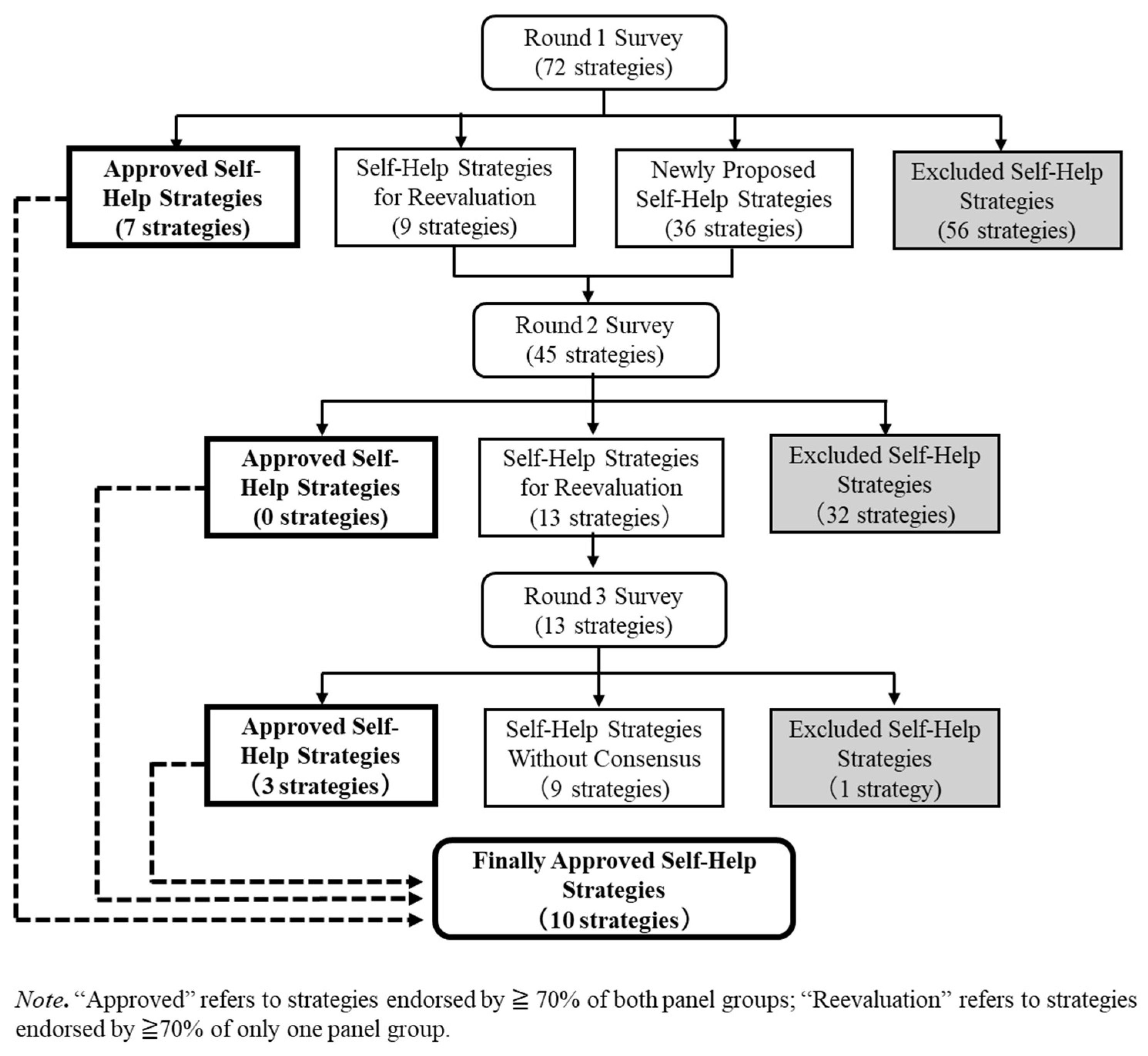
Figure 2 and Figure 3 illustrate the evaluation processes for helpfulness and feasibility using the Delphi method, respectively.

3.3.1. Progression of Rounds of Self-Help Strategies

In Round 1, of the 72 initial self-help strategies, only one met the 70% consensus threshold for helpfulness in both panels, whereas seven met the threshold for feasibility. Expert feedback in Round 1 yielded 41 additional strategies; after removing duplicates and refining content for relevance, 36 new items were integrated into Round 2.
By the end of Round 3, a rigorous selection process yielded a final consensus on 5 helpful strategies and 10 feasible strategies. Examples of items that were excluded for failing to reach the 70% consensus threshold were “Looking at graduation albums to reflect on one’s roots” and “Keeping a gratitude journal by writing down three things you are grateful for each day.”

3.3.2. Final Consensus List: Self-Help

Table 4 presents the final list of self-help strategies endorsed in the consensus process.
  • Helpfulness (5 items): The following strategies were endorsed: “Getting some fresh air,” “Eating delicious food,” “Resting without overexerting myself and giving myself a break when feeling tired,” “Thinking about plans I look forward to,” and “Looking at beautiful scenery.” Based on the categories of Takenaka et al. [24], “Getting some fresh air” was categorized as self-care, “Thinking about plans I look forward to” as cognitive strategies, and “Looking at beautiful scenery” as a pleasant activity. “Resting without overexerting myself” was an AI-generated item, and “Eating delicious food” was a novel strategy proposed by experts in Round 1.
  • Feasibility (10 items): Strategies such as “Deep breathing (self-care),” “Stretching one’s back (self-care),” and “Listening to favorite music (pleasant activity)” were endorsed. Although no AI-generated items survived the final feasibility threshold, three expert-proposed items—“Eating delicious food,” “Watching videos or TV,” and “Making time to be alone”—were deemed highly feasible. Notably, the number of strategies endorsed for feasibility was twice that of those endorsed for helpfulness.

3.4. Evaluation and Selection of Acts of Kindness Strategies

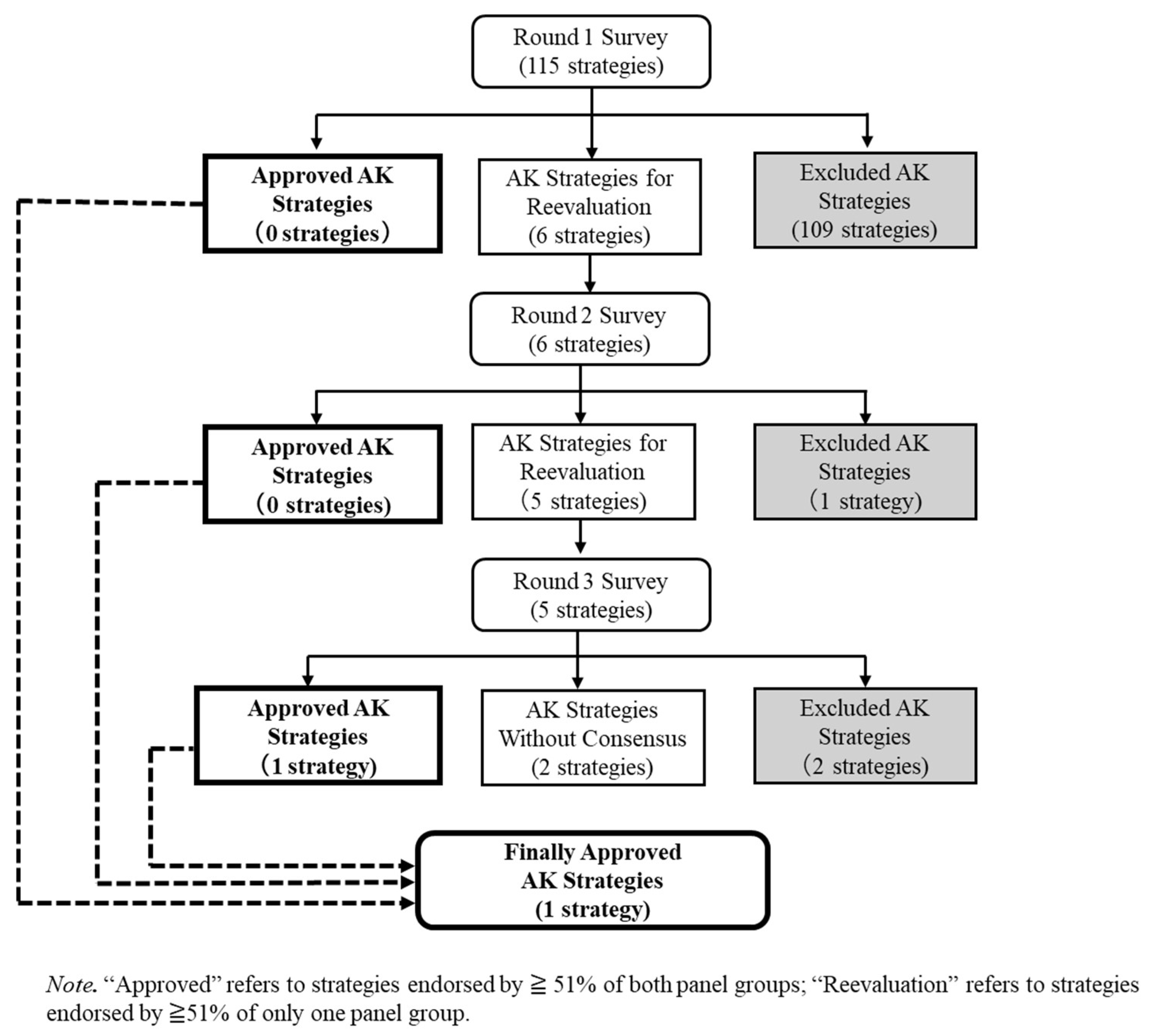
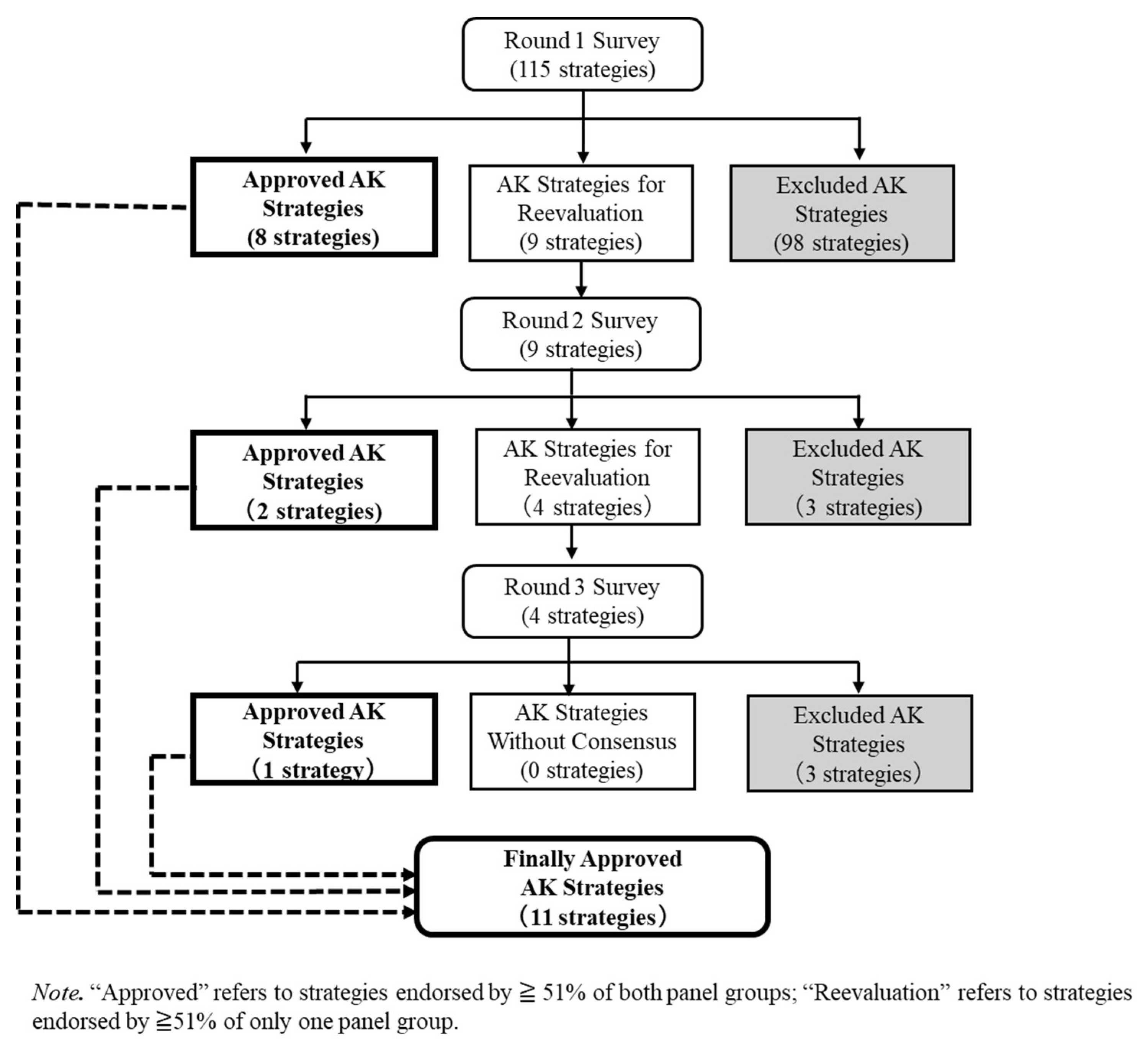
Figure 4 and Figure 5 depict the evaluation processes for helpfulness and feasibility using the Delphi method, respectively.

3.4.1. Progression of Rounds of AK Strategies

Because of the low initial recognition of AK’s clinical utility, a 51% threshold was applied.
In Round 1, of the 115 AK strategies, none met the 51% consensus threshold for helpfulness in both panels, whereas eight met the threshold for feasibility. The Round 1 expert feedback yielded no new strategies, resulting in the same set of items being evaluated in Round 2.
By the end of Round 3, a rigorous selection process resulted in a final consensus on 1 helpful strategy and 11 feasible strategies. Examples of items that were excluded for failing to reach the 51% consensus threshold included “Holding an umbrella for someone who does not have one on a rainy day” and “Preparing and delivering home-cooked meals or handmade sweets for someone.”

3.4.2. Final Consensus List: Acts of Kindness

Table 5 presents the final list of AK strategies endorsed in the consensus process.
Regarding these strategies, we developed an original categorization system comprising three domains to enhance conceptual clarity: (1) Kindness to close others, (2) Helping others in need, and (3) Everyday Etiquette. “Kindness to close others” refers to acts of kindness directed toward people in one’s immediate social circle, such as family or friends. “Helping others in need” refers to targeted acts of kindness performed in response to individuals facing observable difficulties or explicitly seeking assistance. “Everyday etiquette” refers to acts rooted in social norms and manners that are ubiquitous and frequently enacted in daily interpersonal interactions.
  • Helpfulness (1 item): Only one strategy reached a consensus: “Inviting an acquaintance for a walk or tea and spending time together.”
  • Feasibility (11 items): Eleven strategies reached a consensus, characterized by low-effort prosocial acts such as “Saying ‘Thank you’ to store clerks,” “Holding the door open for others,” and “Letting someone pass on a narrow path.”

3.5. Discrepancies in Evaluations Between the Expert and Subthreshold Depression Panels

To identify perception gaps, we conducted chi-square tests on the initial ratings from Round 1 and the expert-proposed items from Round 2. To control for Type I errors arising from multiple comparisons, p-values were adjusted using the false discovery rate control via the Benjamini–Hochberg procedure.
Table 6 summarizes the items with significant differences (p < 0.10, 0.05, 0.01).
Helpfulness: Experts consistently rated strategies higher than the SD panel’s ratings. For self-help strategies, all 79 items with significant differences were rated higher by experts; however, no items were rated significantly higher by the SD panel.
Feasibility: Interestingly, the SD panel frequently rated items as more feasible than the experts. For AK strategies, among the 22 items with significant differences, the SD panel rated 16 items as more feasible than the experts’ ratings.

4. Discussion

4.1. Evaluation and Categorization of Self-Help Strategies

Through a Delphi process involving individuals with SD and clinical psychology experts, this study successfully identified self-help strategies characterized by high helpfulness and feasibility. Strategies reaching consensus for both helpfulness and feasibility—“getting fresh air” and “eating delicious food”—were characterized by sensory engagement, situational flexibility with minimal physical constraints, and their effectiveness as cognitive distractions to improve mood.
Conversely, strategies that achieved consensus in only one of these two domains lacked these combined elements. Specifically, strategies deemed less feasible often involved environmental constraints (e.g., ‘viewing scenery’) or lacked behavioral specificity (e.g., ‘resting without overexerting’). Furthermore, as Oikawa [46] noted, effective distraction requires sufficient attentional capacity to fully engage the individual. Strategies that failed to reach a consensus on helpfulness (e.g., stretching or deep breathing) were likely insufficient to divert focus from depressive rumination.
Thus, for a strategy to be rated highly in both categories, it must be a concrete action that can be easily integrated into daily life while providing enough sensory stimulation to absorb the user’s attention.

4.2. Self-Help Strategies: Comparison with Prior Research and Perception Gaps

Compared with Takenaka et al. [24], this study yielded a lower percentage of endorsed strategies. Takenaka et al. [24] found that approximately 30% of strategies were endorsed for both criteria by general adults, whereas the SD panel in this study endorsed significantly fewer strategies (6.9% for helpfulness and 13.9% for feasibility). This discrepancy likely reflects the clinical characteristics of SD, as individuals with depressive symptoms often experience reduced motivation and positive reinforcement [47].
Notably, the SD panel rated the helpfulness of all 79 significant items lower than the experts. This trend can be attributed to several factors. First, individuals with SD often struggle to maintain optimistic perspectives [48]. Second, evaluating “helpfulness” is cognitively demanding, as it requires predicting internal emotional shifts—a task more complex than judging immediate “feasibility.” Furthermore, this gap in helpfulness likely reflects differing perspectives on mood improvement between experts and individuals with SD. Experts likely evaluate strategies based on a long-term, cumulative model of behavioral activation aimed at breaking the cycle of avoidance [21]. By contrast, individuals with SD may prioritize immediate results. According to Rehm’s [49] self-control theory, individuals with depressive symptoms often focus on immediate rewards rather than long-term outcomes [50]. This gap could hinder treatment adherence; if a client does not perceive immediate benefits, their motivation to continue may decrease. Therefore, clinicians should prioritize recommending high-feasibility strategies first to gradually foster self-efficacy and hope, while providing a clear rationale for how these simple behaviors facilitate long-term psychological recovery.

4.3. Acts of Kindness: Cultural Context and Perception Gaps

In this study, only one AK strategy reached a consensus for helpfulness, whereas 11 were endorsed for feasibility. Although research by Cregg and Cheavens [27] demonstrated the efficacy of AK, our panels generally did not perceive these acts as helpful. This may be due to a lack of awareness regarding the clinical utility of AK in Japan. Prosocial interventions remain scarce in the Japanese psychological literature, as evidenced by the fact that all 36 strategies newly proposed by experts in this study were categorized as self-help rather than AK. Furthermore, the lack of immediate feedback, such as gratitude from others, in a survey-based study might have contributed to lower helpfulness ratings compared with intervention studies [31].
By contrast, regarding feasibility, the SD panel endorsed 16 more AK strategies than the experts. This suggests that individuals with SD view AK strategies as low-burden behaviors, possibly because they are rooted in social norms and common etiquette (e.g., holding the door for others). This tendency may be reinforced by the prevalence of interdependent self-construal in Japanese culture [51]. In a society where social harmony is prioritized, prosocial behaviors are often perceived as a natural extension of everyday social interaction rather than an additional psychological effort, making them feel less effortful than in cultures that prioritize independent self-construal. Consequently, while experts may overestimate the psychological burden of acts of kindness due to their focus on the motivational deficits of depression, individuals with SD perceive them as highly feasible. Although further investigation is required to determine whether these kindness strategies are truly effective for mood improvement, these findings suggest that AK could serve as an accessible, low-threshold option that complements self-help approaches for mood improvement in clinical settings.

4.4. Practical Applications and Social Dissemination

The findings of this study offer several practical applications for clinicians and public health professionals in preventing depression and promoting mental health.
In clinical settings, this list of strategies can be integrated into evidence-based interventions such as behavioral activation (BA). Clinicians can present these strategies as a curated “behavioral repertoire” to clients, allowing them to select activities that align with their daily lives. To enhance adherence and mitigate the risk of “failure experiences”—which can reinforce feelings of worthlessness in depressed individuals [23]—we recommend prioritizing strategies that achieved high “feasibility” ratings. Also, this successful engagement enhances self-efficacy [18] and creates a positive feedback loop for mood improvement. Furthermore, for individuals with high self-criticism who might resist self-focused care, starting with “acts of kindness” (AK) strategies may be particularly effective. These other-oriented acts often bypass self-evaluative barriers and can be implemented with lower psychological resistance than direct self-help strategies.
The strength of this list lies in the fact that it reflects not only expert “helpfulness” ratings but also the “feasibility” perceived by individuals with SD. This dual validation makes it a robust tool for large-scale preventive programs. For instance, these lists could be distributed during mental health workshops in workplaces or local communities as part of psychoeducational resources. Additionally, the strategies could be compiled into self-care pamphlets and placed in accessible locations such as university health centers, community centers, or primary care waiting rooms. By providing these evidence-based, feasible options, we can offer a low-threshold entry point for mood regulation in the community.

4.5. Limitations and Future Directions

This study has several limitations. First, the initial strategies were collected through the literature and using AI, potentially omitting effective strategies used by individuals with SD that have not yet been formally documented. Future research should utilize interviews or experience sampling to capture these lived strategies. Second, the evaluations were based on anticipated rather than actual implementation. Future studies should validate these lists through intervention-based designs, where participants evaluate the strategies after implementation to create a more practice-based list. Third, while the dichotomization of Likert scale responses for chi-square tests followed established protocols in prior Delphi studies [23,24] to facilitate the interpretation of consensus, this statistical approach inevitably results in a loss of information and reduced sensitivity compared to the original ordinal data. Future research should consider employing statistical methods that preserve the full granularity of the 5-point scale data, such as ordinal regression or non-parametric analyses for multiple categories, to capture more nuanced differences in perceptions. Fourth, different consensus thresholds were adopted for self-help and AK strategies to avoid premature exclusion of potentially beneficial items because the efficacy of AK strategies is not yet widely recognized in Japan compared to self-help strategies. This methodological discrepancy limits the direct comparability of the findings between the two strategy types, and the results should be interpreted with caution when comparing the relative consensus levels of self-help versus AK strategies. Finally, the findings may be culturally specific to Japan, and additional cross-cultural validation is required.
Beyond these limitations, future research should situate these self-help and AK strategies within the broader context of psychological resilience. Suriano and Valentino [52] highlight the role of adaptive psychological resources, such as humor and tolerance of ambiguity, in promoting resilience against adversity. The strategies identified in this study can be conceptualized as “behavioral resources” that enhance an individual’s capacity for emotional regulation and recovery. Future studies should investigate how the regular use of these resources contributes to long-term mental health maintenance and the strengthening of resilience.

5. Conclusions

Despite these limitations, this study provides a consensus-based list of simple daily behaviors for mood improvement. These findings are valuable for intensive therapies like behavioral activation as well as general counseling and self-help management, serving as an important foundation for preventing depression.

Supplementary Materials

The following supporting information can be downloaded at: https://www.mdpi.com/article/10.3390/psychiatryint7030118/s1, Table S1: Initial list of 72 self-help strategies; Table S2: Initial list of 115 acts of kindness strategies; Table S3: 36 additional expert-proposed strategies introduced in Round 2; and Table S4: ChatGPT prompts used for strategy item generation.

Author Contributions

Conceptualization, N.H.; methodology, N.H. and K.A.; validation, S.F. and Y.H.; formal analysis, N.H.; investigation, N.H. and K.A.; data curation, N.H.; writing—original draft preparation, N.H.; writing—review and editing, K.A.; visualization, N.H.; supervision, K.A.; project administration, K.A. and N.H.; funding acquisition, K.A. All authors have read and agreed to the published version of the manuscript.

Funding

This research was funded by JSPS KAKENHI (grant number 24K00497).

Institutional Review Board Statement

This study was conducted in accordance with the Declaration of Helsinki and approved by the Research Ethics Committee of the Institute of Human Sciences, University of Tsukuba (protocol code 筑2025-13A and date of approval: 16 April 2025).

Informed Consent Statement

Informed consent was obtained from all participants involved in this study.

Data Availability Statement

The data presented in this study are available in the Supplementary Materials.

Acknowledgments

During the preparation of this manuscript, the authors used Gemini 3 (Google) for English language editing. The authors have reviewed and edited the output and take full responsibility for the content of this publication.

Conflicts of Interest

The authors declare no conflicts of interest.

Abbreviations

The following abbreviations are used in this manuscript:
SDSubthreshold Depression
AKActs of Kindness
MDDMajor Depressive Disorder
PHQ-9Patient Health Questionnaire-9

References

  1. Bromet, E.; Andrade, L.H.; Hwang, I.; Sampson, N.A.; Alonso, J.; de Girolamo, G.; de Graaf, R.; Demyttenaere, K.; Hu, C.; Iwata, N.; et al. Cross-national epidemiology of DSM-IV major depressive episode. BMC Med. 2011, 9, 90. [Google Scholar] [CrossRef]
  2. Nishi, D.; Ishikawa, H.; Kawakami, N. Prevalence of mental disorders and mental health service use in Japan. Psychiatry Clin. Neurosci. 2019, 73, 458–465. [Google Scholar] [CrossRef]
  3. American Psychiatric Association. Diagnostic and Statistical Manual of Mental Disorders, 5th ed.; Text Revision; Takahashi, S.; Ohno, Y., Translators; Igaku-Shoin: Tokyo, Japan, 2023. [Google Scholar]
  4. Berk, M.; Köhler-Forsberg, O.; Turner, M.; Penninx, B.W.J.H.; Wrobel, A.; Firth, J.; Loughman, A.; Reavley, N.J.; McGrath, J.J.; Momen, N.C.; et al. Comorbidity between major depressive disorder and physical diseases: A comprehensive review of epidemiology, mechanisms and management. World Psychiatry 2023, 22, 366–387. [Google Scholar] [CrossRef]
  5. Lamers, F.; van Oppen, P.; Comijs, H.C.; Smit, J.H.; Spinhoven, P.; van Balkom, A.J.L.M.; Nolen, W.A.; Zitman, F.G.; Beekman, A.T.F.; Penninx, B.W.J.H. Comorbidity patterns of anxiety and depressive disorders in a large cohort study: The Netherlands Study of Depression and Anxiety (NESDA). J. Clin. Psychiatry 2011, 72, 341–348. [Google Scholar] [CrossRef] [PubMed]
  6. Arnone, D.; Karmegam, S.R.; Östlundh, L.; Alkhyeli, F.; Alhammadi, L.; Alhammadi, S.; Alkhoori, A.; Selvaraj, S. Risk of suicidal behavior in patients with major depression and bipolar disorder—A systematic review and meta-analysis of registry-based studies. Neurosci. Biobehav. Rev. 2024, 159, 105594. [Google Scholar] [CrossRef] [PubMed]
  7. Solomon, D.A.; Keller, M.B.; Leon, A.C.; Mueller, T.I.; Lavori, P.W.; Shea, M.T.; Coryell, W.; Warshaw, M.; Turvey, C.; Maser, J.D.; et al. Multiple recurrences of major depressive disorder. Am. J. Psychiatry 2000, 157, 229–233. [Google Scholar] [CrossRef] [PubMed]
  8. Pincus, H.A.; Davis, W.W.; McQueen, L.E. Subthreshold mental disorders. Br. J. Psychiatry 1999, 174, 288–296. [Google Scholar] [CrossRef]
  9. Volz, H.P.; Stirnweiß, J.; Kasper, S.; Möller, H.J.; Seifritz, E. Subthreshold depression—Concept, operationalisation and epidemiological data. A scoping review. Int. J. Psychiatry Clin. Pract. 2023, 27, 92–106. [Google Scholar] [CrossRef]
  10. Jorm, A.F.; Christensen, H.; Griffiths, K.M.; Rodgers, B. Effectiveness of complementary and self-help treatments for depression. Med. J. Aust. 2002, 176, S84–S96. [Google Scholar] [CrossRef]
  11. Rohde, P.; Beevers, C.G.; Stice, E.; O’Neil, K. Major and minor depression in female adolescents: Onset, course, symptom presentation, and demographic associations. J. Clin. Psychol. 2009, 65, 1339–1349. [Google Scholar] [CrossRef]
  12. Spitzer, R.L.; Kroenke, K.; Williams, J.B. Validation and utility of a self-report version of PRIME-MD: The PHQ primary care study. JAMA 1999, 282, 1737–1744. [Google Scholar] [CrossRef]
  13. Beck, A.T.; Steer, R.A.; Ball, R.; Ranieri, W. Comparison of Beck Depression Inventories-IA and -II in psychiatric outpatients. J. Pers. Assess. 1996, 67, 588–597. [Google Scholar] [CrossRef] [PubMed]
  14. Radloff, L.S. The CES-D scale: A self-report depression scale for research in the general population. Appl. Psychol. Meas. 1977, 1, 385–401. [Google Scholar] [CrossRef]
  15. Hao, X.; Jia, Y.; Chen, J.; Zou, C.; Jiang, C. Subthreshold depression: A systematic review and network meta-analysis of non-pharmacological interventions. Neuropsychiatr. Dis. Treat. 2023, 19, 2149–2169. [Google Scholar] [CrossRef] [PubMed]
  16. Jorm, A.F.; Griffiths, K.M.; Christensen, H.; Parslow, R.A.; Rogers, B. Actions taken to cope with depression at different levels of severity: A community survey. Psychol. Med. 2004, 34, 293–299. [Google Scholar] [CrossRef]
  17. Ishikawa, H.; Tachimori, H.; Takeshima, T.; Umeda, M.; Miyamoto, K.; Shimoda, H.; Baba, T.; Kawakami, N. Prevalence, treatment, and the correlates of common mental disorders in the mid 2010′s in Japan: The results of the World Mental Health Japan 2nd Survey. J. Affect. Disord. 2018, 241, 554–562. [Google Scholar] [CrossRef]
  18. Jorm, A.F.; Griffiths, K.M. Population promotion of informal self-help strategies for early intervention against depression and anxiety. Psychol. Med. 2006, 36, 3–6. [Google Scholar] [CrossRef]
  19. Takenaka, K. The role of self-help strategies in the prevention of mental health problems. Ind. Health Res. 2019, 12, 135–144. (In Japanese) [Google Scholar] [CrossRef]
  20. Norcross, J.C. Integrating self-help into psychotherapy: 16 practical suggestions. Prof. Psychol. Res. Pract. 2006, 37, 683–693. [Google Scholar] [CrossRef]
  21. Martell, C.R.; Addis, M.E.; Jacobson, N.S. Depression in Context: Strategies for Guided Action; Kumano, H.; Suzuki, S., Translators; Nihon Hyoron Sha: Tokyo, Japan, 2011. [Google Scholar]
  22. Takenaka, K.; Shimazaki, T. Preventive Activities for Mental Health Problems: Mental Health ABC Activities; Waseda University Applied Health Science Laboratory, Sun Life Kikaku: Tokyo, Japan, 2016; (In Japanese). Available online: https://www.waseda.jp/inst/weekly/assets/uploads/2016/10/a104da31379e670cec9a9fa9d478f6dc.pdf (accessed on 24 December 2025).
  23. Morgan, A.J.; Jorm, A.F. Self-help strategies that are helpful for sub-threshold depression: A Delphi consensus study. J. Affect. Disord. 2009, 115, 196–200. [Google Scholar] [CrossRef]
  24. Takenaka, K.; Noda, T.; Yamatsuta, K.; Matsui, T. Examination of self-help strategies for improvement and recovery of mood symptoms: A survey using the Delphi method. Jpn. J. Health Psychol. 2021, 33, 125–136. (In Japanese) [Google Scholar] [CrossRef]
  25. Fujita, Y.; Ueki, S.; Kitao, M.; Maeda, Y.; Fujiwara, C. Delphi method study with nurse participants: Survey of the Japanese literature. Mukogawa Women’s Univ. J. Nurs. 2017, 3, 35–42. (In Japanese) [Google Scholar] [CrossRef]
  26. Lyubomirsky, S.; King, L.A.; Diener, E. The benefits of frequent positive affect: Does happiness lead to success? Psychol. Bull. 2005, 131, 803–855. [Google Scholar] [CrossRef]
  27. Cregg, D.R.; Cheavens, J.S. Healing through helping: An experimental investigation of kindness, social activities, and reappraisal as well-being interventions. J. Posit. Psychol. 2023, 18, 924–941. [Google Scholar] [CrossRef]
  28. Curry, O.S.; Rowland, L.A.; Van Lissa, C.J.; Zlotowitz, S.; McAlaney, J.; Whitehouse, H. Happy to help? A systematic review and meta-analysis of the effects of performing acts of kindness on the well-being of the actor. J. Exp. Soc. Psychol. 2018, 76, 320–329. [Google Scholar] [CrossRef]
  29. Zhuniq, M.; Winter, F.; Aguilar-Raab, C. Compassion for others and well-being: A meta-analysis. Sci. Rep. 2025, 15, 36478. [Google Scholar] [CrossRef]
  30. Naclerio, M.; Lazar, L.; Hornstein, E.A.; Eisenberger, N.I. Exploring the Effects of Prosocial and Self-Kindness Interventions on Mental Health Outcomes. Emotion 2026, 26, 14–24. [Google Scholar] [CrossRef]
  31. Kato, R. Examination of positive psychological effects of intentional acts of kindness. Anim. Stud. 2024, 6, 59–67. (In Japanese) [Google Scholar]
  32. Nolen-Hoeksema, S. Responses to depression and their effects on the duration of depressive episodes. J. Abnorm. Psychol. 1991, 1, 569–582. [Google Scholar] [CrossRef] [PubMed]
  33. Miles, A.; Andiappan, M.; Upenieks, L.; Orfanidis, C. Using prosocial behavior to safeguard mental health and foster emotional well-being during the COVID-19 pandemic: Aregistered report of a randomized trial. PLoS ONE 2022, 17, e0272152. [Google Scholar] [CrossRef] [PubMed]
  34. Kikuchi, A. Scientizing Kindness: Prosocial Behavior, Psychology, and Skills; Kawashima Shoten: Tokyo, Japan, 1988. (In Japanese) [Google Scholar]
  35. Matsui, Y. Structural analysis of helping behavior. Jpn. J. Psychol. 1981, 52, 226–232. (In Japanese) [Google Scholar] [CrossRef]
  36. Takagi, O. Taxonomy of prosocial behavior. Bull. Fac. Sociol. Kansai Univ. 1987, 28, 67–114. (In Japanese) [Google Scholar]
  37. Tanaka, K.; Ando, M. Act of “I’ll do for you” and measurement of its willingness. J. Hum. Interface Soc. 2014, 16, 249–259. (In Japanese) [Google Scholar] [CrossRef]
  38. Yokotsuka, R. An attempt to construct a scale of prosocial behavior for high school students. Jpn. J. Educ. Psychol. 1989, 37, 158–162. (In Japanese) [Google Scholar] [CrossRef][Green Version]
  39. Hamilton, D.R. The Five Side Effects of Kindness: This Book Will Make You Feel Better, Be Happier & Live Longer; Horiuchi, K., Translator; Sunmark Publishing: Tokyo, Japan, 2018. [Google Scholar]
  40. Gida. Why Small Acts of Kindness Change Your Life. Available online: https://yurukenja.com/small-kindness/ (accessed on 24 December 2015).
  41. Shimazu, A.; Horita, Y. Implementation Manual for the Program to Improve Kind Behavior. Available online: https://hp3.jp/wp-content/uploads/2019/06/05.pdf (accessed on 24 December 2025).
  42. PASONA. Mental Health in the Workplace: Let’s Increase Kind Behavior. Available online: https://www.safetynet.co.jp/column/20230123/ (accessed on 24 December 2015).
  43. Romero-Collado, A. Essential elements to elaborate a study with the (e)Delphi method. Enferm. Intensiv. 2021, 32, 100–104. [Google Scholar] [CrossRef]
  44. Muramatsu, K.; Miyaoka, H.; Kamijima, K.; Muramatsu, Y.; Tanaka, Y.; Hosaka, M.; Miwa, Y.; Fuse, K.; Yoshimine, F.; Mashima, I.; et al. Performance of the Japanese version of the Patient Health Questionnaire-9 (J-PHQ-9) for depression in primary care. Gen. Hosp. Psychiatry 2018, 52, 64–69. [Google Scholar] [CrossRef] [PubMed]
  45. Otake, K.; Shimai, S.; Tanaka-Matusumi, J.; Otsui, K.; Fredrickson, B.L. Happy people become happier thtough kindness: A counting kindnesses intervention. J. Happiness Stud. 2006, 7, 361–375. [Google Scholar] [CrossRef]
  46. Oikawa, M. Emotion regulation process of distraction: Toward effective use. Jpn. J. Educ. Psychol. 2003, 51, 443–456. (In Japanese) [Google Scholar] [CrossRef][Green Version]
  47. Lazarus, A.A. Multimodal behavioral treatment of depression. Behav. Ther. 1974, 5, 549–554. [Google Scholar] [CrossRef]
  48. Morgan, A.J.; Mackinnon, A.J.; Jorm, A.F. Behavior change through automated e-mails: Mediation analysis of self-help strategy use for depressive symptoms. Behav. Res. Ther. 2013, 51, 57–62. [Google Scholar] [CrossRef] [PubMed]
  49. Rehm, L.P. A self-control model of depression. Behav. Ther. 1977, 8, 787–804. [Google Scholar] [CrossRef]
  50. Rehm, L.P.; Plakosh, P. Preference for immediate reinforcement in depression. J. Behav. Ther. Exp. Psychiatry 1975, 6, 101–103. [Google Scholar] [CrossRef]
  51. Takata, T. Developmental process of independent and interdependent self-construal in Japanese culture: Cross-cultural and cross-sectional analyses. Jpn. J. Educ. Psychol. 1999, 47, 480–489. (In Japanese) [Google Scholar] [CrossRef] [PubMed]
  52. Suriano, R.; Valentino, T. From childhood adversity to resilience: A serial mediation model involving positive humor styles and tolerance of ambiguity. J. Affect. Disord. 2026, 403, 121453. [Google Scholar] [CrossRef] [PubMed]
Figure 1. Initial construction process of Self-Help and AK Strategies [24].
Psychiatryint 07 00118 g001
Figure 2. Evaluation process for the helpfulness of self-help strategies using the Delphi method.
Psychiatryint 07 00118 g002
Figure 3. Evaluation process for the feasibility of self-help strategies using the Delphi method.
Psychiatryint 07 00118 g003
Figure 4. Evaluation process for the helpfulness of AK strategies using the Delphi method.
Psychiatryint 07 00118 g004
Figure 5. Evaluation process for the feasibility of AK strategies using the Delphi method.
Psychiatryint 07 00118 g005
Table 1. Number of participants by PHQ-9 score (n = 735).
Scoren (%)
0~4 points432 (58.8%)
5~9 points191 (26.0%)
10~14 points76 (10.3%)
15~19 points23 (3.1%)
20~27 points13 (1.8%)
Table 2. Demographic variables of individuals with subthreshold depression (n = 191).
SexMale104
Female87
Occupation (%)Office worker98 (51.3%)
Self-employed/freelance19 (9.9%)
Full-time homemaker17 (8.9%)
Part-time/temporary worker30 (15.7%)
Student4 (2.1%)
Unemployed17 (9.0%)
Other4 (2.1%)
No response2 (1.1%)
History of treatment for mental disordersYes0
No182
No response9
Table 3. Number and percentage of participants across surveys.
Clinical Psychology ExpertsIndividuals with Subthreshold Depression
First Survey51 (100.0%)191 (100.0%)
Second Survey45 (88.2%)120 (62.8%)
Third Survey41 (80.4%)101 (52.9%)
Table 4. List of self-help strategies and consensus percentages.
CategoryStrategiesHelpfulnessFeasibility
ExpertsIndividual with SDConsensus RoundExpertsIndividual with SDConsensus Round
Self-careGetting fresh air92.7%74.0%390.0%82.3%1
Eating delicious food (additional item)86.7%72.1%275.6%72.0%3
Stretching one’s back66.7%45.8%-90.2%83.3%1
Opening your hands and relaxing43.1%13.5%-96.1%72.6%1
Deep breathing73.2%60.0%-94.1%84.4%1
Drinking water before feeling thirsty35.3%40.6%-84.3%78.9%1
Eating sweets66.7%65.6%-90.2%81.3%1
Resting without overexerting myself (AI-generated item)98.0%76.0%166.7%64.6%-
Cognitive strategyThinking about plans I look forward to82.2%70.5%245.1%67.7%-
AvoidanceMaking time to be alone (additional item)73.2%50.0%-70.7%73.5%3
Pleasant activityListening to music you like87.8%64.0%-94.1%79.2%1
Watching videos or TV (additional item)62.2%52.5%-82.9%70.0%3
Looking at beautiful scenery80.5%72.0%356.9%62.5%-
Note. Additional item = Additional expert-proposed strategies introduced in Round 2. Consensus round = The round in which the 70% threshold was met. AI-generated item = Items generated by ChatGPT. Bolded figures indicate items reaching an agreement rate exceeding 70% in both the clinical psychology expert panel and the SD group, including the consensus round numbers.
Table 5. List of AK strategies and consensus percentages.
CategoryStrategiesHelpfulnessFeasibility
ExpertsIndividual with SDConsensus RoundExpertsIndividual with SDConsensus Round
Kindness to close othersInviting an acquaintance for a walk or tea and
spending time together (AI-generated item)
61.0%58.8%331.4%36.8%-
Warming up the room for those living with you34.7%29.4%-60.0%61.1%1
Preparing a bath for those living with you31.6%21.6%-54.9%58.9%1
Nursing a family member when they are unwell45.3%22.0%-62.7%62.7%3
Helping others in needTaking a photo for someone who asks you to press
the shutter
40.0%23.5%-64.7%62.1%1
Helping a child who has fallen get back up38.9%23.5%-60.8%53.7%1
Letting someone pass on a narrow path39.4%13.7%-68.6%56.4%1
Informing or returning lost/forgotten items to the
owner
45.7%27.5%-53.3%61.0%2
Delivering lost items found on the street to a police
box or store service counter (AI-generated item)
17.0%21.6%-60.0%62.7%2
Pressing and holding the “Open” button in an elevator
to wait for others
34.0%17.6%-76.5%66.3%1
Everyday etiquetteHolding the door open for others38.3%17.6%-68.6%68.1%1
Saying “Thank you” to store clerks45.7%39.2%-76.6%70.6%1
Note. Additional item = Additional expert-proposed strategies introduced in Round 2. Consensus round = The round in which the 51% threshold was met. AI-generated item = Items generated by ChatGPT. Bolded figures indicate items reaching an agreement rate exceeding 51% in both the clinical psychology expert panel and the SD group, including the consensus round numbers.
Table 6. Number of strategies with significant differences in evaluation between the two panel groups.
Number of Strategies Rated Higher by One Panel
Clinical Psychology ExpertsIndividuals with SDTotal
Self-Help StrategyHelpfulness79 strategies0 strategies79 strategies
Feasibility17 strategies20 strategies37 strategies
AK StrategyHelpfulness4 strategies2 strategies6 strategies
Feasibility6 strategies16 strategies22 strategies
p < 0.10, 0.05, 0.01.
Disclaimer/Publisher’s Note: The statements, opinions and data contained in all publications are solely those of the individual author(s) and contributor(s) and not of MDPI and/or the editor(s). MDPI and/or the editor(s) disclaim responsibility for any injury to people or property resulting from any ideas, methods, instructions or products referred to in the content.