


Abstract
Background: This study aims to synthesise available evidence on positive psychology interventions for enhancing resilience among university students, based on randomised controlled trials (RCTs). Methods: A comprehensive search was conducted in Scopus, CINAHL, PsycINFO, and PubMed from the inception of positive psychology interventions until July 2025. The search terms included “PPI” or “positive psychology intervention” and “resilience” or “psychological resilience”; “university students”, “freshmen”, “higher education students”, “adolescents”, or “adolescent” or “teenagers”; and “resilience training”, “resilience enhancement”, or “positive psychology intervention (PPI)” and “resilience reinforcement”. The Preferred Reporting Items for Systematic Review and Meta-Analyses 2020 guidelines were followed for conducting and reporting this review. Results: The systematic search identified 2346 records. After the removal of duplicates and the screening of titles and abstracts, 32 full-text articles were assessed for eligibility, and four RCTs were included in the final analysis. The risk of bias was analysed for the studies using RoB-2 for Cochrane reviews, and studies deemed to be at high risk of bias were excluded from the final review. Overall, all included studies demonstrated an improvement in resilience scores in the intervention group compared to those in the control group. In this review, Cohen’s d was calculated to standardise the mean differences across the studies, even when their outcome measures differed. Conclusions: This review suggests that resilience interventions could enhance resilience and associated psychological constructs, providing preliminary guidelines for developing and implementing resilience enhancement interventions for university students. The review protocol is registered under PROSPERO with the ID CRD420251138034.
1. Introduction
Adolescence is a distinct stage of human development characterised by rapid cognitive, physical, psychological, and social changes. It is estimated that approximately 14% of individuals aged 10–19 years experience a mental health concern, many of which remain undetected and untreated [1]. The prevalence of anxiety and depression among individuals aged 10–24 years increased significantly between 2019 and 2021, with higher incidence rates observed among females and older adolescents [2].
Compared with their non-university peers, university students are more frequently diagnosed with depression and anxiety and report higher levels of stress. These challenges are further compounded in middle- and low-income countries, where access to formal mental health care is often limited due to stigma and the unavailability of appropriate services [3]. Moreover, university students are not homogeneous; the category of first-generation university students often experiences feelings of non-belonging, financial and cultural barriers, and limited family support, which can hinder their academic success and integration within the institutions. Consequently, their resilience may involve navigating exclusion and developing a sense of belonging in an academic setting, rather than being limited to individually coping with stressors [4].
In addition, universities are generally described as ‘safe spaces’ for diverse cultural, ethnic, gender, and sexual identities. However, such safety is uneven and socially negotiated rather than universally experienced. This in turn affects their sense of belonging and psychological wellbeing [5,6]. University students should therefore be considered a vulnerable population, and ensuring their well-being should be a priority for higher education institutions [7].
Despite these challenges, adolescence is also recognised as a critical period for the prevention, promotion, and development of positive mental health attitudes and behaviours [8]. Evidence suggests that early interventions and specialised services like mentoring, community building initiatives, and recognition of their diverse identities can support adolescent mental health and prevent the early onset of mental disorders, which may otherwise develop into chronic conditions later in life [4,9]. Multiple studies have demonstrated that higher levels of resilience are associated with fewer mental health problems among adolescents [10,11,12].
According to the American Psychological Association (APA), resilience is both a process and an outcome of successfully adapting to difficult or challenging life experiences, particularly through mental, emotional, and behavioural flexibility and adjustment to internal and external demands [13]. Resilience can be understood as both a trait and a dynamic process that changes over time. It enables individuals either to withstand adversity without significant distress or to recover from adversity without long-term complications [14]. Furthermore, resilience is increasingly recognised as an important graduate attribute that requires the use of planned, structured, and evidence-based strategies to support its development among students over time [15].
Earlier resilience interventions primarily targeted individuals exposed to severe adversity, including children with mental illness, older adults, and refugees [16]. Such interventions often incorporated approaches based on cognitive behavioural therapy [17], mindfulness [18], acceptance and commitment therapy [19], rational emotive therapy [20], and skills training. More recently, capacity-building interventions have been introduced within higher education institutions to support students’ overall mental well-being, including peer-support programmes, mindfulness training, and resilience training initiatives [21,22]. In addition, resilience interventions for university students are delivered both online and offline through workshops, psychoeducation, game-based teaching, expressive writing, and curriculum-based activities [7,23,24].
Among the various approaches to resilience enhancement, Positive Psychology Interventions (PPIs) focus on strengthening positive traits, emotional resources, and positive emotions rather than on treating pathology alone [25]. PPIs emphasise positive processes, remedial processes, or a combination of both, with the aim of reducing distress and enhancing positive psychological outcomes [26]. Consequently, these interventions may be beneficial for improving well-being in both clinical and non-clinical populations across the lifespan, including non-clinical university students [27].
Although there is growing evidence supporting the effectiveness of PPIs in general populations and among individuals facing adversity, evidence specifically addressing their effectiveness among university students remains limited. The transition into university represents a critical period marked by increased independence and responsibility. Investing in resilience during this stage may support students in developing into confident, capable, balanced, and independent adults. A systematic review of PPI-based resilience enhancement interventions for university students would provide a comprehensive overview of intervention components, duration, modes of delivery, outcome measures, benefits, and implementation challenges among healthy university students. Such a review would also help identify research gaps, methodological limitations, and directions for future resilience enhancement interventions targeting healthy university students.
2. Materials and Methods
The review protocol was registered with PROSPERO with the ID CRD420251138034. No deviation from the registered protocol had occurred until the manuscript preparation. To ensure methodological transparency, this systematic review was conducted and reported in accordance with the Preferred Reporting Items for Systematic Reviews and Meta-Analyses (PRISMA) guidelines [28].
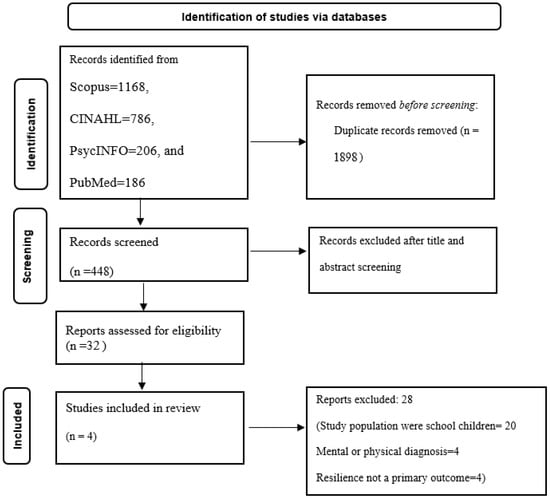
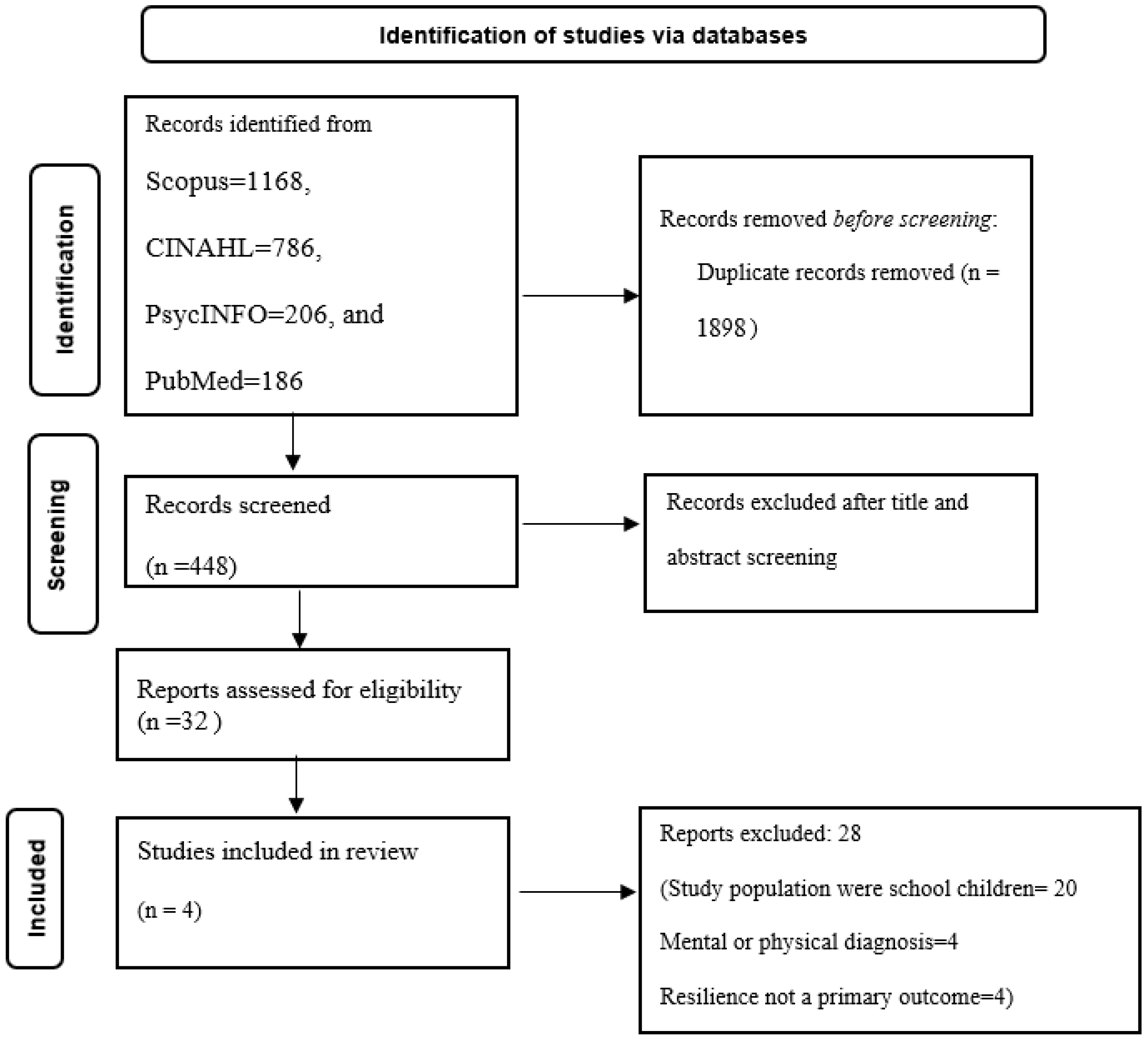
Figure 1 illustrates the identification, screening and inclusion of studies. The initial search identified 2346 records. After the removal of duplicates and screening of titles and abstracts, 32 full-text articles were assessed for eligibility. Of these, 28 articles were excluded because the study population comprised school-aged children or adolescents with physical or mental health conditions, resilience was not reported as a primary outcome, or key data were missing. Finally, four studies were included in this review.
Figure 1.
PRISMA 2020 flow diagram for systematic reviews [28]. Note: Source: Page MJ, et al. BMJ 2021; 372: n71. doi: 10.1136/bmj.n71 (Published 29 March 2021). This work is licenced under CC BY 4.0. To view a copy of this licence, visit https://creativecommons.org/licences/by/4.0/, accessed on 25 March 2026).
2.1. Eligibility Criteria
2.1.1. Inclusion Criteria
- (1)
- Randomised controlled trials (RCTs) focusing on PPIs for resilience enhancement among university students, compared with no intervention, a wait-listed control group, other active interventions, or usual care.
- (2)
- RCTs reporting resilience as an outcome measure following the PPIs.
- (3)
- RCTs published in English from the emergence of PPIs until 2025.
2.1.2. Exclusion Criteria
- (1)
- RCT focusing on PPI for university students with diagnosed mental or physical health conditions.
- (2)
- RCTs published in languages other than English.
- (3)
- RCTs examining resilience interventions apart from PPI.
- (4)
- RCT focusing on PPI for school-aged children.
2.2. Information Sources
A comprehensive literature search was conducted across Scopus, CINAHL, PsycINFO, and PubMed. The search included studies published from 1990, corresponding to the inception of positive psychology, and concluded on 30 July 2025. Grey literature, conference proceedings, and dissertations were not searched; PROPERO was searched for the existence of similar reviews registered.
2.3. Search Strategy
The search was initially developed for PubMed using a combination of keywords and Medical Subject Headings (MeSH) terms and free keywords to identify relevant studies. Search terms included: “PPI” OR “positive psychology intervention” AND “resilience” OR “psychological resilience” AND “university students” OR “freshmen” OR “higher education students” OR “adolescents” OR “teenagers” AND “resilience training” OR “resilience reinforcement.” The search strategy was then adopted for other databases according to their specific search terms and syntax. Searches were limited to RCTs, English language publications, and studies published from 1990 to July 2025. No geographic restrictions were applied; in addition, the reference list of included studies was searched to identify any further eligible articles.
2.4. Selection Process
Study selection was conducted independently by the first author, a doctoral scholar. After manual removal of duplicates, an initial screening of titles and abstracts was undertaken to identify potentially relevant studies. In the second stage, full-text screening was conducted to determine eligibility based on the inclusion criteria. This process was completed by the first author without involvement from the other authors. Every stage of screening was supervised and reviewed by the second author. In cases of uncertainty, expert guidance was sought from authors 3 and 4 to ensure consistent application of the eligibility criteria. To minimise the extraction errors, supervisory review and consensus discussion were carried out by the second, third, and fourth authors from time to time.
2.5. Data Extraction
The first author developed a standardised data extraction sheet in Microsoft Excel based on the review objectives and PRISMA guidelines. The extraction form was piloted using a selected study to ensure relevance and clarity. Extracted data included study identification, study design, research setting, study location, participant age, intervention name and description, mode of delivery, intervention duration, comparator, follow-up period, primary and secondary outcomes, resilience measurement tools, reported challenges or limitations, and outcome favourability. When data were missing, additional searches were conducted to retrieve information from Supplementary Materials, study protocols, or other publications by the same authors. No attempts were made to contact study authors for additional data.
2.6. Risk of Bias Assessment
Methodological quality and risk of bias were assessed using the Cochrane Risk of Bias tool (RoB-2). This tool evaluates bias across five domains: (1) randomisation process, (2) deviations from intended interventions, (3) missing outcome data, (4) outcome measurement, and (5) selective reporting. Each domain was assessed using signalling questions with responses of “yes,” “probably yes,” “no,” “probably no,” or “no information.” Studies were categorised as having low risk, some concerns, or high risk of bias. Overall risk of bias was determined in accordance with RoB-2 guidance [29,30].
The risk of bias assessment for included studies is presented below.
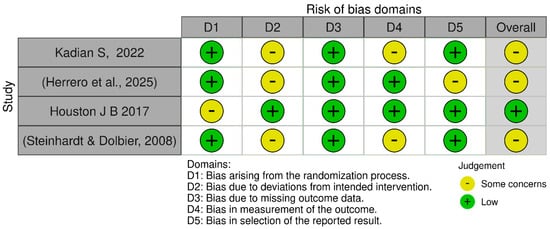
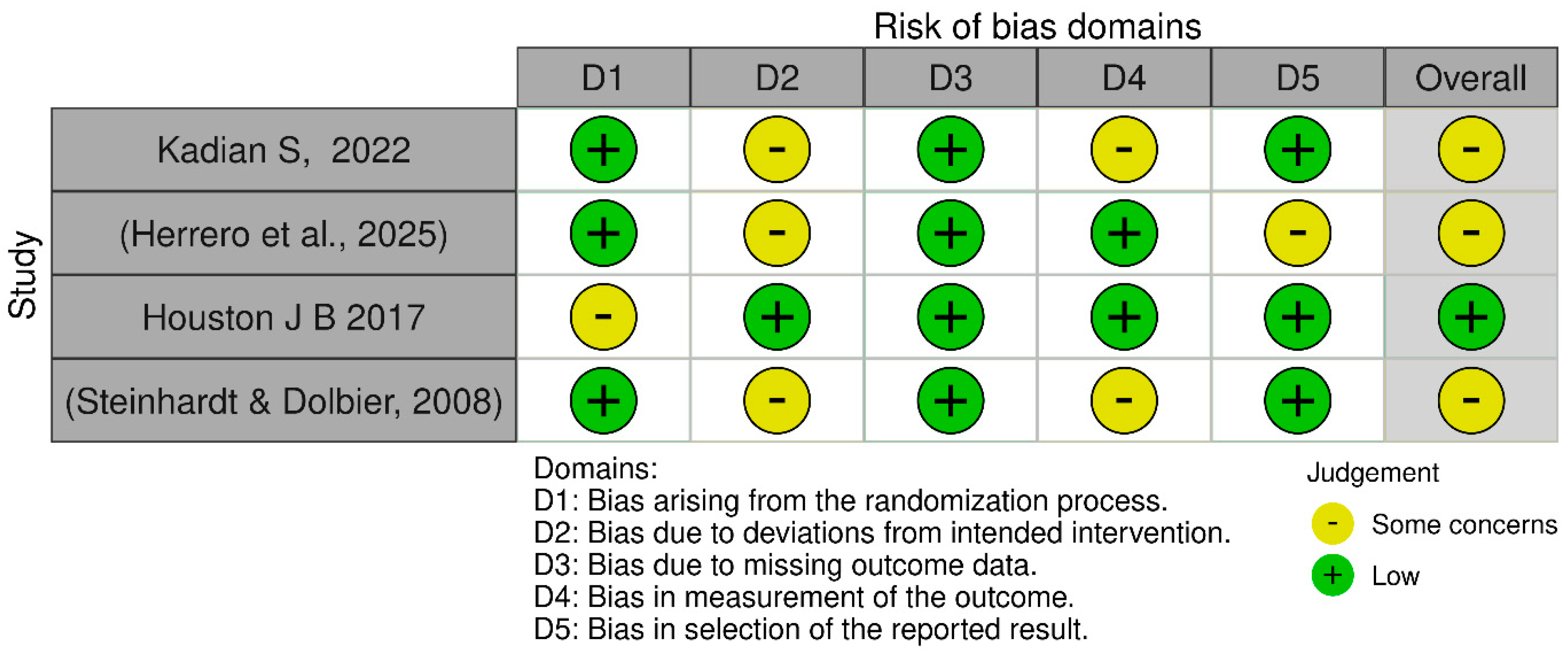
Figure 2 Risk of bias visualisation generated using robvis, showing that studies with low risk or some concerns were included, while studies with high risk of bias were excluded. Some concerns were mostly due to practical challenges of blinding the interventions and occasional incomplete reporting of assessment procedures. The studies with some concerns were included, as it was not substantially affecting the primary outcome, and excluding them would have significantly reduced the evidence base and limited the ability to synthesise the intervention effects. This decision was made to minimise the potential for biassed effect estimates and avoid inflating the perceived effectiveness of the positive psychology-based resilience interventions. This approach prioritises internal validity and ensures that conclusions are drawn from studies with more robust methodology. Overall, the risk of bias profile indicates moderate methodological quality among evidence bases. Heterogeneity in intervention delivery format and outcome measures should be considered when interpreting the cross-study comparisons and effect estimates.
Figure 2.
The traffic light plot generated by the authors using the Risk of Bias Visualisation (robvis) online tool [23,31,32,33,34].
2.7. Level of Evidence
All included studies were RCTs, which are considered to provide high-quality evidence within the hierarchy of evidence. According to the Oxford Centre for Evidence-Based Medicine, systematic reviews of RCTs represent Level 1 evidence [35]. Furthermore, RoB-2 assessments indicated that all included RCTs demonstrated either low risk of bias or some concerns only, suggesting acceptable methodological quality. While the inclusion of RCTs strengthens the reliability of the findings, the relatively small number of eligible trials highlights the need for additional well-designed RCTs to further establish the effectiveness of resilience training programmes in enhancing well-being, resilience, and coping among university students. However, certainty of the outcomes is not formally assessed in this review using the GRADE approach.
3. Results
The systematic search identified 2346 records. After the removal of duplicates and screening of titles and abstracts, 32 full-text articles were assessed for eligibility. Of these, 28 articles were excluded because the study population comprised school-aged children or adolescents with physical or mental health conditions, resilience was not reported as a primary outcome, or key data were missing.
3.1. Characteristics of the Included Studies
- Design: All included studies were RCTs [32,33,34,36].
- Sample: The total sample comprised 899 university students without identified physical or mental health concerns at the time of the studies. Sample sizes across studies included intervention groups of 30, 64, 110, and 248 participants and control groups of 27, 65, 110, and 245 participants, respectively [32,33,34,36].
3.2. Interventions
The included interventions consisted of multicomponent Positive Psychology Interventions (PPIs), including: (1) a brief resilience intervention programme comprising two sessions addressing perspectives on resilience and the role of protective factors [32]; (2) CORE (Cultivating Our Resilience), which focused on coping with daily stressors, self-empowerment, and well-being enhancement [36]; (3) resilience and coping interventions involving problem-based group discussions centred on shared learning, peer support, and problem-solving during stressful or traumatic events [33]; and (4) transforming lives through resilience education, which involved classroom-based sessions addressing stress transformation, responsibility, empowerment, and meaningful connections [34]. Interventions were delivered over durations ranging from 1 to 8 h across 1 to 8 weeks, using individual or group formats and delivered either online or face-to-face.
3.3. Assessment Measures
Resilience was measured using the Connor–Davidson Resilience Scale (CD-RISC-25) and the Brief Resilience Scale (BRS). The CD-RISC-25 is a reliable self-report instrument (α = 0.88) consisting of 25 items rated from 0 (“not true at all”) to 5 (“true nearly all of the time”), with higher scores indicating greater resilience (31). The BRS is a reliable self-report measure (α = 0.76) consisting of four items, with total scores ranging from 4 to 20, where higher scores indicate greater resilience [32].
- Countries
The four included studies were conducted in the USA (n = 2), India (n = 1), and a multicentre European context including Spain, Germany, Switzerland, and Austria (n = 1), and were published between 2008 and 2025.
3.4. Key Characteristics of the Included Studies Are Summarised in Table 1
Table 1 presents the characteristics of the included studies. All the included studies were RCTs focused on resilience, wellbeing and coping related constructs. The study populations mainly included healthy university students. Interventions varied in content, duration and mode of delivery. However, all of them focused on resilience building and coping and well-being enhancement.
Table 1.
Key characteristics of the included studies.
3.5. Primary Outcome: Effect of Intervention on Resilience
Across all included studies, improvements in resilience scores were observed in the intervention groups compared with the control groups. To enable comparison across studies using different resilience measures, Hedges’ g was calculated as the difference between post-intervention means of the intervention and control groups divided by the pooled standard deviation, adjusted using a small sample correction factor. This was done to standardise the mean differences across the studies, even if their outcome measures differed.
3.6. Table 2. Effect Sizes of the Included Studies
Table 2 presents the pre- and post-intervention means, SDs, pooled SD, and calculated effect sizes for all included studies. Hedges’ g was calculated as the difference between post-intervention means of the intervention and control groups divided by the pooled standard deviation, adjusted using a small sample correction factor. Interpretation followed conventional guidelines, whereby values of <0.2 represent negligible effects, 0.20–0.49 small effects, 0.5–0.79 medium effects, and ≥0.8 large effects [37]. Studies 1 and 3 demonstrated negligible effect sizes (0.03 and −0.06), indicating minimal differences between intervention and control groups. Study 4 demonstrated a small effect size (0.45), reflecting a substantial improvement in resilience among intervention participants, while Study 2 showed a small-to-medium effect (0.34). Positive values of Hedges’g indicate effects favouring the intervention group, whereas negative values indicate outcomes favouring the control group. These findings suggest that resilience-enhancing interventions may exert variable effects depending on intervention design and participant characteristics and should be interpreted cautiously. Due to limited follow-ups in several studies, the long-term impact of these interventions remains uncertain.
Table 2.
Effect sizes of the included studies.
3.7. Secondary Outcomes
All included studies assessed a range of secondary outcomes, including coping, depression, anxiety, hope, and well-being. Due to heterogeneity in secondary outcome measures, which limited the appropriateness of statistical pooling of results, secondary outcomes were synthesised narratively.
In Study 1 [32], no significant differences were observed between intervention and control groups for depression (PHQ-4) or perceived stress. Study 2 [36] reported significant reductions in anxiety, depression, and negative affect in the intervention group, alongside improvements in psychological well-being and positive affect. Study 3 [33] assessed coping, hope, stress, anxiety, and depression and found significant improvements in hope and reductions in stress and depression, although no significant effect on anxiety was reported. Coping behaviours related to support-seeking and taking action increased significantly in the intervention group but did not differ substantially from the control group. Study 4 [34] demonstrated significant reductions in avoidant coping and symptomatology, as well as increases in problem-solving, hopefulness, optimism, and protective factors among intervention participants, although no group differences were observed for support-seeking or physical symptoms.
Overall, findings across all four studies indicate that resilience interventions are associated with improvements in coping, well-being, stress, anxiety, and depression. However, the magnitude and persistence of these effects varied across studies.
4. Discussion
By restricting inclusion to randomised controlled trials, this review minimised selection bias and strengthened the internal validity of its findings. The included studies were conducted across multiple countries, offering insights into the effectiveness of resilience interventions in diverse cultural contexts. In addition, the use of Cohen’s d facilitated clearer interpretation and comparison of intervention effects, despite the use of different resilience measurement tools across the studies. Moreover, the stress and coping model by [38] is used to interpret the empirical findings of this research.
Overall, this review demonstrates that resilience interventions are associated with significant improvements in resilience and related psychological constructs in three of the four included studies, although effect sizes and sustainability varied. In Study 1 [32], both the intervention and control groups exhibited reductions in stress and depression, with only minimal gains in resilience. The observed improvement in the control group may be attributed to the use of a self-help booklet as an active comparator. This finding highlights that improvements in mental health outcomes, such as reduced stress and depressive symptoms, do not necessarily translate into increased resilience. Similar observations have been reported in a scoping review of nursing interventions aimed at enhancing student resilience during online learning, which found that resilience training, mindfulness, yoga, and problem-solving skill development could improve resilience in that context [39].
Several factors may moderate the effectiveness of Positive Psychology Interventions, including programme content, mode of delivery, duration, follow-up period, and number of sessions [40]. In the present review, in-person and group-based formats demonstrated rapid gains in resilience [34] but were often limited by short follow-up periods and reduced generalisability. In contrast, digitally delivered interventions implemented over longer durations showed more sustained effects than brief interventions delivered over one to two weeks [36]. Therefore, intervention effectiveness is partly shaped by cost-effectiveness, scalability, and accessibility. Comparable findings were reported in an online positive psychology course conducted in the United States, where both online and face-to-face groups showed improvements across outcomes, but the online group demonstrated larger effect sizes (0.891) than the face-to-face group (0.501).
Programme duration and length of follow-up also emerged as key factors influencing intervention outcomes. Shorter interventions with only a single follow-up assessment [32,33] showed negligible or limited improvements, whereas Study 2 [36], which included follow-up assessments up to 12 months, demonstrated sustained benefits. However, this pattern was not consistent across all studies. In Study 4 [34], significant improvements in resilience and secondary outcomes were observed despite a single follow-up, suggesting that both intervention intensity and follow-up duration interact in determining intervention effectiveness.
Beyond resilience, the reviewed interventions appeared to influence broader aspects of mental well-being, including coping, hope, anxiety, and depression [33]. This suggests that resilience interventions may affect overall psychological functioning rather than resilience in isolation. These experiences indicate that intervention outcomes emerge from the interaction between individual psychological resources and structural conditions within the university systems. Nevertheless, not all studies reported sustained effects on secondary outcomes over time [32]. For example, a six-week randomised controlled trial examining a resilience intervention focused on self-compassion, kindness, and positive reminiscence reported improvements in life satisfaction and reductions in anxiety and depression, but found limited impact on psychological well-being [41].
The stress and coping model [38] provides a theoretical explanation for these findings, proposing that resilience acts as a mediator between stress exposure and adaptive coping strategies. Individuals with higher resilience are more likely to engage in problem-focused coping, cognitive reappraisal, and support-seeking, rather than maladaptive coping behaviours. Resilience also enables individuals to reinterpret stressors as manageable challenges, thereby facilitating more effective coping and improved mental well-being [42,43]. However, this model primarily focuses on individual-level processes and does not fully account for structural and relational conditions shaping stress experiences. Access to psychological support, academic inclusion, and institutional belonging are unevenly distributed across student populations, meaning that coping capacity and resilience are also influenced by external contextual factors. Prior research supports this model, showing that optimism and resilience are associated with proactive coping, improved academic performance, and enhanced psychological well-being among students with visual impairments [44]. Similar associations have been observed among caregivers of patients with chronic obstructive pulmonary disease, where positive coping styles were linked to increased family resilience [45]. In the present review, resilience interventions were associated with reductions in avoidant coping strategies [34] and increases in support-seeking and adaptive action during stressful situations [33]. However, high resilience does not guarantee effective coping in all contexts, as both resilience and coping are multidimensional constructs [43].
Finally, variation in control conditions across studies has important implications for interpreting the findings. Baseline differences in resilience scores may reflect pre-existing structural and contextual inequalities between participant groups, including differences in socio-economic status, prior mental health experiences or non-clinical symptoms, and prior exposure to psychological support. The included studies were conducted across different geographical contexts, which enhances diversity but also introduces variability in cultural norms, help-seeking behaviours, and perception of resilience. Therefore, cultural contexts should be considered in the implementation and perceived effectiveness of positive psychology interventions, thereby limiting direct comparability across studies. In addition, the included studies recruited undergraduate students across different years of study, rather than focusing on first-year students. Students at different levels of university life may experience varying levels of academic stressors, adaptation challenges, and developmental transitions, which may influence their responsiveness to resilience interventions.
In this review, Studies 1 and 4 [34,36] employed wait-listed control groups, Study 2 [32] used a self-help booklet, and Study 3 [33] included no active control condition. In addition, baseline resilience scores were higher in control groups than in intervention groups in three studies [32,33,34]. These baseline differences may have influenced observed intervention effects and should be considered when interpreting the results. Overall, resilience should not only be viewed as an individual psychological construct alone but also as a relational construct shaped by institutional contexts and broader structural conditions within the university settings. Furthermore, changing student characteristics and socio-cultural contexts may affect the sustainability of responses to resilience interventions across generations.
5. Limitations
By restricting inclusion to randomised controlled trials, studies employing quasi-experimental and qualitative designs were excluded, which may have resulted in the omission of potentially valuable insights. Although one study followed participants for up to 12 months, the remaining studies included only a single follow-up shortly after intervention completion. This limits conclusions regarding the long-term sustainability of resilience enhancement interventions.
The included interventions varied substantially in their mode of delivery (online versus in-person) and duration (ranging from one-hour sessions to eight-hour programmes delivered over one to eight weeks). Such heterogeneity makes it difficult to isolate which specific intervention components are most effective. Resilience was measured using either the Connor–Davidson Resilience Scale (CD-RISC-25) or the Brief Resilience Scale, and differences in their psychometric properties may affect comparability across studies. Furthermore, all studies relied on self-report measures, which may be subject to measurement error due to social desirability or recall bias.
Additionally, all included studies reported an overrepresentation of female participants, limiting the generalisability of findings across genders. Future studies could employ a gender-balanced sampling to strengthen the external validity of the findings. None of the studies employed full blinding, which may have influenced participant responses and outcome reporting. Moreover, all included studies had nonclinical undergraduate students, but prior mental health status is not consistently reported, which might have influenced their responsiveness to the intervention and the interpretation of the findings. Finally, the relatively small number of eligible RCTs included in this review may have constrained the overall strength and generalisability of the conclusions.
Despite these limitations, this review focuses on exclusive RCTs, the highest level of evidence, which strengthens the internal validity of the findings. By systematically synthesising the highest quality available evidence, this review provides a methodologically sound foundation for future resilience enhancement interventions among university students.
6. Conclusions
This review synthesises available evidence on resilience enhancement interventions on university students’ resilience and other associated psychological outcomes. The review suggests that resilience enhancement interventions may improve resilience as well as related psychological outcomes, including anxiety, depression, hope, problem-solving, and interpersonal functioning. Integrating resilience-focused interventions into student counselling services may enhance overall mental well-being and support academic adjustment during university life.
7. Future Recommendations
Longer interventions incorporating multiple sessions and repeated follow-up assessments appear to be more effective, highlighting the importance of sustained engagement in resilience enhancement programmes. Future randomised controlled trials should involve larger and more diverse samples, include multiple follow-up points, and utilise standardised resilience measures to facilitate comparison across studies. Further research should also compare online versus in-person delivery modes, and individual versus group formats and examine tailored intervention content delivered to specific student populations. Despite these limitations, the findings of this review provide preliminary guidance for the development and implementation of resilience enhancement interventions for healthy university students.
8. Implications
Strengthening resilience during early university life may equip students with a critical graduate attribute that supports long-term psychological well-being. Universities could integrate resilience-focused courses into curricula, particularly through online platforms that enable flexible and sustained engagement. Academics and student support staff may also incorporate positive psychology–based interventions into counselling services, workshops, and orientation programmes to foster resilience among students. Policymakers could prioritise preventive approaches that address overall psychological well-being rather than resilience alone. Positive psychology strategies, such as gratitude, optimism, mindfulness, and relationship-building, may enhance student motivation, retention, and academic performance. Future mixed-methods research could further explore students’ perceptions of existing support services and inform the development of tailored programmes. Rigorous trials with larger samples comparing different PPI approaches across diverse populations are needed to better understand the context-specific effectiveness of resilience interventions.
Supplementary Materials
The following supporting information can be downloaded at: https://www.mdpi.com/article/10.3390/psychiatryint7030108/s1, Table S1: The PRISMA 2020 Checklist.
Author Contributions
D.K.Y., J.A., S.S., and S.S.O.T. conceptualised the idea; D.K.Y. completed the literature search screening, data extraction, quality appraisal, and initial writing of the manuscript; J.A., S.S., and S.S.O.T. provided continuous supervision at each stage of the review process, including refinement of the review question, methodology, and revised the manuscript. All authors have read and agreed to the published version of the manuscript.
Funding
This research received no external funding.
Institutional Review Board Statement
Not applicable.
Informed Consent Statement
Not Applicable.
Data Availability Statement
The data presented in this study are openly available in [PROSPERO] at [https://www.crd.york.ac.uk/PROSPERO/myprospero, accessed on 25 March 2026].
Conflicts of Interest
The authors declare no conflicts of interest.
References
- WHO. Mental Health of Adolescents; WHO: Geneva, Switzerland, 2021. [Google Scholar]
- Zhang, J.; Liu, Y.; Zhang, X. The burden of mental disorders, substance use disorders and self-harm among young people in Asia, 2019−2021: Findings from the global burden of disease study 2021. Psychiatry Res. 2025, 345, 116370. [Google Scholar] [CrossRef] [Scilit]
- Mori, Y.; Sourander, A.; Mishina, K.; Ståhlberg, T.; Klomek, A.; Kolaitis, G.; Kaneko, H.; Li, L.; Huong, M.N.; Praharaj, S.; et al. Unmet need for mental health care among adolescents in Asia and Europe. Eur. Child. Adolesc. Psychiatry 2024, 33, 4349–4359. [Google Scholar] [CrossRef] [Scilit]
- Ben-Lulu, E. Navigating Academic Identity: Autoethnography of Otherness and Embarrassment Among First-Generation College Students. J. Contemp. Ethnogr. 2024, 53, 327–350. [Google Scholar] [CrossRef] [Scilit]
- Shaheen, M. Islamophobia in higher education environments. New Dir. High. Educ. 2024, 2024, 41–52. [Google Scholar] [CrossRef] [Scilit]
- Fox, C.O.; Ore, T.E. (Un) Covering Normalized Gender and Race Subjectivities in LGBT “Safe Spaces”. Fem. Stud. 2010, 36, 629–649. [Google Scholar]
- Lohner, M.; Aprea, C. The Resilience Journal: Exploring the Potential of Journal Interventions to Promote Resilience in University Students. Front. Psychol. 2021, 12, 702683. [Google Scholar] [CrossRef] [Scilit]
- Maerlender, A.; Bray, P.G. (Eds.) Global Adolescent Mental Health. In Adolescent Public Mental Health: Why Systems Need Changing and How a Public Mental Health Approach Can Work; Springer Nature: Cham, Switzerland, 2024; pp. 137–149. [Google Scholar]
- Rahman, A. Editorial: Equity/inequality, diversity and inclusion in child and adolescent mental health—A perspective from the South Asian region. Child. Adolesc. Ment. Health 2024, 29, 197–199. [Google Scholar] [CrossRef] [Scilit] [PubMed]
- Fusar-Poli, P.; Correll, C.U.; Arango, C.; Berk, M.; Patel, V.; Ioannidis, J.P. Preventive psychiatry: A blueprint for improving the mental health of young people. World Psychiatry 2021, 20, 200–221. [Google Scholar] [CrossRef] [Scilit] [PubMed]
- Mesman, E.; Vreeker, A.; Hillegers, M. Resilience and mental health in children and adolescents: An update of the recent literature and future directions. Curr. Opin. Psychiatry 2021, 34, 586–592. [Google Scholar] [CrossRef] [Scilit]
- Luo, S.; Hu, J.; Zhang, J.; Mei, Z.; Tang, Z.; Luo, S. The correlation between resilience and mental health of adolescents and young adults: A systematic review and meta-analysis. Front. Psychiatry 2025, 16, 1536553. [Google Scholar] [CrossRef] [Scilit]
- Konaszewski, K.; Niesiobędzka, M.; Surzykiewicz, J. Resilience and mental health among juveniles: Role of strategies for coping with stress. Health Qual. Life Outcomes 2021, 19, 58. [Google Scholar] [CrossRef] [Scilit]
- APA. Resilience. In APA Dictionary of Psychology; APA: Chicago, IL, USA, 2018. [Google Scholar]
- Anderson, K.; Priebe, S. Concepts of Resilience in Adolescent Mental Health Research. J. Adolesc. Health Off. Publ. Soc. Adolesc. Med. 2021, 69, 689–695. [Google Scholar] [CrossRef] [Scilit]
- van Kessel, G.; Margo, B.; Murray, L.; Berni, C.; Naumann, F. A principle-based approach to the design of a graduate resilience curriculum framework. High. Educ. Res. Dev. 2022, 41, 1325–1339. [Google Scholar] [CrossRef] [Scilit]
- Herbert, H.S.; Manjula, M. Resilience based intervention to promote mental health of college students: A preliminary feasibility study from India. Ment. Health Prev. 2022, 26, 200239. [Google Scholar] [CrossRef] [Scilit]
- Llistosella, M.; Goni-Fuste, B.; Martín-Delgado, L.; Miranda-Mendizabal, A.; Franch Martinez, B.; Pérez-Ventana, C.; Castellvi, P. Effectiveness of resilience-based interventions in schools for adolescents: A systematic review and meta-analysis. Front. Psychol. 2023, 14, 1211113. [Google Scholar] [CrossRef] [Scilit]
- Liu, X.; Wang, Q.; Zhou, Z. The association between mindfulness and resilience among university students: A meta-analysis. Sustainability 2022, 14, 10405. [Google Scholar] [CrossRef] [Scilit]
- Nugraha, F.; Oriza, I.I.D. Enhancing Well-Being and Resilience in Emerging Adults Through Acceptance Commitment Therapy: A Preventive Group Intervention Study. J. Kependidikan J. Has. Penelit. Kaji. Kepustakaan Bid. Pendidik. Pengajaran Pembelajaran 2024, 10, 1381–1391. [Google Scholar] [CrossRef] [Scilit]
- Noormohamadi, S.M.; Arefi, M.; Afshaini, K.; Kakabaraee, K. The effect of rational-emotive behavior therapy on anxiety and resilience in students. Int. J. Adolesc. Med. Health 2022, 34, 20190099. [Google Scholar] [CrossRef] [Scilit]
- Abulfaraj, G.G.; Upsher, R.; Zavos, H.M.S.; Dommett, E.J. The Impact of Resilience Interventions on University Students’ Mental Health and Well-Being: A Systematic Review. Educ. Sci. 2024, 14, 510. [Google Scholar] [CrossRef] [Scilit]
- Herrero, R.; Mira, A.; Cormo, G.; Etchemendy, E.; Baños, R.; García-Palacios, A.; Ebert, D.; Franke, M.; Berger, T.; Schaub, M.; et al. An Internet based intervention for improving resilience and coping strategies in university students: Study protocol for a randomized controlled trial. Internet Interv. 2018, 16, 43–51. [Google Scholar] [CrossRef] [Scilit]
- Kiltz, L.; Fokkens-Bruinsma, M.; Jansen, E. Promoting University Students’ Well-being and Resilience by Means of a Game-Approach Basic Psychological Need Intervention: A Case Study. Int. J. Appl. Posit. Psychol. 2024, 9, 1721–1744. [Google Scholar] [CrossRef] [Scilit]
- Luo, L. The practice of psychological well-being education model for poor university students from the perspective of positive psychology. Front. Psychol. 2022, 13, 951668. [Google Scholar] [CrossRef] [Scilit]
- Owens, R.L.; Waters, L. What does positive psychology tell us about early intervention and prevention with children and adolescents? A review of positive psychological interventions with young people. J. Posit. Psychol. 2020, 15, 588–597. [Google Scholar] [CrossRef] [Scilit]
- Sutipan, P.; Intarakamhang, U.; Macaskill, A. The Impact of Positive Psychological Interventions on Well-Being in Healthy Elderly People. J. Happiness Stud. 2017, 18, 269–291. [Google Scholar] [CrossRef] [Scilit]
- Page, M.J.; McKenzie, J.E.; Bossuyt, P.M.; Boutron, I.; Hoffmann, T.C.; Mulrow, C.D.; Shamseer, L.; Tetzlaff, J.M.; Akl, E.A.; Brennan, S.E.; et al. The PRISMA 2020 statement: An updated guideline for reporting systematic reviews. BMJ 2021, 372, n71. [Google Scholar] [CrossRef] [Scilit]
- Flemyng, E.; Moore, T.H.; Boutron, I.; Higgins, J.P.; Hróbjartsson, A.; Nejstgaard, C.H.; Dwan, K. Using Risk of Bias 2 to assess results from randomised controlled trials: Guidance from Cochrane. BMJ Evid.-Based Med. 2023, 28, 260–266. [Google Scholar] [CrossRef] [Scilit] [PubMed]
- Nejadghaderi, S.A.; Balibegloo, M.; Rezaei, N. The Cochrane risk of bias assessment tool 2 (RoB 2) versus the original RoB: A perspective on the pros and cons. Health Sci. Rep. 2024, 7, e2165. [Google Scholar] [CrossRef] [Scilit]
- McGuinness, L.A.; Higgins, J.P.T. Risk-of-bias VISualization (robvis): An R package and Shiny web app for visualizing risk-of-bias assessments. Res. Synth. Methods 2020, 12, 55–61. [Google Scholar] [CrossRef] [Scilit] [PubMed]
- Guyatt, G.H.; Oxman, A.D.; Vist, G.E.; Kunz, R.; Falck-Ytter, Y.; Alonso-Coello, P.; Schünemann, H.J. GRADE: An emerging consensus on rating quality of evidence and strength of recommendations. BMJ 2008, 336, 924–926. [Google Scholar] [CrossRef] [Scilit]
- Herrero, R.; Franke, M.; Görlich, D.; Garcia-Palacios, A.; Banos, R.; Jacobi, C.; Berger, T.; Schaub, M.P.; Krieger, T.; Ebert, D.D. Efficacy of the internet-based intervention “Cultivating our resilience” (CORE) for improving resilience and coping strategies in university students: A randomized controlled trial. Internet Interv. 2025, 39, 100811. [Google Scholar] [CrossRef] [Scilit]
- Kadian, S.; Joseph, J.; Pal, S.; Devi, R. Brief resilience interventions for mental health among college students: Randomized controlled trial. Asian J. Soc. Health Behav. 2022, 5, 131–137. [Google Scholar] [CrossRef] [Scilit] [PubMed]
- Steinhardt, M.; Dolbier, C. Evaluation of a resilience intervention to enhance coping strategies and protective factors and decrease symptomatology. J. Am. Coll. Health 2008, 56, 445–453. [Google Scholar] [CrossRef] [Scilit]
- Houston, J.B.; First, J.; Spialek, M.L.; Sorenson, M.E.; Mills-Sandoval, T.; Lockett, M.; First, N.L.; Nitiéma, P.; Allen, S.F.; Pfefferbaum, B. Randomized controlled trial of the Resilience and Coping Intervention (RCI) with undergraduate university students. J. Am. Coll. Health 2017, 65, 1–9. [Google Scholar] [CrossRef] [Scilit]
- Brydges, C.R. Effect Size Guidelines, Sample Size Calculations, and Statistical Power in Gerontology. Innov. Aging 2019, 3, igz036. [Google Scholar] [CrossRef] [Scilit]
- Folkman, S.; Moskowitz, J.T. Coping: Pitfalls and promise. Annu. Rev. Psychol. 2004, 55, 745–774. [Google Scholar] [CrossRef] [Scilit] [PubMed]
- Hikmat, R.; Yosep, I.; Mardhiyah, A. A scoping review of nursing interventions of improving resilience among university students during online learning. BMC Nurs. 2025, 24, 913. [Google Scholar] [CrossRef] [Scilit]
- Carr, A.; Cullen, K.; Keeney, C.; Canning, C.; Mooney, O.; Chinseallaigh, E.; O’Dowd, A. Effectiveness of positive psychology interventions: A systematic review and meta-analysis. J. Posit. Psychol. 2021, 16, 749–769. [Google Scholar] [CrossRef] [Scilit]
- Chilver, M.R.; Gatt, J.M. Six-Week Online Multi-component Positive Psychology Intervention Improves Subjective Wellbeing in Young Adults. J. Happiness Stud. 2022, 23, 1267–1288. [Google Scholar] [CrossRef] [Scilit]
- Liu, S.; Xiao, H.; Qi, P.; Song, M.; Gao, Y.; Pi, H.; Su, Q. The relationships among positive coping style, psychological resilience, and fear of falling in older adults. BMC Geriatr. 2025, 25, 51. [Google Scholar] [CrossRef] [Scilit]
- Kumar, S.; Verma, S.; Lata, S. Proactive Coping, Optimism, and Resilience among Students with Visual Disabilities. Int. J. Appl. Posit. Psychol. 2025, 10, 39. [Google Scholar] [CrossRef] [Scilit]
- Zhang, N.; Liu, Y.; Yu, X.; Tian, Z.; Liu, Y.; Li, Y.; Liu, X.; Zhu, H.; Wang, L. Positive Coping Style and Family Resilience of Caregivers of COPD Patients: The Chain Mediating Roles of Caregiver Burden and Resilience. J. Clin. Nurs. 2025, 34, 554–564. [Google Scholar] [CrossRef] [Scilit] [PubMed]
- Wu, Y.-L.; Lin, T.-W.; Lam, J.; Wang, S.S.C.; Lo, H.H.M. Resilience, coping strategies, and disaster experience: A path analysis of preparedness and avoidance in Taiwan. BMC Public Health 2025, 25, 200. [Google Scholar] [CrossRef] [Scilit] [PubMed]
Disclaimer/Publisher’s Note: The statements, opinions and data contained in all publications are solely those of the individual author(s) and contributor(s) and not of MDPI and/or the editor(s). MDPI and/or the editor(s) disclaim responsibility for any injury to people or property resulting from any ideas, methods, instructions or products referred to in the content. |
© 2026 by the authors. Licensee MDPI, Basel, Switzerland. This article is an open access article distributed under the terms and conditions of the Creative Commons Attribution (CC BY) license.