Review

Influence of the Gut-Brain Axis on Psychiatric Comorbidity in Inflammatory Bowel Disease

by
Alejandro Borrego-Ruiz
1 and
Juan J. Borrego
2,*
1
Departamento de Psicología Social y de las Organizaciones, Universidad Nacional de Educación a Distancia (UNED), 28040 Madrid, Spain
2
Departamento de Microbiología, Universidad de Málaga, 29071 Málaga, Spain
*
Author to whom correspondence should be addressed.
Psychiatry Int. 2026, 7(2), 52; https://doi.org/10.3390/psychiatryint7020052

Submission received: 31 October 2025 / Revised: 27 November 2025 / Accepted: 30 January 2026 / Published: 2 March 2026

Abstract

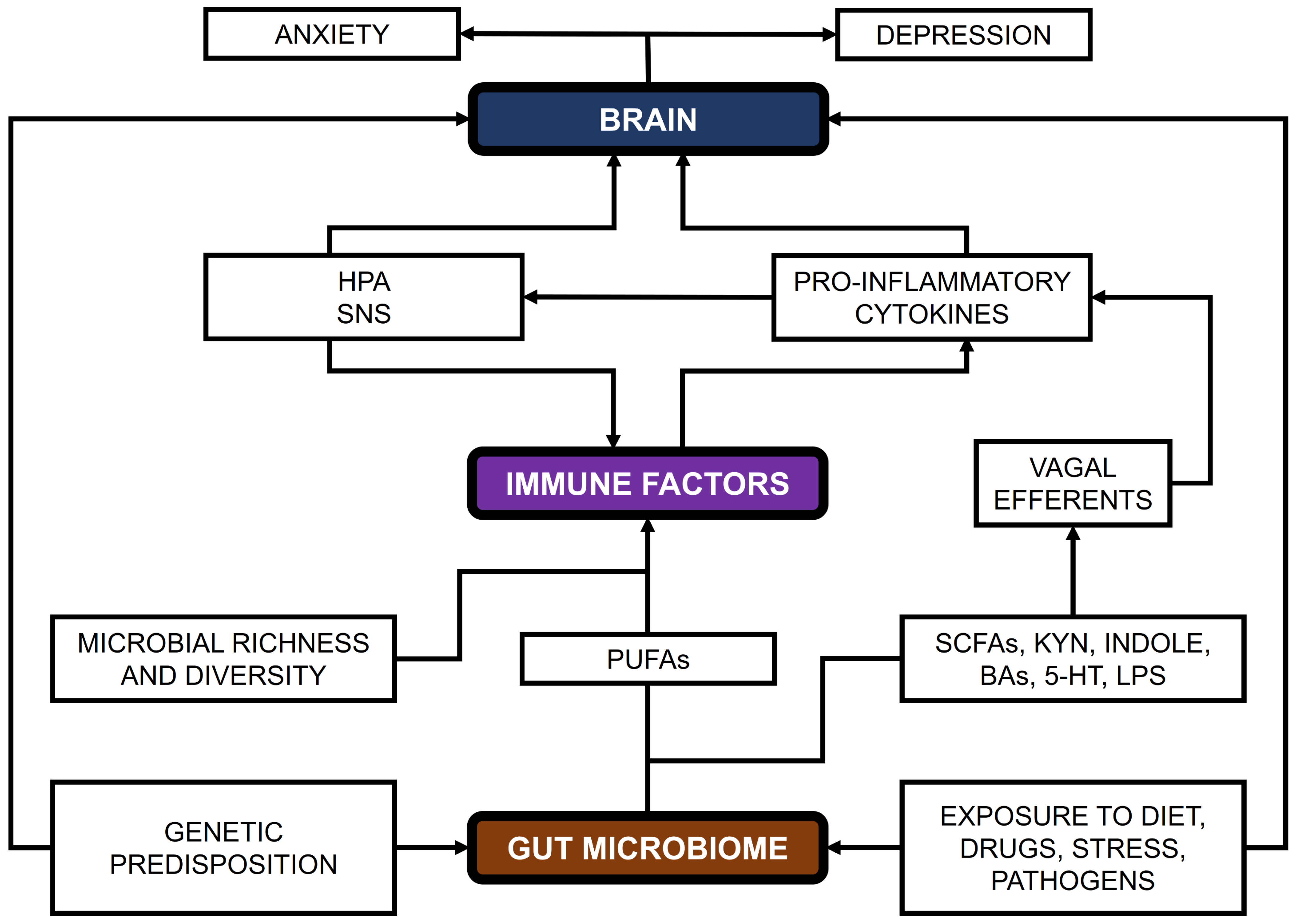
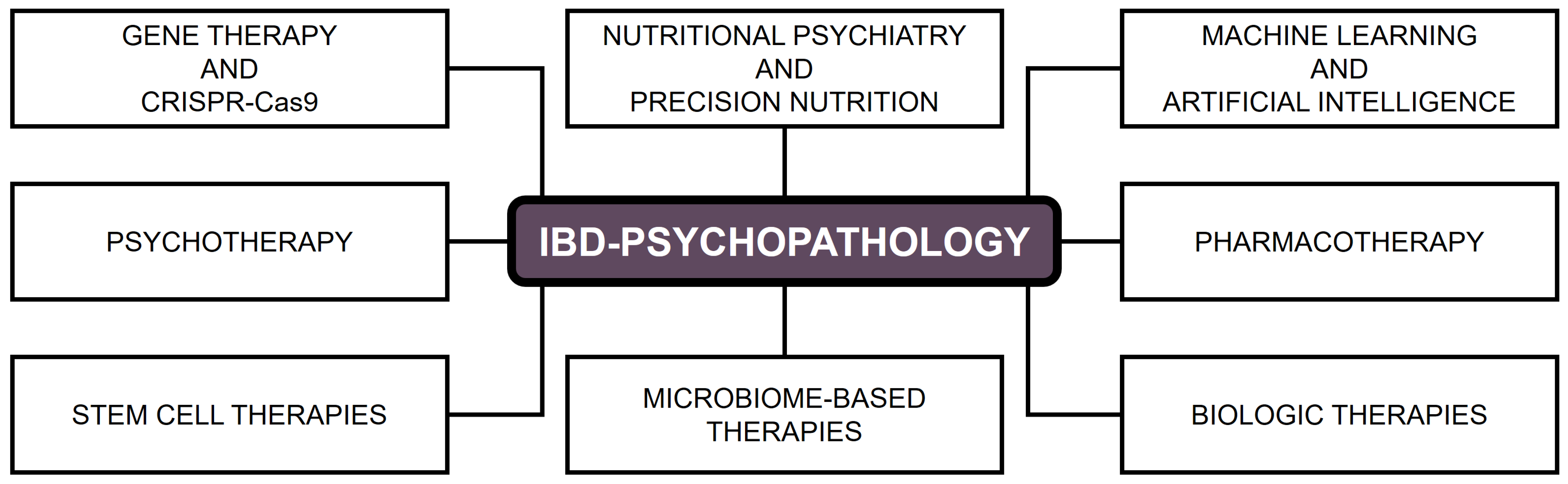
Individuals living with inflammatory bowel disease are at a heightened risk of developing certain psychiatric disorders and the gut–brain axis has been proposed as a potential contributor. In the context of the relationship between inflammatory bowel disease and psychiatric disorders, this comprehensive review examines the influence of the gut–brain axis by addressing (i) psychiatric comorbidity, (ii) the role of the gut microbiome and its metabolites, (iii) therapeutic approaches for depression and anxiety, and (iv) psychosocial stressors and microbiome interactions. There is a bidirectional relationship between inflammatory bowel disease and psychiatric conditions, particularly anxiety and depression, which arises from a complex interplay of genetic susceptibility, dysregulation of the gut–brain axis, and neuroimmune processes. Disturbances in gut microbiome composition represent a core mechanism underlying psychiatric comorbidities related to inflammatory bowel disease, although a substantial body of the current knowledge is derived from preclinical models. The integration of microbiome-based therapies into routine clinical practice is still in its early stages, which highlights the need for further research to establish their safety and effectiveness. A deeper understanding of the differences between Crohn’s disease and ulcerative colitis is also pivotal for interpreting therapeutic responses. Ultimately, innovations in nutritional psychiatry and precision medicine hold promise for improving the lives of patients affected by these physical and mental comorbid conditions.
Keywords: inflammatory bowel disease; Crohn’s disease; ulcerative colitis; gut–brain axis; gut microbiome; microbial metabolites; psychiatric disorders; anxiety; depression; therapeutic approaches inflammatory bowel disease; Crohn’s disease; ulcerative colitis; gut–brain axis; gut microbiome; microbial metabolites; psychiatric disorders; anxiety; depression; therapeutic approaches