1. Introduction
Elections represent a fundamental mechanism through which modern democracies ensure political competition and the legitimate transfer of power. Beyond the technical organization of electoral processes, democratic stability relies on the acceptance of electoral outcomes and on the existence of a public sphere capable of sustaining political debate within institutionalized frameworks. Over the past two decades, this public sphere has been profoundly reshaped by the expansion of digital platforms, which have become central actors in political communication, electoral mobilization, and institutional contestation.
Previous research has shown that social media platforms have transformed campaign strategies, modes of political engagement, and the symbolic representation of political actors (
Geise et al., 2025). Digital environments enable the personalization of political messages, the rapid circulation of emotionally charged content, and the active involvement of users in the production and dissemination of political discourse. As a result, traditional boundaries between electoral campaigning, governance, and opposition have become increasingly blurred, while political conflict often extends beyond formally defined electoral periods (
Mochon & Schwartz, 2024).
A phenomenon closely linked to these developments is the rise of populist and anti-system movements, which strategically exploit digital infrastructures to mobilize supporters, delegitimize political institutions, and challenge political and media elites (
Taggart, 2004;
Mudde, 2024). Studies indicate that platform-based communication environments favor simplified, polarizing, and affective messages, contributing to ideological homogeneity within online communities and to the intensification of symbolic political conflict (
Reisz & Szabó, 2017;
Su & Jin, 2022). In parallel, the rapid development of artificial intelligence technologies has introduced new forms of visual and narrative manipulation, complicating assessments of authenticity, credibility, and responsibility in political communication.
In consolidated democracies, contestation of electoral outcomes typically diminishes once results are officially validated and political authority is transferred. In contrast, the literature suggests that in democracies undergoing processes of consolidation, acceptance of electoral outcomes remains more fragile and is influenced by structural factors, lower levels of institutional trust, and polarized media environments (
Wright, 2008). Romania can be situated within this latter category, as recent political developments have revealed persistent tensions regarding electoral legitimacy and the role of digital actors in shaping public debate.
The Romanian presidential elections of 2024–2025 provide a particularly relevant context for examining these dynamics. The decision of the Constitutional Court to annul the November 2024 electoral round, followed by the rescheduling of the presidential election in 2025, as well as the exclusion of a highly visible political actor from the electoral competition, contributed to heightened public debate and intensified contestation. In this context, social media platforms emerged as key arenas for articulating political dissatisfaction, promoting populist and sovereignist narratives, and challenging the legitimacy of political and judicial institutions.
In November 2024, the Romanian Constitutional Court invalidated the first round of the presidential election, citing procedural and legal irregularities related to the electoral process. This unprecedented decision triggered intense political controversy, as it disrupted the electoral timeline and was perceived by segments of the public as an intervention affecting democratic representation. The subsequent rescheduling of the presidential election in 2025, combined with the exclusion of a highly visible political actor from the electoral competition, transformed the Court’s decision into a central symbol of institutional contestation and distrust, particularly within digital communication environments.
Romania can be situated among post-communist democracies undergoing ongoing processes of institutional consolidation, characterized by comparatively lower levels of institutional trust, recurrent political polarization, and contested authority of judicial and electoral institutions (
Wright, 2008;
Lührmann & Lindberg, 2019). In contrast to more consolidated Western European democracies, these contexts exhibit greater vulnerability to mediated contestation of electoral legitimacy, making them particularly relevant for the analysis of post-electoral digital conflict.
Although existing scholarship has extensively examined the relationship between populism, digital media, and institutional contestation, important gaps remain regarding the platform-specific manifestation of these processes and their persistence in the post-electoral phase, particularly in Central and Eastern European democracies. Moreover, the role of AI-generated and AI-modified content in shaping political narratives and contestatory practices remains insufficiently explored in this regional context.
Against this background, the present study examines how social media platforms were used during and after the 2025 Romanian presidential elections to promote, contest, and delegitimize political actors and democratic institutions. The analysis focuses on identifying dominant themes, discursive frames, and forms of online participation associated with populist and sovereignist currents, as well as on comparing communication dynamics across TikTok, Facebook, and Instagram. By adopting a comparative, platform-oriented approach, this study contributes to the literature on digital political communication by illustrating how social media platforms can transform electoral competition into a prolonged process of symbolic political confrontation that extends beyond the moment of voting.
1.1. Digital Background
In recent years, social media platforms have become central infrastructures for political communication in Romania, reshaping the circulation of information, the visibility of political actors, and the forms of citizen participation in the public sphere. The relevance of digital platforms for electoral communication is closely linked to their level of penetration, demographic reach, and platform-specific affordances, which condition both the style and the intensity of political discourse.
According to data provided by
Statista (
2025) and
NapoleonCat (
2025), TikTok has experienced rapid growth in Romania and has emerged as one of the most widely used platforms, particularly among younger users. During the period analyzed in this study, TikTok ranked among the most popular social media platforms globally, with over two billion users worldwide. Its algorithmic logic prioritizes short-form video content and favors rapid circulation, emotional engagement, and high levels of visibility, making it particularly conducive to mobilizing narratives and affective political messaging.
Facebook continues to play a significant role in the Romanian digital ecosystem, especially in relation to political communication. Although its growth has stabilized, Facebook remains a key platform for the dissemination of political content, public debate, and the articulation of institutional criticism. Its user base is more demographically diverse compared to TikTok, and the platform supports a wider range of content formats, including extended textual posts, images, videos, and comment-based discussions. These affordances facilitate more argumentative and discursive forms of political expression.
Instagram occupies a more limited position within the Romanian political communication landscape. While the platform maintains a substantial user base, its primary orientation toward visual aesthetics and lifestyle content constrains the visibility of overtly political messages. As a result, political communication on Instagram tends to be less frequent and less central compared to TikTok and Facebook, particularly in relation to electoral contestation and institutional criticism.
The differentiated roles of these platforms justify their inclusion in a comparative analysis of digital political communication. Differences in user demographics, content formats, and algorithmic visibility contribute to distinct communication dynamics and shape how political messages are produced, circulated, and received. In the context of the 2025 Romanian presidential elections, these platform-specific characteristics conditioned both the prominence of populist and sovereignist narratives and the persistence of post-electoral contestation in the digital public sphere.
Conceptual Framework: Populism, Sovereignism, and Anti-Institutionalism
This study draws on three interrelated yet analytically distinct conceptual strands: populism, sovereignism, and anti-institutionalism. Populism is conceptualized as a thin-centered ideology structured around a moral antagonism between “the people” and a corrupt elite, emphasizing claims of exclusive representation (
Taggart, 2004;
Mudde, 2024). Sovereignism refers to political discourses and practices that foreground national self-determination, territorial authority, and resistance to supranational governance structures, particularly the European Union. Anti-institutionalism is understood as a discursive orientation aimed at delegitimizing formal political, judicial, and media institutions by portraying them as captured, corrupt, or acting against popular will.
While these dimensions frequently overlap in empirical political communication, particularly in digital environments, they represent distinct logics of contestation. Populism articulates ideological antagonism, sovereignism emphasizes authority and territorial sovereignty, and anti-institutionalism targets institutional legitimacy. This analytical distinction allows the study to capture variation in discursive strategies across platforms while acknowledging their empirical convergence.
In this study, populism, sovereignism, and anti-institutionalism are treated as ideational and discursive dimensions of political communication that structure meaning-making practices and are operationalized through thematic and frame-based coding rather than as fixed issue frames or stylistic categories.
2. Materials and Methods
2.2. Corpus and Data Collection
The dataset consists of 764 public social media posts and over 2000 associated user comments, collected from TikTok, Facebook, and Instagram. These platforms were selected due to their relevance for political communication in Romania and their distinct affordances in terms of content formats and visibility mechanisms.
Data were collected between 1 April and 30 June 2025, a period covering both the final phase of the electoral campaign and the immediate post-electoral stage, characterized by intensified public debate and institutional contestation. Only publicly accessible content was included in the corpus, in accordance with established ethical standards for digital research.
Data collection followed a purposive sampling strategy combining exploratory observation and systematic content discovery. Posts were identified using platform-native search functions and recommendation feeds, focusing on election-related hashtags, keywords, and publicly visible accounts active during the analyzed period. On TikTok and Instagram, discovery relied primarily on hashtag-based searches (e.g., election-related keywords, candidate names, institutional references), supplemented by algorithmically recommended content connected to previously identified posts. On Facebook, data collection focused on public pages, groups, and profiles engaged in political discussion, as well as posts surfaced through keyword searches and shared links.
Data collection was conducted manually, without the use of automated scraping tools. Duplicate posts and direct reposts were excluded from the corpus unless they involved substantive visual or textual modification. When identical or near-identical content appeared across multiple accounts, it was treated as evidence of coordinated dissemination rather than as independent observations.
No balancing procedures were applied across political actors or communities. The aim of the sampling strategy was not representativeness but the identification of recurring communicative patterns associated with populist, sovereignist, and anti-institutional discourse across platforms.
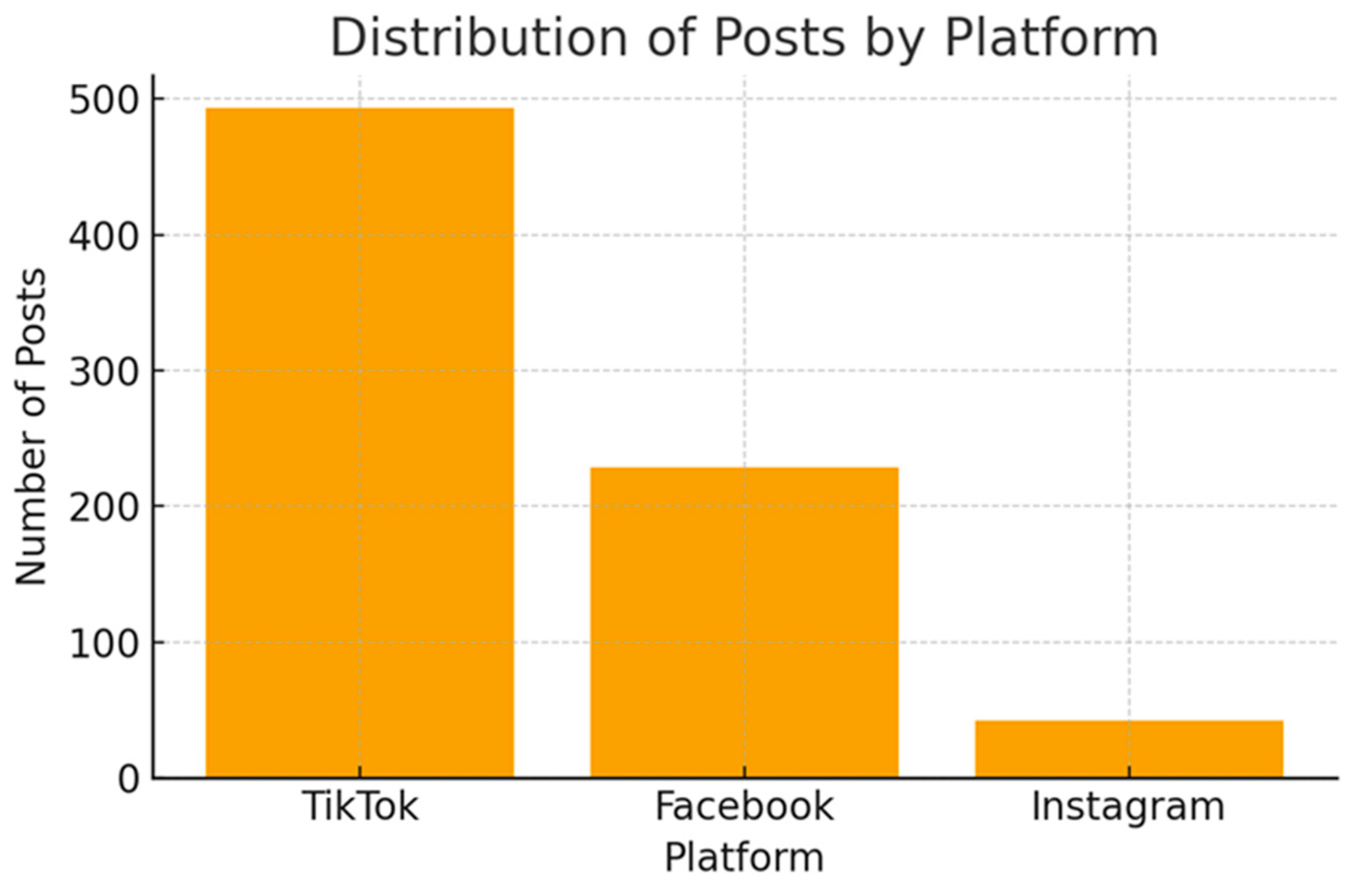
The distribution of posts across platforms is as follows: TikTok: 493 posts, Facebook: 229 posts and Instagram: 42 posts. This distribution reflects platform-specific differences in political engagement and levels of politicization during the analyzed period.
2.3. Content Selection Criteria
Content selection followed a two-stage procedure. First, an exploratory observation of platform feeds was conducted to identify recurring political narratives and communication patterns. In the second stage, data collection focused on specific accounts, pages, and hashtags relevant to the electoral context.
Posts were included in the corpus if they met at least one of the following criteria:
Explicit references to the presidential elections, candidates, or electoral institutions;
The use of hashtags, symbols, or visual elements associated with the electoral campaign or the contestation of election results;
The presence of political messages with populist, sovereignist, anti-system, or anti-institutional characteristics relevant to the Romanian context.
Content unrelated to the electoral process—such as entertainment-only material, commercial advertising, or posts lacking political relevance—was excluded from the analysis.
Following an initial exploratory observation of platform feeds, the sampling strategy focused on publicly visible accounts, pages, and profiles that were consistently engaged in political communication related to the presidential elections. These included political actors’ official accounts, politically oriented public pages, activist profiles, and highly visible individual users whose content regularly addressed electoral institutions, candidates, or post-electoral developments.
Selection criteria were based on sustained activity during the analyzed period, thematic relevance to the electoral context, and levels of visibility or engagement. The final corpus included approximately 110 distinct sources on TikTok, 85 on Facebook, and 30 on Instagram, reflecting differences in platform structure and political engagement.
To ensure diversity of perspectives, the sample intentionally included content expressing supportive, critical, and oppositional positions toward political actors and institutions, rather than focusing on a single political orientation.
The inclusion criteria were applied in an inclusive manner. A post was included in the corpus if it met at least one of the listed criteria. Posts were not required to satisfy all criteria simultaneously, as the aim was to capture a broad range of politically relevant content associated with the electoral and post-electoral context.
2.5. Analysis Procedures
AI-generated or AI-modified content was identified through systematic visual and stylistic analysis. Concrete indicators included: (1) synthetic or exaggerated facial features, (2) inconsistent lighting, shadows, or proportions, (3) unnatural textures or repetitive visual patterns, (4) montage-style compositions combining heterogeneous visual sources, and (5) highly stylized imagery inconsistent with documentary political content.
No automated or technical detection tools were employed. Classification relied on qualitative visual assessment and cross-platform comparison, acknowledging the exploratory character of this dimension. To ensure classification reliability, only cases displaying multiple indicators were coded as AI-generated or AI-modified. Approximately 8–10% of visually suspicious materials were considered ambiguous and were therefore excluded from this category.
Ambiguous cases that could not be reliably classified based on these criteria were not included in the AI-modified category and were treated as conventional visual content.
Data analysis combined systematic content analysis with comparative analysis across platforms. Posts were coded along multiple analytical dimensions, including:
Thematic categories (e.g., populism, anti-institutionalism, sovereignism, nationalism);
Discursive frames (e.g., crisis/threat, corruption, identity);
Discourse type (informational, persuasive, mobilizing, harassment/hate);
Target (institutions versus individual political actors);
Valence (positive, negative, or mixed);
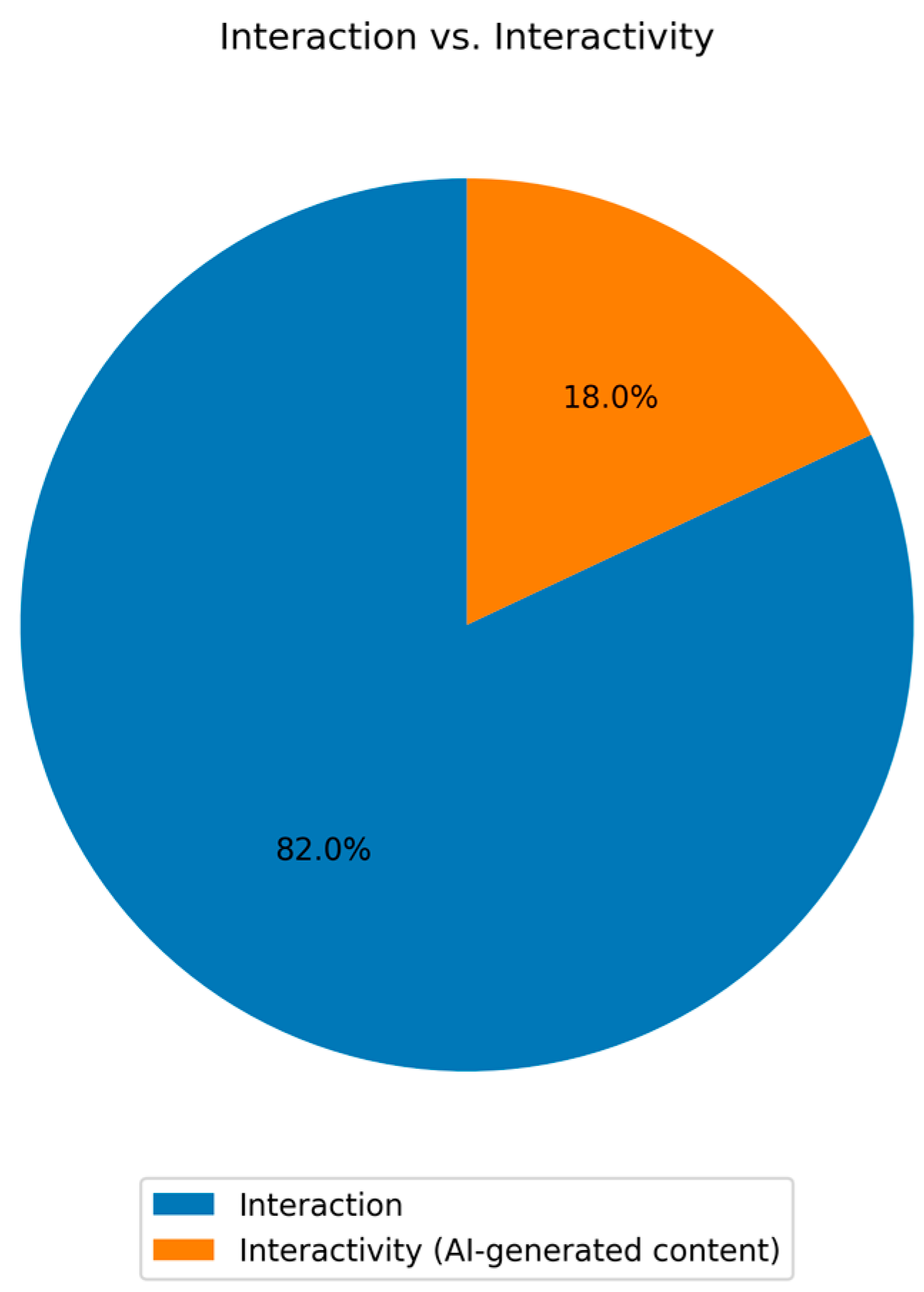
Forms of participation, distinguishing between interaction (likes, shares, short comments) and interactivity (creation and dissemination of original content). Interaction refers to reactive forms of user engagement such as likes, shares, and brief comments. Interactivity is defined as active user participation through the creation and dissemination of original content, including videos, images, or textual posts. While interactivity may involve the use of digital tools, including AI-based technologies, the presence of AI-generated or AI-modified elements does not in itself define interactivity.
AI-generated or AI-modified content was coded as a separate analytical dimension. Such content refers to visual or audiovisual materials that display characteristics suggesting the use of artificial intelligence tools, independent of the level of user interactivity associated with the post.
Institutional critique was coded as anti-institutional only when it involved discursive strategies aimed at delegitimizing institutional authority or integrity, rather than policy-oriented or normative criticism consistent with democratic debate.
The coding process was conducted by a single researcher using a structured codebook developed on the basis of existing literature. An initial training and calibration phase was carried out using a subset of posts from each platform to refine category definitions and coding rules. The codebook evolved iteratively during this early phase and remained stable throughout the main coding process.
Given the qualitative and interpretive nature of the analysis and platform-specific differences in content formats, conventional intercoder reliability coefficients were not computed for the full dataset. As a robustness check, a shared subsample of posts from each platform was double-coded at different points in the analysis. Coding discrepancies were resolved through systematic adjudication based on predefined coding rules, ensuring internal consistency and analytical rigor.
A multilabel coding approach was applied for themes and frames, allowing posts to be assigned multiple categories when applicable. Discourse type was coded using a dominant-category rule. An excerpt from the coding framework is presented in
Table 1.
AI-generated or AI-modified content was identified through systematic visual inspection, focusing on indicators such as synthetic facial features, visual inconsistencies, exaggerated stylization, and recurring montage patterns. Given the exploratory nature of this dimension, no automated detection tools were employed; instead, classification relied on qualitative assessment and cross-platform comparison.
3. Results
This section presents the results of the analysis of 764 public posts and over 2000 comments collected between 1 April and 30 June 2025, on TikTok, Facebook, and Instagram. The results are organized according to the distribution of content, dominant themes, forms of online participation, and patterns of institutional contestation identified in the corpus. For analytical purposes, the electoral phase is defined as the period from 1 April 2025 to the official validation of election results, while the post-electoral phase covers the subsequent period until 30 June 2025.
The Results are structured to address each research hypothesis through comparative descriptive analysis. Given the exploratory and mixed-method design of the study, hypotheses are evaluated based on platform-specific distributions, thematic prevalence, and participation patterns rather than inferential statistical testing.
In this section, a theme is described as “dominant” when it appears in more than one third of the analyzed posts within a given platform or time period; themes below this threshold are described as “not dominant.”
4. Discussion
The following discussion distinguishes between patterns directly observed in the analyzed dataset and broader theoretical and practical implications derived from these observations.
The findings of this study can be interpreted through the integrated conceptual framework of populism, sovereignism, and anti-institutionalism outlined earlier. The platform-specific distribution of these discursive dimensions confirms that while populist antagonism, sovereignist claims, and institutional delegitimization often overlap empirically, they are activated differently depending on platform affordances. TikTok facilitates affective populist mobilization, Facebook supports sustained institutional critique, and Instagram remains marginal in this regard. This differentiation reinforces the analytical usefulness of treating these concepts as distinct yet interrelated logics of political contestation. These findings suggest that platform-specific affordances shape political communication styles and patterns of visibility, with different platforms facilitating distinct modes of political expression and circulation (
Bucher & Helmond, 2018;
Kreiss & McGregor, 2024).
From a theoretical perspective, the results contribute to research on platformized political communication by demonstrating how algorithmic visibility and content formats shape not only message diffusion but also the form of political contestation itself. The persistence of post-electoral contestation highlights how digital platforms extend political conflict beyond institutional timeframes, transforming elections into prolonged symbolic struggles rather than discrete democratic events.
For scholarship on populism and democratic consolidation, the findings suggest that anti-institutional narratives are not merely campaign strategies but durable discursive resources that remain salient after electoral outcomes are formally validated. This dynamic is particularly pronounced in democracies undergoing institutional consolidation, where trust in electoral and judicial authorities remains fragile.
The findings also have several practical implications. For journalists, the results underscore the importance of contextualizing institutional decisions and countering simplified or emotionally charged narratives circulating on visual platforms. For political communicators, the study highlights the strategic role of platform-specific affordances in shaping message resonance and mobilization. Policymakers and regulators may draw attention to the persistence of post-electoral contestation as a challenge to democratic legitimacy, particularly in environments characterized by low institutional trust. Finally, for platform governance, the amplification of AI-modified content and coordinated dissemination patterns raises questions regarding transparency, moderation practices, and responsibility in politically sensitive periods (
Chesney & Citron, 2019;
Vaccari & Chadwick, 2020).
The findings of this study underscore the central role of digital platforms in shaping contemporary political communication and in amplifying institutional contestation in electoral contexts. The comparative analysis of content published on TikTok, Facebook, and Instagram reveals clear platform-specific differences in thematic focus, discursive strategies, and modes of user participation. These results align with existing scholarship emphasizing the influence of algorithmic logics and media affordances on the style, intensity, and persistence of political conflict in digital environments (
Taggart, 2004;
Reisz & Szabó, 2017;
Su & Jin, 2022;
Mudde, 2024).
One of the most salient findings concerns the absence of a symbolic “honeymoon” period following the installation of the newly elected Romanian president. Instead, the data indicate the rapid emergence of sustained campaigns aimed at affecting the public image and legitimacy of the new political leadership. Similar dynamics have been documented in other democratic contexts, including the United States, where attacks against President Donald Trump continued and intensified after his return to office, particularly in response to decisions perceived as controversial (
Satoru, 2025). These patterns suggest a normalization of permanent political conflict facilitated by digital communication infrastructures.
The analysis further distinguishes between two broad categories of critical discourse directed at the newly elected president. On the one hand, some content reflects forms of political criticism that remain within the boundaries of democratic debate, focusing on competence, leadership style, and decision-making capacity. On the other hand, a substantial share of content employs strategies of symbolic delegitimization, portraying political opponents as illegitimate power holders or as threats to democratic order. This second register is consistent with previous research on political incivility and delegitimization in mediated environments (
Muddiman et al., 2021).
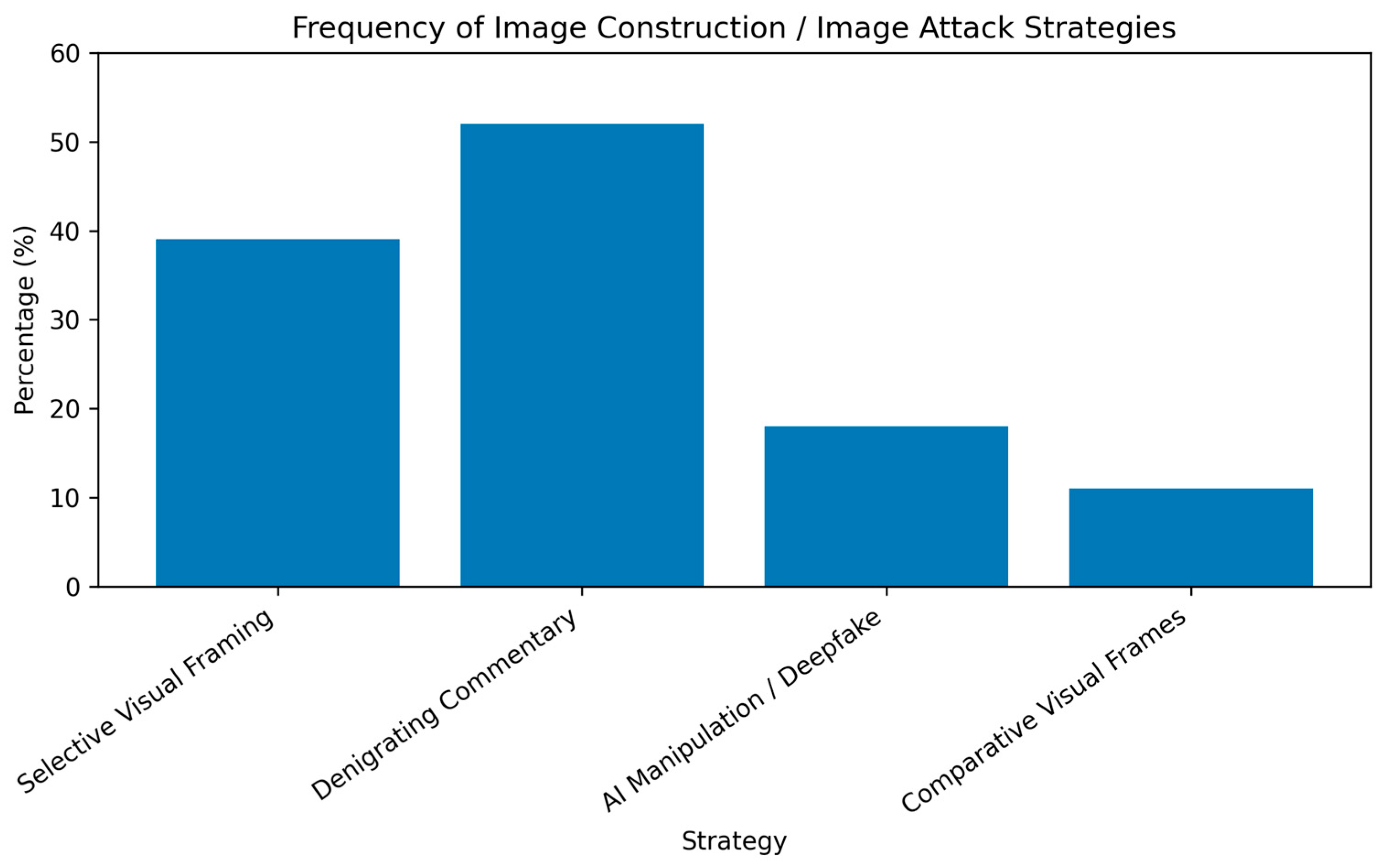
At the same time, the data reveal the coexistence of image-affecting strategies with efforts to construct positive symbolic representations of political actors. These practices frequently rely on comparative visual framing, in which images are juxtaposed to signal differences in status, authority, and political relevance. Such techniques are well documented in the literature on visual political communication, where visual contrasts function as powerful tools of meaning-making and persuasion (
Becker, 2014). However, the effectiveness of these strategies is not unidirectional. While intended to reinforce institutional legitimacy, they may also trigger affective identification with alternative political figures perceived as closer to “ordinary people,” reflecting mechanisms of emotional convergence documented in previous studies (
Reisz & Szabó, 2017).
Another important dimension highlighted by the findings is the amplification of protocol errors and moments of perceived awkwardness. Short visual excerpts extracted from longer sequences are repeatedly circulated to suggest incompetence or lack of preparedness, often accompanied by ironic or derogatory commentary. These practices contribute to the personalization of political conflict and shift attention away from institutional performance toward symbolic evaluations of individual behavior. Similar dynamics have been observed in other national contexts and are associated with increased levels of polarization and hostility in online political discourse.
The analysis also points to the growing role of visual manipulation and AI-assisted content in contemporary political communication. The prevalence of montages, synthetic images, and deepfake-like materials—particularly on TikTok—illustrates how emerging technologies are integrated into strategies of political persuasion and delegitimization. The diversity and sophistication of these techniques indicate both professionalized communication practices and high levels of emotional engagement among users, findings consistent with recent research on digital political mobilization and affective participation (
Koivukoski et al., 2025;
Çakmak, 2025).
Differences in user behavior across platforms further reinforce the importance of distinguishing between interaction and interactivity. While simple interaction dominates numerically, interactivity—defined as the production and circulation of original content—has a disproportionate impact on visibility and narrative amplification. This distinction supports theoretical arguments emphasizing the role of active participation in sustaining political narratives within platformed environments (
Janlert & Stolterman, 2017;
Su & Jin, 2022).
Finally, the findings reveal a notable asymmetry between online and offline political engagement. Supporters of populist and sovereignist narratives appear highly vocal and cohesive in digital spaces, characterized by discursive and emotional convergence. In contrast, their presence in offline mobilization remains more limited. Among their opponents, only a minority engage in direct argumentative exchanges online, while others adopt similar ironic or hostile registers. A larger segment, however, exhibits what can be described as a form of “silent resistance,” expressing political preferences primarily through electoral participation rather than visible online engagement, a pattern identified in previous research (
Niemann & Schillinger, 2017).
Taken together, these findings suggest that social media platforms function not merely as channels for political expression, but as amplifiers of symbolic conflict capable of extending electoral competition beyond institutional timeframes. By sustaining contestation through visual strategies, emotional mobilization, and coordinated dissemination practices, digital platforms contribute to the persistence of political polarization in the post-electoral period. This study thus adds to the growing body of research on digital political communication by illustrating how platform-specific affordances shape the trajectories of populist and anti-institutional discourse in a democracy undergoing ongoing processes of institutional consolidation.
While this study focuses on Romania, the identified dynamics resonate with patterns observed in other democratic contexts. Similar forms of post-electoral contestation and digitally mediated delegitimization have been documented in other polarized democracies. However, the Romanian case illustrates how these dynamics unfold with particular intensity in post-communist contexts, where institutional consolidation remains uneven. This suggests that platformized political conflict may have structurally different implications depending on the level of democratic consolidation, a perspective that warrants further comparative research.
5. Conclusions
This study examined how social media platforms were used during and after the 2025 Romanian presidential elections to articulate political discourse, contest institutional legitimacy, and sustain symbolic political conflict beyond the electoral moment. By combining qualitative and quantitative content analysis across TikTok, Facebook, and Instagram, the research provides a comparative, platform-oriented perspective on contemporary digital political communication in a democracy undergoing processes of institutional consolidation.
The findings demonstrate that social media platforms play differentiated yet complementary roles in shaping political communication dynamics. TikTok emerges as a central space for emotionally charged, visually oriented narratives and rapid mobilization, while Facebook facilitates more elaborate forms of institutional criticism and discursive contestation. Instagram remains marginal in relation to overt political communication. These platform-specific dynamics highlight the importance of considering media affordances and algorithmic visibility when analyzing the circulation and persistence of political narratives.
A key conclusion of the study concerns the persistence of institutional and electoral contestation in the post-electoral phase. Rather than diminishing after the validation of election results, challenges to institutional legitimacy continue to circulate through digital platforms, sustained by visual strategies, affective messaging, and coordinated dissemination practices. This finding underscores the role of social media as infrastructures that extend political conflict temporally and symbolically beyond formal electoral cycles.
The analysis further shows that forms of online participation differ significantly in their impact. While simple interaction dominates numerically, interactivity—understood as the production and dissemination of original content, including AI-generated or AI-modified materials—has a disproportionate effect on visibility and engagement. This distinction reinforces existing theoretical arguments regarding the centrality of active user participation in shaping platformed political communication.
By integrating thematic, discursive, and participatory dimensions within a comparative framework, this study contributes to the literature on digital political communication, online populism, and institutional contestation. It offers empirical evidence on how platform-specific affordances shape the trajectories of populist and sovereignist narratives and how emerging technologies are incorporated into strategies of political persuasion and delegitimization.
Overall, the findings suggest that social media platforms function not merely as channels of political expression, but as amplifiers of symbolic conflict with the capacity to sustain polarization and contestation in the post-electoral period. Understanding these dynamics is essential for assessing the evolving relationship between digital media, democratic legitimacy, and political participation in contemporary societies.