1. Introduction
A lack of public information, awareness, and stakeholder involvement in energy infrastructure projects often results in local opposition and widespread mistrust (
Contini et al., 2018;
Syivarulli, 2020). These challenges in communicating information and fostering dialog between stakeholders are closely linked to the visibility and positioning of energy issues in media discourse (
Carr-Cornish et al., 2019). One critical factor in this context is how comprehensively the media address socially relevant concerns—such as environmental protection—and whether they transparently present the benefits and risks of energy technologies (
Balzan-Alzate et al., 2021;
Syivarulli, 2020).
While geothermal energy represents a reliable and sustainable technology with significant potential for the energy transition, it has received comparatively little media attention and public support in Germany. Surveys consistently show that geothermal energy is less familiar to the public than other renewable technologies such as wind or solar (
SMEKUL, 2022;
YouGov, 2023). Furthermore, past incidents—such as the induced seismic events in Basel or surface uplift in Staufen (Germany)—continue to shape the public image of geothermal systems (
Keck, 2017;
Stauffacher et al., 2015). Media coverage on geothermal energy often has framed the energy source as problematic, using metaphors such as “problem child” (
Bagehorn, 2015) or claiming it had “no future” in specific regions (
Welt Online, 2017). Although recent coverage appears to have become more nuanced or positive (
Goedert, 2022;
Welt Online, 2023;
Wenzel, 2023), geothermal energy is still rarely positioned as a key pillar in climate policy debates. For example, in the context of concrete political measures such as the Germany Building Energy Act, discussions about geothermal energy and other renewable sources remain somewhat negative (e.g.,
Arndt, 2022). Media coverage of this law focused on heat pumps as one of the most important technologies for achieving the climate goals in buildings. One of the central debates centered on the ‘heating hammer’ that the former German Economics Minister Robert Habeck allegedly provoked with the law (
Jost et al., 2024). The example demonstrates the challenge in shifting the debate on renewable energies toward a more balanced view (e.g.,
Geinitz, 2023). This is particularly critical in relation to the risk that the dominance of negative information on geothermal energy in the media over the years might damage its public perception, especially if news consumers have low knowledge on the topic in the first place (
Spampatti et al., 2022).
Against this backdrop, it is crucial to examine how geothermal energy is currently framed in the media. The term “framing” was established by
Entman (
1993) and refers to the selection and emphasis of specific aspects of perceived reality in communication, thus influencing how an issue is understood and evaluated. Through framing, media can shape not only public perception but also broader political and societal dynamics (
Haigh, 2010;
Djerf-Pierre et al., 2016). Consequently, the media play a decisive role in the way renewable energies are presented in public discourse and how news consumers perceive the technology in question. Through specific argumentation patterns in reporting, the media can influence both social attitudes and political decision-making processes.
However, few studies have systematically analyzed the media framing of geothermal energy so far. Existing research primarily focuses on deep geothermal energy and tends to be based on data from the early 2000s and 2010s (
Benighaus & Bleicher, 2019;
Leucht, 2012;
Spampatti et al., 2022). It is unclear how the media coverage has developed (in Germany) since then. Importantly, prior research does not differentiate between deep and shallow geothermal energy, even though these technologies differ significantly in terms of drilling depth, energy output, associated risks, and communicative visibility (
Stauffacher et al., 2015;
Spampatti et al., 2022). We argue that without such differentiation, the potentials of shallow geothermal energy may continue to be overshadowed by some of the potential risks related only to deep geothermal incidents (e.g., smaller earthquakes). This, in turn, could hamper the broader acceptance and expansion of this valuable renewable energy source.
Despite their technical distinction, media coverage often fails to differentiate between shallow and deep geothermal technologies (
Spampatti et al., 2022). This conflation is particularly problematic because risks such as seismic activity or exploration failure are largely irrelevant to shallow systems yet nonetheless shape public concerns. From a communication perspective, geothermal energy presents a specific challenge: its subsurface processes are not directly observable, are difficult to visualize, and are hard to relate to everyday experience. Compared to wind turbines or solar panels, geothermal systems lack iconic visibility, which may explain their low media salience and generalized representations. Additionally, technical terminology and regulatory complexity further reduce comprehensibility and increase reliance on metaphorical framings in journalism (e.g., “the problem child of the energy transition”).
This study builds on prior research on the framing of geothermal energy (e.g.,
Benighaus & Bleicher, 2019;
Spampatti et al., 2022) and provides a systematic and differentiated understanding of how geothermal energy is presented in German news media. A quantitative content analysis (n = 452) of the media coverage of regional and national public and private media in Germany between March 2014 and March 2024 was conducted. Hence, this study examines the following question: How are deep and shallow geothermal energy systems framed in German media discourse? In doing so, the analysis evaluates relevant topics, responsible stakeholders, as well as described potentials and risks related to geothermal energy that dominate the media discourse and how they change over time.
2. State of Research: Framing of Geothermal Energy
The concept of framing, understood as the selection and emphasis of certain aspects of perceived reality within a text-based communication context, has been foundational in media and communication research (
Entman, 1993). Frames help structure how issues are interpreted by highlighting specific problem definitions, causal interpretations, moral evaluations, and treatment recommendations. In the context of energy communication, media frames have been shown to influence public perceptions, stakeholder engagement, and political legitimacy.
Over the past two decades, several studies have examined how geothermal energy is represented in the media. Framing studies in the field of renewable energy demonstrate that media reports not only reflect technological developments but also contribute to their social construction (
Haigh, 2010;
Djerf-Pierre et al., 2016). In the context of geothermal energy, prior research identifies a range of thematic framings, from innovation and sustainability to uncertainty and risk (
Benighaus & Bleicher, 2019;
Romanach et al., 2015;
Stauffacher et al., 2015).
Across these themes, several cross-cutting framing patterns can be observed. Geothermal energy is frequently presented as a lever for the energy transition—framed as a sustainable, locally available source of renewable heat and electricity that contributes to national climate goals and energy independence (
Benighaus & Bleicher, 2019;
Romanach et al., 2015). Political actors and ministries are often cited as responsible for enabling this transformation (
Stauffacher et al., 2015). Another common frame focuses on the technology itself: Geothermal systems are portrayed as complex and promising but not yet fully mature. The feasibility of implementation is sometimes questioned, particularly regarding deep geothermal energy (
Romanach et al., 2015). Scientific institutions and technical experts are assigned responsibility in these frames (
Benighaus & Bleicher, 2019;
Djerf-Pierre et al., 2016).
In economic framings, geothermal energy appears as both a financial opportunity and a potential burden. Arguments range from high investment and drilling costs to long-term operating efficiency and independence from fossil fuels. Responsibility is typically attributed to project developers, energy providers, and occasionally insurance agencies (
Djerf-Pierre et al., 2016;
Benighaus & Bleicher, 2019). Additionally, geothermal energy is often tied to regional infrastructure planning and local identity, particularly in areas with favorable geological conditions. Local governments, municipal actors, and regional authorities are framed as key decision-makers (
Romanach et al., 2015).
Environmental framings emphasize both ecological benefits—such as reduced CO
2 emissions—and risks, including seismic activity or damages to buildings, often linked to specific incidents like Basel or Staufen. Responsibility is attributed to scientists, political authorities, and project developers (
Benighaus & Bleicher, 2019;
Stauffacher et al., 2015).
Further, communication and the role of acceptance towards this energy source is discussed as a relevant frame (
Benighaus & Bleicher, 2019;
Haigh, 2010). Media coverage links early project communication to conflict mitigation and notes the tension between public support for renewable energies and local resistance such as the “not-in-my-backyard phenomenon” (
Djerf-Pierre et al., 2016;
Haigh, 2010). Hence, relevant stakeholders in this framing of the technology are citizens (
Djerf-Pierre et al., 2016).
An additional separate but related frame centers on the risk–benefit balance of geothermal energy. In this framing, issues of controllability and liability are addressed. Media coverage discusses both general technological risks and specific incidents, such as damages to buildings or uncertainties regarding insurances. Scientists, local politicians, and project developers are seen as responsible stakeholders (
Benighaus & Bleicher, 2019;
Romanach et al., 2015;
Mbah & Krohn, 2021). Finally, geothermal energy is framed as a politically relevant issue, often placed in business or politics sections of newspapers (
Haigh, 2010;
Mbah & Krohn, 2021). Hence, this framing of geothermal energy gives the impression that the technology is rather a political than an environmental or scientific issue.
While the above categories provide a typology of geothermal energy framings, detailed empirical studies remain relatively scarce. Most notably, prior research has focused almost exclusively on deep geothermal energy and predominantly analyzed media coverage from the early 2000s and 2010s (
Benighaus & Bleicher, 2019;
Leucht, 2012;
Romanach et al., 2015;
Stauffacher et al., 2015). Studies by
Benighaus and Bleicher (
2019),
Romanach et al. (
2015), and
Stauffacher et al. (
2015) demonstrate that deep geothermal energy in particular has often been framed in a critical light, emphasizing technical risks and negative incidents. The Basel drilling project in 2006, which triggered a mild earthquake, became a defining example in public debate and contributed to a decline in new geothermal projects. Similarly, the Staufen incident—which involved surface uplift and building damage due to shallow drilling—received considerable media attention and public backlash against the involved companies (
Freeden & Heine, 2018).
These cases are exceptional from a technical standpoint, yet they continue to shape media narratives and broader perceptions of geothermal energy as a risky technology. Importantly, media coverage of these events has rarely differentiated between shallow and deep geothermal systems, reinforcing generalized concerns and obscuring the specific risk profiles of each technology (
Spampatti et al., 2022). Moreover, the studies discussed were conducted several years ago, and the negative examples of geothermal power plants also lie several years in the past (e.g.,
Leucht, 2012). Existing studies rarely analyze media content beyond 2015 and often rely on limited national samples or single-case approaches. With geopolitical developments coming to a head, particularly since Russia’s invasion of Ukraine, the security of energy supplies is increasingly at risk. In consequence, these developments have increased the urgency and demands for energy independence across Europe (
Pepe, 2023). One response has been the legislative acceleration of political decision-makers seeking to transition to a decentralized and renewable energy supply (
Deutsche Energie-Agentur, 2023). In Germany, for example, one important measure is the reform of the Building Energy Act and the (financial) promotion of heat pumps in order to reduce dependence on fossil energy sources (
Bundesregierung, 2022;
Pepe, 2023;
Deutsche Energie-Agentur, 2023).
Hence, there is a clear need for updated, large-scale empirical analysis that captures longitudinal dynamics, technological distinctions, and stakeholder representations within the media discourse on geothermal energy. This study addresses these gaps by conducting a systematic content analysis of German national and regional media coverage between 2014 and 2024, with an explicit focus on the differentiation between shallow and deep geothermal energy and the framing structures employed to depict the technology. Therefore, the aim of this study is to examine how deep and shallow geothermal energy systems are framed in German media discourse by evaluating:
RQ1: Which topics dominate the media discourse on geothermal energy?
RQ2: Who is held responsible for benefits or harms associated with the technology?
RQ3: What potentials and risks of the technology are discussed?
RQ4: How is geothermal energy and its future portrayed in the media in terms of tone, outlook, and recommendations for action?
3. Materials and Methods
In order to answer this study’s research questions, a quantitative content analysis was conducted, guided by
Matthes and Kohring (
2004). Their operationalization of
Entman’s (
1993) model enables the empirical identification of frames based on a combination of topics, evaluative valence (benefits and harms), stakeholder responsibility, and treatment recommendations or forecasts. This approach allows for a systematic reconstruction of framing patterns through the analysis of frame elements at article level.
The sample consists of news articles from German public and private regional (Dresdner Neueste Nachrichten, Freie Presse, Leipziger Volkszeitung, Mitteldeutscher Rundfunk, Sächsische Zeitung) and national media (Bild, Die Welt, Frankfurter Allgemeine Zeitung, Süddeutsche Zeitung). The four largest regional and national newspapers were selected based on their total print circulation. Due to the low circulation of regional newspapers, audiovisual reports from the MDR—a central regional public service broadcaster—were included in the analysis. A focus was placed on regional media because this study is part of a regionally rooted interdisciplinary research project.
To tie in with the state of research on the framing of geothermal energy, most of which dates from the early 2010s, articles that were published between 1 March 2014, and 1 March 2024, were considered in the analysis. This period covers a decade of energy-related developments and includes both political acceleration (e.g., the reform of the Building Energy Act) and shifts in public discourse on renewable energy. Hence, this study’s population includes all articles on geothermal energy published in the respective newspapers during this period.
Online access to the articles was gained via the WISO database (for Freie Presse, Sächsische Zeitung, Leipziger Volkszeitung, Dresdner Neuste Nachrichten, Die Welt) and the university library (for Süddeutsche Zeitung, Frankfurter Allgemeine Zeitung). Online access to the Bild newspaper was gained by a subscription via its website. Then, articles were downloaded for each newspaper that had the German keywords “Erdwärme” (ground heat) and “Geothermie” (geothermal energy) in the title and were published between 1 March 2014, and 1 March 2024. Both main titles and subtitles as well as highlighted teasers were considered. Since the Bild newspaper archive does not allow selection based on the title, all results generated by the keyword search were saved and then selected according to the occurrence of the keywords in the titles, subtitles and teasers. For contributions from the media outlet MDR, its recording service was contacted—a service also offered for study purposes. Using the keywords “Erdwärme” and “Geothermie”, the recording service searched its internal database for audiovisual reports that were broadcasted in news formats during the period under review. These reports were then made available for evaluation.
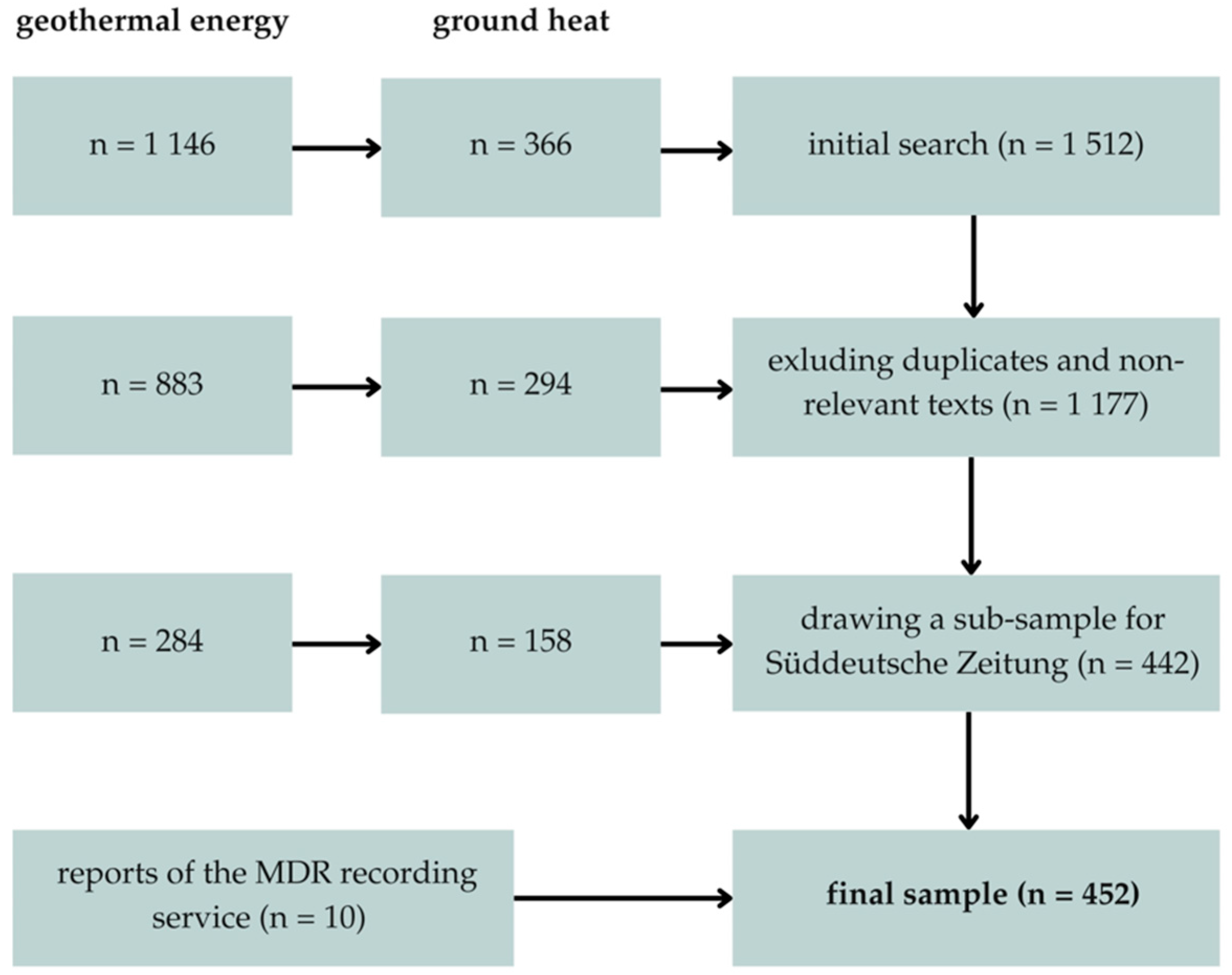
Using the keywords “geothermal energy” and “ground heat”, a total of 1512 contributions were identified (see
Figure 1). Of these, 1146 articles were retrieved using the keyword “geothermal energy” and 366 articles using the keyword “ground heat”. All articles were downloaded between 26 March 2024 and 22 April 2024
1. This was followed by a review using defined exclusion and inclusion criteria. First, the articles were checked for whether they contained at least one paragraph devoted to the topic of geothermal energy. If not, they were deleted. If the same article was available in multiple versions, for example as a print and online document, duplicates were removed. In this case, the version of the article with the earliest publication date was retained. Following this process, 335 articles were excluded, leaving 883 articles for the keyword “geothermal energy” and 294 articles for the keyword “ground heat” (total: n = 1177). Second, given the overrepresentation of articles of the Süddeutsche Zeitung, a random sub-sample for these articles was drawn to ensure balanced representation across outlets. This resulted in the exclusion of a further 735 articles, leaving 284 articles for the keyword “geothermal energy” and 158 articles for the keyword “ground heat” (total: n = 442). Finally, ten audiovisual reports provided by the recording service of the regional public broadcaster MDR were added to the sample. Consequently, the final dataset consists of 452 articles, including 442 print and online news items and ten audiovisual reports.
Table 1 provides an overview of the number of articles by the respective newspapers and media outlet.
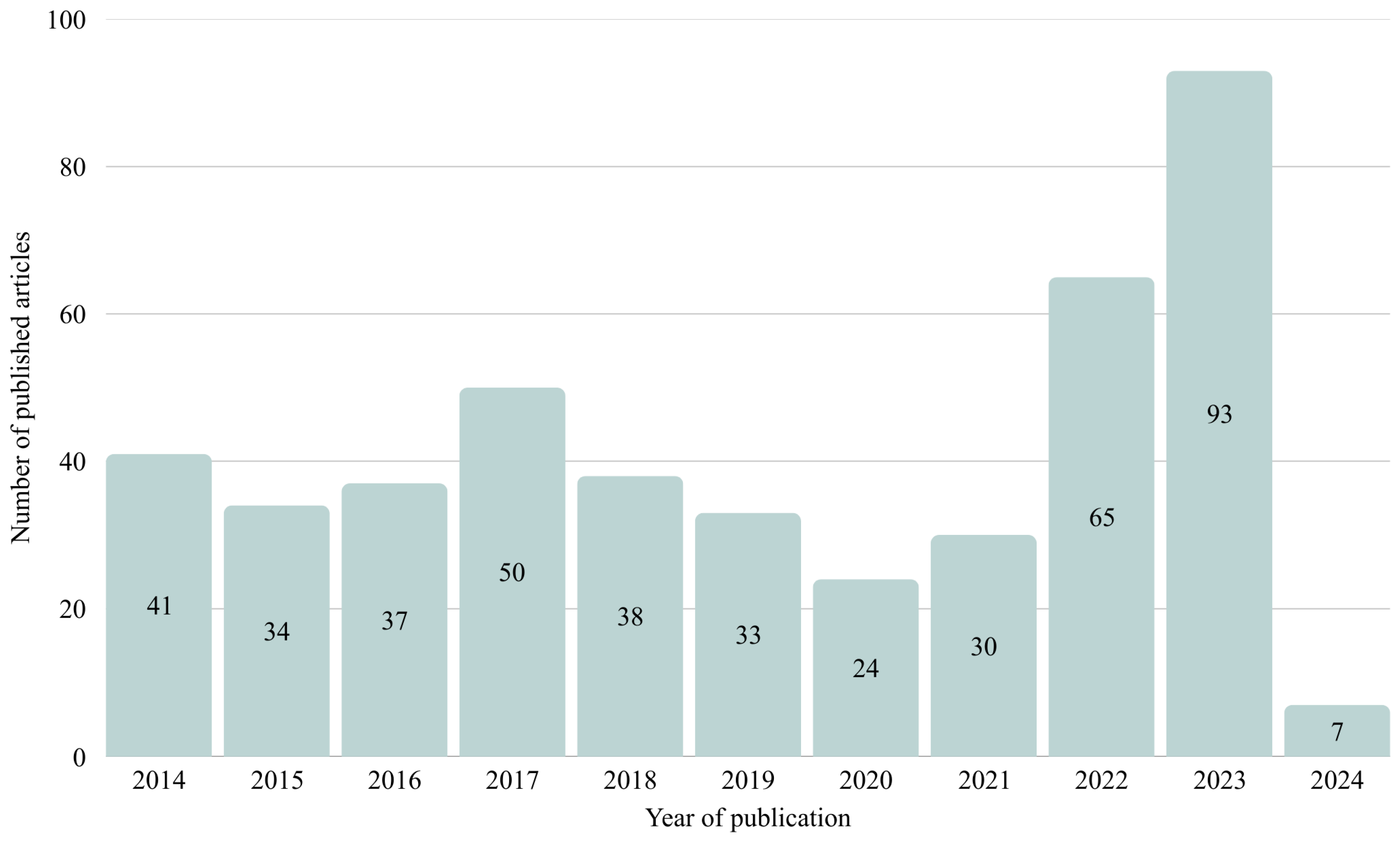
Figure 2 provides an overview of the number of published articles by their year of publication.
4. Results
Overall, written articles average about 430 words, and audio and video contributions have an average length of 1.7 min. The descriptive findings show that most of the examined articles were reports (52%) and that most of the articles were published in the local section (60.2%) and reported on geothermal energy with a focus on local events (88.3%). Further, more than two thirds of the contributions do not distinguish between deep and shallow geothermal energy but refer to geothermal energy in general (68.6%). In addition, about one-fifth of the articles refer only to deep geothermal energy (21.5%). In contrast, there are relatively few articles that differentiate between the two processes (6.8%) or refer solely to shallow geothermal energy (3.2%). Finally, descriptive results show that only five articles (1.1%) use visualizations to demonstrate the functionality of shallow and/or deep geothermal energy.
4.2. Frame Clusters and Their Distribution
The cluster analysis revealed seven clusters which are presented in
Table 4. The first cluster is described as
regional growth engine (39.2%). In more than one-third of the articles, geothermal energy is being discussed regarding regional development and concrete plans and projects. The stakeholders responsible for the benefits are energy suppliers, regional politicians, regional authorities and ministries. In this framing, geothermal energy is accepted, and an expansion of this renewable energy source is called for. The acceptance of geothermal energy is positive, and the forecast is also rather favorable. No demands are made. Arguments that emphasize the advantages of geothermal energy in this frame relate to the possibility of generating electricity and heat (84.2%), the technology’s environmental friendliness (44.6%) and its use as for municipal heat planning (25.4%).
A focus on the processes of geothermal energy and scientific developments is drawn in the second cluster technological innovation (19.7%). In this frame, reference is also made to specific plans and projects of geothermal energy. A benefit for science and technology is pronounced, for which stakeholders such as scientific experts and national ministries and authorities are made responsible for. Geothermal energy is accepted, and a continuation and expansion of geothermal energy is demanded. The prognosis for this energy source is positive. Further, several opportunities and risks associated with geothermal energy are discussed in this frame. For example, the potential of the technology for municipal heat planning (28.1%) and its baseload capacity (23.6%) are mentioned. In contrast, negative aspects such as high investment costs (29.2%) and exploration risks (18%) as well as seismic risks (15.7%) are being discussed.
Further, articles of the frame policies and energy transition (12.6%) discuss the benefits of geothermal energy for energy transition and regional development. Additionally, both benefits and damages for politics are highlighted in this frame. Responsible stakeholders are numerous and include regional politics and authorities and ministries, cities, communities, districts and federal states as well as regional and national parties. Geothermal energy is accepted, and there are demands for the continuation and expansion of the technology. The forecast is also positive. Arguments in favor of geothermal energy that often occur in this frame focus on the technology’s possibilities for municipal heat planning (31.6%) and independence in energy supply (14%). Contra arguments in turn discuss high investment costs (29.8%) and the dependence on governmental grants to ensure the technology’s profitability (14%).
In the cost-efficiency frame (8.8%), geothermal energy is discussed primarily in terms of its costs. In this context, the topic of property is also addressed. Furthermore, the topics of politics and economy are discussed. Both a benefit and a damage to cost efficiency are mentioned. The stakeholders responsible for this are regional politicians, authorities and ministries as well as national parties and governments. The acceptance of geothermal energy is positive. There is a demand for the continuation and expansion of geothermal energy and a favorable prognosis. Potentials of geothermal energy that are mentioned include, for example, cost efficiency through low operating costs (20.0%) and energy independence (17.5%). Negative arguments center on, for example, high investment costs (72.5%), dependence on governmental grants for profitability (35%) and the risk of exploration (20.0%).
The societal potentials and risks frame (7.3%) is dominated by articles on geothermal energy that address the topics of risk–benefit balance and science and technology. Although both potentials and risks are mentioned, the risk–benefit balance is rather positive. A benefit for the energy transition is also mentioned. Benefits and harms for science and technology are also mentioned, with the benefits also dominating here. The responsible stakeholders are regional offices, authorities and ministries, as well as other experts. The acceptance of geothermal energy is rather positive. There are demands to continue and expand geothermal energy. The forecast of the technology is positive. Arguments in favor of geothermal energy that are frequently mentioned in this frame relate, for example, to the possibility of generating electricity and heat (93.9%) and the technology’s renewability and environmental friendliness (25%). Counter-arguments discuss the lack of public acceptance (40.6%), seismic risks (18.8%) and the heaving of the ground as well as potential damages to buildings (18.8%).
Discussions about the pros and cons of the acceptance of geothermal energy are part of the second smallest frame (7.1%). Here, geothermal energy is discussed in terms of acceptance and specific plans and projects. Both a benefit and a harm are formulated for the topic of acceptance. Plans and projects are mentioned primarily in terms of benefits and less in terms of damages. The responsible stakeholders are cities, municipalities, local authorities, districts and federal states, energy suppliers, regional authorities and ministries as well as geothermal and drilling companies. The acceptance of geothermal energy tends to be positive, and a favorable forecast is made. No demands are being formulated. Potentials that are frequently mentioned in this frame include the argument that the risks of geothermal energy are low and controllable (48.5%) and that geothermal energy is an option for municipal heat planning (33.3%). Further positive arguments focus on its baseload capacity (27.3%) and low operating costs (21.2%). Disadvantages mentioned include seismic risks (60.6%), ground heave and potential damages to buildings (48.5%), lacking acceptance of the public (39.4%), high investment costs (36.4%) and exploration risk (24.2%).
In the smallest cluster, rejection and focus on damages (5.3%), geothermal energy is discussed regarding the topics environment, acceptance and risk–benefit balance. Most often, damages for acceptance and projects are mentioned. Further, damages to the risk–benefit balance and politics are discussed. Regional politicians and regional offices, authorities and ministries are held responsible for these damages. Geothermal energy is rejected, and there is the demand to stop geothermal energy projects. Finally, a negative forecast is made. While the potential for geothermal energy to generate electricity and heat is mentioned (70.8%), negative arguments predominate, such as lack of public acceptance (62.5%), ground heave and potential damages to buildings (45.8%), seismic risks (41.7%), high investment costs (33.3%), exploration risks (17.5%), drilling risks (12.5%) and threats to drinking water supplies (12.5%).
5. Discussion
This study builds on and extends previous research on the framing of geothermal energy by conducting a quantitative content analysis of the media coverage of regional and national German media over the past decade. In doing so, this study examines which topics, stakeholders, potentials and risks characterize the media discourse on deep and shallow geothermal energy in Germany.
Prior studies emphasized that the framing of geothermal energy often focused on the technology’s alleged immaturity, seismic risks, and negative examples and failures (e.g.,
Benighaus & Bleicher, 2019;
Stauffacher et al., 2015;
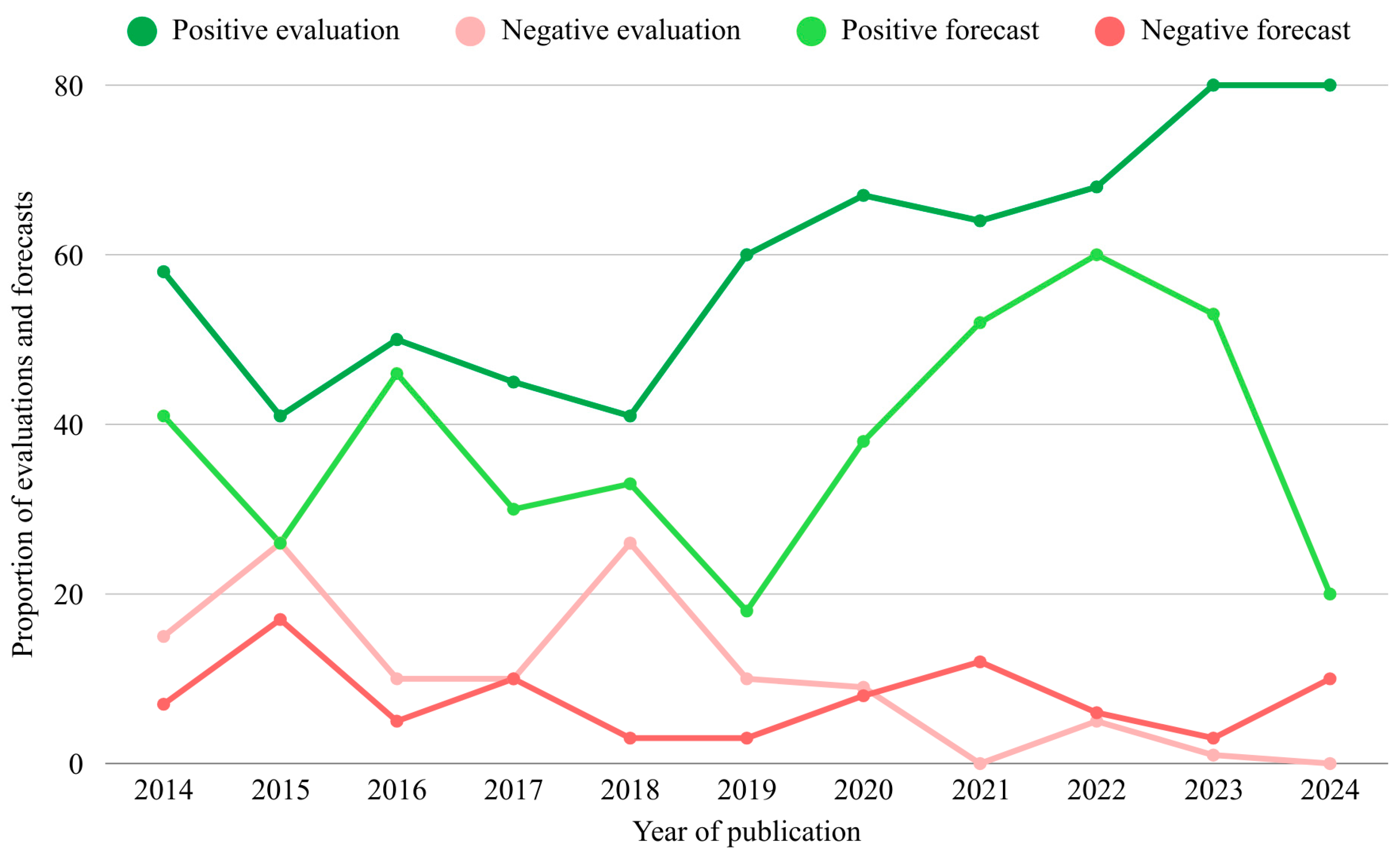
Romanach et al., 2015). The results of this study indicate that said negative examples no longer dominate the public discourse on geothermal energy. Although potential dangers of deep geothermal energy such as seismic risk or exploration risk as well as high investment costs (relating to both forms of geothermal energy) still occur in today’s reporting, this analysis reveals a shift in tone and framing over the last ten years. Hence, most articles and audiovisual contributions express positive evaluations of geothermal energy and the technology’s forecasts for the future, while the focus on damages has decreased. Additionally, the question of acceptance of the technology (e.g.,
Benighaus & Bleicher, 2019;
Djerf-Pierre et al., 2016) is less central to the media coverage. Instead, acceptance is considered in connection with projects that are primarily associated with potentials. Further, while the study of
Benighaus and Bleicher (
2019) argued that environmental aspects are frequently discussed in the context of geothermal energy, this study finds that in the last decade, environmental arguments were rarely at the center of the media coverage. In contrast, environmental risks are rather described in the smallest frame (rejection and focus on damages).
Prior studies found that geothermal energy is often discussed in the context of the development of a region (e.g.,
Benighaus & Bleicher, 2019;
Mbah & Krohn, 2021). This is also reflected in the results of this study. Hence, media coverage on geothermal energy is still event-related and usually addresses specific projects and plans in the local section of the newspapers. Thereby, geothermal energy is positioned as a growth driver for the region that is promoted by energy suppliers, regional politics, authorities and ministries.
Previous studies further identified a frame focusing on the technology itself. In this context, geothermal systems are portrayed as complex and promising but not fully mature (e.g.,
Benighaus & Bleicher, 2019;
Djerf-Pierre et al., 2016;
Mbah & Krohn, 2021). Findings of this study extend this frame by demonstrating that the focus shifts to presenting the technology’s advantages for science rather than presenting flaws and risks. Another frame identified in the literature that was also observed in this study centers discussion on economy and costs (e.g.,
Benighaus & Bleicher, 2019;
Djerf-Pierre et al., 2016;
Stauffacher et al., 2015). Previous framing studies showed that media coverage discussed geothermal energy both as a burden and an opportunity for industry and households. This study’s findings stand in line and demonstrate that potentials such as low operating costs and risks such as investments costs are still being compared.
Further, the results build on those of previous studies that pointed out the dominance of the topics of politics and energy transition in geothermal discourse (e.g.,
Benighaus & Bleicher, 2019;
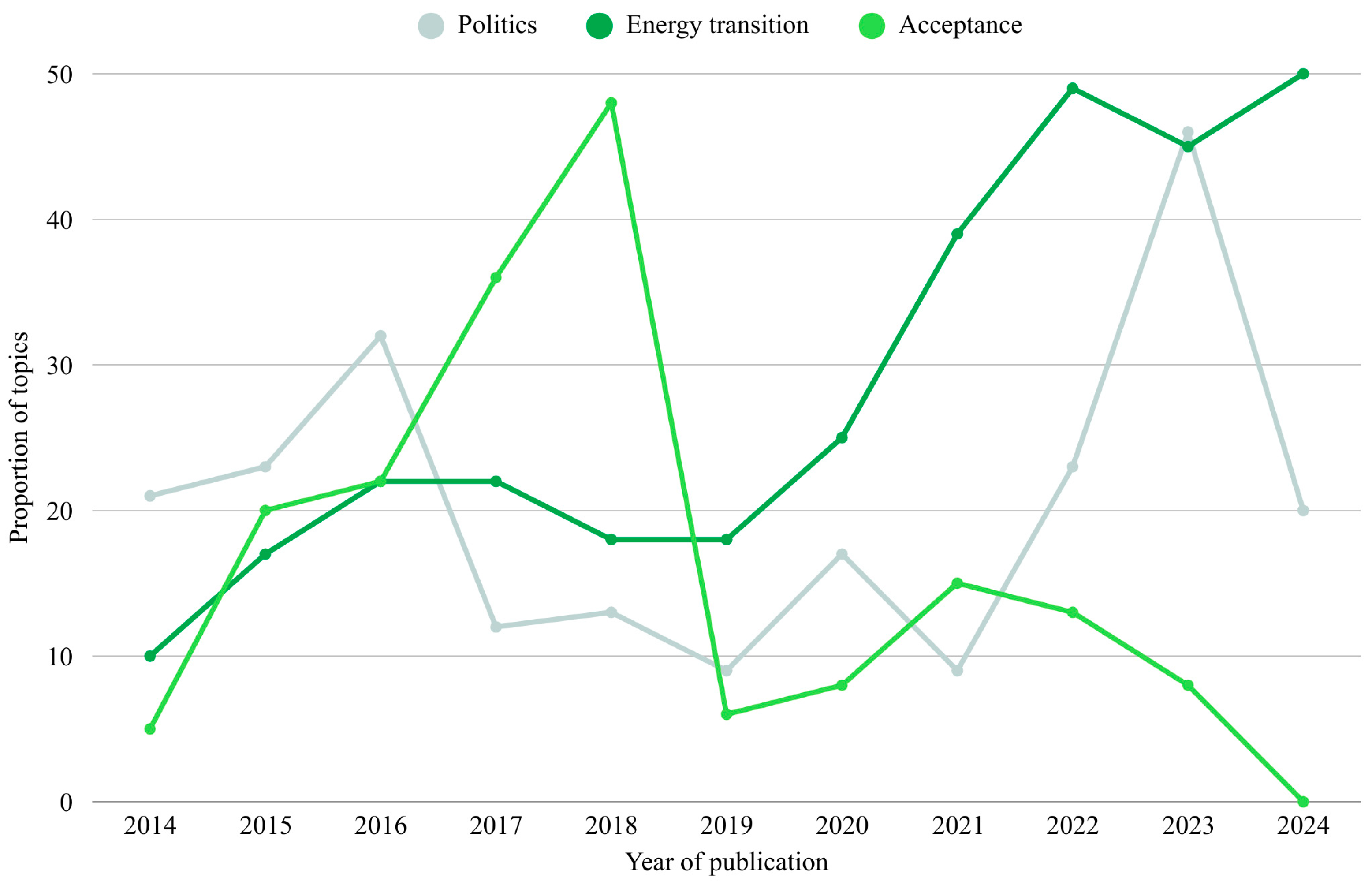
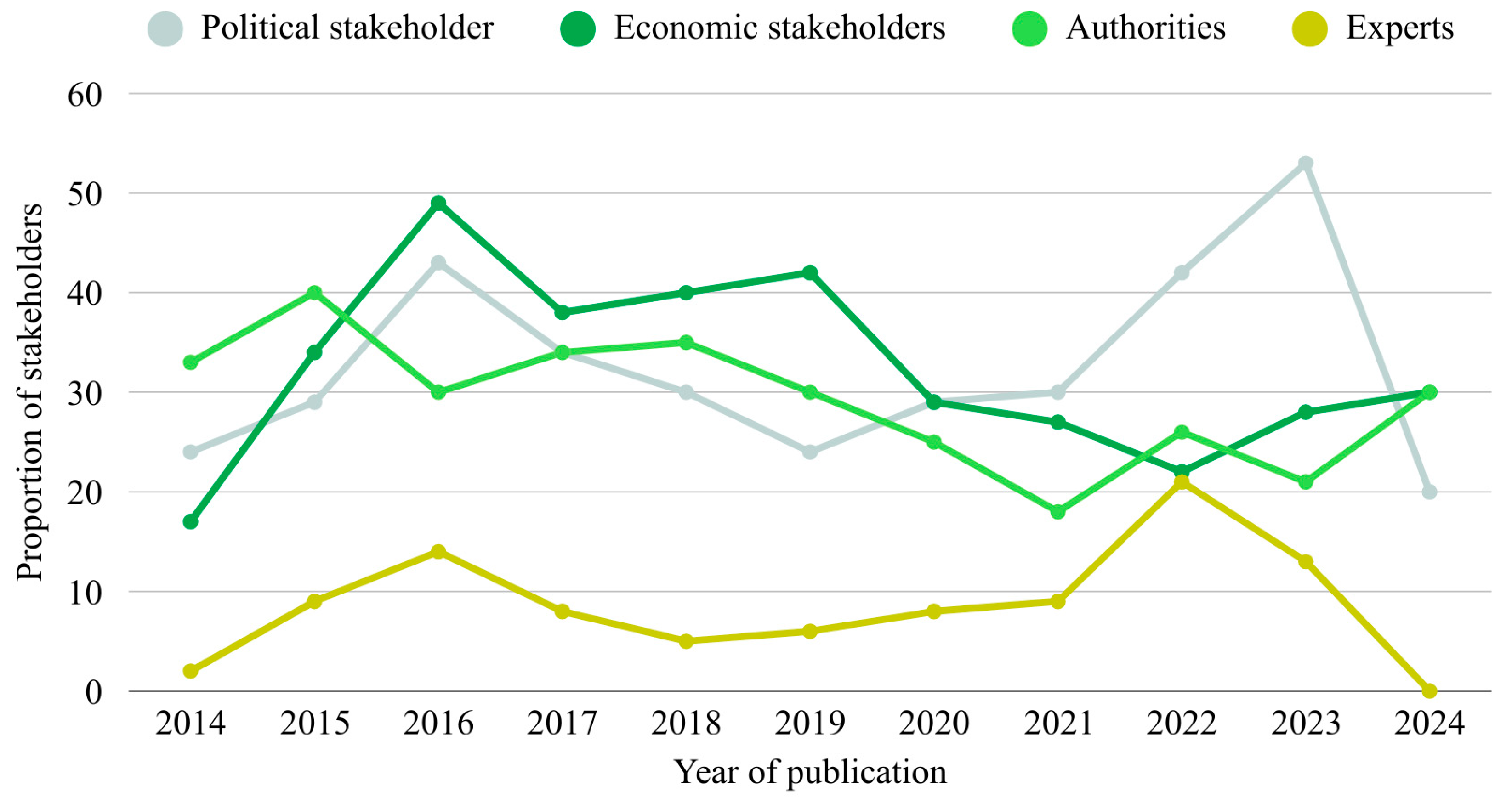
Stauffacher et al., 2015). Looking at these topics during the period analyzed in this study shows that media coverage on geothermal energy is becoming more political and refers more frequently to the energy transition. While two separate frames for the energy transition and politics were identified in the literature, the frame identified in this study combines these into a single frame. This framing pattern often considers multiple stakeholders (e.g., regional policy, authorities, regional and national parties). While, in this context, geothermal energy is accepted and there are calls for the technology to be continued and expanded, and positive forecasts are being made, the framing of geothermal energy as a political lever of the energy transition is still relatively rare. In-depth discussions of geothermal energy as a renewable source—whether within the framework of the German Building Energy Act or in the context of heat-pump debates—also remain rare. Further, while political stakeholders dominate most topics of the articles, economic stakeholders are becoming rarer, and scientific institutions and technical experts as well as social interest groups are underrepresented—especially regarding the topics of science and technology and acceptance of geothermal energy.
Previous studies further identified a communication frame (e.g.,
Benighaus & Bleicher, 2019;
Djerf-Pierre et al., 2016). This study, however, could not identify this frame but rather a acceptance frame in the media coverage over the last ten years in Germany. Furthermore, the literature review revealed a risk–benefit frame (
Benighaus & Bleicher, 2019;
Romanach et al., 2015;
Stauffacher et al., 2015) which is comparable to this study’s frame covering societal potentials and risks. This frame, however, is rather positive in nature and focuses mostly on benefits.
Finally, prior research as well as the media coverage under examination in this study fail to distinguish between shallow and deep geothermal systems (
Stauffacher et al., 2015). The results revealed that most of the articles speak of “geothermal energy” in general, without considering varying procedures and differing risks and potentials. While several articles specifically focus on deep geothermal energy, shallow geothermal energy remains underrepresented. Additionally, media coverage is lacking descriptions and visualizations of geothermal energy systems. The limited use of visualizations represents an important communicative constraint, especially as the processes in the underground are not visible to the public and rather complex. Visual elements such as illustrations could support the understanding of complex technologies and the perception of risks and opportunities. For example, visualizations of shallow systems could be used to explain why there is no seismic risk or exploration risk for this form of geothermal energy. Therefore, more details and visualizations on geothermal procedures are needed to reduce complexity and to increase understanding of the technology. So far, based on these results, for the public, it might be rather unclear which benefits and risks relate to geothermal energy in general and to deep or shallow geothermal energy specifically.
To summarize, by focusing on local projects and the regional development in the media coverage on geothermal energy, the potential in national reporting to connect with social discussions such as the energy and heating transition, climate change and environmental protection remain untapped. Global crises emphasize the urgency of the heating transition and the associated discussions about energy security and independence of heat and energy supply in our society. While geothermal energy has the potential to act as a growth engine not only regionally but also nationally, regional perspectives and stakeholders such as energy suppliers, politicians and authorities have so far dominated discussions on the technology. Although geothermal energy has been presented positively and positive forecasts have been made in discussions held in a regional context, broader national attention to the technology is needed. This study shows that both deep and shallow geothermal energy remain insufficiently positioned as a self-sufficient alternative to fossil energies. Further, the long operating period of geothermal probes could promote sustainability for future generations. This discourse, however, does not take place in the reporting on geothermal energy. Discussions about intergenerational solidarity, for example, thus remain unutilized and represent starting points for the future positioning of the topic.
For journalistic practice, these findings imply that a differentiation and more detailed description of geothermal energy processes should be taken into account in the future in order to report correctly on the technology without confusing processes and associated risks. This may ultimately ensure that the public can gain a diverse picture of the technology and enable an objective debate on the advantages and disadvantages of the technology. Future studies should also investigate the knowledge of the public towards different forms of geothermal energy and how they perceive the associated advantages and disadvantages (e.g., through a survey with experimental design). At the same time, alternative options for describing and visualizing geothermal processes can be tested to investigate their suitability for increasing knowledge and acceptance of the technology.
This study also comes with limitations. For example, the analysis solely focuses on the highest-circulation regional and national daily newspapers in Germany and, therefore, cannot provide a comprehensive picture of the overall media discourse. Discussions in other media formats—such as trade journals, industry magazines or social media—were not included.
A further limitation of this study concerns the distribution of articles across outlets. The final dataset is unevenly distributed, with a comparatively high share of articles originating from the Süddeutsche Zeitung and Die Welt. This imbalance may be indicative of structural characteristics of German media coverage on geothermal energy. The topic is reported on relatively rarely across most outlets and tends to receive more sustained attention in regions with a higher concentration of geothermal projects, particularly in southern Germany (e.g., Süddeutsche Zeitung). While this does not invalidate the findings, it does shape the scope of the conclusions that can be drawn. Consequently, the results should be interpreted primarily as an indication of prevailing framing patterns within the selected outlets.
Furthermore, another limitation is that the final sample size is rather small, particularly when compared to studies employing topic modeling on the framing of (other) renewable energies. However, the sample size is also influenced by the rather little attention geothermal energy receives in the public and media. Furthermore, the methodological approach excluded contributions that merely mention geothermal energy and only considers contributions that devote at least one paragraph to the technology. In light of the comparatively limited number of articles on geothermal energy that were suitable for consideration and given the framing approach, a quantitative content analysis proved to be the most appropriate method. The application of topic modeling in this context proved to be an inadequate solution, as the statistical clustering method is incapable of capturing the framing dimensions (problem definition, attribution of causes, moral evaluation, recommended course of action).
Furthermore, another limitation is that excluding variables with low frequency in the cluster analysis may lead to an underrepresentation of rare but potentially important risk and benefit aspects. In particular, risks related to environmental impacts, economic consequences, or real estate, as well as the role of less frequently mentioned actors, are less visible in the resulting frames. However, their low frequency suggests that these aspects do not systematically structure the dominant frames in media discourse.
Finally, the study did not systematically account for the influence of broader societal or energy-related events—such as government changes, policy reforms, or geopolitical crises—on the media representation of geothermal energy. However, geothermal energy was hardly mentioned in relation to the German Building Energy Act and heat-pumps and could, therefore, not be examined more comprehensively. In addition, a separate analysis of framing patterns specifically for deep versus shallow geothermal energy was not possible due to the low number of articles that explicitly referred to shallow systems.
Future research should address these aspects by comparing media discourses across a wider range of platforms and by examining long-term framing of the technology in relation to shifting political and societal contexts. Moreover, future studies should explore the audiences’ understanding of and attitudes towards geothermal energy and associated implications (e.g., risks and potentials). Hence, experimental studies (e.g., surveys, interviews) could further illuminate how different framings influence knowledge, attitudes, and behavioral intentions regarding geothermal energy.