
Multi-Source Integration for Assessing Air Quality Dynamics in China: The Interplay of Anthropogenic Drivers, Meteorology, and Topography



Abstract
1. Introduction
- To characterize spatial patterns and seasonal trends of air quality using continuous satellite coverage to overcome the limitations of sparse ground station interpolation.
- To assess natural factors, specifically investigating how meteorological conditions (temperature, wind) and often-overlooked topographic features (elevation, slope) constrain pollutant dispersion.
- To investigate the correlation of air pollution intensity with anthropogenic drivers, namely socio-economic activities (population, industry, transport, vehicle density, construction output) and ecological vegetation cover, employing a tiered analytical framework that contrasts linear Pearson and monotonic Spearman correlations with interpretable machine learning (XGBoost) to capture complex threshold effects missed by traditional statistical models.
2. Materials and Methods
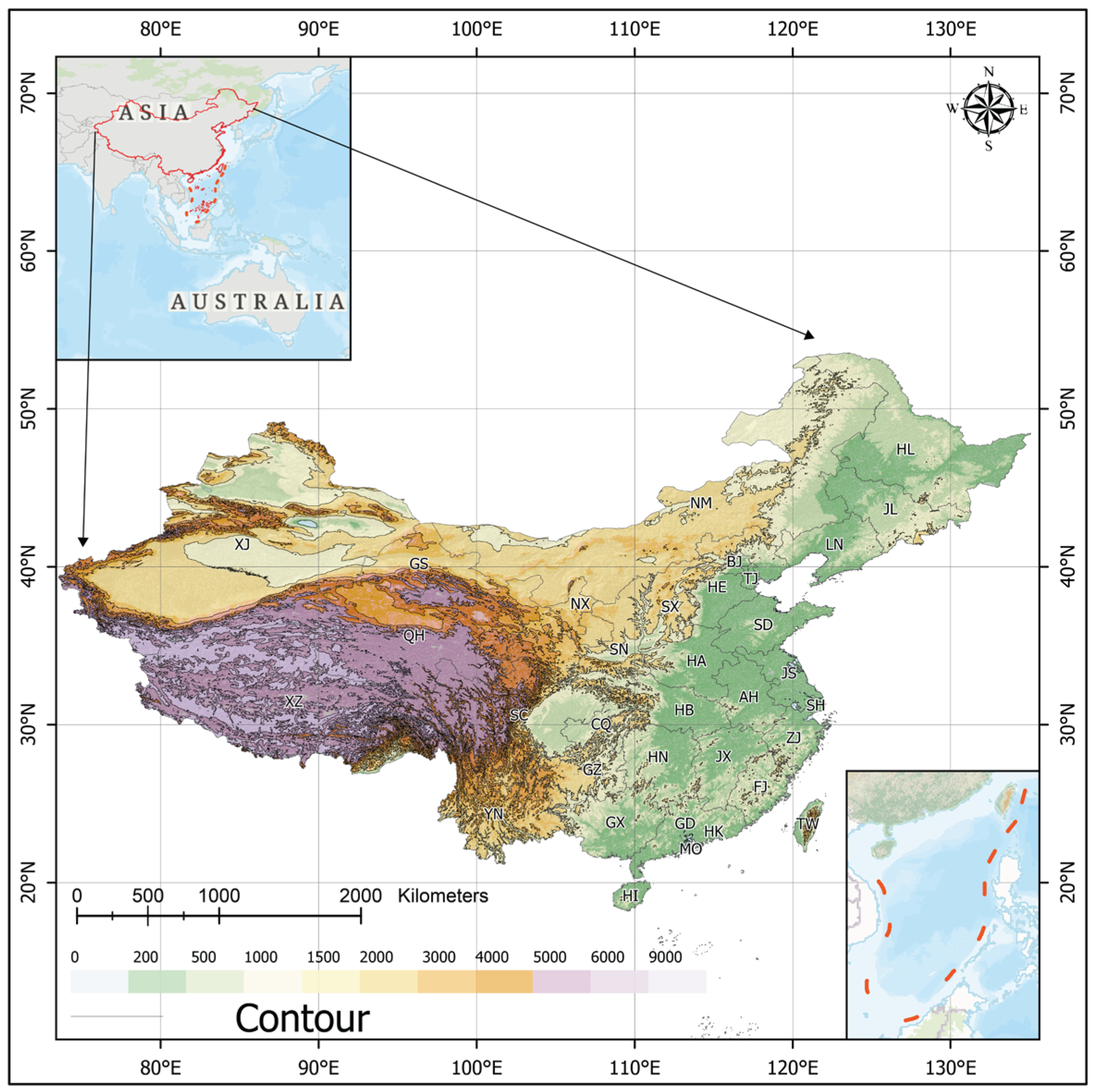
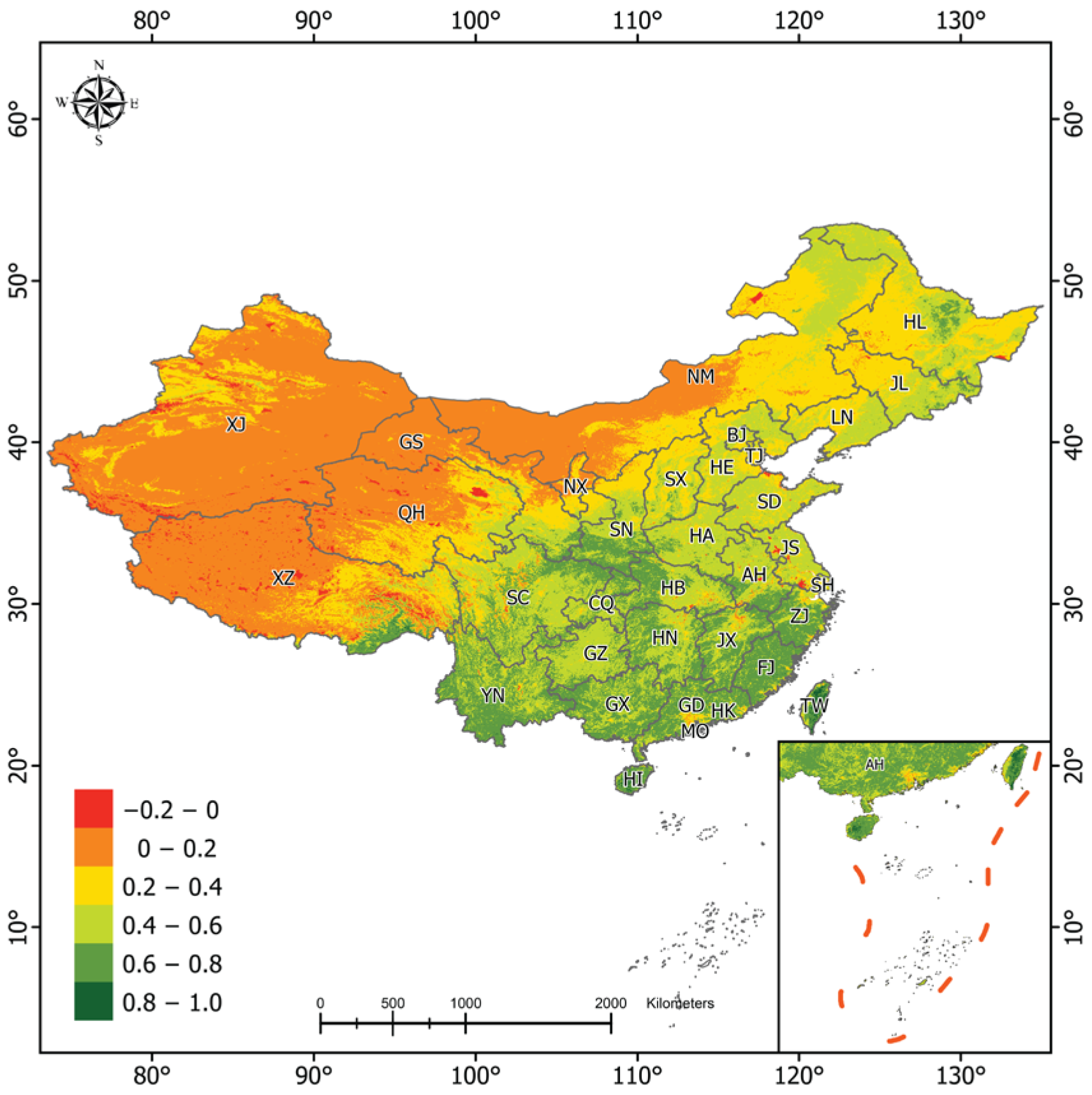
2.1. Overview of the Study Area
2.2. Basic Data
2.2.1. Atmospheric Composition
2.2.2. Meteorological Factors
2.2.3. Socio-Economic Factors
2.2.4. Topographic Factors
2.2.5. Ecological Factors
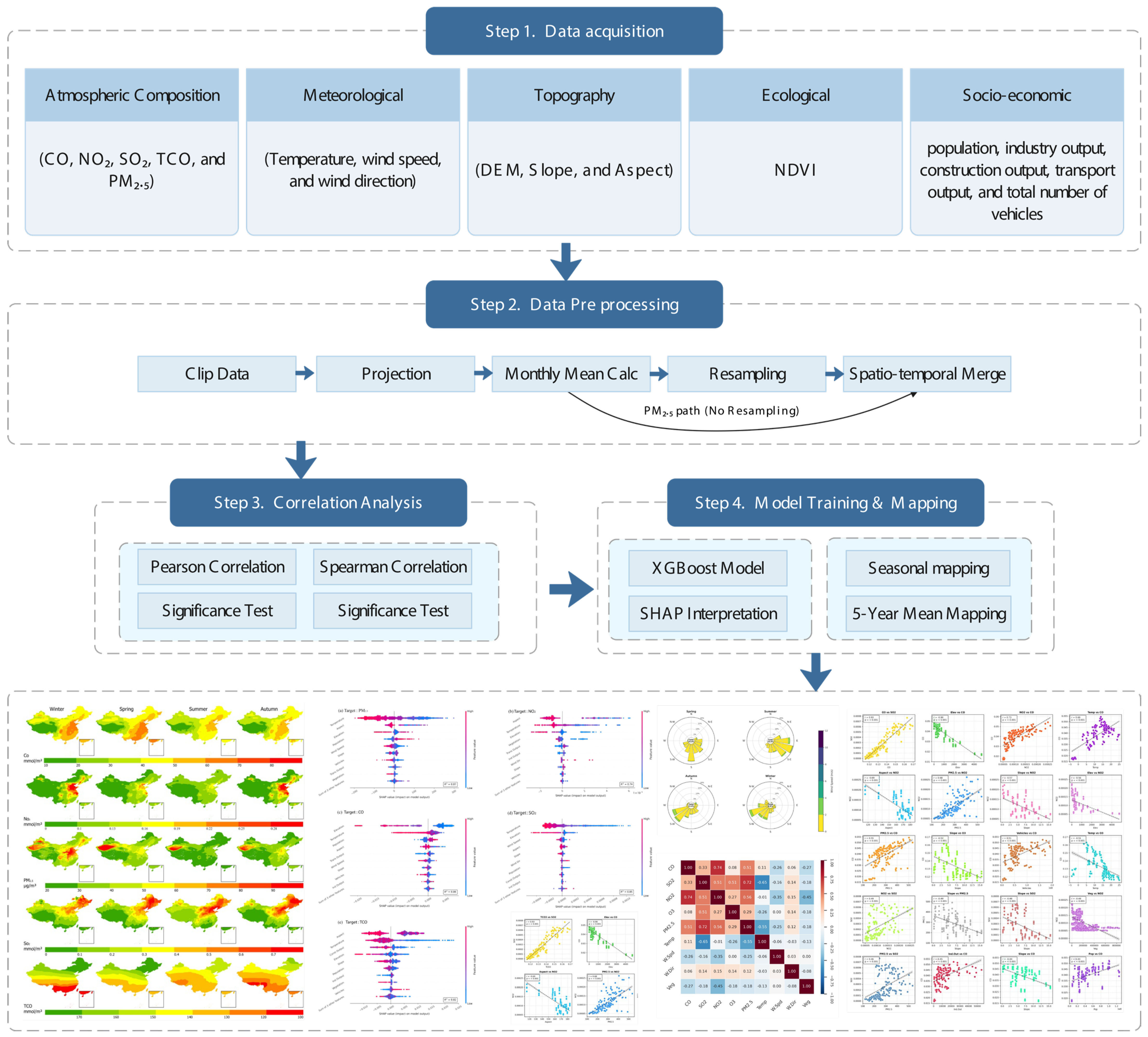
2.3. Overall Technical Approach and Analysis Methods
2.3.1. Variable Derivation and Calculation
- (a) Vegetation (NDVI) The Normalized Difference Vegetation Index (NDVI) was calculated using the Near-Infrared (NIR) and Red spectral bands from the MODIS dataset to assess vegetation health and density as shown in Equation (1).
- (b) Meteorological Factors (Wind and Temperature) Wind parameters were derived from the zonal (u) and meridional (v) components of the 10 m wind vector provided by the ERA5-Land dataset. Wind Speed (WS) was calculated as the magnitude of the wind vector as shown in Equation (2).
- Additionally, surface temperature data were converted from Kelvin (K) to degrees Celsius (C) for consistency with standard reporting units as shown in Equation (4).
- (c) Topographic Slope: Slope was calculated from the SRTM Digital Elevation Model (DEM) based on the rate of change in elevation in the horizontal (x) and vertical (y) directions as shown in Equation (5).
2.3.2. Spatial and Temporal Aggregation
2.3.3. Statistical Correlation Analysis
2.3.4. Machine Learning Configuration and Interpretability
3. Results
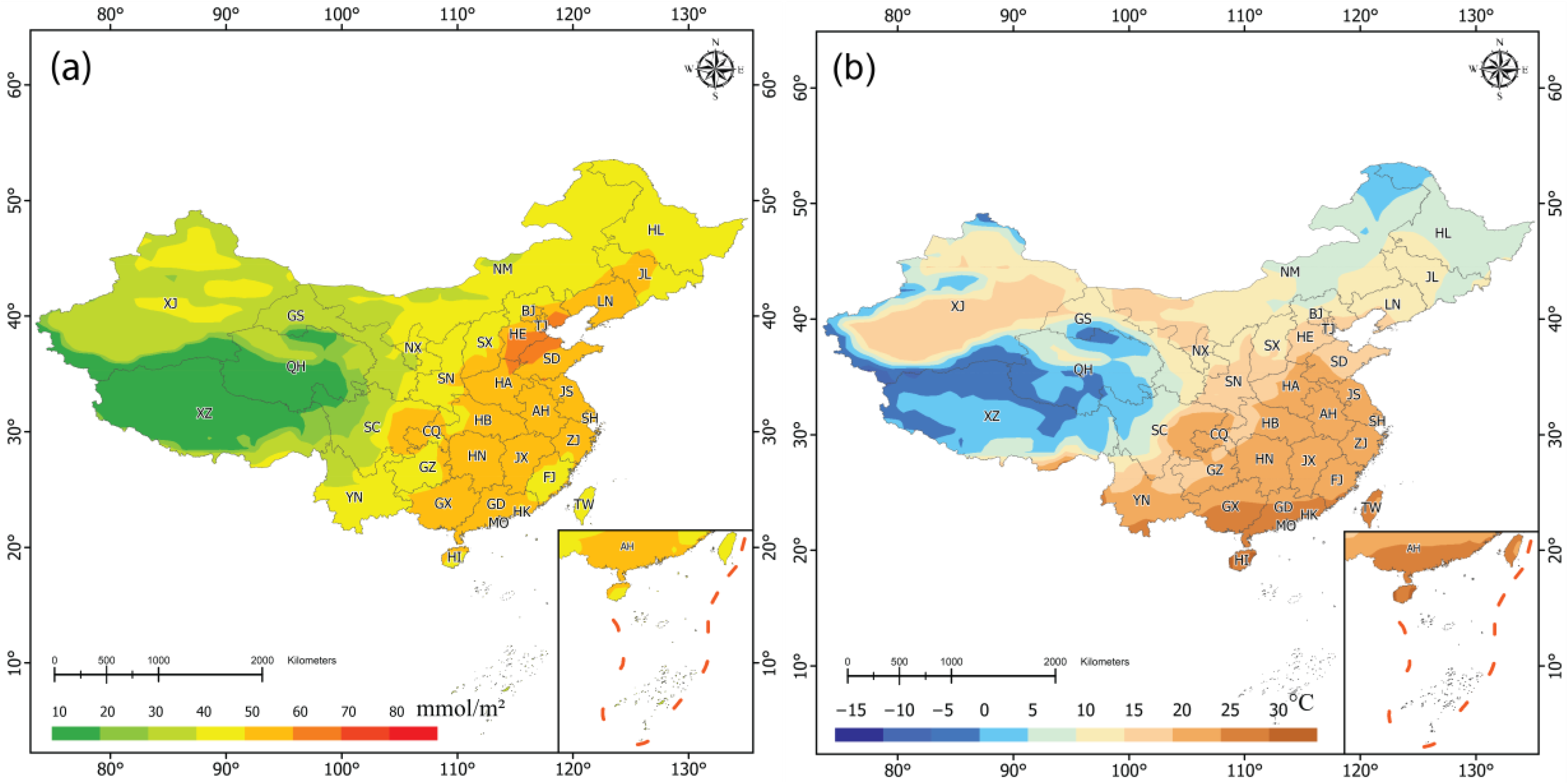
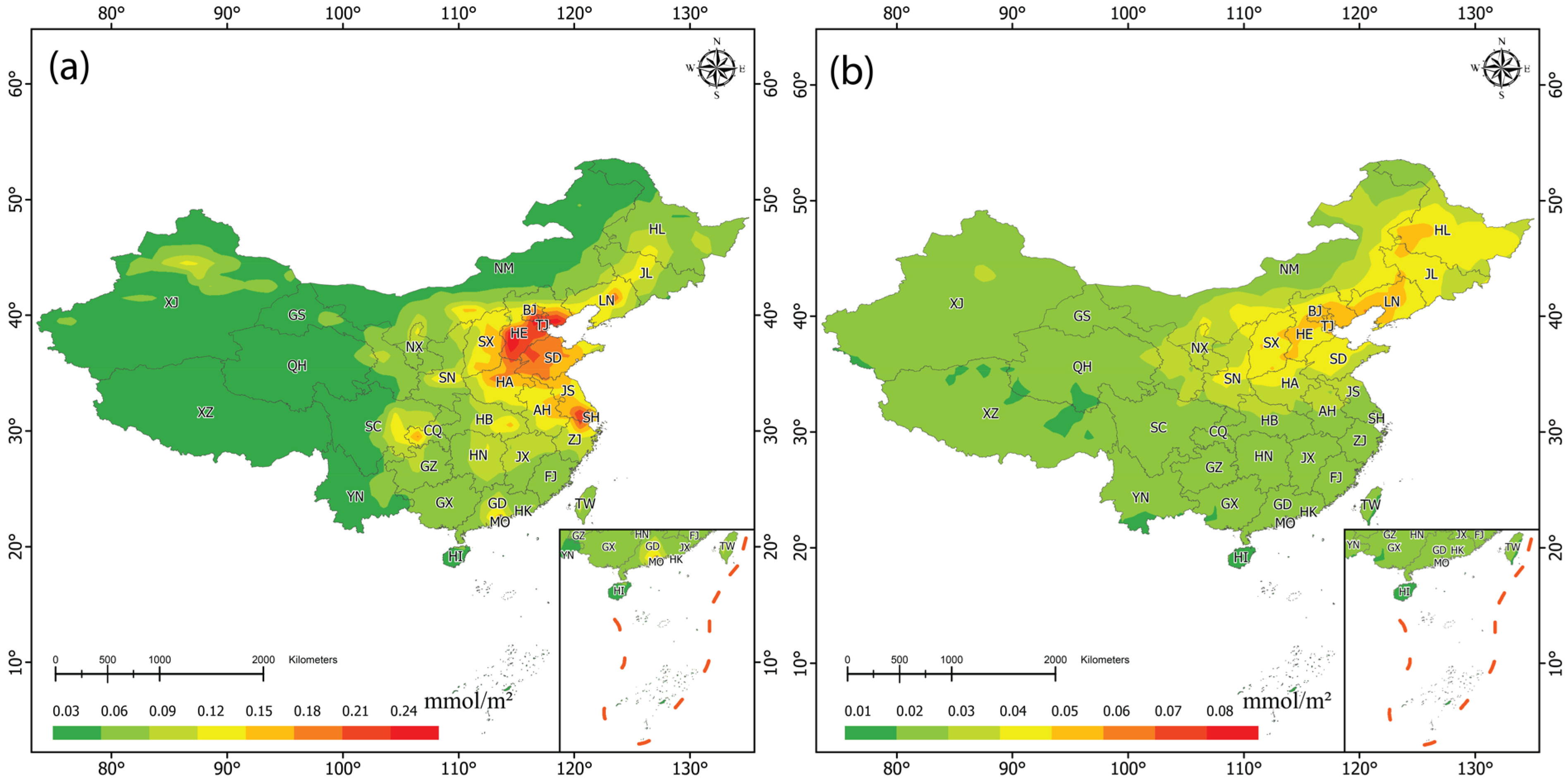
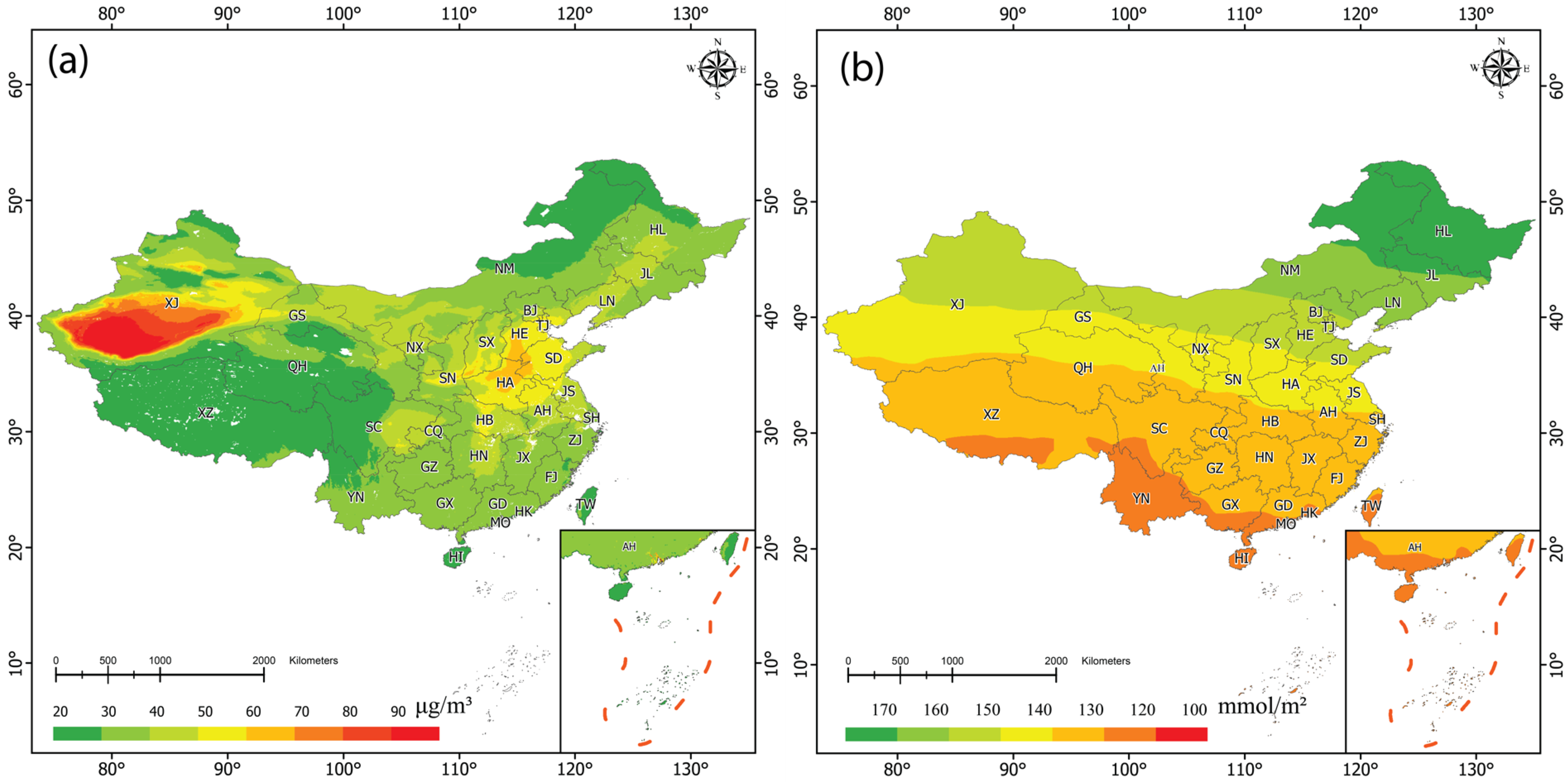
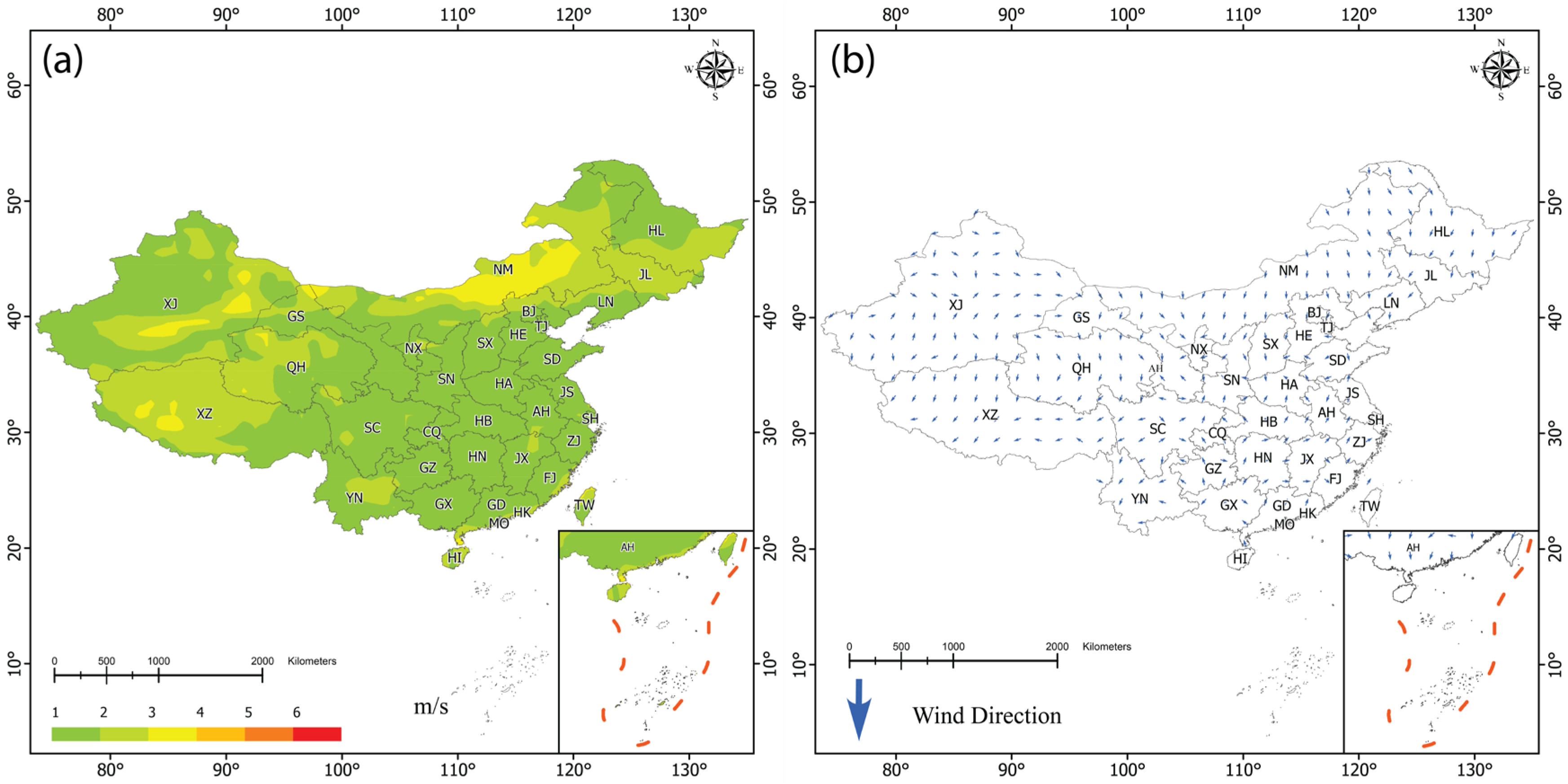
3.1. Spatial and Seasonal Patterns of Air Pollutants and Environmental Drivers
3.2. Monthly and Seasonal Correlation Analysis of Drivers
3.3. Annual Correlation Analysis of Drivers
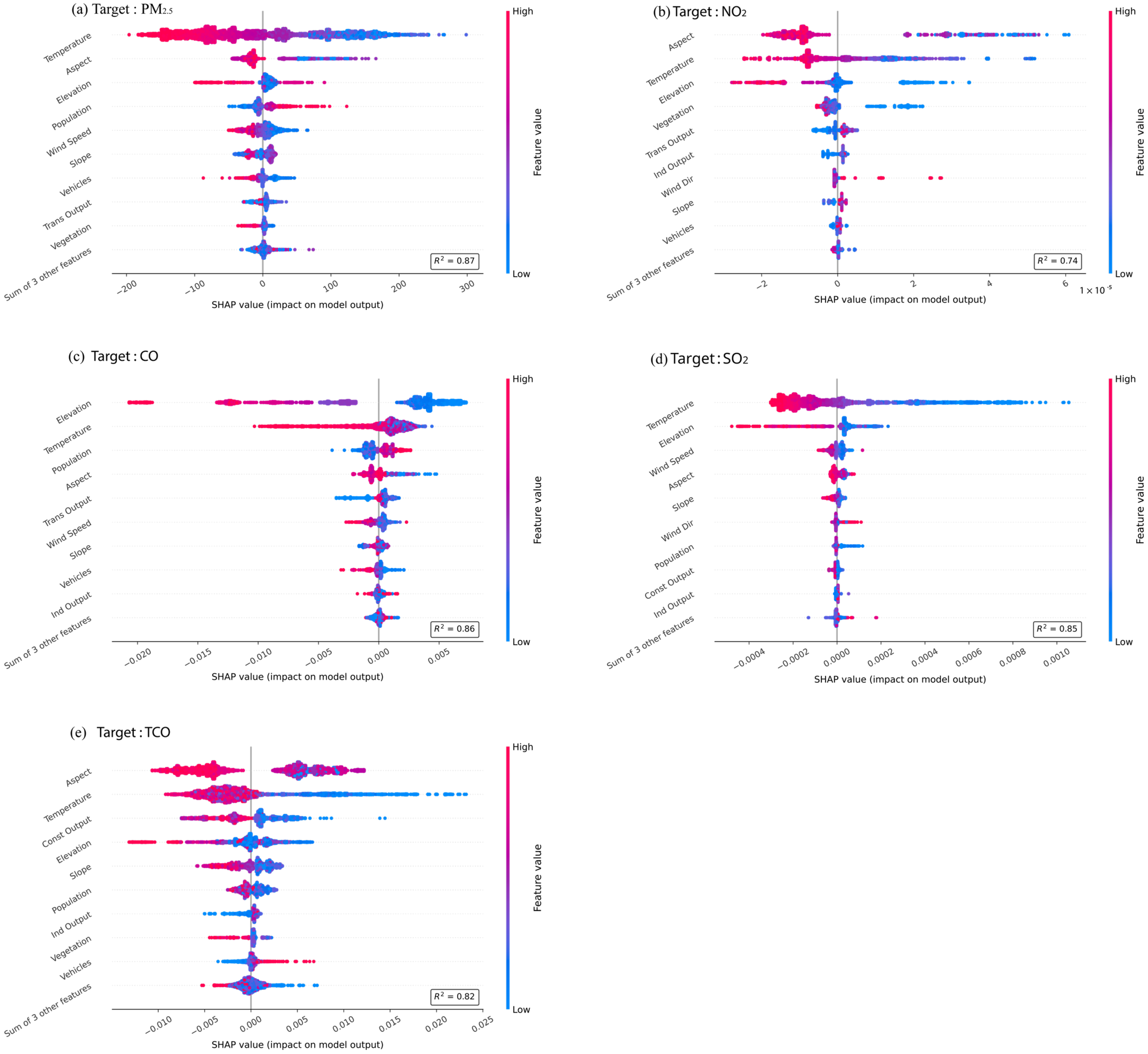
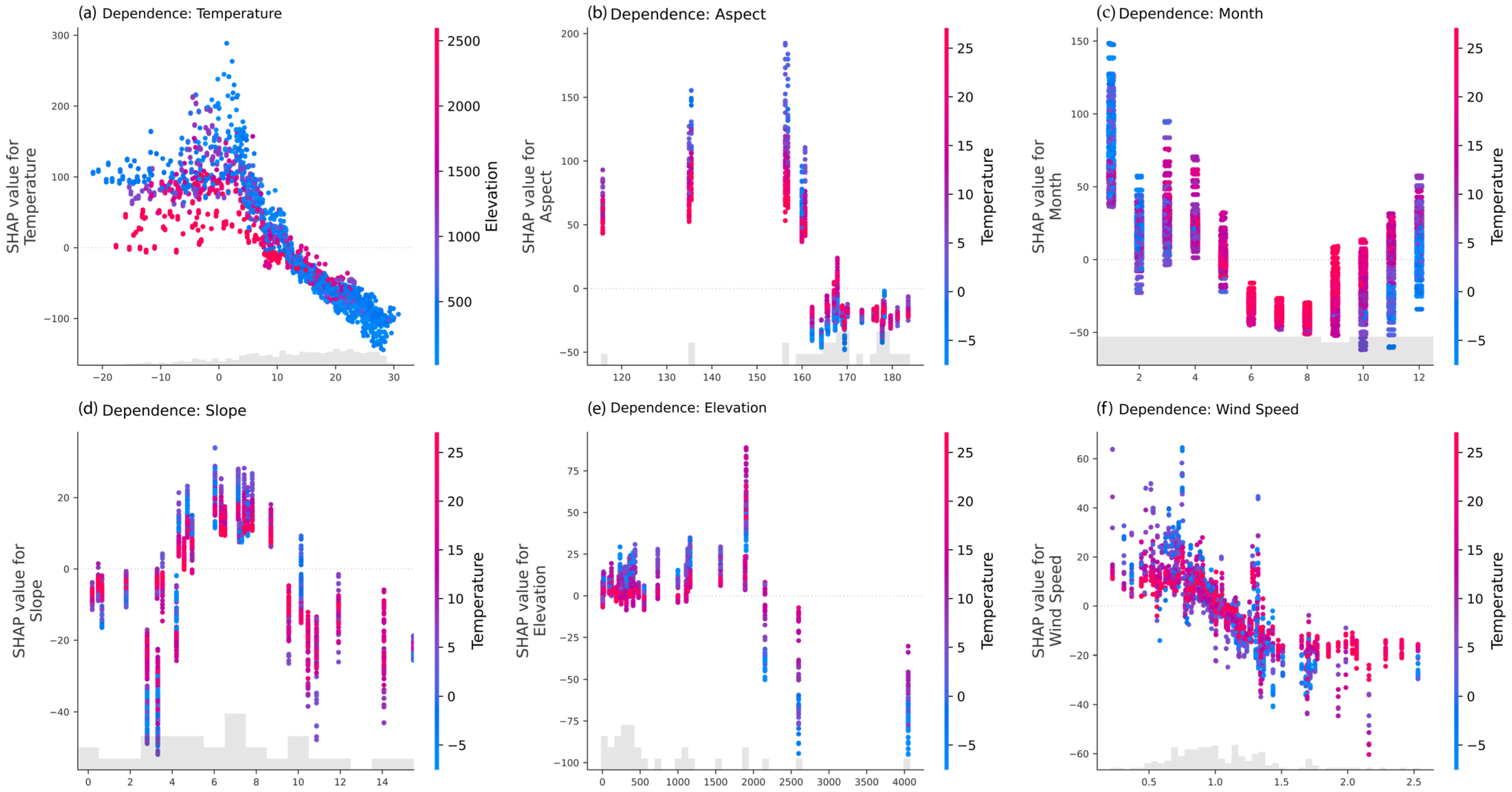
3.4. XGBoost and SHAP Analysis of Drivers
4. Discussion
4.1. Spatial and Temporal Patterns of Air Quality Dynamics
4.2. Relationships Between Key Drivers and Air Quality
4.3. Comparison with National and Regional Studies
4.4. Limitations of This Study and Future Directions
5. Conclusions
- Distinct seasonal variability, with primary pollutants (CO, NO2, SO2, PM2.5), peaks in winter due to combustion emissions and atmospheric stagnation, while total column ozone (TCO) peaks in late winter–spring via stratospheric transport.
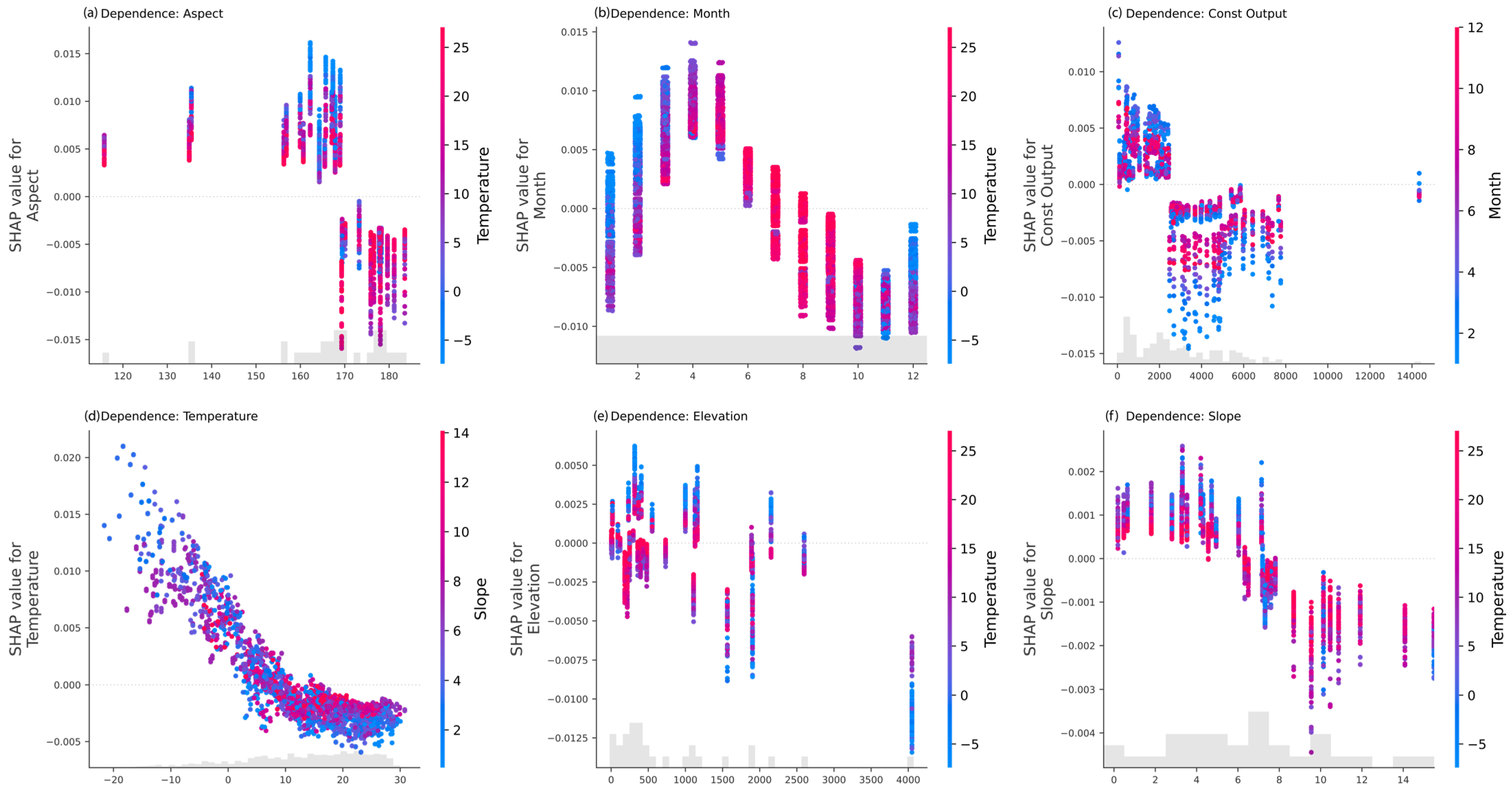
- Temperature exhibits a non-linear threshold effect: PM2.5 and SO2 increase exponentially below 0 °C. Topography strongly modulates pollution, with low-lying basins acting as pollutant traps (e.g., ρ = −0.82 between elevation and CO).
- Socio-economic activity drives baseline emissions but shows saturation at high industrial output, whereas vegetation (NDVI) serves as a non-linear sink for NO2 and CO.
- Potent pollutant–meteorology couplings, such as between SO2 and TCO (ρ = 0.93), highlight systemic atmospheric linkages beyond shared emission sources.
Supplementary Materials
Author Contributions
Funding
Data Availability Statement
Acknowledgments
Conflicts of Interest
Abbreviations
| Administrative Division | Code |
| Beijing | BJ |
| Tianjin | TJ |
| Hebei | HE |
| Shanxi | SX |
| Neimenggu | NM |
| Liaoning | LN |
| Jilin | JL |
| Heilongjiang | HL |
| Shanghai | SH |
| Zhejiang | ZJ |
| Anhui | AH |
| Fujian | FJ |
| Jiangxi | JX |
| Shandong | SD |
| Henan | HA |
| Hubei | HB |
| Hunan | HN |
| Guangdong | GD |
| Guangxi | GX |
| Hainan | HI |
| Chongqing | CQ |
| Sichuan | SC |
| Guizhou | GZ |
| Yunnan | YN |
| Shaanxi | SN |
| Gansu | GS |
| Qinghai | QH |
| Ningxia | NX |
| Xinjiang | XJ |
| HongKong | HK |
| Macao | MO |
| Taiwan | TW |
| Jiangsu | JS |
| Xizang | XZ |
References
- Smith, K.R.; Jerrett, M.; Anderson, H.R.; Burnett, R.T.; Stone, V.; Derwent, R.; Thurston, G. Public health benefits of strategies to reduce greenhouse-gas emissions: Health implications of short-lived greenhouse pollutants. Lancet 2009, 374, 2091–2103. [Google Scholar] [CrossRef]
- Mohamed, H.; Hassan, A.; Elhag, A. A five-year Study Using Sentinel-5P Data Observing Seasonal Dynamics and Long-term Trends of Atmospheric Pollutants. Int. J. Eng. Geosci. 2025, 10, 262–271. [Google Scholar] [CrossRef]
- Bell, M.L.; McDermott, A.; Zeger, S.L.; Samet, J.M.; Dominici, F. Ozone and short-term mortality in 95 US urban communities, 1987–2000. J. Am. Med. Assoc. 2004, 292, 2372–2378. [Google Scholar] [CrossRef] [PubMed]
- Bikis, A. Urban air pollution and greenness in relation to public health. J. Environ. Public Health 2023, 2023, 8516622. [Google Scholar] [CrossRef] [PubMed]
- Meo, S.A.; Salih, M.A.; Alkhalifah, J.M.; Alsomali, A.H.; Almushawah, A.A. Environmental pollutants particulate matter (PM2.5, PM10), Carbon Monoxide (CO), Nitrogen dioxide (NO2), Sulfur dioxide (SO2), and Ozone (O3) impact on lung functions. J. King Saud Univ.-Sci. 2024, 36, 103280. [Google Scholar] [CrossRef]
- Chen, Z.; Liu, N.; Tang, H.; Gao, X.; Zhang, Y.; Kan, H.; Deng, F.; Zhao, B.; Zeng, X.; Zhao, Z.; et al. Health effects of exposure to sulfur dioxide, nitrogen dioxide, ozone, and carbon monoxide between 1980 and 2019: A systematic review and meta-analysis. Indoor Air 2022, 32, e13170. [Google Scholar] [CrossRef]
- Seinfeld, J.H.; Pandis, S.N. Atmospheric Chemistry and Physics: From Air Pollution to Climate Change; John Wiley & Sons: Hoboken, NJ, USA, 2016. [Google Scholar]
- Yuwati, S.; Gulo, F.; Zulkarnain, M. Air Quality at Urban Transportation Nodes: A Case Study of SO2, NO2, and CO Concentrations in Palembang City. Biosci. J. Ilm. Biol. 2025, 13, 2000–2009. [Google Scholar] [CrossRef]
- Lu, X.; Zhang, L.; Shen, L. Meteorology and climate influences on tropospheric ozone: A review of natural sources, chemistry, and transport patterns. Curr. Pollut. Rep. 2019, 5, 238–260. [Google Scholar] [CrossRef]
- Levi, Y.; Khain, P.; Broday, D.M. Clustering of emission–dispersion dynamics in a state space defined by pollution sources and meteorological variables. Sci. Total Environ. 2025, 995, 180051. [Google Scholar]
- Rahman, A.; Khatun, M.T. Multivariate Analysis of Urban Air Pollution: Clustering and Patterns Across Major Asian Cities. In Proceedings of the 2024 IEEE International Conference on Future Machine Learning and Data Science (FMLDS); IEEE: New York, NY, USA, 2024; pp. 462–467. [Google Scholar]
- Heredia, B.I.; Canizo, B.V.; Diedrichs, A.L.; Altamirano, J.C.; Clausen, R.; Martinis, E.M.; Quintas, P.Y. Air quality monitoring in Mendoza, Argentina: Machine learning approaches for PM10 prediction. Environ. Sci. Pollut. Res. 2025, 32, 17511–17527. [Google Scholar] [CrossRef]
- Rede, G.D.; Dongre, S.; Kumar, C.R.; Kant, R.; Ramana, V.V.; Rathnamma, M.V. A Novel Approach to Mitigating Air Pollution and Climate Change with Graph Convolutional RNN Models. In Proceedings of the 2025 5th International Conference on Trends in Material Science and Inventive Materials (ICTMIM); IEEE: New York, NY, USA, 2025; pp. 1468–1473. [Google Scholar]
- Bernabeo, R.A.; Khalifeh, H.A.; Andretta, A.; Al Khatib, I.T.; Ghori, M.H. The impact of climate change and weather on air transport in the UAE: Reduction of CO2 emissions. In Proceedings of the 2018 Advances in Science and Engineering Technology International Conferences (ASET); IEEE: New York, NY, USA, 2018; pp. 1–7. [Google Scholar]
- Jiang, J.; Jin, A. Study on the Dispersion Law of Typical Pollutants in Winter by Complex Geographic Environment Based on the Coupling of GIS and CFD—A Case Study of the Urumqi Region. Appl. Sci. 2025, 15, 2469. [Google Scholar] [CrossRef]
- Yang, J.; Wu, L.; Li, R.; Liu, X.; Tao, C. Effects of surrounding urban morphology and wind direction on hazardous gas dispersion from chemical plants: Morphological analysis and fluid dynamics insights into industry–urban interactions. Phys. Fluids 2025, 37, 027103. [Google Scholar] [CrossRef]
- Sarkar, P.; Makkena, M.K.; Saha, S.; Saha, M. Analyzing the Severity of Air Pollution in an Industrialized Suburb. In Proceedings of the 2023 14th International Conference on Computing Communication and Networking Technologies (ICCCNT); IEEE: New York, NY, USA, 2023; pp. 1–6. [Google Scholar]
- Zhang, Z.; Zhang, G.; Su, B. The spatial impacts of air pollution and socio-economic status on public health: Empirical evidence from China. Socio-Econ. Plan. Sci. 2022, 83, 101167. [Google Scholar] [CrossRef]
- Wang, H.; Xiao, S. Ecological Remediation Measures for Non-point Source Pollution Based on Source-Sink Landscape Theory: A Case Study of Huanghou Basin. J. Landsc. Res. 2024, 16, 72–76. [Google Scholar]
- Li, W.; Pacheco-Labrador, J.; Migliavacca, M.; Miralles, D.; Hoek van Dijke, A.; Reichstein, M.; Forkel, M.; Zhang, W.; Frankenberg, C.; Orth, R.; et al. Widespread and complex drought effects on vegetation physiology inferred from space. Nat. Commun. 2023, 14, 4640. [Google Scholar] [CrossRef]
- Man, X.; Liu, R.; Zhang, Y.; Yu, W.; Kong, F.; Liu, L.; Luo, Y.; Feng, T. High-spatial resolution ground-level ozone in Yunnan, China: A spatiotemporal estimation based on comparative analyses of machine learning models. Environ. Res. 2024, 251, 118609. [Google Scholar] [CrossRef]
- Mazza, A.; Guarino, G.; Scarpa, G.; Yuan, Q.; Vivone, G. Pm2.5 retrieval with sentinel-5p data over europe exploiting deep learning. IEEE Trans. Geosci. Remote Sens. 2025, 63, 5510717. [Google Scholar] [CrossRef]
- Alam, M.J.; Karim, I.; Zaman, S.U. Seasonal dynamics and trends in air pollutants: A comprehensive analysis of PM2.5, NO2, CO, SO2 and O3 in Houston, USA. Air Qual. Atmos. Health 2025, 18, 2625–2642. [Google Scholar] [CrossRef]
- Huang, H.N.; Yang, Z.; Guo, Y.; Ma, J.J.; Ming, B.W.; Yang, J.; Guo, C.; Li, L.; Ou, C.Q. Impact of agricultural straw open-field burning on concentrations of six criteria air pollutants in China. Environ. Pollut. 2025, 373, 126109. [Google Scholar] [CrossRef]
- Sheng, Q.; Ji, Y.; Zhou, C.; Zhang, H.; Zhu, Z. Spatiotemporal variation and pattern analysis of air pollution and its correlation with NDVI in Nanjing City, China: A Landsat-Based study. Forests 2023, 14, 2106. [Google Scholar] [CrossRef]
- Wang, X.; Hu, J.; Wang, Z.; Cai, Y.; He, D. Interactive effects of meteorological factors and ambient air pollutants on influenza incidences 2019–2022 in Huaian, China. Infect. Dis. Model. 2025, 10, 1384–1397. [Google Scholar] [CrossRef] [PubMed]
- Veefkind, J.P.; Aben, I.; McMullan, K.; Förster, H.; De Vries, J.; Otter, G.; Claas, J.; Eskes, H.J.; de Haan, J.F.; Kleipool, Q.; et al. TROPOMI on the ESA Sentinel-5 Precursor: A GMES mission for global observations of the atmospheric composition for climate, air quality and ozone layer applications. Remote Sens. Environ. 2012, 120, 70–83. [Google Scholar] [CrossRef]
- Sun, S.; Chang, Q.; He, J.; Wei, X.; Sun, H.; Xu, Y.; Soares Magalhaes, R.J.; Guo, Y.; Cui, Z.; Zhang, W. The association between air pollutants, meteorological factors and tuberculosis cases in Beijing, China: A seven-year time series study. Environ. Res. 2023, 216, 114581. [Google Scholar] [CrossRef]
- Kuang, W.; He, Y.; Luo, P.; Fu, L.; Ni, H.; Zhao, J.; Yi, S.; Zha, W.; Lv, Y. Impact and lag effects of meteorology, air pollution and their interaction on HFRS: A case study of cities in Central China. One Health 2025, 20, 101088. [Google Scholar] [CrossRef] [PubMed]
- Kumar, S.; Maharana, P. Air quality and its impact on urban environment. In Urban Ecology; Elsevier: Amsterdam, The Netherlands, 2020; pp. 185–200. [Google Scholar]
- Sokhi, R.S.; Moussiopoulos, N.; Baklanov, A.; Bartzis, J.; Coll, I.; Finardi, S.; Friedrich, R.; Geels, C.; Grönholm, T.; Kukkonen, J.; et al. Advances in air quality research–current and emerging challenges. Atmos. Chem. Phys. Discuss. 2021, 22, 4615–4703. [Google Scholar] [CrossRef]
- Zhang, H.; Wang, Y.; Hu, J.; Ying, Q.; Hu, X.M. Relationships between meteorological parameters and criteria air pollutants in three megacities in China. Environ. Res. 2015, 140, 242–254. [Google Scholar] [CrossRef]
- Liu, Y.; Zhou, Y.; Lu, J. Exploring the relationship between air pollution and meteorological conditions in China under environmental governance. Sci. Rep. 2020, 10, 14518. [Google Scholar] [CrossRef]
- Sangeetha, A.; Amudha, T. A computational study on the effect of climatic parameters on air pollution in Coimbatore city. In Proceedings of the 2019 International Conference on Computational Intelligence and Knowledge Economy (ICCIKE); IEEE: New York, NY, USA, 2019; pp. 66–71. [Google Scholar]
- Si, X.; Mengersen, K.; Ye, C.; Hu, W. Interactive effect of air pollutant and meteorological factors on seasonal influenza transmission, Shanghai, China. Atmos. Environ. 2024, 318, 120208. [Google Scholar] [CrossRef]
- Zou, Z.; Cheng, C.; Shen, S. The complex nonlinear coupling causal patterns between PM2.5 and meteorological factors in Tibetan plateau: A case study in xining. IEEE Access 2021, 9, 150373–150382. [Google Scholar] [CrossRef]





| Data Type | Type | Source | Spatial Resolution |
|---|---|---|---|
| Atmospheric Composition | CO | Sentinel-5P TROPOMI | 7 km × 7 km |
| NO2 | Sentinel-5P TROPOMI | 5.5 km × 3.5 km | |
| SO2 | Sentinel-5P TROPOMI | 7 km × 5.5 km | |
| TCO | Sentinel-5P TROPOMI | 7 km × 3.5 km | |
| PM2.5 | China High PM2.5 Dataset | 1 km × 1 km | |
| meteorological factors | Surface Temperature | ERA5-Land | 0.1° (~9 km) |
| wind speed | ERA5-Land | 0.1° (~9 km) | |
| wind direction | ERA5-Land | 0.1° (~9 km) | |
| topographic factors | DEM | SRTM | 30 m |
| Slope | Derived from SRTM DEM | 30 | |
| Aspect | Derived from SRTM DEM | 30 | |
| socio-economic | population | Statistical Yearbook/Administrative data | Administrative unit |
| industry output | Statistical Yearbook/Administrative data | Administrative unit | |
| construction output | Statistical Yearbook/Administrative data | Administrative unit | |
| transport output | Statistical Yearbook/Administrative data | Administrative unit | |
| total number of vehicles | Statistical Yearbook/Administrative data | Administrative unit | |
| Ecological Factors | vegetation area | MODIS MOD13A3 | 1 km |
Disclaimer/Publisher’s Note: The statements, opinions and data contained in all publications are solely those of the individual author(s) and contributor(s) and not of MDPI and/or the editor(s). MDPI and/or the editor(s) disclaim responsibility for any injury to people or property resulting from any ideas, methods, instructions or products referred to in the content. |
© 2026 by the authors. Licensee MDPI, Basel, Switzerland. This article is an open access article distributed under the terms and conditions of the Creative Commons Attribution (CC BY) license.
Share and Cite
Anwer, H.A.; Hu, Y. Multi-Source Integration for Assessing Air Quality Dynamics in China: The Interplay of Anthropogenic Drivers, Meteorology, and Topography. Earth 2026, 7, 37. https://doi.org/10.3390/earth7020037
Anwer HA, Hu Y. Multi-Source Integration for Assessing Air Quality Dynamics in China: The Interplay of Anthropogenic Drivers, Meteorology, and Topography. Earth. 2026; 7(2):37. https://doi.org/10.3390/earth7020037
Chicago/Turabian StyleAnwer, Hossam Aldeen, and Yunfeng Hu. 2026. "Multi-Source Integration for Assessing Air Quality Dynamics in China: The Interplay of Anthropogenic Drivers, Meteorology, and Topography" Earth 7, no. 2: 37. https://doi.org/10.3390/earth7020037
APA StyleAnwer, H. A., & Hu, Y. (2026). Multi-Source Integration for Assessing Air Quality Dynamics in China: The Interplay of Anthropogenic Drivers, Meteorology, and Topography. Earth, 7(2), 37. https://doi.org/10.3390/earth7020037