


Abstract
Oil and gas fields in subsidence-prone regions face multiple hazards that threaten the resilience of their infrastructure. This study presents an integrated risk mapping framework for the Yibal field in the Sultanate of Oman, utilizing remote sensing and geophysical data. Multi-temporal PS-InSAR analysis from 2010 to 2023 revealed cumulative surface deformation and tilt anomalies. Micro-seismic and fault proximity data assessed subsurface stress, while a flood risk map-based surface deformation-adjusted elevation captured hydrological susceptibility. All datasets were standardized into five risk zones (ranging from very low to very high) and combined through a weighted overlay analysis, with an emphasis on surface deformation and micro seismic factors. The resulting risk map highlights a central corridor of high vulnerability where subsidence, seismic activity, and drainage pathways converge, overlapping critical infrastructure. The results demonstrate that integrating geomechanical and hydrological factors yields a more accurate assessment of infrastructure risk than single-hazard approaches. This framework is adaptable to other petroleum fields, enhancing infrastructure protection (e.g., pipelines, flowlines, wells, and other oil and gas facilities), and supporting sustainable field management.
1. Introduction
Petroleum fields in arid environments are increasingly recognized as complex geosystems where subsurface processes and surface hazards interact to shape long-term infrastructure vulnerability. Hydrocarbon extraction alters reservoir pressure regimes, often inducing surface subsidence [1] and the structural reactivation of faults [2]. Meanwhile, periodic extreme rainfall events trigger flash floods that exploit weakened terrains [3]. The combined effect of these processes poses serious risks to oil and gas field installations, including well pads, pipelines, and access infrastructure. Traditional single-hazard 6assessments are insufficient in such contexts, as they overlook the compounded nature of geomechanical and hydrological drivers [4]. Addressing these challenges requires integrated frameworks that capture the spatial convergence of multiple hazards and translate remote sensing and geophysical observations into actionable risk assessments.
Remote sensing has advanced hazard monitoring by providing continuous, large-scale observations [5]. Persistent Interferometric Synthetic Aperture Radar (PS-InSAR) is especially effective for detecting surface deformation with millimeter accuracy [6]. Its uses have grown from monitoring urban subsidence [7] to assessing hydrocarbon-related surface deformation in mature fields worldwide [8], including in petroleum fields such as the Yibal field, where cumulative surface deformation exceeded 1 m between 2010 and 2023, with associated tilt anomalies indicating ground instability. However, PS-InSAR is still primarily used for monitoring, rather than being integrated into broader vulnerability assessments. This limits its effectiveness as a decision-support tool for infrastructure risk management.
Seismic monitoring, in conjunction with PS-InSAR, offers a critical perspective on subsurface stress redistribution. Micro-seismic events detected by geophone arrays in oil and gas fields indicate ongoing stress changes within reservoirs and nearby faults [9]. These events often cluster in active deformation zones or along areas of structural weakness [10]. Although fault proximity strongly affects fluid migration and seismicity [11], these factors are usually studied separately rather than within a multi-hazard framework [11]. As a result, integrating geophysical data with surface deformation and hydrological risk into unified models remains limited.
Alongside geomechanical hazards, hydrological processes also contribute to increased vulnerability [12]. While the Sultanate of Oman typically receives little rain, occasional heavy storms can cause flash floods that move quickly through dry riverbeds known as wadis. Subsidence exacerbates these floods by altering the land’s shape, deepening low-lying areas, and changing water flow patterns [13]. Previous research has shown that standard Digital Elevation Models (DEMs)-based flood models often underestimate flood risk when they do not account for terrain changes caused by subsidence. When a deformation-adjusted DEM was used, the resulting flood hazard maps were more accurate. Building on this, the current study takes it a step further by combining geomechanical and geophysical data into a single multi-criteria analysis.
Multi-criteria decision analysis (MCDA) provides a robust framework for integrating diverse datasets [14]. Techniques such as the Analytical Hierarchy Process [15], Fuzzy Logic [16], and Weighted Linear Combination are widely used in hazard and environmental investigation [17] to standardize both qualitative and quantitative indicators [18,19]. Within Geographic Information Systems (GIS), MCDA offers a transparent and reproducible approach to combining factors with different units and scales [20,21]. Weighted overlay analysis is an efficient method that allows users to assign weights to factors and create composite indices for overall susceptibility or vulnerability [22]. These methods have proven effective in landslide mapping [23], groundwater evaluation [22], and flood risk modeling [24,25] by integrating geological, topographic, climatic, and land-use data into decision-support maps. Despite these successes, MCDA is rarely applied in petroleum basins, and existing studies typically focus on a single hazard type rather than their interactions. This gap underscores the need for integrated frameworks in petroleum fields that address the combined risks from subsurface geomechanics, structural instability, and surface hydrology.
The primary objective of this study is to develop and implement an integrated multi-criteria risk mapping framework for the petroleum industry. Five key factors were selected to represent the main geomechanical, geophysical, and hydrological influences: surface deformation measured by PS-InSAR, tilt derived from surface deformation gradients, micro-seismicity, fault proximity, and hydrological risk based on surface deformation-adjusted elevation. Each factor was standardized and classified into five susceptibility levels to ensure comparability. A weighted overlay method in a GIS environment was employed to assign relative weights to each factor, yielding a composite risk index that integrates geomechanical, structural, and hydrological hazards.
Through this integrated framework, the study aims to achieve three specific objectives. First, it demonstrates the added value of coupling multiple hazard indicators into a single geospatial model, highlighting how geomechanical drivers (surface deformation, surface tilt, seismicity, faulting) and hydrological drivers reinforce one another in subsidence-prone fields. Such coupling moves beyond conventional single-hazard studies, which often underestimate the scale of risk by isolating surface deformation or flooding in separate analyses [26]. Second, it identifies spatial corridors of very high vulnerability, characterized by the co-location of subsidence bowls, seismic clusters, and hydrological pathways with field infrastructure [26]. These areas represent priority zones for monitoring, maintenance, and mitigation. Third, the study establishes a transferable methodology that can be adapted to other petroleum fields worldwide. The framework is designed to accommodate different data environments—whether PS-InSAR and seismic datasets are dense or sparse—and can therefore support risk mapping in other arid and semi-arid regions where subsidence interacts with extreme hydrological events [26,27].
Ultimately, this study advances remote sensing-based multi-hazard risk assessment by integrating geophysical datasets into a unified geospatial framework [28]. Unlike conventional approaches [29] that analyze hazards in isolation, the proposed model explicitly accounts for the interactions between subsurface and surface processes. This dual focus offers a more realistic and comprehensive representation of the vulnerability of petroleum infrastructure. From a scientific standpoint, the work advances the application of remote sensing by demonstrating the interactions between PS-InSAR-derived surface deformation, tilt mapping, seismic monitoring, fault mapping, and hydrological modeling [30]. From a practical standpoint, it provides a decision-support tool that can guide petroleum operators and policymakers in enhancing hazard preparedness, prioritizing infrastructure protection, and promoting sustainable field management. The Yibal field serves as a demonstrative example. Still, the framework’s modular design enables its application in petroleum basins across the Middle East and other subsidence-prone regions worldwide.
While multi-hazard studies exist in other environmental and urban contexts, integrating PS-InSAR deformation and tilt, magnitude-weighted micro seismicity, fault proximity, and deformation-adjusted hydrology within a single spatial decision-support framework remains unexplored, particularly in petroleum fields. Previous work has typically examined these variables in isolation, either deformation alone, seismicity alone, or conventional flood modeling using static DEMs without accounting for how reservoir compaction, stress redistribution, and terrain modification interact to create compound hazards. The innovation of this study lies in its multi-source fusion approach, which incorporates both surface and subsurface indicators and explicitly includes a deformation-adjusted DEM to capture the hydrological impacts of long-term subsidence. This unified geospatial framework represents a novel and transferable methodology for subsidence-prone oil and gas fields, providing a more comprehensive and realistic assessment of infrastructure vulnerability than single-hazard or single-sensor approaches.
2. Materials and Methods
This study used an integrated framework that combines remote sensing, geophysical data, and hydrological modeling to develop a multi-criteria risk index for the Yibal field. The workflow included four main steps: compiling datasets from satellite, seismic, and geological sources; preprocessing to derive surface deformation, surface tilt, seismic density, and fault proximity layers; reclassifying and weighting each factor into standardized susceptibility classes; and synthesizing all aspects into a composite risk map using weighted overlay analysis in a GIS environment.
2.1. Study Area
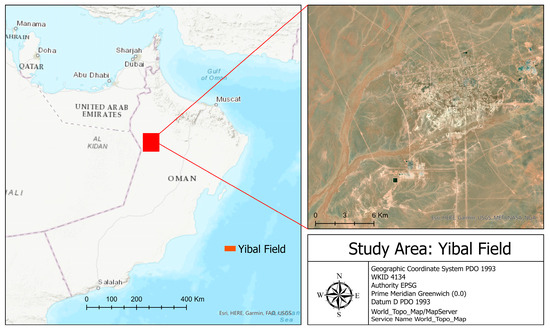
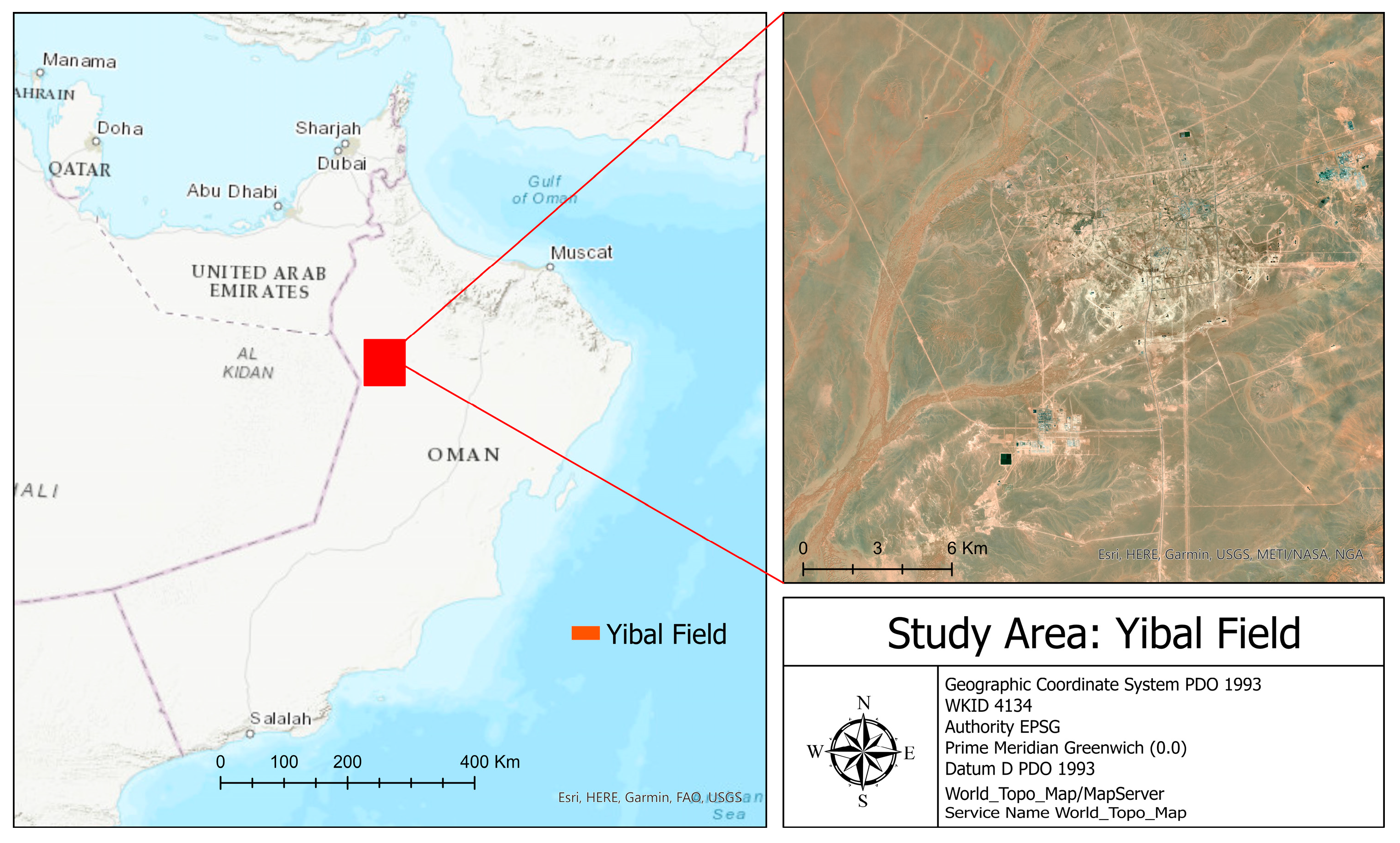
The Yibal field, located in the northern part of the Sultanate of Oman, serves as a representative case for advancing integrated multi-hazard risk mapping (Figure 1). As one of the oldest and most heavily exploited petroleum fields in the country, it has undergone decades of continuous hydrocarbon production, resulting in substantial geomechanical changes at the surface. Multi-temporal PS-InSAR data from 2010 to 2023 indicate cumulative subsidence exceeding 1 m, confirming long-term reservoir compaction. Tilt anomalies of 300–400 mm per kilometer further demonstrate lateral deformation gradients that threaten the stability of pipelines, flowlines, and road networks. The field is located in a geologically complex structure, intersected by mapped faults that localize stress redistribution and serve as potential pathways for fluid migration. Micro seismic monitoring has detected groups of clustered events consistent with ongoing stress release and fault reactivation, thereby increasing the geohazard profile. The interaction of subsidence, tilt, seismicity, faulting, and flooding produces compounded risks that directly threaten field infrastructure. Consequently, Yibal is both operationally significant and scientifically valuable as a natural laboratory for evaluating integrated methodologies that combine remote sensing, geophysics, and hydrology within a unified risk assessment framework.
Figure 1.
Location of the Yibal field in the northern part of the Sultanate of Oman.
2.2. Data Sources
This study combined satellite remote sensing, geophysical, and geological mapping datasets to develop a multi-criteria and integrated risk framework for the Yibal field. Inputs included PS-InSAR-derived surface deformation time series, tilt anomalies, micro-seismicity records, fault proximity, and a surface deformation-adjusted DEM for hydrological susceptibility (Table 1). All datasets were standardized for spatial resolution, temporal coverage, and reference projection within the PDO Coordinate System (EPSG: 3440, UTM Zone 40N, PSD93).
Table 1.
Primary datasets used in this study.
Surface deformation data from multi-temporal PS-InSAR analysis (2010–2023) were sourced from RADARSAT-2 (2010–2020), acquired in descending orbit, and TerraSAR-X (2020–2023), acquired in ascending orbit [31,32]. Each dataset was processed independently, and all line-of-sight (LOS) deformation measurements were projected onto vertical displacement, the deformation component adopted in this study. A lookup-table stitching approach was then applied to merge the two datasets into a continuous, temporally consistent vertical deformation time series spanning 2010–2023, minimizing potential discontinuities across orbital geometries. Given that the Yibal field is predominantly flat, differences between ascending and descending viewing geometries have minimal influence on the accuracy of the vertical projection. The resulting deformation products provide millimeter-level precision, capturing long-term subsidence trends associated with reservoir compaction and surface instability [33].
Tilt gradients, derived from the PS-InSAR surface deformation field, quantified lateral ground displacement [8]. A 5 × 5 moving-window algorithm in GIS calculated surface deformation rates in both north–south and east–west directions, expressed in millimeters per kilometer. This parameter identifies zones where ground tilt may destabilize infrastructure. Tilt anomalies above 300–400 mm/km were flagged as potential indicators of geomechanical instability.
Micro-seismic data were collected from geophone arrays installed at abandoned wells throughout the field [34]. The dataset, covering 2011 to 2023, includes precise event locations, focal depths, and magnitudes. These geophones offer high spatial resolution and sensitivity to low-magnitude events, making them well-suited for monitoring seismicity induced by reservoir activities [35]. Data processing included outlier filtering and aggregation using kernel density estimation to identify areas of event concentration and persistent seismic clusters linked to stress redistribution and fault reactivation [36].
Fault structures [37] were identified using a seismic survey [38] conducted across the field [39]. These faults were subsequently converted to vector format and analyzed in ArcGIS Pro 3.5 to produce a Euclidean distance raster that quantifies the proximity of each pixel to significant structural discontinuities [40]. This metric serves as an indicator of potential stress-concentration zones and the likelihood of fault reactivation in response to variations in subsurface pressure [41].
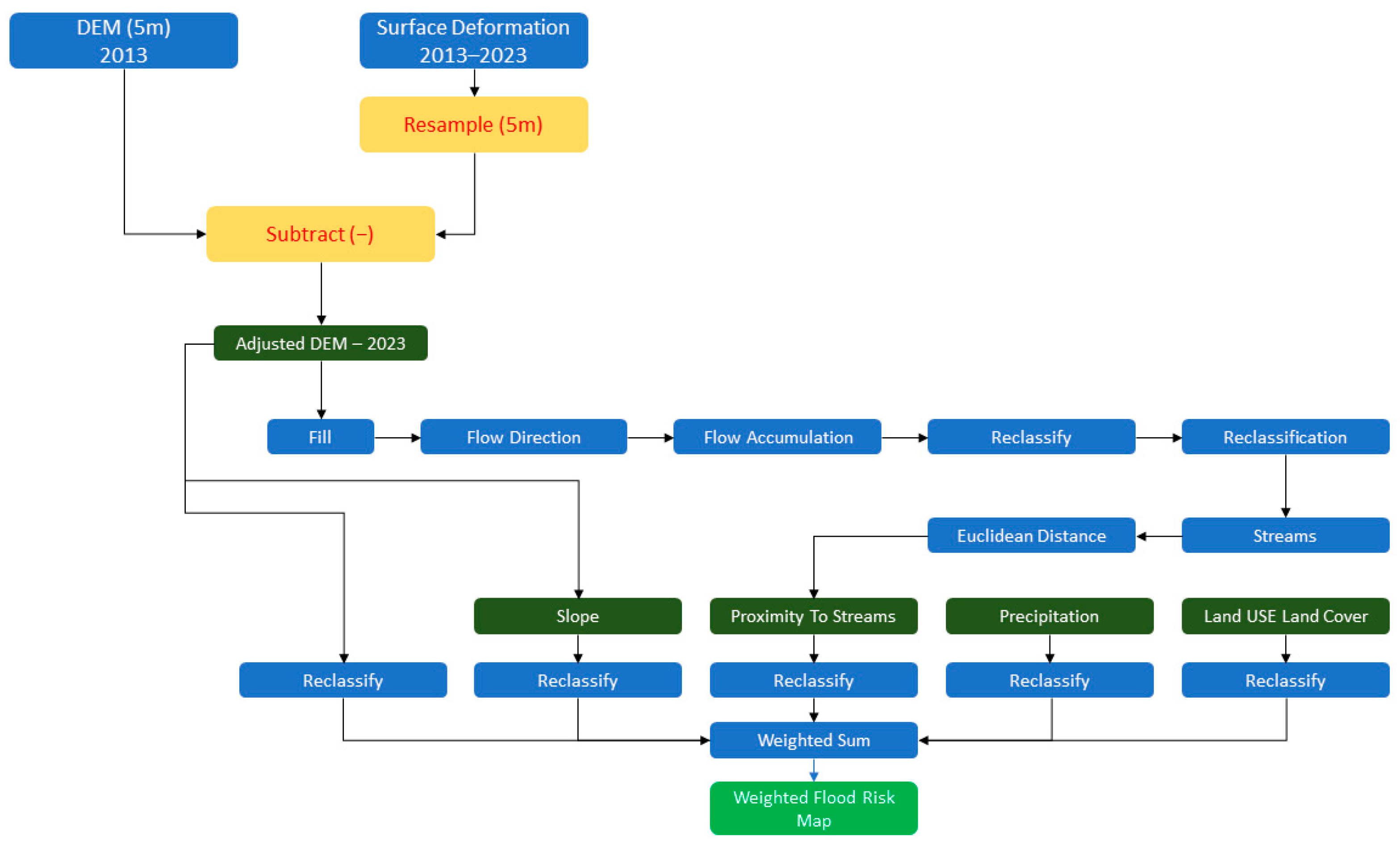
The hydrological risk layer for this study was developed using a weighted flood risk analysis that combines key hydrological and terrain parameters [42]. A high-resolution (5 m) DEM from a 2013 aerial photogrammetric survey was updated by subtracting cumulative surface deformation data from 2013 to 2023, resulting in a 2023 DEM that reflects subsidence-related terrain changes. This DEM was used to calculate slope, drainage, and flow accumulation. Five main hydrological factors—elevation, slope, precipitation, land use/land cover (LULC), and proximity to streams—were standardized and weighted based on their impact on flood risk. The resulting map served as the hydrological input layer in the integrated multi-criteria risk framework.
2.3. Study Framework and Workflow
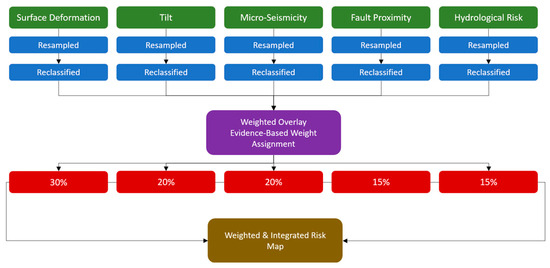
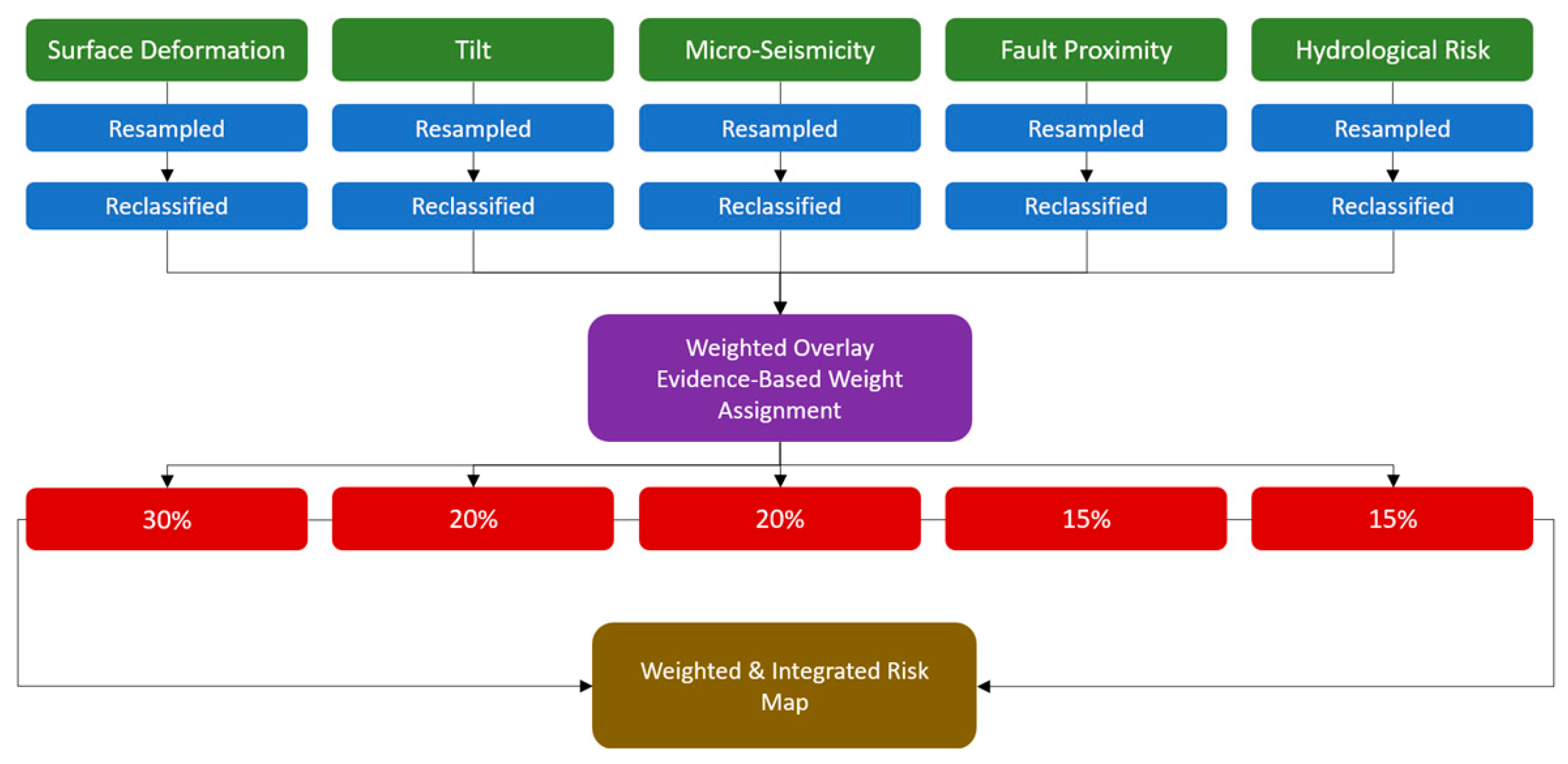
The methodological framework integrates remote-sensing surface indicators (deformation and tilt), geophysical observations (seismicity and faults), and hydrological factors (elevation, slope, precipitation, streams, and LULC) within a unified spatial risk modeling environment [43]. The workflow includes data harmonization, reclassification, and proposal-based weighting to produce the Integrated and Weighted Risk Map (Figure 2). All datasets were resampled to a consistent spatial resolution and aligned to the same coordinate reference system to ensure compatibility for raster operations and overlay analysis.
Figure 2.
Methodological framework illustrating the sequential workflow of integrated multi-criteria risk mapping, including data resampling, reclassification, weight assignment, and overlay integration.
After spatial harmonization, each input factor, cumulative surface deformation, surface tilt, micro-seismicity, fault proximity, and hydrological risk, was reclassified into five risk levels (very low to very high) using statistical thresholds, field relevance, and interpretation of geophysical behavior. The reclassified inputs were then integrated using a weighted overlay analysis, in which normalized inputs were combined based on their relative contributions to geomechanical and hydrological instability [44]. The assigned weights reflect expert judgment supported by long-term site observations in the Yibal field. Extensive evidence of surface compaction, structural cracking, wellhead sinking, and deformation around facility platforms justified assigning the highest weight to cumulative surface deformation (30%). Surface tilt and micro-seismicity were given equal intermediate weights (20% each) due to their strong association with strain accumulation and subsurface stress redistribution. Fault proximity and hydrological risk were assigned equal lower weights (15% each) because deep-seated faults exert a more localized influence at the surface, and hydrological impacts in this arid region primarily occur during infrequent extreme rainfall events. This weighting scheme produced a composite spatial index representing the combined geomechanical and hydrological susceptibility across the Yibal field.
2.4. Input Preparation and Factor Reclassification
The methodological framework integrates remote sensing deformation indicators, geophysical observations, and hydrological factors within a unified spatial risk modeling environment. The workflow includes data harmonization, reclassification, and evidence-based weighting to produce the Integrated and Weighted Risk Map. All datasets were resampled to a consistent spatial resolution and aligned to the same coordinate reference system to ensure compatibility for raster operations and overlay analysis.
2.4.1. Cumulative Surface Deformation
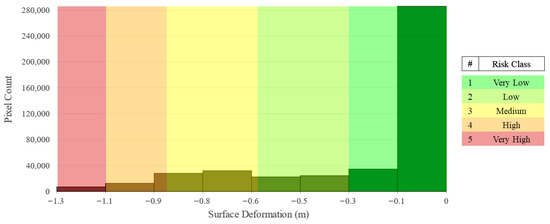
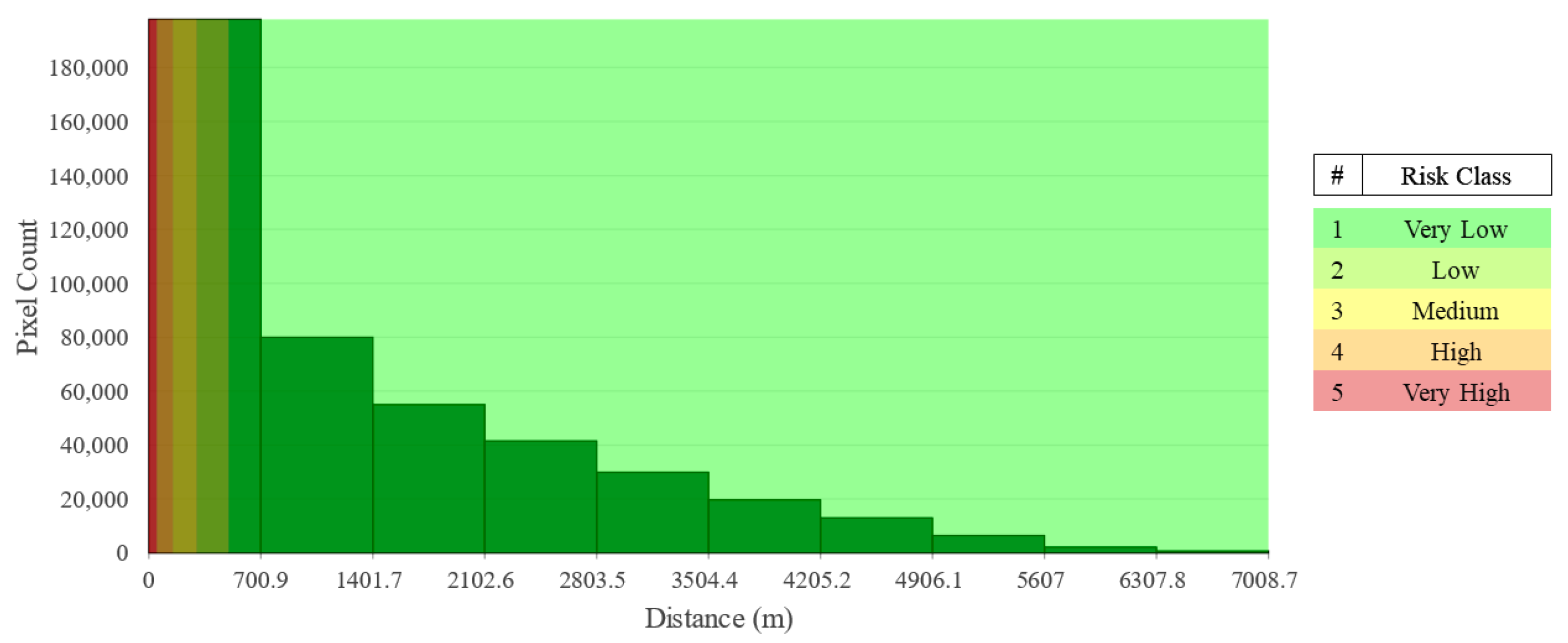
Cumulative surface deformation values from 2010 to 2023 were grouped into five risk categories to indicate increasing ground instability (Table 2). Areas with greater negative deformation were assigned higher risk classes, reflecting more severe subsidence and stress [45]. Smaller deformation magnitudes were classified as lower risk, indicating stable conditions. Classification thresholds were set using the statistical distribution of deformation values. The classification thresholds for cumulative surface deformation were derived using the natural breaks (Jenks) method to reflect the inherent statistical distribution of subsidence values across the field (Figure 3).
Table 2.
Classification of Cumulative Surface Deformation into Risk Zones.
Figure 3.
Classification of Cumulative Surface Deformation (2010–2023) into Risk Zones.
2.4.2. Cumulative Surface Tilt
Surface tilt was calculated using the spatial gradient [46,47] of the cumulative deformation field to characterize lateral variations in vertical displacement [48]. This metric quantifies the deformation rate per unit distance and indicates differential motion across the surface, which can result in horizontal strain or bending stress on infrastructure. The tilt was determined as the magnitude of the deformation gradient and is reported in millimeters per kilometer [8].
- D is the cumulative surface deformation (in meters);
- ∂D/∂x and ∂D/∂y represent the deformation gradients in the east–west and north–south directions (m/m);
- The factor 106 converts from meters per meter to millimeters per kilometer.
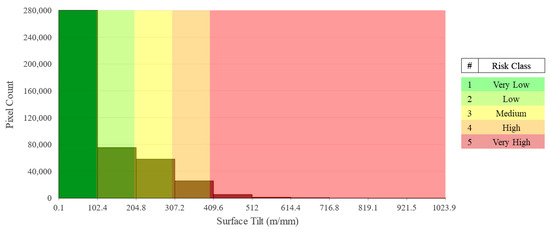
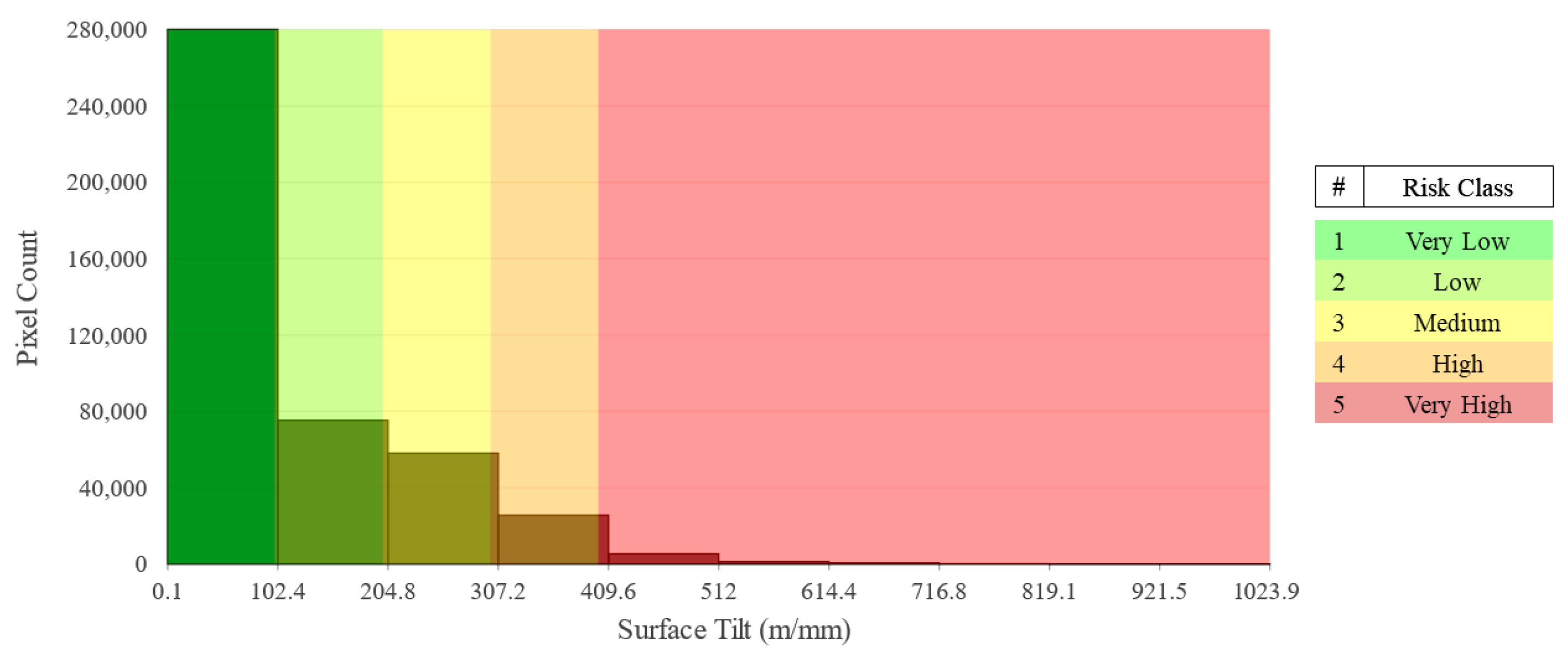
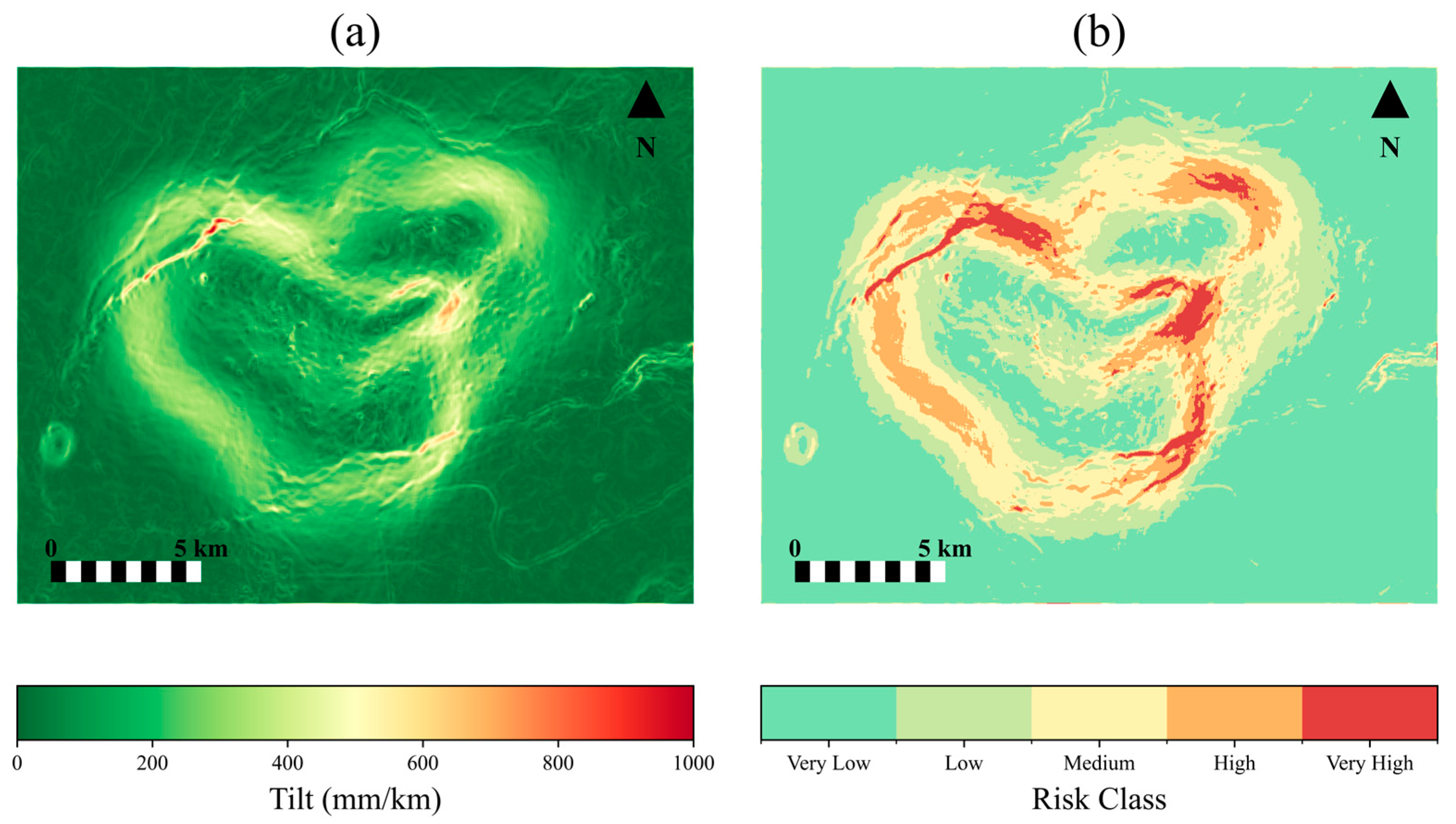
Cumulative surface tilt values were then divided into five ordinal risk categories, each reflecting increasing deformation gradients and instability potential. Tilt values below 100 mm/km were classified as very low risk, indicating stable ground conditions with minimal horizontal strain. Tilt values between 100 and 200 mm/km were categorized as low risk. Medium risk corresponded to tilt values between 200 and 300 mm/km, indicating moderate lateral deformation. High-risk areas included tilt values of 300–400 mm/km, while values exceeding 400 mm/km were designated as very high risk, indicating pronounced surface distortion and elevated structural stress (Table 3, Figure 4). These thresholds were defined based on field operational guidelines and facility-resilience assessments, which identify specific tilt ranges associated with structural sensitivity and wellhead stability.
Table 3.
Classification of Cumulative Surface Tilt into Risk Zones.
Figure 4.
Classification of Cumulative Surface Tilt (2010–2023) into Risk Zones.
2.4.3. Micro-Seismicity
Micro-seismic data from 2011 to 2023 were analyzed using Kernel Density Estimation (KDE) to generate a continuous spatial density surface representing the relative concentration of seismic activity across the Yibal [49]. The method estimates the event density by averaging each observation’s contribution over a specified bandwidth, producing a smoothed surface that highlights areas of stress concentration and fault reactivation [50]. The resulting density values were normalized and converted to percentages to express the relative distribution of micro-seismic activity [51].
- f(x) is the estimated magnitude-weighted seismic density at location x;
- n is the total number of seismic events;
- Mᵢ is the normalized magnitude of the ith event;
- h is the bandwidth (smoothing parameter); and
- K is the kernel function, typically Gaussian
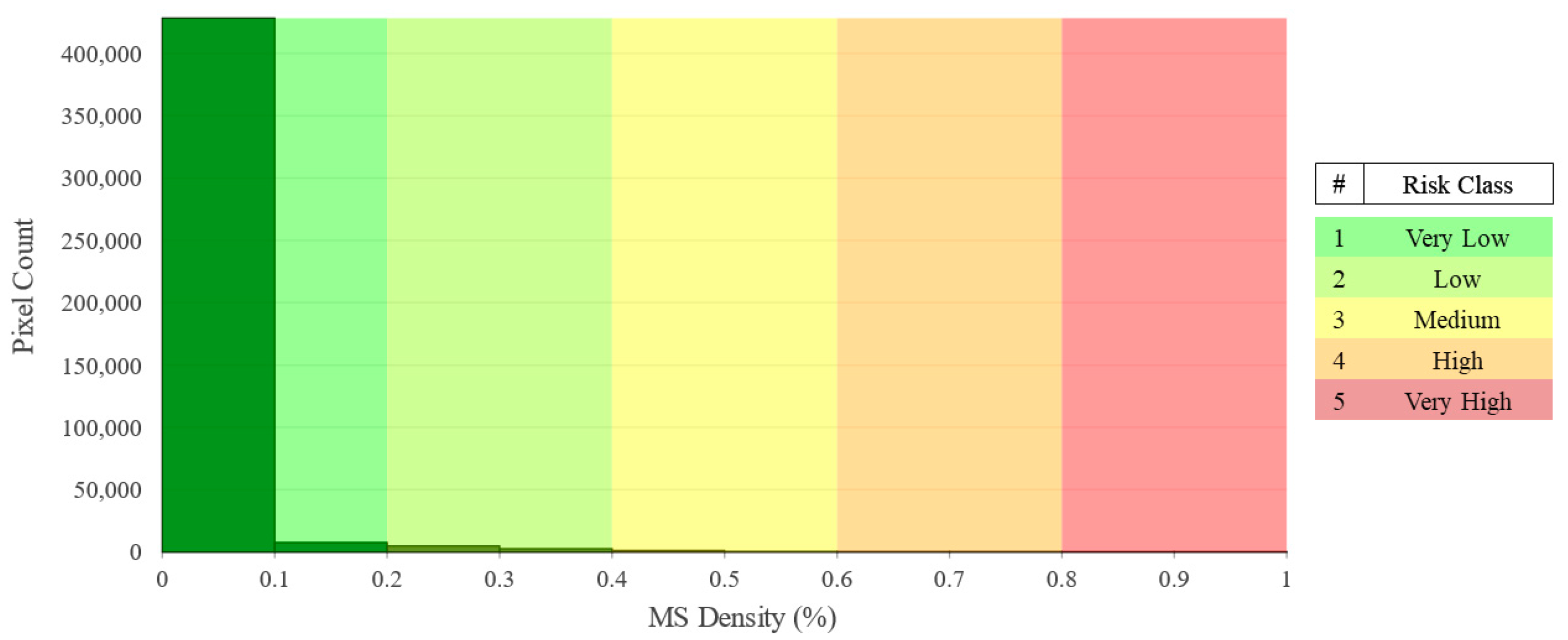
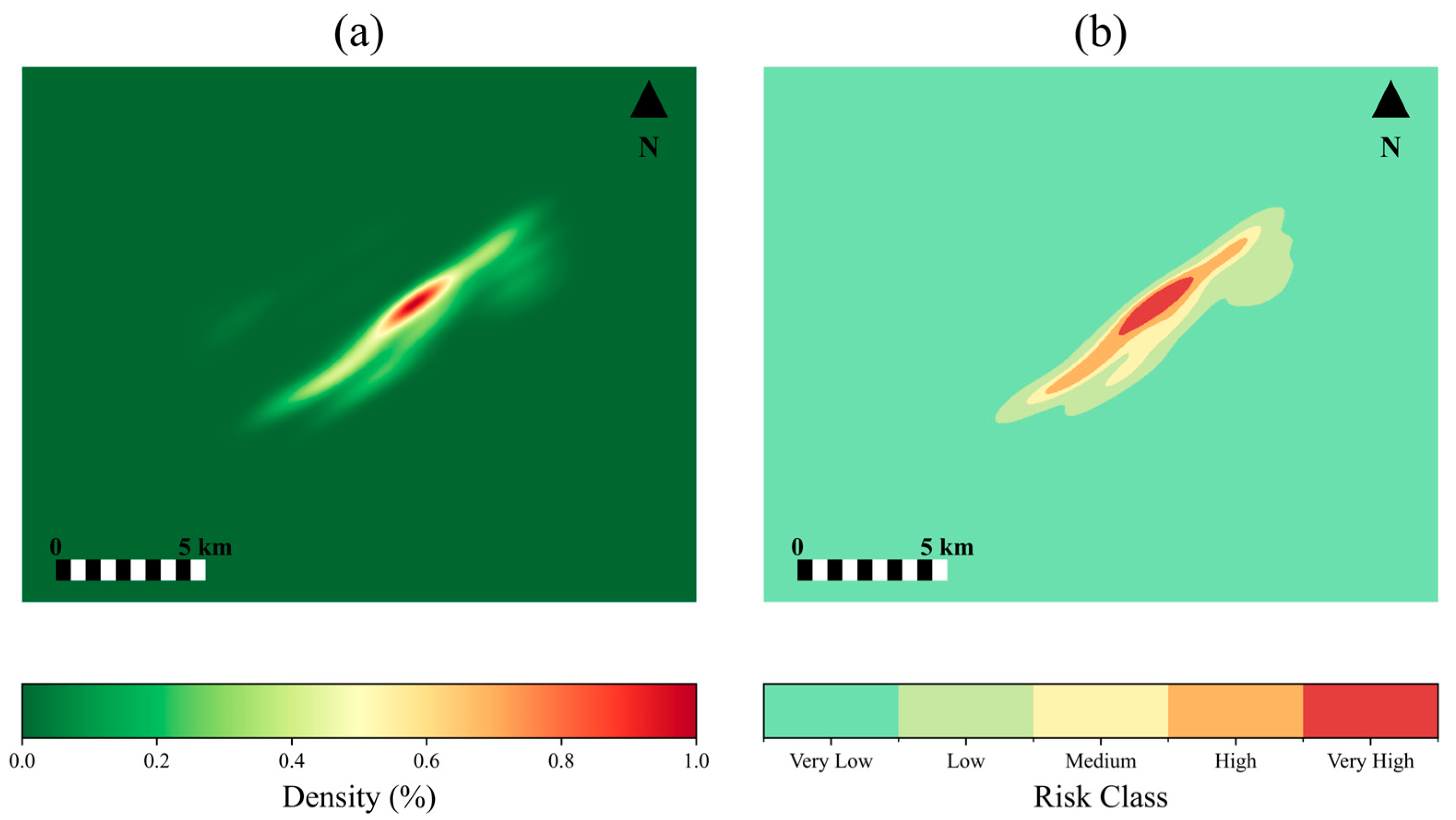
The kernel density estimation (KDE) [52] output was normalized to percentages and categorized into five risk levels, ranging from very low to very high, based on statistical distributions and physical interpretation. Regions with elevated KDE percentages indicate increased seismic clustering and greater potential for stress release, whereas lower values denote comparatively stable subsurface conditions. These risk classes were determined using the natural breaks (Jenks) method to capture natural clustering patterns and magnitude-weighted variations in seismic activity (Table 4, Figure 5).
Table 4.
Classification of Micro Seismic into Risk Zones.
Figure 5.
Classification of Cumulative Micro Seismic Events (2010–2023) into Risk Zones.
2.4.4. Fault Proximity
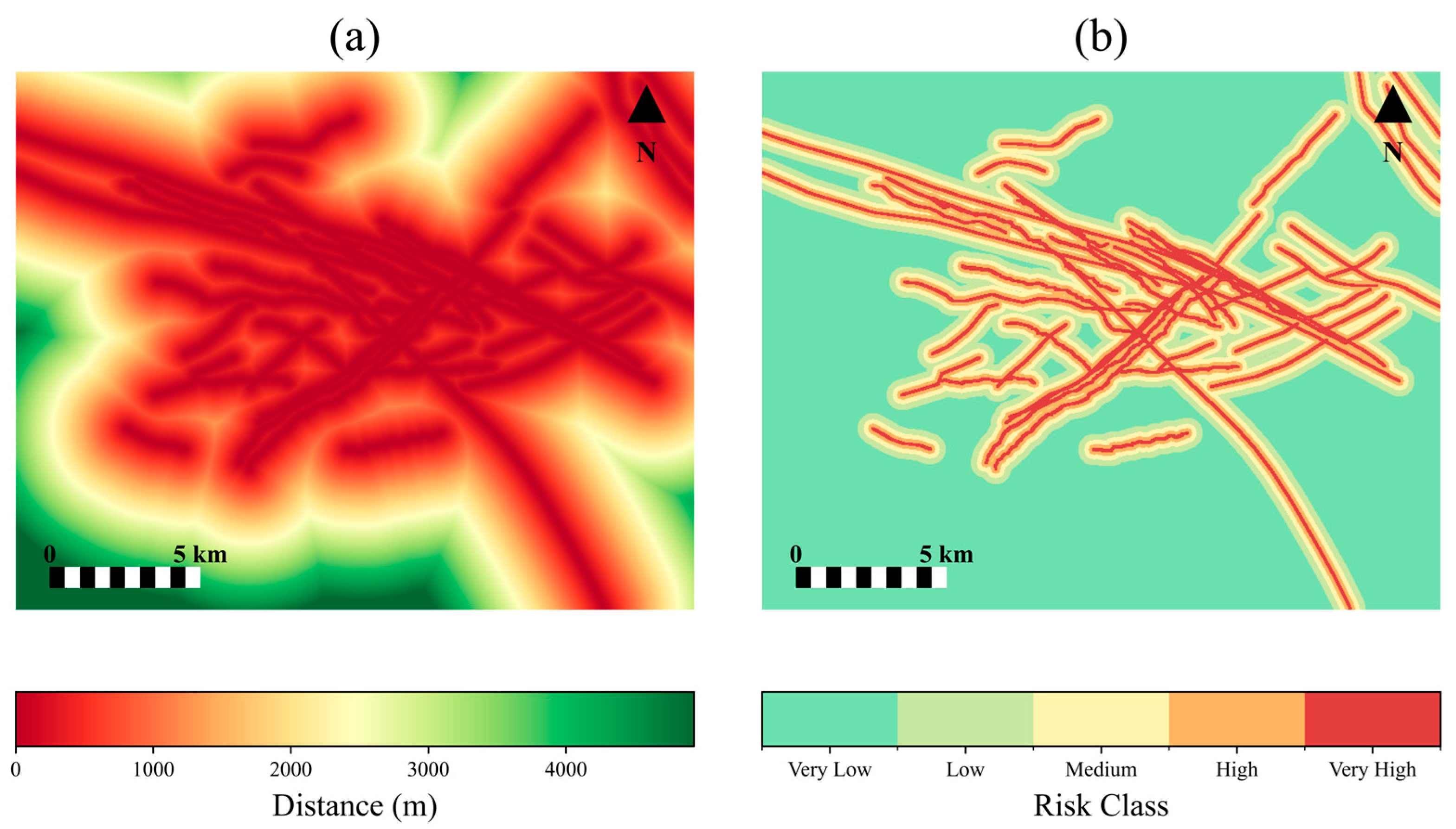
Fault proximity was determined using the structural fault map [53], which was interpreted from the seismic survey [39]. Fault polylines were converted to a raster grid with a spatial resolution matching that of the other datasets. The Euclidean distance from each pixel to the nearest mapped fault was calculated to quantify structural influence [54]. This approach produces a continuous distance surface, where smaller values represent closer proximity to faults and increased susceptibility to stress reactivation or ground displacement [55].
- x, y are the coordinates of the pixel;
- xf, yf are the coordinates of the nearest fault line.
The distance raster was reclassified into five risk categories to reflect the influence of structural features on surface instability. Areas within 50 m of a fault were classified as very high risk due to increased potential for fault reactivation and deformation. Zones 50–150 m and 150–300 m from faults were assigned high- and medium-risk, respectively. Distances of 300–500 m were considered low risk, while areas beyond 500 m were classified as very low risk, indicating greater structural stability. Thresholds for fault proximity were classified using the natural breaks (Jenks) method to represent the spatial clustering of distances relative to major mapped faults (Table 5, Figure 6).
Table 5.
Classification of Fault Proximity Distance into Risk Zones.
Figure 6.
Classification of Fault Proximity into Risk Zones.
2.4.5. Hydrology Risk Map
The hydrological risk map illustrates the combined impact of multiple surface processes that affect flood potential and water accumulation within the study area. The dataset was generated using a 2023 deformation-adjusted digital elevation model (DEM). It was created by subtracting cumulative subsidence from 2013 to 2023 from the original 2013 digital elevation model (DEM) to reflect current topographic conditions. Five hydrological parameters were considered: adjusted DEM, slope, proximity to streams, precipitation, land use, and land cover (LULC). Each parameter was normalized to a 1–5 scale, corresponding to very low through very high values, according to established classification thresholds (Table 6).
Table 6.
Classification of Weighted Hydrology into Risk Zones.
A weighted linear combination was then applied to integrate all hydrological factors according to their relative influence on flood generation in arid terrain (Figure 7). Weights were assigned as follows: precipitation (35%), proximity to streams (30%), slope (15%), DEM/elevation (10%), and LULC (10%) to the composite Hydrological Risk Index (HRI) [56].
- Wi represents the weight of the factor i;
- Xi represents the standardized reclassified score;
- n = Total number of hydrological factors considered (in this case, 5).
Figure 7.
Workflow of weighted overlay analysis showing the integration of reclassified factors (elevation, slope, precipitation, LULC, and proximity to streams) to the final hydrological risk index.
2.5. Weighted Overlay Analysis
The reclassified factors (cumulative surface deformation, surface tilt, micro seismicity, fault proximity, and integrated hydrological risk) were integrated using a weighted overlay analysis [24] to produce the final Integrated Risk Index (IRI). This method quantifies the cumulative spatial influence of geomechanical and hydrological processes by assigning relative importance (weights) to each contributing factor based on their impact on ground instability and infrastructure vulnerability.
Integration was performed using a linear combination model [57], in which each spatial factor contributes to the overall risk score in proportion to its assigned weight. The standardized value of each input raster cell is multiplied by its respective weight, and the results are summed across all factors to generate a composite Integrated Risk Index (IRI) for each pixel. This model captures the cumulative spatial influence of surface deformation, seismic activity, structural control, and hydrological susceptibility, highlighting areas where multiple high-risk factors coincide. The process was implemented in GIS using the Weighted Overlay function in ArcGIS Spatial Analyst [58], which maintains consistent raster alignment, normalization, and pixel-by-pixel computation of the weighted sum.
- Integrated Risk Index (dimensionless);
- Weight assigned to factor i;
- Standardized or reclassified value of the factor ;
- n Total number of factors (5 in this study).
The assigned weights reflect the relative importance of each factor in controlling surface and subsurface instability in the Yibal field and were derived through expert judgment supported by long-term field observations. Cumulative surface deformation received the highest weight (30%) because historical evidence—including subsidence-induced surface compaction, building cracks, wellhead sinking, and deformation of facility platforms—demonstrates its dominant role in infrastructure instability. Surface tilt and microseismicity were each assigned intermediate weights (20%) due to their strong association with lateral strain accumulation and subsurface stress redistribution associated with reservoir compaction and fault activity. Fault proximity (15%) and hydrological risk (15%) were assigned equal lower weights, as the primary faults in Yibal are deep-seated and exert a localized surface influence. In contrast, hydrological impacts occur primarily during infrequent extreme rainfall events in this arid region (Table 7). All weights were normalized to 1.0 to ensure equal proportions among geodetic, geophysical, and hydrological indicators. This weighting structure provides an evidence-driven basis for integrating diverse datasets into a unified assessment of field-wide vulnerability.
Table 7.
Weights assigned to factors in the integrated risk analysis.
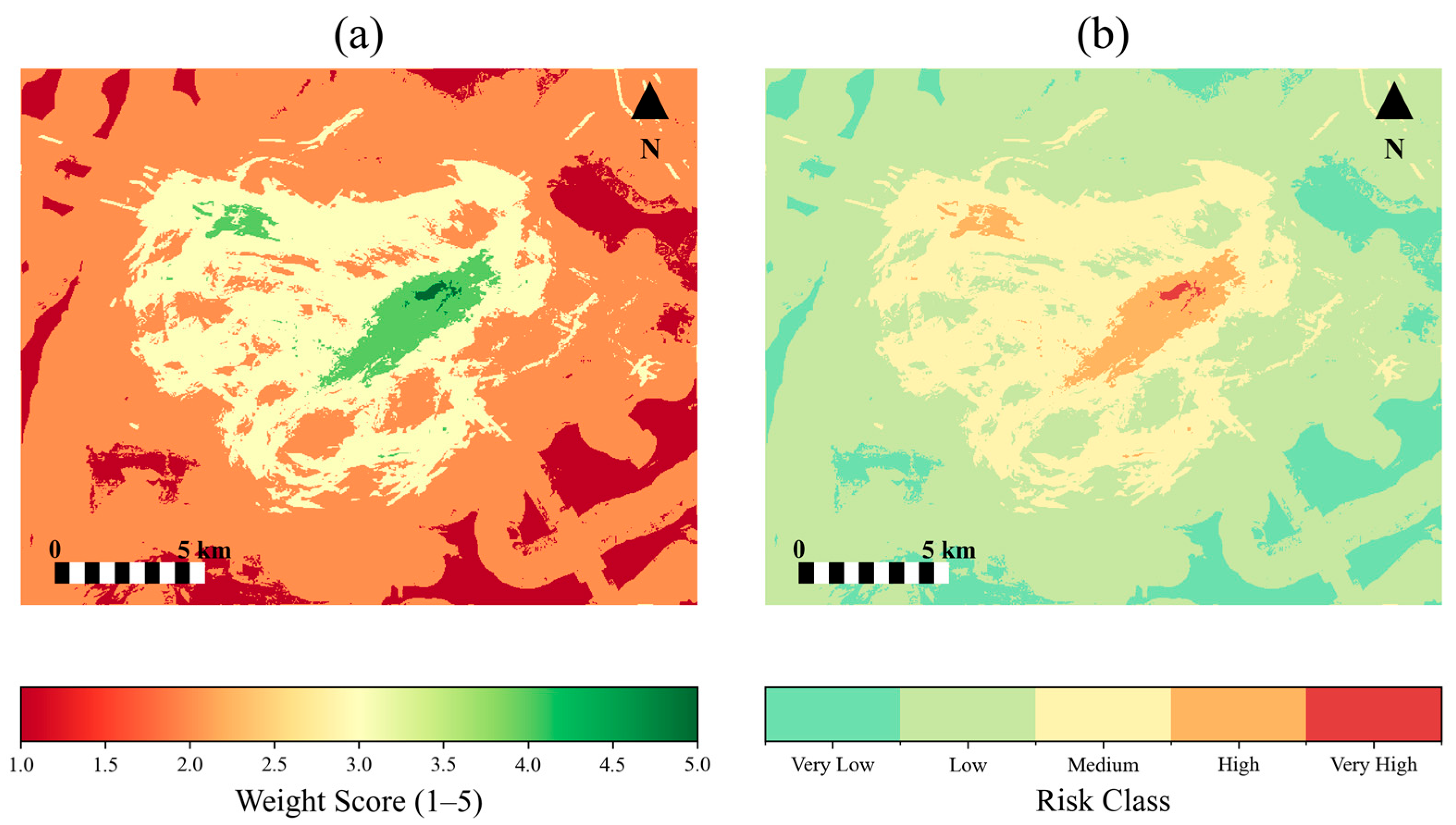
The final Integrated Risk Index (IRI) was derived as a weighted linear combination of all standardized factors, yielding a continuous score representing the cumulative hazard potential across the field. The resulting IRI values were reclassified into five ordinal risk classes—very low, low, medium, high, and very high—based on equal interval segmentation of the weighted score range. This classification ensures consistent interpretation of composite risk intensity: lower values (1.0–1.8) indicate stable zones with minimal deformation or stress, while higher values (4.2–5.0) delineate areas of critical instability and elevated hazard potential (Table 8).
Table 8.
Weights score range assigned to factors in the integrated risk analysis.
2.6. Data Availability and Reproducibility
The cumulative surface deformation datasets derived from RADARSAT-2 and TerraSAR-X (2010–2023), along with the 2013 aerial photogrammetric survey-derived DEM, micro seismicity, and faults, were provided by Petroleum Development Oman (PDO) under confidentiality agreements and are therefore not publicly available. Derived products, including reclassified thematic layers and the integrated weighted risk maps, can be made available upon reasonable request to the corresponding author, subject to data-sharing approval from PDO and the National Survey and Geographic Information Authority (NSGIA).
Publicly accessible datasets used in this study include Sentinel-2 land use and land cover imagery (European Space Agency) and WorldClim annual precipitation data, which supported the integration of environmental and hydrological components.
All spatial analysis and model implementation were performed using ArcGIS Pro 3.5 (Esri) and Python 3.11.11, with open-source libraries such as NumPy, Rasterio, and Matplotlib. Generative AI tools were used solely for Python code correction, language editing, and grammar corrections, while all analytical design, data interpretation, and validation were conducted independently by the authors.
3. Results
The analysis demonstrates both the individual and combined effects of surface deformation, geophysical, and hydrological factors on overall risk in the Yibal field. Each dataset was initially assessed in its original format to determine spatial variability, and then reclassified into standardized risk categories to facilitate consistent cross-factor comparisons. The resulting factor-specific maps display distinct spatial distributions of ground instability and hazard concentration. The final weighted overlay synthesizes these layers into a single Integrated Risk Index (IRI) that identifies areas of sensitive vulnerability across the field.
3.1. Factor-Specific Classification and Spatial Patterns
The spatial analysis of individual factors demonstrates their unique and interconnected roles in geohazard susceptibility within the Yibal field. Each dataset was analyzed in its continuous form to reflect the physical variability of surface deformation, surface tilt, seismicity, structural proximity, and hydrological influence. These variables were then reclassified into five standardized risk categories: very low, low, medium, high, and very high, to maintain consistency and comparability across datasets.
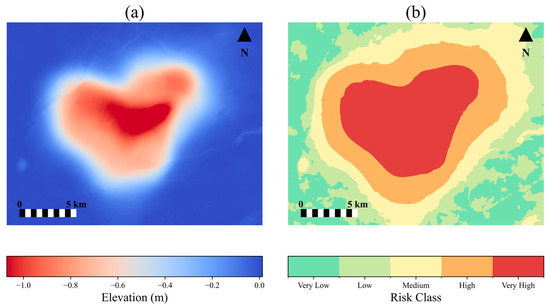
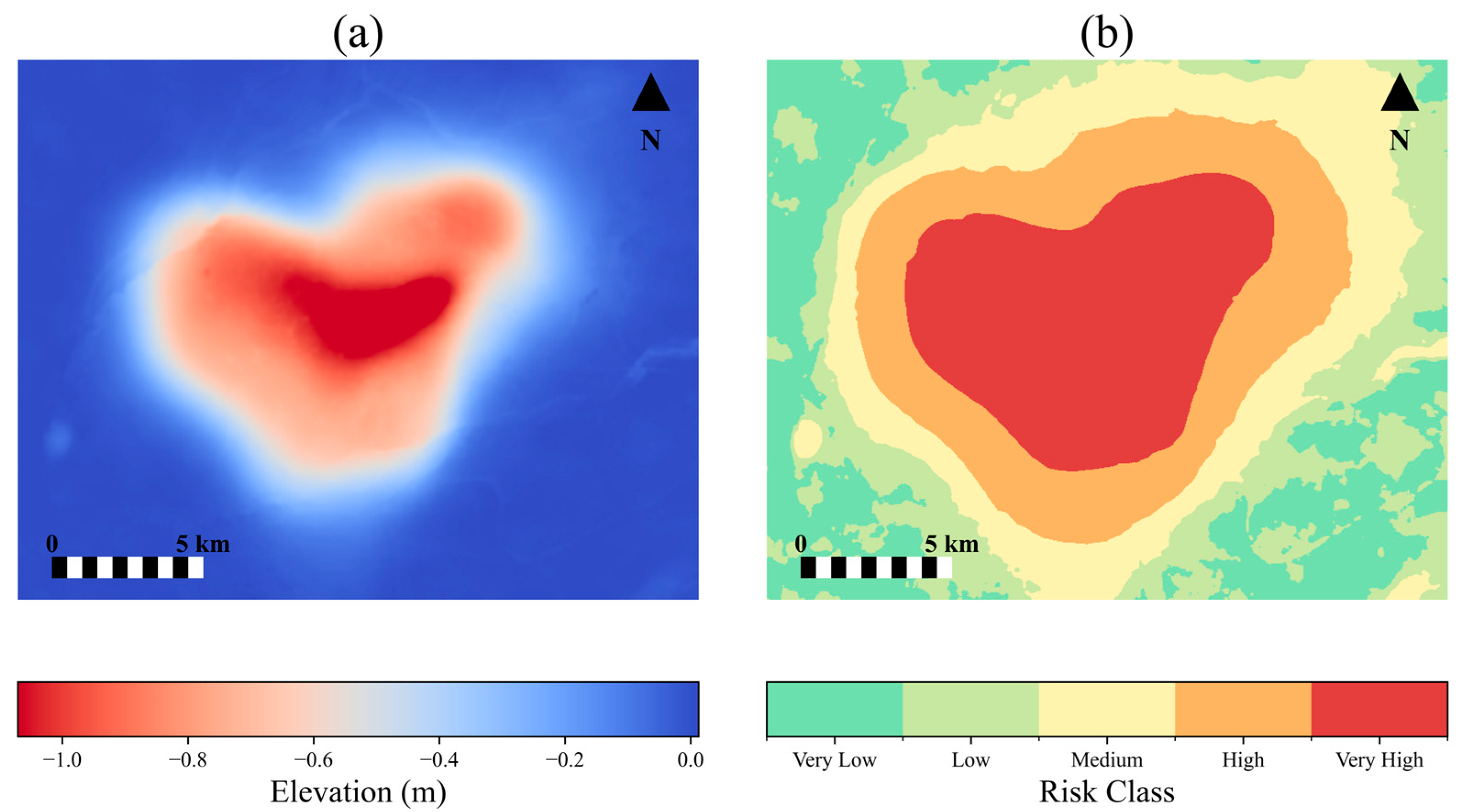
The cumulative surface deformation map for the period 2010–2023 identifies concentrated subsidence zones exceeding 1 m, primarily in the central and southeastern part of the field. These zones align with areas experiencing active reservoir compaction and stress accumulation. After reclassification, deformation magnitudes greater than −1.1 m were designated as very high risk, indicating critical ground instability. Regions with minimal displacement (less than −0.3 m) were classified as very low risk, indicating stable ground conditions (Figure 8).
Figure 8.
(a) shows the Cumulative Surface Deformation Map (2010–2023), and (b) shows the Reclassified Deformation Risk Map of the same period.
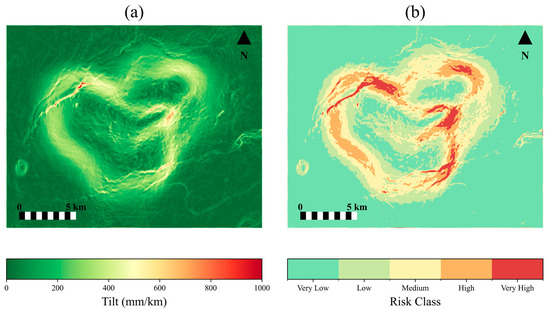
The cumulative surface tilt field reveals lateral surface deformation gradients of over 400 mm/km at the edge of the main subsidence bowl, indicating localized shear and bending stresses. After reclassification, tilt values above 400 mm/km were labeled very high risk, while those below 100 mm/km were considered very low risk (Figure 9).
Figure 9.
(a) shows the Cumulative Surface Tilt Map (2010–2023), and (b) shows the Reclassified Tilt Risk Map of the same period.
Micro-seismic activity from 2011 to 2023, analyzed using magnitude-weighted Kernel Density Estimation [59], identifies seismic clusters that align with high-deformation zones. KDE density values were converted to percentages and reclassified: values above 80% indicate very high seismic concentration, while those below 20% indicate structurally quiet areas (Figure 10).
Figure 10.
(a) shows the Micro-Seismic Density Map (2011–2023), and (b) shows the Reclassified Micro Seismic Risk Map of the same period.
The fault proximity map quantifies the distance to major structural discontinuities derived from seismic surveys [60]. Areas within 1 km of active faults are in the very high-risk class, given their elevated potential for reactivation and surface breaks. Conversely, regions located more than 4 km from the coast were assigned to the very low class, representing structurally stable zones with minimal tectonic influence (Figure 11).
Figure 11.
(a) shows the Fault Proximity Map and (b) shows the Reclassified Fault Proximity Risk Map.
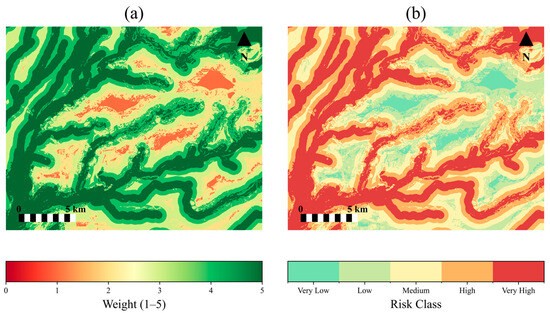
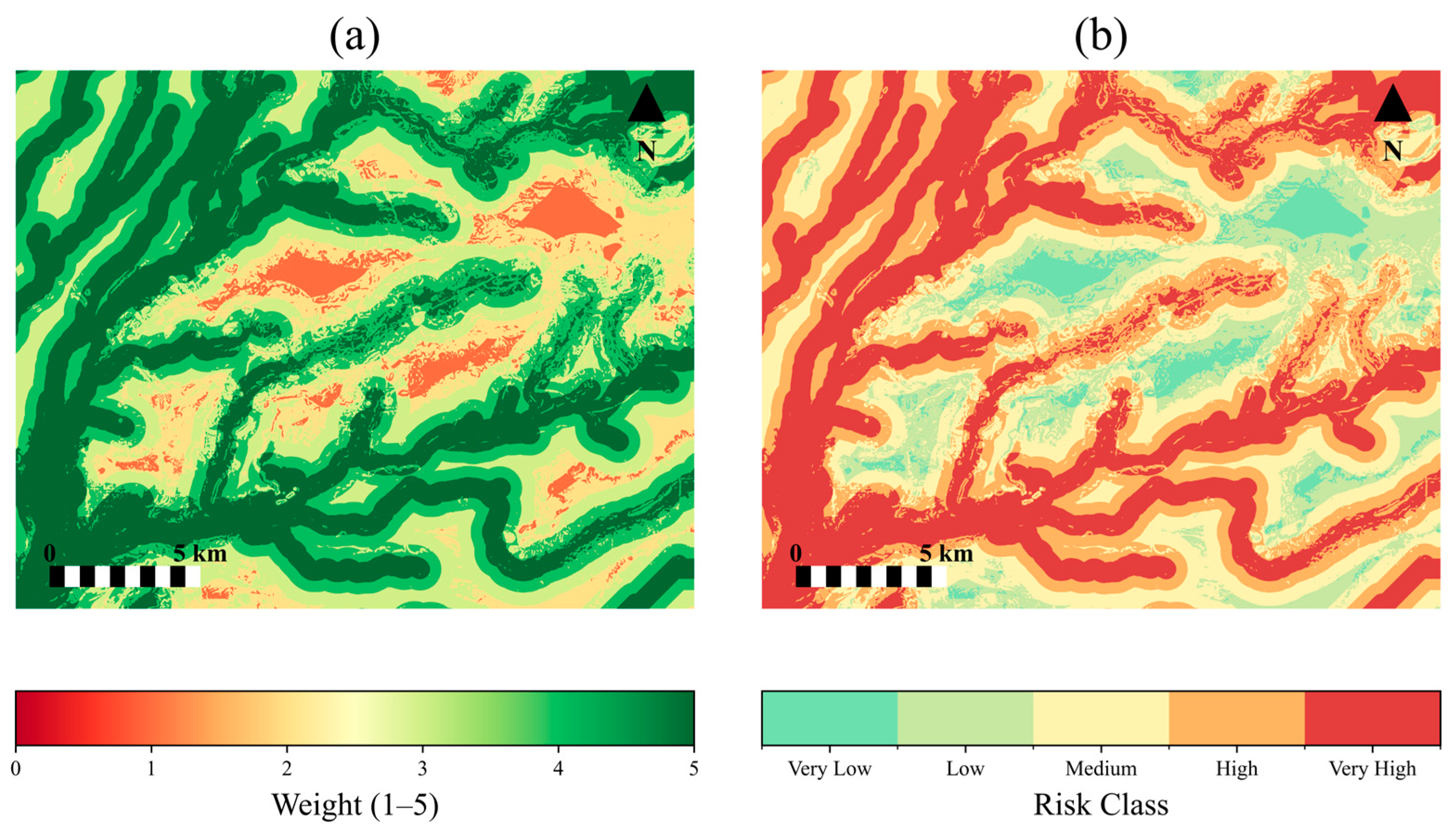
The hydrological risk layer combines topography, slope, and proximity to drainage to indicate areas prone to water accumulation and runoff. Low-lying areas and wadi corridors are most susceptible to flood-induced erosion [61] and are classified as high- or very-high risk. Elevated and well-drained areas are reclassified as low- or very-low risk, indicating minimal hydrological hazard (Figure 12).
Figure 12.
(a) shows the Integrated Hydrological Risk Map, and (b) shows the Reclassified Integrated Hydrological Risk Map.
3.2. Integrated and Weighted Final Risk Map
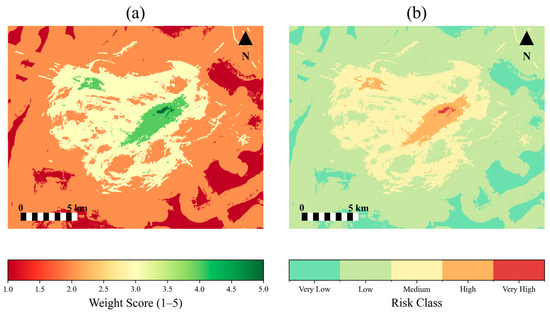
The integrated weighted analysis combined reclassified factors, including surface deformation, surface tilt, micro seismicity, fault proximity, and hydrological risk, into a single spatial model of petroleum field vulnerability. Each factor contributed according to its evidence-based weight (30%, 20%, 20%, 15%, and 15%, respectively), reflecting its relative influence on geomechanical and hydrological instability. The Weighted and Integrated Risk Map identifies hazard zones in the Yibal field where mechanical subsidence, structural deformation, and hydrological processes converge.
Low- and medium-risk zones cover over 84.9% of the area, primarily corresponding to stable geological regions characterized by moderate surface deformation and limited seismic activity. High- and very high-risk zones account for approximately 2.8% of the field and are concentrated in the central and northwestern areas, where deformation gradients, fault intersections, and seismic clusters are present (Table 9, Figure 13).
Table 9.
Areal distribution of Integrated Risk Classes in the Yibal Field.
Figure 13.
Weighted and Integrated Risk Map of the Yibal Field (2010–2023). The left-side map (a) displays the continuous weighted composite score (1.0–5.0), and the right-side map (b) presents the reclassified final risk classes, ranging from very low to very high.
4. Discussion
The integrated multi-criteria risk framework developed in this study provides a coherent understanding of how geomechanical and hydrological processes jointly shape surface and subsurface instability across the Yibal field [62]. The combination of cumulative surface deformation, surface tilt, micro seismic density, fault proximity, and hydrological susceptibility reveals that compound hazards in mature oil and gas fields emerge from the interaction of structural discontinuities, reservoir compaction, and drainage modification, rather than from any single mechanism. The weighted overlay approach allowed these diverse variables to be expressed on a standard scale, translating multi-source observations into a unified spatial index of vulnerability [63].
High- and very-high-risk zones cluster within the central and north-western depressions, coinciding with areas where PS InSAR-derived subsidence exceeds 1 m and tilt gradients surpass 400 mm/km. Their spatial alignment with mapped faults and micro-seismic clusters confirms that surface deformation is structurally controlled and concentrated along stress-transfer corridors [64]. These corridors likely serve as preferential pathways for strain propagation, mirroring patterns observed in other carbonate-reservoir fields, where pressure depletion and fault reactivation govern long-term ground motion. Moderate-risk ties form transitional zones surrounding the main subsidence bowl, reflecting partial stress redistribution and moderate hydrological influence. In contrast, low-risk areas were observed in the southern and marginal sectors, characterized by minimal surface deformation, sparse seismic activity, and greater structural stability [65].
The results are consistent with earlier studies showing that hydrocarbon extraction and reservoir pressure decline generate measurable surface deformation, as captured by multi-temporal PS-InSAR analysis [66]. Similar relationships between subsidence, fault reactivation, and induced seismicity have been documented in other production fields, including those in California and the North Sea, which supports the interpretation that mechanical coupling between reservoir compaction and fault systems controls much of the observed surface response [67]. In Yibal, hydrological effects further amplify these risks: deformation-induced depressions modify natural runoff and increase water accumulation, reinforcing the linkage between subsidence and secondary flood susceptibility observed in other arid environments [68].
The integrated weighting scheme emphasizes the importance of combining remote-sensing and geophysical datasets to evaluate both surface and subsurface risk components. By assigning higher weights to surface deformation and tilt, the model emphasizes geomechanical processes that drive long-term instability, while still accounting for seismic, structural, and hydrological factors that amplify risk [69]. The resulting map provides a clear depiction of petroleum-field vulnerability to support operational planning. Infrastructure within high-risk areas should be prioritized for real-time ground-motion monitoring, regular well-integrity checks, and targeted drainage maintenance to reduce compound hazards.
This approach can be further refined by extending the temporal coverage to include recent SAR data and by linking surface deformation to production and injection histories to quantify mechanical and hydraulic feedback better. Field-based geotechnical surveys and borehole deformation measurements would help validate model performance. Incorporating machine learning or Bayesian optimization for weight calibration could also improve predictive accuracy and support the broader application of this framework to other Omani and regional petroleum basins with similar geomechanical challenges [70].
In addition to these improvements, future work would benefit from incorporating formal multi-scenario and multi-criteria evaluation techniques such as the Analytical Hierarchy Process (AHP) [71] or structured sensitivity analysis [72]. Although the present study relied on expert judgment supported by long-term field evidence, AHP provides a systematic framework for exploring alternative weighting configurations and evaluating how variations in subjective preferences influence the final risk map. Sensitivity analysis would also help quantify the stability of the Integrated Risk Index across different weighting schemes and identify which factors exert the most significant influence on overall vulnerability. Integrating these approaches in future studies would enhance methodological robustness, provide deeper insight into uncertainty, and further enrich the applicability of the proposed framework across other petroleum fields.
5. Conclusions
This research introduced an integrated multi-criteria risk-mapping framework that uses remote sensing, geophysical, and hydrological datasets to assess surface and subsurface vulnerability in the Yibal field, Sultanate of Oman. The framework incorporates cumulative surface deformation, tilt gradients, micro-seismic density, fault proximity, and hydrological susceptibility within a weighted overlay model to delineate spatial patterns of compounded geohazard risk. The findings indicate that surface deformation and tilt are the key drivers of field-scale instability, whereas seismicity, structural proximity, and hydrological factors serve as strengthening influences. The resulting Integrated Risk Map delineates critical corridors of high and very high vulnerability that align with subsidence bowls, fault intersections, and seismic clusters. These results confirm that deformation-driven alterations in terrain morphology and stress distribution significantly impact the stability of petroleum infrastructure [73]. The proposed framework offers a transferable tool for decision-makers and field operators to prioritize monitoring, maintenance, and mitigation in geomechanically active areas. Furthermore, this approach is adaptable to other oil and gas fields experiencing long-term subsidence and deformation [74].
Author Contributions
Conceptualization, M.A.S.; methodology, M.A.S.; software, ArcGIS and Python; validation, M.A.S.; formal analysis, M.A.S.; investigation, M.A.S.; resources, Petroleum Development Oman (PDO); data curation, M.A.S.; writing—original draft preparation, M.A.S.; writing—review and editing, M.A.S., R.A., M.E.-D. and A.T.; visualization, M.A.S.; supervision, R.A., M.E.-D., A.A.A. and M.A.K.E.-G.; project administration, A.T. All authors have read and agreed to the published version of the manuscript.
Funding
This research received no external funding. Sultan Qaboos University funded the APC.
Data Availability Statement
The cumulative surface deformation datasets (RADARSAT-2 and TerraSAR-X, 2013–2023), the aerial photogrammetry DEM (2013), and the micro-seismic and fault map were provided by Petroleum Development Oman (PDO) under confidentiality agreements and cannot be shared publicly. Sentinel-2 LULC data are available from the European Space Agency (https://livingatlas.arcgis.com/landcoverexplorer/ (accessed on 8 December 2025)). Precipitation data are available from WorldClim (https://www.worldclim.org).
Acknowledgments
The authors acknowledge Petroleum Development Oman (PDO) for providing access to Remote Sensing and Geophysical datasets, which were obtained under a confidentiality agreement. They also acknowledge Sultan Qaboos University, College of Science, Earth Science Department, for its research support. The authors would also like to thank the Ministry of Energy and Minerals (MEM) for their approval to publish this article. During the preparation of this manuscript, the author used Generative AI for language editing, grammar correction, and checks. The author reviewed and edited the output and takes full responsibility for the content of this publication.
Conflicts of Interest
No conflicts of interest are declared. The funding sources did not influence the study design, data collection, analysis, interpretation, manuscript preparation, or the decision to publish the findings.
Abbreviations
The following abbreviations are used in this manuscript:
| GIS | Geographic Information System |
| PDO | Petroleum Development Oman |
| NSGIA | National Survey and Geographic Information Authority |
| DEM | Digital Elevation Model |
| PS-InSAR | Persistent Scatter—Interferometric Synthetic Aperture Radar |
| LULC | Land Use Land Cover |
| SQU | Sultan Qaboos University |
| IRI | Integrated Risk Index |
| HRI | Hydrology Risk Index |
| KDE | Kernel Density Estimation |
| MCDA | Multi-Criteria Decision Analysis |
| MEM | Ministry of Energy and Minerals |
| AHP | Analytical Hierarchy Process |
| APC | Article Processing Charge |
| LIDAR | Light Detection and Ranging |
| LOS | Line of Sight |
| UTM | Universal Transverse Mercator |
References
- Geertsma, J. Land subsidence above compacting oil and gas reservoirs. J. Pet. Technol. 1973, 25, 734–744. [Google Scholar] [CrossRef] [Scilit]
- Donnelly, L. Reactivation of geological faults during mining subsidence from 1859 to 2000 and beyond. Min. Technol. 2000, 109, 179–190. [Google Scholar] [CrossRef] [Scilit]
- Cardenas, I.C.; Aven, T.; Flage, R. Addressing challenges in uncertainty quantification: The case of geohazard assessments. Geosci. Model Dev. 2023, 16, 1601–1615. [Google Scholar] [CrossRef] [Scilit]
- Jehn, F.U.; Bestian, K.; Breuer, L.; Kraft, P.; Houska, T. Using hydrological and climatic catchment clusters to explore drivers of catchment behavior. Hydrol. Earth Syst. Sci. 2020, 24, 1081–1100. [Google Scholar] [CrossRef] [Scilit]
- Kumari, S.; Agarwal, S.; Agrawal, N.K.; Agarwal, A.; Garg, M.C. A comprehensive review of remote sensing technologies for improved geological disaster management. Geol. J. 2025, 60, 223–235. [Google Scholar] [CrossRef] [Scilit]
- Kampes, B.M. Radar Interferometry: Persistent Scatterer Technique; Springer: Berlin/Heidelberg, Germany, 2006. [Google Scholar]
- He, Y.; Xu, G.; Kaufmann, H.; Wang, J.; Ma, H.; Liu, T. Integration of InSAR and LiDAR technologies for a detailed urban subsidence and hazard assessment in Shenzhen, China. Remote Sens. 2021, 13, 2366. [Google Scholar] [CrossRef] [Scilit]
- Monfared, K.A.; Rothenburg, L. Ground surface displacements and tilt monitoring for reconstruction of reservoir deformations. Int. J. Rock Mech. Min. Sci. 2011, 48, 1113–1122. [Google Scholar] [CrossRef] [Scilit]
- Zhou, Y.; Li, C.; Zhang, H.; Gao, G.; Sun, D.; Wu, B.; Li, C.; Li, N.; Yang, Y.; Li, L. Experimental Study on Microseismic Monitoring of Depleted Reservoir-Type Underground Gas Storage Facility in the Jidong Oilfield, North China. Energies 2025, 18, 3762. [Google Scholar] [CrossRef] [Scilit]
- Ouillon, G.; Sornette, D. Segmentation of fault networks determined from spatial clustering of earthquakes. J. Geophys. Res Solid Earth 2011, 116, B02306. [Google Scholar] [CrossRef] [Scilit]
- De Barros, L.; Wynants-Morel, N.; Cappa, F.; Danré, P. Migration of fluid-induced seismicity reveals the seismogenic state of faults. J. Geophys. Res. Solid Earth 2021, 126, e2021JB022767. [Google Scholar] [CrossRef] [Scilit]
- Koutsoyiannis, D.; Kozonis, D.; Manetas, A. A mathematical framework for studying rainfall intensity-duration-frequency relationships. J. Hydrol. 1998, 206, 118–135. [Google Scholar] [CrossRef] [Scilit]
- Andaryani, S.; Nourani, V.; Trolle, D.; Dehghani, M.; Asl, A.M. Assessment of land use and climate change effects on land subsidence using a hydrological model and radar technique. J. Hydrol. 2019, 578, 124070. [Google Scholar] [CrossRef] [Scilit]
- Huang, I.B.; Keisler, J.; Linkov, I. Multi-criteria decision analysis in environmental sciences: Ten years of applications and trends. Sci. Total Environ. 2011, 409, 3578–3594. [Google Scholar] [CrossRef] [Scilit] [PubMed]
- Vaidya, O.S.; Kumar, S. Analytic hierarchy process: An overview of applications. Eur. J. Oper. Res. 2006, 169, 1–29. [Google Scholar] [CrossRef] [Scilit]
- Şen, Z. Supervised fuzzy logic modeling for building earthquake hazard assessment. Expert Syst. Appl. 2011, 38, 14564–14573. [Google Scholar] [CrossRef] [Scilit]
- Bartlett, J.W.; Morris, T.P.; Stensrud, M.J.; Daniel, R.M.; Vansteelandt, S.K.; Burman, C.-F. The hazards of period specific and weighted hazard ratios. Stat. Biopharm. Res. 2020, 12, 518–519. [Google Scholar] [CrossRef] [Scilit]
- Huq, M.E.; Shoeb, A.; Hossain, M.A.; Fahad, S.; Kamruzzaman, M.; Javed, A.; Saleem, N.; Adnan, K.M.; Sarker, S.A.; Ali, M.Y. Measuring vulnerability to environmental hazards: Qualitative to quantitative. In Environment, Climate, Plant and Vegetation Growth; Springer: Berlin/Heidelberg, Germany, 2020; pp. 421–452. [Google Scholar]
- Sperber, W.H. Hazard identification: From a quantitative to a qualitative approach. Food Control 2001, 12, 223–228. [Google Scholar] [CrossRef] [Scilit]
- Sánchez-Lozano, J.M.; Teruel-Solano, J.; Soto-Elvira, P.L.; García-Cascales, M.S. Geographical Information Systems (GIS) and Multi-Criteria Decision Making (MCDM) methods for the evaluation of solar farms locations: Case study in south-eastern Spain. Renew. Sustain. Energy Rev. 2013, 24, 544–556. [Google Scholar] [CrossRef] [Scilit]
- Zhang, Y.; Li, A.; Fung, T. Using GIS and multi-criteria decision analysis for conflict resolution in land use planning. Procedia Environ. Sci. 2012, 13, 2264–2273. [Google Scholar] [CrossRef] [Scilit]
- Kaliraj, S.; Chandrasekar, N.; Magesh, N. Evaluation of multiple environmental factors for site-specific groundwater recharge structures in the Vaigai River upper basin, Tamil Nadu, India, using GIS-based weighted overlay analysis. Environ. Earth Sci. 2015, 74, 4355–4380. [Google Scholar] [CrossRef] [Scilit]
- Khatun, M.; Hossain, A.S.; Sayem, H.M.; Moniruzzaman, M.; Ahmed, Z.; Rahaman, K.R. Landslide susceptibility mapping using weighted-overlay approach in Rangamati, Bangladesh. Earth Syst. Environ. 2023, 7, 223–235. [Google Scholar] [CrossRef] [Scilit]
- Alharbi, T. A weighted overlay analysis for assessing urban flood risks in arid lands: A case study of Riyadh, Saudi Arabia. Water 2024, 16, 397. [Google Scholar] [CrossRef] [Scilit]
- Bibi, T.; Nawaz, F.; Abdul Rahman, A.; Latif, A. Flood hazard assessment using participatory approach and weighted overlay methods. Int. Arch. Photogramm. Remote Sens. Spat. Inf. Sci. 2019, 42, 153–160. [Google Scholar] [CrossRef] [Scilit]
- Xu, S.; Dimasaka, J.; Wald, D.J.; Noh, H.Y. Bayesian updating of seismic ground failure estimates via causal graphical models and satellite imagery. arXiv 2022, arXiv:2204.07653. [Google Scholar] [CrossRef] [Scilit]
- Gharechaee, H.; Samani, A.N.; Sigaroodi, S.K.; Baloochiyan, A.; Moosavi, M.S.; Hubbart, J.A.; Sadeghi, S.M.M. Land Subsidence Susceptibility Mapping Using Interferometric Synthetic Aperture Radar (InSAR) and Machine Learning Models in a Semiarid Region of Iran. Land 2023, 12, 843. [Google Scholar] [CrossRef] [Scilit]
- Van Westen, C.J. Remote sensing and GIS for natural hazards assessment and disaster risk management. Treatise Geomorphol. 2013, 3, 259–298. [Google Scholar]
- Amiard, J.-C.; Amiard-Triquet, C. Conventional risk assessment of environmental contaminants. In Aquatic Ecotoxicology; Elsevier: Amsterdam, The Netherlands, 2015; pp. 25–49. [Google Scholar]
- Lu, Z.; Zhang, J.; Zhang, Y.; Dzurisin, D. Monitoring and characterizing natural hazards with satellite InSAR imagery. Ann. GIS 2010, 16, 55–66. [Google Scholar] [CrossRef] [Scilit]
- Cheng, P.; Toutin, T. RADARSAT-2 data. GeoInformatics 2010, 13, 22. [Google Scholar]
- Shi, X.; Liao, M.; Wang, T.; Zhang, L.; Shan, W.; Wang, C. Expressway deformation mapping using high-resolution TerraSAR-X images. Remote Sens. Lett. 2014, 5, 194–203. [Google Scholar] [CrossRef] [Scilit]
- Goel, K.; Adam, N. A distributed scatterer interferometry approach for precision monitoring of known surface deformation phenomena. IEEE Trans. Geosci. Remote Sens. 2013, 52, 5454–5468. [Google Scholar] [CrossRef] [Scilit]
- Trow, A.J.; Zhang, H.; Record, A.; Mendoza, K.; Pankow, K.; Wannamaker, P. Microseismic event detection using multiple geophone arrays in Southwestern Utah. Seismol. Res. Lett. 2018, 89, 1660–1670. [Google Scholar] [CrossRef] [Scilit]
- Kranzhoff, S.; Lehmann, J.; Kirchhoff, R.; Carlassara, M.; Cooper, S.; Koch, P.; Leavey, S.; Lück, H.; Mow-Lowry, C.; Wöhler, J. A vertical inertial sensor with interferometric readout. Class. Quantum Gravity 2022, 40, 015007. [Google Scholar] [CrossRef] [Scilit]
- Tarrahi, M.; Jafarpour, B. Inference of permeability distribution from injection-induced discrete microseismic events with kernel density estimation and ensemble Kalman filter. Water Resour. Res. 2012, 48, W10506. [Google Scholar] [CrossRef] [Scilit]
- Liu, Y.; Dai, S.; Zhou, Y.; Ding, F.; Li, M.; Li, X.; Zhao, Y.; Guo, B.; Li, T.; Han, J. Fault characteristics and their control on oil and gas accumulation in the southwestern Ordos Basin. Energy Geosci. 2024, 5, 100151. [Google Scholar] [CrossRef] [Scilit]
- Berkhout, A. The seismic method in the search for oil and gas: Current techniques and future developments. Proc. IEEE 2005, 74, 1133–1159. [Google Scholar] [CrossRef] [Scilit]
- Mondol, N.H. Seismic exploration. In Petroleum Geoscience: From Sedimentary Environments to Rock Physics; Springer: Berlin/Heidelberg, Germany, 2010; pp. 375–402. [Google Scholar]
- Scott, L.M.; Janikas, M.V. Spatial statistics in ArcGIS. In Handbook of Applied Spatial Analysis: Software Tools, Methods and Applications; Springer: Berlin/Heidelberg, Germany, 2009; pp. 27–41. [Google Scholar]
- Siler, D.L.; Hinz, N.H.; Faulds, J.E. Stress concentrations at structural discontinuities in active fault zones in the western United States: Implications for permeability and fluid flow in geothermal fields. Bulletin 2018, 130, 1273–1288. [Google Scholar] [CrossRef] [Scilit]
- Xiao, Y.; Yi, S.; Tang, Z. Integrated flood hazard assessment based on spatial ordered weighted averaging method considering spatial heterogeneity of risk preference. Sci. Total Environ. 2017, 599, 1034–1046. [Google Scholar] [CrossRef] [Scilit]
- Chen, Y.; Liu, R.; Barrett, D.; Gao, L.; Zhou, M.; Renzullo, L.; Emelyanova, I. A spatial assessment framework for evaluating flood risk under extreme climates. Sci. Total Environ. 2015, 538, 512–523. [Google Scholar] [CrossRef] [Scilit] [PubMed]
- Bucelli, M.; Paltrinieri, N.; Landucci, G. Integrated risk assessment for oil and gas installations in sensitive areas. Ocean Eng. 2018, 150, 377–390. [Google Scholar] [CrossRef] [Scilit]
- Rajabi, M.; Vajedian, S.; Smith, R.; Grigg, N.; Nahavandchi, H.; Goli, M. Identifying potential risk areas close to the oil and gas pipelines due to subsidence in Qazvin plain. J. Geod. Sci. 2025, 15, 20250186. [Google Scholar] [CrossRef] [Scilit]
- Zhang, Y.; Liu, Y.; Jin, M.; Jing, Y.; Liu, Y.; Liu, Y.; Sun, W.; Wei, J.; Chen, Y. Monitoring land subsidence in Wuhan city (China) using the SBAS-InSAR method with radarsat-2 imagery data. Sensors 2019, 19, 743. [Google Scholar] [CrossRef] [Scilit]
- Hsu, A.J.; Kumagai, J.; Favoretto, F.; Dorian, J.; Guerrero Martinez, B.; Aburto-Oropeza, O. Driven by Drones: Improving Mangrove Extent Maps Using High-Resolution Remote Sensing. Remote Sens. 2020, 12, 3986. [Google Scholar] [CrossRef] [Scilit]
- Meertens, C.M.; Wahr, J.M. Topographic effect on tilt, strain, and displacement measurements. J. Geophys. Res. Solid Earth 1986, 91, 14057–14062. [Google Scholar] [CrossRef] [Scilit]
- Zhu, X.; Peng, J.; Liu, B.; Jiang, C.; Guo, J. Influence of textural properties on the failure mode and process of landslide dams. Eng. Geol. 2020, 271, 105613. [Google Scholar] [CrossRef] [Scilit]
- Liu, G.; Persaud, P.; Clayton, R.W. Structure of the northern Los Angeles basins revealed in teleseismic receiver functions from short-term nodal seismic arrays. Seismol. Res. Lett. 2018, 89, 1680–1689. [Google Scholar] [CrossRef] [Scilit]
- Weir, R.M.; Eaton, D.W.; Eyre, T.S.; Lawton, D.C. Integrated interpretation: Defining risk corridors by combining 3-D seismic interpretation with induced seismicity hypocenters. Tectonophysics 2022, 827, 229263. [Google Scholar] [CrossRef] [Scilit]
- Chen, Y.-C. A tutorial on kernel density estimation and recent advances. Biostat. Epidemiol. 2017, 1, 161–187. [Google Scholar] [CrossRef] [Scilit]
- Johnson, K.; Nissen, E.; Saripalli, S.; Arrowsmith, J.R.; McGarey, P.; Scharer, K.; Williams, P.; Blisniuk, K. Rapid mapping of ultrafine fault zone topography with structure from motion. Geosphere 2014, 10, 969–986. [Google Scholar] [CrossRef] [Scilit]
- Alencar, G.T.; Santos, R.C.; Neves, A. Euclidean distance-based method for fault detection and classification in transmission lines. J. Control Autom. Electr. Syst. 2022, 33, 1466–1476. [Google Scholar] [CrossRef] [Scilit]
- Li, Q.; Ma, R.; Liao, M.; Jing, X. A novel fault evaluation method based on nonlinear vibration features and Euclidean distance measurement for grid-like structures. Struct. Health Monit. 2023, 22, 4131–4148. [Google Scholar] [CrossRef] [Scilit]
- Hernández, M.; Carreño, M.; Castillo, L. Methodologies and tools of risk management: Hurricane risk index (HRi). Int. J. Disaster Risk Reduct. 2018, 31, 926–937. [Google Scholar] [CrossRef] [Scilit]
- Ullman, S.; Basri, R. Recognition by Linear Combination of Models; IEEE Computer Society Press: Los Alamitos, CA, USA, 1989. [Google Scholar]
- Tiwari, A.; Ajmera, S. Land suitability assessment for agriculture using analytical hierarchy process and weighted overlay analysis in ArcGIS ModelBuilder. In Recent Trends in Civil Engineering: Select Proceedings of ICRTICE 2019; Springer: Berlin/Heidelberg, Germany, 2020; pp. 735–762. [Google Scholar]
- Danese, M.; Lazzari, M.; Murgante, B. Kernel density estimation methods for a geostatistical approach in seismic risk analysis: The case study of Potenza Hilltop Town (Southern Italy). In Proceedings of the International Conference on Computational Science and Its Applications, Perugia, Italy, 30 June–3 July 2008; pp. 415–429. [Google Scholar]
- Li, F.; Lyu, B.; Qi, J.; Verma, S.; Zhang, B. Seismic coherence for discontinuity interpretation. Surv. Geophys. 2021, 42, 1229–1280. [Google Scholar] [CrossRef] [Scilit]
- Mukherjee, S.; Panda, S.; Amatya, D.M.; Dobre, M.; Campbell, J.L.; Lew, R.; Caldwell, P.; Elder, K.; Grace, J.M.; Johnson, S.L. Hydro-geomorphological assessment of culvert vulnerability to flood-induced soil erosion using an ensemble modeling approach. Environ. Model. Softw. 2025, 183, 106243. [Google Scholar] [CrossRef] [Scilit]
- Liu, B.; Fang, H.; Qin, X.; Zhang, F.; Li, J. An integrated multi-criteria analysis framework of built reservoir with dam-heightening-based decision: China’s largest water transfer programs for sustainable development. Sustain. Dev. 2023, 31, 540–554. [Google Scholar] [CrossRef] [Scilit]
- Yadav, A.; Mitra, S.; Sharma, A.K.; Walia, A. Casing Impairment/Damage in Stress- Sensitive Reservoir-A Case Study. In Proceedings of the Canadian International Petroleum Conference, Calgary, AB, Canada, 10–12 June 2003. [Google Scholar]
- Jafari, M.; Aflaki, M.; Mousavi, Z.; Walpersdorf, A.; Motaghi, K. Coseismic and post-seismic characteristics of the 2021 Ganaveh earthquake along the Zagros foredeep fault based on InSAR data. Geophys. J. Int. 2023, 234, 1125–1142. [Google Scholar] [CrossRef] [Scilit]
- González, F. InSAR-based mapping of ground deformation caused by industrial waste disposals: The case study of the Huelva phosphogypsum stack, SW Spain. Bull. Eng. Geol. Environ. 2022, 81, 304. [Google Scholar] [CrossRef] [Scilit]
- Yang, Q.; Zhao, W.; Dixon, T.H.; Amelung, F.; Han, W.S.; Li, P. InSAR monitoring of ground deformation due to CO2 injection at an enhanced oil recovery site, West Texas. Int. J. Greenh. Gas Control 2015, 41, 20–28. [Google Scholar] [CrossRef] [Scilit]
- Saló Salgado, L.; Silva, J.; Mansfield, J.; Plesch, A.; Shaw, J.H.; Juanes, R. Impact of a century of reservoir operations on fault stability at the Wilmington field, CA. In Proceedings of the AGU Fall Meeting Abstracts, Washington, DC, USA, 9–13 December 2024; pp. GC51Y–0311. [Google Scholar]
- Gohar, A.; Kondolf, G.M. Flash flooding as a threat to settlements even in remote areas. Environ. Urban. 2017, 29, 503–514. [Google Scholar] [CrossRef] [Scilit]
- Zhong, J.; Li, Q.; Zhang, J.; Luo, P.; Zhu, W. Risk Assessment of Geological Landslide Hazards Using D-InSAR and Remote Sensing. Remote Sens. 2024, 16, 345. [Google Scholar] [CrossRef] [Scilit]
- Lu, X.; Jordan, K.E.; Wheeler, M.F.; Pyzer-Knapp, E.O.; Benatan, M. Bayesian Optimization for Field-Scale Geological Carbon Storage. Engineering 2022, 18, 96–104. [Google Scholar] [CrossRef] [Scilit]
- Saaty, T.L. Decision making—The analytic hierarchy and network processes (AHP/ANP). J. Syst. Sci. Syst. Eng. 2004, 13, 1–35. [Google Scholar] [CrossRef] [Scilit]
- Ghorbanzadeh, O.; Feizizadeh, B.; Blaschke, T. Multi-criteria risk evaluation by integrating an analytical network process approach into GIS-based sensitivity and uncertainty analyses. Geomat. Nat. Hazards Risk 2018, 9, 127–151. [Google Scholar] [CrossRef] [Scilit]
- Liu, X.; Sun, Z.; Zhu, J.; Fang, Y.; He, Y.; Pan, Y. Study on Stress-Strain Characteristics of Pipeline-Soil Interaction under Ground Collapse Condition. Geofluids 2022, 2022, 5778761. [Google Scholar] [CrossRef] [Scilit]
- Ketelaar, G.; Bähr, H.; Liu, S.; Piening, H.; van der Veen, W.; Hanssen, R.; van Leijen, F.; van der Marel, H.; Samiei-Esfahany, S. Integrated monitoring of subsidence due to hydrocarbon production: Consolidating the foundation. Proc. Int. Assoc. Hydrol. Sci. 2020, 382, 117–123. [Google Scholar] [CrossRef] [Scilit]

Disclaimer/Publisher’s Note: The statements, opinions and data contained in all publications are solely those of the individual author(s) and contributor(s) and not of MDPI and/or the editor(s). MDPI and/or the editor(s) disclaim responsibility for any injury to people or property resulting from any ideas, methods, instructions or products referred to in the content. |
© 2025 by the authors. Licensee MDPI, Basel, Switzerland. This article is an open access article distributed under the terms and conditions of the Creative Commons Attribution (CC BY) license (https://creativecommons.org/licenses/by/4.0/).