1. Introduction
Renewable energy sources (RESs) are integrated into conventional electrical power systems (EPSs) to solve issues like fossil fuel shortages, rising energy demand, and environmental pollution [
1]. Among the alternative RESs, solar PV systems are now a well-established option due to their simple design and low capital and operational costs. It is also notable that, worldwide, total PV capacity has increased at an average annual rate of 55% [
2]. These factors have made PV technology an attractive option for power generation and a central focus of ongoing research in modern power systems.
PV systems can generally be classified into two main categories, namely isolated and connected to the grid, the latter being the ones that have been widely adopted. Although PV renewable energy brings clear environmental advantages, its integration also alters the operational and dynamic characteristics of electrical power systems compared to conventional grids [
3]. Unlike synchronous generators, inverter-based renewable units do not store kinetic energy in a rotating mass and therefore cannot inherently contribute to the inertial response of the system. Their interaction with the grid occurs through power-electronic converters, whose current and control limitations reduce the system’s effective inertia and weaken the synchronizing torque. As a consequence, the ability of the grid to withstand and mitigate disturbances can be significantly affected, and the transient stability margin may be compromised [
4].
The need to integrate renewable energy sources with high penetration, driven by the energy transition and the major advances in power electronics, has become a central research topic due to the new grid configurations and the different responses they exhibit under various disturbances. Numerous studies have been conducted in this field and have highlighted both positive and negative effects associated with high PV penetration in EPSs.
In the study presented in [
5], the authors reported that, due to the stochastic nature of PV systems, issues such as voltage and frequency fluctuations, active power variations, reactive power flow changes, and degraded system dynamics may arise as a consequence of irradiation variations caused by the rapid and constant movement of clouds. Factors such as the size and location of PV systems, whether they are distributed or concentrated, the availability of sufficient reserves in the system, the displacement of conventional generators by PV production, the reactive power compensation method, and the control loops influence the impact of PV penetration on the EPS with respect to voltage stability, frequency stability, and transient stability [
6].
Conversely, the authors in [
7] observed that high PV penetration affects the angle and frequency stability of the transmission system. In [
8], the transient stability of large-scale PV systems integrated into the Ontario grid was examined. Their results indicate that transient stability improves more with distributed PV penetration than with concentrated PV. The effect of PV systems installed on residential rooftops was analyzed in [
9] with respect to the transient stability of an interconnected grid in the western United States. The findings suggest that increasing PV penetration deteriorates transient stability due to the reduction in system inertia; however, when faults occur in less critical locations, transient stability can improve. Finally, the authors investigated the effect of different levels of PV penetration on rotor angle stability in the standard IEEE 9-bus test system, described in [
10], and found that increasing PV penetration improves transient stability when the synchronous generator is not replaced. When it is replaced, system stability decreases. They ultimately concluded that the key factors influencing transient stability in an EPS are the PV penetration level, the fault clearing time, and the fault location.
In summary, this literature review shows that the behavior of the power system under high PV penetration depends strongly on how this penetration is implemented. An improvement in transient stability is generally observed when the synchronous generator is not replaced and synchronous inertia remains constant, highlighting the complexity of understanding these systems and the need for further research. Despite the variety of studies in the field, few investigations focus on the post-fault dynamic behavior of systems, particularly in scenarios where PV penetration does not reduce transient angular stability margins. Most previous works primarily evaluate stability through indicators such as the CCT or rotor-angle response, while less attention is given to post-fault operational performance and compliance with modern grid-code requirements such as IEEE 1547-2018 [
11] and IEEE 2800-2022 [
12]. However, an increase in CCT does not necessarily imply satisfactory post-fault active power recovery or acceptable dynamic operability. Therefore, evaluating both transient stability margins and post-fault dynamic behavior becomes essential for understanding the practical implications of high PV penetration.
This article conducts simulations to evaluate the transient stability of the IEEE 9-bus system under different levels of PV penetration. The main objective is to determine the Critical Clearing Time (CCT), considering the geographical location of the penetrations and the various penetration typologies. Here, penetration refers to the active power supplied by PV systems that is incorporated into the EPS.
More specifically, the work comprises the following:
Developing a detailed simulation model of the IEEE 9-bus system for transient stability studies, comprising three synchronous generators and current-limited grid-following inverters representing PV units connected at buses 5, 6, and 8. PV penetration levels of 25% and 40% were implemented using MATLAB /Simulink® R2023b.
Considering permanent three-phase faults on lines 7–5 and 9–6 of the grid. The computation of the CCT and the analysis of the post-fault dynamic behavior were carried out for each level of PV penetration, including both distributed and concentrated penetration scenarios, in which the synchronous generators are not replaced (constant synchronous inertia). The fault on line 9–6 was introduced as a secondary contingency to assess the robustness of the observed trends across different fault locations.
The main scientific contributions of this work can be summarized as follows:
The use of CCT as a quantitative indicator to assess the impact of high PV penetration on transient stability, allowing a systematic comparison of different penetration levels, penetration locations, and topological configurations within a benchmark power system.
A detailed analysis of the influence of PV penetration location on system robustness, identifying critical buses where PV integration leads to lower stability margins and increased vulnerability to severe disturbances.
An explicit investigation of post-fault operational behavior, including rotor angle oscillations and active power recovery, enabling the assessment of system operability with respect to technical requirements imposed by IEEE 1547-2018 and IEEE 2800-2022.
A benchmark-based analytical methodology that highlights fundamental transient stability mechanisms under high PV penetration while intentionally isolating the effects of penetration level, location, and topology by maintaining constant synchronous inertia.
Although the study is conducted on a reduced IEEE 9-bus benchmark system and the results should be interpreted as indicative trends rather than directly transferable operational rules, the IEEE 9-bus system remains widely used in transient stability research due to its ability to reproduce the fundamental electromechanical interactions of power systems under controlled conditions. Its simplified structure facilitates the isolation of key variables such as PV penetration level, penetration location, and fault contingency, while preserving sufficient dynamic complexity for rotor-angle and post-fault response analysis. Furthermore, its continued use in recent PV integration and inverter-based stability studies enables direct comparison with the previous literature [
10,
13,
14]. Therefore, the findings provide valuable insights for power system planners and researchers, particularly regarding the identification of critical integration scenarios and the importance of jointly considering transient stability margins and post-fault operability when integrating large shares of converter-based renewable generation.
2. Materials and Methods
2.1. Transient Stability Criterion
The dynamics in EPSs can be classified according to different time scales, including electromagnetic and electromechanical dynamics, whereas steady-state represents a static operating condition rather than a dynamic regime. Small, gradual changes in the EPS are considered minor disturbances, and studying stability within this domain is known as small-signal stability. Large disturbances, such as the disconnection of large loads or generators, the rupture of transmission lines or link lines, and short circuits, relate to the concept of transient stability, which is defined as the ability of the EPS to remain synchronized under large disturbances. During such events, transient stability analysis helps determine the deviation behavior of the rotor angle. If these disturbances are not removed within a specified time, they can cause generators to lose synchronism, potentially leading to the disconnection of the entire system.
To study transient stability, various indicators can be examined, including rotor velocity deviation, rotor angle, frequency, voltage at the generator terminals, and the CCT of faults [
15]. The CCT is defined as the maximum time available to eliminate a fault while maintaining system stability [
13]. A higher CCT means more time to clear faults, making the system safer. An important factor in stability studies is the power dynamics over different time scales. For conventional EPSs dominated by synchronous generators, electromechanical dynamics typically evolve over a time frame of several seconds. In contrast, renewable energy sources interfaced through power electronic converters exhibit faster dynamics, often occurring over shorter time scales [
16]. Achieving transient stability in an EPS requires generators to remain synchronized, keeping the stability indicators within acceptable limits. However, the CCT value depends on factors such as generator size, inertia, dispatch conditions, line impedances, grid topology, fault location, and other transient stability-related aspects. Additionally, weather conditions may indirectly influence transient stability through their impact on renewable generation and load profiles.
2.2. Main Transient Stability Assessment Methods
Transient stability assessment can be conducted using different analytical approaches, depending on the nature of the disturbance, the level of model detail, and the objectives of the study. Classical power system literature distinguishes three main categories of methods: time-domain simulations, eigenvalue-based (small-signal) analysis, and energy-based approaches [
17,
18].
Time-domain simulation is the most widely used method for transient stability analysis under large disturbances, such as three-phase short circuits, generator outages, and line tripping events. This approach consists of numerically solving the nonlinear swing equations and grid algebraic equations to directly observe rotor angle trajectories and stability margins in the time domain [
19].
Eigenvalue analysis, derived from the linearized system Jacobian matrix around an operating point, is primarily used for small-signal stability studies. While this method provides valuable insight into oscillatory modes, damping characteristics, and system sensitivity, it is inherently limited to small perturbations and cannot accurately represent nonlinear behavior under severe faults [
17].
Energy-based methods, such as the transient energy function approach, evaluate system stability by comparing the system kinetic and potential energy during a disturbance. These methods offer analytical insight into stability margins but require simplifying assumptions and are generally less suitable for systems with complex controls and converter-interfaced generation [
18].
The main methods for assessing transient stability, their advantages and limitations are summarized in
Table 1.
In this paper, transient stability is assessed using time-domain simulation of the nonlinear swing equation, as this approach is particularly suited for large disturbances and allows direct evaluation of CCT and post-fault dynamic behavior.
2.3. Dynamic Modeling of Synchronous Generators
After exposing the EPS to a three-phase (
) fault, the transient stability is analyzed using the oscillation equation described in (
1), which represents the classical swing equation of a synchronous generator and governs the electromechanical dynamics of the rotor.
This equation describes the balance between the mechanical power input and the electrical power output, where any mismatch between
and
results in rotor acceleration or deceleration. Here,
H (in seconds) is the inertia constant, defined as the ratio of the kinetic energy stored in the rotating masses of the synchronous generator at rated speed to its rated apparent power. More specifically,
H is given by the ratio between the kinetic energy
[MJ] at nominal speed and the machine rating
[MVA].
[Hz] is the system frequency,
[rad] is the rotor angular displacement,
[p.u.] is the mechanical power of the prime mover, and
[p.u.] is the electrical power delivered. When
is expressed in degrees, the equation becomes:
After the EPS experiences a disturbance, the transient stability is analyzed by solving the nonlinear oscillation equation within 3 to 5 s (where
). The electrical power produced is then calculated as:
where
E is the constant internal voltage behind the synchronous reactance (per unit),
V is the load voltage of the infinite bus (per unit), and
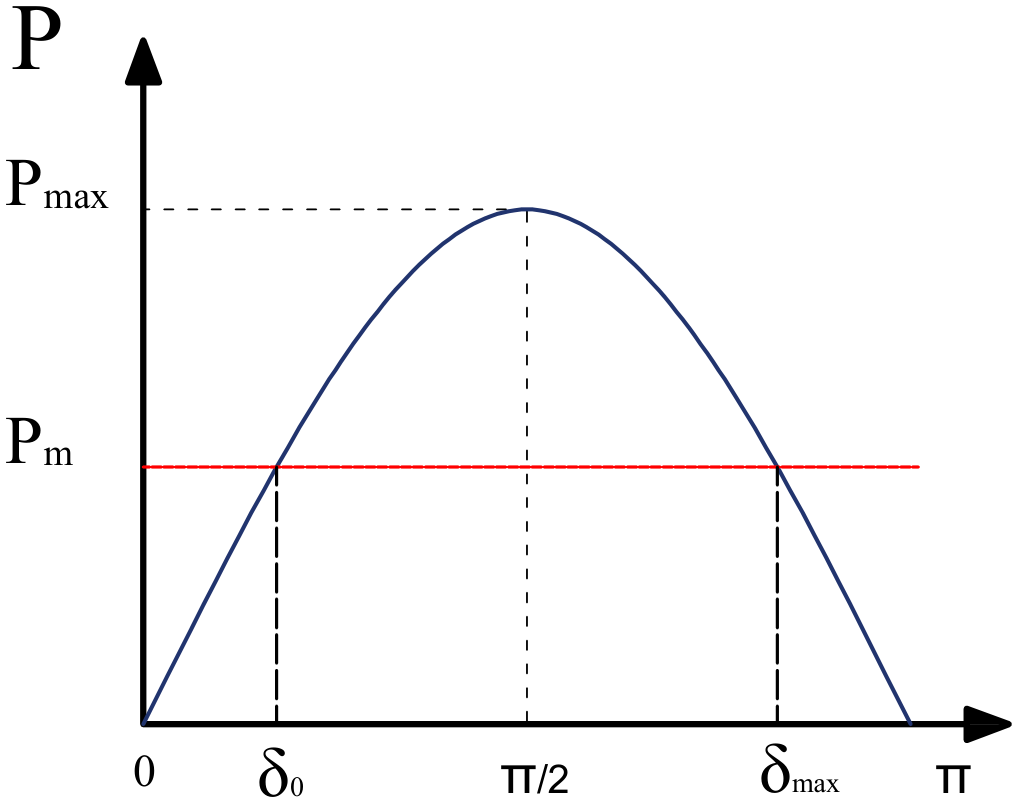
X is the steady-state reactance between the generator and the bus. From the curve of the angular displacement of power, shown in
Figure 1, the maximum power delivered occurs at
, as indicated in Equation (
4).
Note that when , the EPS is stable, while if , the EPS is unstable. At , the generator is considered marginally stable, so any further increase in the angle makes the EPS unstable.
The equation described in (
1) allows us to study the rotor angle behavior of a single generator; however, the system used in this research is a multi-machine system consisting of three generators supplying three loads. For a multi-machine system composed of
N generators,
N swing equations are defined as in Equation (
5), with the electrical power of machine
i given by Equation (
6). The system therefore contains
N solutions
that make it possible to determine the transient stability of the multi-machine system. Due to their complexity, numerical methods are often used to solve these equations.
2.4. Modeling of the PV Systems
A PV system consists of cells connected in series that form a module. Different models are used for PV cells to produce accurate results [
20].
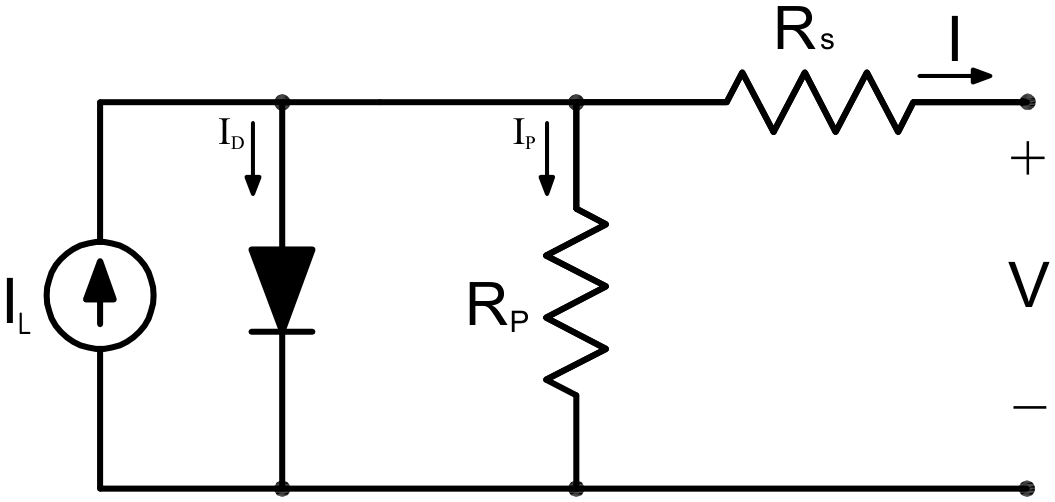
Figure 2 shows the equivalent circuit of a diode model of a PV cell.
Applying basic electrical engineering techniques, such as Kirchhoff’s current law (KCL) and other methods detailed in [
21], the output current of the PV cell, denoted by
I, is determined as follows:
where
is the current generated in the cell due to solar irradiance,
is the diode current governed by the Shockley equation shown in (
8), and
is the current representing cell losses as expressed in (
9).
is the diode saturation current,
n is the diode ideality factor,
and
are the series and parallel resistances used in the diode equivalent circuit, respectively.
is the thermal voltage defined in (
10),
k is the Boltzmann constant (
),
is the cell temperature, and
q is the electron charge.
Therefore, Equation (
7) becomes:
where
and
represent the module voltage and current, respectively;
,
, and
denotes the number of cells connected in series in the PV module.
In this study, uniform irradiance and a consistent temperature are assumed for all cells in the modules and arrays. It is important to note that under fault conditions, PV systems behave differently from synchronous generators in conventional EPSs. Due to the presence of interface inverters that connect PV systems (which generate DC) to loads (which require AC), their short-circuit currents are typically below 150% of the nominal current [
22]. This is because inverters are equipped with modern protective current limiters designed to prevent high short-circuit currents and protect semiconductor switches.
To model the PV system, PV modules—each composed of multiple PV cells—are arranged in series and parallel to form a PV string with a nominal capacity of 6 MWp. This configuration is capable of delivering up to 6 MVA to the 230 kV three-phase grid through power electronic converters. To extract the maximum power from the PV array, grid-following inverters are placed at the output of each string. A Perturbation and Observation (P&O) algorithm is used as the direct control strategy for the maximum power point tracking (MPPT) while operating in unity power factor mode () and does not incorporate dedicated fault-reactive support or voltage-support control strategies during disturbances. Consequently, the inverter contribution to reactive power support under fault conditions is expected to remain limited in the present study.
This modeling choice is consistent with IEEE 1547-2018, which specifies unity power factor as the default operating mode for distributed energy resources unless otherwise required by the grid operator. Furthermore, IEEE 2800-2022 considers inverter-based resources connected to transmission systems as operating synchronously with the bulk power system, implicitly relying on an existing voltage and frequency reference. Accordingly, the adopted grid-following control strategy reflects the dominant configuration currently deployed in utility-scale PV plants connected to transmission grids. While advanced control strategies such as grid-forming converters can significantly influence transient stability and post-fault dynamics, their analysis is beyond the scope of this work and is identified as an important direction for future research.
The DC/AC conversion is performed using a three-level Neutral Point Clamped (NPC) voltage source converter. The switching function of the converter is implemented with a model that is directly controlled by the reference voltage. Since the converter output voltage is 260 V, a step-up power transformer is connected downstream to match the grid voltage level. An RL filter is included at the converter output to ensure waveform quality and to protect both the grid and the converter from high-frequency components.
The parameters of the PV string and converter system are listed in
Table 2. Depending on the penetration level considered in the simulations, the system is duplicated and connected in parallel to supply the required power.
2.5. Description of the Proposed EPS
In this study, the IEEE 9-bus system [
14] is modeled and analyzed using the MATLAB–Simulink
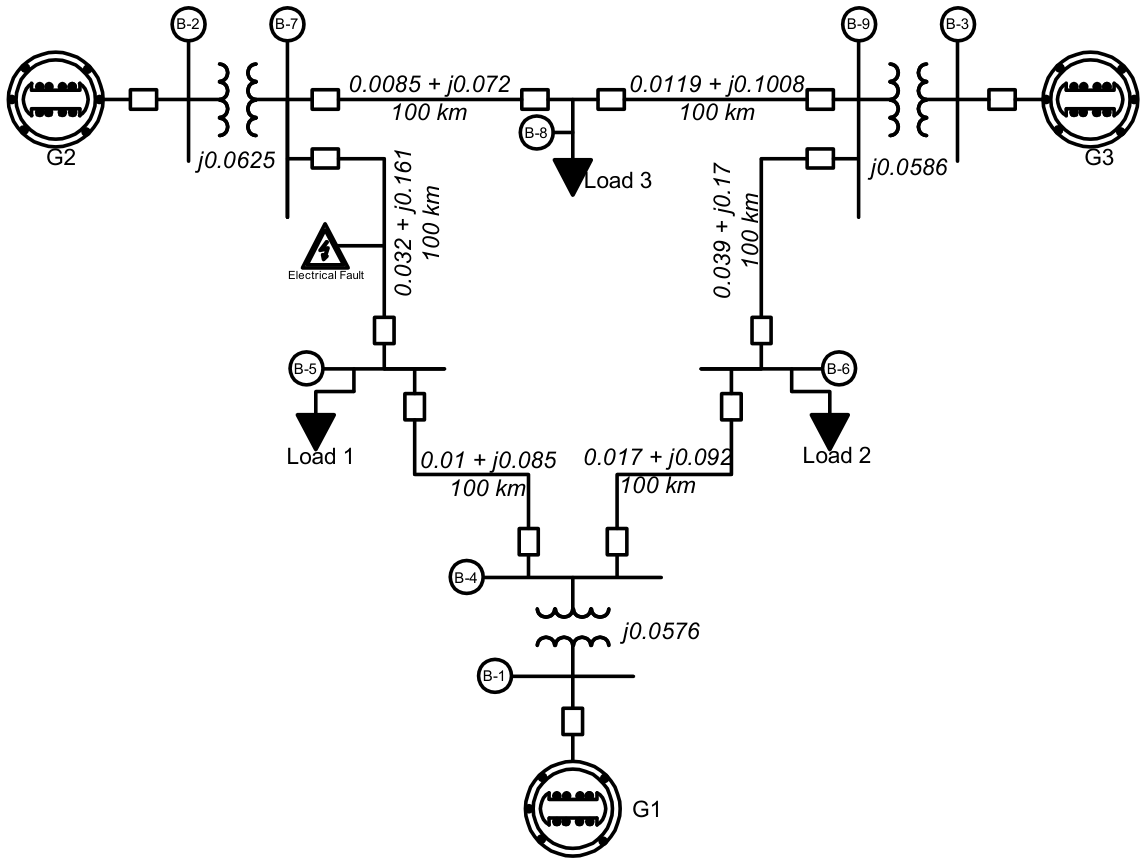
® R2023b environment. Its main components include: 9 buses numbered from 1 to 9; 3 conventional generators (G1, G2, and G3) located at buses 1, 2, and 3 respectively; 3 transformers; 6 transmission lines of 100 km each; and 3 static loads located at buses 5, 6, and 8. The complex base power used for expressing the quantities in per unit is set to 100 MVA.
To perform the transient stability studies, detailed data for buses, generators and lines are required. The bus data for the test system are presented in
Table 3 [
10].
The slack (reference) bus has a predefined voltage magnitude and phase angle (
and
) of 1.04 p.u. and
, respectively, while its active and reactive powers are determined from the load flow analysis. The generator (PV) buses have specified voltage magnitudes (
) and active power outputs (
), whereas the corresponding reactive powers (
) and voltage angles (
) are obtained from the load flow results. Similarly, the remaining buses are considered as PQ (load) buses with defined real and reactive power demands, while their voltage magnitudes (
) and phase angles (
) are derived from the same analysis. The dynamic parameters of the three synchronous generators are listed in
Table 4 and the line data are detailed in
Table 5 [
10]. The damping coefficients of the synchronous generator models were set to zero
to avoid introducing additional damping effects that could mask the influence of PV penetration on electromechanical oscillations and transient stability behavior. The per-unit system is based on a 100 MVA power base.
2.6. Methodology
In this section, we present the methodological approach adopted to model and simulate an electric power system with two different levels of PV penetration, with the objective of assessing its transient stability. This approach clearly defines the goals of the study, the tools used, and the assumptions made to ensure that the simulation remains both realistic and exploitable.
The system is modeled in MATLAB/Simulink
® R2023b and is based on the IEEE 9-bus system, which includes three conventional generators, three transformers, six transmission lines of 100 km each, and three static loads. For the penetration levels, two scenarios are considered, in accordance to the following classification [
23,
24]:
These penetration levels were selected to reflect operating conditions increasingly investigated in modern transmission systems undergoing large-scale renewable energy integration and growing shares of inverter-based generation. In particular, current transmission-level planning studies face increasing concerns regarding the impact of converter-based generation on transient stability margins, post-fault operability, and system dynamic behavior under high renewable penetration conditions [
6,
7,
8,
9]. The selected penetration levels therefore provide representative scenarios for evaluating these emerging stability and operational challenges while remaining consistent with recent transient stability studies available in the literature [
10,
13,
14].
PV penetration is introduced directly at the buses where loads are connected, and in two configurations: a concentrated penetration at one of buses 5, 7, or 8, where the total PV power is injected at the selected bus; and a distributed penetration across the three buses simultaneously, where the injected power is shared proportionally according to the load distribution at each bus, following Equation (
12). The conventional generators are not replaced with smaller units under renewable energy penetration scenarios. Instead, their operating power is reduced to prioritize renewable energy penetration. The reduction on the PV side is also performed proportionally, following a formulation consistent with the proportionality of the load.
where:
is the adjusted power of generator
i;
, the power of generator
i in the reference case without PV penetration;
, the total generated power in the reference system; and
the total active power injected by the PV systems.
For the transient stability study, a permanent three-phase symmetrical fault is applied, as it represents the most severe type of disturbance in an electric power system [
10]. A permanent fault means that the line on which the disturbance occurs is removed from service after fault clearing. The fault location is chosen on the line closest to the largest PV generator, since disturbances near large generators typically produce stronger effects. Because transient stability phenomena occur over a short duration, all simulations are performed over a 7 s window, with the fault activated at
s. The primary conditions of the PV system (irradiance, temperature) are assumed to remain constant during the simulation.
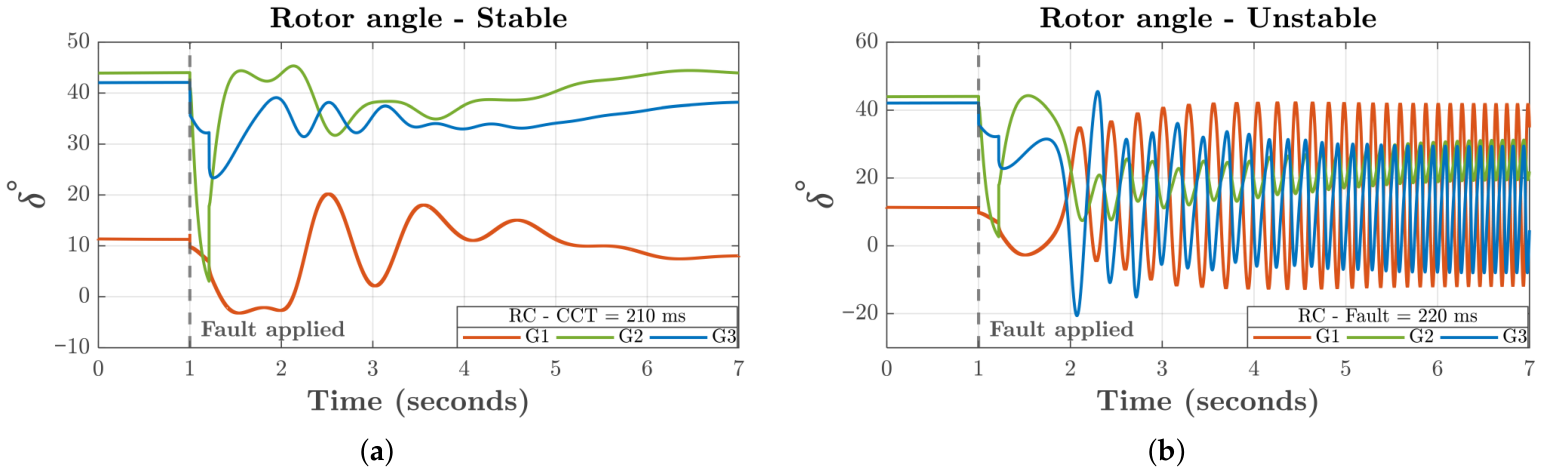
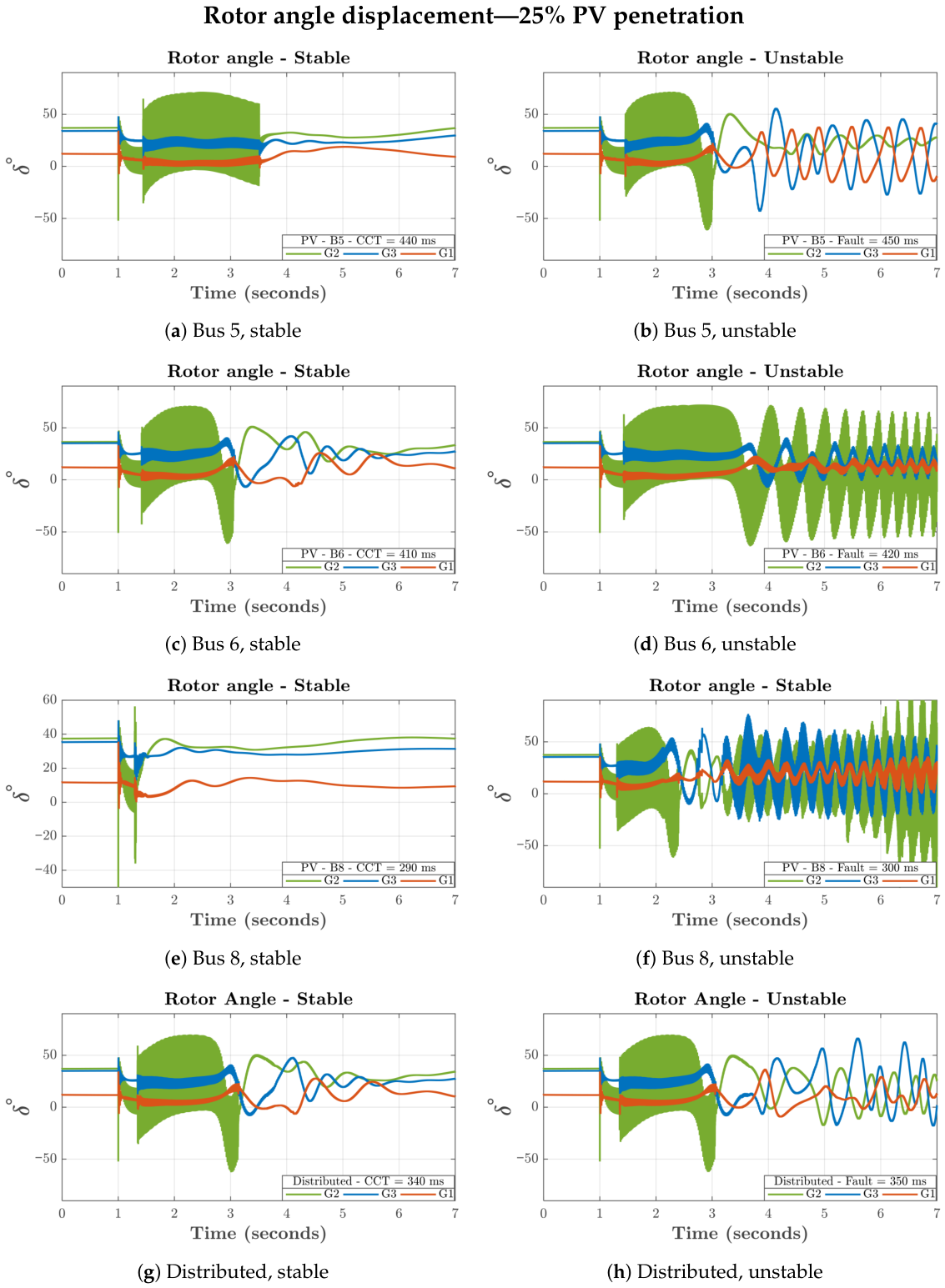
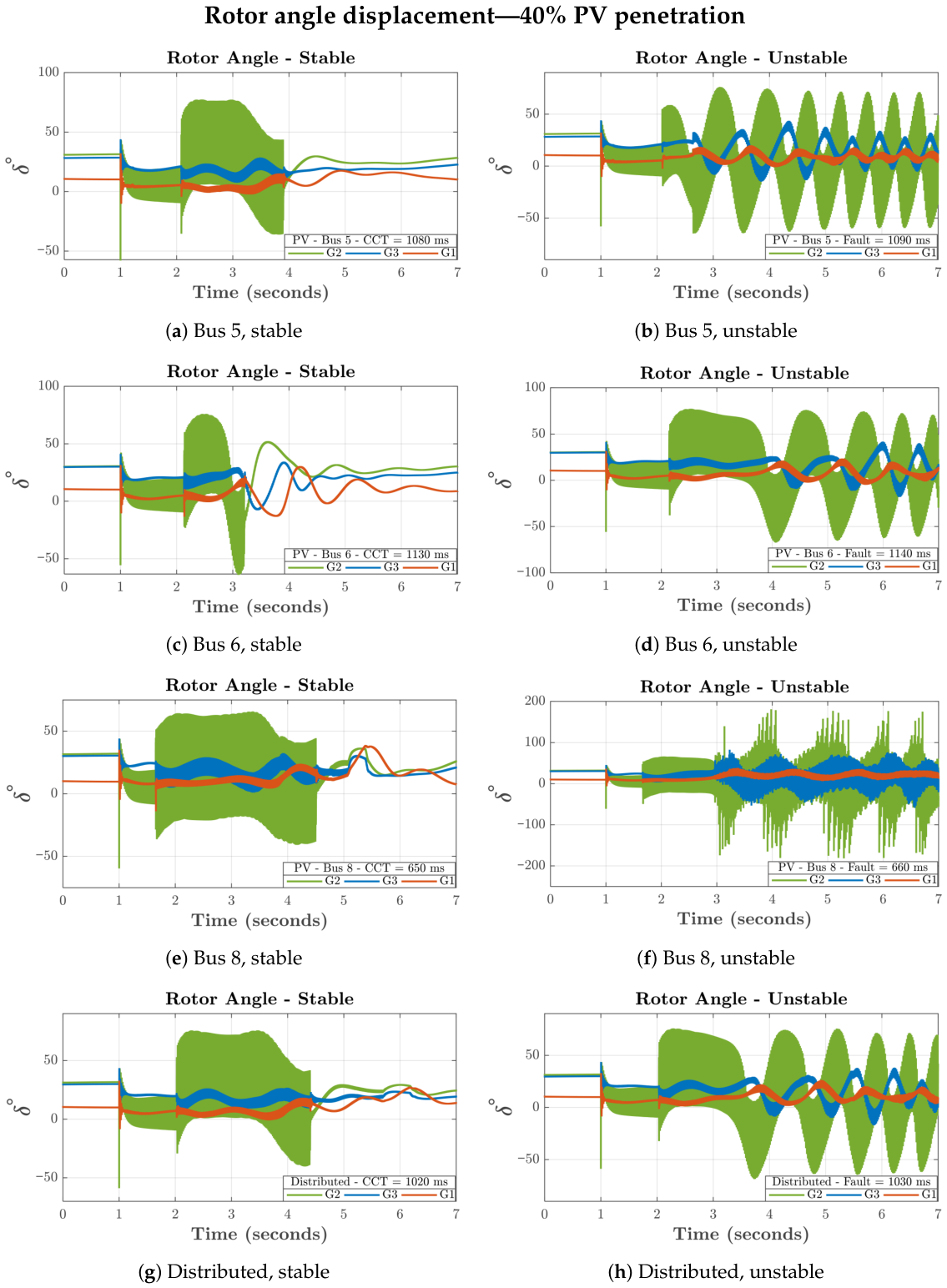
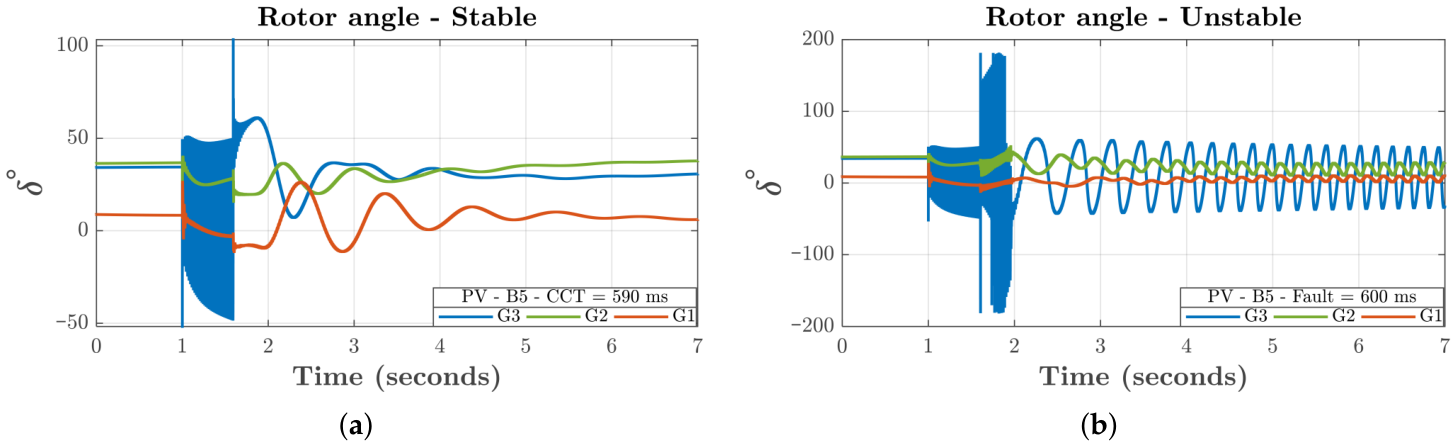
The Critical Clearing Time is used as the main indicator to determine the transient stability of the system by analyzing the rotor angle response of the generators following the disturbance. The CCT corresponds to the maximum duration during which a disturbance can persist without causing loss of synchronism.
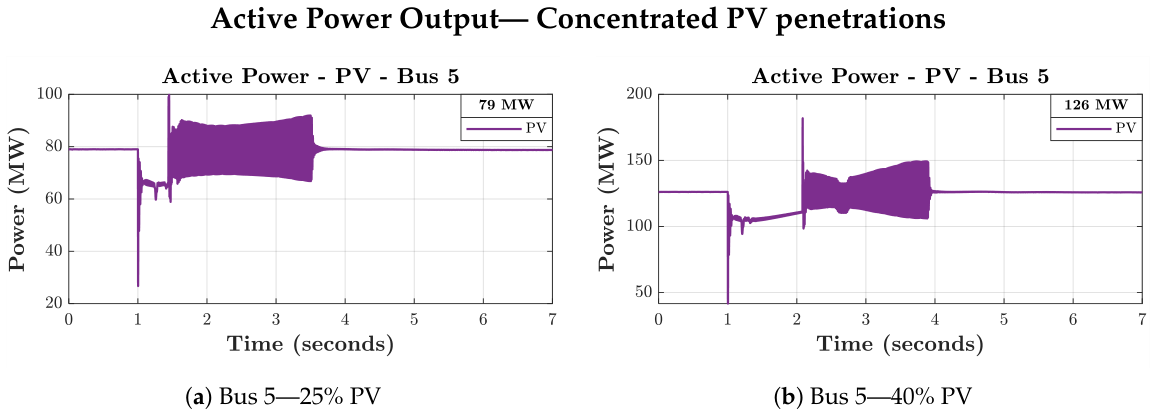
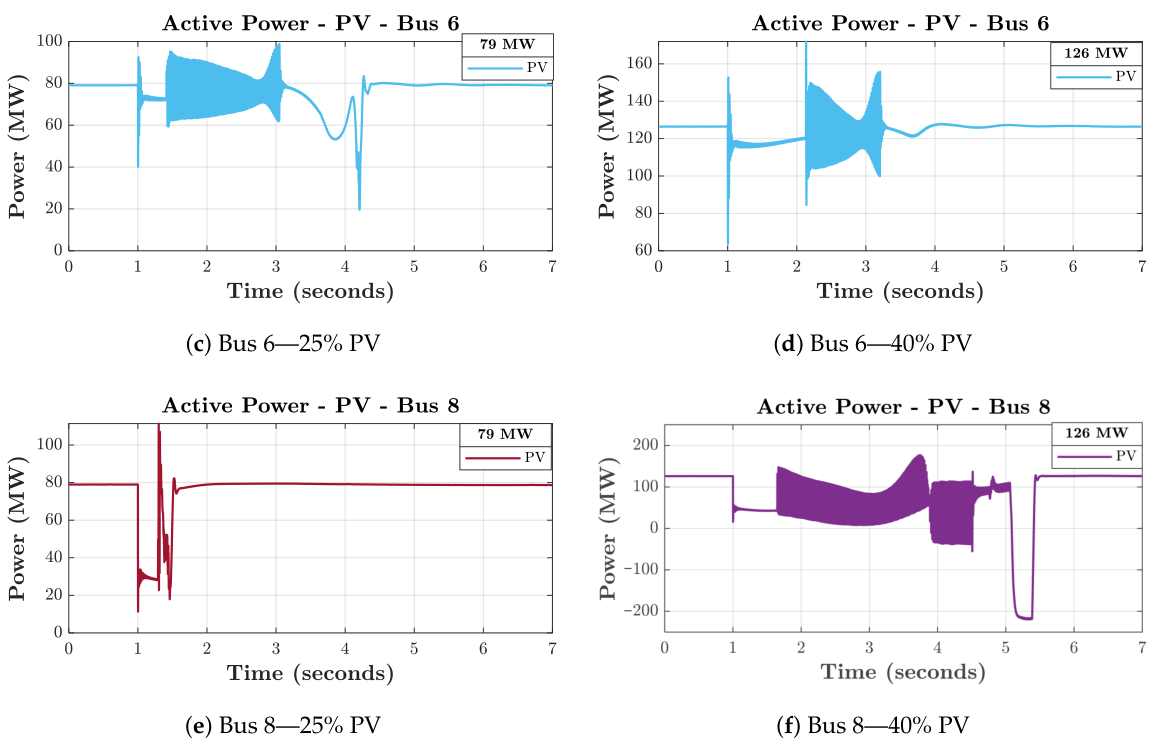
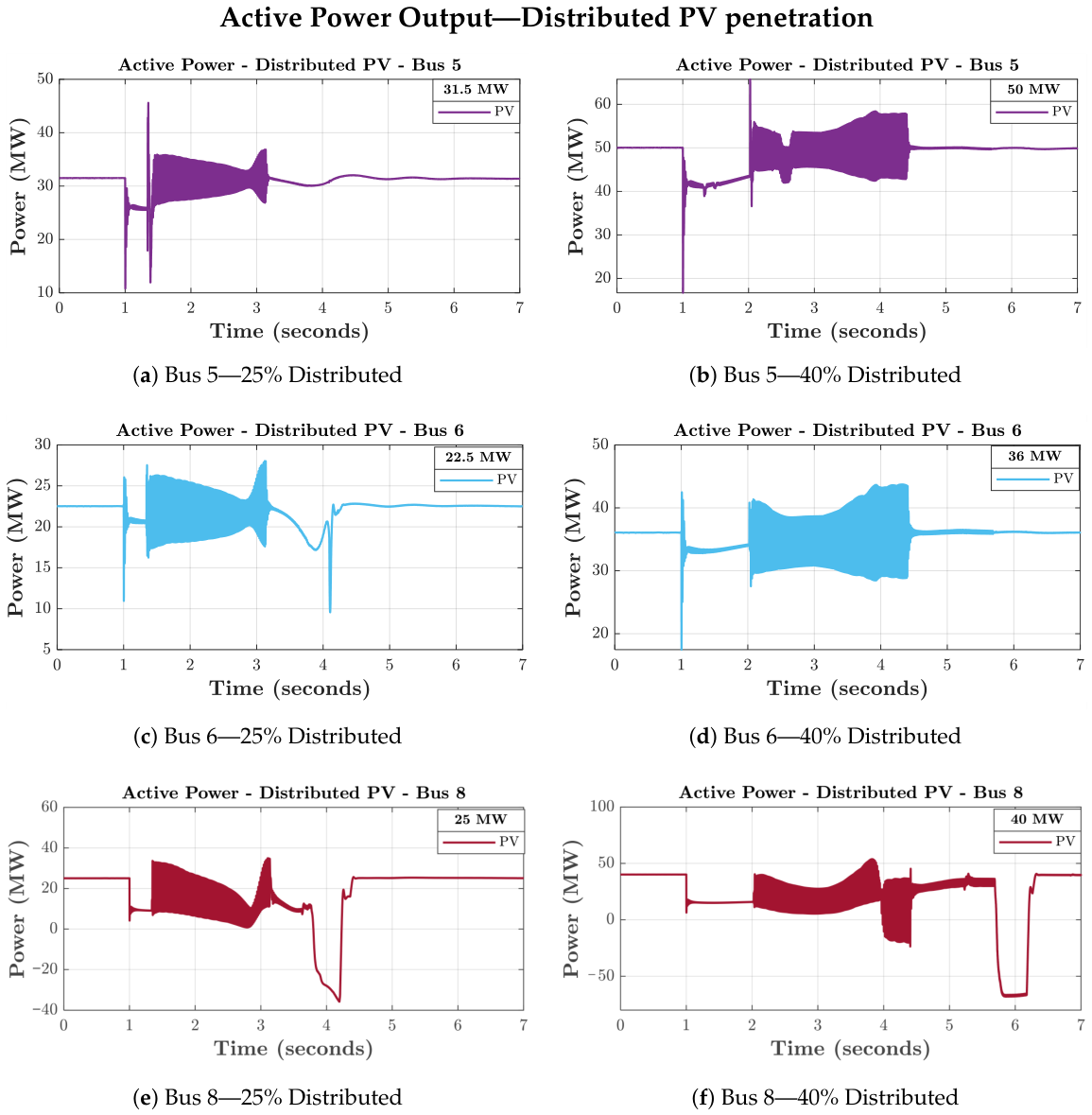
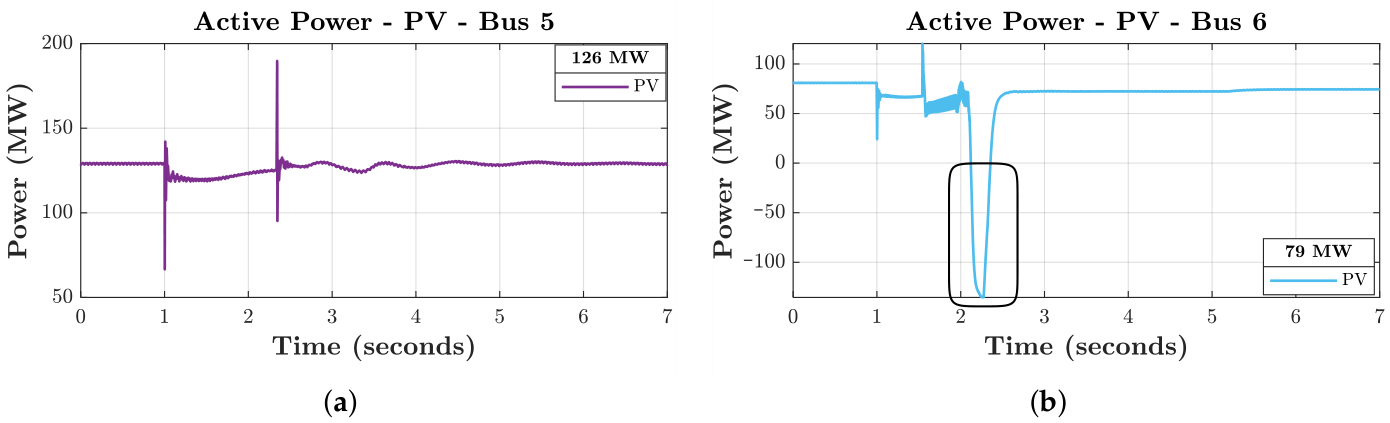
A series of simulations is performed by progressively increasing the fault duration in 10 ms increments. The maximum fault duration that allows the system to remain stable is considered the CCT. This resolution was considered sufficient for the comparative evaluation of transient stability trends among the analyzed scenarios. Although a finer resolution could slightly modify the exact CCT values, it is not expected to significantly affect the relative stability comparisons presented in this study. An additional simulation is carried out using a fault duration 10 ms longer than the CCT, in order to illustrate the behavior of the unstable system. As a complementary analysis, the active power generated by the solar system is also presented to observe the dynamic response of the different sources before and after the system disturbance.
The different scenarios used for the study are considering a permanent three-phase symmetrical fault on transmission line 7–5 for the different levels of PV penetration determined as percentages using Equation (
13) (0%, 25%, and 40%). In each case, except for the first, the penetration is applied in a concentrated manner near the static loads at buses 5, 6, and 8, and then distributed uniformly among these three buses. In this situation, the distribution of PV power follows the same pattern as that of the static loads. These same scenarios were simulated considering a permanent three-phase fault on line 9–6, which represents a distinct electrical location within the grid, in order to assess the robustness of the observed trends.
Table 6 and
Table 7 present, respectively, the simulation modes used and the active power corresponding to the different penetration levels according to Equation (
12).
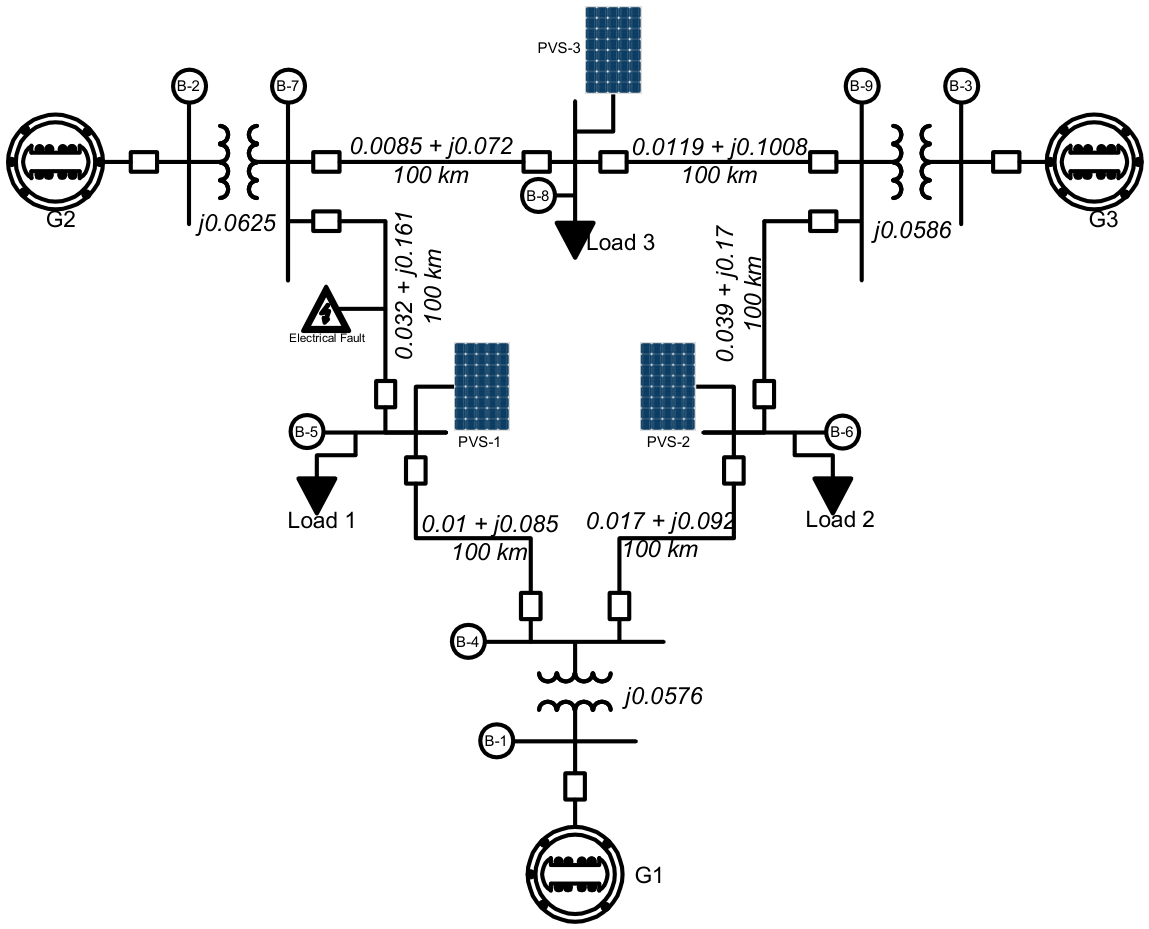
Figure 3 and
Figure 4 present, respectively, the single-line diagrams of the reference model and the model constructed with distributed PV penetration at buses 5, 6, and 8 as an example.
5. Conclusions
This study aimed to evaluate the impact of high PV penetration on the transient stability of the IEEE 9-bus system using MATLAB/Simulink® R2023b. The results showed that, in terms of transient stability, PV penetration increases the CCT when synchronous inertia remains constant. The penetration location and topology strongly influence system robustness, with Bus 8 identified as the most critical penetration point for all penetration levels in the analyzed IEEE 9-bus configuration.
The post-fault dynamic behavior exhibited rotor angle oscillations and, in some cases, operability issues, particularly when the technical requirements of IEEE 1547 and IEEE 2800 were not met. These findings highlight the importance of planning strategies that consider the PV penetration location as well as detailed post-fault behavior to ensure operational compliance of the grid.
The analysis of a second contingency, namely a permanent three-phase fault on line 9–6, confirmed the trends observed for the fault on line 7–5. For both penetration levels, the CCT increases with rising PV penetration regardless of the fault location, and Bus 8 consistently yields the lowest stability margin among all concentrated penetration scenarios. However, the active power analysis reveals that 75% of the penetration scenarios do not meet the recovery requirements of IEEE 1547-2018 and IEEE 2800-2022, a result more severe than that observed for the fault on line 7–5. Although the system remains transiently stable from the rotor angle perspective, the larger post-fault oscillations can produce significant voltage and power fluctuations during the recovery period, affecting the ability of converter-based generation to restore active power smoothly after fault clearance. These results demonstrate that improved transient stability margins do not necessarily guarantee acceptable post-fault operational behavior, highlighting the importance of jointly evaluating rotor angle stability and active power recovery when planning the integration of PV generation into the grid.
However, this study relies on a reduced IEEE 9-bus benchmark system and exclusively considers grid-following converter-based PV generation. The synchronous inertia is intentionally kept constant in order to isolate the specific impact of PV penetration level, location, and topology on transient stability indicators such as the CCT. Considering inertia reduction simultaneously would introduce additional coupled effects, making it difficult to clearly attribute the observed trends to PV integration alone. However, it also represents an important limitation of the present study, since practical large-scale PV integration often involves the partial replacement of synchronous generation and the associated reduction in system inertia. Consequently, the results obtained in this work should not be directly generalized quantitatively compared to scenarios involving simultaneous inertia displacement.
As a result, the findings should be interpreted as indicative trends that highlight fundamental transient stability mechanisms rather than definitive conclusions directly applicable to large-scale transmission grids. In practical power systems, additional factors such as grid size, heterogeneity, and advanced converter controls may further influence system dynamics; consequently, further investigations using larger and more realistic grids, and different fault locations, as well as temporary and unbalanced fault conditions, are required for broader generalization. The inclusion of grid-forming converters could also significantly modify the observed dynamic responses by improving synchronization behavior and post-fault active power recovery under high PV penetration conditions.
Future work may include the study of hybrid PV+BESS technologies and the use of more complex benchmark grids, such as the IEEE 14-bus and IEEE 39-bus systems, to further evaluate transient stability behavior under high PV penetration and the influence of critical integration locations under different network configurations.




 ,
,