Article

An Optimization Framework for Intelligent Load Management Across Smart Grid Sectors Using Reference-Guided MOPSO


1
Hubei Engineering and Technology Research Center for AC/DC Intelligent Distribution Network, School of Electrical Engineering and Automation, Wuhan University, Wuhan 430072, China
2
School of Electrical Engineering and Automation, Wuhan University, Wuhan 430072, China
*
Author to whom correspondence should be addressed.
Electricity 2026, 7(1), 16; https://doi.org/10.3390/electricity7010016

Submission received: 15 January 2026 / Revised: 22 February 2026 / Accepted: 24 February 2026 / Published: 26 February 2026

Abstract

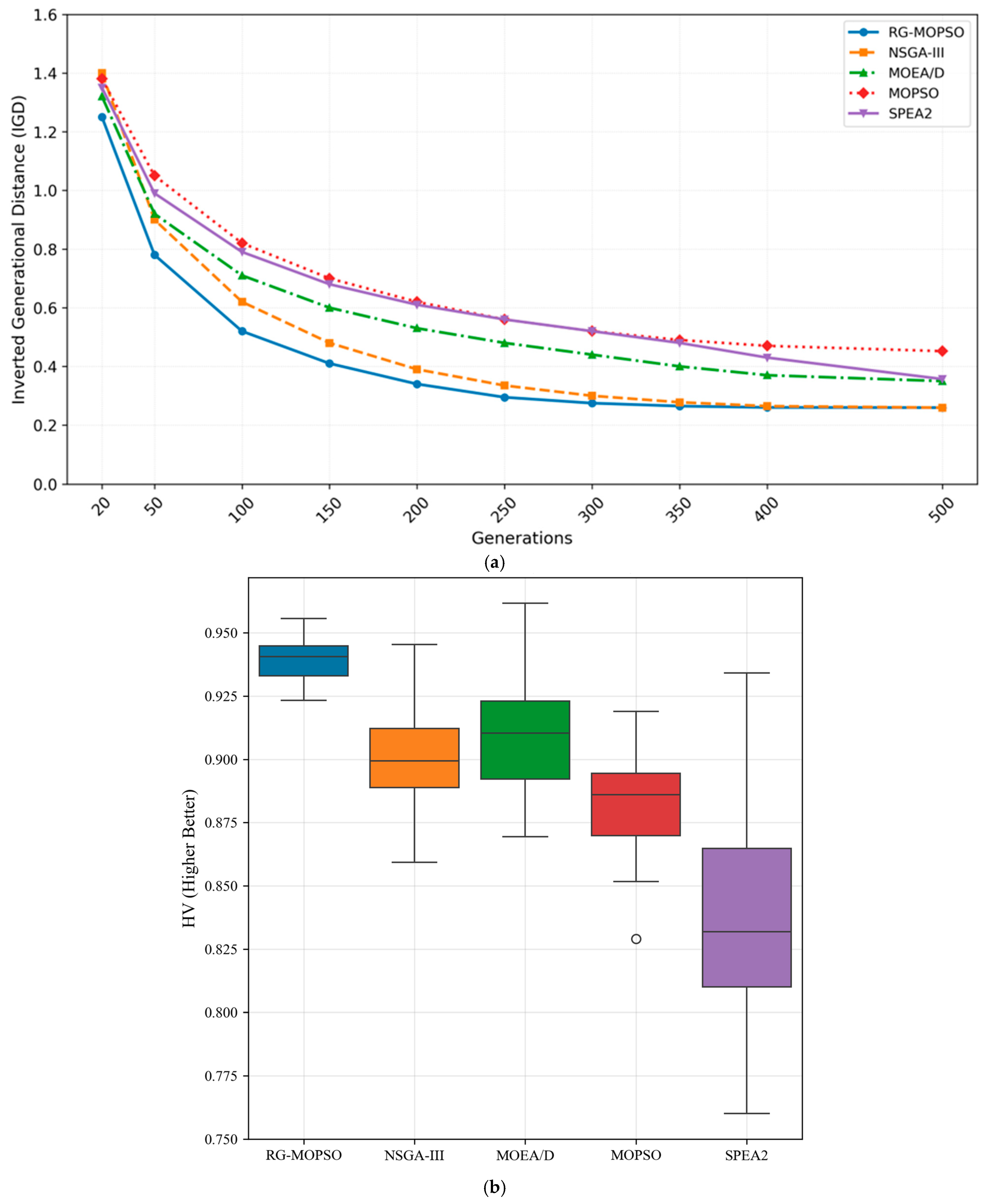
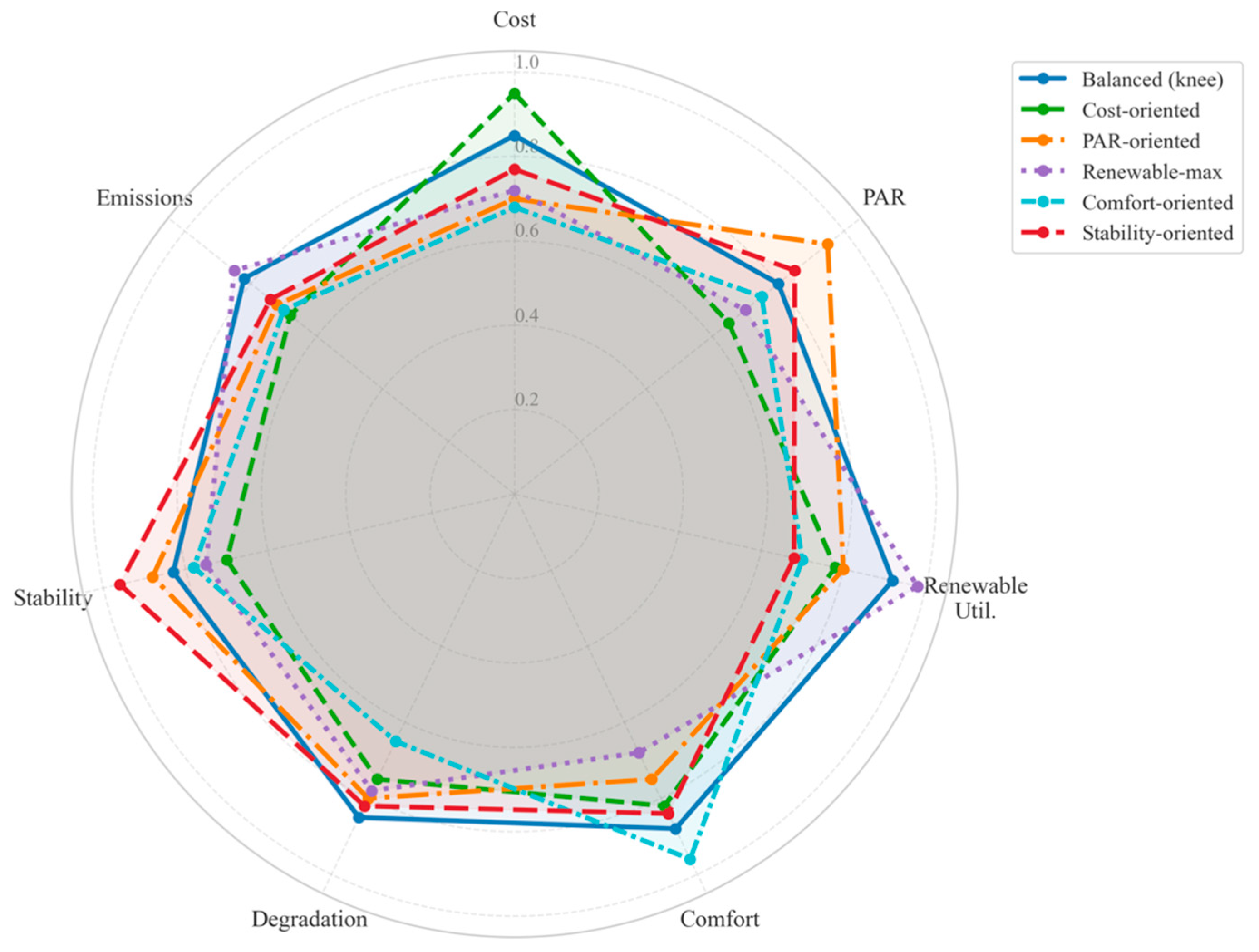
This study presents an advanced demand-side management framework to optimize energy consumption in smart grids featuring significant intermittent renewable energy integration. The approach leverages real-time data from an advanced metering infrastructure and a predictive model employing a bidirectional long short-term memory network enhanced with attention mechanisms for accurate load and electricity price forecasting. These predictions drive a multi-objective optimization model that harmonizes flexible demands across residential, commercial, and industrial sectors. A novel reference-guided multi-objective particle swarm optimizer is proposed to address the problem’s complexity, promoting improved convergence and diversity in solutions. In benchmarks, RGMOPSO demonstrated superior performance, attaining a fifty-six percent win rate in convergence metrics and a hypervolume of zero point nine three. Simulation results validate the framework’s effectiveness. It achieved a twenty percent reduction in operational costs, a nineteen-point-seven percent lower peak-to-average ratio, and an eighteen percentage point increase in renewable utilization. User-centric benefits included a thirty percent enhancement in comfort and a corresponding reduction in battery degradation. This integrated solution offers a resilient pathway for sustainable smart grid operations amid renewable uncertainties.
Keywords: load forecasting; cross-sector coordination; advanced metering infrastructure; cost reduction; user comfort; metaheuristic optimization load forecasting; cross-sector coordination; advanced metering infrastructure; cost reduction; user comfort; metaheuristic optimization