Article

Supporting Translation and Analysis of the Configuration of an Electrical Substation Automation System Based on the IEC 61850 2.0 Standard

by
Marcela Y. Solorio-García
1,
Walter A. Mata-López
2,
José Luis Álvarez-Flores
2,*,
Jorge Simón
3 and
Víctor H. Castillo
2,*
1
Controlling Department, Federal Electricity Commission, Manzanillo 28237, Mexico
2
School of Mechanical and Electrical Engineering, University of Colima, Colima 28400, Mexico
3
Faculty of Sciences, Autonomous University of San Luis Potosi, San Luis Potosí 78295, Mexico
*
Authors to whom correspondence should be addressed.
Electricity 2026, 7(1), 15; https://doi.org/10.3390/electricity7010015
Submission received: 12 November 2025 / Revised: 22 December 2025 / Accepted: 4 February 2026 / Published: 10 February 2026

Abstract

Currently, the smart grid concept represents the modern vision of an automated and highly adaptable electrical grid. Supervisory control and data acquisition (SCADA) systems are a fundamental component of a smart grid, enabling communication between field equipment and digital environments. For this purpose, they require industrial frameworks, among which IEC 61850 stands out. IEC 61850 has become a widely adopted standard for substation automation systems (SASs). However, despite its widespread adoption, IEC 61850 faces significant implementation challenges, including the potential complexity of data modeling, which often leads to discrepancies in semantic interpretation and, consequently, different readings among SAS configuration users. A disparity in the semantic interpretation of a process can negatively affect SAS operation, leading to execution errors or interoperability issues. Translating and analyzing SAS configurations can identify and resolve semantic interpretation discrepancies across these systems. The purpose of this research was to determine the degree to which a user interface was perceived as useful to support the translation and analysis of SAS configurations based on the IEC 61850 standard. To this end, a software tool was proposed as the central artifact to address the socio-technical dimension of a custom-built SCADA system at a Latin American state enterprise. The tool serves as the local, intelligent, and real-time operational layer in that system and was rated by users experienced with IEC 61850 as highly usable. The consistently obtained results suggest potential support for those performing the SAS configuration.

1. Problem Statement

Today, the concept of a smart grid represents the modern vision of an automated and highly adaptable electrical network [1]. A smart grid is characterized by using digital technology, two-way communication, various types of sensors, and advanced data analytics. These issues enable the monitoring and management of electrical energy transmission from diverse sources, including both traditional and renewable sources, to meet energy demands [2]. In the context above, supervisory control and data acquisition systems, commonly referred to as SCADA, are a fundamental component of a smart grid [3,4]. Whether commercial [5,6] or custom-made [7,8], SCADA systems are a key element in industrial control and automation systems.
SCADA systems can be found across the smart grid spectrum. At a high level, the SCADA system provides human–computer interfaces that allow users to view the status of the electrical system, receive alarms, and send control commands. At a low level, a SCADA system enables communication with field equipment, such as programmable logic controllers (PLCs) or intelligent electronic devices (IEDs). This communication occurs using industrial protocols, such as Modbus [9], DNP3 [10], and IEC 61850 [11]. The IEC 61850 standard is highly relevant to modern power systems, especially those integrating smart energy grids, because they require the highly efficient processing of high-speed data to handle complex operational requirements [12,13]. In this sense, digital electrical substations represent a significant development for the electrical industry as they improve the operational efficiency, reliability, and adaptability of electricity generation systems [1].
Even with the positive impact of the IEC 61850 standard on the development of SCADA systems for smart grids, like any innovation, its adoption entails some significant challenges for industry. Below, we illustrate some cases. As a first example, in the IEC 61850 standard, the SCL is known as an electrical substation configuration description language. The IEC 61850-6 SCL is an XML-based language that helps describe the configuration of an entire electrical substation (including IEDs and the telecommunications mapping between them). However, because it is an open standard, third-party devices connected via the IEC 61850-6 SCL may not meet data compatibility requirements. Therefore, its compatibility must be validated to avoid communication errors [14,15]. In another example, GOOSE is a protocol that handles critical, high-speed, secure communication between IEDs interconnected under IEC 61850. However, since messages generated in the GOOSE environment have very low latency (less than 4 ms), it is highly relevant to analyze them properly to assess how an electrical power system (EPS) operates [16]. In a further example, because GOOSE messages lack encryption mechanisms, implementing the IEC 61850 standard could affect the cybersecurity of electrical substation automation systems (SAS) [17]. As a final example, the literature also reports potential complexity in data modeling for the IEC 61850 standard. The latter frequently leads to semantic discrepancies [18,19]. The problem described above is highly relevant, as IEC 61850 utilizes metadata to define semantics. However, the specific meaning and use of data attributes can lead to different interpretations among various types of SAS users [15]. A difference in the semantic interpretation of a process can have negative implications for SAS operation, such as execution errors or interoperability problems [20]. Hence, translating and analyzing SAS configurations can identify and help resolve discrepancies in semantic interpretation across these systems. The process of translating and analyzing electrical systems improves interoperability and information exchange within these systems [21], and its user validation plays a critical role [22]. The studies on the usability of SCADA systems are highly relevant for analyzing user validation [23,24,25]. Nonetheless, the literature reporting such studies is scarce. Silva et al. [26] propose an engineering and validation methodology for control systems for the IEC 61850 data modeling. However, the emphasis of their work was on field-level interoperability and interchangeability. On the other hand, Saghafian et al. [27] highlight that a human-centric design principle can serve as a potential intervention in the design of human–automation systems. This approach can reduce cognitive workload and consequently enhance decision-making and safety in the automated system domain. The work of Saghafian et al. (ibid.) also emphasizes the significant role of user interface components for providing usable automation systems. Otherwise, Shafqat’s work proposes a usability evaluation of a mobile-based prototype that interactively visualizes data on existing IEDs in the electrical network context [28]. Shafqat highlights the significant role of usability studies in the SCADA systems area, but it focuses on mobile devices. Moreover, the work of Karlsson [29] analyzed the use of SCADA systems in power plants to meet the user requirements of reliability, security, and energy production efficiency. However, although SCADA system requirements are essential for evaluating the usability of these systems, Karlsson’s work is not a usability study. Again, Toledo et al. [23] studied the usability of a custom-made SCADA system. However, the work is exploratory and concludes with suggestions for improving the SCADA system’s user interface in future iterations. On the other hand, Pham et al. [30] evaluated various SCADA displays available online using usability heuristics. In this sense, the work is also exploratory and serves as an analysis of the market’s tools.
Thus, from the previously described works, it is significant to first emphasize the importance of studying the usability of SCADA systems. Second, although the literature emphasizes the importance of studying the usability of SCADA systems, most studies do not focus on the analysis and translation of SAS within the context of the IEC 61850 standard [23,27,28,29,30]. As is well-known, this standard is highly relevant to modern power systems. Third, the literature also reports the importance of studying usability in custom-built SCADA systems [23,26,27,28,29]. These systems are significant for addressing the socio-technical dimension of SCADA systems without incurring prohibitive costs. Therefore, as previously stated, it is highly relevant to develop an application that eliminates semantic differences in SAS configurations. As noted above, it is also essential that this application supports the analysis of a custom-built SCADA system compliant with IEC 61850. Correspondingly, to analyze the degree of adoption of a system with these characteristics, it should be examined from the perspective of system usability. Hence, to address the stated problem, the purpose of this research was to determine the extent to which a user interface was perceived as helpful in translating and analyzing SAS configurations in accordance with the IEC 61850 standard.
This work is structured as follows. Section 2 details the activities carried out to achieve the stated objective. Next, Section 3 describes the results obtained in the study. Finally, Section 4 discusses these results and draws some conclusions.

2. Materials and Method

This section specifies the set of activities carried out to achieve the proposed objective. Given that Latin America faces significant challenges in industrial automation [23], this paper used the SAS at the Federal Electricity Commission (CFE) in Mexico as a case study. The CFE is a state enterprise. It provides transmission services and distributes electricity throughout the country. The CFE also generates and sells electricity-related products.
Population growth and the expansion of industry in that country drove the development of the National Electric System (SEN), designed by the CFE. This situation necessitated implementing SAS, and the SEN adopted the IEC 61850 2.0 standard to do so [31,32]. The previous situation, coupled with the advantages of standardization, also created opportunities. First, while the standard is clear regarding the standardization of substation configuration files, IED manufacturers seek freedom within it to preserve their individuality. Furthermore, project documentation requires the participation of multidisciplinary teams, comprising personnel from diverse professional backgrounds, so all team members are required to have a consistent understanding of the elements that comprise the SAS. In addition to the above, various vendor tools are available to help users gain a clearer view and facilitate the maintenance of a SAS-type substation compliant with IEC 61850. These are potent tools that are constantly being updated; however, they are also costly, resulting in limited availability for the technical area within the CFE. Thus, it is necessary for those primarily involved in maintenance and fault mitigation to have accessible tools that provide the following four capabilities: (1) facilitate daily tasks; (2) allow for the identification and resolution of problems arising from manufacturers’ reluctance to interoperability in their configuration files; (3) enable manufacturers to engage with the standard in the most pleasant way possible; and (4) provide visual platforms that facilitate the correlation of primary field equipment and the virtual environment proposed by IEC 61850. Thus, to achieve the objective of this study, a tool was developed to facilitate the translation and analysis of the main configuration file of a SAS-type substation. The configuration is based on the IEC 61850 Ed. 2.0 standard, and by the CFE’s DT-CTRL-10 technical specification for SAS [31].
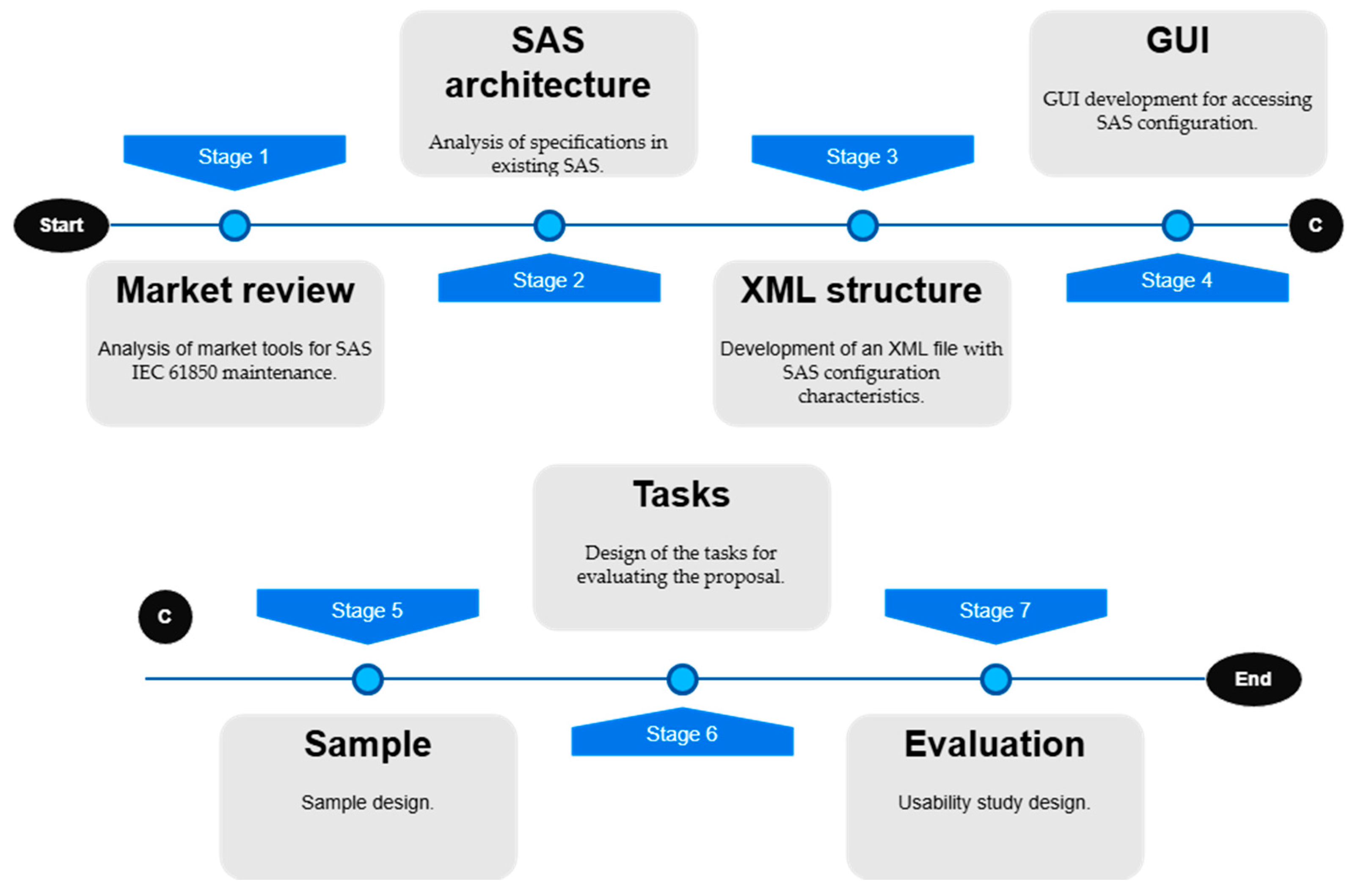
Figure 1 shows the method used to achieve the research objective. Initially, in stage 1, an analysis was conducted of commercial software tools that provide visual environments and display information within standard configuration files. Subsequently, in stage 2, two substation configuration files, originating from two different manufacturers that are both CFE suppliers, were considered. These configurations comply with the Smart Grid Regulatory Framework (REI) in Mexico, through a project known as REI MEM [33]. These files were analyzed and compared with the technical specifications in existing SAS, based on IEC 61850 [31]. Grounded on the above, in stage 3, a file was designed and generated in XML format that included the essential SAS configuration characteristics. Afterward, in stage 4, a graphical user interface was developed that provided access to an application for viewing SAS information stored in XML files. The application enabled testing with configuration files from various manufacturers, featuring different bay-level layouts as defined by the IEC 61850 standard. Next, in stages 5 and 6, the sample and tasks for evaluating the proposal were designed. Finally, in stage 7, the application’s usability level was evaluated with expert personnel from the CFE Control Department. The following sections describe each stage in detail.

2.1. Analysis of Commercial Software Tools

Table 1 presents the list of tools analyzed for the case study, based on the aspects proposed by Daboul and Orsagova [34]. Among the areas of opportunity presented by the IEC 61850 maintenance tools examined, the first to stand out is the standardization of logical nodes (LNs, which are the virtualization entities of physical devices that make up a substation) and their attributes. Since the standard allows the use of generic logical nodes (GGIOs), identifying their functions can be difficult. Another challenge is interpretation. The standard contains two files used to identify the properties of an IED: the ICD and CID files. These files contain very similar information, which causes many vendors to interpret the content of one or the other interchangeably. The latter leads to interoperability problems for the tools that attempt to translate these files for the user. Another challenge is communication profiles: the same standard handles various communication protocols from different developers, requiring separate languages or interfaces.

2.2. SAS-Type Substation Architecture at the CFE

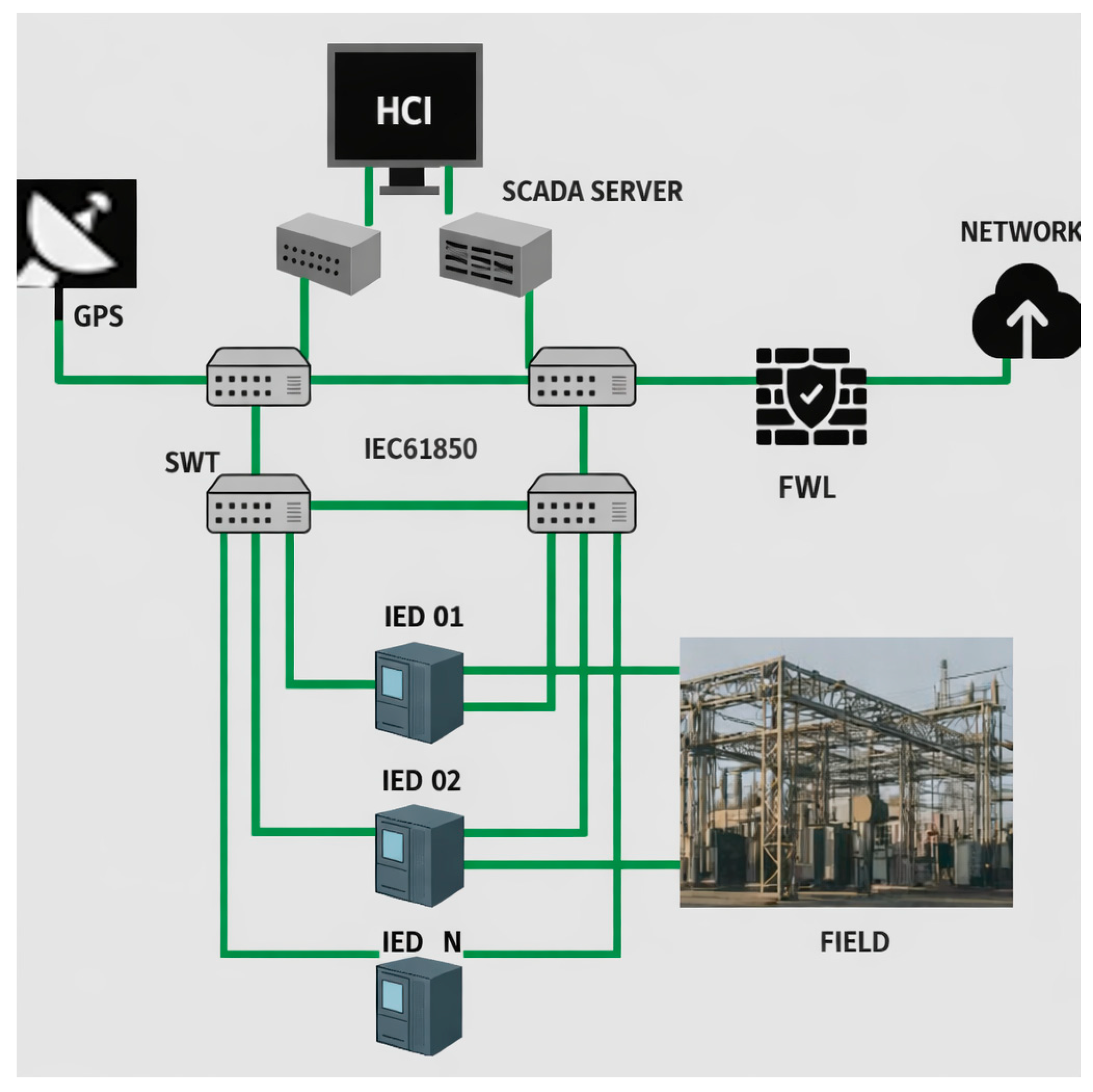
Figure 2 shows the architecture of a SAS-type substation at CFE, which was considered the case study in this work. As shown in Figure 2, the architecture includes a LAN network, a SCADA server with its backup, and the IEDs and bay control units (BCUs) that connect to the network. Typically, one IED or BCU is managed per bay. The SCADA system is monitored through a human–computer interface (HCI).
In the IEC 61850 standard, three levels of operation are considered in a substation [35]. The first level, known as the process level, includes the substation’s primary equipment, such as smart sensors and actuators. Currently, this type of primary equipment does not exist in the case study substations. Also, all field equipment from which information is extracted, such as breakers, switches, power transformers, and instrument transformers, is assigned to this level. This level delivers all the data to be processed in the following level. The second level, known as the bay level, encompasses IEDs dedicated to each bay, along with BCUs, signal acquisition and control modules (SCCMs), and intelligent protections. Field information, alarms, and bay status information flow at this level; it can even include an HCI to monitor and control the bay’s primary equipment. Finally, the third level is called the station level and consists of the substation’s general hubs. At this level, all bays are monitored and controlled, and existing alarms, events, and measurements are processed and sent to the CFE control centers. The third level also includes the local control consoles (LCCs) and engineering consoles (ECs), which are the HCIs that locally control and monitor all the substation bays [32].

2.3. Structure of an XML File in the Context of SCL in the IEC 61850 Ed. 2.0 Standard

The Substation Configuration Description Language (SCL), described in Section 6 of the IEC 61850 Ed. 2.0 standard, defines the grammatical rules that represent the structure and function of an SAS. Using SCL and the IEC 61850 unified model, a substation configuration and information exchanged between IEDs can be described. In general, SCL details the system structure, IED services, primary equipment functions, network communication parameters, and data templates [36]. The four main sections of this structure are as follows (ibid): (1) Substation, which contains information on the primary equipment; (2) IED, which specifies the measurement and control equipment, including protections; (3) Communication, which indicates the substation’s communication parameters; and (4) DataTypeTemplates, which refers to the data model templates.
One of the SCL configuration files is the Substation Configuration Description (SCD). This XML file is crucial within the IEC 61850 framework as it provides a comprehensive description of an electrical substation’s automation system. The SCD file is the digital twin of a substation’s infrastructure, detailing all services, systems, and the communication schemes between them.
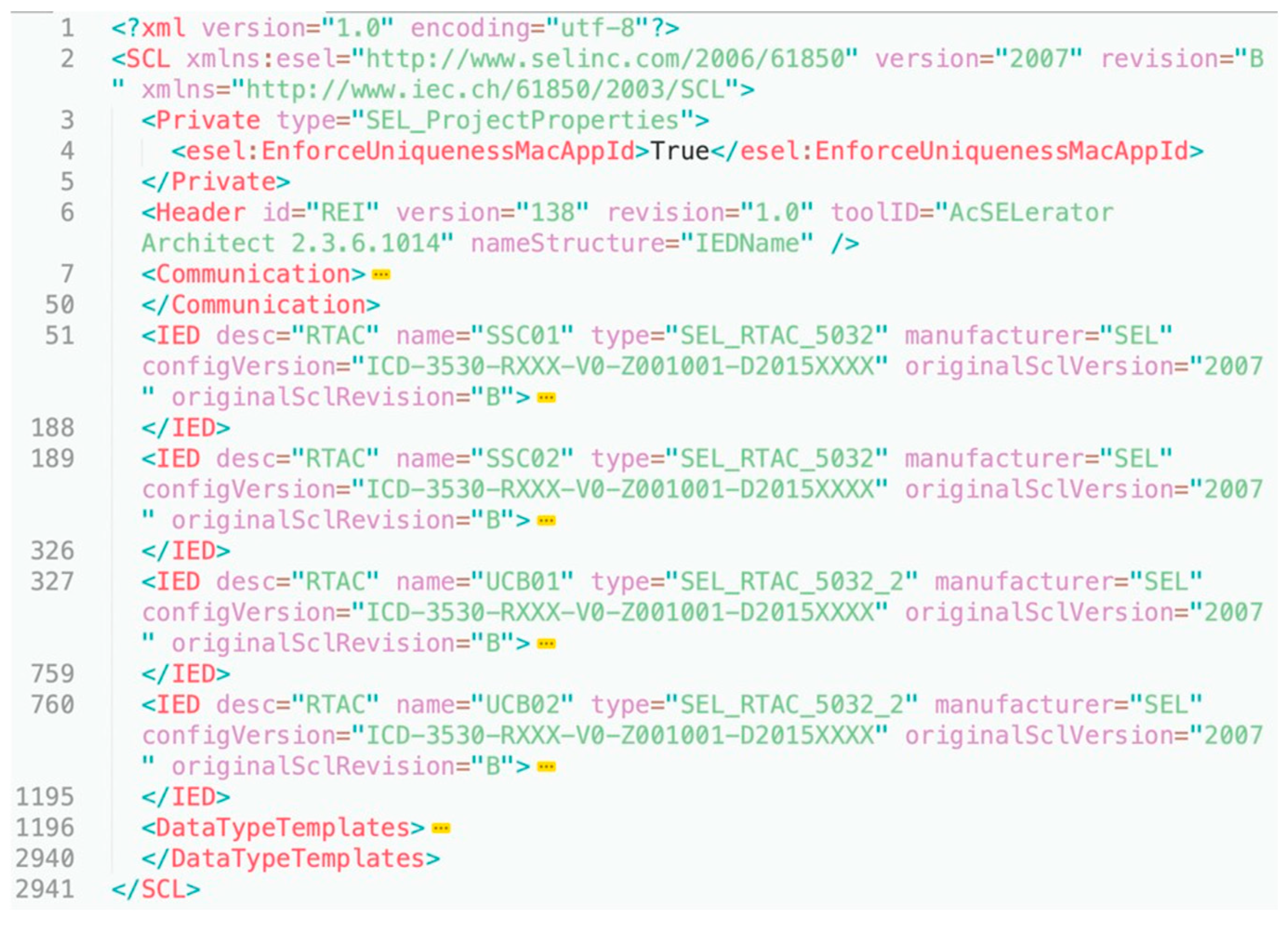
Currently, the most common suppliers for SASs at CFE are Arteche and Schweitzer Engineering Laboratories (SEL), which were contracted to program the REI MEM projects using their respective specialized software, SaTech® and Architect®. Although both projects were programmed with different software for other equipment brands and by various engineers, the projects followed the IEC 61850 2.0 standard. Therefore, the SCD file generated in SCL language must be very similar and include at least the mandatory sections dictated by the standard. To verify this, three XML files submitted by the commissioning providers were analyzed. Two of them were from SEL, whose configurations belong to different substations. The third file contains an Arteche configuration. Figure 3 shows an overview of the XML tree of an SCD file.
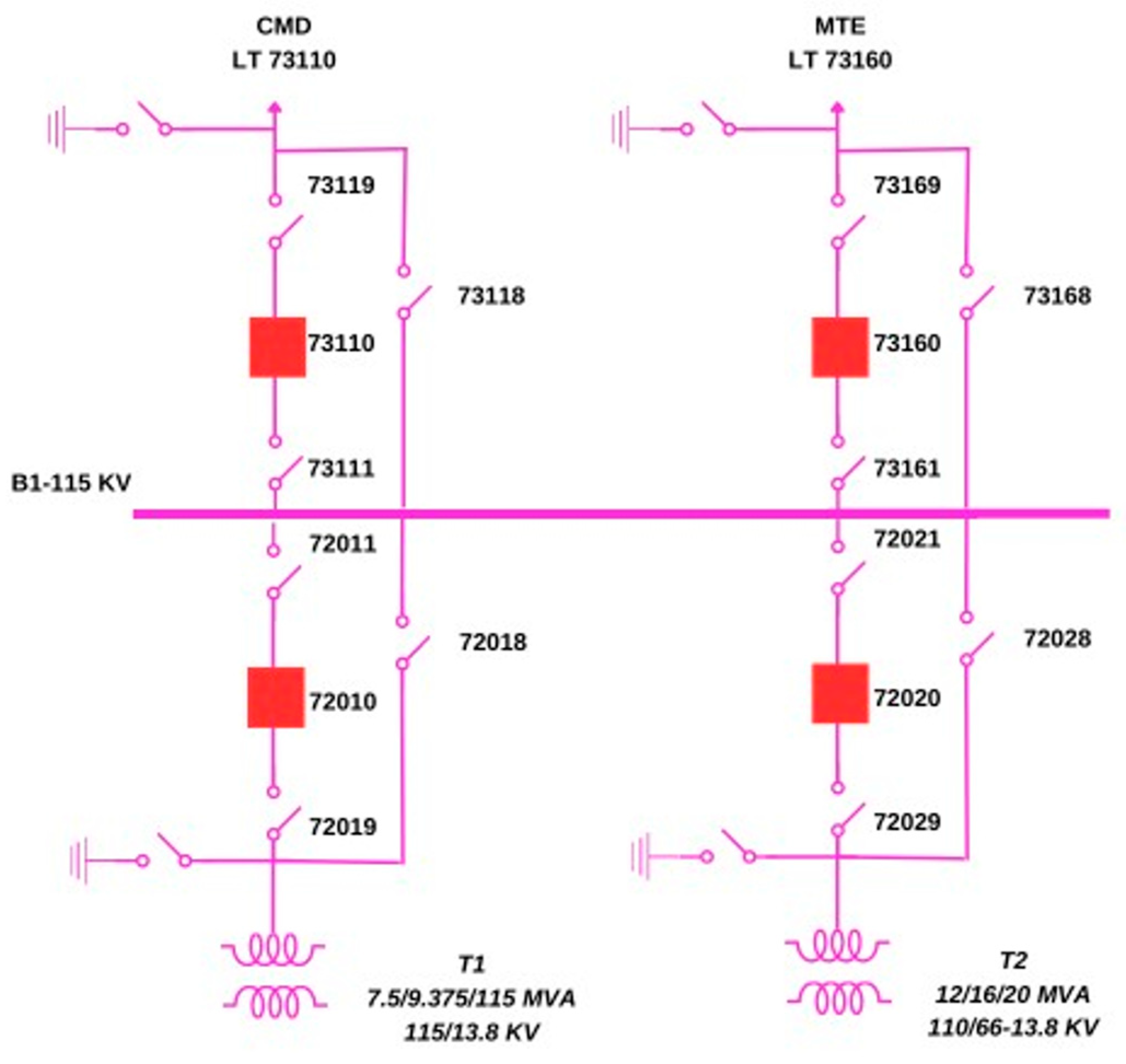
Considering the similarities between the three files described above, a highly interoperable SCD file was designed. The SCD file in Figure 3 represents the one-line diagram in Figure 4 digitally. That is, the SCD file shown in Figure 3 represents the digital twin of the electrical circuit in Figure 4. With this mapping process, it is possible to access the configuration of an electrical substation through an HCI instance, such as a graphical user interface (GUI).

2.4. Software Application to Access an SCD File

As shown in Figure 3, an SCD file consists of four main sections: Private, Communication, IED, and DataTypeTemplates. Although IEC 61850 is intended for interoperability, each manufacturer may use the Private field in their SCD file to add specific features or offer their tools. The eventual addition of features must be conducted without affecting effective and secure communication with equipment that does not have the same features, or even if the field does not exist. Thus, for practical purposes, the Private section was not included in the development of the proposed application.
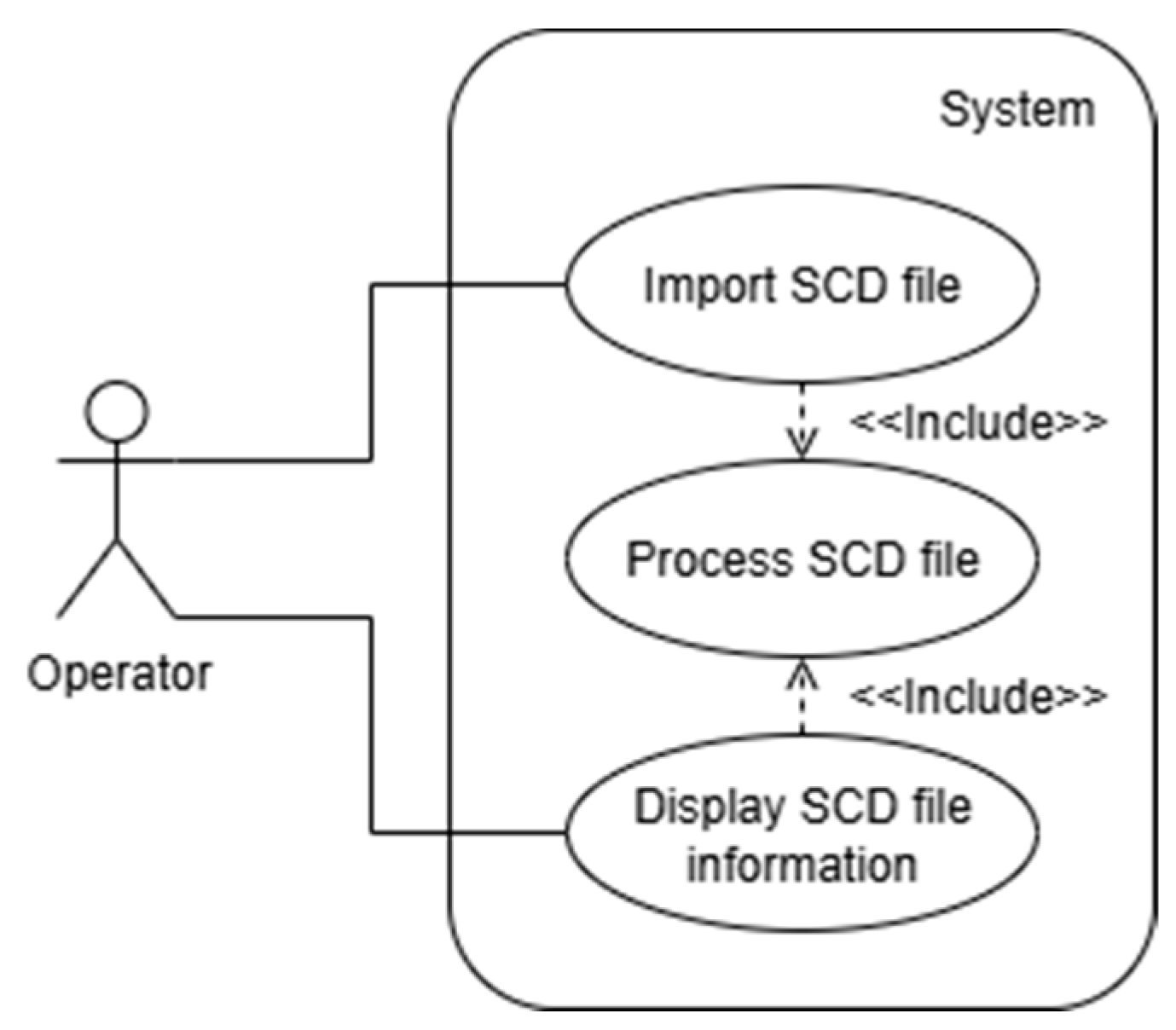
Based on the above description, the analysis of the application’s functionality led to the development of the use case in Figure 5, which was created using UML. As shown, the application has only one actor, the Operator, who can import the contents of an SCD file (Import SCD File use case) and display its information in a GUI (Display SCD File Information use case). For these cases to be carried out, they require the functionality of a third use case, called Process SCD File. The latter decodes the SCD file selected by the user and structures it to meet the application’s GUI’s display needs. The information handled by Process SCD File can be of 10 types: (1) number of devices included in the configuration; (2) device manufacturer; (3) network parameters for communication of each device; (4) presence of message publication in the GOOSE protocol; (5) network parameters of the messages generated in the GOOSE protocol (if any); (6) datasets from which the information for published GOOSE messages comes; (7) documentation of the GOOSE message exchange between devices; (8) description of the type of Manufacturing Message Specification (MMS) reports generated; (9) description of the information in the datasets from which the reports are generated; as well as (10) documentation of the datasets, their content, and the server and client between which they are transmitted. In consonance with the research objective, with previous system functionality, it is possible to support five Operator tasks: (1) modeling explicitly the semantic of the SAS; (2) understanding the system configuration (communication links, IEDs’ distribution); (3) tracing the SAS configuration evolution; (4) navigating across SAS abstraction level in the context of IEC 61850 (process, bay, station); and (5) checking across engineering artifacts (SCL files, single-line diagrams). The software tool was developed with Python [37] using the Streamlit framework [38].

2.5. Sample

Within CFE, the Control Department is responsible for monitoring and controlling substations, so its staff are most involved with the IEC 61850 standard. This department has also witnessed firsthand the impact of introducing this standard on SAS systems. Because the standard is comprehensive, other departments are beginning to feel the need to become involved, as is the case with the Protection Department. Even so, for this evaluation, support was requested only from the Control Department, which has more experience in identifying the protocol’s needs.
Thus, given the need for a high level of knowledge of the IEC 61850 standard and the tools for analyzing processes based on it, we decided to use a referral sample [39]. Five members of the Control Department were selected to serve as evaluators of the proposal. All of them had a career related to the department’s professional profile, had more than five years of experience within the company, had completed courses and diplomas on the IEC 61850 standard, and used the standard during the REI MEM [33]. At the time of the proposal evaluation, they were actively involved in the commissioning of the REI MEM project. Three of the evaluators belonged to the Colima Transmission Zone, and the remaining two to the Michoacan Transmission Zone. Including usability evaluators from the same system context has five main advantages: (1) evaluators with domain familiarity prevents from ambiguous vocabulary and mental models [40]; (2) evaluators without domain knowledge are more prone to errors than those who are knowledgeable [41]; (3) evaluator expertise corresponds with problem detection accuracy [42]; (4) evaluators with a similar background to the system are better at assessing usability for expert users [43]; and (5) some hidden design conditions are undetectable if system–context mismatches occur [44].

2.6. Tasks

Because the study subjects worked in geographically distant locations, it was decided to create a video illustrating three scenarios of system usage. Each scenario shown in the video describes the respective use of three SCD files, with information from the same number of substations: Villa De Alvarez Substation (VDA Substation), Salahua Substation (SLH Substation), and Tapeixtles Distribution Substation (TAP Substation).
In the first scenario, a file from the TAP Substation was used to display the number of devices, their device identifiers, brands, and communication parameters for horizontal and vertical communication. This provided users with a concrete view of the smart grid architecture, enhancing their understanding. In the second scenario, the application was used to view a file from the VDA Substation. This scenario allowed the Operator to quickly identify configuration errors. Finally, the third scenario considered the SLH Substation, which has fewer devices. This scenario illustrates that regardless of a substation’s primary configuration, the application should adapt its structure to display information correctly.
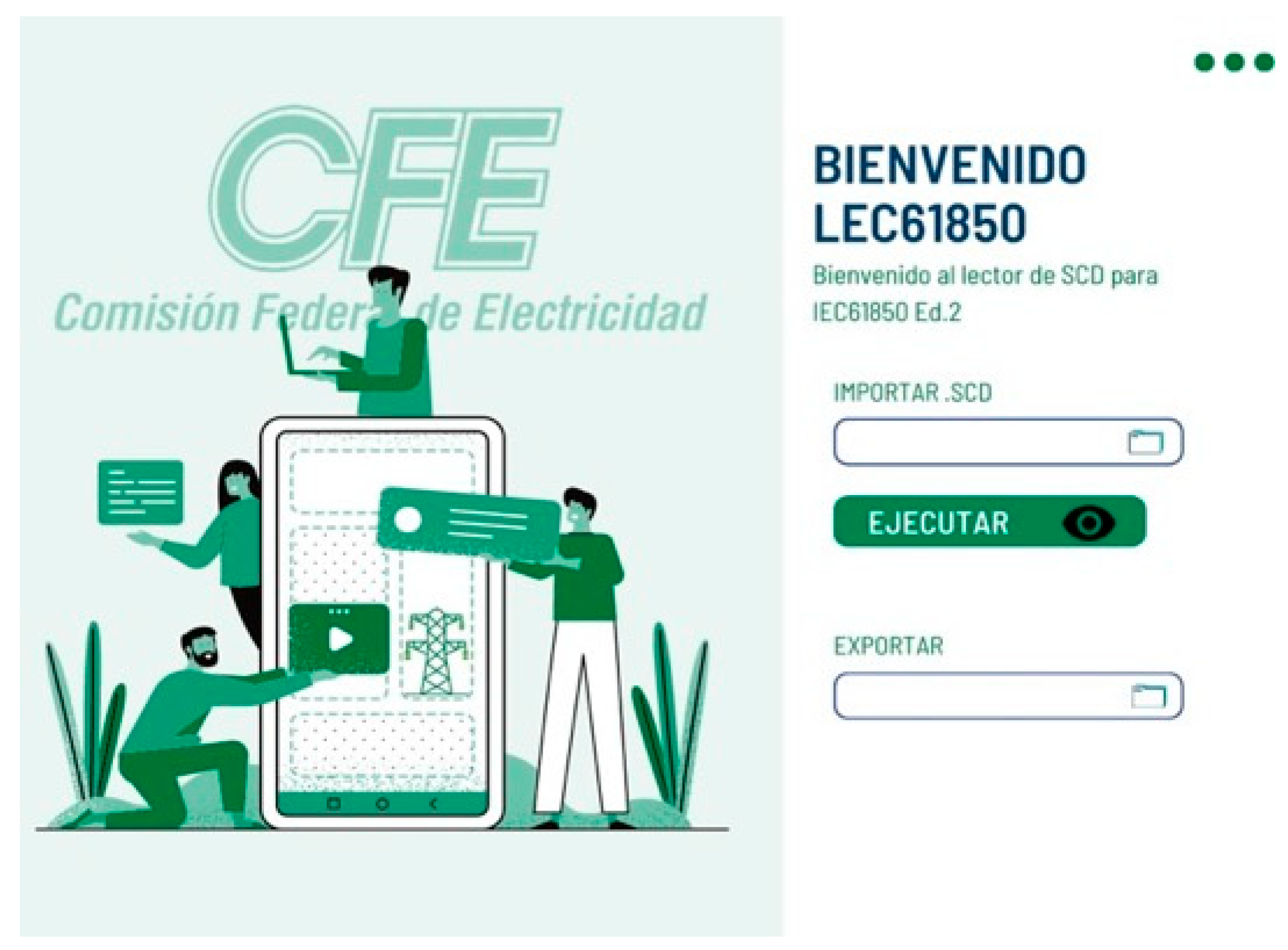
Figure 6 shows one section of the GUI of the application developed in the case study. Through this interface, the application allows for the import of an SCD file (see the IMPORTAR .SCD section of Figure 6), and based on this, displays the information of the SAS selected by the user. Thus, by translating a physical model into a digital one, the user can analyze the configuration of an SAS in accordance with IEC 61850.

2.7. Methodology

Usability studies aim to assess how effectively a system facilitates the completion of specific tasks, focusing on efficiency, effectiveness, and user satisfaction [45]. An experimental study showed that these usability mechanisms can prove that a system supports a task [46]. In this way, when a usability study is fulfilled, it is possible to measure whether a system supports task achievement by outlining typical tasks and analyzing the three usability-mechanisms previously named: (1) time taken, resource consumed, or number of errors (efficiency); (2) measuring task/success completion rate (effectiveness); or (3) users’ subjective opinions and feelings about the familiarity with a system (satisfaction) [47]. By utilizing the last usability mechanism, it is feasible to understand how users perceive a system and determine ease of use, confidence, frustration, and self-confidence, which are critical perceived characteristics for real-world technology adoption. Several instruments exist for measuring system usability through user satisfaction, such as SUS, CSUQ, and UMUX-Lite [48]. The instrument used for evaluating this proposal was the System Usability Scale (SUS) [49]. SUS has been widely used as a highly reliable measure of perceived usability of systems, products, or services [50] and conforms to international standards, such as ISO [45].
The SUS contains 10 items, each written as a statement. Respondents to the SUS rate their responses on a Likert scale from 1 (strongly disagree) to 5 (strongly agree). The items were translated into Spanish, and the translation was deliberated and endorsed by the authors. Table 2 describes the related topic of the 10 items included in the SUS.

3. Results

This section presents the results from using the SUS [49]. As described in the previous section, the instrument consists of 10 items (see Table 2), and five participants joined in the evaluation. Table 3 describes the characteristics of the five expert participants, one female and four males. Their average age was 40 years (min 26, max 50).
Table 4 summarizes the results obtained using the SUS. The letters A through E in the Participant column identify each of the five participants in the evaluation. The values in the I1 through I10 columns represent the participants’ ratings for each of the 10 SUS statements. As previously stated, these responses are on a Likert scale ranging from 1 to 5, where 1 represents “Strongly disagree” and 5 indicates “Strongly agree”. Thus, for example, for subject B, the assessment for item 1 (I1—“I think that I would like to use this system frequently” [49]) is strongly agree, while for item 2 (I2—“I found the system unnecessarily complex” [49]), it is strongly disagree. The Score column contains the weight assigned by each evaluator to each of the 10 SUS statements. The data included in this column are normalized values, from 0 to 100, of the scores given to each statement by the evaluators. To perform this normalization, the following four steps are performed in each row of data in Table 4 [49]: (1) one is subtracted from each of the scores for the odd-numbered statements (I1, I3, I5, I7, I9); then (2) subtract from five each of the scores given to the even statements (I2, I4, I6, I8, I10); then (3) the values adjusted in steps 1 and 2 are added; finally (4) the sum obtained in step 3 is multiplied by 2.5, which generates a value that can range from 0 to 100, and is placed in the Score column of the corresponding row. The previous procedure is repeated for each row weighting, thus completing all values in the Score column. The rationale for the normalization procedure in [49] is that the SUS aims to estimate perceived usability as a single latent construct. As the items alternate between positive and negative statements, it is first necessary to align the directionality (higher values indicate better usability) and re-center the scale (transforming the original Likert scale from 1–5 to 0–4). Next, it scales to 0–100, enabling interpretability and comparability. The Mean in the last row of Table 4 represents the general usability perception of the developed application, which, in this evaluation, was 88.0 (Median = 90; SD = 10.52).

4. Discussion and Conclusions

In this section, the results obtained are examined in a broader context of the application domain. A conclusion is also drawn from these results.
Sample selection is a fundamental aspect of any study. In this work, a referral sample was chosen, a highly recommended technique for interaction design in software products such as the one proposed in this study [39]. The choice of sample size is also a fundamental aspect. According to human–computer interaction studies, five subjects are sufficient to detect usability aspects when user groups are highly specialized in a particular topic [51].
It is essential to highlight that usability testing is a support tool for evaluating two aspects: (1) the extent to which a system can support processes in industrial contexts [23]; and (2) how to efficiently design human–machine interfaces in SCADA systems [24,25]. Integrating usability testing into the software development lifecycle enables the early identification and resolution of user interaction problems, increasing the likelihood of adoption. The SUS is the most widely standardized instrument for evaluating perceived usability in software artifacts [52]. Thus, the methodology employed in the present study lends itself to a high degree of internal validity. A relevant aspect of the present study is that the software tool is customized software. Although general-purpose software on the market focuses on the application domain discussed here, custom software offers desirable characteristics. Customized software was built specifically for the CFE’s unique needs, making it more efficient for specific tasks. In this sense, the usability evaluation presented in this study is highly relevant, as it quantifies the extent to which the designed software supports the translation and analysis tasks for a specific SAS configuration based on the IEC 61850 standard. To the best of our knowledge, the literature is scarce regarding studies on the usability evaluation of custom-made SCADA systems. Thus, this article presents a guideline for using a usability mechanism based on user satisfaction.
Since this is an ordinal scale, the interpretation of SUS implementation results has been discussed in several studies. As shown in Table 4, the average perceived usability score in this study was 88.0. According to Bangor and colleagues [53], SUS scores above 85 characterize a system as “excellent” or “highly usable”. Thus, the results obtained indicate that the proposed application has a high probability of adoption.
Despite the results described above, this study has several limitations. Firstly, as can be observed in the results in the Score column (Table 4), some values deviated from the median value of 90. In this study, the authors believe that the deviation mainly arises from sampling issues and distributional properties. In the first case, assuming the sample is representative, the reason is that, in small samples, the median may not be a stable estimate, so deviations appear larger or more frequent. In the latter, the sample statistics show a left-skewed distribution (mean < median), and in asymmetric distributions, some observations will naturally fall far from the median on one side. On the other hand, unaccounted confounding variables (e.g., age, sex) may systematically push some observations away from the median; this issue will be analyzed in future work. Second, self-informed usability studies have been criticized. In these studies, informed perceptions may differ from the actual observed behavior [54]. Also, in the SUS, item wording (alternating positive/negative) may lead to confusion or miscoding in dataset values [55]. In future studies, the use of the SUS can be enriched from two strategies: (1) using it alongside other scales, such as the Software Usability Measurement Inventory (SUMI) [56]; and (2) combining it with objective measures, such as task time and error rates. The previously described could provide an added comprehensive analysis of system usability and effectiveness. Finally, the usability evaluation presented here was based on three scenarios agreed with the CFE staff. Within the context of SCADA systems, the number of scenarios could be greater. Nonetheless, the scenarios represented are highly prevalent in the CFE context. Thus, in the future, this study could be enhanced by increasing the number of scenarios. The scalability issue is a significant advantage of scenario-based software studies [57].
Based on the previously addressed topics, it is pertinent to outline some future lines of work. First, as described in previous work, simulating SCADA systems significantly impacts the supervision and control of power plants [58,59,60]. Although we consider it an advantage that the proposal presented here is a digital representation of an operating electrical substation, we believe that it is relevant to strengthen this initiative in the future by enabling the implementation of other scenarios. The latter could be enriched by applying artificial intelligence, as proposed in other studies [61,62]. For example, given the SCL’s characteristics, information on the operation of IEDs integrated into the SCADA system can be stored. Machine learning algorithms could process this information to perform, for example, two tasks: (1) predicting the maintenance or replacement period of the IEDs; and (2) generating classification models from failure profiles (IEDs’ voltage levels, failure issue date, installation date) to identify and anticipate failure events. In future versions, the proposal could be extended to utilize the digital twin concept, serving as a basis for virtual testing and prototyping, design adjustments, or process optimization [63]. For example, the system represented by the SCD file in Figure 3 could be edited in CAD software. During the editing process, the functional parameters of the SCD file can be simulated to observe their eventual impact on the CFE SCADA system. This simulation would then allow the necessary adjustments to the SCD file to be made and subsequently replicated in the actual SCADA system. The literature highlights that Latin America faces significant challenges in adopting Industry 4.0 and 5.0 technologies [1], within which SCADA systems play a fundamental role. Among these challenges, promoting the acquisition of digital skills stands out. This proposal aims to acquire them, as it enables a user without in-depth knowledge of the IEC 61850 standard to fully understand the behavior of a digitally modeled electric substation under this standard.
Finally, it is essential to note that experts in the IEC 61850 standard evaluated the proposal presented here. The results consistently confirm that these users widely accept the proposed software application and perceive it as useful. Furthermore, as we report in this article, this application offers alternatives for improving the SAS models it comprises. Thus, the initiative described here would eventually incentivize and promote the digital skills of those who perform translation and analysis to configure electrical substation automation systems.

Author Contributions

Conceptualization, M.Y.S.-G. and V.H.C.; methodology, V.H.C. and W.A.M.-L.; Software, M.Y.S.-G. and W.A.M.-L.; validation, J.L.Á.-F. and J.S.; formal analysis, M.Y.S.-G. and V.H.C.; investigation, M.Y.S.-G., W.A.M.-L. and V.H.C.; data curation, M.Y.S.-G. and V.H.C.; writing—original draft preparation, M.Y.S.-G. and V.H.C.; writing—review and editing, M.Y.S.-G., W.A.M.-L., J.L.Á.-F., J.S. and V.H.C. All authors have read and agreed to the published version of the manuscript.

Funding

This research received no specific grant from any funding agency in the public, commercial, or not-for-profit sectors.

Data Availability Statement

The original data existing in this study are included in the article. Further inquiries can be directed to the corresponding author.

Acknowledgments

The authors gratefully acknowledge the participation of CFE personnel in Colima, Mexico.

Conflicts of Interest

The authors declare no conflicts of interest.

Abbreviations

The following abbreviations are used in this manuscript:
BCUBay control unit
CFEFederal Electricity Commission
CIDConfigured IED (Intelligent electronic device) Description file
DT-CTRL-10A Substation automation system of the Federal Electricity Commission (CFE) in Mexico
ECEngineering console
EPSElectrical power system
ESTAEnergy Strategy and Technology Associates International
GGIOGeneric Process I/O, a logical node under the IEC 61850
GOOSEGeneric Object-Oriented Substation Event
GUIGraphical user interface
HCIHuman–computer interface
ICDIntelligent Electronic Device (IED) Capability Description
IEC International Electrotechnical Commission
IEC 61850Standard 61850 of the International Electrotechnical Commission (IEC)
IEDIntelligent electronic device
LCCLocal control console
LNLogical node
MMSManufacturing Message Specification
PCPersonal computer
PLCProgrammable logic controller
REISmart Grid Regulatory Framework
REI MEMSmart Grid Regulatory Framework in Mexico
SASSubstation automation system
SCADASupervisory control and data acquisition system
SCDSubstation Configuration Description
SCLSubstation configuration description language
SENNational Electric System (in Mexico)
SCCMSignal acquisition and control module
SELSchweitzer Engineering Laboratories
SUSSystem Usability Scale
UMLUnified Modeling Language
XMLExtensible Markup Language

References

  1. Tobar-Rosero, O.A.; Díaz-Mendoza, O.D.; Díaz-Vargas, P.A.; Candelo-Becerra, J.E.; Florez-Célis, H.A.; Quintero-Henao, L.F. Digital Substations: Optimization Opportunities from Communication Architectures and Emerging Technologies. Sci 2025, 7, 63. [Google Scholar] [CrossRef]
  2. Huawei. What Is a Smart Grid?: A Complete Guide. 2025. Available online: https://e.huawei.com/fr/knowledge/2024/industries/grid/what-is-smart-grid (accessed on 21 March 2025).
  3. Cubizolles, B. HMI/SCADA: Everything You Need to Know. 2025. Available online: https://www.gevernova.com/software/blog/hmi-scada-everything-you-need-to-know#:~:text=HMI%2FSCADA%20allows%20operators%20to,important%20equipment%20control%2C%20which%20provides (accessed on 14 February 2025).
  4. C3Automation. Top Applications of SCADA in Power Systems. 2023. Available online: https://www.c3automation.com/blog/applications-of-scada-in-power-systems/ (accessed on 13 January 2025).
  5. Festo. Controles Lógicos Programables—Conjunto de Equipos TP 301. 2025. Available online: https://www.festo.com/mx/es/p/controles-logicos-programables-conjunto-de-equipos-id_PROD_DID_167101/?page=0 (accessed on 14 April 2025).
  6. Siemens. Control What Matters and Overcome Barriers. 2025. Available online: https://www.siemens.com/global/en/products/automation/simatic-hmi/wincc-unified/software.html (accessed on 10 July 2025).
  7. Abdulsalam, A.B.; Alsaadi, H.A.J.; Hamodat, Z. Control and Management of Solar PV Grid Using Scada System. In Proceedings of the 2022 International Congress on Human-Computer Interaction, Optimization and Robotic Applications (HORA), Ankara, Turkey, 9–11 June 2022. [Google Scholar]
  8. He, W.; Baig, M.; Iqbal, M. An Internet of Things—Supervisory Control and Data Acquisition (IoT-SCADA) Architecture for Photovoltaic System Monitoring, Control, and Inspection in Real Time. Electronics 2025, 14, 42. [Google Scholar] [CrossRef]
  9. Modbus. About Modbus Organization. 2025. Available online: https://www.modbus.org/ (accessed on 12 July 2025).
  10. DNP3. Overview of DNP3 Protocol. 2025. Available online: https://www.dnp.org/About/Overview-of-DNP3-Protocol (accessed on 9 July 2025).
  11. IEC. About Us. 2025. Available online: https://www.iec.ch/about-us (accessed on 18 January 2025).
  12. Iglesias-Urkia, M.; Urbieta, A.; Parra, J.; Casado-Mansilla, D. IEC 61850 meets CoAP: Towards the integration of Smart Grids and IoT standards. In Proceedings of the IoT ‘17: Proceedings of the Seventh International Conference on the Internet of Things, Linz, Austria, 22–25 October 2017. [Google Scholar]
  13. Pisla, M.A.; Enache, B.A.; Argyriou, V.; Sarigiannidis, P.; Voicila, T.I.; Seritan, G.C. High-Speed SMVs Subscriber Design for FPGA Architectures. Electronics 2025, 14, 2135. [Google Scholar] [CrossRef]
  14. Koshiishi, K.; Kaneda, K.; Watabe, Y. Interoperability experience with IEC 61850-based Substation Automation Systems. In Proceedings of the Power Engineering Society Transmission and Distribution Conference, Orlando, FL, USA, 7–10 May 2012. [Google Scholar]
  15. Jang, B.; Abubakari, A.; Kim, N. IEC 61850 SCL Validation Using UML Model in Modern Digital Substation. Smart Grid Renew. Energy 2018, 9, 127–149. [Google Scholar] [CrossRef]
  16. León, H.; Montez, C.; Valle, O.; Vasques, F. Real-Time Analysis of Time-Critical Messages in IEC 61850 Electrical Substation Communication Systems. Energies 2019, 12, 2272. [Google Scholar] [CrossRef]
  17. Rashid, M.T.A.; Yussof, S.; Yusoff, Y.; Ismail, R. A review of security attacks on IEC61850 substation automation system network. In Proceedings of the 6th International Conference on Information Technology and Multimedia at UNITEN: Cultivating Creativity and Enabling Technology Through the Internet of Things, (ICIMU 2014), Putrajaya, Malaysia, 18–20 November 2014. [Google Scholar]
  18. Malmström, J. Modelling of FACTS Power System Controller Using IEC 61850; Mälardalens Högskola, Akademin för Innovation, Design och Teknik: Eskilstuna, Sweden, 2015. [Google Scholar]
  19. FNN. IEC 61850 from the User Perspective; Forum Network Technology: Berlin, Germany, 2012. [Google Scholar]
  20. Tang, Y.F.J.; Cui, Q.; Dai, B.; Xiong, J. Wind Turbine SCADA Data Interpreter Based on Large Language Models. In Proceedings of the 1st Electrical Artificial Intelligence Conference, Nanjing, China, 6–8 December 2024; Springer: Berlin/Heidelberg, Germany, 2025. [Google Scholar]
  21. Zhang, S.; Shi, L.; Wang, B. A Conversion Method for SCL to CIM Based on Ontology Matching. In Proceedings of the 2015 3rd International Conference on Machinery, Materials and Information Technology Applications, Qingdao, China, 28–29 November 2015. [Google Scholar]
  22. Strasser, T.I.; Andrén, F.P. Engineering and Validating Cyber-Physical Energy Systems: Needs, Status Quo, and Research Trends. In Industrial Applications of Holonic and Multi-Agent Systems; Springer International Publishing: Berlin/Heidelberg, Germany, 2019; pp. 13–26. [Google Scholar]
  23. Toledo, T.G.; Rosales, L.R.; Hernandez, M.A.; Arellano, J.P.J. Usability test of a SCADA system for monitoring and operating an experimental wind rotor. In Proceedings of the 2015 International Conference on Computing Systems and Telematics (ICCSAT), Xalapa, Mexico, 28–30 October 2015. [Google Scholar]
  24. Cruz-Benito, J.; García-Peñalvo, F.J.; Therón, R. Analyzing the software architectures supporting HCI/HMI processes through a systematic review of the literature. Telemat. Inform. 2019, 38, 118–132. [Google Scholar] [CrossRef]
  25. Nachreiner, F.; Nickel, P.; Meyer, I. Human factors in process control systems: The design of human–machine interfaces. Saf. Sci. 2006, 44, 5–26. [Google Scholar] [CrossRef]
  26. Melo, A.F.S.; Roldan-Fernandez, J.M.; Gonzalez-Longatt, F.; Burgos-Payan, M.; Netto, U.C. Novel IEC 61850-based off-site engineering and validation methodology for protection, automation, and control systems. Electr. Power Syst. Res. 2024, 232, 110409. [Google Scholar] [CrossRef]
  27. Saghafian, M.; Vatn, D.M.K.; Moltubakk, S.T.; Bertheussen, L.E.; Petermann, F.M.; Johnsen, S.O.; Alsos, O.A. Understanding automation transparency and its adaptive design implications in safety–critical systems. Saf. Sci. 2025, 184, 106730. [Google Scholar] [CrossRef]
  28. Shafqat, A. Mobile Usability of Intelligent Electronic Devices. Master’s Thesis, Master of Science in Computer Science, Blekinge Institute of Technology, Karlskrona, Sweden, 2015. [Google Scholar]
  29. Karlsson, D. A case study of SCADA implementation for small electrical producers in WideQuick. Master’s Thesis, Department of Automatic Control, Lund University, Lund, Sweden, 2024. [Google Scholar]
  30. Pham, T.; Boone, A.P.; Ngo, M.K. Heuristic Evaluation of Supervisory Control and Data Acquisition (SCADA) Displays. In Proceedings of the Human Factors and Ergonomics Society Annual Meeting, Washington, DC, USA, 23–27 October 2023. [Google Scholar]
  31. Robles-Rasgado, R. Especificación Técnica Sistema Automatización de Subestaciones CFE Transmisión IEC 61850; CFE Transmisión: Mexico City, Mexico, 2018. [Google Scholar]
  32. Estrada, C.F.F. La Implementación de la Norma IEC61850 en CFE: Trazando la Ruta de la Innovación en la Automatización de Subestaciones; Academia de Ingeniería: Mexico City, Mexico, 2012. [Google Scholar]
  33. ESTA. Marco Regulatorio de la Red Eléctrica Inteligente (REI) en México Para la Comisión Reguladora de Energía; ESTA International: Herndon, VA, USA, 2014. [Google Scholar]
  34. Daboul, M.; Orsagova, J. Interoperability testing for IEC61850 based substation automation system. In Proceedings of the 2018 19th International Scientific Conference on Electric Power Engineering (EPE), Brno, Czech Republic, 16–18 May 2018. [Google Scholar]
  35. Mohagheghi, S.; Stoupis, J.; Wang, Z. Communication protocols and networks for power systems—Current status and future trends. In Proceedings of the 2009 IEEE/PES Power Systems Conference and Exposition, (PSCE 2009), Seattle, WA, USA, 15–18 March 2009. [Google Scholar]
  36. Wang, J.; Wang, Z. Research and implementation of virtual circuit test tool for smart substations. Procedia Comput. Sci. 2021, 183, 197–204. [Google Scholar] [CrossRef]
  37. PSF. Python Software Foundation. 2025. Available online: https://www.python.org/psf-landing/ (accessed on 8 July 2025).
  38. Streamlit. A Faster Way to Build and Share Data Apps. 2025. Available online: https://streamlit.io (accessed on 11 March 2025).
  39. Jones, M.; Marsden, G. Mobile Interaction Design; Wiley: West Sussex, UK, 2006. [Google Scholar]
  40. Hutchins, E.L.; Hollan, J.D.; Norman, D.A. Direct manipulation interfaces. Hum.-Comput. Interact. 1985, 1, 311–338. [Google Scholar] [CrossRef]
  41. Stanton, N.; Salmon, P.; Rafferty, L.; Walker, G.; Baber, C.; Jenkins, D. Human Factors Methods: A Practical Guide for Engineering and Design, 2nd ed.; CRC Press: London, UK, 2013. [Google Scholar] [CrossRef]
  42. Molich, R.; Ede, M.; Kaasgaard, K.; Karyukin, B. Comparative usability evaluation. Behav. Inf. Technol. 2004, 23, 65–74. [Google Scholar] [CrossRef]
  43. Norman, D. The Design of Everyday Things: Revised and Expanded Edition; The MIT Press: Cambridge, MA, USA, 2013. [Google Scholar]
  44. Dekker, S. The Field Guide to Understanding ‘Human Error’, 3rd ed.; CRC Press: London, UK, 2014. [Google Scholar] [CrossRef]
  45. Sagar, K.; Saha, A. A systematic review of software usability studies. Int. J. Inf. Technol. 2017, 1–24. [Google Scholar] [CrossRef]
  46. Ferreira, J.M.; Rodríguez, F.D.; Santos, A.; Dieste, O.; Acuña, S.T.; Juristo, N. Impact of Usability Mechanisms: A Family of Experiments on Efficiency, Effectiveness and User Satisfaction. IEEE Trans. Softw. Eng. 2023, 49, 251–267. [Google Scholar] [CrossRef]
  47. ISO 9241-11:2018; Ergonomics of Human-System Interaction—Part 11: Usability: Definitions and Concepts. ISO: Geneva, Switzerland, 2018.
  48. Lewis, J.R. Measuring Perceived Usability: SUS, UMUX, and CSUQ Ratings for Four Everyday Products. Int. J. Hum. –Comput. Interact. 2018, 35, 1404–1419. [Google Scholar] [CrossRef]
  49. Brooke, J. SUS: A Quick and Dirty Usability Scale. in Usability Evaluation in Industry; CRC Press: London, UK, 1996; pp. 4–7. [Google Scholar]
  50. Hyzy, M.; Bond, R.; Mulvenna, M.; Bai, L.; Dix, A.; Leigh, S.; Hunt, S. System Usability Scale Benchmarking for Digital Health Apps: Meta-analysis. JMIR Mhealth Uhealth 2022, 10, e37290. [Google Scholar] [CrossRef] [PubMed]
  51. Nielsen, J.; Landauer, T.K. A mathematical model of the finding of usability problems. In Proceedings of the ACM INTERCHI’93 Conference, Amsterdam, The Netherlands, 24–29 April 1993. [Google Scholar]
  52. Lewis, J.R. The System Usability Scale: Past, Present, and Future. Int. J. Hum.–Comput. Interact. 2018, 34, 577–590. [Google Scholar] [CrossRef]
  53. Bangor, A.; Kortum, P.T.; Miller, J.T. An empirical evaluation of the System Usability Scale. Int. J. Hum.–Comput. Interact. 2008, 24, 574–594. [Google Scholar] [CrossRef]
  54. Dang, J.; King, K.M.; Inzlicht, M. Why Are Self-Report and Behavioral Measures Weakly Correlated? Trends Cogn. Sci. 2020, 24, 267–269. [Google Scholar] [CrossRef] [PubMed]
  55. Barnum, C.M. Preparing for usability testing. In Usability Testing Essentials; Morgan Kaufmann: Cambridge, MA, USA, 2021; pp. 197–248. [Google Scholar]
  56. Sauro, J.; Lewis, J.R. Standardized usability questionnaires. In Quantifying the User Experience; Morgan Kaufmann: Cambridge, MA, USA, 2016; pp. 185–248. [Google Scholar]
  57. Briand, L.C.; Wüst, J. Integrating scenario-based and measurement-based software product assessment. J. Syst. Softw. 2001, 59, 3–22. [Google Scholar] [CrossRef]
  58. Gómez, S.J.; Varela, S.B.; Tabares, B.A. Power Systems Simulation in Open Source Software. In Proceedings of the IEEE URUCON 2024, Montevideo, Uruguay, 18–20 November 2024. [Google Scholar]
  59. Kim, T.; Kim, H.; Cho, S.; Kim, Y.; Song, B.; Kim, J. Real-Time Kubernetes-Based Front-End Processor for Smart Grid. Electronics 2025, 14, 2377. [Google Scholar] [CrossRef]
  60. Nimma, K.S.; Faraj, S.N. Modeling Intelligent Control Switch IEC 61850 Based Substation Automation Communication. Appl. Syst. Innov. 2018, 1, 7. [Google Scholar] [CrossRef]
  61. Ibrahim, M.; Mahmoud, M.A.; Islam, N.; Gunasekara, S.S. Enhancing Smart Grid Stability Using AI Techniques: A Systematic Literature Review. In Proceedings of the 2025 21st IEEE International Colloquium on Signal Processing & Its Applications (CSPA), Pulau Pinang, Malaysia, 7–8 February 2025. [Google Scholar]
  62. Khayat, M.; Barka, E.; Serhani, M.A.; Sallabi, F.; Shuaib, K.; Khater, H.M. Empowering Security Operation Center with Artificial Intelligence and Machine Learning—A Systematic Literature Review. IEEE Access 2025, 13, 19162–19197. [Google Scholar] [CrossRef]
  63. Iliuţă, M.; Moisescu, M.; Pop, E.; Ionita, A.-D.; Caramihai, S.-I.; Mitulescu, T.-C. Digital Twin—A Review of the Evolution from Concept to Technology and Its Analytical Perspectives on Applications in Various Fields. Appl. Sci. 2024, 14, 5454. [Google Scholar] [CrossRef]
Figure 1. The study method.
Electricity 07 00015 g001
Figure 2. SAS architecture for a case study.
Electricity 07 00015 g002
Figure 3. SCD file of the Villa De Alvarez Substation in SCL language.
Electricity 07 00015 g003
Figure 4. One-line diagram of the Villa de Alvarez substation.
Electricity 07 00015 g004
Figure 5. UML use case model of the developed application.
Electricity 07 00015 g005
Figure 6. GUI section: Importing SCD files for their visualization. Spanish caption in the Figure 6 Translation to English (Comisión Federal de Electricidad: Federal Electricity Commission; Bienvenido LEC61859: Welcome to LEC61850; Bienvenido al lector de SCD para IEC61850 Ed. 2: Welcome to SCD reader for IEC61850 Ed. 2; Importar .SCD: Import .SCD; Ejecutar: Enter; Exportar: Export).
Electricity 07 00015 g006
Table 1. Tools on the market for SAS IEC 61850 maintenance.
ToolManufacturerDescription
StationScoutOMICRON®Visualize and analyze communication relationships and present system topology intuitively.
https://www.omicronenergy.com/es/productos/stationscout/, accessed on 12 December 2022
IEDScoutOMICRON® Provides a detailed view of IEC 61850 IEDs from all manufacturers for in-depth analysis. GOOSE and C/S traffic are presented.
https://www.omicronenergy.com/es/productos/iedscout/, accessed on 12 December 2022
SVScoutOMICRON® Subscribes, displays, and records sampled values.
https://www.omicronenergy.com/es/productos/svscout, accessed on 12 December 2022
ASE61850 Test SetASE®Supports operations and maintenance, enables testing and monitoring, and generates GOOSE reports. It includes phasor diagrams for sampled values.
https://www.ase-systems.com/products/ase61850-relay-test-set/, accessed on 12 December 2022
61850 TesTDoble®Simulates, monitors, and tests IEDs in the digital substation network.
https://www.doble.com/product/software-61850-test/?lang=es, accessed on 12 December 2022
Table 2. The 10-item topics of the SUS questionnaire.
Item IdTopic of the SUS’s Item
I1Frequency of system use.
I2Unnecessary system complexity.
I3System’s ease of use.
I4Technical support requirements for using the system.
I5Functionality integrated to system.
I6Inconsistency in the system components.
I7Learning curve for using the system.
I8System’s use discomfort.
I9Confidence in the system’s use.
I10Learning needs for using the system.
Table 3. Participants’ characteristics.
ParticipantGenreAge
AMale30
BMale50
CMale48
DMale47
EFemale26
Table 4. The SUS scores of the participants.
ParticipantI1I2I3I4I5I6I7I8I9I10Score
A515351515390.0
B511151515190.0
C511133515570.0
D514251515292.5
E515251515197.5
Mean88.0
Disclaimer/Publisher’s Note: The statements, opinions and data contained in all publications are solely those of the individual author(s) and contributor(s) and not of MDPI and/or the editor(s). MDPI and/or the editor(s) disclaim responsibility for any injury to people or property resulting from any ideas, methods, instructions or products referred to in the content.