Article

Analysis of Grounding Schemes and Machine Learning-Based Fault Detection in Hybrid AC/DC Distribution System


1
Department of Electrical and Computer Engineering, Sungkyunkwan University, Suwon 16419, Republic of Korea
2
Department of Semiconductor Engineering, Gachon University, Seongnam-si 13210, Republic of Korea
3
Centre for Energy Technologies, Department of Business Development and Technology, Aarhus University, 7400 Herning, Denmark
4
Department of Electrical and Computer Engineering, Seoul National University of Science and Technology, Seoul 01811, Republic of Korea
*
Author to whom correspondence should be addressed.
Electricity 2026, 7(1), 11; https://doi.org/10.3390/electricity7010011
Submission received: 17 December 2025 / Revised: 26 January 2026 / Accepted: 29 January 2026 / Published: 2 February 2026

Abstract

The increasing integration of hybrid AC/DC networks in modern power systems introduces new challenges in fault detection and grounding scheme design, necessitating advanced techniques for stable and reliable operation. This paper investigates fault detection and grounding schemes in hybrid AC/DC networks using a machine learning (ML) approach to enhance accuracy, speed, and adaptability. Traditional methods often struggle with the dynamic and complex nature of hybrid systems, leading to delayed or incorrect fault identification. To address this, we propose a data-driven ML framework that leverages features such as voltage, current, and frequency characteristics for real-time detection and classification of faults. Additionally, the effectiveness of various grounding schemes is analyzed under different fault conditions to ensure system stability and safety. Simulation results on a hybrid AC/DC test network demonstrate the superior performance of the proposed ML-based fault detection method compared to conventional techniques, achieving high precision, recall, and robustness against noise and varying operating conditions. The findings highlight the potential of ML in improving fault management and grounding strategy optimization for future hybrid power grids.

1. Introduction

In recent years, the conventional face of the power system has changed to a net-zero energy system, and the popularity of inverter-based resources (IBR) has grown as they are continuously replacing traditional large synchronous generators [1,2]. The integration of decentralized renewable energy sources has reshaped modern power transmission and distribution networks [3]. Additionally, it has been demonstrated that direct current (DC) distribution confers a greater number of benefits in comparison to alternating current (AC) distribution [4,5]. It provides easy integration of DC sources with the system and reduces unnecessary AC/DC conversions. The upsurge in the utilization of electric vehicles and other DC loads such as laptops, mobile phones, and DC air conditioners has resulted in the development of hybrid medium voltage distribution networks that merge both AC and DC components [6].
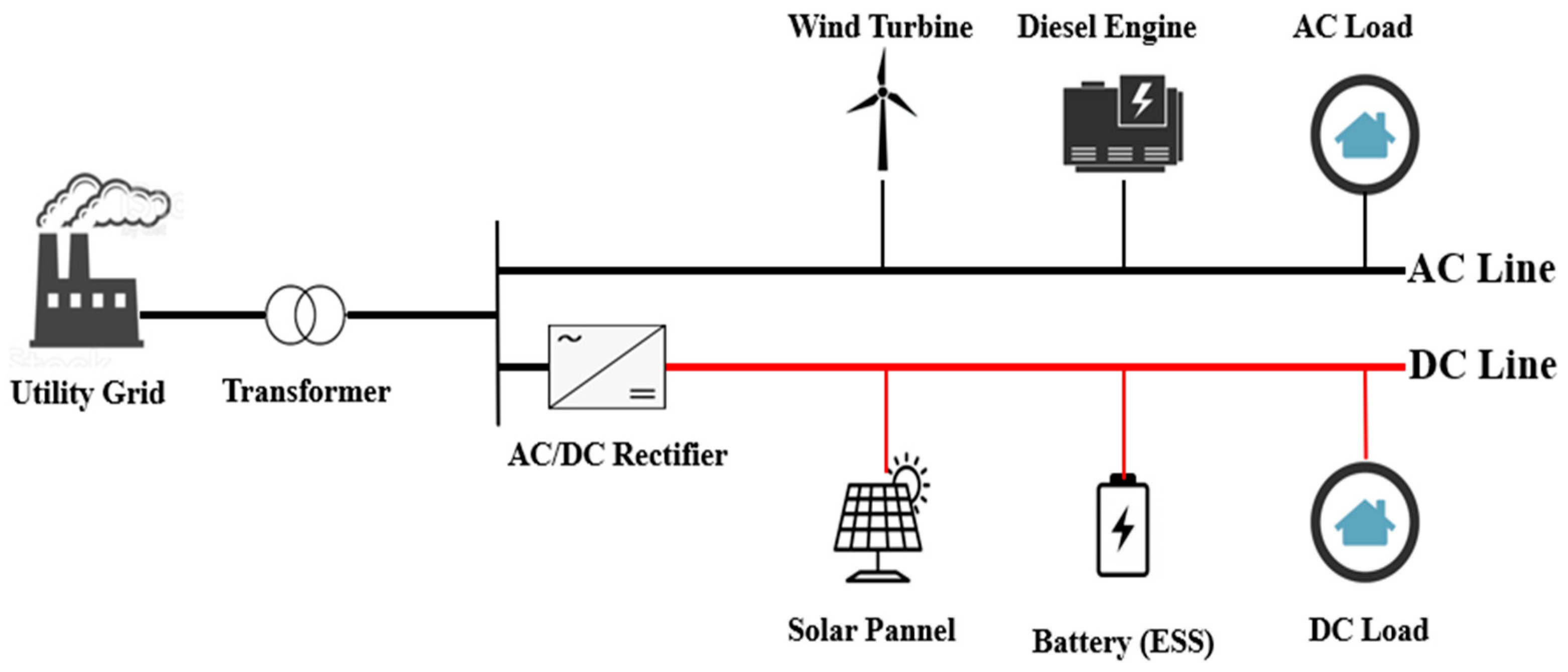
Hybrid AC/DC grids have gained the attention of researchers due to their combined advantages of both AC and DC networks. They are quite flexible in terms of the deployment of both AC/DC loads and sources. They provide several advantages compared to traditional AC and DC networks such as improvement in power quality, quick power restoration, and precise power control [6,7]. Several international pilot projects have demonstrated the feasibility and benefits of hybrid AC/DC grids. Notable examples include the TIGON Project in Spain [8,9], the MVDC pilot link at RWTH Aachen University in Germany [10], the Jiangsu Province hybrid AC/DC transmission project in China [11], the Tagajo Campus hybrid microgrid in Japan [12], and the ANGLE-DC project in the UK [13]. These initiatives highlight the global interest in hybrid AC/DC systems and provide practical validation of their potential for renewable integration, efficiency improvement, and grid reinforcement. Figure 1 shows a typical hybrid AC/DC network having multiple energy sources integrated.
However, their new structure has different characteristics from conventional systems, such as controllability, vulnerability, and exposure to cascading faults [14]. Due to mutual influence from both AC and DC sides, hybrid networks encounter new challenges such as control and protection [15]. The traditional fault protection management approaches that are effective for pure AC grids are not adequate for hybrid AC/DC grids [16]. Thus, these grids demand new methods to deal with fault analysis. At the same time, the design and implementation of grounding strategies for such networks present unique challenges due to the coexistence of AC and DC systems.
The IEEE green book [17] furnishes an outline of the grounding system-related concerns, encompassing a concise account of the benefits of both grounded and ungrounded systems, as well as the identification of the locations where the system is to be grounded and the equipment that is to be employed. In [18], distribution system design practices between the United States and Europe are compared, highlighting the similarities and differences that exist. Solid grounding is utilized in 50% of the UK’s system, resistance grounding in 40%, and reactor grounding is employed in 10% of cases to control the ground fault current. Belgium and Spain have reactors, whereas France utilizes resistance grounding. In contrast to the United States, Greece does not employ impedance grounding for neutrals in primary distribution. Secondary distribution within commercial and industrial settings in the United States, on the other hand, commonly employs resistance grounding.
Previously, various techniques were used for the grounding of the medium voltage AC (MVAC) distribution system, but limited research has been done so far on the grounding of the MVDC distribution. Grounding is important for the safety of equipment and personnel as defined by the National Electrical Code (NEC). In [19], the basis of the grounding equipment function and grounding requirements for 600 V or less are briefly discussed. Moreover, ref. [20] discusses the significance of neutral grounding in low- and medium-voltage industrial power distribution systems. This study conducts a comparative analysis of three distinct types of grounding systems and concludes that a customized high-resistance grounding system accompanied by ground fault tripping could potentially emerge as the optimal choice for certain industrial applications. In [21], the impact of grounding on AC distribution systems for fault responses is investigated through different case studies. Fault current, voltage swell, ground potential rise, and neutral wire voltages and currents are analyzed. Power failures in industries and commercial installations may result in economic and operational losses. As a solution, ref. [22] analyzes solidly neutral, resistance grounded, and high-resistance grounding to avoid grounding faults.
In [23], diverse simulations were conducted to explore grounding schemes in both bipolar and unipolar DC systems. The simulations were carried out using PSCAD software to investigate the effects of grounding on the detection of line-to-ground faults, fault current, leakage current, common mode current, and safety of both personnel and equipment. Similarly, ref. [24] investigates the occurrence of transient short-circuit current and overvoltage in the context of a monopoly ground fault and various grounding configurations including ungrounded, grounded through resistor (high and low), and solid grounding topologies. The findings suggest that grounding with a small resistor of 400–800 ohms is efficient for controlling overcurrent and overvoltage. It is important to consider the influence of load conditions and grounding strategies on overcurrent and overvoltage. It also mentions that the grounding mode of the system should affect the relay protection scheme.
A crucial task in any power system is to detect the fault and classify it as soon as possible to protect the power equipment from severe faults. This demands a strong and accurate fault detection and classification algorithm. There are three logical stages [25] of any protection scheme: detection, classification, and location of the fault. Numerous prior studies have extensively focused on these stages of protection. For example, a K-nearest neighbors algorithm is proposed in [26] for fault detection and classification. Various scenarios are simulated with varying fault resistance and fault location to check the accuracy of the proposed algorithm. A real-time fault classification approach is proposed in [27] based on fuzzy logic. To cope with the uncertainties that arise during fault recognition in hybrid AC/DC networks, a Bayesian approach is proposed in [16]. A morphological fault detector algorithm is presented in [28] to detect the high-impedance fault and to classify it. To detect and categorize short-circuit failures in DC microgrids without utilizing previous fault information, a transfer learning approach is suggested in [29]. Throughout typical operational disturbances, the transient characteristics are used to retrieve the fault information, which is then shifted to a target area as fault labels.
Many traditional techniques were previously employed to detect and categorize faults, but these schemes have some drawbacks such as isolating the healthy part with the faulty portion. This prevents them from being optimal and makes them uneconomical. Instead, modern protection schemes based on machine learning are suggested to deal with such issues. An artificial neural network (ANN) model is proposed in [30] for fault detection in a low-voltage hybrid AC/DC microgrid. The algorithm rapidly detects the fault in a very short period. A machine learning scheme is used in [31] to detect faults in distribution lines and classify them, where wavelet decomposition is used to retrieve the required information. In [32], the author suggested two novel techniques based on support vector machine (SVM) for fault detection and classification in transmission lines, with an accuracy of 99%. An improved machine learning algorithm was proposed in [33] to recognize single-phase ground (SPG) faults in AC/DC transmission lines. The accuracy of the recommended method is tested under different resistances, noise ratios, and fault locations.
Despite these efforts, most works treat grounding strategies and fault detection methods separately, without examining their combined influence in hybrid AC/DC MV networks. This creates a gap in the literature because the grounding mode directly affects fault characteristics, which in turn impacts the accuracy and reliability of fault detection methods.
To address this gap, this research proposes a Random Forest (RF)-based machine-learning technique for fault detection and classification in hybrid AC/DC networks. The total harmonic distortion (THD) and RMS voltage signals at various fault points under different parameters (changing load, fault resistance, fault location, etc.) are extracted from the test system. The proposed RF algorithm is trained and tested using these features in the Python 3.10 environment.
The rest of this paper is organized as follows. Section 2 provides an overview of hybrid AC/DC distribution networks and grounding schemes. Section 3 presents the proposed machine-learning-based fault detection framework. Section 4 include results and discussion, and Section 5 concludes the paper with key findings and possible directions for future research.

2. Modeling and Analysis of Grounding Strategies

This section analyzes varied grounding topologies for hybrid AC/DC distribution systems simulated in MATLAB R2025b/Simulink 8.0, in combination with their corresponding merits and demerits. Essentially, three grounding approaches are commonly employed in the power system, namely ungrounded, solidly grounded, or Impedance grounded through a resistor, inductor, or capacitor. Each scheme has its unique benefits and drawbacks.
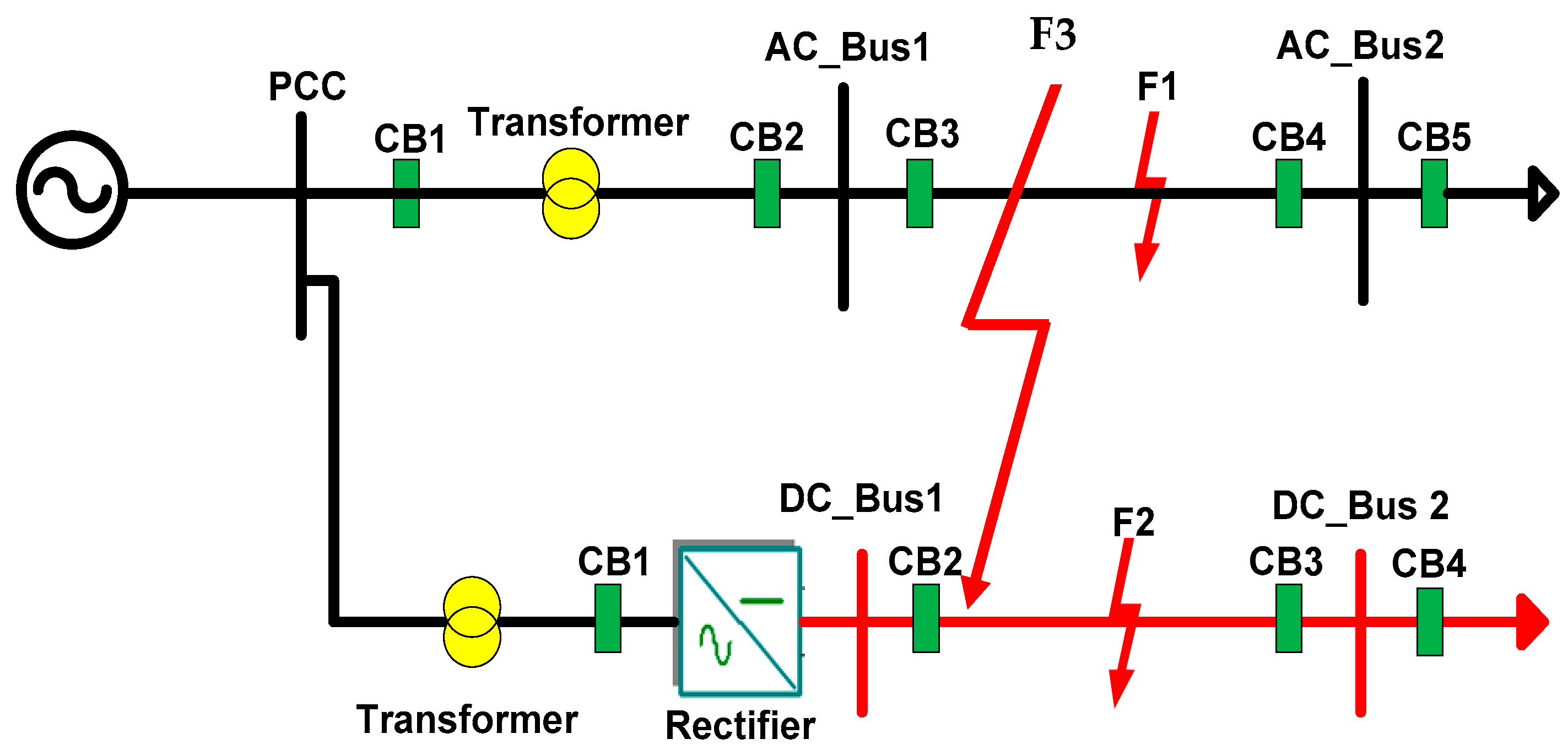
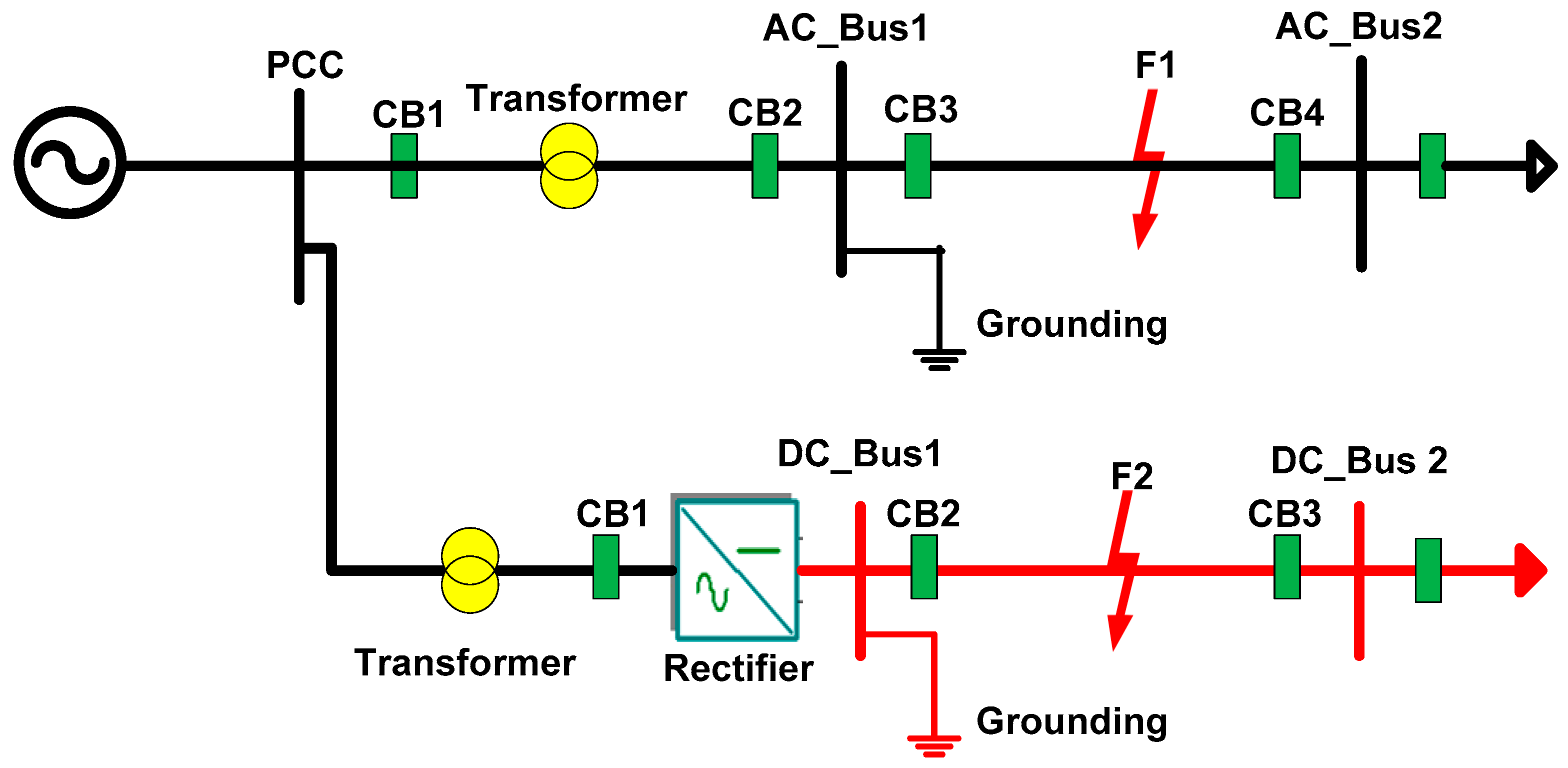
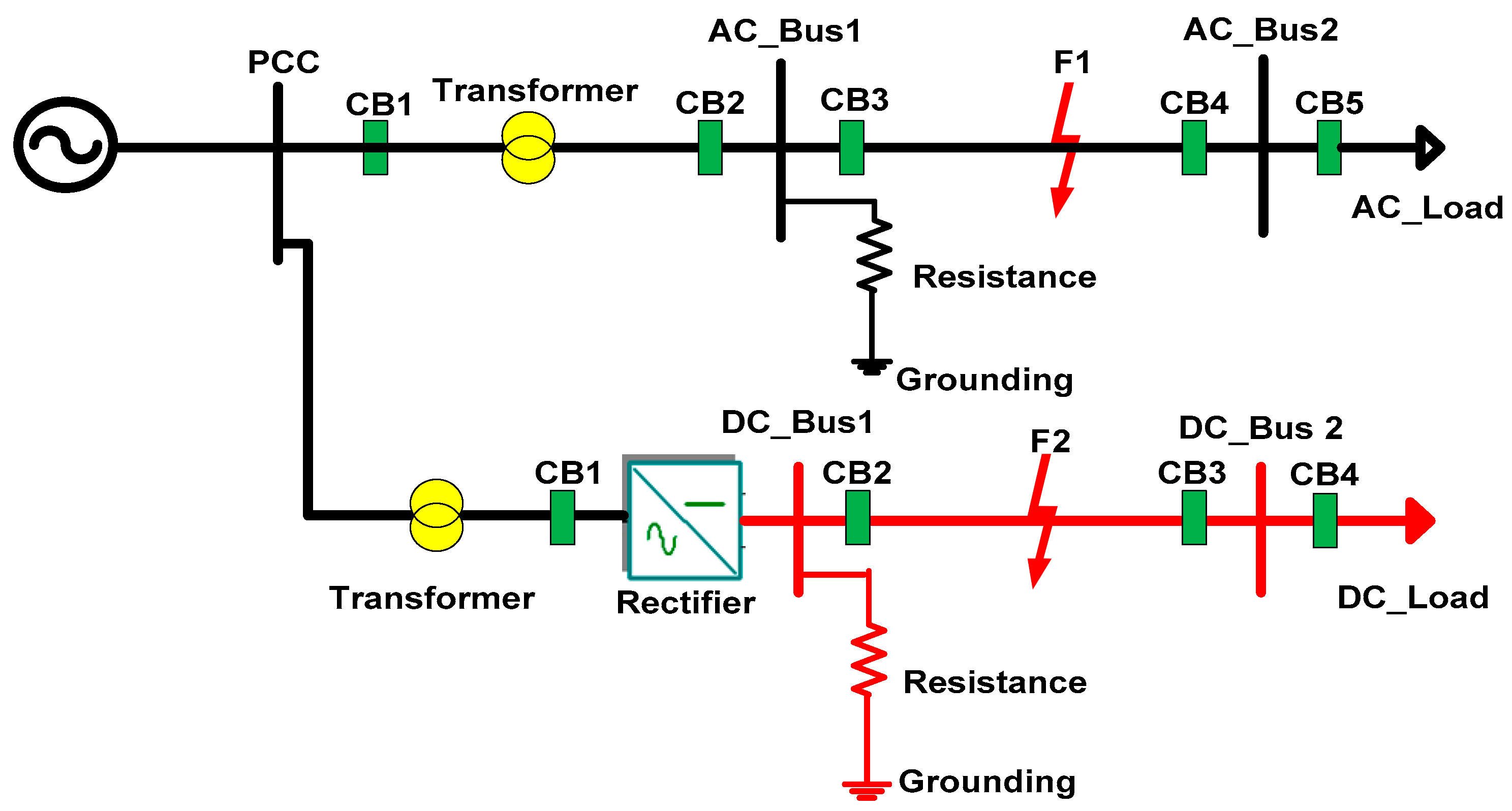
The single line diagram of the hybrid AC/DC test system used in this work is shown in Figure 2 and system parameter details are mentioned in Table 1. This study consists of two interconnected networks supplied through separate transformers. The black line indicates the AC network, and the red line indicates the DC network, where fault F1 and F2 are introduced for analysis of the AC fault effect on DC and the DC fault effect on AC, and F3 is introduced for intersystem fault.

2.1. Ungrounded System

The proposed scheme involves the isolation of the distribution line from the ground, as shown in Figure 2, where an ungrounded system is simulated. This approach offers the benefit of minimizing fault current in the event of single-phase grounding, while also preventing the occurrence of stray currents during normal operation that could cause corrosion in the DC system. In the realm of AC systems, this topology is commonly referred to as capacitance ground, owing to the presence of stray capacitances. However, this scheme also has its drawbacks, namely the high common mode voltage and increased voltage stress on the non-faulted phase during faults, which can compromise line insulation integrity. Furthermore, overcurrent protection for this scheme is difficult to detect due to very low fault currents.
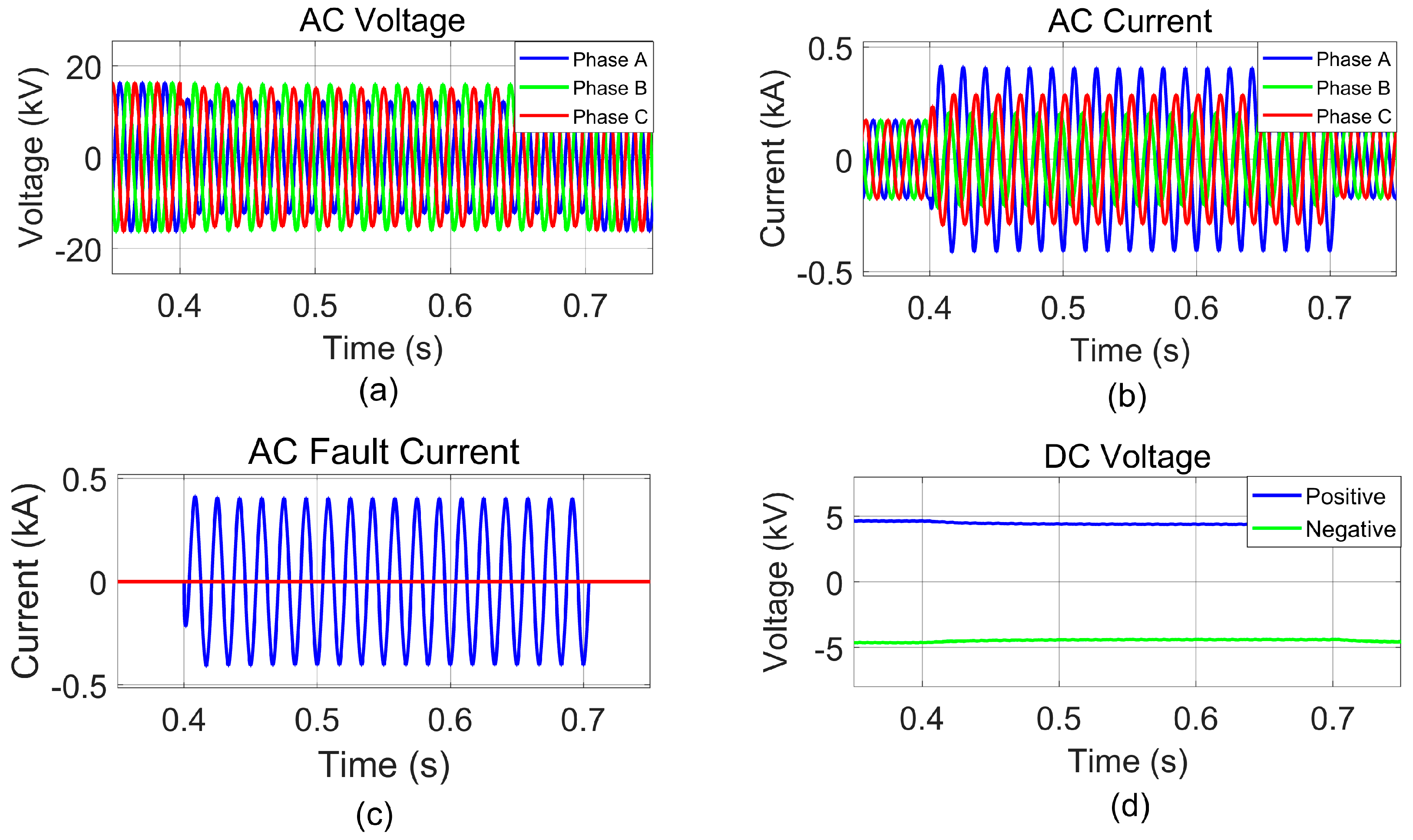
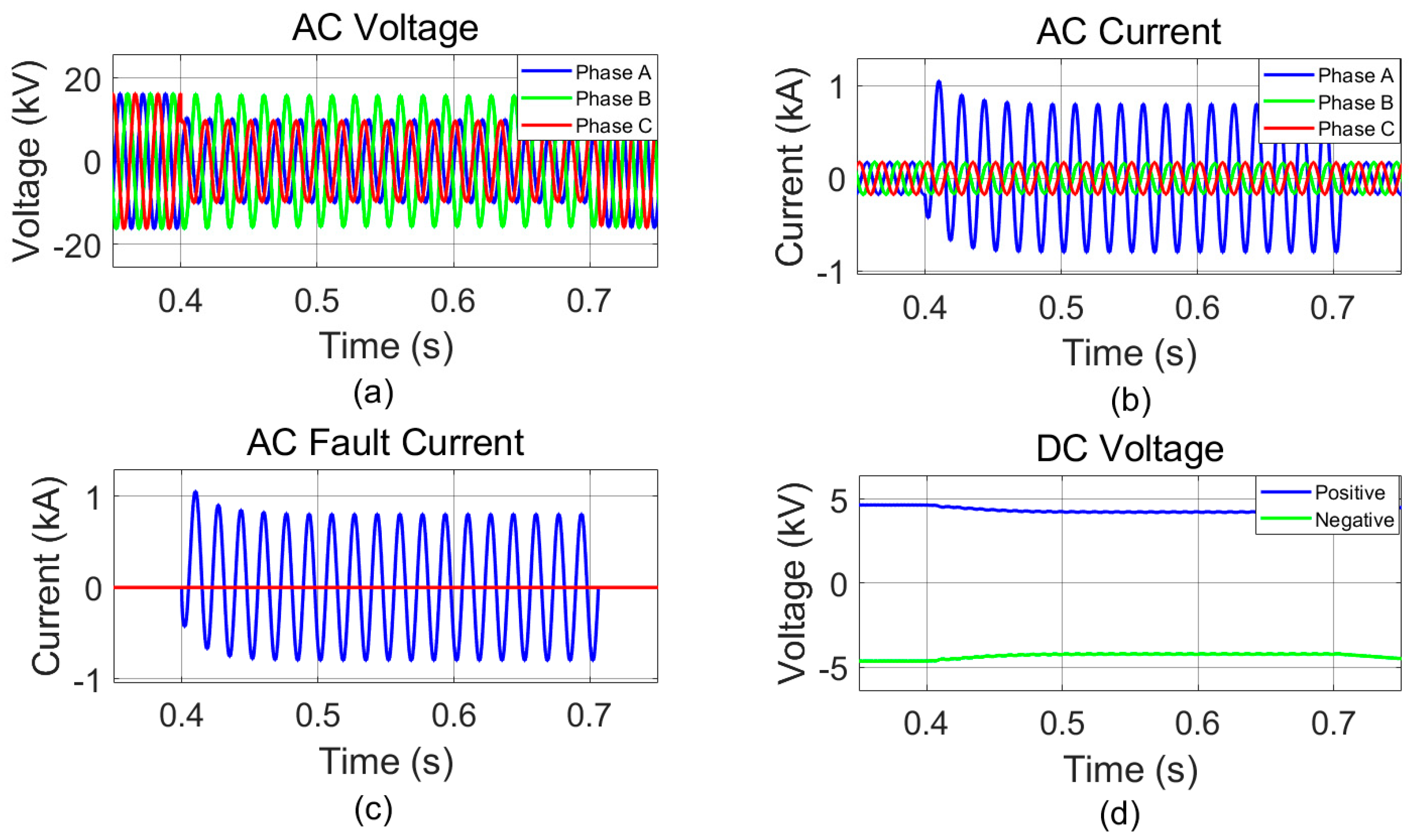
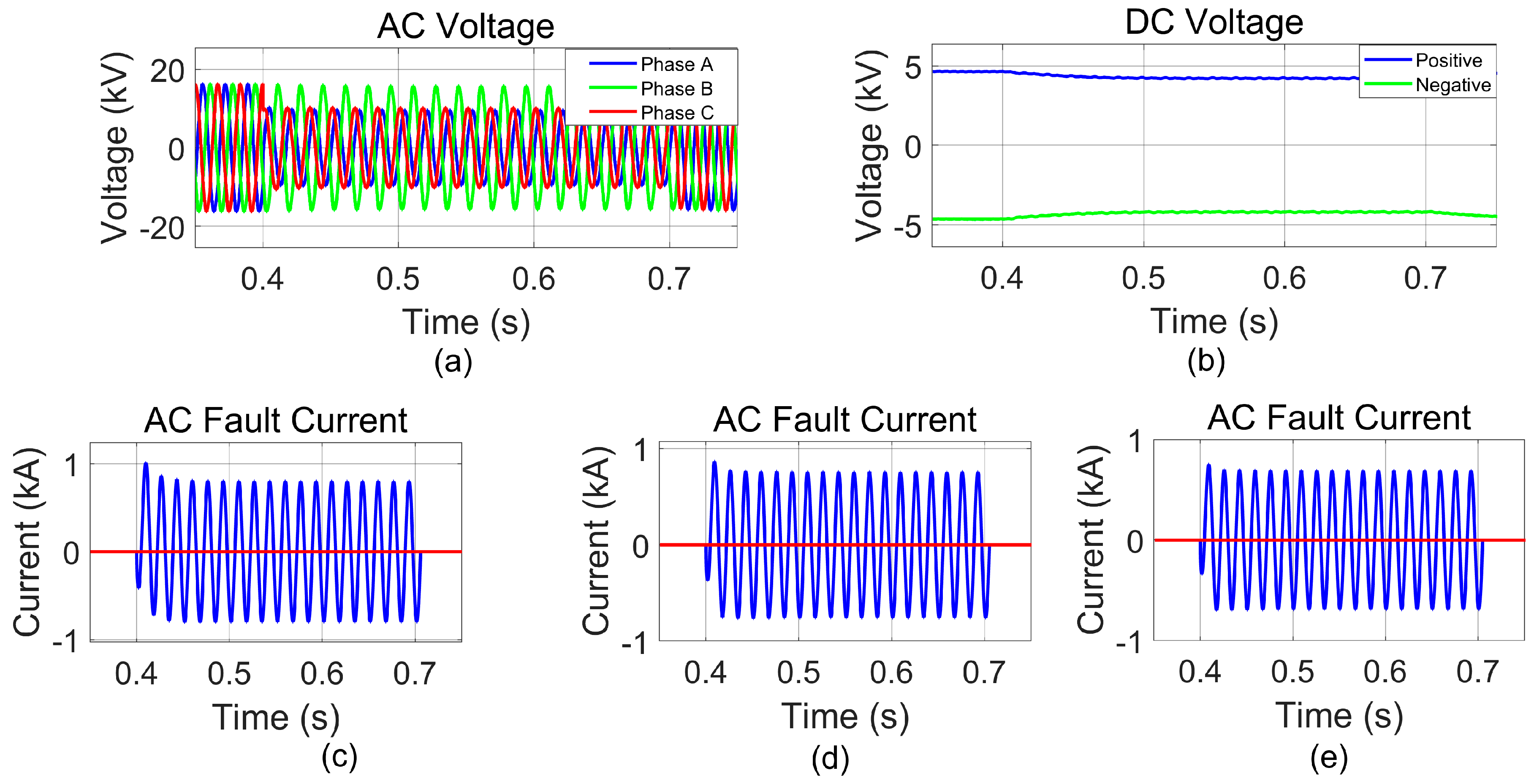
To analyze the scheme, a line-to-ground (LG) fault on phase A of the AC side at t = 0.4–0.7 s is imposed, and Figure 3 shows the impact of the LG fault on the hybrid system. Figure 3c illustrates the fault current. The impact of the LG fault for the ungrounded system on the DC voltage is shown in Figure 3d.
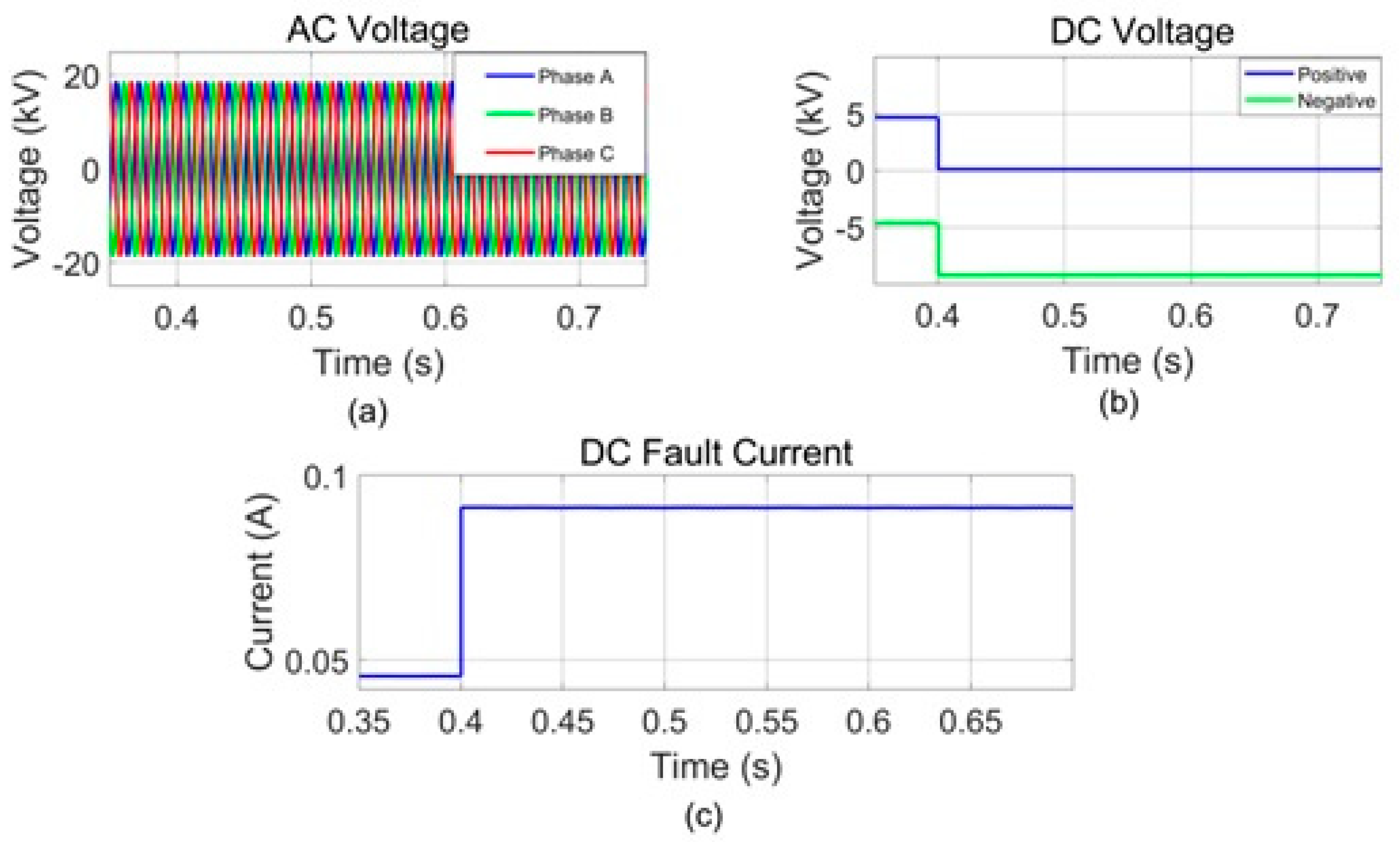
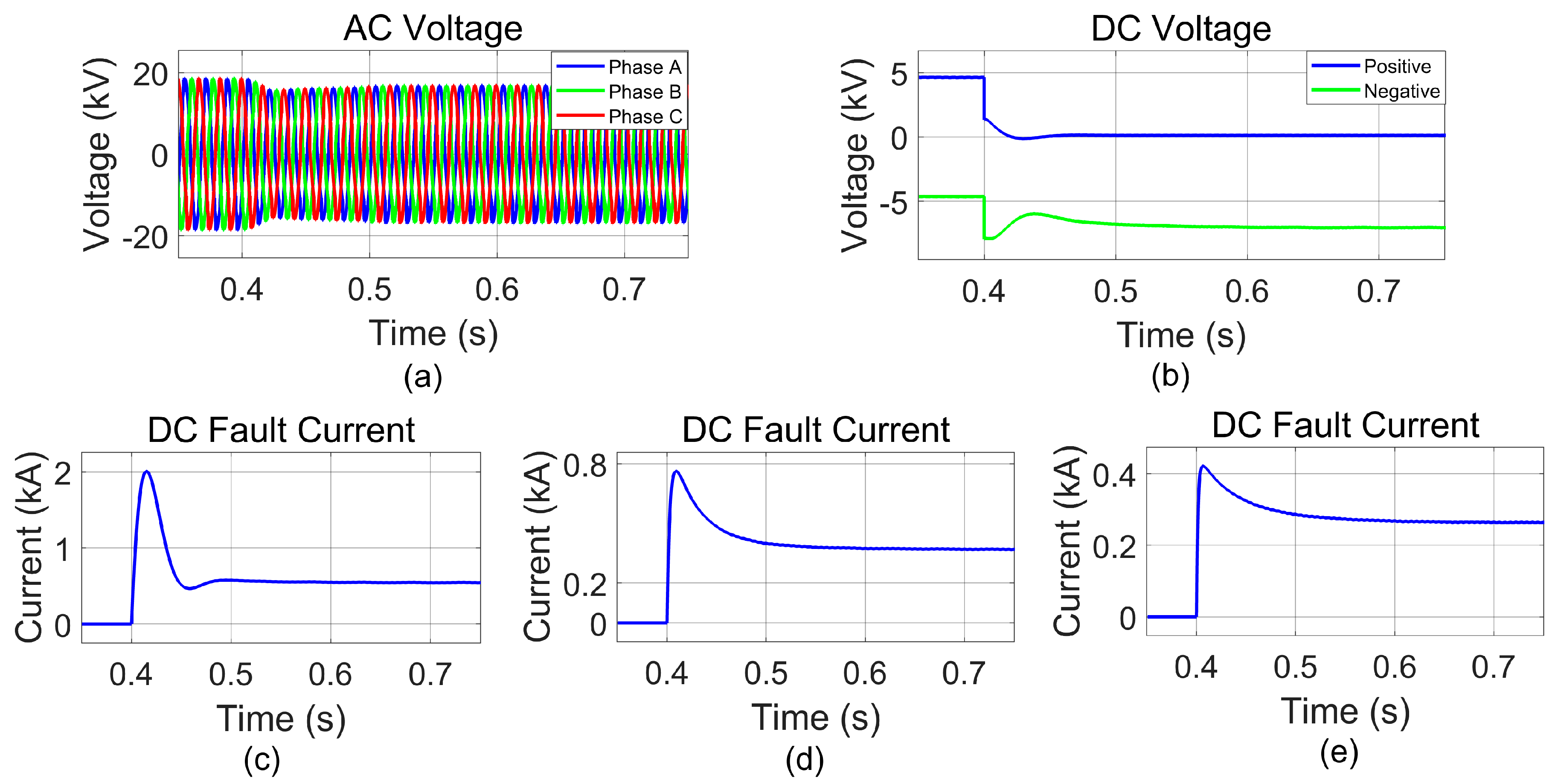
Now we consider the pole-to-ground fault for the ungrounded fault at t = 0.4–0.8 s on the DC side of the system, and Figure 4 shows the effect of the pole-to-ground (PG) fault for ungrounded on the hybrid AC/DC network.
For the PG fault on the DC side, since there is no physical grounding on the system, the fault current is very low; Figure 4c shows the fault current. Moreover, due to the very low fault current, this pole-to-ground fault does not affect the AC system. Besides these, the simulation results show that when a PG fault occurs at the ungrounded system, the voltage at the un-faulted line increases by 2 p.u as we can see in Figure 4b and the system is operating under the fault because the line-to-line (LL) voltage is not affected.

2.2. Solidly Grounded System

The given arrangement involves the grounding of the distribution system with no impedance, as represented by the single-line diagram of the solidly grounded system in Figure 5. Despite its advantages in terms of facilitating the identification of LG faults [34], this topology has significant drawbacks such as the occurrence of arc flash and the possibility of equipment damage, leading to a high fault current in both the AC and DC systems. Moreover, the DC system is prone to corrosion due to the high stray current under normal conditions, but it does offer the benefit of reducing the common mode voltage and voltage stress on un-faulted lines [35].
In this analysis, we examine the solid grounding of the hybrid AC/DC system considering the LG fault that occurs on the AC side during the time interval t = 0.4–0.7 s. Through simulation, we observe the consequences of this fault on the system when it is subject to a solidly grounded topology.
The voltage and current waveform of the AC system for the solidly grounded system can be observed in Figure 6a,b, while Figure 6c reveals a momentary flash of fault current that can potentially cause harm to both equipment and protection schemes in place within the system. Furthermore, it should be noted that similar to the ungrounded system, this topology has a minor impact on the DC side of the system, which is evident from the simulation results presented in Figure 6d, where a voltage dip is noticeable between 0.4 to 0.7 s.
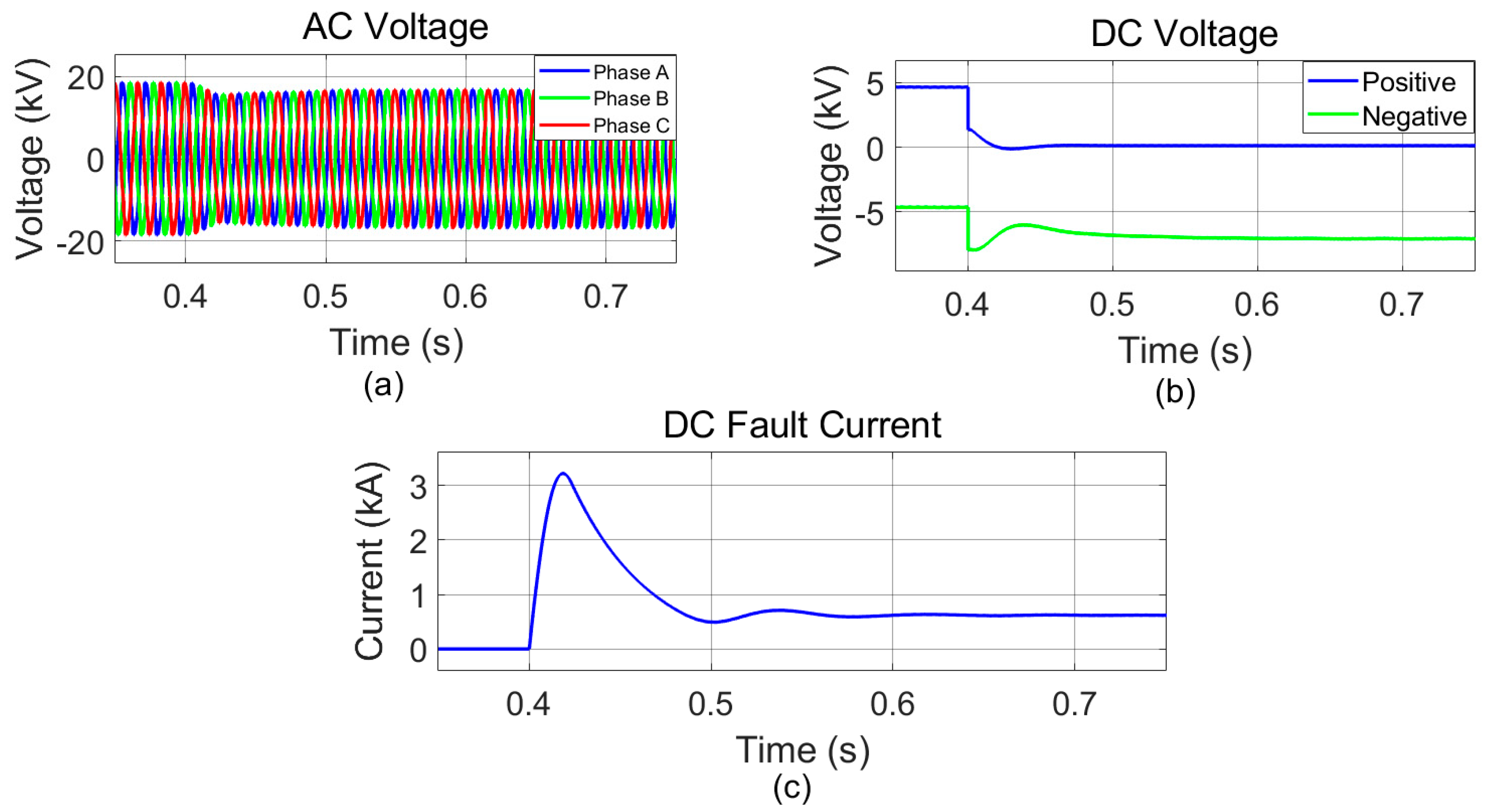
For the DC component of the system, an analysis has been conducted on the pole-to-ground fault occurring between time intervals of 0.4 and 0.8 s. The simulation outcomes have been depicted in Figure 7 and aim to elucidate the influence of solid grounding on the system.
The system is solidly grounded, and the fault current possesses a direct route to the ground, giving rise to a substantial current that flows through the ground, as depicted in Figure 7c. This high fault current leads to disruption in the AC system, which can be observed in Figure 7a. The voltage at the unaffected line is raised, as demonstrated in Figure 7b, but the magnitude in this topology is less than 2 p.u.

2.3. Impedance Grounding Scheme

The method involves linking the distribution system to the earth via an impedance element, as illustrated in Figure 8. This arrangement is categorized into two classifications, namely high-impedance grounding and low-impedance grounding. A significant benefit of this approach is that the fault current can be restricted to meet specific requirements by modifying the impedance value. Consequently, this grounding scheme has been highly endorsed by various scholars in their research papers, particularly those advocating for high impedance grounding [20,23]. In [24], grounding of the system through resistance of 400–800 ohms is recommended for the reliable operation of the system.
In this particular topology, an impedance is incorporated between the system neutral and ground to limit the fault current in the event of any faults occurring in the system. The magnitude of the fault current is directly proportional to the value of the impedance employed in the system. For example, a high impedance value will result in a low fault current, whereas a low impedance value will result in a high fault current. In an AC system, an instantaneous overcurrent is encountered when an LG fault occurs, which may lead to damage to the protection scheme and equipment. Impedance grounding is implemented to mitigate this overcurrent arcing. The primary objective of restricting the fault current is to ensure the safety of both the equipment and personnel. Moreover, this controlled fault current is also utilized for detecting line-to-ground faults in the system and executing the protection scheme.
We analyzed the high-impedance and low-impedance grounding systems, and the simulation results have revealed the effects of both approaches on the hybrid network. The simulation results for the phase-to-ground fault on the AC side of the system grounded with resistances of 1 ohm, 5 ohms, and 10 ohms are presented in Figure 9.
From the simulation results, it can be seen in Figure 9c–e that for the 1 ohm resistance, the arc flashing is high, and when we change the grounding resistance from 1 ohm to 5, the overcurrent flash is decreasing, and the same behavior is recorded for the 10 ohm resistor. Moreover, the fault effect on the DC system is like the ungrounded and solidly grounded system.
Now for the pole-to-ground fault at the DC system, the simulation results have shown the effect of this topology on the hybrid network. The value of the grounding resistor is taken as 1 ohm, 5 ohm, and 10 ohms, respectively, for the grounding.
In the DC system, in the event of a pole-to-ground fault at a small resistance of 1 ohm, there is a high fault current that flows through the line, resulting in an impact on the AC system, as depicted in Figure 10a. Another critical aspect to consider in the AC system is the reduction in fault current when grounding resistance is increased, resulting in a corresponding decrease in the impact on the AC side. The simulation results for the DC system at varying resistance values, as illustrated in Figure 10c–e, indicate that an increase in resistance leads to decreased fault current and longer settling time of the fault current due to the increased grounding resistor.

2.4. Performance Analysis of Grounding Schemes in Hybrid AC/DC Networks

The simulation results demonstrate that faults in a hybrid AC/DC distribution network influence both systems; however, appropriate grounding techniques can significantly mitigate these effects. Different DC grounding schemes exhibit distinct behaviors; ungrounded configurations result in minimal fault currents, whereas solid grounding leads to substantially higher currents. Resistance grounding proves advantageous by reducing fault current magnitude and shortening settling time as resistance increases. This is similar to AC grounding methods, where flashover voltage during faults is lowest in ungrounded systems and highest in solidly grounded ones; however, resistance grounding effectively limits this overvoltage.
Finally, Table 2 summarizes the characteristics of grounding methods for hybrid AC/DC systems, emphasizing that resistance grounding offers balanced benefits, including controlled fault currents, improved ground fault detection, reduced electric shock risk, fair fault protection, good noise and ground loop immunity, and moderate overcurrent and stray current. These characteristics make resistance grounding the most suitable option for hybrid networks. Fault analysis and detection in hybrid networks are performed under resistance grounding.

3. Fault Current Analysis and Detection in Hybrid AC/DC Networks

This study proposes an RF-based machine learning approach for fault detection and classification in hybrid AC/DC networks. THD and RMS voltage signals were extracted from various fault locations under different operating conditions, including varying load levels, fault resistance, and fault location. The proposed RF algorithm was subsequently trained and tested using these extracted features in a Python 3.10 environment.
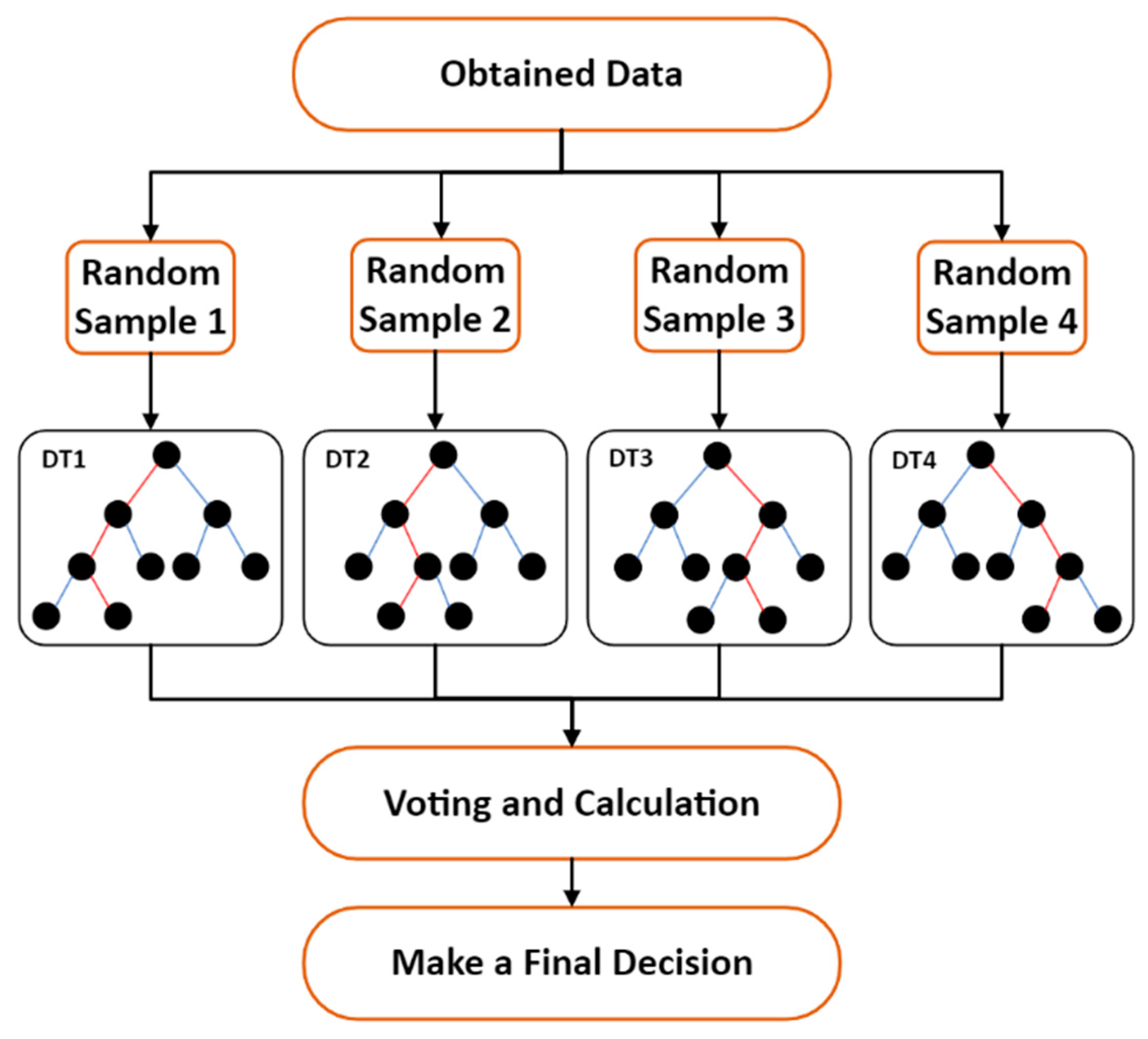
A random forest is an ML technique, first introduced by L. Breiman in 2001 [36]. It is primarily used for classification and regression tasks. In RF, multiple decision trees (DTs) are built during the training process and combined to yield a more precise and stable prediction. Once a sufficient number of trees are generated, they cast their votes, and based on the majority of the votes, RF chooses the favorite class [36], as illustrated in Figure 11.
In DT, to minimize the overfitting concerns, ensemble models are recommended. As an assembled model, RF used many trees to solve the overfitting problem. The more precise steps of RF are described as follows:
  • Generate n number of trees in the initial stage.
  • At each node in the decision tree (Ti) (where i ranges from 1 to n), select m number of variables randomly.
  • Create the subsets of the selected trees from the full set of features.
  • Split the nodes based on the best feature subset until a stopping condition (e.g., one class left in the node).
  • (For classification problems) each tree (Ti) provides a predicted class. The final estimate is selected based on the class with the majority of votes from n decision trees.
  • (For Regression problems) each tree (Ti) provides a predicted value. The final prediction is the average of all the tree predictions
The RF algorithm can be employed for both classification and regression tasks. The mean squared error (MSE) is commonly used to evaluate regression performance, as expressed by the following equation.
M S E = 1 N   i = 1 N R i A i 2  
where A i and R i represent the actual and predicted values, respectively. N denotes the total number of data points.
For classification problems, the Gini index is commonly used to determine the tree split during the decision stage, as expressed by the following equation.
G i n i = 1 i = 1 k ( F i ) 2
where F i is the relative frequency of the class at which the branch is most likely to occur.

3.1. Feature Extraction

When a fault occurs in the power network, the voltage and current magnitudes deviate from their pre-fault levels. The current magnitude rises instantaneously, whereas the voltage drops at the fault location. RMS and THD are commonly used to detect abnormal conditions in electrical signals. Abnormalities can be detected and analyzed more precisely by representing the signal in terms of its RMS and THD components. Equations (3) and (4) are used to calculate the RMS and THD values from the faulted voltage signal. Various fault scenarios were simulated on both the AC and DC sides using different fault resistances, fault distances, fault types, and other parameters. For each case, the RMS and THD values of voltage were extracted and used to train the RF algorithm. The selected feature parameters are crucial to accurately capturing and characterize fault anomalies.
T H D = V 2 2 + V 3 2 + V 4 2 + V n 2   V 1
V r m s = n = 1 N V n 2 N

3.2. Proposed Methodology

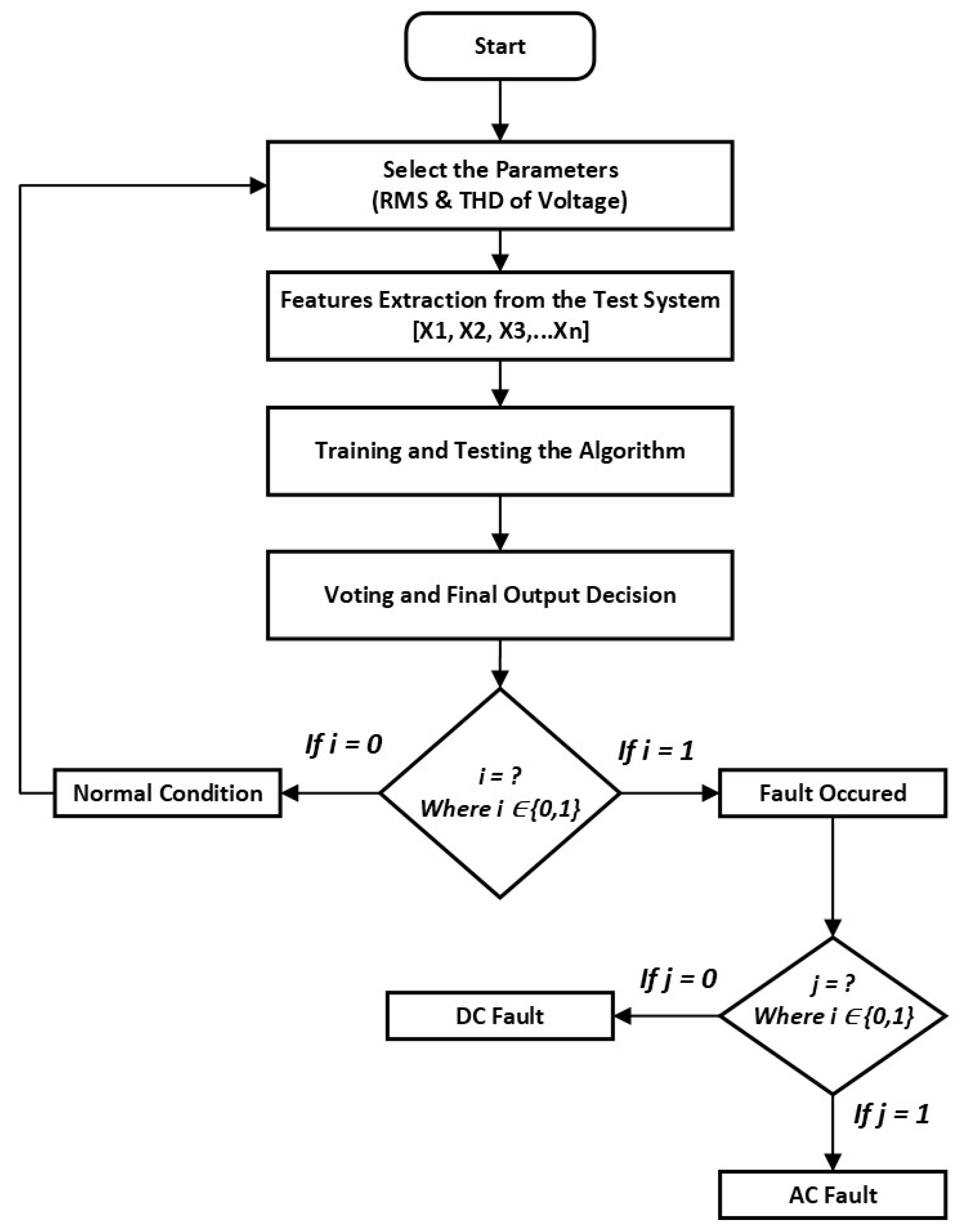
Figure 12 shows the flowchart of the proposed algorithm, which is used to identify and classify faults in the hybrid network illustrated in Figure 2. Initially, the selected parameters (RMS and THD voltage signals) are retrieved from the hybrid AC/DC network for multiple fault events in MATLAB R2025b/Simulink 8.0. Subsequently, the extracted data are used to train the Random Forest (RF) algorithm in Python 3.10. The operational steps and output process of the RF algorithm are discussed in detail in Section 3. The RF algorithm continuously monitors the network for faulty events. When a fault occurs, it classifies the fault as being on either the DC or AC side. As shown in Figure 2, F1, F2, and F3 represent the DC, AC, and intersystem faults, respectively. Numerous fault scenarios are simulated, and the corresponding features are extracted at the point of common coupling (PCC) during each case.
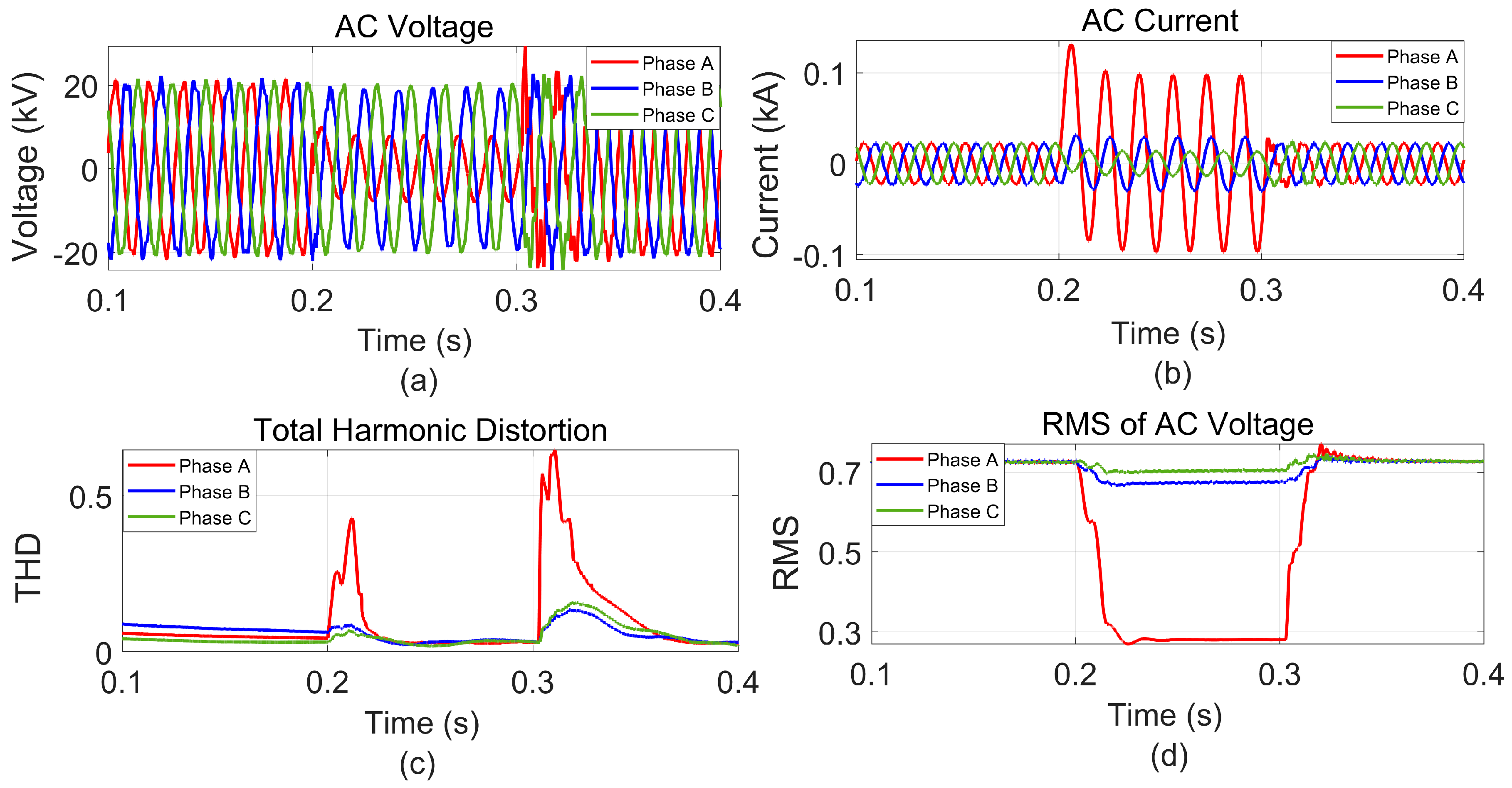
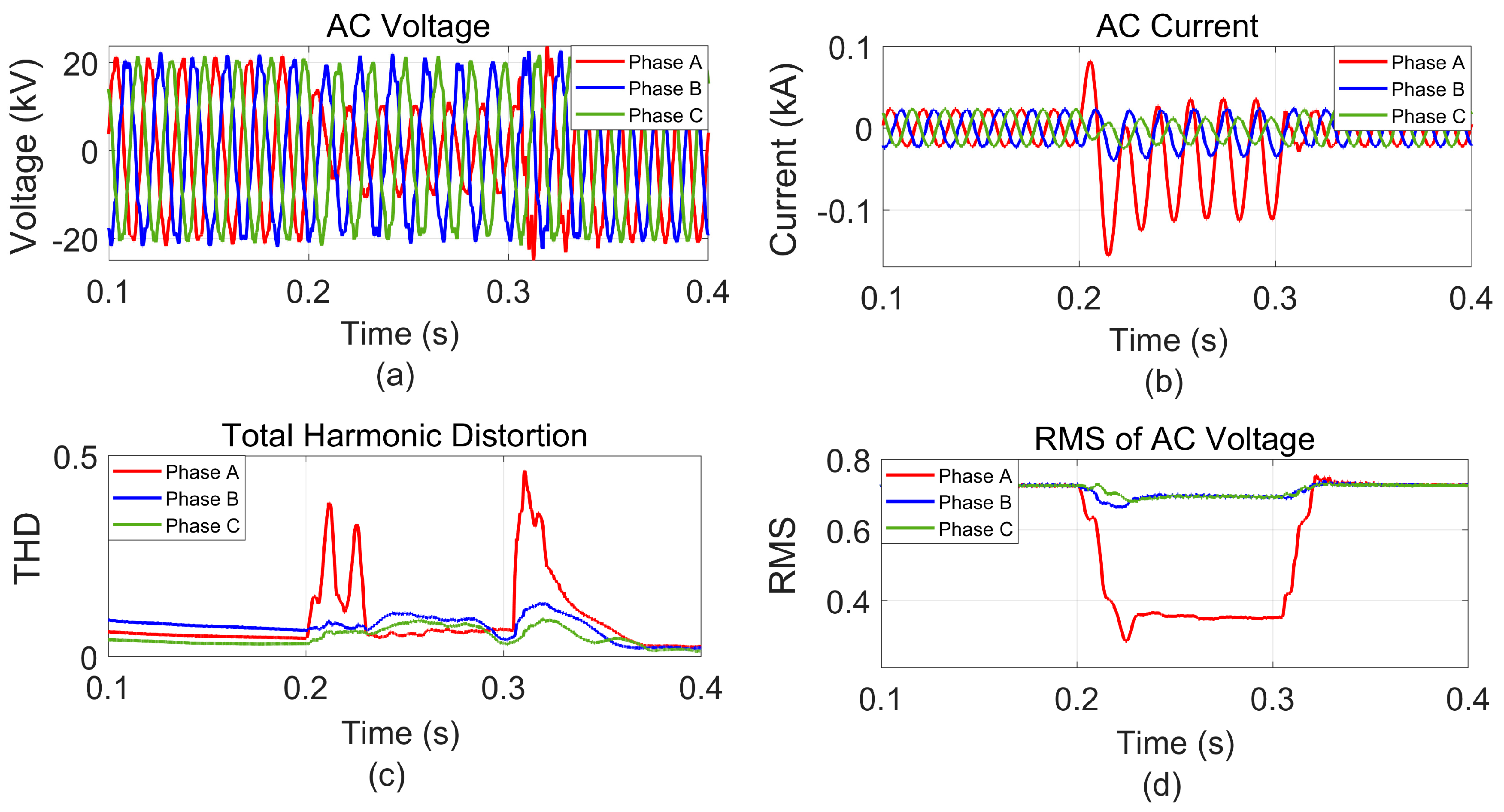
For instance, when a single-line-to-ground fault occurs on the AC line from 0.2 s to 0.3 s, the corresponding voltage, current, and feature responses observed at the PCC are shown in Figure 13. When an intersystem fault (i.e., a fault occurring between the AC and DC lines) occurs, its effect observed at the PCC is shown in Figure 14. In this study, only AC and DC faults are considered; intersystem faults will be addressed in future work. Hundreds of such cases were simulated to extract the maximum possible data from the test system. Table 3 and Table 4 present detailed information on the simulated fault and no-fault cases. As shown in Table 3, 480 cases were considered for the no-fault scenario, with variations in Load 1, Load 2, capacitance, and location. In the fault scenarios, a total of 1960 cases were simulated, 49 with varying fault resistance and 20 with different fault locations on both the AC and DC lines.

4. Results and Discussion

The robustness of the RF algorithm is evaluated using a confusion matrix. This matrix is used to assess the performance and demonstrate the efficacy of algorithms. A total of 2440 events were considered for fault recognition, and 1960 of these were used for classification. The dataset was divided into training and testing sets with a ratio of 70% to 30%. The RF algorithm was trained using 70% of the extracted features and subsequently tested on the remaining data. The performance of the RF algorithm was then compared with that of existing well-known algorithms.
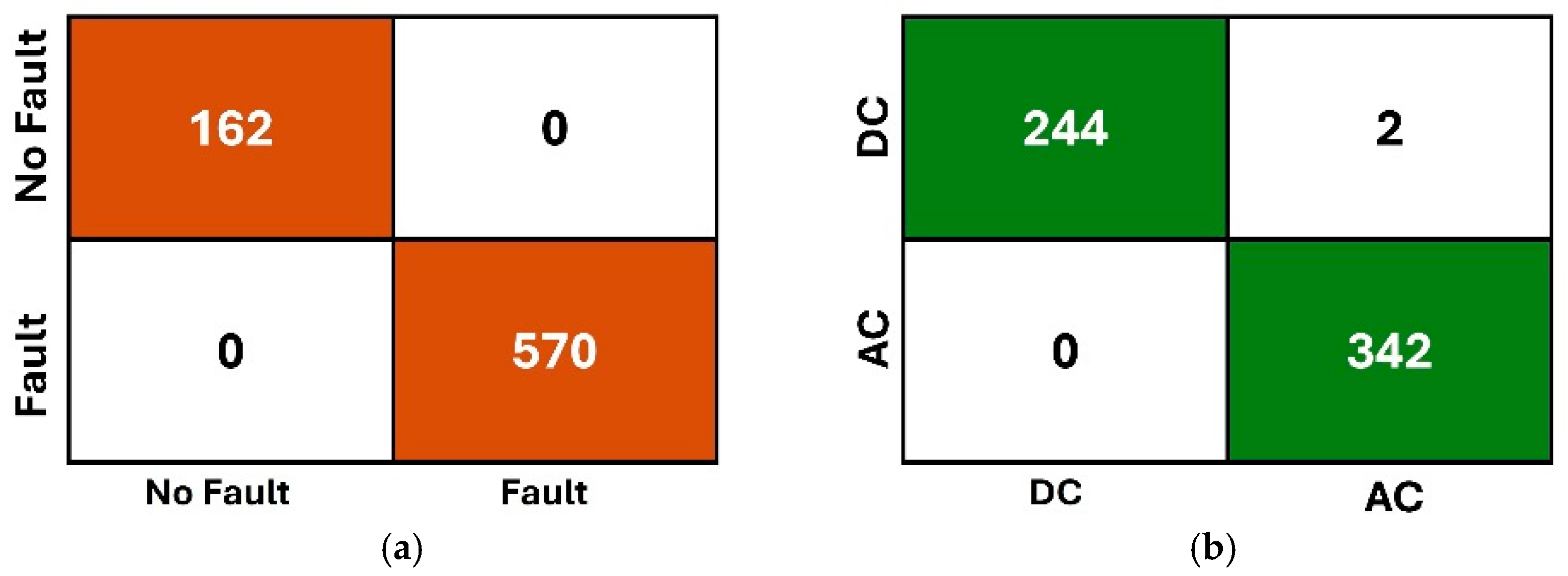
The confusion matrices in Figure 15 demonstrate the strong performance of the RF model in both fault detection and fault classification. For fault detection, the algorithm correctly identifies all 570 fault events and all 162 no-fault events, showing perfect distinction between normal and abnormal system conditions. For fault classification, the RF model accurately classifies all 342 AC fault cases, while only 2 out of 246 DC faults are misclassified as AC faults, indicating a highly reliable classification capability with minimal error.

Performance Analysis of the Proposed Algorithm

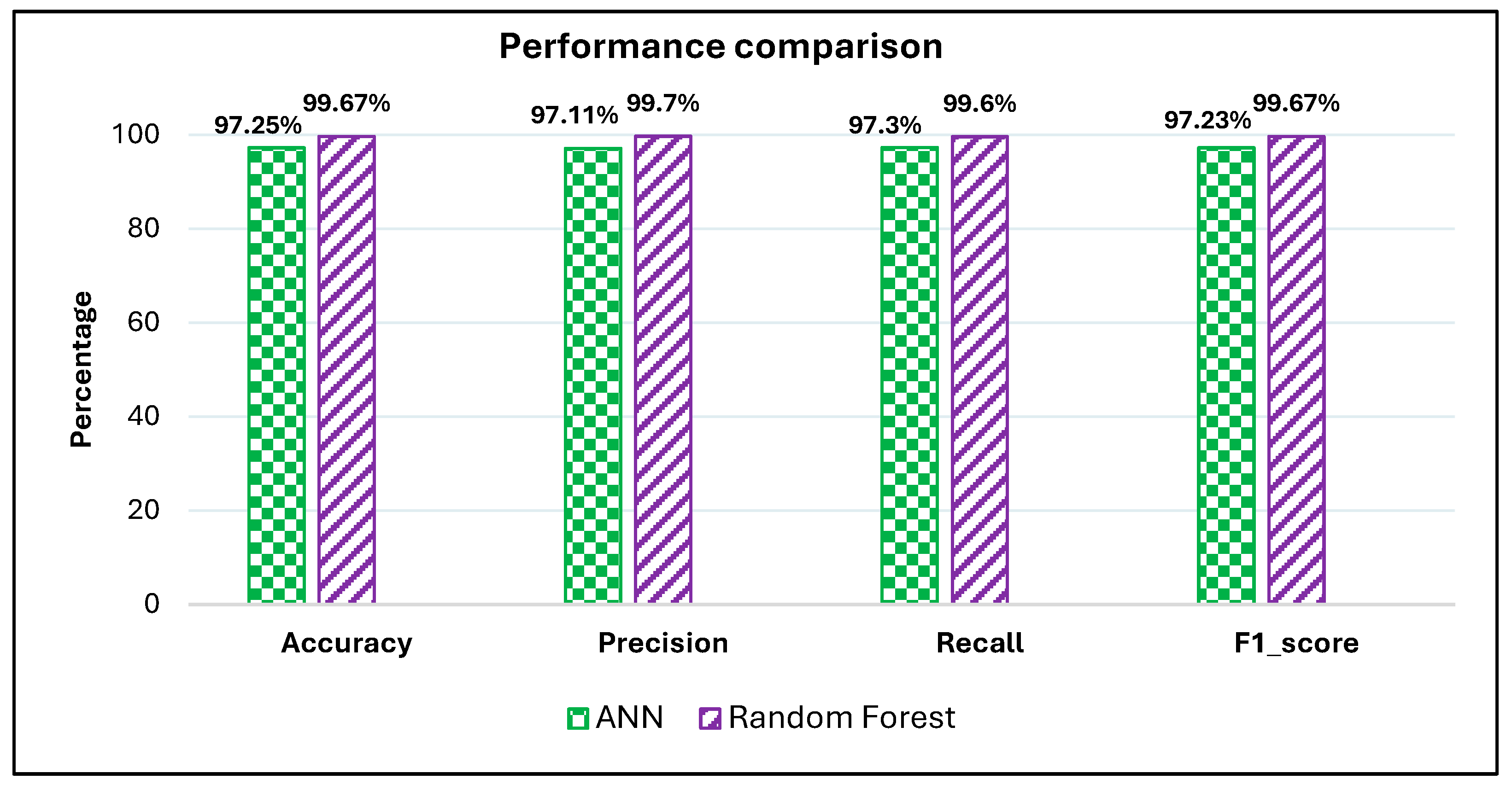
As shown in Figure 16, the performance of the RF algorithm is assessed and compared with the ANN technique. Equations (5)–(8) represent the performance metrics used to determine the accuracy, precision, recall, and F1-score. Most ML algorithms are evaluated using these four-performance metrics. For fault classification, the proposed algorithm achieves an accuracy of 99.67%, compared to 97.25% for the ANN. Both the ANN and the proposed algorithm perform identically in terms of fault identification, achieving 100% accuracy.
A c c u a r a c y = T c o r r e c t T t o t a l × 100 %
P r e c i s i o n = T p o s i t i v e T p o s i t i v e + F p o s i t i v e
R e c a l l = T p o s i t i v e T p o s i t i v e + F n e g a t i v e
F 1 _ c o r e = 2 × P r e c i s i o n × R e c a l l P r e c i s i o n + R e c a l l
Table 5 presents a comparative evaluation of the proposed random forest-based method against widely used state-of-the-art machine learning and deep learning algorithms for fault detection and classification in power systems. The proposed RF model achieves the highest overall performance, with an accuracy of 99.67% and consistently superior precision, recall, and F1-score, indicating robust and reliable fault discrimination. While SVM and CNN also demonstrate strong classification capability, their performance remains marginally lower than the proposed approach. Traditional classifiers such as Decision Tree, k-NN, and XGBoost with feature engineering exhibit comparatively reduced accuracy, highlighting the effectiveness of the proposed RF framework for power system fault analysis.

5. Conclusions

This paper first analyzed various grounding approaches for hybrid AC/DC networks, comparing ungrounded, solidly grounded, and impedance-grounded schemes based on parameters such as fault current, stray current, common-mode voltage, and transient overvoltage. From this analysis, impedance grounding was recommended as the most suitable method for ensuring system protection and operational reliability. In the second part, the study focused on fault analysis and detection under the impedance grounding configuration. Using data from simulated fault scenarios, a random forest-based algorithm was developed to identify and classify faults on both AC and DC sides. The proposed method achieves near-perfect performance, with 100% fault detection and 99.65% classification accuracy. Compared with ANN, the random forest approach consistently demonstrates superior performance across all classification metrics. In particular, random forest attains higher accuracy (99.67% vs. 97.25%), precision (99.70% vs. 97.11%), and recall (99.60% vs. 97.30%), confirming its stronger fault discrimination capability and improved reliability for protection applications. Future work will extend this approach to include detailed classification of AC faults (LG, LL, LLG, LLL, LLLG), DC faults (PG, PP), and intersystem faults, further enhancing protection strategies for hybrid AC/DC networks.

Author Contributions

Conceptualization, Z.H., A.M. and S.A.; methodology, Z.H. and S.J.U.H.; software, S.A.; validation, A.M., M.A. and S.A.; formal analysis, Z.H. and S.J.U.H.; investigation, S.J.U.H. and A.M.; resources, M.A.; data curation, S.A.; writing—original draft preparation, Z.H.; writing—review and editing, M.A., S.J.U.H. and S.A.; visualization, Z.H., S.A. and M.A.; supervision, A.M.; project administration, A.M. All authors have read and agreed to the published version of the manuscript.

Funding

This research received no external funding.

Data Availability Statement

The data presented in this study is available upon request from the corresponding author.

Acknowledgments

The authors have reviewed and edited the output and take full responsibility for the content of this publication. During the preparation of this work, the authors used ChatGPT 5.2 and Grammarly to improve sentence structure, clarity, and overall English language. After using these tools, the authors thoroughly reviewed and edited the content to ensure it accurately represents their research and scientific findings. The authors take full responsibility for the entire content of the published work.

Conflicts of Interest

The authors declare no conflicts of interest.

Abbreviations

The following abbreviations are used in this manuscript:
ANNArtificial Neural Network
ACAlternating Current
DCDirect Current
DTDecision Tree
IBRInverter-Based Resources
LGLine-to-Ground
LLLine-to-Line
LLGLine to Line-to-Ground
MLMachine Learning
MSEMean Square Error
MVMedium Voltage
NECNational Electric Code
RMSRoot Mean Square
THDTotal Harmonic Distortion

References

  1. Bahrani, B.; Ravanji, M.H.; Kroposki, B.; Ramasubramanian, D.; Guillaud, X.; Prevost, T.; Cutululis, N.A. Grid-Forming Inverter-Based Resource Research Landscape: Understanding the Key Assets for Renewable-Rich Power Systems. IEEE Power Energy Mag. 2024, 22, 18–29. [Google Scholar] [CrossRef]
  2. Matevosyan, J.; MacDowell, J.; Miller, N.; Badrzadeh, B.; Ramasubramanian, D.; Isaacs, A.; Quint, R.; Quitmann, E.; Pfeiffer, R.; Urdal, H.; et al. A Future With Inverter-Based Resources: Finding Strength From Traditional Weakness. IEEE Power Energy Mag. 2021, 19, 18–28. [Google Scholar] [CrossRef]
  3. Mehdi, A.; Jarjees Ul Hassan, S.; Kim, C.H. Squaring and lowpass filtering data-driven technique for AC faults in AC/DC lines. Electr. Power Syst. Res. 2023, 223, 109581. [Google Scholar] [CrossRef]
  4. Meghwani, A.; Chakrabarti, S.; Srivastava, S.C.; Anand, S. Analysis of fault characteristics in DC microgrids for various converter topologies. In Proceedings of the 2017 IEEE Innovative Smart Grid Technologies—Asia (ISGT-Asia), Auckland, New Zealand, 4–7 December 2017; pp. 1–6. [Google Scholar]
  5. Parhizi, S.; Lotfi, H.; Khodaei, A.; Bahramirad, S. State of the Art in Research on Microgrids: A Review. IEEE Access 2015, 3, 890–925. [Google Scholar] [CrossRef]
  6. Hassan, S.J.U.; Mehdi, A.; Haider, Z.; Song, J.S.; Abraham, A.D.; Shin, G.S.; Kim, C.H. Towards medium voltage hybrid AC/DC distribution Systems: Architectural Topologies, planning and operation. Int. J. Electr. Power Energy Syst. 2024, 159, 110003. [Google Scholar] [CrossRef]
  7. Mehdi, A.; Ul Hassan, S.J.; Haider, Z.; Arefaynie, A.D.; Song Jsol Kim, C.H. A systematic review of fault characteristics and protection schemes in hybrid AC/DC networks: Challenges and future directions. Energy Rep. 2024, 12, 120–142. [Google Scholar] [CrossRef]
  8. Martín-Crespo, A.; Hernández-Serrano, A.; Izquierdo-Monge, Ó.; Peña-Carro, P.; Hernández-Jiménez, Á.; Frechoso-Escudero, F.; Baeyens, E. AC/DC optimal power flow and techno-economic assessment for hybrid microgrids: TIGON CEDER demonstrator. Front. Energy Res. 2024, 30, 12. [Google Scholar] [CrossRef]
  9. Peña-Carro, P.; Izquierdo-Monge, O. Hybrid AC/DC architecture in the CE.D.E.R.-CIEMAT microgrid: Demonstration of the TIGON project. Open Res. Eur. 2024, 2, 123. [Google Scholar] [CrossRef]
  10. Mura, F.; De Doncker, R.W. Preparation of a Medium-Voltage DC Grid Demonstration Project; E.ON Energy Research Center Series; RWTH Aachen University: Aachen, Germany, 2012. [Google Scholar]
  11. Zhou, J.; Kou, L.; Gu, H.; Zhu, L. Key technology of hybrid cascaded UHVDC transmission system. IET Conf. Proc. 2022, 2022, 1273–1278. [Google Scholar] [CrossRef]
  12. Wu, G.; Ono, Y.; Alishahi, M. Development of a resilient hybrid microgrid with integrated renewable power generations supplying DC and AC loads. In Proceedings of the 2015 IEEE International Telecommunications Energy Conference (INTELEC), Osaka, Japan, 18–22 October 2015; pp. 1–5. [Google Scholar]
  13. Liu, W.; Yu, J.; Li, G.; Liang, J.; Ugalde-Loo, C.E.; Moon, A. Analysis and Protection of Converter-Side AC Faults in a Cascaded Converter-Based MVDC Link: ANGLE-DC Project. IEEE Trans. Smart Grid 2022, 13, 4046–4056. [Google Scholar] [CrossRef]
  14. Dong, X.; Guan, E.; Jing, L.; Wang, H.; Mirsaeidi, S. Simulation and analysis of cascading faults in hybrid AC/DC power grids. Int. J. Electr. Power Energy Syst. 2020, 115, 105492. [Google Scholar] [CrossRef]
  15. Mirsaeidi, S.; Dong, X. An Integrated Control and Protection Scheme to Inhibit Blackouts Caused by Cascading Fault in Large-Scale Hybrid AC/DC Power Grids. IEEE Trans. Power Electron. 2019, 34, 7278–7291. [Google Scholar] [CrossRef]
  16. Negari, S.; Xu, D. Conundrum of fault detection in active hybrid AC–DC distribution networks. J. Eng. 2020, 2020, 727–736. [Google Scholar] [CrossRef]
  17. IEEE Std 142-2007 (Revision of IEEE Std 142-1991); IEEE Recommended Practice for Grounding of Industrial and Commercial Power Systems. Systems Engineering Committee of the IEEE Industry Applications Society: Piscataway, NJ, USA, 2007.
  18. Meliopoulos, A.P.S.; Kennedy, J.; Nucci, C.A.; Borghetti, A.; Contaxis, G. Power distribution practices in USA and Europe: Impact on power quality. In Proceedings of the 8th International Conference on Harmonics and Quality of Power Proceedings (Cat No98EX227), Athens, Greece, 14–16 October 1998; pp. 24–29. [Google Scholar]
  19. West, R.B. Grounding for Emergency and Standby Power Systems. IEEE Trans. Ind. Appl. 1979, IA-15, 124–136. [Google Scholar] [CrossRef]
  20. Yu, L.; Henriks, R.L. Selection of system neutral grounding resistor and ground fault protection for industrial power systems. In Proceedings of the Industry Applications Society 38th Annual Petroleum and Chemical Industry Conference, Toronto, ON, Canada, 9–11 September 1991; pp. 147–153. [Google Scholar]
  21. Arefifar, S.A. Distribution system grounding impacts on fault responses. In Proceedings of the 2008 13th International Conference on Harmonics and Quality of Power, Wollongong, NSW, Australia, 7 November 2008; pp. 1–6. [Google Scholar]
  22. Das, J.C.; Osman, R.H. Grounding of AC and DC low-voltage and medium-voltage drive systems. IEEE Trans. Ind. Appl. 1998, 34, 205–216. [Google Scholar] [CrossRef]
  23. Mohammadi, J.; Badrkhani Ajaei, F.; Stevens, G. Grounding the DC Microgrid. IEEE Trans. Ind. Appl. 2019, 55, 4490–4499. [Google Scholar] [CrossRef]
  24. Wang, Y.; Yu, Z.; He, J.; Chen, S.; Zeng, R.; Zhang, B. Performance of Shipboard Medium-Voltage DC System of Various Grounding Modes Under Monopole Ground Fault. IEEE Trans. Ind. Appl. 2015, 51, 5002–5009. [Google Scholar] [CrossRef]
  25. Yusuff, A.A.; Jimoh, A.A.; Munda, J.L. Determinant-based feature extraction for fault detection and classification for power transmission lines. IET Gener. Transm. Distrib. 2011, 5, 1259–1267. [Google Scholar] [CrossRef]
  26. Naik, S.; Koley, E. Fault Detection and Classification scheme using KNN for AC/HVDC Transmission Lines. In Proceedings of the 2019 International Conference on Communication and Electronics Systems (ICCES), Coimbatore, India, 17–19 July 2019; pp. 1131–1135. [Google Scholar]
  27. Youssef, O.A.S. Combined Fuzzy-Logic Wavelet-Based Fault Classification Technique for Power System Relaying. IEEE Trans. Power Deliv. 2004, 19, 582–589. [Google Scholar] [CrossRef]
  28. Kavi, M.; Mishra, Y.; Vilathgamuwa, M.D. High-impedance fault detection and classification in power system distribution networks using morphological fault detector algorithm. IET Gener. Transm. Distrib. 2018, 12, 3699–3710. [Google Scholar] [CrossRef]
  29. Wang, T.; Zhang, C.; Hao, Z.; Monti, A.; Ponci, F. Data-driven fault detection and isolation in DC microgrids without prior fault data: A transfer learning approach. Appl. Energy 2023, 336, 120708. [Google Scholar] [CrossRef]
  30. Jasim, A.M.; Jasim, B.H.; Neagu, B.C.; Alhasnawi, B.N. Coordination Control of a Hybrid AC/DC Smart Microgrid with Online Fault Detection, Diagnostics, and Localization Using Artificial Neural Networks. Electronics 2022, 12, 187. [Google Scholar] [CrossRef]
  31. Ponukumati, B.K.; Sinha, P.; Maharana, M.K.; Kumar, A.V.P.; Karthik, A. An Intelligent Fault Detection and Classification Scheme for Distribution Lines Using Machine Learning. Eng. Technol. Appl. Sci. Res. 2022, 12, 8972–8977. [Google Scholar] [CrossRef]
  32. Shahid, N.; Aleem, S.A.; Naqvi, I.H.; Zaffar, N. Support Vector Machine based fault detection & classification in smart grids. In Proceedings of the 2012 IEEE Globecom Workshops, Anaheim, CA, USA, 3–7 December 2012; pp. 1526–1531. [Google Scholar]
  33. Wu, S.; He, B.; Meng, F.; Liu, Y.; Lin, X.; Dai, W.; Wei, Y.; Wang, S.; Zhang, D. Machine learning-based single-phase ground fault identification strategy for AC-DC transmission lines. Electr. Power Syst. Res. 2023, 223, 109538. [Google Scholar] [CrossRef]
  34. Nelson, J.P. The grounding of power systems above 600 volts: A practical view point. In Proceedings of the IEEE Industry Applications Society 50th Annual Petroleum and Chemical Industry Conference, 2003. Record of Conference Papers, Houston, TX, USA, 15–17 September 2003; IEEE: Piscataway, NJ, USA, 2003; pp. 13–22. [Google Scholar]
  35. 1653.6-2018; IEEE Recommended Practice for Grounding of DC Equipment Enclosures in Traction Power Distribution Facilities. IEEE: Piscataway, NJ, USA, 2018.
  36. Breiman, L. Random Forests. Mach. Learn. 2001, 45, 5–32. [Google Scholar] [CrossRef]
  37. Ge, Q.; Li, J.; Ren, L. Fault-Type Identification in Power Systems Based on Cross-Validating Machine Learning Algorithms. In Proceedings of the 18th Annual Conference of China Electrotechnical Society, Nanchang, China, 15–17 September 2023; Springer: Singapore, 2024; pp. 868–891. [Google Scholar]
  38. Guo, B.; Yang, B.; Wang, S.; Shi, W.; Yang, F.; Wang, D. Machine learning-based fault diagnosis and classification of three-phase transmission lines with RFE and domain knowledge. Electr. Power Syst. Res. 2025, 247, 111777. [Google Scholar] [CrossRef]
  39. Anwar, T.; Mu, C.; Yousaf, M.Z.; Khan, W.; Khalid, S.; Hourani, A.O.; Zaitsev, I. Robust fault detection and classification in power transmission lines via ensemble machine learning models. Sci. Rep. 2025, 15, 2549. [Google Scholar] [CrossRef] [PubMed]
Figure 1. Generalized single-line diagram of hybrid AC/DC distribution network.
Electricity 07 00011 g001
Figure 2. Single line diagram of hybrid AC/DC distribution system used for analysis of grounding strategies.
Electricity 07 00011 g002
Figure 3. Simulation results for an ungrounded system under LG fault: (a) AC voltage, (b) AC current, (c) AC current under fault conditions, and (d) DC voltage.
Electricity 07 00011 g003
Figure 4. Simulation results for an ungrounded system under PG fault: (a) AC voltage, (b) DC voltage, and (c) DC current under fault conditions.
Electricity 07 00011 g004
Figure 5. Single line diagram of hybrid AC/DC distribution system with solid grounding on DC side.
Electricity 07 00011 g005
Figure 6. Simulation results in a solidly grounded system under the LG fault: (a) AC voltage, (b) AC current, (c) AC current under fault conditions, and (d) DC voltage.
Electricity 07 00011 g006
Figure 7. Simulation results in a solidly grounded system under the PG fault: (a) AC voltage, (b) DC voltage, and (c) DC current under fault conditions.
Electricity 07 00011 g007
Figure 8. Single line diagram of hybrid AC/DC distribution system with impedance grounded DC side.
Electricity 07 00011 g008
Figure 9. Simulation results for resistance grounded system under LG fault: (a) AC voltage, (b) DC voltage, (c) fault current for grounding through 1 ohm, (d) grounding through 5 ohm, (e) and grounding through 10 ohm.
Electricity 07 00011 g009
Figure 10. Simulations result for resistance grounded system under PG fault: (a) AC voltage, (b) DC voltage, (c) grounded through 1 ohm, (d) grounded through 5 ohm, (e) and grounded through 10 ohm.
Electricity 07 00011 g010
Figure 11. The process of random forest.
Electricity 07 00011 g011
Figure 12. Flow chart of the proposed algorithm for fault detection in a hybrid AC/DC distribution system.
Electricity 07 00011 g012
Figure 13. When an LG fault occurs at F2 from [0.2−0.3 s], its effect is observed at PCC: (a) voltage (b) current (c) THD (d) RMS.
Electricity 07 00011 g013
Figure 14. When an intersystem fault occurs at F3 from [0.2−0.3 s], its effect is observed at PCC: (a) voltage (b) current (c) THD (d) RMS.
Electricity 07 00011 g014
Figure 15. Confusion matrix for (a) fault detection and (b) fault classification.
Electricity 07 00011 g015
Figure 16. Performance of the proposed algorithm.
Electricity 07 00011 g016
Table 1. Test system parameter.
ParametersRatings
Length of AC lines (km)10
AC Rated Voltage (kV)20
Transformer voltage ratio (kV/kV)25/20
Per unit Length Resistance (Ω/km)0.153
Per unit Length Capacitance (mF/km)11
Per unit Length Inductance (mH/km)1.05
Length of DC lines (km)10
Per unit Length Resistance (Ω/km)0.0215
Per unit Length Inductance (mH/km)0.92
Table 2. Characteristics of grounding schemes in hybrid AC/DC distribution system.
Grounding MethodsSolid GroundingImpedance GroundingUngrounded
Fault ProtectionGoodFairPoor
Noise ImmunityPoorGoodExcellent
Over CurrentHighModerateLow
Stray CurrentHighModerateLow
Common Mode VoltagesLowModerateHigh
Transient Over VoltagesLowModerateHigh
Shock HazardHighModerateHigh
Service ContinuityNoYes (High Impedance)/No (Low Impedance)Yes
Insulation LevelLowModerateHigh
Ground Loop ImmunityPoorGoodExcellent
Table 3. No-fault simulated cases.
CasesTotal
Changing Load and Capacitor variation2 × 30
Varying location8
Total2 × 30 × 8 = 480
Table 4. Fault simulated cases.
CasesTotal
Fault TypeAC1 + 1 = 2
DC
Fault Resistance49
Fault Location20
Total2 × 49 × 20 = 1960
Table 5. Comparative performance of state-of-the-art algorithms for fault detection and classification in power systems.
Model/AlgorithmAccuracy (%)Precision (%)Recall (%)F1-Score (%)
Proposed Random Forest (RF)99.6799.799.699.67
Artificial Neural Network (This Study)97.2597.1197.3097.23
Support Vector Machine (SVM) [37]98.9798.9998.9798.97
Decision Tree [38]90.5990.5790.5990.58
Deep Convolutional Neural Network (CNN)98.9098.9398.9098.90
Extreme Gradient Boosting (XGBoost) + RFE+ Domain Knowledge [38]94.2594.8794.5794.72
k-Nearest Neighbors (k-NN) [39]96.5596.6596.6295.24
Disclaimer/Publisher’s Note: The statements, opinions and data contained in all publications are solely those of the individual author(s) and contributor(s) and not of MDPI and/or the editor(s). MDPI and/or the editor(s) disclaim responsibility for any injury to people or property resulting from any ideas, methods, instructions or products referred to in the content.