1. Introduction
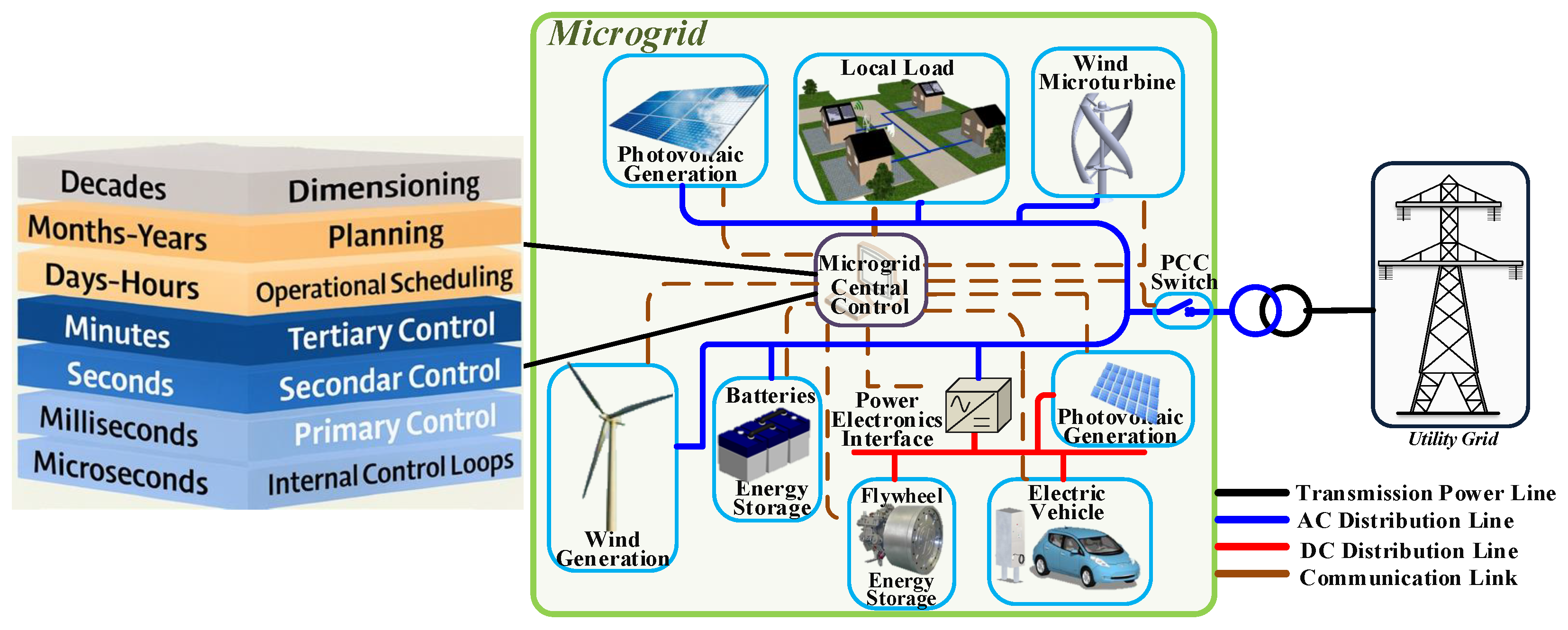
By definition, a microgrid (MG) is composed of several distributed energy resources that ensure the power reliability for a specific load requirement in a specific area, as illustrated in
Figure 1 [
1]. Nowadays, power generation tends to be based on renewable distributed energy resources (DERs), such as photovoltaic cells or wind generators. However, a drawback of DERs is the uncertainty of power generation due to its dependence on weather conditions. To enhance this reliability, microgrids typically integrate energy storage systems (ESSs) to store energy when possible and supply energy when required. An ESS plays an important role in the overall operation of an MG, not only by providing power to the MG but also by absorbing excess power generated by the DER. Because of that, a microgrid (MG) requires an efficient control system to coordinate the operation of all distributed energy resources (DERs), energy storage systems (ESSs), and loads, while ensuring the reliability of the local power system and enabling power exchange with other grids (Microgrid Central Control in
Figure 1). Even when the microgrid is connected to the main grid (a grid-connected MG), the controller must be able to manage internal generation and consumption and, when needed, enable the microgrid to buy power or sell excess generation [
2]. The flexibility of operating a microgrid in either grid-connected or islanded mode—while ensuring local consumption—is its main distinction from virtual power plants (VPPs), which are essentially aggregations of distributed energy resources that act as a single large power plant connected to the main grid.
To provide microgrids with the required operational flexibility, a hierarchical control structure is needed to properly respond across multiple time spans, as shown in
Figure 1. The first control layer is based on local controllers at the conversion stage of each distributed energy resource (DER), which regulate both the dynamic and steady-state operation of the power system. The second layer, known as the primary control, enables power interaction among DERs. At higher levels, the secondary control provides voltage and frequency restoration to ensure that the power system operates at its nominal values. The following two levels of the hierarchical control structure are dedicated to managing the optimal power flow exchange between networks, as well as scheduling energy exchange and dispatch for participation in power trading with other interconnected electrical grids. Finally, the highest levels of this hierarchy correspond to strategic management systems are aimed at performing maintenance planning, replacement scheduling, and the implementation or procurement of new generation units, which involves the analysis of data spanning months, years, or even decades [
3].
Table 1 summarizes the main functions of the different layers in the hierarchical control structure.
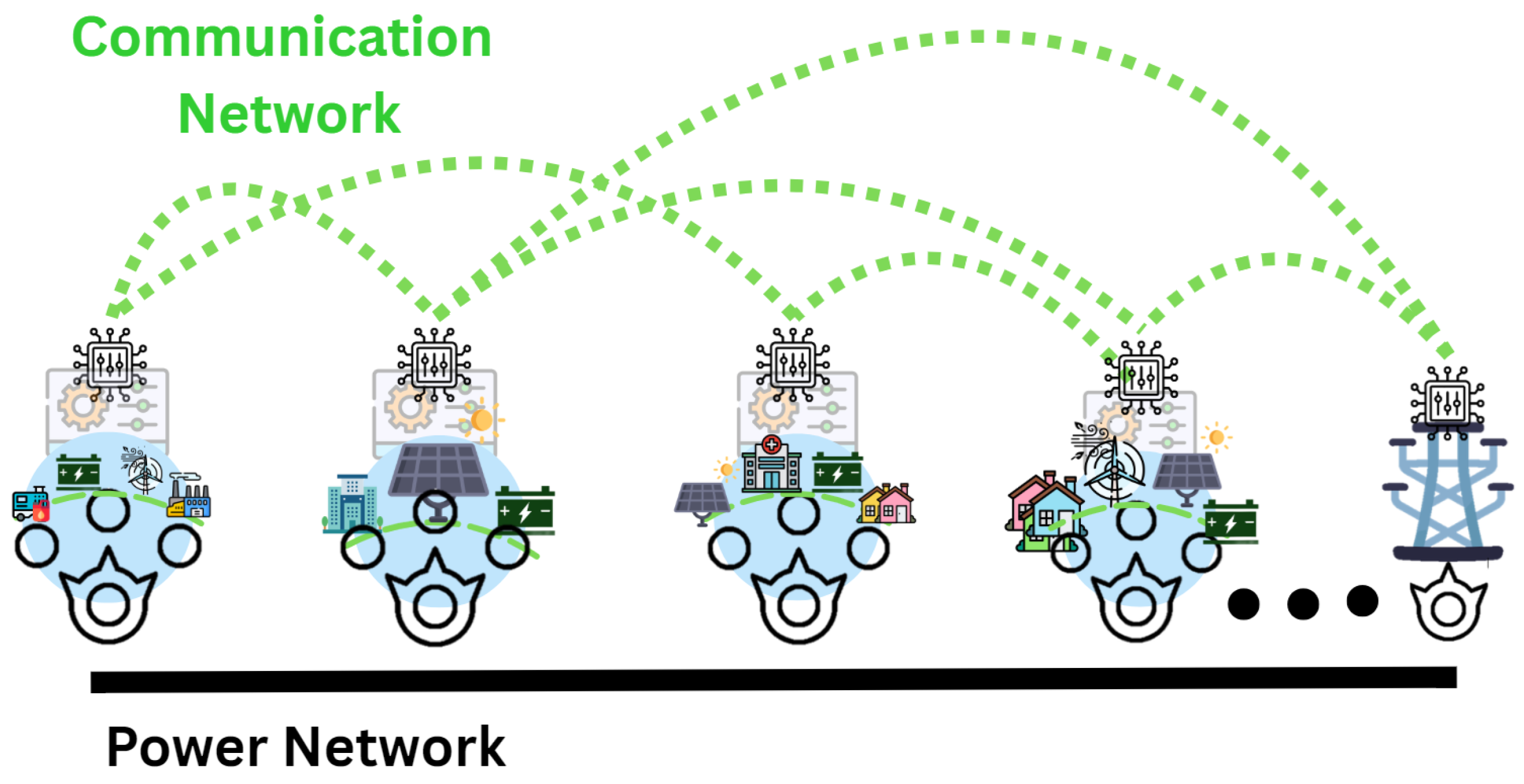
In particular, the tertiary control and the operational scheduling layer are responsible for enabling energy exchange with the main grid or even with other interconnected microgrids within a microgrid system, as illustrated in
Figure 2. In this context, apart from the interconnected power grid, dedicated low-bandwidth communication among microgrids is crucial to ensuring reliable information exchange and effective coordination. The integration of multiple microgrids within a system enhances overall performance by enabling power exchange, thereby improving power system efficiency and providing mutual benefits for all microgrids in the network [
4].
The perspectives of microgrids (MGs) and the challenges in improving their performance are as diverse as the components they contain. The main goal of this work is to present several emerging techniques aimed at enhancing the performance of the upper layer of hierarchical microgrid control. In particular, the paper focuses on reviewing energy management systems that enable energy trading or exchange between microgrids.
Energy management is positioned within the highest control layers of a microgrid (MG) and microgrid systems (MGSs), where energy trading represents one of its main objectives (Tertiary Control and Operational Scheduling), particularly under emerging scenarios involving the interaction of multiple microgrids [
5]. For the management layers, a wide variety of solutions have been proposed, focusing on addressing diverse potential issues such as financial viability, renewable energy integration, and resilience. Optimization approaches are the most commonly used strategies, often reported through hybrid optimization models (e.g., [
6,
7]). Meanwhile, artificial intelligence (AI)-enhanced techniques ([
6,
8]), and metaheuristics ([
9,
10]) are among the widely used approaches for optimizing operational costs [
11], scheduling DER participation [
8], managing load demand [
12], and reducing emissions and pollution resulting from DER operations [
13]. In addition, AI techniques are also a popular choice for managing energy trading between MGSs. On the other hand, learning techniques such as reinforcement learning ([
14,
15]), deep learning ([
16,
17]), and machine learning ([
18,
19]) are among the most commonly used algorithms for pricing, climate forecasting [
20], managing uncertainties [
21], and the effect of integrating electric vehicles [
21].
Other techniques, including decision-making models, stochastic methods, game theory, and multi-agent systems (MASs), have also been reported, but in smaller proportions. Finally, regarding bio-inspired methods—defined as algorithms, techniques, and strategies based on or inspired by natural behaviors or dynamics, such as honeybee foraging—these have been applied to solve engineering problems. For instance, in the context of EMSs, they are often used as decision-making techniques. Meanwhile, optimization approaches remain the most frequently reported methods [
22], and bio-inspired methods are employed in metaheuristic approaches or serve as complementary search or decision-making algorithms. Additionally, AI [
23] and MASs [
24] have also been utilized to integrate bio-inspired techniques as supportive tools.However, EMSs primarily based on bio-inspired methods have rarely been found by this review [
25,
26].
Despite the study of microgrids being extensive and diverse, making it an open and dynamic research area essential in today’s context, a variety of reviews have been published clarifying it. For instance, ref. [
27] presents a review where EMS with optimization approach are studied, taking into account different architectures, control hierarchies, centralized and decentralized in MMGs. Showing that architectures where multiples MG are decentralized and interconnected could allow for better performance of the overall system due to the flexibility, feasibility, and lower communication costs. The authors of [
28] stress the complexity of distributed architectures as well as their benefits in terms of stability, resilience, and energy trading within networked microgrids; this review was developed to consider primary physical layer for energy exchange and communication approaches. Additionally, ref. [
29] presents a comprehensive review where the main goal is provide an overview of trending EMS strategies applied in MMGS. A strong tendency of using AI-based techniques is reported, and optimization approaches and mixed strategies (AI and optimization) have increased their use as the main methods in EMSs. Blockchain is reported as a robust solution for cyber security issues.
Bio-inspired algorithms present a novel approach for solving the main objectives in MMGs due to their flexibility and natural optimal behavior. A wide variety of natural dynamics are being implemented to improve solutions or present a different approach to address typical problems in engineering [
30]. In energy management in microgrid systems there are some references where bio-inspired algorithms are included, showing good results and even better performance in some cases [
31]. One major topic mentioned in these studies indicates that using bio-inspired algorithms means that resilience and reliability in microgrid systems can be improved [
32].
This document aims to provide a comprehensive review of EMSs used to enable the interoperable operation of multiple microgrids integrated within a system, focusing on the main strategy, algorithm, or approach used in MMGs or Networked MGs, and bio-inspired applications within EMSs are considered for the understanding how this approach is being used and applied as a feasible solution. The document is organized as follows:
Section 2 presents the materials and methods used in the review.
Section 3 provides a comprehensive overview of several techniques used at the EMS level, concluding with a bio-inspired proposal based on epidemiological dynamics to model the interaction between multiple microgrids interconnected in a system. Finally,
Section 4 and
Section 5 discuss the key points highlighted in the review and present the conclusions, respectively.
2. Materials and Methods
A systematic literature review has been conducted using the databases and software tools of the major scientific journals to identify the most relevant documents related to the management of microgrid systems. This process aimed to create a well-constructed perspective on the advances and limitations in power management solutions for MGs.
As a first step, existing review articles were examined to identify potential areas of contribution to MG development. Subsequently, the objective of the review was defined, and the research question was formulated. Then, analysis categories were established, and relevant keywords were identified for conducting searches in specialized databases. The categories of topics and keywords used in the literature search are summarized in
Table 2.
The search equation (Topology) AND (EMS) was derived from the keywords listed in
Table 2 and was used in major scientific repositories (Scopus, LENS, and Web of Science). Only research papers published from 2019 onward were considered to identify current perspectives, solutions, and challenges in the field. Any word enclosed in parentheses is connected using an
OR operator. For example, for the keyword
Topology, the following terms were used:
multi-microgrid OR microgrid cluster OR microgrid system, as part of the search equation used in scientific repositories. Additionally, search operators were employed to broaden the scope. For instance, the asterisk (
*) operator was applied in
multi*microgrid* to capture different variations such as
multi microgrid,
multi-microgrid, and
multimicrogrid, in both singular and plural forms.
Afterwards, the data obtained was cleaned by removing unrelated reviews, and a thesaurus was developed to combine related terms and avoid misleading interpretations, etc. This prepared the dataset for analysis using VOSviewer V1.6.20 and R-Bibliometrix V4.0.
A total of 884 documents were initially identified from Scopus, 1000 from Web of Science (WoS), and 883 from LENS. Using the online tool available at
https://ateneasires.com/, the datasets were merged, and duplicate records were removed, obtaining a final dataset of 1362 sources. As this review was focused on energy management systems (EMSs), the thesaurus was developed to include related terms such as algorithms or approaches used within specific techniques. Other terms were grouped into main terms for better and easier analysis.
The first software-based analysis was conducted using
VOSviewer. A co-occurrence network is displayed to identify relationships, as well as the main strategies and algorithms used in the last five years.
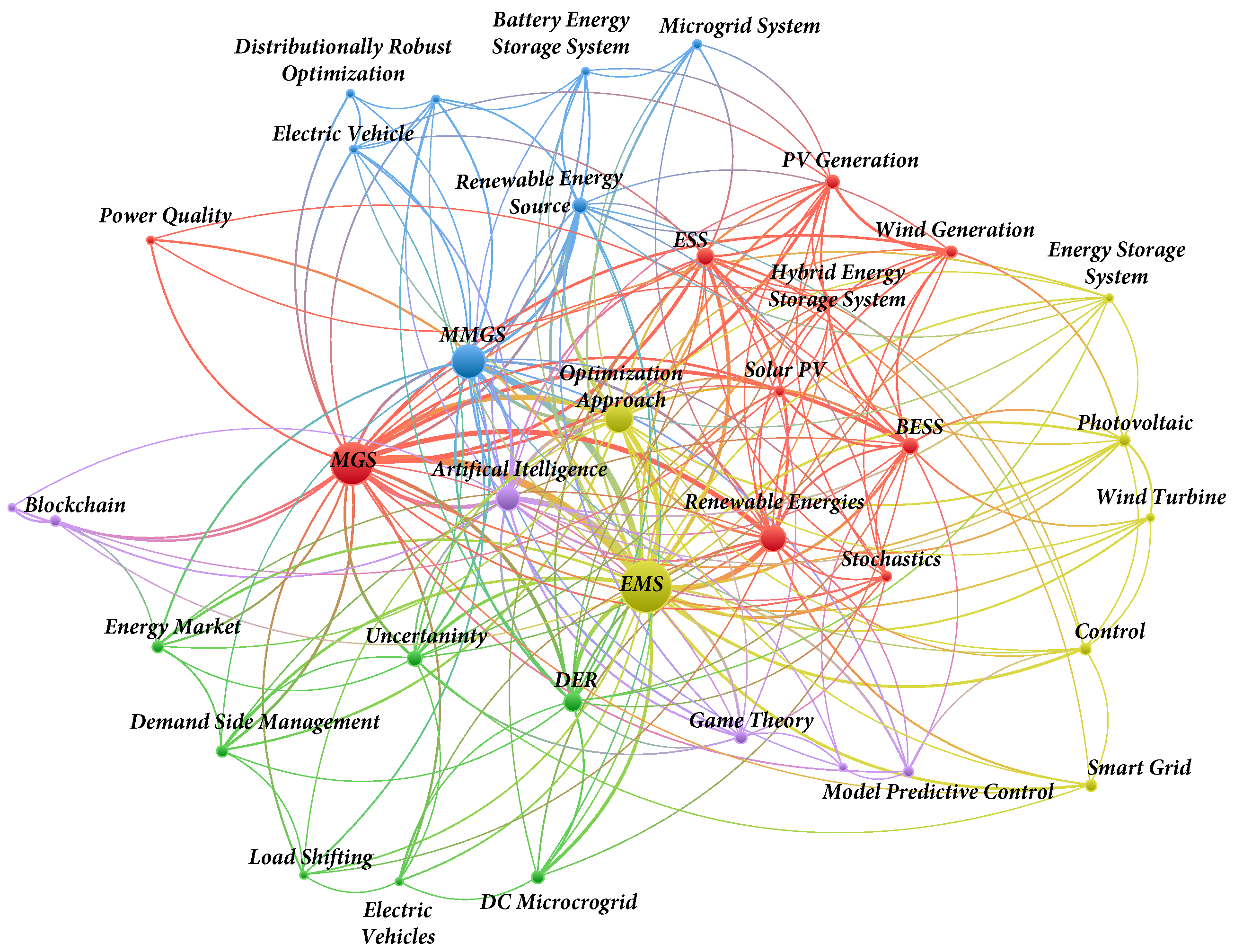
Figure 3 shows the relationships identified among several topics. A strong connection between energy management systems (EMSs), microgrid systems (MGSs), and multi-microgrid systems (MMGSs) is clearly observable. The integration of renewable resources, hybrid storage, and generation was also identified. In terms of EMS strategies and algorithms, optimization approaches emerge as the dominant strategy, followed by artificial intelligence (AI), game theory, and stochastic methods, all of which exhibit strong relationships. Finally, aspects such as energy markets, demand-side management, electric vehicles, and uncertainties emerged as trending topics in EMSs. The colors in
Figure 3 represent clusters identified in the bibliometric analysis. Clustering indicates that a strong relationship was found among the nodes sharing the same color. For instance, the yellow cluster shows the integration of EMSs (energy management systems) with control techniques, photovoltaics, wind turbines, and energy storage systems. Meanwhile, where the links between topics result in a change of color, this indicates integration and interaction between clusters.
After the initial analysis, the documents were categorized according to the main management approach used in each contribution. This information was extracted from the primary dataset and classified into the categories defined in
Figure 3. The categories and the number of contributions are summarized as follows: optimization (642), artificial intelligence (AI) (222), game theory (40), and stochastic methods (97). During this task, two additional strategies emerged: multi-agent systems (MASs), with 55 documents, and decision-making processes, with 52 documents. These two were selected as the strategies to be analyzed in this document. The remaining 254 documents were excluded because they were not related, were review articles, or did not have a defined strategy. The variety of terminologies in the dataset describes, among other things, advanced energy management strategies, emerging technologies, and optimization techniques. Some of the important topics identified in the data include AI, battery-based energy storage systems (BESSs), demand-side management (DSM), and DERs, all of which are crucial components for enhancing the efficiency and performance of multi-microgrid systems.
The term EMS stands out in a prominent position due to its occurrence and link strength, suggesting that EMS plays a central role in research on multi-microgrid systems. AI, blockchain, and game theory are part of current developments aimed at improving decision-making and resource optimization within microgrids. Other key elements include BESSs and renewable energy sources such as photovoltaics (PV) and wind generation, which are essential to ensuring that the energy supply within the red MG is both reliable and sustainable. The dataset also mentions model predictive control (MPC) and distributionally robust optimization as some of the advanced algorithms introduced to address uncertainties in energy supply and demand. Terms such as stochastics and uncertainty highlight the challenges faced in integrating variable renewable energy sources into microgrid systems.
Over 3300 keywords were identified, with the main topics being microgrid systems and multi-microgrid systems with 1092 occurrences, followed by energy management systems with 864, renewable resources with 643, scheduling with 422, energy efficiency with 408, and energy storage with 348.
From an overall perspective, the bibliometric data indicates a growing interest in energy management systems in distributed networks (microgrids, multi-microgrids, smart grids, etc.). The penetration of renewable resources such as photovoltaics, wind, and even hydrogen is also being studied, as is the impact of uncertainties and economic trading.
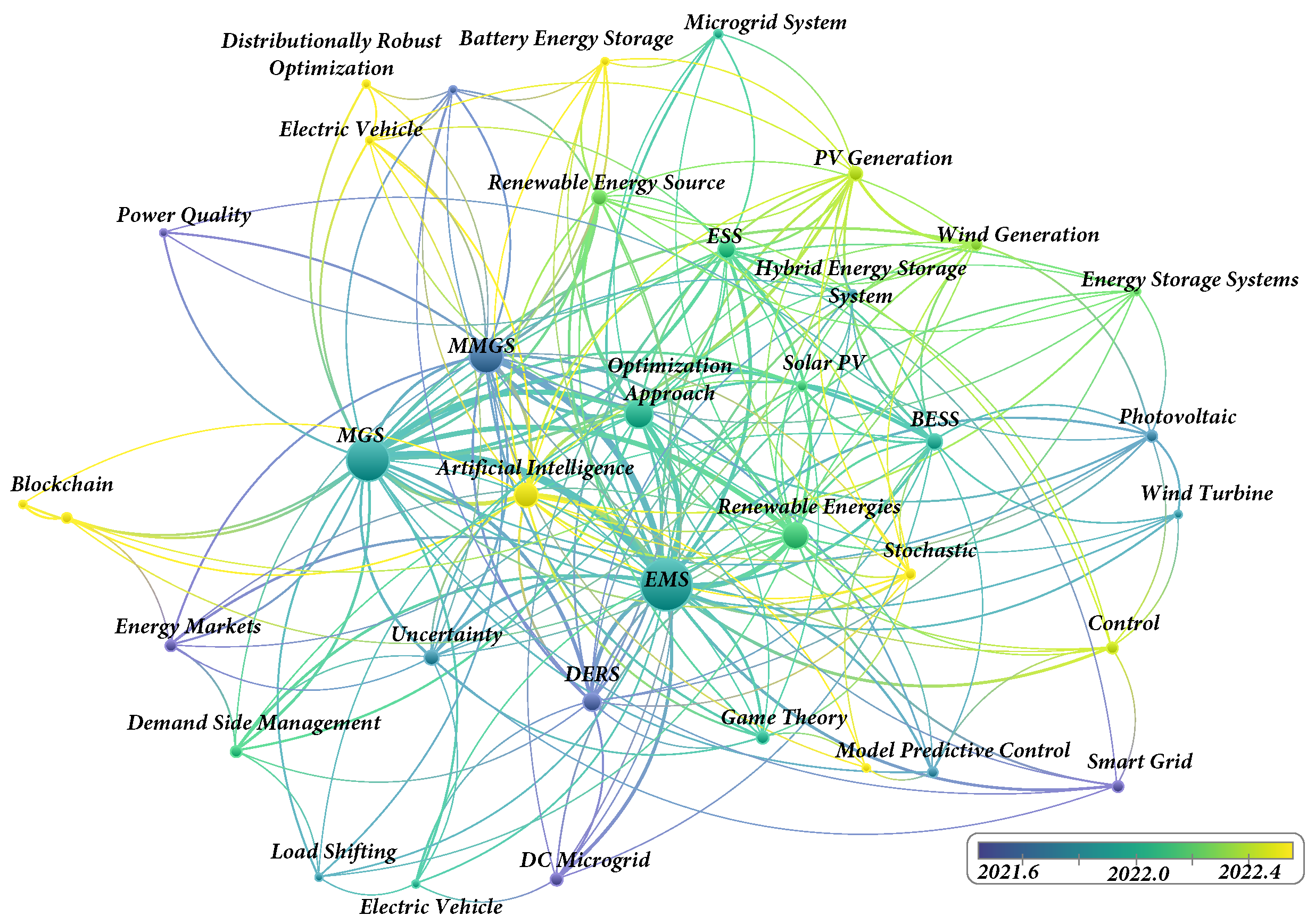
Figure 4, which is a time-based map showing the average year of publication for each term, where the dark blue colors are the older publications and light yellow the newer ones, shows that the trending topics are related to electric vehicles, cost reduction, and secure information. All of this is a complex problem that has been faced by mixing different strategies, that is why in
Figure 3 strong links are visible among several strategies.
Terms such as artificial intelligence and blockchain indirectly point to the digitalization of energy management systems for multi-microgrid systems. For instance, AI is increasingly seen as a tool to enhance decision-making processes, optimize energy distribution, and improve the real-time system autonomy. The use of blockchain suggests an interest in improving the security of energy transactions, data privacy, and efficient DER management. The technologies enabled by the integration of DERs into larger grid systems include solar panels, wind turbines, and others.
In this context, BESSs and ESSs are viewed as key enablers of balancing supply and demand within multi-microgrid environments, especially for frequency response or when managing intermittent renewable energy sources. This emphasis on demand-side management leads to the belief that strategies for managing consumer demand based on grid conditions are being developed to provide a flexible and responsive energy system.
Moreover, distributionally robust optimization and MPC become crucial to deal with uncertainties in renewable generation so that energy supply can be guaranteed at a level that matches demand under prevailing conditions. Such methods, based on game theory interactions, point to resource management frameworks that enable microgrids to function optimally, even under complex and fluctuating energy conditions.
3. Energy Management Systems
The EMS control layer and its algorithms play a crucial role in the overall performance of microgrid (MG) systems—whether operating in islanded or grid-connected mode—due to their function in maintaining power balance, optimizing distribution capabilities, and ensuring both economic efficiency and power availability [
33]. In particular, in microgrids with a high penetration of RESs, the participation of the EMS is even more relevant due to the uncertainty and fluctuation in the generation units stemming from their climatic dependency. In these scenarios, grid-connected or clustered MGs are more feasible in terms of ensuring power reliability, thanks to the potential energy support provided by external electrical networks. Nevertheless, a proper management solution capable of trading surplus or deficit in power generation with other MGs or with the utility grid is always required [
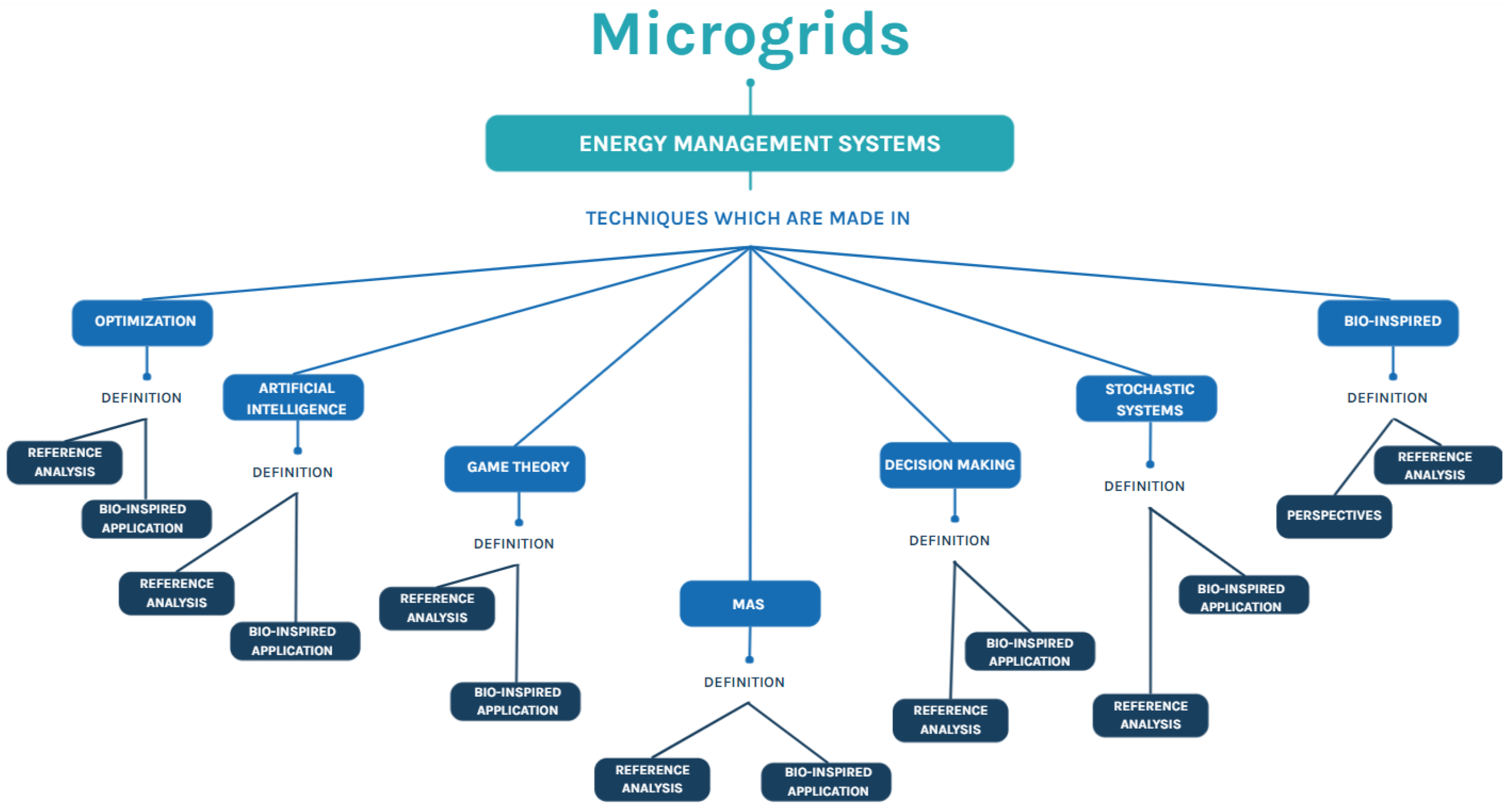
34]. A comprehensive review of EMS algorithms is presented to provide an overview of the latest, most innovative, and trending approaches used in energy management systems used for the integration of microgrids with other electrical systems. Six categories have been defined based on the bibliometric findings, representing the most relevant EMS techniques reported in the literature, as summarized in
Figure 5. The analysis is presented from the most- to the least-cited strategy and includes a seventh category, referred to as bio-inspired, which was not identified in the bibliometric analysis but is discussed due to its emerging relevance.
3.1. Optimization Approach
The efficiency and reliability of an energy management system (EMS) in a microgrid are commonly addressed using optimization techniques. Among the most widely used approaches are linear programming (LP) and mixed-integer linear programming (MILP), which enable the optimal scheduling of distributed energy resources (DERs) [
35]. These methods help reduce operating costs and energy losses while maintaining microgrid stability through the effective control of energy generation, storage, and consumption [
35].
Additionally, sophisticated optimization techniques have been employed to address the complexities associated with microgrid operations, including genetic algorithms and particle swarm optimization. These methods are particularly effective under conditions of variable and uncertain renewable energy generation, and load variation. By using such techniques, the EMS can dynamically adapt its operation to the prevailing conditions by achieving a delicate balance between supply and demand, while maximizing the use of renewable energy [
36]. In this context, [
37] provides a detailed review of these critical techniques and their applicability for improving microgrid EMS performance [
36].
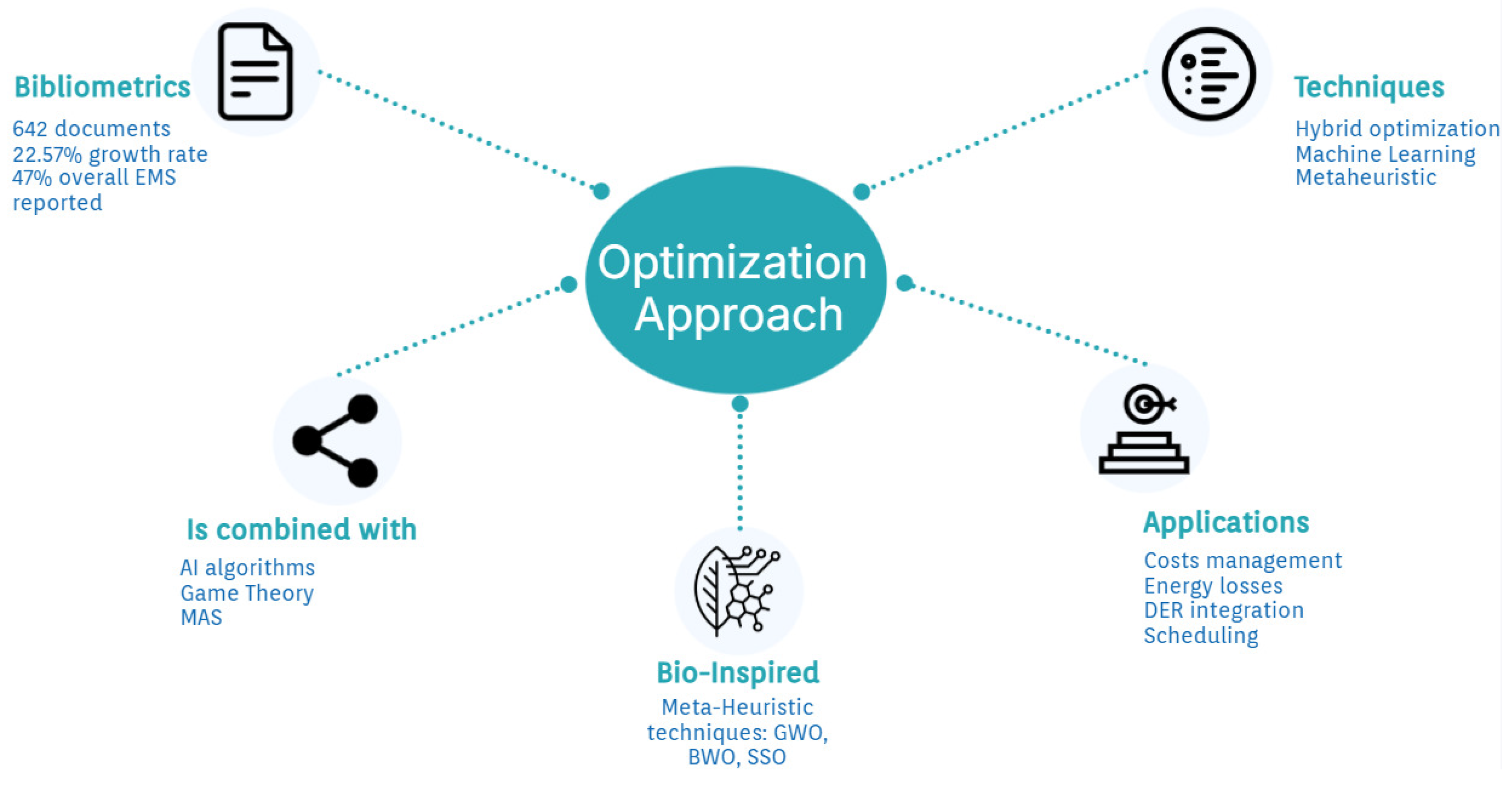
Figure 6 presents an overview of the main bibliometric indicators and literature findings. The figure shows the main techniques used and other strategies combined with optimization approaches, as well as the bio-inspired algorithms used within. Optimization approaches account for 47% of the total number of reported EMS studies, with 642 documents and a growth rate of 22.57%. Hybrid techniques, including metaheuristic methods for optimizing costs, reducing energy losses, and scheduling and integrating distributed energy resources (DERs), are most commonly used for energy management. Additionally, optimization has been combined with AI algorithms, particularly game theory and multi-agent systems. In combination with optimization approaches, bio-inspired algorithms are employed as complementary search and decision-making techniques.
Finally, the most cited documents were analyzed to provide a deeper understanding of the techniques, advances, approaches, applications, and problems addressed using optimization methods.
Table 3 presents a synthesis of the main sources identified through the
R-bibliometrix analysis. The documents have been grouped by similarity to enhance readability and comprehension.
Reference Analysis
Table 3 presents a diverse range of optimization algorithms and methodologies developed to address various challenges in energy management within microgrids and hybrid energy systems. These include metaheuristic algorithms, machine learning techniques, and hybrid optimization methods. The primary focus is on optimizing energy dispatch, managing uncertainties in renewable energy production, and improving interactions between different energy resources and consumers. These contributions reflect a growing trend toward hybrid and intelligent EMS frameworks that leverage robustness, decentralization, and artificial intelligence to ensure economic efficiency, reliability, and sustainability in both islanded and grid-connected microgrid scenarios.
Table 4 summarizes the key contributions and focus areas of the reviewed techniques.
Moreover, the bioinspired optimization methods identified in the data include genetic algorithms, particle swarm optimization, and Gray Wolf Optimization. These are among the key approaches commonly used to solve complex multivariable nonlinear energy optimization problems. They play a critical role in ensuring the efficient operation of energy systems, particularly when managing fluctuating energy sources such as wind and solar power.
The term multi-objective optimization appears frequently, highlighting its importance in managing conflicting objectives in energy systems—such as minimizing energy costs while maximizing system reliability. Similarly, the concept of distributed optimization is widely applied in decentralized systems like microgrids, enabling optimal energy flow across multiple nodes. Key topics include Optimal Energy Management, Optimal Scheduling, and demand-side management, which demonstrate how optimization techniques are used for efficient distribution of energy resources, energy storage management, and real-time load optimization, respectively.
Due to its inherent complexity, energy management is an ideal scenario for the application of optimization techniques. Key objectives in EMSs for distributed microgrids—such as determining the optimal generation mix among DERs, including RESs, minimizing operational costs or emissions, and identifying the best network topology—are classic optimization problems. It is not surprising, therefore, that optimization emerges as the predominant strategy identified in the systematic literature review (SLR) conducted by the authors. Furthermore, the review highlights how optimization is often enhanced by complementary techniques, indicating that it is a well-established research theme with growing interest in hybrid approaches to address major challenges in EMSs.
Additionally, multi-objective optimization techniques appear frequently in the dataset, reflecting their importance in balancing the various goals within EMSs. These techniques are essential for simultaneously optimizing costs, energy efficiency, and environmental impact. Effective dynamic energy resource management across diverse scales and technologies is critical in microgrids.
Similarly, optimization techniques are widely applied in
demand-side management (DSM) and scheduling, where aligning energy use with supply is crucial. By optimizing load distribution and scheduling energy consumption through DSM strategies, peak demand can be reduced, thereby enhancing grid stability—particularly during periods of high renewable energy generation. Optimization is also used to address uncertainties in energy systems, especially those related to variable renewable energy sources such as wind and solar. In this context,
robust and
stochastic optimization methods are key to making EMSs adaptable to unpredictable fluctuations in energy supply and demand. Optimization models used in EMSs typically require high computational costs, especially in large-scale scenarios or those requiring real-time processing [
1,
15], due to model complexity, multi-objective functions, and inherent nonlinearities. This can result in excessively high computation and convergence times [
15]. These challenges are exacerbated when integrating renewable sources and diverse storage systems [
10,
17]. Another limitation of these models is their reliance on reliable and high-quality data, such as market prices, generation forecasts, or demand predictions, as well as the limited availability of such data in real time [
16].
Another complicating factor for implementation of optimal solutions is the handling of data uncertainties, which hinders the development of robust models. One alternative to this issue is the use of stochastic models, which can reduce this dependency but compromise model robustness by seeking more conservative solutions [
3]. Similarly, the security and confidentiality of data obtained from generation, distribution, and market prices, as well as from consumers—given that these are primarily centralized systems—pose additional challenges [
1,
20].
Scalability emerges as another challenge for these types of algorithms. As the number of microgrids in the system increases, along with power or communication lines, the problem grows exponentially, and thus convergence times and computational costs may prevent the achievement of viable solutions [
2].
Finally, as with other techniques, a wide range of
bio-inspired applications has also been explored in combination with
metaheuristic approaches. Population-based algorithms such as
particle swarm optimization (PSO),
Gray Wolf Optimization (GWO),
Black Widow Optimization (BWO), and
Slap Swarm Optimization (SSO) are employed as core search strategies within the optimization process. Each algorithm emulates the natural behavior of its corresponding species to find optimal solutions according to specific objectives and constraints, leveraging the cooperative behavior of individual agents in natural environments. The documents listed in
Table 3 suggest that bio-inspired algorithms significantly enhance optimization outcomes, particularly in reducing operational costs.
3.2. Artificial Intelligence Techniques
Artificial intelligence (AI) techniques are wide-ranging and diverse. Nowadays, they are being implemented across a wide variety of fields, including energy management in microgrid (MG) systems. By using AI techniques, an EMS can manage large amounts of information, deploy predictive and intelligent control strategies, trade power surpluses, and predict scenarios to reduce operational costs [
48]. AI techniques are applied to solve or perform a wide variety of tasks in EMS and power trading within MG clusters. For instance, AI is commonly used as a predictive tool, providing forecasts related to trading prices [
49], power demand profiles [
50], and even uncertainties in renewable generation [
51]. Additionally, AI is employed to manage both local and global control strategies, ensuring power balance and reliable performance within the microgrid cluster [
52].
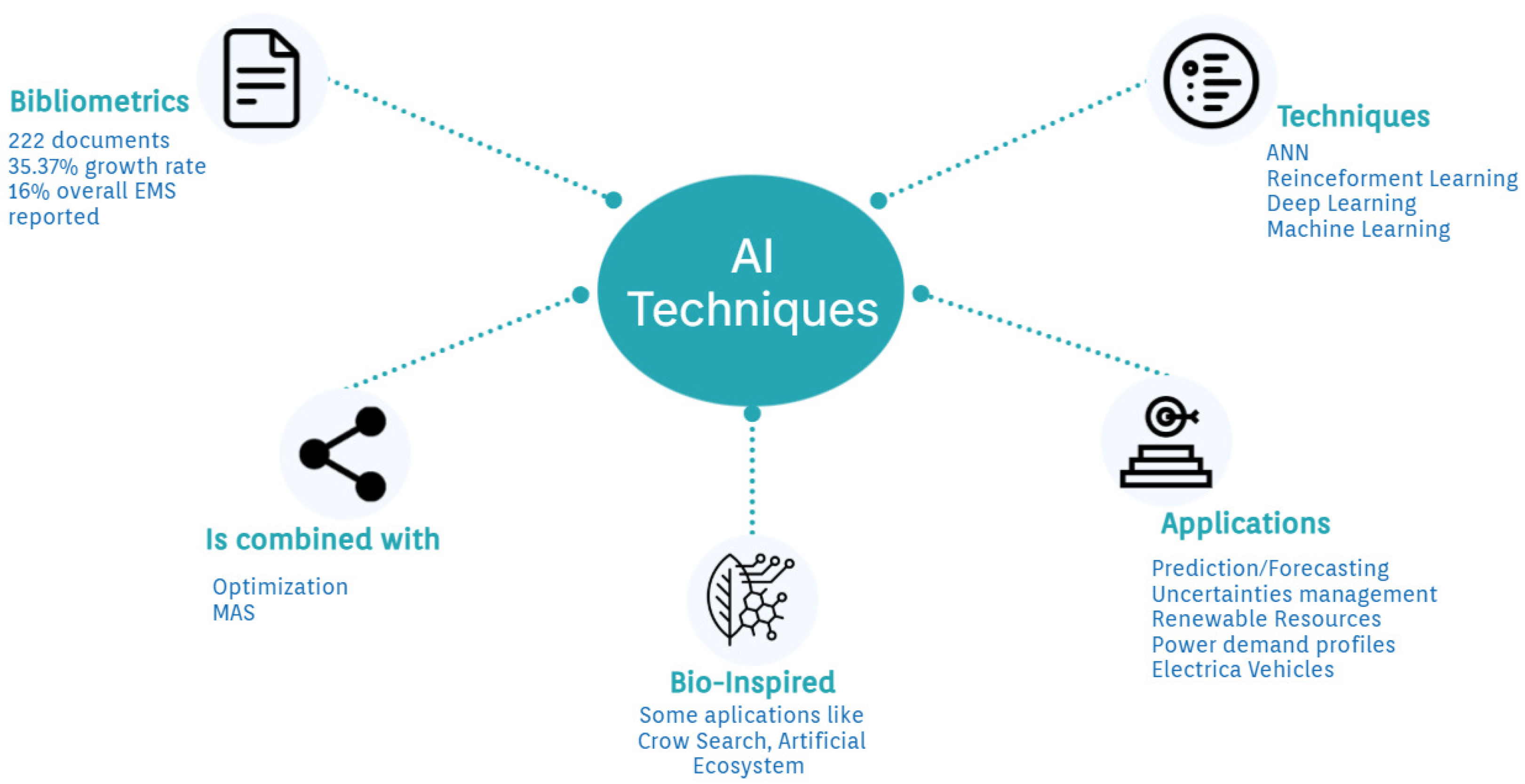
Figure 7 presents a graphical overview of the main elements found in the review, there, some techniques used across the AI spectrum, as well as the main techniques combined with AI and the bio-inspired application used. As mentioned before, a total of 222 contributions were identified, corresponding to 16% of the EMSs reported. It is important to highlight that AI techniques in EMSs show a growth rate of 35.37%, based on the bibliometric findings. Moreover, artificial neural networks (ANNs) and learning techniques—such as reinforcement learning, deep learning, and machine learning—emerge as the main strategies applied to EMSs. Additionally, optimization approaches appear as the most commonly used techniques in combination with AI algorithms. Meanwhile, bio-inspired algorithms show few contributions related to AI. They are mainly used as search techniques or decision-making methods. Regarding the applications of AI algorithms, they are primarily focused on forecasting and prediction in energy markets, managing uncertainty in renewable energy, and integrating electric vehicles.
The most relevant contributions were selected to provide a deeper analysis of the techniques, advances, application approaches, and problems addressed in EMSs for microgrids using artificial intelligence algorithms. These contributions were chosen from the most cited documents, according to the bibliometric analysis.
Table 5 groups and summarizes the main findings from these contributions.
Reference Analysis
Table 5 presents a wide range of techniques applied in EMSs. Some of these are combined with other methods, primarily optimization approaches, with PSO, reinforcement learning, and evolutionary algorithms being the most frequently used. Among AI techniques, neural networks and machine learning are the most commonly applied. Forecasting is the primary problem addressed by AI, particularly in relation to renewable energy uncertainties caused by environmental conditions and variable demand profiles. Applications of these techniques can be found in residential uses, electric vehicles, multiple microgrid systems, as well as in grid-connected and standalone topologies.
Popular techniques include ANNs and reinforcement learning (RL), supported by the growing use of machine learning approaches for predictive control and decision-making in energy management. The Crow Search Algorithm reflects the application of bio-inspired optimization methods, which are becoming increasingly relevant for solving complex energy optimization problems.
Moreover, the use of terms such as EMS, renewable energy sources, photovoltaic systems, and electric vehicles highlights key areas for AI application related to the integration and management of distributed energy resources. Topics such as forecasting, optimization approaches, and uncertainty demonstrate how AI techniques are being leveraged to enhance both predictability and reliability in energy management systems, particularly under the uncertainties associated with renewable energy generation.
AI-based techniques, particularly ANNs, are effective for predicting energy demand and renewable energy generation, as well as for optimizing resources. These techniques are expected to play a crucial role in managing the complexity and variability of modern energy grids—especially in systems with a high penetration of intermittent renewable energy sources such as solar and wind.
Reinforcement learning (RL), perhaps, has great potential in real-time decision-making and enabling energy systems to learn optimally through continuous interaction with the environment. This would also enhance energy dispatch, storage management, and demand response in an energy system, particularly with high renewable penetration.
Another important observation is the application of AI to energy forecasting and uncertainty management. Indeed, the increasing application of AI methods, and most recently ANN and reinforcement learning, has been carried out to enhance the accuracy of predictions in renewable power generation, energy consumption, and grid stability. Predisposed by the uncertainties in renewable sources of energy, AI techniques would help to mitigate risks and provide more reliable forecasts with adaptive control strategies.
The focus on optimization approaches further cements the importance of AI in improving the performance of energy systems. The application of optimization techniques can integrate photovoltaic systems along with BESSs and electric vehicles to meet the energy demand by efficient supply, cost minimization, and environmental impact using AI.
AI-based methods exhibit a high dependency on data, both in terms of quantity and quality, as well as on the precise tuning of parameters for model training and validation. This is evident in techniques such as model-free reinforcement learning (RL) and metaheuristic approaches [
10]. The complexity of their architecture poses another challenge for AI-based EMSs, making it more difficult to establish models, network structures, hidden layers, etc. [
1]. Similarly, there are no reported cloud architectures for real-time or supervised learning strategies, particularly for clusters or MMGSs. Although data-driven strategies have demonstrated efficiency in this regard when robust training is available, such training can be slow and computationally expensive. Additionally, some of these models may be too complex for short time intervals [
1].
Scalability presents a significant challenge for the implementation of these strategies in MMGSs. Reinforcement learning-based models are inefficient due to dimensionality issues [
1]. Iterative models, as previously mentioned, are very slow in scenarios with many nodes, complex or large-scale structures, or in real-time applications such as electric vehicle coordination [
2]. Likewise, complex models with optimization objectives or scenario-based stochastic solutions may exhibit very high convergence times. The presence of uncertainties or the integration of a greater number of renewable energy sources has the same effect on resolution time [
12]. However, strategies such as Deep Q-Learning or Deep Policy Gradient have proven effective for scalability tasks aimed at cost reduction [
1]. Hierarchical propagation strategies have also shown improvements in solution times while preserving the privacy of the data used by the models. Indeed, data privacy and cyber security in general represent a risk factor and may become a barrier to the implementation of intelligent strategies [
12].
Finally, a few AI techniques were found that involve bio-inspired algorithms, such as the Crow Search Algorithm used for pricing optimization, enhanced with an ANN in [
23], and the Artificial Ecosystem Optimizer applied in [
64] to optimize ANN topology. As suggested by the results extracted from the main documents, bio-inspired applications are rarely integrated with AI techniques and are typically used only as auxiliary tools for specific purposes. Despite these instances, there is limited evidence of bio-inspired systems, techniques, or algorithms being employed in the main sources analyzed here to improve or enhance AI strategies for EMS.
3.3. Game Theories
The decision-making strategy based on game theory has been implemented to solve various problems in EMSs, including power trading in microgrid (MG) systems, due to the multi-decision-maker structure, where the benefits of all players are taken into account [
65].
In [
65], a hierarchical Stackelberg game theory approach is used to manage power trading within a microgrid (MG) cluster. The proposed algorithm determines optimized buying/selling prices for power surpluses in each MG, either internally or with the main grid. The iterative process seeks a minimum using particle swarm optimization (PSO) at each level and recalculates prices to find the best option for each agent and for the overall cluster.
The Stackelberg game involves multiple agents organized across different levels and hierarchies: the main grid (UGA), the overall MG cluster (MGCA), each individual microgrid (MGA), and each load unit that demands power from the cluster (UA). As a hierarchical game, it begins with a leader—typically the MGCA—who sets prices hourly and a day ahead. These prices are passed to lower-level agents, who perform their own optimizations based on the given parameters. The updated prices are then sent back to the leader, and this iterative process continues until equilibrium is reached, meaning each agent has achieved its optimal benefit.
The game starts with the MGCA acting as the leader, distributing initial prices to each MGA. The MGAs perform their optimizations, initiating the second level of the game. At this stage, each MGA becomes the leader of its own microgrid and sends optimized prices to the UA agents. Each UA then optimizes its strategy based on its energy demand, local availability, and the given prices, and returns the adjusted prices to its MGA. If equilibrium is achieved, the game ends and trading is enabled. If not, the MGAs return the updated prices to the MGCA, which initiates a new iteration until equilibrium is reached.
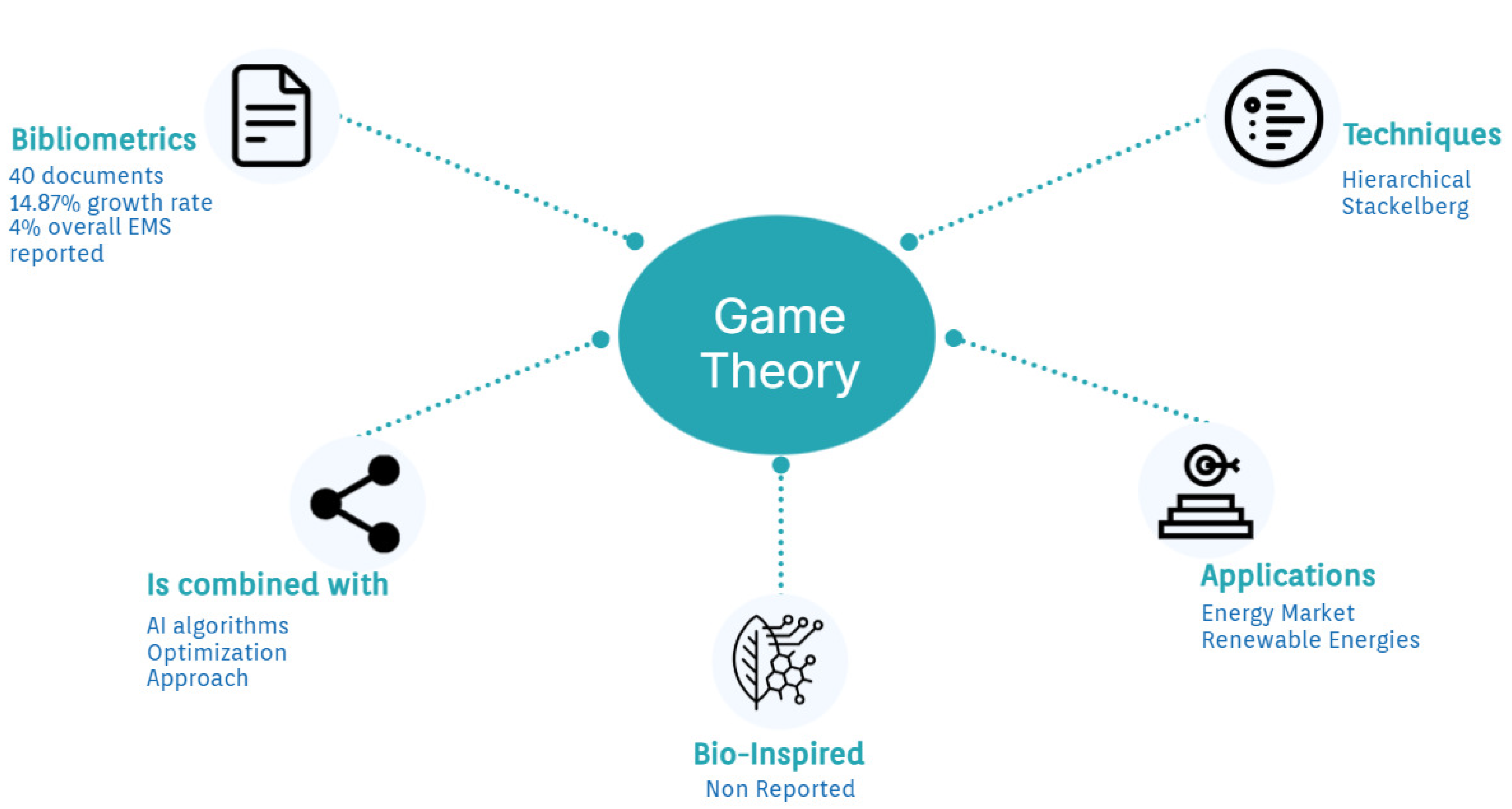
A graphical overview is presented in
Figure 8 to summarize the bibliometric and document analysis results, where main techniques and strategies are combined with game theory as used in EMSs. It shows that game theory is used as the main EMS strategy in only 4% of the reviewed studies. Among these, Stackelberg and hierarchical approaches are the most commonly applied. Optimization and AI algorithms are frequently combined with game-theoretic methods, while no bio-inspired applications were identified in this context. Game theory is primarily applied in energy markets and the integration of renewable energy sources.
Reference Analysis
Table 6 presents a diverse range of applications and methodologies aimed at enhancing energy distribution and renewable energy integration, while also improving economic and environmental outcomes. One of the reported techniques is a framework proposed by [
66], in which peer-to-peer (P2P) trading is integrated with an Energy Service Provider to manage dynamic pricing. Additionally, hybrid approaches combining optimization techniques with game theory emerge, where negotiation between control layers, distributed energy resources (DERs), and load demand is addressed, as seen in [
67,
68]. In this context, multi-objective optimization is often applied to simultaneously optimize economic, environmental, and operational objectives such as efficiency, power quality, and renewable energy integration ([
69,
70]).
In the application of game theory, multi-layer approaches are among the most widely used. For example, [
72] proposes a bi-layer framework to optimize energy trading among microgrids and with the main grid, effectively reducing energy purchasing costs under uncertainty. Similarly, [
74] presents a tri-layer Nash equilibrium-based algorithm that addresses transmission costs and variations in renewable generation among operators, aggregators, and users.
Among the game-theoretic methods, Stackelberg games and Nash equilibrium are the most commonly applied techniques. Hybrid strategies are also observed, particularly where game theory is combined with optimization techniques. In these cases, equilibrium concepts and cooperative games are employed alongside solvers to identify optimal profits. Game theory algorithms are frequently integrated with other methods such as optimization, multi-agent systems (MASs), and decision-making frameworks to enhance system performance by enabling negotiation among elements within MMG and MG systems. The primary objective of these game-theoretic applications is typically found in electricity market models, with a focus on reducing operational costs and mitigating uncertainties associated with renewable energy.
Furthermore, game theory is emerging as a promising tool to address key challenges in EMS. Research in this area is increasing, particularly where profit-seeking and equilibrium-based strategies are enhanced through integration with artificial intelligence and optimization approaches. These combinations aim to identify optimal outcomes for the participating agents. However, no applications integrating game theory with bio-inspired algorithms were found in the main or related documents within this category.
Game theory faces a significant limitation due to the high complexity of the models and the number of objectives involved, such as costs, generation, and demand response. Under these conditions, it is not always possible to find an equilibrium solution for all players, and such a solution may not even achieve optimality [
17]. Another challenge is the limitation in integrating multiple players (MMGSs, MGs, and users) at different hierarchical levels, which prevents reaching an optimal point for all stakeholders in the MMG [
2]. This is also explained by the computational cost, as having many players at different levels leads to problems of the 2
−1 type, which may be infeasible [
6].
Data privacy and security again pose difficulties for these models. In multi-microgrid systems, ownership is often diverse, making data availability uncertain, and cybersecurity must be carefully managed to prevent cyberattacks [
19]. Finally, these game theory-based models, due to their relatively high computational cost, depending on the problem’s dimensions, limit and hinder their use in real-time applications [
6].
3.4. Multi-Agent Systems
Within the context of energy management systems (EMSs) in microgrids, multi-agent systems (MASs) provide an efficient platform for implementing decentralized control and optimization. In MASs, each agent can independently make decisions based on local information and interact with other agents to achieve global objectives. Here, the term “agent” refers to any component of interest, such as a generator, storage unit, or load. This decentralized approach enhances the fault tolerance and adaptability of the microgrid to fluctuations in energy demand and supply [
81].
Further development can be achieved through MAS implementations that incorporate advanced control strategies such as demand response and load shedding, enabling distributed coordination among distributed energy resources (DERs). Such coordination supports microgrid stability and operational efficiency during peak load periods or system failures. By integrating MASs into EMSs, microgrids benefit from improved automation, efficiency, and supply reliability, ultimately contributing to a more sustainable energy future [
82].
A strong relationship between MASs and artificial intelligence was identified, while a weaker connection was observed with optimization approaches. Renewable resources, DERs, and energy markets are indicated as the main application areas in MAS-related topics. In contrast, there is limited development in areas such as scheduling, electric load dispatch, and cost optimization.
The main terms related to MASs appear in the motor themes zone, indicating their role in driving research on EMSs and the integration of AI techniques and decision-making processes. Emerging terms include hierarchical systems, information management, optimization, and automation.
MASs are the only strategy analyzed that show a decreasing trend in keyword frequency within the EMS-related literature. However, it still demonstrates strong relationships with other strategies and continues to be considered a core theme in EMS research. MASs maintain a relatively strong link with artificial intelligence techniques. One possible reason for the declining trend is the complexity involved in implementing a MAS as a fully distributed or decentralized strategy. Additionally, a MAS is often used as a secondary or supporting approach under broader strategies such as AI and optimization.
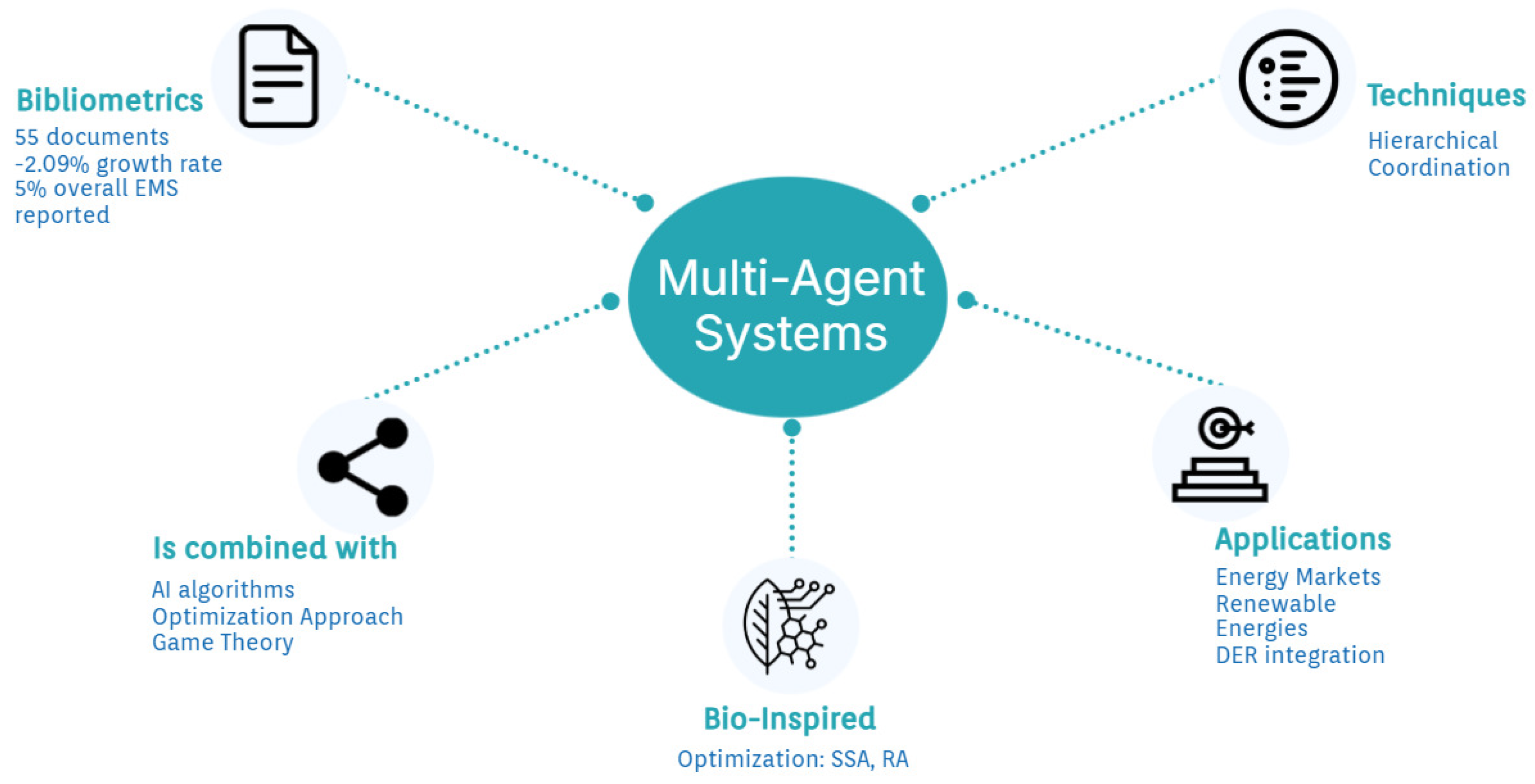
Figure 9 presents a graphical overview of the main findings, showing that MASs account for 5% of the strategies used in EMSs. Hierarchical and coordinated approaches are the most commonly applied, often in combination with AI, optimization, and game theory techniques. Bio-inspired algorithms appear primarily within optimization strategies. The most common applications are related to energy markets, renewable energy integration, and DER coordination.
Finally, a review of the most relevant contributions is presented below to provide a deeper analysis of the techniques, advances, application approaches, and problems addressed through the use of multi-agent systems for energy management in microgrids.
Table 7 presents the grouped selection of the reviewed documents.
Reference Analysis
Table 7 presents various MAS applications reported in EMSs. These implementations are often combined with other approaches, such as optimization. For example, in [
85], a MAS is enhanced with deep reinforcement learning to optimize costs, emissions, and energy dispatch by improving coordination between generation sources and load demands. In [
24], a scheme is proposed to minimize energy costs, emissions, and peak demand by applying the Salp Swarm Algorithm and Rainfall Algorithm for real-time household energy scheduling. Similarly, [
93] introduces a two-level system involving buildings, ESSs, and electric vehicles, where particle swarm optimization (PSO) is used for efficient scheduling of active and reactive power.
As an integration of MASs and game theory, [
91] applies both cooperative and non-cooperative frameworks for energy demand scheduling among consumers in residential smart grids. Another example is presented in [
86], where a hierarchical Stackelberg game model is used to manage energy within a microgrid cluster, coordinating dispatch among MGs. This model addresses challenges such as load participation, electricity pricing, and interconnection among microgrids. Decision-making processes are also embedded within MAS strategies. For instance, [
90] applies a MAS optimized using a deep deterministic policy gradient for real-time energy management in multi-microgrid systems. In this case, the decision-making process involves both the DSO and individual microgrids as autonomous agents operating in a Markov game framework.
MAS frameworks and algorithms in EMSs and integrated energy systems incorporate methodologies such as decentralized control, real-time home energy management, multi-agent deep reinforcement learning, hierarchical game models, and mixed-integer linear programming. Key focus areas include the optimization of energy dispatch, management of uncertainties in renewable energy production, and improvement of interactions between energy resources and consumers.
MASs are frequently combined with other techniques to provide effective solutions in distributed or decentralized environments. In EMS-related applications, optimization and AI techniques are commonly used to enhance agent interactions, enabling the resolution of complex problems and improving power trading performance. Additionally, game-theoretic models are applied in scenarios where agents are distributed across hierarchical layers. The decentralized nature of MASs enables autonomous decision-making, which contributes to the overall efficiency and resilience of microgrid systems. Bio-inspired techniques also appear in some optimization integrations, such as the Salp Swarm Algorithm and Rainfall Algorithm used in [
24] for energy scheduling.
The challenges in solutions based on multi-agent systems relate to the trade-offs that must be made between the objectives of each user or microgrid owner and the interests of the microgrid system, usually centered around economic goals [
12]. This can be mitigated by defining an incentive mechanism that mediates individual interests to achieve collective goals such as system reliability and resilience [
12]. Communication challenges are particularly noteworthy, especially the need for a robust infrastructure to handle the volume of data that must be shared in real time [
1]. These aspects must be balanced with the privacy and security of the shared data [
4]. Finally, the importance of flexibility, adaptability, or online learning by agents is emphasized to enable adaptation to different operating environments [
1].
3.5. Decision-Making Processes
Decision-making processes in EMSs are considered one of the most critical aspects in terms of enhancing the performance and reliability of a microgrid. These functions include monitoring, data analysis, and the implementation of strategies to manage real-time energy generation, distribution, and consumption. Forecasting energy demand and supply involves advanced algorithms that rely on predictive models considering weather conditions, load patterns, and the availability of renewable energy sources. With the support of these tools, EMSs can make informed decisions to balance loads, reduce energy costs, and ensure microgrid stability [
37].
Additionally, decision-making in EMSs is supported by robust communication networks and automation technologies, which facilitate the seamless integration of DERs and coordination among the various components of the microgrid. This enables demand response programs, effective energy storage management, and efficient utilization of renewable energy sources—factors that contribute to the overall efficiency and sustainability of the microgrid. EMS technologies and methodologies continue to evolve to address the complex challenges of modern energy systems, aiming to support a more resilient and decentralized energy infrastructure [
35].
The main findings from the review process are summarized in
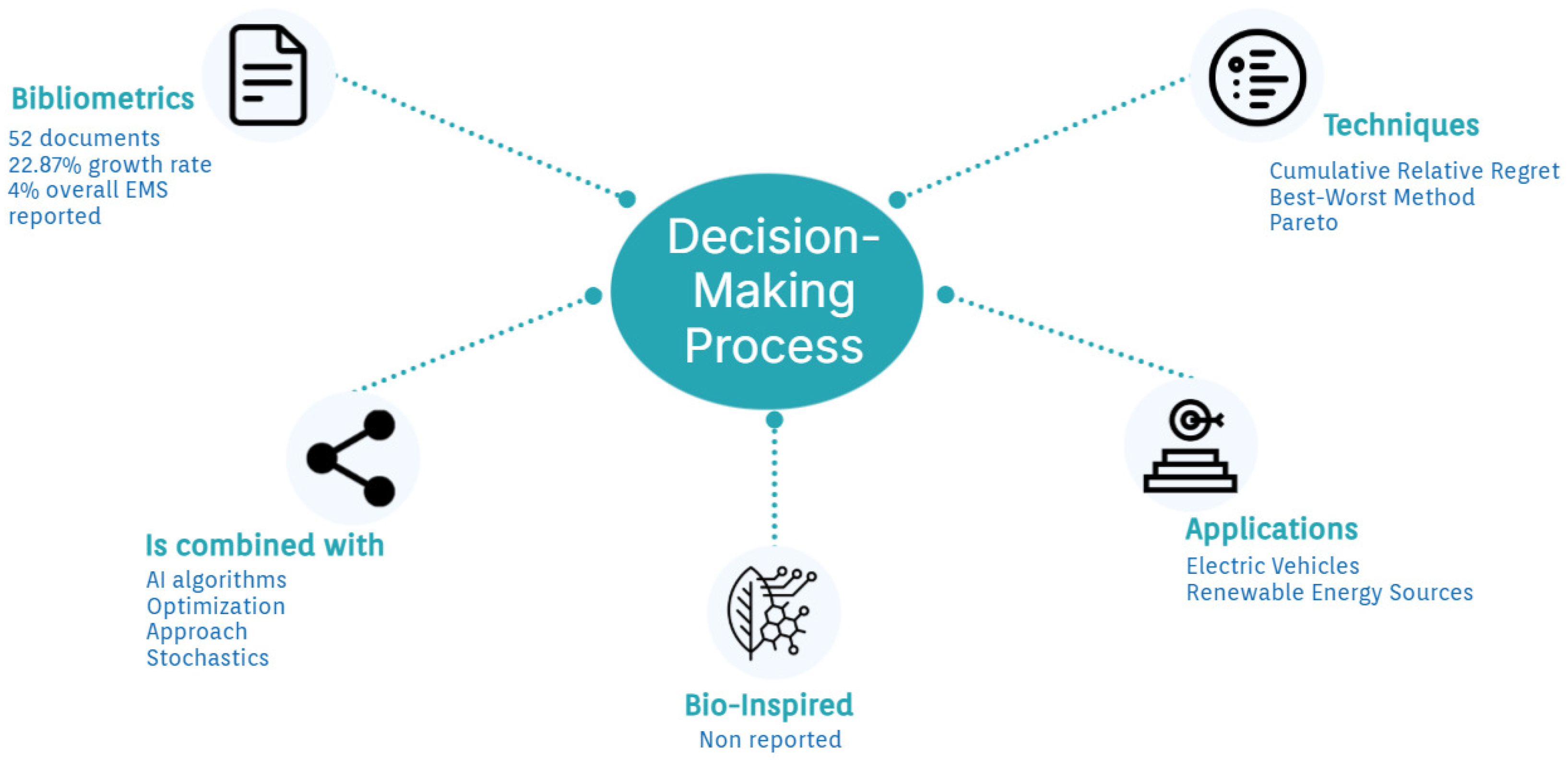
Figure 10. It was found that decision-making is applied as the main technique in only 4% of EMS-related studies. Among the most commonly used approaches are Cumulative Relative Regret, Best-Worst Scenario, and Pareto-based methods. These are often combined with AI techniques, optimization strategies, and stochastic processes. No bio-inspired algorithms were identified in this category. The primary applications are related to electric vehicle integration and renewable energy systems.
Decision-making processes appear as a relatively new approach in EMSs, showing a comparatively high annual growth rate. However, they are not yet considered fully developed themes. In contrast, some motor themes have begun to emerge. A strong relationship is observed between decision-making and both AI and optimization techniques, particularly in the context of renewable energy. This may indicate the increasing use of decision-making strategies to address challenges related to uncertainty and variability, which are typical characteristics of renewable energy generation.
Table 8 presents a selection of the most relevant documents identified, organized to provide a deeper analysis of the techniques, advances, application approaches, and challenges addressed using artificial intelligence algorithms in energy management systems for microgrids.
Reference Analysis
Table 8 summarizes advanced optimization and decision-making methodologies reported for addressing the complexity of energy management in microgrids and hybrid energy systems. These methodologies include stochastic optimization, genetic algorithms, fuzzy inference systems, multi-objective optimization, and machine learning techniques. They are employed to manage uncertainties in renewable energy production and demand, optimize energy storage operation, and reduce operational costs. Ref. [
97] developed an intelligent EMS using a multi-objective genetic algorithm optimization for forecasting renewable generation and scheduling battery and grid power to ensure power demand minimizing costs and improving performance. The study by [
99] combines the Taguchi method, multi-objective moth flame optimization, and a fuzzy decision-making approach in a hybrid renewable microgrid system. The goal is to optimize efficiency and reliability while addressing techno-economic and reliability objectives. Meanwhile, ref. [
102] presents an optimization framework applied to hybrid energy systems that integrate renewable sources in remote areas, taking into account greenhouse gas emissions and consumer participation to enhance energy distribution and overall system performance.
In addition, ref. [
100] presents a decision-making approach called Cumulative Relative Regret for robust EMSs in multi-microgrid systems. By considering uncertainties in both generation and demand, the method aims to minimize operational costs while enhancing system reliability. Similarly, ref. [
105] applies a multi-criteria decision-making method based on the Best-Worst Method to optimize the configuration of a microgrid integrating various energy sources. By considering energy efficiency, economic viability, and environmental impact, this technique helps identify the most suitable configuration.
Based on the information presented above, it is evident that decision-making processes are being applied to manage uncertainties, improve forecasting, and address economic considerations. By nature, decision-making methods are used to evaluate multiple scenarios and select the most suitable one, taking into account constraints and specific characteristics of each case. As a result, microgrid systems are achieving optimized energy consumption, improved economic performance, and reduced environmental impacts.
Decision-making approaches combined with bio-inspired algorithms are reported in [
98], where they are applied within an optimization strategy to manage interferences using data-driven methods. This enables flexible and cost-effective solutions for controlling energy flows. Similarly, ref. [
104] proposes a bio-inspired optimization method based on krill herd behavior for optimal day-ahead scheduling of distributed generation and battery energy storage systems. Additionally, other bio-inspired optimization techniques are reported as complementary strategies within the decision-making processes discussed in the reviewed literature.
3.6. Stochastic Systems Approaches
In microgrids, the EMS problem under uncertainty involves managing energy dispatch despite variability in electricity generation and demand. To address this issue, various architectures have been proposed in the literature, including deterministic, robust, chance-constrained, and stochastic optimization. Deterministic methods consider adaptive control and forecasting variables within work windows specified in minutes. However, due to the way the control problem is defined, just stability and nominal performance are guaranteed. To solve this, the robust optimization solution considers the nominal model, such as the worst-case scenario, and defines a set of uncertain models that encompass this scenario. However, defining the uncertain set can be complex, for example, in conditions of high variability in demand and generation. Another solution is chance-constrained optimization, which seeks to minimize a dispatch cost function given a probabilistic description of the uncertainties, without considering the source of the uncertainties. On the other hand, stochastic optimization deals with the feasibility of a finite set of scenarios and the probability of being in each one, while minimizing a finite-horizon cost function instantaneously to determine dispatch. This approach prevents load shedding and reduces generation cost due to factors such as significant variations in generation and demand.
In this context, stochastic processes play a crucial role in the microgrid energy management system by modeling uncertainties in energy generation, demand, and other variables. Such processes utilize probabilistic models to predict the variability of renewable energy sources, such as wind and solar power, in conjunction with fluctuating energy consumption patterns of connected loads. Using stochastic models, EMSs can optimize the functioning of microgrids themselves, distribute energy more efficiently, and minimize the chances of power outages. For instance, in [
106], a control architecture and mathematical model were introduced, considering a stochastic-predictive energy management system for isolated microgrids. The proposed method was tested in a modified version of a medium-voltage grid with diesel units. The authors directly address uncertainty in the formulation, combining the benefits of stochastic programming and receding-horizon control into a two-stage decision-making process. Their simulation results show the optimal dispatch obtained by the EMS using the proposed algorithm.
In recent decades, there has been a notable increase in the use of electric vehicles, as well as the adoption of renewable energy generation systems. Given this, microgrids could be a solution to the energy demand. In this regard, proposals have been made for the optimal and coordinated operation of resources connected to the grid [
107]. In accordance, stochastic models enable the incorporation of uncertain behavior resulting from renewable energy sources, electric vehicle charging, load demand, grid energy prices, and actions to minimize operating costs based on dispatch scheduling, optimal coordination of smart transformers (STs), demand response incentive programs (IBDRs), and energy storage systems. Similarly, ref. [
108] deals successfully with the technical and economic aspects of a hybrid microgrid including wind turbines, PV systems, battery charging system, and electric vehicle charging, using the Turbulent Flow of Water-based Optimization (TFWO) algorithm to determine the capabilities of the wind turbines, the PV system, and the battery charging system. In [
109], stochastic optimization for the energy management of a MAS with networked multi-energy microgrids (MEMGs) is developed. The system includes dispatchable and non-dispatchable distributed generators.
Stochastic Model Predictive Control (SMPC) can manage uncertainties and achieve optimal power flow within smart building microgrids that are integrated with electric vehicles and renewable energy sources. In addition, stochastic processes enhance the decision-making capabilities of EMSs by incorporating real-time adjustments and long-term planning [
110]. This includes unit commitment techniques such as stochastic mixed-integer linear programming (SMILP) and optimal power flow based on stochastic nonlinear programming (SNLP), which have been applied to isolated microgrid systems. Consequently, these techniques will enable the EMS to respond dynamically, robustly, and efficiently to changes in the microgrid’s operating conditions. An example is shown in [
111], where the authors develop a demand response program based on SNLP optimization for industrial microgrids, including manufacturing facilities, to manage uncertainty due to PV generation, and the operational cost of battery energy storage systems.
The most common technique for mixing or improving with stochastic processes is optimization. In [
112], a two-stage strategy is employed for EMSs in a grid-connected MG. The first stage schedules day-ahead operations based on stochastic programming to predict power exchanges with the main grid, while the second stage performs real-time control using techniques such as model predictive control. The authors of [
113] apply a stochastic-based scenario for generation to improve a Social Spider Algorithm to address uncertainties in smart grid operation for scheduling and switching strategies under the randomness of energy generation. The research [
114] presents a robust approach of stochastic coordinated optimization for a combined cooling, heating, and power micro-grid with multi-energy operation and power trading with EMSs. The above is aimed at reducing operational costs, maintaining a low computational burden, and integrating stochastic optimization, conditional value risk, and robust optimization into the operation.
The authors of [
115] investigate the integration of electric vehicles in a reconfigurable system of microgrids. They develop a framework based on stochastic and convex optimization to coordinate multiple microgrids, minimizing operational costs and improving the performance of the distribution grid through the integration of distributed energy sources and the mitigation of uncertainty phenomena due to load and renewable energy sources. The proposed framework aims to address technical and economic issues by enabling the dynamic reconfiguration of MG interconnections, facilitating power exchange, and improving system reliability.
In [
116], an energy management system is introduced for a wind/solar microgrid, considering the degradation of hydrogen and battery devices of the energy storage system. In this context, the EMS uses a stochastic control for scenarios of uncertain renewable sources. Numerical analyses integrating SMPC were performed using renewable energy source profiles, spot prices of solar panels, and wind farms in Abu Dhabi, UAE.
The stochastic approach enables minimizing operation costs in EMSs by utilizing robust optimization algorithms that account for uncertainties in generation and demand. Consequently, stochastic optimization facilitates the development of frameworks to enhance efficiency and address economic issues while maintaining relatively low computational complexity.
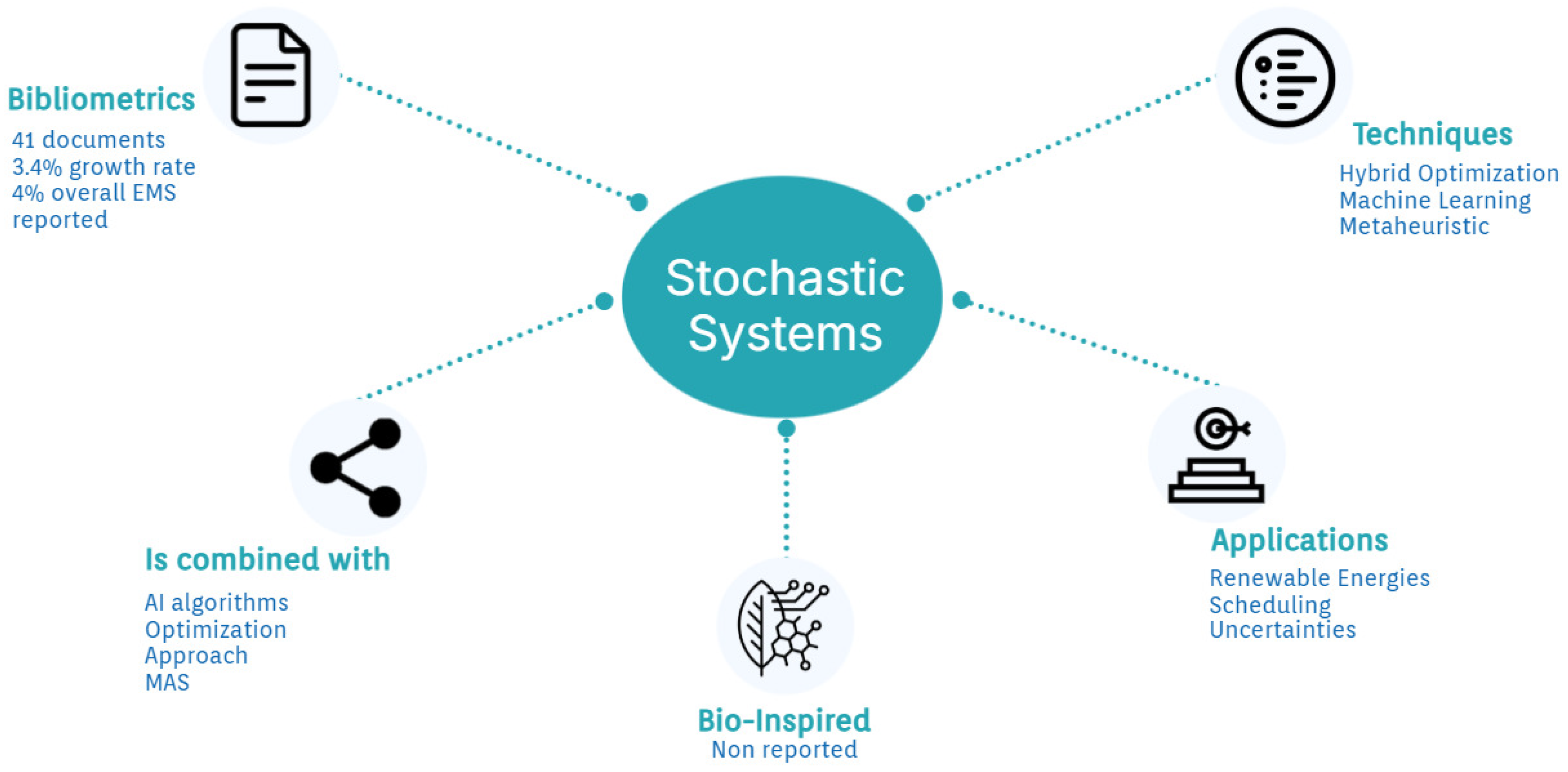
Figure 11 shows that stochastic processes appear at a rate of 4% as the primary EMS technique, which is mainly combined with AI techniques, optimization, and multi-agent systems. Renewable energy scheduling and uncertainty management are the most common applications. The review did not find bio-inspired algorithms. The results align with findings from bibliometric analysis and the literature review. The primary sources comprise a selection of the most relevant documents identified through
R-bibliometrics analysis. Here, a group of the most pertinent documents is made. To provide a more in-depth analysis of the techniques, advances, approaches, applications, and problems solved using stochastic systems in energy management systems in microgrids.
Reference Analysis
Table 9 shows several stochastic frameworks and algorithms found in the literature. The methodologies considered include scenario-based stochastic programming approaches, model predictive control, and hybrid optimization techniques. Specific attention has been focused on how uncertainties in renewable energy production, load demands, and market prices are managed to enhance reliability, efficiency, and economic performance of the energy systems.
EMSs that utilize stochastic processes present convergence complexity and computational cost issues, as they must process all random scenarios [
10]. This requires balancing model robustness, reliability, and operational costs [
11].
3.7. Bio-Inspired and One Novel Approach
Bio-inspired algorithms, as the name suggests, are algorithms, techniques, strategies, or models developed by mimicking biological or natural behaviors and dynamics to solve or improve problems—primarily in engineering applications [
30].
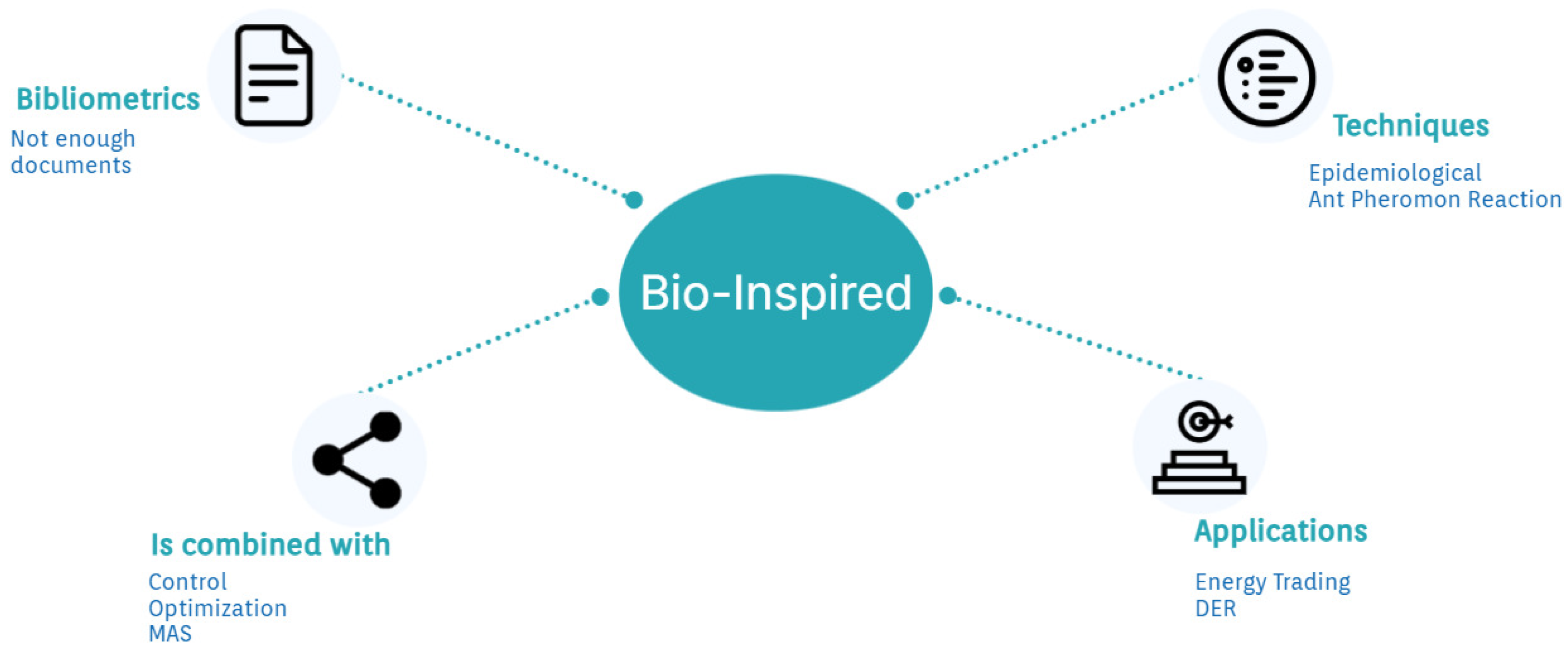
As a result of the bibliographic review, and as shown in
Figure 12, no energy management strategies in microgrids based solely on bio-inspired models were identified as the primary management approach, in fact, a reduce number of references in all six strategies analyzed, include any bio-inspired algorithm of application. In this regard, some methods incorporate bio-inspired concepts outside the traditional scope of optimization within EMSs for microgrid systems. For instance, [
26] proposes an emergent control model inspired by ant responses to pheromones and their reaction threshold behavior, applied to govern agent participation in the microgrid.
As a result of the bibliometric analysis, bio-inspired applications were found among the main techniques reported.
Table 10 summarizes their use, application contexts, specific problems addressed, and the documented complexities associated with implementing meta-heuristic optimization techniques inspired by natural or biological processes. It is worth mentioning that the lower number of bio-inspired references is on account of their poor incorporation into the main techniques reported.
As is remarked in
Table 10, the number of EMSs based on bio-inspired algorithms is rather low. In order to understand how bio-inspired techniques could be applied in energy management, a second phase of the research was conducted, resulting in studies that employ evolutionary, swarm intelligence, and hybrid metaheuristics, followed by comparative and critical analyses of algorithmic performance metrics. The findings reveal that genetic algorithms, particle swarm optimization, and ant colony optimization effectively enhance fault tolerance and dynamic recovery, demonstrating adaptability to renewable variability and operational uncertainties [
117,
118,
119]. Computational efficiency and scalability remain constrained by algorithmic complexity and inconsistent benchmarking, limiting real-time applicability [
120].
The need to maintain reliable power supply under faults, cyberattacks, and fluctuating renewable generation, with resilience improvements directly impacting economic and social stability is also reachable using bio-inspire techniques [
121]. Recent studies indicate that optimizing MMG resilience can reduce outage durations and improve load balancing, highlighting the urgency of effective algorithmic solutions [
122].
Ref. [
123] introduces a model based on epidemiological theory to enhance communication and decision-making processes, aiming to improve DER participation and cooperation. This document presents a novel proposal that applies epidemiological models to represent the behavior of multiple microgrids as a network of interacting entities. The analogy is inspired by epidemiological modeling, which captures how epidemics spread through human communities, and is adapted here to describe the continuous interactions and propagation dynamics among microgrids [
124,
125]. In this context, an epidemiological model can serve as the foundation for a decision-making process that enhances the reliability and resilience of microgrid systems in the event of faults or generation loss, as demonstrated in [
25].
3.8. Epidemiological Models, a Novel Approach
The work in [
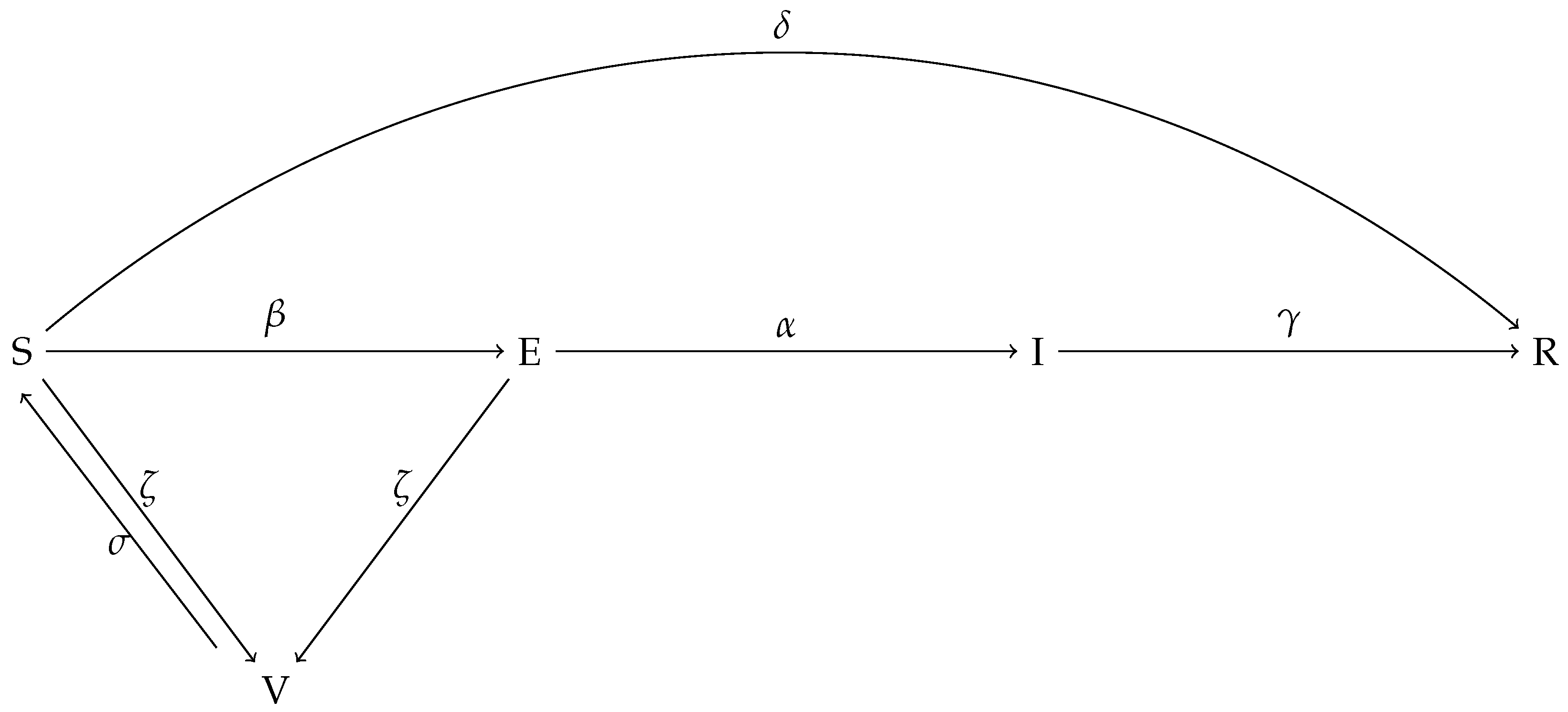
25] proposes a similarity between the epidemiological states in the
SEIR-V model and the possible states of each microgrid (MG) under surplus or over-demand conditions. The model illustrates how neighboring MGs can become “infected” in response to support requests, helping to mitigate the overall impact on energy availability. The epidemiological analogy is depicted in
Figure 13, where (S) represents the “Susceptible” state—i.e., an individual who can potentially be infected. (E) stands for “Exposed,” referring to a susceptible individual who has had close contact with an infected person. (I) is “Infected”—i.e., an individual who carries and transmits the infection within the population. (R) denotes “Recovered” (or Retired), referring to someone who has gained natural immunity after being infected. Finally, (V) represents the “Vaccinated” state, indicating individuals who have been immunized and are therefore removed from the susceptible population. This immunity may be either permanent or temporary.
In the graphical model shown in
Figure 13,
,
, and
represent probabilities and/or rates of transition between epidemiological states. In particular,
plays an important role in the EMS analogy, as it represents the probability of exposure, which depends on the viral load (of the infected individual) and the immune response (of the susceptible individual). As described in [
25], this relationship is analogous to the conditions for establishing energy trading among microgrids, such as low generation, energy surplus, or over-demand. Finally,
and
represent the probabilities of vaccine efficacy and immunity loss, respectively, which are related to transitions into the islanded mode for a single microgrid.
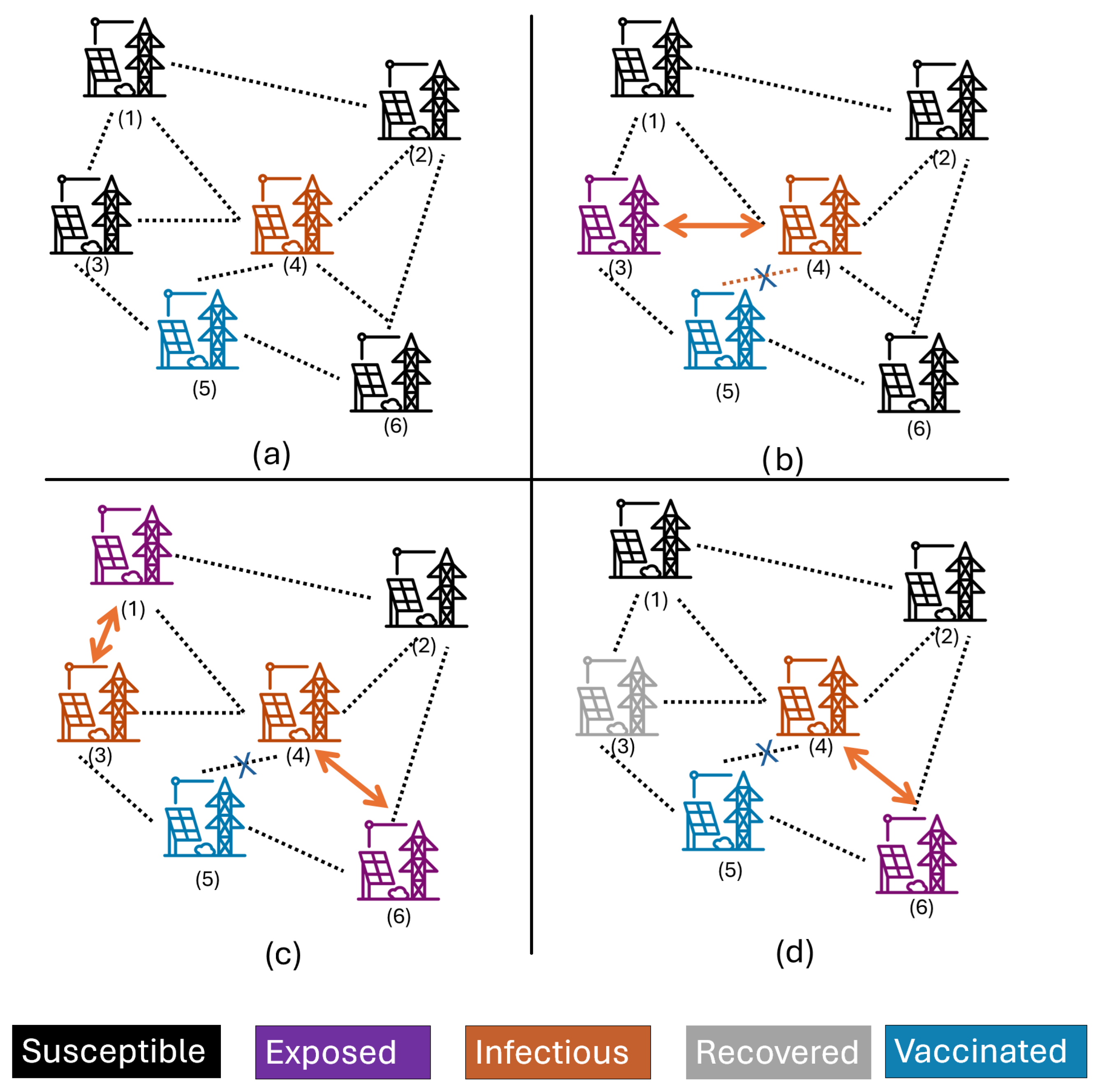
Figure 14 from [
25], illustrates an example of how the proposed model operates when an “infection” occurs—i.e., a microgrid experiencing over-demand, generation surplus, or loss of generation. The figure represents different scenarios for the operation of a system of microgrids modeled as an epidemic approach. The figure shows the time-based evolution of a case of study of how the proposed EMS model could address one scenario of power demand increased exceeding internal generation capacities, reaching system resilience. The steps are described as followed:
In (a), MGs (1), (2), (3), and (6) are in the susceptible state, meaning their internal demand is fully met and they are capable of supporting infected MGs. MG (5) is in islanded mode, while MG (4) is infected (unable to meet its own demand).
In (b), MG (4) requests support from MG (5), but no exchange occurs due to MG (5)’s islanded status. A request is also sent to MG (3), which becomes exposed by exchanging energy with MG (4).
In (c), MG (3) can no longer manage both its internal demand and the request from MG (4), transitioning into the infected state. As a result, MG (4) sends a new request to MG (6), while MG (3) sends a request to MG (1). MGs (6) and (1) now enter the exposed state.
Finally, in (d), MG (3) recovers its autonomy, regains the ability to meet its own demand, and terminates the exchange with MG (1). Meanwhile, the exchange between MG (3) and MG (6) continues; however, MG (6) remains in the susceptible state, demonstrating a strong capability to manage both its internal demand and the external support request from MG (3).
4. Resilience
Resilience is defined as the capacity of a system to withstand, endure, and recover from low-probability but high-impact external events. Particularly for microgrids, these events are typically linked to climatic conditions or deliberate actions intended to disrupt energy supply. Resilience emphasizes understanding how an electrical system functions before, during, and after such events [
126]. To strengthen resilience, strategies involve integrating multiple microgrids into a unified system that shares generation sources to ensure energy distribution, especially to critical loads, enhancing both resilience and flexibility [
127].
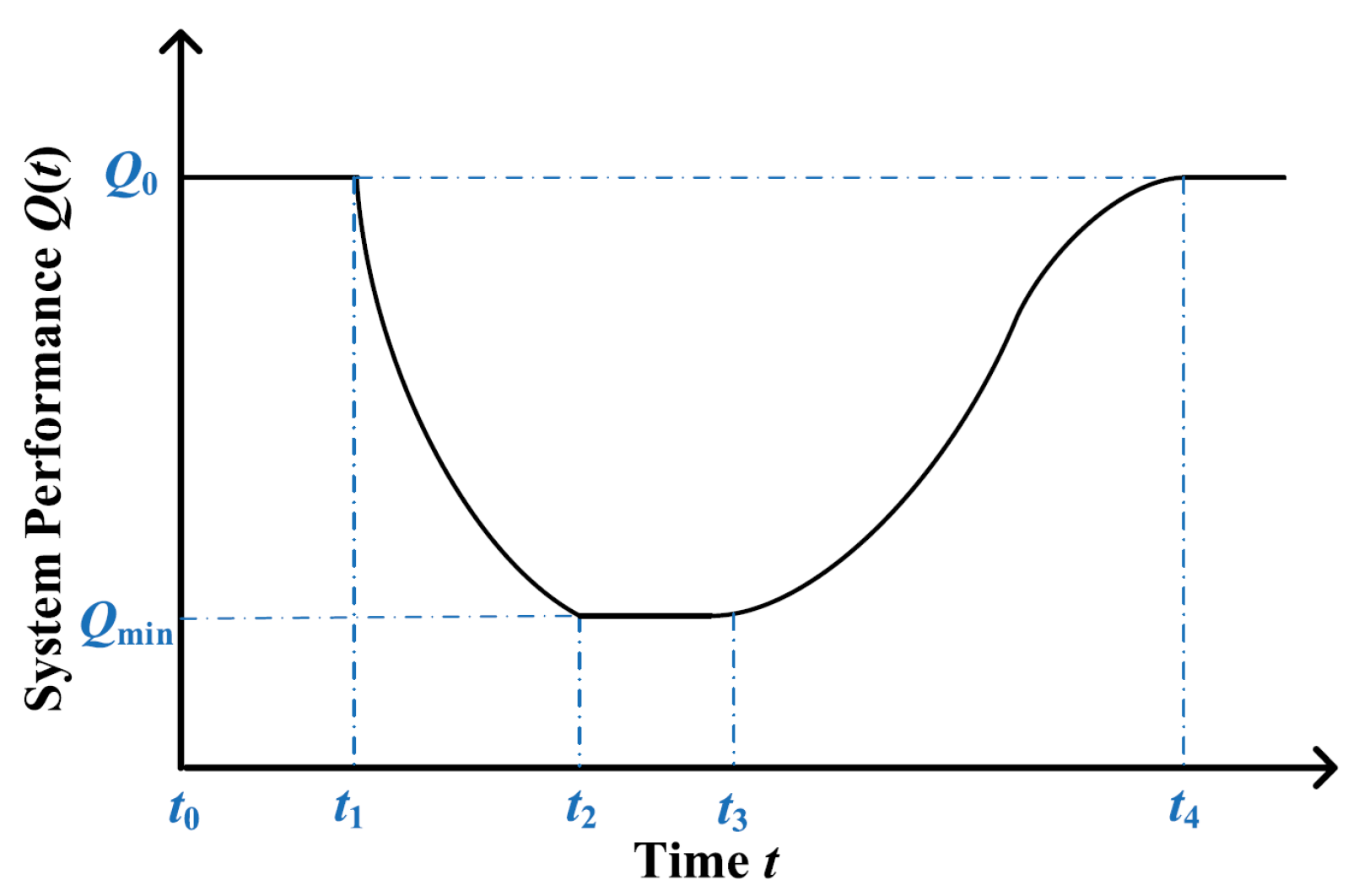
Multi-microgrid systems require control and management architectures capable of maintaining performance under diverse operating conditions. The management objectives vary according to the system’s state: under normal operation, the emphasis lies on energy efficiency and cost optimization, whereas during or in anticipation of disruptive events, the focus shifts toward enhancing system resilience. The network’s behavior throughout such events is illustrated in
Figure 15, where
represents the initial performance level and
denotes the minimum point (
) reached after the event onset (
). The interval from
to
corresponds to the degradation phase, while
to
defines the impact duration—both describing propagation periods. Finally, the interval from
to
indicates the recovery phase, during which performance returns to its nominal level.
As a matter of fact, the various strategies implemented for energy management in multi-microgrid systems address resilience in different ways. This chapter analyzes these approaches, focusing on the techniques designed to enhance overall system resilience.
4.1. Optimization
Microgrids are recognized as effective and resilient systems due to their ability to exchange energy based on the surplus or deficit of individual Distributed Energy Resources (DERs) Dey et al. [
7]. Resilience plays a central role in microgrid design, requiring a balance with efficiency through the optimal selection of Distributed Generators (DGs) and Energy Storage Systems (ESSs) Alharbi et al. [
10]. The integration of demand response (DR) programs and renewable energy sources further enhances overall system resilience [
44]. Recent research has also explored methods for quantifying resilience in transmission systems incorporating renewable wind energy [
62].
Several studies have proposed resilience-oriented approaches for the optimal operation of microgrids, including islanded modes [
41]. These efforts encompass resilient defensive strategies based on reinforcement learning [
38] and event detection algorithms for load monitoring under non-ideal operating conditions [
62]. Adaptive robust optimization models further enable proactive management by addressing uncertainties in net load and market prices [
44]. From a planning perspective, research includes resilient expansion and transmission strategies to mitigate the impact of natural disasters [
6], as well as holistic approaches for distribution network planning. Additional studies focus on achieving zero load shedding in multi-microgrid systems through scheduling techniques such as model predictive control (MPC). Moreover, privacy-preserving and resilient energy management strategies have been developed for networked microgrids [
62].
4.2. Artificial Intelligence Algorithms
Resilience remains a consistent focus across proposed methodologies. Networked microgrids have been extensively studied as a means to enhance grid resilience, particularly under severe operating conditions and high Distributed Generation (DG) penetration, with architectures shaped by robustness requirements [
12]. Research on emergency management demonstrates that operational optimization can significantly improve resilience following blackout events [
61]. Similarly, infrastructure planning for critical facilities integrates resilience as a primary objective—alongside profitability—requiring both quantification and enhancement through optimal component sizing [
61]. These findings align with ongoing efforts to develop stochastic energy management systems that strengthen microgrid resilience [
63].
Improving resilience extends into control systems and monitoring protocols. Studies target transmission system resiliency amid high renewable integration [
62], emphasizing technical improvements under variable conditions. Advanced frameworks, such as resilient and privacy-preserving energy management for networked microgrids, optimize resilience alongside other parameters [
20]. Data-driven methods enhance operational robustness, exemplified by resilient event detection algorithms for Non-intrusive Load Monitoring (NILM) under non-ideal conditions, ensuring monitoring integrity and system reliability [
62].
4.3. Game Theory
Resilience strategies frequently rely on strategic deployments and coordinated control mechanisms. In game-theoretic approaches, Mobile Power Sources (MPS)—including plug-in electric vehicles (PEVs) and transportable energy storage systems (TESSs)—play a crucial role in supporting resilient emergency responses and enhancing distribution system resilience through optimized routing and scheduling [
76]. At the planning level, high-level frameworks such as Information Gap Decision Theory (IGDT) have been developed to guide distribution system expansion and planning with a focus on resilience enhancement [
78]. Collectively, these strategies aim to strengthen system durability and adaptive capability under disruptive conditions.
Resilience quantification and enhancement are evident in contingency and emergency management strategies. Interactive energy management (IEM) schemes for multi-microgrid systems are designed to flexibly strengthen resilience by adapting to disturbances such as unscheduled islanding, line losses, or generator failures [
72]. Game-theoretic models validate system resiliency under fault conditions, while IEM facilitates cooperative energy sharing among MGs, maintaining the supply–demand balance and minimizing load curtailment during outages [
72]. Integrating high levels of Unreliable Renewable Generation (URG) interactively strengthens resilience against component failures. These systems are verified as “resilient and flexible enough” to stabilize operations under extreme conditions. Ongoing research also explores cyber risk integration to further improve resilience against future outages [
72].
4.4. MASs
Enhancing system durability against external disturbances is essential in modern power systems, particularly those integrating distributed energy resources (DERs) and microgrids (MGs). Concerns related to safety, reliability, and power quality have driven extensive research into system resilience [
83]. Distribution systems (DSs), which account for approximately 70% of power outages, require resilience enhancement through proactive measures such as microgrid formation, line hardening, and DER integration. Multi-microgrid systems (MMSs) have been identified as effective architectures for resilience improvement [
84]. A recurring strategy involves the deployment of mobile power sources (MPSs), including plug-in electric vehicles (PEVs) configured as mobile energy storage systems (MESSs), which provide eco-friendly alternatives to mobile emergency generators (MEGs) and enable rapid scheduling to strengthen DS resilience [
109]. Furthermore, microgrid clusters (MGCs) have been shown to enhance the resilience of individual microgrids against disturbances [
95].
Hierarchical energy management systems for multi-agent systems (MASs) with networked MEMGs activate a resilience enhancement mode upon fault detection. This mode coordinates PEVs from operational MEMGs to supply power to islanded faulted sections, achieving connectivity without physical tie-lines [
109]. The effectiveness is measured using a Resilience Enhancement Factor (REF), comparing load survival with and without PEV support. Simulations show resilience improvements of
in Case Study 1 (CS1) and
in Case Study 2 (CS2) with
PEV participation. These results confirm that optimization strategies significantly improve system durability and validate PEV integration for resilience objectives [
109].
4.5. Decision Making
System resilience is addressed both explicitly and implicitly in decision-making strategies. One study identifies the “resilience challenge” as a driver for proposing hybrid microgrid systems as strategic solutions, positioning resilience as a core issue in power system planning addressed through architectural enhancements [
96]. In microgrids (MGs) designed for autonomous operation after main grid failures (e.g., natural disasters), resilience is pursued by improving energy flow stability [
103]. A bi-criteria model minimizes uncovered energy loads, while optimizing energy storage system (ESS) capacity, and diesel generator scheduling enhances system stability, serving as a proxy for resilience in islanded scenarios [
103].
Design and performance analyses of hybrid microgrids increasingly incorporate reliability metrics such as the Loss of Power Supply Probability (LPSP) to ensure uninterrupted operation and high system dependability [
99]. Advanced optimization frameworks—such as those employing the Cumulative Relative Regret (CRR) strategy—seek to strengthen microgrid robustness and mitigate the effects of extreme uncertainties [
100]. In addition, conservative control strategies, including robust optimization techniques that minimize real-time power imbalances and maintain a higher battery State of Charge (SOC), enhancing the system’s capacity to withstand disturbances, and thereby achieving functional resilience under stochastic operating conditions [
96].
4.6. Stochastics
Resilience is a key objective addressed through advanced technologies and operational strategies [
128]. Integrating vehicle-to-grid (V2G) and grid-to-vehicle (G2V) technologies improves energy balance and grid load management, contributing to system robustness [
108]. Robust energy management systems (EMSs) and IoT-based infrastructures support sustainable and resilient energy systems [
115].
Additional strategies for enhancing resilience include distribution network planning against natural disasters, restoration protocols, and the reliable integration of hybrid renewable energy systems. Several studies have examined how demand response programs (DRPs) influence distribution network resilience [
128]. For instance, DRP scheduling in multi-microgrid networks improves resilience, while reconfigurable microgrid connections help mitigate operational uncertainties [
115]. One study strengthens multi-energy microgrid (MEMG) resilience by employing plug-in electric vehicles (PEVs) as mobile power sources (MPSs), introducing a Resilience Enhancement Factor (REF) based on the surviving load with and without PEV participation. Simulation results report resilience improvements of 41.6% in Scenario 1 (CS1) and 21.1% in Scenario 2 (CS2) under full PEV participation [
109]. Furthermore, a Stochastic Model Predictive Control (SMPC) algorithm enhances microgrid resilience by accounting for both operational and degradation costs of hybrid Energy Storage Systems (ESSs) [
116]. Overall, resilience is actively advanced through integrated planning and optimization-based control strategies [
109].
4.7. Bio-Inspired Approaches
Despite the wide range of algorithms proposed, a comprehensive understanding of their relative strengths, limitations, and applicability to MMG resilience remains incomplete [
129]. Controversies exist regarding the best-suited algorithms for different resilience objectives, with some advocating evolutionary-based methods for their convergence properties, while others emphasize swarm intelligence for adaptability and scalability [
121]. The lack of standardized comparative frameworks and inconsistent performance metrics further complicate algorithm selection, potentially leading to suboptimal resilience strategies [
130].
Conceptually, this review builds on the framework that resilience in MMGs is an emergent property resulting from the interplay of management algorithms, system topology, and dynamic resource management [
118]. Bio-inspired algorithms, modeled on natural processes such as evolution and swarm behavior, serve as optimization tools to enhance system robustness, adaptability, and recovery capabilities [
129]. Understanding the relationships among algorithmic mechanisms, resilience metrics, and MMG operational constraints is essential to guide effective algorithm selection and integration [
122].
5. Discussion
There is a wide variety of strategies applied in EMSs for microgrids and microgrid systems. These strategies range from traditional methods to more advanced techniques, aimed to optimize the efficiency and reliability of energy distribution within the systems. However, a noticeable trend has emerged in recent years, where the proposed solutions are increasingly being limited to optimization approaches and AI algorithms. This is driven by the growing AI capabilities for handling complex data and making real-time decisions, which are crucial for the dynamic of microgrids. Additionally, the integration of AI and optimization with other strategies, such as multi-agent systems, rule-based systems, and conventional control techniques, is decreasing compared to the AI-optimization mixing. This reduction in diversity could potentially limit the scope of innovation in EMSs, as the focus becomes more centered on AI-driven optimization.
This trend leads to a reduction in the diversification of energy management strategies, resulting in a standardization of the proposed solutions. While standardization can bring about uniformity and ease of implementation, it may also subdue creativity and the exploration of alternative methods. Bio-inspired applications, which draw inspiration from natural processes and biological systems, have been successfully used in various engineering applications. These applications offer unique advantages, such as adaptability, resilience, and efficiency. However, within the EMS scope, their benefits are primarily being harnessed in optimization models. This narrow application of bio-inspired techniques suggests that their full potential is not being realized. No major documents or studies show bio-inspired methods being applied outside of optimization solutions, which could be understood due to the prevailing trend towards AI and optimization techniques. This opens up a possibility for revolutionizing the field by exploring bio-inspired strategies in a broader context, beyond just optimization. By doing so, the EMS for microgrids could benefit from a more diverse set of tools and approaches, potentially leading to more innovative and effective solutions.
To enhance the resilience of electrical systems, as highlighted in [
127], flexible management strategies are required to respond promptly to adverse events and mitigate their impact on energy supply, particularly for critical loads such as hospitals. Multi-microgrid (MMG) systems are emerging as an effective solution to address the challenges of delivering clean and reliable energy to remote regions or areas not served by conventional electrification. However, these systems also face implementation challenges, especially in scenarios where generation, distribution, or storage assets are exposed to external factors beyond operational control.
Therefore, it is essential for interconnected multi-microgrid systems to incorporate adaptive and flexible management algorithms capable of operating under disruptive events or, more broadly, in situations where normal operation cannot be guaranteed due to external or internal factors. Due to their nature, optimized approaches and AI techniques, require relative high time computational resources, which makes their implementation difficult in high-variability scenarios and/or during disruptive events.
6. Conclusions
Energy management systems (EMS) represent a broad and dynamic field of research. Applications span multiple domains, including power electronics, control techniques, communication systems, power transmission, efficiency, reliability, and data security—all of which remain active areas of investigation for further enhancement.
This review focuses primarily on the highest level of control within microgrid systems: energy management, including energy trading and exchange. A variety of techniques and approaches have been proposed to address challenges in this area, with optimization-based algorithms emerging as the most commonly used due to their effectiveness in meeting multiple energy management objectives. These optimization methods are often combined with other strategies to enhance their performance. For instance, artificial intelligence (AI) is frequently employed for forecasting renewable and distributed generation, offering a predictive layer that supports more informed decision-making.
Recent solutions tend to adopt hybrid approaches, combining different techniques reviewed in this paper to capitalize on their individual strengths. This trend reflects a shift toward more robust and adaptable EMS designs. For example, integrating AI algorithms with traditional optimization methods improves real-time responsiveness and decision-making capabilities, enabling EMSs to adapt to changing operational conditions. Such hybrid approaches are gaining popularity because they offer a balanced solution to the increasing complexity of modern microgrids. By merging multiple strategies, researchers and practitioners are developing EMS solutions that are not only more resilient and efficient but also better equipped to handle a wide range of scenarios.
Various types of optimization are currently applied within high-level EMS frameworks, including linear programming, nonlinear programming, and mixed-integer programming—each with distinct advantages and limitations. These techniques are critical for ensuring efficient and reliable EMS operation under diverse and evolving conditions.
While bio-inspired algorithms such as genetic algorithms, particle swarm optimization, and ant colony optimization have demonstrated strong performance in optimization tasks, few instances were found where bio-inspired methods were applied outside of optimization. This reveals a gap in current research and highlights the untapped potential of bio-inspired approaches in broader EMS applications, such as system design, fault detection, and adaptive control. Exploring these possibilities could significantly expand the role of bio-inspired models in energy systems.
Additionally, most of the reviewed studies did not clearly specify the microgrid topology used, often defaulting to basic standalone or grid-connected configurations. This lack of detail suggests a need for improved documentation and standardization in the description of microgrid topologies. Providing comprehensive information on system topology would enable more accurate comparisons between solutions and offer better insights into the trade-offs associated with different configurations. A deeper exploration of diverse topological models could lead to enhanced performance, greater adaptability, and more efficient EMS implementations.




 ,
,