Life Cycle Management of Moroccan Cannabis Seed Oil: A Global Approach Integrating ISO Standards for Sustainable Production

 , , , ,
Abstract
1. Introduction
2. Materials and Methods
2.1. Life Cycle Assessment Framework
2.2. Description of Scenarios
- Artisanal extraction in small decentralized presses operated by farmers or cottage industries. Yields are low, requiring 4.4 kg of seeds per kilogram of oil. Electricity consumption averages 0.9 kwh FU−1 [36], co-product recovery is limited and losses reach 0.6 kg per functional unit.
- Cooperative extraction in medium-scale facilities where producers pool resources. Improved cleaning and pressing equipment increase the extraction yield to 3.0 kg seeds kg−1 oil, energy demand drops to 0.54 kwh FU−1 and losses are reduced to 0.15 kg. Cooperatives use a mix of electricity and primary energy (e.g., diesel) and share packaging infrastructure [37].
- Industrial extraction in large-scale plants with high throughput. Seed consumption is similar to cooperatives (3.0 kg FU−1), but energy demand can vary depending on technology. In this study, 0.9 kwh FU−1 of electricity and 0.05 m3 of cooling water were assumed [38,39]. Industrial operations are better positioned to integrate renewable electricity and recycled glass packaging [40].
2.3. Analytical Procedure
- System definition and stakeholder mapping:
- 2.
- Selection of social responsibility indicators:
- ○
- Governance: number of licenses issued, degree of transparency, compliance inspections.
- ○
- Labor practices: employment formalization rate, training access, occupational health measures.
- ○
- Community involvement: reinvestment ratio in local infrastructure, gender participation, cooperative density.
- ○
- Environment: adoption of eco-agricultural practices, water-use efficiency, preservation of local varieties (e.g., “Beldia”).
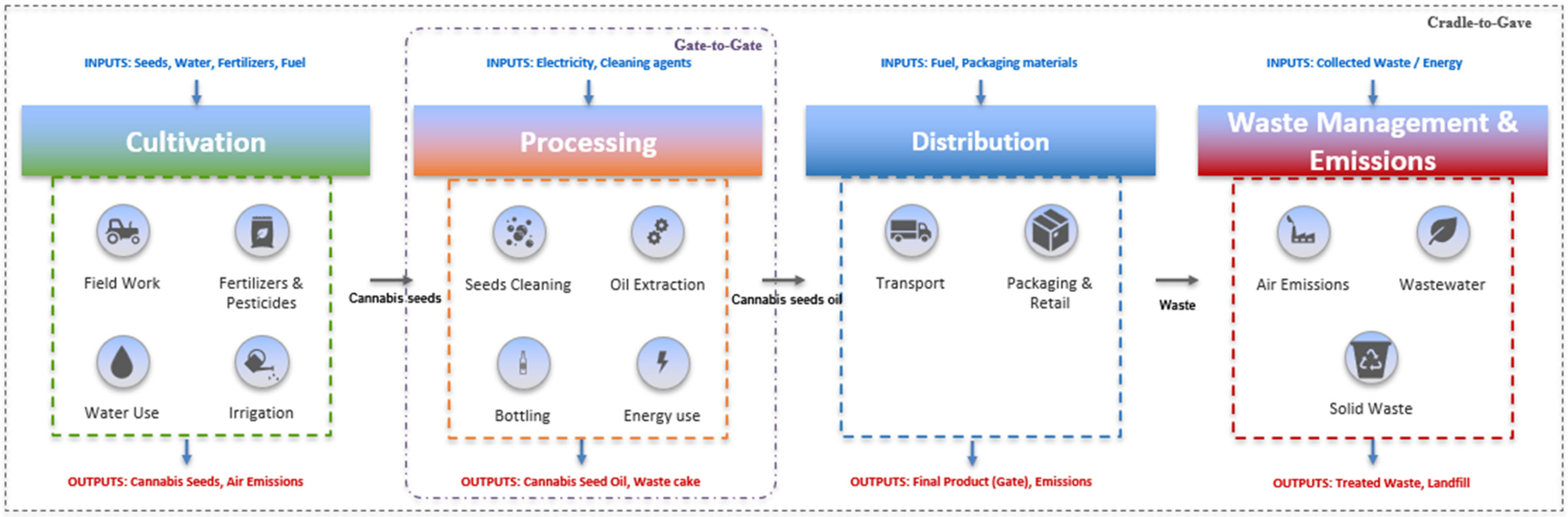
2.4. Life Cycle Inventory and System Boundaries
2.5. Social Responsibility Integration
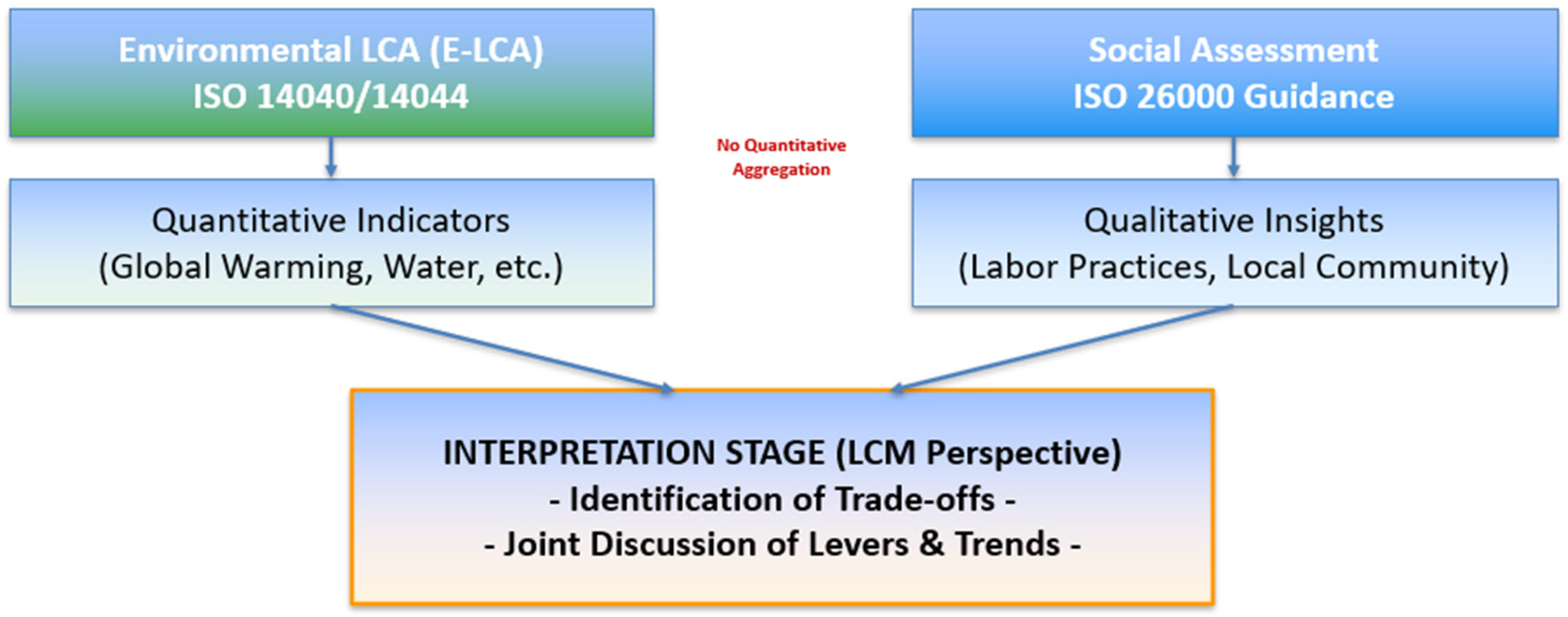
2.6. Conceptual Framework
- (1)
- Organizational governance,
- (2)
- Human rights,
- (3)
- Labor practices,
- (4)
- The environment,
- (5)
- Fair operating practices,
- (6)
- Consumer concerns, and
- (7)
- Community involvement and development.
2.7. Social Responsibility Evaluation Matrix
2.8. Data Sources and Scope
- The National Agency for the Regulation of Cannabis Activities (ANRAC), including the 2024 and 2025 activity reports detailing cultivated areas, cooperatives, authorizations, inspections, and seed certification;
- The Economic, Social and Environmental Council (CESE) strategic note on the socio-economic development of cannabis-producing regions;
- Moroccan Ministry of Agriculture and Rural Development and ONSSA technical and regulatory guidelines for cultivation and product safety;
- National media and analytical sources such as H24Info, Hespress, and CBD Maroc Invest provided complementary socio-economic data.
3. Results
3.1. Impact Results by Category
Contribution Analysis by Scenario (Transformation Phase)
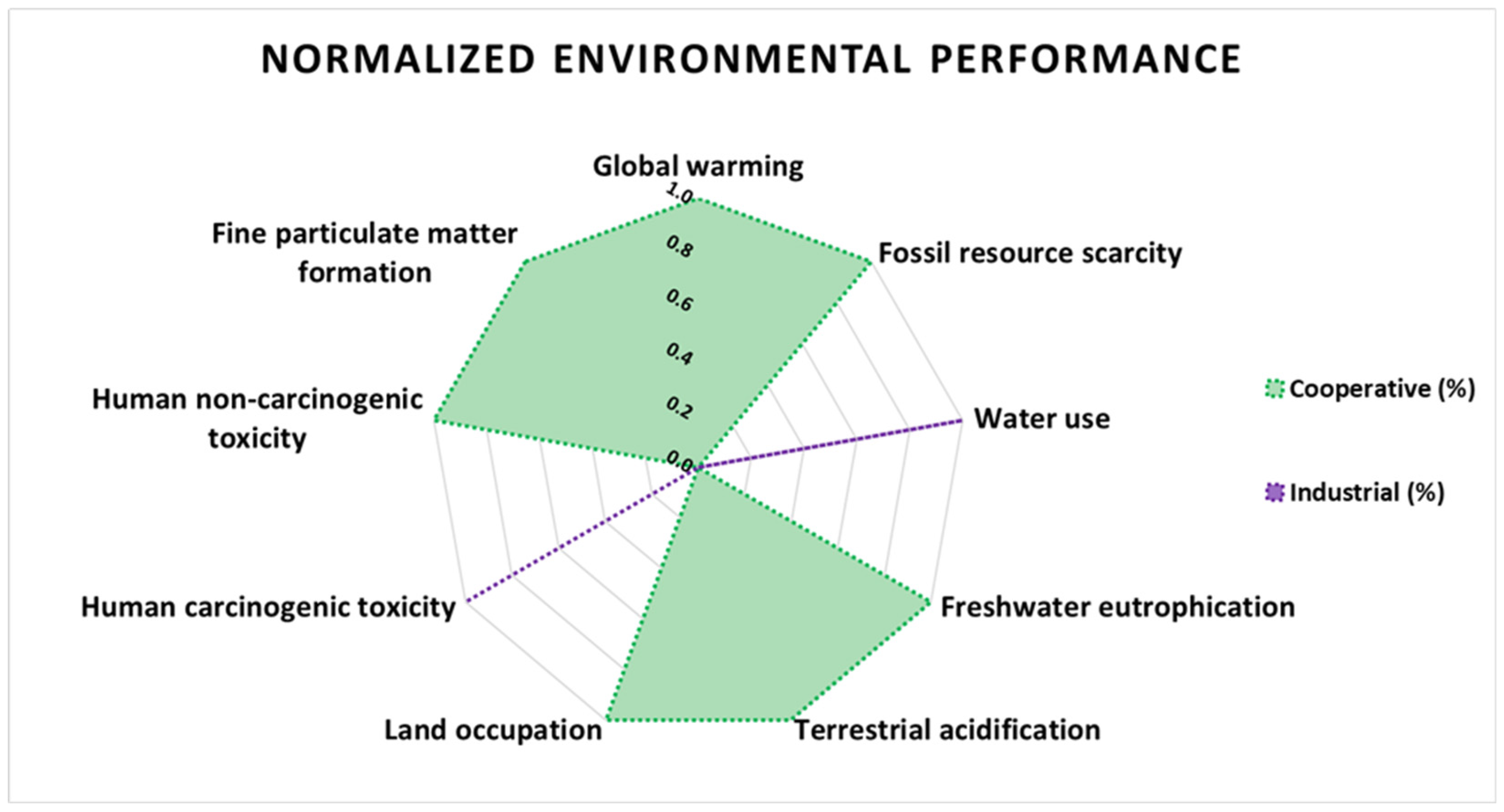
3.2. Normalized and Relative Performance
3.3. Hotspot Analysis
3.3.1. Agricultural Phase
3.3.2. Processing Phase
3.3.3. Packaging and Transport
3.3.4. Social and Economic Considerations
4. Discussion
4.1. Impact Results
4.2. Influence of Process Losses on Certain Impact Categories
4.3. Interpretation of Environmental Results
4.4. Comparative Analysis with Other Vegetable Oils
4.5. Limitations and Research Needs
4.6. Implications for the Supply Chain’s Life Cycle Management
4.7. Sustainable Production Recommendations
- Irrigation optimization: Adapt drip or micro-irrigation systems in conjunction with rainwater harvesting that will cut water use by 30–50% in keeping with the semi-arid conditions and water-saving measures of Morocco. Moreover, precise irrigation scheduling based on the determination of crop evapotranspiration, for instance, 2.9 mm day−1 during South African trials [34], can also be applied with accuracy.
- Seed and oil yields should be improved: Select the most productive cannabis varieties that are suited to the Rif climate and supply fertilizers and pest control methods that are integrated. The higher the yield is, the less the impact per kilogram of oil.
- Coproducts with value: Continue processing the cake from seeds into animal feed, organic fertilizers, or bioenergy. Such types of valorization decrease waste and, at the same time, provide economic incentives.
- Renewable energy use increase: Install solar panels on processing facilities and explore agri-voltaic systems for generating electricity on-farm. For example, during the period of promotion from 22% to 50% of renewables in the electricity mix, the climate impacts could decline by about 25%.
- Eco-friendly packaging design: Use lightweight or recycled glass bottles and set up local collection and recycling schemes. Investigate biodegradable polymers such as PLA that can help lessen fossil resource use and toxicity.
- Promote co-operative governance: The creation of cooperatives that are able to share equipment, have better negotiation power, and easier identification for fair payment would be encouraged through the provision of incentives. It can be said that, generally, cooperative business models were more beneficial for the environment as well as for the people.
- Certification and policy frameworks: Create standards at the national level for the sustainability of cannabis oil, taking into consideration ISO 14040:2006, 14044:2006 and ISO 26000:2010, and indicating where the minimum limits on the use of water and energy, waste management, and social responsibility will be set. The certifying organizations may reward the producers financially by offering them to keep best practices. Besides the environmental and social aspects, the new cannabis seed-oil industry has great economic and regional development potential: under the present legal situation, it can turn refugees working in the Moroccan Rif area into legal workers, draw in funds for green projects, and open up new markets for local agro-industries. Innovations like setting up a processing hub for value-added products and forming farmer co-operatives for export could raise the income of the farmers involved by 25–40% compared to the informal trade and thus decrease rural poverty. The integration of cannabis seed oil into the bioeconomy and cosmetic industries could significantly strengthen Morocco’s competitive edge in the global sustainable agri-food market. The country could emerge as a pioneer in North Africa for the regulated, responsible production of cannabis aligned with the UN Sustainable Development Goals.
5. Conclusions
Author Contributions
Funding
Data Availability Statement
Conflicts of Interest
Abbreviations
| LCA | Life Cycle Assessment |
| LCM | Life Cycle Management |
| LCI | Life Cycle Inventory |
| LCIA | Life Cycle Impact Assessment |
| FU | Functional Unit |
| ISO | International Organization for Standardization |
| ILCD | International Reference Life Cycle Data System |
| S-LCA | Social Life Cycle Assessment |
| GHG | Greenhouse Gases |
| CO2-eq | Carbon dioxide equivalent |
| N2O | Nitrous oxide |
| PM2.5 | Fine particulate matter (≤2.5 µm) |
| SO2-eq | Sulfur dioxide equivalent |
| P-eq | Phosphorus equivalent |
| 1,4-DCB | 1,4-dichlorobenzene |
| kWh | Kilowatt-hour |
| ANRAC | National Agency for the Regulation of Cannabis-related Activities (Morocco) |
| HSE | Health and Safety Executive |
| CESE | Economic, Social and Environmental Council (Morocco) |
| ONSSA | National Office for Food Safety (Morocco) |
| UNEP | United Nations Environment Programme |
| SETAC | Society of Environmental Toxicology and Chemistry |
| SDGs | Sustainable Development Goals |
| HVAC | Heating, Ventilation and Air Conditioning |
Appendix A

| Impact Category | Unit | Artisanal | Cooperative | Industrial | Justification for Exclusion |
|---|---|---|---|---|---|
| Marine ecotoxicity | kg 1,4-DCB eq | 0.104 | 0.069 | 0.077 | Insufficient data on transfers to aquatic environments; no specific flows identified. |
| Ionizing radiation | kBq Co-60 eq | 0.252 | 0.171 | 0.175 | No direct use of nuclear technologies; indirect and marginal contribution via the electricity mix. |
| Ozone formation (Human health) | kg NOx eq | 0.013 | 0.009 | 0.009 | Low emissions of precursors in the study area; impact considered secondary (<1%). |
| Ozone formation (Terrestrial ecosystems) | kg NOx eq | 0.013 | 0.009 | 0.01 | Impact considered secondary in relation to the main selected categories. |
| Mineral resource scarcity | kg Cu eq | 4.35 × 10⁻³ | 2.91 × 10⁻³ | 3.08 × 10⁻³ | No significant use of critical metals; mineral flows are limited to equipment outside the scope. |
| Marine eutrophication | kg N eq | 1.10 × 10⁻⁴ | 7.19 × 10⁻⁵ | 7.93 × 10⁻⁵ | Land-based agricultural system far from marine environments; no direct emissions to the sea. |
| Stratospheric ozone depletion | kg CFC11 eq | 2.39 × 10⁻⁵ | 1.63 × 10⁻⁵ | 1.58 × 10⁻⁵ | No halogenated substances in the inventory of cold-pressing systems. |
| Freshwater ecotoxicity | kg 1,4-DCB eq | 0.074 | 0.049 | 0.054 | Impact below the 1% threshold and uncertainties regarding inventory transfer data. |
| Terrestrial ecotoxicity | kg 1,4-DCB eq | 1.974 | 1.311 | 1.45 | Category excluded to focus on the dominant human toxicity impacts. |
References
- Tănase Apetroaei, V.; Pricop, E.M.; Istrati, D.I.; Vizireanu, C. Hemp Seeds (Cannabis sativa L.) as a Valuable Source of Natural Ingredients for Functional Foods—A Review. Molecules 2024, 29, 2097. [Google Scholar] [CrossRef] [PubMed]
- Fike, J. Industrial Hemp: Renewed Opportunities for an Ancient Crop. Crit. Rev. Plant Sci. 2016, 35, 406–424. [Google Scholar] [CrossRef]
- Schluttenhofer, C.; Yuan, L. Challenges towards Revitalizing Hemp: A Multifaceted Crop. Trends Plant Sci. 2017, 22, 917–929. [Google Scholar] [CrossRef] [PubMed]
- Fortune Business Insights. Hemp Seed Oil Market Size, Share & Industry Analysis. Fortune Business Insights Pvt. Ltd. Available online: https://www.fortunebusinessinsights.com/hemp-seed-oil-market-113997 (accessed on 1 March 2026).
- The Business Research Company. Cannabis Cosmetics Global Market Report 2026; The Business Research Company: Hyderabad, India, 2026. [Google Scholar]
- Grand View Research. CBD Nutraceuticals Market Size, Share & Trends Analysis; Grand View Research: San Francisco, CA, USA, 2025. [Google Scholar]
- Law No. 13-21 on the Legal Uses of Cannabis. Dahir No. 1-21-59 of 14 July 2021 (3 Dhu al-Hijja 1442). Kingdom of Morocco. Published in the Official Gazette of the Kingdom of Morocco (Bulletin Officiel n° 7006, 22 July 2021). Available online: https://www.anrac.gov.ma/en/loi1321/ (accessed on 1 March 2026).
- Tinasti, K.; Afsahi, K.; Mouna, K. Navigating Cannabis Regulation in Morocco: Historical Context, Socio-Economic Impact, and Policy Gaps. J. Illicit. Econ. Dev. 2025, 7, 53–60. [Google Scholar] [CrossRef]
- Mayaux, P.-L.; Fernandez, S. Blinded like a State: Water Scarcity and the Quantification Dilemma in Morocco. Geoforum 2024, 155, 104093. [Google Scholar] [CrossRef]
- Summers, H.; Sproul, E.; Quinn, J. The Greenhouse Gas Emissions of Indoor Cannabis Production in the United States. Nat. Sustain. 2021, 4, 644–650. [Google Scholar] [CrossRef]
- Mills, E. The Carbon Footprint of Indoor Cannabis Production. Energy Policy 2012, 46, 58–67. [Google Scholar] [CrossRef]
- Zheng, Z.; Fiddes, K.; Yang, L. A Narrative Review on Environmental Impacts of Cannabis Cultivation. J. Cannabis Res. 2021, 3, 35. [Google Scholar] [CrossRef]
- Desaulniers Brousseau, V.; Goldstein, B.P.; Sedlock, C.; Lefsrud, M. Environmental Impact of Outdoor Cannabis Production. ACS Agric. Sci. Technol. 2024, 4, 690–699. [Google Scholar] [CrossRef]
- Polson, M.; Bodwitch, H.; Biber, E.; Butsic, V.; Grantham, T. After Legalization: Cannabis, Environmental Compliance, and Agricultural Futures. Land Use Policy 2023, 126, 106531. [Google Scholar] [CrossRef]
- Dillis, C.; Petersen-Rockney, M.; Polson, M. A Theory of Geo-Social Marginalization: A Case Study of the Licensed Cannabis Industry in California. J. Environ. Manag. 2024, 355, 120396. [Google Scholar] [CrossRef] [PubMed]
- Denton, G.M.; Clulow, A.; Hill, T.R.; Gokool, S.; Kunz, R. Water Use and Productivity of Cannabis sativa L., KwaZulu-Natal Midlands, South Africa. J. Cannabis Res. 2025, 7, 64. [Google Scholar] [CrossRef] [PubMed]
- Meffo Kemda, M.; Marchi, M.; Neri, E.; Marchettini, N.; Niccolucci, V. Environmental Impact Assessment of Hemp Cultivation and Its Seed-Based Food Products. Front. Environ. Sci. 2024, 12, 1342330. [Google Scholar] [CrossRef]
- Masson-Delmotte, V.; Zhai, P.; Pirani, A.; Connors, S.L.; Péan, C.; Berger, S.; Caud, N.; Chen, Y.; Goldfarb, L.; Gomis, M.I.; et al. (Eds.) Climate Change 2021: The Physical Science Basis; Contribution of Working Group I to the Sixth Assessment Report of the Intergovernmental Panel on Climate Change; Cambridge University Press: Cambridge, UK; New York, NY, USA, 2021. [Google Scholar]
- Casañas, F.; Simó, J.; Casals, J.; Prohens, J. Toward an Evolved Concept of Landrace. Front. Plant Sci. 2017, 8, 245305. [Google Scholar] [CrossRef]
- Rbah, Y.; Belhaj, K.; Taaifi, Y.; Allay, A.; Melhaoui, R.; Serghini-Caid, H.; Elamrani, A. Nutritional Composition and Functional Properties of ‘Beldiya’ Hemp Seed and Oil: A Sustainable Local Resource from Northern Morocco for Health and Nutrition. J. Oleo Sci. 2025, 74, 533–542. [Google Scholar] [CrossRef]
- Bernas, J.; Bernasová, T.; Nedbal, V.; Neugschwandtner, R.W. Agricultural LCA for Food Oil of Winter Rapeseed, Sunflower, and Hemp, Based on Czech Standard Cultivation Practices. Agronomy 2021, 11, 2301. [Google Scholar] [CrossRef]
- Cucurachi, S.; Scherer, L.; Guinée, J.; Tukker, A. Life Cycle Assessment of Food Systems. One Earth 2019, 1, 292–297. [Google Scholar] [CrossRef]
- ISO 14040:2006; Environmental Management—Life Cycle Assessment—Principles and Framework. International Organization for Standardization: Geneva, Switzerland, 2006.
- ISO 14044:2006; Environmental Management—Life Cycle Assessment—Requirements and Guidelines. International Organization for Standardization: Geneva, Switzerland, 2006.
- Hahn, R. ISO 26000 and the Standardization of Strategic Management Processes for Sustainability and Corporate Social Responsibility. Bus. Strategy Environ. 2013, 22, 442–455. [Google Scholar] [CrossRef]
- Huijbregts, M.A.J.; Steinmann, Z.J.N.; Elshout, P.M.F.; Stam, G.; Verones, F.; Vieira, M.; Zijp, M.; Hollander, A.; van Zelm, R. ReCiPe2016: A Harmonised Life Cycle Impact Assessment Method at Midpoint and Endpoint Level. Int. J. Life Cycle Assess. 2017, 22, 138–147. [Google Scholar] [CrossRef]
- Nemecek, T.; Jungbluth, N.; i Canals, L.M.; Schenck, R. Environmental Impacts of Food Consumption and Nutrition: Where Are We and What Is Next? Int. J. Life Cycle Assess. 2016, 21, 607–620. [Google Scholar] [CrossRef]
- Cellura, M.; Longo, S.; Mistretta, M. Sensitivity Analysis to Quantify Uncertainty in Life Cycle Assessment: The Case Study of an Italian Tile. Renew. Sustain. Energy Rev. 2011, 15, 4697–4705. [Google Scholar] [CrossRef]
- Rosenbaum, R.K.; Georgiadis, S.; Fantke, P. Uncertainty Management and Sensitivity Analysis. In Life Cycle Assessment: Theory and Practice; Hauschild, M.Z., Rosenbaum, R.K., Olsen, S.I., Eds.; Springer International Publishing: Cham, Switzerland, 2018; pp. 271–321. ISBN 978-3-319-56475-3. [Google Scholar]
- Boulay, A.-M.; Bare, J.; Benini, L.; Berger, M.; Lathuillière, M.J.; Manzardo, A.; Margni, M.; Motoshita, M.; Núñez, M.; Pastor, A.V.; et al. The WULCA Consensus Characterization Model for Water Scarcity Footprints: Assessing Impacts of Water Consumption Based on Available Water Remaining (AWARE). Int. J. Life Cycle Assess. 2018, 23, 368–378. [Google Scholar] [CrossRef]
- Fantke, P.; McKone, T.E.; Tainio, M.; Jolliet, O.; Apte, J.S.; Stylianou, K.S.; Illner, N.; Marshall, J.D.; Choma, E.F.; Evans, J.S. Global Effect Factors for Exposure to Fine Particulate Matter. Environ. Sci. Technol. 2019, 53, 6855–6868. [Google Scholar] [CrossRef] [PubMed]
- Amaducci, S.; Scordia, D.; Liu, F.H.; Zhang, Q.; Guo, H.; Testa, G.; Cosentino, S.L. Key Cultivation Techniques for Hemp in Europe and China. Ind. Crops Prod. 2015, 68, 2–16. [Google Scholar] [CrossRef]
- Murphy, D.J. Agronomy and Environmental Sustainability of the Four Major Global Vegetable Oil Crops: Oil Palm, Soybean, Rapeseed, and Sunflower. Agronomy 2025, 15, 1465. [Google Scholar] [CrossRef]
- Badey, L.; Lahitte, N.; Flenet, F.; Bosque, F. French Environmental Communication on Sunflower and Rapeseed Oils Based on Life Cycle Assessment. OCL 2013, 20, A401. [Google Scholar] [CrossRef][Green Version]
- Frischknecht, R.; Fantke, P.; Tschümperlin, L.; Niero, M.; Antón, A.; Bare, J.; Boulay, A.-M.; Cherubini, F.; Hauschild, M.Z.; Henderson, A.; et al. Global Guidance on Environmental Life Cycle Impact Assessment Indicators: Progress and Case Study. Int. J. Life Cycle Assess. 2016, 21, 429–442. [Google Scholar] [CrossRef]
- Mandrioli, M.; Tura, M.; Valli, E.; Toschi, T.G. Composition of Cold-Pressed Hemp Seed Oils: Key Elements of Quality and Authenticity. Riv. Ital. Delle Sostanze Grasse 2023, 100, 5–17. [Google Scholar]
- Gebrai, Y.; Naughton, C.C.; Sánchez, K.D.; Bargach, J.; Deubel, T.F. Environmental and Social Impacts of Women’s Argan Oil Production in Morocco. Int. J. Life Cycle Assess. 2025, 30, 1415–1434. [Google Scholar] [CrossRef]
- Campiglia, E.; Gobbi, L.; Marucci, A.; Rapa, M.; Ruggieri, R.; Vinci, G. Hemp Seed Production: Environmental Impacts of Cannabis sativa L. Agronomic Practices by Life Cycle Assessment (LCA) and Carbon Footprint Methodologies. Sustainability 2020, 12, 6570. [Google Scholar] [CrossRef]
- Khatri, P.; Jain, S. Environmental Life Cycle Assessment of Edible Oils: A Review of Current Knowledge and Future Research Challenges. J. Clean. Prod. 2017, 152, 63–76. [Google Scholar] [CrossRef]
- Khan, M.U.A.; Ahmad, S.; Butt, S.I. Environmental Impact Assessment of the Manufacturing of Glass Packaging Solutions: Comparative Scenarios in a Developing Country. Environ. Impact Assess. Rev. 2023, 102, 107195. [Google Scholar] [CrossRef]
- Amaducci, S.; Colauzzi, M.; Bellocchi, G.; Cosentino, S.; Pahkala, K.; Tjeerd, J.; Stomph, T.J.; Westerhuis, W.; Zatta, A.; Venturi, G. Evaluation of a Phenological Model for Strategic Decisions for Hemp (Cannabis sativa L.) Biomass Production across European Sites. Ind. Crops Prod. 2012, 37, 100–110. [Google Scholar] [CrossRef]
- Amaducci, S.; Gusovius, H.-J. Hemp—Cultivation, Extraction and Processing. In Industrial Applications of Natural Fibres; John Wiley & Sons: Hoboken, NJ, USA, 2010; pp. 109–134. ISBN 978-0-470-66032-4. [Google Scholar]
- Wise, K.; Baziotopoulos, E.; Zhang, C.; Leaming, M.; Shen, L.-H.; Selby-Pham, J. Comparative Study of Water Requirements and Water Footprints of Fibre Crops Hemp (Cannabis sativa) and Cotton (Gossypium hirsutum L.). J. Agrometeorol. 2023, 25, 392–396. [Google Scholar] [CrossRef]
- Abdessadak, J.; Zeggaf Tahiri, A. Innovative Solutions to Water Scarcity in Moroccan Agriculture. In Proceedings of the International Conference on Advanced Intelligent Systems for Sustainable Developent (AI2SD 2024); Ezziyyani, M., Kacprzyk, J., Balas, V.E., Eds.; Springer Nature Switzerland: Cham, Switzerland, 2025; pp. 955–969. [Google Scholar]
- Vijaya Kumar, I.; Lisson, S.; Hardie, M.; Acuña, T.B. Effect of Different Water Regimes on Physiology, Growth and Yield of Industrial Hemp in Field Conditions. Crop Pasture Sci. 2025, 76, CP25137. [Google Scholar] [CrossRef]
- Chouvy, P.-A. Policy Reform and the International Future of Moroccan Cannabis Production. Int. J. Drug Policy 2025, 142, 104841. [Google Scholar] [CrossRef]
- Rapport Annuel 2024. 2024. Available online: https://www.cese.ma/media/2025/10/Rapport-annuel-2024-web-1.pdf (accessed on 1 January 2026).
- Diplomatique, M. Activités liées au cannabis: L’anrac présente l’état d’avancement des réalisations de 2024 et le programme d’action pour 2025. Maroc Dipl. 2024. Available online: https://maroc-diplomatique.net/activites-liees-au-cannabis-lanrac-presente-letat-davancement-des-realisations-de-2024-et-le-programme-daction-pour-2025/ (accessed on 1 January 2026).
- Rammouz, I.; Boujraf, S. Medical and Industrial Cannabis Legalization in Morocco and the Addictions Care Outlook of Youth: First Prospective Study from African Arabic Experience. Cannabis Cannabinoid Res. 2022, 7, 237–238. [Google Scholar] [CrossRef]
- Schenker, M.B.; Beckman, S. Cannabis Industry Worker Health and Safety: Time for Action. J. Agromedicine 2023, 28, 14–17. [Google Scholar] [CrossRef]
- Maaroufi, Y. Rapport des Résultats de l’Enquête Nationale sur le Secteur Informel 2023/2024, Mai 2025. Available online: https://www.hcp.ma/Rapport-des-resultats-de-l-Enquete-Nationale-sur-le-Secteur-Informel-2023-2024-Mai-2025_a4110.html (accessed on 15 October 2025).
- Cosentino, S.L.; Riggi, E.; Testa, G.; Scordia, D.; Copani, V. Evaluation of European Developed Fibre Hemp Genotypes (Cannabis sativa L.) in Semi-Arid Mediterranean Environment. Ind. Crops Prod. 2013, 50, 312–324. [Google Scholar] [CrossRef]
- Gill, A.R.; Loveys, B.R.; Cavagnaro, T.R.; Burton, R.A. The Potential of Industrial Hemp (Cannabis sativa L.) as an Emerging Drought Resistant Fibre Crop. Plant Soil 2023, 493, 7–16. [Google Scholar] [CrossRef]
- Pookkaman, W.; Samanchuen, T. An Innovation Framework of Medical Organic Cannabis Traceability in Digital Supply Chain. J. Open Innov. Technol. Mark. Complex. 2022, 8, 196. [Google Scholar] [CrossRef]
- Meisel, J.S.; Brummer, J.E.; Søgaard, T.F.; Potter, G.R.; Grigg, J.; Jauffret-Roustide, M. Global Cannabis Cultivation as a Gendered Activity: Findings from the 2020 International Cannabis Cultivation Questionnaire. Int. J. Drug Policy 2025, 146, 105039. [Google Scholar] [CrossRef] [PubMed]
- Tsaliki, E.; Tzivara, T.; Damalas, C.A.; Fotiadis, S.; Vazanelli, E.; Panoras, I.; Moysiadis, T.; Koutroubas, S.D.; Tsaliki, E.; Tzivara, T.; et al. Agronomic Performance of Industrial Hemp (Cannabis sativa L.) in Northern Greece: A Comparative Study. AIMS Agric. Food 2025, 10, 744–755. [Google Scholar] [CrossRef]
- Visković, J.; Zheljazkov, V.D.; Sikora, V.; Noller, J.; Latković, D.; Ocamb, C.M.; Koren, A. Industrial Hemp (Cannabis sativa L.) Agronomy and Utilization: A Review. Agronomy 2023, 13, 931. [Google Scholar] [CrossRef]
- Kousta, A.; Papastylianou, P.; Tzimas, P.; Skaltsounis, L.A.; Bilalis, D. Evaluation of European-Developed Hemp Cultivars (Cannabis sativa L.) in Response to Water Regimes. Span. J. Agric. Res. 2025, 23, 21257. [Google Scholar] [CrossRef]
- Ajani, O.A.; Mathew, S.; Singh, H.; Upadhyaya, Y.R.; Daramola, O.S.; Nwosu, N.J.; Brecke, B.J.; Brym, Z.T.; Sharma, L.; Devkota, P. Response of Industrial Hemp (Cannabis sativa L.) to Preemergence Herbicides and Weed Control under Different Nitrogen Fertilization. J. Crop Improv. 2025, 39, 425–447. [Google Scholar] [CrossRef]
- Sala, S.; Ciuffo, B.; Nijkamp, P. A Systemic Framework for Sustainability Assessment. Ecol. Econ. 2015, 119, 314–325. [Google Scholar] [CrossRef]
- Pojasek, R.B. ISO 26000 Guidance on Social Responsibility. Environ. Qual. Manag. 2011, 20, 85–93. [Google Scholar] [CrossRef]
- United Nations Environment Programme. Guidelines for Social Life Cycle Assessment of Products; UNEP—UN Environment Programme: Nairobi, Kenya, 2009. [Google Scholar]
- Life Cycle Initiative. Guidelines for Social Life Cycle Assessment of Products and Organisations 2020. 2020. Available online: https://www.lifecycleinitiative.org/wp-content/uploads/2021/01/Guidelines-for-Social-Life-Cycle-Assessment-of-Products-and-Organizations-2020-22.1.21sml.pdf (accessed on 15 October 2025).
- El Joumri, L.; Labjar, N.; Dalimi, M.; Harti, S.; Dhiba, D.; El Messaoudi, N.; Bonnefille, S.; El Hajjaji, S. Life Cycle Assessment (LCA) in the Olive Oil Value Chain: A Descriptive Review. Environ. Dev. 2023, 45, 100800. [Google Scholar] [CrossRef]
- Salomone, R.; Ioppolo, G. Environmental Impacts of Olive Oil Production: A Life Cycle Assessment Case Study in the Province of Messina (Sicily). J. Clean. Prod. 2012, 28, 88–100. [Google Scholar] [CrossRef]
- Shen, Z.; Tiruta-Barna, L.; Hamelin, L. From Hemp Grown on Carbon-Vulnerable Lands to Long-Lasting Bio-Based Products: Uncovering Trade-Offs between Overall Environmental Impacts, Sequestration in Soil, and Dynamic Influences on Global Temperature. Sci. Total Environ. 2022, 846, 157331. [Google Scholar] [CrossRef] [PubMed]
- Finnan, J.; Styles, D. Hemp: A More Sustainable Annual Energy Crop for Climate and Energy Policy. Energy Policy 2013, 58, 152–162. [Google Scholar] [CrossRef]
- Visentin, C.; Trentin, A.W.d.S.; Braun, A.B.; Thomé, A. Life Cycle Sustainability Assessment: A Systematic Literature Review through the Application Perspective, Indicators, and Methodologies. J. Clean. Prod. 2020, 270, 122509. [Google Scholar] [CrossRef]
- Mousavi-Avval, S.H.; Rafiee, S.; Sharifi, M.; Hosseinpour, S.; Notarnicola, B.; Tassielli, G.; Renzulli, P.A. Application of Multi-Objective Genetic Algorithms for Optimization of Energy, Economics and Environmental Life Cycle Assessment in Oilseed Production. J. Clean. Prod. 2017, 140, 804–815. [Google Scholar] [CrossRef]
- Soulé, E.; Michonneau, P.; Michel, N.; Bockstaller, C. Environmental Sustainability Assessment in Agricultural Systems: A Conceptual and Methodological Review. J. Clean. Prod. 2021, 325, 129291. [Google Scholar] [CrossRef]
- Nemecek, T.; von Richthofen, J.-S.; Dubois, G.; Casta, P.; Charles, R.; Pahl, H. Environmental Impacts of Introducing Grain Legumes into European Crop Rotations. Eur. J. Agron. 2008, 28, 380–393. [Google Scholar] [CrossRef]
- Brandão, M.; Levasseur, A.; Kirschbaum, M.U.F.; Weidema, B.P.; Cowie, A.L.; Jørgensen, S.V.; Hauschild, M.Z.; Pennington, D.W.; Chomkhamsri, K. Key Issues and Options in Accounting for Carbon Sequestration and Temporary Storage in Life Cycle Assessment and Carbon Footprinting. Int. J. Life Cycle Assess 2013, 18, 230–240. [Google Scholar] [CrossRef]
- Suardi, A.; Bravo, I.; Beni, C.; Papetti, P.; Leonardo Rana, R. Carbon Footprint of Hemp and Sunflower Oil in Southern Italy: A Case Study. Ecol. Indic. 2024, 160, 111786. [Google Scholar] [CrossRef]
- Prado, V. Comparative Life Cycle Assessment of Edible Vegetable Frying Oils. Trans. ASABE 2021, 64, 1717–1733. [Google Scholar] [CrossRef]


| ReCiPe Category Excluded | Expected Relevance for the System Studied | Main Reason for Exclusion | Justification |
|---|---|---|---|
| Ozone depletion | Low | No halogenated substances in the inventory | Expected flows negligible in agricultural and cold-pressing systems |
| Ionizing radiation | Low | No direct use of nuclear technologies | Expected indirect and marginal contribution via the electricity mix |
| Marine eutrophication | Low | Land-based agricultural system far from marine environments | No direct emissions to marine environments |
| Marine ecotoxicity | Low to moderate | Insufficient data on transfers to aquatic environments | No specific flows identified in the inventory |
| Photochemical ozone formation | Moderate | Low emissions of precursors in the area studied | Impact considered secondary in relation to the selected categories |
| Consumption of mineral resources | Low | No significant use of critical metals | Mineral flows limited to equipment not included in the scope |
| Marine acidification | Low | Category not relevant for a continental agricultural system | No dominant mechanism identified |
| Climate change-biogenic | Moderate | Methodological complexity related to carbon storage | Sequestration discussed qualitatively in the Discussion |
| ISO 26000:2010 Dimension | Key Indicators | Data Sources | Evaluation Method |
|---|---|---|---|
| Organizational governance | Number of licenses (2024–2025); % of cooperatives audited; transparency in reporting | Primary official sources: national regulatory framework (law 13-21) and license/audit records issued by ANRAC; annual administrative reports. Scientific triangulation: the academic literature analyzing governance, transparency and regulatory implementation in recently formalized cannabis sectors [8,46,47,48]. | Quantitative/policy analysis |
| Human rights | Legal status of farmers; social protection; inclusiveness of legalization measures | Primary official sources: law 13-21 (eligibility, obligations, legal recognition). Primary field data: interviews with farmers, cooperative managers, and media reports. Scientific triangulation: peer-reviewed work on social equity, inclusivity, and the implications of legalization policies [8,47,48,49]. | Qualitative coding of equity measures |
| Labor practices | Formal employment ratio; training sessions; health/safety provisions | Primary field data: employment contracts, HR records, CNSS affiliation where available; training attendance sheets; HSE procedures and safety records. Scientific triangulation: literature on working practices and health and safety in the agricultural and cannabis sectors [50,51]. | Ordinal scoring (0–5) |
| Environment | Water use efficiency; adoption of Beldia variety; compliance with eco-agro standards | Primary field data: meter readings (water, electricity), irrigation records, plot logs, seed traceability. Cross-validation: consistency with the inventory and indicators from the LCA. Scientific triangulation: agronomic and environmental literature on cannabis cultivation in Mediterranean and semi-arid contexts [52,53]. | Cross-verification with LCA indicators |
| Fair operating practices | Existence of fair-trade contracts; price stability; reduction in illicit intermediaries | Primary official sources: contractual and traceability requirements defined by the legal framework. Primary field data: purchase contracts, price agreements, and payment records between cooperatives and farmers. Scientific triangulation: academic studies on market formalization, reduction in informality, and fair trade practices in regulated systems [8,46]. | Compliance scoring |
| Consumer issues | Product traceability; labeling; number of certified products (n = 78 in 2025) | Primary official sources: legal traceability and labeling requirements (law 13-21) [7]; product certification and registration lists issued by ANRAC. Field checks: verification of labels and traceability documents on site. Scientific triangulation: literature on traceability systems and consumer protection in the cannabis and agri-food sectors [54]. | Mixed method (count + compliance) |
| Community involvement | Cooperative reinvestment rate; gender participation; local infrastructure funded | Primary field data: cooperative financial statements (reinvestment), membership lists (gender), documentation of funded community projects. Qualitative data: interviews with boards of directors and local stakeholders. Scientific triangulation: peer-reviewed studies on community development, gender inclusion, and the territorial impacts of cannabis legalization [8,55]. | Qualitative interpretation (narrative coding) |
| Parameter (per 1 kg of Seeds) | Value | Unit | Reference |
|---|---|---|---|
| Cultivated land area | 12.5 | m2·year | Calculated from an average seed yield of 800 kg·ha−1 [56] |
| Irrigation water | 8.75 | m3 | Based on seasonal water requirements of 500–700 mm [57,58]. |
| Nitrogen fertilizer (N) | 0.15 | kg | Recommended rates for seed-oriented cannabis cultivation [57,59] |
| Phosphate fertilizer (P2O5) | 0.10 | kg | Upper range of phosphorus application reported in the literature [57] |
| Potassium fertilizer (K2O) | 0.15 | kg | Typical potassium demand for cannabis crops [32] |
| Diesel for field operations | 0.0825 | L | Estimated agricultural fuel use per hectare * |
| Agricultural machinery use | - | - | Accounted for via diesel consumption |
| Crop co-products (straw, residues) | - | - | Not allocated within system boundaries |
| Scenario | Flow (Uniform Caps) | Category | Input | Output | Unit | Dataset/Provider | Notes |
|---|---|---|---|---|---|---|---|
| Artisanal | Cannabis seeds | Foreground/material input | 4.40 | - | Kg | Foreground (field/press data) | Seeds entering cold pressing |
| Electricity, Low voltage | Energy/electricity | 0.90 | - | Kwh | Ecoinvent—market for electricity, low voltage (MA) | Background electricity mix | |
| Seed cleaning and storage (Service) * | Process assumption | kg seeds processed (reference flow) | - | Kg cleaned seed eq. | On-site measurement/operator data | Pre-treatment service (no material addition) | |
| Cannabis oil (Cold-pressed) | Product output/FU | - | 1.00 | Kg | Foreground (process output) | Functional Unit | |
| Seed cake (Press cake) | Co-product output | - | 2.80 | Kg | Foreground (process output) | Animal feed/valorisation | |
| Moisture and Residues | Residues/mass balance loss | - | 0.60 | Kg | Foreground (untreated residues) | Losses (no formal treatment) | |
| Cooperative | Cannabis seeds | Foreground/material input | 3.00 | - | Kg | Foreground (field/press data) | - |
| Electricity, Low voltage | Energy/electricity | 0.54 | - | Kwh | Ecoinvent—market for electricity, low voltage (MA) | - | |
| Primary energy (Foreground) | Foreground/energy input | 0.36 | - | Kwh | Foreground (heat/auxiliaries) | To specify (gas/biomass) | |
| Seed cleaning and storage (Service) * | Agri-processing/service (proxy) | kg seeds processed (reference flow) | - | Kg cleaned seed eq. | Ecoinvent—wheat cleaning… (poui—FR) | - | |
| cannabis oil (Cold-pressed) | Product output/FU | - | 1.00 | Kg | Foreground (process output) | - | |
| Seed cake (Press cake) | Co-product output | - | 1.85 | Kg | Foreground (process output) | - | |
| Moisture and Residues | Waste treatment (composting) | - | 0.15 | Kg | Ecoinvent—biowaste {row} treatment… industrial composting | Residues treated by composting | |
| Industrial | Cannabis seeds | Foreground/material input | 3.00 | - | Kg | Foreground (field/press data) | - |
| Electricity, Low voltage | Energy/electricity | 0.90 | - | Kwh | Ecoinvent—market for electricity, low voltage (MA) | - | |
| Seed cleaning and storage (Service) * | Agri-processing/service (proxy) | kg seeds processed (reference flow) | - | Kg cleaned seed eq. | Ecoinvent—wheat cleaning… (poui—FR) | - | |
| Cooling water (utility) | Foreground/utility input | 0.05 | 0.05 | M3 | Ecoinvent—water, cooling, unspecified origin | Recirculated, only net make-up reported | |
| cannabis Oil (Cold-pressed) | Product output/FU | - | 1.00 | Kg | Foreground (process output) | - | |
| Seed cake (Press cake) | Co-product output | - | 1.90 | Kg | Foreground (process output) | - | |
| Moisture and Residues | Waste treatment (composting) | - | 0.10 | Kg | Ecoinvent—biowaste {row} treatment… industrial composting | Residues treated by composting |
| Impact Category | Unit | Artisanal | Cooperative | Industrial |
|---|---|---|---|---|
| Climate change | kg CO2 eq | 4.524 | 3.020 | 3.251 |
| Fossil resource scarcity | kg oil eq | 0.897 | 0.596 | 0.657 |
| Water use | m3 | −0.00467 1 | 0.00082 | 0.00057 |
| Freshwater eutrophication | kg P eq | 0.001464 | 0.000970 | 0.001082 |
| Terrestrial acidification | kg SO2 eq | 0.023051 | 0.015294 | 0.016955 |
| Land occupation | m2·year | 0.166 | 0.113 | 0.113 |
| Human toxicity (carcinogenic) | kg 1,4-DCB eq | 0.143 | 0.0953 | 0.104 |
| Human toxicity (non-carcinogenic) | kg 1,4-DCB eq | 4.835 | 3.209 | 3.550 |
| Fine particulate matter formation | kg PM2.5 eq | 6.73 × 10⁻³ | 4.46 × 10⁻³ | 4.95 × 10⁻³ |
| Impact Category/Factor | Artisanal Scenario | Cooperative Scenario | Industrial Scenario |
|---|---|---|---|
| Electricity (Climate Change) | 48–55% | 35–40% | 38–42% |
| Losses (Acidification) | Up to 18% | <7% | <7% |
| Fine Particle Formation | 15% | <7% | <7% |
| Cooling Water | Negligible | Negligible | Marginal (<2%) |
| Main Constraints | Low efficiency and limited integration | Improved equipment performance | Optimized energy and closed-loop systems |
| Impact Category | Artisanal | Cooperative | Industrial |
|---|---|---|---|
| Global warming | 49.8 | 0 | 7.7 |
| Fossil resource scarcity | 50.6 | 0 | 10.3 |
| Water use | 0 | −38.9 | −112.2 |
| Freshwater eutrophication | 50.9 | 0 | 11.6 |
| Terrestrial acidification | 50.7 | 0 | 10.9 |
| Land occupation | 47.6 | 0 | 0.04 |
| Human carcinogenic toxicity | 47.6 | 0.03 | 0 |
| Human non-carcinogenic toxicity | 50.1 | 0 | 8.9 |
| Fine particulate matter formation | 50.6 | 0 | 10.6 |
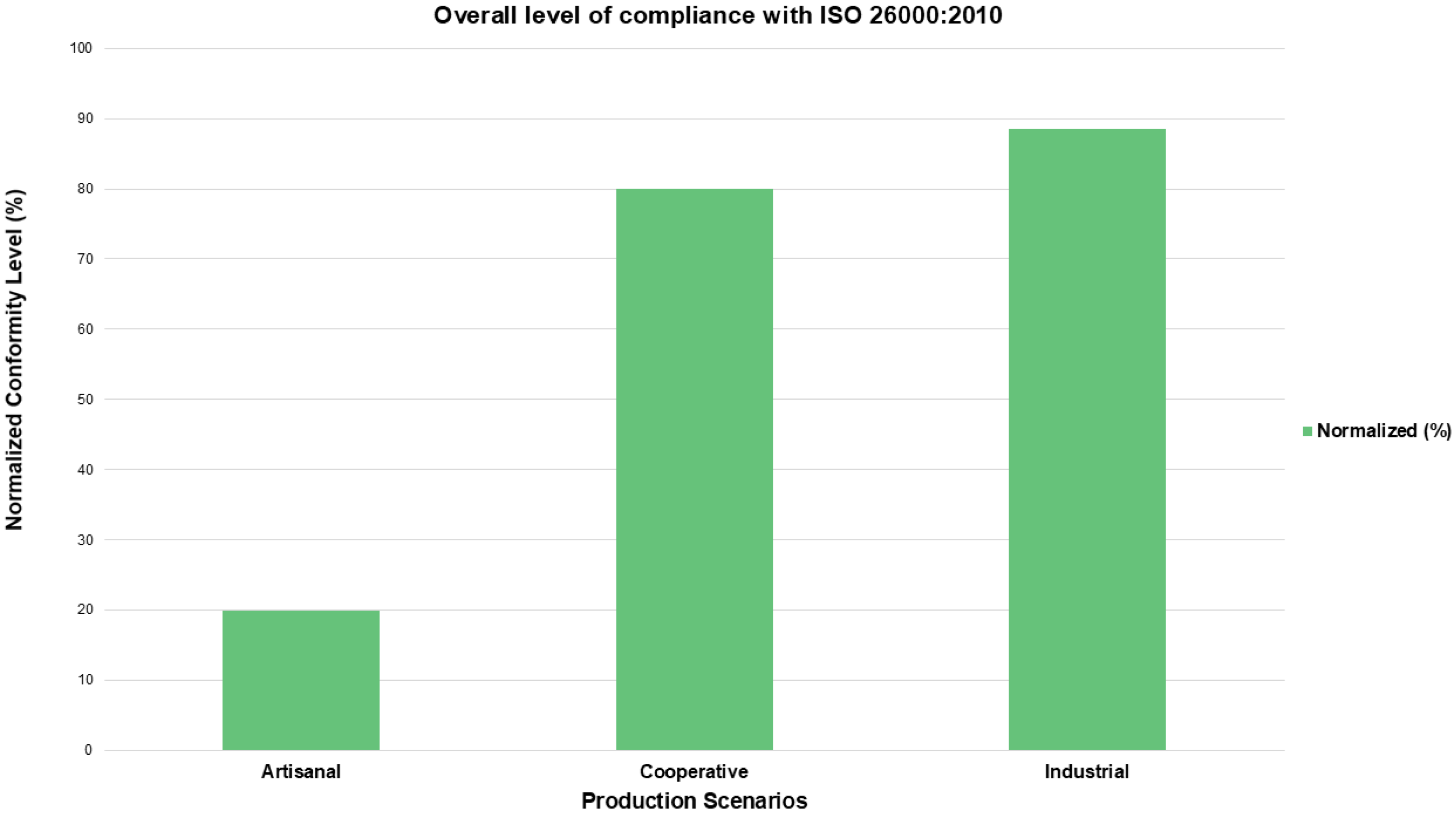
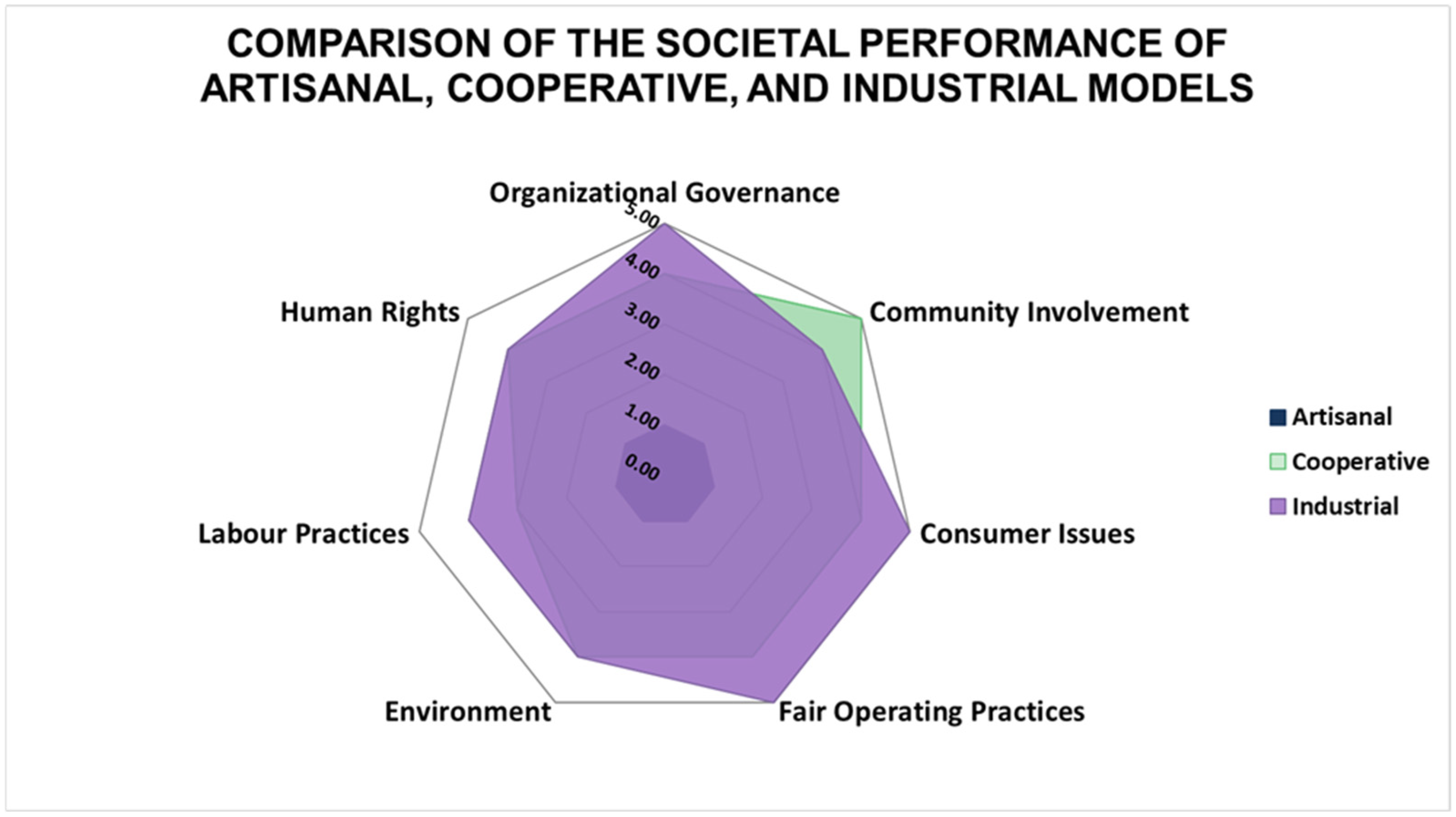
| ISO 26000:2010 Dimension | Artisanal Informal | Cooperative Legal | Industrial Regulated |
|---|---|---|---|
| Organizational Governance | 1 | 4 | 5 |
| Human Rights | 1 | 4 | 4 |
| Labor Practices | 1 | 3 | 4 |
| Environment | 1 | 4 | 4 |
| Fair Operating Practices | 1 | 4 | 5 |
| Consumer Issues | 1 | 4 | 5 |
| Community Involvement | 1 | 5 | 4 |
| Average Score (0–5) | 1.0 | 4.0 | 4.4 |
| Normalized Conformity (%) | 20% | 80% | 88% |
Disclaimer/Publisher’s Note: The statements, opinions and data contained in all publications are solely those of the individual author(s) and contributor(s) and not of MDPI and/or the editor(s). MDPI and/or the editor(s) disclaim responsibility for any injury to people or property resulting from any ideas, methods, instructions or products referred to in the content. |
© 2026 by the authors. Licensee MDPI, Basel, Switzerland. This article is an open access article distributed under the terms and conditions of the Creative Commons Attribution (CC BY) license.
Share and Cite
Labjouj, H.; El Joumri, L.; Labjar, N.; Amine Benabdallah, G.; Elouaham, S.; Nasrellah, H.; Bihadassen, B.; El Hajjaji, S. Life Cycle Management of Moroccan Cannabis Seed Oil: A Global Approach Integrating ISO Standards for Sustainable Production. Pollutants 2026, 6, 22. https://doi.org/10.3390/pollutants6020022
Labjouj H, El Joumri L, Labjar N, Amine Benabdallah G, Elouaham S, Nasrellah H, Bihadassen B, El Hajjaji S. Life Cycle Management of Moroccan Cannabis Seed Oil: A Global Approach Integrating ISO Standards for Sustainable Production. Pollutants. 2026; 6(2):22. https://doi.org/10.3390/pollutants6020022
Chicago/Turabian StyleLabjouj, Hamza, Loubna El Joumri, Najoua Labjar, Ghita Amine Benabdallah, Samir Elouaham, Hamid Nasrellah, Brahim Bihadassen, and Souad El Hajjaji. 2026. "Life Cycle Management of Moroccan Cannabis Seed Oil: A Global Approach Integrating ISO Standards for Sustainable Production" Pollutants 6, no. 2: 22. https://doi.org/10.3390/pollutants6020022
APA StyleLabjouj, H., El Joumri, L., Labjar, N., Amine Benabdallah, G., Elouaham, S., Nasrellah, H., Bihadassen, B., & El Hajjaji, S. (2026). Life Cycle Management of Moroccan Cannabis Seed Oil: A Global Approach Integrating ISO Standards for Sustainable Production. Pollutants, 6(2), 22. https://doi.org/10.3390/pollutants6020022