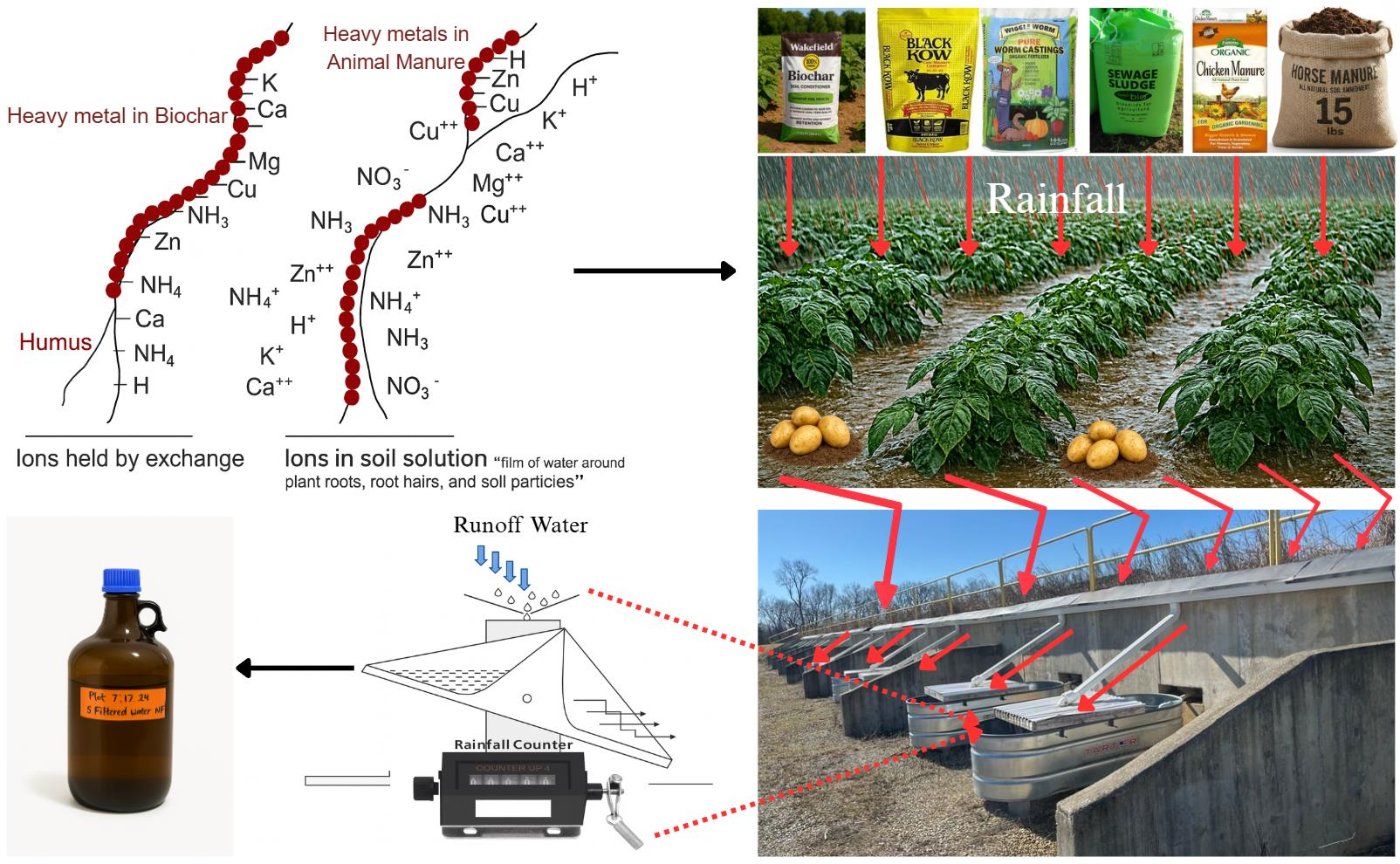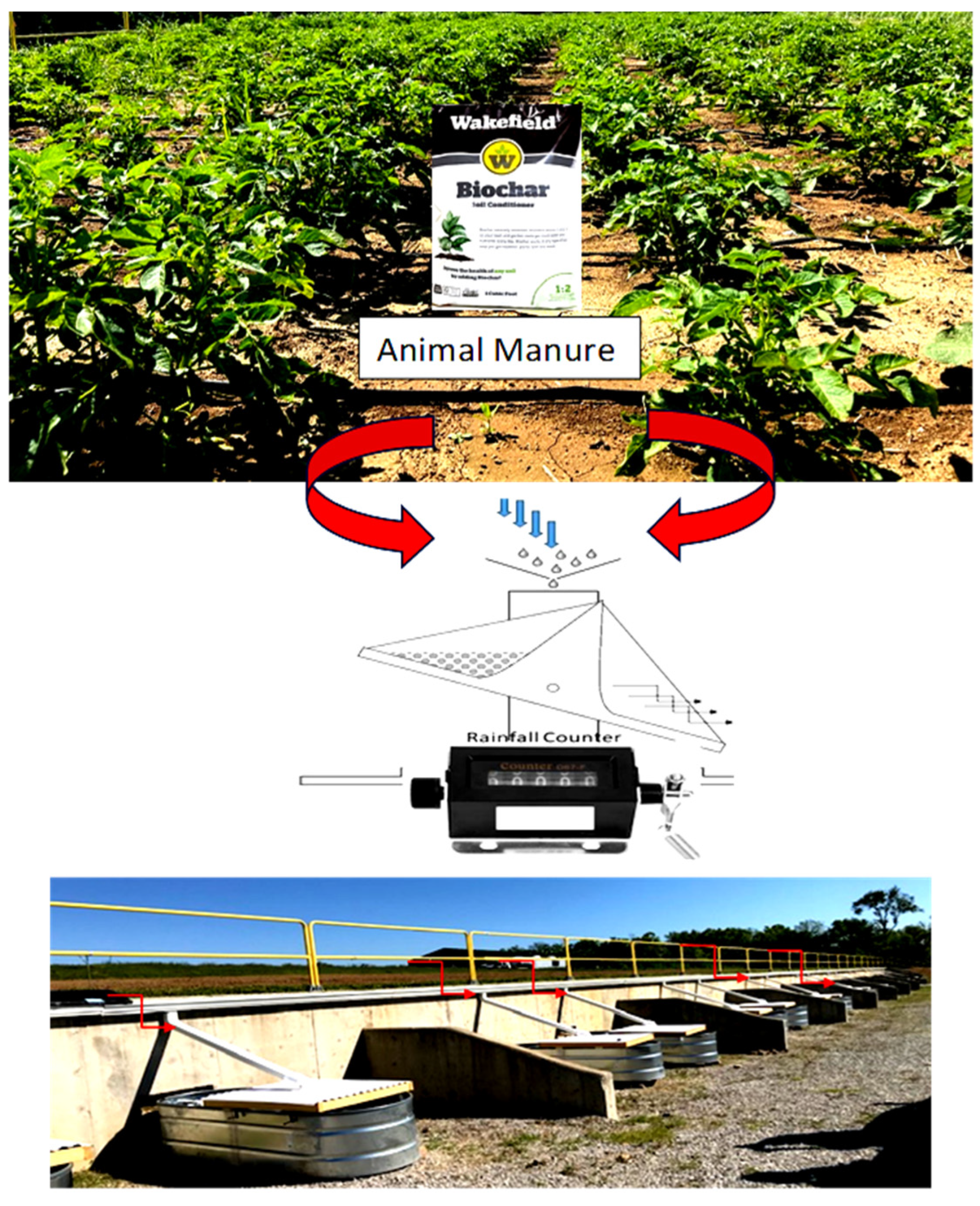


Heavy Metal and Nitrate Mobility in Runoff and Seepage Water from a Field Amended with Biochar and Animal Manure



Abstract
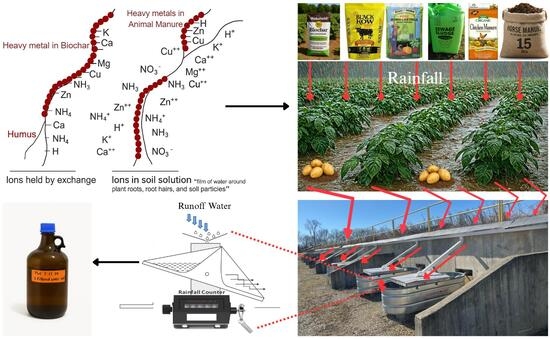
1. Introduction
2. Materials and Methods
2.1. Field Experimental Design
2.2. Cultivation Practices
2.3. Runoff and Seepage Water Collection
2.4. Heavy Metals and Micronutrients Analyses
2.5. Analysis of Potato Ammonia and Nitrates
2.6. Statistical Analysis
3. Results and Discussion
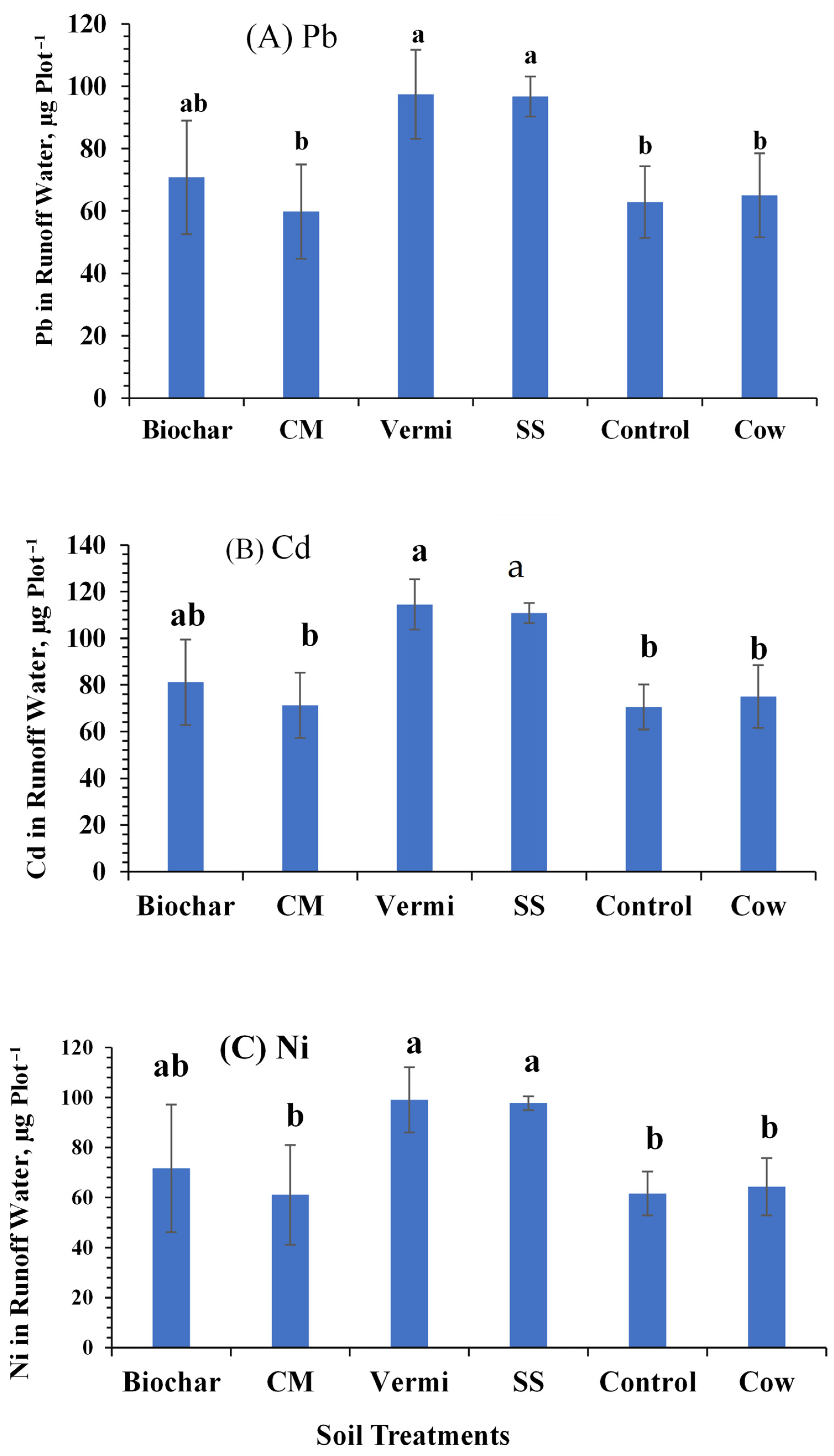
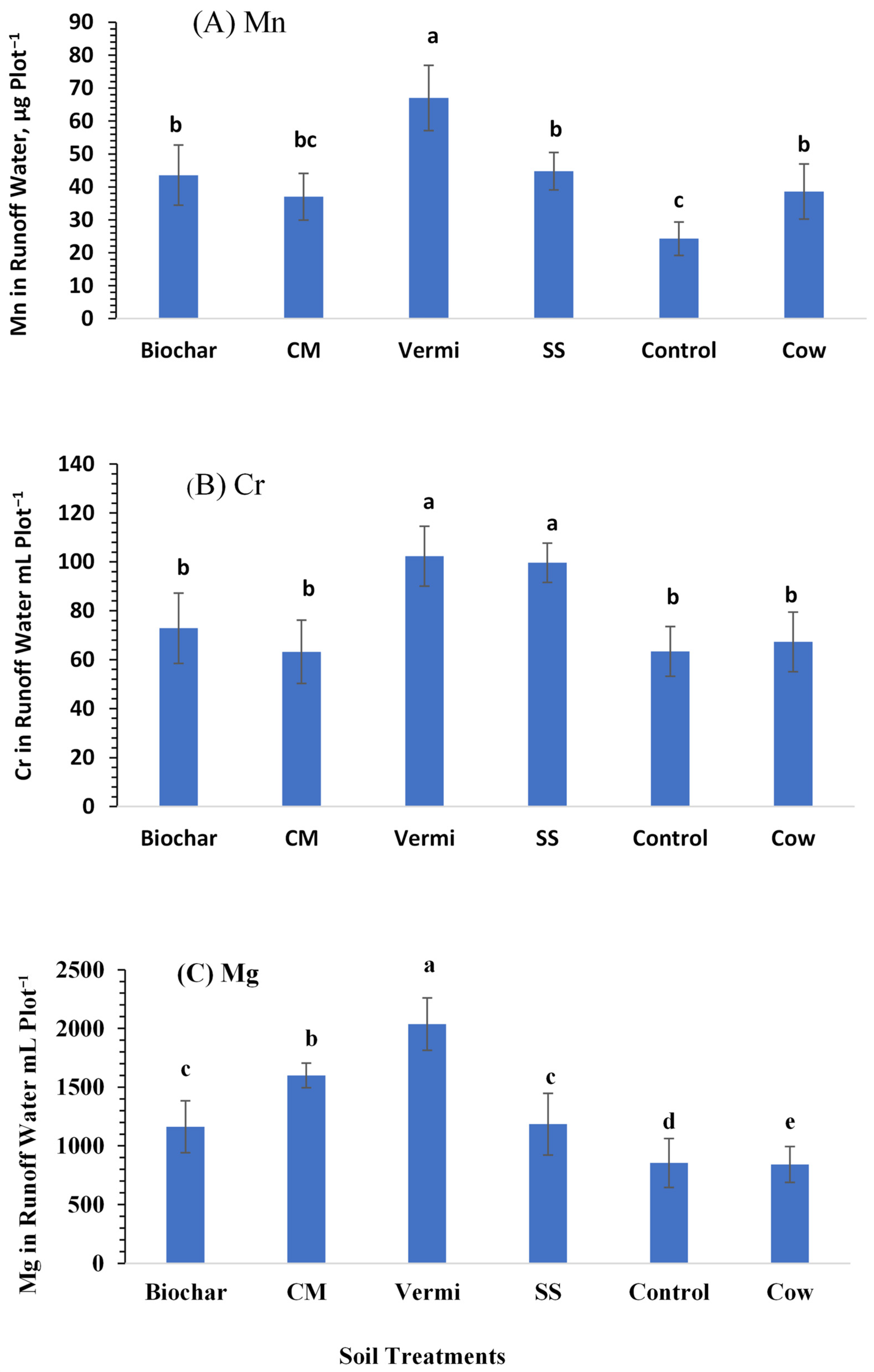
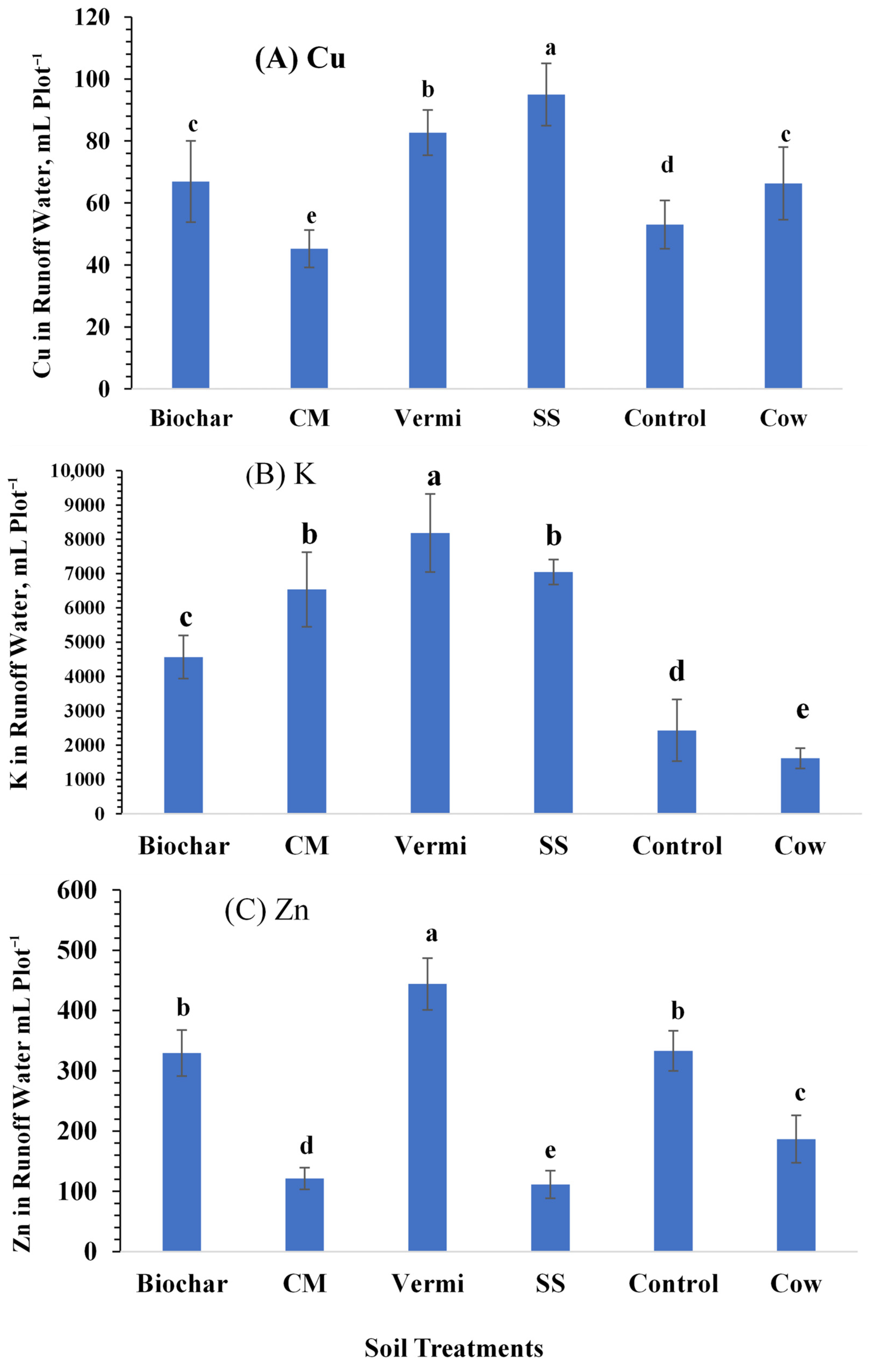
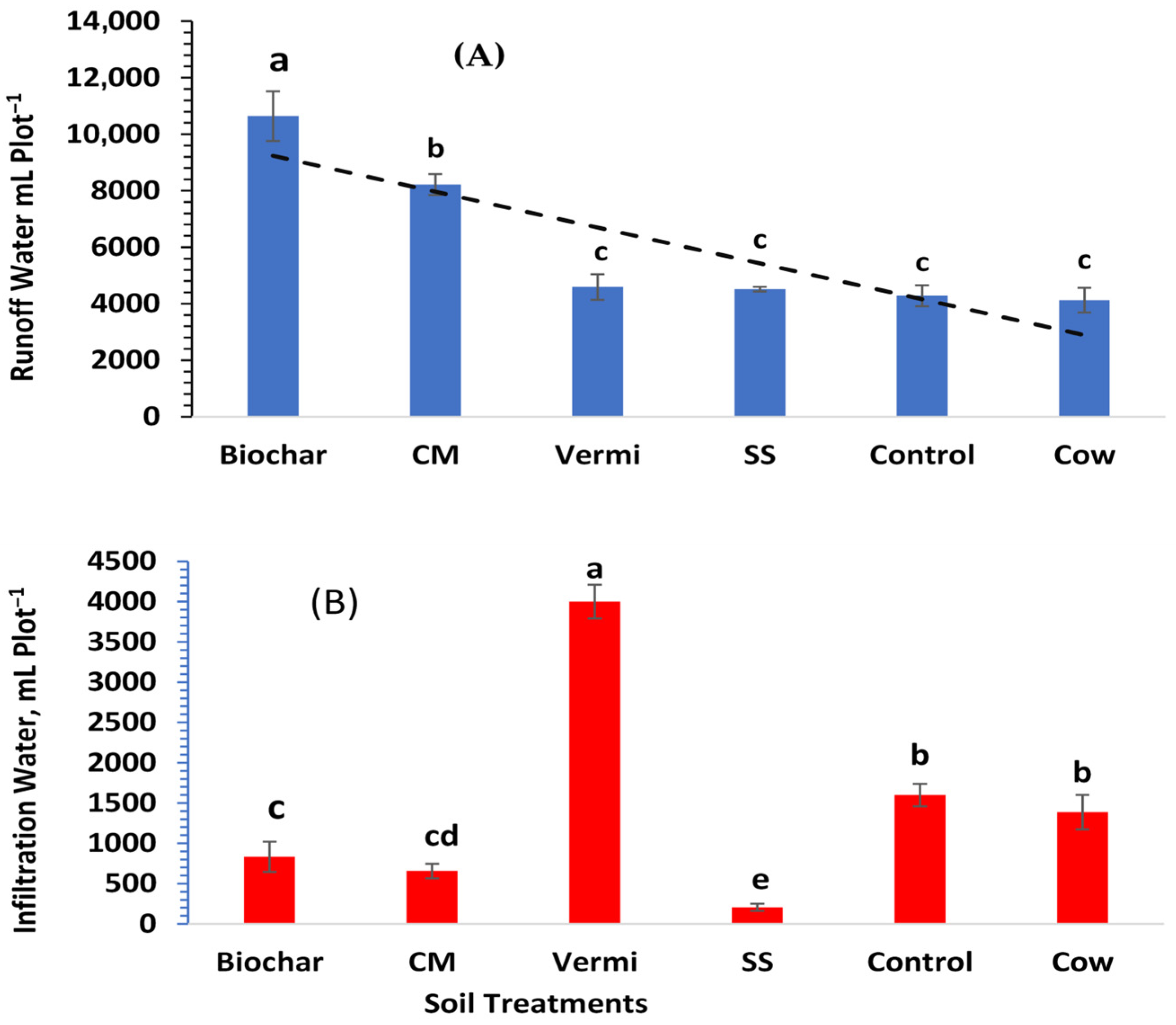
3.1. Rainfall and Heavy Metals in Runoff and Seepage Water
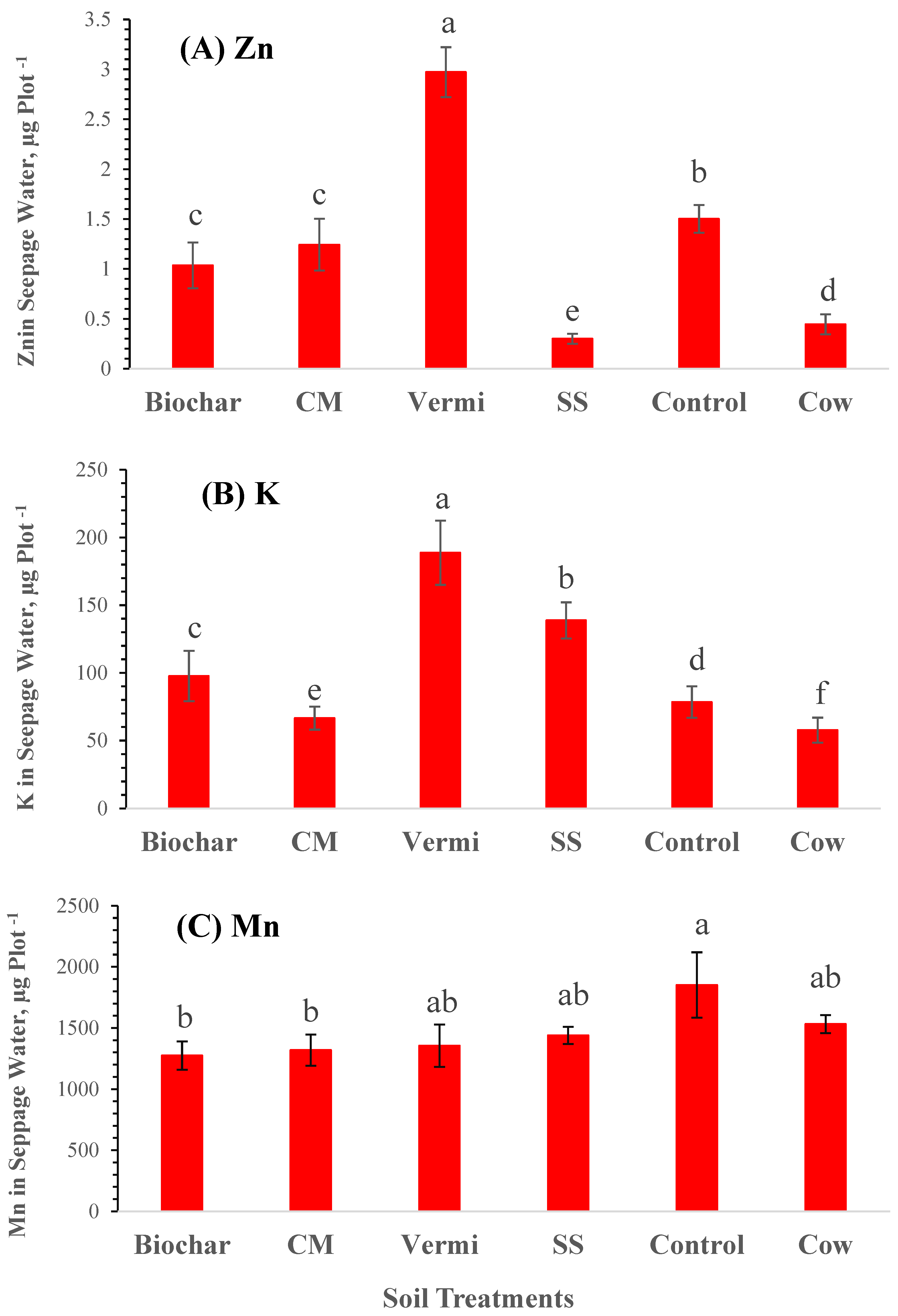
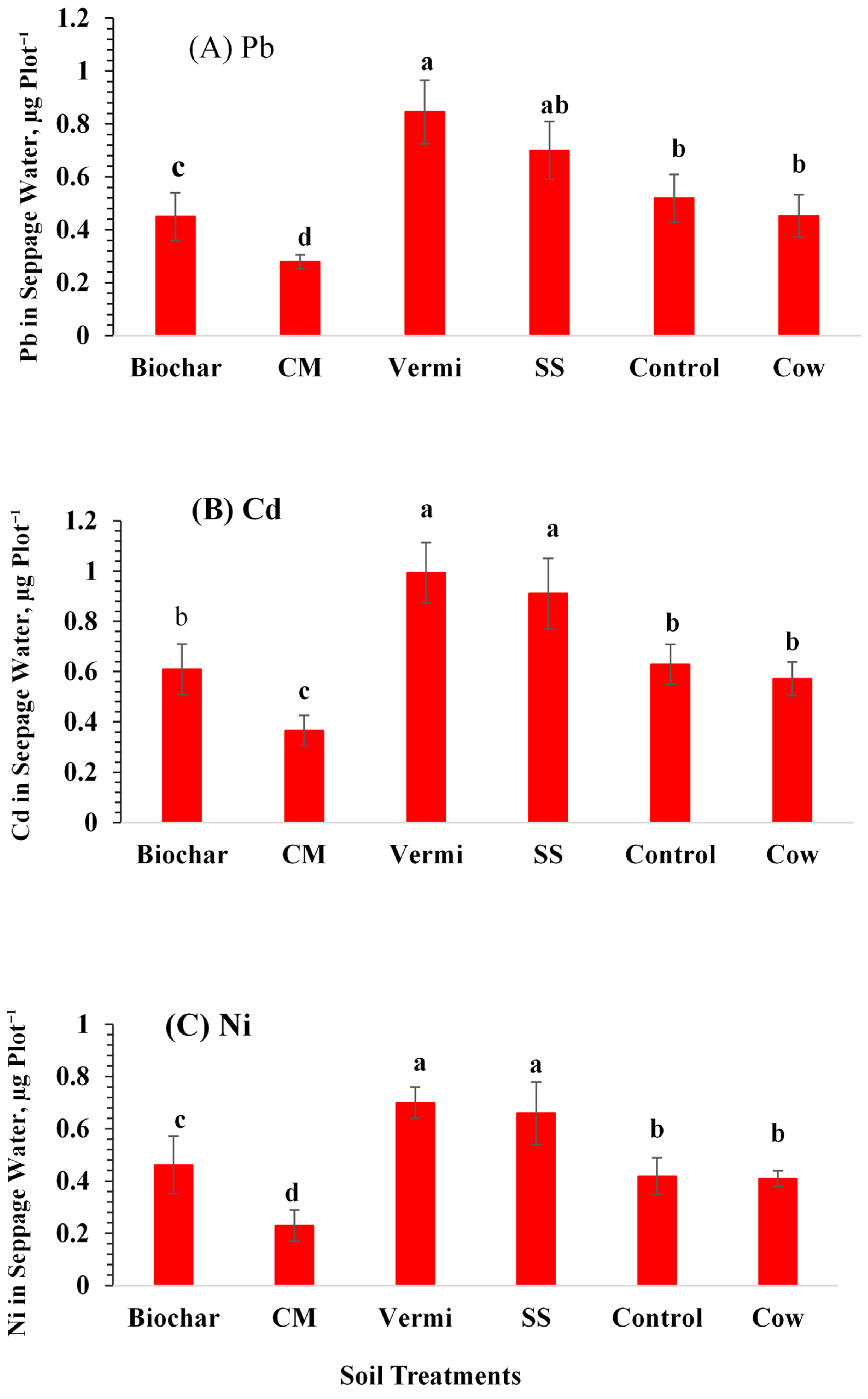
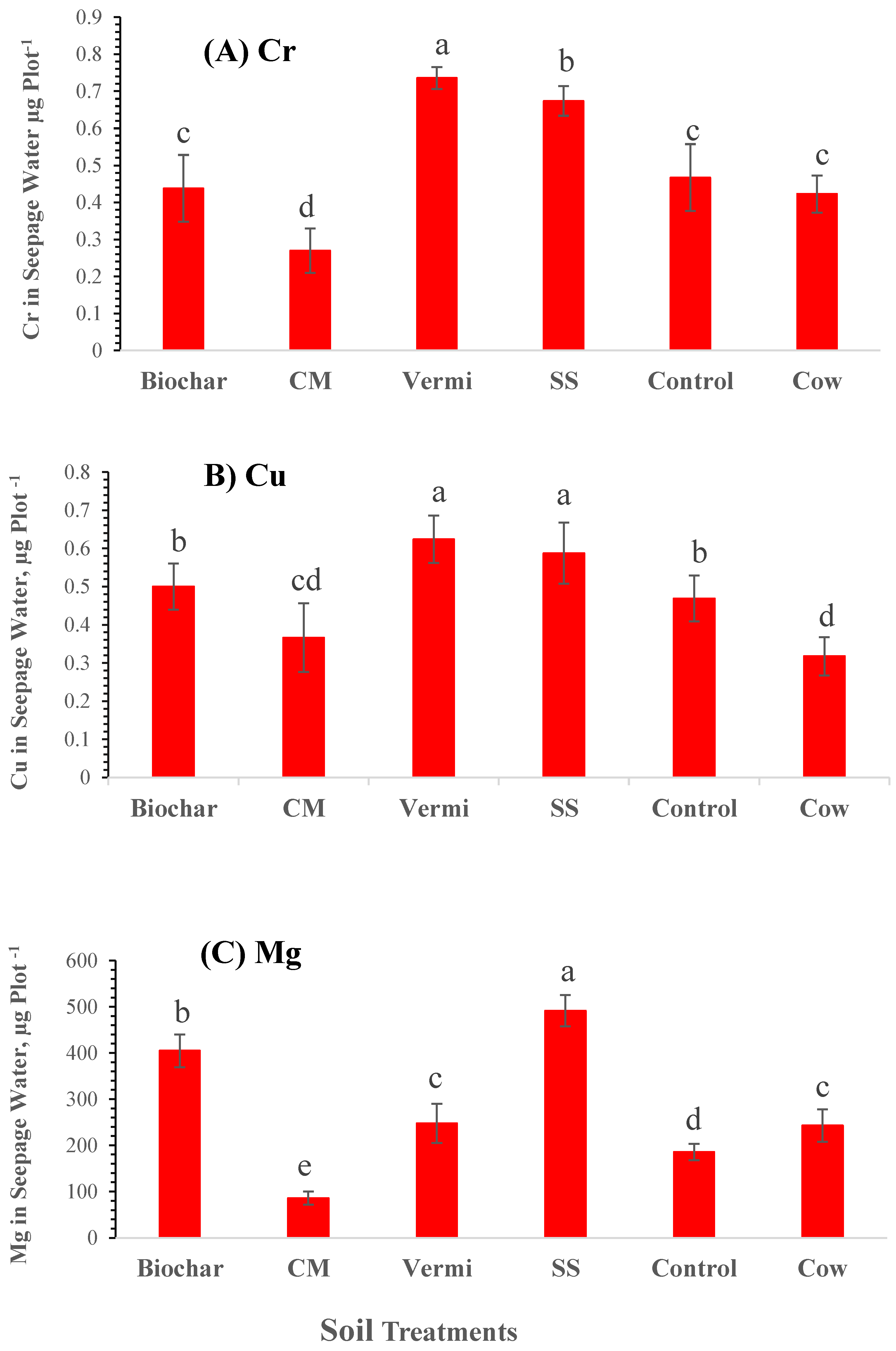
3.2. Heavy Metals in Seepage Water
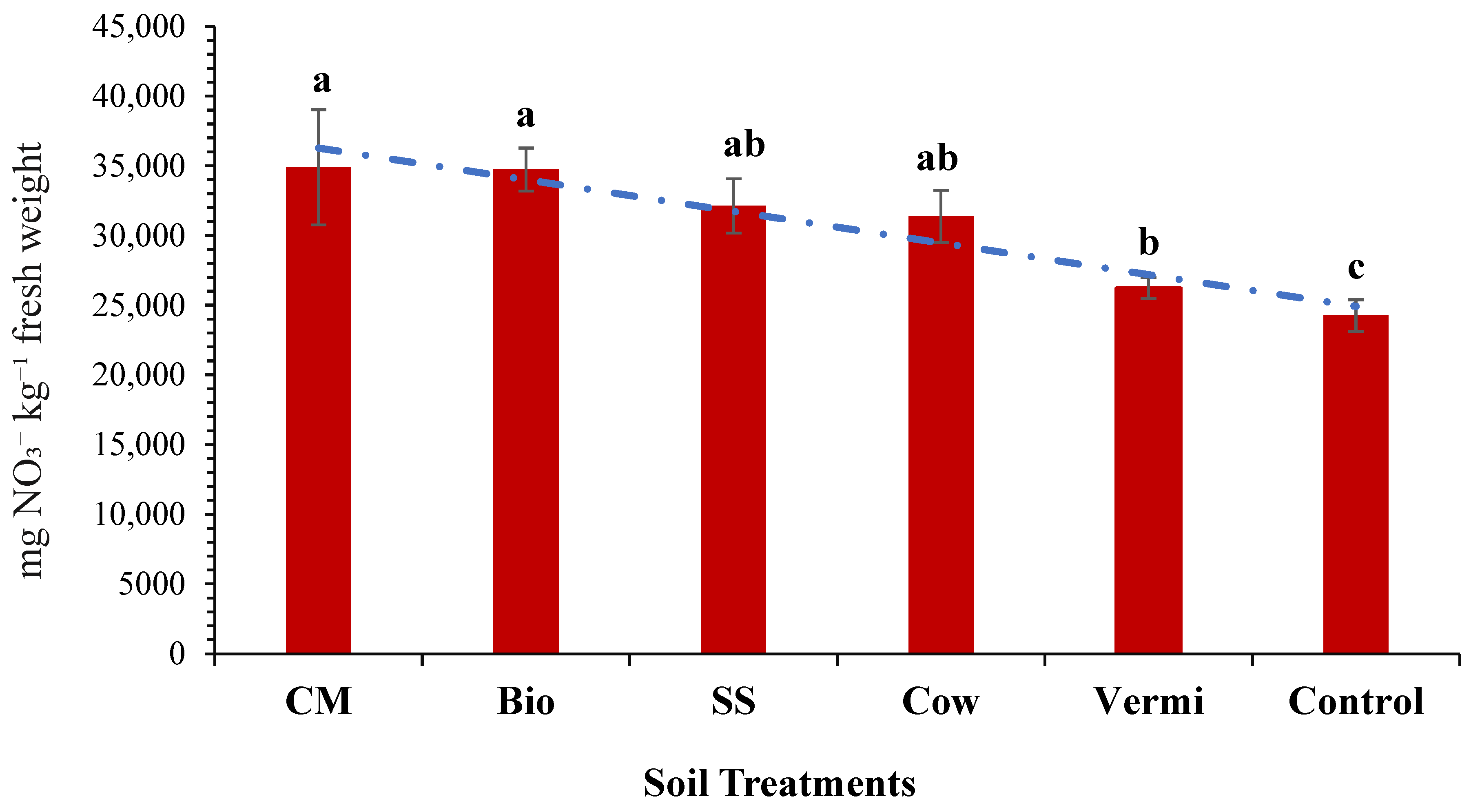
3.3. Nitrates and Ammonia in Runoff, Seepage Water, and Potato Tubers
4. Conclusions
Author Contributions
Funding
Data Availability Statement
Acknowledgments
Conflicts of Interest
References
- Alengebawy, A.; Abdelkhalek, S.T.; Qureshi, S.R.; Wang, M.-Q. Heavy Metals and Pesticides Toxicity in Agricultural Soil and Plants: Ecological Risks and Human Health Implications. Toxics 2021, 9, 42. [Google Scholar] [CrossRef]
- Li, Z.; Ma, Z.; van der Kuijp, T.J.; Yuan, Z.; Huang, L. A review of soil heavy metal pollution from mines in China: Pollution and health risk assessment. Sci. Total Environ. 2014, 468–469, 843–853. [Google Scholar] [CrossRef]
- Xiao, R.; Wang, S.; Li, R.; Wang, J.J.; Zhang, Z. Soil heavy metal contamination and health risks associated with artisanal gold mining in Tongguan, Shaanxi, China. Ecotoxicol. Environ. Saf. 2017, 141, 17–24. [Google Scholar] [CrossRef] [PubMed]
- Kumar, V.; Rawat, A.; Rao, D. Population ecology of soybean-rhizobia in diverse crop rotations in Central India. Agric. Ecosyst. Environ. 2017, 240, 261–268. [Google Scholar] [CrossRef]
- Antonious, G.F.; Dawood, M.H.; Turley, E.T.; Trivette, T.G. Soil Amendments Enhanced Summer Squash Yield, Fruit Composition, Quality, and Soil Enzymes Activity. Agric. Sci. 2022, 13, 684–701. [Google Scholar] [CrossRef]
- Antonious, G.F. Duality of Biochar and Organic Manure Co-Composting on Soil Heavy Metals and Enzymes Activity. Appl. Sci. 2025, 15, 3031. [Google Scholar] [CrossRef]
- Antonious, G.F.; Nepal, A.; Neupane, B. Remediation of Cd, Cu, and Zn Metals in Soil Amended with Biochar and Animal Manure Using a Hyperaccumulator. Pollutants 2025, 5, 22. [Google Scholar] [CrossRef]
- Hejna, M.; Moscatelli, A.; Onelli, E.; Baldi, A.; Pilu, S.; Rossi, L. Evaluation of concentration of heavy metals in animal rearing system. Ital. J. Anim. Sci. 2019, 18, 1372–1384. [Google Scholar] [CrossRef]
- Lv, Y.; Bao, J.; Liu, D.; Gao, X.; Yu, Y.; Zhu, L. Synergistic effects of rice husk biochar and aerobic composting for heavy oil-contaminated soil remediation and microbial community succession evaluation. J. Hazard. Mater. 2023, 448, 130929. [Google Scholar] [CrossRef]
- Deng, Y.F.; Yue, X.B.; Cui, Y.J.; Shao, G.H.; Liu, S.Y.; Zhang, D.W. Effect of pore water chemistry on the hydro-mechanical behaviour of Lianyungang soft marine clay. Appl. Clay Sci. 2014, 95, 167–175. [Google Scholar] [CrossRef]
- Guo, H.; Luo, S.; Chen, L.; Xiao, X.; Xi, Q.; Wei, W.; Zeng, G.; Liu, C.; Wan, Y.; Chen, J.; et al. Bioremediation of heavy metals by growing hyperaccumulaor endophytic bacterium Bacillus sp. L14. Bioresour. Technol. 2010, 101, 8599–8605. [Google Scholar] [CrossRef] [PubMed]
- Zerrari, N.; Rais, N.; El Ghachtouli, N.; Kouchou, A.; Ijjaali, M. Heavy Metals Effects on Agricultural Soil Enzyme Activities of Fez, Morocco. J. Ecol. Eng. 2023, 24, 144–154. [Google Scholar] [CrossRef]
- Garbowski, T.; Bar-Michalczyk, D.; Charazińska, S.; Grabowska-Polanowska, B.; Kowalczyk, A.; Lochyński, P. An overview of natural soil amendments in agriculture. Soil Tillage Res. 2023, 225, 105462. [Google Scholar] [CrossRef]
- Onunwa, A.O.; Igwe, C.A.; Mbonu, O.A. Tillage and Residual effect of some Organic Amendments on Aggregate associated Soil Carbon of an Ultisol, Growth and Yield of Maize and Cowpea Intercrop. Niger. J. Soil Sci. 2019, 28, 31–41. [Google Scholar] [CrossRef]
- Joshi, R.; Singh, J.; Vig, A.P. Vermicompost as an effective organic fertilizer and biocontrol agent: Effect on growth, yield and quality of plants. Rev. Environ. Sci. Bio/Technol. 2014, 14, 137–159. [Google Scholar] [CrossRef]
- Yang, X.Y.; Chang, K.-H.; Kim, Y.J.; Zhang, J.; Yoo, G. Effects of different biochar amendments on carbon loss and leachate characterization from an agricultural soil. Chemosphere 2019, 226, 625–635. [Google Scholar] [CrossRef]
- Ippolito, J.A.; Laird, D.A.; Busscher, W.J. Environmental Benefits of Biochar. J. Environ. Qual. 2012, 41, 967–972. [Google Scholar] [CrossRef]
- Shen, Z. Perspectives of biochar application in soil to immobilize heavy metals. In Biochar Application in Soil to Immobilize Heavy Metals; Elsevier: Amsterdam, The Netherlands, 2024; pp. 239–244. [Google Scholar] [CrossRef]
- Rondon, M.A.; Lehmann, J.; Ramírez, J.; Hurtado, M. Biological nitrogen fixation by common beans (Phaseolus vulgaris L.) increases with bio-char additions. Biol. Fertil. Soils 2006, 43, 699–708. [Google Scholar] [CrossRef]
- Banik, C.; Koziel, J.A.; De, M.; Bonds, D.; Chen, B.; Singh, A.; Licht, M.A. Biochar-Swine Manure Impact on Soil Nutrients and Carbon Under Controlled Leaching Experiment Using a Midwestern Mollisols. Front. Environ. Sci. 2021, 9, 609621. [Google Scholar] [CrossRef]
- Clough, T.; Condron, L.; Kammann, C.; Müller, C. A Review of Biochar and Soil Nitrogen Dynamics. Agronomy 2013, 3, 275–293. [Google Scholar] [CrossRef]
- Shen, Z. Long-term stability of heavy metals in biochar-treated soil. In Biochar Application in Soil to Immobilize Heavy Metals; Elsevier: Amsterdam, The Netherlands, 2024; pp. 131–162. [Google Scholar] [CrossRef]
- Zhao, L.; Nan, H.; Kan, Y.; Xu, X.; Qiu, H.; Cao, X. Infiltration behavior of heavy metals in runoff through soil amended with biochar as bulking agent. Environ. Pollut. 2019, 254, 113114. [Google Scholar] [CrossRef]
- Antonious, G.F.; Snyder, J.C. Accumulation of heavy metals in plants and potential phytoremediation of lead by potato, Solanum tuberosum L. J. Environ. Sci. Health Part A 2007, 42, 811–816. [Google Scholar] [CrossRef]
- Leykin, A.; Nelms, S. Inductively Coupled Plasma Mass Spectrometry in Environmental Analysis. In Comprehensive Environmental Mass Spectrometry; ILM Publications: Srinagar, India, 2012; p. 225. [Google Scholar]
- Havlik, S. WHO-FAO Codex Alimentarius Commission (CAC). In Encyclopedia of Food Safety; Elsevier: Amsterdam, The Netherlands, 2024; pp. 734–744. [Google Scholar] [CrossRef]
- Sidhu, G.P.S.; Singh, H.P.; Batish, D.R.; Kohli, R.K. Effect of lead on oxidative status, antioxidative response and metal accumulation in Coronopus didymus. Plant Physiol. Biochem. 2016, 105, 290–296. [Google Scholar] [CrossRef] [PubMed]
- Lipps, W.C.; Braun-Howland, E.B.; Baxter, T.E. Standard Methods for the Examination of Water and Wastewater; APHA Press: Washington, DC, USA, 2023. [Google Scholar]
- SAS Institute Inc. SAS 9.4 Formats and Informats: Reference; SAS Institute Inc.: Cary, NC, USA, 2023. [Google Scholar]
- Gelardi, D.L.; Parikh, S.J. Soils and Beyond: Optimizing Sustainability Opportunities for Biochar. Sustainability 2021, 13, 10079. [Google Scholar] [CrossRef]
- Adhikari, S.; Timms, W.; Mahmud, M.A.P. Optimising water holding capacity and hydrophobicity of biochar for soil amendment—A review. Sci. Total Environ. 2022, 851, 158043. [Google Scholar] [CrossRef] [PubMed]
- Zheng, X.; Li, X.; Singh, B.P.; Wei, L.; Huang, L.; Huang, Y.; Huang, Q.; Chen, X.; Su, Y.; Liu, Z.; et al. Biochar protects hydrophilic dissolved organic matter against mineralization and enhances its microbial carbon use efficiency. Sci. Total Environ. 2021, 795, 148793. [Google Scholar] [CrossRef]
- Zornoza, R.; Moreno-Barriga, F.; Acosta, J.A.; Muñoz, M.A.; Faz, A. Stability, nutrient availability and hydrophobicity of biochars derived from manure, crop residues, and municipal solid waste for their use as soil amendments. Chemosphere 2016, 144, 122–130. [Google Scholar] [CrossRef]
- McGrath, D.; Henry, J. Organic amendments decrease bulk density and improve tree establishment and growth in roadside plantings. Urban For. Urban Green. 2016, 20, 120–127. [Google Scholar] [CrossRef]
- Olson, N.C.; Gulliver, J.S.; Nieber, J.L.; Kayhanian, M. Remediation to improve infiltration into compact soils. J. Environ. Manag. 2013, 117, 85–95. [Google Scholar] [CrossRef]
- Guo, Y.; Cheng, S.; Fang, H.; Yang, Y.; Li, Y.; Zhou, Y. Responses of soil fungal taxonomic attributes and enzyme activities to copper and cadmium co-contamination in paddy soils. Sci. Total Environ. 2022, 844, 157119. [Google Scholar] [CrossRef]
- Dotaniya, M.L.; Dotaniya, C.K.; Solanki, P.; Meena, V.D.; Doutaniya, R.K. Lead Contamination and Its Dynamics in Soil–Plant System. In Radionuclides and Heavy Metals in the Environment; Springer: Cham, Switzerland, 2019; pp. 83–98. [Google Scholar] [CrossRef]
- Khan, S.; El-Latif Hesham, A.; Qiao, M.; Rehman, S.; He, J.-Z. Effects of Cd and Pb on soil microbial community structure and activities. Environ. Sci. Pollut. Res. 2009, 17, 288–296. [Google Scholar] [CrossRef] [PubMed]
- Agrelli, D.; Caporale, A.G.; Adamo, P. Assessment of the Bioavailability and Speciation of Heavy Metal(loid)s and Hydrocarbons for Risk-Based Soil Remediation. Agronomy 2020, 10, 1440. [Google Scholar] [CrossRef]
- Praveena, S.M.; Pradhan, B.; Aris, A.Z. Assessment of bioavailability and human health exposure risk to heavy metals in surface soils (Klang district, Malaysia). Toxin Rev. 2017, 37, 196–205. [Google Scholar] [CrossRef]
- Jeyasubramanian, K.; Thangagiri, B.; Sakthivel, A.; Dhaveethu Raja, J.; Seenivasan, S.; Vallinayagam, P.; Madhavan, D.; Malathi Devi, S.; Rathika, B. A complete review on biochar: Production, property, multifaceted applications, interaction mechanism and computational approach. Fuel 2021, 292, 120243. [Google Scholar] [CrossRef]
- Haider, G.; Steffens, D.; Moser, G.; Müller, C.; Kammann, C.I. Biochar reduced nitrate leaching and improved soil moisture content without yield improvements in a four-year field study. Agric. Ecosyst. Environ. 2017, 237, 80–94. [Google Scholar] [CrossRef]
- Ahmad, M.; Lee, S.S.; Lee, S.E.; Al-Wabel, M.I.; Tsang, D.C.W.; Ok, Y.S. Biochar-induced changes in soil properties affected immobilization/mobilization of metals/metalloids in contaminated soils. J. Soils Sediments 2016, 17, 717–730. [Google Scholar] [CrossRef]
- Jin, X.; Tong, X.; Hua, S.; Xu, Y. Ecological and Health Risk Assessment of Soil Heavy Metal Contamination Along National Highway 107 in China. Ecol. Chem. Eng. S 2024, 31, 155–175. [Google Scholar] [CrossRef]
- Parvin, A.; Moniruzzaman, M.; Hossain, M.K.; Saha, B.; Parvin, A.; Suchi, P.D.; Hoque, S. Chemical Speciation and Potential Mobility of Heavy Metals in Organic Matter Amended Soil. Appl. Environ. Soil Sci. 2022, 2022, 2028860. [Google Scholar] [CrossRef]
- U.S. Environmental Protection Agency. Drinking Water Regulations and Contaminants. 2025. Available online: https://www.epa.gov/sdwa/drinking-water-regulations-and-contaminants (accessed on 12 February 2026).
- White, P.J.; Broadley, M.R. Biofortification of crops with seven mineral elements often lacking in human diets—Iron, zinc, copper, calcium, magnesium, selenium and iodine. New Phytol. 2009, 182, 49–84. [Google Scholar] [CrossRef]
- McCartney, D. J. Mann & A. S. Truswell (editors). Essentials of Human Nutrition Oxford: Oxford University Press2007 £35.99 (paperback) pp. 599 ISBN 978-0-19-929097-0. Br. J. Nutr. 2008, 99, 1168. [Google Scholar] [CrossRef]
- Goncalves, A.C.; Nacke, H.; Schwantes, D.; Coelho, G.F. Heavy Metal Contamination in Brazilian Agricultural Soils due to Application of Fertilizers. In Environmental Risk Assessment of Soil Contamination; Hernandez-Soriano, M.C., Ed.; Intech: London, UK, 2014; Chapter 4; pp. 105–135. [Google Scholar] [CrossRef]
- Srivastava, A.; Peshin, S.S.; Kaleekal, T.; Gupta, S.K. An epidemiological study of poisoning cases reported to the National Poisons Information Centre, All India Institute of Medical Sciences, New Delhi. Hum. Exp. Toxicol. 2005, 24, 279–285. [Google Scholar] [CrossRef]
- Kozisek, F. Regulations for calcium, magnesium or hardness in drinking water in the European Union member states. Regul. Toxicol. Pharmacol. 2020, 112, 104589. [Google Scholar] [CrossRef] [PubMed]
- Urra, J.; Alkorta, I.; Garbisu, C. Potential benefits and risks for soil health derived from the use of organic amendments in agriculture. Agronomy 2019, 9, 542. [Google Scholar] [CrossRef]
- Wang, Z.; Zhang, T.Q.; Tan, C.S.; Wang, X.; Taylor, R.A.J.; Qi, Z.M.; Yang, J.W. Modeling the Impacts of Manure on Phosphorus Loss in Surface Runoff and Subsurface Drainage. J. Environ. Qual. 2019, 48, 39–46. [Google Scholar] [CrossRef] [PubMed]
- Correia, M.; Barroso, Â.; Barroso, M.F.; Soares, D.; Oliveira, M.B.P.P.; Delerue-Matos, C. Contribution of different vegetable types to exogenous nitrate and nitrite exposure. Food Chem. 2010, 120, 960–966. [Google Scholar] [CrossRef]
- Hmelak Gorenjak, A.; Cencič, A. Nitrate in vegetables and their impact on human health. A review. Acta Aliment. 2013, 42, 158–172. [Google Scholar] [CrossRef]
- Tamme, T.; Reinik, M.; Roasto, M.; Juhkam, K.; Tenno, T.; Kiis, A. Nitrates and nitrites in vegetables and vegetable-based products and their intakes by the Estonian population. Food Addit. Contam. 2006, 23, 355–361. [Google Scholar] [CrossRef]
- FAO; WHO. Compendium of Food Additive Specifications. Joint FAO/WHO Expert Committee on Food Additives (JECFA), 87th Meeting June 2019; FAO JECFA Monographs 23; FAO: Rome, Italy; WHO: Geneva, Switzerland, 2020. [Google Scholar]
- Salehzadeh, H.; Maleki, A.; Rezaee, R.; Shahmoradi, B.; Ponnet, K. The nitrate content of fresh and cooked vegetables and their health-related risks. PLoS ONE 2020, 15, e0227551. [Google Scholar] [CrossRef]
- Spokas, K.A.; Cantrell, K.B.; Novak, J.M.; Archer, D.W.; Ippolito, J.A.; Collins, H.P.; Boateng, A.A.; Lima, I.M.; Lamb, M.C.; McAloon, A.J.; et al. Biochar: A Synthesis of Its Agronomic Impact beyond Carbon Sequestration. J. Environ. Qual. 2012, 41, 973–989. [Google Scholar] [CrossRef]
- Ding, Y.; Liu, Y.-X.; Wu, W.-X.; Shi, D.-Z.; Yang, M.; Zhong, Z.-K. Evaluation of Biochar Effects on Nitrogen Retention and Leaching in Multi-Layered Soil Columns. Water Air Soil Pollut. 2010, 213, 47–55. [Google Scholar] [CrossRef]







| (A) | ||||||
| Soil Amendments | Lbs. Plot−1 | Lbs. Acre−1 | Kg Hectare−1 | |||
| Sewage sludge (SS) | 40.21 | 2000.00 | 2241.70 | |||
| Chicken manure (CM) | 182.82 | 9090.90 | 10,189.55 | |||
| Cow manure (Cow) | 402.21 | 20,000.00 | 22,417.02 | |||
| 10% Biochar | 279.36 | 13,888.88 | 15,567.36 | |||
| Vermicompost (Vermi) | 201.11 | 10,000.00 | 11,208.51 | |||
| (B) | ||||||
| Soil Properties | Sewage Sludge | Vermicompost | Cow Manure | Chicken Manure | Biochar | Native Soil (Control) |
| P (%) | 0.30 b | 1.23 a | 0.72 ab | 0.79 ab | 0.30 b | 0.14 c |
| N (%) | 0.47 b | 1.40 b | 1.75 b | 4.12 a | 0.56 c | 0.14 c |
| K (%) | 0.24 b | 0.54 ab | 1.22 a | 0.50 ab | 0.33 b | 0.26 |
| OM (%) | 3.20 b | 7.60 a | 5.63 a | 6.19 a | 7.60 a | 2.45 b |
| C (%) | 3.6 c | 12.1 b | 26.1 a | 17.7 ab | 3.7 c | 1.5 c |
| C/N ratio | 7.6 c | 8.64 bc | 14.91 a | 4.29 c | 17.61 a | 10.71 b |
| P (mg kg−1) | 10.54 a | 0.23 c | 0.30 c | 2.56 b | 1.16 bc | 18.59 a |
| Pb (mg kg−1) | 19.49 b | 18.48 b | 22.95 a | 25.06 a | 19.92 | 18.97 b |
| Cd (mg kg−1) | 6.63 a | 6.65 a | 6.73 a | 6.82 a | 6.75 a | 0.66 b |
| Ni (mg kg−1) | 9.22 a | 0.34 c | 4.06 b | 6.27 b | 5.12 b | 6.83 b |
| Mn (mg kg−1) | 497.86 b | 213.46 c | 308.62 b | 201.2 c | 327.98 b | 1262.5 a |
| Cr (mg kg−1) | 19.43 a | 2.49 b | 3.31 b | 5.06 b | 3.2 b | 14.15 a |
| Mg (mg kg−1) | 2045.25 b | 1564.7 c | 2400.28 b | 6705.89 a | 2198.37 b | 847.71 d |
| Cu (mg kg−1) | 182.29 a | 1.05 d | 18.647 c | 37.793 b | 9.08 c | 8.58 c |
| K (mg kg−1) | 928.75 d | 506.2 d | 8279.41 b | 17,741.03 a | 2251.29 c | 292.55 d |
| Zn (mg kg−1) | 441.85 a | 122.1 ab | 58.73 b | 225.09 ab | 28.33 bc | 19.72 c |
| pH | 5.72 d | 6.57 c | 8.09 a | 7.33 b | 7.85 a | 6.29 c |
| Conductivity, µS cm−1 | 3.79 e | 21.03 c | 2.74 e | 5.18 d | 410.33 a | 101.53 b |
| NO3–N (mg kg−1) | 567.35 b | 366.23 c | 84.45 d | 745.35 a | 92.63 d | 6.22 e |
| NH3+–N (mg kg−1) | 171.09 a | 93.5 c | 0.65 e | 144.04 b | 5.06 d | 1.05 e |
| Soil Treatment | (A) Heavy Metals Detected in Runoff Water, µg mL−1 | ||||||||
| Mn | Zn | Pb | Cd | Ni | Cr | Cu | Mg | K | |
| Biochar | 2.104 | 0.2 | 0.0283 | 0.03 | 0.03 | 0.03 | 0.025 | 0.6633 | 2.638 |
| Chicken Manure | 3.196 | 0.055 | 0.0267 | 0.03 | 0.03 | 0.03 | 0.0217 | 0.7383 | 3.128 |
| Cow Manure | 2.73 | 0.078 | 0.0283 | 0.03 | 0.03 | 0.03 | 0.0283 | 0.3583 | 0.703 |
| Control | 2.333 | 0.168 | 0.0233 | 0.025 | 0.025 | 0.025 | 0.0183 | 0.39 | 1.097 |
| Sewage Sludge | 2.835 | 0.038 | 0.0267 | 0.03 | 0.03 | 0.03 | 0.0267 | 0.4867 | 3.3 |
| Vermicompost | 1.424 | 0.19 | 0.0283 | 0.03 | 0.03 | 0.03 | 0.0183 | 0.9267 | 4.327 |
| Allowable Limits in Drinking Water | 0.05 [46] | 5 [46] | 0.00 [47] | 0.005 [47] | 0.10 [47] | 0.10 [47] | 1.3 [47] | 40 [48] | 12 [49] |
| Soil Treatment | (B) Heavy Metals Detected in Seepage Water, µg mL−1 | ||||||||
| Mn | Zn | Pb | Cd | Ni | Cr | Cu | Mg | K | |
| Biochar | 0.018 | 0.0006 | 0.0003 | 0.0005 | 0.00035 | 0.0003 | 0.0004 | 0.272 | 0.0677 |
| Chicken Manure | 0.018 | 0.0015 | 0.0003 | 0.0005 | 0.00031 | 0.0004 | 0.0005 | 0.1244 | 0.097 |
| Cow Manure | 0.018 | 0.0003 | 0.0004 | 0.0005 | 0.00038 | 0.0003 | 0.0003 | 0.2313 | 0.0559 |
| Control | 0.011 | 0.0013 | 0.0004 | 0.0005 | 0.00033 | 0.0003 | 0.0004 | 0.1874 | 0.071 |
| Sewage Sludge | 0.012 | 0.0003 | 0.0004 | 0.0005 | 0.00031 | 0.0004 | 0.0002 | 0.1612 | 0.0585 |
| Vermicompost | 0.02 | 0.0033 | 0.0004 | 0.0005 | 0.00036 | 0.0003 | 0.0007 | 0.2377 | 0.211 |
| Allowable Limits in Drinking Water | 0.05 [46] | 5 [46] | 0.00 [47] | 0.005 [47] | 0.10 [47] | 0.10 [47] | 1.3 [47] | 40 [48] | 12 [49] |
| Soil Treatment | (C) Heavy Metals Detected in Runoff Sediments, µg mL−1 | ||||||||
| Mn | Zn | Pb | Cd | Ni | Cr | Cu | Mg | K | |
| Biochar | 20.298 | 74.31 | 0.592 | 1.465 | 1.191 | 0.726 | 2.08 | 67.54 | 91.81 |
| Chicken Manure | 24.632 | 106.7 | 1.089 | 2.461 | 1.499 | 1.367 | 4.165 | 95.38 | 154.65 |
| Cow Manure | 8.251 | 40.13 | 1.058 | 1.638 | 1.361 | 0.958 | 1.599 | 24.79 | 64.81 |
| Control | 6.664 | 93.25 | 2.043 | 2.848 | 2.298 | 1.723 | 2.284 | 78.1 | 108 |
| Sewage Sludge | 24.572 | 60.26 | 0.519 | 1.256 | 0.991 | 0.591 | 2.147 | 73.66 | 95.83 |
| Vermicompost | 19.667 | 61.98 | 1.335 | 1.983 | 1.217 | 1.042 | 1.624 | 39.53 | 104.39 |
Disclaimer/Publisher’s Note: The statements, opinions and data contained in all publications are solely those of the individual author(s) and contributor(s) and not of MDPI and/or the editor(s). MDPI and/or the editor(s) disclaim responsibility for any injury to people or property resulting from any ideas, methods, instructions or products referred to in the content. |
© 2026 by the authors. Licensee MDPI, Basel, Switzerland. This article is an open access article distributed under the terms and conditions of the Creative Commons Attribution (CC BY) license.
Share and Cite
Antonious, G.F.; Neupane, B.; Bordoh, E.K.; Dawood, M.H. Heavy Metal and Nitrate Mobility in Runoff and Seepage Water from a Field Amended with Biochar and Animal Manure. Pollutants 2026, 6, 16. https://doi.org/10.3390/pollutants6010016
Antonious GF, Neupane B, Bordoh EK, Dawood MH. Heavy Metal and Nitrate Mobility in Runoff and Seepage Water from a Field Amended with Biochar and Animal Manure. Pollutants. 2026; 6(1):16. https://doi.org/10.3390/pollutants6010016
Chicago/Turabian StyleAntonious, George F., Basanta Neupane, Edward K. Bordoh, and Mohammad H. Dawood. 2026. "Heavy Metal and Nitrate Mobility in Runoff and Seepage Water from a Field Amended with Biochar and Animal Manure" Pollutants 6, no. 1: 16. https://doi.org/10.3390/pollutants6010016
APA StyleAntonious, G. F., Neupane, B., Bordoh, E. K., & Dawood, M. H. (2026). Heavy Metal and Nitrate Mobility in Runoff and Seepage Water from a Field Amended with Biochar and Animal Manure. Pollutants, 6(1), 16. https://doi.org/10.3390/pollutants6010016