
Article

Marine Organisms Fouling on Ghost Nets in the Sounio Marine Protected Area (Greece)

by
Nikolaos Simantiris
1,2,*,
Nikos Karatzas
3,
Dimitra Papadoiliopoulou
1 and
Martha Z. Vardaki
4
1
MEDASSET (Mediterranean Association to Save the Sea Turtles), 10672 Athens, Greece
2
Department of Environment, Ionian University, 29100 Zakynthos, Greece
3
AquaTec Scientific Diving Center, 16672 Vari, Greece
4
Institute of Chemical Biology, National Hellenic Research Foundation, 11635 Athens, Greece
*
Author to whom correspondence should be addressed.
Pollutants 2026, 6(1), 12; https://doi.org/10.3390/pollutants6010012
Submission received: 12 November 2025 / Revised: 7 January 2026 / Accepted: 3 February 2026 / Published: 5 February 2026
(This article belongs to the Special Issue Marine Pollutants: 3rd Edition)

Abstract

Ghost nets are the result of fishing nets ending up at sea by fishing vessels during operations, repairs, accidental loss, and from aquaculture activities. This is a major threat to the marine environment due to the entrapment of marine species, which often leads to the mortality of important species, the alteration of the marine benthic habitat, and the release of microplastics. In the current study, the authors conducted underwater clean-up activities in the marine protected area of Sounio in Greece (NATURA2000) to identify, evaluate whether they can be removed, and remove ghost nets. A total of 1200 Kg of ghost nets was removed within one year, with 68 different species reported to have colonized the nets. The reported groups were Mollusca, Porifera, Chordata, Arthropoda, Echinodermata, Bryozoa, Ochrophyta, Tracheophyta, Rhodophyta, Cnidaria, Chlorophyta, and Annelida. The species were not listed as threatened by the IUCN conservation status, while 86% were native, and 14% were invasive in the Mediterranean Sea. The current work presents the need to expand research efforts in the field of underwater plastic pollution, implement monitoring campaigns to a greater extent in the study area, and perform an assessment before the removal of ghost nets.

1. Introduction

In the global fishing industry’s efforts, approximately 750,000 tonnes of fishing gear end up in the ocean on an annual basis [1]. Fishing gear can be abandoned, discarded, or lost from fishing vessels, constituting the “Abandoned, Lost or Discarded Fishing Gear (ALDFG)”, a major contributor to the global aquatic plastic pollution [2,3]. The majority of fishing gear lost at sea is fishing nets, which are then called “ghost nets”. Ghost nets are the result of fishing nets being washed overboard by fishing vessels, discarded by fishers during operations, or on board gear repairs while at sea, which can occur both intentionally and unintentionally [2]. The causes are often the weather conditions (such as storms), poor gear maintenance and crew training, ineffective storing of fishing gear, overloaded vessels, and the accidental entanglement of nets on the rocky bottom, among others [4].
The impact of ghost nets on the marine environment is ghost fishing (the incidental catch of aquatic species by discarded fishing nets due to their design) [5]. Ghost fishing has been occurring in every sea since fishers started using fishing nets, but the negative impact on marine flora and fauna has recently started being reported in the literature [6,7,8,9,10]. The most significant impacts are the direct mortality of marine organisms and the deterioration of the marine habitat [11,12,13]. Ghost nets can last several decades in the marine environment and can even be transported by sea currents to different locations, posing a significant threat not only to commercial marine species but also to birds, marine mammals, and sea turtles [1,14,15]. Moreover, ghost nets affect the benthic ecosystems, such as seagrass and coralligenous habitats, by settling on the sea floor and altering the bottom habitats [16,17,18,19].
The most common approach to mitigating the issue of ghost nets is monitoring the coastal habitats to locate and remove ghost nets by expert divers [5,20,21,22,23]. This method is considered essential (as all clean-ups against plastic pollution) but is also at the epicenter of a debate among researchers, regarding both the positive and negative effects that it may impose for the marine environment [16,24,25]. Taking into account the positive effects, the removal of ghost nets decreases the amount of ghost fishing and the pollution of plastic and microplastics at sea [26], while, on the other hand, the removal of ghost nets is also responsible for the removal of living organisms that have colonized the ghost nets over the years [17]. Removals without an evaluation/assessment of their impact on the marine habitat and biodiversity have been criticized for causing more damage than the ghost nets due to the removal of important marine species (such as sponges, corals, etc.) and to alter the bottom habitat (such as seagrass) [23]. Nevertheless, the colonization is dependent on the amount of time the ghost net has been at sea and seasonal environmental conditions [27].
In this work, the authors performed underwater monitoring and rehabilitation activities in a marine protected area near Athens, Greece, in the Mediterranean Sea. During this work, several ghost nets were located, evaluated to determine whether removing them would be more harmful to the marine habitat, and removed from the bottom of the sea. Here, we report the findings of marine species that colonized the removed ghost nets and discuss the implications for the removal of ghost nets in the study area.

2. Methods

2.1. Study Site

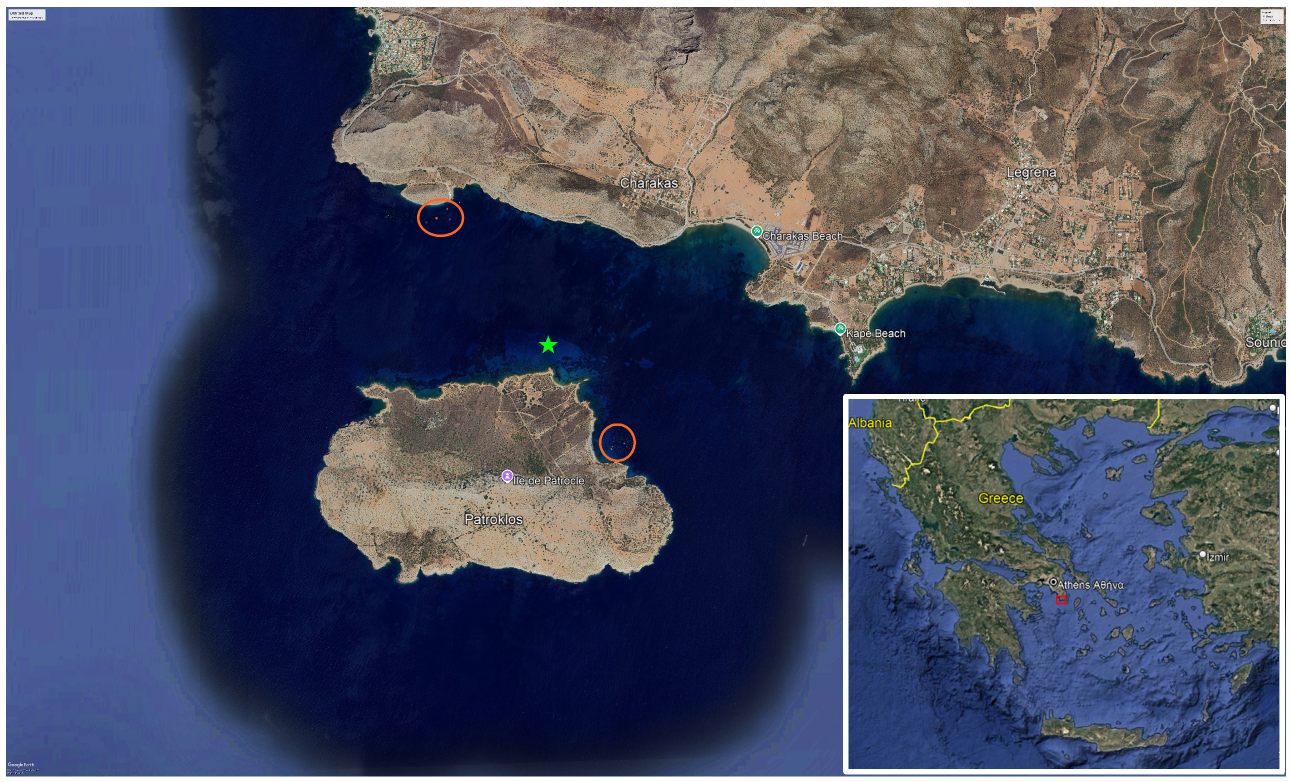
The ghost net removals took place in the area between the mainland East Attica region and the island of Patroklos within the NATURA2000 area of Sounio (SOUNIO-NISIDA PATROKLOU KAI PARAKTIA THALASSIA ZONI Greece (GR3000005)), established on 1 August 1996 (https://natura2000.eea.europa.eu/), in the Saronic Gulf, Greece. The seabed within the study area is characterized by sandbanks under the category of coastal halophytic habitats. The monitoring and removal of ghost nets took place at a depth between 15–25 m in the location shown in Figure 1.
The specific study area was selected as a known hotspot for ghost nets, as shown by the several campaigns that have occurred over the past decade, removing more than 10 tons of ghost nets (https://www.ghostdiving.org/three-tons-of-fish-farm-nets-recovered-in-patroklos-greece/, https://medasset.org/quot-seas-without-plastic-quot-project-2-tons-of-ghostnets-removed-from-the-seabed-near-patroklos-island-in-the-saronic-gulf/, accessed on 10 December 2025).

2.2. Ghost Net Removal Technique

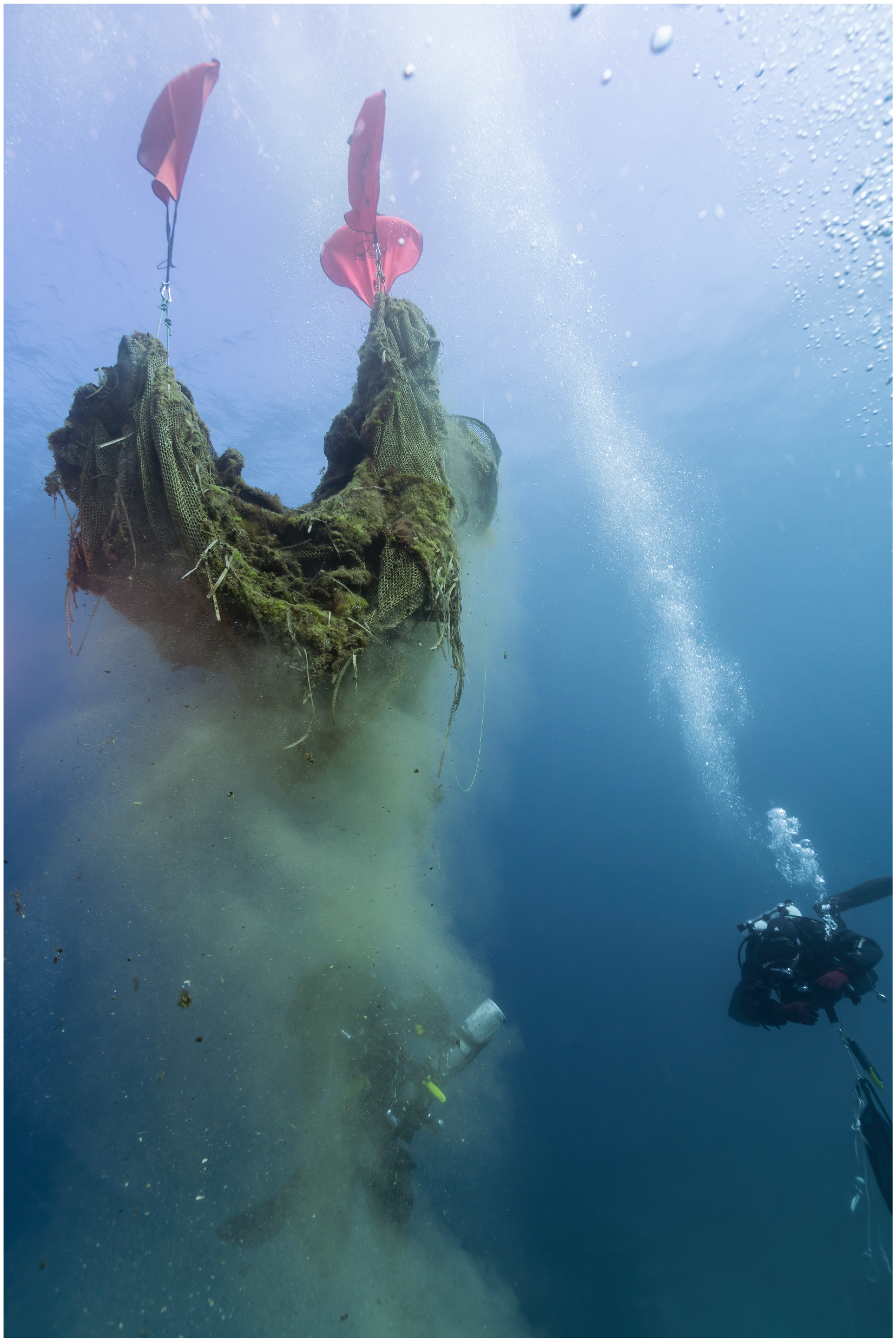
In the framework of a project targeting the rehabilitation of the marine environment through the removal of ghost nets, funded by the foundation of Athina I. Martinou and implemented by the Mediterranean Association to Save the Sea Turtles (MEDASSET) in collaboration with AquaTec Scientific Diving Center, four underwater clean-ups (ghost net removals) were performed in the study area, covering a total surface area of 95,000 m2. The clean-ups took place in winter and autumn (February, March, October, and November 2025) due to the increased traffic and tourist activity in the study area during the spring and summer months. The weather conditions were fair, with wind intensity less than 3 m/s and clear visibility both above and below the sea surface. During each clean-up, six divers performed a survey to locate ghost nets to be evaluated for potential removal and used diving knives to cut and release the net from the bottom structures it had been entangled with. The released net is surfaced using ropes and lift bags, which assist the boat crew in locating it and lifting it to the boat.
When a ghost net was located, the divers determined in situ whether it should be removed or not based on their multi-year experience in removing ghost nets and marine plastics, and their professional background in marine biology (1000 s of research hours diving experience). Afterwards, to further support their decision, the team also estimated the Gear Removal Index (GRI), an index proposed by Jimenez and Resaikos [23] that assists in evaluating whether a ghost net can be removed safely without disturbing the marine habitat. The GRI incorporates the environmental and seascape impacts, the human risks, and the technical difficulty of removing the ghost net.

2.3. Identification of Marine Life

When located, the ghost nets were scrutinized to identify and photograph all marine life before being evaluated for potential removal and after being removed from the sea floor to report on the aquatic organisms that inhabited them during their stay. The identification of marine species was conducted by experts with the use of identification keys from the WoRMS and SeaLifeBase databases to the level that it was possible [28,29]. The IUCN conservation status for the identified species was evaluated from the IUCN database [30], and the species were also checked to determine whether they are native or invasive in the Mediterranean region. The presentation of the dataset was generated using the RAWGraphs 2.0 software [31].

3. Results

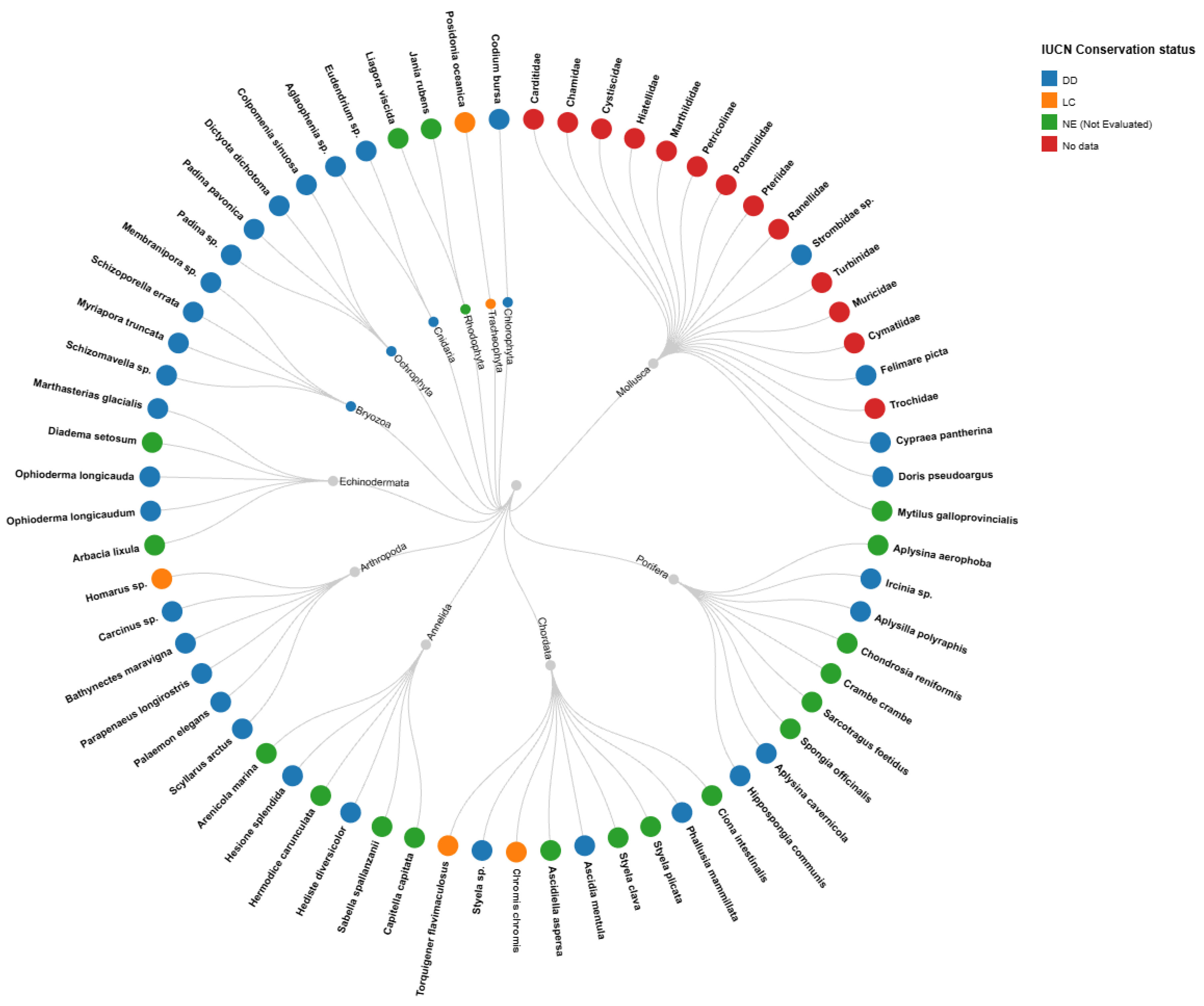
A total of six ghost nets (type: synthetic fibres) weighing approximately 1200 Kg were removed from the marine area of Patroklos island (Table 1, Figure 2). The nets were transported to a specific bin for upcycling fishing nets located in the region of Lavrio, Greece, and operated by the Natural Environment & Climate Change Agency (N.E.C.C.A.) (https://necca.gov.gr/). A total of 68 different species were identified, with Mollusca (18 species) being the most representative group with a higher number of species, followed by Porifera (nine species), Chordata (nine species), Arthropoda (six species), Echinodermata (five species), Bryozoa (four species), Ochrophyta (four species), and Annelida (seven species). The fewest number of species was detected from the Tracheophyta (one species), Rhodophyta (two species), Cnidaria (two species), and Chlorophyta (one species) groups (Table 2, Figure 3). According to the IUCN conservation status, in the Mediterranean region, the majority (67%) of the identified species were either not evaluated or data deficient (DD). Four species were determined to be evaluated as least concerned (LC). Ten species were determined to be invasive, representing 14% of the total species encountered in the ghost nets.

4. Discussion

Ghost nets are responsible for the entrapment (and most of the time mortality) of several groups of marine organisms, comprising yet another important threat to the already vulnerable species due to anthropogenic impacts [32,33]. This study evaluated the marine flora and fauna on ghost nets removed from a marine protected area (NATURA2000 site) very close to the capital of Greece. It increased our knowledge of the impact of ghost nets in the Mediterranean Sea, by building a reference on the species fouling ghost nets in the selected region.

4.1. Patroklos Island Ghost Net Hotspot

Ghost net accumulation in this region is most probably the result of aquaculture that occurs in the vicinity of the study area (Figure 1). An analysis of the marine species that inhabited the detected ghost nets was necessary in order to identify their conservation status, evaluate the negative effects of removing the net (and choose whether to remove it or not), and establish proper knowledge on the presence of invasive species. The nets were colonized to a great extent by opportunistic algae (Groups: Tracheophyta, Rhodophyta, Ochrophyta, and Chlorophyta) (Figure 3), which are of great ecological importance in the Mediterranean region. The presence of these specific fouling algae species, which are considered vulnerable/important, indicates that ghost nets can host species of great conservation importance, as seen in other studies as well [16,17,34]. The identified species are not threatened with extinction, according to the IUCN conservation status (Figure 3). The majority of the reported species are native to the Mediterranean Sea (86%), while 10 species (Diadema setosum, Carcinus sp., Torquigener flavimaculosus, Styela sp., Ascidiella aspersa, Styela clava, Lumbriculus variegatus, Styela plicata, Schizoporella errata, Sabella spallanzanii) were determined to be invasive (14%).
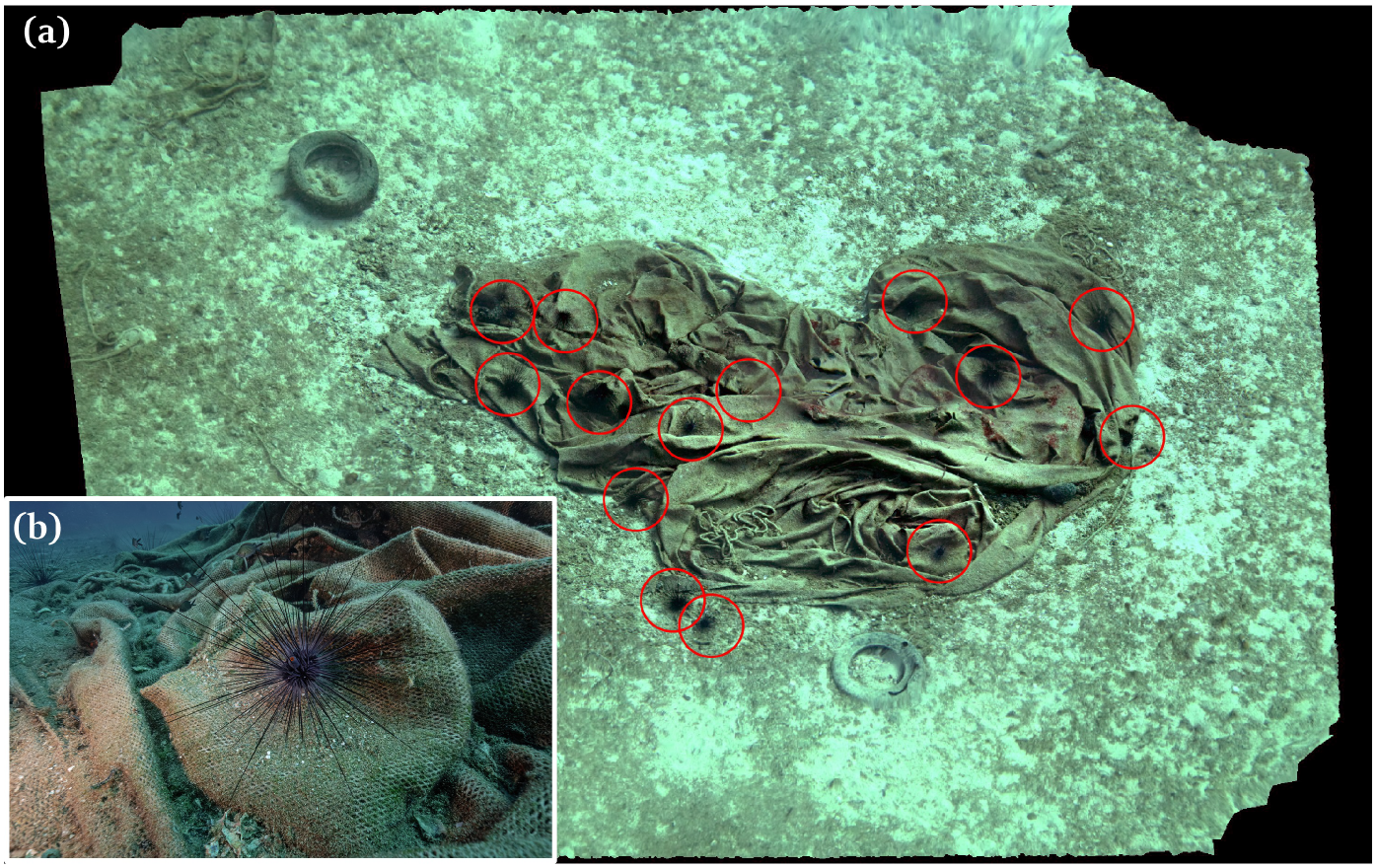
An important observation from the last clean-up activity (2 November 2025) was the presence of several individuals of the invasive Diadema setosum on the removed ghost net (Figure 4). The species has entered the Mediterranean Sea through the Suez Canal and was first reported in the Kas peninsula (Turkey) in 2006 [35,36]. Since 2006, the species has been reported to increase its population and distribution, reaching the coasts of Lebanon, Egypt, Israel, Turkey, Libya, Syria, Cyprus, and Greece [37,38,39,40,41,42,43,44]. Its presence in the Mediterranean can lead to competitive exclusion and a negative impact on native species (such as native echinoids) [36,44,45]. Pathogenic infections are known to cause mass mortality events for the species, leading to a reduction in its abundance that, nevertheless, has not affected its expansion [46]. The presence of 18 Diadema setosum individuals in the net, but not in its surrounding region (mostly sandbanks), suggests that the species encountered were grazing on the algae species covering the ghost net, since algae from hard substrates are a main food source for the species [47,48].

4.2. Mitigating Ghost Net Impacts

Approximately 6% of all fishing nets around the globe are lost annually, adding to the already tremendous amounts of plastic pollution in the marine environment [4]. Finding ways to decrease the amount of lost fishing gear is essential for both ecological and economic reasons. Recent recommendations include restricting the number of granted fishing licenses, raising awareness and educating the fishers on best practices and methods to reduce discarting fishing nets on the sea, more strict law enforcement to ensure that fishing vessels are not overloaded, especially in coastal areas, supporting the early-reporting of lost fishing gear from fishers, and supporting and increasing fishing gear waste facilitied in ports and fishing harbours [1,2,3,12,15,49,50,51,52,53,54,55,56]. Mitigating the problem at the source can provide better results than solely relying on mitigating the impact [57,58]. Considering the fishing nets that have already been lost at sea, reinforcing their removal at early stages is critical to prevent their submersion (as sometimes smaller parts can float before fouling occurs and they sink) or entanglement on substrates, or eventually trapping marine organisms. The use of drones and/or satellites for monitoring coastal fishing grounds can maximize the opportunities for quick recoveries of lost fishing gear and assist in the conservation of marine life [3]. Furthermore, tagging fishing nets can be beneficial to both marine life (due to the recovery of lost nets) and also to the fishers who can easily retrieve their nets and avoid economic losses [3]. This is a viable solution for nets that are being lost or moved to different locations due to weather conditions, and since fishers cannot retrieve them, the fishing nets immediately become ghost nets. This generates great opportunities for collaborative activities with fishers, increasing local awareness, and supporting the best practices for the protection of the marine environment. Finally, the removal of ghost nets by experienced scientific divers is one of the most common techniques and is also very important under the right circumstances (considering that sometimes removing a net can be more harmful for the benthic marine habitat).
Considering the study area, ghost net removal can be highly beneficial for various reasons. Ecologically, the area is protected under the NATURA2000 network, and it is home to several marine megafauna species, such as dolphins, sea turtles, and monk seals, that are known to be impacted by the entrapment on ghost nets in the Mediterranean region [5]. Economically, the area is characterized by high marine traffic and anchoring, as it is a very important recreational/touristic area near the capital of Greece. The presence of ghost nets can result in the entanglement of vessel anchors and/or propellers, resulting in mechanical/financial issues. Considering the substrate, the sandy sea floor was not determined to be affected by the presence of the ghost nets.

4.3. Should We Remove the Identified Ghost Nets?

The ghost net issue gained international attention in the past 50 years but has not yet been incorporated in systematic management actions and normatives, considering the different approaches used to tackle this issue around the globe [15]. Ghost nets are manufactured to kill, so they are extremely harmful and their removal from the marine environment is considered the obvious solution by most researchers and activists [16]. Also, it also common for ghost nets to pose a threat to recreational divers (scuba or free diving), which should also be considered as an important factor for removing them from the marine environment [59]. Nevertheless, their removal may also include risks for marine life [16,23,24]. Considering the study area, the GRI was calculated to be eleven for all six nets, which corresponds to “highly advised” removal of ghost nets, according to the decision-making tool (Table 3) [23,25]. Thus, the decision to remove the ghost nets is supported by the GRI Index.

4.4. Future Work

In the framework of the current underwater clean-up project, four campaigns were implemented in the area of Patroklos Island, Athens, Greece. Monitoring the study area revealed large amounts of ghost nets, primarily from the local aquaculture activities (Figure 1). Future work should include more surveys in a greater extent of the island’s coastline to locate, evaluate (GRI Index), and potentially remove ghost nets. This will not only be highly beneficial for marine life but will also provide more data (such as abundance/frequency of ghost nets, seasonal types of organisms, types of ghost nets, types of substrates with ghost nets, influence of weather conditions, etc.) to the research community to understand the impacts of plastic pollution and will enable local stakeholders to advocate for improved regulations and actions by the local authorities. Furthermore, aerial surveys and coastal clean-ups in all seasons, in combination with measurements of wind and current intensity, would help evaluate the impact of traveling/floating ghost nets and identify potential hotspot areas.
Finally, communicating the findings of these actions to the local stakeholders (such as fishers, aquaculture managers, MPA managers, coast guard, etc.) and evaluating the best practices to mitigate the issue at the source is highly suggested as the best potential option for removing this pollutant from the marine region of Patroklos Island, Athens, Greece.

5. Conclusions

The current work builds a reference on the presence and use of ghost nets by marine life in the NATURA2000 marine protected area of Sounio (GR3000005). Overall, 1200 Kg of ghost nets were removed after applying the GRI index to evaluate the impact on the marine biodiversity, and decide whether to act or not. The nets were found to be colonized by several species, of which 14% are invasive to the Mediterranean region. The extensive colonization by algae and the presence of the invasive species suggest that the ghost nets can become a significant “oasis” for native marine species and invasive species (such as the Diadema setosum). The GRI was calculated to be eleven for all six nets, which corresponds to “highly advised” removal of ghost nets. Hence, the decision to remove the ghost nets is supported by the GRI Index. The findings of this study show the need to expand research efforts in the field of underwater plastic pollution, a necessity for implementing monitoring campaigns to a greater extent in the marine protected area of the Mediterranean region, and for using the GRI index to assess the removal of ghost nets.

Author Contributions

N.S.: Conceptualization, methodology, software, resources, investigation, data curation, writing—original draft, visualization, formal analysis, project administration. N.K.: Data curation, writing—review and editing. D.P.: Data curation, writing—review and editing. M.Z.V.: Supervision, methodology, data curation, writing—review and editing. All authors have read and agreed to the published version of the manuscript.

Funding

This work was supported by the Athina I. Martinou Foundation.

Data Availability Statement

The original contributions presented in this study are included in the article. Further inquiries can be directed to the corresponding author.

Acknowledgments

We wish to express our deepest gratitude and appreciation to Areti Komninou, Vasilis Spyropoulos, Tasos Hatziliadis, Giannis Kapnisis, and Amalia Konstantinou for their assistance with the fieldwork.

Conflicts of Interest

The authors declare no conflicts of interest.

References

  1. Macfadyen, G.; Huntington, T.; Cappell, R. Abandoned, Lost or Otherwise Discarded Fishing Gear; United Nations Environment Programme Nairobi: Nairobi, Kenya, 2009; Volume 523. [Google Scholar]
  2. Richardson, K.; Gunn, R.; Wilcox, C.; Hardesty, B.D. Understanding causes of gear loss provides a sound basis for fisheries management. Mar. Policy 2018, 96, 278–284. [Google Scholar] [CrossRef]
  3. Hardesty, B.D.; Roman, L.; Duke, N.C.; Mackenzie, J.R.; Wilcox, C. Abandoned, lost and discarded fishing gear ‘ghost nets’ are increasing through time in Northern Australia. Mar. Pollut. Bull. 2021, 173, 112959. [Google Scholar] [CrossRef]
  4. Richardson, K.; Hardesty, B.D.; Wilcox, C. Estimates of fishing gear loss rates at a global scale: A literature review and meta-analysis. Fish Fish. 2019, 20, 1218–1231. [Google Scholar] [CrossRef]
  5. Perroca, J.F.; Giarrizzo, T.; Azzurro, E.; Rodrigues-Filho, J.L.; Silva, C.V.; Arcifa, M.S.; Azevedo-Santos, V.M. Negative effects of ghost nets on Mediterranean biodiversity. Aquat. Ecol. 2024, 58, 131–137. [Google Scholar] [CrossRef]
  6. Vitorino, H.; Ferrazi, R.; Correia-Silva, G.; Tinti, F.; Belizário, A.C.; Amaral, F.A.; Ottoni, F.P.; Silva, C.V.; Giarrizzo, T.; Arcifa, M.S.; et al. New treaty must address ghost fishing gear. Science 2022, 376, 1169. [Google Scholar] [CrossRef] [PubMed]
  7. Iriarte, V.; Marmontel, V.I.M. River dolphin (Inia geoffrensis, Sotalia fluviatilis) mortality events attributed to artisanal fisheries in the Western Brazilian Amazon. Aquat. Mamm. 2013, 39, 116–124. [Google Scholar] [CrossRef]
  8. de Oliveira Leis, M.; Devillers, R.; Medeiros, R.P.; Chuenpagdee, R. Mapping fishers’ perceptions of marine conservation in Brazil: An exploratory approach. Ocean. Coast. Manag. 2019, 167, 32–41. [Google Scholar] [CrossRef]
  9. Barbosa-Filho, M.L.; Seminara, C.I.; Tavares, D.C.; Siciliano, S.; Hauser-Davis, R.A.; da Silva Mourão, J. Artisanal fisher perceptions on ghost nets in a tropical South Atlantic marine biodiversity hotspot: Challenges to traditional fishing culture and implications for conservation strategies. Ocean. Coast. Manag. 2020, 192, 105189. [Google Scholar] [CrossRef]
  10. Pinheiro, L.M.; Junior, E.L.; Denuncio, P.; Machado, R. Fishing plastics: A high occurrence of marine litter in surf-zone trammel nets of Southern Brazil. Mar. Pollut. Bull. 2021, 173, 112946. [Google Scholar] [CrossRef]
  11. Adelir-Alves, J.; Rocha, G.R.A.; Souza, T.F.; Pinheiro, P.C.; Freire, K.d.M.F. Abandoned, lost or otherwise discarded fishing gears in rocky reefs of Southern Brazil. Braz. J. Oceanogr. 2016, 64, 427–434. [Google Scholar] [CrossRef]
  12. Link, J.; Segal, B.; Casarini, L.M. Abandoned, lost or otherwise discarded fishing gear in Brazil: A review. Perspect. Ecol. Conserv. 2019, 17, 1–8. [Google Scholar] [CrossRef]
  13. Beneli, T.; Pereira, P.; Nunes, J.; Barros, F. Ghost fishing impacts on hydrocorals and associated reef fish assemblages. Mar. Environ. Res. 2020, 161, 105129. [Google Scholar] [CrossRef] [PubMed]
  14. Baker, J.D.; Johanos, T.C.; Ronco, H.; Becker, B.L.; Morioka, J.; O’Brien, K.; Donohue, M.J. Four decades of Hawaiian monk seal entanglement data reveal the benefits of plastic debris removal. Science 2024, 385, 1491–1495. [Google Scholar] [CrossRef] [PubMed]
  15. Brown, J.; Macfadyen, G. Ghost fishing in European waters: Impacts and management responses. Mar. Policy 2007, 31, 488–504. [Google Scholar] [CrossRef]
  16. Azzola, A.; Pelizza, F.; Atzori, F.; Atzeni, V.M.; Cadoni, N.; Carosso, L.; Gutiérrez, M.L.G.; Mancini, I.; Paoli, C.; Piazzi, L.; et al. Assessing the hidden threat of removing abandoned fishing gear from coralligenous habitats: A new monitoring protocol. Mar. Pollut. Bull. 2025, 216, 118004. [Google Scholar] [CrossRef]
  17. Costa, G.; Manconi, R.; Sanna, G.; Arrostuto, N.; Fois, N.; Sechi, C.; Tomassetti, P.; Lomiri, S. Could some lost fishing gears be suitable substrata for benthic invertebrates? The case of some colonizer sponge assemblages in the Western Mediterranean Sea. Diversity 2024, 16, 575. [Google Scholar] [CrossRef]
  18. Ferrigno, F.; Appolloni, L.; Donnarumma, L.; Di Stefano, F.; Rendina, F.; Sandulli, R.; Russo, G.F. Diversity loss in coralligenous structuring species impacted by fishing gear and marine litter. Diversity 2021, 13, 331. [Google Scholar] [CrossRef]
  19. Angiolillo, M.; Fortibuoni, T. Impacts of marine litter on Mediterranean reef systems: From shallow to deep waters. Front. Mar. Sci. 2020, 7, 581966. [Google Scholar] [CrossRef]
  20. Kappenman, K.M.; Parker, B.L. Ghost nets in the Columbia River: Methods for locating and removing derelict gill nets in a large river and an assessment of impact to white sturgeon. N. Am. J. Fish. Manag. 2007, 27, 804–809. [Google Scholar] [CrossRef]
  21. Spirkovski, Z.; Ilik-Boeva, D.; Ritterbusch, D.; Peveling, R.; Pietrock, M. Ghost net removal in ancient Lake Ohrid: A pilot study. Fish. Res. 2019, 211, 46–50. [Google Scholar] [CrossRef]
  22. Gunn, R.; Hardesty, B.D.; Butler, J. Tackling ‘ghost nets’: Local solutions to a global issue in northern Australia. Ecol. Manag. Restor. 2010, 11, 88–98. [Google Scholar] [CrossRef]
  23. Jimenez, C.; Resaikos, V. Chasing Ghosts: Evidence-Based Management of Abandoned Fishing Gear in the Eastern Mediterranean. J. Mar. Sci. Eng. 2025, 13, 1574. [Google Scholar] [CrossRef]
  24. Ruitton, S.; Belloni, B.; Marc, C.; Boudouresque, C.F. Ghost med: Assessment of the impact of lost fishing gear in the French Mediterranean Sea. In Proceedings of the 3rd Symposium on the Conservation of Coralligenous and Other Calcareous Bio-Constructions; HAL Open Science: Lyon, France, 2019. [Google Scholar]
  25. Ruitton, S.; Belloni, B.; Boudouresque, C.; Cabral, M.; Cadville, B.; Guillemain, D.; Legendre, F.; Malengros, D.; Thibault, D. Suivi de L’effet du Retrait D’engins de Pêche Perdus sur Trois Sites Pilotes de Provence; MIO Publ.: Marseille, France, 2021; p. 31. [Google Scholar]
  26. Simantiris, N.; Vardaki, M.Z.; Kourkoumelis, N.; Avlonitis, M.; Theocharis, A. Microplastics in the Mediterranean and Elsewhere in Coastal Seas; Elsevier: Amsterdam, The Netherlands, 2024. [Google Scholar]
  27. Saldanha, H.; Sancho, G.; Santos, M.; Puente, E.; Gaspar, M.; Bilbao, A.; Monteiro, C.; Gomez, E.; Arregi, L. The use of biofouling for ageing lost nets: A case study. Fish. Res. 2003, 64, 141–150. [Google Scholar] [CrossRef]
  28. Ahyong, S.; Boyko, C.; Bernot, J.; Brandão, S.; Daly, M.; De Grave, S.; de Voogd, N.; Gofas, S.; Hernandez, F.; Mees, J.; et al. World Register of Marine Species (WoRMS). 2025. Available online: https://www.marinespecies.org (accessed on 11 November 2025).
  29. Palomares, M.; Pauly, D.S. World Wide Web Electronic Publication. Version (08/2021). 2022. Available online: www.sealifebase.org (accessed on 4 September 2021).
  30. List IR. The IUCN Red List of Threatened Species. 2004. Available online: https://www.iucnredlist.org/ (accessed on 10 November 2025).
  31. Mauri, M.; Elli, T.; Caviglia, G.; Uboldi, G.; Azzi, M. RAWGraphs: A visualisation platform to create open outputs. In Proceedings of the 12th Biannual Conference on Italian SIGCHI Chapter; Association for Computing Machinery: New York, NY, USA, 2017; pp. 1–5. [Google Scholar]
  32. Lewison, R.L.; Crowder, L.B.; Read, A.J.; Freeman, S.A. Understanding impacts of fisheries bycatch on marine megafauna. Trends Ecol. Evol. 2004, 19, 598–604. [Google Scholar] [CrossRef]
  33. Giglio, V.J.; Luiz, O.; Gerhardinger, L. Depletion of marine megafauna and shifting baselines among artisanal fishers in eastern B razil. Anim. Conserv. 2015, 18, 348–358. [Google Scholar] [CrossRef]
  34. Nardi, A.; Resaikos, V.; Papatheodoulou, M.; Di Carlo, M.; Vedhanarayanan, H.; Regoli, F.; Gorbi, S.; Jimenez, C. Cellular adaptations of the scleractinian coral Madracis pharensis to chronic oil pollution in a Mediterranean shipwreck. Front. Mar. Sci. 2024, 11, 1330894. [Google Scholar] [CrossRef]
  35. Yokes, B.; Galil, B.S. The first record of the needle-spined urchin Diadema setosum (Leske, 1778) (Echinodermata: Echinoidea: Diadematidae) from the Mediterranean Sea. Aquat. Invasions 2006, 1, 188–190. [Google Scholar] [CrossRef]
  36. Coll, M.; Piroddi, C.; Steenbeek, J.; Kaschner, K.; Ben Rais Lasram, F.; Aguzzi, J.; Ballesteros, E.; Bianchi, C.N.; Corbera, J.; Dailianis, T.; et al. The biodiversity of the Mediterranean Sea: Estimates, patterns, and threats. PLoS ONE 2010, 5, e11842. [Google Scholar] [CrossRef]
  37. Bronstein, O.; Kroh, A. Needle in a haystack—genetic evidence confirms the expansion of the alien echinoid Diadema setosum (Echinoidea: Diadematidae) to the Mediterranean coast of Israel. Zootaxa 2018, 4497, 593–599. [Google Scholar] [CrossRef]
  38. Tsiamis, K.; Aydogan, O.; Bailly, N.; Balistreri, P.; Bariche, M.; Carden-Noad, S.; Corsini-Foka, M.J.; Crocetta, F.; Davidov, B.; Dimitriadis, C.; et al. New Mediterranean Biodiversity Records (July 2015); Hellenic Centre for Marine Research: Anavyssos, Greece, 2015. [Google Scholar]
  39. Katsanevakis, S.; Poursanidis, D.; Hoffman, R.; Rizgalla, J.; Rothman, S.B.S.; Levitt-Barmats, Y.; Hadjioannou, L.; Trkov, D.; Garmendia, J.M.; Rizzo, M.; et al. Unpublished Mediterranean records of marine alien and cryptogenic species. Bioinvasions Rec. 2020, 9, 165–182. [Google Scholar] [CrossRef]
  40. Nour, O.M.; Al Mabruk, S.A.; Adel, M.; Corsini-Foka, M.; Zava, B.; Deidun, A.; Gianguzza, P. First Occurrence of the Needle-Spined Urchin Diadema Setosum (Leske, 1778) (Echinodermata, Diadematidae) in the Southern Mediterranean Sea; Regional Euro-Asian Biological Invasions Centre: Helsinki, Finland, 2022. [Google Scholar]
  41. Dimitriadis, C.; Neave, E.F.; Shum, P.; Mariani, S.; D’amen, M.; Azzurro, E. First records of Sphyraena chrysotaenia (Klunzinger, 1884) and Diadema setosum (Leske, 1778) in the Marine Protected Area of Zakynthos Island (Ionian Sea, Greece). Acta Adriat. 2023, 64, 83–86. [Google Scholar] [CrossRef]
  42. Vafidis, D.; Antoniadou, C.; Voulgaris, K.; Varkoulis, A.; Apostologamvrou, C. Abundance and population characteristics of the invasive sea urchin Diadema setosum (Leske, 1778) in the south Aegean Sea (eastern Mediterranean). J. Biol. Res.-Thessalon. 2021, 28, 11. [Google Scholar] [CrossRef] [PubMed]
  43. Marchesi, V.; Cerrano, C.; Gambardella, C.; Pulido Mantas, T.; Roveta, C.; Santana Mendonça de Oliveira, L.J.; Turicchia, E.; Ponti, M.; Di Camillo, C.G. A baseline for the conservation of the native and protected Centrostephanus longispinus (philippi, 1845) and the management of the invasive diadema Setosum (leske, 1778) (Echinoidea: Diadematidae) in the Mediterranean Sea. Aquat. Conserv. Mar. Freshw. Ecosyst. 2025, 35, 1–12. [Google Scholar] [CrossRef]
  44. Zirler, R.; Leck, L.A.; Farkash, T.F.; Holzknecht, M.; Kroh, A.; Gerovasileiou, V.; Huseyinoglu, M.F.; Jimenez, C.; Resaikos, V.; Yokeş, M.B.; et al. Gaining a (tube) foothold–trends and status following two decades of the long-spined echinoid Diadema setosum (Leske, 1778) invasion to the Mediterranean Sea. Front. Mar. Sci. 2023, 10, 1152584. [Google Scholar] [CrossRef]
  45. Bianchi, C.N.; Morri, C. Global sea warming and “tropicalization” of the Mediterranean Sea: Biogeographic and ecological aspects. Biogeogr.-J. Integr. Biogeogr. 2003, 24. [Google Scholar] [CrossRef]
  46. Zirler, R.; Schmidt, L.M.; Roth, L.; Corsini-Foka, M.; Kalaentzis, K.; Kondylatos, G.; Mavrouleas, D.; Bardanis, E.; Bronstein, O. Mass mortality of the invasive alien echinoid Diadema setosum (Echinoidea: Diadematidae) in the Mediterranean Sea. R. Soc. Open Sci. 2023, 10, 230251. [Google Scholar] [CrossRef]
  47. Bronstein, O.; Loya, Y. Echinoid community structure and rates of herbivory and bioerosion on exposed and sheltered reefs. J. Exp. Mar. Biol. Ecol. 2014, 456, 8–17. [Google Scholar] [CrossRef]
  48. Muthiga, N.A.; McClanahan, T.R. Diadema. In Developments in Aquaculture and Fisheries Science; Elsevier: Amsterdam, The Netherlands, 2020; Volume 43, pp. 397–418. [Google Scholar]
  49. Cho, D.O. The incentive program for fishermen to collect marine debris in Korea. Mar. Pollut. Bull. 2009, 58, 415–417. [Google Scholar] [CrossRef]
  50. Wilcox, C.; Hardesty, B.; Sharples, R.; Griffin, D.; Lawson, T.; Gunn, R. Ghostnet impacts on globally threatened turtles, a spatial risk analysis for northern Australia. Conserv. Lett. 2013, 6, 247–254. [Google Scholar] [CrossRef]
  51. Rindi, F.; Braga, J.C.; Martin, S.; Peña, V.; Le Gall, L.; Caragnano, A.; Aguirre, J. Coralline algae in a changing Mediterranean Sea: How can we predict their future, if we do not know their present? Front. Mar. Sci. 2019, 6, 723. [Google Scholar] [CrossRef]
  52. Escalle, L.; Mourot, J.; Hamer, P.; Hare, S.R.; Phillip, N.B.; Pilling, G.M. Towards non-entangling and biodegradable drifting fish aggregating devices–Baselines and transition in the world’s largest tuna purse seine fishery. Mar. Policy 2023, 149, 105500. [Google Scholar] [CrossRef]
  53. Seixas, S.; Parrinha, J.; Gomes, P.; Bessa, F. Incorporation of abandoned and lost fishing gear into the structure of Dendrophyllia ramea in the Atlantic coast of Portugal. Mar. Pollut. Bull. 2024, 202, 116302. [Google Scholar] [CrossRef] [PubMed]
  54. Kühn, S.; Bravo Rebolledo, E.L.; Van Franeker, J.A. Deleterious effects of litter on marine life. In Marine Anthropogenic Litter; Springer: Berlin/Heidelberg, Germany, 2015; pp. 75–116. [Google Scholar]
  55. Gilman, E. Status of international monitoring and management of abandoned, lost and discarded fishing gear and ghost fishing. Mar. Policy 2015, 60, 225–239. [Google Scholar] [CrossRef]
  56. Fennell, H.L. Changing behavior: Can intervention design from the public health sector help solve the problem of fishing gear conflict? Mar. Policy 2023, 151, 105527. [Google Scholar] [CrossRef]
  57. Di Camillo, C.G.; Ponti, M.; Storari, A.; Scarpa, C.; Roveta, C.; Pulido Mantas, T.; Coppari, M.; Cerrano, C. Review of the indexes to assess the ecological quality of coralligenous reefs: Towards a unified approach. Front. Mar. Sci. 2023, 10, 1252969. [Google Scholar] [CrossRef]
  58. Vodopia, D.; Verones, F.; Askham, C.; Larsen, R.B. Retrieval operations of derelict fishing gears give insight on the impact on marine life. Mar. Pollut. Bull. 2024, 201, 116268. [Google Scholar] [CrossRef]
  59. Resaikos, V.; Papageorgiou, M.; Jimenez, C. The Role of Rebreather Divers in the Study of a Marine Deep-Water Cave Ecosystem. In Proceedings of the Tenth International Symposium Monitoring of Mediterranean Coastal Areas: Problems and Measurement Techniques, Livorno, Italy, 11–13 June 2024; Firenze University Press: Firenze, Italy, 2024; p. 296. [Google Scholar]
Figure 1. The location of ghost nets removal is shown with a green star, between two active aquaculture companies (orange ellipses), in central Greece (red rectangle in bottom right corner of the figure).
Pollutants 06 00012 g001
Figure 2. A ghost net being surfaced with the use of lift bags in the study area by the team of scientific divers.
Pollutants 06 00012 g002
Figure 3. Groups and species occurrence (with IUCN conservation status: DD—data-deficient; LC— least concern) recorded in the removed ghost nets.
Pollutants 06 00012 g003
Figure 4. (a) The ghost net located during the last clean-up on 2 November 2025. The red circles show the location of Diadema setosum on the net. (b) Detail of one Diadema setosum individual on the ghost net.
Pollutants 06 00012 g004
Table 1. Details per ghost net removal activity.
DateLocationDepthKg of NetsNo. of SpeciesGhost Net Age (Years)SubstrateGRI Index
15 February 2025Sounio MPA2535026>20Sand11
15 March 2025Sounio MPA2020014>20Sand11
19 October 2025Sounio MPA1930019>20Sand11
2 November 2025Sounio MPA2335015>20Sand11
Table 2. Occurrence of species in the removed ghost nets.
Phylum/ClassSpeciesNo. of NetsPhylum/ClassSpeciesNo. of Nets
Porifera/DemospongiaeAplysina aerophoba6Porifera/DemospongiaeAplysilla polyraphis6
Porifera/DemospongiaeChondrosia reniformis6Porifera/DemospongiaeHippospongia communis6
Porifera/DemospongiaeCrambe crambe6Porifera/DemospongiaeSarcotragus foetidus5
Porifera/DemospongiaeAplysina cavernicola6Porifera/DemospongiaeSpongia officinalis6
Porifera/DemospongiaeIrcinia sp.6Arthropoda/MalacostracaScyllarus arctus4
Arthropoda/MalacostracaParapenaeus longirostris6Arthropoda/MalacostracaPalaemon elegans6
Arthropoda/MalacostracaCarcinus sp.6Arthropoda/MalacostracaBathynectes maravigna6
Arthropoda/MalacostracaHomarus sp.2Chordata/AscidiaceaStyela sp.6
Chordata/AscidiaceaPhallusia mammillata6Chordata/AscidiaceaStyela clava6
Chordata/AscidiaceaAscidiella aspersa6Chordata/AscidiaceaCiona intestinalis6
Chordata/TeleosteiTorquigener flavimaculosus6Chordata/ActinopterygiiChromis chromis4
Chordata/AscidiaceaStyela plicata6Chordata/AscidiaceaAscidia mentula6
Mollusca/GastropodaTrochidae6Mollusca/GastropodaCypraea pantherina6
Mollusca/BivalviaCarditidae6Mollusca/BivalviaPetricolinae6
Mollusca/GastropodaRanellidae5Mollusca/BivalviaPteriidae5
Mollusca/GastropodaTurbinidae4Mollusca/GastropodaStrombidae sp.5
Mollusca/BivalviaChamidae6Mollusca/GastropodaMuricidae6
Mollusca/BivalviaHiatellidae6Mollusca/GastropodaCymatiidae6
Mollusca/GastropodaMathildidae6Mollusca/GastropodaFelimare picta2
Mollusca/GastropodaCystiscidae6Mollusca/GastropodaPotamididae6
Mollusca/GastropodaDoris pseudoargus3Mollusca/BivalviaMytilus galloprovincialis1
Annelida/PolychaetaHediste diversicolor6Annelida/PolychaetaHermodice carunculata6
Annelida/PolychaetaCapitella capitata6Annelida/PolychaetaArenicola marina6
Annelida/PolychaetaHesione splendida4Annelida/PolychaetaSabella spallanzanii6
Ochrophyta/PhaeophyceaeDictyota dichotoma6Ochrophyta/PhaeophyceaePadina sp.6
Ochrophyta/PhaeophyceaePadina pavonica6Ochrophyta/PhaeophyceaeColpomenia sinuosa6
Bryozoa/GymnolaemataSchizomavella sp.6Bryozoa/GymnolaemataSchizoporella errata6
Bryozoa/GymnolaemataMyriapora truncata6Bryozoa/GymnolaemataMembranipora sp.5
Echinodermata/EchinoideaArbacia lixula4Echinodermata/OphiuroideaOphioderma longicauda6
Echinodermata/OphiuroideaOphioderma longicaudum6Echinodermata/AsteroideaMarthasterias glacialis1
Rhodophyta/FlorideophyceaeLiagora viscida6Rhodophyta/FlorideophyceaeJania rubens6
Cnidaria/HydrozoaEudendrium sp.6Cnidaria/HydrozoaAglaophenia sp.6
Echinodermata/EchinoideaDiadema setosum1Tracheophyta/MagnoliopsidaPosidonia oceanica5
Chlorophyta/UlvophyceaeCodium bursa6-/---
Table 3. Decision-making levels according to the GRI values, from Jimenez and Resaikos [23].
GRI ValueRemoval of the Ghost NetPriority
30 ≤ GRI ≤ 40absolutely advised1
20 ≤ GRI ≤ 30very highly advised2
10 ≤ GRI ≤ 20highly advised3
0 ≤ GRI ≤ 10advised4
−15 ≤ GRI ≤ 0not recommended5
Disclaimer/Publisher’s Note: The statements, opinions and data contained in all publications are solely those of the individual author(s) and contributor(s) and not of MDPI and/or the editor(s). MDPI and/or the editor(s) disclaim responsibility for any injury to people or property resulting from any ideas, methods, instructions or products referred to in the content.