
Proceeding Paper

Injection Mould Design for Biopolymer Composite Flow Analysis †

by
Jibrilla Abdulrahman
1,*,
Williams S. Ebhota
2 and
Pavel Y. Tabakov
1,2
1
Mechanical Engineering Department, Durban University of Technology, Durban 4001, South Africa
2
Institute of Systems Science, Durban University of Technology, Durban 4001, South Africa
*
Author to whom correspondence should be addressed.
Presented at the 4th International Conference on Applied Research and Engineering, Pretoria, South Africa, 21–23 November 2025.
Mater. Proc. 2026, 31(1), 33; https://doi.org/10.3390/materproc2026031033

Published: 15 May 2026
(This article belongs to the Proceedings of The 4th International Conference on Applied Research and Engineering)

Abstract

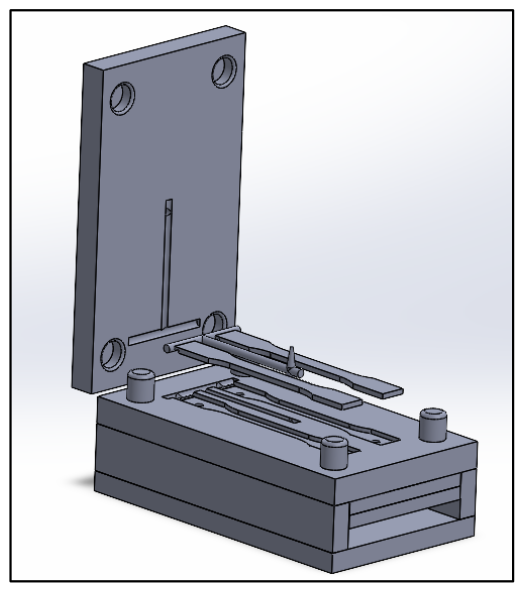
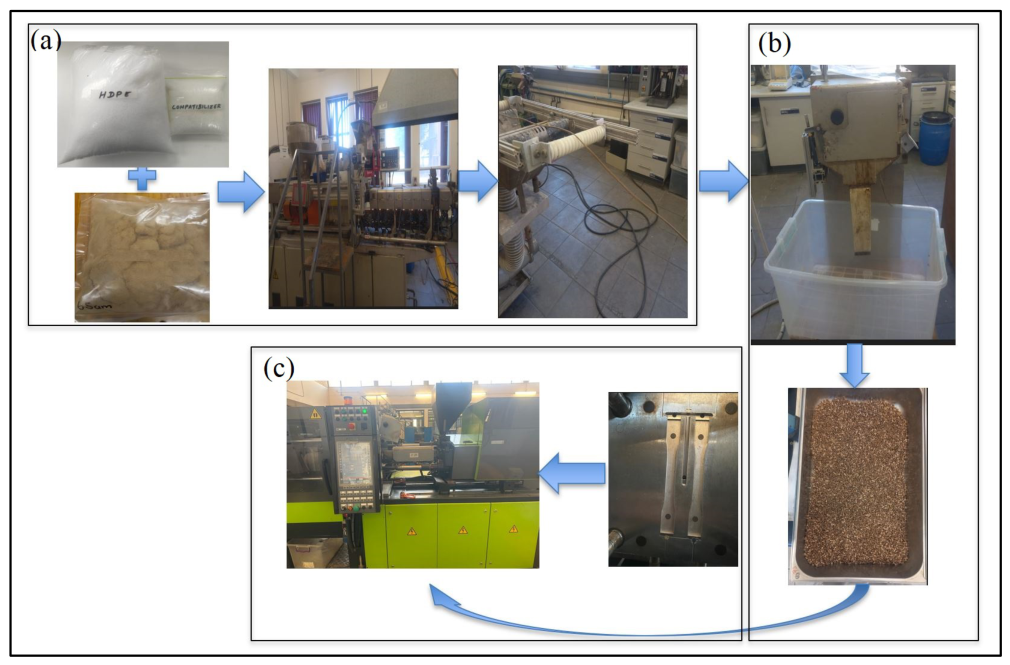
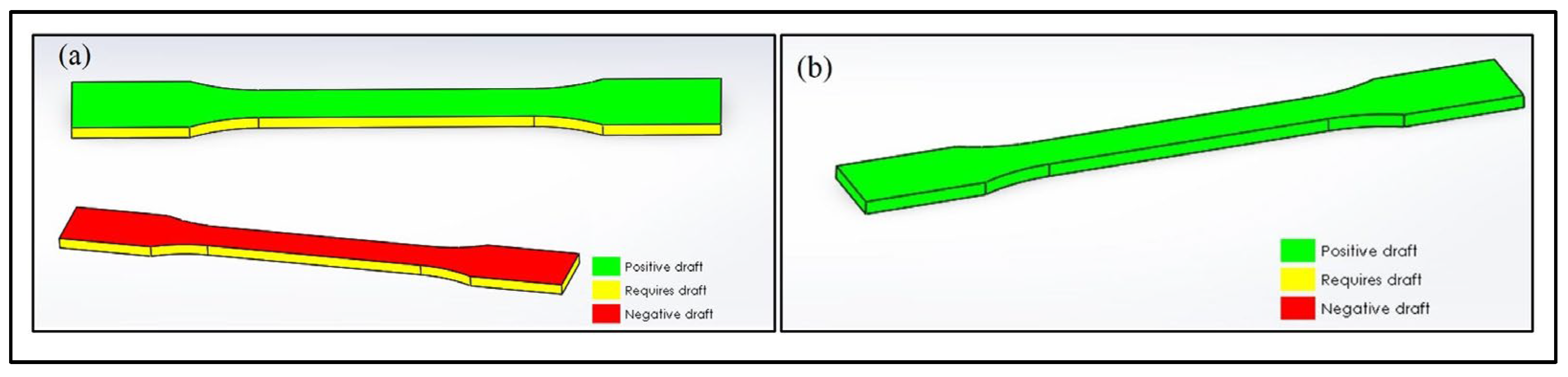
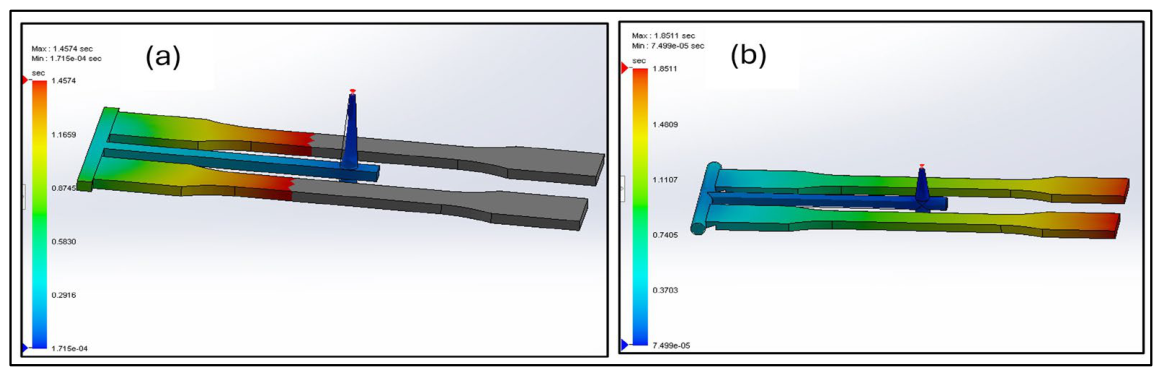
Ensuring that the mould design is compatible with the properties of biopolymers can be challenging, as biopolymers often exhibit different flow characteristics compared to traditional plastics. Selecting appropriate injection pressure and production temperature is essential to prevent common defects such as short shot or fibre degradation. Fundamental design elements such as mould material, number of cavities, and cavity layout are frequently overlooked during 3D modelling considerations. This paper presents an approach to the design and injection mould simulation for biopolymer composite processing, using a fixed volume fraction of 70:30 of high-density polyethylene and banana fibre as reinforcement. The study employs SolidWorks software 2024 for both the 3D mould design of the test specimens and the simulation of plastic injection performance. Simulation results show an injection pressure of 75 MPa and a melt temperature of 200 °C, demonstrating complete cavity filling when using a round runner and gate design. This approach enables manufacturers to optimize the injection moulding process, reduce material waste, and ensure the consistent production of high-quality biopolymer composite parts, ultimately improving both efficiency and cost-effectiveness in manufacturing.
Keywords: mould design; mould flow analysis; plastic injection mould design; mould flow analysis; plastic injection