
Carbon-Nanotubes- and Porous Organic Polymers-Based Porous Fluids for CO2 Capture †
 ,
,
Abstract
1. Introduction
2. Materials and Methods
2.1. Synthesis of Nanomaterials
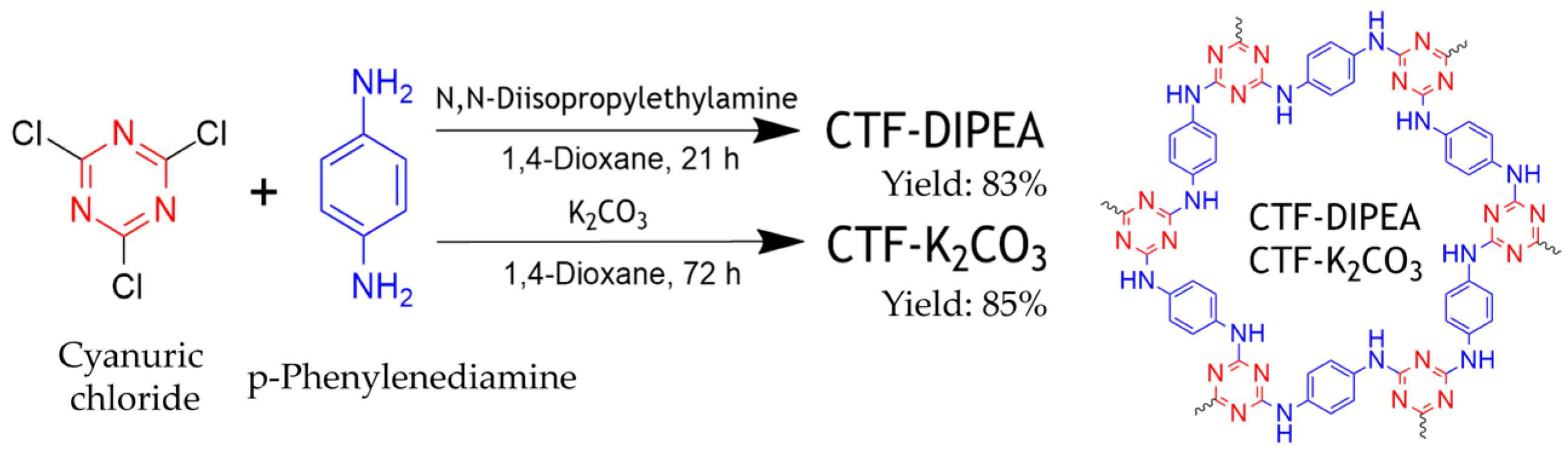
2.1.1. Synthesis of CTF-DIPEA
2.1.2. Synthesis of CTF-K2CO3
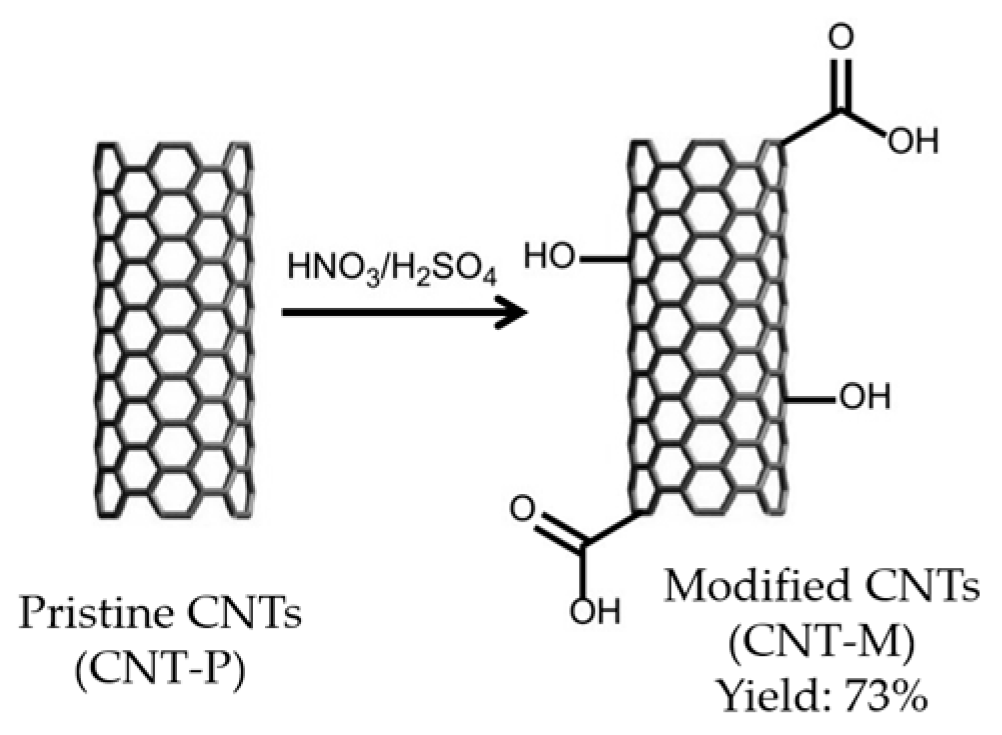
2.1.3. Surface Modification of Carbon Nanotubes
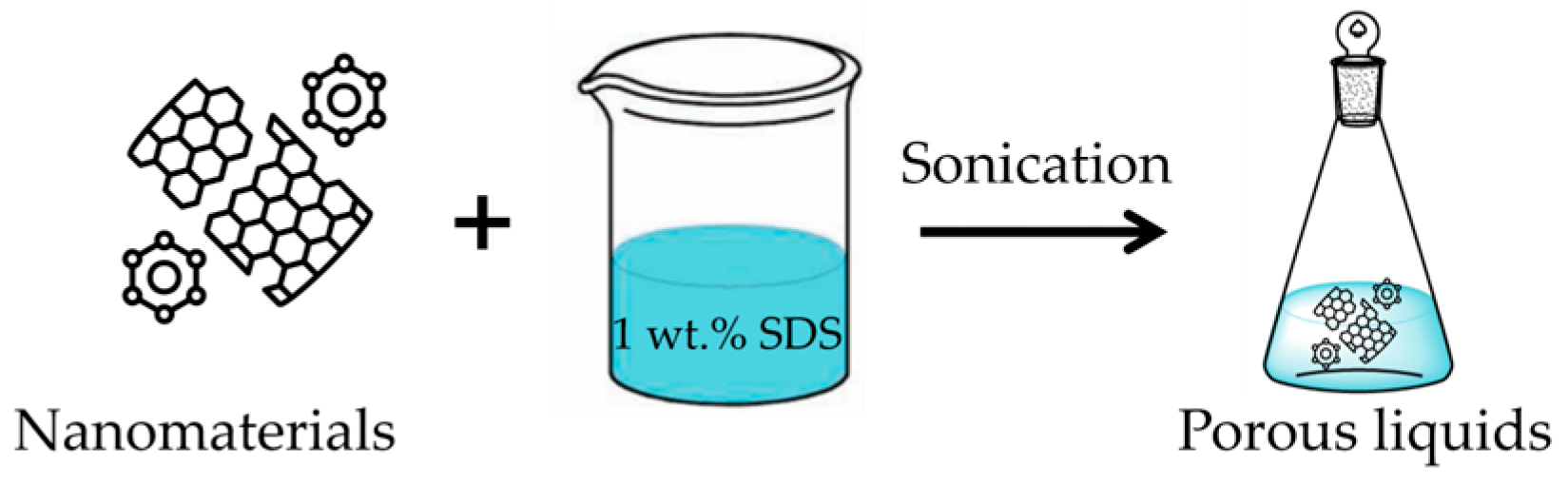
2.2. Formulation of Porous Liquids
2.3. Characterization Techniques
2.4. Experimental Determination of CO2 Uptake in Liquids
- —mass of dry ice (g);
- —molar mass of CO2 (44 g/mol);
- —molar volume of CO2 (22,400 mL/mol).
- —volume of headspace (mL), calculated as volume of flask (500 mL)—volume of liquid (mL).
- —pressure registered by manometer (bar);
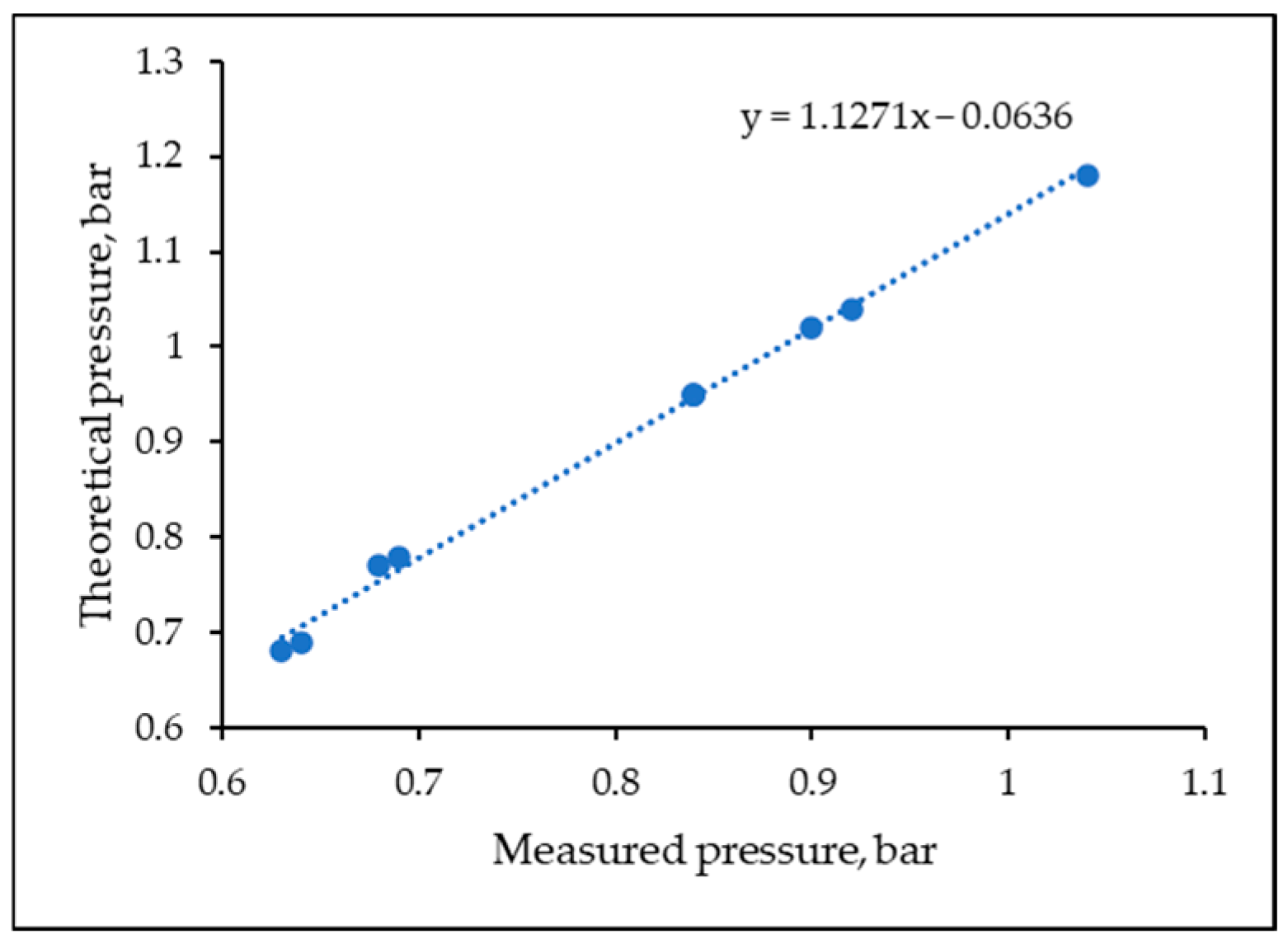
- —correlation coefficient (1.1271) derived from calibration against measured pressure upon dry ice evaporation in deionized water and theoretical pressure calculated by the Mendeleev–Clapeyron equation (Figure 4).
3. Results and Discussion
3.1. Nanomaterials Characterization
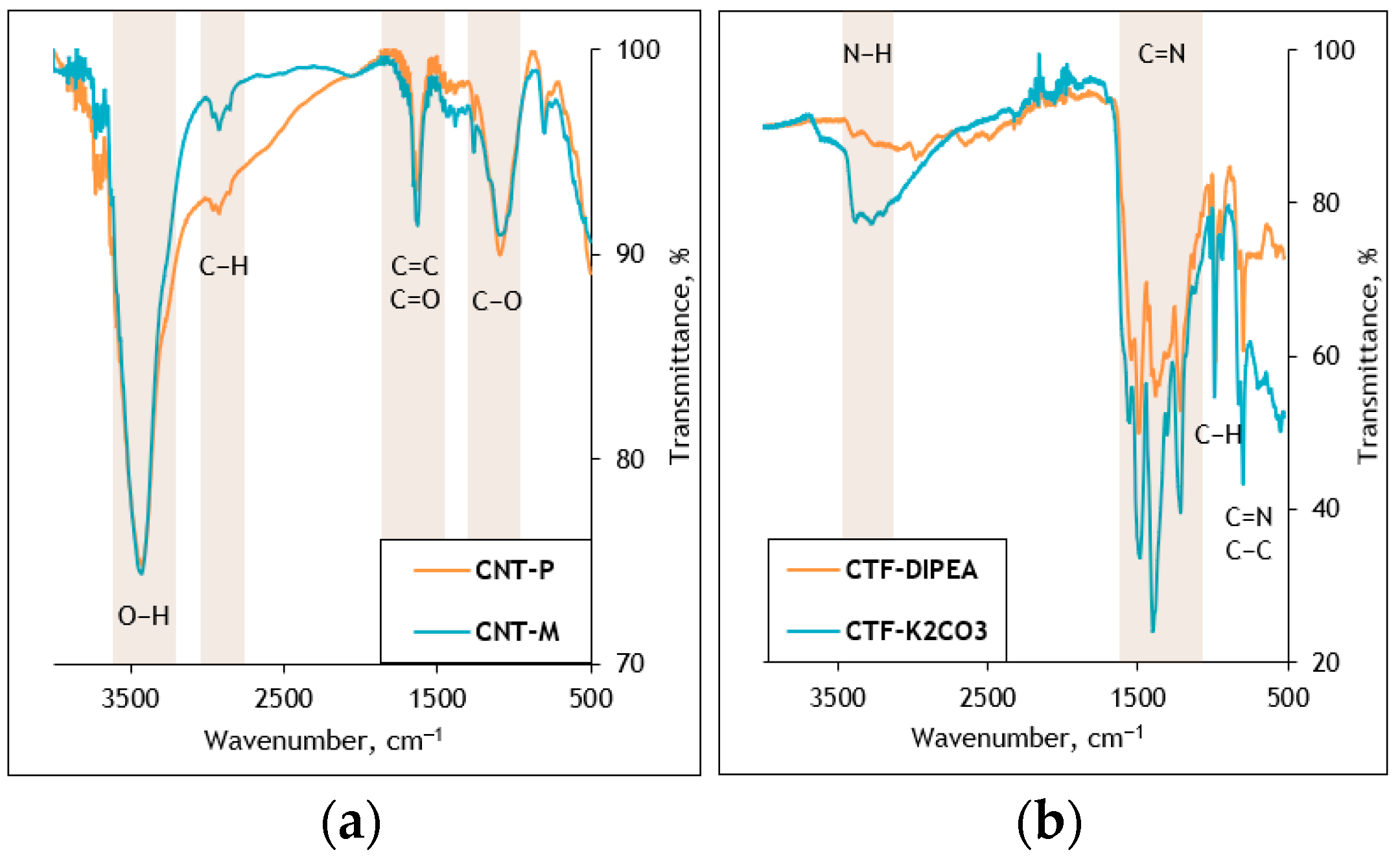
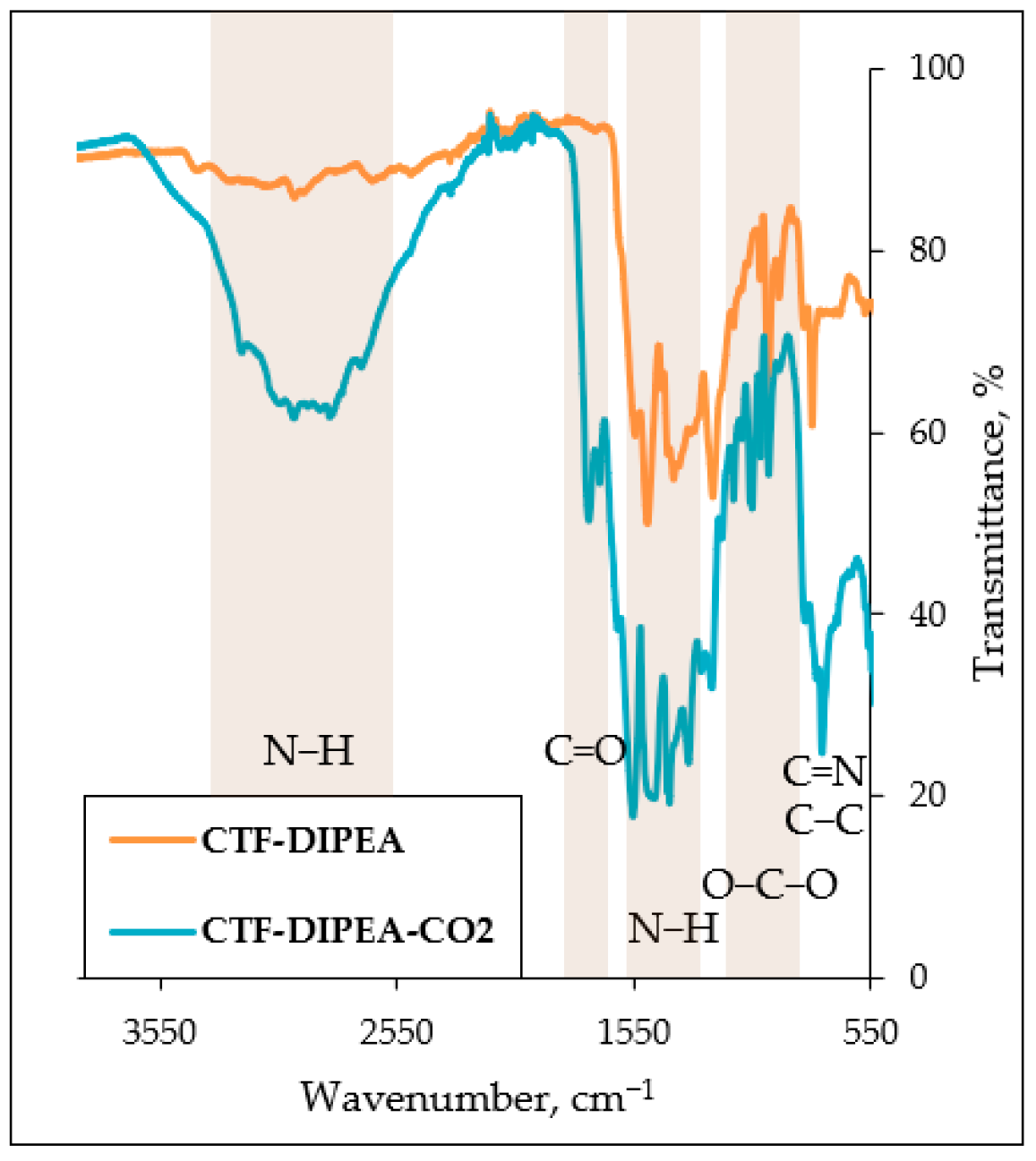
3.1.1. FT-IR Spectroscopy
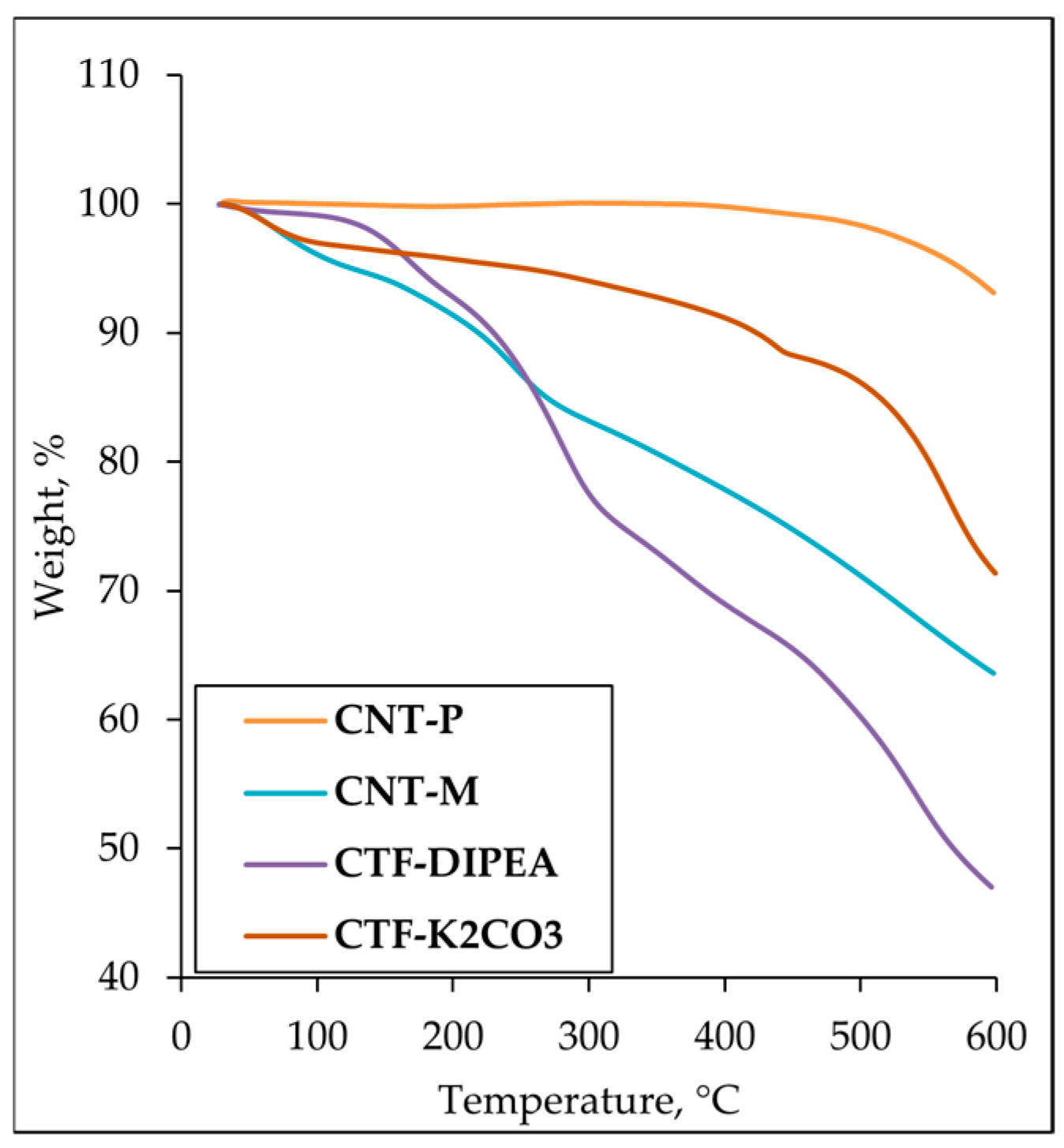
3.1.2. Thermogravimetric Analysis
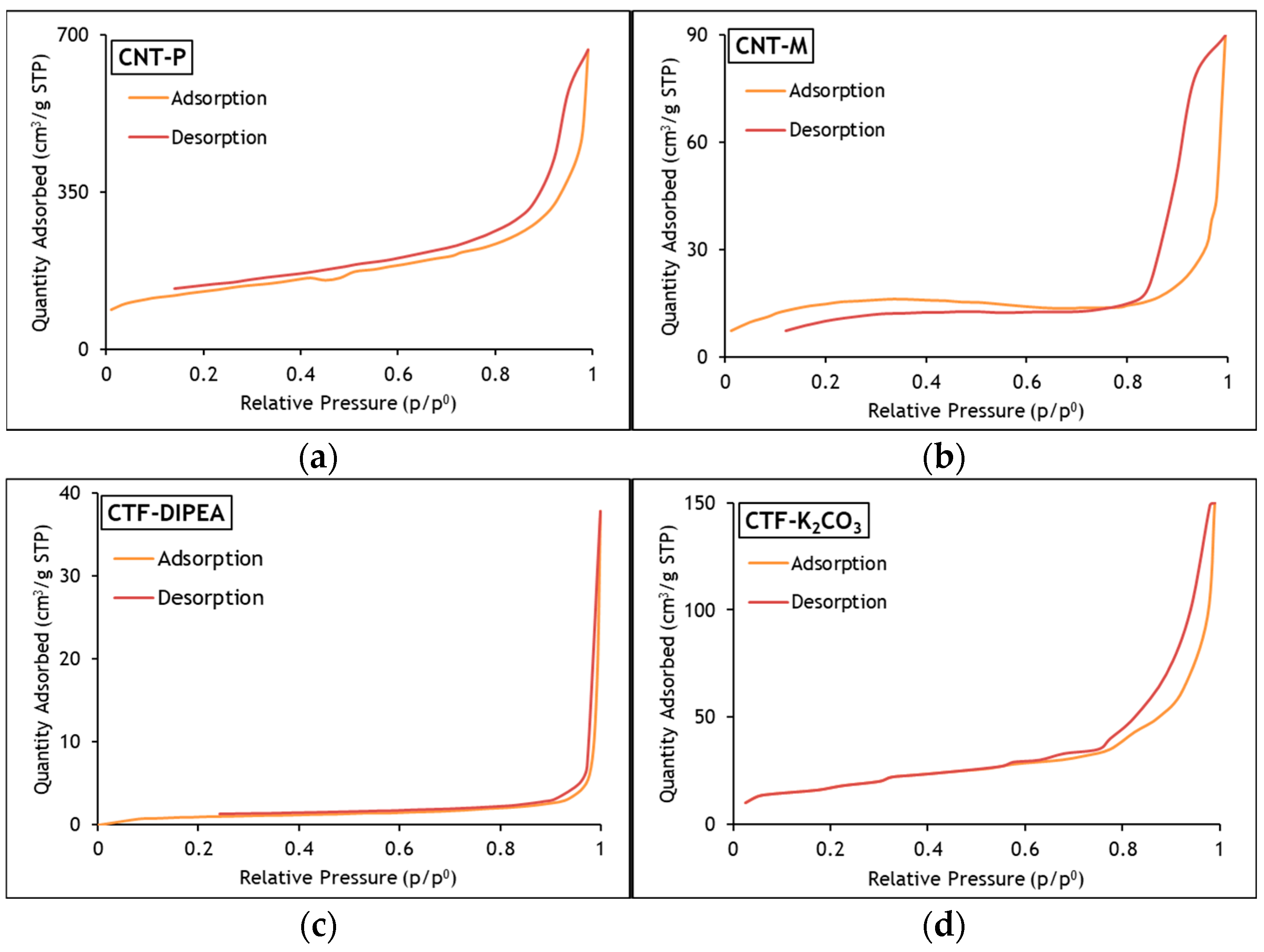
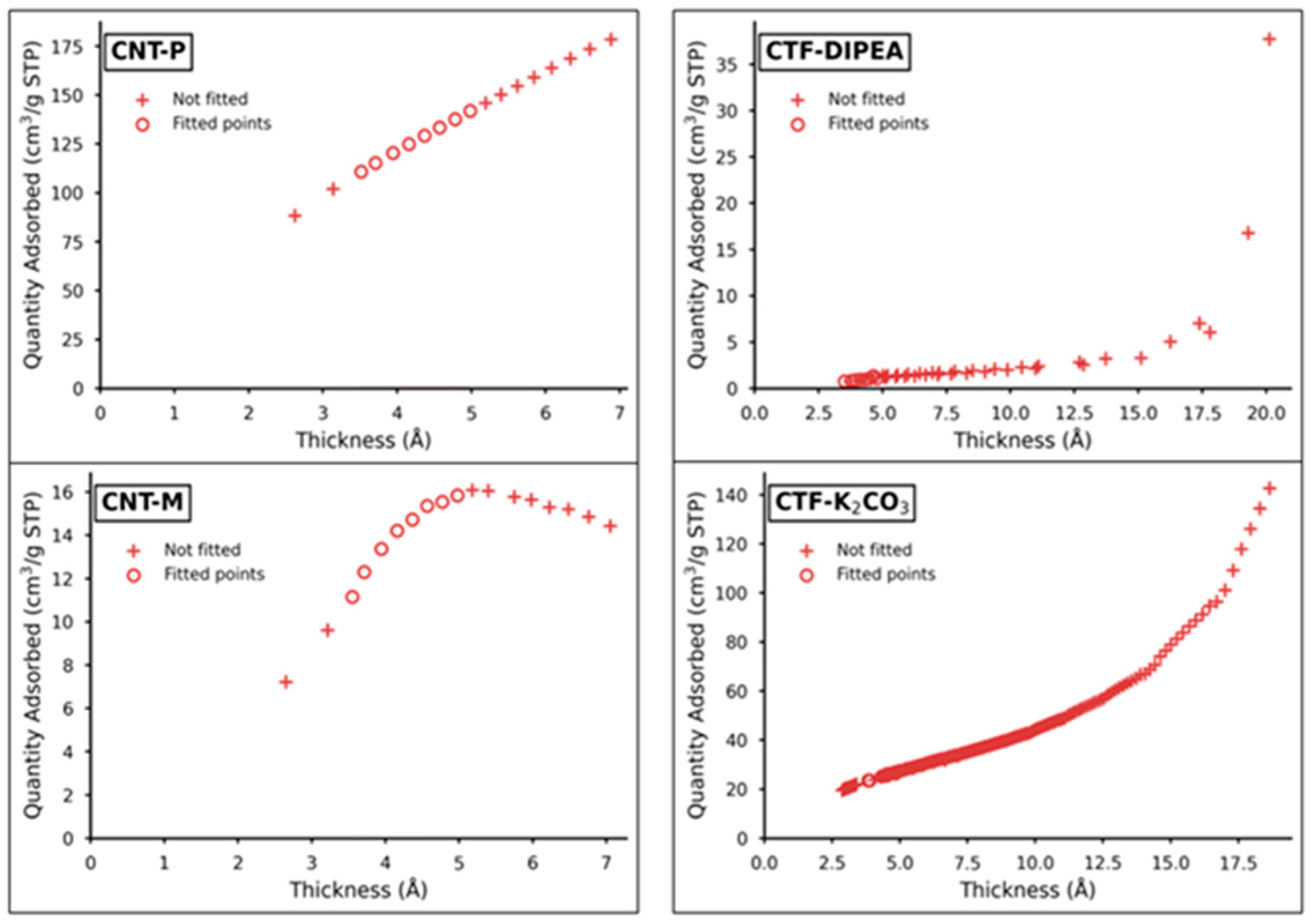
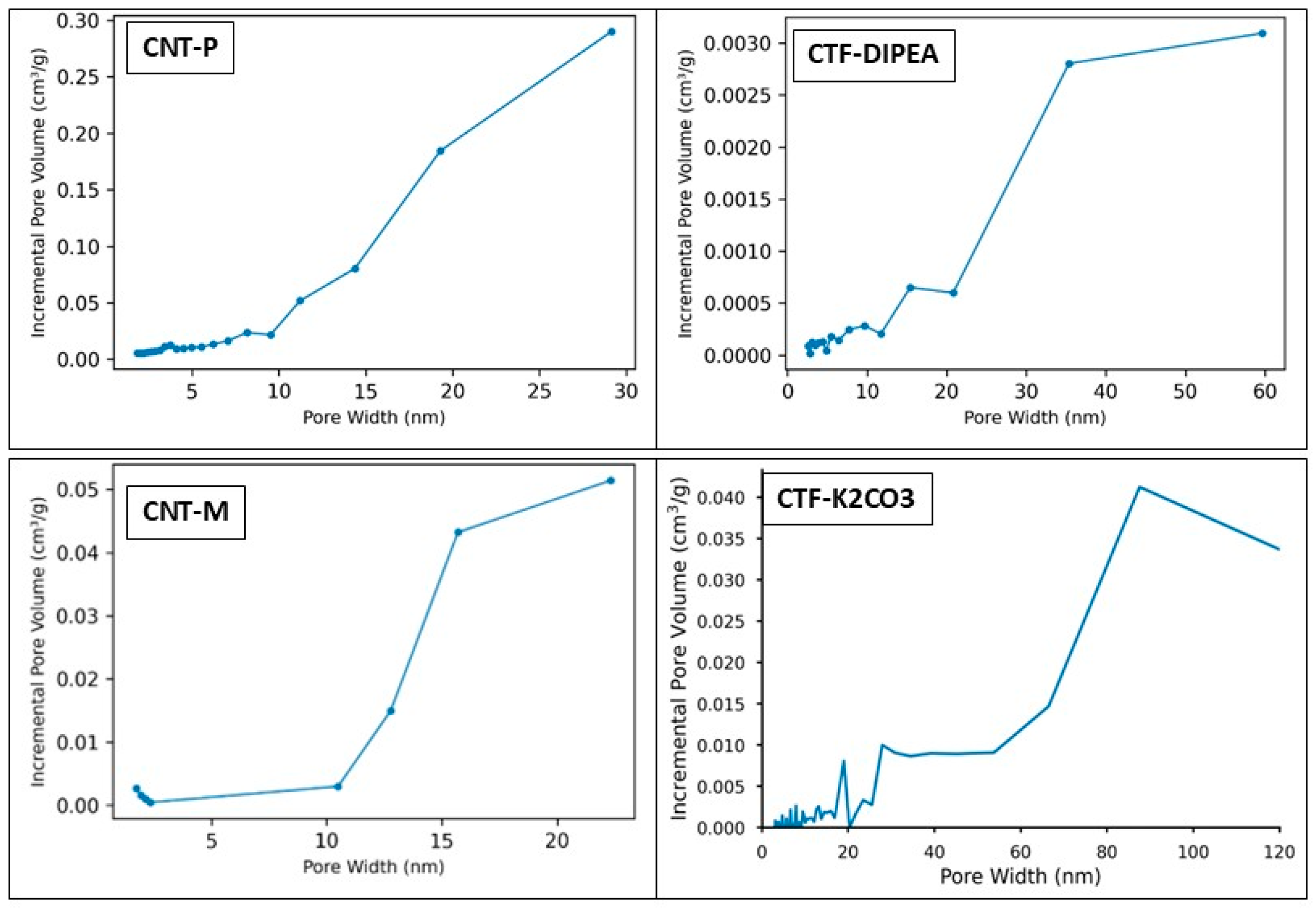
3.1.3. BET Surface Area and Pore Structure Analysis
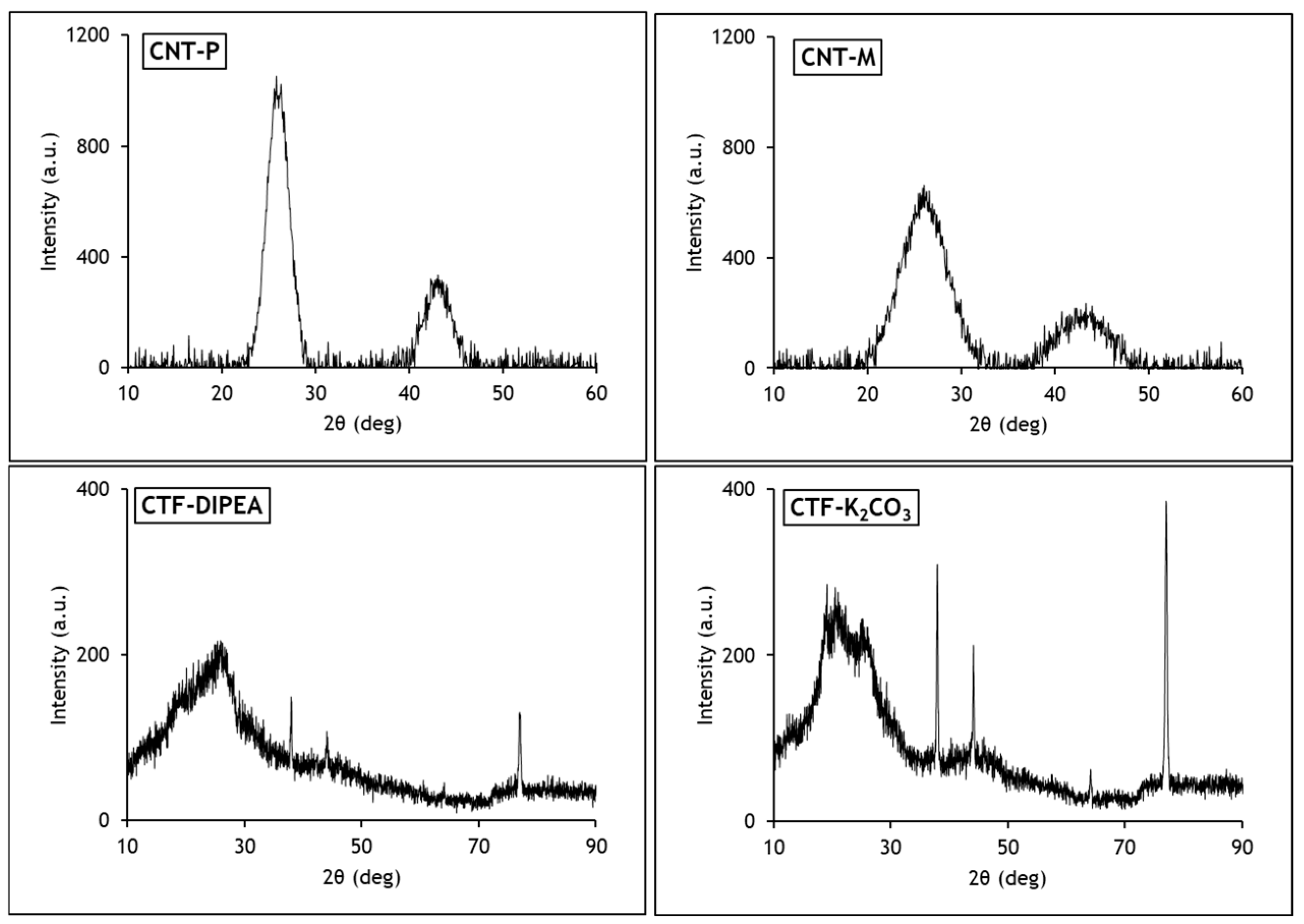
3.1.4. X-Ray Diffraction
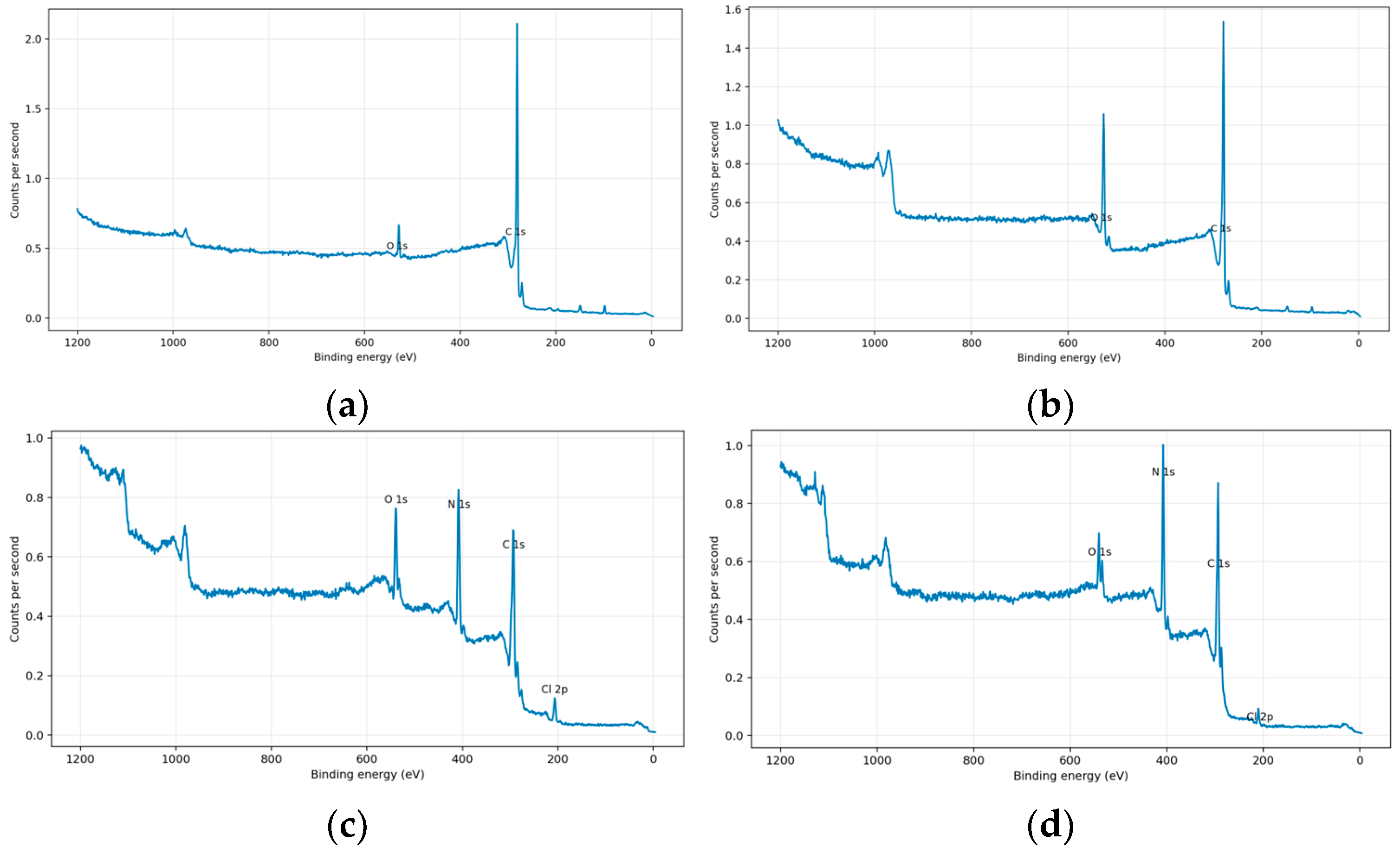
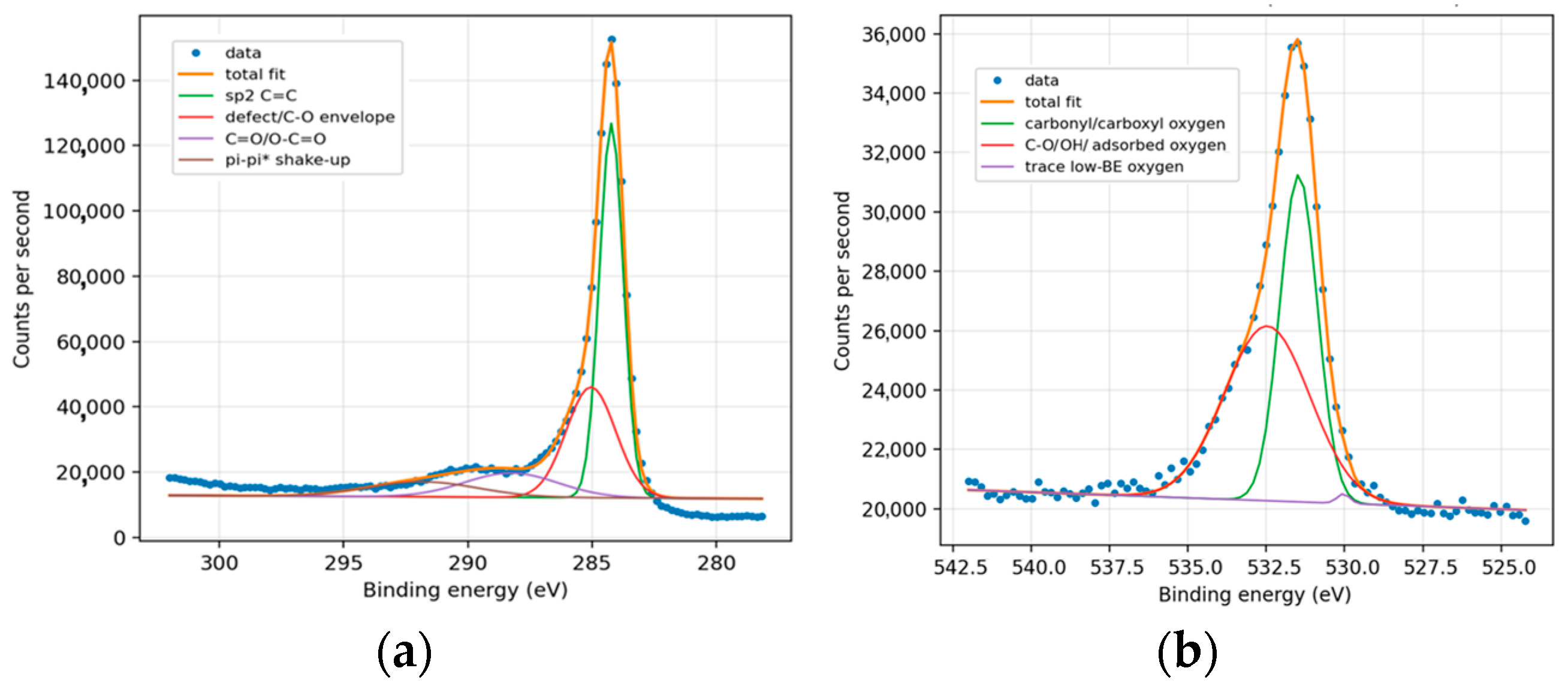
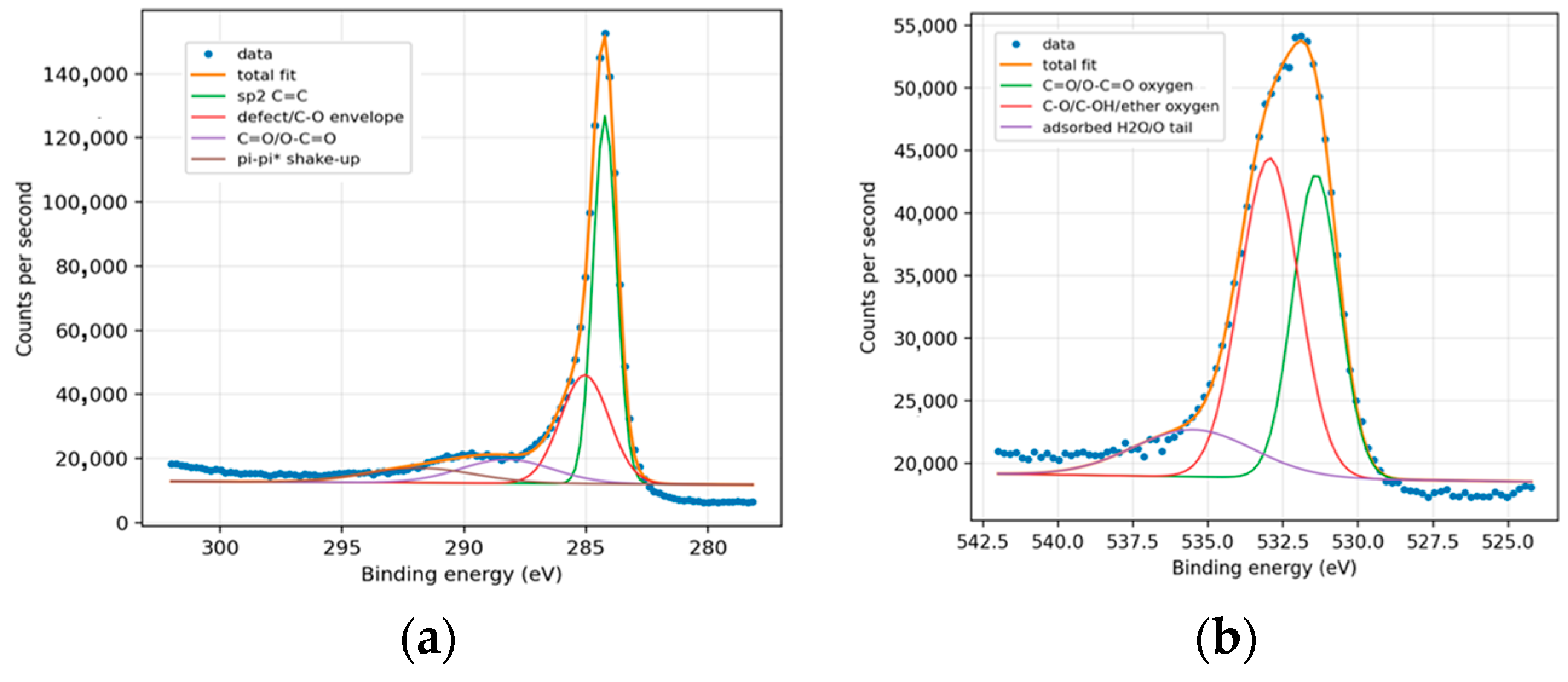
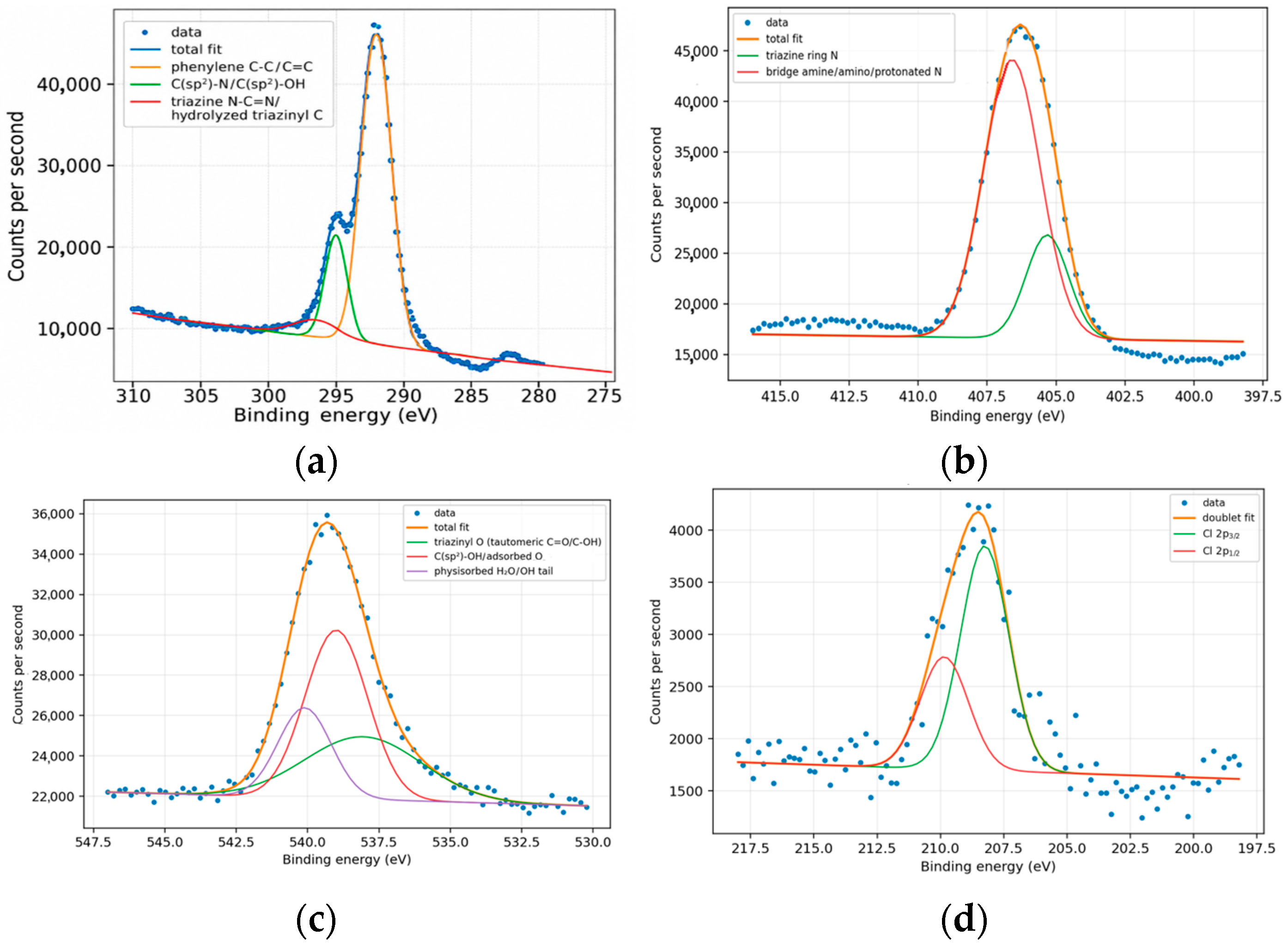
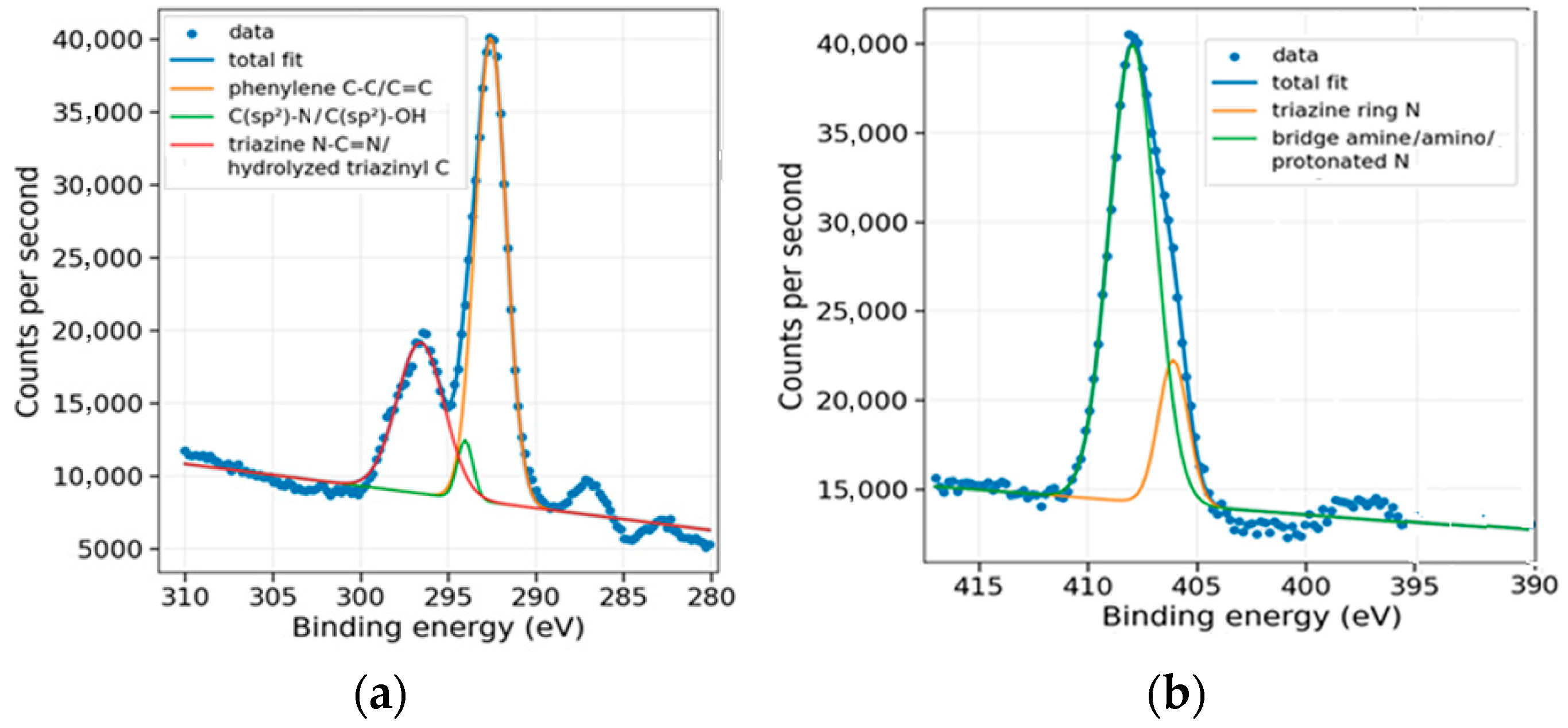
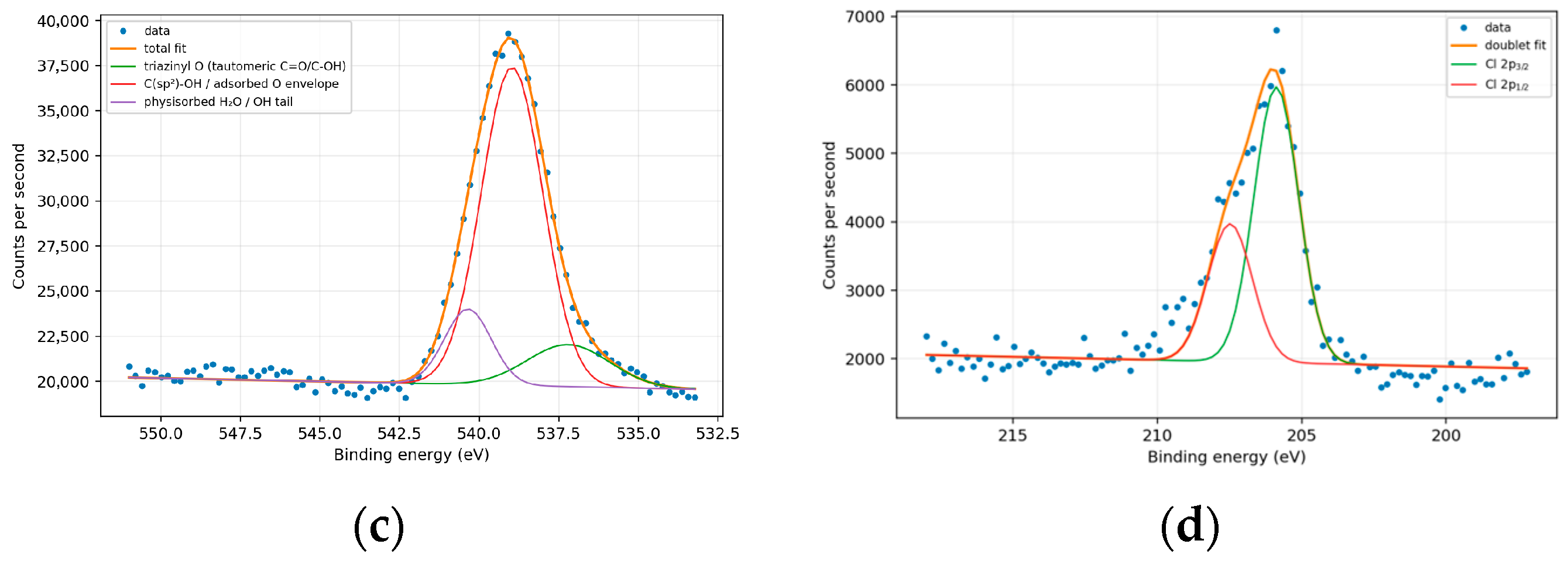
3.1.5. XPS Analysis
3.2. Analysis of CO2 Uptake Performance in Liquids
4. Conclusions
5. Patents
Author Contributions
Funding
Institutional Review Board Statement
Informed Consent Statement
Data Availability Statement
Conflicts of Interest
Abbreviations
| BET | Brunauer–Emmett–Teller |
| DI | Deionized water |
| DIPEA | N,N-diisopropylethylamine |
| CNTs | Carbon nanotubes |
| SWCNTs | Single-walled carbon nanotubes |
| CTFs | Covalent triazine frameworks |
| FT-IR | Fourier-transform infrared spectroscopy |
| SDS | Sodium dodecyl sulfate |
| XRD | X-ray diffraction |
Appendix A

| Porous Filler (Loading, wt.%) | Liquid Media | Porous Liquid Type | CO2 Uptake, mmol/g | Testing Conditions | Ref. |
|---|---|---|---|---|---|
| UiO-66(185)@xPDMS (37 wt.%) | PDMS | III | 1.40 | 298 K, 1 bar | [35] |
| UiO-66-NH2@xPDMS (33.3 wt.%) | PDMS | III | 1.30 | 298 K, 1 bar | |
| UiO-66-Br2@xPDMS (36 wt.%) | PDMS | III | 0.60 | 298 K, 1 bar | |
| Zeolite Rho (12.5 wt.%) | Genosorb 1753 | III | 0.30 | 298 K, 1 bar | [36] |
| Zeolite Rho (25 wt.%) | Genosorb 1753 | III | 0.70 | 298 K, 1 bar | |
| Zeolite Rho (12.5 wt.%) | Genosorb 1753 | III | 1.10 | 298 K, 5 bar | |
| Zeolite Rho (25 wt.%) | Genosorb 1753 | III | 1.60 | 298 K, 5 bar | |
| 15-C-5-PL | Anionic covalent cage | I | 0.40 | 298 K, 10 bar | [10] |
| 18-C-6-PL | Anionic covalent cage | I | 0.40 | 298 K, 10 bar | |
| CP-SIT (5 wt.%) | M2070 | III | 1.50 | 298 K, 25 bar | [37] |
| F108-SIT (5 wt.%) | M2070 | III | 2.00 | 298 K, 25 bar | |
| F127-SIT (5 wt.%) | M2070 | III | 2.20 | 298 K, 25 bar | |
| UiO-66 (1 wt.%) | M2070 | III | 0.89 | 298 K, 30 bar | [11] |
| UiO-66 (1 wt.%) | M2070 | III | 0.20 | 298 K, 10 bar | |
| UiO-66 | PEGS | 0.60 | 298 K, 10 bar | [12] | |
| ZIF-8 (5 wt%) | [P6,6,6,14][NTf2] | III | 0.34 | 303 K, 5 bar | [13] |
| ZIF-8 (5 wt%) | [P6,6,6,14][NTf2] | III | 0.50 | 303 K, 5 bar | |
| ZIF-8 | [Bpy][NTf2] | III | 0.10 | 298 K, 1 bar | [14] |
| CNT-P (0.004 wt.%) | 1 wt.% SDS | III | 0.06 | 298 K, 1 bar | This work |
| CNT-M (0.004 wt.%) | 1 wt.% SDS | III | 0.07 | 298 K, 1 bar | |
| CTF-DIPEA (0.004 wt.%) | 1 wt.% SDS | III | 0.08 | 298 K, 1 bar | |
| CTF-K2CO3 (0.004 wt.%) | 1 wt.% SDS | III | 0.08 | 298 K, 1 bar |



References
- Anwar, M.N.; Iftikhar, M.; Khush Bakhat, B.; Sohail, N.F.; Baqar, M.; Yasir, A.; Nizami, A.S. Sources of Carbon Dioxide and Environmental Issues. In Sustainable Agriculture Reviews 37; Springer: Berlin/Heidelberg, Germany, 2019; pp. 13–36. [Google Scholar]
- Meng, F.; Meng, Y.; Ju, T.; Han, S.; Lin, L.; Jiang, J. Research Progress of Aqueous Amine Solution for CO2 Capture: A Review. Renew. Sustain. Energy Rev. 2022, 168, 112902. [Google Scholar] [CrossRef] [Scilit]
- Siriwardane, R.V.; Shen, M.-S.; Fisher, E.P.; Losch, J. Adsorption of CO2 on Zeolites at Moderate Temperatures. Energy Fuels 2005, 19, 1153–1159. [Google Scholar] [CrossRef] [Scilit]
- Xu, G.; Liang, F.; Yang, Y.; Hu, Y.; Zhang, K.; Liu, W. An Improved CO2 Separation and Purification System Based on Cryogenic Separation and Distillation Theory. Energies 2014, 7, 3484–3502. [Google Scholar] [CrossRef] [Scilit]
- Rochelle, G.T. Amine Scrubbing for CO2 Capture. Science 2009, 325, 1652–1654. [Google Scholar] [CrossRef] [Scilit]
- Pérez-Botella, E.; Valencia, S.; Rey, F. Zeolites in Adsorption Processes: State of the Art and Future Prospects. Chem. Rev. 2022, 122, 17647–17695. [Google Scholar] [CrossRef] [Scilit]
- Zhang, N.; Lior, N. A Novel Near-Zero CO2 Emission Thermal Cycle with LNG Cryogenic Exergy Utilization. Energy 2006, 31, 1666–1679. [Google Scholar] [CrossRef] [Scilit]
- Zanganeh, K.E.; Shafeen, A.; Salvador, C. CO2 Capture and Development of an Advanced Pilot-Scale Cryogenic Separation and Compression Unit. Energy Procedia 2009, 1, 247–252. [Google Scholar] [CrossRef] [Scilit]
- O’Reilly, N.; Giri, N.; James, S.L. Porous Liquids. Chem. A Eur. J. 2007, 13, 3020–3025. [Google Scholar] [CrossRef] [Scilit]
- Jie, K.; Onishi, N.; Schott, J.A.; Jiang, D.-E.; Mahurin, S.; Dai, S. Transforming Porous Organic Cages into Porous Ionic Liquids via a Supramolecular Complexation Strategy. Angew. Chem. Int. Ed. Engl. 2019, 59, 2268–2272. [Google Scholar] [CrossRef] [Scilit] [PubMed]
- Wang, D.; Xin, Y.; Li, X.; Ning, H.; Wang, Y.; Yao, D.; Zheng, Y.; Meng, Z.; Yang, Z.; Pan, Y.; et al. Transforming Metal–Organic Frameworks into Porous Liquids via a Covalent Linkage Strategy for CO2 Capture. ACS Appl. Mater. Interfaces 2021, 13, 2600–2609. [Google Scholar] [CrossRef] [Scilit]
- Zhao, X.; An, S.; Dai, J.; Peng, C.; Hu, J.; Liu, H. Transforming Surface-Modified Metal Organic Framework Powder into Room Temperature Porous Liquids via an Electrical Balance Strategy. New J. Chem. 2020, 44, 12715–12722. [Google Scholar] [CrossRef] [Scilit]
- Costa Gomes, M.; Pison, L.; Červinka, C.; Padua, A. Porous Ionic Liquids or Liquid Metal–Organic Frameworks? Angew. Chem. 2018, 57, 11909–11912. [Google Scholar] [CrossRef] [Scilit] [PubMed]
- Liu, S.; Liu, J.; Hou, X.; Xu, T.; Tong, J.; Zhang, J.; Ye, B.; Liu, B. Porous Liquid: A Stable ZIF-8 Colloid in Ionic Liquid with Permanent Porosity. Langmuir 2018, 34, 3654–3660. [Google Scholar] [CrossRef] [Scilit]
- Schott, J.A.; Do-Thanh, C.-L.; Shan, W.; Puskar, N.G.; Dai, S.; Mahurin, S.M. FTIR Investigation of the Interfacial Properties and Mechanisms of CO2 Sorption in Porous Ionic Liquids. Green Chem. Eng. 2021, 2, 392–401. [Google Scholar] [CrossRef] [Scilit]
- Cahir, J.; Tsang, M.Y.; Lai, B.; Hughes, D.; Alam, M.A.; Jacquemin, J.; Rooney, D.; James, S.L. Type 3 Porous Liquids Based on Non-Ionic Liquid Phases—A Broad and Tailorable Platform of Selective, Fluid Gas Sorbents—Chemical Science (RSC Publishing). Chem. Sci. 2020, 11, 2077–2084. [Google Scholar] [CrossRef] [Scilit] [PubMed]
- Zeng, D.; Wang, X.; Kuai, C.; Jiang, Z.; Guo, Y. CO2 Chemisorption and Activation on Carbon Nitride with Less Amino Groups Boost CO2 Photoreduction. Catal. Sci. Technol. 2024, 14, 1052–1061. [Google Scholar] [CrossRef] [Scilit]
- Sohrabi, B.; Poorgholami-Bejarpasi, N.; Nayeri, N. Dispersion of Carbon Nanotubes Using Mixed Surfactants: Experimental and Molecular Dynamics Simulation Studies. J. Phys. Chem. B 2014, 118, 3094–3103. [Google Scholar] [CrossRef] [Scilit]
- Lourenço, M.A.O.; Fontana, M.; Jagdale, P.; Pirri, C.F.; Bocchini, S. Improved CO2 Adsorption Properties through Amine Functionalization of Multi-Walled Carbon Nanotubes. Chem. Eng. J. 2021, 414, 128763. [Google Scholar] [CrossRef] [Scilit]
- Chiang, Y.-C.; Hsu, W.-L.; Lin, S.-Y.; Juang, R.-S. Enhanced CO2 Adsorption on Activated Carbon Fibers Grafted with Nitrogen-Doped Carbon Nanotubes. Materials 2017, 10, 511. [Google Scholar] [CrossRef] [Scilit]
- Cinke, M.; Li, J.; Bauschlicher, C.W.; Ricca, A.; Meyyappan, M. CO2 Adsorption in Single-Walled Carbon Nanotubes. Chem. Phys. Lett. 2003, 376, 761–766. [Google Scholar] [CrossRef] [Scilit]
- Gu, C.; Liu, D.; Huang, W.; Liu, J.; Yang, R. Synthesis of Covalent Triazine-Based Frameworks with High CO2 Adsorption and Selectivity. Polym. Chem. 2015, 6, 7410–7417. [Google Scholar] [CrossRef] [Scilit]
- Fu, Y.; Wang, Z.; Li, S.; He, X.; Pan, C.; Yan, J.; Yu, G. Functionalized Covalent Triazine Frameworks for Effective CO2 and SO2 Removal. ACS Appl. Mater. Interfaces 2018, 10, 36002–36009. [Google Scholar] [CrossRef] [Scilit] [PubMed]
- Liu, G.; Liu, S.; Lai, C.; Qin, L.; Zhang, M.; Li, Y.; Xu, M.; Ma, D.; Xu, F.; Liu, S.; et al. Strategies for Enhancing the Photocatalytic and Electrocatalytic Efficiency of Covalent Triazine Frameworks for CO2 Reduction. Small 2024, 20, 2307853. [Google Scholar] [CrossRef] [Scilit]
- Mukhtar, A.; Ullah, S.; Inayat, A.; Saqib, S.; Mellon, N.B.; Assiri, M.A.; Al-Sehemi, A.G.; Khan Niazi, M.B.; Jahan, Z.; Bustam, M.A.; et al. Synthesis-Structure-Property Relationship of Nitrogen-Doped Porous Covalent Triazine Frameworks for Pre-Combustion CO2 Capture. Energy 2021, 216, 119230. [Google Scholar] [CrossRef] [Scilit]
- Kundu, S.K.; Bhaumik, A. A Triazine-Based Porous Organic Polymer: A Novel Heterogeneous Basic Organocatalyst for Facile One-Pot Synthesis of 2-Amino-4H-Chromenes—RSC Advances (RSC Publishing). RSC Adv. 2015, 5, 32730–32739. [Google Scholar] [CrossRef] [Scilit]
- Beyaz, A.; Oh, W.S.; Reddy, V.P. Ionic Liquids as Modulators of the Critical Micelle Concentration of Sodium Dodecyl Sulfate. Colloids Surf. B Biointerfaces 2004, 35, 119–124. [Google Scholar] [CrossRef] [Scilit]
- Chenyakin, Y.; Chen, D.D.Y. Determination of Critical Micelle Concentration of Ionic and Non-Ionic Surfactants by Streaming Potential Measurements. Electrophoresis 2025, 46, 990–997. [Google Scholar] [CrossRef] [Scilit]
- Truong, T.; Palmer, M.; Bansal, N.; Bhandari, B. Investigation of Solubility of Carbon Dioxide in Anhydrous Milk Fat by Lab-Scale Manometric Method. Food Chem. 2017, 237, 667–676. [Google Scholar] [CrossRef] [Scilit]
- Kolanowska, A.; Kuziel, A.; Li, Y.; Jurczyk, S.; Boncel, S. Rieche Formylation of Carbon Nanotubes—One-Step and Versatile Functionalization Route. RSC Adv. 2017, 7, 51374–51381. [Google Scholar] [CrossRef] [Scilit]
- Gribanev, D.; Pankratova, E.; Alqahtani, H.; Alruwaili, K.; Solovyeva, V. Facilitation of Amine-Bridged Covalent Triazine Framework Synthesis by Microwave Irradiation. In Proceedings of the 4th International Electronic Conference on Processes, Online, 20–22 October 2025. [Google Scholar]
- Altun, Z.; Bleda, E.; Trindle, C. Production of Carbamic Acid Dimer from Ammonia-Carbon Dioxide Ices: Matching Observed and Computed IR Spectra. Life 2019, 9, 34. [Google Scholar] [CrossRef] [Scilit] [PubMed]
- Solovyeva, V.; Pankratova, E.; Alqahtani, H.S.; Alruwaili, K. Mixed Matrix Membranes Containing Covalent Triazine Frameworks. U.S. Patent US12179158B1, 15 April 2025. [Google Scholar]
- Solovyeva, V.; Pankratova, E.; Alqahtani, H.S.; Alruwaili, K. Mixed-Matrix Membranes Containing a Norbornene-Based Polymer and Methods Associated Therewith. WIPO Patent WO2025105974A1, 22 May 2025. [Google Scholar]
- He, S.; Chen, L.; Cui, J.; Yuan, B.; Wang, H.; Wang, F.; Yu, Y.; Lee, Y.; Li, T. General Way To Construct Micro- and Mesoporous Metal–Organic Framework-Based Porous Liquids. J. Am. Chem. Soc. 2019, 141, 19708–19714. [Google Scholar] [CrossRef] [Scilit] [PubMed]
- James, S.; Tsang, M.Y.; Cahir, J. Type 3 Porous Liquids. WIPO Patent WO2019215419A1, 14 November 2019. [Google Scholar]
- Shi, T.; Zheng, Y.; Wang, T.; Li, P.; Wang, Y.; Yao, D. Effect of Pore Size on the Carbon Dioxide Adsorption Behavior of Porous Liquids Based on Hollow Silica. ChemPhysChem 2018, 19, 130–137. [Google Scholar] [CrossRef] [Scilit]


| Nanomaterial | BET Surface Area, m2/g | Total Pore Volume, cm3/g |
|---|---|---|
| CNT-P | 460.6 | 1.03 |
| CNT-M | 64.6 | 0.25 |
| CTF-DIPEA | 3.4 | 0.02 |
| CTF-K2CO3 | 55.3 | 0.21 |
| Liquid Media | Nanomaterial | CO2 Uptake of Liquid System, mmol/L 1 |
|---|---|---|
| Deionized water | ― | 19 |
| 1 wt.% SDS | ― | 38 |
| 1 wt.% SDS | CNT-P | 64 |
| 1 wt.% SDS | CNT-M | 69 |
| 1 wt.% SDS | CTF-DIPEA | 82 |
| 1 wt.% SDS | CTF-K2CO3 | 76 |
Disclaimer/Publisher’s Note: The statements, opinions and data contained in all publications are solely those of the individual author(s) and contributor(s) and not of MDPI and/or the editor(s). MDPI and/or the editor(s) disclaim responsibility for any injury to people or property resulting from any ideas, methods, instructions or products referred to in the content. |
© 2026 by the authors. Licensee MDPI, Basel, Switzerland. This article is an open access article distributed under the terms and conditions of the Creative Commons Attribution (CC BY) license (https://creativecommons.org/licenses/by/4.0/).
Share and Cite
Rusanova, E.; Gribanev, D.; Alqahtani, H.; Alruwaili, K.; Solovyeva, V. Carbon-Nanotubes- and Porous Organic Polymers-Based Porous Fluids for CO2 Capture. Mater. Proc. 2025, 26, 22. https://doi.org/10.3390/materproc2025026022
Rusanova E, Gribanev D, Alqahtani H, Alruwaili K, Solovyeva V. Carbon-Nanotubes- and Porous Organic Polymers-Based Porous Fluids for CO2 Capture. Materials Proceedings. 2025; 26(1):22. https://doi.org/10.3390/materproc2025026022
Chicago/Turabian StyleRusanova, Elena, Dmitrii Gribanev, Hassan Alqahtani, Khalid Alruwaili, and Vera Solovyeva. 2025. "Carbon-Nanotubes- and Porous Organic Polymers-Based Porous Fluids for CO2 Capture" Materials Proceedings 26, no. 1: 22. https://doi.org/10.3390/materproc2025026022
APA StyleRusanova, E., Gribanev, D., Alqahtani, H., Alruwaili, K., & Solovyeva, V. (2025). Carbon-Nanotubes- and Porous Organic Polymers-Based Porous Fluids for CO2 Capture. Materials Proceedings, 26(1), 22. https://doi.org/10.3390/materproc2025026022