1. Introduction
The pathway taken by nanoparticles (NPs) inside the cell and their exocytosis pathway have not been proven beyond doubt, and it is also possible that different types of NPs, which vary in size, charge or chemical properties, take different routes inside the cell based on their uptake pathways. The actual process of exocytosis of NPs is also not very clear. But a hypothetical picture of the intracellular transport and exocytosis pathways can be given based on our current knowledge of the endocytosis and exocytosis pathways and intracellular transport of other different biomolecules, as well as some studies based on metallic and mesoporous silica NPs [
1].
After the endocytosis of NPs, they are generally delivered in early endosomes that act as the main sorting station in the endocytosis process. From the early endosome, some of the NPs are transported, along with receptors, to the recycling endosomes and are excreted by cells.
The rest of the NPs remain within the early endosomes, which move slowly along microtubules towards the cell interior and gradually mature into late endosomes. Finally, late endosomes fuse with lysosomes.
Though once considered a dead end, it has been evident in recent times that lysosomes are not necessarily the end of the pathway, as some of them can undergo exocytosis and release the undigested NPs. On their pathway to late endosomes or in lysosomes, some NPs can escape to the cytoplasm. Also, from the beginning, some NPs enter into the cytoplasm via diffusion or other mechanisms which are not specific. NPs located in the cytoplasm or in vesicles can enter the nucleus, Endoplasmic Reticulum (ER), Golgi apparatus or mitochondria by some unknown mechanisms.
NPs entering the ER or Golgi can be secreted out of the cell via vesicles related to conventional secretory exocytosis [
1], which can be grossly divided into two subtypes—constitutive exocytosis and regulated exocytosis. In case of constitutive exocytosis, the macromolecules are secreted from the cell without the need of any specific signal, in contrast to regulated exocytosis, where the contents of an intracellular vesicle are exocytosed in response to a specific signal. It is possible that NPs that reside in the cytoplasm can be exocytosed by some non-conventional pathways, like lysosomal exocytosis, multivesicular body or exosome formation and secretion, and some non-COPII (coat protein complex-II)-dependent secretory pathways. But there have been no reports delineating the exocytosis pathway taken by PLGA NPs in cells in the published literature, though a previous study showed that PLGA NPs are exocytosed actively by cancer cells, i.e., in an energy-dependent manner [
2].
As PLGA NPs have been approved by the Food and Drug Administration (FDA), USA as drug delivery vehicles, knowledge about the exocytosis pathway of these NPs becomes important, particularly in cancer cells.
VAMP3 (Vesicle-Associated Membrane Protein 3) is associated mainly with constitutive exocytosis [
3], and VAMP3 is also known to be present in recycling endosomes [
4]. VAMP3 has also been shown to have a role in regulated exocytosis [
5].
VAMP7 (Vesicle-Associated Membrane Protein 7) is another very important protein involved mainly in regulated secretory [
6] and non-secretory exocytosis [
4] in response to a signal. VAMP7 is also instrumental in lysosomal exocytosis, a kind of non-conventional regulated secretory exocytosis pathway [
7].
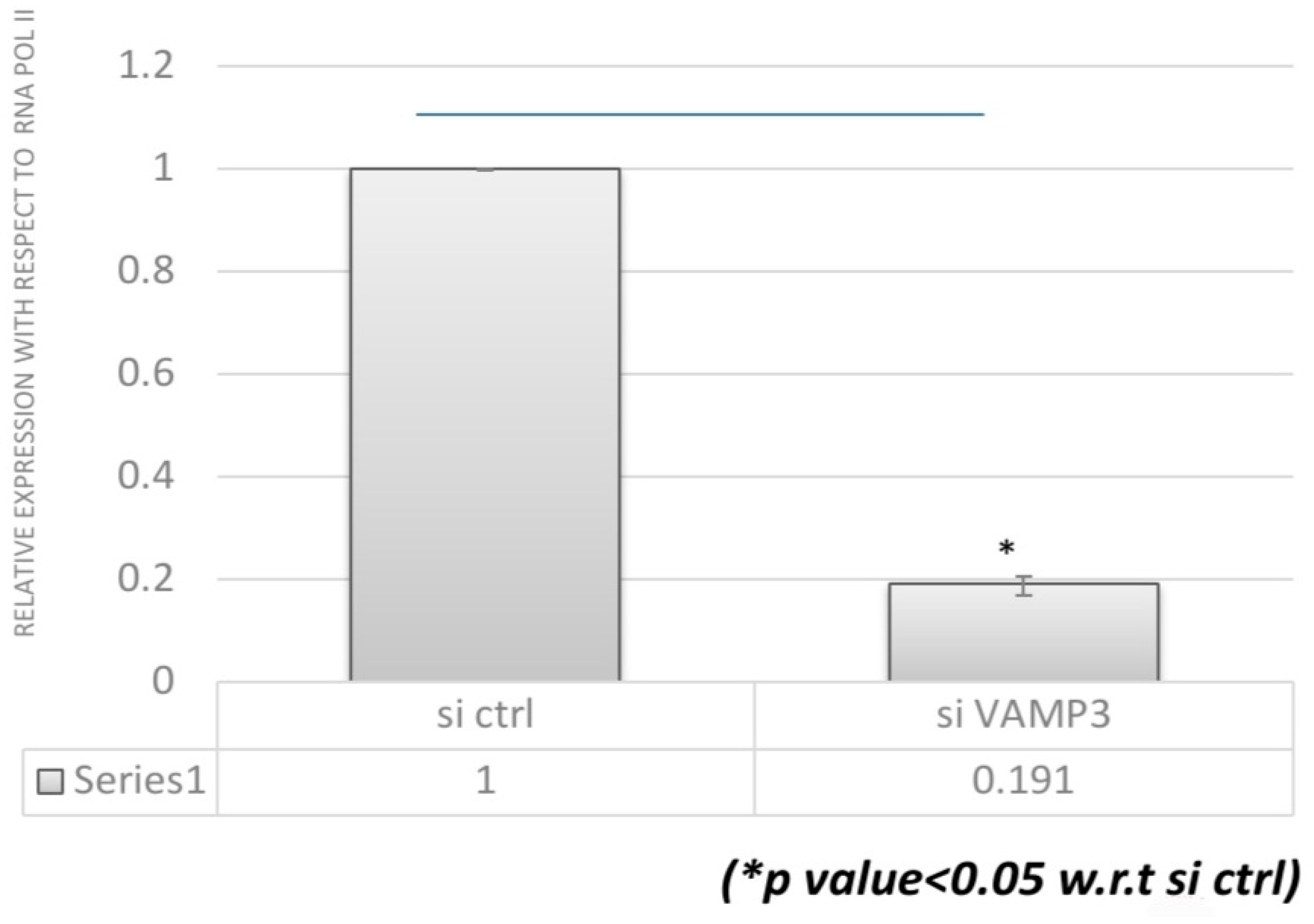
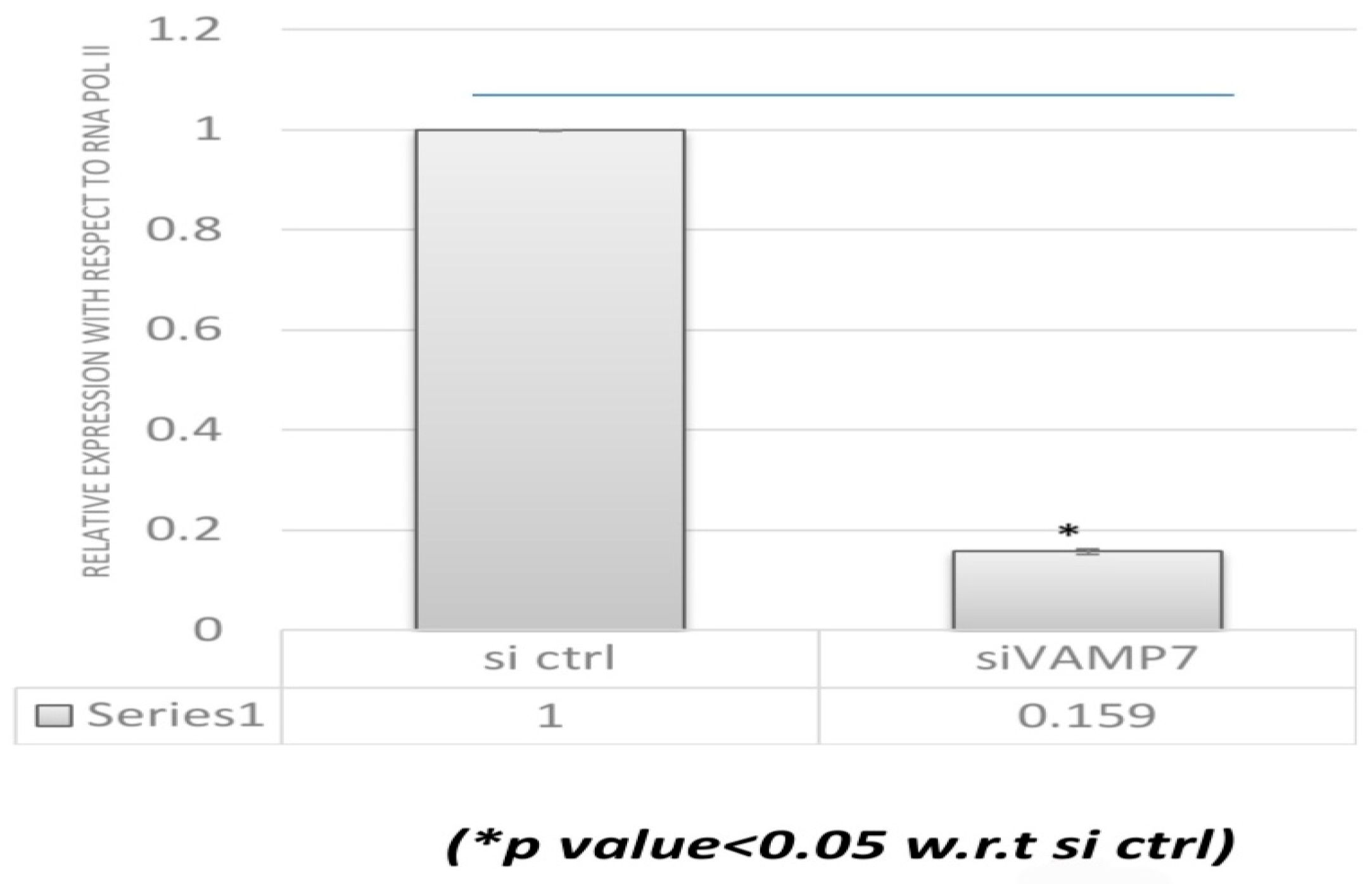
We decided to investigate the roles of VAMP3 and VAMP7 in the exocytosis of PLGA NPs. By siRNA-mediated downregulation of VAMP3, we tried to inhibit conventional constitutive secretory exocytosis and endosomal recycling. Regulated exocytosis can also be inhibited to some extent by knockdown of VAMP3 [
5]. On the other hand, to inhibit lysosomal exocytosis (a type of regulated non-conventional secretory exocytosis) and other conventional regulated secretory and non-secretory pathways, siRNA-mediated knockdown of VAMP7 was performed.
2. Materials and Methods
A. Cell Culture:
Glioblastoma Multiforme cell line LN 229 (American Type Culture Collection, Manassas, VA, USA) was cultured in Dulbecco’s Modified Eagle’s Medium (DMEM) supplemented with 10% fetal bovine serum and 10 µg/mL ciprofloxacin and incubated at 37 °C in the presence of 5% CO2.
B. Nanoparticle Preparation:
PLGA nanoparticles were prepared using the solvent evaporation method. Briefly, PLGA polymer (poly D, L-lactide-co-glycolide, 50:50, 30–60 kD) (Sigma-Aldrich Pvt. Ltd., Bengaluru, India) was dissolved in chloroform (30 mg/mL), followed by addition of 10 µL of Cy3.5 fluorescent dye (1 mg/mL) (Biotium, Fremont, CA, USA) dissolved in the same solvent (for 1 mL of PLGA soln.).
The polymer–fluorophore solution was added to 2.5% PVA soln. (in a 1:5 ratio) and sonication was performed at 36 kHz at 150 W power in ice for 3 min, followed by rapid stirring overnight. This was followed by centrifugation at 2000× g for 2 min, and then the supernatant was collected and centrifuged at 20,000× g for 30 min and the pellet was resuspended in deionized water. This was then centrifuged again at 20,000× g for 30 min to remove free PVA, dye and detergents, and finally the resultant pellet was resuspended in double-distilled water.
C. Nanoparticle Characterization:
Prepared PLGA nanoparticles were characterized by “dynamic light scattering” using a Zetasizer Nano ZS (Malvern Panalytical Ltd., Malvern, UK). A total of 100 µL of nanoparticle suspension was diluted in 900 µL of double-distilled water, and both size and zeta potential were analyzed.
D. siRNA Transfection:
Cells were plated in complete medium as per plating protocol. A total of 24 h later, they were transfected with siRNAs (20 nM) against VAMP3 and VAMP7 (Eurofins, MWG, Ebersberg, Germany) and a commercially available control siRNA using Oligofectamine (Invitrogen, Carlsbad, CA, USA) transfection reagent, as per the manufacturer’s protocol. Briefly, the required amounts of siRNAs and Oligofectamine were diluted separately in optiMEM reduced-serum media (Invitrogen, Carlsbad, CA, USA). After 5 min, the appropriate amounts of siRNA–optiMEM mixture and Oligofectamine–optiMEM mixture were mixed and incubated for 20 min to allow the liposomes to encapsulate the siRNAs. During the incubation, the media from the plates/flasks containing the plated cells were removed and cells were washed with optiMEM. Then the siRNA mixture and transfection mixture were added and the volume was made up to 1 mL with optiMEM. After 4 h, fresh media containing twice the amount of serum were added to make up the volume, i.e., 1 mL of 2X serum-containing media was added. For VAMP3 a single transfection for 72 h was performed. Triple transfection 24 h apart was performed in case of VAMP7. Two sets were used for both transfections—one was used for RNA isolation and RT-qPCR, whereas the other was used for the NP uptake experiment.
E. RNA Isolation and Quantification:
RNase-free reagents and plastic wares were used for isolation of RNA and all downstream processing. All plastic wares, including micropipette tips and centrifuge tubes, were treated with 0.1% Diethylpyrocarbonate (DEPC) overnight at 37 °C, followed by removal of DEPC by autoclaving.
RNA was isolated from cells at appropriate time points by TRIzol reagent (MRC, Cincinnati, OH, USA) (acid guanidinium–phenol–chloroform extraction). Chloroform was added for phase separation, and the samples were centrifuged at 12,000× g for 15 min at 4 °C. RNA (in aqueous phase) was then removed from the separated mixture (an interphase containing DNA and an organic phase containing proteins) and precipitated using 100% isopropanol. The RNA pellet thus formed was washed using 75% ethanol and then reconstituted in 20–50 μL of Nuclease-Free Water and stored at −70 °C for long term use. RNA in samples was quantified using a DS-11 series spectrophotometer in micro-volume mode (DeNovix, Wilmington, DE, USA).
F. Reverse Transcription for cDNA Synthesis:
About 500 ng of total RNA was used for reverse transcription using the RevertAid M-MuLV Reverse Transcriptase enzyme (Catalogue no. EP0442, Thermo Scientific, Waltham, MA, USA) and random decamers as primers (Eurofins, MWG, Ebersberg, Germany). RNA, random decamers and water were mixed and kept at 75 °C for 5 min. Then they were cooled on ice for 1–2 min. RT mix (containing 5x RT Buffer, dNTP mix, Reverse Transcriptase and RNase Inhibitor) was then added to the tubes, making up the volume to 20 μL. The cDNA synthesis was carried out using a SureCycler 8800 Thermal Cycler (Agilent Technologies, Santa Clara, CA, USA). Briefly, the tubes were kept at 25 °C for 15 min followed by 42 °C for 60 min. The reaction was terminated by heating at 70 °C for 10 min to inactivate the Reverse Transcriptase. Thus 20 μL of cDNA was formed, which was diluted by adding 80 μL of Nuclease-Free Water and stored at −20 °C till further use. A total of 2.5 μL of this diluted cDNA was used for Real-Time PCR per 10 μL reaction.
G. Real-Time PCR and Quantitative PCR (qPCR):
Real-Time PCR was performed on a Rotor-Gene Q MDx 5plex Platform (Qiagen, Hilden, Germany).
POLR2A (RNA Polymerase II Subunit A) was used as a reference gene to improve the accuracy of quantification. The PCR cycling conditions used were as follows:
Initial denaturation at 95 °C for 5 min followed by 40 cycles of 95 °C for 15 s, 60 °C for 15 s and 72 °C for 20 s. An additional step of 80 °C for 3 s was included to differentiate the primer dimers from specific products. PCR was performed in 10 μL volumes in triplicate—2.5 μL of the cDNA, 1 μL of Taq Buffer (10x) (Genei, Bangalore, India), 1 μL of Syto9 Fluorescent dye (Invitrogen, Carlsbad, CA, USA), 0.25 μL of 10 mM dNTPs (Thermo Scientific, USA), 0.165 μL of Taq polymerase (stock 3 U/μL—Genei, Bangalore, India), 0.5 μL of a mixture of Forward and Reverse primers (20 μM) and an appropriate volume of Nuclease-Free Water to make the total volume equal to 10 μL. To confirm the amplification of specific products, after all real-time runs, a thermal dissociation step was performed from 60 °C to 95 °C, acquiring fluorescence every 1 °C (Melt Curve analysis).
H. Cellular Uptake Studies for PLGA NPs:
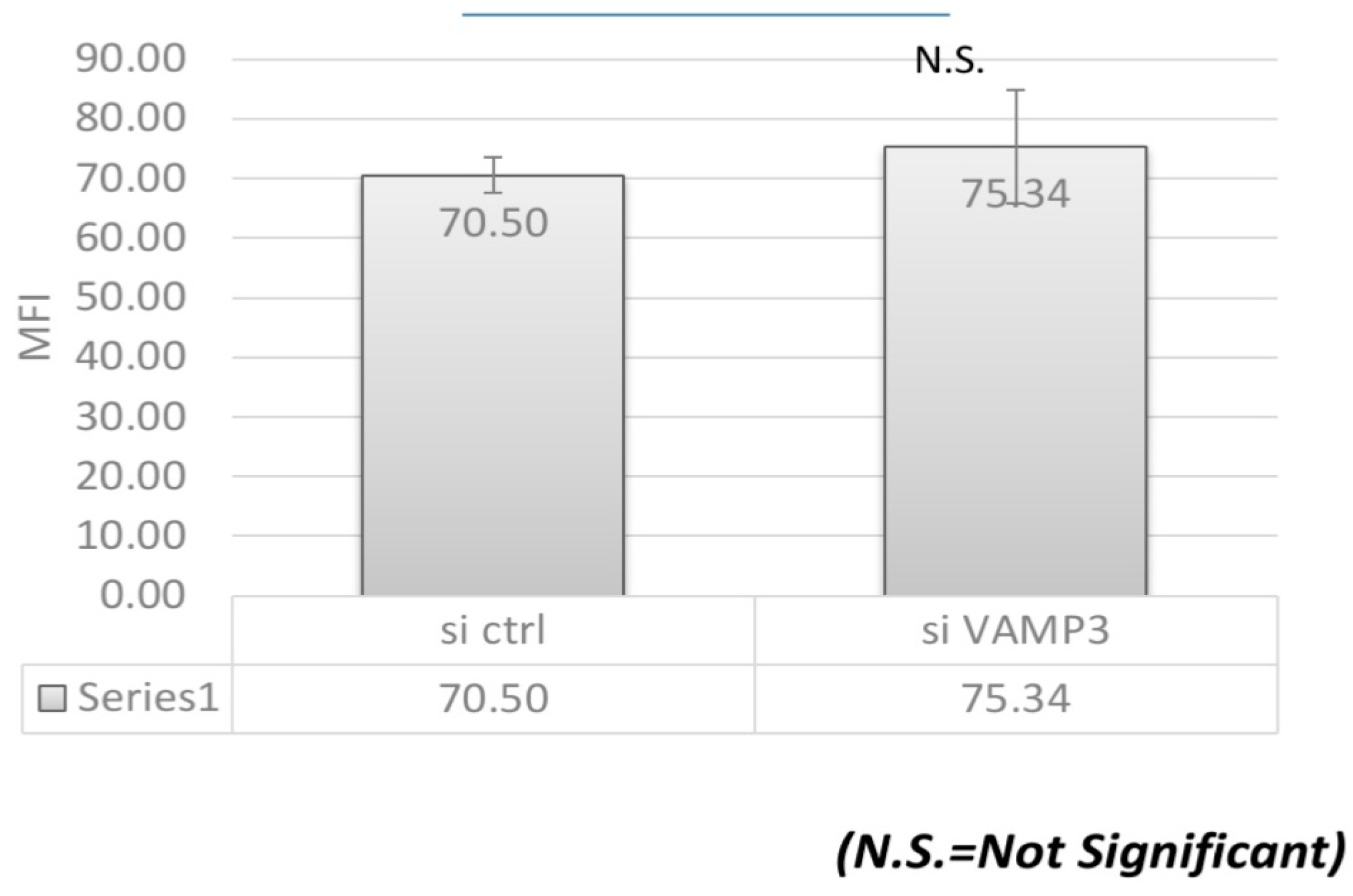
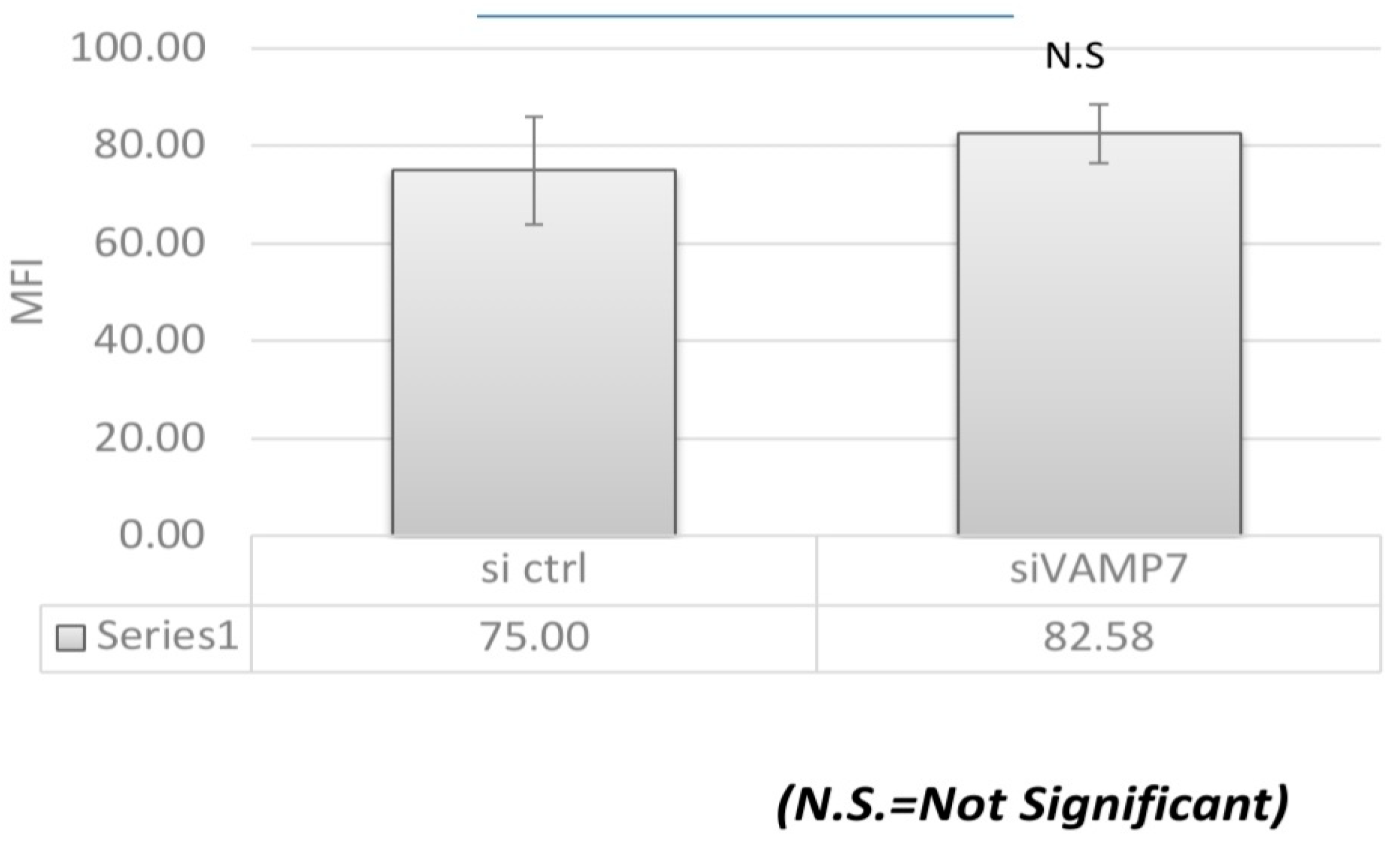
For cellular uptake studies of PLGA NPs, plated LN229 cells were exposed to fluorescent PLGA nanoparticles for 1 h. Following that, the cells were washed with 0.25 N HCl and fixed. Finally, fluorescence microscopy and quantification of intracellular NP concentration were performed.
I. Fluorescence Microscopy and Analysis:
Fluorescent microscopic pictures were acquired using an inverted fluorescence microscope (Nikon Eclipse Ti-S, Nikon Corporation, Tokyo, Japan) for plated cells exposed to the fluorescent PLGA nanoparticles and fixed by 4% paraformaldehyde. Post-fixation nuclear staining was performed using 4′, 6-diamidino-2-phenylindole (DAPI). Images of all the cells were taken at same exposure and time settings using 545/30 nm excitation and 620/60 nm emission for Cy3.5 dye and 395/25 nm excitation and 460/50 nm emission for DAPI for the study of intracellular concentration of NPs and nuclear staining, respectively. FiJi (Fiji Is Just Image J) software (ver. 1.52) was used for image analysis. The images were analyzed and quantified for Mean Fluorescence Intensity (MFI) using the following steps. First, the image was imported from source file and split into its individual components/colours. Background subtraction was performed, followed by thresholding the image to analyze the particles with intensity over a defined size range (50 pixels–infinity). The particles in this range were selected and marked as overlays or Regions of Interest (ROIs). The MFI of these overlays or ROIs was used as a measure of the cell fluorescence following NP exposure.
J. Statistical Analysis:
Accumulation of nanoparticles was compared between cells treated with fluorescent nanoparticles under different conditions, and the difference in means was tested for significance. p-value was calculated using Student’s unpaired t-test of two samples with unequal variance in a two-tailed distribution of NP-exposed cells.