1. Introduction
The Internet of Things has been revolutionizing our lives with smart solutions, increasing the demand for sustainable nanostructured materials [
1]. Metal oxides have emerged as a green alternative to typical semiconductor technologies [
2]. Binary oxides like ZnO and SnO
2 have been used for several applications, but their poor thermal and chemical stability is a key limitation [
3]. Ternary oxides like zinc tin oxide are a great alternative to solve this problem, as they are more chemically stable than their binary counterparts [
4]. ZTO has received much attention due to its high electrical conductivity and attractive optical properties [
4]. ZTO has two crystalline phases, both n-type semiconductors: ZnSnO
3 and Zn
2SnO
4. Zn
2SnO
4 has a cubic inverse spinel crystalline structure, and is the most stable form and highly desirable for electronic applications due to its high mobility (10–15 cm
2·V
−1·s
−1) and optical band gap of 3.6 eV [
4]. ZnSnO
3, the metastable form, has a perovskite crystalline structure and has excellent piezoelectric properties with a piezoelectric constant of 23 pm/V and an optical bandgap of 3.6–3.9 eV, and besides other applications, it is highly desirable for nanogenerator devices [
5,
6].
Although its vast applications, the typical production methods of ZTO nanostructures (vapor-based depositions and hydrothermal synthesis) remain complex and involve high pressures and long reaction times. Solution combustion synthesis (SCS) is a great alternative to produce ZTO nanostructures. Being based on a strong exothermic redox reaction, it is a low-cost technique that may help reduce the costs and toxicity of producing ZTO nanostructures. SCS is a simple, low-cost method widely used for metal oxide synthesis. The final properties of the metal oxides highly depend on several synthesis parameters, like temperature, the fuel-to-oxidizer ratio, the solution pH, the type of fuel, and the metal source. For combustion synthesis, metal nitrates are usually employed due to their low decomposition temperatures. Urea has been widely used as fuel, due to its abundance, low cost, and low ignition temperature [
7]. Finally, the ratio between the Zn and Sn precursor solutions and the use of surfactant can also influence the final properties of the nanostructures.
Doping nanostructures can be an effective way to improve their properties. Doping ZTO with Ag can bring interesting advantages for electronic device applications, as it can enhance the electrical conductivity of the nanoparticles [
8].
The objective of this work was to produce ZTO nanostructures by SCS. The influence of the Zn:Sn ratio and of two different solvents (water and ethanol) on the crystallographic phase of the nanostructures was studied. Finally, the use of ethylenediamine (EDA) as a surfactant and the doping of ZTO with Ag were also studied.
2. Materials and Methods
To produce ZTO nanostructures through SCS, a ZTO precursor solution was prepared by mixing ZnO and SnO precursor solutions in several Zn:Sn ratios (1:2, 1:1, and 2:1). First, ethanol (C2H6O, CAS: 64-17-5 from LabChem, Zelienople, PA, USA) was used as a solvent for both solutions. The Zn solution was obtained by dissolving zinc nitrate hexahydrate (Zn(NO3)2.6H2O, CAS: 10198-18-6 from Acros Organics, Waltham, MA, USA) in ethanol in a molar concentration of 0.2 M. After stirring, urea (CO(NH2)2, CAS: 57-13-6 from Fisher Chemical, Pittsburg, PA, USA) was added in a stoichiometric proportion (5:3) to act as a fuel. The Sn precursor solution was prepared by dissolving tin chloride (II) (SnCl2.2H2O, CAS: 10025-69-1 from Merck, Wien, Austria) in ethanol in a molar concentration of 0.2 M. Urea and ammonium nitrate (NH4NO3, CAS: 6484-52-2 from Roth, Karlsruhe, Germany) were added in a proportion of 1:3 and 2:3, respectively. ZTO nanostructures were also produced using water as an alternative solvent. ZTO-Ag-doped nanostructures with a 2:1 Zn:Sn ratio were also synthesized through a similar method, adding several percentages (1.0%, 2.5% and 5%) of silver nitrate (AgNO3, CAS: 7761-88-8) to the Zn precursor solution and Sn precursor solutions. To produce the powders, the solutions were submitted to 300 °C inside a furnace (Nabertherm, Lilienthal, Germany) for 1h with a heating ramp of 10 °C/min and were later annealed at 600 °C.
The influence of the surfactant (EDA) on the ZTO ethanol and H2O 2:1 samples was also studied by adding 0.5% of EDA to the respective ZTO precursor solutions.
The obtained powders were characterized by X-Ray Diffraction (XRD) using a Malvern Panalytical, (Worcestershire, UK) Aeris from 10 to 90 2θ range with a step size of 0.02. Raman analysis was also employed using a Renishaw, (Wotton-under-Edge, UK) inVia Reflex micro Raman spectrometer equipped with an air-cooled CCD detector and a HeNe laser operating at 50 mW of 532 nm laser excitation. The laser beam was focused with a 50× Leica objective lens (N Plan EPI). An acquisition time of 10 scans, 10 s each, was used to reduce the background noise. All measurements were performed at room temperature, and a baseline subtraction was performed to identify the different vibrational bands. Finally, scanning electron microscopy (SEM) and energy dispersive X-ray spectroscopy (EDS) analysis were performed using a Hitachi (Toquio, Japan) High Technologies model Regulus SU8220 equipped with an Oxford EDS detector. Before the measurements, the samples were coated with a 20 nm Au/Pd film.
3. Results and Discussion
3.1. Influence of the Zn:Sn Ratio
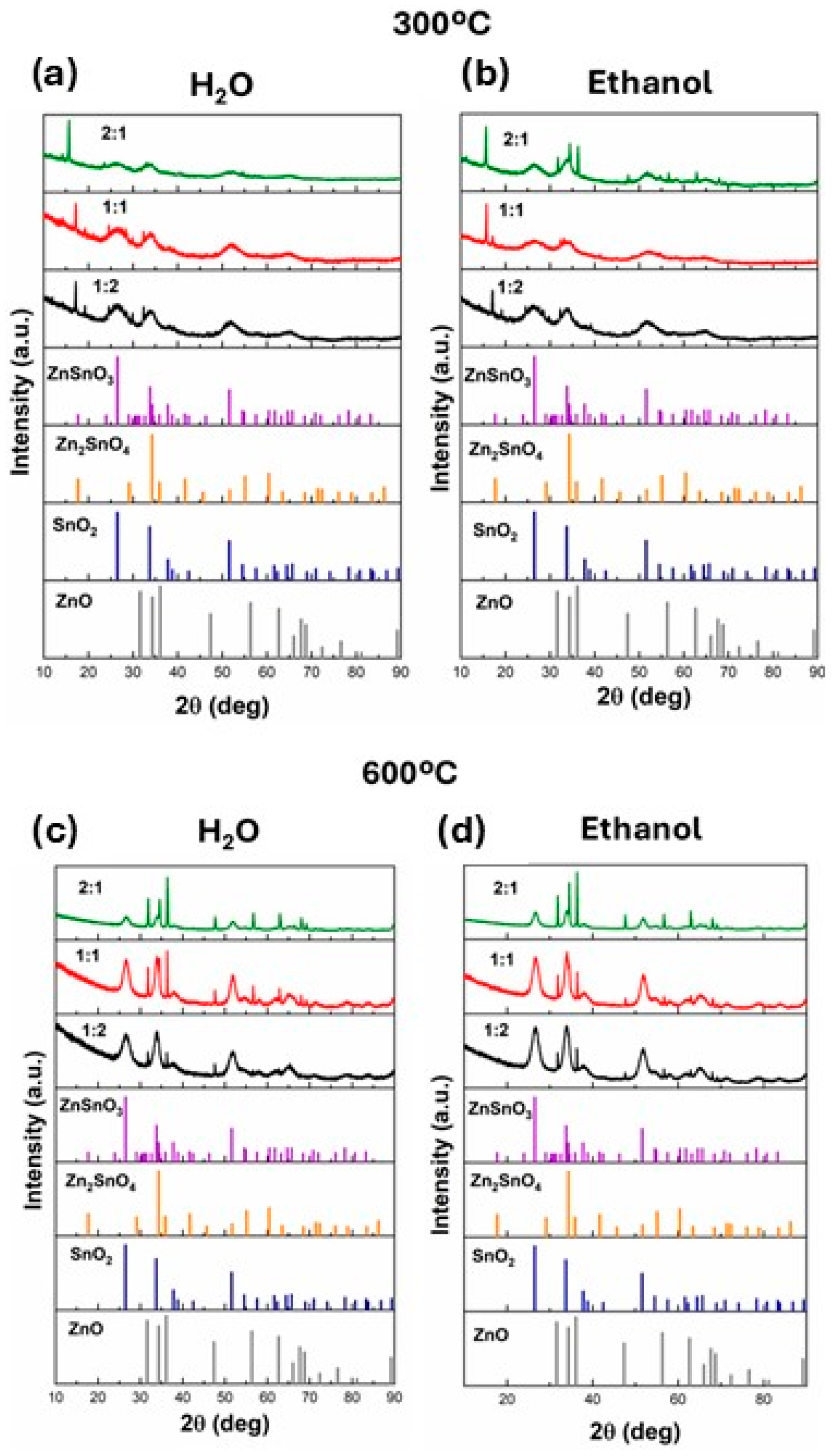
To understand the Zn:Sn ratio’s influence on the properties of the ZTO powders, two different solvents (ethanol and water) were used to produce ZTO powders with different ratios (1:2, 1:1, 2:1). After synthesis at 300 °C, the samples produced with water,
Figure 1a, and ethanol,
Figure 1b, did not present a well-organized crystalline structure, once their XRD diffractograms revealed large bumps instead of well-defined peaks. After the annealing stage at 600 °C, there was a crystallinity improvement for both the water (
Figure 1c) and ethanol (
Figure 1d) samples. The results are inconclusive once the peaks overlap the SnO
2 01-077-0452 chart, the ZnSnO
3 00-028-1486 chart, and the Zn
2SnO
4 00-024-1470 chart. However, as the Zn ratio increases, the formation of ZnO was favored once the characteristic peaks of ZnO intensified. For both the ethanol and water 2:1 ratio samples, the characteristic peaks of ZnO are well defined, pointing to the predominance of this phase. The proper identification of the correct crystallographic phase through XRD diffractograms can be challenging, once the ZnSnO
3 00-028-1486 chart has been deleted from the ICDD database due to similarities with a mixture of SnO
2 01-077-0452 chart and Zn
2SnO
4 00-024-1470 chart. Although these similarities, Rovisco et al. as shown that it is possible to use the ZnSnO
3 deleted chart to analyze ZTO diffractograms.
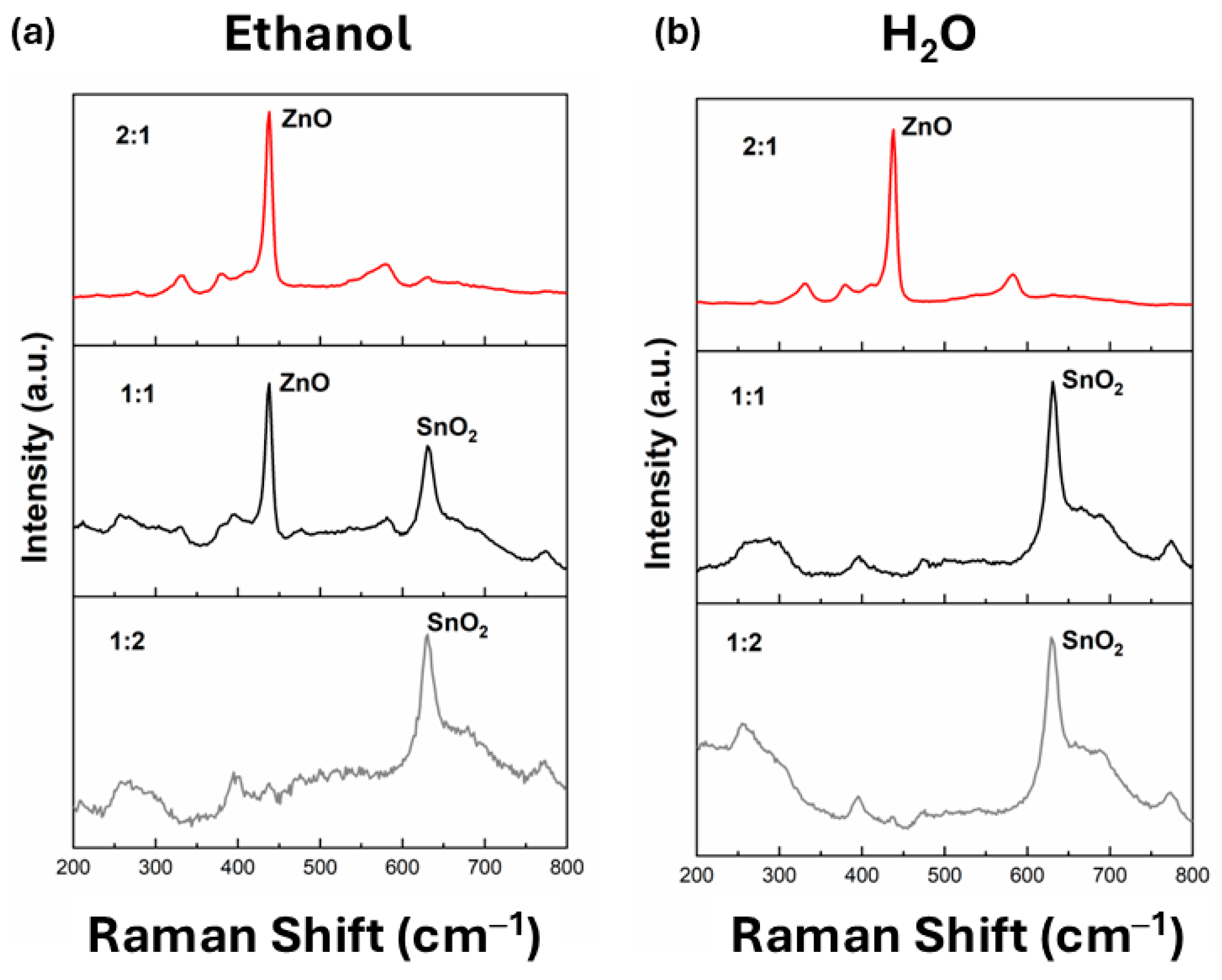
Figure 2 presents the obtained Raman spectra after annealing at 600 °C for the samples produced with water,
Figure 2a, and ethanol,
Figure 2b. Both the ethanol and water samples with a 1:2 ratio presented a predominance of SnO
2 at 631 cm
−1. A large bump englobing the ZnSnO
3 characteristic peak (676 cm
−1) is also present, which may indicate the presence of a small portion of ZnSnO
3. The ethanol samples with a 1:1 ratio presented a mixture of ZnO and SnO
2, while the water samples only presented SnO
2. The large bump englobing the characteristic peak of ZnSnO
3 is less evident in the ethanol sample, which may indicate that for a 1:1 ratio. The ethanol samples are mainly a mixture of ZnO and SnO
2. Finally, the samples produced with a 2:1 ratio only presented the ZnO characteristic peak around 438 cm
−1, for both solvents. Therefore, the 1:2 samples for both solvents and the 1:1 water samples may have a small portion of ZnSnO
3 that may increase if increasing the synthesis or annealing temperature.
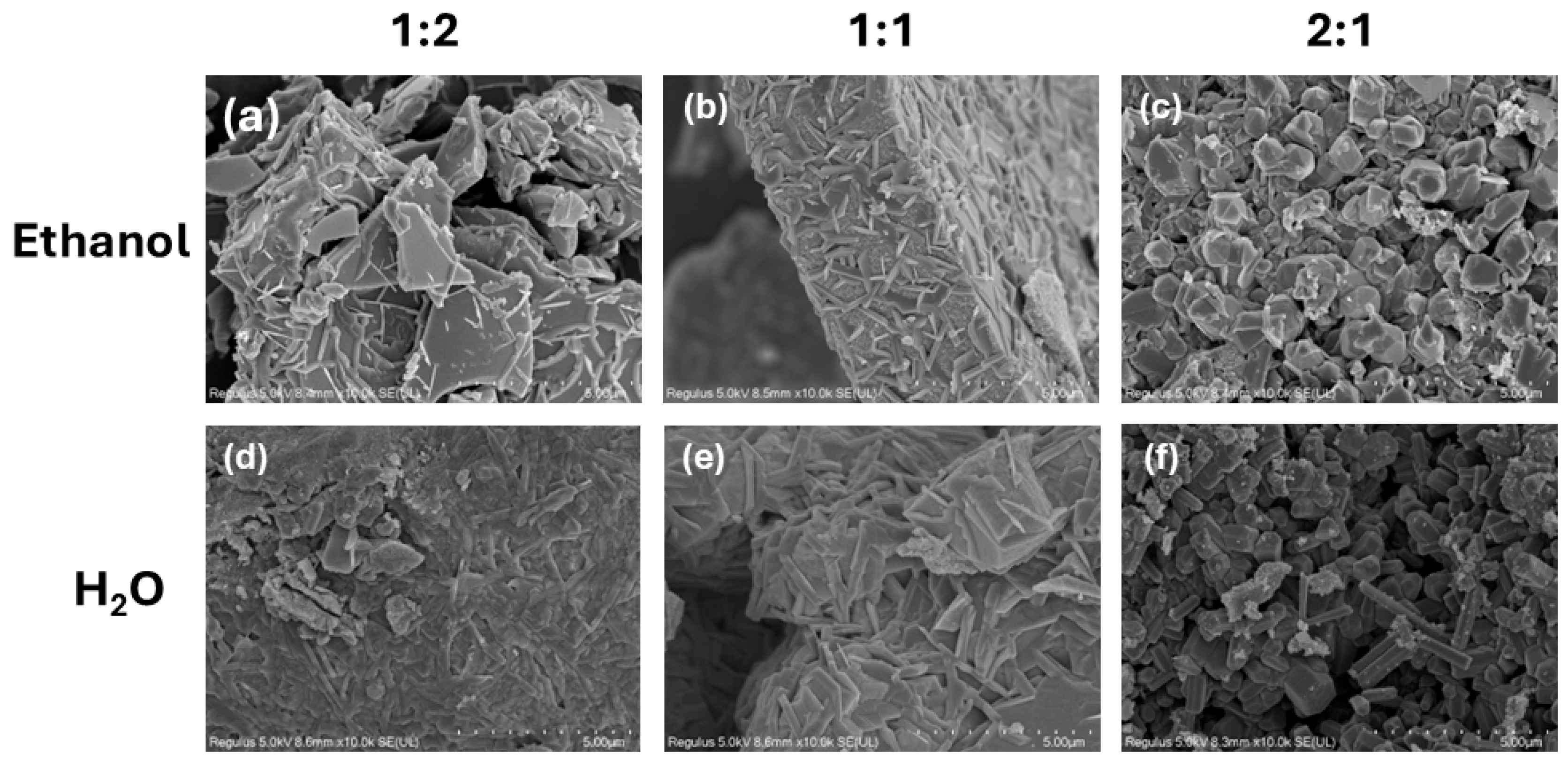
SEM images of the obtained nanostructures for the ethanol and H2O samples produced with 1:2, 1:1, and 2:1 ratios are presented in
Figure 3. The samples produced with ethanol presented a nanoplate shape for a 1:2 ratio and lost well-defined structures as the ratio increased to 2:1. The samples produced with water appeared to have some nanowires for a 1:2 ratio, which turned into nanoplates for a 1:1 ratio. For a 2:1 ratio, the water samples appeared to have some nanowires mixed with octahedrons.
Table 1 presents the sizes of the obtained nanostructures.
3.2. Surfactant Influence
To understand the influence of the surfactant on the properties of the ZTO powders, the ZTO-et and ZTO-H
2O samples were produced in a 2:1 ratio using EDA in a concentration of 0.5% (
V/
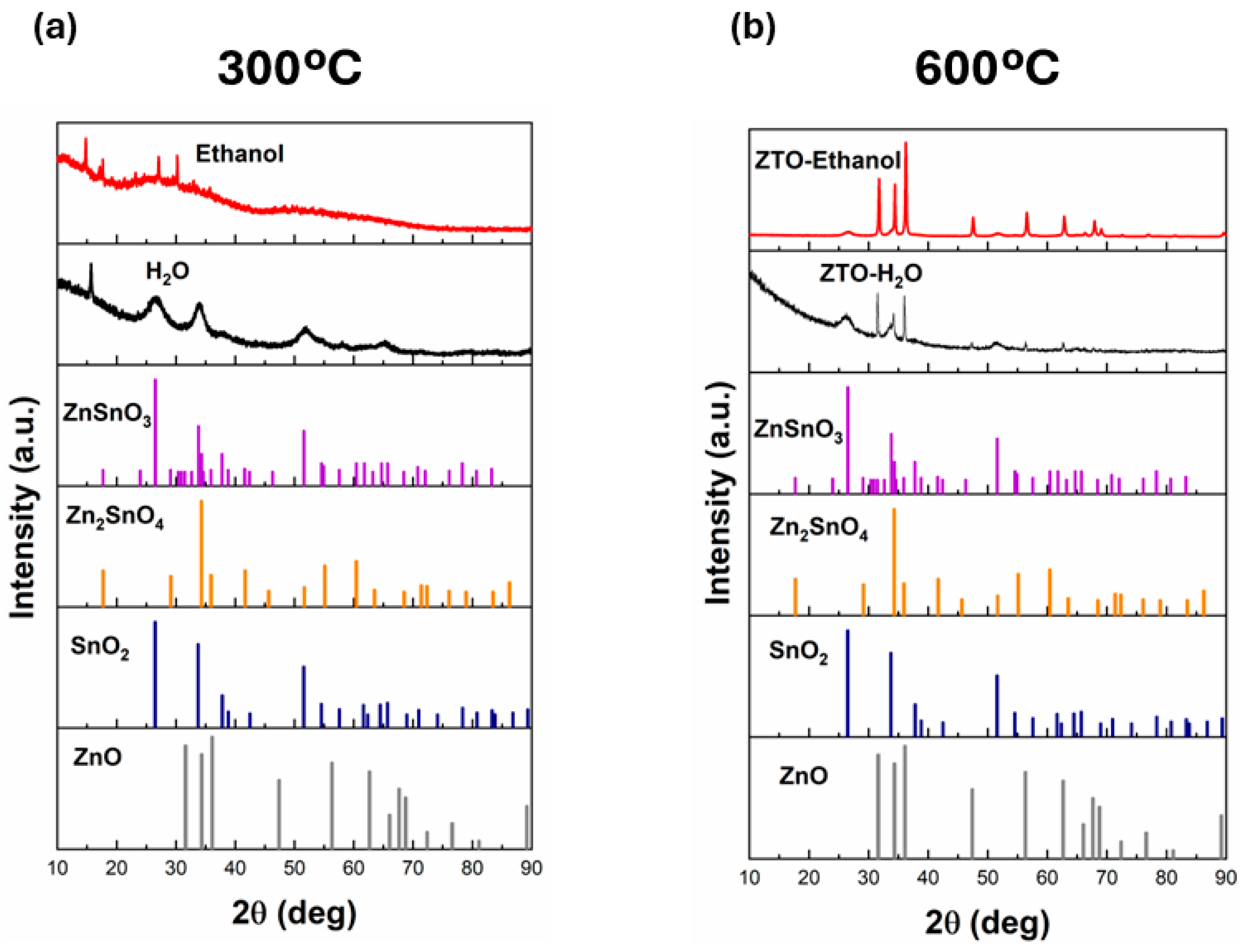
V). The obtained XRD diffractograms for the ZTO nanostructures produced with EDA after the synthesis at 300 °C, ZTO-EDA, are presented in
Figure 4a. Similarly to ZTO structures produced without EDA, the ZTO-EDA samples did not present a well-organized crystalline structure.
After the annealing stage at 600 °C, the formation of ZnO was favored for both samples (
Figure 4b), and the obtained peaks match the ZnO 01-79-0208 chart. The obtained XRD diffractograms show that the use of EDA in the 2:1 samples led to the formation of ZnO for both solvents. The ZTO ethanol samples produced with a 1:1 and a 1:2 Zn:Sn ratio presented a mixture of ZnO, SnO
2, and possibly ZnSnO
3; therefore, further studies should be carried out in order to understand the influence of EDA on the crystallographic phase of these samples.
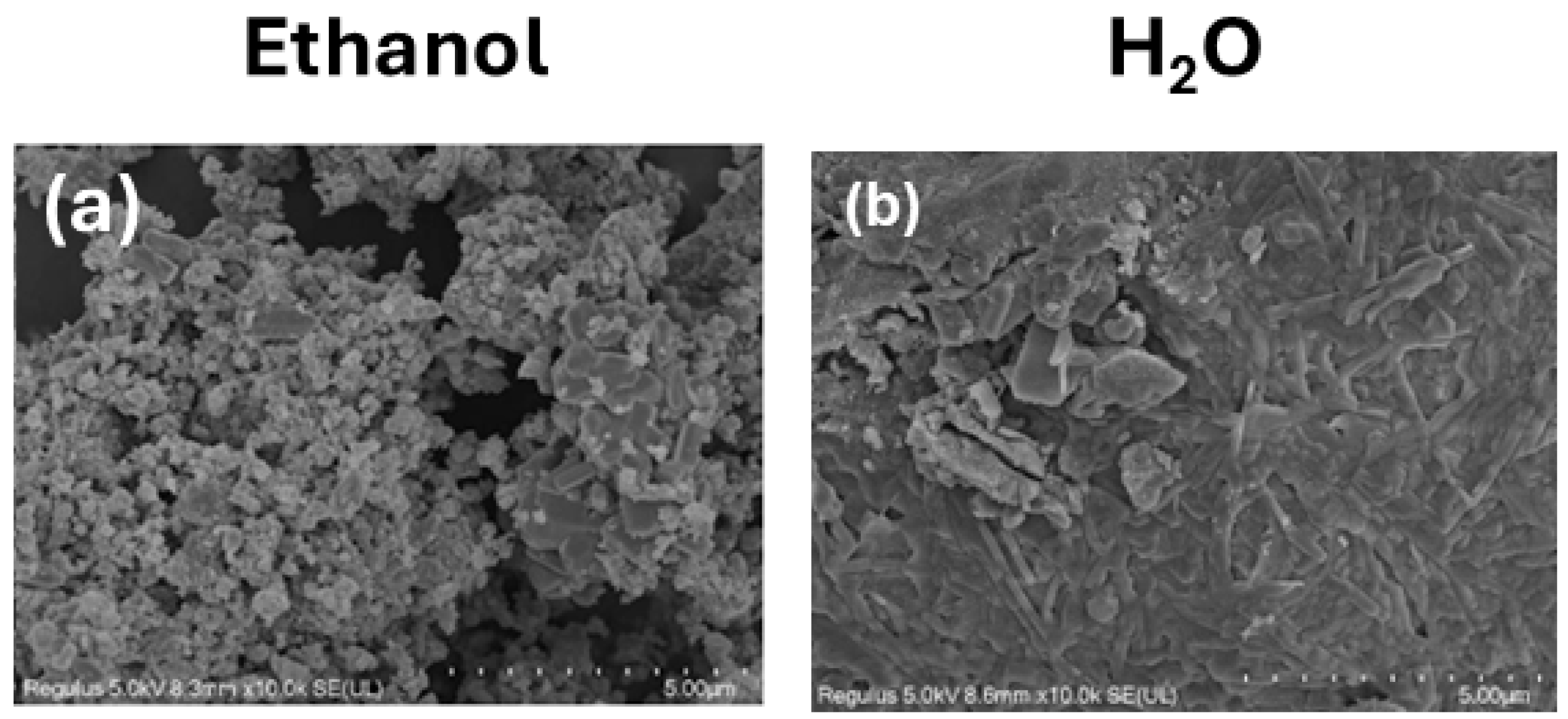
SEM images of the nanostructures produced using EDA for both solvents after annealing at 600 °C are presented in
Figure 5. While the samples produced using ethanol as a solvent did not present any well-defined nanostructures, the samples produced with water appear to present some nanowires.
Table 2 presents the size of the nanostructures obtained using water as a solvent.
3.3. Doping Influence
Doping ZTO with Ag can bring interesting advantages for electronic devices [
8]. ZTO-Ag-doped powders with different doping percentages (1.0%, 2.5%, and 5.0%) were produced using ethanol as a solvent and a 2:1 Zn:Sn ratio.
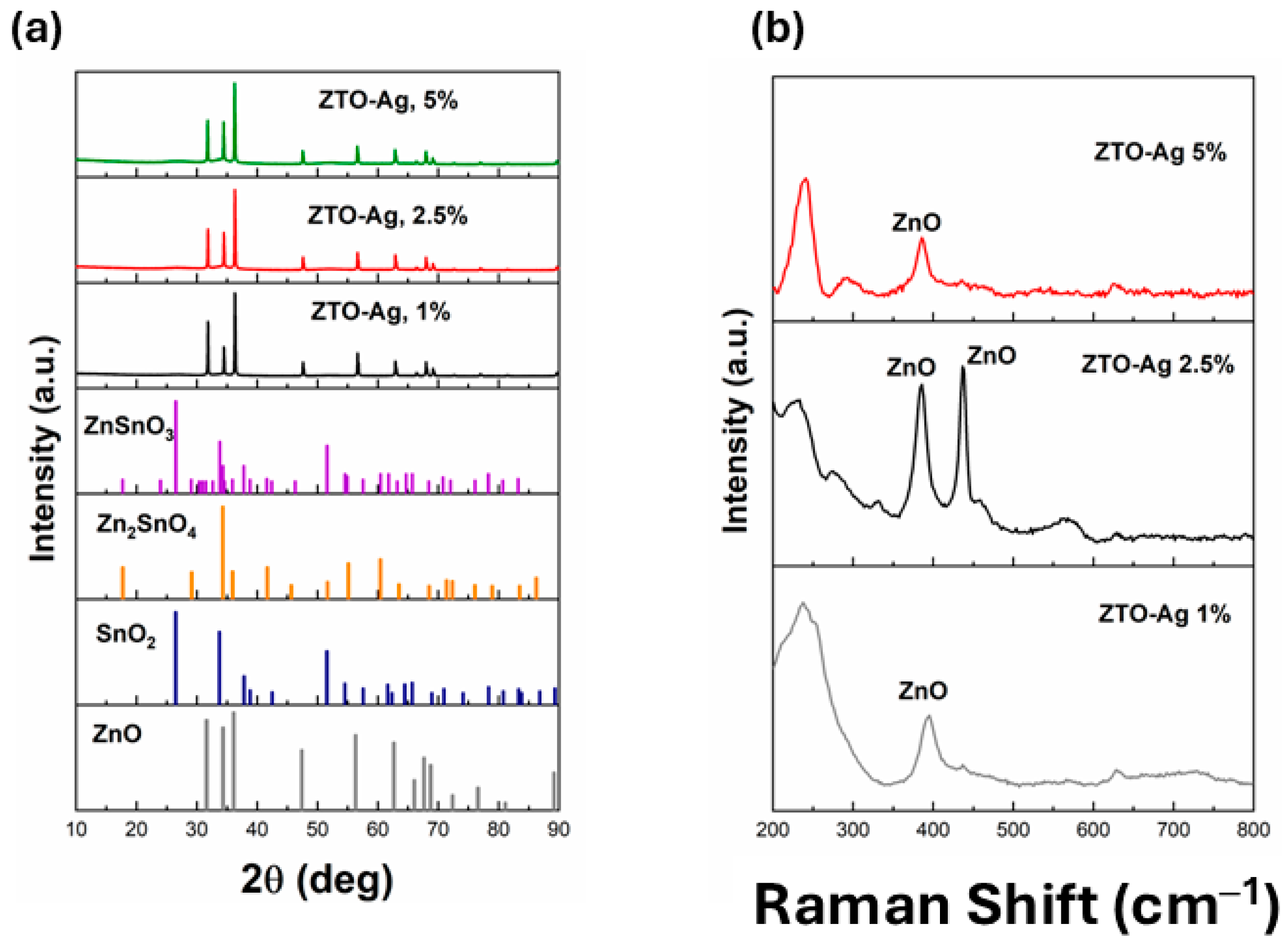
As shown in
Figure 6a, XRD diffractograms obtained for 1.0%, 2.5%, and 5.0% correspond to the ZnO characteristic peaks, which may indicate that the growth of ZnO was favored, similar to the samples produced without Ag doping.
EDS analysis (
Table 3) was also performed to confirm the Zn:Sn ratio of the samples. The ZTO-Ag-doped 1% and 2.5% samples did not match the defined Zn:Sn ratio, once the true ratio was, respectively, 7:1 and 9:2. The doping percentage was not matched either, the ZTO-Ag 1.0% doping presented a Ag concentration of 0.07%, while for the ZTO-Ag 2.5% it was not detected Ag particles, possibly due to a non-uniform distribution of the silver trough the nanostructure. Finally, the ZTO 5% doping samples matched the 2:1 ratio, but had a Ag concentration of 0.28%. These doping concentrations did not match the defined values, possibly due to the reduction of silver nitrate into metallic silver due to sunlight exposure, leading to the precipitation of Ag0. These results show the necessity to optimize the synthesis process. The use of amber flasks might help avoid silver reduction through sunlight explosion, which might lead to nanostructures with the desired doping concentration.
Raman analysis of the several ZTO-Ag-doped samples (
Figure 6b) confirmed the predominance of ZnO. While both the 1% and 5% doping samples only presented one ZnO characteristic peak at 390 cm
−1, the samples with doping percentages of 2.5% presented a second ZnO characteristic peak at 438 cm
−1. These results confirm that ZTO-Ag nanostructures are not a mixture of several elements, as they are only made of ZnO. The growth of ZnO was induced by the Zn:Sn ratio, as the 2:1 ethanol samples produced without doping were also made of ZnO. Therefore, it would be interesting to produce 1:1 and 1:2 ZTO-Ag-doped nanostructures to try to obtain ZnSnO
3 or Zn
2SnO
4 in the mixture.
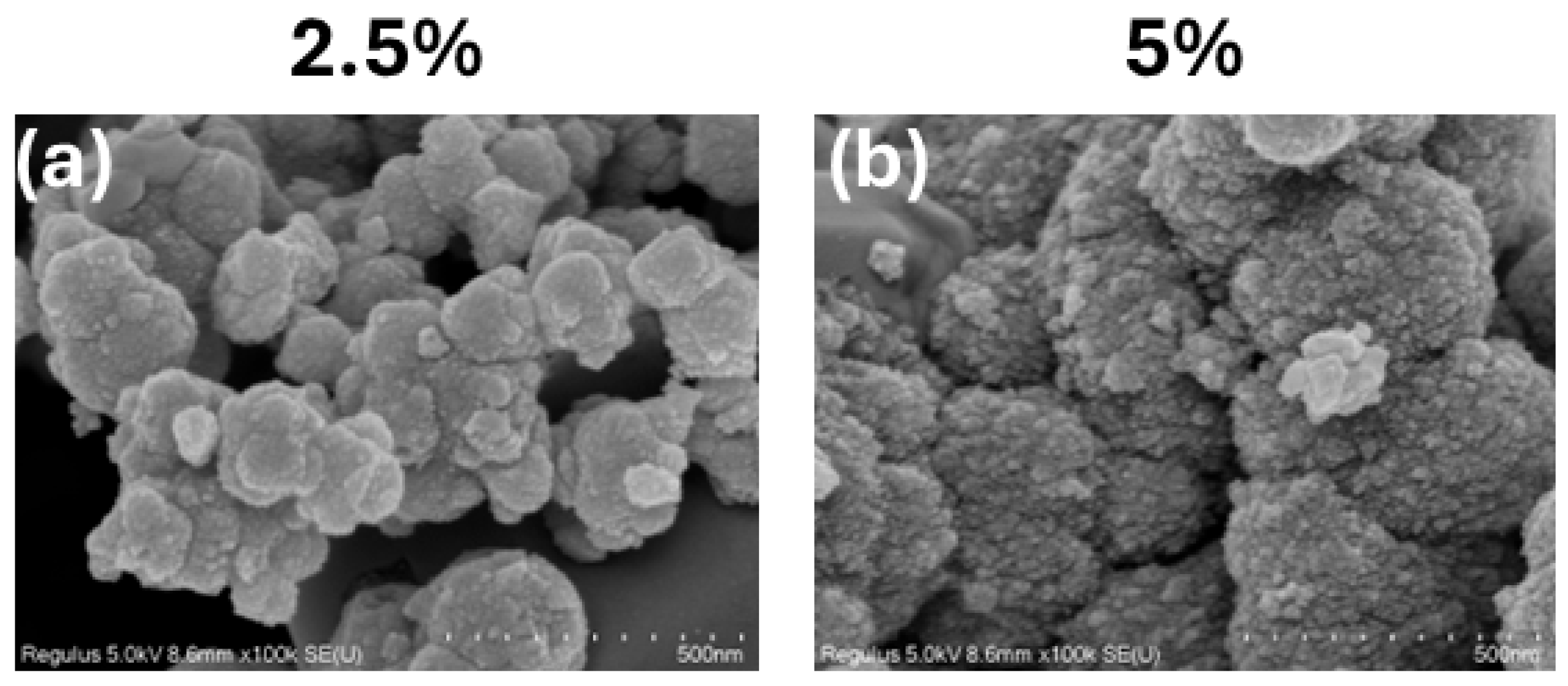
SEM images of the ZTO-Ag-doped nanostructures for the different (2.5% and 5%) doping percentages are shown in
Figure 7. Although the samples did not present well-defined nanostructures, it is possible to observe some brighter agglomerates that can be associated with Ag presence in the structures.
4. Conclusions
The growth of ZnO was favored for ZTO nanostructures produced with a Zn:Sn ratio of 2:1 for both the water and ethanol samples, while the samples produced with a 1:1 and a 1:2 ratio presented a mixture of ZnO, SnO2, and possibly ZnSnO3. EDA was also tested in the 2:1 ethanol and water samples, and it led to the growth of ZnO. The influence of EDA in the 1:1 and 1:2 samples for both solvents should be studied to fully understand the influence of EDA in the growth of ZTO using different solvents and ratios. Finally, ZTO-Ag-doped nanostructures were also produced using ethanol as a solvent and a 2:1 Zn:Sn ratio. XRD and Raman analysis allowed us to verify the formation of ZnO, while EDS revealed that the real doping percentages were almost nonexistent. This effect can be explained by sunlight exposure during the synthesis process that led to Ag precipitation. Therefore, further work must be developed to optimize the synthesis with amber flasks, avoiding Ag precipitation, and to perform the synthesis for 1:1 and 1:2 ratios. Finally, although further work should be performed to optimize synthesis parameters, this work proved that SCS is a viable low-cost alternative to produce ZTO nanostructures through a much simpler and faster process.
Author Contributions
Conceptualization, J.V., L.P., L.F., A.R. and R.B.; methodology, J.V., L.P. and L.F.; formal analysis, J.V., L.P. and L.F.; writing—original draft preparation, J.V.; writing—review and editing, J.V., L.P., L.F., R.M., E.F., A.R. and R.B. All authors have read and agreed to the published version of the manuscript.
Funding
This work is funded by National Funds through FCT—Portuguese Foundation for Science and Technology, References LA/P/0037/2020, UIDP/50025/2020, and the project 2023.11887.PEX (FOLOW). This work also received funding from the European Community’s H2020 program [grant agreement No. 101008701 (EMERGE)].
Institutional Review Board Statement
Not applicable.
Informed Consent Statement
Not applicable.
Data Availability Statement
The data presented in this study are available upon request from the corresponding authors.
Conflicts of Interest
The authors declare no conflicts of interest. The funders had no role in the design of the study; in the collection, analyses, or interpretation of data; in the writing of the manuscript, or in the decision to publish the results.
References
- Rogdakis, K.; Psaltakis, G.; Fagas, G.; Quinn, A.; Martins, R.; Kymakis, E. Hybrid Chips to Enable a Sustainable Internet of Things Technology: Opportunities and Challenges. Discov. Mater. 2024, 4, 4. [Google Scholar] [CrossRef]
- Anthopoulos, T.D.; Chen, J.S.; Facchetti, A. Metal Oxide Thin Film Electronics. Appl. Phys. Lett. 2024, 124, 190401. [Google Scholar] [CrossRef]
- Rahman, M.; Bashar, M.S.; Rahman, M.L.; Chowdhury, F.I. Comprehensive Review of Micro/Nanostructured ZnSnO3: Characteristics, Synthesis, and Diverse Applications. RSC Adv. 2023, 13, 30798–30837. [Google Scholar] [CrossRef] [PubMed]
- Sun, S.; Liang, S. Morphological Zinc Stannate: Synthesis, Fundamental Properties and Applications. J. Mater. Chem. A Mater. 2017, 5, 20534–20560. [Google Scholar] [CrossRef]
- Isabel Bento Rovisco, A.; Branquinho, R.; Vaz Pinto, J.; Martins, R.; Fortunato, E.; Barquinha, P. Hydrothermal Synthesis of Zinc Tin Oxide Nanostructures for Photocatalysis, Energy Harvesting and Electronics. In Novel Nanomaterials; IntechOpen: London, UK, 2021. [Google Scholar]
- Rovisco, A.; Dos Santos, A.; Cramer, T.; Martins, J.; Branquinho, R.; Águas, H.; Fraboni, B.; Fortunato, E.; Martins, R.; Igreja, R.; et al. Piezoelectricity Enhancement of Nanogenerators Based on PDMS and ZnSnO3 Nanowires through Microstructuration. ACS Appl. Mater. Interfaces 2020, 12, 18421–18430. [Google Scholar] [CrossRef] [PubMed]
- Carlos, E.; Martins, R.; Fortunato, E.; Branquinho, R. Solution Combustion Synthesis: Towards a Sustainable Approach for Metal Oxides. Chem. Eur. J. 2020, 26, 9099–9125. [Google Scholar] [CrossRef] [PubMed]
- Alqadi, M.K.; Migdadi, A.B.; Alzoubi, F.Y.; Al-Khateeb, H.M.; Almasri, A.A. Influence of (Ag–Cu) Co-Doping on the Optical, Structural, Electrical, and Morphological Properties of ZnO Thin Films. J. Solgel Sci. Technol. 2022, 103, 319–334. [Google Scholar] [CrossRef]
Figure 1.
XRD patterns for different Zn:Sn ratios (1:2, 1:1, 2:1) for nanostructures produced using water (a,b), and ethanol (c,d) as solvents after synthesis at 300 °C and annealing at 600 °C. ICDD cards: ZnO 01-079-0208, SnO2 01-077-0452, ZnSnO4 00-024-1470 and Zn2SnO3 00-028-1486 (deleted).
Figure 1.
XRD patterns for different Zn:Sn ratios (1:2, 1:1, 2:1) for nanostructures produced using water (a,b), and ethanol (c,d) as solvents after synthesis at 300 °C and annealing at 600 °C. ICDD cards: ZnO 01-079-0208, SnO2 01-077-0452, ZnSnO4 00-024-1470 and Zn2SnO3 00-028-1486 (deleted).
Figure 2.
Raman shift for different Zn:Sn ratios (1:2, 1:1, 2:1) for ZTO nanostructures produced with (a) ethanol and (b) water.
Figure 2.
Raman shift for different Zn:Sn ratios (1:2, 1:1, 2:1) for ZTO nanostructures produced with (a) ethanol and (b) water.
Figure 3.
SEM images of the nanostructures for ethanol (a–c) and H2O (d–f) for 1:2, 1:1, and 2:1 Zn:Sn ratios after annealing.
Figure 3.
SEM images of the nanostructures for ethanol (a–c) and H2O (d–f) for 1:2, 1:1, and 2:1 Zn:Sn ratios after annealing.
Figure 4.
XRD patterns of ZTO nanostructures produced with 0.5% (v/v) EDA. ICDD cards: ZnO 01-079-0208, SnO2 01-077-0452, ZnSnO4 00-024-1470 and Zn2SnO3 00-028-1486 (deleted) at (a) 300 °C and annealed at (b) 600 °C.
Figure 4.
XRD patterns of ZTO nanostructures produced with 0.5% (v/v) EDA. ICDD cards: ZnO 01-079-0208, SnO2 01-077-0452, ZnSnO4 00-024-1470 and Zn2SnO3 00-028-1486 (deleted) at (a) 300 °C and annealed at (b) 600 °C.
Figure 5.
SEM images of the ZTO samples produced with EDA for (a) Ethanol and (b) H2O after annealing.
Figure 5.
SEM images of the ZTO samples produced with EDA for (a) Ethanol and (b) H2O after annealing.
Figure 6.
(a) XRD patterns of ZTO-Ag-doped nanostructures with different doping percentages (1%, 2.5% and 5%). ICDD charts: ZnO 01-079-0208, SnO2 01-077-0452, ZnSnO4 00-024-1470, and ZnSnO3 00-028-1486 (deleted); (b) Raman shift for ZTO-Ag-doped nanostructures for doping percentages of 1%, 2.5% and 5%.
Figure 6.
(a) XRD patterns of ZTO-Ag-doped nanostructures with different doping percentages (1%, 2.5% and 5%). ICDD charts: ZnO 01-079-0208, SnO2 01-077-0452, ZnSnO4 00-024-1470, and ZnSnO3 00-028-1486 (deleted); (b) Raman shift for ZTO-Ag-doped nanostructures for doping percentages of 1%, 2.5% and 5%.
Figure 7.
SEM images of the ZTO-Ag-doped nanostructures for doping concentrations of (a) 2.5% and (b) 5%.
Figure 7.
SEM images of the ZTO-Ag-doped nanostructures for doping concentrations of (a) 2.5% and (b) 5%.
Table 1.
Size of the nanostructures for ethanol and H2O for 1:2, 1:1, and 2:1 ratios after annealing.
Table 1.
Size of the nanostructures for ethanol and H2O for 1:2, 1:1, and 2:1 ratios after annealing.
| | 1:2 | 1:1 | 2:1 |
|---|
| | Ethanol | H2O | Ethanol | H2O | Ethanol | H2O |
|---|
| Length | 1.85 ± 0.23 | 1.32 ± 0.26 | 1.13 ± 0.04 | 1.58 ± 0.17 | - | 2.04 ± 0.66 |
| Width | 0.21 ± 0.03 | 0.26 ± 0.04 | 0.23 ± 0.05 | 0.26 ± 0.05 | - | 0.35 ± 0.05 |
Table 2.
Size of the nanostructures obtained with EDA and H2O.
Table 2.
Size of the nanostructures obtained with EDA and H2O.
| | H2O |
|---|
| Width | 1.72 ± 0.35 |
| Length | 0.25 ± 0.01 |
Table 3.
EDS results for ZTO-Ag-doped samples (1%, 2.5% and 5%).
Table 3.
EDS results for ZTO-Ag-doped samples (1%, 2.5% and 5%).
| Element | Atomic Percentage (%) |
|---|
| 1% | 2.5% | 5% |
|---|
| C | 33.04 | 35.32 | 67.69 |
| O | 46.36 | 42.52 | 23.09 |
| Cl | 0.41 | - | 0.05 |
| Zn | 17.27 | 18.08 | 6.06 |
| Ag | 0.07 | - | 0.28 |
| Sn | 2.38 | 4.08 | 2.83 |
| Disclaimer/Publisher’s Note: The statements, opinions and data contained in all publications are solely those of the individual author(s) and contributor(s) and not of MDPI and/or the editor(s). MDPI and/or the editor(s) disclaim responsibility for any injury to people or property resulting from any ideas, methods, instructions or products referred to in the content. |
© 2026 by the authors. Licensee MDPI, Basel, Switzerland. This article is an open access article distributed under the terms and conditions of the Creative Commons Attribution (CC BY) license (https://creativecommons.org/licenses/by/4.0/).



 ,
,