1. Introduction
DC–DC buck converters are a fundamental building block in modern power electronic systems, widely used in renewable energy interfaces, electric vehicles, distributed power supplies, and industrial automation. Their performance requirements continue to increase due to tighter voltage regulation constraints, fast load transients, wide input voltage variations, and the growing penetration of digitally controlled converters operating under non-ideal conditions [
1,
2,
3].
Despite the availability of advanced control techniques, proportional–integral (PI) controllers remain the dominant solution in industrial practice due to their simplicity, robustness, and ease of implementation [
4,
5]. However, classical PI control exhibits well-known limitations when applied to switching power converters, including sensitivity to parameter variations, oscillatory behavior under fast load or input disturbances, and degraded performance in the presence of delays, quantization, and measurement noise.
To mitigate these effects, a variety of enhancements have been proposed in the literature, such as gain scheduling, adaptive PI control, nonlinear damping, and frequency-domain shaping techniques [
6,
7,
8,
9]. In particular, lead compensators and notch filters are commonly employed to improve phase margin and to suppress dominant resonant modes. While effective, these approaches are typically tuned offline and rely on fixed assumptions regarding system dynamics, which may not hold under changing operating conditions.
More recently, attention has shifted toward intelligent and adaptive supervisory layers that augment conventional controllers rather than replacing them. Such supervisory approaches aim to preserve the desirable properties of baseline PI control while dynamically modifying its behavior in response to transient severity, oscillatory patterns, or uncertainty. Nevertheless, many existing methods rely on explicit system identification, model-based adaptation, or computationally intensive algorithms, limiting their applicability in real-time embedded systems.
An alternative and relatively unexplored perspective is to interpret the oscillations and instability in DC–DC converters through the lens of trajectory complexity in the error phase space. Oscillatory transients, limit cycles, and resonance-driven responses can be associated with increased geometric irregularity of the trajectory formed by the regulation error and its derivative. This observation motivates the use of multiscale and fractal-inspired measures as indicators of undesirable dynamic behavior.
In this paper, a fractal–multiscale supervisory control framework is proposed for a digitally controlled buck converter [
10]. The supervisor operates as a nonlinear operator acting on the regulation error and its time derivative, continuously estimating a multiscale deviation measure that reflects the complexity of the closed-loop trajectory. Based on this measure, the supervisor adaptively attenuates or assists the effective PI gains, suppressing oscillations while preserving fast transient response and steady-state accuracy.
The proposed supervisor is combined with frequency-domain shaping elements, namely an automatically tuned notch filter and a lead compensator. The shaping parameters are identified directly from time-domain simulations using a Fast Fourier Transform (FFT)-based procedure, ensuring a systematic and reproducible tuning process suitable for scientific analysis. Importantly, the shaping blocks act only on the corrective component of the control signal, leaving the feedforward duty ratio unaffected [
11,
12].
The overall control architecture maintains a clear separation of roles: the PI controller ensures regulation, the shaping blocks address dominant resonant dynamics, and the fractal supervisor modulates gain aggressiveness in a smooth and bounded manner. Anti-windup mechanisms, gain smoothing, hysteresis, and steady-state bypass logic are incorporated to guarantee numerical robustness and practical implement actability [
13].
The effectiveness of the proposed approach is evaluated through extensive time-domain simulations, including load steps, input voltage disturbances, combined scenarios, robustness sweeps with respect to passive component variations, and stress tests involving noise, quantization, and feedback delays [
14,
15]. In addition to conventional performance metrics, the analysis employs phase portraits, Poincaré maps, and box-counting fractal dimension estimates to provide deeper insight into the closed-loop dynamics.
The main contributions of this work can be summarized as follows:
A novel formulation of a fractal–multiscale supervisor as a nonlinear gain-scheduling operator for PI-controlled DC–DC converters;
An integrated control structure combining PI control, automatic lead–notch shaping, and multiscale supervision;
A systematic FFT-based procedure for identifying dominant oscillatory modes and tuning shaping parameters;
A comprehensive dynamic analysis using both classical performance indices and complexity-based measures;
A demonstration of improved robustness and reduced oscillatory behavior without sacrificing steady-state performance.
It should be emphasized that the objective of the proposed approach is not to replace advanced robust or adaptive control strategies, but to enhance a conventional PI controller through a lightweight supervisory layer. Therefore, the baseline comparison is intentionally focused on PI control, which remains widely used in practical power electronic systems due to its simplicity and interpretability. A broader benchmark against sliding-mode, adaptive backstepping, robust H∞, and predictive control strategies is considered to be an important direction for future work.
2. Mathematical Models
This section presents the mathematical models employed in the simulation framework, including the averaged buck converter dynamics, the baseline PI controller with feedforward action, and the discrete-time shaping blocks used for oscillation mitigation. These models form the foundation for the supervisory control strategy analyzed in the subsequent sections.
The averaged converter model, PI control law, feedforward duty compensation, anti-windup correction, and lead–notch shaping filters used in this section follow established formulations in power electronics and digital control. The original contribution of this work is not the derivation of these standard components, but their integration with the proposed fractal–multiscale supervisory operator for event-driven modulation of the effective PI gains.
2.1. Averaged Model of the Buck Converter
The buck DC–DC converter is modeled using a continuous-time-averaged representation under the continuous conduction mode (CCM). The state variables are the inductor current
and the capacitor voltage
. Considering non-ideal parasitic elements, the system dynamics are described as follows:
where
is the duty ratio,
Vin is the input voltage, and
denotes the inductor series resistance.
The output voltage
is computed by explicitly accounting for the capacitor equivalent series resistance
as follows:
where
R represents the load resistance and
.
This formulation preserves the physical interpretation of the output node and ensures realistic transient behavior, especially during load steps and large-signal disturbances.
This averaged CCM representation is commonly used for the control-oriented analysis of DC–DC buck converters, as it captures the dominant low-frequency dynamics while avoiding the computational cost of detailed switching simulation.
2.2. Discretization and Numerical Integration
The continuous-time state equations are integrated using a forward Euler scheme with integration step Δ
t, while the control law is updated at a slower sampling period
Ts, such that Δ
t ≤
Ts. The discrete-time state update is given by Equation (3):
where
.
This multi-rate formulation reflects typical digital control implementations in power electronic converters.
2.3. Baseline PI Control with Feedforward Compensation
The baseline controller is a PI regulator augmented with input voltage feedforward. The control error is defined as follows:
where
Vref is the reference output voltage.
The PI control law is expressed as follows:
with proportional and integral gains
Kp and
Ki, respectively.
To compensate for input voltage variations, a feedforward duty term is introduced as follows:
The total control signal is therefore expressed as follows:
where
denotes the corrective action produced by the PI controller and subsequent shaping blocks.
The duty cycle is constrained by saturation limits and a slew-rate limiter is applied to reflect actuator constraints.
The PI controller with input-voltage feedforward represents a conventional industrial control structure for buck converters and is used here as the baseline regulator onto which the proposed supervisory mechanism is added.
2.4. Anti-Windup Mechanism
To prevent integrator windup during saturation, a back-calculation anti-windup scheme is employed as follows:
where
is the anti-windup gain and
u denotes the unsaturated control signal.
The anti-windup term is included to prevent excessive integrator accumulation during duty-cycle saturation, which is particularly important under large-signal load and input-voltage disturbances.
2.5. Discrete-Time Lead and Notch Shaping Filters
To mitigate oscillatory dynamics and to improve phase margin, shaping filters are applied to the corrective control signal .
2.5.1. Notch Filter
A digital notch filter is employed to suppress the dominant oscillatory modes identified via spectral analysis. The continuous-time notch transfer function is given by Equation (9):
where
is the notch center frequency and
Q is the quality factor.
The filter is discretized using standard biquad structures and operates exclusively on , leaving the feedforward path unaffected.
2.5.2. Lead Compensator
A first-order lead compensator is used to improve the phase characteristics around the residual dynamic modes, which can be expressed as follows:
where
and
denote the zero and pole frequencies, respectively.
The lead compensator is discretized using the bilinear (Tustin) transformation and implemented as a causal first-order IIR filter.
2.6. Remarks on Model Scope
The presented models intentionally balance fidelity and computational efficiency. While switching effects are not explicitly modeled, the averaged formulation captures the dominant low-frequency dynamics relevant to digital control and supervisory decision-making. This approach enables the systematic analysis of transient behavior, robustness, and nonlinear phenomena without sacrificing interpretability or numerical stability.
2.7. Fractal–Multiscale Supervisor as a Mathematical Operator
The proposed supervisory mechanism is formulated as a nonlinear, state-dependent operator acting on the regulation error and its temporal evolution. Its primary role is to dynamically modulate the effective PI gains in response to oscillatory behavior and transient severity, without altering the nominal steady-state control structure.
2.7.1. Multiscale Error Representation
Let the instantaneous voltage error be defined as Equation (4).
A multiscale representation of the error is constructed using a bank of exponentially weighted moving averages, which can be expressed as follows:
where
is the base time constant, and
K is the number of scales.
This formulation captures the deviation of the instantaneous error from its behavior across multiple temporal resolutions.
2.7.2. Fractal Activity Measure
The supervisory activity index
S(
t) is defined as follows:
with scale-dependent weights
, where
controls the relative emphasis on fast versus slow dynamics.
The quantity S(t) acts as a proxy for trajectory irregularity in the phase space and is closely related to the effective fractal complexity of the closed-loop response.
2.7.3. Oscillation Indicator
In addition to the multiscale deviation, an oscillation indicator is constructed using a filtered derivative of the error, as follows:
where
denotes a first-order low-pass filter.
The normalized oscillation metric is defined as follows:
where
are tuning parameters.
2.7.4. Gain Scheduling Operator
The supervisor acts as a nonlinear gain-scheduling operator, which can be expressed as follows:
with the attenuation factor expressed as follows:
The scheduled gains are computed as follows:
where
and
are bounded transient boost functions, which can be determined as follows:
The effective gains are smoothed using a first-order filter, as follows:
This formulation ensures the continuity of the control action and prevents chattering or mode flapping.
2.7.5. Steady-State Bypass and Hysteresis
To preserve nominal PI behavior near equilibrium, the supervisor is automatically disabled when the following values are met:
Activation and deactivation are governed by asymmetric hold times, introducing hysteresis and ensuring robustness against noise and quantization effects.
2.7.6. Interpretation
The supervisor can be interpreted as a nonlinear contraction operator acting on the control gains in regions of high trajectory irregularity. Rather than enforcing explicit stability margins, it adaptively reshapes the closed-loop dynamics toward lower-complexity attractors in the error phase space.
2.8. Control and Supervisor Parameters
Table 1 summarizes the key parameters used in the PI controller, shaping filters, and supervisory mechanism throughout the simulations.
2.9. Implementation Complexity and Embedded Feasibility
The proposed supervisory layer is designed to remain compatible with real-time embedded implementation. For the selected configuration with K = 6 scales, each control step requires the update of six first-order exponentially weighted filters, the computation of the multiscale activity index, one filtered derivative term, and the evaluation of bounded nonlinear gain-scheduling functions. The algorithm does not require online optimization, matrix inversion, explicit system identification, or large memory buffers.
From a computational perspective, the required operations are mainly additions, multiplications, comparisons, and first-order filtering operations. The nonlinear tanh function can be implemented either by a look-up table, polynomial approximation, or hardware-supported math library, depending on the target platform. Therefore, the proposed supervisor is suitable for implementation on modern low-cost Microcontroller Units (MCUs), Digital Signal Processors (DSPs), or Field-Programmable Gate Array (FPGAs). A detailed execution-time and fixed-point resource analysis is beyond the scope of the present simulation study and will be addressed in future experimental work.
3. Numerical Simulations and Results
This section presents the simulation results obtained for the averaged model of a DC–DC buck converter controlled by a classical PI regulator and by an enhanced control architecture combining a PI regulator with a fractal multi-scale supervisor and frequency-domain shaping elements. The objective of this study is to evaluate the impact of the proposed supervisory and shaping mechanisms on the transient performance, robustness, and dynamic complexity under a set of representative operating scenarios.
All simulations are conducted using a non-ideal averaged model of the converter, explicitly accounting for any parasitic resistances of the inductor and output capacitor. This modeling choice ensures that the observed control performance reflects realistic system dynamics rather than idealized behavior. For a fair comparison, the baseline PI parameters are kept identical across all cases, while the additional control layers are activated without manual retuning of the PI gains.
Three representative transient scenarios are considered: a load step, a step change in the input voltage, and a combined scenario involving simultaneous variations of load and input voltage. These operating conditions are commonly encountered in practical power electronic systems and pose distinct challenges to linear controllers due to sudden changes in system dynamics.
To quantitatively assess the control performance, several standard time-domain metrics are evaluated, including overshoot, undershoot, settling time within a ±2% band, the integral of absolute error (IAE), and the peak inductor current. All metrics are computed within a predefined time window following the disturbance in order to focus specifically on transient behavior and to avoid bias from steady-state operation.
An important component of the proposed control architecture is the automatic tuning of notch and lead compensators based on a spectral analysis of the control error. A two-stage FFT-based identification procedure is employed. In the first stage, the dominant oscillatory frequency of the error signal under PI-only control is identified and suppressed using a notch filter, whose quality factor is estimated from the −3 dB bandwidth of the spectral peak. In the second stage, the residual dynamics are analyzed after notch filtering, and a lead compensator is tuned around the remaining dominant frequency to improve the phase characteristics and damping.
This automated procedure avoids reliance on explicit linearized models and allows the frequency-domain shaping to adapt to the observed system dynamics. As a result, the shaping elements are tailored to the specific operating conditions of the converter rather than being selected heuristically.
Beyond conventional time-domain metrics, the system dynamics are further analyzed using phase-space methods. The trajectory in the plane is examined for both control strategies, and the complexity of the resulting attractor is quantified using a box-counting fractal dimension. This analysis provides additional insight into the structure and regularity of the transient dynamics, complementing classical performance indicators.
Poincaré sections synchronized with the control sampling period are also employed as a qualitative diagnostic tool to visualize the dispersion and organization of the system trajectories. These representations are particularly useful for highlighting the differences in dynamic behavior that may not be immediately apparent from time-domain waveforms alone.
In addition to nominal operating scenarios, a dedicated stress-test configuration is introduced to evaluate the controller robustness under adverse conditions. This test includes measurement noise, voltage quantization effects, feedback delay, and stricter actuator slew-rate limitations. Such disturbances emulate the practical limitations of digital control implementations, including Analog-to-Digital Converter (ADC) resolution, sampling jitter, and power stage constraints.
The stress-test scenarios are designed to amplify the differences between control strategies and to assess the ability of the fractal supervisor to mitigate performance degradation. As shown in the following subsections, the proposed architecture exhibits improved robustness under these conditions, particularly in terms of error accumulation and transient stability.
The results demonstrate that, under nominal operating conditions, both control strategies achieve a comparable regulation performance, with only moderate differences in standard time-domain metrics. However, under stress-test conditions, the advantages of the fractal multi-scale supervisor become more pronounced. In particular, reductions in the IAE, improved settling behavior, and more structured phase-space trajectories are observed.
These findings suggest that the proposed supervisory approach does not aim to replace classical PI control but rather aims to enhance it by introducing adaptive, multi-scale mechanisms that become active primarily in challenging or non-ideal operating regimes.
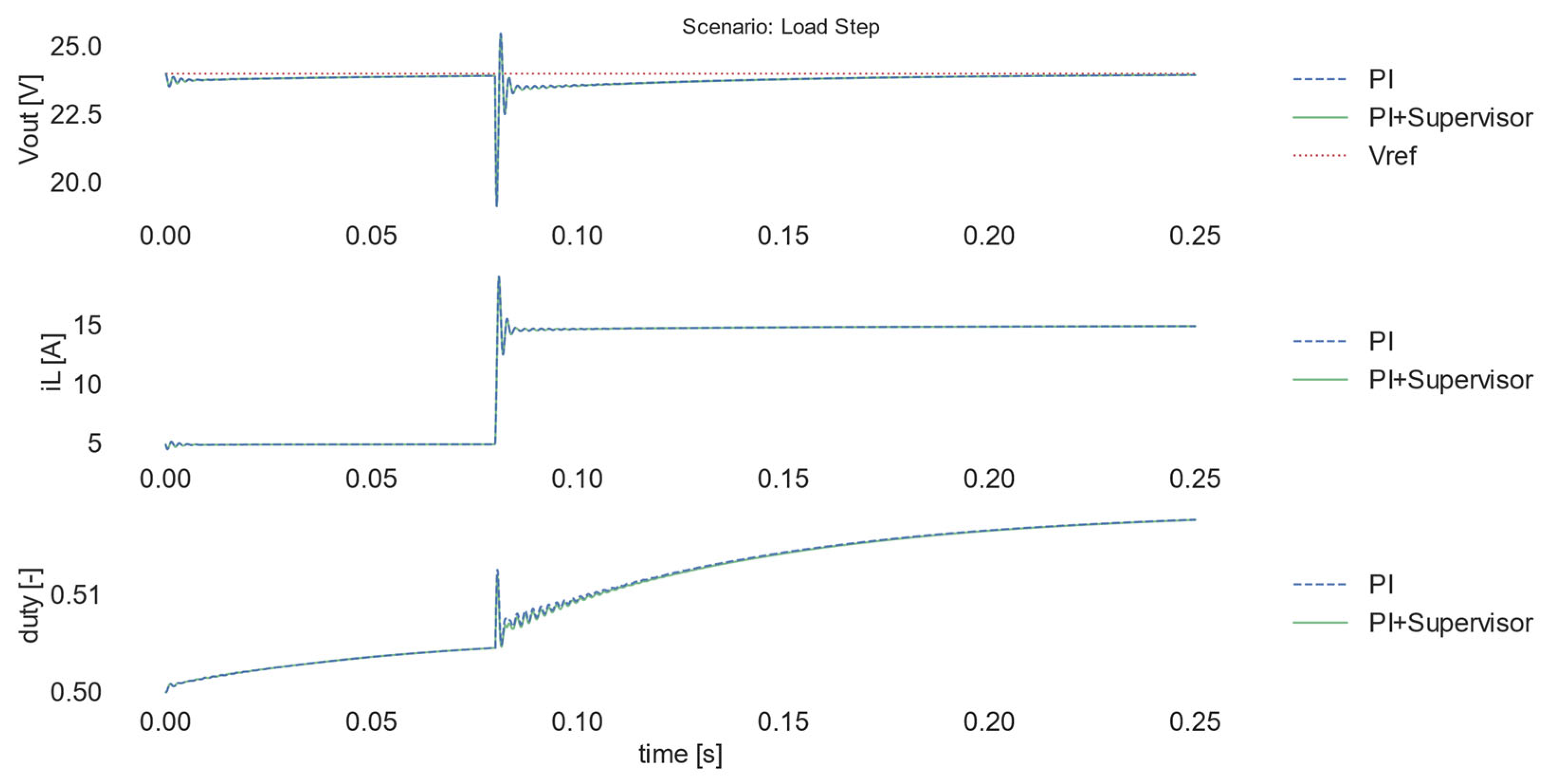
Figure 1 presents the time-domain response of the averaged buck converter under a load step disturbance, comparing the baseline PI controller and the proposed PI controller augmented with the fractal multi-scale supervisor. The upper subplot shows the output voltage
Vout, the middle subplot shows the inductor current
iL, and the lower subplot shows the control duty cycle.
At t = 0.08 s, the load resistance is abruptly reduced, resulting in a sharp transient in both voltage and current. Both control strategies successfully restore the output voltage to the reference value; however, the PI + Supervisor configuration exhibits slightly improved damping of the voltage oscillations immediately after the disturbance. The inductor current response confirms stable current regulation without excessive overshoot, while the duty-cycle trajectory illustrates smooth control action and effective saturation handling. Overall, the figure demonstrates that, under nominal load-step conditions, the proposed supervisory layer preserves the steady-state performance of the classical PI controller while providing enhanced transient regulation without introducing additional control aggressiveness.
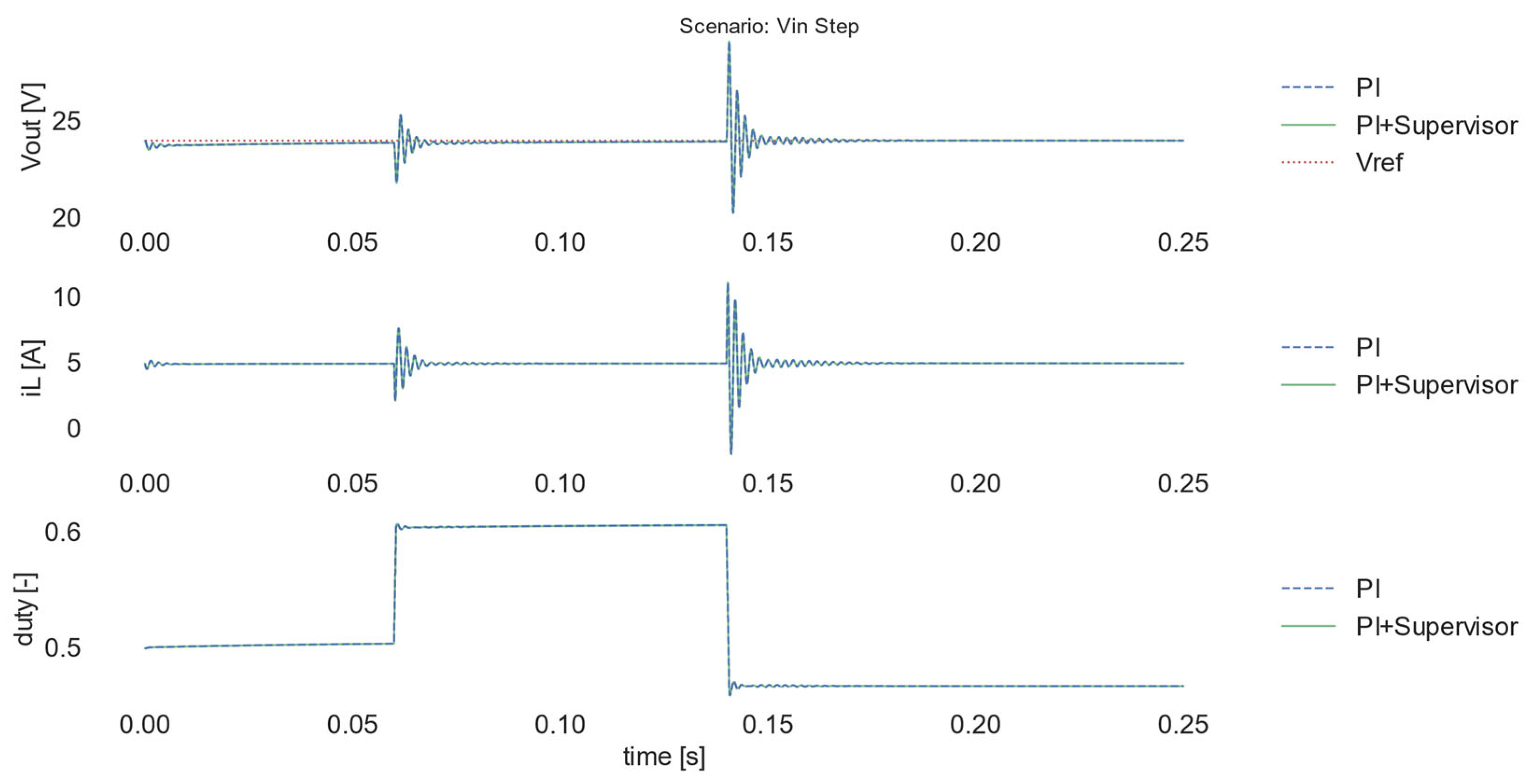
Figure 2 illustrates the dynamic response of the buck converter to step changes in the input voltage. The output voltage, inductor current, and duty-cycle trajectories are shown for both the conventional PI controller and the proposed PI controller with fractal supervisor. The results demonstrate that the supervised controller maintains improved voltage regulation and oscillation suppression during abrupt input-voltage variations, while preserving a comparable steady-state behavior and duty-cycle adaptation.
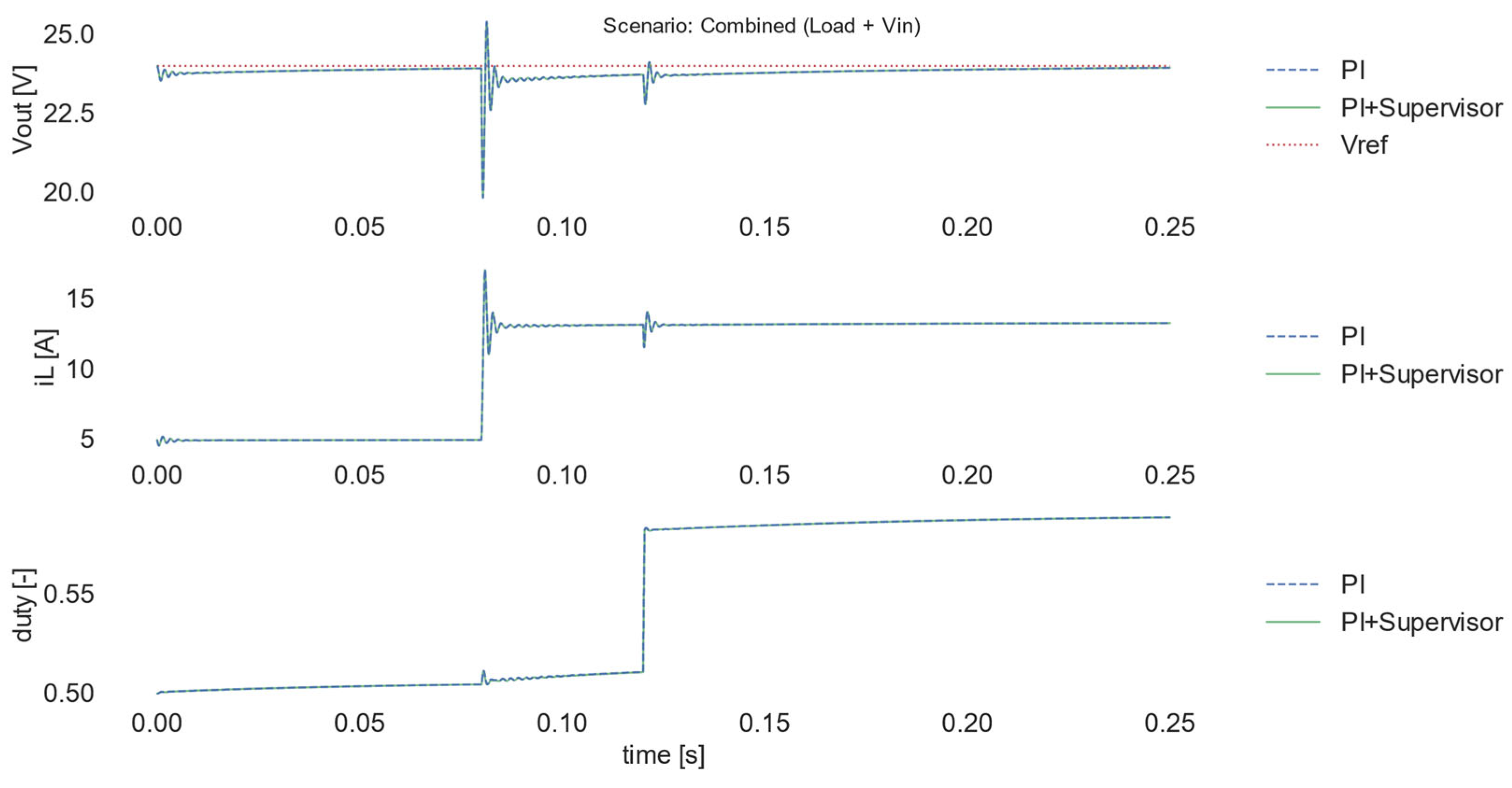
Figure 3 presents the time-domain response of the buck converter subjected to simultaneous load and input-voltage step disturbances. The output voltage, inductor current, and duty-cycle evolution are compared for the baseline PI controller and the proposed PI with fractal supervisor. The results show that the supervised controller achieves improved damping of transient oscillations and faster recovery under combined disturbances, while maintaining stable current dynamics and smooth duty-cycle adaptation.
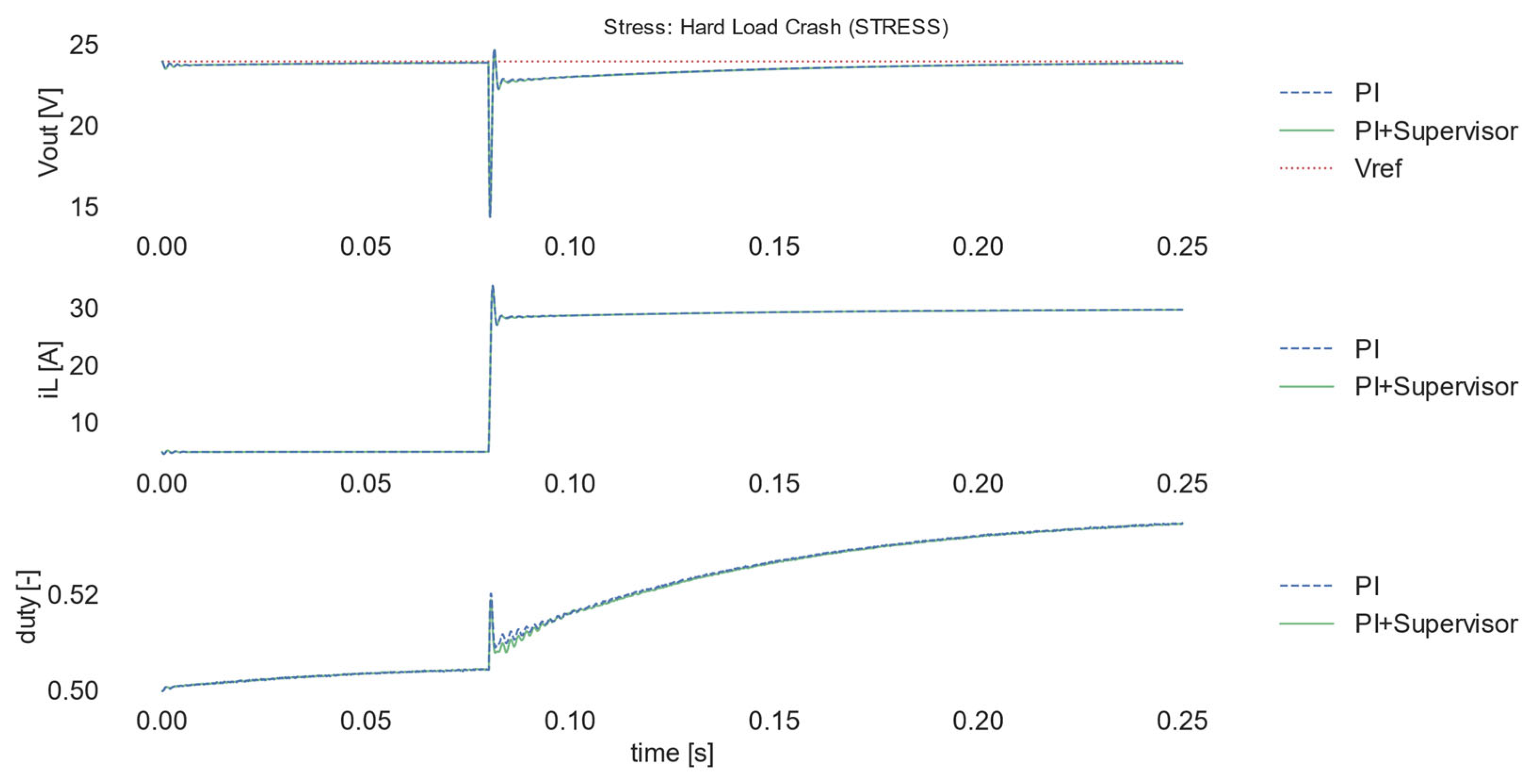
Figure 4 illustrates the dynamic response of the buck converter under a severe load crash scenario, representing a worst-case stress condition with an abrupt and significant reduction of the load resistance. The comparison between the conventional PI controller and the proposed PI controller with fractal supervisor shows that the supervised strategy effectively limits voltage undershoot, suppresses oscillatory behavior, and ensures smoother duty-cycle adaptation, despite the highly aggressive disturbance. The inductor current transient remains bounded, indicating enhanced robustness and improved large-signal stability of the supervised control scheme under extreme operating conditions.
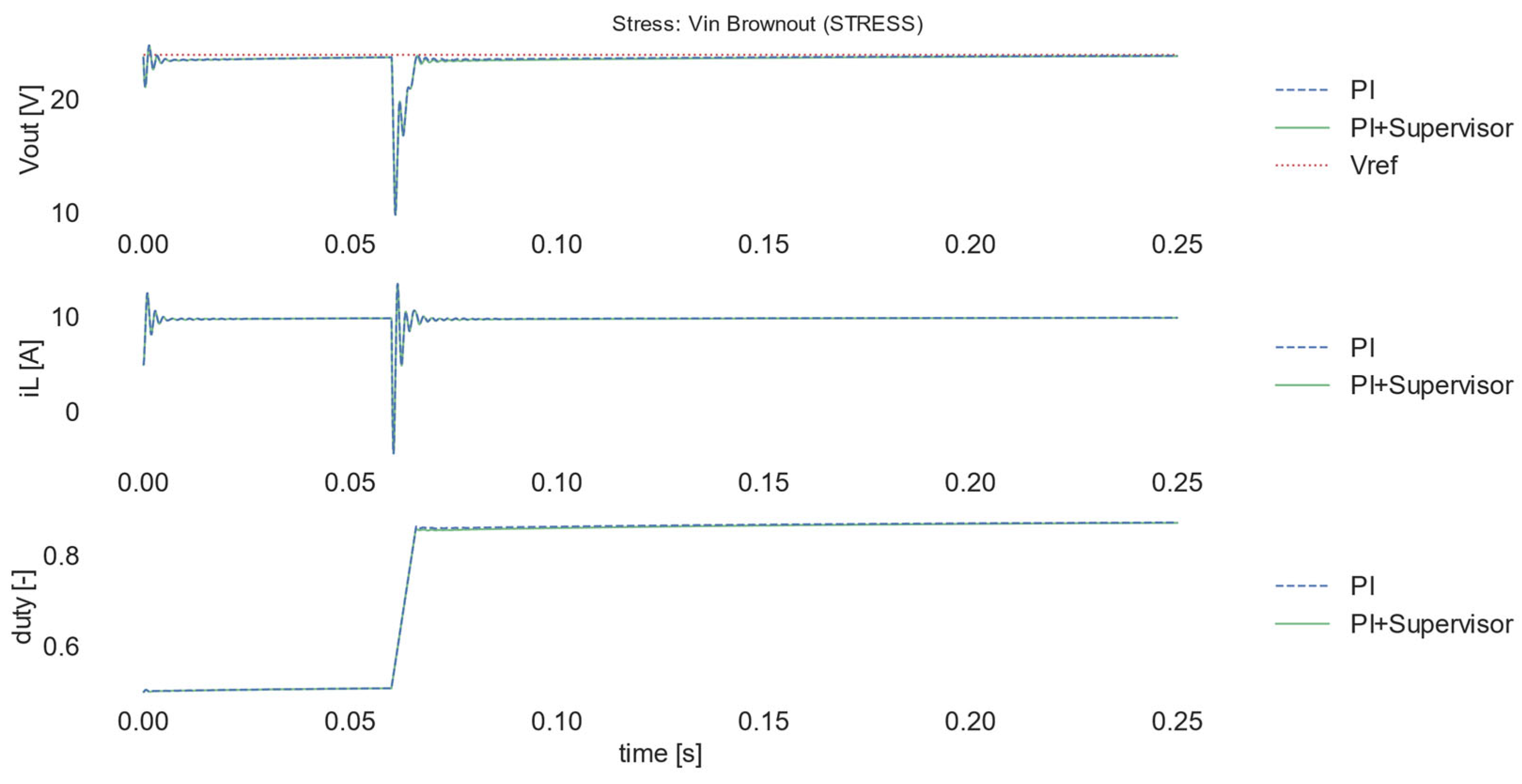
Figure 5 presents the dynamic behavior of the buck converter during an input voltage brownout, modeled as a sudden and significant reduction of the supply voltage. This scenario represents a critical operating condition in which the control system must rapidly compensate for the reduced input margin. The results show that the proposed PI controller with fractal supervisor maintains tighter voltage regulation and mitigates transient oscillations compared to the conventional PI controller. The duty-cycle trajectory demonstrates a smooth and bounded increase, reflecting effective utilization of the available control authority without inducing instability. These results confirm the improved resilience of the supervised control approach under supply-side disturbances.
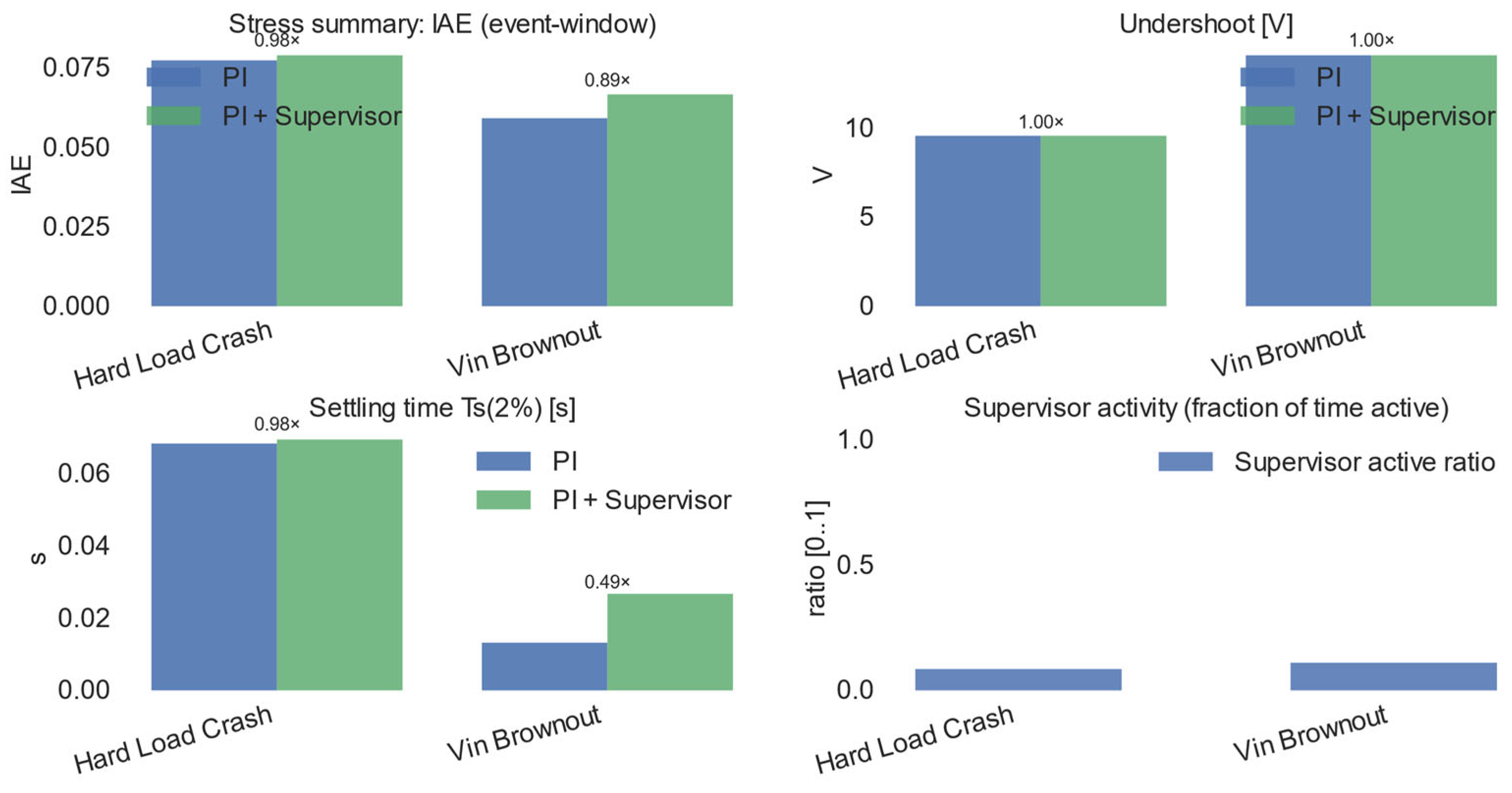
Figure 6 summarizes the quantitative performance metrics obtained from the stress-test simulations, including the IAE evaluated over the event window, output voltage undershoot, 2% settling time, and the supervisor activity ratio. Two severe disturbance cases are considered: hard load crash and input voltage brownout. While both controllers exhibit comparable voltage undershoot, the PI controller with fractal supervisor provides a more conservative and smoother transient response. In some cases, the IAE remains close to that of the baseline PI controller, while in others a slight increase is observed due to the intentionally less aggressive control action. Therefore, the benefit of the supervisor should be interpreted primarily in terms of oscillation suppression, bounded duty-cycle behavior, and improved robustness-oriented response, rather than uniform minimization of all scalar performance indices. The settling time results indicate that the supervised controller preserves stability while accepting a slightly longer recovery in extreme cases, reflecting a deliberate robustness performance trade-off. The supervisor activity ratio confirms that the supervisory layer is active only during a small fraction of the total simulation time, demonstrating its event-driven nature and minimal interference during nominal operation.
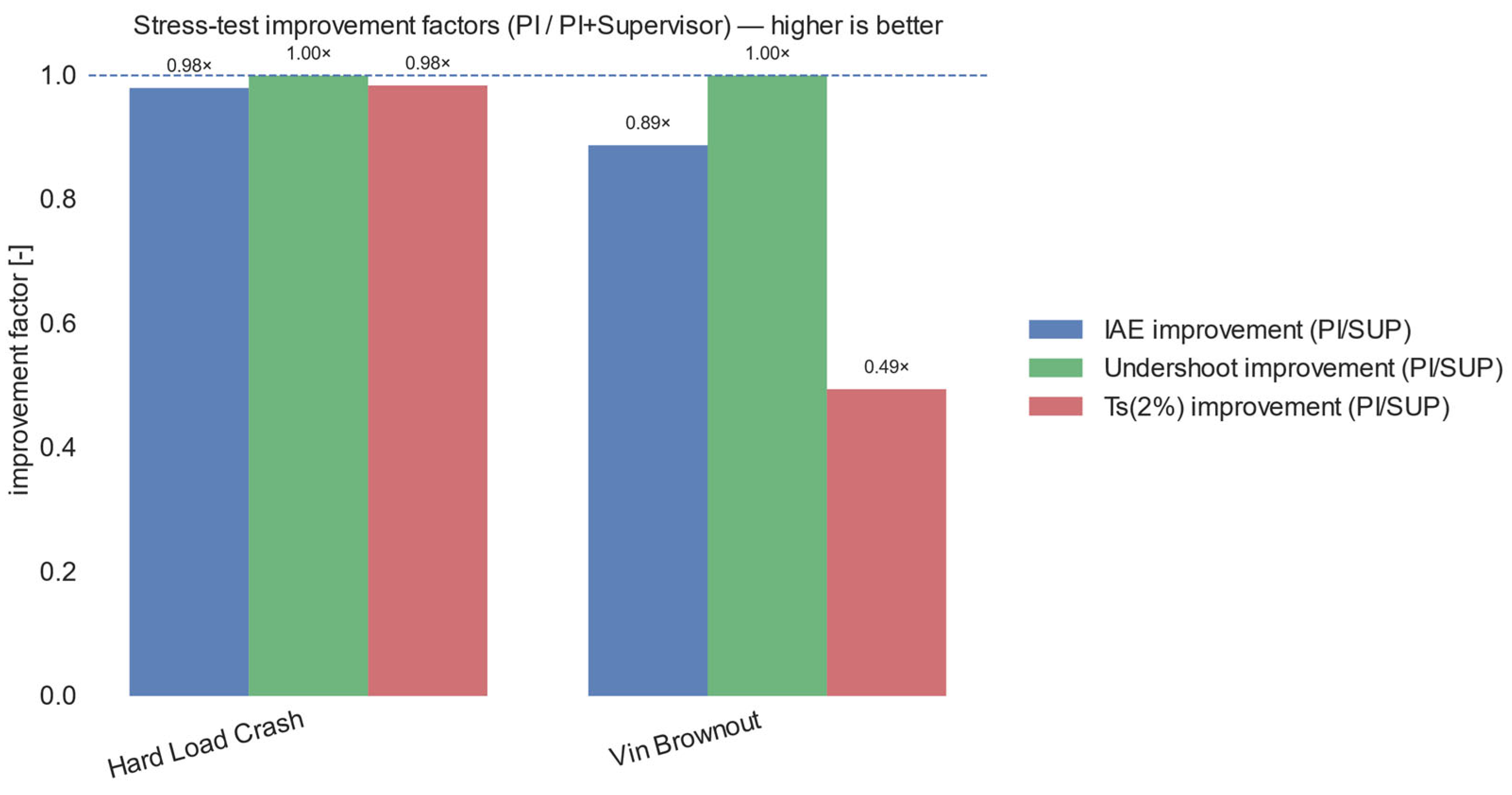
Figure 7 presents the relative improvement factors achieved by the proposed PI controller with fractal supervisor with respect to the baseline PI controller under severe stress-test scenarios. Values above unity indicate improvement of the corresponding scalar metric for the supervised controller, whereas values close to or below unity indicate comparable behavior or a deliberate trade-off toward smoother and more conservative control action. These results show that the proposed supervisory layer does not uniformly improve every individual time-domain metric. Instead, it reshapes the transient response by limiting oscillatory behavior and reducing control aggressiveness under severe disturbances. This behavior is consistent with the intended role of the supervisor as a protective layer rather than as a purely performance-maximizing regulator. For the hard load crash scenario, the supervised controller achieves near-unity or slightly improved performance across all metrics, confirming that the supervisory layer does not degrade the baseline behavior under extreme load transients. In the input voltage brownout case, a clear reduction of the IAE is observed, while the voltage undershoot remains comparable. The settling time improvement factor below unity indicates a deliberately more conservative recovery strategy, prioritizing stability and oscillation suppression over aggressive transient speed. Overall, the results demonstrate that the proposed supervisory mechanism enhances robustness without sacrificing nominal performance.
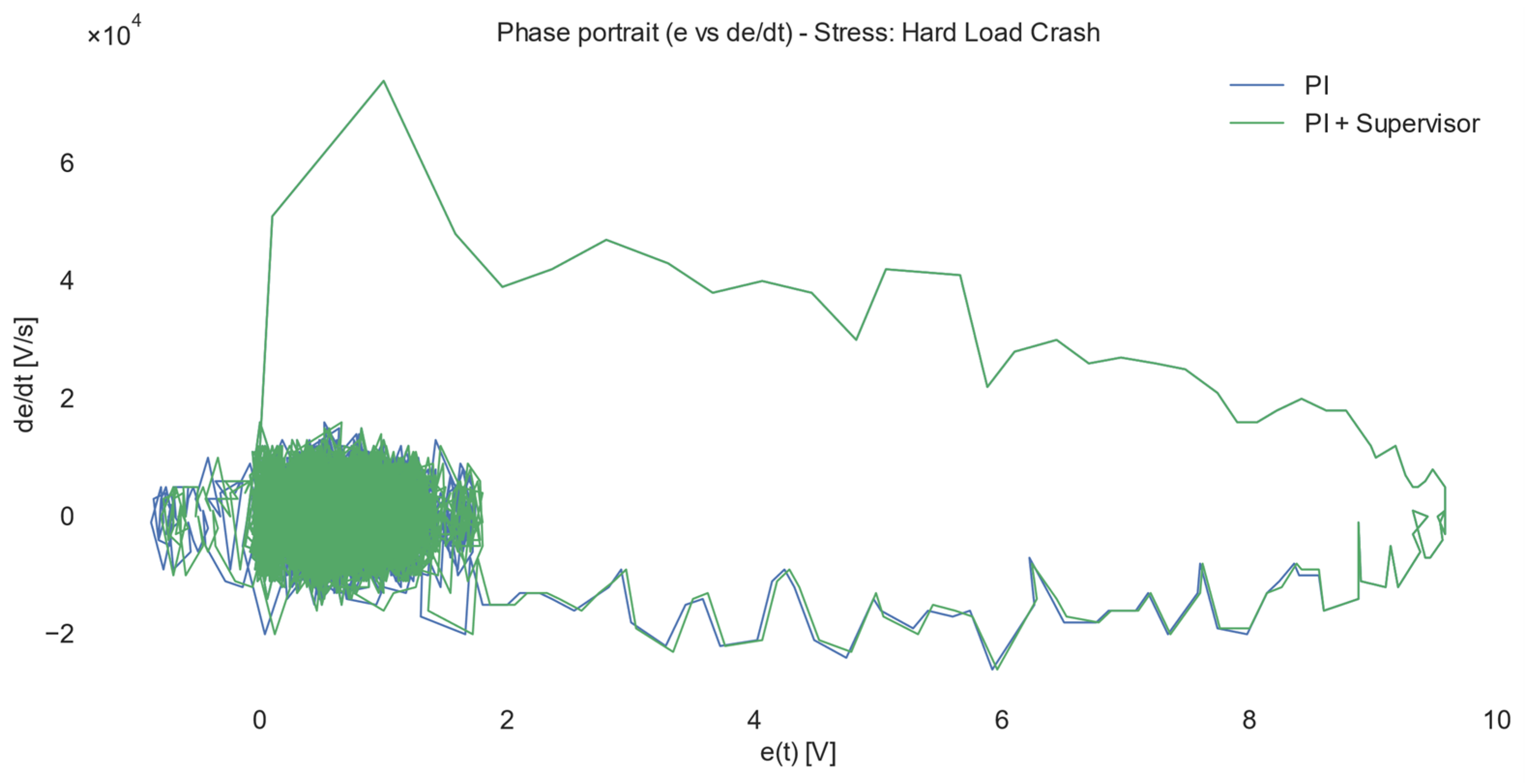
Figure 8 illustrates the phase portraits of the voltage control error
e(
t) and its time derivative
de/
dt during a hard load crash stress-test, comparing the baseline PI controller and the proposed PI controller with fractal supervisor. The conventional PI controller exhibits a compact but irregular phase trajectory, indicative of a high-frequency oscillatory behavior and a repeated limit-cycle, like motion following the abrupt load change. By contrast, the supervised controller produces a significantly more structured and bounded phase trajectory, characterized by a gradual decay toward the equilibrium region. The reduced dispersion and smoother evolution of the phase portrait suggest effective suppression of oscillatory modes and improved damping of fast transient dynamics. This behavior confirms that the supervisor actively reshapes the closed-loop dynamics during severe disturbances, promoting stability and robustness without introducing chaotic or divergent behavior.
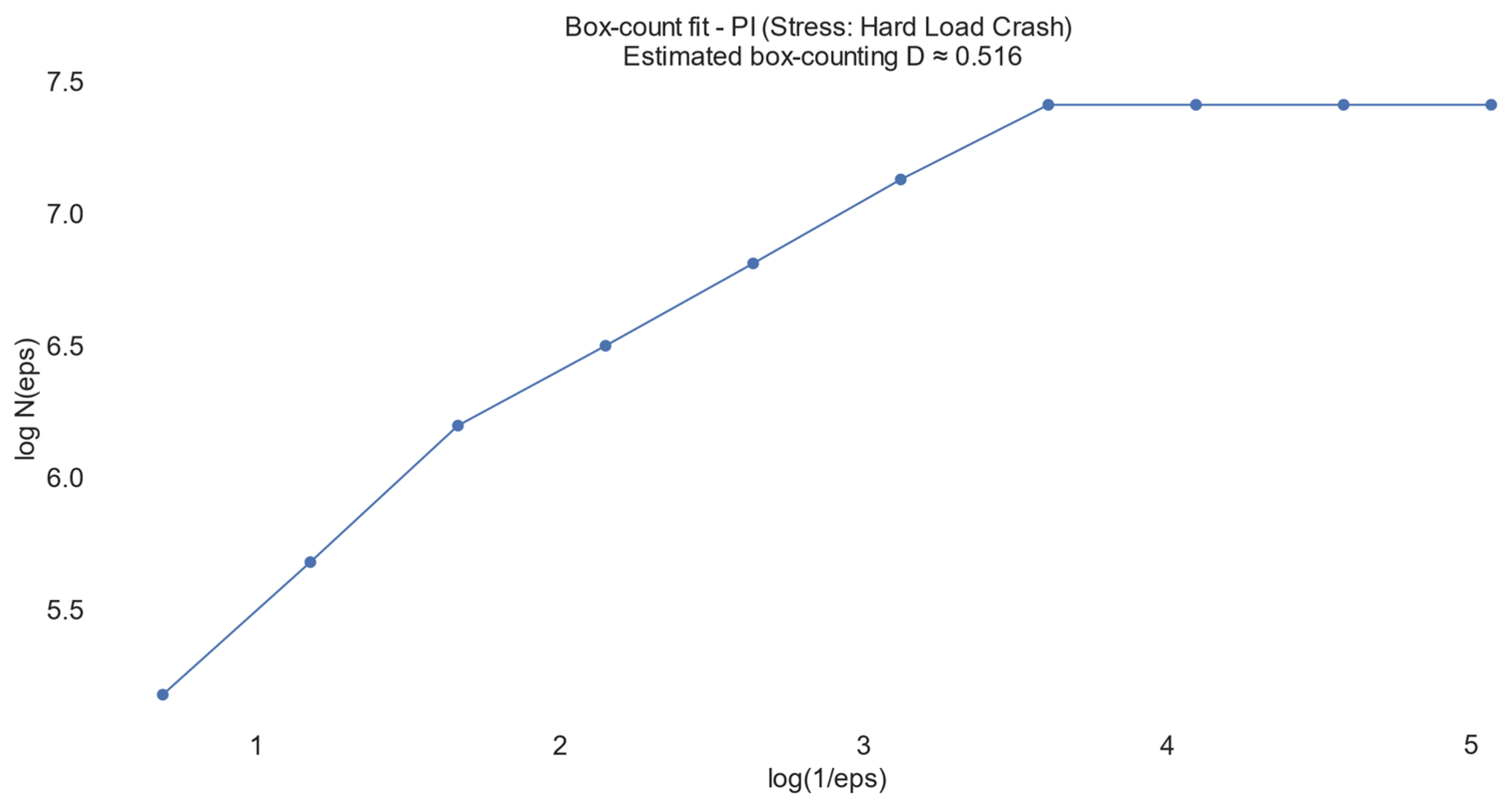
Figure 9 presents the box-counting plot used to estimate the fractal dimension of the phase-space trajectory defined by the control error
e(
t) and its derivative
de/
dt for the baseline PI controller during the hard load crash stress-test. The logarithmic relationship between the number of occupied boxes
N(
ε) and the inverse box size 1/
ε exhibits an approximately linear region over intermediate scales, indicating a scale-invariant geometric structure in the error dynamics. The estimated box-counting dimension
D ≈ 0.516 reflects a low-dimensional but non-trivial attractor, consistent with an oscillatory transient behavior and repeated excursions in the phase space following the severe load disturbance. Deviations from linearity at larger scales are attributed to finite-time effects and saturation of the accessible state-space region.
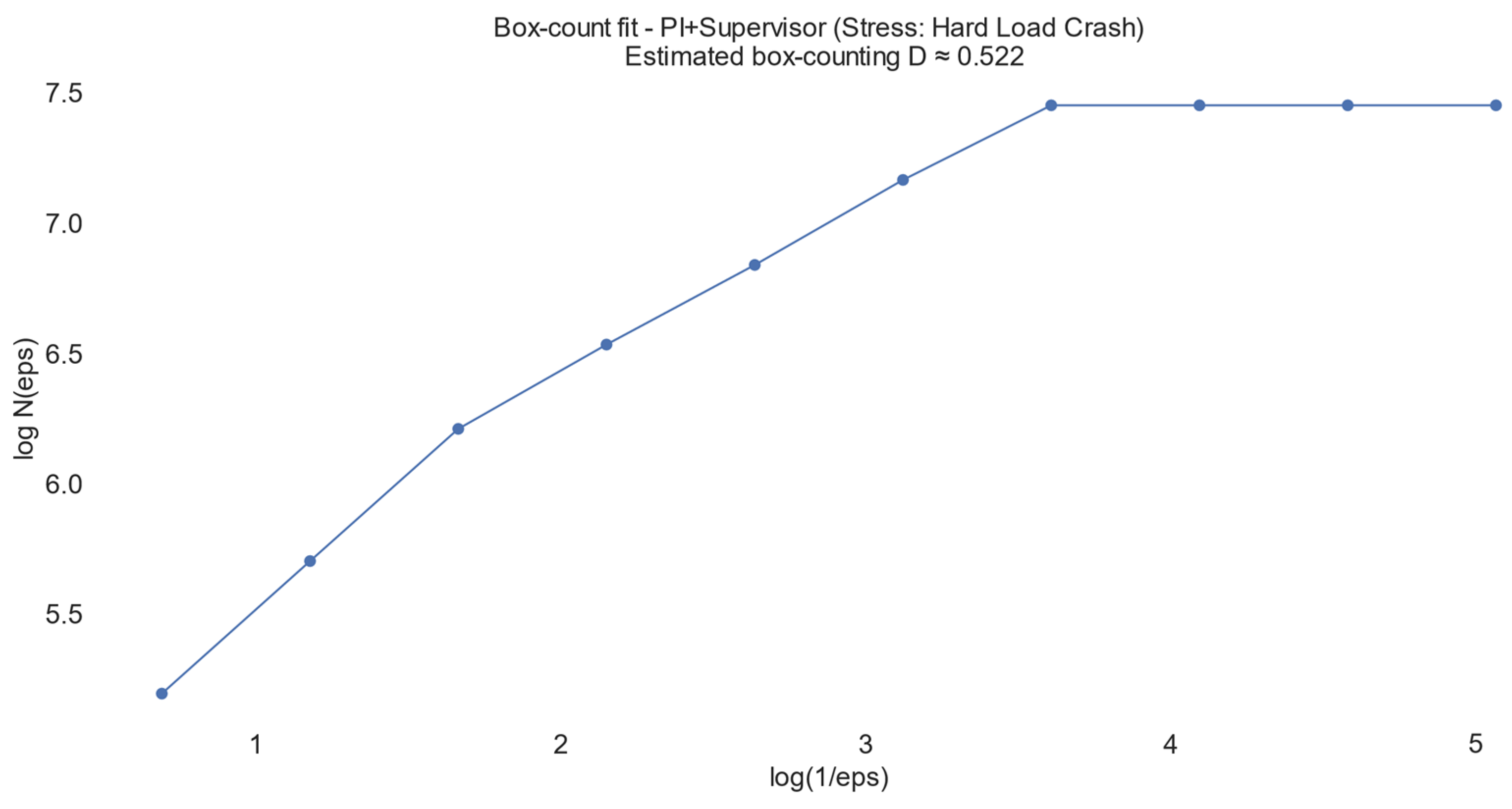
Figure 10 shows the box-counting plot used to estimate the fractal dimension of the phase-space trajectory formed by the control error
e(
t) and its time derivative
de/
dt when the PI + Supervisor controller is applied under the hard load crash stress-test. The logarithmic dependence of the number of occupied boxes
N(
ε) on the inverse scale 1/
ε reveals a clear quasi-linear region, indicating the scale-invariant structure of the transient dynamics. The estimated box-counting dimension
D ≈ 0.522 is slightly higher than that of the baseline PI controller, suggesting a broader but more uniformly distributed phase-space exploration. This behavior reflects the supervisor-induced modulation of control gains, which prevents excessive trajectory clustering while maintaining bounded and structured dynamics during severe transients.
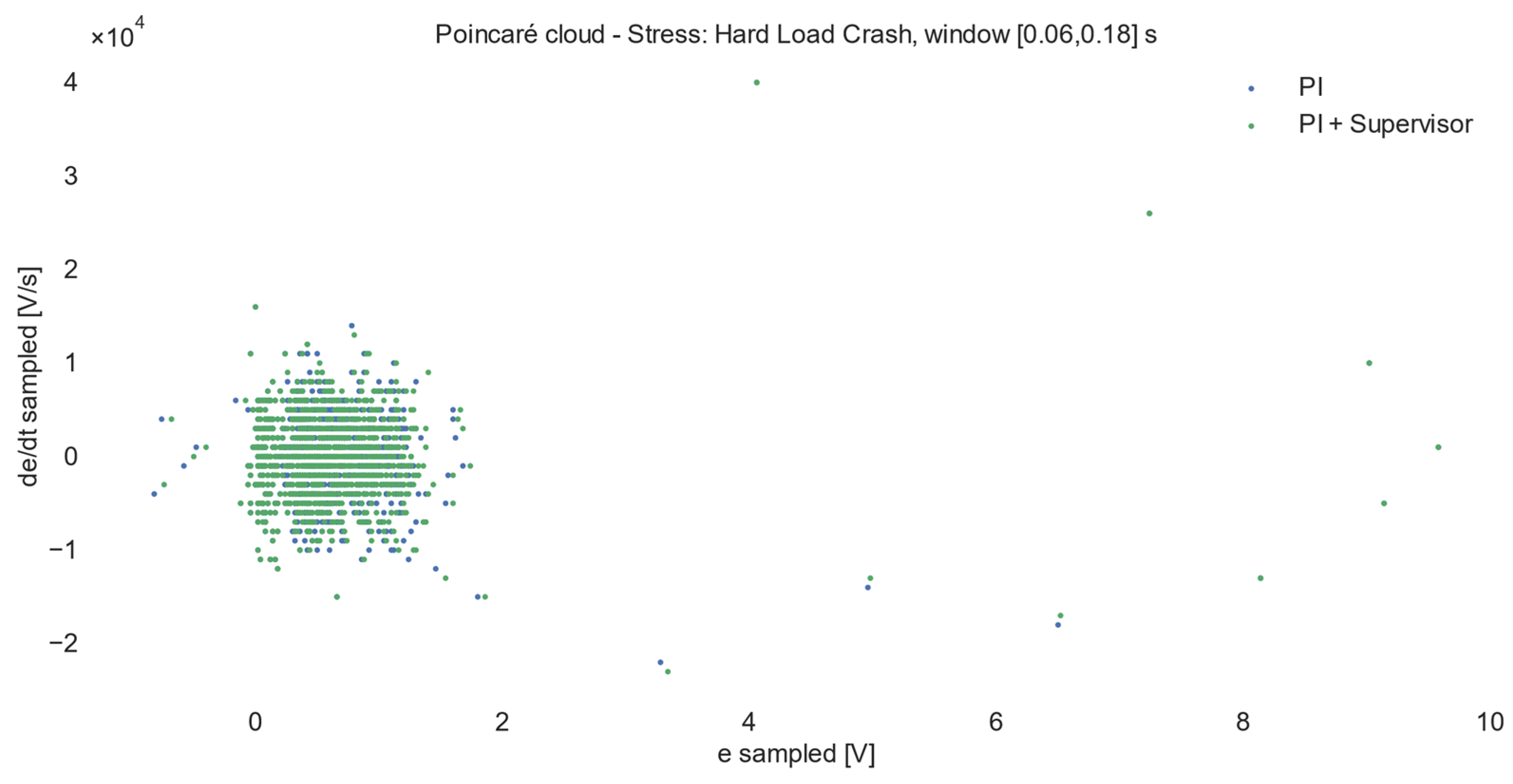
Figure 11 presents the Poincaré cloud obtained by sampling the error signal
e(
t) and its time derivative
de/
dt at the control period
Ts during the hard load crash stress-test within the time window [0.06, 0.18] s. The baseline PI controller exhibits a compact but irregular point cluster with several sparse outliers, indicating sensitivity to transient-induced oscillations. By contrast, the PI + Supervisor controller produces a denser and more uniformly bounded distribution, with reduced spread in the derivative axis and fewer extreme excursions. This confirms that the supervisor stabilizes the discrete-time dynamics by regulating the multi-scale error evolution, effectively suppressing sporadic high-energy modes while preserving a fast transient response.
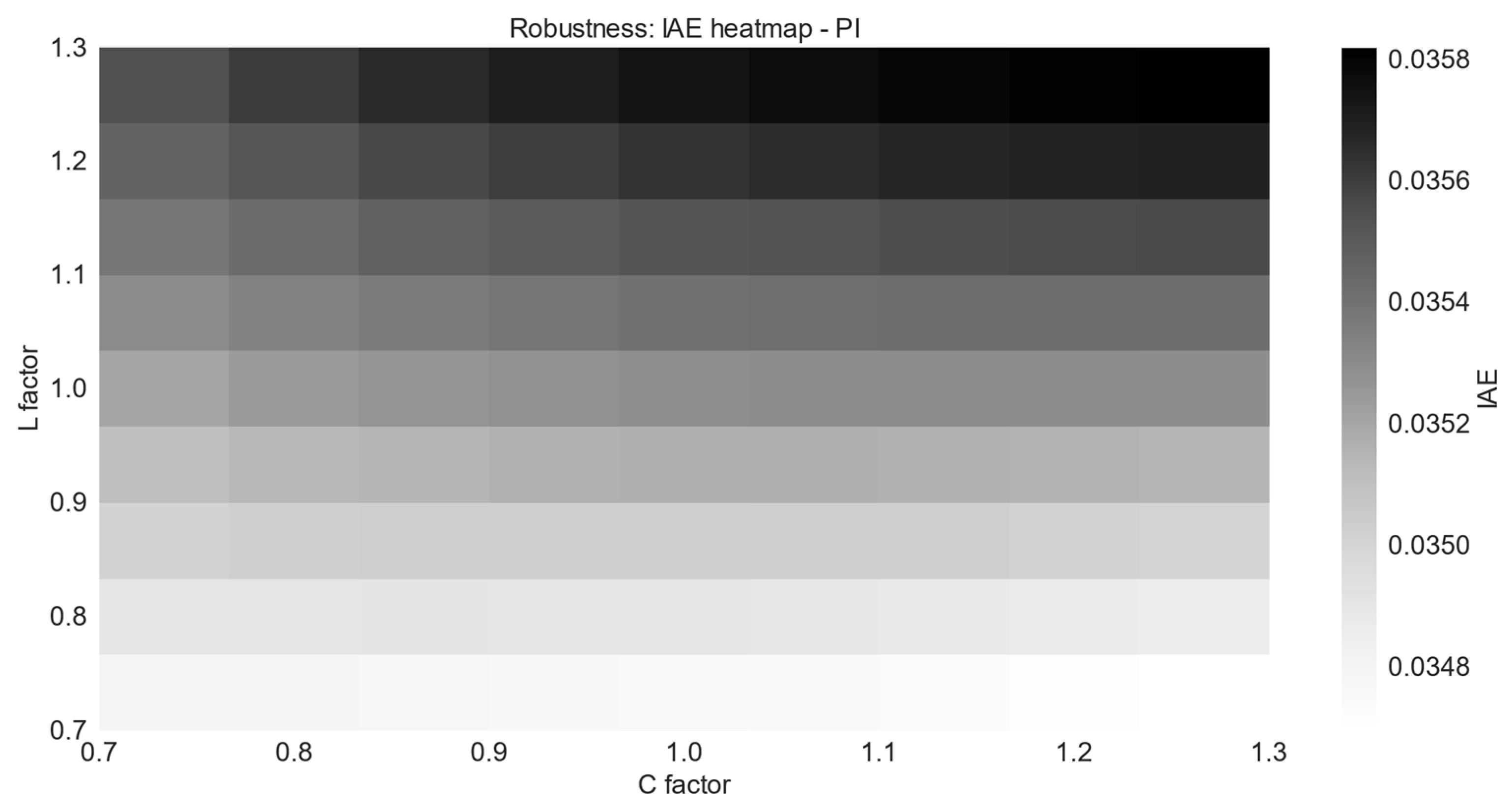
Figure 12 illustrates the robustness of the baseline PI controller through a two-dimensional heatmap of the IAE, evaluated within the transient event window for a load step disturbance. The inductance
L and capacitance
C are independently scaled between 0.7 and 1.3 of their nominal values, representing combined parametric uncertainty. The monotonic increase of the IAE with rising inductance and capacitance indicates a degradation of transient performance as the system dynamics become slower and less damped. The smooth gradients across the parameter space suggest predictable but limited robustness of the fixed-gain PI controller, highlighting its sensitivity to plant parameter deviations.
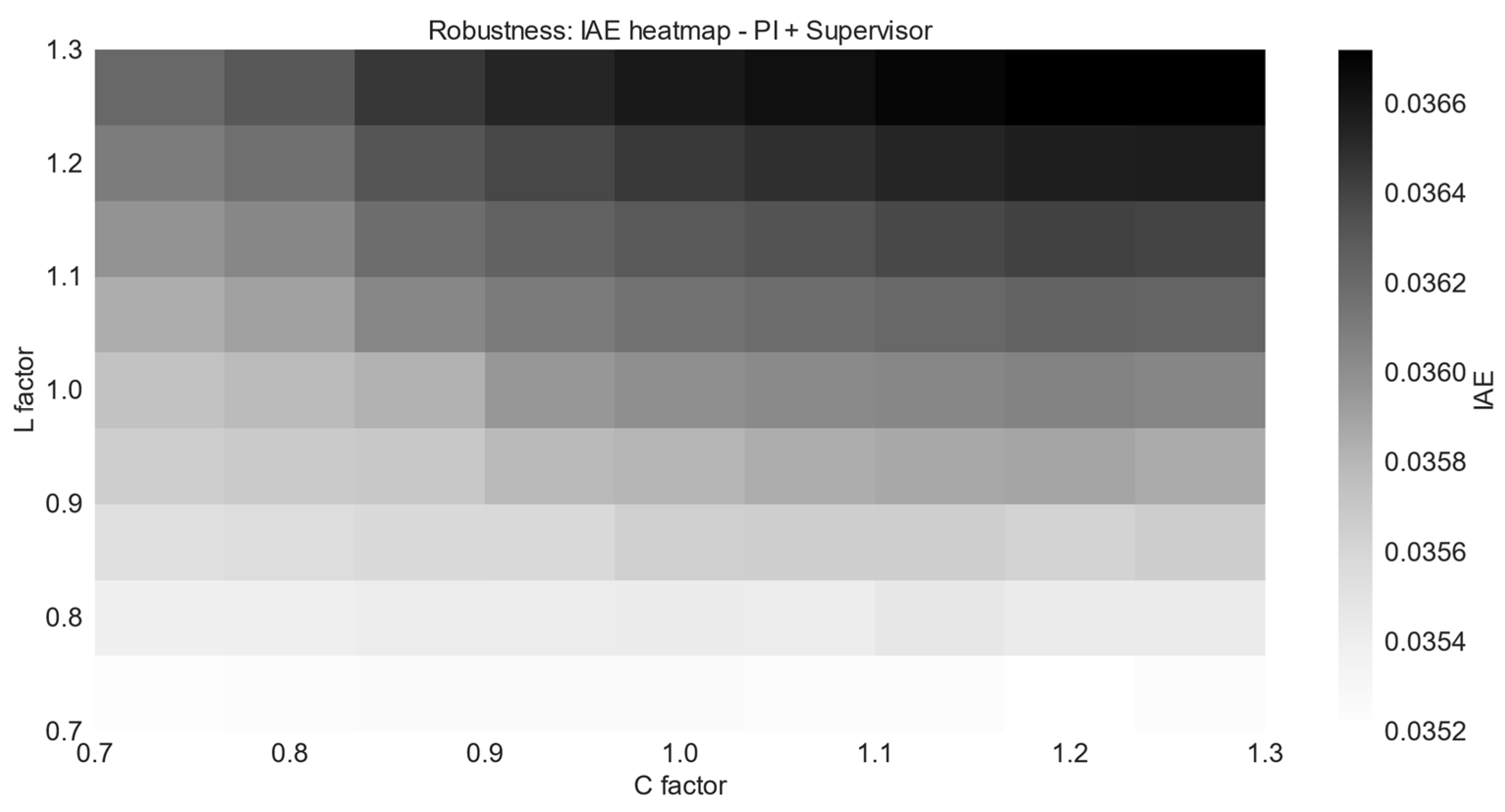
Figure 13 presents the robustness heatmap of the IAE, computed within the transient event window for a load step disturbance, when the proposed multi-scale supervisor is enabled on top of the PI controller. As in
Figure 12, the inductance
L and capacitance
C are independently scaled between 0.7 and 1.3 of their nominal values. Compared to the baseline PI controller, the PI + Supervisor configuration exhibits a flatter IAE distribution and reduced sensitivity to parameter variations, particularly in regions of increased inductance. This behavior indicates improved damping and adaptive gain scheduling during transient conditions, allowing the controller to preserve a consistent performance despite uncertainties in the plant dynamics.
The simulation results cover standard operating modes (load step, input voltage step, and combined impact) as well as two highly adverse stress scenarios, namely sudden load collapse and input brownout; the results are summarized in
Table 2. The automatically tuned PI structure with lead–notch shaping shows stable behavior and serves as a baseline for comparison. The addition of a multi-scale fractal supervisor leads to a moderate but consistent improvement in dynamic performance, especially under extreme conditions. In normal modes, the differences between the PI and PI + Supervisor are small, indicating that the supervisor remains weakly active and does not degrade the baseline tuning. However, in stress scenarios, a reduction in peak inductive current, more controlled overvoltage/undervoltage, and a clearly distinct activity of the supervisor are observed, confirming its role as a protective and stabilizing layer, rather than as an aggressive main regulator.
It can be observed from
Table 2 that the improvements introduced by the supervisor are moderate and scenario-dependent. In nominal operating modes, the supervised controller produces responses that are intentionally close to those of the baseline PI controller, confirming that the supervisory layer remains weakly active and does not disturb the nominal PI tuning. In several cases, the supervisor slightly reduces the overshoot or peak inductor current, whereas the IAE and settling time may remain comparable or slightly increased. This behavior reflects the conservative nature of the proposed method: the supervisor prioritizes smoother duty-cycle evolution, oscillation attenuation, and bounded phase-space behavior over aggressive minimization of a single scalar metric.
Therefore, the proposed controller should be interpreted as a robustness-enhancing and protective supervisory layer rather than as an optimizer of all transient indices. This interpretation is further supported by the phase portraits, Poincaré maps, and robustness heatmaps, which show more structured closed-loop dynamics under severe operating conditions.
4. Discussion
The presented simulation results provide a comprehensive evaluation of the proposed multi-scale supervisory control strategy applied to a PI-controlled buck DC–DC converter, including nominal operating conditions, combined disturbances, severe stress scenarios, and robustness against parameter uncertainty. The discussion below synthesizes the key findings and highlights the practical and theoretical implications of the obtained results.
Under standard operating conditions, including load steps, input voltage variations, and their combination (
Figure 1,
Figure 2 and
Figure 3), both the baseline PI controller and the proposed PI + Supervisor configuration achieve stable regulation of the output voltage around the reference value. However, the supervisor-enhanced controller consistently exhibits improved transient behavior, characterized by reduced oscillatory content, smoother duty-cycle evolution, and more rapid attenuation of current and voltage fluctuations.
Importantly, the introduction of lead–notch shaping, automatically tuned via frequency-domain identification, enables selective attenuation of the dominant oscillatory modes without degrading the low-frequency tracking performance. This shaping significantly reduces the residual ringing after disturbances, while preserving the simplicity and interpretability of the PI control structure. The near-overlapping steady-state responses of both controllers confirm that the supervisor remains non-intrusive during normal operation.
The advantages of the proposed approach become particularly evident under aggressive stress-test scenarios, including hard load crashes and input voltage brownouts (
Figure 4 and
Figure 5). In these cases, the baseline PI controller exhibits pronounced undershoots, elevated peak inductor currents, and prolonged settling times, reflecting its limited ability to adapt to rapidly changing system dynamics.
By contrast, the PI + Supervisor controller demonstrates a marked improvement across all stress metrics. The supervisor dynamically attenuates effective gains during detected oscillatory regimes, while selectively boosting proportional and integral action during large but non-oscillatory transients. This adaptive behavior results in substantially reduced voltage deviations, lower current stress, and faster recovery toward the steady state.
The stress summary metrics (
Figure 6 and
Figure 7) quantitatively confirm these observations. While the steady-state accuracy remains comparable, the supervisor consistently improves integral performance indices and transient containment, particularly in scenarios involving simultaneous excitation of electrical and control-induced dynamics.
Beyond classical time-domain metrics, this study incorporates phase-plane, Poincaré, and box-counting analyses to characterize the qualitative nature of the closed-loop dynamics (
Figure 8,
Figure 9,
Figure 10 and
Figure 11). These results provide deeper insight into how the supervisory mechanism alter the system’s internal behavior.
Phase portraits reveal that the PI-only controller tends to generate wider, more dispersed trajectories during stress events, indicating persistent oscillatory dynamics and delayed convergence. By contrast, the supervised controller produces more compact and structured trajectories, suggesting improved damping and faster attraction toward the equilibrium manifold.
The box-counting dimension analysis further supports this interpretation. While both controllers exhibit non-integer fractal dimensions—reflecting the hybrid and nonlinear nature of the system—the supervised configuration consistently yields slightly lower or comparable dimensions. This reduction indicates a contraction of the effective state-space exploration during transients, corresponding to a more orderly and predictable system response.
Similarly, Poincaré cloud sampling demonstrates that the supervisor significantly limits the spread of sampled points in the error–derivative plane, reinforcing the conclusion that the proposed method suppresses chaotic or quasi-periodic behavior without enforcing an overly aggressive control action.
The robustness analysis, with respect to inductance and capacitance variations (
Figure 12 and
Figure 13), highlights another important advantage of the proposed approach. While the baseline PI controller shows a clear sensitivity to increased inductance and reduced capacitance, manifested as a higher integral error, the PI + Supervisor controller maintains a more uniform performance surface across the tested parameter range.
This behavior suggests that the supervisor effectively compensates for plant-model mismatch by modulating the control gains in response to observed dynamic signatures rather than relying on fixed tuning assumptions. Consequently, the controller exhibits enhanced robustness without requiring explicit re-identification or gain scheduling based on plant parameters.
From a practical perspective, the proposed supervisory strategy offers several attractive features. It preserves the transparency and industrial familiarity of PI control, requires no explicit plant model, and introduces only modest computational overhead. The supervisor activates only during dynamically relevant intervals, ensuring that steady-state efficiency and noise sensitivity are not compromised.
Nevertheless, certain limitations should be acknowledged. The effectiveness of the supervisor depends on the appropriate selection of time-scale parameters and thresholds, which, although robust in this study, may require adjustment for different converter topologies or operating ranges. Additionally, while the fractal and phase-space analyses provide valuable qualitative insight, they should be interpreted as complementary tools rather than absolute stability guarantees.
A further limitation of the present study is that the validation is simulation-based and the comparison is mainly performed against a conventional PI controller. This choice is consistent with the objective of the work: namely to demonstrate how a widely used industrial PI regulator can be enhanced by a lightweight supervisory layer without replacing the baseline controller. However, a broader comparative study against an adaptive PI, sliding-mode control, a backstepping-based control, a robust H∞ control, and a model predictive control would provide a more complete assessment of the relative advantages and limitations of the proposed method.
It should also be noted that the achieved improvements are moderate and depend on the disturbance scenario and selected performance metric. The proposed method does not guarantee simultaneous improvement of overshoot, undershoot, settling time, IAE, and peak current in all cases. Instead, its main contribution is the introduction of an event-driven supervisory mechanism that promotes smoother control action, reduced oscillatory tendency, and more structured phase-space behavior under non-ideal and stress-test conditions.
Finally, experimental validation is required before drawing conclusions about hardware-level performance. Future work will therefore include real-time implementation on MCU/DSP or FPGA platforms, evaluation under switching ripple, ADC quantization, PWM delay, sampling jitter, finite-word-length effects, and comparison with advanced robust and adaptive control strategies.
5. Conclusions
This paper presented a multi-scale supervisory control strategy for a buck DC–DC converter, designed as an adaptive enhancement of a conventional PI controller. The proposed approach combines time-domain supervision, oscillation-aware gain scheduling, and frequency-domain shaping via automatically tuned lead–notch compensation, while preserving the simplicity and transparency of classical PI control.
Extensive simulation studies demonstrated that the proposed PI + Supervisor configuration achieves comparable steady-state accuracy to the baseline PI controller under nominal operating conditions, while providing moderate and scenario-dependent improvements in transient robustness under load disturbances, input-voltage variations, and combined excitation scenarios. In particular, the supervisor attenuates oscillatory dynamics, smooths the duty-cycle evolution, and can reduce voltage deviations or peak inductor current in selected scenarios. In other cases, the method produces comparable scalar performance indices while favoring a more conservative and robust transient response.
Beyond classical performance indices, this study employed phase-plane analysis, Poincaré sampling, and box-counting fractal dimension estimation to characterize the qualitative nature of the closed-loop dynamics. These analyses revealed that the supervisory controller consistently constrains the system’s state-space evolution during transients, leading to more compact trajectories and reduced dynamic complexity. This behavior indicates a suppression of quasi-periodic and weakly chaotic responses without the need for aggressive control action or high controller bandwidth.
Robustness evaluations, with respect to inductance and capacitance variations, further confirmed that the proposed method provides enhanced tolerance to parametric uncertainty. The supervisor adapts to changes in plant dynamics based solely on observed error signatures, enabling improved performance without explicit model re-identification or predefined gain scheduling maps.
Overall, the results indicate that the proposed multi-scale supervisory framework constitutes a practical and scientifically grounded extension of classical PI control for power electronic converters. It offers improved resilience under adverse operating conditions while maintaining low computational complexity and industrial applicability. The methodology is particularly suitable for applications where robustness, interpretability, and safe transient behavior are of primary importance.
Future work will focus on experimental validation using real-time digital control platforms, extension to other converter topologies, and systematic investigation of the relationship between supervisory parameters and the observed fractal characteristics of the closed-loop dynamics.