1. Introduction
Food dehydration has been utilized for centuries to preserve fruits, vegetables, and fish. Traditional methods, such as sun drying and air drying, have proven effective but often pose challenges related to hygiene, efficiency, and weather dependency [
1]. Modern electric food dehydrators address some of these issues but are energy-intensive and may not be accessible in rural areas with limited power supply [
2]. The growing global focus on sustainable, eco-friendly solutions has driven a significant increase in interest in solar-powered food dehydrators. The utilization of solar energy in food dehydration has gained significant attention due to its potential to reduce energy costs and environmental impact. Solar food dehydrators harness renewable energy to remove moisture from food, offering a sustainable alternative to conventional drying methods [
3]. This approach aligns with global efforts to develop sustainable food systems while improving the shelf life and quality of dehydrated food products. In the Philippines, solar drying is widely recognized as an effective and sustainable method for preserving food, particularly agricultural products [
4]. A previous study examined the performance of a solar tunnel dryer for drying fruits and vegetables, highlighting its advantages, including reduced post-harvest losses and improved product quality. The study emphasized the importance of optimizing solar dryer designs to suit specific climate conditions, making them more efficient and accessible to small-scale farmers.
Green Technology Integration in Universities. Universities are crucial in promoting sustainable solutions through the research, development, and implementation of green technologies. Many academic institutions are now incorporating green technologies into their curricula and research initiatives, fostering innovation in renewable energy applications, such as solar food dehydration. Developing a portable solar house food dehydrator aligns with these institutional goals, offering students and faculty opportunities to explore sustainable agricultural technologies. The integration of green technology in university research not only enhances academic learning but also strengthens community engagement. Universities can bridge the gap between theoretical knowledge and practical applications by collaborating with local farmers and industry partners. Additionally, green technology initiatives reduce the university’s carbon footprint and promote eco-friendly solutions that can be replicated in broader agricultural and food preservation sectors. The success of such programs demonstrates the viability of renewable energy in addressing real-world challenges and improving food security.
Challenges and Design Considerations. Despite the advantages of solar drying, challenges such as weather variability, limited sunlight, and high humidity must be addressed to improve the efficiency of solar food dehydrators. Ref. [
5] noted that, while the Philippines’ tropical climate provides abundant sunlight, high humidity can slow the drying process, necessitating design improvements for better ventilation and airflow control. Several studies have explored advancements in solar drying technologies for sustainable food preservation. Ref. [
6] reviewed various solar food-drying methods, emphasizing their energy efficiency and environmental benefits. Ref. [
7] explored recent developments in solar drying technologies, underscoring their role in reducing post-harvest losses. Ref. [
8] focused on the development and performance evaluation of mixed-mode solar dryers, demonstrating their effectiveness in drying agricultural produce. Furthermore, ref. [
9] discussed solar-assisted hybrid drying systems, highlighting their potential for preserving fruits and vegetables. These related studies on solar drying technologies emphasize scientific optimization, performance evaluation, and technological advancement, with a focus on improving efficiency, temperature regulation, airflow management, and overall system effectiveness for food preservation. These studies commonly highlight experimental validation and design improvements to enhance drying performance and sustainability. In comparison, the present dehydrator focuses on practical design and development, emphasizing material selection, structural assembly, portability, integration with renewable solar energy, and user-oriented application for small-scale and off-grid food preservation. While existing studies largely adopt a performance-driven, engineering-based perspective, current studies adopt an application-focused approach that translates sustainable solar drying concepts into a functional, adaptable product.
Importance of Simulation Testing in Product Development. Simulation testing is crucial in product development, ensuring that prototypes meet performance standards before full-scale production. Simulation testing enables researchers to analyze the impact of varying climatic conditions, airflow efficiency, and heat distribution in the development of a portable solar-powered food dehydrator. This process helps identify potential inefficiencies, optimize material selection, and refine the design for maximum efficiency and durability. Advanced simulation tools can replicate real-world environmental conditions, enabling engineers to predict drying rates, energy efficiency, and structural integrity under different operational settings. Computational fluid dynamics (CFD) simulations can optimize airflow patterns to enhance heat distribution and moisture removal. Thermal simulations can also ensure that the dehydrator maintains consistent temperatures, which is crucial for food safety and quality preservation. By integrating these testing methods, product development can be streamlined, reducing the time and cost associated with physical prototyping. Simulation testing also plays a vital role in ensuring product reliability and scalability. By validating the design through digital modeling, developers can refine the dehydrator’s features to enhance usability, improve energy efficiency, and optimize overall performance. Additionally, simulation testing minimizes the environmental impact by reducing material wastage and energy consumption during the trial-and-error phase of product development.
Proposed Portable Solar House Food Dehydrator. This study aims to develop a portable solar-powered food dehydrator tailored to the local climate conditions in the Philippines. The design incorporates two primary drying methods: sun drying, a traditional method that involves direct exposure to sunlight, which is effective for various food items but requires proper hygiene measures, and solar panel-assisted drying, which utilizes photovoltaic panels to generate heat, ensuring consistent drying performance even under fluctuating weather conditions. Ref. [
10] investigated the feasibility of utilizing solar dryers for drying banana slices in the Caraga Region. The research highlighted the potential of solar drying to reduce post-harvest losses, improve product quality, and increase the market value of dried products.
2. Methodology
This research employed the ADDIE model, a structured approach for designing, developing, and refining products, particularly in education, training, and technology-driven learning solutions. Applying ADDIE ensures that product development is systematic, user-centered, and research-driven. The integration of ADDIE into product development research involves the following stages: Analysis—This phase focuses on understanding the problem that the product aims to solve, the target users, and their needs. Product development research involves market research, user need analysis, and feasibility studies. For example, researchers analyze learners’ challenges, instructional requirements, and technological constraints when developing an educational technology tool to ensure that the product addresses real-world educational gaps. Design—Based on insights from the analysis phase, researchers develop detailed product specifications, prototypes, and design frameworks. This includes defining the product’s features, functionalities, user interface (UI), and user experience (UX). The design phase for an intelligent learning platform involves structuring content delivery, developing user engagement strategies, and incorporating adaptive learning elements. Development—The product prototype or actual version is built during this phase. Developers and engineers create functional versions, integrating content, programming, and interactive elements. This could include developing digital modules, simulations, or training systems in educational product research.
Iterative prototyping is often used, where feedback from early testing informs refinements. Implementation—The product is deployed in real-world settings for testing and usability assessment. Pilot studies and beta testing enable researchers to gather initial user feedback, identify usability issues, and assess effectiveness. Evaluation—This phase assesses the product’s effectiveness, functionality, and impact. Evaluation in product development research can be formative, involving ongoing improvements based on feedback, or summative, involving a final assessment of effectiveness and success. Data are collected through usability studies, surveys, performance analytics, and user feedback. If necessary, modifications are made to optimize the product before full-scale deployment. By integrating the ADDIE model into product development research, researchers ensure that products are designed based on empirical evidence, iterative refinement, and user-centered principles. This systematic approach improves the quality, usability, and effectiveness of the developed product, making it more relevant and impactful for its intended users. This developed product will benefit learners in food technology who conduct laboratory experiments, particularly in food preservation courses.
3. Results and Discussion
3.1. Development Phase
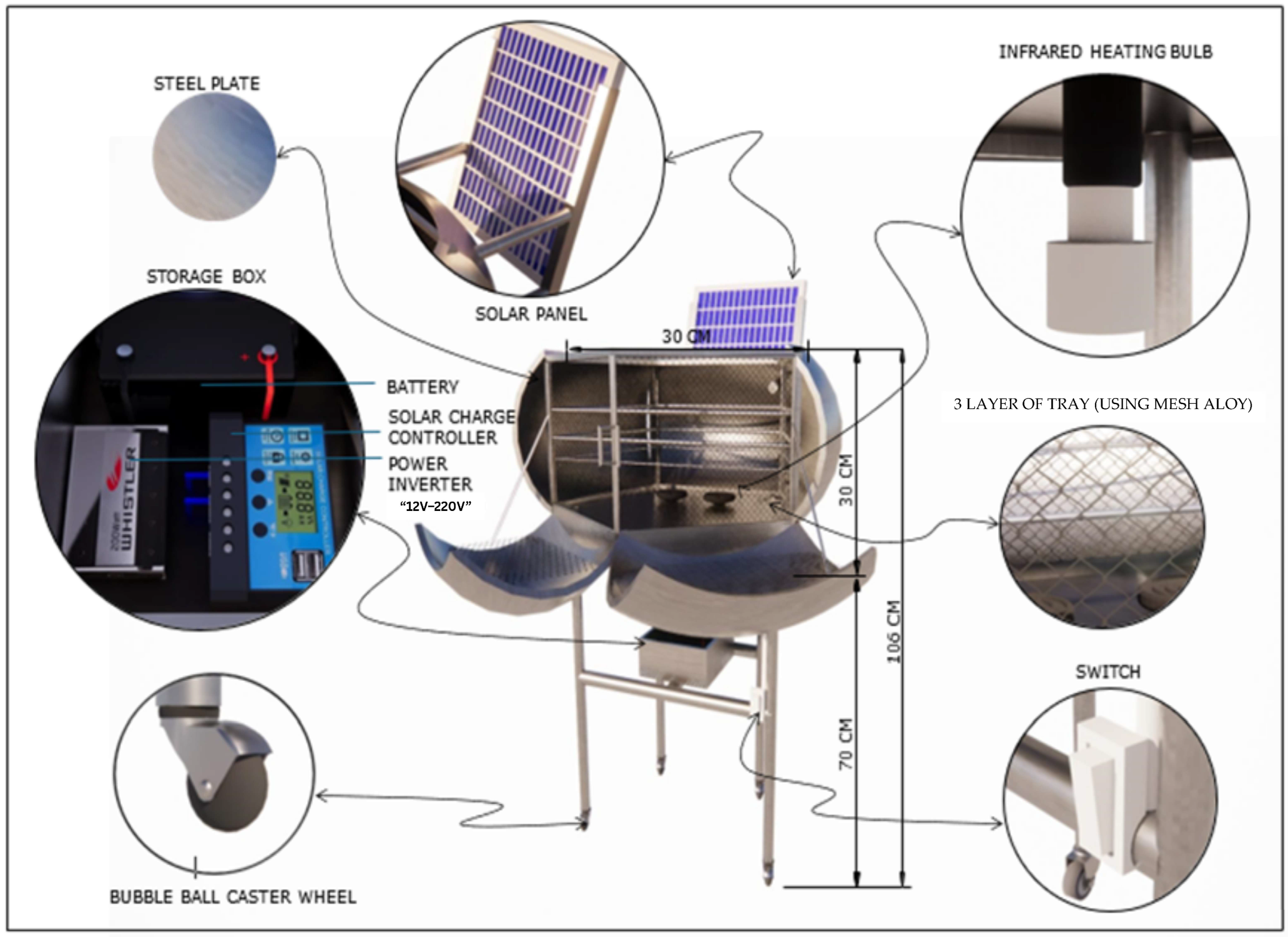
Figure 1 shows the machine’s overall components and their specific mechanisms, highlighting the key components of the technology. The first step in the development process was to select suitable materials for constructing the charging station. After evaluating various options, the researchers purchased and gathered all the necessary materials to construct the product. The final material included lightweight, high-strength aluminum for the frame and drying racks and a stainless steel plate for the top and side panels. Solar panels were employed for power generation. Insulation materials were used to minimize heat loss and maintain optimal drying temperatures.
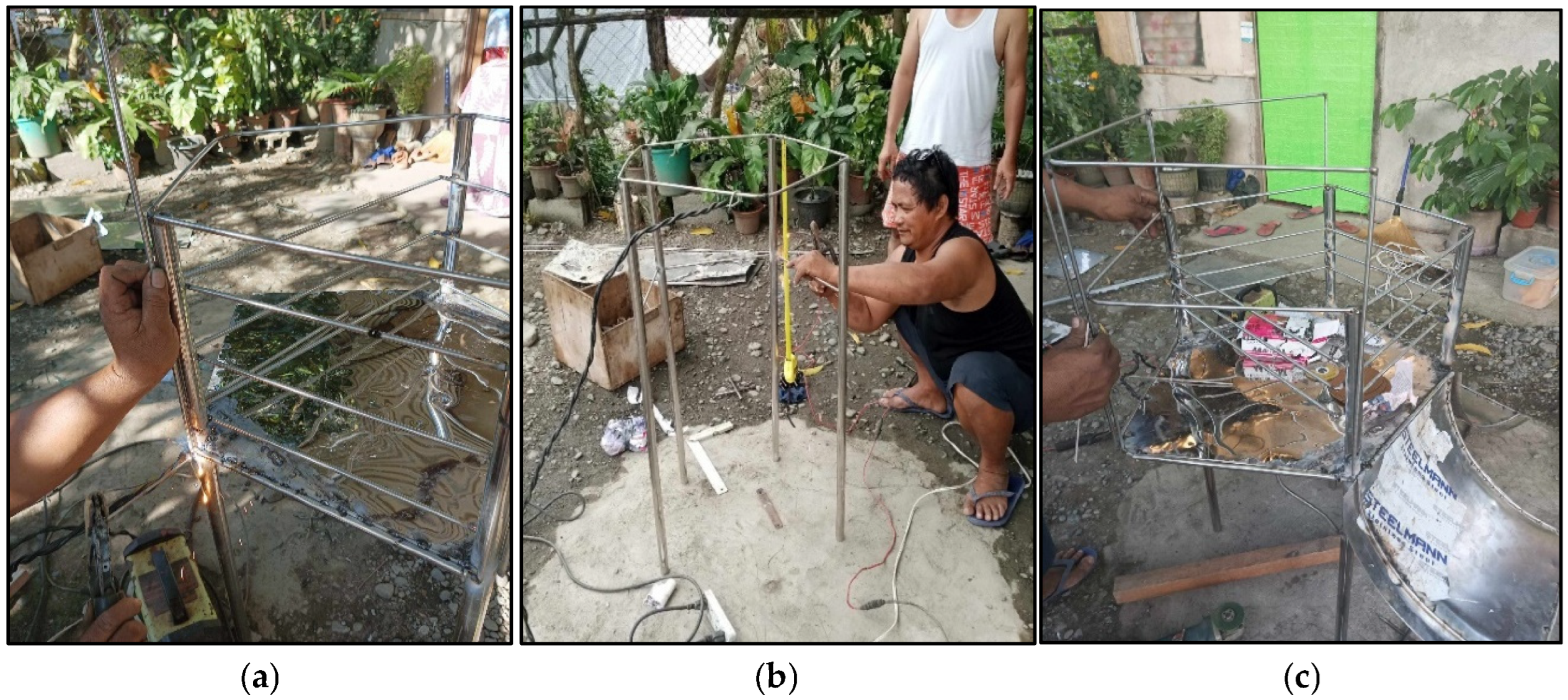
Figure 2a–c shows the prototype design and assembly. Using the selected materials, the researchers began constructing the initial prototype of the product. This involved designing the overall shape and dimensions, integrating the solar panels and electronic components, and ensuring the proper fit and finish of all parts. The procedure for fabricating the product involved the following steps:
After step 1, obtain the necessary materials (step 2). Design the overall shape and dimensions of the dehydrator enclosure, considering portability, available drying space, and the optimal placement of the solar panel (step 3). Cut the stainless steel and plates to the required sizes (step 4). Assemble the body of the dehydrator using the cut wood pieces, ensuring proper alignment and structural integrity (step 5). Install hinges and latches to create an opening and closing mechanism for the dehydrator (step 6). Cut the stainless steel or food-grade mesh to the appropriate sizes for the drying trays (step 7). Construct tray frames from wood or other materials to ensure a secure, stable structure (step 8). Install the mesh onto the tray frames to create multiple drying racks within the dehydrator (step 9). Line the interior of the dehydrator enclosure with insulation material to minimize heat loss and maintain optimal drying conditions (step 10). Measure and mark the optimal positions for the solar panels on the exterior of the dehydrator (step 11). Securely mount the solar panels onto the back of the parabolic cover, ensuring proper alignment and tilt for maximum solar energy capture (step 12). Connect the solar panels to the electronic components (e.g., a charge controller and a battery) using appropriate wiring and connectors (step 13). Assemble all the fabricated components, including the body, solar panels, electronic systems, and drying trays, into a cohesive dehydrator unit (step 14). Perform final adjustments and refinements to ensure the proper fit and finish of all parts.
Several design iterations were required to optimize the dehydrator’s portability, solar energy capture, and food-drying performance. For example, the team experimented with different solar panel configurations and rack positioning to maximize the available drying area while maintaining a compact footprint. However, as the fabricator was not an expert in this field, they encountered difficulties during construction, resulting in some imperfections in the final product, including safety concerns due to sharp edges.
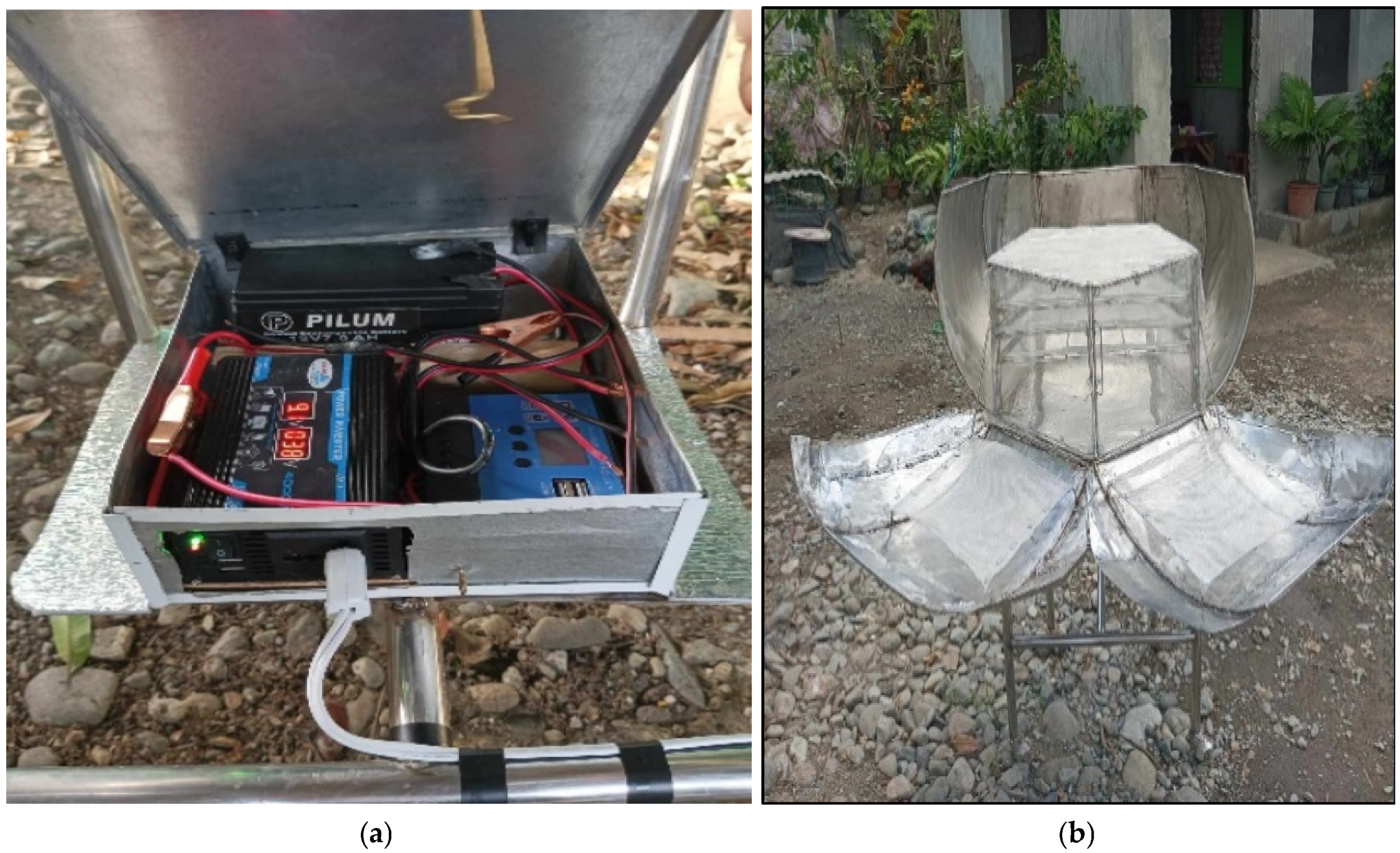
Figure 3a,b show the finished product. The design and development of the product demonstrate the potential for sustainable and versatile food preservation solutions. By leveraging renewable solar energy and focusing on key design requirements such as portability, efficiency, and user-friendliness, the researchers created a prototype that addresses the needs of both outdoor enthusiasts and off-grid living communities. However, the fabricator’s limited expertise in this field led to some challenges during construction, resulting in a final product that fell short of the initial vision. Safety concerns, including the presence of sharp parts and the dehydrator’s larger-than-expected size, also need to be addressed in future design iterations. Further testing and refinement of this design, coupled with improved fabrication expertise, could lead to the commercialization of a viable product that promotes eco-friendly food-drying practices while ensuring high safety and user-friendliness.
3.2. Simulations
To test the effectiveness of the developed food dehydrator, learners conducted several simulations using different fruits and vegetables commonly used for food preservation and as ingredients or delicacies found locally in the country.
Table 1 shows the results of trial 1: indirect fruit drying (using electricity). The fruits examined in this data set included apples, pineapples, bananas, mangoes, and tomatoes. Apples had a moisture content of 14.29% and a weight loss of 10 g. Pineapples had a moisture content of 33.33% and a weight loss of 15 g. Bananas had a moisture content of 40% and a weight loss of 20 g. Mangoes had a moisture content of 33.33% and a weight loss of 10 g. Tomatoes had a moisture content of 33.33% and a weight loss of 5 g. Trial 1 demonstrated that the indirect drying method using electricity effectively reduced the moisture content of the fruits and vegetables. The fruits were dried, resulting in an average reduction in the moisture content of 28.57%. The trial also showed that fruit weight loss was significant, averaging at 17.78%.
Table 2 shows the results of trial 1: indirect vegetable drying (using electricity). The vegetables included carrots, potatoes, beans, sweet potatoes, and okra. Carrots had a moisture content of 33.33% and no weight loss. Potatoes had a moisture content of 11.11% and a weight loss of 5 g. Beans had a moisture content of 20% and a weight loss of 2.5 g. Sweet potatoes had a moisture content of 16.67% and a weight loss of 10 g. Ladies’ fingers had a moisture content of 20% and a weight loss of 5 g.
Trial 1 demonstrated that the indirect drying method using electricity effectively reduced the moisture content of the fruits and vegetables. The vegetables were dried, resulting in an average reduction in the moisture content of 20%. The trial also demonstrated that the weight loss of the fruits was significant, averaging at 11.67%.
The study suggests that the indirect drying method using electricity is a promising technique for preserving fruits and vegetables and could be scaled up to help reduce food waste and improve food security [
11].
Table 3 shows the results of trial 2: indirect fruit drying (using electricity). The fruits examined in this data set included apples, pineapples, bananas, mangoes, and tomatoes. Apples had a moisture content of 16.67% and a weight loss of 10 g. Pineapples had a moisture content of 33.33% and a weight loss of 10 g. Bananas had a moisture content of 0% and a weight loss of 0 g. Mangoes had a moisture content of 50% and a weight loss of 10 g. Tomatoes had a moisture content of 0% and a weight loss of 0 g. The trial demonstrated that the indirect drying method using electricity effectively reduced the moisture content of the fruits and vegetables. The dried fruits had an average moisture content reduction of 25.67%.
Table 4 shows the results of trial 2: indirect vegetable drying (electricity). The vegetables included carrots, potatoes, beans, sweet potatoes, and okra. Carrots had a moisture content of 0% and no weight loss. Potatoes had a moisture content of 25% and a weight loss of 10 g. Beans had a moisture content of 0% and a weight loss of 0 g. Sweet potatoes had a moisture content of 20% and a weight loss of 10 g. Ladies’ fingers had a moisture content of 0% and a weight loss of 0 g.
The trial demonstrated that the indirect drying method using electricity effectively reduced the moisture content of the fruits and vegetables. The dried vegetables had an average moisture content reduction of 20.67%. The trial also showed that the weight loss of the vegetables was significant, averaging at 10.67%.
The fruits listed in
Table 5 include apples, pineapples, bananas, mangoes, and tomatoes. Apples had a moisture content of 20% and a weight loss of 10 g. Pineapples had a moisture content of 25% and a weight loss of 5 g. Bananas had a moisture content of 16.6% and a weight loss of 5 g. Mangoes had a moisture content of 0% and a weight loss of 0 g. Tomatoes had a moisture content of 100% and a weight loss of 0 g.
As shown in
Table 6, the results of trial 3 revealed that the indirect drying method using electricity effectively reduced the moisture content of the fruits and vegetables. The fruits were dried, resulting in an average reduction in the moisture content of 25%. The vegetables included carrots, potatoes, beans, sweet potatoes, and okra. Carrots had a moisture content of 33.33% and a weight loss of 10 g. Potatoes had a moisture content of 16.6% and a weight loss of 5 g. Beans had a moisture content of 100% and a weight loss of 0 g. Sweet potatoes had a moisture content of 12.5% and a weight loss of 5 g. Ladies’ fingers had a moisture content of 25% and a weight loss of 5 g.
Trial 3 showed that the indirect drying method using electricity effectively reduced the moisture content of the fruits and vegetables. The dried vegetables had an average moisture content reduction of 26.92%. The trial also showed that the weight loss of the vegetables was significant, averaging at 10.67%.
As shown in
Table 7, the fruits examined in trial 4: indirect fruit drying (using electricity) included apples, pineapples, bananas, mangoes, and tomatoes. Apples had a moisture content of 25% and a weight loss of 10 g. Pineapples had a moisture content of 33.33% and a weight loss of 5 g. Bananas had a moisture content of 20% and a weight loss of 5 g. Mangoes had a moisture content of 0% and a weight loss of 0 g. Tomatoes had a moisture content of 100% and a weight loss of 0 g. Trial 4 demonstrated that the indirect drying method using electricity effectively reduced the moisture content of the fruits and vegetables. The dried fruits had an average moisture content reduction of 22.22%. The trial also showed that the fruit weight loss was significant, averaging at 12.67%.
As shown in
Table 8, the vegetables examined in trial 4: indirect vegetable drying (using electricity) included carrots, potatoes, beans, sweet potatoes, and okra. Carrots had a moisture content of 50% and a weight loss of 10 g. Potatoes had a moisture content of 20% and a weight loss of 5 g. Beans had a moisture content of 100% and a weight loss of 0 g. Sweet potatoes had a moisture content of 14.28% and a weight loss of 5 g. Ladies’ fingers had a moisture content of 33.33% and a weight loss of 5 g.
Trial 4 showed that the indirect drying method using electricity effectively reduced the moisture content of the fruits and vegetables. The dried vegetables had an average moisture content reduction of 26.32%. The trial also showed that the vegetable weight loss was significant, averaging at 10.67% per vegetable. The results of the trials indicate that the indirect drying method, which utilizes electricity, is suitable for reducing the moisture content of fruits and vegetables. This method can preserve fruits and vegetables for extended periods, reducing food waste and increasing food security.
The trials also underscore the importance of using proper drying techniques to preserve the quality and shelf life of fruits and vegetables. Drying can help prevent spoilage, reduce the risk of mold and bacterial growth, and improve the texture and flavor of fruits and vegetables. The results of the trials are consistent with those of previous research on the effectiveness of indirect drying methods for preserving fruits and vegetables. For example, a previous study [
12] found that an indirect drying method using a heat pump effectively reduced the moisture content of fruits and vegetables. Similarly, another study [
13] found that an indirect solar drying method was effective in preserving the quality and shelf life of fruits and vegetables. Overall, the results of the four trials suggest that the indirect drying method using electricity is a promising technique for preserving fruits and vegetables. Further research is needed to optimize the drying conditions and evaluate the effectiveness of this method for various types of fruits and vegetables [
14].
3.3. Direct Drying (Using Sunlight)
Table 9 shows the results of trial 1: direct fruit drying using daylight. The fruits examined in this data set included apples, pineapples, bananas, mangoes, and tomatoes. Apples had a moisture content of 14.28% and a weight loss of 10 g. Pineapples had a moisture content of 33.33% and a weight loss of 15 g. Bananas had a moisture content of 15% and a weight loss of 8.5 g. Mangoes had a moisture content of 16.66% and a weight loss of 10 g. Tomatoes had a moisture content of 33.33% and a weight loss of 10 g. Trial 1 showed that direct sunlight drying effectively reduced the moisture content of the fruits and vegetables. The dried fruits had an average moisture content reduction of 20.24%. The trial also showed that the weight loss of the fruits and vegetables was significant, averaging at 12.67%.
Table 10 shows the results of trial 1: direct vegetable drying using sunlight, which included carrots, potatoes, beans, sweet potatoes, and okra. Carrots had a moisture content of 33.33% and a weight loss of 15 g. Potatoes had a moisture content of 22.22% and a weight loss of 10 g. Beans had a moisture content of 20% and a weight loss of 10 g. Sweet potatoes had a moisture content of 16.67% and a weight loss of 10 g. Ladies’ fingers had a moisture content of 0% and a weight loss of 0 g.
Trial 1 showed that direct sunlight drying effectively reduced the moisture content of the fruits and vegetables. The dried vegetables had an average moisture content reduction of 20%. The trial also showed that the vegetable weight loss was significant, averaging at 10.67%.
Table 11 shows the results of trial 2: direct fruit drying (using sunlight). The fruits examined in this data set included apples, pineapples, bananas, mangoes, and tomatoes. Apples had a moisture content of 16.67% and a weight loss of 10 g. Pineapples had a moisture content of 33.33% and a weight loss of 5 g. Bananas had a moisture content of 11.76% and a weight loss of 5 g. Mangoes had a moisture content of 20% and a weight loss of 5 g. Tomatoes had a moisture content of 0% and a weight loss of 0 g. Trial 2 demonstrated that the indirect drying method using sunlight effectively reduced the moisture content of the fruits and vegetables. The dried fruits had an average moisture content reduction of 14.93%. The trial also showed that the fruit weight loss was significant, averaging at 10.67%.
Table 12 shows the vegetables included carrots, potatoes, beans, sweet potatoes, and okra. Carrots had a moisture content of 16.66% and a weight loss of 5 g. Potatoes had a moisture content of 14.29% and a weight loss of 5 g. Beans had a moisture content of 20% and a weight loss of 2 g. Sweet potatoes had a moisture content of 15% and a weight loss of 7.5 g. Ladies’ fingers had a moisture content of 10% and a weight loss of 2.5 g. Trial 2 demonstrated that the indirect drying method using sunlight effectively reduced the moisture content of the fruits and vegetables. The dried vegetables had an average moisture content reduction of 14.67%. The trial also showed that the weight loss of the vegetables was significant, averaging at 9.33%.
As shown in
Table 13, the results of trial 3 demonstrated that the indirect drying method using sunlight effectively reduced the moisture content of the fruits and vegetables. The dried fruits had an average moisture content reduction of 17.54%. The trial also showed that the fruit weight loss was significant, averaging at 10.67%.
Table 14 shows the results of direct vegetable drying using sunlight. Trial 3 demonstrated that the indirect drying method using sunlight effectively reduced the moisture content of the fruits and vegetables. The dried vegetables had an average moisture content reduction of 15.67%. The trial also showed that the weight loss of the vegetables was significant, averaging at 9.33%.
Table 15 shows the results of trial 4, in which fruits were directly dried using sunlight, demonstrating that the direct sunlight drying method effectively reduced the moisture content of the fruits and vegetables. The dried fruits had an average reduction in the moisture content of 31.49%. The trial also showed that the fruit weight loss was significant, averaging at 11.67%.
As shown in
Table 16, the results of trial 4: direct vegetable drying (using sunlight) demonstrated that the direct drying method using sunlight effectively reduced the moisture content of the fruits and vegetables. The dried vegetables had an average moisture content reduction of 28.91%. The trial also showed that the weight loss of the vegetables was significant, averaging at 33%. Direct drying is a simple and effective way to dry fruits without requiring specialized equipment or high temperatures. This method involves placing sliced fruits on a tray and exposing them to air for 2 h, with a 30 min interval between each hour. The moisture content of the fruits decreases by 20% after 30 min and by 40% after 1 h, resulting in a final moisture content of 40% to 60%.
4. Conclusions
This method is suitable for preserving fruits in areas with limited access to electricity or other drying methods, and it can be applied to a wide range of fruits. The results of the experiment demonstrate the effectiveness of the direct drying method in reducing the moisture content of fruits. This method is simple and does not require specialized equipment or high temperatures, making it a suitable option for preserving fruits in areas with limited access to electricity or other drying methods. Several studies have investigated the effects of drying on fruit quality, and they found that the drying method influenced the quality of dried fruits, with direct drying yielding higher-quality products than indirect drying. Similarly, ref. [
15] found that direct drying resulted in better retention of fruits’ nutritional content than indirect drying. The direct drying method used in this experiment has several advantages over other drying methods. For example, it does not require the use of chemicals or additives, which can harm human health.
Additionally, direct drying helps to preserve the natural flavor and texture of the fruits, making them more appealing to consumers. However, the direct drying method also has some limitations. For example, it can be time-consuming and unsuitable for large-scale production. Additionally, the drying rate may be influenced by factors such as temperature, humidity, and airflow, which can affect the quality of the dried fruits. In conclusion, direct drying is a straightforward and efficient method for drying fruits, eliminating the need for specialized equipment or high temperatures. The method is suitable for preserving fruits in areas with limited access to electricity or other drying methods, and it can be applied to a wide range of fruits. Further research is needed to optimize the drying time and temperature for different types of fruit and to investigate the effects of direct drying on the nutritional content and sensory quality of dried fruit. Furthermore, the developed products benefit teachers and technology learners, catering to the needs of individuals who utilize food dehydrators efficiently; renewable energy advocates; and, most significantly, those who adopt learner-centered approaches to achieve educational goals. Beyond its current application, this study highlights important practical implications for scaling and improving the developed prototype. Enhancing structural durability and safety features, optimizing tray capacity, and integrating basic airflow or temperature monitoring systems could improve drying efficiency and consistency. Adopting a modular or expandable design may also allow the system to be adapted for small-scale enterprises and community-based production. With further refinement and performance validation, the product has strong potential to evolve into a more efficient, sustainable, and commercially viable food dehydration solution.
Author Contributions
Conceptualization, J.O.E., R.V.C., R.S.C., J.R., R.D. and G.B.C.; methodology, J.O.E., R.V.C., R.S.C., J.R., R.D. and G.B.C.; validation, formal analysis, investigation, resources, and writing, J.O.E.; original draft preparation, J.O.E.; writing—review and editing, J.O.E., R.V.C., R.S.C., J.R., R.D. and G.B.C.; visualization, J.O.E.; supervision, J.O.E.; project administration, J.O.E., R.V.C., R.S.C., J.R., R.D. and G.B.C. All authors have read and agreed to the published version of the manuscript.
Funding
This research received no external funding.
Institutional Review Board Statement
Not applicable.
Informed Consent Statement
Not applicable.
Data Availability Statement
The data presented in this study are available on request from the corresponding author at joestillore@csucc.edu.ph.
Acknowledgments
This research would not have been possible without the dedicated efforts of the researchers and the invaluable guidance and expertise of professors in Electrical Engineering, Electrical Technology, and Electronics Technology. Their contributions were instrumental in shaping the project’s technical foundation and direction. During the preparation of this manuscript/study, the authors used ChatGPT Plus premium for the purposes of generating text for detailed analysis or interpretation of data to further enhance the rigor of the explanation of works. The authors have reviewed and edited the output and take full responsibility for the content of this publication.
Conflicts of Interest
The authors declare no conflicts of interest.
References
- Ahmed, S.R.; Roy, R.; Romi, I.J. Phytochemical Screening, Antioxidant, and Antibacterial Activity of Some Medicinal Plants Grown in Sylhet Region. J. Pharm. Biol. Sci. 2019, 14, 26–37. [Google Scholar]
- Pardhi, C.B.; Bhagoria, J.L. Development and performance evaluation of mixed-mode solar dryer with forced convection. Int. J. Energy Environ. Eng. 2013, 4, 23. [Google Scholar] [CrossRef] [Scilit]
- Mari, A.; Parisouli, D.N.; Krokida, M. Exploring Osmotic Dehydration for Food Preservation: Methods, Modelling, and Modern Applications. Foods 2024, 13, 2783. [Google Scholar] [CrossRef] [Scilit] [PubMed]
- Chauhan, Y.B.; Rathod, P.P. A comprehensive review of the solar dryer. Int. J. Ambient Energy 2018, 41, 348–367. [Google Scholar] [CrossRef] [Scilit]
- Dronachari, M.; Shriramulu. Application of different types of solar dryers in agriculture crops: A review. Int. J. Pure Appl. Biosci. 2019, 7, 303–326. [Google Scholar] [CrossRef] [Scilit]
- Nouri, B.; Noureldin, K.; Schlichting, T.; Wilbert, S.; Hirsch, T.; Schroedter-Homscheidt, M.; Kuhn, P.; Kazantzidis, A.; Zarzalejo, L.; Blanc, P.; et al. Recent developments in solar drying technologies for agricultural products: A review. Sol. Energy 2020, 198, 434–453. [Google Scholar] [CrossRef] [Scilit]
- Abubakar, S.; Umaru, S.; O Anafi, F.; Abubakar, A.S. Design and Performance Evaluation of a Mixed-Mode Solar Crop Dryer. FUOYE J. Eng. Technol. 2018, 3, 22–26. [Google Scholar] [CrossRef] [Scilit]
- Suherman, S.; Hadiyanto, H.; Asy-Syaqiq, M.; Brastayudha, A.; Fahrudin, M. Drying banana slices using photovoltaic ventilation solar dryer. Food Res. 2024, 8, 90–102. [Google Scholar] [CrossRef] [Scilit]
- Food and Agriculture Organization of the United Nations (FAO). Save Food: Global Initiative on Food Loss and Waste Reduction—Indirect Drying Methods for Fruits and Vegetables; FAO Report; FAO: Rome, Italy, 2013. [Google Scholar]
- Chibuzo, N.S.; Osinachi, U.F.; James, M.T.; Chigozie, O.F.; Dereje, B.; Irene, C.E. Technological advancements in the drying of fruits and vegetables: A review. Afr. J. Food Sci. 2021, 15, 367–379. [Google Scholar]
- Ngueagni, P.T.; Mawire, A.; Diratsagae, K.; Vanierschot, M. Performance of a Portable Indirect Solar Dryer for Drying Various Fruits: Drying Characteristics and Quality Assessment. Renew. Energy 2025, 254, 123625. [Google Scholar] [CrossRef] [Scilit]
- Daksa, T.W.; Tolesa, G.N. Review the design of the solar dryer for the drying of fruits and vegetables. Int. J. Food Eng. Technol. 2023, 7, 1–11. [Google Scholar] [CrossRef] [Scilit]
- Radhakrishnan, G.; Breaz, T.O.; Al Mahrouqi, A.W.A.; Al Zakwani, N.A.; Al Fahdi, M.H.; Al Shuraiqi, A.S.; Al Awamri, S.A.; Al Aamri, R.S.; Karthikeyan, K.R. A Comparative Management Analysis on the Performance of Different Solar Drying Methods for Drying Vegetables and Fruits. Sustainability 2024, 16, 775. [Google Scholar] [CrossRef] [Scilit]
- Yu, H.; Ren, M.; Chen, L.; Wei, Y.; Zhou, C. Drying Technologies and Pretreatment Techniques for Medicinal and Edible Fruits and Vegetables: Mechanisms, Advantages, Limitations, and Impact on Pharmacological Compounds. Processes 2026, 14, 82. [Google Scholar] [CrossRef] [Scilit]
- Alibas, I.; Ipek, S.S. Effects of major drying methods on the stability and retention of vitamin C, B group vitamins, fat-soluble vitamins, and carotenoids in kiwifruits. J. Food Compos. Anal. 2026, 150, 108880. [Google Scholar] [CrossRef] [Scilit]
Figure 1.
Parts of the product.
Figure 1.
Parts of the product.
Figure 2.
Fabrication of the product: (a) welding of metal parts; (b) measuring the alignment; (c) measuring the horizontal alignment of the metal parts of the upper section.
Figure 2.
Fabrication of the product: (a) welding of metal parts; (b) measuring the alignment; (c) measuring the horizontal alignment of the metal parts of the upper section.
Figure 3.
Finished product: (a) power supply; (b) parabolic adjustments.
Figure 3.
Finished product: (a) power supply; (b) parabolic adjustments.
Table 1.
Trial 1: indirect fruit drying (using electricity).
Table 1.
Trial 1: indirect fruit drying (using electricity).
| Fruits | Weight Before Drying | Drying Time | Weight After Drying | Moisture Content |
|---|
| Apple | 70 g | 30 min | 60 g | 14.29% |
| Pineapple | 45 g | 30 min | 30 g | 33.33% |
| Banana | 50 g | 30 min | 30 g | 40% |
| Mango | 30 g | 30 min | 20 g | 33.33% |
| Tomatoes | 15 g | 30 min | 10 g | 33.33% |
| Average | | | | 28.57% |
Table 2.
Trial 1: indirect vegetable drying (using electricity).
Table 2.
Trial 1: indirect vegetable drying (using electricity).
| Vegetables | Weight Before Drying | Drying Time | Weight After Drying | Moisture Content |
|---|
| Carrots | 45 g | 30 min | 30 g | 33.33% |
| Potato | 45 g | 30 min | 40 g | 11.11% |
| Beans | 12.5 g | 30 min | 10 g | 20% |
| Sweet Potato | 60 g | 30 min | 50 g | 16.67% |
| Ladies’ Fingers | 25 g | 30 min | 20 g | 20% |
| Average | | | | 20% |
Table 3.
Trial 2: indirect fruit drying (using electricity).
Table 3.
Trial 2: indirect fruit drying (using electricity).
| Fruits | Weight Before Drying | Drying Time | Weight After Drying | Moisture Content |
|---|
| Apple | 60 g | 60 min | 50 g | 16.67% |
| Pineapple | 30 g | 60 min | 20 g | 33.33% |
| Banana | 30 g | 60 min | 30 g | 0% |
| Mango | 20 g | 60 min | 10 g | 50% |
| Tomatoes | 10 g | 60 min | 10 g | 0% |
| Average | | | | 25% |
Table 4.
Trial 2: indirect vegetable drying (using electricity).
Table 4.
Trial 2: indirect vegetable drying (using electricity).
| Vegetables | Weight Before Drying | Drying Time | Weight After Drying | Moisture Content |
|---|
| Carrots | 30 g | 60 min | 30 g | 0% |
| Potato | 40 g | 60 min | 30 g | 25% |
| Beans | 10 g | 60 min | 10 g | 0% |
| Sweet Potato | 50 g | 60 min | 40 g | 20% |
| Ladies’ Fingers | 20 g | 60 min | 20 g | 0% |
| Average | | | | 20.67% |
Table 5.
Trial 3: indirect fruit drying (using electricity).
Table 5.
Trial 3: indirect fruit drying (using electricity).
| Fruits | Weight Before Drying | Drying Time | Weight After Drying | Moisture Content |
|---|
| Apple | 50 g | 90 min | 40 g | 20% |
| Pineapple | 20 g | 90 min | 15 g | 25% |
| Banana | 30 g | 90 min | 25 g | 16.6% |
| Mango | 10 g | 90 min | 10 g | 0% |
| Tomatoes | 10 g | 90 min | 0 g | 100% |
| Average | | | | 25% |
Table 6.
Trial 3: indirect vegetable drying (using electricity).
Table 6.
Trial 3: indirect vegetable drying (using electricity).
| Vegetables | Weight Before Drying | Drying Time | Weight After Drying | Moisture Content |
|---|
| Carrots | 30 g | 90 min | 20 g | 33.33% |
| Potato | 30 g | 90 min | 25 g | 16.6% |
| Beans | 10 g | 90 min | 0 g | 100% |
| Sweet Potato | 40 g | 90 min | 35 g | 12.5% |
| Ladies’ Fingers | 20 g | 90 min | 15 g | 25% |
| Average | | | | 26.92% |
Table 7.
Trial 4: indirect fruit drying (using electricity).
Table 7.
Trial 4: indirect fruit drying (using electricity).
| Fruits | Weight Before Drying | Drying Time | Weight After Drying | Moisture Content |
|---|
| Apple | 40 g | 120 min | 30 g | 25% |
| Pineapple | 15 g | 120 min | 10 g | 33.33% |
| Banana | 25 g | 120 min | 20 g | 20% |
| Mango | 10 g | 120 min | 10 g | 0% |
| Tomatoes | 0 g | 120 min | 0 g | 100% |
| Average | | | | 22.22% |
Table 8.
Trial 4: indirect vegetable drying (using electricity).
Table 8.
Trial 4: indirect vegetable drying (using electricity).
| Vegetables | Weight Before Drying | Drying Time | Weight After Drying | Moisture Content |
|---|
| Carrots | 20 g | 120 min | 10 g | 50% |
| Potato | 25 g | 120 min | 20 g | 20% |
| Beans | 0 g | 120 min | 0 g | 100% |
| Sweet Potato | 35 g | 120 min | 30 g | 14.28% |
| Ladies’ Fingers | 15 g | 120 min | 10 g | 33.33% |
| Average | | | | 26.32% |
Table 9.
Trial 1: direct fruit drying (using sunlight).
Table 9.
Trial 1: direct fruit drying (using sunlight).
| Fruits | Weight Before Drying | Drying Time | Weight After Drying | Moisture Content |
|---|
| Apple | 70 g | 30 min | 60 g | 14.28% |
| Pineapple | 45 g | 30 min | 30 g | 33.33% |
| Banana | 50 g | 30 min | 42.5 g | 15% |
| Mango | 30 g | 30 min | 25 g | 16.66% |
| Tomatoes | 15 g | 30 min | 10 g | 33.33% |
| Average | | | | 20.24% |
Table 10.
Trial 1: direct vegetable drying (using sunlight).
Table 10.
Trial 1: direct vegetable drying (using sunlight).
| Vegetables | Weight Before Drying | Drying Time | Weight After Drying | Moisture Content |
|---|
| Carrots | 45 g | 30 min | 30 g | 33.33% |
| Potato | 45 g | 30 min | 35 g | 22.22% |
| Beans | 12.5 g | 30 min | 10 g | 20% |
| Sweet Potato | 60 g | 30 min | 50 g | 16.67% |
| Ladies’ Fingers | 25 g | 30 min | 25 g | 0% |
| Average | | | | 20% |
Table 11.
Trial 2: direct fruit drying (using sunlight).
Table 11.
Trial 2: direct fruit drying (using sunlight).
| Fruits | Weight Before Drying | Drying Time | Weight After Drying | Moisture Content |
|---|
| Apple | 60 g | 60 min | 50 g | 16.67% |
| Pineapple | 30 g | 60 min | 25 g | 33.33% |
| Banana | 42.5 g | 60 min | 37.5 g | 11.76% |
| Mango | 25 g | 60 min | 20 g | 20% |
| Tomatoes | 10 g | 60 min | 10 g | 0% |
| Average | | | | 14.93% |
Table 12.
Trial 2: direct vegetable drying (using sunlight).
Table 12.
Trial 2: direct vegetable drying (using sunlight).
| Vegetables | Weight Before Drying | Drying Time | Weight After Drying | Moisture Content |
|---|
| Carrots | 30 g | 60 min | 25 g | 16.66% |
| Potato | 35 g | 60 min | 30 g | 14.29% |
| Beans | 10 g | 60 min | 8 g | 20% |
| Sweet Potato | 50 g | 60 min | 42.50 g | 15% |
| Ladies’ Fingers | 25 g | 60 min | 22.5 g | 10% |
| Average | | | | 14.67% |
Table 13.
Trial 3: direct fruit drying (using sunlight).
Table 13.
Trial 3: direct fruit drying (using sunlight).
| Fruits | Weight Before Drying | Drying Time | Weight After Drying | Moisture Content |
|---|
| Apple | 50 g | 90 min | 40 g | 20% |
| Pineapple | 25 g | 90 min | 20 g | 20% |
| Banana | 37.5 g | 90 min | 32.5 g | 13.33% |
| Mango | 20 g | 90 min | 15 g | 25% |
| Tomatoes | 10 g | 90 min | 10 g | 0% |
| Average | | | | 17.54% |
Table 14.
Trial 3: direct vegetable drying (using sunlight).
Table 14.
Trial 3: direct vegetable drying (using sunlight).
| Vegetables | Weight Before Drying | Drying Time | Weight After Drying | Moisture Content |
|---|
| Carrots | 25 g | 90 min | 20 g | 20% |
| Potato | 30 g | 90 min | 25 g | 16.6% |
| Beans | 8 g | 90 min | 6 g | 25% |
| Sweet Potato | 42.50 g | 90 min | 34.5 g | 18.8% |
| Ladies’ Fingers | 22.5 g | 90 min | 20 g | 11.11% |
| Average | | | | 17.58% |
Table 15.
Trial 4: direct fruit drying (using sunlight).
Table 15.
Trial 4: direct fruit drying (using sunlight).
| Fruits | Weight Before Drying | Drying Time | Weight After Drying | Moisture Content |
|---|
| Apple | 40 g | 120 min | 30 g | 25% |
| Pineapple | 20 g | 120 min | 10 g | 50% |
| Banana | 32.5 g | 120 min | 25.5 g | 21.53% |
| Mango | 15 g | 120 min | 10 g | 33.33% |
| Tomatoes | 10 g | 120 min | 5 g | 50% |
| Average | | | | 31.49% |
Table 16.
Trial 4: direct vegetable drying (using sunlight).
Table 16.
Trial 4: direct vegetable drying (using sunlight).
| Vegetables | Weight Before Drying | Drying Time | Weight After Drying | Moisture Content |
|---|
| Carrots | 20 g | 120 min | 10 g | 50% |
| Potato | 25 g | 120 min | 20 g | 20% |
| Beans | 6 g | 120 min | 2.5 g | 58.33% |
| Sweet Potato | 34.5 g | 120 min | 25 g | 27.53% |
| Ladies’ Fingers | 20 g | 120 min | 17.5 g | 12.5% |
| Average | | | | 28.91% |
| Disclaimer/Publisher’s Note: The statements, opinions and data contained in all publications are solely those of the individual author(s) and contributor(s) and not of MDPI and/or the editor(s). MDPI and/or the editor(s) disclaim responsibility for any injury to people or property resulting from any ideas, methods, instructions or products referred to in the content. |




 ,
,