1. Introduction
Industrial Technology Education plays a significant role in the global workforce by equipping learners with the technical and practical skills needed by industry [
1]. In Mindanao, known for its highly diverse cultural identity, economic, and technological development, it is important to identify the challenges faced by ITE learners in higher education to make necessary curricular adjustments and properly align its programs with industry standards and specifications [
2].
Many factors influence the experiences of ITE learners, including the availability of modern and industry-accredited facilities, industry-certified courses and programs, sufficient quality training opportunities, and the unavailability of faculty members with relevant industry training and experience [
3]. Studies have shown that combining industry-related competencies, as well as work standards and specifications, into their training and university education has greatly affected learners’ work-readiness and employability profile [
4]. Moreover, research indicates that problems such as outdated equipment, limited training and internship opportunities, and insufficient institutional support are everyday struggles for ITE learners, significantly affecting their learning and skills acquisition [
5].
Support systems in higher education are important to the learner’s overall success. Research suggests that the availability of peers, family, academic support, and accessibility assistance, which are examples of network support systems, has dramatically affected learners’ overall academic performance and well-being [
6]. These support systems enable the learners to build self-confidence throughout their whole academic journey [
7].
According to [
8], support systems from family and peers have significant effects on learners’ personal growth and academic excellence. The study highlights that strong family bonds and support contribute to learners’ financial security, emotional well-being, and psychological stability, enabling them to focus and reduce academic strain. Another study indicates that familial support, such as encouragement and prayer, has a profound influence on learners’ motivation and perseverance in their academic endeavors [
9]. On the contrary, studies show that learners with less familial support and encouragement, coupled with financial difficulties, are more likely to experience stress, anxiety, and depression, which directly influence their academic performance and overall well-being.
Another essential support system is the peer group, including friends, colleagues, and acquaintances. Research indicates that socialization and peer interaction through various campus activities elevate learners’ self-confidence by building social networks and peer support systems [
10]. These campus activities foster inclusiveness, camaraderie, a sense of belonging, and collaborative learning, thereby promoting active learner involvement and academic excellence [
11].
Fostering a culture of awareness and acceptance within higher education institutions is crucial to creating an inclusive and supportive learning community. Through various programs, campaigns, and policy implementation, which raise awareness on different types of disabilities, higher education institutions have created an inclusive learning environment where all learners, particularly those with disabilities, can compete, enjoy, and participate in various activities that significantly improve their sense of belonging, reduce isolation, and enhance overall academic performance [
12]. Another study highlights that institutions that integrate a comprehensive, flexible, inclusive practice to address learners’ various needs have shown higher rates of learner retention and success [
13]. Moreover, the research emphasizes the positive effect of implementing awareness programs, such as workshops and campaigns, in promoting understanding and respect for learners with disabilities. Also, implementing institutional support systems, such as mental health counseling, disability accommodations, and mentorship programs, has had a significant impact on the learning environment and learners’ performance.
Having academic and accessibility support is important in creating learning opportunities for all learners, especially those with disabilities. Research indicates that universities offering school support services, accessible resources, and adaptable academic standards have shown higher student satisfaction and academic achievement [
14]. Additionally, implementing Individualized Education Plans (IEPs) is effective in meeting learners’ academic needs, contributing to educational outcomes [
15].
Furthermore, mentorship and guidance programs are contributors to learners’ success. Evidence suggests that mentorship programs improve learners’ readiness for academic and career challenges by providing personalized support and advice. Moreover, universities that provide flexible programs, including extended deadlines and alternative assessment strategies, have effectively supported learners with varying learning needs [
16].
The study aims to analyze the needs and challenges of ITE learners in the higher education institutions in Mindanao and examine their impacts on curriculum development. By identifying areas for improvement, the study aims to contribute to the continuous enhancement of ITE programs and ensure alignment with evolving industry standards. The findings will serve as a foundation for educators, policymakers, and curriculum developers in creating an inclusive industrial technology education program.
2. Methodology
This research uses a sequential explanatory mixed-methods design, integrating quantitative and qualitative methods to investigate the research problem effectively. This dual-method strategy allows the researcher to explore the research problem deeply.
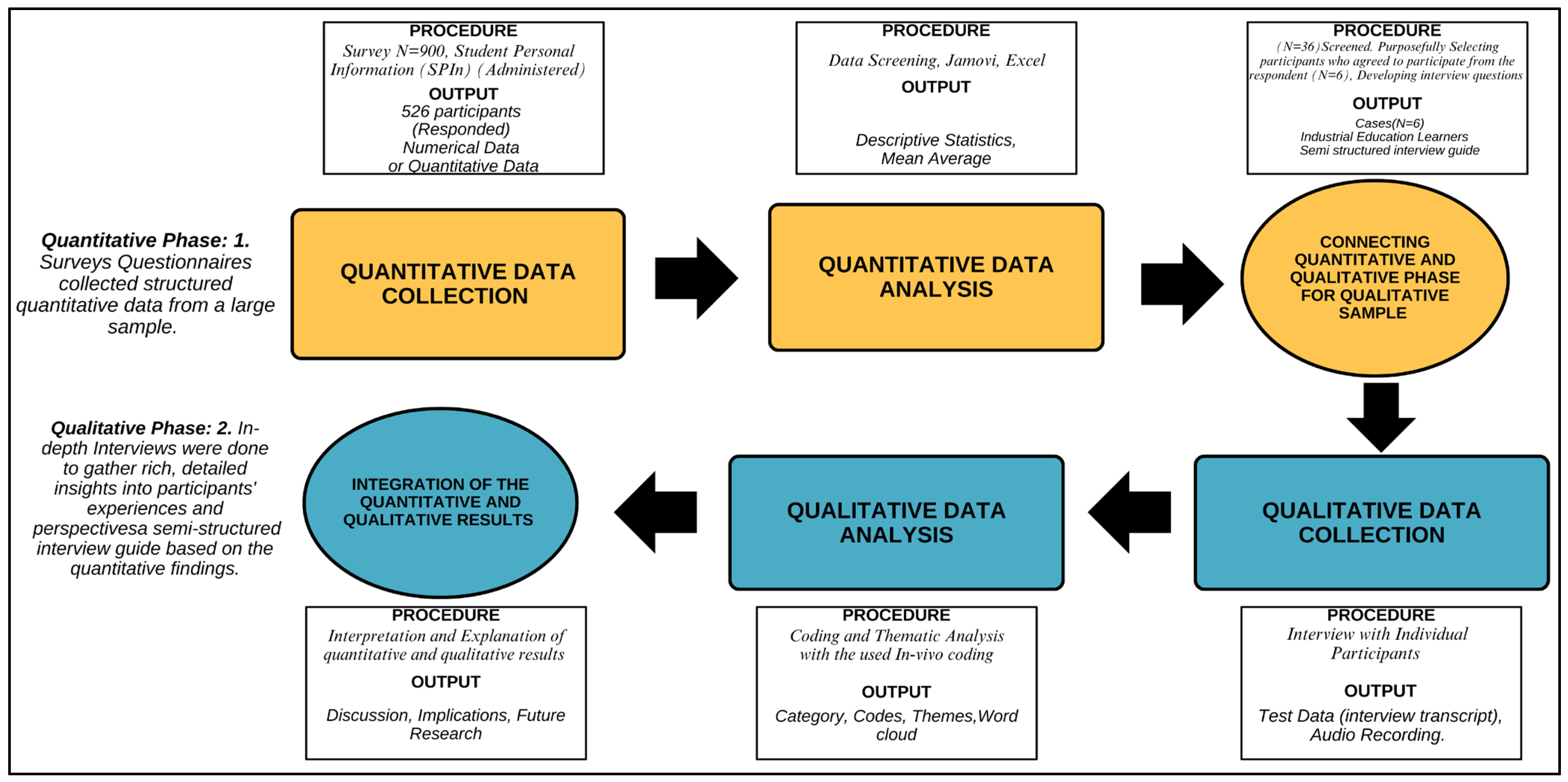
Figure 1 illustrates a mixed-methods research design that follows a sequential explanatory approach, integrating quantitative and qualitative methodologies. The process begins with the quantitative phase, in which structured surveys were administered to 900 students, collecting numerical data on student demographics and relevant responses. Of the total sample, 526 participants responded, yielding a dataset for statistical analysis. The quantitative data analysis used Jamovi (2.7.28.0) and Excel (2024) focusing on descriptive statistics and mean averages to summarize the findings.
For qualitative analysis, the researcher uses purposive sampling. Based on the quantitative data analysis, 36 learners were initially screened, of whom 6 were selected for in-depth qualitative data collection. The researcher then developed a semi-structured interview guide based on the quantitative findings, ensuring that the qualitative phase directly addressed the key themes identified in the statistical analysis.
The criteria for participant reduction and selection were implemented through a transparent, multi-stage screening process to ensure that the final participants adequately represented varying levels of competence among Industrial Technology students. First, all enrolled students who completed the qualitative research question and the accompanying self-evaluation form were included in the initial pool of respondents. Their self-evaluation focused on three predefined indicators: (1) level of skills and competencies achieved, (2) presence of exceptional or outstanding abilities in technical tasks, and (3) observable improvement or combination of developed skills across learning activities. Responses were independently reviewed and summarized, and each learner was ranked based on the consistency of their qualitative responses with their self-reported competency levels. From this ranked list, the top ten learners were selected for participation, representing those with consistently high competencies, those identified as having exceptional abilities, and those who demonstrated notable skill improvement. When scores or qualitative indicators were similar, selection was resolved by re-examining the narrative responses to ensure that participants clearly met at least one of the three indicators. Only students who provided complete responses and consent to participate were included, while those with incomplete or unclear self-evaluations were excluded. This step-by-step process ensured that participant reduction and selection were systematic, transparent, and aligned with the objectives of the qualitative inquiry.
During qualitative data collection, a semi-structured interview was employed to gather valuable insights from respondents, with audio recordings and interview transcripts to capture responses. The data were then analyzed using thematic analysis, which involves vivo coding to identify recurring patterns in learners’ responses. This process allows the researcher to group codes into categories and uncovers key themes. Finally, quantitative and qualitative results are integrated and synthesized to develop a complete understanding of the findings. This involved discussing quantitative and qualitative findings, which enabled the researchers to identify the research’s implications, suggest avenues for future research, and formulate a conclusion.
By combining numerical trends with detailed participant experiences, the study provides a thorough understanding of the research topic, thereby strengthening the credibility and depth of its findings [
17].
3. Results and Discussion
The following discussions present the various needs and challenges encountered by learners in industrial technology education regarding Network Support System, particularly Peer and Family Support, Awareness and Acceptance, and Academic Accessibility and Support. A strong support network is a critical component of learners’ better academic performance and well-being. Family and peer support offer emotional encouragement, motivation, and comfort, while awareness and acceptance foster a supportive, inclusive learning space. Additionally, academic and accessibility support provides tailored programs, curricular accommodations, mentorship, and flexible learning methods that support learners, particularly those with disabilities.
3.1. Industrial Education Learners’ Needs and Challenges
The discussions below explain the importance of the themes in addressing various learning needs and concerns of learners, as well as the impact of having a holistic support network in improving the learning experiences of the learners.
3.1.1. Network Support System—Peer and Family Support
The Network Support System emphasizes the important role of a strong support network for learners, especially those with disabilities. It is categorized into “Peer and Family Support”, which highlights various supports that the learners received from their friends, relatives, and family, which significantly contribute to their academic and personal lives. Within the codes “Adaptation” and “Barrier Removal”, the code highlights the crucial role of a supportive network in helping learners overcome challenges.
The statement
“Family Support and Encouragement, Peer Competition and Support” emphasizes the critical role of family support and encouragement in the learners’ successful academic and social life. The sub-code
“Family Support” is of particular significance, due to its impact extending beyond mere financial aid and its crucial role in the socio-emotional well-being of learners. Research suggests that social support from family members is a significant factor in reducing depressive symptoms among university learners, far more than support from peers. This is due to the family member’s extensive life experience in problem-solving, which enables them to provide valuable insights and effective coping mechanisms to struggling learners [
18].
The statements
“Family Support” and
“The support of my family and prayers” emphasize the emotional and practical support that family members can offer learners, which is vital to their socio-emotional stability as they navigate university life. Furthermore, problems like financial constraints and limited resources have also been recognized as one of the significant challenges to the learner’s mental health, as highlighted in the statement,
“Because my mother is the only one who can fully support us, and my mom’s work cannot totally handle our daily needs. Then that can make me feel depressed.” This emphasizes the impact of emotional and financial stress on learners, particularly when resources are limited and familial support is weak [
19]. “Peer Support” is another crucial sub-code, with statements like: “I think support from my friends or family is needed to gain confidence to participate,” and
“Also, peer support groups, campus events/activities.” These statements emphasize the crucial role of friends and peer support groups, as they encourage participation, collaboration, and camaraderie, fostering a sense of belonging that significantly boosts self-confidence and improves learners’ social lives [
20].
The academic life of every learner can be challenging and complex, requiring a careful balance between personal, intellectual, and emotional growth, as well as practical support. Studies have shown that a combination of peer and familial support is vital for every learner to survive, grow, and excel academically and personally in the complex university environment [
21]. Familial support has been recognized as a crucial contributor to the learners’ success in life. Research indicates that family support has a significant impact on learners’ demanding university life. As emphasized by [
22], familial support provides physical and emotional comfort and promotes a sense of belonging. Aside from this, familial support also offers guidance and advice, which are beneficial to learners in achieving their goals [
23].
3.1.2. Awareness and Acceptance
The awareness and acceptance category highlights the necessity of an inclusive and supportive learning environment. This category is significant for fostering a culture of understanding, respect, and acceptance, as well as for promoting strong institutional support initiatives to address the diverse needs of learners, especially those with disabilities.
Disability Awareness was emphasized, highlighting the different types of disabilities as a crucial step toward creating an inclusive, learner-supportive learning environment. As cited in the following statement:
“Creating a supportive and inclusive environment is crucial. This involves raising awareness about different disabilities, promoting understanding, and fostering a culture of acceptance and respect.” This emphasizes that education is the most effective intervention in spreading disability awareness to promote inclusivity and empathy [
24]. Studies have shown that educational institutions that adapt and implement disability awareness initiatives, such as school workshops and campaigns, have reported increased empathy and support among administrators, faculty members, and learners towards learners with disabilities.
Fostering a culture of respect and understanding is an essential characteristic in creating an inclusive environment. As cited in the statement
“Each individual’s needs are unique, so universities need to have a flexible and comprehensive approach to accommodate diverse abilities”, the statement emphasized the need for universities to implement flexible learning and inclusive practices, as well as adopt and respond to the various needs of their learners. These flexible and inclusive practices enable the learners to have equal learning opportunities and participate in various activities, regardless of their abilities [
25]. Studies have indicated that learner retention and overall satisfaction have increased among universities that adopted Individualized Educational Plan (IEP) and implemented flexible learning methods and practices [
26]. Furthermore, the sub-code
“Robust Support Systems” has stressed the importance of a strong support system at the university, as it significantly improved learners’ performance, particularly those with disabilities. The statement
“Universities must have robust support systems in place” emphasizes the need for universities to design, develop, and implement a comprehensive, well-structured support mechanism to address the unique needs and challenges learners encounter. Research has shown that providing support, such as mental health counselling, mentorship programs, and accessibility assistance within higher education institutions, has improved academic performance, emotional stability, and overall well-being for learners, particularly those with disabilities.
The discussions have strongly emphasized the importance of creating an inclusive learning environment that fosters a culture of respect, understanding, and acceptance within and beyond the university. Through proactive measures such as promoting disability awareness and education, integrating a strong support network and a mentorship program, and implementing flexible learning and assessment methods, the universities can create an equitable and supportive learning environment for all, regardless of their diverse abilities. This approach not only benefits the learners with disabilities but also enriches the entire learning community by promoting diversity, acceptance, and mutual respect.
3.1.3. Academic and Accessibility Support
Academic and Accessibility Support, including essential services such as school assistant support, accessibility services, individualized education plans (IEPs), mentorship and guidance, and flexibility in program requirements.
School Assistant Support emphasizes the importance of providing direct assistance to students in their academic journey. The statement “School assistant support” highlights the necessity of having dedicated personnel or services that can offer immediate and personalized help to students, ensuring they can navigate their educational Environment effectively. “Accessibility Services” focuses on making campus facilities and resources accessible to all students. The statement “Accessibility Services, Accessible Campus Facilities” points to the need for physical and digital infrastructure that accommodates students with disabilities, ensuring they have equal access to all educational opportunities and campus activities.
Including Individualized Education Plans (IEPs) indicates the importance of tailored educational strategies that cater to the unique needs of students with disabilities—the comprehensive statement “Accessibility Services, Accessible Campus Facilities, Individualized Education Plans (IEPs), Mentorship and Guidance, Flexibility in Program Requirements” Underscores the necessity for personalized plans that address specific academic and accessibility needs, ensuring that students receive the appropriate support to succeed. Despite years of technological progress, significant effort is still needed to ensure that digital resources are made available and that learning is genuinely inclusive. In the same category, the code “Mentorship and Guidance” emphasizes the significant role of mentors, who provide tailored support and guidance to learners. Thus, effective mentorship plays a crucial role in learners’ academic success and personal growth, as mentors provide valuable knowledge, skills, encouragement, and resources... Furthermore, “Flexibility in Program Requirement” highlights the importance of having adaptable academic programs that consider learners’ varied needs and abilities. By allowing flexibility in deadlines, coursework, and assessment methods, learners can manage their work more efficiently, even when challenges arise.
In summary, the “Academic and Accessibility Support” category, under the “Network Support Systems” theme, emphasizes the significance of providing a comprehensive and personalized support to learners, especially those with disabilities. Offering school assistant support, accessibility services, personalized learning plans, mentorship programs, and adaptable program requirements allows the universities to build a welcoming, inclusive, and supportive academic community where every learner can thrive.
4. Conclusions
To strengthen the practical impact, higher education institutions in Mindanao may translate the identified support needs of ITE learners in Network Support Systems into clearly defined and implementable interventions. For Peer and Family Support, institutions may establish a structured peer-mentoring scheme in which senior ITE students in networking and related programs are formally assigned to first- and second-year learners for weekly academic consultations, laboratory assistance, and study planning. This program may be coordinated by the department chair and monitored through simple mentoring logs and periodic feedback surveys. In addition, schools may institutionalize family engagement activities, such as an annual “ITE Family Orientation and Support Forum,” where parents and guardians are informed about the program’s technical requirements, available scholarships, laboratory fees, and student support services. A small emergency assistance fund or industry-supported allowance for learners with financial difficulty may also be created through partnerships with local ICT companies and network service providers, specifically to assist learners who struggle with connectivity, transportation, and project requirements. For Awareness and Acceptance Support, institutions may implement regular disability and inclusion awareness programs integrated into student development activities and faculty in-service trainings. Concrete actions may include short mandatory orientation modules for students and instructors on inclusive communication, assistive technologies, and respectful classroom practices, as well as the inclusion of disability awareness topics in general education or professional courses. A designated inclusion or student support coordinator may be assigned at the college or campus level to oversee accessibility reporting, facilitate referrals to guidance services, and coordinate reasonable academic accommodations. Peer advocacy groups and student organizations may also be encouraged to organize inclusive campus events, such as accessibility awareness campaigns and collaborative activities between learners with and without disabilities, to strengthen acceptance and social participation.
For Academic and Accessibility Support, institutions may establish a dedicated learning support hub for ITE learners, where academic tutoring in networking subjects, laboratory skills coaching, and consultation on technical projects is regularly provided. Flexible learning arrangements, such as extended laboratory time, alternative assessment formats, and blended delivery of technical content, may be institutionalized through department guidelines approved by the academic council. Concrete accessibility measures may include the provision of screen-reading software, captioned instructional videos, adjustable laboratory workstations, and accessible computer laboratories. Faculty members may also be supported through training on adaptive instructional strategies and assessment design, particularly for performance-based and laboratory-intensive courses in Network Support Systems. Furthermore, institutions may adopt individualized learning and support plans for learners with identified needs by integrating academic advising, guidance counseling, and skills monitoring into a unified learner support record. This system may document learning accommodations, mentoring schedules, progress in technical competencies, and career-planning activities, allowing advisers and instructors to track learners’ development and intervene early when academic or emotional difficulties arise. Career-focused mentorship with alums and industry practitioners in networking and ICT may also be introduced to strengthen employability and professional confidence.
Overall, these concrete measures—formal peer and family engagement programs, structured inclusion and awareness initiatives, accessible learning facilities, flexible academic policies, and coordinated mentoring and advising systems—can serve as a practical framework for higher education institutions in Mindanao to operationalize inclusive support for ITE learners. By embedding these interventions into institutional policies, student services, and curriculum implementation, universities can more effectively address learners’ financial, emotional, academic, and accessibility needs, while promoting equitable participation, sustained engagement, and improved learning outcomes in Network Support Systems programs.