1. Introduction
Electrical earthing is a critical aspect of power system design, providing a controlled path for the safe dissipation of fault and lightning currents into the ground. It protects people and equipment from dangerous potential rises, minimises fire risk, and stabilises voltage during transient events. In conventional systems operating at 50 Hz, fault currents follow predictable paths; however, lightning introduces high-frequency transients, often exceeding 10 kHz, which interact differently with the soil. This creates complex challenges in maintaining a low-impedance path under both steady-state and transient conditions [
1,
2].
Poor earthing results in excessive step and touch potentials, compromising both safety and equipment integrity [
3]. International standards such as [
2] define acceptable resistance levels for protective systems, typically below 10 Ω for lightning protection and below 5 Ω for substations and transmission structures [
4,
5]. While a full frequency-dependent impedance analysis provides the most accurate assessment of earthing performance, practical design and testing commonly rely on resistance measurements at power frequency as an industry benchmark.
In many regions of South Africa, including the Drakensberg, Ermelo, and parts of Gauteng, soil resistivity can exceed several thousand ohm-metres, largely due to low moisture retention, sandy textures, and the high mineral content of the surrounding soil. These geophysical conditions, coupled with high lightning density, make it difficult to achieve the required resistance levels using conventional earthing grids or deep-driven electrodes. Increasing conductor size or grid depth can reduce resistance, but such approaches quickly become economically and physically impractical. This has driven growing interest in backfilling materials that can modify the electrical characteristics of the soil surrounding an electrode [
6,
7].
Backfill materials such as bentonite, coke breeze, charcoal, and graphite have long been used to reduce resistivity and stabilise moisture. However, their performance can degrade over time, particularly in regions characterised by extremely low rainfall, leading to cracking and loss of contact [
8]. More recent studies have explored synthetic and waste-derived materials that maintain conductivity under variable environmental conditions. For example, Marconite and engineered ground-enhancing compounds (GEMs) demonstrate very low resistivity but are expensive and often unavailable in developing regions [
9]. In response, several studies have explored the use of industrial and mining by-products as sustainable alternatives [
1,
3,
4,
5]. Metallurgical slag, fly ash, and coal or gold mine tailings have shown promising results, offering comparable conductivity to commercial compounds when properly compacted and moisture-calibrated [
10,
11,
12]. These materials are locally available, inexpensive, and environmentally beneficial, supporting the principles of the circular economy and sustainable engineering practice [
13].
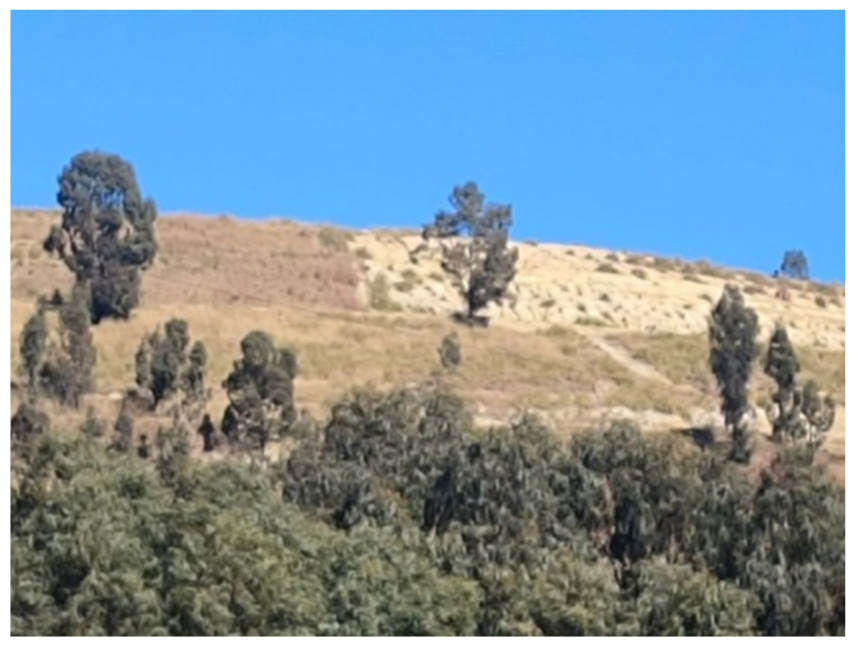
South Africa’s legacy of mining has produced a large number of gold mine dumps, particularly in the Soweto, Carletonville, Westonaria, and Witwatersrand regions (
Figure 1). These dumps pose long-term environmental challenges due to the potential leaching of heavy metals such as arsenic, lead, and chromium. Reusing such materials as earthing backfill presents a dual opportunity: mitigating the environmental risks of tailings disposal while supplying a low-cost, locally sourced enhancement material for electrical grounding [
14,
15]. When characterised and stabilised correctly, these tailings can improve the moisture-holding capacity around electrodes, lower resistivity, and contribute to safer and more reliable systems.
Although this approach presents an alternative for earthing systems, it also poses technical and environmental challenges. Variations in mineral composition, particle size, and pH can influence both conductivity and long-term stability. In particular, the risk of heavy metal leaching under wet conditions must be carefully managed to ensure regulatory compliance and environmental safety [
2]. Addressing these challenges requires systematic laboratory testing under controlled moisture and density conditions, linking physical and electrical properties to evaluate suitability for practical earthing applications.
This study, therefore, investigates the properties of gold mine tailings from Soweto as a potential backfill material for electrical earthing systems. It seeks to determine how moisture variation affects resistivity, establish comparative performance relative to traditional materials, and assess the feasibility of reusing tailings in accordance with IEEE and IEC standards. The findings aim to contribute to both sustainable materials management and improved grounding design in high-resistivity regions.
2. Methodology
This study adopted a structured experimental approach to investigate how moisture content influences the electrical resistivity of gold mine tailings and to assess their suitability as a backfill material for electrical earthing systems. The research was carried out under controlled laboratory conditions to ensure reliability, reproducibility, and compliance with relevant engineering standards.
2.1. Sampling and Preliminary Characterisation
Tailings samples were collected from a historic gold mine dump in Diepkloof, Soweto, an area with extensive mining residues that present both environmental challenges and opportunities for reuse in engineering applications (
Figure 1). Sampling was conducted manually using clean, non-conductive plastic shovels to prevent contamination. Approximately ten litres of material were taken from a depth of about half a metre to avoid organic surface effects while representing near-surface conditions relevant to earthing installations. The samples were sealed in airtight plastic containers immediately after collection, preserving in situ moisture and preventing oxidation or evaporation during transport. Each container was labelled with the date, location, and sampling depth for traceability.
Upon arrival at the Prof. G.E. Blight Geotechnical Laboratory at the University of the Witwatersrand, visual inspections were performed to assess colour, texture, and uniformity. The samples were sieved through a 2–5 mm mesh to remove coarse debris and ensure homogeneity. Weighing procedures followed a systematic sequence to determine bulk and wet mass. The samples remained sealed to maintain natural moisture until the subsequent drying and testing phases. This careful preparation ensured that the samples accurately represented field conditions while providing a consistent basis for laboratory analyses.
2.2. Drying, Moisture Calibration, and Density Determination
Before resistivity measurements, the tailings underwent controlled drying to quantify the natural moisture content and establish consistent reference conditions. The empty containers were weighed to determine their baseline mass. Each container was then filled with the sample, and the combined weight was measured to obtain the wet mass. The samples were dried in an oven at 70 °C for 24 h. This temperature was selected to remove moisture effectively without altering the mineral composition or causing oxidation of metallic components that could influence later measurements. Once dried, the samples were cooled to room temperature and reweighed to determine dry mass. Moisture content was calculated using standard geotechnical procedures.
After determining the natural moisture content, specific amounts of distilled water were added to achieve target moisture levels of 5%, 10%, 15%, 20%, and 25%. The water was incorporated incrementally and mixed thoroughly with non-conductive spatulas to ensure uniform distribution. The conditioned samples were then sealed for 24 h to allow even moisture equilibration throughout the material.
To maintain uniformity in subsequent testing, bulk density was calculated based on the known internal volume of the resistivity box (15 cm × 15 cm × 6 cm). Controlling density was essential to minimise variability, as compaction influences contact between particles and therefore affects electrical behaviour.
2.3. Electrical Resistivity Testing
Electrical resistivity tests were conducted at the High Voltage Laboratory of the University of the Witwatersrand using the Wenner four-electrode method, following ASTM G57-06 and IEEE Std 81-2012 standards. The Wenner configuration was chosen for its accuracy, repeatability, and straightforward data interpretation. It provides a direct relationship between measured resistance, electrode spacing, and apparent resistivity, making it suitable for controlled laboratory work.
Testing employed custom-made Plexiglass boxes measuring 15 cm × 15 cm × 6 cm, selected for their electrical insulation properties. Each box contained four copper electrodes, 10 mm in diameter and 120 mm long, arranged linearly with 3.5 cm spacing. The electrodes were inserted approximately 1.1 cm into the sample, ensuring consistent depth and uniform current distribution. A calibrated Fluke digital resistance meter was used for all measurements, with verification conducted before each test.
For each moisture level, a freshly prepared sample was compacted gently into the box to remove air gaps and achieve consistent density. The electrodes were connected, and resistance readings were taken three times at ten-minute intervals. The mean of the three readings represented the final resistance value for that moisture condition. Outliers differing by more than five per cent from the mean were retested. To examine stability, selected samples at 20% and 25% moisture content were remeasured after four weeks to observe potential changes due to evaporation or moisture redistribution.
Resistivity was computed using the Wenner formula, incorporating electrode spacing and measured resistance. All readings, sample codes, and observations were logged systematically to ensure traceability. The testing procedure was designed to isolate the influence of moisture on resistivity by minimising other variables such as temperature and external interference.
2.4. Standards and Laboratory Framework
The experiments adhered to three main standards to ensure methodological rigour:
ASTM G57-06 provided detailed guidance for implementing the Wenner four-electrode technique, specifying electrode arrangement and current-voltage measurement procedures.
IEEE Std 80-2013 defined performance and safety criteria relevant to grounding systems.
SANS/IEC 60364-5-54 (2011) outlined national and international requirements for earthing systems, providing a framework for evaluating backfill materials under South African environmental conditions.
Following these standards ensured that the procedures were consistent with global engineering practices and that the results could be directly compared with those of other studies.
2.5. Data Analysis and Interpretation
Measured resistance values for each moisture level were compiled, averaged, and converted to resistivity values. The relationship between moisture content and resistivity was examined to identify the optimum moisture range for achieving low resistivity. The observed trend was consistent with theoretical expectations: resistivity decreased sharply as moisture content increased, stabilising at around 20–25%. This behaviour indicates improved continuity of conductive pathways within the moist tailings matrix. A summary of representative results is shown in
Table 1.
These findings demonstrate a strong dependence of resistivity on moisture content, confirming that gold mine tailings can function as effective conductive media when adequately hydrated.
2.6. Physical and Chemical Characterisation
In addition to electrical testing, the physical and chemical properties of the tailings were characterised to provide context for their electrical performance. The material primarily consisted of fine-grained particles between 1 mm and 3 mm in diameter, dominated by quartz, silicates, and residual metallic oxides. Such a composition supports reasonable compaction and moisture retention, both of which are critical factors for maintaining electrical continuity. Fine particles, including silts and clays, tend to form continuous moisture films, enhancing ionic conduction, whereas coarser particles increase void ratios and resistivity.
Bulk density was carefully controlled during compaction to simulate real-world backfill conditions. Denser samples exhibited improved particle contact and lower resistivity values due to enhanced conduction pathways.
Chemically, the tailings showed near-neutral to slightly alkaline pH values between 7.2 and 8.1. This pH range is favourable for reducing electrode corrosion and maintaining chemical stability. The presence of metal oxides and sulphides, common in gold mine residues, may also contribute positively to electrical conductivity by providing additional ions in the pore water. However, their potential for leaching requires environmental consideration in large-scale applications.
2.7. Integration of Findings
By integrating geotechnical and electrical assessments, the study provided a comprehensive understanding of the behaviour of gold mine tailings as potential backfill materials. The results confirmed that moisture plays a decisive role in controlling resistivity and that the material exhibits stable electrical performance under optimal compaction and moisture conditions. The controlled experimental framework and adherence to international standards ensure that the findings are reproducible and technically sound.
The methodology established in this research offers a practical procedure that can be replicated to evaluate alternative earthing backfill materials. It also contributes valuable baseline data for future comparative studies involving conventional materials such as bentonite, Marconite, or graphite compounds. Overall, the experimental programme provided strong empirical evidence that gold mine tailings, when properly conditioned, can serve as a cost-effective and environmentally responsible material for electrical earthing systems.
3. Results and Discussion
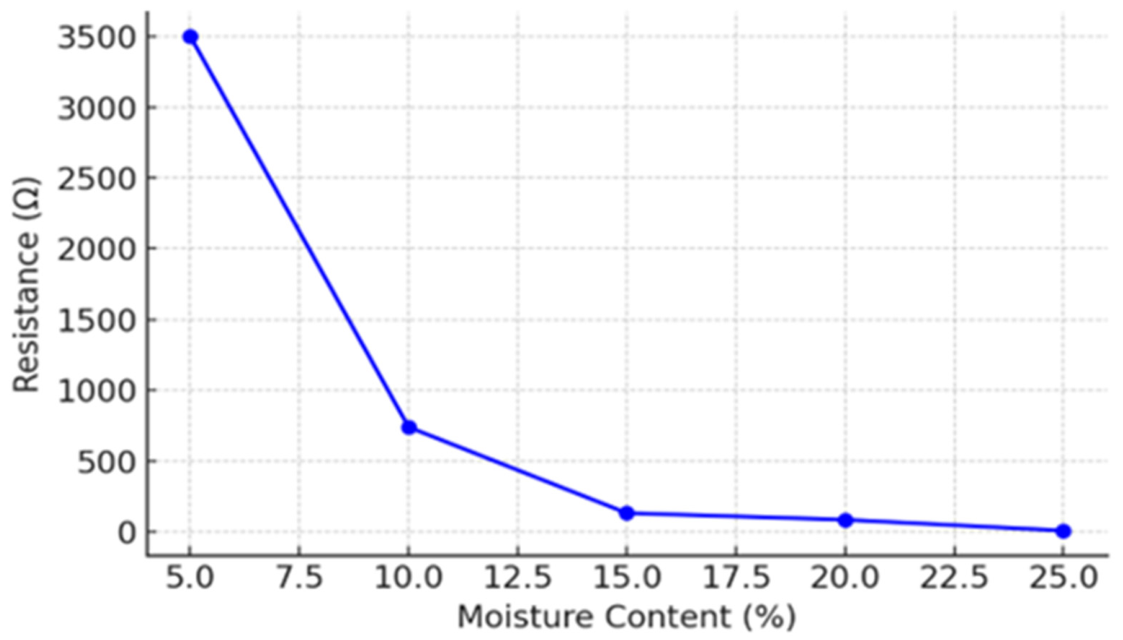
The experimental results show a pronounced reduction in electrical resistivity when the material is conditioned at a moisture level of approximately 15% (
Figure 2). Under this condition, resistivity decreases from the kilo-ohm range to below 50 Ω, demonstrating the strong influence of pore water on charge transport within the tailings matrix. The measured bulk density values confirm that the samples achieved a high degree of compaction, consistent with the requirements for conductive backfill applications. A slight increase in resistivity observed after one hour of testing is likely attributable to minor moisture redistribution within the compacted matrix or limited surface evaporation, both of which can alter the continuity of conductive pathways.
As expected, the substantially higher resistivity recorded for oven-dry samples underscores that moisture is the dominant contributor to electrical conduction in these tailings. To quantify the moisture content, the dry mass of each specimen was determined by subtracting the container mass from its post-drying weight. The mass difference between the wet and dry states corresponds to the volume of water removed during oven drying. These values enable the calculation of the gravimetric moisture content, w, defined relative to the dry mass of the solid fraction for each sample.
The test results indicate a pronounced inverse correlation between moisture content and electrical resistivity. Increasing the water content leads to a rapid decline in resistivity, highlighting the essential role of pore water in establishing continuous ionic conduction pathways within the tailings matrix. This behaviour confirms that even modest increases in moisture significantly enhance the material’s conductive capacity (
Table 1).
The dependence of resistivity on moisture content was evaluated for gold mine tailings obtained from the Soweto dump. As illustrated in
Figure 2, the material exhibits a distinctly non-linear inverse relationship between water content and electrical resistivity. At low moisture levels (below 10%), the tailings behaved as a highly resistive medium: resistivity exceeded 700 Ω at 10% moisture and surpassed the measurement range of the instrument under even drier conditions. When the moisture content increased to 15%, resistivity decreased abruptly to below 50 Ω, indicating the formation of more continuous ionic conduction pathways. Additional increments in moisture yielded further reductions, with resistivity reaching below 3 Ω at 25%. This progressive decline highlights the dominant role of pore water in governing the conductive behaviour of the tailings.
These results unequivocally demonstrate that moisture is the primary determinant of the electrical response of mine tailings. The introduction of water promotes ionic conduction by forming continuous electrolyte films around mineral grains, thereby reducing inter-particle contact resistance and facilitating charge transport. This behaviour is consistent with the findings of Abidin [
6] and El-Shamy [
8], who observed comparable exponential reductions in resistivity with increasing moisture content in clay-rich and bentonite-based soils.
At low moisture levels, the water films are discontinuous, severely constraining ion mobility and producing extremely high resistivity values. As the moisture content increases, these films begin to coalesce, enabling more stable conductive pathways and leading to a steep decline in resistivity. Once the moisture level approaches approximately 20%, the rate of resistivity reduction diminishes, indicating the onset of a saturation-like condition. Beyond this threshold, additional water contributes little to further enhancement of conduction. This trend corresponds well with the observations of Sattar and Gomes [
11], who reported that improvements in electrical conductivity plateau once backfill materials exceed their field capacity.
The exponential decay pattern evident in
Figure 2 suggests that the tailings display electrical behaviour broadly comparable to that of engineered backfill materials such as bentonite or Marconite when adequate moisture is available. However, unlike bentonite, which retains water through swelling, the granular nature of the tailings permits relatively rapid drainage. This characteristic implies that periodic moisture replenishment may be necessary in field installations, particularly in arid environments where cyclic drying is expected.
From an earthing design perspective, these findings carry meaningful practical implications. Under controlled compaction and appropriate moisture management, gold mine tailings are capable of achieving resistivity values on the order of 10 Ω·m, levels comparable to those of commercially manufactured ground enhancement materials, but at substantially lower cost. This demonstrates the feasibility of employing mine tailings as an effective and economical backfill material in grounding systems, especially in regions where native soils exhibit high resistivity or where access to commercial compounds is financially or logistically constrained.
The observed decline in resistivity with increasing moisture content is primarily governed by the development of continuous aqueous films along particle interfaces. These films substantially enhance ionic mobility by providing interconnected conductive pathways and by lowering inter-granular contact resistance. In the dry state, the tailings matrix contains abundant air-filled voids, which function as effective insulators due to air’s negligible ionic conductivity. As moisture infiltrates and progressively saturates these voids, the conduction mechanism transitions from inter-particle contact limitation to electrolyte-dominated ionic transport, resulting in the pronounced reduction in resistivity.
This behaviour conforms to a characteristic exponential decay relationship of the form:
where
is the resistivity at 0% moisture,
w is the moisture content, and α is an empirical constant reflecting microstructural attributes such as pore connectivity, surface charge characteristics, and mineralogy. Such functional forms are widely used to describe moisture–resistivity interactions in soils, bentonite-rich backfills, and engineered grounding materials. The close agreement between the measured response of gold mine tailings and these established empirical models reinforces the conclusion that their conductive behaviour is governed by the same fundamental ionic transport principles documented in the broader geoelectrical and grounding literature.
When benchmarked against commonly used backfill materials, the Diepkloof gold mine tailings demonstrate competitive electrical performance across the tested moisture range. As indicated in
Table 2, their resistivity values fall within the lower range of natural soils and approach those of engineered ground enhancement compounds when adequately conditioned.
Engineered materials such as bentonite and Marconite typically achieve their lowest resistivity only under fully saturated conditions. Bentonite reaches values of approximately 3–5 Ω·m when its moisture content approaches the liquid limit (35–50%), where extensive swelling forms a continuous electrolyte network. Similarly, Marconite and related synthetic aggregates exhibit resistivity in the range of 1–3 Ω·m only when completely saturated and densely compacted; partial drying can raise their resistivity significantly due to disruption of interconnected carbon pathways [
19].
Against this backdrop, the Diepkloof tailings display notably efficient conductive behaviour. They achieve resistivity values as low as 2.5–3.0 Ω·m at a moisture content of only 25%, a level well below the saturation thresholds required for engineered products. This performance aligns with the broader trends reported for conductive backfill materials [
10] yet stands out because comparable conductivity is achieved at substantially lower moisture levels.
This favourable behaviour likely originates from the mineralogical and microstructural characteristics of the tailings, which commonly include fine-grained silicates, iron and manganese oxides, and other metallic oxide phases. These minerals support the formation of stable electrolyte films, while the granular matrix provides interconnected pore pathways conducive to ionic transport even at moderate water contents [
20].
Collectively, these findings indicate that Diepkloof tailings are well-suited as naturally occurring conductive backfill materials when properly conditioned and compacted. Their electrical performance, combined with local availability, minimal processing requirements, and low cost, positions them as a viable alternative to commercial enhancement compounds. Nonetheless, sustained field performance will depend on maintaining adequate moisture levels, which may require design interventions such as moisture-retentive barriers or periodic rehydration to counteract seasonal drying.
4. Conclusions and Recommendations
This research investigated the electrical properties of gold mine tailings from Diepkloof, Soweto, with the aim of assessing their potential as a cost-effective and sustainable backfill material for electrical earthing systems. The findings provide clear evidence that gold mine tailings, when properly conditioned for moisture content and density, can achieve electrical performance comparable to that of commercial ground enhancement materials. The study also contributes to the broader objective of promoting environmental reuse of mining residues within the framework of sustainable engineering.
The laboratory testing demonstrated a strong and consistent inverse relationship between moisture content and electrical resistivity. When the material was dry or contained less than 10% moisture, resistivity exceeded 10 kΩ·m, confirming the extremely poor conductivity of dry tailings. However, as the moisture content increased, resistivity decreased sharply, indicating the formation of continuous electrolyte pathways that facilitate ionic conduction between mineral grains. At 15% moisture, resistivity dropped to approximately 34 Ω·m, and at 25% moisture, the material achieved a minimum value of around 2.5 Ω·m. These results align closely with theoretical models of exponential decay in soil resistivity and confirm that moisture is the dominant factor governing electrical behaviour in mine tailings.
The relationship between resistivity and moisture follows an exponential decay pattern consistent with established empirical models for soils and conductive backfills. Below 10% moisture, conduction is limited by discontinuous water films and air-filled pores. As water content increases beyond this threshold, continuous films develop, bridging particle boundaries and enabling rapid ion movement. Above 20% moisture, the rate of improvement diminishes, suggesting that the material approaches a saturation-like state where additional water provides minimal further benefit. This behaviour indicates an optimal operating moisture range between 20% and 25% for achieving stable, low-resistance performance.
The resistivity values measured for the Diepkloof tailings compare favourably with those of conventional enhancement materials. Bentonite typically achieves 3–5 Ω·m at 40–50% saturation, while Marconite, a synthetic compound, records 1–2 Ω·m under fully compacted saturated conditions. The tailings reached 2.5–3.0 Ω·m at only 25% moisture, demonstrating similar performance under less demanding hydration requirements. This efficiency likely arises from their mineral composition, which includes fine silicates and metallic oxides that promote ionic conduction even at moderate water contents.
In addition to their electrical advantages, the physical and chemical characteristics of the tailings make them suitable for use in earthing applications. The material is fine-grained, with good compaction behaviour and a near-neutral pH (7.2–8.1), which minimises corrosion risk for copper electrodes. These properties ensure good particle contact, stable density, and long-term compatibility with grounding conductors. The findings therefore confirm that gold mine tailings can provide both technical and economic benefits when used as an alternative backfill for earthing systems.
From an engineering perspective, the results have direct implications for grounding design, especially in high-resistivity regions such as the Gauteng mining belt. The data suggest that properly compacted and moisture-conditioned tailings can substantially reduce grounding resistance without requiring deep electrode networks or costly imported compounds. This is particularly advantageous in rural electrification projects and substations, where achieving compliance with IEEE and IEC resistance standards is often constrained by local soil conditions.
Although the tailings show excellent conductivity at 20–25% moisture, their granular nature allows relatively rapid drainage compared to clay-based materials. Consequently, in field applications, maintaining adequate hydration is critical. This may be achieved by incorporating moisture-retentive additives such as bentonite or gypsum, installing surface sealing layers to limit evaporation, or employing periodic rehydration schedules during dry seasons. Implementing such measures will help sustain stable resistivity levels and ensure long-term reliability of earthing systems.
Environmentally, the reuse of mine tailings as backfill presents an opportunity for sustainable waste valorisation. South Africa’s gold mining legacy has left vast quantities of tailings that pose ongoing environmental risks, including dust pollution, land degradation, and potential heavy-metal leaching. Repurposing these materials for electrical earthing not only reduces disposal pressures but also aligns with the circular economy principles of resource recovery and reduced environmental footprint. Nevertheless, the potential for leaching of trace metals such as arsenic, chromium, or lead must be assessed through chemical and leachate testing before large-scale deployment. Ensuring that the material remains chemically stable under varying pH and moisture conditions is essential for environmental safety and regulatory compliance.
Note that while the laboratory tests produced reliable and repeatable results, the study was confined to controlled indoor conditions. Consequently, it does not account for field variables such as temperature fluctuations, seasonal drying and wetting cycles, or exposure to rainfall.
To build upon the current findings, several directions for further research are recommended:
Field Validation: Conduct pilot-scale earthing installations using gold mine tailings in representative field conditions. Long-term monitoring should capture resistivity variations across wet and dry seasons, providing data on stability, moisture retention, and performance degradation over time.
Chemical and Corrosion Analysis: Undertake comprehensive chemical testing to identify potential corrosive agents and evaluate long-term interactions between tailings and electrode materials. Electrochemical corrosion tests will help determine the durability of copper or galvanised steel electrodes embedded in tailings.
Hybrid Formulations: Explore blended backfill compositions combining gold mine tailings with other conductive or moisture-retentive materials such as bentonite, graphite, or carbon-based additives. Such hybrid mixtures could enhance conductivity while improving moisture stability and corrosion resistance.
Environmental Impact Assessment: Implement leachate testing to assess potential heavy-metal release under varying pH and moisture conditions. Results should guide the development of safe handling and containment protocols for field applications.
Standardisation and Design Guidelines: Collaborate with standardisation bodies such as SANS, IEEE, and IEC to develop performance benchmarks and testing procedures for tailings-based backfills. Establishing standardised criteria will enable formal inclusion of such materials in engineering design and procurement specifications.