1. Introduction
In the evolving landscape of public financial governance, the call for transparency, accountability, and operational continuity has become more pressing than ever. Educational institutions across the globe are being challenged to upgrade their systems, prepare more thoroughly for audits, and embrace digital transformation. At the center of this shift are structured internal control frameworks, often supported by accounting information systems that help capture and report transactions consistently [
1,
2]. This perspective is reinforced by growing literature recognizing the practical value of control models like the Committee of Sponsoring Organizations of the Treadway Commission Internal Control Framework (COSO Framework) as a widely used framework for designing and evaluating internal control systems; however, empirical findings on whether applying COSO improves risk management effectiveness are mixed [
3,
4,
5]. Performance audits and internal evaluations can prompt process changes and learning in public institutions, though direct efficiency gains are not always demonstrated [
6,
7].
In the Asian context, governments have made significant efforts to modernize public financial management by adopting technology, strengthening internal controls, and linking systems in a more integrated way [
8]. Prior research on public-sector information systems and internal control implementation reports associations with financial reporting quality, suggesting that implementation quality and institutional capacity matter [
9]. In particular, income-generating units (IGUs) like catering services—which play a dual role in funding support and practical student learning—face heightened risks when their transactions remain undocumented or depend too heavily on informal arrangements.
In the Philippines, state universities and colleges (SUCs) operate under Republic Act No. 8292, which authorizes SUC governing boards to manage resources and allows SUCs to retain and use income generated from tuition and auxiliary services, subject to audit by the Commission on Audit (COA) [
10]. The Constitution directs the State to assign the highest budgetary priority to education [
11]; however, within education appropriations, basic education typically receives the largest share. For example, DBM’s proposed FY 2026 education budget allocates Php 928.52 billion to the Department of Education (DepEd) compared with Php 134.99 billion for SUCs [
12]. In this context, SUCs commonly operate IGUs—such as catering services—to supplement available resources and provide experiential learning platforms [
13]. Evidence from single-SUC studies also suggests that internal control practices in IGUs can be uneven, motivating case-based examinations of documentation, segregation of duties, and monitoring [
14].
Romblon State University (RSU) Catering Services illustrates this broader context at the institutional level. The unit serves both as a revenue generator and as a practical learning platform for students in BS Agriculture (BSAg) and BS Hospitality Management (BSHM) programs. However, its core processes—including procurement, disbursement, and billing—are manually handled by a single individual, the Food Processing Center (FPC) Head, without documented workflows. With that person nearing retirement, the absence of standard procedures increases the risk of operational gaps and data discontinuity.
In recent years, the unit reported notable net sales: PHP 4.26 million in 2023 and PHP 7.24 million in 2022, based on RSU’s financial statements submitted to and audited by the COA [
15,
16]. These figures reflect the unit’s potential but also raise questions about the systems supporting its operations. As emphasized by accounting bodies and scholars alike, accurate and timely information is critical to sound decision-making and to monitoring whether operational and reporting objectives are being achieved [
3]. Still, there remains limited research on how IGUs in SUCs actually manage their financial transactions and internal controls. According to [
13], most SUCs engage in IGUs, based on audit reports and financial disclosures from recent years. This gap in the literature suggests a clear need to examine how these units function in practice.
This study was developed as part of an institutional initiative on succession planning and operational assessment. It examines the internal control and financial sustainability of RSU Catering Services using the COSO Framework and the standard Transaction Processing Cycles (the TPC) [
3,
17]. The research aims to identify procedural gaps, examine risks, and provide recommendations for formalizing or digitalizing the unit’s accounting practices. This timing is especially relevant given reports that the Professional Regulatory Board of Accountancy is proposing a revised Certified Public Accountant Licensure Examination syllabus targeted for implementation around 2028–2029, which includes Information Systems and Controls (ISC) as a subject emphasizing Information Technology governance/controls and audit considerations, and service organization controls [
18,
19]. The proposed inclusion of ISC is broadly consistent with the global shift toward technology- and controls-focused competencies in licensure models, such as the United States Certified Public Accountant Evolution structure that includes an ISC discipline [
20,
21,
22]. This shift reflects the growing importance of systems thinking and digital competence in the profession.
The results of this study have broader implications—not only for RSU, but also for other SUCs managing income-generating units across the country. By evaluating the processes and internal controls in RSU Catering Services, the research offers practical insights that can support better financial oversight, transparency, and long-term sustainability in similar settings.
Moreover, the findings speak to the educational mission of SUCs. As a real-world training ground, the catering unit benefits students in BSAg and BSHM programs by providing context-rich learning experiences. Clearer processes and improved controls will not just support financial goals—they will also elevate the quality of instruction and on-the-job training students receive.
Finally, this study adds to debates on public-sector performance and policy by offering actionable evidence for institutional administrators and higher-education policymakers, especially where resources are constrained. The proposed framework highlights how strengthening internal controls and financial sustainability within income-generating units can inform strategies for governance, risk management, and operations. In doing so, SUCs can pursue academic priorities while improving self-reliance.
1.1. COSO Framework
The COSO Framework offers a globally recognized model for designing, implementing, and evaluating internal control systems [
3]. Widely adopted across both private and public sectors, including educational institutions, the framework serves as a benchmark for ensuring the integrity, efficiency, and accountability of organizational processes.
At the core of the COSO Framework are five interrelated components that collectively support effective internal control. The first component, Control Environment, establishes the overall tone of the organization. It shapes the ethical climate and influences the control consciousness of personnel by emphasizing integrity, ethical values, competence, and the organizational structure of authority and responsibility [
3]. A strong control environment lays the foundation for a culture of accountability and good governance.
The second component, Risk Assessment, involves identifying and analyzing internal and external risks that may impede the achievement of institutional objectives [
3]. It provides the basis for developing appropriate responses and control mechanisms to manage these risks effectively. This includes understanding potential operational, financial, and compliance-related vulnerabilities that could undermine the university’s catering services.
Control Activities, the third component, consist of the specific policies, procedures, and practices implemented to ensure that management directives are carried out. These include authorization protocols, approvals, verifications, reconciliations, and segregation of duties [
3]. Such activities are essential in preventing errors, detecting irregularities, and maintaining the integrity of transaction processing.
The fourth component, Information and Communication, refers to the systems and processes that allow relevant information to be captured, processed, and shared in a timely and accurate manner [
3]. Effective communication enables all levels of the organization to understand their internal control responsibilities and to act accordingly. It also supports transparency and coordination between departments involved in financial and operational activities.
Finally, Monitoring Activities ensure that the entire internal control system remains effective over time. Monitoring includes both ongoing supervisory activities and separate evaluations conducted periodically to assess the performance of internal controls [
3]. When deficiencies are identified, appropriate corrective actions are implemented to strengthen the system.
Each of these five components is supported by specific guiding principles, such as the demonstration of integrity, exercise of oversight responsibilities, and enforcement of accountability under the control environment. These principles help ensure that internal controls are not only embedded in organizational policies but are actively practiced and continuously improved. When properly implemented, the COSO Framework provides a structured and adaptive foundation for internal control that enhances operational efficiency, financial reporting reliability, and regulatory compliance [
3].
1.2. The TPC
The concept of the TPC provides a foundational lens for analyzing and evaluating organizational operations, particularly in accounting and financial management. These cycles refer to the structured sequence of activities that organizations follow to record, manage, and report transactions efficiently and accurately. As originally outlined in James Hall’s Accounting Information Systems Framework (the AIS Framework), the TPC are categorized based on the nature of business activities they support [
17]. In the context of public sector entities and educational institutions, including IGUs such as university-managed catering services, these cycles serve as critical organizing frameworks for operational workflows and internal control design.
The Revenue Cycle is one of the TPC. It encompasses all procedures involved in the delivery of goods or services and the subsequent receipt of payment. Typical processes within this cycle include order placement, sales authorization, billing, and the recording and receipt of cash or equivalents [
17]. In university settings, this would involve transactions related to service orders for catering, pricing agreements, and collection of payments from internal or external clients. Proper control in this cycle is essential to ensure accurate revenue recognition, customer accountability, and prevention of revenue loss or fraud.
Another essential cycle is the Expenditure Cycle, which refers to all activities related to the acquisition and payment for goods and services. This cycle includes purchase requisitions, vendor selection, receiving of goods, invoice verification, and disbursement of funds [
17]. In practice, it governs how resources such as raw food materials, supplies, and equipment are procured for the catering operation. Internal controls in this cycle help mitigate risks of unauthorized purchases, overpayments, and misappropriation of funds.
The Conversion Cycle, often referred to as the production or manufacturing cycle, is particularly relevant to IGUs that transform inputs into deliverable services or products. This cycle includes inventory management, production planning, cost accumulation, and output delivery [
17]. In the case of RSU’s catering services, the conversion cycle would track how ingredients and materials are transformed into prepared meals and how labor and overhead costs are accumulated and allocated. Without structured conversion cycle controls, institutions face challenges in measuring performance, maintaining inventory integrity, and ensuring cost-efficiency.
Across all cycles, each transaction progresses through a sequence of stages—initiation, authorization, execution, recording, and monitoring—each requiring distinct control procedures to ensure completeness, accuracy, and compliance. Effective transaction cycles are characterized by adequate documentation, clear segregation of duties, and automated or manual checkpoints that prevent or detect errors and irregularities [
17].
When embedded within the COSO Framework, the TPC become vital in operationalizing control principles. For instance, control activities such as approval workflows, reconciliations, and document verification are applied specifically within these cycles to prevent misstatements and promote accountability. The interaction between COSO Framework components and the TPC creates a robust internal control environment that supports both daily operations and long-term strategic goals [
3,
17].
In the context of university-managed IGUs like catering services, understanding and assessing the TPC offer critical insights into the organization’s financial health and governance practices. These cycles not only reflect how transactions are handled but also reveal the maturity of internal systems, the alignment of processes with institutional policies, and the ability to support financial decision-making. When left undocumented or unstructured—as is common in many resource-constrained public institutions—these cycles become vulnerable to inefficiencies, misstatements, and even fraud.
As such, this study uses the TPC as analytical categories to map, evaluate, and identify control gaps within the catering operations of RSU. By doing so, it contributes to both academic and practical understanding of how operational processes align with internal control expectations, and how improvements in these cycles can lead to better resource management, service quality, and institutional sustainability.
2. Methods
2.1. Research Design
This study employed a descriptive qualitative research design to evaluate the financial sustainability and internal control practices of RSU Catering Services. The analysis was guided by the COSO Framework and the TPC, which provided structured frameworks for assessing the adequacy, design, and effectiveness of internal controls in financial and operational processes.
2.2. Population and Sampling Techniques
The population of the study consisted of all standard transaction processes outlined in the AIS Framework. These included processes across the revenue, expenditure, conversion, and financial reporting cycles. The revenue cycle included sales order processing, shipping, billing, cash receipts, and sales returns and allowances. The expenditure cycle included purchasing, receiving, accounts payable, cash disbursements, payroll processing, and fixed asset management covering acquisition, maintenance, and disposal. The conversion cycle involved production planning and control, inventory control, and cost accounting, which includes cost accumulation, cost allocation, and cost reporting. The financial reporting cycle comprised general ledger updates, financial statement preparation, and closing procedures.
A risk-based sampling technique was used to identify the most critical processes based on materiality, frequency, and risk exposure. Process prioritization relied on non-monetary criteria—inherent risk, control criticality, and documented evidence of record-keeping gaps—because reliable per-process transaction values required for monetary materiality thresholds were unavailable due to incomplete documentation and the absence of systematic monitoring. The selected processes were purchases, cost accumulation, cost allocation, sales order, and billing. Although various personnel contribute to the Catering Services operations, a single individual—the FPC Head—acted as the process owner for all selected functions. Convenience sampling was then used to select specific transactions for analysis.
2.3. Scope, Setting, and Period
The study focused on five transaction processes selected for their relevance to financial sustainability and internal control evaluation. While the process owner was also responsible for other standard activities under the AIS Framework, only those identified as high-risk were included. The study was conducted at RSU main campus, within the Catering Services unit under the College of Business and Accountancy (RSU-CBA). Data collection took place from March to June 2024, providing a time-bound snapshot of practices prior to any organizational changes or system updates. This scope entails several limitations, including reliance on a single primary process owner and incomplete documentation without systematic monitoring, which precluded reliable computation of per-process transaction amounts and materiality thresholds. As a result, single-informant bias and incomplete perspectives are possible, and the findings are analytically rather than statistically generalizable. Nevertheless, the mechanisms and control points identified are transferable to catering operations and to similar service units that follow revenue, expenditure, and conversion cycles with comparable, document-driven workflows; future multi-site or comparative studies can assess the scope of this transferability.
2.4. Data Collection
The primary data collection method was the process walkthrough, consistent with audit practice for understanding transaction flows and identifying control points. Walkthroughs were conducted from March to June 2024 and covered the five selected processes (purchases, cost accumulation, cost allocation, sales order, and billing). In total, the research team completed 5 walkthrough sessions with the process owner structured as one walkthrough per process. Each session lasted approximately 30–60 min, for an estimated total of 2.5–5.0 h of direct walkthrough engagement.
Each walkthrough followed the transaction from initiation to completion (initiation → authorization → execution → recording → monitoring) and included (i) semi-structured questioning, (ii) observation of task demonstration (e.g., how records are created or retrieved), and (iii) inspection of available source documents and logs. Notes were taken during each session using a consistent set of note categories that captured: process step, actor/role, documents generated/used, decision points, control activities (if any), and observed gaps. With the participant’s informed consent, sessions were also audio-recorded to support accurate documentation during analysis. When a step could not be demonstrated due to the absence of records (e.g., cost accumulation/allocation), the absence itself was verified through (a) direct questioning, (b) inspection of available files/templates, and (c) confirmation that no alternative internal tools or ledgers were used.
Document inspection focused on artifacts that could substantiate transaction steps and control activities within the Food Processing Center (FPC) and those reasonably accessible to the research team. The available document corpus at the unit level consisted of two internal order-tracking notebooks (n = 2) and one spreadsheet used as an informal log (n = 1). Source documents that typically support procurement and disbursement (e.g., supplier invoices/official receipts attached to reimbursement/liquidation forms) are maintained at the RSU accounting office and were requested but not obtained during the study period; accordingly, these were not included in the unit-level document set. Similarly, BAIGO-issued sales invoices and related billing records were requested but were not retrieved for inspection. Because walkthroughs indicated no material control issues in cash receipts and reimbursement processing within the scope of this study, document capture and analysis were prioritized for processes with observed control gaps. Where relevant, the team also reviewed the policy or reporting artifacts accessible to the unit (n = 1). Documents were used to verify whether each step generated an audit trail and whether documentation was complete, consistent, and retrievable.
2.5. Interview Instrument
A semi-structured interview guide was developed based on standard flows in the TPC and aligned with COSO internal control components. The guide covered checkpoints such as purchase initiation and authorization, receiving/verification, billing triggers, documentation practices, record retention, and monitoring activities. For each process, the guide included (i) step-by-step prompts to elicit the “as-is” workflow, (ii) control prompts (authorization, segregation of duties, reconciliations, approvals), and (iii) documentation prompts (what is created, where it is stored, and how it is retrieved).
The guide was reviewed and validated by CPA professionals from the COA to ensure relevance to public sector institutional practices. Revisions from validation were incorporated to the original interview guide.
2.6. Data Analysis
Analysis proceeded in four steps. First, the interview audio recordings were reviewed and used to produce a transcript/summary of the walkthrough narrative for each selected process. These narratives were analyzed together with direct observations and the limited documents available at the FPC to reconstruct the “as-is” workflow. Second, the team produced an “as-is” process flowchart for each process (purchases, sales order, billing, and related activities), showing the sequence of steps, responsible role(s), decision points, and documents created or used (where applicable). Third, each “as-is” flowchart was compared with the TPC as the expected reference workflow. This comparison was used to identify missing steps, informal substitutions, and control gaps (e.g., absent authorization points, lack of documentation/audit trail, limited segregation of duties, and weak monitoring). Fourth, the results were summarized in a cross-process comparison matrix that indicates (i) which TPC steps were present/absent, (ii) what evidence supported each determination (walkthrough transcript, observation, or document), and (iii) the resulting control implications for RSU Catering Services.
3. Results
3.1. Purchases Process
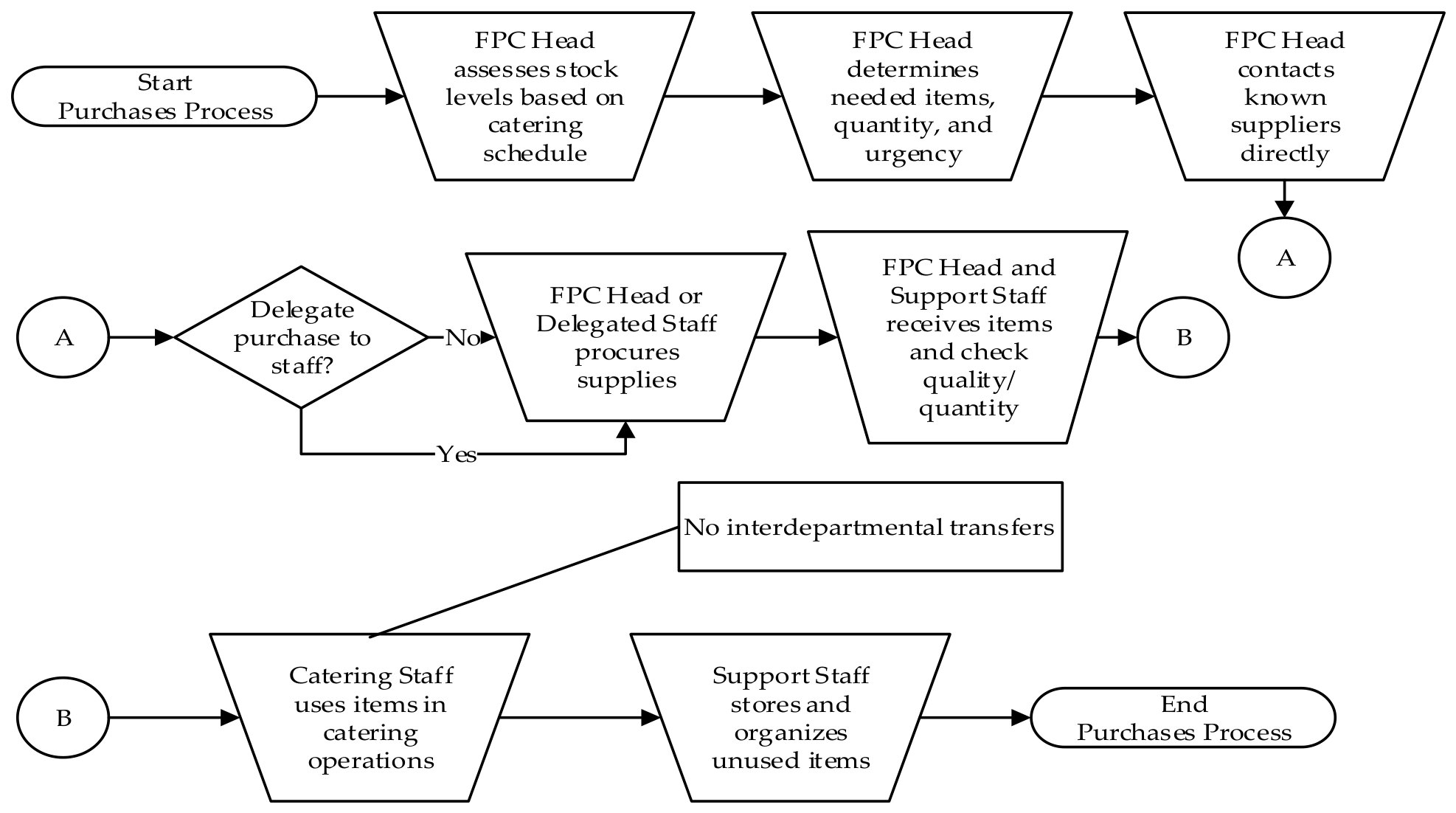
Figure 1 presents the current purchases process implemented within RSU Catering Services. The process begins with the FPC Head initiating procurement by assessing existing stock levels in relation to the scheduled catering operations. Based on this assessment, the FPC Head identifies required items, specifies quantities, and determines urgency levels. Once the needs are established, the FPC Head directly contacts familiar suppliers. A decision point then follows where the FPC Head may delegate the procurement task to a support staff member. Regardless of whether the task is delegated or performed directly, the FPC Head remains involved in the procurement function. Supplies are received and checked by both the FPC Head and support staff. This includes verifying item quantity and assessing product quality. During this stage, the purchase invoice issued by the supplier serves as the only formal document used. It is referenced during the receipt and verification of delivered items and is retained by the FPC Head as part of the transaction record. After verification, items are either used immediately in catering operations or, if not consumed, are stored and organized by the support staff. It is also noted in the process flow that no interdepartmental transfer of items occurs. Opportunities to interview staff beyond the process owner were confined to these receiving–use–storage steps; given that the other steps are owner-executed and evidenced by source documents, not including additional staff is unlikely to materially affect the results or the depiction of the process.
3.2. Cost Accumulation and Cost Allocation Processes
No cost accumulation or cost allocation procedures were identified during the process walkthrough conducted at RSU Catering Services. There was no formal mechanism observed for recording or assigning production-related costs—such as raw materials, labor, or utilities—to specific catering outputs, activities, or service events.
Costs related to catering operations were not tracked at the time of procurement or use. Instead, they were recorded as general operating expenses at the time of reimbursement or liquidation. This treatment applied uniformly across all reviewed transactions.
The process walkthrough also confirmed that no documents, forms, or templates were used to support cost tracking. Costs were not associated with individual orders, customers, or production batches, and no internal tools were used to monitor direct or indirect inputs. Shared costs, such as labor time, electricity, or equipment use, were also not distributed across outputs. No formal cost allocation methods were applied.
Although the FPC Head described several routine practices that support operations—such as planning based on expected catering orders and maintaining a list of preferred suppliers—these were not linked to any structured cost documentation or accounting procedures. The absence of a formal cost accumulation or allocation system was consistent throughout the conversion cycle, and no records were available that linked resource inputs to specific events, services, or outputs.
3.3. Sales Order Process
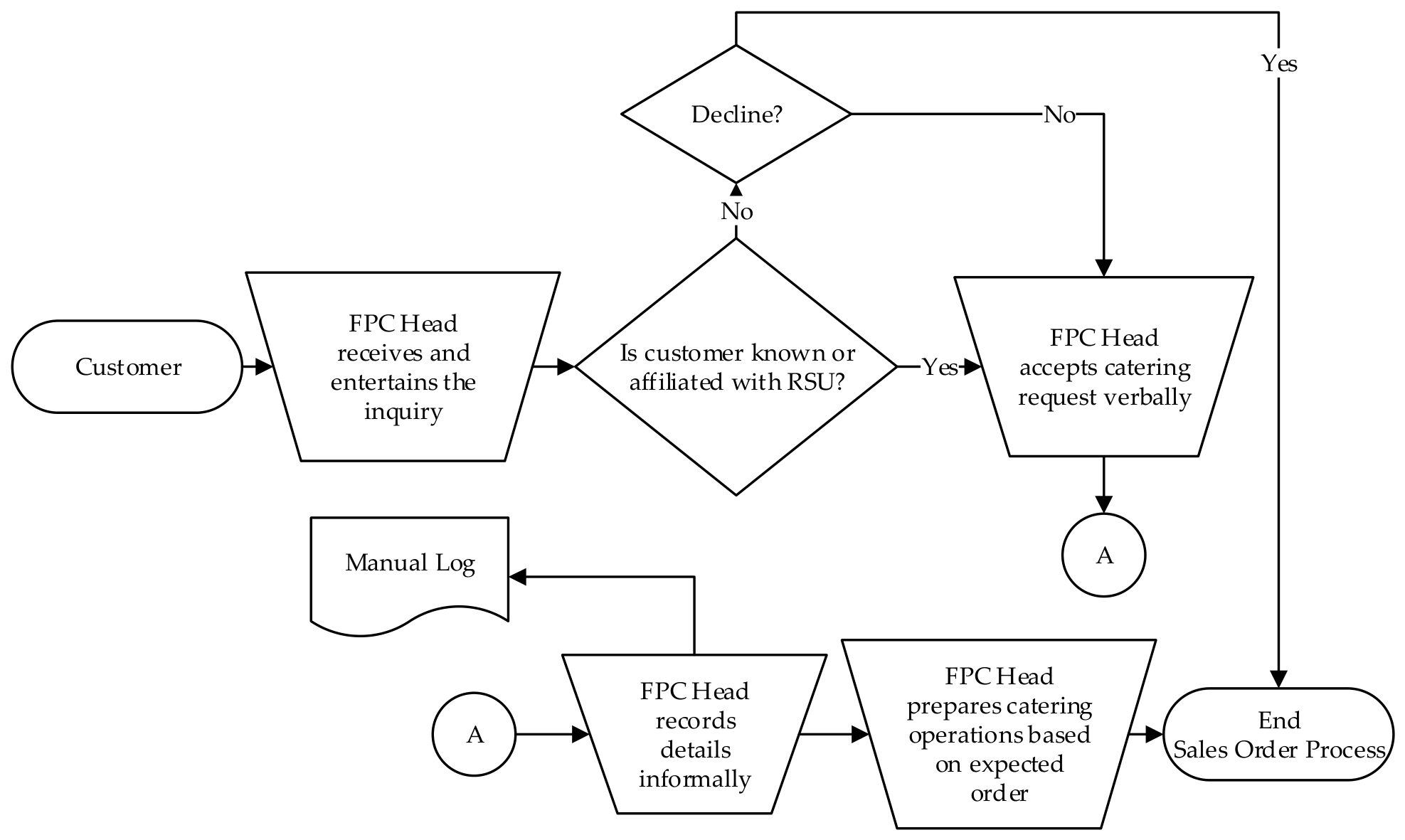
Figure 2 illustrates the current sales order process followed by RSU Catering Services. The process begins when a potential client, typically affiliated with RSU, initiates an inquiry regarding catering services. This inquiry may be made verbally, in person, or via phone call. Upon receiving the inquiry, the FPC Head entertains the request and gathers information directly from the customer. This includes details such as the date of the event, expected number of guests, preferred menu, and location. These interactions are not documented using a formal inquiry form or standard request form. The next step involves evaluating whether the customer is a known or affiliated individual or unit within RSU. If the client is recognized or already has an established relationship with the catering unit, the process continues. If not, the FPC Head may decline the service request, particularly for external or unfamiliar clients, depending on capacity or perceived risk. This decision is made informally, without any written criteria or approval workflow.
If the customer is accepted, the FPC Head formally acknowledges the catering request—but this acceptance is verbal. There is no standard sales order document, reservation slip, or contract created for routine service requests. Instead, details are typically recorded informally, such as through handwritten notes in a notebook or personal planner used by the FPC Head. Following the informal recording of order details, the FPC Head proceeds to plan the catering operations based on the agreed-upon order. The process concludes at this point and transitions into the production or conversion cycle.
3.4. Billing Process
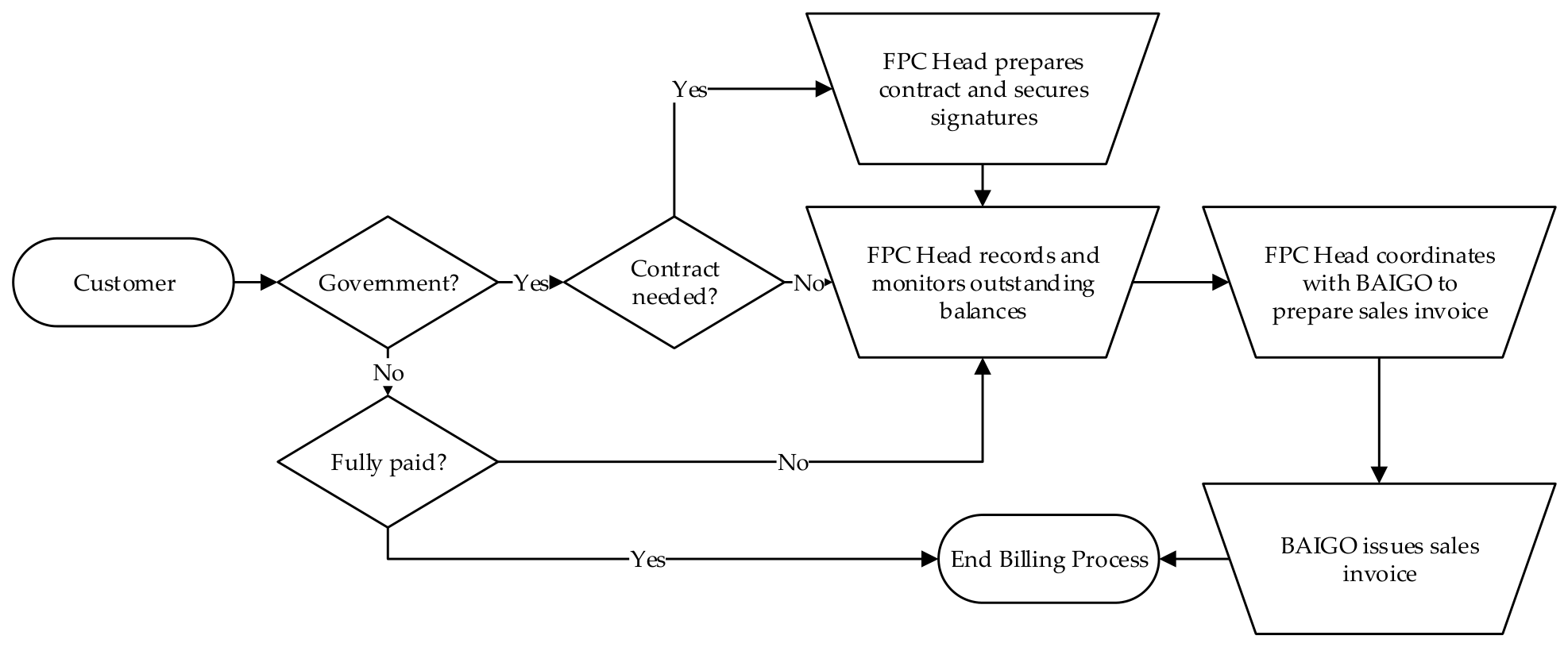
Figure 3 illustrates the billing process followed by RSU Catering Services. The process begins after the catering service has been completed and proceeds based on the classification of the client.
The first decision point determines whether the client is a government entity. If the client is not a government entity, the process moves to verifying whether the service has already been fully paid. In most cases involving private clients, full or partial payment is received prior to the event. If payment has been received in full, the billing process concludes. If payment is not yet complete, the FPC Head records and monitors the outstanding balance manually.
For government clients, the next decision is whether a formal contract is required. In cases involving significant catering services, contracts are prepared by the FPC Head, signed by both parties, and occasionally notarized. If no contract is needed, the FPC Head records and monitors the unpaid balances using an informal tracking method. No formal accounts receivable ledger or aging schedule was identified during the process walkthrough.
Following this, the FPC Head coordinates with the university’s Business and Income-Generating Office (BAIGO) to prepare and issue the official sales invoice. The invoice is necessary for subsequent payment and clearance processes handled outside the catering unit. Once the sales invoice is issued by BAIGO, the billing process from the perspective of the catering unit is considered complete.
4. Discussion
The findings of this study reveal a highly informal, centralized, and undocumented operational system across key transaction processes within RSU Catering Services. While these practices may appear efficient in day-to-day operations, they present significant challenges in terms of transparency, accountability, and sustainability—particularly when examined through the lens of the COSO Framework and the TPC.
In the Purchases Process, the absence of formal purchase requisitions, supplier evaluations, or systematic documentation reflects limited implementation of key COSO Framework control components, such as control activities and monitoring. Relative to a typical expenditure cycle (e.g., requisition, vendor selection, receiving, invoice verification, and disbursement) [
17], the observed purchases process lacked formal requisitions and documentation, indicating weak control activities and monitoring [
3]. The lack of segregation of duties and audit trail increases exposure to procurement-related risks, including unauthorized purchases, duplicate orders, or supplier favoritism.
The absence of cost accumulation and cost allocation processes indicates a critical gap in the Conversion Cycle. In AIS terms, the conversion cycle includes cost accumulation and cost allocation activities needed for cost visibility and performance assessment [
17]. Without cost accumulation, RSU Catering Services cannot monitor the cost-efficiency of its outputs. Similarly, the lack of cost allocation prevents the equitable distribution of shared costs, limiting the IGUs’ ability to determine the true cost of individual catering events or services. This undermines financial reporting accuracy and hinders evidence-based decision-making. The reliance on reimbursement-based expense recognition further removes cost visibility during production.
In terms of Sales Order Processing, the use of verbal orders without any supporting documentation contradicts the principles of authorization and information and communication, which are core to both the COSO Framework and the TPC. The preference for known individuals and lack of formal customer acceptance procedures not only limits market reach but also introduces inconsistencies in service delivery and revenue tracking. This system’s reliance on the FPC Head’s institutional memory and trust relationships poses continuity risks in the event of personnel turnover.
The Billing Process, while partially integrated with the university’s formal financial system through BAIGO, remains largely informal within the RSU Catering Services itself. The issuance of contracts for large events and coordination for invoice preparation represent isolated formalities rather than a structured billing framework. There is no internal accounts receivable system or standard billing procedure maintained at the unit level, which limits the effectiveness of monitoring, a critical COSO Framework component. The manual tracking of unpaid balances, while functional in practice, is not scalable or auditable, and may lead to disputes, revenue leakage, or delayed collections—especially from government clients with longer payment cycles.
Taken together, these findings suggest that while the catering unit is able to operate day to day, it lacks the internal control structure needed to support sustainable growth, consistently reliable financial reporting, and longer-term institutional objectives. The observed practices fall short of the expectations set by the COSO Framework and the TPC, particularly in documentation, segregation of duties, risk assessment/management, and monitoring. Internal control is intended to provide reasonable assurance regarding the achievement of operational, reporting, and compliance objectives [
3]. However, prior research cautions that adopting COSO does not automatically translate into more effective risk management [
5]. In this setting, the absence of basic controls and dependable cost/transaction information constrains decision-making, planning, and resource allocation within RSU Catering Services.
The results underscore the importance of formalizing key transaction processes, introducing basic cost accounting practices, and aligning operational flows with established internal control frameworks. Doing so will not only improve transparency and efficiency but also enhance the financial sustainability of RSU’s IGUs.
5. Conclusions
This study examined the internal control practices of RSU Catering Services, focusing on key financial and operational processes: purchases, cost accumulation, cost allocation, sales order, and billing. The analysis, guided by the COSO Framework and the TPC, revealed that the unit operates with minimal formalization, relying heavily on verbal communication, informal routines, and the discretion of a single process owner.
The absence of structured documentation, cost tracking, and systematic billing practices presents risks to transparency, efficiency, and sustainability. These gaps are particularly significant in a public university context, where accountability and financial stewardship are mandated by both national regulations and institutional governance standards. The findings underscore the need for internal reforms to support long-term operational continuity, informed decision-making, and readiness for audit or system integration.
To address these concerns, the study recommends formalizing core transaction procedures, adopting basic cost accounting tools, decentralizing control responsibilities, and enhancing documentation practices. Building capacity among staff and aligning processes with institutional financial systems will also contribute to improved performance and sustainability.
Future studies may explore the integration of digital accounting systems in university-managed IGUs, with a focus on system usability, staff readiness, and compliance with government audit requirements. Longitudinal studies can also assess how the implementation of internal control improvements affects financial outcomes and service delivery over time. Comparative case studies across different SUCs may yield broader insights into best practices and contextual adaptations in managing auxiliary services. Accordingly, the study offers transferable insights for catering operations beyond the university context and for other service units organized around revenue, expenditure, and conversion cycles, subject to similarity of processes and control documentation; future multi-site or comparative studies are warranted to confirm scope and variation.



 ,
,