Proceeding Paper

Document Route Recording System: Tool for Tracking Documents in Philippine Universities †

by
Adrian Forca
1,*,
James Ryan Ga
1,
Loveson Gallos
1 and
Garry Vanz Blancia
2
1
College of Science and Technology, Guimaras State University, Jordan 5045, Guimaras, Philippines
2
College of Education, Romblon State University, Odiongan 5055, Romblon, Philippines
*
Author to whom correspondence should be addressed.
Presented at the 8th International Global Conference Series on ICT Integration in Technical Education & Smart Society, Aizuwakamatsu City, Japan, 20–26 January 2026.
Eng. Proc. 2026, 143(1), 34; https://doi.org/10.3390/engproc2026143034
Published: 13 July 2026

Abstract

The Document Route Recording System is an intervention tool developed by Information Technology to uplift the present processes of transferring documents to various units in Philippine universities motivated by the problems that the researchers have identified in this study. The software was developed through the inspiration of the modified Waterfall model and provides three major modules: Route Creation, Acknowledgement, and Tracking, bundled as one software package. To evaluate the effectiveness of the Document Route Recording System, the ISO 25010:2015 Software Quality Instrument was utilized, and results interpreted through the descriptive research design illustrate that the objectives of the study were met effectively as all the respondents’ conclusions on quality characteristics of the software were interpreted as “Very High”. To fulfill its potential impact on the organizations, the researchers recommend fully implementing the platform to resolve the identified problems in the present system’s processes and procedures. Moreover, it is recommended for future researchers to improve and apply modern frameworks to foster further technological solutions and expand potential scope and features.

1. Introduction

Philippine universities, as higher education institutions (HEIs), operate under a comprehensive mandate anchored on four fundamental pillars: Instruction, Research, Extension, and Production. Each of these pillars is guided by distinct policies and implemented through functional units, all of which are accountable for achieving specific targets on a quarterly and annual basis. These deliverables are not only vital for operational effectiveness but are also essential for reporting, accreditation, and institutional development. As such, documented evidence [1,2] is instrumental in monitoring the progress of actions taken and verifying the achievement of institutional goals [3].
A key process that supports the internal operations of these institutions is the routing of documents, which in this study refers to the movement or transfer of paperwork requiring signatures, decisions, and approvals across various units. However, the traditional, often manual, routing systems currently practiced in many Philippine universities have presented significant challenges. These include the loss of documents, untraceable routing trails, and inefficient turnaround times, all of which hinder the timely completion of institutional transactions. These inefficiencies are particularly detrimental in contexts involving legal compliance, accreditation requirements, and continuous quality improvement initiatives.
To address these systemic issues, the Document Route Recording System (DRRS) was developed. This system is designed to provide a more effective, efficient, and up-to-date method of recordkeeping and document tracking within the university setting [4]. It features a Route Creation Module, an Acknowledgement Module, and a Tracking Module, which together facilitate real-time monitoring, enhance document accountability, and ensure accurate transmission across multiple departments. During its implementation, the DRRS has proven functional and has significantly streamlined the document routing procedure within the institution [5,6]. Furthermore, the system has shown potential to serve as a model framework for other organizations and has contributed to the expanding field of information technology research, particularly in studies involving digital process automation in higher education institutions.

1.1. Objectives of the Study

The study aimed to design and develop a Document Route Recording System in order to enhance the current system of route documentation in Philippine universities.
Specifically, it aimed to attain the following:
1.
Design, develop and attain feedback from the respondents’ for the following features and functionalities of the Document Route Recording System (DRRS):
(a)
The Route Creation Module that serves to establish the origin and destination of the documents;
(b)
An Acknowledgement Module for every route point created to acknowledge documents;
(c)
A Tracking Module that will assist the organization for a system follow-up of documents sent and received by all units.
2.
Evaluate the Document Route Recording System in terms of:
(a)
Functionality;
(b)
Efficiency;
(c)
Usability;
(d)
Reliability;
(e)
Security;
(f)
Maintainability;
(g)
Portability.

1.2. Scope and Limitations of the Study

The researchers working on the Document Route Recording System conducted research about design, development and evaluation of document routes which the recording system was developed for. The study followed methods which included developmental methods and assessment of all capabilities and features which exist in the final DRRS. The DRRS assessment used a survey questionnaire which followed the ISO IEC 25010:2015 Evaluation Standard [7].

1.3. Conceptual Framework

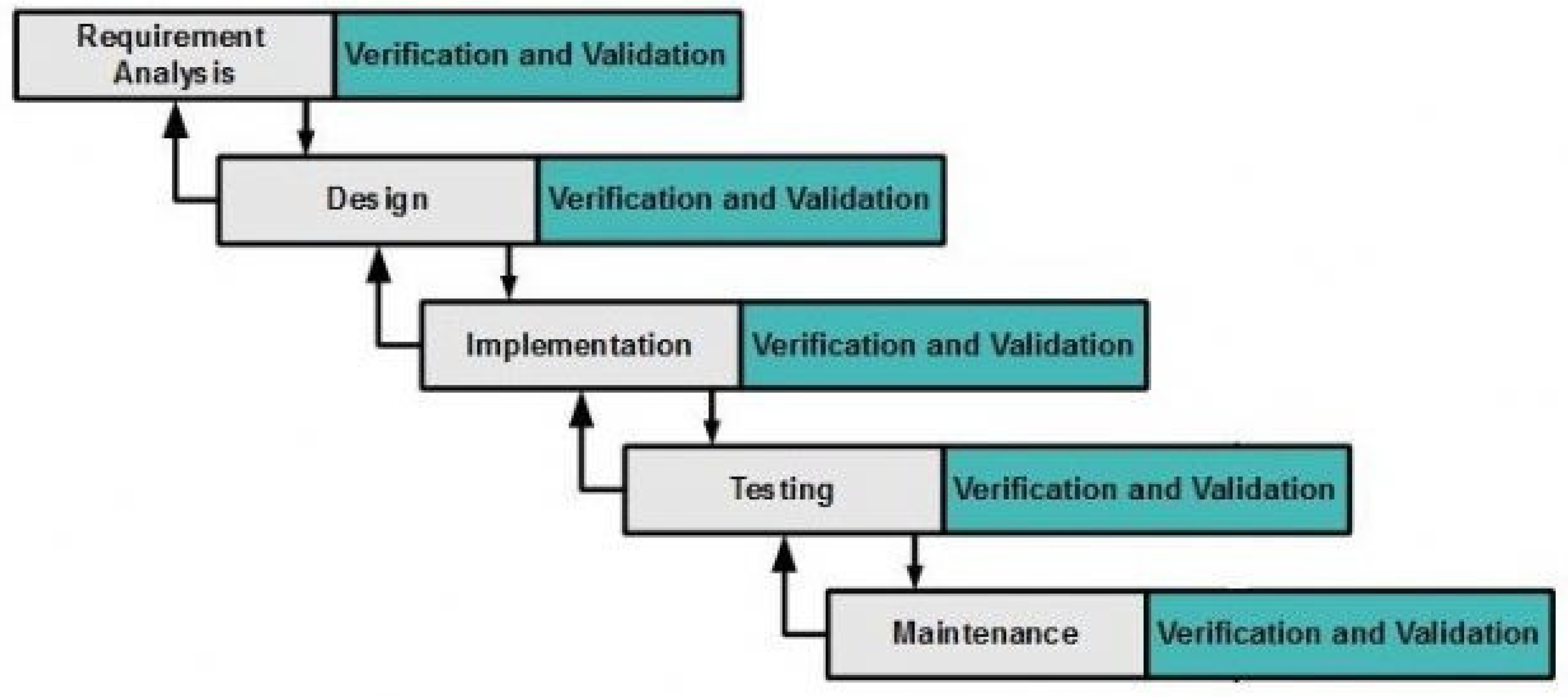
The Document Route Recording System (DRRS) was implemented following the Software Development Lifecycle Methodology (SDLC), which allows the overlapping of project phases while still adhering to the structure of the traditional Waterfall model. This approach includes key stages such as requirement analysis, design, implementation (or coding), testing, and maintenance. Each phase is interdependent, influencing both the preceding and succeeding phases. Additionally, verification and validation mechanisms are integrated into each stage, enhancing the model’s robustness. The flexibility of this model allows for the early detection and correction of software defects during the development phase, thus significantly reducing the cost of changes before implementation [4].
Moreover, the DRRS developed for Philippine universities was evaluated in accordance with the ISO/IEC 25010 software quality standards, which outline eight key quality characteristics: functionality, efficiency, compatibility, reliability, security, maintainability, portability, and usability [8]. These standards were applied to ensure that the system met established software engineering benchmarks.
The evaluation of DRRS involved both IT experts and end users. Their assessments were processed and interpreted using a combination of descriptive and inferential statistical techniques. Specifically, the mean was used to measure the degree of compliance of the system with software quality standards, as well as to determine its perceived level of effectiveness based on responses from various user categories. The use of descriptive statistics, such as the mean, was essential for quantifying user evaluations in an objective and standardized manner [9].
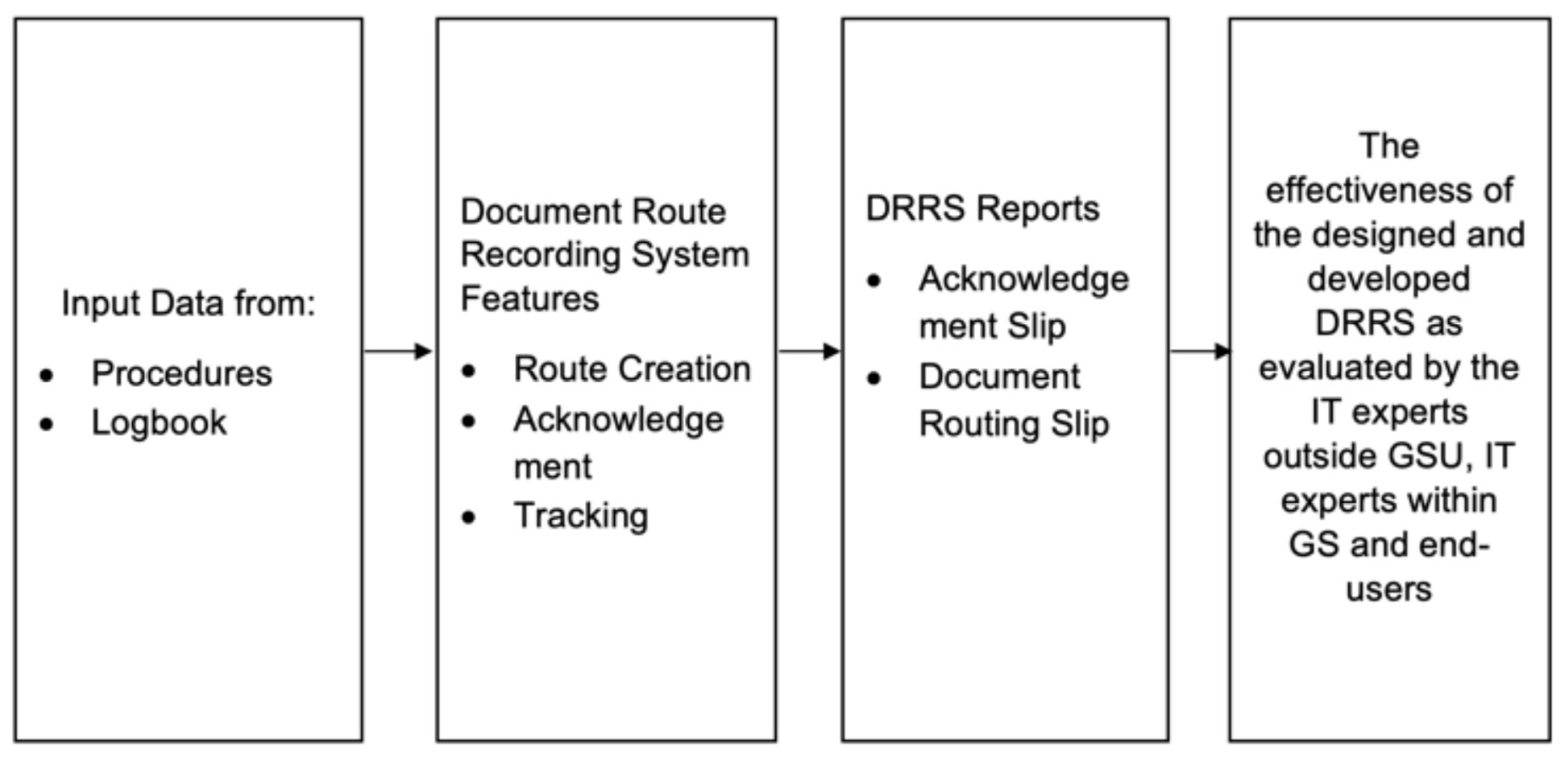
For clarity, the research was conducted on the basis of the schematic diagram shown in Figure 1 to ascertain the research-based objectives of the study.
Figure 2 presents the system-based objectives of the study. The data inputs from the Procedures and Logbook was the basis for the user to set the route of each document. In this approach, it helped eliminate the possible loss of documents and uplifted the process of tracking and follow-up of documents. The outputs of the system are Acknowledgement Slip and Document Routing Slip. These reports were processed through the DRRS features and evaluated by various groups of respondents to determine the effectiveness of the said system.

2. Materials and Methods

2.1. Research Design

In this study, the research methodology utilized was a combination of developmental and descriptive research designs. Specifically, the study utilized development research for the design and creation of the Document Route Recording System (DRRS), which aims to support Philippine universities in tracking documents as they move through various institutional processes. In parallel, descriptive research was used to evaluate the effectiveness and quality of the system through the perceptions of users and IT, both internal and external experts. This evaluation followed the ISO/IEC 25010:2015 software quality standards, which provided the basis for assessing the system’s functionality, efficiency, reliability, usability, and other key characteristics. Respondents were asked to rate the system using a researcher-modified survey questionnaire grounded in the ISO 25010 framework.
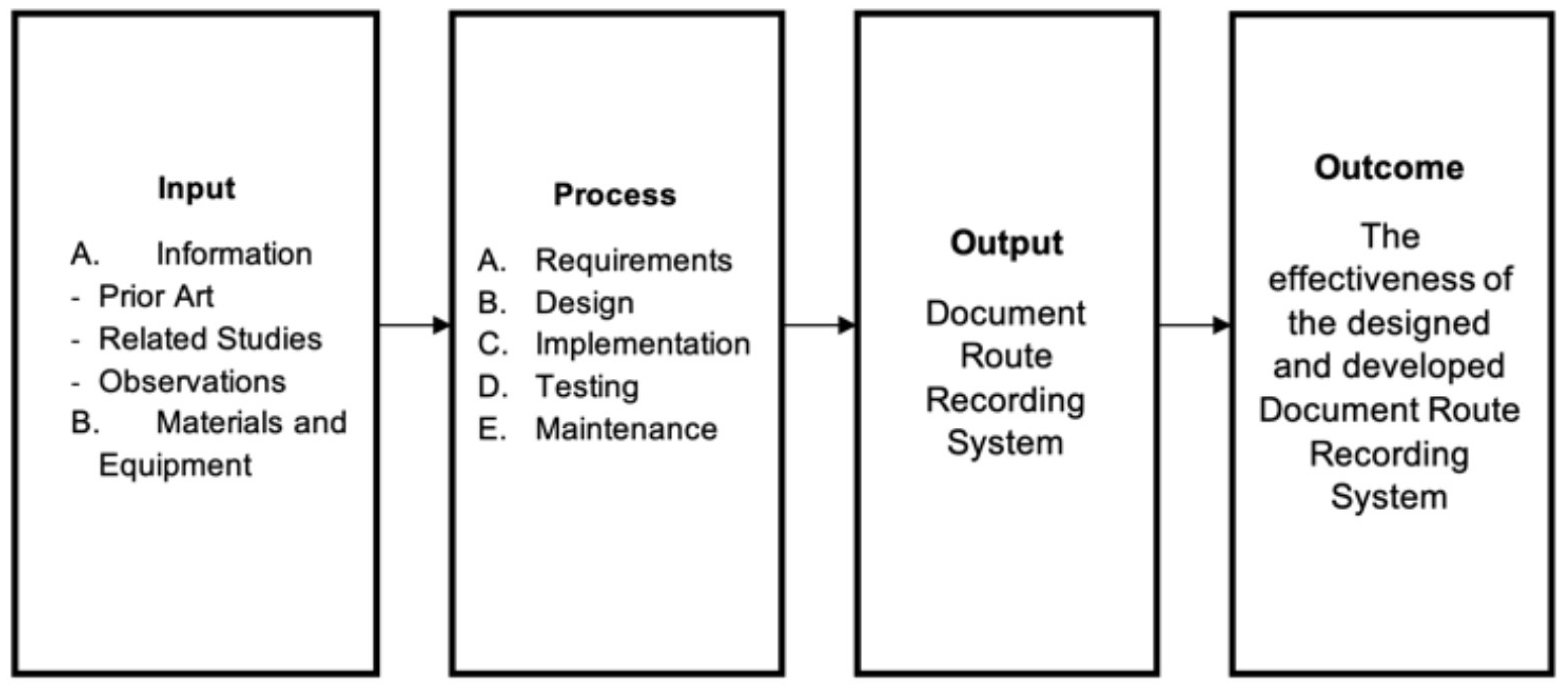
The study also adopted the Input–Process–Output-Outcome (IPO-O) model, which served as a conceptual framework for the system’s development. This approach enabled the breakdown of complex processes into smaller, manageable components, ensuring each phase was addressed systematically. Additionally, the project operationalized a modified Waterfall model to facilitate the development lifecycle, which permits overlapping phases while retaining the traditional stages of software development [10] which includes the following phases like requirement analysis, design, implementation, testing, and maintenance. Each of these phases is interdependent [4], where the outcome of one stage informs and influences both the previous and succeeding phases. Verification and validation are also embedded in each phase to enhance accuracy and reduce errors. The strength of this model lies in its flexibility, allowing for early detection of software defects during the development stage, thereby reducing the cost and complexity of changes prior to system implementation.

2.2. Respondents of the Study

A total of 20 respondents were surveyed from Guimaras State University as subjects of the study, including five (5) experts. Through a survey questionnaire, data were gathered to collect the feedback from the respondents based on the standard software quality.
The Document Route Recording System reached its first project milestone when it fulfilled the basic requirements of ISO/IEC 25010:2015 which includes eight primary characteristics and 31 sub-characteristics. The researcher used a three-part questionnaire to assess the system’s effectiveness because the system had achieved its initial requirements. Part I of the research instrument included the profile of the evaluator in terms of classification and IT orientation. Part II of the research instrument included the evaluation of the integrated modules in the developed system. Part III of the research instrument included the effectiveness of the developed system based on the standardized questionnaire for evaluating the developed system as prescribed by the ISO/IEC 25010:2015.
The research-made instrument based on the ISO/IEC 25010:2015 composed of eight (8) main quality characteristics namely, functionality suitability, reliability, security, maintainability, and portability, which was used as a basis in determining the effectiveness of the system both by the IT experts and the users of the developed Document Route Recording System.

2.3. Data Gathering Procedures

The Document Route Recording System (DRRS) was developed and installed at the main campus of Philippine universities in McLain, Buenavista, Guimaras. The office of the Management Information System (MIS) main computer unit received the deployment of the DRRS. The system used a nuclear support information facility which 20 evaluators tested using XAMPP compilation using Apache HTTP Server 2.4.58 (Apache Friends, Berlin, Germany; Apache Software Foundation, Wilmington, DE, USA) to assess its main features and operational performance.
This developmental evaluation study followed a structured process grounded in developmental research methodologies. After the conceptualization phase, the system was implemented using an interactive approach. A series of consultations, classified under the planning phase, were conducted to identify and document the standard operating procedures involved in the routing of institutional documents. To manage the development process efficiently, the Software Development Lifecycle (SDLC) model was adopted [11]. This model provided a systematic framework for managing the system’s complexity, ensuring that each phase—from requirement analysis to testing and maintenance—was aligned with project goals.
Moreover, the DRRS was evaluated in compliance with the ISO/IEC 25010:2015 software quality standards, which define eight primary characteristics for assessing software: functional suitability, performance efficiency, compatibility, usability, reliability, security, maintainability, and portability. Evaluation of the system was conducted by a group of 20 internal and external evaluators [12]. These included both end-users—comprising IT and non-IT personnel of the institution—and external IT professionals such as university professors, TESDA assessors, and local IT entrepreneurs from Iloilo City and Guimaras Island.
To achieve the study’s objectives, various instruments were used for data collection and analysis. A researcher-modified questionnaire, based on ISO/IEC 25010:2015 evaluation criteria, was administered to assess how well the DRRS addressed the needs of its users while meeting safety and software quality standards. The effectiveness of the system was measured using a five-point Likert Scale [13], where 5 indicated the highest level of agreement or effectiveness and 1 indicated the lowest.
For data interpretation, the following scoring schemes were employed: The scoring system used for assessing general agreement levels (Objective 1) had different answer categories which included Strongly Agree for the range between 4.21 and 5.00, Agree for the range between 3.41 and 4.20, Neither Agree nor Disagree for the range between 2.61 and 3.40, Disagree for the range between 1.81 and 2.60, and Strongly Disagree for all values between 1.00 and 1.80. The same scale from the previous assessment was used to measure effectiveness through its corresponding verbal descriptions which included 4.21 to 5.00 as Very High, 3.41 to 4.20 as High, 2.61 to 3.40 as Moderate, 1.81 to 2.60 as Low, and 1.00 to 1.80 as Very Low. The evaluation results were analyzed through interpretation which served as the foundation for subsequent evaluation results discussion.

2.4. Data Analysis Procedures

The results of the software evaluation were processed through spreadsheet software which encoded the evaluation ratings. The software acceptability assessment used mean values as its measurement method. Evaluators used mean values to assess their response distribution. The study employed a descriptive research design to present respondent feedback based on the instrument which followed study objectives. The system prototype development followed the modified Waterfall model. The Document Route Recording System performance evaluation used mean as the statistical method to assess its functionality, efficiency, compatibility, usability, reliability, security, maintainability and portability.

2.5. Software Design and Development Component

2.5.1. Software Lifecycle Model

Table researcher utilized the modified Waterfall model as the guiding framework for system development. Unlike the traditional Waterfall model, the modified version allows project phases to overlap, while still encompassing the key stages of requirement analysis, design, implementation (or coding), testing, and maintenance. Each phase influences and is influenced by both its preceding and succeeding phases, ensuring a continuous feedback loop. Notably, verification and validation mechanisms are integrated into every phase to enhance accuracy and minimize the risk of defects. The advantage of this model lies in its flexibility, which allows for early detection and correction of software issues during the development stage, ultimately reducing the cost and complexity of changes before the system reaches the implementation stage [4]. The modified Waterfall model is presented in Figure 3.

2.5.2. Software Development Phases

The phases from 1 to 5 of software development as shown in Figure 3 using the modified Waterfall model are: requirement analysis, design, implementation, testing and maintenance.
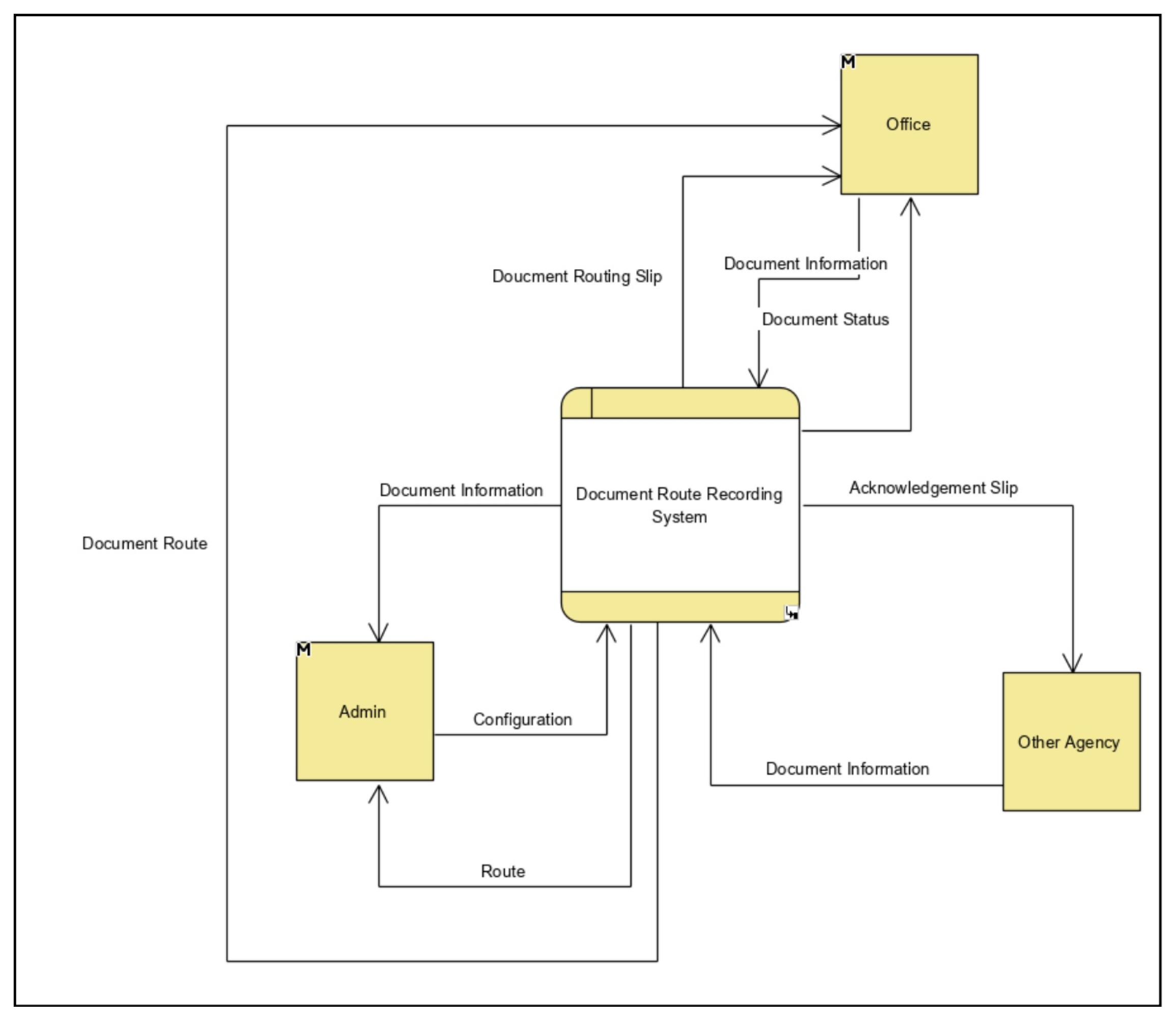
The requirement analysis phase was determined and analyzed based on the documented procedure of each unit in Philippine universities. The researcher inquired with the records office and other offices as to what type of document they usually process or requested and prepared. Figure 4 presents the data flow diagram [14] of the Document Route Recording System.
The first phase in the development process was requirements planning. During this phase, the primary task involved gathering data that would serve as the foundation for identifying the needs of the users. This included analyzing user requirements to be fulfilled by the system. Careful observation of existing processes and the use of follow-up interviews were essential for fully understanding the functional needs of the users. Additionally, this phase included planning the project schedule, identifying potential risks, defining technical tasks, and determining the resources required.
The second phase was the design phase. The main focus was on identifying the relevant data sources from existing document route records and creating a system design that could effectively utilize this information. This phase involved planning both the logical operations and the physical structure of the system. Logical design elements included the creation of a Data Flow Diagram (DFD), which detailed the processes and data interactions within the system. The physical design addressed system security, modular components supporting various operations, and the development of the user interface. For database design, the researcher created multiple tables in accordance with normalization standards to avoid data anomalies and redundancy issues [15,16]. The third phase was implementation. Activities during this stage included translating the system design into actual code. The researcher developed both the physical and logical database structures [17], ensuring that relationships between tables were properly defined. The system was developed using Microscoft Visual Studio Code version 2022 and version Visual C#12 (Microsoft Corporation, Redmond, WA, USA) as the front-end programming language and Structured Query Language (SQL) for the back-end database management. SQL was used to store, query, and manipulate data within a relational database, a widely adopted practice in many large-scale organizations.
Once the initial coding was completed, the system entered the testing phase, which involved deploying the beta version of the Document Route Recording System (DRRS). During this stage, the system was installed on designated computers equipped with Visual Studio and MySQL database version 8.0 (Oracle Corporation, Austin, TX, USA). A logging mechanism was integrated to record all system tasks, allowing for the identification and debugging of encountered errors. The researcher remained available to assist clients, address user questions, and troubleshoot unexpected issues that arose during the initial use of the system.
The final phase was maintenance, which involved continuous observation and periodic updates of the developed system. This ensured long-term functionality, user satisfaction, and adaptability to any emerging institutional needs.

3. Results and Discussion

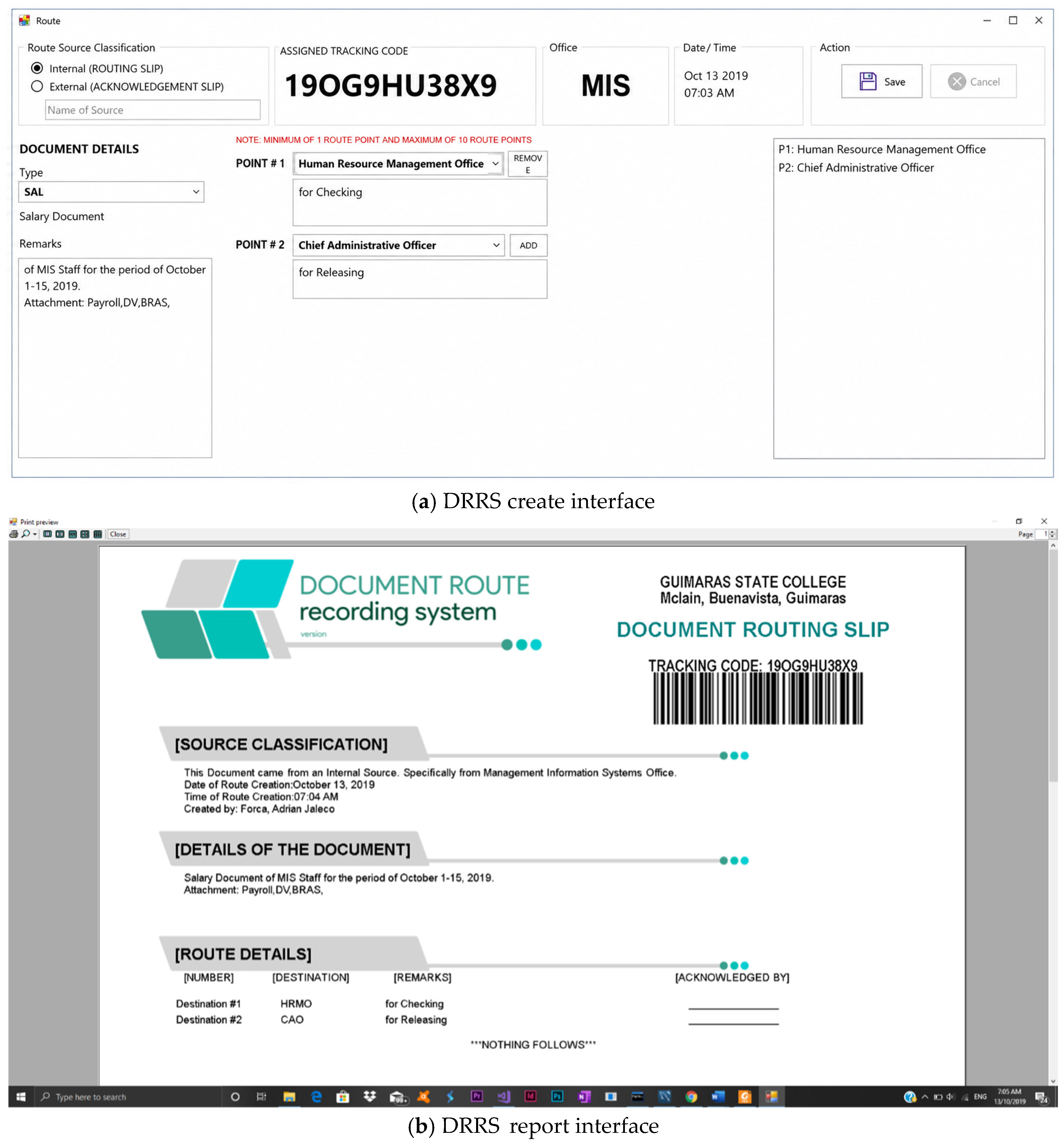
The DRRS was developed with an integrated Route Creation Module that serves as a route point for all documents circulating in the institution. Figure 5a presents the Route Creation Module and a sample report is shown in Figure 5b. Figure 5 depicts the design of the system. It features the assigned tracking number and bar code, resource classification, details of the document, and route details. The design depicts a logical presentation and flow of a document routing system that is relevant to the need of the organization. Meanwhile, Table 1 shows the results of the GSU personnel’s feedback on the design and development of the Document Route Recording System integrated modules.
The development and evaluation of the Document Route Recording System (DRRS) yielded highly favorable results from its intended users, particularly in terms of system integration, usability, and compliance with internationally recognized software quality standards. As shown in Table 1, the Route Creation Module received a mean score of 4.60 (Strongly Agree), indicating that users clearly recognized its effectiveness in establishing the origin and destination of documents across different institutional units. This confirms the module’s alignment with best practices in digital workflow systems, which emphasize traceability, transparency, and accountability in document processing [18]. The Acknowledgement Module, which scored the highest mean of 4.70, was seen as a critical component in ensuring that all route points could confirm document receipt. This addresses one of the major challenges in manual routing systems—lack of accountability and document trail loss. Such digital acknowledgement mechanisms are central to modern document management platforms as they promote responsibility, streamline communication, and reduce delays in institutional workflows [18]. Similarly, the Tracking Module, with a mean of 4.22, was strongly affirmed as a vital tool in assisting users with follow-up and real-time tracking of document status. This functionality aligns with findings from [5], who emphasized the importance of trackability and feedback loops in achieving efficient electronic document routing. The was also reported in terms of ISO/IEC 25010:2015 standards as shown in Table 2, which reveals that the developed platform was also highly rated. Software quality characteristics based on the eight characteristics were rated as “Very High” by users, with Security (M = 4.50) being the most highly rated aspect. In an era where data breaches and privacy concerns are increasingly prominent, this result highlights the system’s potential for secure institutional document handling. Ref. [7] emphasized that for document management systems to be viable and scalable, they must offer robust security and data integrity features—criteria that the DRRS evidently met.
Moreover, high scores in Usability (M = 4.30), Maintainability (M = 4.30), and Portability (M = 4.23) suggest that the system is user-friendly, adaptable, and capable of being updated and deployed across different environments with minimal difficulty. These qualities are especially important for higher education institutions, where administrative processes are complex, dynamic, and involve multiple stakeholders [12]. The system’s adaptability and ease of use are expected to enhance productivity and minimize training costs for future users. The consistently high ratings across all quality dimensions indicate that the DRRS is not only functional but also aligned with international software engineering standards. It provides a model that other academic institutions may emulate, especially those experiencing inefficiencies due to paper-based or fragmented document routing practices. From a systems development perspective, the successful application of the modified Waterfall model also validates the effectiveness of incremental, phase-based approaches for educational software projects [4].

4. Conclusions

Based on the objectives of the study, several conclusions were derived regarding the implementation and performance of the Document Route Recording System. First, a Route Creation Module was successfully integrated into the system, enabling the establishment of document routes by recording their origin and destination. Second, an embedded Acknowledgement Module ensured that all documents were acknowledged at every route point, promoting accountability and transparency. Third, the Tracking Module facilitated efficient follow-ups by presenting the route trails of documents, making the monitoring process systematic and integrated within the overall system. Lastly, the Document Route Recording System was found to be effective during the conduct of the study, demonstrating characteristics such as functionality, efficiency, compatibility, usability, reliability, security, maintainability, and portability.

Author Contributions

Conceptualization, A.F. and G.V.B.; methodology, A.F. and G.V.B.; software, J.R.G.; validation, L.G., G.V.B. and J.R.G.; formal analysis, G.V.B.; writing—original draft preparation, A.F.; writing—review and editing, G.V.B.; supervision, A.F.; project administration, A.F. All authors have read and agreed to the published version of the manuscript.

Funding

The APC was funded by Romblon State University.

Institutional Review Board Statement

Not applicable.

Informed Consent Statement

Not applicable.

Data Availability Statement

The data presented in this study are available on request from the corresponding author.

Acknowledgments

The authors would like to thank Guimaras State University and Romblon State University for the support in the conduct of this study. During the preparation of this manuscript/study, the authors used Gemini 3 Flash for the purposes of checking the grammar and ChatGPT based on GPT-5.5 for the image enhancement maintaining the data in the image. The authors have reviewed and edited the output and take full responsibility for the content of this publication.

Conflicts of Interest

The authors declare no conflicts of interest.

References

  1. Adenowo, A.A.; Adenowo, B.A. Software engineering methodologies: A review of the Waterfall model and objectoriented approach. Int. J. Sci. Eng. Res. 2013, 4, 423–434. [Google Scholar]
  2. Liedke, L. Beginner’s Guide: What Is a Likert Scale and How to Use It? WPForms, 7 October 2019. Available online: https://www.scribbr.com/methodology/likert-scale/ (accessed on 21 February 2025).
  3. Pratama, A.A.; Mutiara, A.B. Software quality analysis for Halodoc application using ISO 25010:2011. Int. J. Adv. Comput. Sci. Appl. 2021, 12, 0120844. [Google Scholar] [CrossRef] [Scilit]
  4. Pargaonkar, S. A comprehensive research analysis of software development life cycle (SDLC) Agile & Waterfall model: Advantages, disadvantages, and application suitability in software quality engineering. Int. J. Sci. Res. Publ. 2023, 13, 120–124. [Google Scholar] [CrossRef] [Scilit]
  5. Gao, C.; Hembroff, G. Implications of modified Waterfall model to the roles and education of Health IT professionals. In Proceedings of the 2012 IEEE Network Operations and Management Symposium, Maui, HI, USA, 16–20 April 2012. [Google Scholar] [CrossRef] [Scilit]
  6. Varghese, R.; Ordonez, C. Understanding data pre-processing with a hybrid diagram integrating ER and data flow notation. In Proceedings of the 2023 IEEE International Conference on Big Data, Sorrento, Italy, 15–18 December 2023. [Google Scholar] [CrossRef] [Scilit]
  7. ISO/IEC 25010:2015; Systems and Software Engineering—Systems and Software Quality Requirements and Evaluation (SQuaRE)—System and Software Quality Models. International Organization for Standardization (ISO): Geneva, Switzerland, 2015.
  8. Saringat, M.Z.; Bakar, A.A.; Mohd, M.; Zain, J.M.; Ali, N.M. On database normalization using user interface normal form. In Lecture Notes in Computer Science; Springer: Berlin/Heidelberg, Germany, 2010; pp. 571–578. [Google Scholar] [CrossRef] [Scilit]
  9. Harrington, J.L. Relational Database Design and Implementation, Third Edition: Clearly Explained; Elsevier: Amsterdam, The Netherlands, 2009; Available online: https://api.semanticscholar.org/CorpusID:64096621 (accessed on 21 February 2025).
  10. Anwar, M.R.; Purnama, S. Boarding house search information system database design. Int. J. Cyber IT Serv. Manag. 2022. Available online: https://api.semanticscholar.org/CorpusID:248021339 (accessed on 21 February 2025). [CrossRef] [Scilit]
  11. Alade, S.M. Design and implementation of a web-based document management system. Int. J. Inf. Technol. Comput. Sci. 2023. Available online: https://api.semanticscholar.org/CorpusID:258521724 (accessed on 21 February 2025). [CrossRef] [Scilit]
  12. Abdulkadhim, H.; Al-Rikabi, H.; Majeed, H.; Aldhalemi, A. Exploring the common factors influencing electronic document management systems (EDMS) implementation in government. ARPN J. Eng. Appl. Sci. 2015, 10, 17945–17952. Available online: https://api.semanticscholar.org/CorpusID:54019568 (accessed on 21 February 2025).
  13. Ortiz Cumpa, C.; Yoplac Arce, C.; Morales Alegría, E.; Cerna Cruz, R. The impact of document management using good practices: A literature review. Int. J. Prof. Bus. Rev. 2023, 8, e04112. [Google Scholar] [CrossRef] [Scilit]
  14. Hartono, S.S.K.; Hidayanto, A.N.; Phusavat, K. Impact of intention to use to a document management system (case study approach). In Proceedings of the 2018 International Conference on Information Management and Technology (ICIMTech), Jakarta, Indonesia, 3–5 September 2018. [Google Scholar] [CrossRef] [Scilit]
  15. Sarka, D. Descriptive statistics. Med. Stat. 2021. Available online: https://api.semanticscholar.org/CorpusID:5493871 (accessed on 21 February 2025). [CrossRef] [Scilit]
  16. Dayrit, H.S.; Florencondia, N.T.; Villar, M.J.M. The Study of the Benefit of the Implementation of the Document Tracking and Management System for the Philippine Statistics Authority. Iconic Res. Eng. J. 2024, 8, 6. [Google Scholar] [CrossRef] [Scilit]
  17. Badawy, M.; El-Aziz, A.A.A.; Idress, A.M.; Hefny, H.; Hossam, S. A survey on exploring key performance indicators. Future Comput. Inform. J. 2016, 1, 47–52. [Google Scholar] [CrossRef] [Scilit]
  18. Mission, R. Online support management system for University of Antique. J. Inf. Technol. Comput. 2020, 2, 39–52. [Google Scholar] [CrossRef] [Scilit]
Figure 1. Schematic diagram of the study based on the research objectives.
Engproc 143 00034 g001
Figure 2. Schematic diagram of the study based on the system objectives.
Engproc 143 00034 g002
Figure 3. Data flow diagram of document route recording system.
Engproc 143 00034 g003
Figure 4. Data flow diagram of Document Route Recording System.
Engproc 143 00034 g004
Figure 5. The design of the Document Route Recording System.
Engproc 143 00034 g005
Table 1. Respondents’ feedback on the design and development of the Document Route Recording System integrated modules.
ObjectiveMeanVerbal Interpretation
1.
Acknowledgement Module is embedded for every route point created to acknowledge documents; and
4.60Strongly Agree
2.
Tracking Module assists the organization for a system follow-up of documents sent and received by all units.
4.70Strongly Agree
4.22Strongly Agree
Table 2. System evaluation results.
ObjectiveMeanVerbal Interpretation
a.
Functional Suitability
4.21Very High
b.
Reliability
4.25Very High
c.
Usability
4.30Very High
d.
Performance Efficiency
4.25Very High
e.
Compatibility
4.29Very High
f.
Security
4.50Very High
g.
Maintainability
4.30Very High
h.
Portability
4.23Very High
Disclaimer/Publisher’s Note: The statements, opinions and data contained in all publications are solely those of the individual author(s) and contributor(s) and not of MDPI and/or the editor(s). MDPI and/or the editor(s) disclaim responsibility for any injury to people or property resulting from any ideas, methods, instructions or products referred to in the content.