Proceeding Paper

Technological Advancements of Hybrid Rocket Engines for Sustainable and Competitive In-Space Propulsion Applications †

Propulsion Research Laboratory, Department of Mechanical and Aerospace Engineering, Utah State University, Logan, UT 84322, USA
*
Author to whom correspondence should be addressed.
Presented at The 1st International Online Conference on Aerospace (IOCAE 2026), 16–17 April 2026; Available online: https://sciforum.net/event/IOCAE2026.
Eng. Proc. 2026, 142(1), 9; https://doi.org/10.3390/engproc2026142009
Published: 16 July 2026

Abstract

Hybrid rocket engines (HREs), which pair a fluid oxidizer with a solid fuel, offer safety and handling advantages, can reduce environmental impact relative to selected legacy systems, and are capable of deep throttling and restart, making them strong candidates for “green” in-space propulsion applications. However, until very recently, there has not been any flight heritage of an HRE used in a spaceflight mission. Over the past decade, the Propulsion Research Laboratory at Utah State University (PRL-USU) has matured a portfolio of HRE technologies—low-energy arc ignition, digital throttling, additively manufactured sustainable fuels, the Nytrox green oxidizer, and electroplated thruster assemblies—that together address the historical barriers to spaceflight adoption. This paper summarizes that progress, describes two flight systems built upon it, and presents a roadmap for future applications.

1. Introduction

The past decade has seen near-exponential growth in the number of spacecraft placed in orbit, the overwhelming majority of which are small satellites (SmallSats) with masses below approximately 180 kg [1]. This rapid expansion has exposed a persistent gap in the propulsion market: there are very few “green” options that deliver thrust and total impulse in the intermediate range—roughly 0.1 to 2 N of thrust—required for SmallSat attitude control, station keeping, orbit transfer, and rendezvous and proximity operations (RPO). Cold gas systems cannot provide enough total impulse, electric systems cannot provide high enough thrust without extreme power draws that preclude their adoption in SmallSats, and bipropellant systems are not reliable enough at those lower thrust levels; the tradeoffs across these options are surveyed in detail by Lemmer [2]. Historically, this gap has been filled almost exclusively by hydrazine monopropellant systems and, more recently, ionic liquid propellants like ASCENT or LMP-103s as well.
Hydrazine is extremely toxic, caustic, and carcinogenic; direct exposure to its vapor can be fatal [3], and the handling hazards, personal-protective requirements, and material-compatibility constraints make it expensive to store, transport, and load [4]. Regulatory pressure is mounting accordingly, with the European Union moving to restrict its use. Ionic-liquid alternatives can be less toxic and offer higher theoretical performance, but they require elevated catalyst-bed preheat and refractory thruster materials to accommodate their higher combustion temperatures [5].
Hybrid rocket engines (HREs) offer a compelling alternative. Because the fuel and oxidizer are stored separately and are comparatively inert on their own, hybrids offer safety and handling advantages; they can produce comparatively clean combustion byproducts, are capable of deep throttling and multiple restarts, and have been estimated to offer cost advantages relative to selected conventional systems [6,7]. In effect, hybrids combine many of the advantages of solid and liquid systems in a single architecture.
Despite these advantages, hybrids have not yet realized their potential in space. As a recent comprehensive review by Glaser et al. [8] concludes, the hybrid community is growing rapidly, yet industrial utilization and in-space validation remain limited. That review reassesses the prospects of hybrid rocket engines and, most importantly, identifies the technical challenges that hinder their breakthrough in the space sector—among them are reliable ignition, fast and deep throttling, run-to-run repeatability and active control, fuel regression-rate and combustion performance, and the scaling and inert-mass penalties that erode competitiveness [7,8]—together with the technologies and approaches needed to bridge those gaps. This low maturity is also reflected in NASA’s 2026 State-of-the-Art of Small Spacecraft Technology assessment, which places small-spacecraft hybrid propulsion among lower-readiness in-space options maturing toward flight rather than among established state-of-the-art systems [9]. Part of the difficulty is simply heritage: reaching orbit is expensive, and mission planners are reluctant to fly a propulsion class with no track record. That situation is now beginning to change, as dedicated hybrid systems are being demonstrated in orbit; in December 2025, Fergani Space reported that its FGN-TUG-S01 orbital transfer vehicle completed a 35 s in-space hybrid-engine firing and transitioned from a 530 km circular orbit to an elliptical orbit with a 720 km apogee [10].
The technologies developed by the Propulsion Research Laboratory at Utah State University (PRL-USU) map directly onto several of the gaps identified by Glaser et al. [8]. Reliable, low-power, restartable ignition is provided by a direct electrical arc igniter; fast, deep throttling and active control by a digital throttle; improved fuel performance and low-cost manufacturability by additively manufactured and additive-infused fuels; a safe, high-density oxidizer by the Nytrox blend; and reduced inert mass by electroplated thruster assemblies. Just as importantly, the flight systems assembled from these building blocks begin to supply the in-space validation that the review found missing. The remainder of this paper describes these methods (Section 2), presents the performance they achieve and the resulting space-system architectures and roadmap (Section 3), and draws conclusions for future missions (Section 4).
To compete with hydrazine and other legacy propulsion systems [3,4,5], a green propulsion system must offer a compelling mission-level trade across the axes that matter to a mission designer. Practically, this means an ignition latency plus rise time under 200 ms, an ignition power requirement below 10 W, a vacuum-specific impulse above roughly 230 s, a density-specific impulse exceeding about 2270 N·s/L, and no need for propellant preheat or a catalyst bed, all while remaining substantially less toxic than hydrazine. The PRL technologies described below are designed to target these thresholds. The specific-impulse and density-specific-impulse targets correspond to parity with state-of-the-art hydrazine monopropellant performance [4]. The sub-200 ms ignition-latency and sub-10 W ignition-power targets reflect adoption thresholds identified through the authors’ direct discussions with SmallSat operators who currently fly hydrazine and represent the levels at which those operators indicated they would seriously consider a hybrid alternative.

2. Materials and Methods

This section gives a high-level overview of the five technologies that the PRL has developed to address the gaps identified in Section 1. Each is described here in terms of its operating principle and implementation only; the performance these methods achieve, and their mission-level impact, are deferred to Section 3. Collectively, the five methods target the challenges that Glaser et al. [8] identify as blocking the maturation of hybrid propulsion: ignition, throttling and active control, fuel performance and manufacture, oxidizer safety, and inert mass [7,8].

2.1. Arc-Ignition System

Direct electrical arc ignition uses a high-voltage electrical discharge to pyrolyze the surface of the solid fuel and initiate combustion, without any separate igniter propellant or pyrotechnic charge. The method exploits the electrical breakdown properties of certain additively manufactured thermoplastics—most notably, acrylonitrile butadiene styrene (ABS)—which char and release combustible pyrolysis products when an arc is struck across the grain port [11,12]. In the PRL implementation, electrodes are integrated into a printed igniter feature at the head end of the grain, and the igniter was patented in 2018. Reliable, low-power, restartable ignition without a pyrotechnic charge or catalyst bed is a prerequisite for the multi-restart duty cycles that in-space attitude control, RPO, and orbit-transfer maneuvers demand, and it directly addresses the reliable-ignition gap that Glaser et al. [8] identify as blocking hybrid adoption.

2.2. Digital Throttle Control

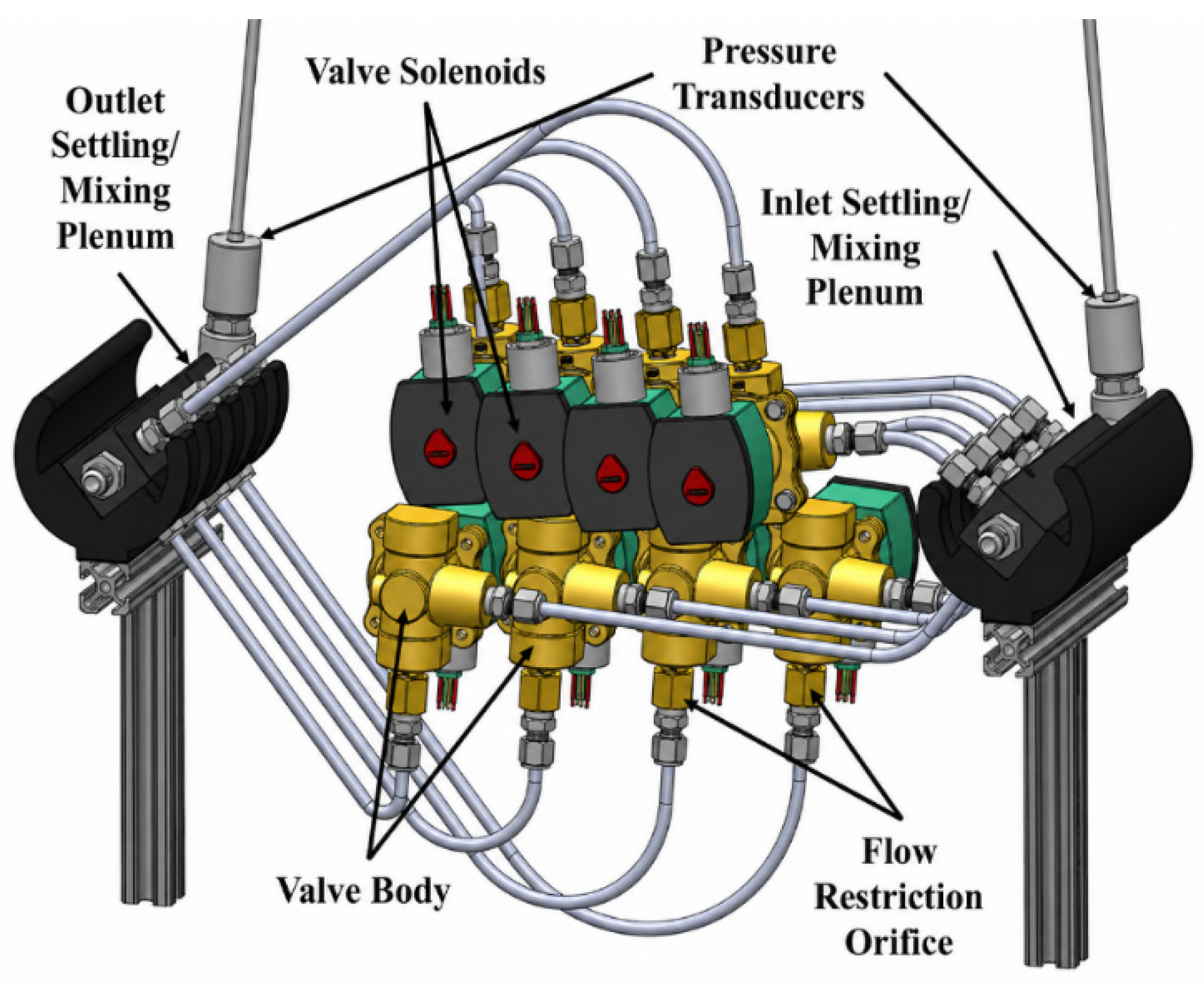
Conventional throttling relies on a single analog flow-control valve, which is slow to position and difficult to control precisely. The PRL method instead divides the oxidizer flow path among several parallel lines, each gated by a fast on/off solenoid valve, so that thrust is commanded by selecting discrete valve states rather than modulating a single continuously variable valve. An 8-bit arrangement of binary-weighted flow paths provides a large set of commandable, repeatable flow levels [13,14]. Fast, precise, and repeatable throttling is necessary for the fine impulse control that orbit insertion, station keeping, RPO, and orbit transfer require, and it addresses the throttling and active-control gap [8].

2.3. Sustainable, 3D-Printable Fuels

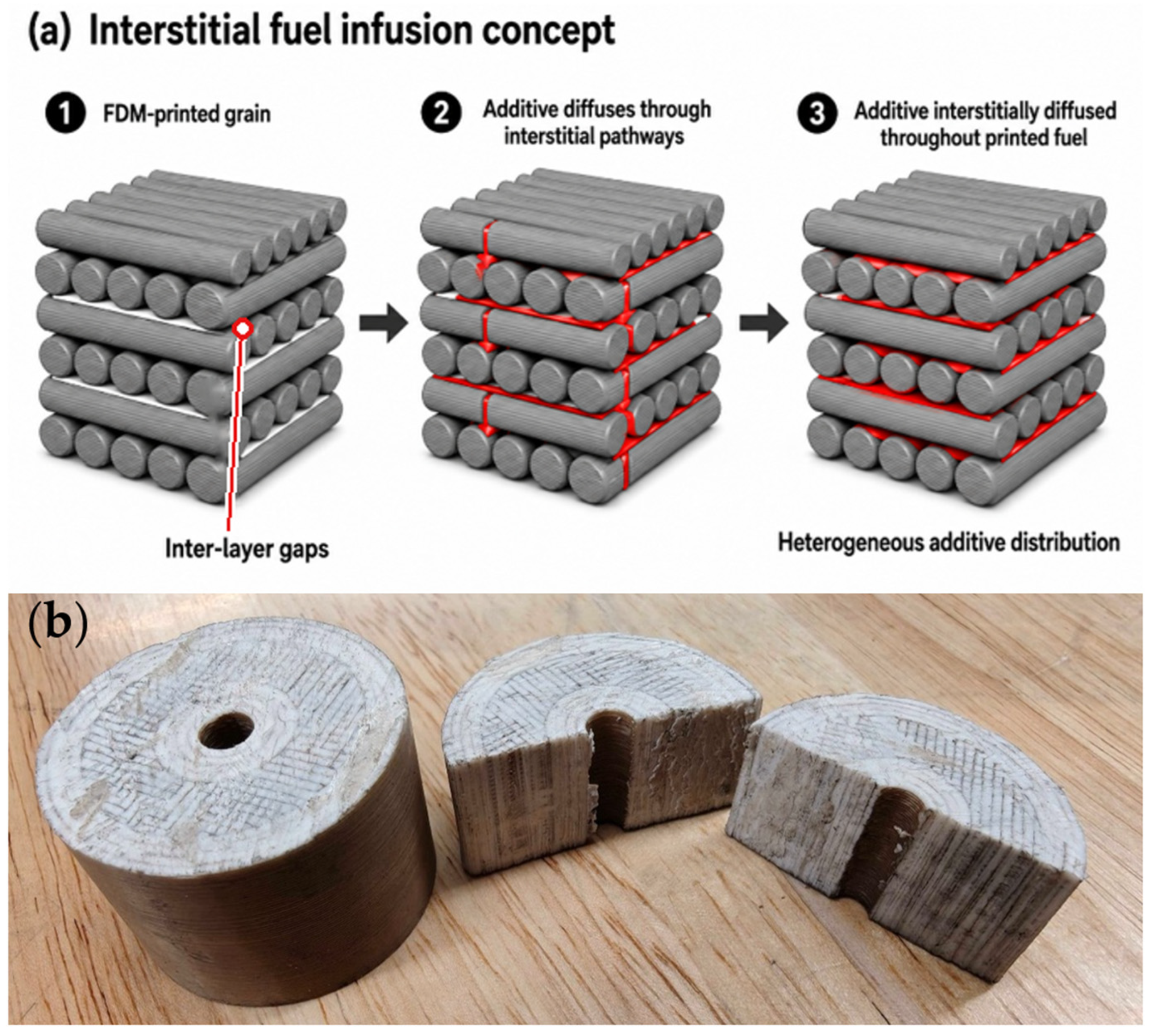
The PRL manufactures fuel grains from fused-deposition-modeling (FDM) thermoplastics. Printing allows complex internal port geometries to be produced directly [15], and the feedstock can be drawn from recycled or bio-based plastics rather than virgin material. A second, patent-pending method addresses fuel composition: FDM printing leaves minuscule gaps between deposited layers, and an interstitial-diffusion process infuses additives into those voids, distributing them throughout the printed grain [16]. This provides a route to functionally graded fuels without specialized casting equipment. Low-cost, tunable, and sustainable fuels are needed to raise combustion performance and manufacturability while lowering cost and environmental impact, addressing the fuel-performance and fuel-manufacture gaps [8].

2.4. Green Oxidizer Blends: Nytrox

Nitrous oxide (N2O) is an attractive self-pressurizing oxidizer for HREs, but it can undergo highly exothermic decomposition under unfavorable pressure, temperature, contamination, or ignition-source conditions; historical nitrous oxide accidents, including the 2007 Scaled Composites accident discussed in the CSB report, motivate strict cleanliness, materials compatibility, and system-design controls [17]. The PRL method, termed Nytrox, supercharges N2O with gaseous oxygen (GOX) [18], which dissolves into the liquid similarly to how carbon dioxide does in carbonated water. The resulting blend is a tunable oxidizer whose density and dissolved-oxygen fraction are set jointly by storage pressure and temperature. A dense, storable oxidizer that avoids the violent decomposition hazard of neat nitrous oxide is necessary to achieve competitive volumetric performance safely, addressing the oxidizer-safety gap [8].

2.5. Electroplated Thruster Assemblies

In the electroplated method, a 3D-printed fuel grain, graphite nozzle, and metal forward closure are electroplated with metal—nickel in the baseline process—which seals the parts together and effectively becomes the casing. The plating is performed with a simple, low-cost electrodeposition setup rather than specialized industrial equipment, and it is applied directly over the printed propellant geometry, so that no separately machined case is required. Minimizing inert case and structural mass is necessary because that mass directly erodes the achievable velocity increment of compact hybrids, addressing the inert-mass and scaling penalties that Glaser et al. [8] flag as eroding hybrid competitiveness.

3. Results and Discussion

The methods of Section 2 translate into measurable performance and mission-level benefits. The results are organized below by technology, mirroring the methods, and then at the integrated system level. Because this proceedings paper summarizes a decade of work within a limited page budget, each subsection states its quantitative results in summary form and points to the archival publications that report the underlying test data, conditions, and uncertainty analyses in full; the subsections are ordered to mirror Section 2 so that each capability is paired with the gap it addresses.

3.1. Arc-Ignition System

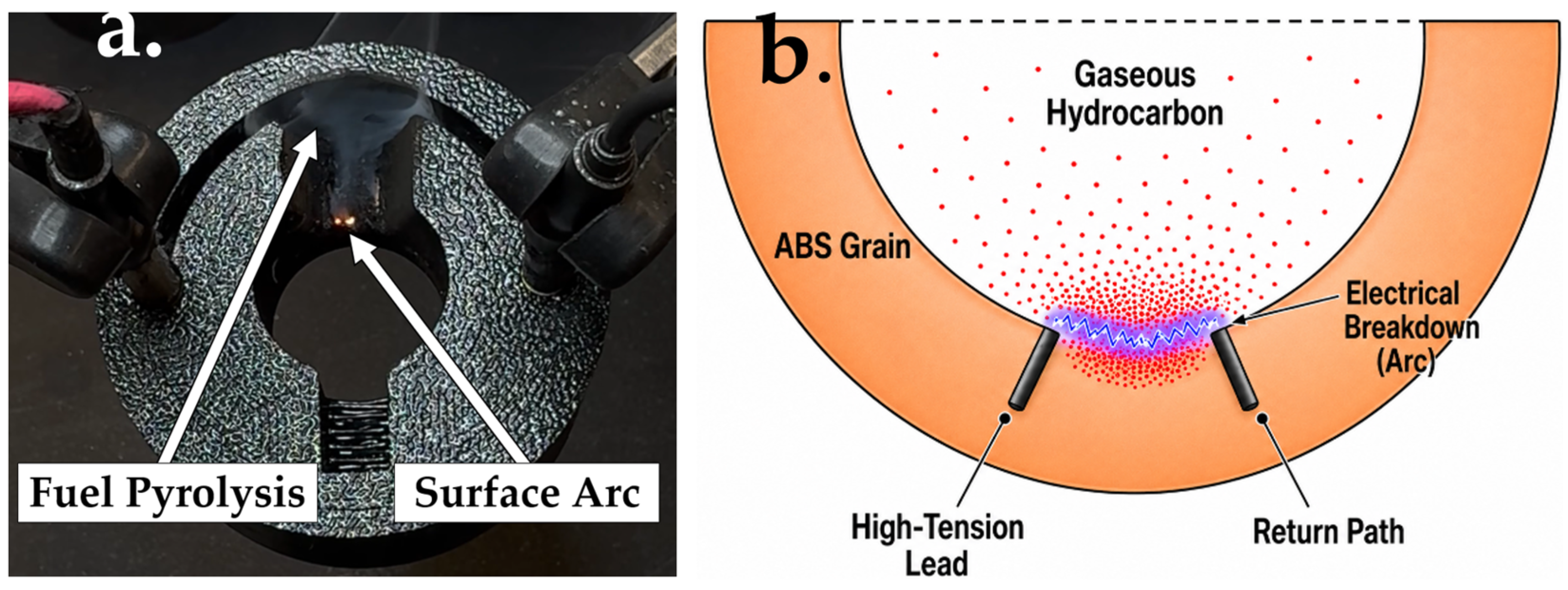
The arc igniter draws less than 10 W of peak power and under 5 J of total input energy, achieves ignition within approximately 200 ms, and supports effectively unlimited repeated restarts while fuel is still present [11,12]. These figures clear the sub-10 W power and sub-200 ms latency thresholds set out in Section 1, and because ignition is purely electrical, the system needs neither a catalyst bed nor propellant preheat—two requirements that complicate competing green monopropellants, which typically require catalyst-bed preheat well above 285 °C [5]. Notably, this approach has drawn external recognition: NASA’s 2026 State-of-the-Art of Small Spacecraft Technology report identifies the PRL’s arc-ignition, 3D-printed-ABS “green” CubeSat hybrid thruster as an in-space propulsion prototype under development [9]. Figure 1 shows the surface arc, the breakdown ignition mechanism, and a representative thrust-chamber ignition event.

3.2. Digital Throttle Control

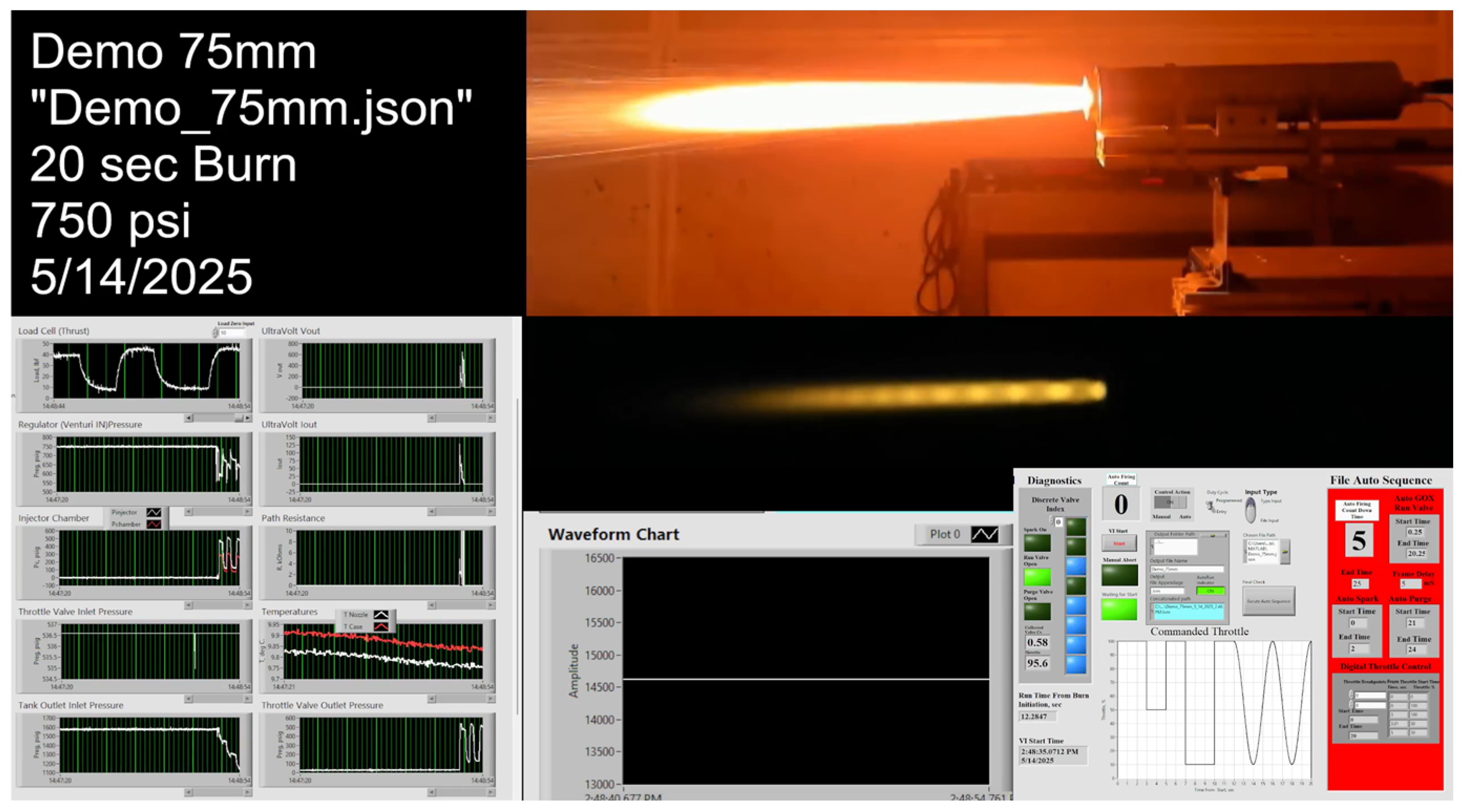
The digital throttle has been validated through component demonstrations and system-level hot-fire testing. Figure 2 shows the digital throttle assembly, while Figure 3 shows a representative hot-fire demonstration of the digitally throttled hybrid motor. The system is capable of deep throttling to below 10% of full thrust [13]. Real-time throttling has also been demonstrated in other hybrid-motor architectures, reinforcing throttling as a broader pathway for hybrid propulsion maturation [19]. Replacing a single analog valve with fast binary valves yields rapid, highly repeatable thrust changes, directly addressing the throttling and active-control challenges that Glaser et al. [8] identify as barriers to hybrid maturation.

3.3. Sustainable, 3D-Printable Fuels

Hot-fire tests of infused grains show that the fuel burns homogeneously despite the heterogeneous distribution of the additive, confirming that interstitial diffusion is a practical route to functionally graded fuels at a small fraction of the cost of conventional methods [16]. Combined with the high volumetric energy density and tunable port geometry of printed thermoplastics, this addresses the fuel-performance and manufacturability gaps, while the possible use of recycled and bio-based feedstock keeps the propellant sustainable. Figure 4 shows the infusion concept and representative printed grains. The base fuel in these tests is additively manufactured ABS, but any FDM-style printed plastic will still function. A range of infused additives has been demonstrated, including catalytic materials (e.g., KMnO4, Ru/C, and iron and copper oxides), metallic fuel additives (aluminum, copper), and solid oxidizers (KClO4, NaClO4) [16]. This is not an exhaustive list of what materials can be infused.

3.4. Green Oxidizer Blends: Nytrox

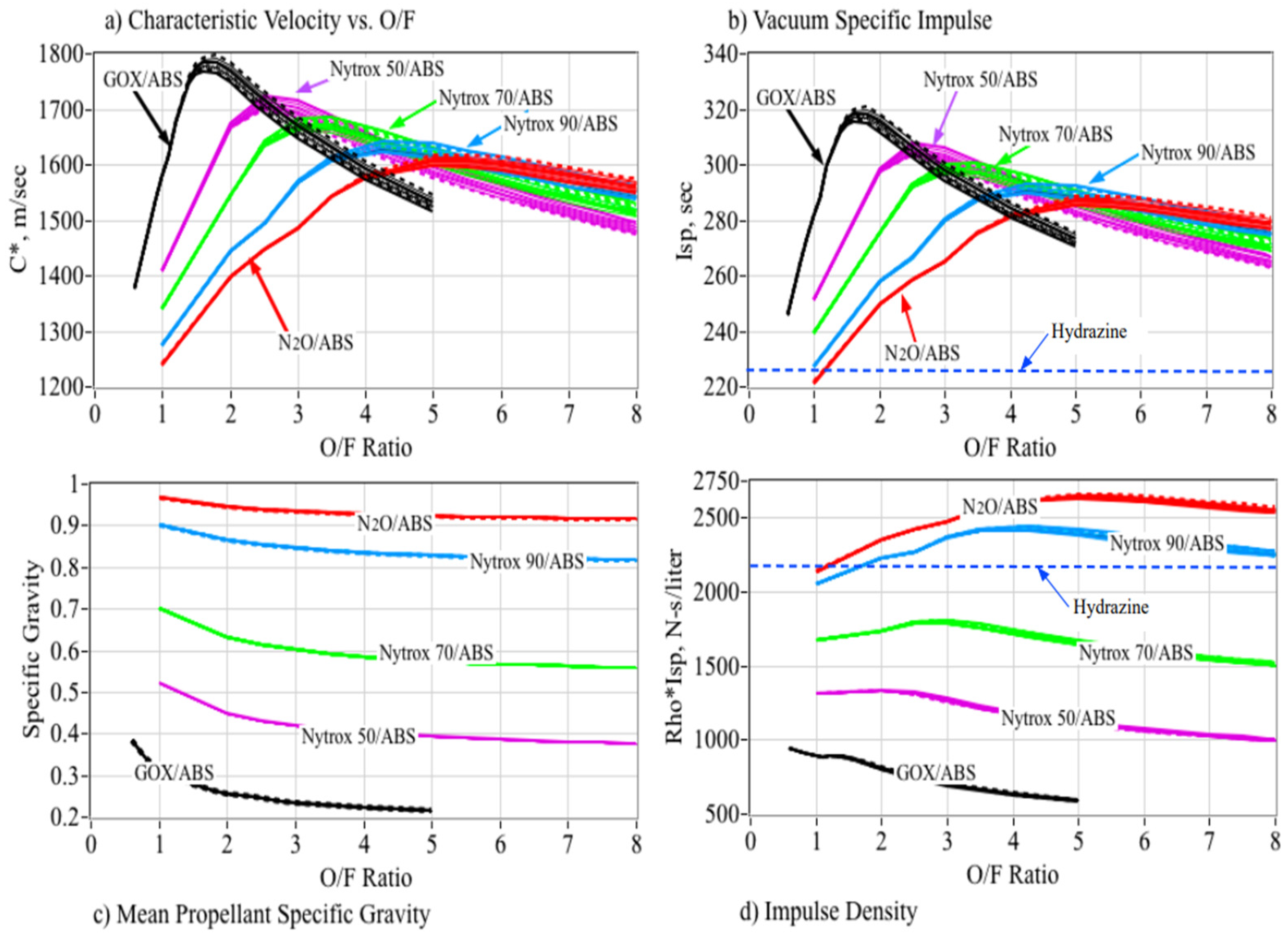
Supercharging N2O with GOX dilutes the vapor phase and raises the decomposition activation energy by several orders of magnitude, reducing the detonation risk that has historically limited neat-N2O systems [17,18]. Its phase behavior can be tuned for better storage and feed-system behavior, and changing the GOX fraction gives flexibility in balancing combustion behavior, efficiency, and volumetric performance for different missions (Figure 5) [18,20]. The result is competitive hybrid performance, with a vacuum-specific impulse exceeding 300 s [18]. Because the N2O is over-pressurized, it densifies the oxidizer relative to pure GOX; the blend also raises density-specific impulse, helping a compact hybrid meet the volumetric performance demanded by tightly packaged SmallSat buses. In Figure 5, each blend is labeled by its N2O mass fraction, so that, for example, Nytrox 90/ABS denotes an oxidizer of 90% N2O and 10% GOX by mass burned with ABS; increasing the N2O fraction raises oxidizer density while reducing the dissolved-oxygen content available to moderate combustion. Increasing the GOX fraction increases the achievable specific impulse and characteristic velocity.
Nytrox also performs well from an emissions standpoint because a large portion of the combustion byproducts is nitrogen gas and other inert gases. Table 1 lists the modeled exhaust composition of a Nytrox/ABS motor together with its equilibrium global-warming-potential (GWP) footprint. The equilibrium exhaust mass fractions were computed with NASA CEA [21] at the design mixture ratio and chamber conditions and multiplied by the 8 kg propellant load to obtain the per-species masses in Table 1; each species mass was then multiplied by its 100-year global warming potential (GWP100) to give a CO2-equivalent contribution. Following standard greenhouse-gas-inventory practice, the short-lived ozone precursors CO and NO—which the IPCC does not assign GWP100 values because they are chemically short-lived and spatially inhomogeneous—are reported for completeness but excluded from the aggregate, while the trace hydrogen contribution uses a GWP100 of 11.6 [22]. The resulting footprint is approximately 1.5 kg CO2-equivalent for the modeled 8 kg in-orbit firing, dominated by CO2. For comparison, a single dairy cow produces on the order of 100 kg of enteric methane per year, or roughly 0.27 kg per day, which at a 100-year GWP of 28 corresponds to about 7.7 kg CO2-equivalent per day [23]; the modeled firing therefore amounts to only about one-fifth of a single cow’s daily methane-equivalent output. Plume-contamination measurements further confirm that the additively manufactured, green-propellant exhaust deposits negligibly on sensitive spacecraft surfaces [24].

3.5. Electroplated Thruster Assemblies

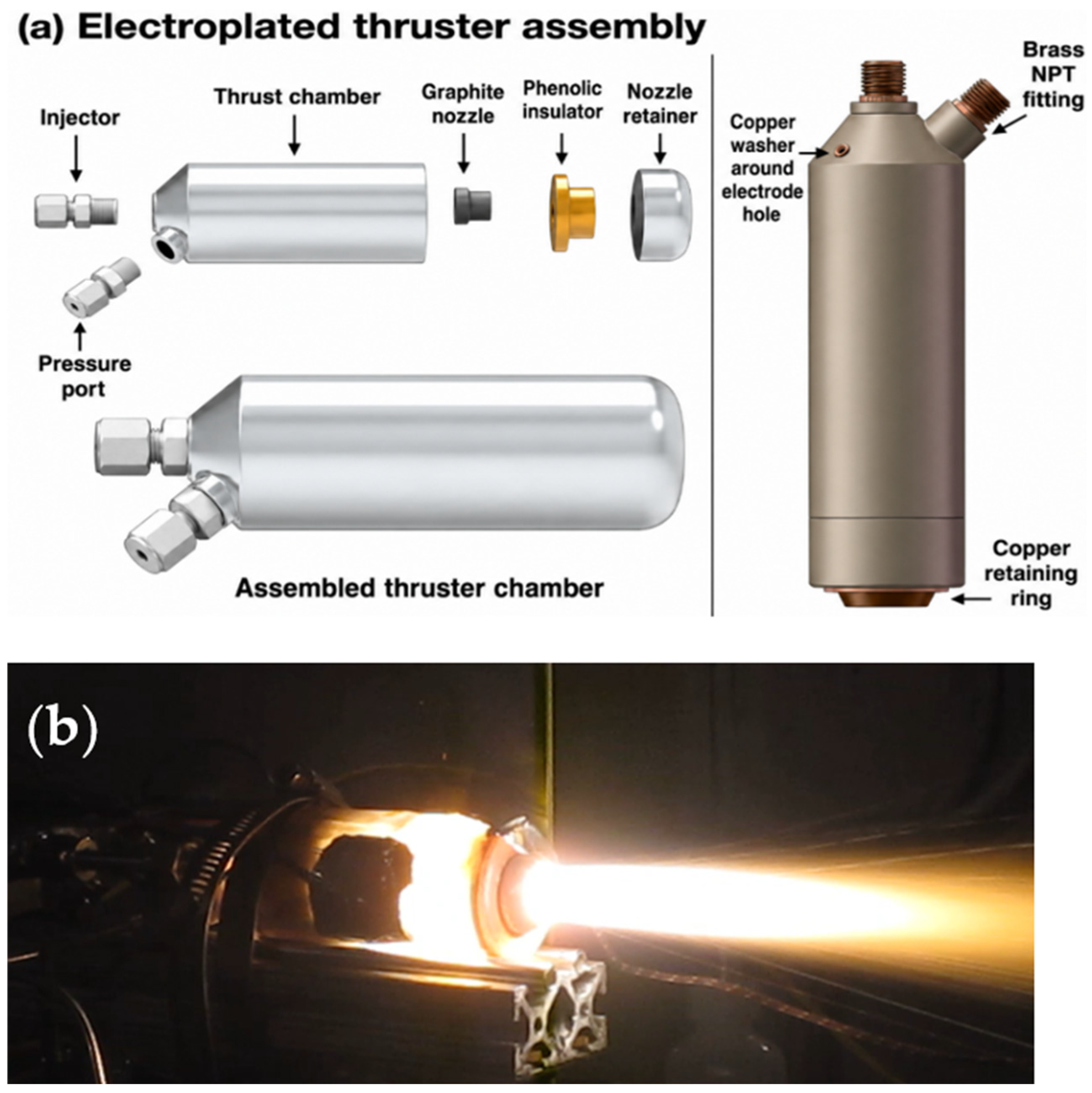
The metallic coating seals the porous printed surface, increases tensile strength, and allows the assembly to sustain combustion-chamber pressures, so the plated grain can serve as the load-bearing case. Eliminating the separately machined case reduces part count, mass, and cost, and the simple plating process achieves properties comparable to commercial methods at a small fraction of their cost. Figure 6 shows the assembly and a hot-fire of the electroplated motor, and Table 2 quantifies the benefit: a nickel-electroplated chamber weighs 52.9% less than a 316-stainless-steel baseline, and if that saved mass is reallocated to propellant, the achievable velocity increment for a 100 kg spacecraft improves by about 3.5%. This directly addresses the inert-mass penalty that erodes hybrid competitiveness.

3.6. Integrated Space-System Architectures

The technologies above are not isolated laboratory results; they have been integrated into complete space-system architectures, two of which demonstrate the combined impact and begin to supply the flight-relevant validation that the field has lacked.

3.6.1. Micro Joe

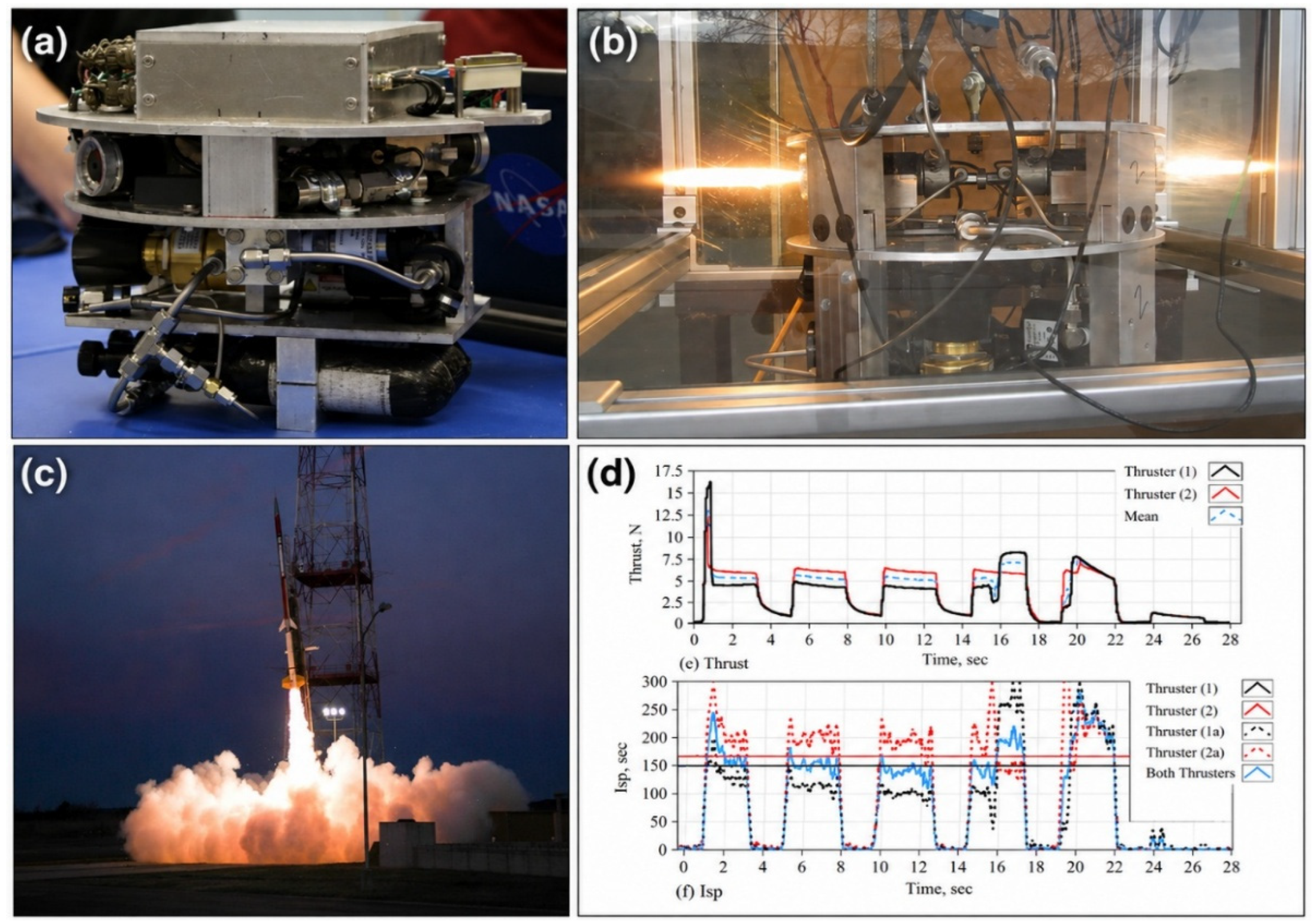
Micro Joe is a small-spacecraft propulsion module that provides attitude-control, reaction-control, and impulse maneuvers using thrusters in the 0.5–5 N class burning GOX and poly(methyl methacrylate) (PMMA). A qualification unit was tested in the vacuum of space on a suborbital launch in 2018 (Figure 7), which was the first flight-like version of the PRL arc-ignition system proved in space [25]. A flight unit was subsequently built and qualified by the PRL’s industry partner, the Space Dynamics Laboratory (SDL), in 2022. Micro Joe is one of the most mature of the PRL systems, at a technology readiness level (TRL) of 8. Of the five core technologies, Micro Joe integrates two: the low-energy arc-ignition system and the additively manufactured 3D-printed fuels, which together provided the restartable, pyrotechnic-free ignition and the printed grain geometry that were proven in flight.

3.6.2. ECLIPSE

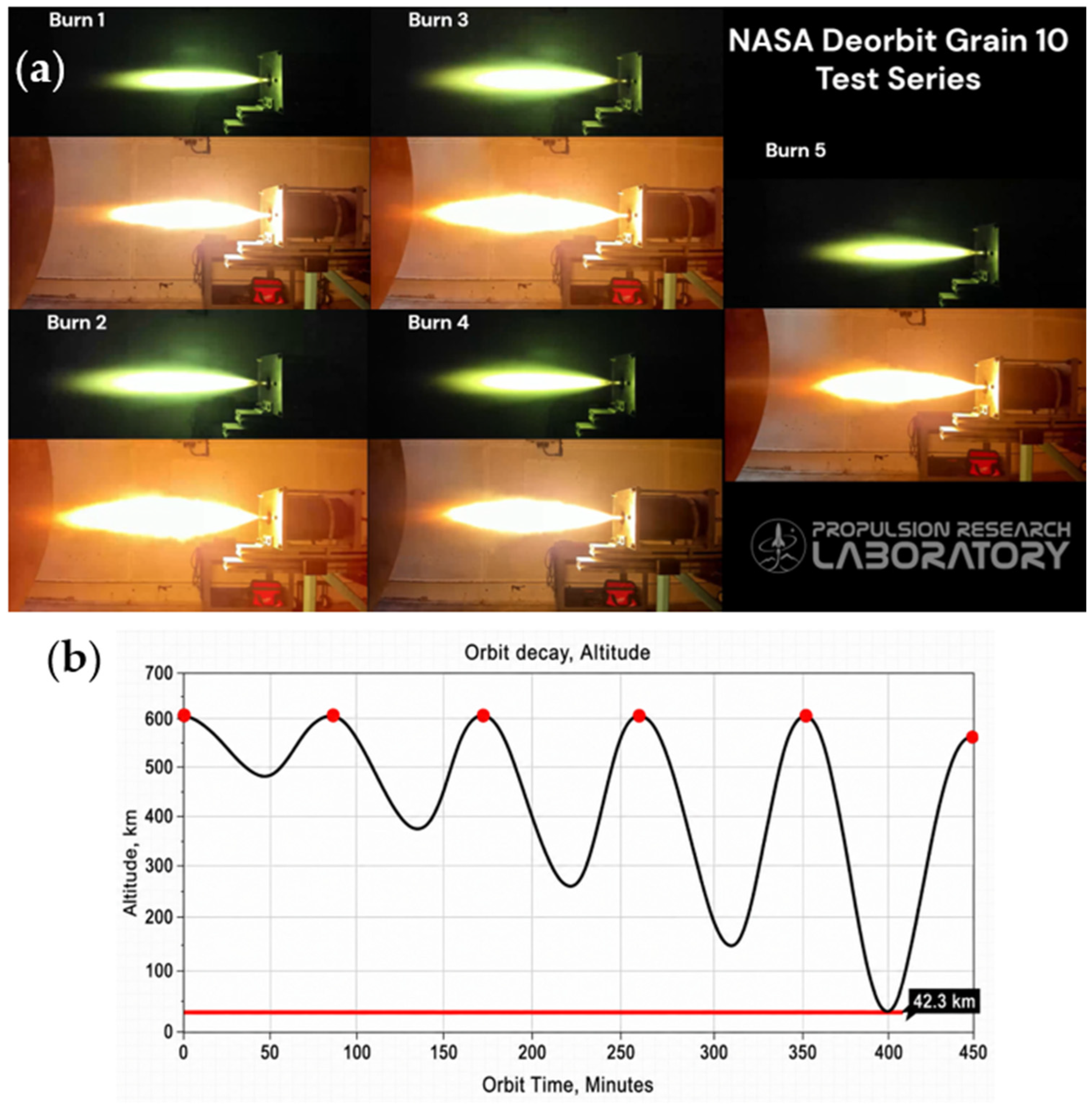
ECLIPSE is a hybrid spacecraft de-orbit system designed around the PRL’s green technologies. It targets 100 N of vacuum thrust at a vacuum-specific impulse above 300 s, burning Nytrox and ABS [18], and laboratory testing and simulation indicate rapid de-orbit capability—less than one day for the reference mission case. Phase 1 development is complete, and Phase 2, comprising environmental characterization testing and detailed system design, is beginning. ECLIPSE currently sits at TRL 5. Figure 8 shows a representative de-orbit-grain burn series, in which the visibly clean, repeatable plumes illustrate both the consistency of the arc-ignition and feed systems and the comparatively clean exhaust products of the Nytrox/ABS propellant combination. ECLIPSE integrates four of the five core technologies: arc ignition, the digital throttle, additively manufactured fuels, and the Nytrox green oxidizer, all combined in a single de-orbit motor; the electroplated-case method is the one core technology not incorporated in the current ECLIPSE build.

3.7. Roadmap for Future Applications

The same building blocks that enable Micro Joe and ECLIPSE generalize to a broad class of missions. In the near term, the technologies are well matched to spacecraft orbital maneuvering, including attitude control, RPO, and orbit transfers, where deep throttling and restart are at a premium. At a larger scale, the high-density-specific impulse and clean exhaust of Nytrox/ABS make the architecture attractive for launch-vehicle upper stages performing orbit insertion. Looking further ahead, the safety, storability, and restart characteristics of green hybrids are well suited to lunar and Martian descent and ascent stages, including applications such as a Mars Ascent Vehicle [26,27]. Maturing these applications will require continued environmental qualification, scaling studies, and on-orbit demonstrations, building directly on the flight heritage already accumulated by Micro Joe.

4. Conclusions

Across a decade of work, the USU Propulsion Research Laboratory has developed a set of technologies—low-energy arc ignition, digital throttling, additively manufactured and infused sustainable fuels, the Nytrox green oxidizer, and electroplated thruster assemblies—that together address the historical barriers that have kept hybrid rocket engines out of routine in-space service. These advances target the demanding ignition-power, ignition-latency, specific-impulse, and toxicity thresholds required to displace hydrazine, and they do so while lowering cost and environmental impact. Crucially, they have already been reduced to practice in flight-relevant systems: Micro Joe at TRL 8 and ECLIPSE at TRL 5—a marked advance over the low technology readiness that hybrid in-space propulsion is still assigned in NASA’s 2026 state-of-the-art assessment [9]. Taken together, these results demonstrate that sustainable hybrid propulsion can be genuinely competitive with conventional chemical and electric options for the rapidly growing SmallSat market. In quantitative terms, the portfolio delivers arc ignition in under 200 ms at below 10 W, digital throttling to under 10% of full thrust, a Nytrox/ABS vacuum-specific impulse above 300 s, and a nickel-electroplated thrust chamber 52.9% lighter than a stainless-steel baseline that adds about 3.5% to the achievable velocity increment when the saved mass is reallocated to propellant, while a modeled in-orbit firing produces only about 1.5 kg CO2-equivalent per 8 kg of propellant.

5. Patents

The low-energy arc-ignition system described in Section 2.1 and Section 3.1 was patented in 2020, titled “Methods and systems for restartable, hybrid-rockets”, patent number US10774789B2. The interstitial fuel-infusion process described in Section 2.3 and Section 3.3 is patent pending, application publication number US19/009,729, titled “Infused solid fuel for hybrid rockets and ordnance.”

Author Contributions

Conceptualization, R.J.T. and S.A.W.; methodology, R.J.T., S.A.W., J.C., J.S., L.M. and A.W.; investigation, R.J.T., J.C., J.S., L.M. and A.W.; writing—original draft preparation, R.J.T.; writing—review and editing, R.J.T., S.A.W. and J.C.; supervision, S.A.W. All authors have read and agreed to the published version of the manuscript.

Funding

This research received no external funding.

Institutional Review Board Statement

Not applicable.

Informed Consent Statement

Not applicable.

Data Availability Statement

The original contributions presented in this study are included in the article and referenced in the citations. Further inquiries can be directed to the corresponding authors.

Acknowledgments

The authors thank Stephen A. Whitmore and the students of the USU Propulsion Research Laboratory, past and present. This work is published under the Fundamental Research Exclusion (FRE) owing to the legacy nature of the hardware presented. During the preparation of this manuscript, the authors used AI LLM Claude Opus 4.7 to improve the language, flow, and structural organization of the text. After using this tool, the authors reviewed and edited the content as needed and take full responsibility for the content of the publication.

Conflicts of Interest

The authors declare no conflicts of interest.

References

  1. BryceTech. Smallsats by the Numbers 2025; BryceTech: Alexandria, VA, USA, 2025; Available online: https://brycetech.com/reports/report-documents/smallsats-2025/BryceTech_Smallsats-by-the-Numbers-2025.pdf (accessed on 22 May 2026).
  2. Lemmer, K. Propulsion for CubeSats. Acta Astronaut. 2017, 134, 231–243. [Google Scholar] [CrossRef] [Scilit]
  3. Nguyen, H.N.; Chenoweth, J.A.; Bebarta, V.S.; Albertson, T.E.; Nowadly, C.D. The Toxicity, Pathophysiology, and Treatment of Acute Hydrazine Propellant Exposure: A Systematic Review. Mil. Med. 2021, 186, e319–e326. [Google Scholar] [CrossRef] [Scilit] [PubMed]
  4. Sackheim, R.L.; Masse, R.K. Green Propulsion Advancement: Challenging the Maturity of Monopropellant Hydrazine. J. Propuls. Power 2014, 30, 265–276. [Google Scholar] [CrossRef] [Scilit]
  5. Spores, R.A.; Masse, R.; Kimbrel, S.; McLean, C. GPIM AF-M315E Propulsion System. In Proceedings of the 50th AIAA/ASME/SAE/ASEE Joint Propulsion Conference, Cleveland, OH, USA, 28–30 July 2014. [Google Scholar] [CrossRef] [Scilit]
  6. Karabeyoglu, A. Advanced Hybrid Rockets for Future Space Launch. In Proceedings of the 5th European Conference for Aeronautics and Space Sciences, Munich, Germany, 1–5 July 2013; Available online: https://www.eucass.eu/component/docindexer/?id=3862&task=download (accessed on 22 May 2026).
  7. Kuo, K.K.; Chiaverini, M.J. (Eds.) Fundamentals of Hybrid Rocket Combustion and Propulsion; Progress in Astronautics and Aeronautics; American Institute of Aeronautics and Astronautics: Reston, VA, USA, 2007; Volume 218. [Google Scholar] [CrossRef] [Scilit]
  8. Glaser, C.; Hijlkema, J.; Anthoine, J. Bridging the Technology Gap: Strategies for Hybrid Rocket Engines. Aerospace 2023, 10, 901. [Google Scholar] [CrossRef] [Scilit]
  9. NASA. State-of-the-Art Small Spacecraft Technology; NASA/TP-20260003140; Small Spacecraft Systems Virtual Institute, NASA Ames Research Center: Moffett Field, CA, USA, 2026. Available online: https://www.nasa.gov/smallsat-institute/sst-soa/ (accessed on 22 May 2026).
  10. Fergani Space. Hybrid Orbital Engine Ignited In-Space for the First Time in the World. 6 December 2025. Available online: https://ferganispace.com/en/news/hybrid-orbital-engine-ingited-in-space-for-the-first-time-in-the-world/ (accessed on 22 May 2026).
  11. Whitmore, S.A.; Inkley, N.R.; Merkley, D.P.; Judson, M.I. Development of a Power-Efficient, Restart-Capable Arc Ignitor for Hybrid Rockets. J. Propuls. Power 2015, 31, 1739–1749. [Google Scholar] [CrossRef] [Scilit]
  12. Whitmore, S.A.; Merkley, S.L.; Tonc, L.; Mathias, S.D. Survey of Selected Additively Manufactured Propellants for Arc Ignition of Hybrid Rockets. J. Propuls. Power 2016, 32, 1494–1504. [Google Scholar] [CrossRef] [Scilit]
  13. Whitmore, S.A. Development and Testing of a Fast-Acting, 8-Bit, Digital Throttle for Hybrid Rocket Motors. Fire 2024, 7, 393. [Google Scholar] [CrossRef] [Scilit]
  14. Whitmore, S.A.; Peterson, Z.W.; Eilers, S.D. Closed-Loop Precision Throttling of a Hybrid Rocket Motor. J. Propuls. Power 2014, 30, 325–336. [Google Scholar] [CrossRef] [Scilit]
  15. Walker, S.D. High Regression Rate Hybrid Rocket Fuel Grains with Helical Port Structures. Master’s Thesis, Utah State University, Logan, UT, USA, 2015. Available online: https://digitalcommons.usu.edu/etd/4618 (accessed on 20 November 2025).
  16. Thibaudeau, R.; Whitmore, S.A. Cold-Infusion of Catalytic Materials Into 3-D Printed Fuels for In-Space Hybrid Propulsion Performance Enhancement. In Proceedings of the Small Satellite Conference, Logan, UT, USA, 7 August 2024; Available online: https://digitalcommons.usu.edu/smallsat/2024/all2024/103/ (accessed on 22 May 2026).
  17. U.S. Chemical Safety and Hazard Investigation Board. Nitrous Oxide Explosion: Airgas, Cantonment, Florida, 28 August 2016; Investigation Report No. 2016-04-I-FL; U.S. Chemical Safety and Hazard Investigation Board: Washington, DC, USA, 2017. Available online: https://www.csb.gov/assets/1/20/airgas_investigation_report_-_final_-_2017-02-28.pdf?15808 (accessed on 22 May 2026).
  18. Whitmore, S.A. Nytrox as “Drop-in” Replacement for Gaseous Oxygen in SmallSat Hybrid Propulsion Systems. Aerospace 2020, 7, 43. [Google Scholar] [CrossRef] [Scilit]
  19. Reffin, T.; Ziemer, J.; Stowell, M. A Pilot Study on Real-Time Throttling of a Hydrogen Peroxide Hybrid Rocket Motor. J. Propuls. Power 2022, 38, 886–897. [Google Scholar]
  20. Wei, S.-S.; Hsu, J.-C.; Tso, H.-Y.; Wu, J.-S. Investigation of Performance Stability of a Nytrox Hybrid Rocket Propulsion System. Aerospace 2025, 12, 372. [Google Scholar] [CrossRef] [Scilit]
  21. Gordon, S.; McBride, B.J. Computer Program for Calculation of Complex Chemical Equilibrium Compositions and Applications; NASA RP-1311; NASA: Cleveland, OH, USA, 1994. Available online: https://ntrs.nasa.gov/api/citations/19950013764/downloads/19950013764.pdf (accessed on 23 May 2024).
  22. Sand, M.; Skeie, R.B.; Sandstad, M.; Krishnan, S.; Myhre, G.; Bryant, H.C.; Derwent, R.G.; Hauglustaine, D.A.; Paulot, F.; Prather, M.J.; et al. A multi-model assessment of the global warming potential of hydrogen. Commun. Earth Environ. 2023, 4, 203. [Google Scholar] [CrossRef] [Scilit]
  23. IPCC. 2019 Refinement to the 2006 IPCC Guidelines for National Greenhouse Gas Inventories, Volume 4: Agriculture, Forestry and Other Land Use, Chapter 10—Emissions from Livestock and Manure Management; Calvo Buendia, E., Tanabe, K., Kranjc, A., Eds.; IPCC: Geneva, Switzerland, 2019. [Google Scholar]
  24. Whitmore, S.A. Plume Contamination Measurements of an Additively Printed, Green-Propellant Hybrid Thruster. J. Propuls. Power 2022, 38, 671–685. [Google Scholar] [CrossRef] [Scilit]
  25. Whitmore, S.A.; Bulcher, A.M. Vacuum Test of a Novel Green-Propellant Thruster for Small Spacecraft. In Proceedings of the 53rd AIAA/SAE/ASEE Joint Propulsion Conference, AIAA Propulsion and Energy Forum, Atlanta, GA, USA, 10–12 July 2017. [Google Scholar] [CrossRef] [Scilit]
  26. Karp, A.C.; Nakazono, B.; Benito Manrique, J.; Shotwell, R.; Vaughan, D.; Story, G.T. A Hybrid Mars Ascent Vehicle Concept for Low Temperature Storage and Operation. In Proceedings of the 52nd AIAA/SAE/ASEE Joint Propulsion Conference, Salt Lake City, UT, USA, 25–27 July 2016. [Google Scholar] [CrossRef] [Scilit]
  27. Karp, A.C.; Nakazono, B.; Story, G.; Chaffin, J.; Zilliac, G. Hybrid Propulsion Technology Development for a Potential Near-Term Mars Ascent Vehicle. In Proceedings of the 2019 IEEE Aerospace Conference, Big Sky, MT, USA, 2–9 March 2019; pp. 1–8. [Google Scholar] [CrossRef] [Scilit]
Figure 1. Arc ignition of an additively manufactured fuel grain: (a) surface arc and fuel-pyrolysis hardware during ignition; (b) arc-breakdown ignition schematic.
Engproc 142 00009 g001
Figure 2. CAD/rendered view of the digital throttle assembly.
Engproc 142 00009 g002
Figure 3. Representative hot-fire demonstration of the digitally throttled hybrid motor. The plot in the bottom right indicates the commanded throttle profile, and the plots on the left show the real-time outputs to that point in the hot-fire demonstration.
Engproc 142 00009 g003
Figure 4. (a) Conceptual illustration of additive transport through inter-layer gaps formed during FDM printing, resulting in additive distribution throughout the printed fuel structure. (b) Representative infused fuel grains showing the final printed grain and sectioned samples after diffusion.
Engproc 142 00009 g004
Figure 5. Performance comparison plots of Nytrox at different N2O mass fractions, showing the effects of mixture selection on (a) characteristic velocity, (b) vacuum-specific impulse, (c) mean propellant specific gravity, and (d) impulse density.
Engproc 142 00009 g005
Figure 6. Electroplated thruster assembly: (a) exploded and assembled views of the plated ABS chamber acting as the structural case; (b) hot-fire of the electroplated motor.
Engproc 142 00009 g006
Figure 7. Micro Joe propulsion module demonstration: (a) flight-representative propulsion hardware; (b) thruster firing during ground testing; (c) 2018 Malemute suborbital launch carrying Micro Joe; and (d) pulsed-firing thrust and specific-impulse data collected during vacuum operation.
Engproc 142 00009 g007
Figure 8. ECLIPSE de-orbit-grain test series: (a) repeated hot-fire burns of the Nytrox/ABS hybrid motor; (b) simulated orbit-decay response showing cumulative altitude reduction to the de-orbit threshold.
Engproc 142 00009 g008
Table 1. Modeled exhaust composition and global warming potential (GWP) of a Nytrox/ABS hybrid motor consuming 8 kg of propellant. Equilibrium composition was calculated using NASA CEA methods [21].
SpeciesMass Frac.Mass (kg)GWP100CO2-Eq (kg)
N20.46383.71000
CO0.28972.318n/a
CO20.12130.97010.970
H2O0.10050.80400
OH0.01020.08200
H20.005490.04411.60.510
NO0.004560.037n/a
O20.002310.018500
O0.001440.011500
H0.000740.005900
Sum1.0008.01.48
Table 2. Comparison of a conventional 316-stainless-steel motor case and a nickel-electroplated 3D-printed ABS case.
Parameter316SS BaselineElectroplated (Ni)
Case material316 stainless steelNickel on 3D-printed ABS
Wall thickness0.0625 in0.026 in
Case mass0.918 kg0.433 kg
Mass savings52.9%
ΔV (100 kg spacecraft)478 m/s481 m/s
ΔV if mass reallocated to propellant478 m/s495 m/s (+3.5%)
Disclaimer/Publisher’s Note: The statements, opinions and data contained in all publications are solely those of the individual author(s) and contributor(s) and not of MDPI and/or the editor(s). MDPI and/or the editor(s) disclaim responsibility for any injury to people or property resulting from any ideas, methods, instructions or products referred to in the content.