


Abstract
The shift from fossil fuels to renewable energy is a key component in achieving global sustainability and dealing with climate change. Natural resources, such as sunlight, air, water, and biomass, have tremendous potential to create clean energy; however, exploiting these resources in an efficient, stable, and large-scale integration manner is difficult due to their variable and distributed nature. Artificial intelligence (AI) approaches that mimic human learning and decision-making have recently become viable approaches to solving renewable energy problems. This study mainly examines the current landscape of AI applications across solar, wind, hydro, geothermal, ocean, hydrogen, bioenergy, and hybrid energy systems. AI enhances renewable energy forecasting, improves power system frequency analysis and stability assessments, and optimizes dispatch and distribution networks. Beyond technical optimization, AI also contributes to broader sustainability goals, including energy efficiency improvements, intelligent smart grid management, and enabling mechanisms such as carbon trading and circular economy practices to reduce exposure to climate extremes. Drawing on evidence from a range of renewable energy areas, this review highlights the importance of AI in bridging the link between technological innovation and sustainable energy management. This paper discusses potential future research avenues, such as building sophisticated AI designs, energy-efficient chips, and data communication networks. Ultimately, the synergy between AI and renewable energy systems represents not only a technological advancement but also a transformative pathway toward a resilient, low-carbon future.
1. Introduction
The global push to limit warming and achieve net-zero emissions hinges on a rapid shift from fossil fuels to renewable energy (RE), yet this transition must also ensure energy security, affordability, and resilience. Natural resources have tremendous potential to generate clean energy; however, exploiting them efficiently, reliably, and on a large scale is difficult due to their variable and distributed nature [1]. AI is increasingly seen as a core enabler of this shift, improving how low-carbon energy is produced, managed, and consumed across modern power systems. AI techniques such as machine learning (ML), deep learning (DL), and reinforcement learning (RL) support RE forecasting, grid stability, smart grid operations, demand-side management, storage optimization, and microgrid control [2]. Different studies show that AI improves forecasting accuracy and grid integration, enhances stability and reliability, and supports large-scale RE integration and decentralized systems. Despite these advances, large-scale, multi-energy renewable systems remain difficult to operate due to intermittency, data heterogeneity, cybersecurity risks, and the limited interpretability of AI models [3]. Existing reviews often focus on specific technologies or narrow functions. At the same time, fewer works provide a cross-technology, system-level synthesis that links AI techniques, renewable applications, power system operation, and sustainability and policy dimensions in an integrated manner. This review examines AI applications across major renewable technologies, analyzes AI-driven optimization and grid integration, and explores the contributions to sustainability and climate resilience, while also identifying the socioeconomic, ethical, and policy implications of these applications offering an integrated framework that connects AI techniques, multi-technology renewable systems, power system operation, and sustainability–policy dimensions to clarify how AI can catalyze a resilient, low-carbon energy future.
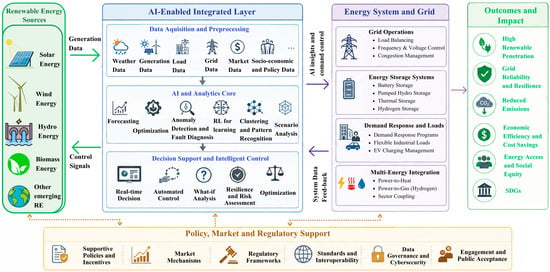
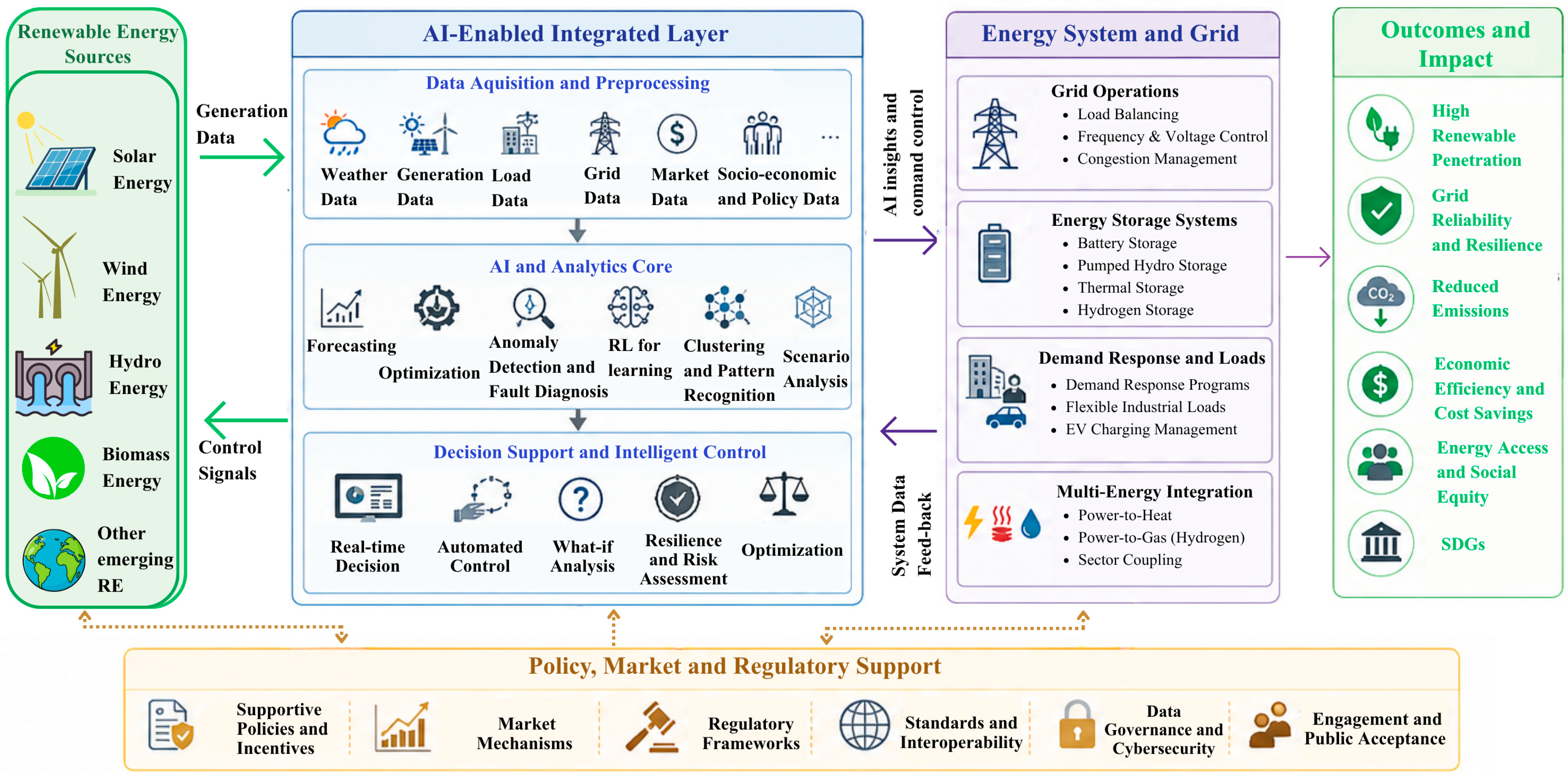
Figure 1 presents the integrated conceptual framework adopted in this review, illustrating how AI-enabled data acquisition, analytics, forecasting, optimization, and intelligent control interact with renewable energy systems, grid operations, energy storage, policy support, and sustainability outcomes. The framework highlights the system-level role of AI in facilitating resilient, low-carbon, and intelligent renewable energy transitions.
Figure 1.
Conceptual framework of AI-enabled renewable energy systems.
2. Artificial Intelligence Techniques in Energy Systems
AI techniques in energy systems include a variety of ML and optimization methods that address the complexity of modern energy management. Common DL models such as artificial neural networks (ANN), recurrent neural networks (RNN), long short-term memory (LSTM), and DL algorithms are widely used for forecasting, system modeling, and anomaly detection in RE systems [4]. Optimization algorithms like genetic algorithms (GA) and particle swarm optimization (PSO) enhance operational efficiency, energy storage control, and resource allocation [5]. Hybrid modeling approaches combine data-driven AI with mechanism-driven models to improve prediction accuracy and interpretability while mitigating the “black-box” limitations of pure data-driven methods [6]. Explainable AI (XAI) techniques have been developed to increase transparency and trust in AI decisions, which is critical for accountability in power system applications [7]. Despite their advantages, AI techniques face challenges, including dependence on large datasets, scalability issues, robustness concerns, and ethical considerations such as privacy and fairness, requiring ongoing research and policy support to realize their potential in sustainable energy transitions fully [8,9].
Comparative Analysis of AI Techniques in Renewable Energy Systems
AI in energy systems spans forecasting, control, and optimization, using ML, DL, and RL. Research compares their performance and surfaces challenges around explainability, cybersecurity, data quality, and sustainability [4,10]. Table 1 shows the overview of AI used in renewable energy systems.
Table 1.
Comparative overview of artificial intelligence techniques used in energy systems.
For tabular forecasting and fault detection with limited data, supervised ML (RF, SVM) gives high accuracy and efficiency [4,11]. For high-dimensional time series and spatial data (building loads, microgrids), DL (LSTM/CNN/hybrids) consistently outperforms traditional ML but increases complexity and opacity [12,14]. For sequential decision problems (battery control, IES scheduling), RL/DRL often yields 10–35% cost or performance improvements over rule-based or optimization baselines, especially when combined with forecasts [15]. RL is less suitable where safety constraints are strict and data is scarce, given tuning difficulties and missing robust benchmarks [10].
3. AI Applications Across Renewable Energy Technologies
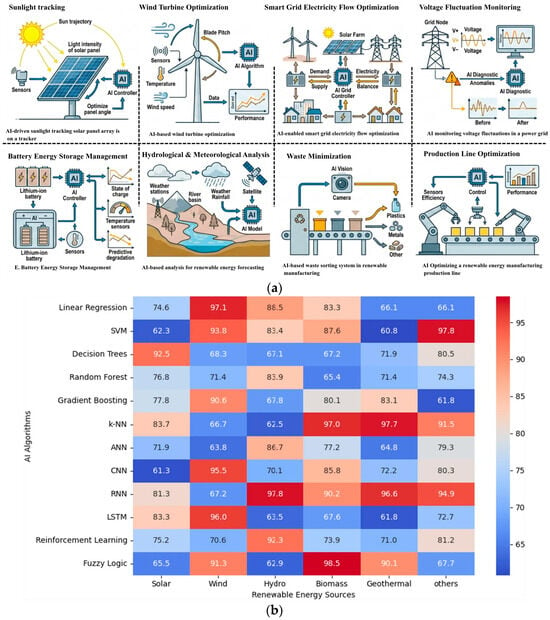
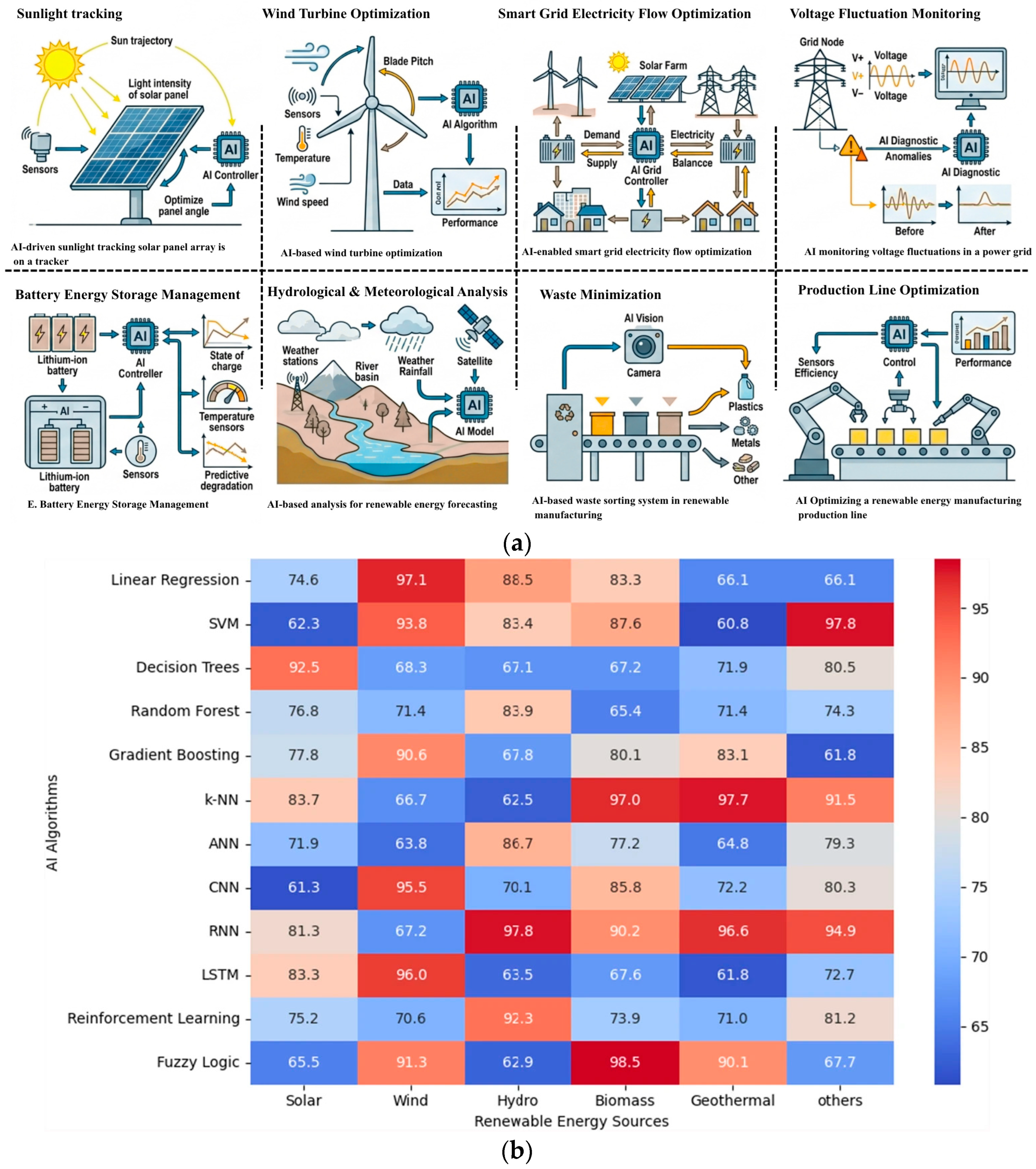
AI is increasingly transforming RE technologies by enhancing efficiency, reliability, and scalability across various systems, with key AI techniques used for energy production optimization, forecasting, maintenance, and decentralized energy management [16]. Figure 2 shows the role of AI use in the renewable energy sectors and the heatmap showing algorithm accuracy across renewable energy sources.
Figure 2.
Illustrates: (a) The role of AI in the renewable energy sector [16,17]; (b) The heatmap of AI Algorithm accuracy across renewable energy sources originated from [16].
3.1. Solar Energy
AI applications in solar energy focus on addressing challenges such as intermittent output, inefficient storage, and grid integration through advanced optimization algorithms like Artificial Bee Colony, PSO, and other bio-inspired methods, demonstrating improvements in energy yield and system efficiency [18]. Generative AI enhances solar system design, predictive maintenance, site selection, and smart grid integration, thereby improving sustainability, adaptability, and operational costs [19]. ML and other computing techniques are increasingly integrated with IoT, big data analytics, and cloud computing to create intelligent solar ecosystems capable of real-time optimization of production and consumption [20]. Time-series forecasting models such as Random Forest, XG-Boost, and DL architectures like LSTM improve solar energy prediction accuracy, enabling better grid management and dynamic storage control [21]. Hybrid AI-enhanced systems combining CNN-LSTM forecasting, RL for tracking, adaptive photovoltaics, and blockchain-enabled smart grids have shown significant gains in energy yield, efficiency, and battery lifespan under real-world conditions [22].
3.2. Wind Energy
AI applications in wind energy primarily focus on improving forecasting accuracy, optimizing turbine performance, and enhancing maintenance management to increase efficiency and reliability [23]. DL models, especially ANN, are widely used for wind speed and power prediction, enabling better grid integration and operational planning [24]. AI techniques such as fuzzy logic, genetic algorithms, particle swarm optimization, and decision-making methods support condition monitoring, fault detection, and predictive maintenance of wind turbines, reducing downtime and operational costs [25]. DL approaches have demonstrated promise in handling the complex, nonlinear characteristics of wind data, thereby improving energy harvesting and system control [26]. AI also aids in optimizing wind farm layout and operation strategies to maximize energy output while minimizing environmental impact [27].
3.3. Hydro, Geothermal, and Ocean Energy
AI applications in hydro, geothermal, and ocean energy focus on enhancing system efficiency, maintenance, and operational optimization through advanced data analytics and ML techniques. In hydropower and dam engineering, AI supports real-time monitoring, predictive modeling, optimization, and automated inspection using ML algorithms to improve safety and performance [28]. Geothermal energy benefits from AI in reservoir characterization, drilling optimization, fault detection, and production management, with ANN being the most commonly used model for above-ground operations [29,30]. AI integration in hot dry rock geothermal systems addresses challenges of high temperature and low permeability by optimizing reservoir exploitation and operational parameters [29]. Ocean energy applications of AI remain less explored but show potential for improving hydrogen production from marine renewable sources through optimized integration with other renewables [30]. AI-driven approaches in these contribute to enhanced sustainability, cost reduction, and more reliable RE generation while highlighting the need for further research on data quality, model transparency, and system integration [31,32].
3.4. Others
AI applications in other RE technologies include bioenergy, energy storage, and microgrids, where AI enhances efficiency, predictive maintenance, and system optimization [33]. In bioenergy, AI optimizes fermentation processes and biomass conversion to improve yield and reduce waste [17]. AI is central to energy storage systems, where it supports configuration design, optimal sizing, and control strategies for batteries and other storage technologies within renewable-based power systems [34]. Microgrids leverage AI for real-time control, fault detection, and integration of diverse renewable sources to ensure stability and resilience [35]. ML, DL, and RL improve battery state-of-charge and state-of-health estimation, ageing prediction, and safety management, helping prolong battery lifetime and enhance reliability in storage applications. RL-based battery and storage management can learn optimal charging/discharging policies from real-time data, preventing overcharge, deep discharge, and thermal runaway while improving efficiency [36]. More broadly, AI techniques such as ANNs, LSTM, CNN, GA, PSO, and others are deployed across hybrid renewable systems for forecasting, optimization, and integrated control [35]. Additionally, AI supports economic evaluation models for RE adoption by optimizing pricing, demand response, and resource allocation [37]. Recent studies demonstrate that artificial intelligence (AI) is increasingly transforming hydrogen energy systems through advanced optimization, predictive modeling, and intelligent process control. AI-driven approaches, including machine learning, deep learning, and optimization algorithms, have shown strong potential in catalyst design, reaction parameter optimization, hydrogen yield prediction, and integration of green hydrogen within renewable-integrated energy systems. In particular, AI-assisted photochemical and electrochemical hydrogen production frameworks improve reaction efficiency, reduce energy consumption, and enhance system scalability under dynamic operating conditions. Emerging studies further highlight the role of AI in supporting carbon capture integration, hydrogen storage optimization, and intelligent energy management for hydrogen-enabled smart grids. However, challenges related to data preprocessing, infrastructure integration, computational complexity, and scalability remain significant barriers to large-scale deployment. Future research should therefore focus on explainable AI models, hybrid optimization frameworks, digital twins, and policy-supported pilot deployments to improve the operational feasibility and sustainability of AI-driven hydrogen systems [38].
4. AI-Driven Optimizations and Sustainability Impact
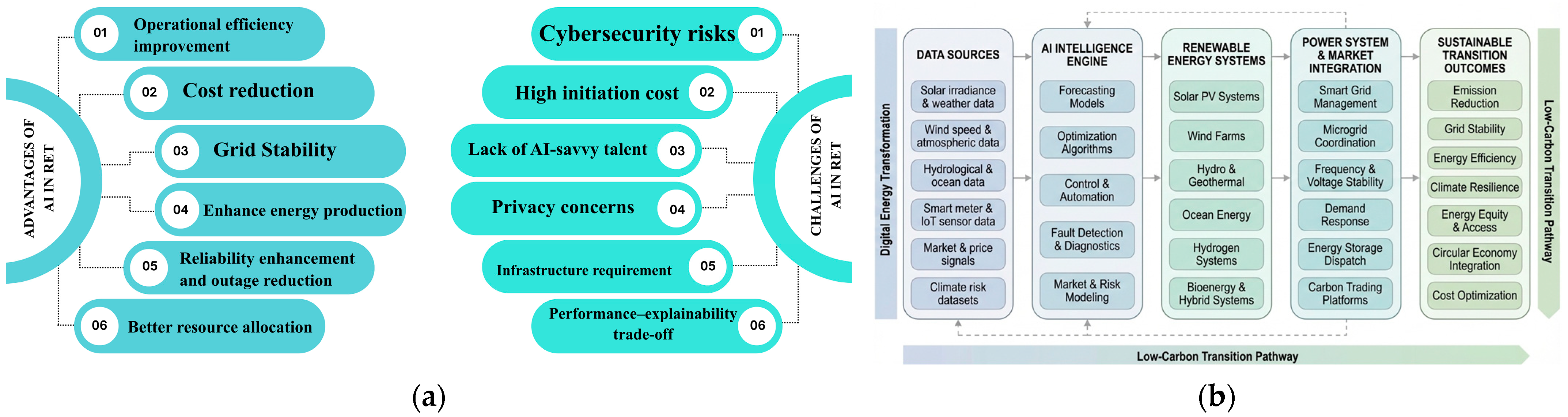
AI-driven optimizations significantly enhance the efficiency and sustainability of RE systems by enabling multi-objective improvements in cost, environmental impact, and system performance. Advanced AI frameworks combining GA and deep RL have shown reductions in levelized cost of energy by over 21.4%, CO2 emissions by nearly 34.7%, and increased RE penetration up to 70%, while improving battery utilization and reducing curtailment [39]. AI techniques also improve forecasting accuracy, demand response, and energy storage management, which enhance grid stability and reduce operational costs compared to traditional methods [40]. Lightweight AI models help reduce the computational energy footprint of digital tools in renewable systems, supporting sustainable resource management and circular economy principles [41]. Furthermore, AI-driven optimization facilitates the integration of hybrid renewable systems by improving resource allocation and reducing carbon footprints through intelligent control strategies [42]. Figure 3 shows the advantages and challenges of AI use in renewable energy sources and how system-level AI is integrated in a proper framework.
Figure 3.
(a) Advantages and challenges of AI in RET [43,44]; (b) System-level AI integration framework [1,9].
4.1. AI-Driven Multi-Objective Optimization in Renewable Systems
AI-driven optimization frameworks have increasingly been applied to hybrid renewable energy systems to jointly optimize cost, emissions, reliability, and renewable energy penetration under uncertain operating conditions. A recent study integrating non-dominated sorting genetic algorithm II (NSGA-II) with deep reinforcement learning demonstrated improved operational feasibility and system robustness across renewable systems combining solar, wind, hydro, and storage technologies under varying market and demand conditions [39]. Similar machine-learning-assisted multi-objective optimization studies reported that AI-enhanced optimization frameworks can simultaneously reduce energy costs and carbon emissions while improving system reliability in residential and polygeneration energy systems [45,46,47]. However, these optimization outcomes remain highly dependent on regional resource availability, policy conditions, infrastructure maturity, and modeling assumptions. Consequently, optimization performance may vary significantly across different geographic and socioeconomic settings [48].
4.2. LSTM-Based Solar Forecasting in Real Photovoltaic Systems
Deep learning approaches, particularly long short-term memory (LSTM) networks, have shown strong capability for short-term photovoltaic (PV) power forecasting in real operating solar plants. Multiple studies demonstrated that LSTM and hybrid CNN–LSTM architectures outperform conventional statistical and shallow neural network approaches under variable irradiance and rapidly changing weather conditions [49,50,51]. Advanced hybrid forecasting frameworks incorporating attention mechanisms and Transformer-based architectures further improved forecasting robustness across seasonal and meteorological variability, thereby supporting more adaptive grid scheduling and energy storage management [52,53]. Ensemble LSTM approaches also improved forecast reliability across geographically distributed PV systems by explicitly accounting for temporal variability and site-specific operational conditions [54]. Nevertheless, forecasting performance remains sensitive to data quality, forecasting horizon, local climate variability, and hyperparameter selection. Forecast uncertainty generally increases under highly intermittent weather conditions and in data-scarce environments [55].
4.3. ANN-Based Wind Forecasting for Grid Operation and Planning
Artificial neural network (ANN)-based approaches have been widely applied for wind speed and wind power forecasting due to their ability to model nonlinear meteorological relationships. Comprehensive review studies covering large numbers of forecasting investigations indicate that ANN and deep recurrent architectures frequently outperform traditional statistical forecasting approaches for short-term operational planning and dispatch applications [56,57]. Recent ensemble ANN and recurrent neural network (RNN) systems demonstrated improved capability for multi-horizon forecasting and uncertainty management across geographically diverse wind farms, thereby supporting intelligent energy management and electricity market operation strategies [58,59]. Hybrid RNN–ARIMA and probabilistic forecasting approaches also provide improved operational flexibility for grid operators under uncertain renewable generation conditions [60,61]. Despite these advances, forecast accuracy declines at longer prediction horizons and under highly dynamic atmospheric conditions, indicating the need for more robust uncertainty-aware forecasting frameworks.
4.4. Synthesis of Empirical Findings
These empirical case studies demonstrate that AI applications in renewable energy systems extend beyond theoretical modeling and have been validated across diverse real-world operational contexts, including hybrid system optimization, photovoltaic forecasting, and wind energy management. Collectively, the studies indicate that AI can improve renewable system adaptability, forecasting capability, and operational efficiency under appropriate data availability and infrastructure conditions [39,49,56]. However, the magnitude of these improvements remains context-dependent and strongly influenced by system configuration, resource variability, computational requirements, and regional operational constraints.
5. AI in Power System Operation, Stability, and Grid Integration
AI plays a critical role in enhancing power system operation, stability, and grid integration, especially as RE sources increase system complexity and variability. AI techniques such as ML, DL, RL, and hybrid models improve real-time monitoring, fault detection, predictive maintenance, and adaptive control strategies, enabling more resilient and efficient grid management [62]. These methods help address challenges posed by intermittent renewables by optimizing voltage control, frequency regulation, and transient stability while supporting decentralized systems like microgrids and virtual power plants [62]. AI-driven energy management systems enhance load forecasting, anomaly detection, and multi-agent coordination to balance supply-demand dynamics and integrate distributed energy resources effectively [2]. Future directions include explainable AI, federated learning for privacy preservation, edge intelligence for decentralized control, and policy frameworks to support AI-enabled smart grids for a sustainable energy transition [63].
Recent advances in AI-enabled smart grids increasingly incorporate digital twin frameworks, federated intelligence, and large language model (LLM)-assisted decision systems to improve operational resilience and adaptive energy management. Emerging AI paradigms integrate machine learning, deep learning, reinforcement learning, and real-time digital replicas of grid infrastructure to support predictive maintenance, anomaly detection, decentralized coordination, and dynamic optimization across renewable-integrated power systems. Digital twin architectures further enable real-time simulation and forecasting of grid conditions under uncertain renewable generation scenarios, while AI-enhanced intelligent agents improve demand response, distributed energy resource coordination, and fault diagnosis. Recent studies also suggest that LLM-driven analytical frameworks may support automated energy management, operational planning, and intelligent decision support within future smart grid ecosystems. However, these approaches still face challenges related to cybersecurity, interoperability, data governance, computational cost, and model transparency [64].
6. AI Contributions to Sustainability and Climate Resilience
AI significantly contributes to sustainability and climate resilience by enhancing predictive analytics, resource management, and decision-making across diverse sectors. AI improves climate risk modeling and early warning systems for extreme weather events, enabling better preparedness and adaptive infrastructure planning. It supports sustainable urban development by optimizing energy consumption, waste management, and biodiversity monitoring, thereby reducing greenhouse gas emissions and promoting circular economy principles [65]. In resource-constrained regions, AI-driven solutions tailored to local contexts facilitate rural development, water governance, and RE management while emphasizing participatory approaches and digital literacy [66]. In urban systems, AI optimizes energy consumption, waste management, and infrastructure design through integration with smart materials, contributing to reduced greenhouse gas emissions and more climate-resilient cities [65]. AI applications in agriculture, water governance, and RE management are particularly impactful in resource-constrained rural regions when combined with participatory approaches and digital literacy efforts tailored to local contexts [66].
7. Socioeconomic, Ethical, and Future Policy Pathways
7.1. Socioeconomic and Ethical Policy Implications
The socioeconomic and ethical policy implications of AI in RE revolve around ensuring equitable access, transparency, and inclusiveness while addressing challenges such as high initial costs, digital divides, and regulatory complexities. AI-driven RE solutions can enhance rural development and agricultural productivity by optimizing resource use and generating new income streams, but this requires adaptive policies that promote capacity building, public-private partnerships, and community involvement to avoid exacerbating inequalities [67]. Ethical governance is critical to managing data openness, privacy, algorithmic fairness, and accountability in AI applications to build trust and prevent misuse or bias [68]. Policies must also consider the environmental footprint of AI technologies themselves, encouraging the adoption of lightweight models and sustainable computing practices to align with circular economy principles [44]. Future policy pathways emphasize integrating AI with climate finance mechanisms and innovation incentives to accelerate RE adoption while ensuring social equity and resilience [69].
7.2. Future Pathways and Emerging Challenges
Future pathways for AI in RE emphasize the development of more sophisticated, explainable, and energy-efficient AI models that can handle the complexity and variability of large-scale renewable integrations while ensuring transparency and trustworthiness [68]. Emerging challenges include data quality and availability, cybersecurity risks, algorithmic bias, and the need for AI systems to be adaptable to dynamic market conditions and regulatory environments. Addressing these challenges requires interdisciplinary collaboration among data scientists, energy engineers, policymakers, and local communities to create inclusive, fair, and resilient AI-driven energy systems [3]. Additionally, integrating AI with advanced technologies such as quantum computing, edge computing, and augmented reality holds promise for optimizing decentralized energy resources and smart grids, but demands new frameworks for security and governance [16]. Policy frameworks must evolve to support innovation while safeguarding privacy, equity, and environmental sustainability, including managing the environmental footprint of AI itself [2]. Future research should focus on building robust AI architectures that balance performance with ethical considerations to accelerate a just and effective RE transition [3].
7.2.1. Explainability and Trust
A major limitation of advanced AI models, particularly deep learning, is their lack of interpretability. In power system applications where decisions directly affect system stability and safety, black-box models reduce operator trust and hinder regulatory acceptance. Explainable AI (XAI) techniques such as SHAP and LIME have been proposed to improve transparency by identifying feature importance and model behavior. However, these methods introduce trade-offs between interpretability and computational efficiency, and there is currently no standardized framework for evaluating explainability in energy systems [7,70].
7.2.2. Cybersecurity Risks
The integration of AI into smart grids and energy management systems significantly increases exposure to cybersecurity threats. These include data poisoning attacks, adversarial manipulation, and unauthorized access to control systems. AI-driven automation can amplify these risks if compromised, potentially leading to large-scale system failures. While AI-based intrusion detection systems and XAI-enhanced monitoring approaches show promise, current research remains fragmented and lacks integrated frameworks that jointly address security and explainability [2,71].
7.2.3. Data Challenges and Bias
AI performance in renewable energy systems is highly dependent on data quality, availability, and representativeness. Key challenges include limited labeled datasets for supervised learning, noisy and heterogeneous data sources (e.g., IoT sensors, SCADA systems), and inconsistencies across regions and technologies. These issues can degrade model performance and introduce bias in predictions and decision-making processes. While approaches such as transfer learning and synthetic data generation are being explored, their reliability and potential to introduce additional bias remain uncertain [72].
7.2.4. Environmental Cost of AI
Although AI supports the transition to low-carbon energy systems, its own environmental footprint is an emerging concern. Training and deploying large-scale deep learning and reinforcement learning models require significant computational resources, leading to increased energy consumption. This creates a paradox in which AI contributes to sustainability goals while also generating additional emissions. Current research rarely accounts for the lifecycle energy cost of AI models, and there is limited work comparing the trade-offs between model complexity and environmental impact [2,73].
8. Limitations and Future Studies
8.1. Limitations
In this study, a narrative integrative review methodology is adopted, which, although more limited in scope than formal systematic review or meta-analysis approaches, enables a comprehensive examination of artificial intelligence (AI) applications within renewable energy (RE) systems. The literature search was not structured using bibliometric, quantitative, or meta-analytical methodologies; instead, it focused on relevant and representative domains, including solar, wind, hydro, geothermal, bioenergy, smart grids, sustainability, climate resilience, and policy dimensions, while intentionally maintaining an inter- and multidisciplinary perspective to capture the breadth of literature pertinent to the review. This interdisciplinary framework facilitates a system-level understanding of how AI technologies support renewable energy transitions; however, it simultaneously constrains the depth of technical discussion that can be devoted to each individual domain. Consequently, several sections emphasize high-level synthesis rather than exhaustive comparative analyses of algorithms, mathematical modeling, or systematic evaluations of AI methodologies for renewable energy systems. Furthermore, the performance and applicability of AI techniques in renewable energy systems remain highly context-dependent. The effectiveness of machine learning (ML), deep learning (DL), reinforcement learning (RL), and hybrid optimization models varies according to factors such as data quality, forecasting horizon, meteorological variability, infrastructure availability, computational resources, and regional energy policies. Although this review highlights critical deployment considerations, including explainability, cybersecurity concerns, data heterogeneity, computational cost, and the environmental impacts of AI systems, many of these issues remain insufficiently explored within the existing literature. A substantial proportion of current research on AI applications in renewable energy continues to rely on simulation-based experiments or narrowly defined case-study environments rather than large-scale real-world deployment scenarios. As a result, the operational reliability, scalability, and practical implementation challenges associated with these technologies remain only partially understood. Moreover, the rapid pace of advancement in both AI and renewable energy research contributes to challenges associated with source heterogeneity and literature consistency. While priority was given to peer-reviewed journal articles and representative primary studies, some reliance on recent review articles and emerging conference literature was unavoidable due to the accelerated rate of technological development in this field. In addition, variations in datasets, evaluation methodologies, model architectures, and reporting standards across studies complicate direct comparisons among AI approaches and renewable energy applications. Finally, the present review prioritizes qualitative cross-domain synthesis rather than the development of a fully integrated analytical or mathematical framework for systematically comparing all AI-driven renewable energy applications. Future research would therefore benefit from more structured comparative benchmarking approaches, standardized evaluation procedures, and comprehensive analytical frameworks capable of quantitatively assessing trade-offs among forecasting accuracy, computational efficiency, interpretability, environmental cost, and operational reliability.
8.2. Future Research Directions
Artificial intelligence (AI) is increasingly recognized as a foundational enabler of the renewable energy (RE) transition through its capacity to improve forecasting accuracy, grid stability, storage optimization, and decentralized energy management across modern power systems. Machine learning (ML), deep learning (DL), and reinforcement learning (RL) techniques support renewable forecasting, adaptive control, predictive maintenance, and intelligent microgrid operations, thereby enhancing the reliability and scalability of renewable-integrated energy systems. Recent studies further demonstrate that AI-driven optimization frameworks can significantly reduce energy costs and carbon emissions while increasing renewable penetration and operational resilience [1,2]. Across renewable technologies, AI applications have expanded rapidly in solar, wind, hydro, geothermal, storage, and hybrid energy systems. In solar energy, AI improves site selection, predictive maintenance, forecasting, and smart grid integration through algorithms such as LSTM, Random Forest, and hybrid CNN–LSTM models [74]. In wind energy, AI-based artificial neural network (ANN) and DL models enhance wind speed prediction, turbine condition monitoring, and operational optimization, thereby reducing downtime and improving energy harvesting efficiency [24]. AI is also increasingly integrated into hydropower, geothermal, storage, and hybrid renewable systems to optimize reservoir management, battery health estimation, fault detection, and multi-source energy coordination. Despite these advances, major technical and systemic challenges continue to constrain the large-scale deployment of AI in renewable energy systems. The literature identifies renewable intermittency, heterogeneous datasets, limited interoperability, cybersecurity risks, and the black-box nature of AI models as persistent barriers to operational reliability and large-scale integration [8]. Concerns regarding transparency, fairness, and accountability have further intensified interest in explainable AI (XAI), federated learning, and lightweight AI architectures designed to improve interpretability, privacy preservation, and computational efficiency [75]. Moreover, the expansion of AI-enabled smart grids and distributed systems introduces additional governance and security challenges that require robust regulatory and institutional frameworks. The reviewed literature also emphasizes that AI-driven renewable transitions are closely associated with broader sustainability, socioeconomic, and policy dimensions. AI can strengthen climate resilience, resource management, and rural energy access while supporting carbon reduction and circular economy strategies [76,77]. However, the realization of these benefits requires inclusive governance, digital infrastructure development, ethical AI regulation, and targeted climate-finance mechanisms to avoid reinforcing existing inequalities [78]. Consequently, future research priorities focus on the development of explainable, energy-efficient, and robust AI architectures capable of managing increasingly complex renewable-integrated energy systems while ensuring transparency, resilience, and equitable access.
9. Conclusions
The global transition toward RE is essential for achieving climate mitigation targets while ensuring energy security, affordability, and resilience. This study examined how AI can serve as a key enabling technology for this transition by supporting RE forecasting, optimization, grid management, and the operation of sustainable energy systems. The study demonstrated that AI techniques, including ML, DL, RL, and hybrid optimization methods, play a significant role in improving forecasting accuracy, enhancing grid stability, optimizing energy storage and microgrid control, and enabling efficient integration of diverse renewable technologies. AI-driven optimization frameworks also contribute to sustainability by reducing energy costs, lowering carbon emissions, and increasing RE penetration while improving operational efficiency and system resilience. Despite these advances, the deployment of AI in RE systems still faces several challenges. Issues related to the intermittency of renewable resources, data heterogeneity, cybersecurity risks, and the limited interpretability of AI models remain significant barriers to large-scale implementation. Future research should focus on developing more explainable, energy-efficient, and robust AI architectures capable of managing complex multi-energy systems while maintaining transparency and accountability. Advancements in areas such as explainable AI, federated learning, edge intelligence, and integration with emerging technologies may enhance the reliability and scalability of AI-enabled RE systems. At the same time, supportive policy frameworks, interdisciplinary collaboration, and inclusive governance will be necessary to ensure equitable access, ethical deployment, and sustainable innovation in AI-powered RE transitions. Strengthening these technological and policy pathways can help position AI as a critical catalyst for achieving a resilient, low-carbon, and sustainable global energy future.
Author Contributions
Conceptualization, S.T.J.S. and M.N.R.; methodology, M.N.R.; validation, S.T.J.S., M.N.R., S.H. and G.S.; investigation, S.T.J.S. and M.N.R.; writing—original draft preparation, M.N.R.; writing—review and editing, S.T.J.S. and M.N.R.; visualization, M.N.R.; supervision, S.T.J.S. All authors have read and agreed to the published version of the manuscript.
Funding
This research received no external funding.
Institutional Review Board Statement
Not applicable.
Informed Consent Statement
Not applicable.
Data Availability Statement
No new data were created or analyzed in this study. Data sharing is not applicable to this article.
Conflicts of Interest
The authors declare no conflicts of interest.
References
- Ukoba, K.; Olatunji, K.O.; Adeoye, E.; Jen, T.-C.; Madyira, D.M. Optimizing Renewable Energy Systems through Artificial Intelligence: Review and Future Prospects. Energy Environ. 2024, 35, 3833–3879. [Google Scholar] [CrossRef] [Scilit]
- Ahmad, T.; Zhang, D.; Huang, C.; Zhang, H.; Dai, N.; Song, Y.; Chen, H. Artificial Intelligence in Sustainable Energy Industry: Status Quo, Challenges and Opportunities. J. Clean. Prod. 2021, 289, 125834. [Google Scholar] [CrossRef] [Scilit]
- Liu, Z.; Sun, Y.; Xing, C.; Liu, J.; He, Y.; Zhou, Y.; Zhang, G. Artificial Intelligence Powered Large-Scale Renewable Integrations in Multi-Energy Systems for Carbon Neutrality Transition: Challenges and Future Perspectives. Energy AI 2022, 10, 100195. [Google Scholar] [CrossRef] [Scilit]
- Forootan, M.M.; Larki, I.; Zahedi, R.; Ahmadi, A. Machine Learning and Deep Learning in Energy Systems: A Review. Sustainability 2022, 14, 4832. [Google Scholar] [CrossRef] [Scilit]
- Olabi, A.G.; Abdelghafar, A.A.; Maghrabie, H.M.; Sayed, E.T.; Rezk, H.; Radi, M.A.; Obaideen, K.; Abdelkareem, M.A. Application of Artificial Intelligence for Prediction, Optimization, and Control of Thermal Energy Storage Systems. Therm. Sci. Eng. Prog. 2023, 39, 101730. [Google Scholar] [CrossRef] [Scilit]
- Lin, Y.; Tang, J.; Guo, J.; Wu, S.; Li, Z. Advancing AI-Enabled Techniques in Energy System Modeling: A Review of Data-Driven, Mechanism-Driven, and Hybrid Modeling Approaches. Energies 2025, 18, 845. [Google Scholar] [CrossRef] [Scilit]
- Machlev, R.; Heistrene, L.; Perl, M.; Levy, K.Y.; Belikov, J.; Mannor, S.; Levron, Y. Explainable Artificial Intelligence (XAI) Techniques for Energy and Power Systems: Review, Challenges and Opportunities. Energy AI 2022, 9, 100169. [Google Scholar] [CrossRef] [Scilit]
- Chen, D.; Lin, X.; Qiao, Y. Perspectives for Artificial Intelligence in Sustainable Energy Systems. Energy 2025, 318, 134711. [Google Scholar] [CrossRef] [Scilit]
- Wang, Q.; Li, Y.; Li, R. Integrating Artificial Intelligence in Energy Transition: A Comprehensive Review. Energy Strategy Rev. 2025, 57, 101600. [Google Scholar] [CrossRef] [Scilit]
- Perera, A.T.D.; Kamalaruban, P. Applications of Reinforcement Learning in Energy Systems. Renew. Sustain. Energy Rev. 2021, 137, 110618. [Google Scholar] [CrossRef] [Scilit]
- Li, D.; Qi, Z.; Zhou, Y.; Elchalakani, M. Machine Learning Applications in Building Energy Systems: Review and Prospects. Buildings 2025, 15, 648. [Google Scholar] [CrossRef] [Scilit]
- Zhang, L.; He, Y.; Wu, H.; Hatziargyriou, N.D. An Optimal Scheduling Framework for Integrated Energy Systems Using Deep Reinforcement Learning and Deep Learning Prediction Models. IEEE Trans. Smart Grid 2025, 16, 4620–4634. [Google Scholar] [CrossRef] [Scilit]
- Dreher, A.; Bexten, T.; Sieker, T.; Lehna, M.; Schütt, J.; Scholz, C.; Wirsum, M. AI Agents Envisioning the Future: Forecast-Based Operation of Renewable Energy Storage Systems Using Hydrogen with Deep Reinforcement Learning. Energy Convers. Manag. 2022, 258, 115401. [Google Scholar] [CrossRef] [Scilit]
- Real, A.C.; Luz, G.P.; Sousa, J.M.C.; Brito, M.C.; Vieira, S.M. Optimization of a Photovoltaic-Battery System Using Deep Reinforcement Learning and Load Forecasting. Energy AI 2024, 16, 100347. [Google Scholar] [CrossRef] [Scilit]
- Mocanu, E.; Mocanu, D.C.; Nguyen, P.H.; Liotta, A.; Webber, M.E.; Gibescu, M.; Slootweg, J.G. On-Line Building Energy Optimization Using Deep Reinforcement Learning. IEEE Trans. Smart Grid 2019, 10, 3698–3708. [Google Scholar] [CrossRef] [Scilit]
- Ejiyi, C.J.; Cai, D.; Thomas, D.; Obiora, S.; Osei-Mensah, E.; Acen, C.; Eze, F.O.; Sam, F.; Zhang, Q.; Bamisile, O.O. Comprehensive Review of Artificial Intelligence Applications in Renewable Energy Systems: Current Implementations and Emerging Trends. J. Big Data 2025, 12, 169. [Google Scholar] [CrossRef] [Scilit]
- Rusilowati, U.; Ngemba, H.R.; Anugrah, R.W.; Fitriani, A.; Astuti, E.D. Leveraging AI for Superior Efficiency in Energy Use and Development of Renewable Resources Such as Solar Energy, Wind, and Bioenergy. Int. Trans. Artif. Intell. 2024, 2, 114–120. [Google Scholar] [CrossRef] [Scilit]
- Islam, M.S. AI-Driven Optimization for Solar Energy Systems: Theory and Applications. J. Inf. Syst. Eng. Manag. 2025, 10, 422–438. [Google Scholar] [CrossRef] [Scilit]
- Mousavi, R.; Mousavi, A.; Mousavi, Y.; Tavasoli, M.; Arab, A.; Kucukdemiral, I.B.; Alfi, A.; Fekih, A. Revolutionizing Solar Energy Resources: The Central Role of Generative AI in Elevating System Sustainability and Efficiency. Appl. Energy 2025, 382, 125296. [Google Scholar] [CrossRef] [Scilit]
- Le, T.T.; Le, T.T.; Le, H.C.; Dong, V.H.; Paramasivam, P.; Chung, N. Artificial Intelligence Applications in Solar Energy|Le|JOIV. Int. J. Inform. Vis. 2024, 8, 2. Available online: https://joiv.org/index.php/joiv/article/view/2686 (accessed on 31 January 2026).
- Ahmed, I.; Khan, M.A.U.H.; Islam, M.Z.; Hasan, M.S.; Jakir, T.; Hossain, A.; Abed, J.; Hasanuzzaman, M.; Shatyi, S.S.; Hasnain, K.N. Optimizing Solar Energy Production in the USA: Time-Series Analysis Using AI for Smart Energy Management. J. Posthumanism 2025, 5, 3396–3423. [Google Scholar] [CrossRef] [Scilit]
- Mamodiya, U.; Kishor, I.; Garine, R.; Ganguly, P.; Naik, N. Artificial Intelligence Based Hybrid Solar Energy Systems with Smart Materials and Adaptive Photovoltaics for Sustainable Power Generation. Sci. Rep. 2025, 15, 17370. [Google Scholar] [CrossRef] [Scilit]
- Dörterler, S.; Arslan, S.; Özdemir, D. Unlocking the Potential: A Review of Artificial Intelligence Applications in Wind Energy. Expert Syst. 2024, 41, e13716. [Google Scholar] [CrossRef] [Scilit]
- Valdivia-Bautista, S.M.; Domínguez-Navarro, J.A.; Pérez-Cisneros, M.; Vega-Gómez, C.J.; Castillo-Téllez, B. Artificial Intelligence in Wind Speed Forecasting: A Review. Energies 2023, 16, 2457. [Google Scholar] [CrossRef] [Scilit]
- García Márquez, F.P.; Peinado Gonzalo, A. A Comprehensive Review of Artificial Intelligence and Wind Energy. Arch. Comput. Methods Eng. 2022, 29, 2935–2958. [Google Scholar] [CrossRef] [Scilit]
- Gu, C.; Li, H. Review on Deep Learning Research and Applications in Wind and Wave Energy. Energies 2022, 15, 1510. [Google Scholar] [CrossRef] [Scilit]
- Sun, Y.; Han, W. A Review of Enhancing Wind Power with AI: Applications, Economic Implications, and Green Innovations. Digit. Econ. Sustain. Dev. 2025, 3, 11. [Google Scholar] [CrossRef] [Scilit]
- Hariri-Ardebili, M.A.; Mahdavi, G.; Nuss, L.K.; Lall, U. The Role of Artificial Intelligence and Digital Technologies in Dam Engineering: Narrative Review and Outlook. Eng. Appl. Artif. Intell. 2023, 126, 106813. [Google Scholar] [CrossRef] [Scilit]
- Ji, K.; Li, H.; Zhao, Y.; Dai, K.; Liu, S.; Tang, C. Review of Artificial Intelligence Applications in Geothermal Energy Extraction from Hot Dry Rock. Deep Undergr. Sci. Eng. 2025, 4, 651–672. [Google Scholar] [CrossRef] [Scilit]
- Al-Fakih, A.; Abdulraheem, A.; Kaka, S. Application of Machine Learning and Deep Learning in Geothermal Resource Development: Trends and Perspectives. Deep Undergr. Sci. Eng. 2024, 3, 286–301. [Google Scholar] [CrossRef] [Scilit]
- Verma, J.; Sandys, L.; Matthews, A.; Goel, S. Readiness of Artificial Intelligence Technology for Managing Energy Demands from Renewable Sources. Eng. Appl. Artif. Intell. 2024, 135, 108831. [Google Scholar] [CrossRef] [Scilit]
- Masood, A.; Ahmed, U.; Hassan, S.Z.; Khan, A.R.; Mahmood, A. Economic Value Creation of Artificial Intelligence in Supporting Variable Renewable Energy Resource Integration to Power Systems: A Systematic Review. Sustainability 2025, 17, 2599. [Google Scholar] [CrossRef] [Scilit]
- Shoaei, M.; Noorollahi, Y.; Hajinezhad, A.; Moosavian, S.F. A Review of the Applications of Artificial Intelligence in Renewable Energy Systems: An Approach-Based Study. Energy Convers. Manag. 2024, 306, 118207. [Google Scholar] [CrossRef] [Scilit]
- Xiang, H.; Li, X.; Liao, X.; Cui, W.; Liu, F.; Li, D. Artificial Intelligence in Renewable Energy Systems: Applications and Security Challenges. Energies 2025, 18, 1931. [Google Scholar] [CrossRef] [Scilit]
- Onwusinkwue, S.; Osasona, F.; Ahmad, I.A.I.; Anyanwu, A.C.; Dawodu, S.O.; Obi, O.C.; Hamdan, A. Artificial Intelligence (AI) in Renewable Energy: A Review of Predictive Maintenance and Energy Optimization. World J. Adv. Res. Rev. 2024, 21, 2487–2499. [Google Scholar] [CrossRef] [Scilit]
- Suci, A.M.; Amini, R.; Asri, A.K.; Martin, N. Artificial Intelligence in Renewable Energy: A Review of Predictive Maintenance and Energy Optimization. J. Clean Technol. 2025, 2, 29–44. [Google Scholar] [CrossRef] [Scilit]
- Chen, C.; Hu, Y.; Karuppiah, M.; Kumar, P.M. Artificial Intelligence on Economic Evaluation of Energy Efficiency and Renewable Energy Technologies. Sustain. Energy Technol. Assess. 2021, 47, 101358. [Google Scholar] [CrossRef] [Scilit]
- Banad, Y.M.; Sharif, S.S.; Rezaei, Z. Artificial Intelligence and Machine Learning for Smart Grids: From Foundational Paradigms to Emerging Technologies with Digital Twin and Large Language Model-Driven Intelligence. Energy Convers. Manag. X 2025, 28, 101329. [Google Scholar] [CrossRef] [Scilit]
- Syam Prasad, K.D.; Babu, K.S.; Ali, A.; Kakupa, M.L.; Babu, J.M.; Kumar, P.P. AI-Driven Multi-Objective Optimization for Energy Transformation from Renewable Sources to Smart Grid Infrastructure. In Proceedings of the 2025 13th International Conference on Smart Grid (icSmartGrid), Glasgow, UK, 27–29 May 2025; pp. 422–427. [Google Scholar]
- Hamdan, A.; Ibekwe, K.I.; Ilojianya, V.I.; Sonko, S.; Etukudoh, E.A.; Hamdan, A.; Ibekwe, K.I.; Ilojianya, V.I.; Sonko, S.; Etukudoh, E.A. AI in Renewable Energy: A Review of Predictive Maintenance and Energy Optimization. Int. J. Sci. Res. Arch. 2024, 11, 718–729. [Google Scholar] [CrossRef] [Scilit]
- Miller, T.; Durlik, I.; Kostecka, E.; Kozlovska, P.; Staude, M.; Sokołowska, S. The Role of Lightweight AI Models in Supporting a Sustainable Transition to Renewable Energy: A Systematic Review. Energies 2025, 18, 1192. [Google Scholar] [CrossRef] [Scilit]
- Joshi, Y.B. AI-Driven Optimization of Hybrid Renewable Energy Systems: Enhancing Efficiency and Reducing Carbon Footprints. In Proceedings of the 2025 IEEE International Symposium on Product Compliance Engineering (ISPCE), San Francisco, CA, USA, 13–15 May 2025; pp. 1–6. [Google Scholar]
- Agrawal, A.; Sharma, V.P.; Dubey, G.; Singh, J.; Dubey, M.; Dixit, N. Unlocking Sustainable Energy: The Transformative Role of Ai in Renewable Energy Technologies and Applications. In Integrating Artificial Intelligence Into the Energy Sector; Scientific Publishing: Singapore, 2025. [Google Scholar]
- Bo, W.; Xuping, J.; Yaqian, Y.; Xiaofeng, M. SegAdapt: Bridging Domain Gaps in Pre-Trained Models via Structured Injection and Mask Optimization. IEEE Access 2025, 13, 173510–173519. [Google Scholar] [CrossRef] [Scilit]
- Cheraghi, R.; Hossein Jahangir, M. Multi-Objective Optimization of a Hybrid Renewable Energy System Supplying a Residential Building Using NSGA-II and MOPSO Algorithms. Energy Convers. Manag. 2023, 294, 117515. [Google Scholar] [CrossRef] [Scilit]
- Khani, N.; Khoshgoftar Manesh, M.H.; Onishi, V.C. Optimal 6E Design of an Integrated Solar Energy-Driven Polygeneration and CO2 Capture System: A Machine Learning Approach. Therm. Sci. Eng. Prog. 2023, 38, 101669. [Google Scholar] [CrossRef] [Scilit]
- Fang, Y.; Li, X.; Wang, X.; Dai, L.; Ruan, R.; You, S. Machine Learning-Based Multi-Objective Optimization of Concentrated Solar Thermal Gasification of Biomass Incorporating Life Cycle Assessment and Techno-Economic Analysis. Energy Convers. Manag. 2024, 302, 118137. [Google Scholar] [CrossRef] [Scilit]
- Liu, L.; Luo, H.; Tian, L.; Wang, S.; Ma, L.; Gao, X.; Fang, C.; Sun, H.; Jin, X.; Jiang, S.; et al. Multi-Objective Optimization of Industrial Productivity and Renewable Energy Allocation Based on NSGA-II for Carbon Reduction and Cost Efficiency: Case Study of China. Energies 2025, 18, 5438. [Google Scholar] [CrossRef] [Scilit]
- Abdel-Nasser, M.; Mahmoud, K. Accurate Photovoltaic Power Forecasting Models Using Deep LSTM-RNN. Neural Comput. Appl. 2019, 31, 2727–2740. [Google Scholar] [CrossRef] [Scilit]
- Elsaraiti, M.; Merabet, A. Solar Power Forecasting Using Deep Learning Techniques. IEEE Access 2022, 10, 31692–31698. [Google Scholar] [CrossRef] [Scilit]
- Qu, J.; Qian, Z.; Pei, Y. Day-Ahead Hourly Photovoltaic Power Forecasting Using Attention-Based CNN-LSTM Neural Network Embedded with Multiple Relevant and Target Variables Prediction Pattern. Energy 2021, 232, 120996. [Google Scholar] [CrossRef] [Scilit]
- Salman, D.; Direkoglu, C.; Kusaf, M.; Fahrioglu, M. Hybrid Deep Learning Models for Time Series Forecasting of Solar Power. Neural Comput. Appl. 2024, 36, 9095–9112. [Google Scholar] [CrossRef] [Scilit]
- Limouni, T.; Yaagoubi, R.; Bouziane, K.; Guissi, K.; Baali, E.H. Accurate One Step and Multistep Forecasting of Very Short-Term PV Power Using LSTM-TCN Model. Renew. Energy 2023, 205, 1010–1024. [Google Scholar] [CrossRef] [Scilit]
- Abdel-Nasser, M.; Mahmoud, K.; Lehtonen, M. Reliable Solar Irradiance Forecasting Approach Based on Choquet Integral and Deep LSTMs. IEEE Trans. Ind. Inf. 2021, 17, 1873–1881. [Google Scholar] [CrossRef] [Scilit]
- Mohanasundaram, V.; Rangaswamy, B. Photovoltaic Solar Energy Prediction Using the Seasonal-Trend Decomposition Layer and ASOA Optimized LSTM Neural Network Model. Sci. Rep. 2025, 15, 4032. [Google Scholar] [CrossRef] [Scilit]
- Wang, Y.; Zou, R.; Liu, F.; Zhang, L.; Liu, Q. A Review of Wind Speed and Wind Power Forecasting with Deep Neural Networks. Appl. Energy 2021, 304, 117766. [Google Scholar] [CrossRef] [Scilit]
- Marugán, A.P.; Márquez, F.P.G.; Perez, J.M.P.; Ruiz-Hernández, D. A Survey of Artificial Neural Network in Wind Energy Systems. Appl. Energy 2018, 228, 1822–1836. [Google Scholar] [CrossRef] [Scilit]
- Erkinay Ozdemir, M. A Novel Ensemble Wind Speed Forecasting System Based on Artificial Neural Network for Intelligent Energy Management. IEEE Access 2024, 12, 99672–99683. [Google Scholar] [CrossRef] [Scilit]
- Arora, P.; Jalali, S.M.J.; Ahmadian, S.; Panigrahi, B.K.; Suganthan, P.N.; Khosravi, A. Probabilistic Wind Power Forecasting Using Optimized Deep Auto-Regressive Recurrent Neural Networks. IEEE Trans. Ind. Inf. 2023, 19, 2814–2825. [Google Scholar] [CrossRef] [Scilit]
- Putz, D.; Gumhalter, M.; Auer, H. A Novel Approach to Multi-Horizon Wind Power Forecasting Based on Deep Neural Architecture. Renew. Energy 2021, 178, 494–505. [Google Scholar] [CrossRef] [Scilit]
- Zheng, J.; Wang, J. Short-Term Wind Speed Forecasting Based on Recurrent Neural Networks and Levy Crystal Structure Algorithm. Energy 2024, 293, 130580. [Google Scholar] [CrossRef] [Scilit]
- Alam, M.M.; Hossain, M.J.; Habib, M.A.; Arafat, M.Y.; Hannan, M.A. Artificial Intelligence Integrated Grid Systems: Technologies, Potential Frameworks, Challenges, and Research Directions. Renew. Sustain. Energy Rev. 2025, 211, 115251. [Google Scholar] [CrossRef] [Scilit]
- Egbuna, I.K.; Salihu, F.B.; Okara, C.C.; Olayiwola, D.E.; Smart, E.E.; Anifowose, O.; Mbamalu, P.O. Advances in AI-Powered Energy Management Systems for Renewable-Integrated Smart Grids. World J. Adv. Eng. Technol. Sci. 2025, 15, 2300–2325. [Google Scholar] [CrossRef] [Scilit]
- Wei, J.; Wu, Y.; Mirzaliev, S.; Skrank, T.; Ping, Z. Artificial Intelligence Applications in Hydrogen System: Advancing Renewable Energy Utilization for Global Hydrogen Economy and Sustainability Goals. Int. J. Hydrogen Energy 2025, 122, 359–373. [Google Scholar] [CrossRef] [Scilit]
- Al-Raeei, M. Artificial Intelligence for Climate Resilience: Advancing Sustainable Goals in SDGs 11 and 13 and Its Relationship to Pandemics. Discov. Sustain. 2024, 5, 513. [Google Scholar] [CrossRef] [Scilit]
- Arévalo-Royo, J.; Flor-Montalvo, F.-J.; Latorre-Biel, J.-I.; Jiménez-Macías, E.; Martínez-Cámara, E.; Blanco-Fernández, J. AI Guidelines for Sustainable Rural Development and Climate Resilience in Resource-Constrained Regions. Sustain. Dev. 2025, 33, 9385–9397. [Google Scholar] [CrossRef] [Scilit]
- Tufael. AI-Driven Renewable Energy Transitions for Suitable Agriculture and Rural Development: Socio-Economic, Technical, and Policy Perspectives. Pathfind. Res. 2025, 3, 68–85. [Google Scholar] [CrossRef] [Scilit]
- Nguyen, V.N.; Tarełko, W.; Sharma, P.; El-Shafay, A.S.; Chen, W.-H.; Nguyen, P.Q.P.; Nguyen, X.P.; Hoang, A.T. Potential of Explainable Artificial Intelligence in Advancing Renewable Energy: Challenges and Prospects. Energy Fuels 2024, 38, 1692–1712. [Google Scholar] [CrossRef] [Scilit]
- Zhao, C.; Dong, K.; Wang, K.; Nepal, R. How Does Artificial Intelligence Promote Renewable Energy Development? The Role of Climate Finance. Energy Econ. 2024, 133, 107493. [Google Scholar] [CrossRef] [Scilit]
- Shadi, M.R.; Mirshekali, H.; Shaker, H.R. Explainable Artificial Intelligence for Energy Systems Maintenance: A Review on Concepts, Current Techniques, Challenges, and Prospects. Renew. Sustain. Energy Rev. 2025, 216, 115668. [Google Scholar] [CrossRef] [Scilit]
- Hoenig, A.; Roy, K.; Acquaah, Y.T.; Yi, S.; Desai, S.S. Explainable AI for Cyber-Physical Systems: Issues and Challenges. IEEE Access 2024, 12, 73113–73140. [Google Scholar] [CrossRef] [Scilit]
- Baldwin, J.R.; Pingault, J.-B.; Schoeler, T.; Sallis, H.M.; Munafò, M.R. Protecting against Researcher Bias in Secondary Data Analysis: Challenges and Potential Solutions. Eur. J. Epidemiol. 2022, 37, 1–10. [Google Scholar] [CrossRef] [Scilit]
- Henao, F.; Edgell, R.; Sharma, A.; Olney, J. AI in Power Systems: A Systematic Review of Key Matters of Concern. Energy Inform. 2025, 8, 76. [Google Scholar] [CrossRef] [Scilit]
- Mohamed, A.; Mohammed, O. Real-Time Energy Management Scheme for Hybrid Renewable Energy Systems in Smart Grid Applications. Electr. Power Syst. Res. 2013, 96, 133–143. [Google Scholar] [CrossRef] [Scilit]
- Cifci, A. Interpretable Prediction of a Decentralized Smart Grid Based on Machine Learning and Explainable Artificial Intelligence. IEEE Access 2025, 13, 36285–36305. [Google Scholar] [CrossRef] [Scilit]
- Singh, S.; Goyal, M.K. Enhancing Climate Resilience in Businesses: The Role of Artificial Intelligence. J. Clean. Prod. 2023, 418, 138228. [Google Scholar] [CrossRef] [Scilit]
- Srivastava, A.; Maity, R. Assessing the Potential of AI–ML in Urban Climate Change Adaptation and Sustainable Development. Sustainability 2023, 15, 16461. [Google Scholar] [CrossRef] [Scilit]
- Zheng, H.; Wu, J.; Li, R.; Song, Y. The Role of Artificial Intelligence in Renewable Energy Development: Insights from Less Developed Economies. Energy Econ. 2025, 146, 108551. [Google Scholar] [CrossRef] [Scilit]

Disclaimer/Publisher’s Note: The statements, opinions and data contained in all publications are solely those of the individual author(s) and contributor(s) and not of MDPI and/or the editor(s). MDPI and/or the editor(s) disclaim responsibility for any injury to people or property resulting from any ideas, methods, instructions or products referred to in the content. |
© 2026 by the authors. Licensee MDPI, Basel, Switzerland. This article is an open access article distributed under the terms and conditions of the Creative Commons Attribution (CC BY) license.