Proceeding Paper

Monitor Redesign Based on the 3R Principles (Reduce, Reuse, and Recycle) for Environmental Sustainability †
Department of Industrial Engineering, Universitas Muhammadiyah Surakarta, Surakarta 57162, Indonesia
*
Author to whom correspondence should be addressed.
Presented at the 9th Mechanical Engineering, Science and Technology International Conference (MEST 2025), Samarinda, Indonesia, 11–12 December 2025.
Eng. Proc. 2026, 137(1), 3; https://doi.org/10.3390/engproc2026137003

Published: 20 May 2026

Abstract

The rapid growth of electronic waste has created an urgent need for more sustainable product design. Current monitor designs often prioritize aesthetics and performance over repairability, reusability, and recyclability, leading to unnecessary material consumption and short product lifespans. This study focuses on redesigning a 24-inch monitor using the principles of reduce, reuse, and recycle (3R) to enhance environmental sustainability. The research examines five commercially available monitors. The redesign reduces material complexity, enhances modularity, and increases recyclability. The final concept features a lightweight structure (2.4 kg) made from 90% recycled plastic, magnetic bezel attachments for easy disassembly, and clear resin coding for material recovery.
Keywords:
monitor; redesign; 3R

1. Introduction

Today’s global patterns of production and consumption are causing serious and often irreversible social and environmental damage. If these patterns are not addressed promptly, their negative consequences may become permanent [1]. Design plays a vital role in reducing these impacts, as designers’ decisions largely determine the effects of the goods and services we use [2]. In fact, approximately 80% of a product’s environmental impact is determined during the early stages of the design process [3]. Designers influence key factors such as material selection, raw material processing, packaging, distribution, usage (to some extent), and disposal. Every decision made in designing a product or product–service system has a direct social and environmental impact, either positive or negative, on people and the planet [4].
The electronics industry is the largest and fastest-growing sector globally. Modern life depends heavily on technology to support a comfortable lifestyle, leading to a significant increase in the demand for and consumption of electronic devices worldwide. As a result, electronic waste (e-waste) is rising sharply, growing at a rate of 20–25% annually [5]. The combination of widespread use of electronics and their short lifespans has made e-waste the fastest-growing waste stream [6].
Consumers also need assurance that their products can be repaired when necessary, often through repair warranties. However, these warranties are frequently unfriendly to consumers, either due to restrictive terms or the high cost of repairs. Manufacturers often take deliberate steps to prevent non-experts from repairing electronic devices. These measures include restrictive product design, limiting repairs to authorized service centers, sales tactics that discourage third-party repairs, and the use of intellectual property protections to block access to repair information [7].
Monitors are among the electronic devices that have seen rapid technological advancement, with manufacturers offering a wide range of features and improved performance. However, from a product design perspective, the monitor market has made limited progress toward environmentally sustainable design. Current designs often prioritize aesthetics, performance, and cost over sustainability, overlooking the environmental impact across the product’s life cycle. Many monitors are built with components that are difficult to recycle or repair, contributing to the growing problem of unmanaged electronic waste. In addition, manufacturers frequently use internal components that cannot be easily replaced or repaired by consumers, reinforcing a disposable consumption model. This approach runs counter to sustainability principles, which emphasize waste reduction and the extension of product lifespan.
Most modern monitors prioritize aesthetic appeal and compactness, often at the expense of serviceability. A common issue is the use of plastic clips instead of screws to secure the casing. Although this design choice may enhance visual simplicity and reduce manufacturing costs, it makes disassembly difficult and risky. These clips often break easily, rendering the product effectively non-repairable once opened. Internally, many monitors contain integrated components that cannot be replaced individually. For instance, control boards or power supply units are sometimes embedded or soldered directly onto larger assemblies, requiring the replacement of entire modules rather than specific faulty parts. This design increases electronic waste and drives up repair costs, often making it more economical to replace the unit entirely rather than repair it. In addition, ports and connectors are frequently placed in inaccessible or non-standard locations, complicating routine servicing and cable replacement.
Given these challenges, there is an urgent need to reconsider how electronic products, particularly monitors, are designed, with a focus on enhancing their repairability, reusability, and recyclability. This research aims to apply the 3R framework as a design strategy to develop a more environmentally friendly monitor. By integrating sustainability principles into the early stages of product development, this study proposes a redesigned monitor that minimizes material waste, supports modular repair and maintenance, and facilitates end-of-life recycling. Ultimately, the goal is to contribute to broader efforts in sustainable product innovation and the advancement of circular economy practices. It is important to note that the redesign in this study focuses exclusively on the casing of the monitor rather than its electronic systems. This scope was chosen to target the structural and material aspects most directly influencing product sustainability, while acknowledging that future work could address internal electronics and power efficiency.
This research also aligns with the IEEE 1680.1-2018 standard, which provides criteria for the environmental and social responsibility assessment of computers, tablets, and monitors. The standard addresses aspects such as energy efficiency, sustainable material selection, design for disassembly, end-of-life management, and recyclability [8]. By referencing this standard, the redesigned monitor aims to meet globally recognized benchmarks for environmental performance, ensuring that the sustainability improvements are supported by established technical requirements while maintaining market relevance. This study is also aligned with the United Nations Sustainable Development Goal (SDG) 12, responsible consumption and production, which emphasizes the need to reduce resource consumption, improve product longevity, and promote material reuse and recycling [9]. An effective 3R implementation considers technical, economic, and environmental aspects in balance, thereby supporting circular economy principles and reducing negative environmental impacts [10].

2. Materials and Methods

2.1. Case Study

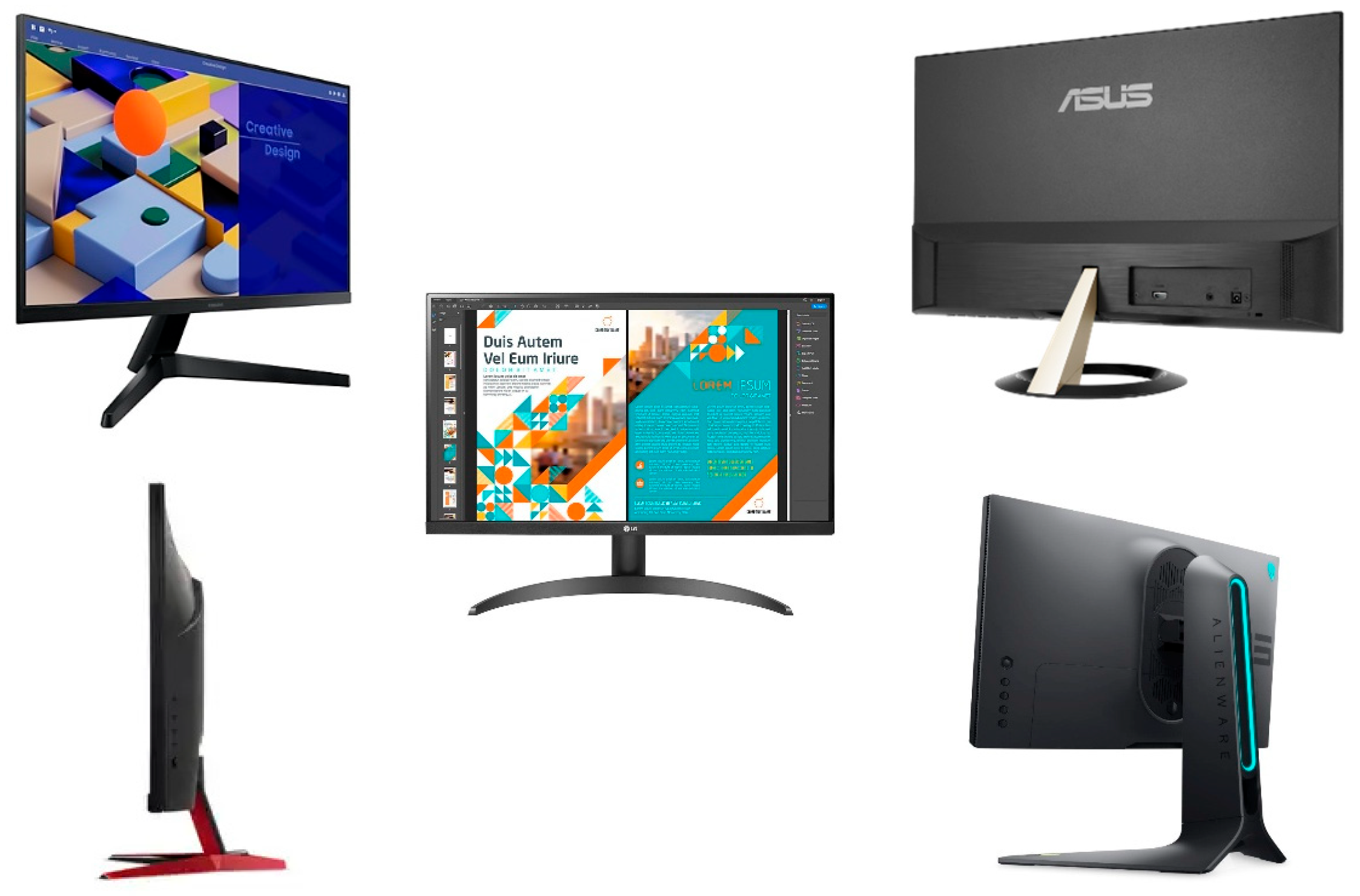
This research examines five monitors presented in Figure 1, each with a 24-inch screen size. This size was selected because 24-inch monitors are among the most commonly used in everyday activities. They are widely adopted for personal use, such as work and home multimedia, and are also prevalent in professional environments, including cashier stations in convenience stores, bank teller desks, customer service centers, and office workspaces. Their popularity stems from the balance they offer between screen size and usability, providing a comfortable viewing experience while remaining versatile across different settings. This makes them particularly relevant as research subjects in efforts to apply sustainable design principles to monitor redesign. In addition to screen size, brand popularity reflected in sales volume was also a key criterion in selecting the monitors for this study.
The five monitors share several common features, including slim bezels for an immersive viewing experience, matte plastic casings, and rear-positioned connectivity ports that contribute to a minimalist design. Models from brands such as LG, Dell, and ASUS reflect current design trends that prioritize aesthetics. One of the most notable features is the use of matte plastic as the primary material for both the casing and the stand, giving the monitor a modern look while keeping it lightweight. The stands are generally designed to be simple yet stable, although certain models, such as those from Dell, offer greater flexibility in screen positioning. Connectivity ports are typically located at the lower rear of the monitor, which contributes to a clean front appearance but can sometimes reduce accessibility.

2.2. Research Process

The study began with an evaluation of the case study designs using the 3R framework to assess their alignment with sustainable design principles. The 3R analysis helps identify weaknesses in existing designs while also revealing opportunities for sustainable innovation.

2.2.1. Reduce

The ‘reduce’ principle focuses on minimizing the use of materials and energy throughout a product’s life cycle. This includes reducing the consumption of non-renewable resources through input substitution, process improvements, and more efficient management of production and consumption stages [11]. In practice, this means designing monitors with smaller footprints, fewer components, and lower power requirements. For example, a monitor with a thinner, lighter bezel and only essential components helps reduce both material and energy use [12].

2.2.2. Reuse

The ‘reuse’ principle focuses on extending the lifespan of products by using them for the same or a similar purpose without major modifications [13]. Products that are easy to disassemble tend to have higher rates of reusability, helping to reduce waste and conserve resources [12]. In short, reuse involves designing a monitor to be durable, repairable, and appealing enough to remain in use rather than being discarded and sent to landfill.

2.2.3. Recycle

The ‘recycle’ principle involves processing spent products into raw materials for the creation of new products. It includes reprocessing waste materials into products, materials, or substances, whether for their original use or for other purposes [11]. In the context of computer monitor design, this means that when a monitor reaches the end of its life, its glass, plastics, and metals can be efficiently recovered and reprocessed into new electronic devices.
Table 1 summarizes the definitions of each 3R principle, along with key indicators used to evaluate the sustainability of a product’s design, specifically in the context of monitor redesign. These indicators are organized to support both qualitative and quantitative assessments in a systematic way.
In the next stage, a new monitor was developed using the product development process outlined by Ulrich et al. [17]. Needs statements were collected through interviews with technicians and repair professionals who had direct experience with monitor repair. The interviews focused on common issues in existing designs, challenges during disassembly and repair, and whether components could be repaired or required replacement. Based on the evaluation results and the identified needs, product specifications for the new monitor were established. These specifications guided the development of three alternative design concepts, from which the most suitable option was selected.
In the final stage, the new design was evaluated by comparing its performance with the case study designs using the 3R principles and consumer feedback. Consumer feedback was gathered through a survey designed to assess the design’s performance in relation to user expectations and sustainability goals. The respondents were 100 university students and office professionals, as 24-inch monitors are widely used in both academic and office environments. Their regular experience with this monitor size ensured that the feedback provided was practical and relevant to the study.

3. Results

3.1. Evaluation Results of the Case Study Designs

This section presents the results of the design evaluation of five 24-inch monitors using the 3R framework. Each principle is qualitatively assessed to identify key limitations and opportunities for sustainable redesign as presented in Table 2.
Across the five models analyzed, most did not optimize material use. The Acer and Alienware models feature layered decorative elements and thick casings, resulting in unnecessary material consumption. The ASUS model makes extensive use of adhesive and internal reinforcements, which complicates manufacturing and disassembly. Samsung shows better material efficiency with a simpler design, although it continues to use a bezel panel with clips. Technicians noted that complex internal layering and bezel designs are difficult to manage during repair and offer little benefit to structural strength.
Modularity is a major issue across the case studies. LG and Alienware have sealed ports and components, making them nearly irreparable. ASUS lacks tool-less access and uses adhesives that discourage disassembly. Acer allows some access but still lacks a clear separation between parts. Samsung offers slightly easier opening via rear screws, but component replacement is still limited.

3.2. New Monitor Design

3.2.1. Need Statements

The identification of need statements was carried out through interviews with technicians who have extensive experience in servicing and repairing monitors. The responses revealed several recurring issues that were consistently mentioned across respondents, highlighting key limitations in current monitor designs. Notably, the complexity of casing structures, restricted access to internal components, and the prevalent use of non-modular assemblies were identified as major barriers to efficient repair. In addition, technicians emphasized that the most frequent failures occur in the power supply units and input ports, while display panels, once damaged, are typically non-repairable and must be replaced entirely. These insights provide a valuable foundation for redefining user-centered design priorities in line with the principles of sustainability and serviceability. Table 3 summarizes the interpreted responses from the interviews, organized into five main thematic points. Each response is supported by a direct quotation to preserve the authenticity and practical relevance of the technicians’ perspectives.

3.2.2. Product Specifications

Following the identification of user needs and product limitations, this stage aims to define measurable and realistic design goals for the redesigned monitor. The target specifications serve as a foundation for guiding subsequent decisions in concept selection and product detailing, ensuring alignment with the 3R principles and technical feasibility. These specifications reflect critical factors such as material choices, component accessibility, ease of disassembly, modularity, and recyclability, each informed by technician feedback and sustainability benchmarks. Table 4 outlines the target specifications, including the ideal and acceptable values.
The target specifications listed in Table 4 were derived based on the evaluation of case study designs, key issues highlighted in technician interviews, and sustainability goals aligned with the 3R framework. These specifications guide the concept selection and detail design stages, ensuring that the redesigned monitor achieves both environmental and functional performance goals. Based on the design objectives and sustainability targets, the recommended material for the redesigned monitor casing is recycled acrylonitrile butadiene styrene (rABS) with a minimum of 90% post-consumer recycled content. This thermoplastic offers a balance of mechanical strength, impact resistance, and dimensional stability, making it suitable for protecting internal components while withstanding repeated assembly and disassembly cycles [18].

3.2.3. Concept Designs

This step is essential to systematically explore various combinations of design elements that align with the principles of reduce, reuse, and recycle. By generating multiple concepts with different configurations as presented in Table 5, the design team can compare their trade-offs in terms of sustainability and functionality. Each concept is formed through modular decisions across structural frame design, connection methods, stand configuration, and material strategies, all derived from insights gathered through 3R evaluation and technician interviews.
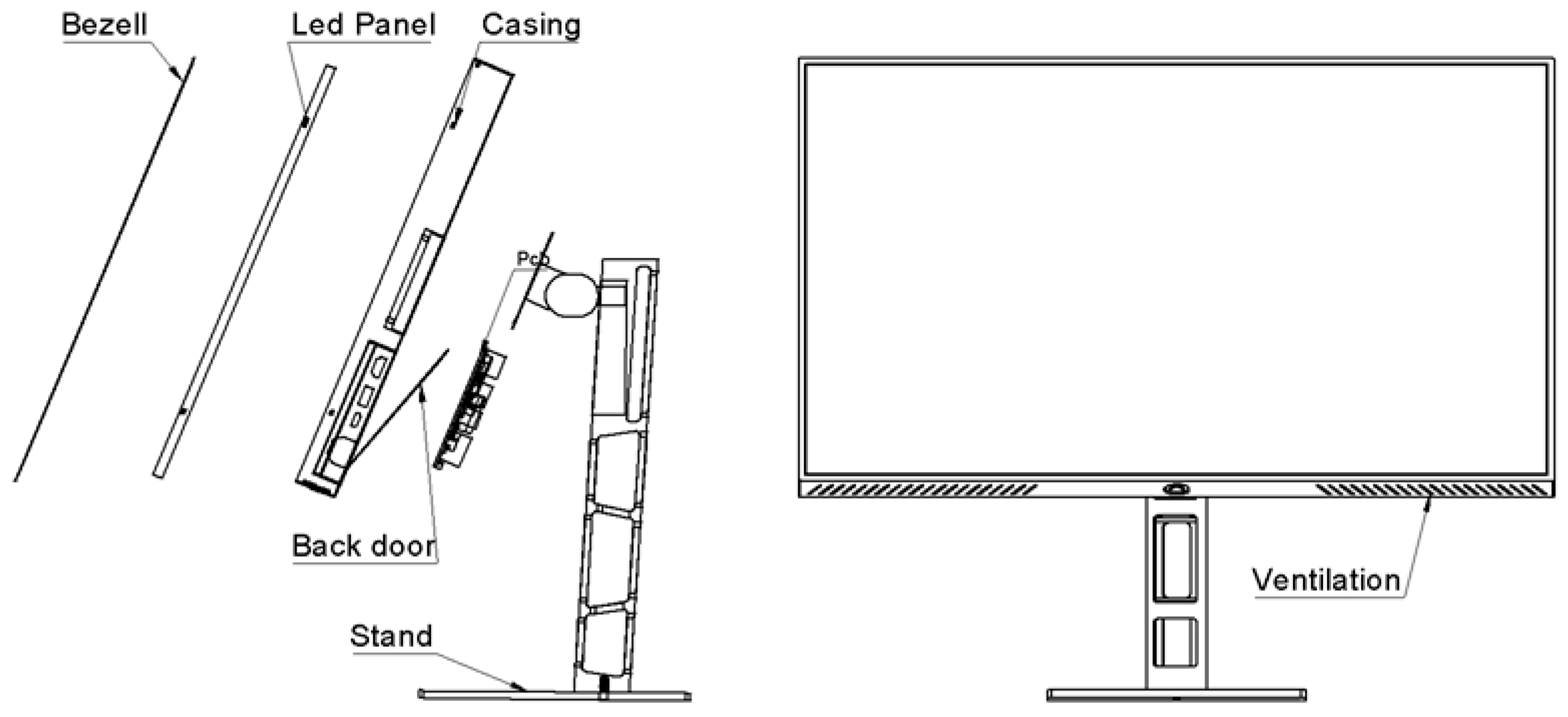
As shown in Figure 2, concept A prioritizes material efficiency by minimizing the number of components and eliminating unnecessary features while still maintaining full usability through a fully articulated stand. The design uses a single-layer casing with minimal screws and a simple rectangular back cover secured with just two fasteners.
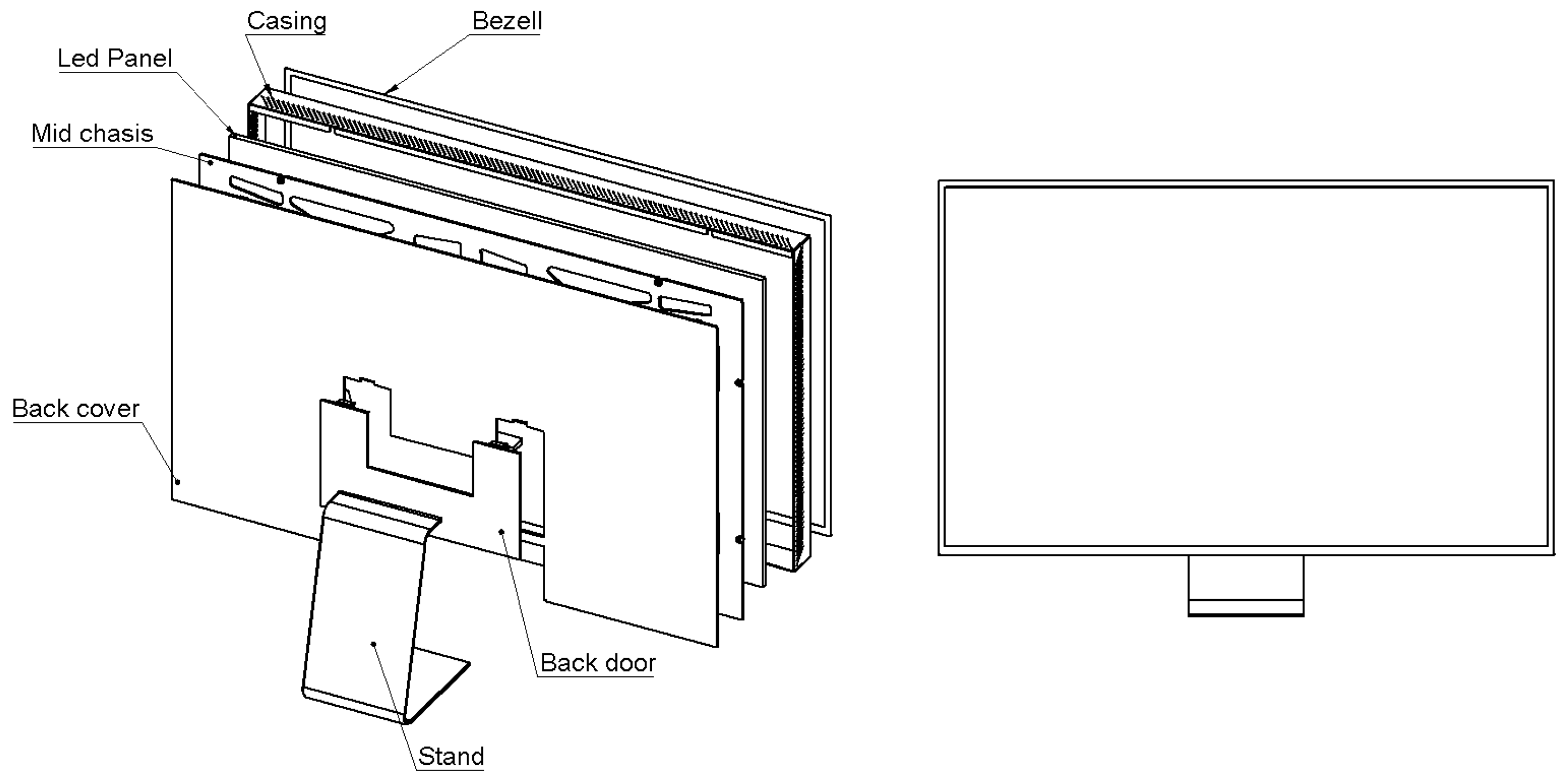
In contrast, concept B is illustrated in Figure 3, and it emphasizes serviceability, featuring a modular internal structure where components can be individually accessed and replaced. It incorporates magnetic attachments on the bezel and uses an integrated stand directly connected to the casing. However, this design results in a slightly heavier and more complex structure.
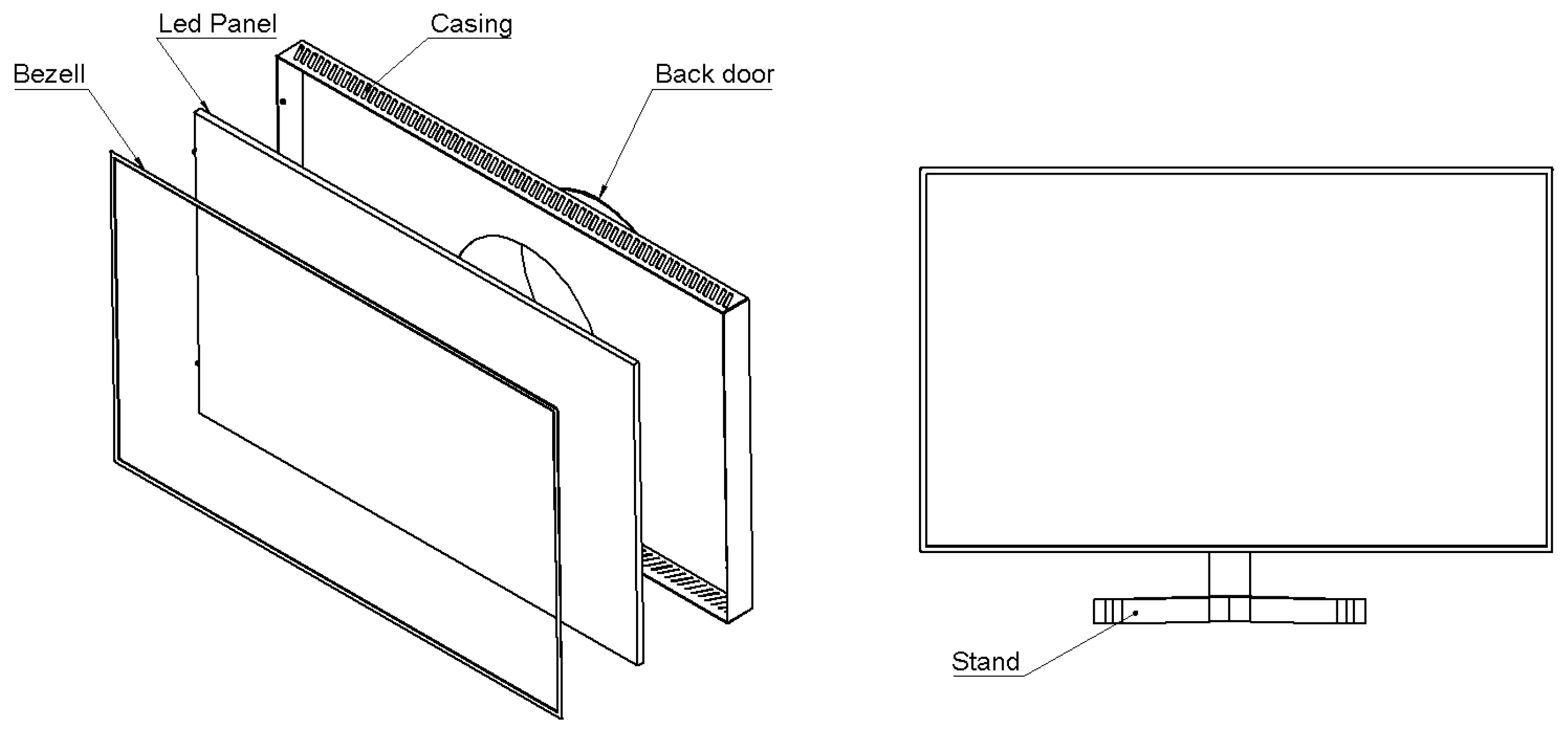
Concept C, presented in Figure 4, also focuses on material efficiency but with an even lighter and simpler casing. It features a circular back cover with a sliding mechanism for tool-less disassembly and uses a tripod-style stand. Additionally, ventilation slots are integrated into the lower bezel and stand to support internal airflow and thermal performance.
A concept screening matrix was used to evaluate each alternative against key criteria derived from Table 4, such as product weight, modularity, ease of disassembly, recyclability, and compliance with standard interfaces. Table 6 presents the concept screening table, which is used to compare multiple product design alternatives based on key evaluation criteria. Each concept is assessed using a qualitative scoring system where the symbols (+), (0), and (–) indicate performance relative to a baseline. A (+) means the concept performs better on that criterion, a (0) indicates similar or equal performance, and a (–) shows the concept performs worse. This method helps identify which design alternative best meets the product requirements and should proceed to the next stage of development.
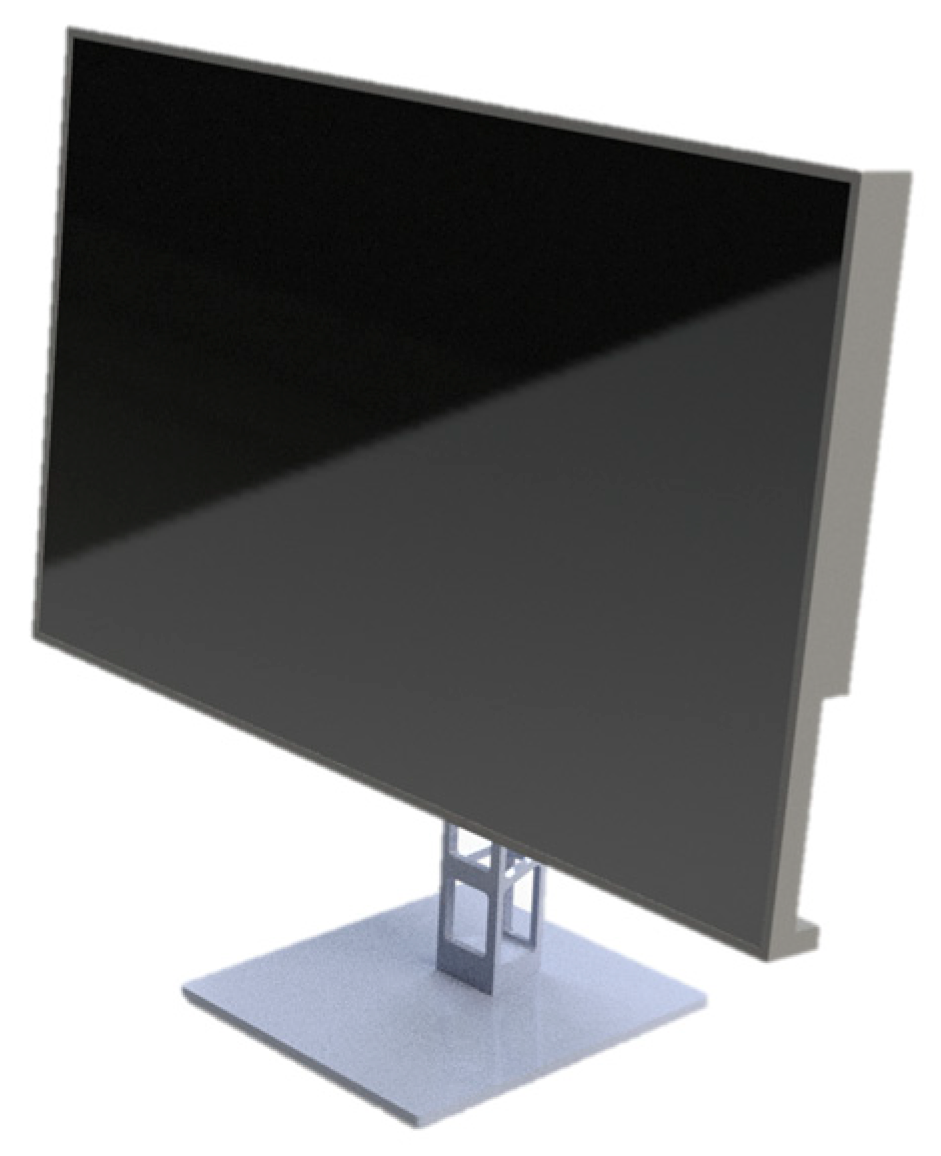
Based on the product concept screening results, Concept A emerged as the most suitable design candidate. It demonstrated strong alignment with the ‘reduce’ principle through its minimal component count and lightweight structure while also satisfying key functional targets such as VESA mount compatibility and modular access to internal components. To enhance serviceability, the final design integrates the magnetic connector mechanism from Concept B for selected casing areas, particularly on the bezel, enabling easier access during maintenance without compromising structural integrity.
The final concept as illustrated in Figure 5 is concept A, which focuses on material efficiency and simplified construction, with an improvement in the form of a magnetic bezel attachment, inspired by concept B, to enhance serviceability.
The redesigned monitor weighs only 2.4 kg, including the stand, which is significantly lighter than most 24-inch monitors available on the market, contributing to reduced material usage and lower transportation impact. Its flat, compact design also optimizes packaging space, minimizing environmental impact during distribution. The outer casing is made from 90% recycled plastic and deliberately avoids the use of paint, supporting recyclability and reducing environmental harm. This hybrid solution combines the material efficiency and simplified architecture of Concept A with the user-friendly disassembly features of Concept B. The result is a well-balanced and environmentally responsible monitor that is lightweight, maintainable, and designed with sustainability in mind throughout its lifecycle.

3.3. Design Evaluation and Testing

Table 7 presents a comparison between the average specifications of five existing commercially available 24-inch monitors and the redesigned monitor concept. The comparison highlights key physical, material, and functional attributes relevant to sustainability, maintainability, and user convenience. This side-by-side assessment provides a clear view of how the redesigned concept addresses the objectives of reduced material usage, improved recyclability, and enhanced serviceability without compromising essential monitor functions.
The reduction in total weight from an average of 3.2 kg to 2.4 kg not only decreases material usage but also facilitates easier handling during assembly, transport, and repair. By reducing the casing components from 12 to 6 parts and replacing plastic clip fasteners with a combination of screws and magnets, the design enhances modular access, making it easier to replace or upgrade individual components. The shift from a 100% virgin PC/ABS blend to 90% recycled ABS with no paint improves recyclability to over 90%—a substantial increase from the 40–50% range of current models—while also aligning with sustainable material sourcing goals. The addition of clear recycling labels on all plastic parts further supports proper end-of-life processing. Lastly, ensuring full VESA compatibility enhances adaptability, allowing the monitor to be mounted or repositioned according to user needs. Collectively, these improvements show that the redesign integrates sustainability features while retaining and, in some cases, improving upon established functional standards.
The results of the concept testing indicate that the final design, which is a combination of Concept A with a magnetic bezel inspired by Concept B, is well received by users across different segments. The product’s minimalist visual appeal, lightweight impression, and environmentally conscious design choices were particularly appreciated by the respondents. The survey played an important role in confirming that the redesigned monitor, while integrating sustainability features such as recycled materials, modular construction, and improved recyclability, remains aligned with user expectations for a well-established product category. Monitors have long been standardized in terms of functionality and ergonomics, so it was crucial to ensure that the redesign did not introduce radical changes that could disrupt usability or performance.

4. Conclusions

This study redesigned a monitor to improve its environmental sustainability. By evaluating five 24-inch monitor models on the market using the 3R framework and interviewing experienced field technicians, several key limitations in current designs were identified. These included excessive material use, low modularity, limited repairability, and poor end-of-life recyclability. However, the case studies were limited to five 24-inch models, which, although common, may not represent the full range of monitor designs and technologies available worldwide. In addition, the redesigned prototype is still conceptual and has not been tested in real production settings. Future research could focus on examining the monitor’s electrical system in more detail, including circuit design, power supply improvements, and modular electronic components. Building a functional prototype based on the redesigned concept would also allow testing its feasibility, performance, and actual environmental impact in real-world conditions.

Author Contributions

Conceptualization, I.N. and R.A.; methodology, I.N.; software, R.A.; validation, I.N., R.A., R.F. and D.R.; formal analysis, R.A.; investigation, I.N.; resources, I.N.; data curation, R.A.; writing—original draft preparation, I.N. and R.A.; writing—review and editing, R.F. and D.R. All authors have read and agreed to the published version of the manuscript.

Funding

This research was funded by Universitas Muhammadiyah Surakarta grant number PID-4484 and the APC was funded by Universitas Muhammadiyah Surakarta.

Institutional Review Board Statement

The study was conducted in accordance with the Declaration of Helsinki and approved by the Institutional Review Board (or Ethics Committee) of Universitas Muhammadiyah Surakarta.

Informed Consent Statement

Informed consent was obtained from all subjects involved in the study.

Data Availability Statement

The data presented in this study are available on request from the corresponding author due to the presence of personal information.

Conflicts of Interest

The authors declare no conflicts of interest.

References

  1. Hoegh-Guldberg, O.; Jacob, D.; Taylor, M.; Bindi, M.; Brown, S.; Camilloni, I.; Diedhiou, A.; Djalante, R.; Ebi, K.; Engelbrecht, F.; et al. Impacts of 1.5 °C Global Warming on Natural and Human Systems. In Global Warming of 1.5 °C; An IPCC Special Report on the Impacts of Global Warming of 1.5 °C Above Pre-Industrial Levels and Related Global Greenhouse Gas Emission Pathways, in the Context of Strengthening the Global Response to the Threat of Climate Change, Sustainable Development, and Efforts to Eradicate Poverty; Cambridge University Press: Cambridge, UK, 2022; Chapter 3; pp. 175–312. [Google Scholar] [CrossRef]
  2. Martinez, V.G. Product Sustainability Assessment in Conceptualisation Phase. In Proceedings of the 21st International Conference on Engineering Design (ICED 17), Vancouver, Canada, 21–25 August 2017. [Google Scholar]
  3. Pigosso, D.C.A.; Rozenfeld, H.; McAloone, T.C. Ecodesign Maturity Model: A Management Framework to Support Ecodesign Implementation into Manufacturing Companies. J. Clean. Prod. 2013, 59, 160–173. [Google Scholar] [CrossRef]
  4. Watkins, M.; Casamayor, J.L.; Ramirez, M.; Moreno, M.; Faludi, J.; Pigosso, D.C.A. Sustainable Product Design Education: Current Practice. She Ji 2021, 7, 611–637. [Google Scholar] [CrossRef]
  5. Mor, R.; Singh Sangwan, K.; Singh, S.; Singh, A.; Kharub, M. E-Waste Management for Environmental Sustainability: An Exploratory Study. Procedia CIRP 2021, 98, 193–198. [Google Scholar] [CrossRef]
  6. Borthakur, A.; Govind, M. How Well Are We Managing E-Waste in India: Evidences from the City of Bangalore. Energy Ecol. Environ. 2017, 2, 225–235. [Google Scholar] [CrossRef]
  7. Faqi, A.F.; Jamila, F.; Khadijah, N. The Right to Repair: A Perspective from Consumer Protection Law in Indonesia. Awang Long Law Rev. 2022, 4, 482–491. [Google Scholar]
  8. IEEE Std 1680.1-2018; IEEE Standard for Environmental and Social Responsibility Assessment of Computers and Displays. IEEE: New York, NY, USA, 2018.
  9. United Nations General Assembly. Transforming Our World: The 2030 Agenda for Sustainable Development. Available online: https://sdgs.un.org/2030agenda (accessed on 2 September 2025).
  10. Pralat, B.; Owsian, A.; Rogozinski, T. Reducing, Reusing, and Recycling in the Furniture Industry: A Mini-Review. Glob. For. J. 2024, 2, 161–168. [Google Scholar] [CrossRef]
  11. Rodríguez-Espíndola, O.; Cuevas-Romo, A.; Chowdhury, S.; Díaz-Acevedo, N.; Albores, P.; Despoudi, S.; Malesios, C.; Dey, P. The Role of Circular Economy Principles and Sustainable-Oriented Innovation to Enhance Social, Economic and Environmental Performance: Evidence from Mexican SMEs. Int. J. Prod. Econ. 2022, 248, 108495. [Google Scholar] [CrossRef]
  12. Mengistu, A.T.; Dieste, M.; Panizzolo, R.; Biazzo, S. Sustainable Product Design Factors: A Comprehensive Analysis. J. Clean. Prod. 2024, 463, 142260. [Google Scholar] [CrossRef]
  13. Psarommatis, F.; May, G.; Azamfirei, V. Product Reuse and Repurpose in Circular Manufacturing: A Critical Review of Key Challenges, Shortcomings and Future Directions. J. Remanuf. 2025, 15, 273–310. [Google Scholar] [CrossRef]
  14. Delaney, E.; Liu, W.; Zhu, Z.; Xu, Y.; Dai, J.S. The Investigation of Environmental Sustainability within Product Design: A Critical Review. Des. Sci. 2022, 8, e15. [Google Scholar] [CrossRef]
  15. Tan, E.S.; Lee, A.W.L.; Shekar, Y.C.; Tan, Y.S. Design for Circularity: A Framework for Sustainable Product Redesign. Procedia CIRP 2024, 122, 479–484. [Google Scholar] [CrossRef]
  16. Van Schaik, A.; Reuter, M.A. Dynamic modelling of E-waste recycling system performance based on product design. Miner. Eng. 2010, 23, 192–210. [Google Scholar] [CrossRef]
  17. Ulrich, K.T.; Eppinger, S.D.; Yang, M.C. Product Design and Development, International Student ed.; McGraw-Hill: New York, NY, USA, 2020. [Google Scholar]
  18. Teixeira, F.S.M.; Peres, A.C.C.; Pacheco, E.B.A.V. Mechanical Recycling of Acrylonitrile-Butadiene-Styrene Copolymer and High Impact Polystyrene from Waste Electrical and Electronic Equipment to Comply with the Circular Economy. Front. Sustain. 2023, 4, 1203457. [Google Scholar] [CrossRef]
Figure 1. Case studies.
Engproc 137 00003 g001
Figure 2. Concept A.
Engproc 137 00003 g002
Figure 3. Concept B.
Engproc 137 00003 g003
Figure 4. Concept C.
Engproc 137 00003 g004
Figure 5. Final concept monitor.
Engproc 137 00003 g005
Table 1. The indicator of the 3R Framework.
3RDefinitionIndicator
ReduceDesigning products to use fewer materials and resources
  • Reducing material quantity and diversity while maintaining full functionality.
  • Minimizing environmental impacts throughout the product life cycle by means of design.
  • Minimizing the number of components and simplifying connections.
ReuseDesigning products to support the reuse of both the product and its components
  • Improving product durability through material selection or design.
  • Enabling repair and maintenance throughout the product’s usage period.
  • The product’s design supports extended use through maintenance and repair.
RecycleDesigning products to enable material recovery after disposal
  • Selecting materials that are reusable or recyclable.
  • Ensuring that product materials can be identified, sorted, disassembled, and separated for recovery.
  • Enable material recovery through reuse, biodegradation, recycling, upcycling, downcycling, or energy recovery.
Source: [7,14,15,16].
Table 2. Findings from the 3R-based evaluation of the case study designs.
Case StudyReduceReuseRecycle
Acer Nitro XV252Q_F
(Acer Inc., Xizhi—New Taipei City, Taiwan)
Overuse of layered plastic components, decorative, non-functional elementsSemi-integrated ports; poor modularityNo material labeling for mixed plastics
LG 24QP500-B
(LG Electronics, Seoul, Republic of Korea)
Uses multi-layered plastic casingPermanently integrated HDMI/USB portsVirgin PC/ABS blend with no recycled content
ASUS VZ249HFA-G
(ASUSTeK Computer Inc., Taipei, Taiwan)
Use of adhesives and unnecessary structural layersLow accessibility and uses plastic clips on the bezelMixed plastic with painted logo
Alienware AW2521H
(Alienware/Dell Technologies, Miami—FL, USA)
Over-engineered body with non-functional decorative partsInternal parts sealed with metal casingNo recyclable composite layers
Samsung S31C 75Hz
(Samsung Electronics, Suwon, Republic of Korea)
Simpler material use but still virgin plasticPlastic clips on the bezel increase the risk of cracking during disassembly20% recycled plastic content and left unpainted
Table 3. Need statements.
No.Interview TopicDirect QuotationNeed Statements
1Design issues in current monitors“Nowadays, monitors mostly use clips instead of screws. So, when opened, they break easily.”The monitor enclosure enables safe and repeated access without damage.
2Challenges during monitor repair“Sometimes we have to disassemble the whole thing just to replace one cable. Wastes time.”The internal monitor layout allows individual components to be accessed and serviced without full disassembly.
3Decision to repair or replace“If the panel is damaged, we usually replace it with a new one. But if it’s the power adapter or fuse, that can still be fixed.”Internal electronic components function independently and can be repaired or replaced without removing the display panel.
4Most commonly damaged parts“The most frequent damage I see is in the power supply or input port. Sometimes the screen is scratched or only half-lit.”High-risk components such as power ports and input connections are designed for durability and easy replacement.
5Ease of disassembly and reassembly“Disassembling is difficult, especially if the casing is thin. A wrong pry can easily crack it.”The monitor casing enables tool-friendly disassembly and reassembly without risk of structural damage.
Table 4. Product specifications.
No.SpecificationMetric/UnitIdeal ValueAcceptable Range
1Total product weightKilograms (kg)≤2.5 kg≤3.0 kg
2Number of casing componentsUnit count ≤6 parts≤10 parts
3Number of screws on casingUnit count (pcs)≤10≤15
4Repair access to main componentsAccessibility levelTool-accessible and modularSemi-integrated, accessible
5Component modularity (panel, PSU, I/O)Modular design criteria Fully separable units2 of 3 separable
6Recyclability of all material componentsPercentage (%)≥80%≥60%
7VESA mount compatibilityDimension standard75 × 75 mmMust meet standard
8Surface marking for recycling (resin codes)Present/not presentClearly labeledPresent on all plastic parts
Table 5. Combination table for generating concept designs.
DescriptionConcept AConcept BConcept C
Frame or chassis Single thin wall Three-layer systemSingle thin wall
Connection typeScrewsMagnetScrews
Stand designFully articulated with perforatedIntegrated L standTripod
Back doorRectangle U shapeCircle
Table 6. Concept screening table.
CriteriaConcept AConcept BConcept C
Product weight0+
Number of casing components++
Number of screws on casing0++
Repair access to main components+0
Component modularity (panel, PSU, I/O)+++
Recyclability of all material components+++
VESA mount compatibility0
Surface marking for recycling (resin codes)+++
Overall score514
Continue?YesNoNo
Table 7. Case studies vs. redesign monitor.
CriteriaAverage of 5 Case Study MonitorsRedesign Monitor
Total Weight3.2 Kg2.4 Kg
Casing components12 Parts6 Parts
Fastener TypePlastic clipsScrew + magnet
Material composition100% virgin PC/ABS blend90% recycled ABS, bo paint
Modular accessLow (integrated assemblies)High (separable PSU, ports, panel)
Recyclability 40–50%≥90%
Recycle labelingAbsentPresent on all plastic parts
VESA compatibilitySome models onlyFully compliant
Disclaimer/Publisher’s Note: The statements, opinions and data contained in all publications are solely those of the individual author(s) and contributor(s) and not of MDPI and/or the editor(s). MDPI and/or the editor(s) disclaim responsibility for any injury to people or property resulting from any ideas, methods, instructions or products referred to in the content.