Design and Development of Bio-Polyurethane Production System Experimental Apparatus †

Abstract
1. Introduction
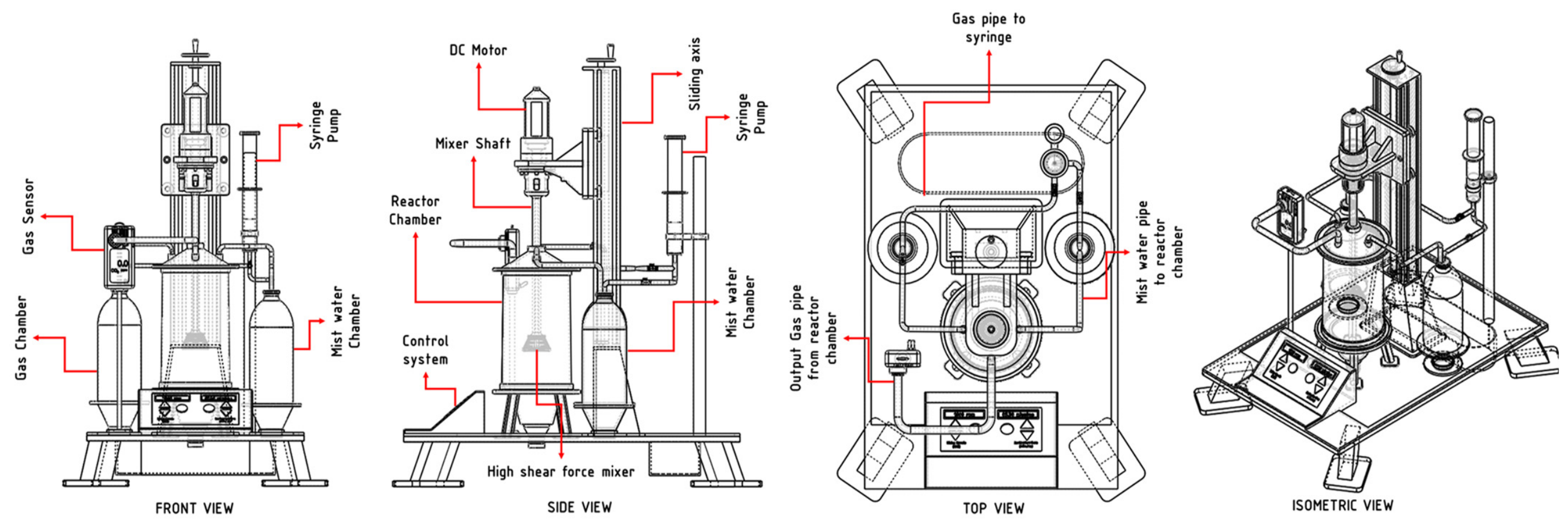
2. Design Principle of Experimental Apparatus System
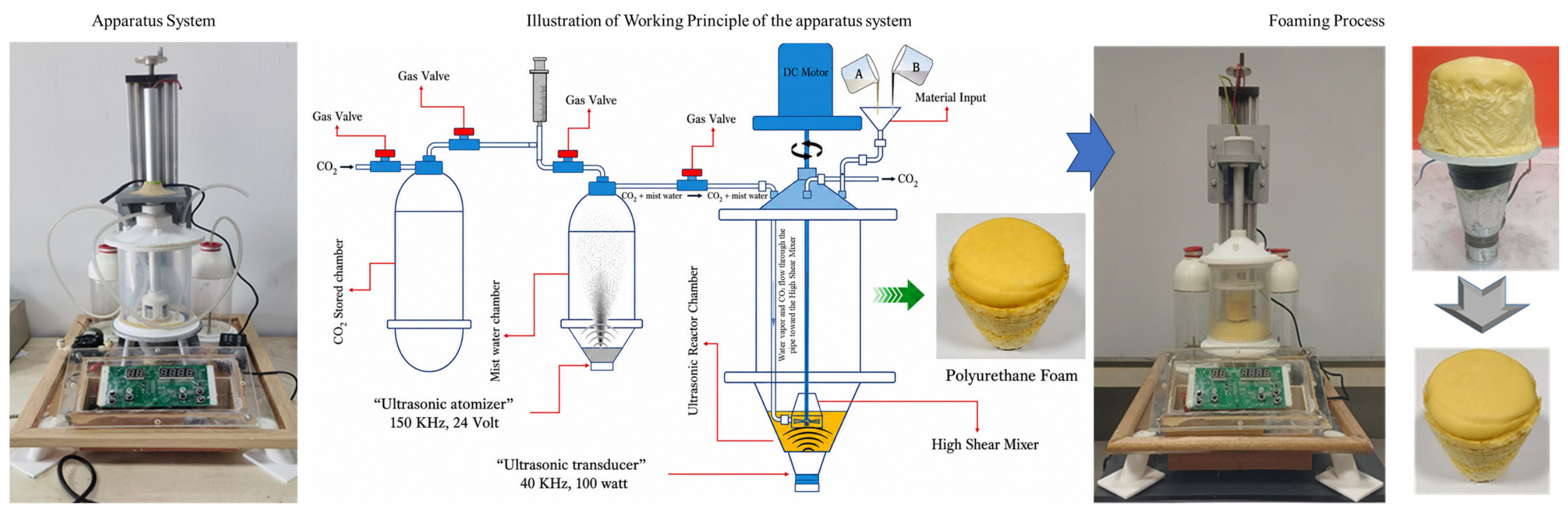
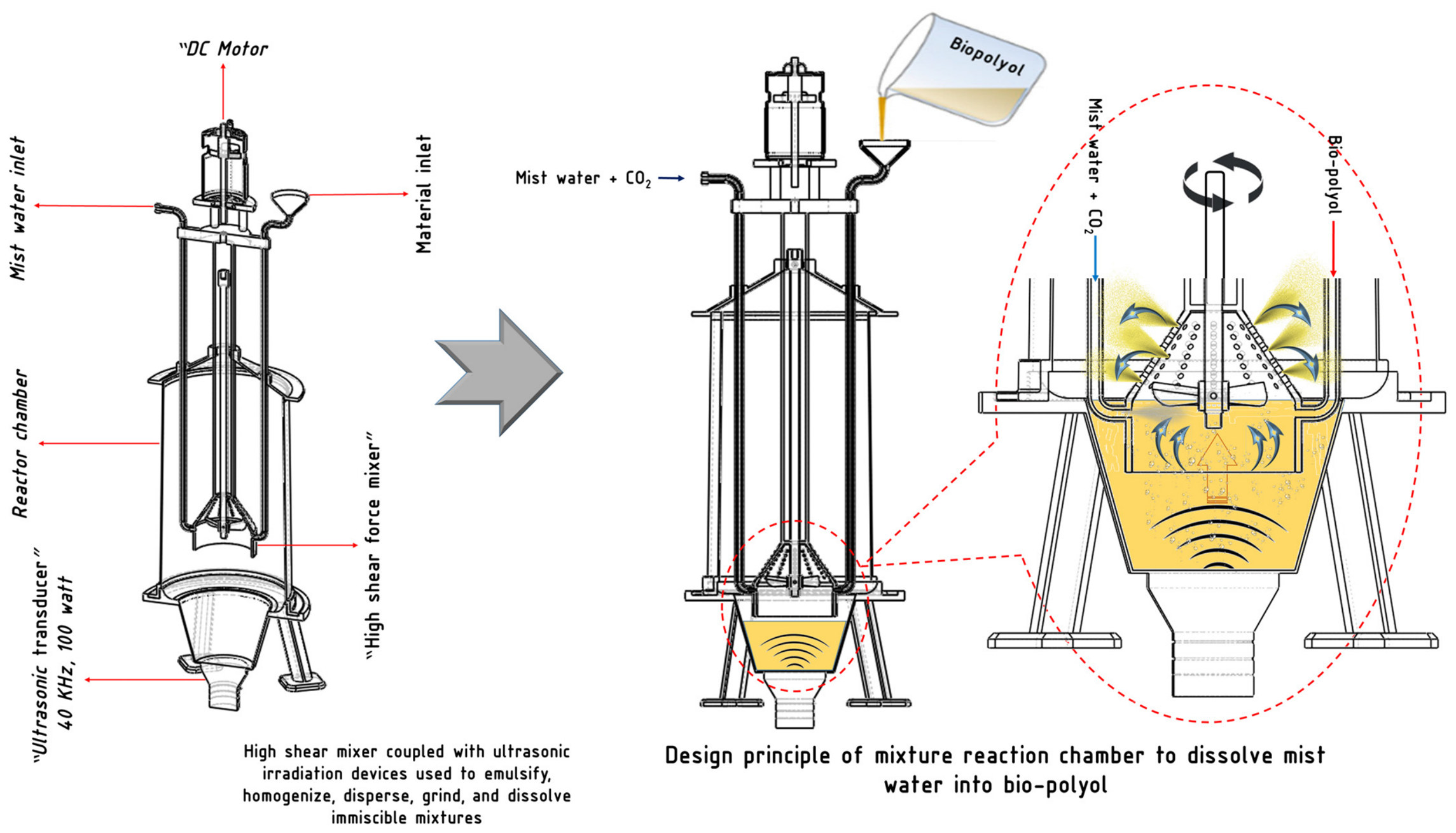
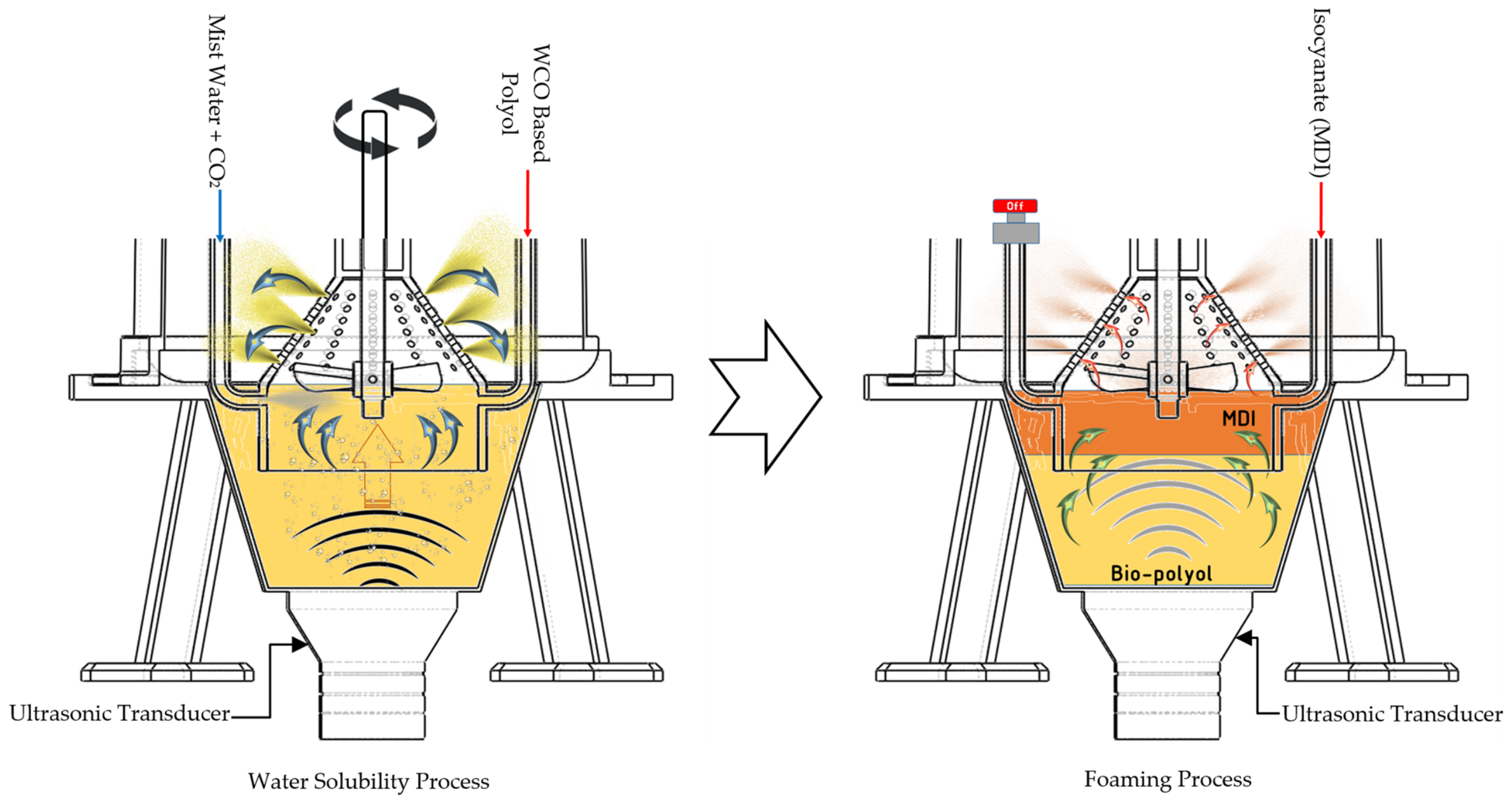
2.1. Design Construction and Working Principle of Water Solubility Apparatus System
2.2. Design Construction and Working Principle of Polyurethane Chamber
3. The Experimental Methods on the Synthesis of WCO-Based Polyurethane
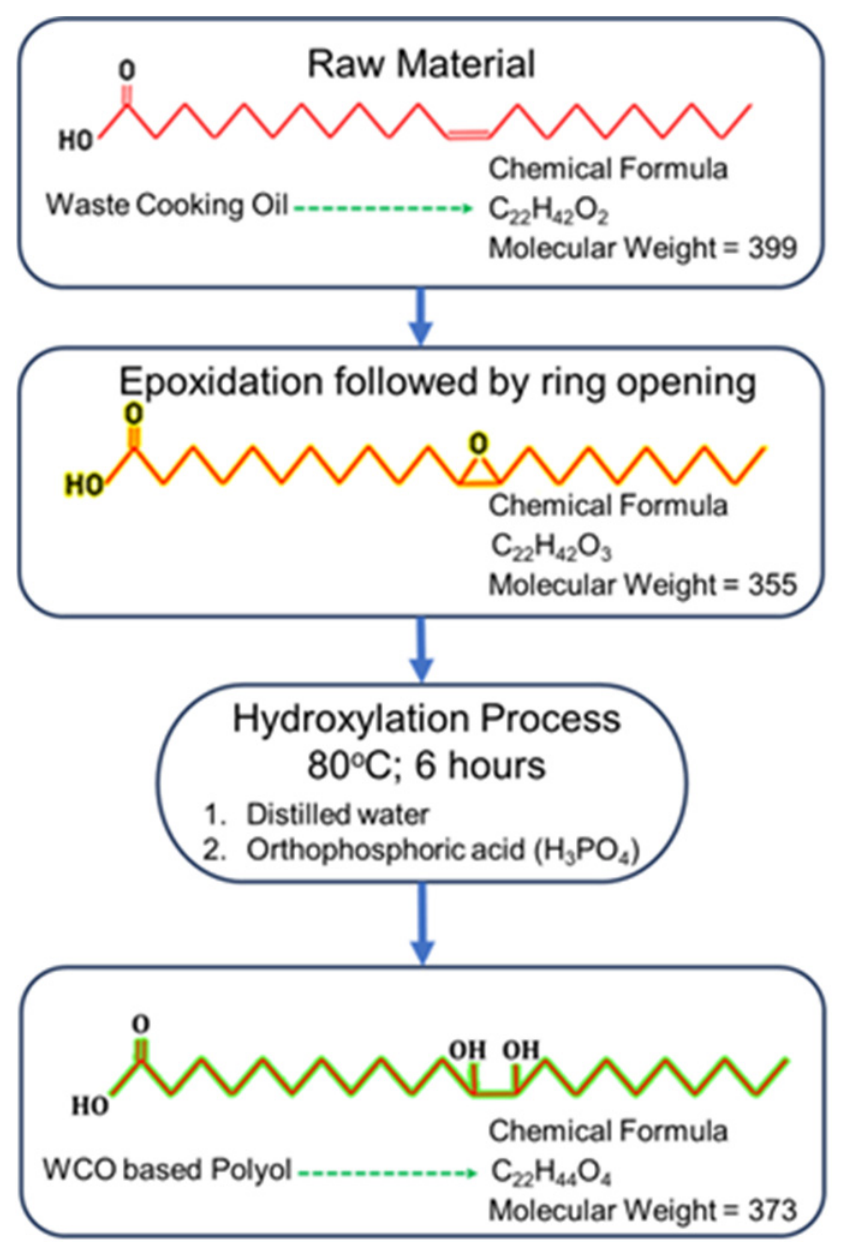
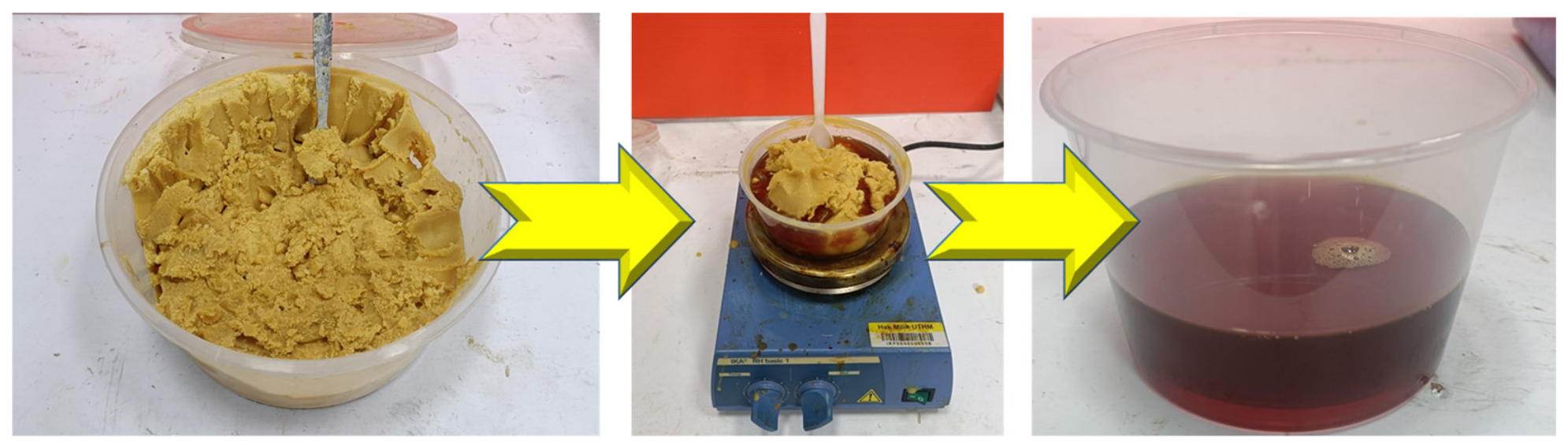
3.1. Waste Products (Waste Cooking Oil) as Polyurethane Feedstock’s
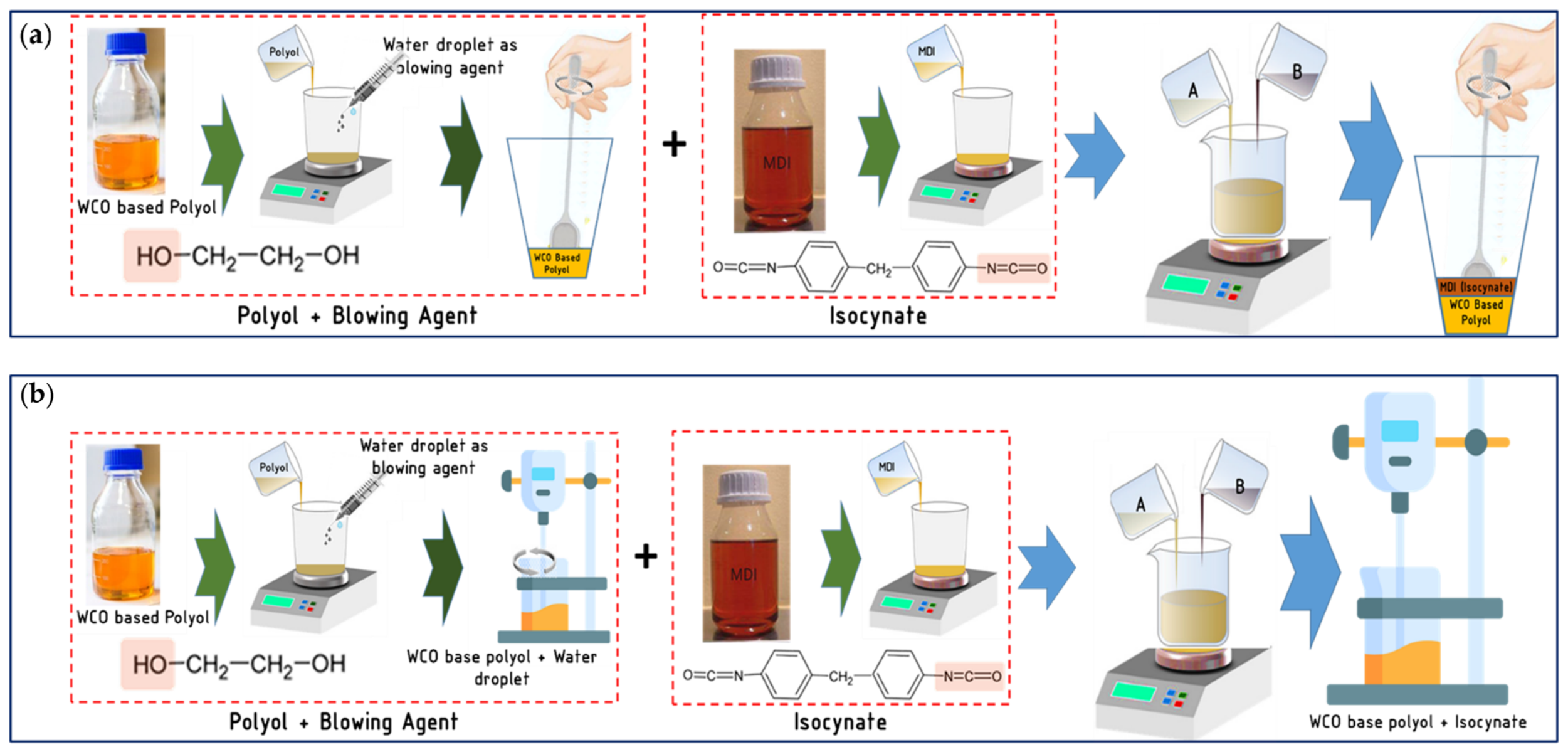
3.2. Fabrication of WCO-Based Polyurethane Foams
3.2.1. Synthesis Pathway by Conventional Process
3.2.2. Synthesis Pathway by Using a Newly Developed Experimental Apparatus System
4. Experimental Results
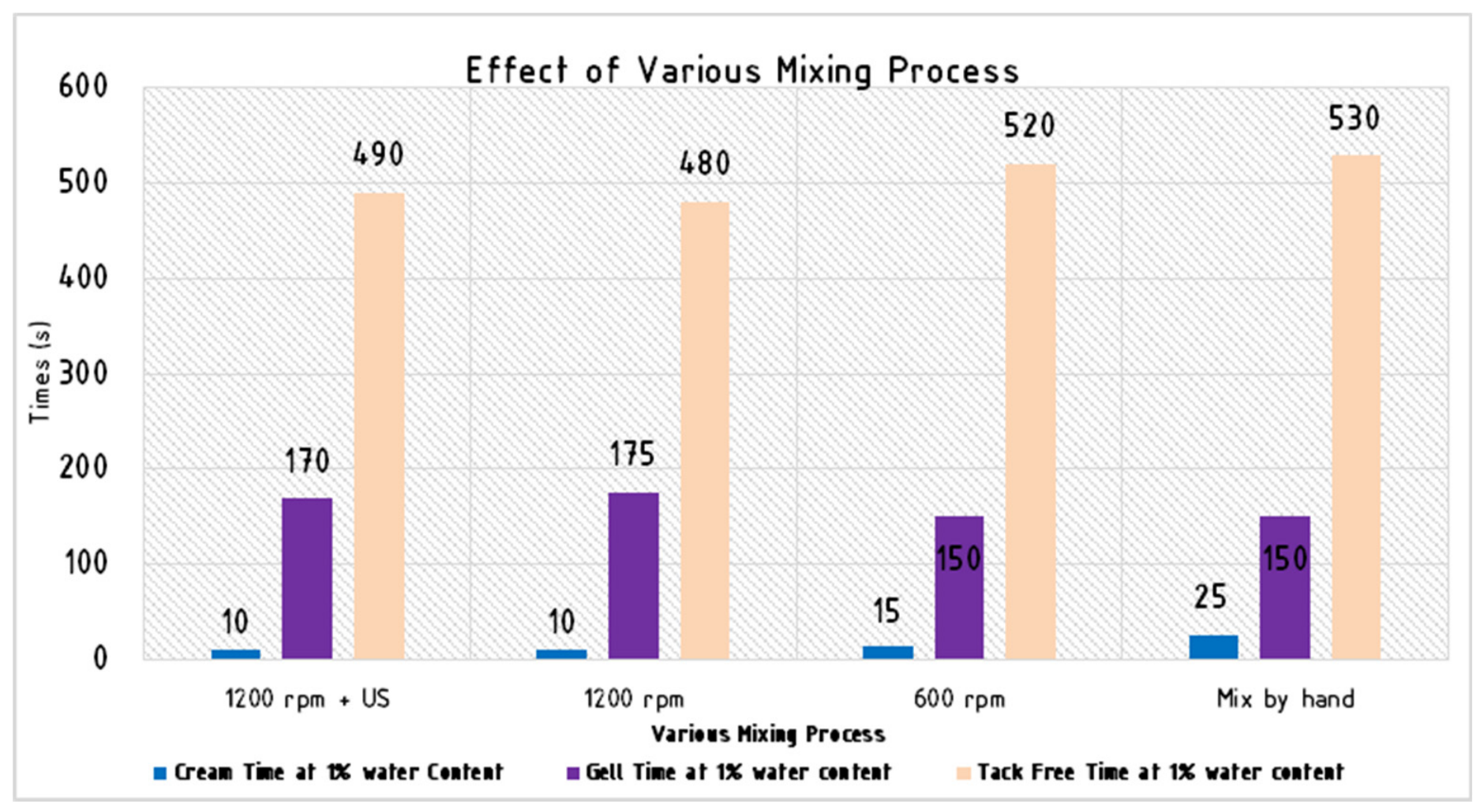
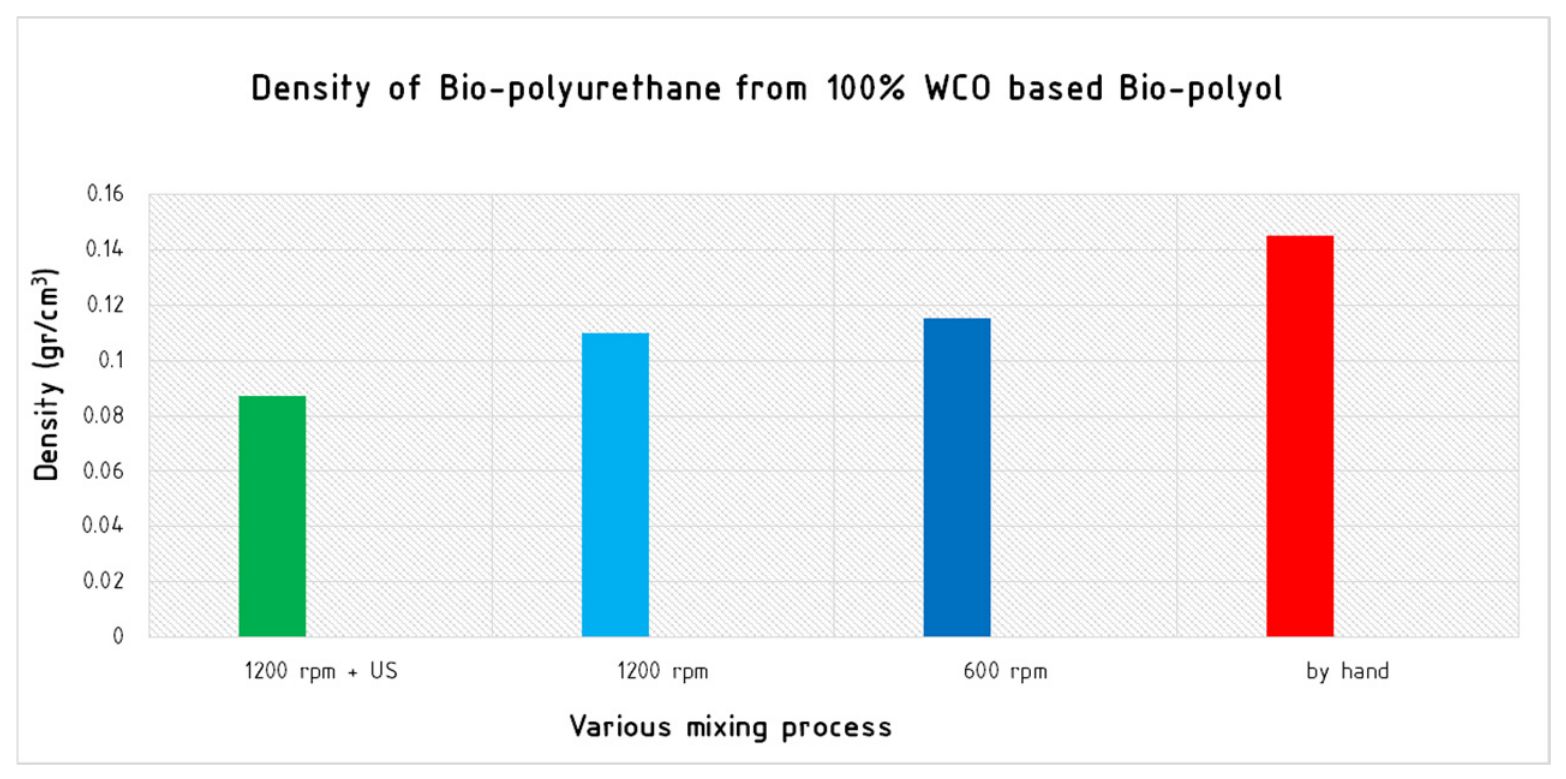
4.1. Effect of Varying Mixing Process on Polyurethane Foams
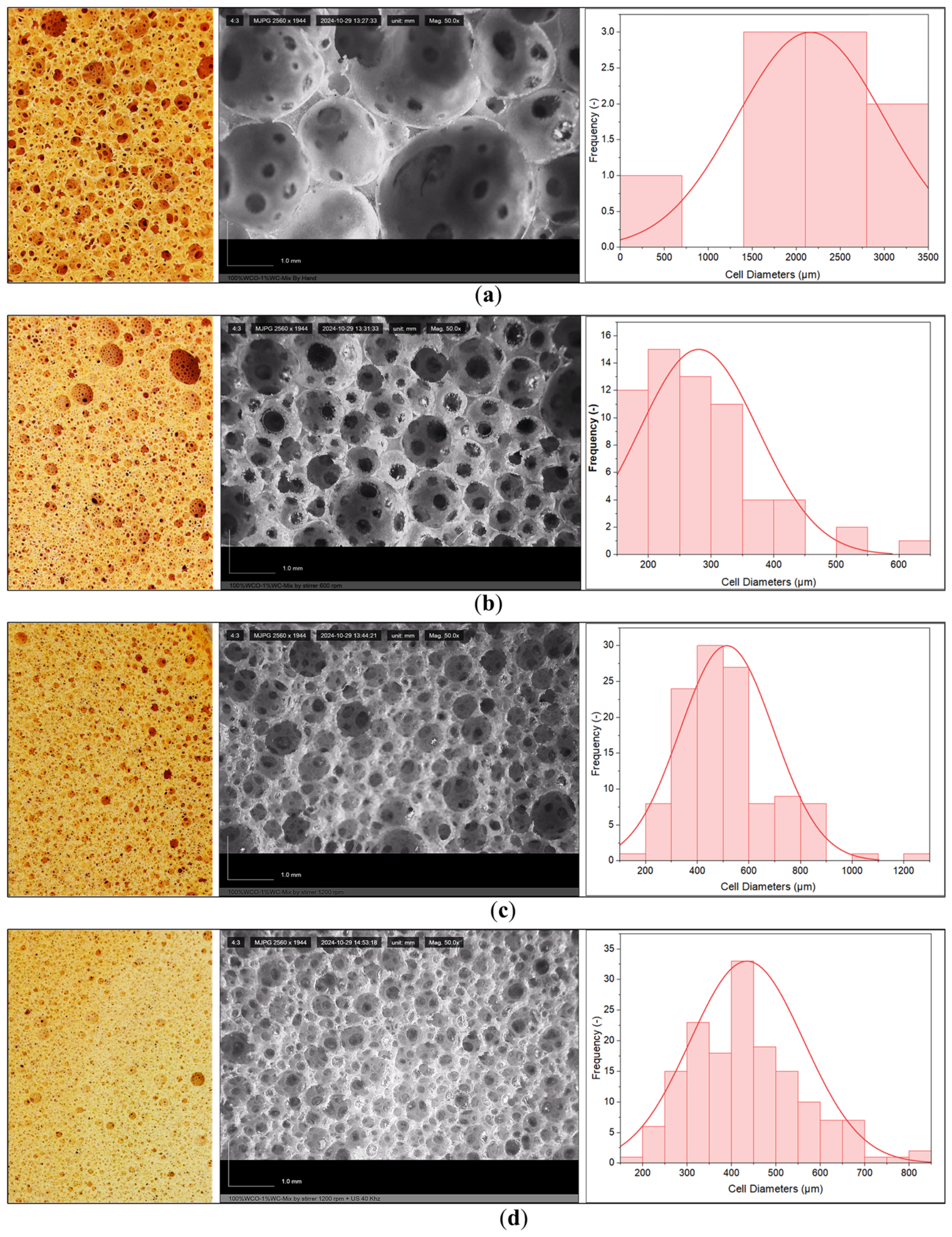
4.2. Effect of Varying Mixing Process on Morphology Structure of Polyurethane Foams
5. Conclusions
- Using water as a blowing agent is more effective when it is first converted into a mist, allowing for a more even distribution when it penetrates the polyol.
- The emulsification process with a high-shear mixer will create a more homogeneous and effective dissolution of mist water produced by the ultrasonic atomizer.
- During the foam formation process, a high-shear mixer combined with ultrasonic irradiation is used for mixing. This method produces polyurethane foam with a low density and a finer, more uniform cell structure.
Author Contributions
Funding
Institutional Review Board Statement
Informed Consent Statement
Data Availability Statement
Conflicts of Interest
References
- Mizera, K.; Ryszkowska, J. Polyurethane elastomers from polyols based on soybean oil with a different molar ratio. Polym. Degrad. Stab. 2016, 132, 21–31. [Google Scholar] [CrossRef] [Scilit]
- Xie, F.; Zhang, T.; Bryant, P.; Kurusingal, V.; Colwell, J.M.; Laycock, B. Degradation and stabilization of polyurethane elastomers. Prog. Polym. Sci. 2019, 90, 211–268. [Google Scholar] [CrossRef] [Scilit]
- Das, A.; Mahanwar, P. A brief discussion on advances in polyurethane applications. Adv. Ind. Eng. Polym. Res. 2020, 3, 93–101. [Google Scholar] [CrossRef] [Scilit]
- Kaur, R.; Singh, P.; Tanwar, S.; Varshney, G.; Yadav, S. Assessment of Bio-Based Polyurethanes: Perspective on Applications and Bio-Degradation. Macromol 2022, 2, 284–314. [Google Scholar] [CrossRef] [Scilit]
- Cornille, A.; Guillet, C.; Benyahya, S.; Negrell, C.; Boutevin, B.; Caillol, S. Room temperature flexible isocyanate-free polyurethane foams. Eur. Polym. J. 2016, 84, 873–888. [Google Scholar] [CrossRef] [Scilit]
- Wu, M.; Peng, J.-J.; Dong, Y.-M.; Pang, J.-H.; Zhang, X.-M. Preparation of rigid polyurethane foam from lignopolyol obtained through mild oxypropylation. RSC Adv. 2022, 12, 21736–21741. [Google Scholar] [CrossRef] [Scilit] [PubMed]
- Maamoun, A.A.; Arafa, M.; Esawi, A.M.K. Flexible polyurethane foam: Materials, synthesis, recycling, and applications in energy harvesting—A review. Mater. Adv. 2025, 6, 1842–1858. [Google Scholar] [CrossRef] [Scilit]
- Ivdre, A.; Abolins, A.; Sevastyanova, I.; Kirpluks, M.; Cabulis, U.; Merijs-Meri, R. Rigid Polyurethane Foams with Various Isocyanate Indices Based on Polyols from Rapeseed Oil and Waste PET. Polymers 2020, 12, 738. [Google Scholar] [CrossRef] [Scilit] [PubMed]
- Jędrzejczak, P.; Collins, M.N.; Jesionowski, T.; Klapiszewski, Ł. The role of lignin and lignin-based materials in sustainable construction – A comprehensive review. Int. J. Biol. Macromol. 2021, 187, 624–650. [Google Scholar] [CrossRef] [Scilit] [PubMed]
- Gama, N.V.; Ferreira, A.; Barros-Timmons, A. Polyurethane Foams: Past, Present, and Future. Materials 2018, 11, 1841. [Google Scholar] [CrossRef] [Scilit] [PubMed]
- Sternberg, J.; Sequerth, O.; Pilla, S. Green chemistry design in polymers derived from lignin: Review and perspective. Prog. Polym. Sci. 2021, 113, 101344. [Google Scholar] [CrossRef] [Scilit]
- Politova, N.; Tcholakova, S.; Valkova, Z.; Golemanov, K.; Denkov, N.D. Self-regulation of foam volume and bubble size during foaming via shear mixing. Colloids Surf. A Physicochem. Eng. Asp. 2018, 539, 18–28. [Google Scholar] [CrossRef] [Scilit]
- Krishnan, V.G.; Fiorucci, L.; Sarbu, A.; Drenckhan-Andreatta, W. Characterizing the foaming process of polymers: Review of experimental methods. Adv. Colloid Interface Sci. 2025, 344, 103579. [Google Scholar] [CrossRef] [Scilit] [PubMed]
- Wang, G.; Dong, M.; Deng, H.; Ma, X.; Zhu, B.; Zhou, L.; Zhang, X.; Tan, D.; Algadi, H. Polypropylene foaming using supercritical carbon dioxide: A review on fundamentals, technology, and applications. Adv. Compos. Hybrid Mater. 2025, 8, 84. [Google Scholar] [CrossRef] [Scilit]
- Skosana, S.J.; Khoathane, C.; Malwela, T. Enhancing the adhesion strength of polyurethane coatings by dispersing layered silicates via sonication and high-shear mixing method. Polym. Bull. 2020, 78, 203–221. [Google Scholar] [CrossRef] [Scilit]
- Węgrzyk, G.; Grzęda, D.; Bulanda, K.; Oleksy, M.; Ryszkowska, J. A new method for determining the parameters of mechanical mixing using the example of polyurethane rigid foam synthesis. Constr. Build. Mater. 2024, 416, 135205. [Google Scholar] [CrossRef] [Scilit]
- Kim, C.; Youn, J.R. Environmentally friendly processing of polyurethane foam for thermal insulation. Polym. Technol. Eng. 2000, 39, 163–185. [Google Scholar] [CrossRef] [Scilit]
- Balasubramanian, M.; Paglicawan, M.A.; Kim, J.K. A Novel Ultrasonic Method of Preparation of Polyurethane Materials. Int. J. Polym. Mater. Polym. Biomater. 2008, 57, 832–839. [Google Scholar] [CrossRef] [Scilit]



Disclaimer/Publisher’s Note: The statements, opinions and data contained in all publications are solely those of the individual author(s) and contributor(s) and not of MDPI and/or the editor(s). MDPI and/or the editor(s) disclaim responsibility for any injury to people or property resulting from any ideas, methods, instructions or products referred to in the content. |
© 2026 by the authors. Licensee MDPI, Basel, Switzerland. This article is an open access article distributed under the terms and conditions of the Creative Commons Attribution (CC BY) license.
Share and Cite
Saryanto, H.; Rus, A.Z.M. Design and Development of Bio-Polyurethane Production System Experimental Apparatus. Eng. Proc. 2026, 137, 15. https://doi.org/10.3390/engproc2026137015
Saryanto H, Rus AZM. Design and Development of Bio-Polyurethane Production System Experimental Apparatus. Engineering Proceedings. 2026; 137(1):15. https://doi.org/10.3390/engproc2026137015
Chicago/Turabian StyleSaryanto, Hendi, and Anika Zafiah M. Rus. 2026. "Design and Development of Bio-Polyurethane Production System Experimental Apparatus" Engineering Proceedings 137, no. 1: 15. https://doi.org/10.3390/engproc2026137015
APA StyleSaryanto, H., & Rus, A. Z. M. (2026). Design and Development of Bio-Polyurethane Production System Experimental Apparatus. Engineering Proceedings, 137(1), 15. https://doi.org/10.3390/engproc2026137015