1. Introduction
High-pressure die casting (HPDC) frequently employs ADC12, an Al-Si (aluminum–silicon) alloy [
1,
2]. As members of the hypoeutectic Al-Si alloy family, ADC12 alloys are widely utilized across a range of industrial applications due to their light weight and cost-effectiveness [
3]. The composition of ADC12 typically includes 10–12% silicon, which enhances fluidity during casting and contributes to the alloy’s high thermal and wear resistance. To improve strength, hardness, and corrosion resistance, additional alloying elements such as copper, iron, and zinc are incorporated [
4,
5]. The chemical composition of ADC12, as utilized in the casting industry is shown in
Table 1 [
6].
A computerized system provides hydraulic energy, enabling the optimization of flow and pressure during filling and solidification by controlling the metal’s location, velocity, and plunger acceleration [
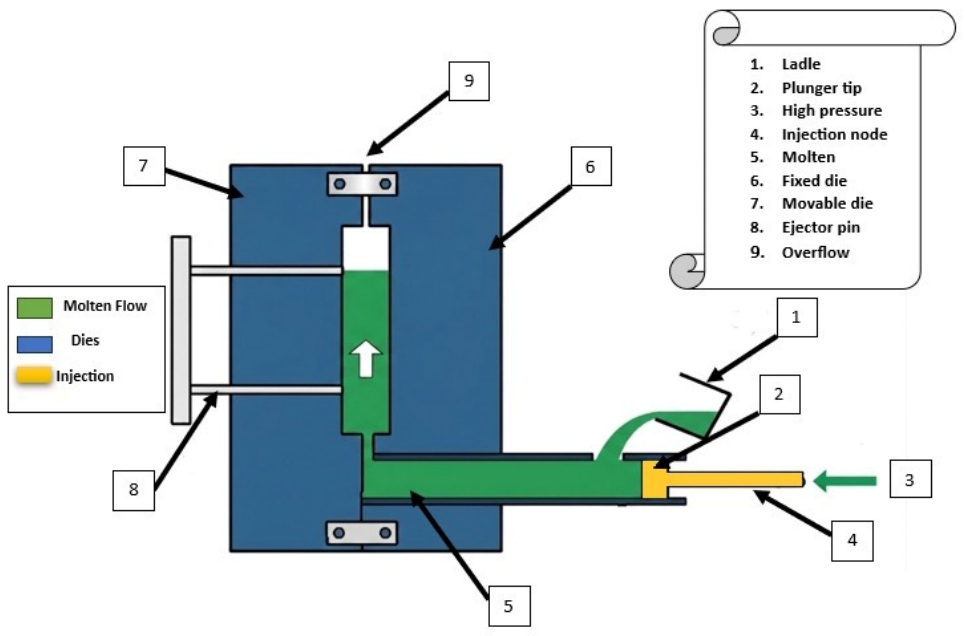
7]. The HPDC cycles are described in cold chamber processes in
Figure 1 as follows [
8]:
- (1)
Molten metal is transferred via ladle into the shot-sleeve.
- (2)
Plunger movement is driven by high pressure and velocity, advanced by the plunger tip.
- (3)
Latent heat is released during solidification, and the steel die is filled rapidly.
- (4)
Hydraulic pressure is applied by the plunger, with locking forces engaged.
- (5)
The movable die is opened via the ejector pin mechanism.
- (6)
The casting part is then discharged, either manually or automatically.
ADC12 is a flexible option for industries that need complex long-lasting parts because of its key characteristics, including outstanding electrical and thermal conductivity, high strength, a good weight-to-strength ratio, and good dimensional stability [
9]. The alloy is suitable for parts subjected to significant mechanical stress due to its mechanical properties, including hardness and tensile strength. Furthermore, ADC12’s excellent casting characteristics enable the production of complex shapes and thin-walled components with high precision, thereby reducing the need for secondary machining. The low density of alumina alloys, including ADC12, results in significant weight savings, which is crucial in industries where weight reduction enhances efficiency and performance. Silicon, as a major alloying element, improves the eutectic phase, reducing the melting point and ensuring the production of sound castings with minimal defects, such as shrinkage porosity or cracking during solidification [
10,
11].
Porosity refers to the presence of holes or voids within a pressure die-cast component, whether located on the surface (surface porosity) or internally. This phenomenon represents a key consideration for designers. Although die castings exhibit favorable surface finish and dimension accuracy, internal porosity cannot be overlooked; importantly, it can be controlled through careful attention to part design, process controls, post-processing techniques, and drawing specifications [
12,
13].
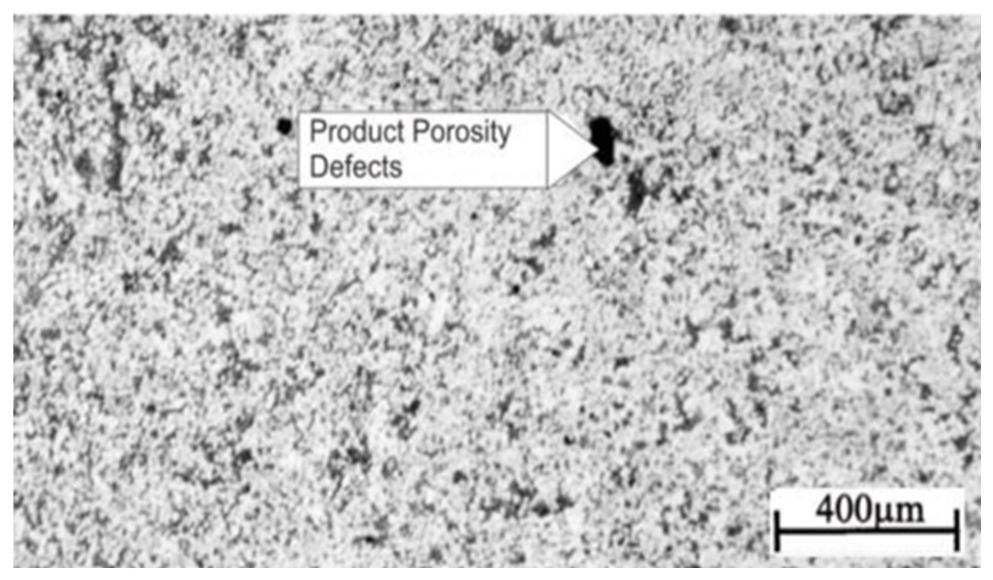
Figure 2 shows the various types of porosity defects [
12].
Gas-related porosity is caused by mold or core gases becoming trapped in the molten metal. Such gas porosity can be partially compressed by the pressure applied during plunger movement. In the case of shrinkage porosity, this phenomenon occurs during the material’s solidification phase, beginning from the mold-filling stage and concluding when the entire material has fully solidified. Impurities in the melt constitute one of the contributing factors to high shrinkage rates and excessive porosity. In the center of thick sections of a casting, this shrinkage can result in numerous small voids, commonly referred to as shrinkage porosity [
12].
This study aims to demonstrate the application of computational simulation for predicting potential defects—specifically air entrapment, cold shuts, and mold erosion—in a high-pressure die-cast ADC12 component. The objective is to evaluate the influences of varying die cooling temperatures on these defects and to validate simulation as a proactive tool for process parameter optimization and quality assurance in an industrial context.
2. Materials and Methods
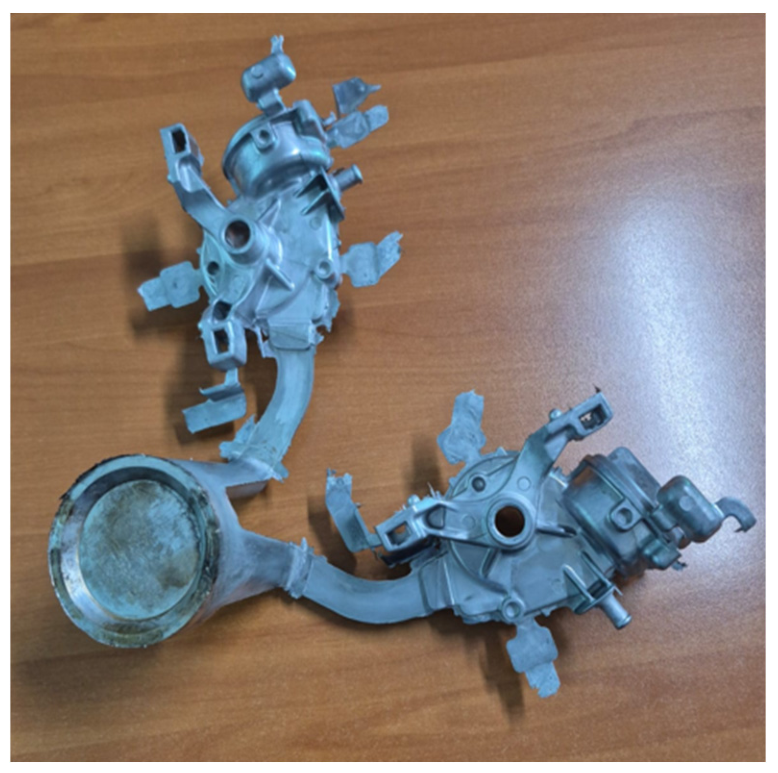
The die-casting component used in this study was provided by the HPDC aluminum manufacturer at Cikarang Perkasa Manufacturing, located in Bekasi, Indonesia, as shown in
Figure 3. The die design must prevent solidification-related defects including shrinkage, microporosity, hot tears, cold shut, and die erosion. The casting component in this study is referred to as housing or motor cover. The 3D part geometry was developed by the customer, and the die design was subsequently provided to the casting manufacturer for development. The finished part must conform to the customer’s specification drawing.
Shot-weight casting is a casting process in which the casting part emerges from the molding machine as a single piece. Shot-weight casting parts consist of runners, finished parts, gates, vents, and the rest of the casting part before the trimming process. A well-designed gating and runner system should avoid turbulence in the metal flow and reduce the incidence of inclusions and air entrapment in casting [
13,
14,
15].
In this case, the study will focus on the finished product using Altair Inspire Cast 2022.3 for simulation, imported from Catia V5 R17, in the Mechanical Engineering laboratory at Universitas Muhammadiyah Surakarta. This research constitutes a numerical analysis and was not validated through experimentation. Future research may proceed with experimental validation, which is currently ongoing at the BRIN Serpong laboratory.
Figure 4 shows the finished part using a simulation drawing.
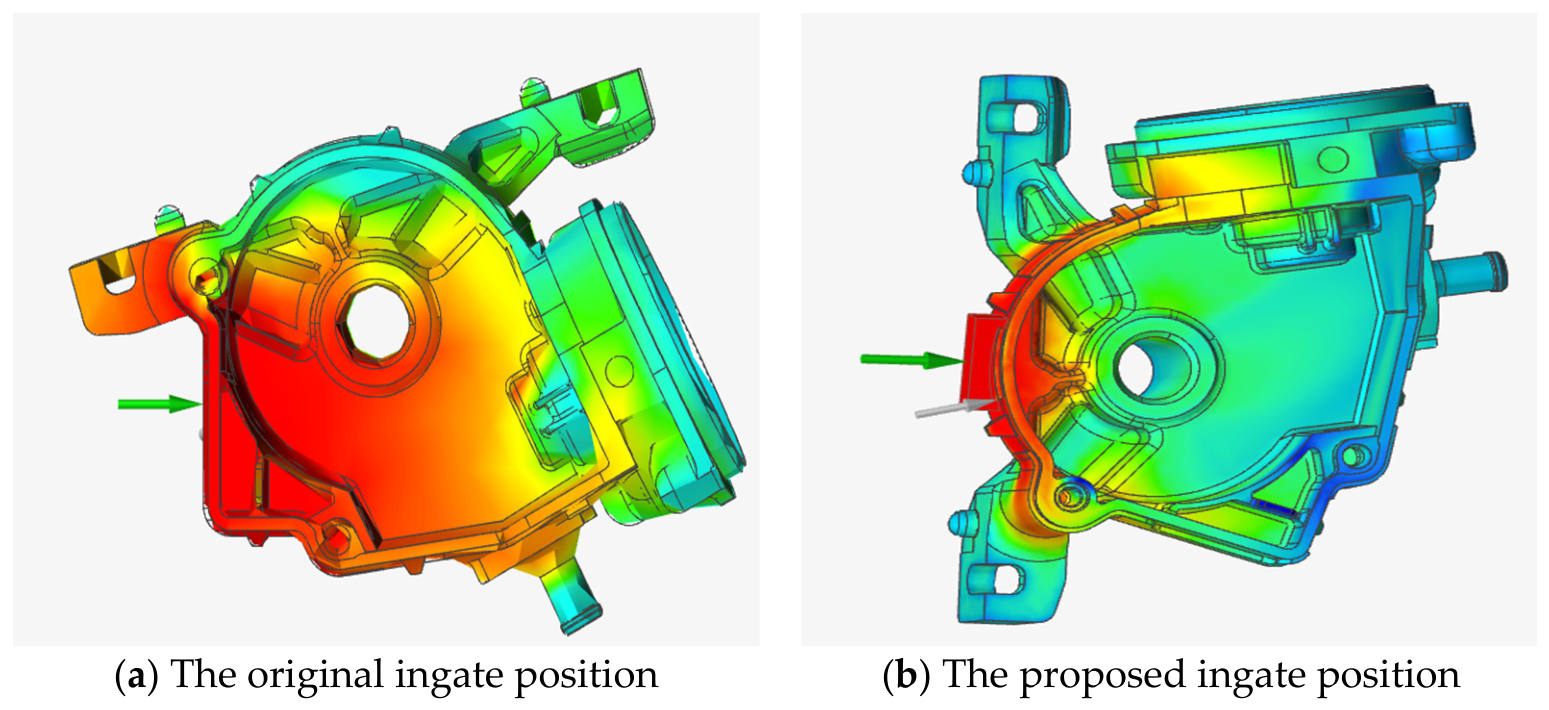
The arrows in
Figure 4 indicate the ingate flow direction based on the actual casting process (the original ingate position). In the simulation, the ingate position was not altered due to customer request; any recommendations regarding the position must be formally communicated to R&D in Japan.
Figure 4b shows the proposed ingate position. Comparing the two images, the red area in the original ingate position is larger than that in the proposed position, indicating suboptimal condition. This study will identify predicted defects and die corrosion based on actual customer requirements.
The ADC12 material used in this study was obtained through melting and verified using a spectrometer, conforming to the Japanese Industrial Standard (JIS) H 5302: 2006 [
16]. The purpose of verifying the composition after melting is to ensure that no significant impurities fall outside the JIS quality requirements. In some case, the chemical composition differs between ADC12 raw material and the material after melting. Factors such as oil content from die coating, remelting of runners, and rejected parts during production may contribute to these compositional differences [
17]. The chemical composition is presented in
Table 2 [
16].
The die material for cavity is DH31-EX from Daido Steel (Nagoya, Japan) [
18]. The properties of the SKD61 group for DH31-EX Daido Steel are presented in
Table 3. These material data will be incorporated into the simulation to obtain realistic feedback information during the process.
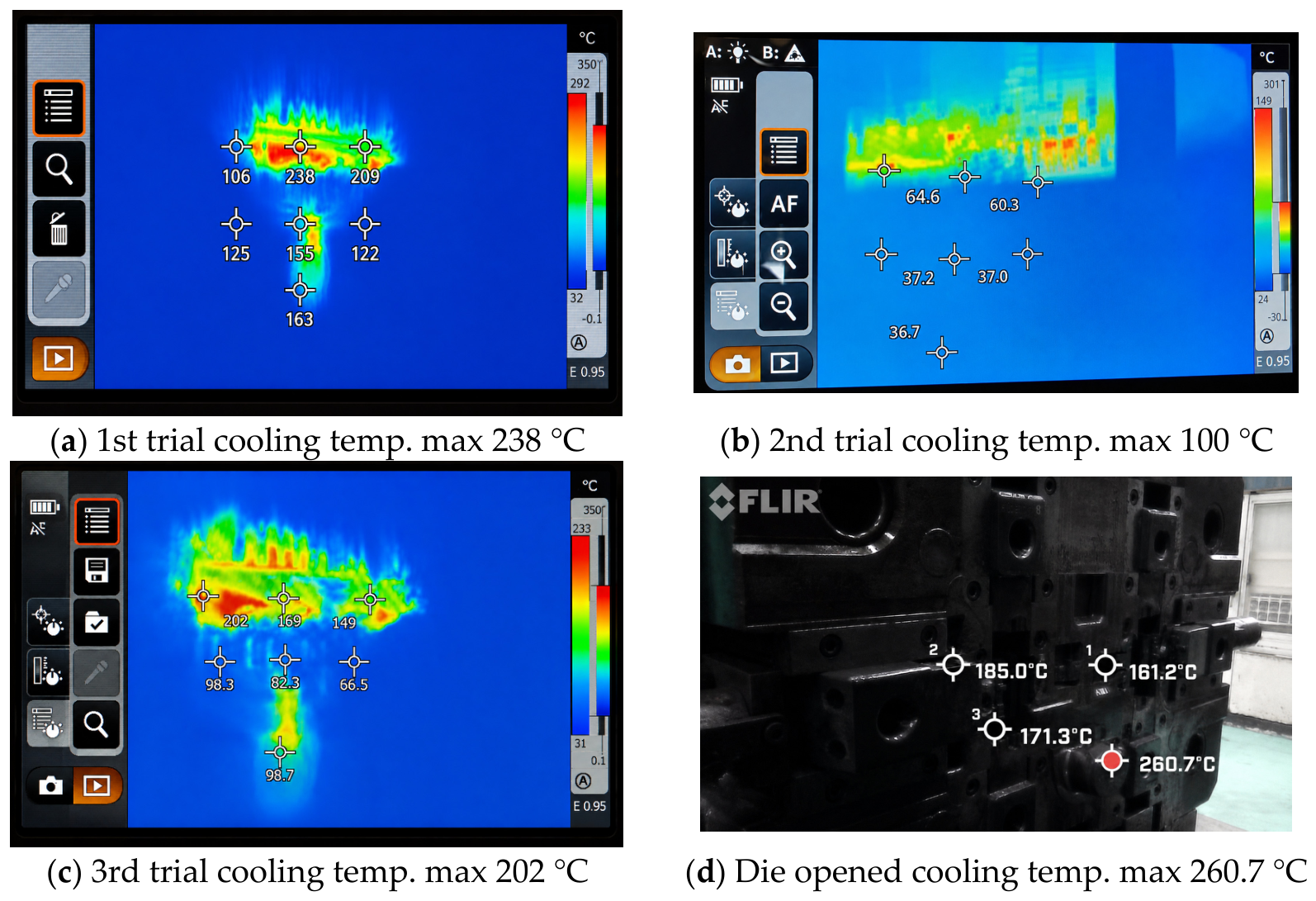
The simulation input temperature is 650 °C, taken from the actual holding bath, and the temperature inside the die is shown as taken from the sample during production.
Figure 5 shows the images of these temperatures.
Maximum temperatures were recorded at each stage of the trial and subsequently converted to Kelvin (by adding 273) prior to being entered into the simulation. These temperatures data will be combined with the input temperature of 650 °C (923 K).
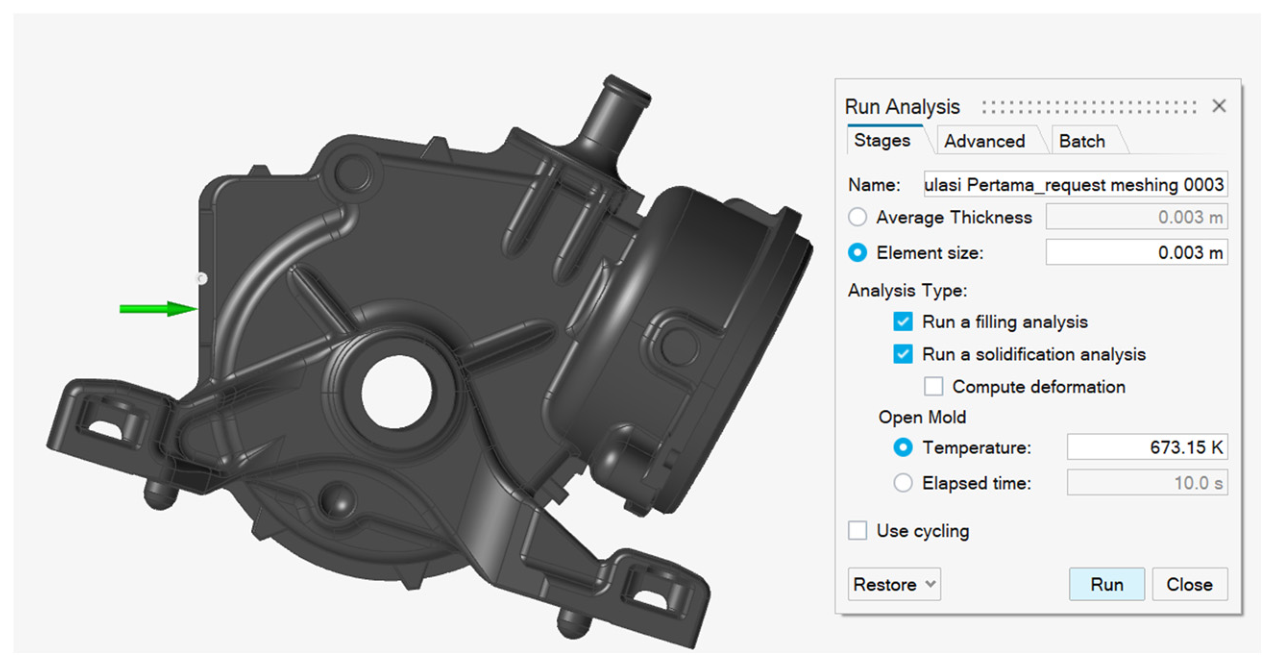
The simulation started by importing 3D data into the casting program, setting the ingate location and point of solidification, and beginning the casting process.
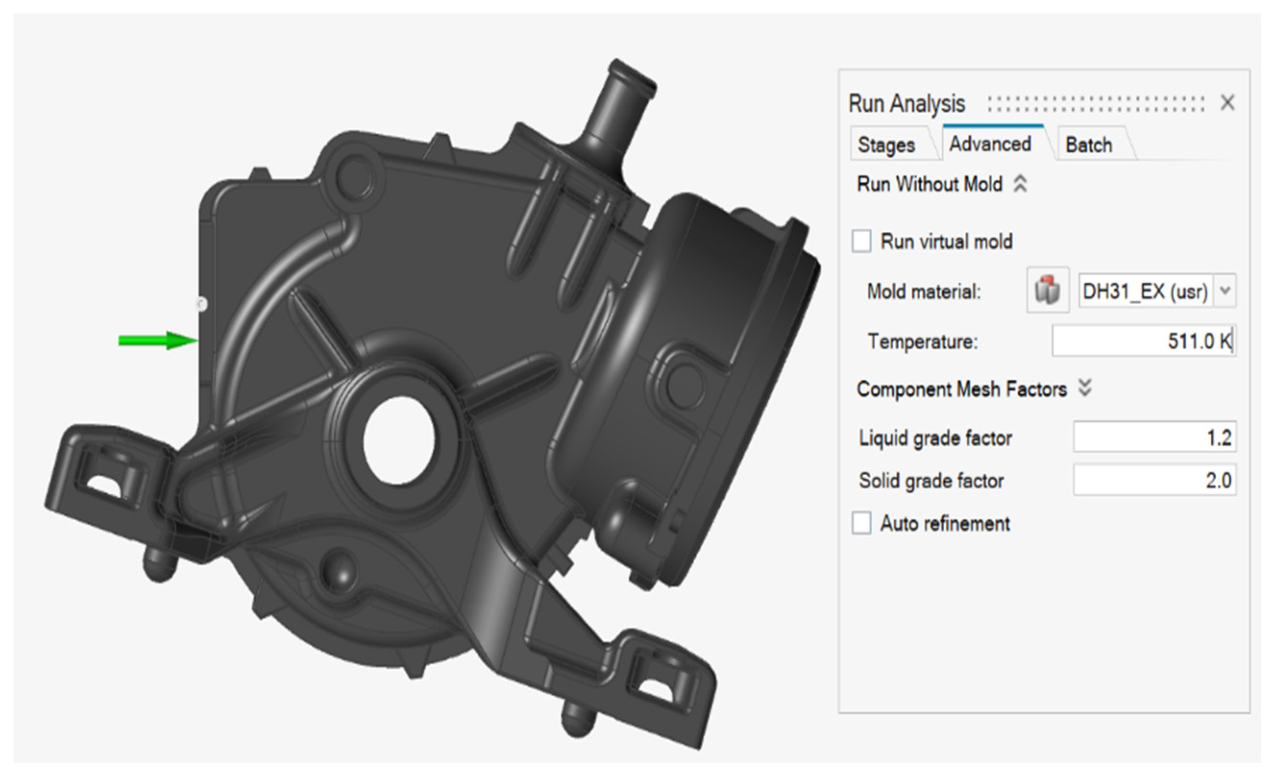
Figure 6 shows how the simulation started.
Once the ingate position was established (indicated by the green arrow in the image), the average thickness was set to 0.003 m based on the actual part. A temperature of 533.7 K, derived from
Figure 5d when the die opened at 260.7 °C, converted to Kelvin, was applied. An element size of 0.01 m was used for meshing; this value may be adjusted to be less than or greater than 0.01 m depending on the required mesh resolution. The parameter setting shown on
Figure 7.
In the next step, the simulation setting is configured as “advanced run analysis” utilizing the mold material DH31 EX from
Table 3. This setting automatically computes all values within the simulation. A temperature 511.0 K obtained from 238 °C in
Figure 5a from first trial data is applied. A liquid grade factor of 1.2 is automatically displayed upon entry of the ADC12 material and mold material; this value is determined by the program based on the melting points of each material. The solid grade factor value of 2.0 can be entered manually; however, this depends on the mesh appearance—if the value falls below 1.5, the meshing step fails.
In the same manner, the simulation data for the second and third trials are presented using
Table 2 for the molten ADC12 material,
Table 3 for the DH31 EK die material, and
Figure 5 for the temperature input data.
3. Results
The simulation results are presented in
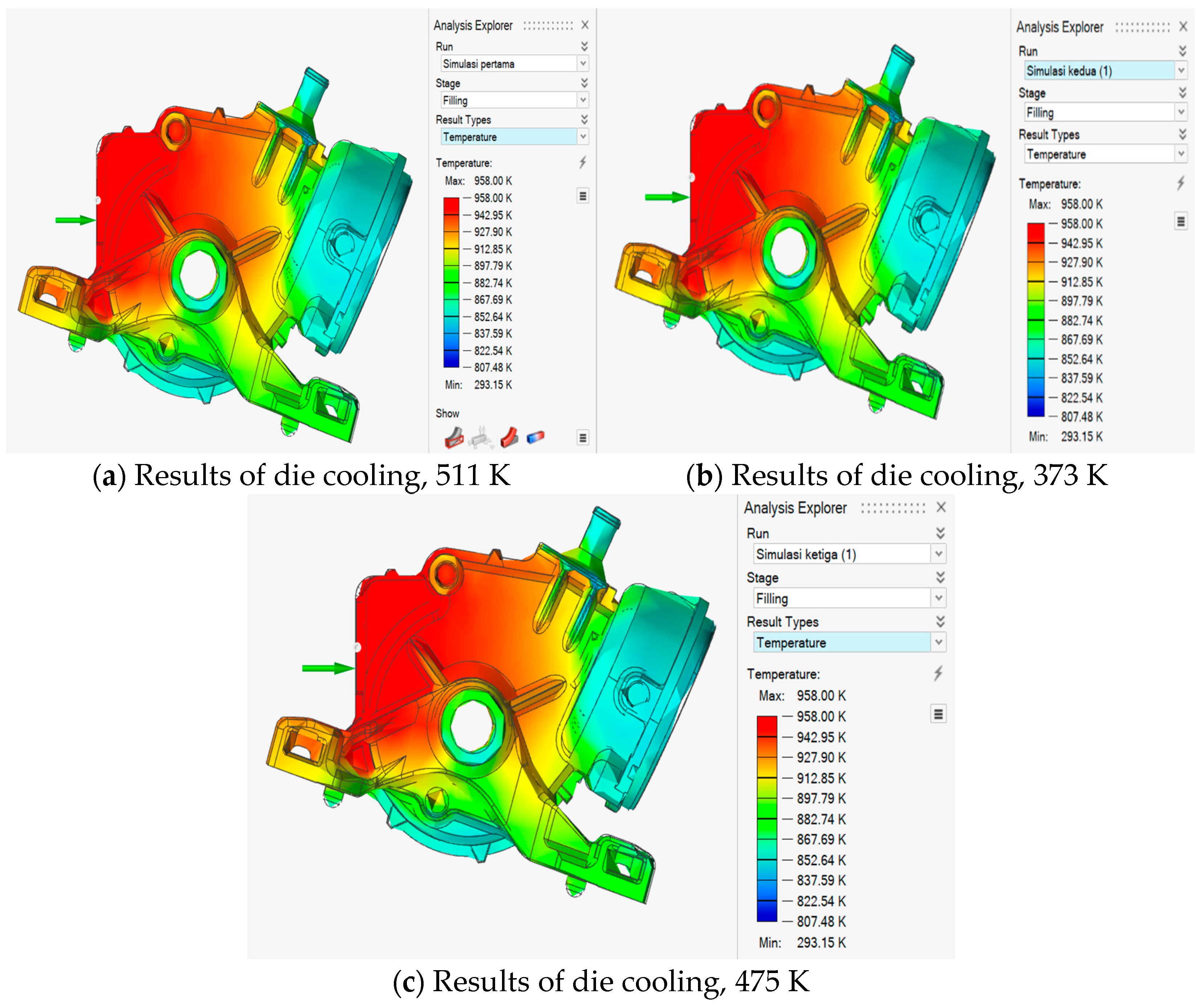
Figure 8 for the filling stage, with the result type being die cooling temperature. The red area indicates the hottest temperatures during the filling process, from the introduction of molten ADC12 to the completion of casting, while the green area indicates favorable filling conditions. The blue color signifies that the solidification process is complete. In this filling stage and temperature result type, no significant differences in cooling temperature are observed within the range 100 °C to 238 °C. However, during solidification, some differences arise.
3.1. Air Trap
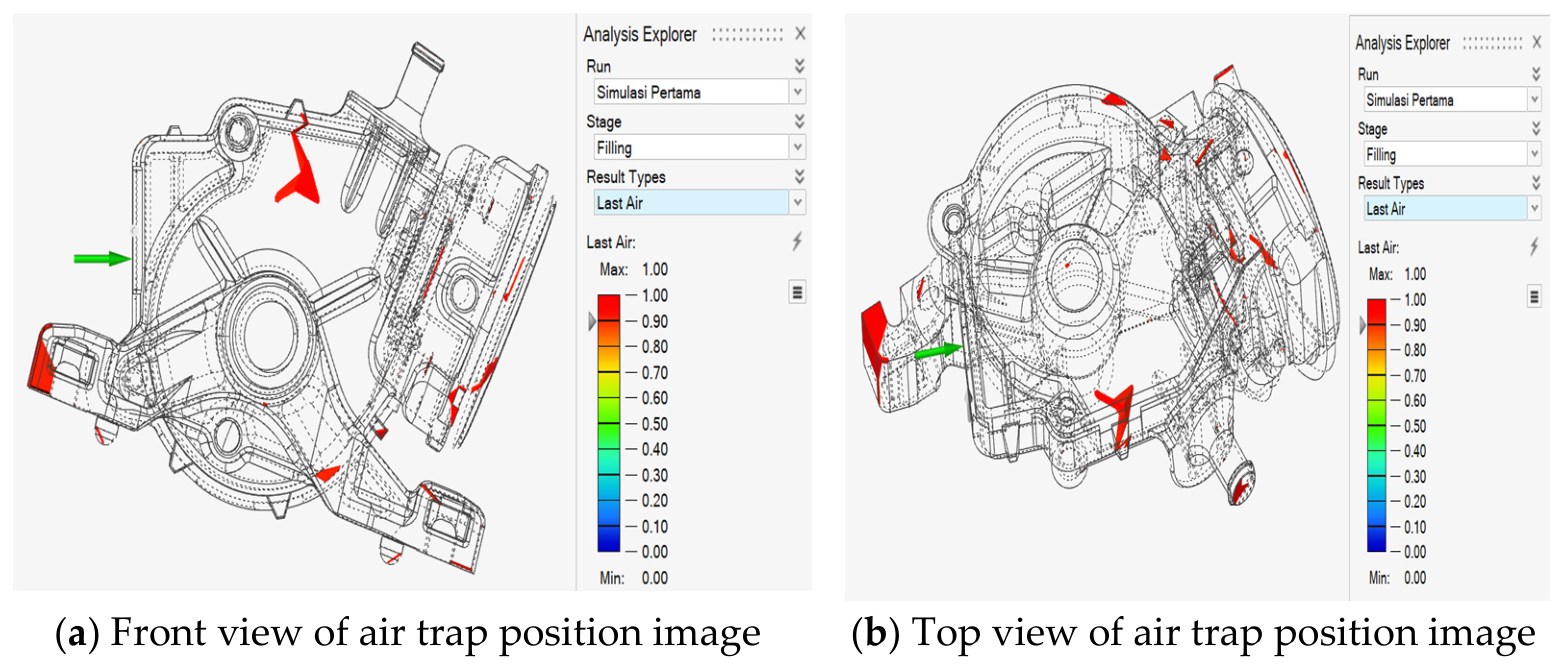
The positions of porosity defects due to air entrapment are shown in
Figure 9 in different views of the housing part. The red areas on each piece indicate the predicted defect locations. As shown in
Figure 9, the extent of red coloration indicates the likelihood of defects: the smaller the red area, the better the product quality [
19].
Of primary importance are the quantity, location, and size of porosity which must align with customer requirements. It is acknowledged that air entrapment cannot be entirely eliminated; however, the presence of porosity in critical areas for subsequent processes—such as machining, drilling and tapping—is strictly prohibited.
The air entrapment depicted in red occurs during the filling process, when trapped air cannot escape as the molten flow advances toward the outer regions of the mold. Owing to the limited duration of the process, the air velocity does not provide sufficient time for the air to reach the outermost part of the mold.
3.2. Cold Shuts
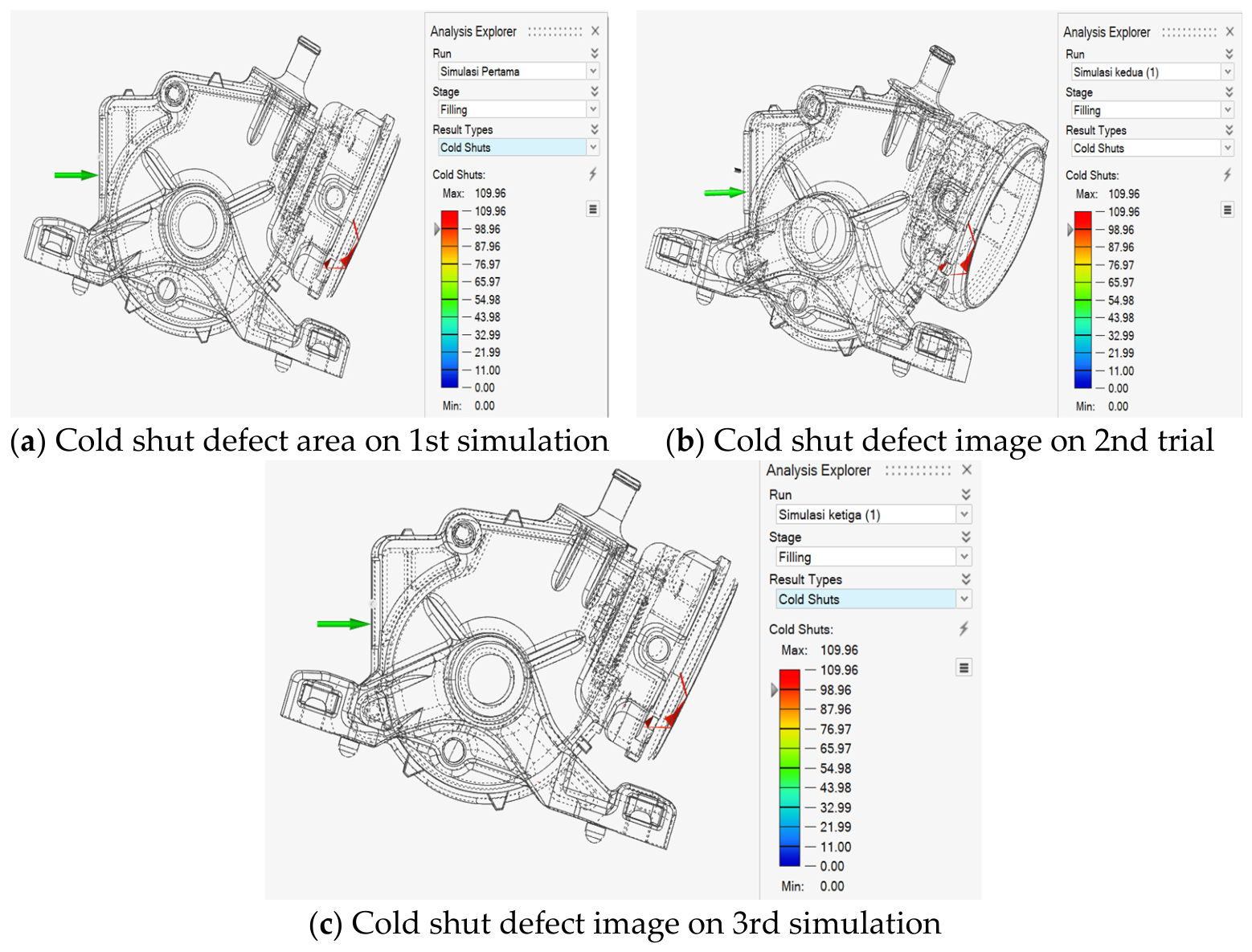
The red color in
Figure 10 indicates that cold shut defects can be predicted. This also suggests that the red areas could represent shrinkage defects if the size is sufficiently large. In this simulation conducted with varying die cooling temperatures, the red zones appear at similar positions and sizes across conditions, and their prevalence is low.
3.3. Mold Erosion
In the simulation with a die cooling temperature of 511 K, a large red area was observed as shown in
Figure 8a. This phenomenon also occurs in the simulation at 373 K (
Figure 8b) and 475 K (
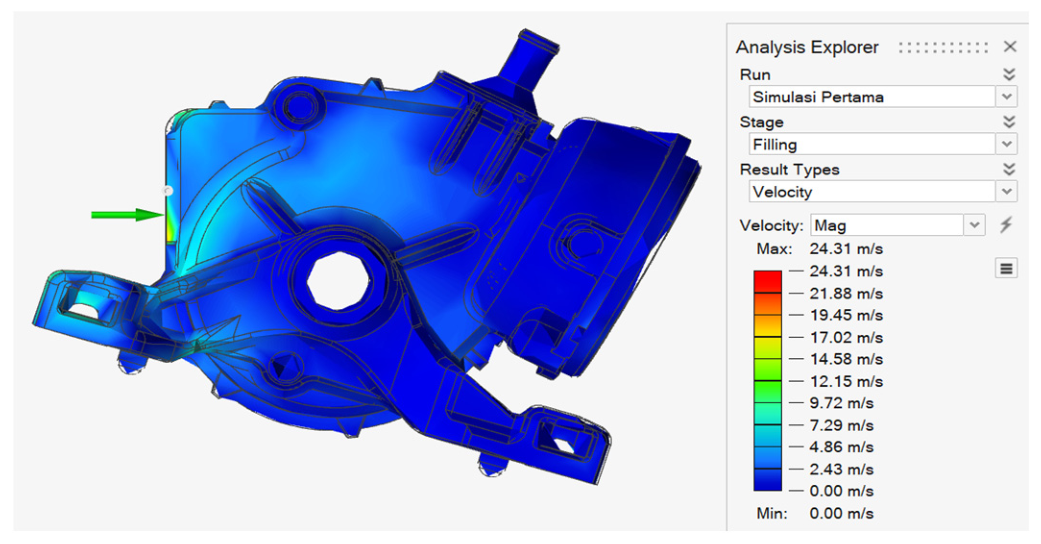
Figure 8c). The red area indicates the highest temperature recorded in that region during filling. This renders the area susceptible to die erosion. The highest velocity is also achieved in the red area, as illustrated in
Figure 11.
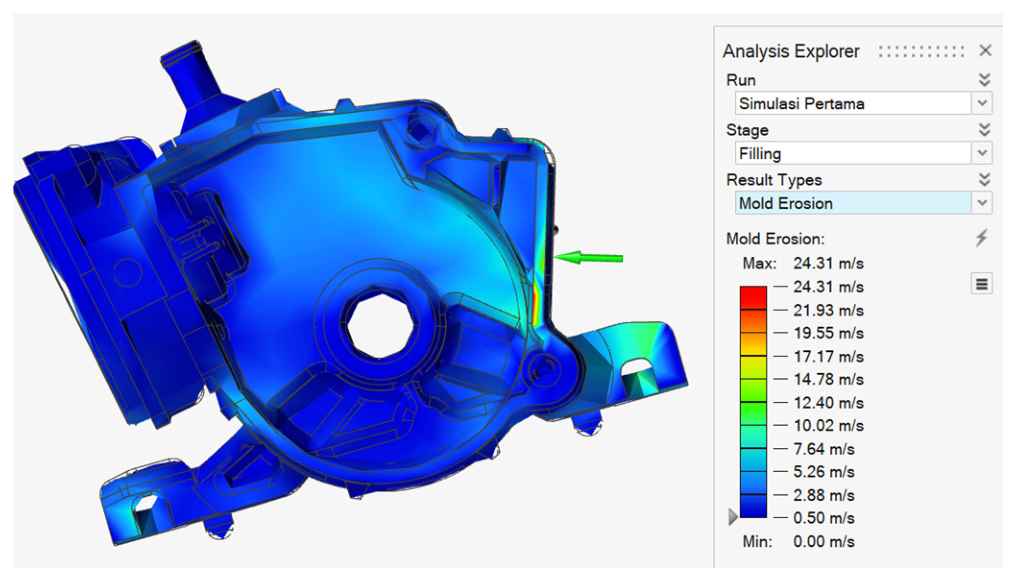
The light blue near the green arrow in
Figure 12 indicates the critical die erosion zone. High temperature and high velocity are among the factors contributing to erosion cavitation.
The light blue area in the alternative rear view of the component shown in
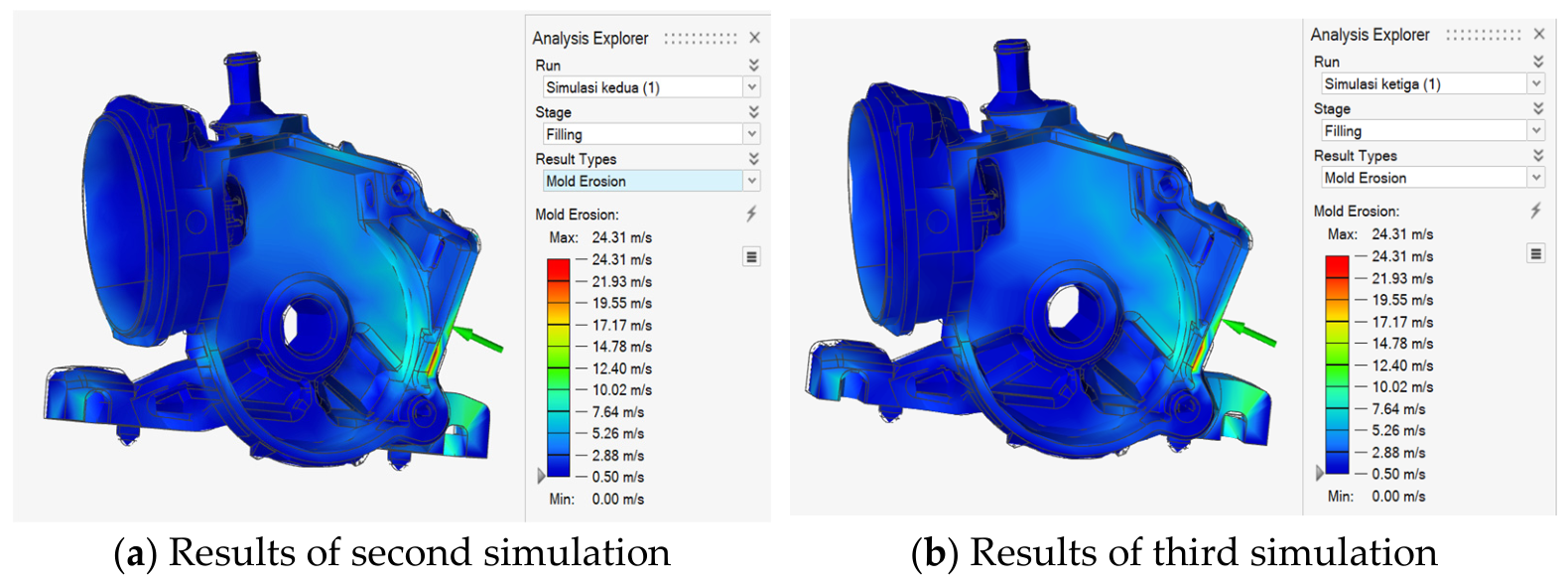
Figure 12 indicates the mold erosion zone. A velocity of 24.31 m/s passes through this region near the green arrow; however, a cover wall serves as a barrier in front of the flow. This represents a suboptimal location for the ingate, even though the permissible velocity under normal conditions ranges from 34 m/s to 43 m/s. Similarly, the mold erosion results for the second and third simulations are presented in
Figure 13.
Mold erosion can be predicted in this simulation through the presence of yellow or red coloration in the affected areas. This enables engineers to anticipate the necessary measures to avoid accelerated degradation of the die material. The simulation also provides insights into potential issues in other areas related to velocity, flow, and high temperature during subsequent production processes.
4. Discussion
Solid fraction can be utilized to predict potential shrinkage and porosity at the casting location. The present study aligns with the simulation-predicted defect location. Shrinkage is prone to occur when the solid fraction exceeds 0.7; in this context, the reference value for the solid grade factor is 2.0. When the solid fraction falls below this threshold and the surrounding solid phase rate deviates from this value, shrinkage porosity can be expected in that region [
19]. In this case, the minimum allowable value for the solid grade factor is 1.5; the software will fail during meshing if a value below this is entered.
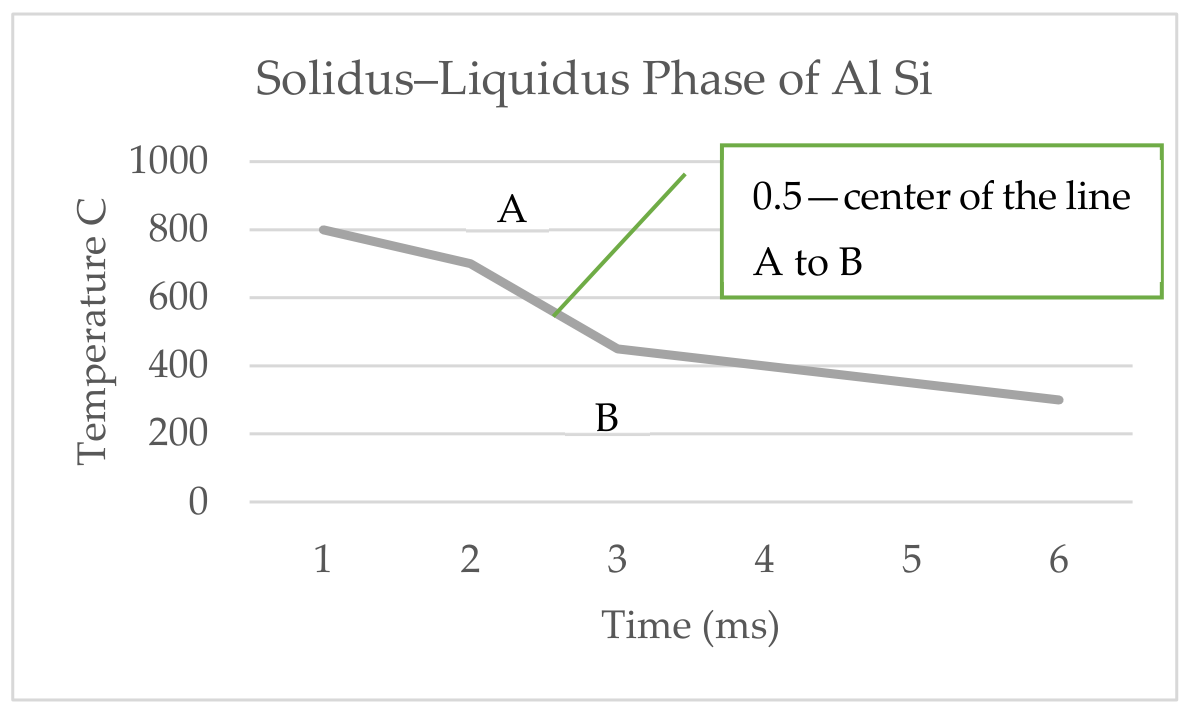
The semi-solid phase of Al-Si in
Figure 14 illustrates the solidus–liquidus range that can be input into the simulation, depending on the specific requirements and actual manufacturing conditions. Factors such as the quality of the holding furnace, energy availability, and parameter optimization are considered when determining which option offers the most favorable outcome. The lowest temperature is 577 °C and the highest is approximately 700 °C [
20]. Accordingly, the solid fraction value employed in the simulation corresponds to the area depicted in the graph.
The illustration demonstrates that the solid fraction range lies between the solidus point (577 °C) and the liquidus point (700 °C). A value of 0.5 represents the midpoint between 577 °C and 700 °C, while a value of 0.7 constitutes the minimum threshold for achieving good casting quality. Shrinkage and porosity defects predominantly arise from parameters set within this region.
The most significant finding from the filling analysis is the consistent location of air entrapment (last air position), as shown in
Figure 9. While the intensity of the defect (indicated by the red areas) varied slightly, its position remained the same across all trials with die cooling temperatures of 373 K, 475 K, and 511 K. This consistency indicates that the primary factor causing air entrapment is not the die temperature within the tested range, but rather the gating system design and the filling pattern itself. As established in the literature, a well-designed gating system should minimize turbulence to reduce air entrapment. The fixed ingate position, a customer-imposed constraint, likely dictates this filling pattern, leading to a predictable and persistent air trap zone This finding is crucial for quality control, as it pinpoints a critical area that may require process adjustments—such as vacuum assistance—or post-casting inspection and machining considerations.
The results for cold shuts, illustrated in
Figure 10, showed minimal and nearly identical predictions across all temperature trials. The small number of predicted cold shuts and their small size suggest that the current combination of melt temperature (650 °C), gate speed, and filling time is sufficient to prevent the premature solidification that causes this defect. This validates the initial machine parameters, derived from the manufacturer’s slide rule.
The simulation’s prediction of potential mold erosion, shown in
Figure 11,
Figure 12 and
Figure 13 offers a valuable long-term perspective for die maintenance and life [
21]. The areas highlighted in yellow and red correspond to locations where high-velocity molten metal impinges on the die surface. Identifying these zones allows engineers to proactively consider localized die hardening, optimized cooling line placement, or adjusted shot profiles to reduce wear, thereby extending the die’s operational lifespan and reducing production costs.
The present study successfully demonstrates the application of Altair Inspire Cast simulation software to predict potential defects in the high-pressure die casting (HPDC) of an ADC12 component. The simulation results for air entrapment, cold shuts, and mold erosion across three different die temperature conditions provide critical insights for process optimization.
5. Conclusions
This study concludes that computational simulation is a powerful and effective tool for predicting key defects in high-pressure die casting of ADC12 alloys. Based on the simulation of a real industrial component, the following specific conclusions can be drawn:
The simulation consistently identified the location of potential air-entrapment defects, unaffected by variations in die cooling temperature from 373 K to 511 K. This finding indicates that such defects are inherent to the part geometry and the fixed gating system, highlighting a critical area for quality assurance.
The virtual absence of cold shut predictions across all trials confirms that the selected process parameters—namely melt temperature, filling time, and gate speed—are appropriate for producing a sound casting fill for this specific part.
The simulation successfully identified areas prone to mold erosion, providing a proactive means to enhance die design and maintenance schedules, ultimately contributing to longer tool life and lower production costs.
In summary, integrating program simulation into the HPDC workflows enables a shift from reactive problem-solving to proactive defect prevention. By digitally validating and optimizing process parameters prior to physical production, manufacturers can significantly improve product quality, reduce scrap rates, and ensure that casting outcomes precisely meet customer requirements. For future work, it is recommended to validate these simulation predictions against physical castings and to optimize the gating system in order to reduce the identified air entrapment.