


Abstract
The phenomenon related to urban heat islands is becoming severe. Besides the concrete building walls in cities, the urban surface also includes a large amount of asphalt pavement, whose thermal properties play a significant role in influencing the urban heat island. Therefore, it is necessary to examine the thermal characteristics of different asphalt aggregates and to enhance their effect on mitigating the urban heat island effect by applying radiative cooling to the aggregate components. Through indoor scaled experiments, we produced 30 × 30 × 5 cm asphalt concrete specimens, including conventional asphalt concrete (dense mix) and basic oxygen furnace slag (BOF) asphalt concrete with 100% aggregate replacement. The asphalt concrete specimens were heated in an oven until they reached the same temperature as the actual asphalt pavement and then subjected to 24 h radiation heat release cooling observation, to record temperature, humidity, and heat flux. The measured data were then verified against the theoretical values. The results showed that asphalt concrete with BOF aggregate had a higher heat capacity and a more pronounced radiative cooling effect than conventional asphalt. Such properties enable the localized cooling of the surrounding air. The results of this study provide a basis for the development of aggregate asphalt to boost the radiative cooling performance of surface materials and reduce the urban heat island effect.
1. Introduction
Urbanization has diverse environmental impacts, one of which is the urban heat island (UHI) effect [1]. In land use and cover change, the contributors to the UHI effect are the expansion of impervious surfaces and the reduction in urban vegetation [2], since these materials absorb a large amount of solar radiation during the day and release it at night [3].
Many factors influence the air temperature near the road surface, including the road surface’s albedo, thermal conductivity, heat capacity, and emissivity [4]. The fraction of solar energy reflected by a surface is described by albedo, a non-dimensional and unitless parameter [5]. The heat flux q (W·m−2) is influenced by the thermal conductivity λ (W·m−1·K−1), a property that characterizes the material’s ability to transfer heat [6]. The heat transfer process is strongly governed by the material’s heat capacity and thickness [7]. Emissivity (ε) describes the heat radiated from a surface into the surrounding air and reflects the electromagnetic energy emitted by materials with temperatures above 0 K (−273 °C) [8].
In summer, asphalt pavements absorb a significant amount of heat from solar radiation and high temperatures [9]. In hot climates, the temperature of asphalt pavement can reach as high as 70 °C [10]. Currently, there are four research directions on pavement: developing high-reflectivity pavements, improving pavement evaporation efficiency, enhancing pavement thermal inertia, and harvesting renewable energy from pavement layers [11].
The demand for sustainable and resilient infrastructure is fueling innovation in pavement development engineering [12]. As a main solid waste product of the steel industry, steel slag faces significant challenges in its disposal and resource utilization globally [13]. Depending on the raw materials used, 100 to 200 kg of basic oxygen furnace slag (BOFS) are generated per ton of steel produced [14].
In this study, we compared the conventional asphalt concrete road mix design in Taiwan with that of 100% BOFS aggregate and evaluated their cooling potentials. Based on the results, 100% BOFS can replace conventional road aggregates, and the temperature and heat flux of the inner and outer layers of asphalt concrete specimens were measured. The asphalt concrete with BOF aggregate had a higher heat capacity and a more pronounced radiative cooling effect than conventional asphalt.
2. Research Methods
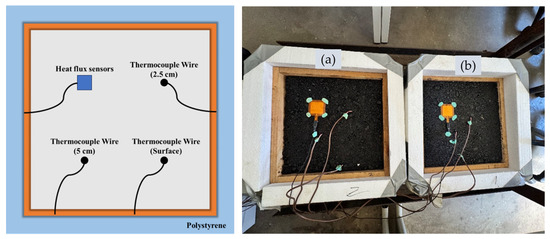
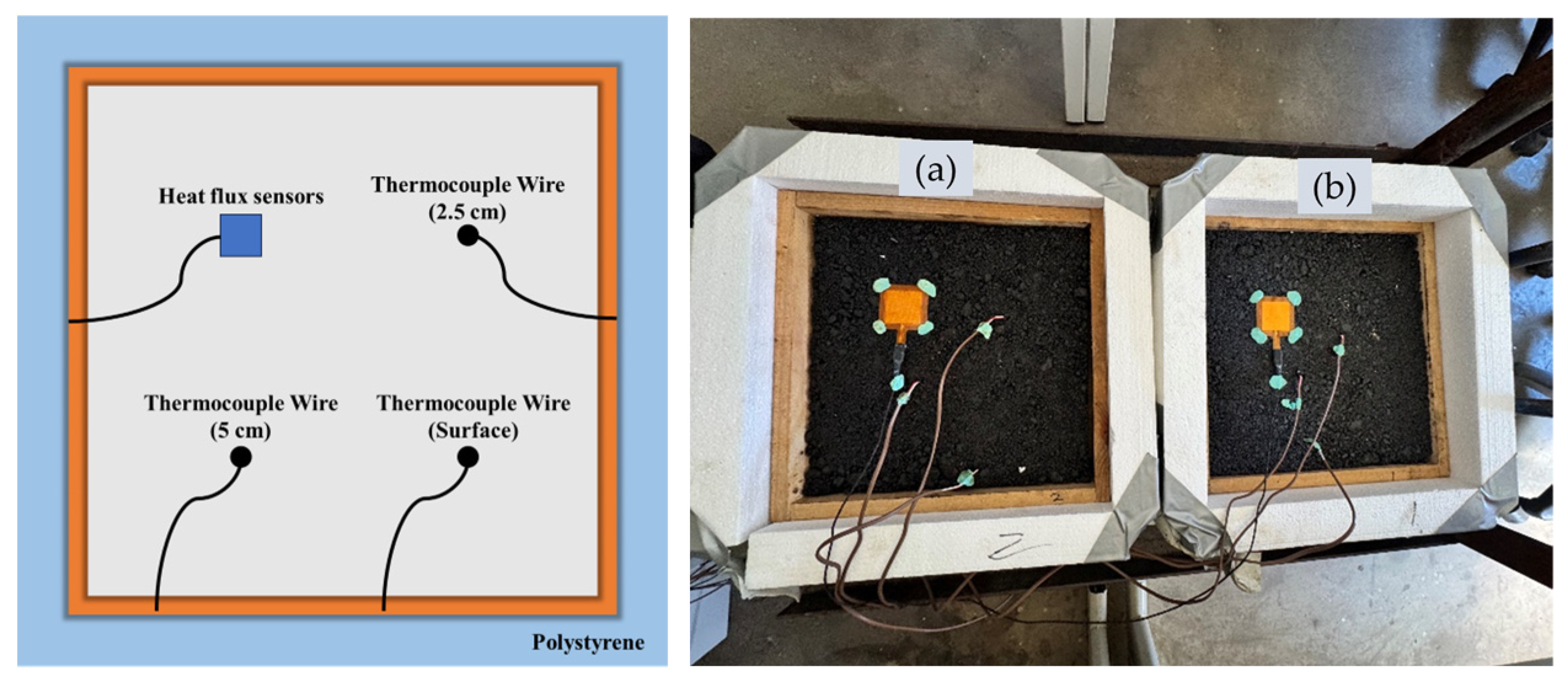
We adjusted the aggregate ratio of asphalt concrete by using different types of radiative cooling aggregates. The test specimens included conventional asphalt (the control group) and BOFS (the experimental group) (Figure 1). The aggregate replacement ratio was 100%, and the composition of the experimental specimens is shown in Table 1. The specimen size was fixed at 30 × 30 × 5 cm.
Figure 1.
(a) BOFS aggregate asphalt specimen (experimental group); (b) conventional asphalt specimen (control group).
Table 1.
Proportions of materials in the specimen.
To control for experimental variables and outdoor environmental interference, indoor scaled-down physical experiments were conducted to ensure different test specimens. Both specimens were heated in an oven to a common temperature before conducting the radiative cooling tests. The oven was set to 75 °C, and the asphalt concrete specimens were heated for 12 h to reach the same temperature. A 12 h radiative heat release cooling test was then conducted. A Campbell Scientific CR1000 Measurement and Control Datalogger was used to record data every minute, while a HOBO temperature and humidity recorder measured ambient conditions. Heat flux was calculated from heat flux patches on the specimen surface, and thermocouples installed at different layers measured temperatures at the surface (0 cm), middle layer (2.5 cm), and bottom (5 cm). The material proportions of the two test samples were 100% conventional asphalt and 100% BOFS, respectively. The proportions and weights of different particle sizes of the materials are shown in the table (Table 1).
3. Results and Discussion
3.1. Heating Temperature Changes in Specimen
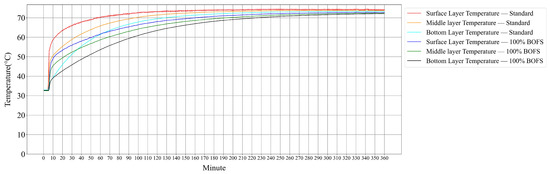
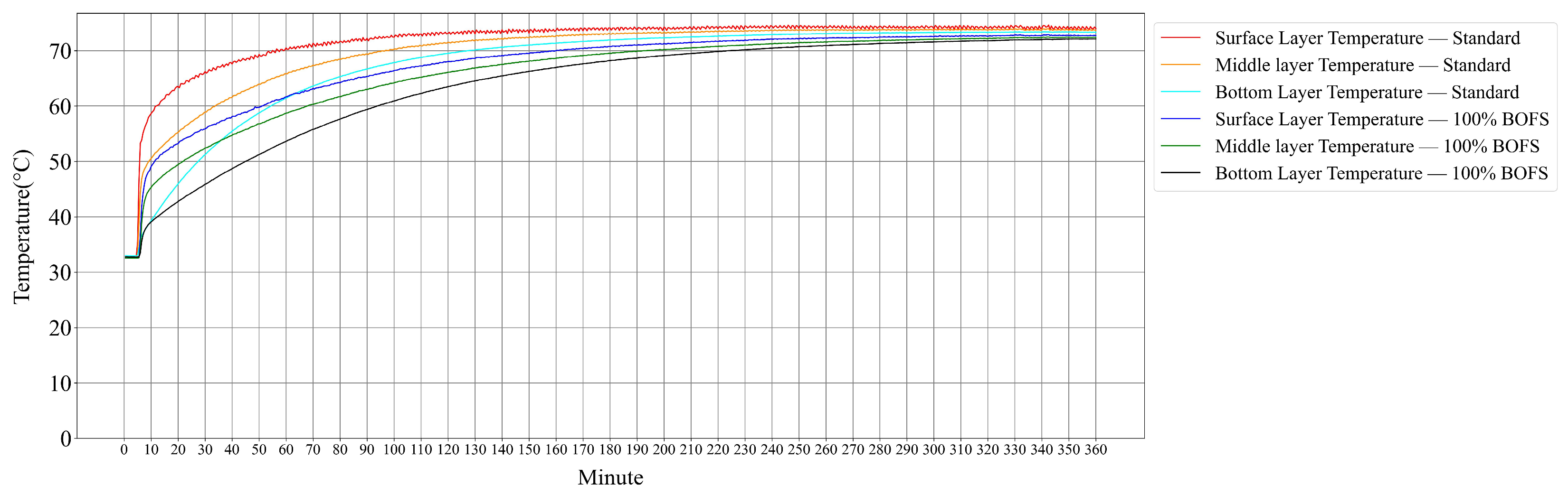
Figure 2 displays the results for the control group and experimental group heated for over 6 h. The temperature curve shows the initial stage, the gradual heating stage, and the gradual stabilization stage. Both groups exhibited typical material heating characteristics.
Figure 2.
Temperature changes in heating from 0 to 6 h.
When monitoring the temperature changes in the surface, middle layer, and bottom layer of both groups over 1 to 2 h, significant temperature differences were observed during the first 1 to 6 min (the initial stage). The surface temperature difference reached 17.55 °C, the middle layer difference reached 10.27 °C, and the bottom layer difference was up to 2.31 °C, indicating that the thermal diffusivity of the experimental group (thermal diffusivity) is lower than that of the control group. The large specific heat capacity of BOFS results in slower heat storage, a slower heating rate, and a lower initial temperature. From 7 to 236 min (gradual heating stage), the bottom temperature of the test group remained the lowest, suggesting that the test group has an efficiency for slowing heat transfer.
The specimen temperature increase slowed between 3 and 4 h before stabilizing from 5 to 12 h. Regarding surface temperature, the experimental group consistently outperformed the control group by maintaining lower values, thereby mitigating UHI effects. Overall, replacing conventional aggregates with 100% BOFS reduces the heating rate and delays peak temperatures in asphalt mixtures, particularly within the initial 1 to 2 h.
3.2. Heat Flux Changes During 12 Hour Heating
Figure 3 illustrates the differences in heat flux between the control group and experimental group during 12 h of heating. A significant difference was observed between 1 and 6 min of heating (the initial stage), with the difference at the 6th minute being 25.28 W/m2. In the early stage, heat energy was transferred quickly into the material in the control group, while the experimental group conducted heat more slowly. Throughout the heating process, the control group’s heat flux ranged from −81 to 33.18 W/m2, whereas the experimental group’s ranged from −70.51 to 33.74 W/m2.
Figure 3.
Temperature changes in heating from 0 to 12 h.
3.3. Cooling Temperature Changes
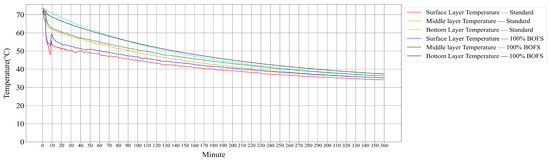
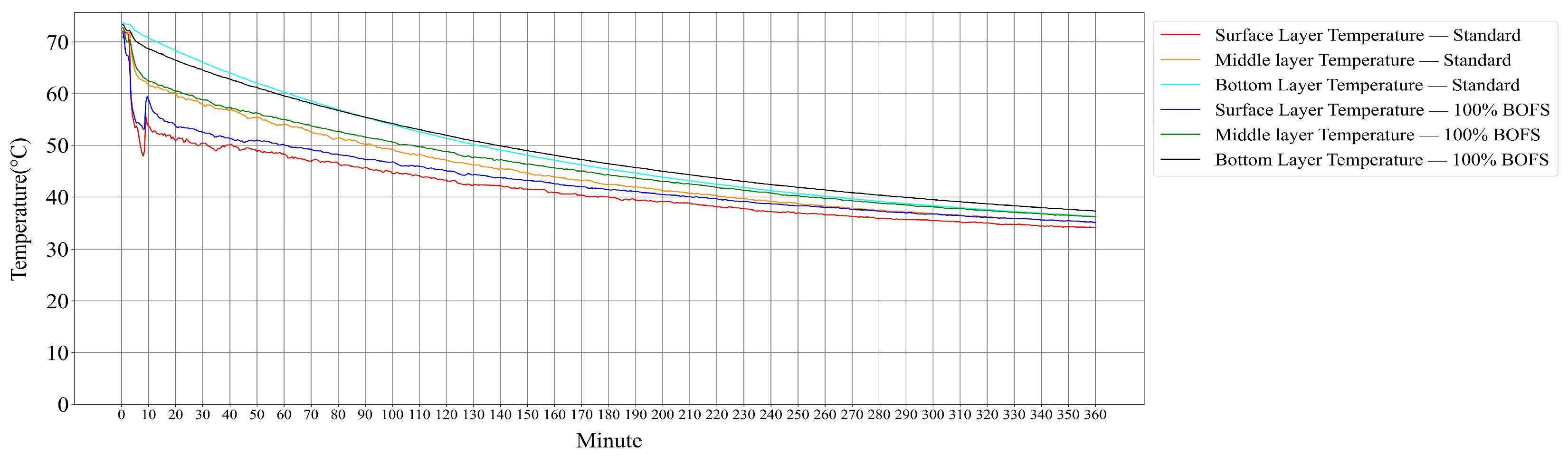
Figure 4 shows the results of 6 h of heat release for the control group and experimental group. The temperature curve shows the temperature changes of the surface, middle layer, and bottom layer of both the control and experimental groups after 1 to 2 h of heat release. The temperature release pattern during the initial period is relatively unstable, but after about 6 min, the surface temperature of the control group cools rapidly. Subsequently, the surface and middle layer temperatures of the control group remain stable and cool down the fastest, indicating that the control group releases heat to the surrounding environment more quickly and causes the air temperature to rise.
Figure 4.
Temperature changes in cooling from 0 to 6 h.
During the heat release process, the temperature of the control group ranged from 30.99 to 71.89 °C for the surface layer, 31.23 to 72.22 °C for the middle layer, and 31.47 to 73.7 °C for the bottom layer; the temperature range of the experimental group was 31.33 to 71.9 °C for the surface layer, 31.48 to 72.76 °C for the middle layer, and 31.76 to 73.36 °C for the bottom layer. From 3 to 12 h, the heat release ratio of each layer in the control group and the experimental group stabilized at room temperature. During this process, it was observed that the surface temperature of the control group stabilized and emitted the most heat.
3.4. Heat Flux Changes in Cooling for 12 Hours
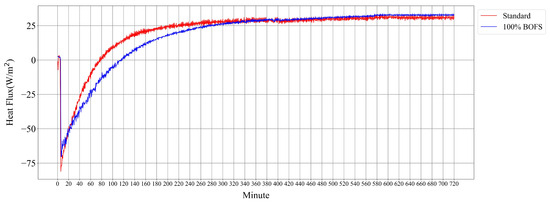
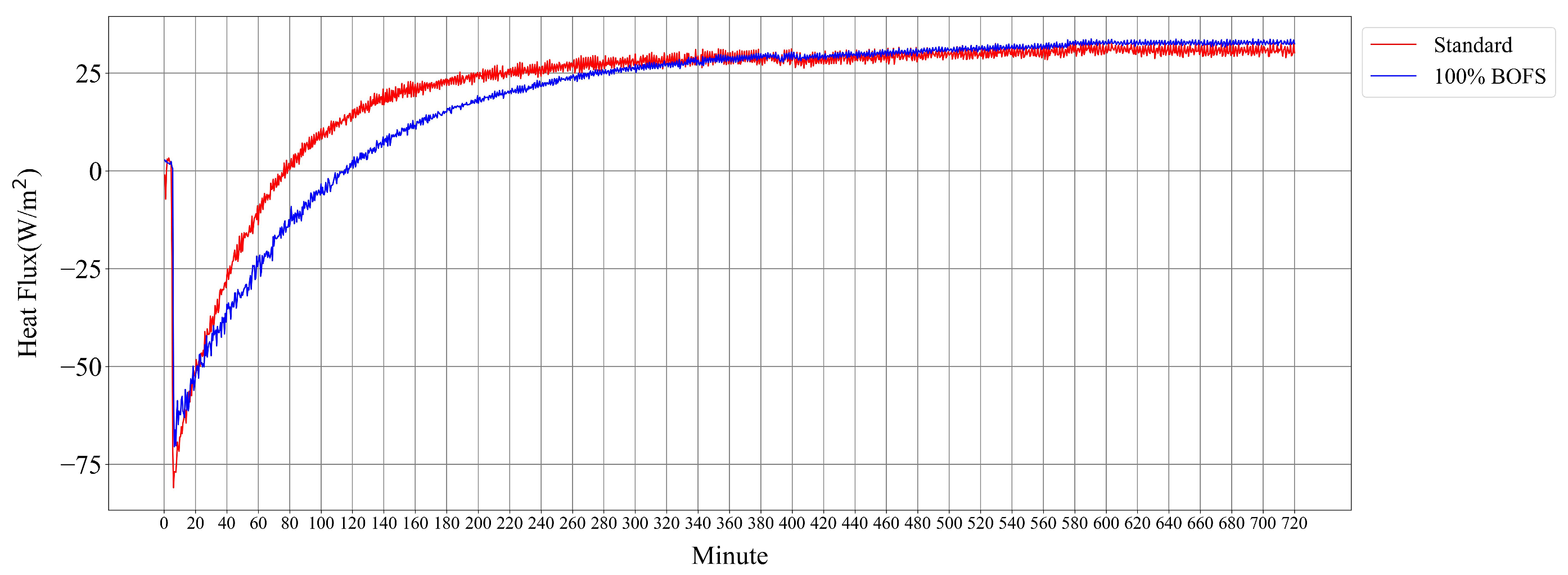
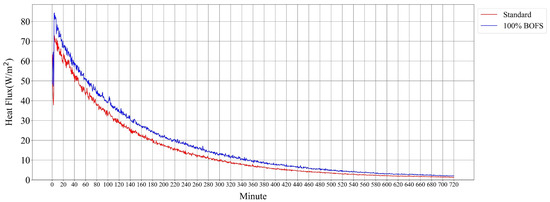
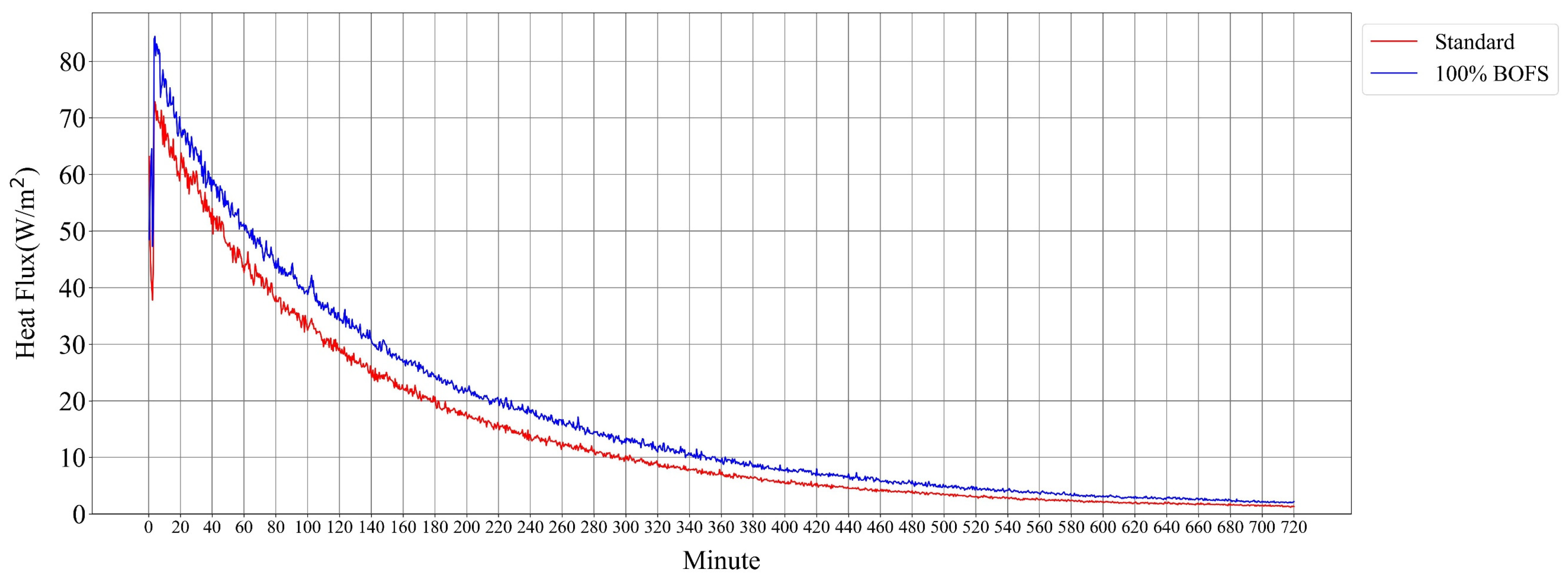
Figure 5 illustrates the change in heat flux between the control group and the experimental group after the specimens were cooled for 12 h. The heat flux in the experimental group during the cooling phase was higher than in the control group, indicating that the heat release efficiency of 100% BOFS is relatively slow, which helps prevent rapid increases in ambient air temperature.
Figure 5.
Heat flux changes in cooling from 0 to 12 h.
4. Conclusions
We examined the thermal properties of conventional asphalt road materials and asphalt mixtures made with 100% BOFS instead of traditional asphalt. The changes in temperature and heat flux were monitored after 12 h of heating, followed by 12 h of cooling in an oven.
At an oven temperature of 75 °C, conventional asphalt aggregate showed rapid heat absorption and high thermal conductivity initially, while adding 100% BOFS slowed down heat transfer. The initial temperature of 100% BOFS was lower than that of conventional asphalt aggregate across the bottom, middle, and top layers. Additionally, 100% BOFS cooled more slowly during the cooling period than conventional asphalt aggregate, suggesting it can help reduce the increase in ambient temperature. The results of this study provide a basis for the development of aggregate asphalt to boost the radiative cooling performance of surface materials and reduce the urban heat island effect.
Author Contributions
Conceptualization, S.-H.C.; investigation, S.-H.C.; writing—original draft, S.-H.C.; conceptualization, C.-H.H.; methodology, C.-H.H.; writing—review and editing, C.-H.H.; investigation, C.-H.Y. All authors have read and agreed to the published version of the manuscript.
Funding
This research was funded by the [National Science and Technology Council of Taiwan, under contract No. NSTC 114-2221-E-027-006-] and [Chien Chung Construction Co., Ltd.]. The APC was funded by the [Chien Chung Construction Co., Ltd.].
Institutional Review Board Statement
Not applicable.
Informed Consent Statement
Not applicable.
Data Availability Statement
The data supporting the findings of this study are included within the article; further data are available from the authors upon reasonable request.
Acknowledgments
The authors declare that this research was supported by Chien Chung Construction Co., Ltd. The specific details of the funding party’s involvement in this research are as follows: The funding party provided the experimental site and consumables.
Conflicts of Interest
The funder was not involved in the study design, collection, analysis, interpretation of data, the writing of this article or the decision to submit it for publication.
Abbreviations
The following abbreviations are used in this manuscript:
| BOFS | Basic oxygen furnace slag |
| UHI | Urban heat island |
References
- Younis, M.W.; Akpokodje, E.; Jilani, S.F. Urbanization and Its Environmental Impact in Ceredigion County, Wales: A 20-Year Remote Sensing and GIS-Based Assessment (2003–2023). Sensors 2025, 25, 5332. [Google Scholar] [CrossRef] [Scilit] [PubMed]
- Karacan Tekin, G.; Gökce, D. Investigation of Ground Surface Temperature Increases in Urban Textures with Different Characteristics: The Case of Denizli City. Sustainability 2025, 17, 6818. [Google Scholar] [CrossRef] [Scilit]
- Cheela, V.R.S.; John, M.; Biswas, W.; Sarker, P. Combating Urban Heat Island Effect—A Review of Reflective Pavements and Tree Shading Strategies. Buildings 2021, 11, 93. [Google Scholar] [CrossRef] [Scilit]
- Barentine, J.C. The VIIRS-DNB radiance product is insufficient to assess the effect of “cool pavement” materials on nighttime radiances of treated areas. J. Quant. Spectrosc. Radiat. Transf. 2025, 344, 109508. [Google Scholar] [CrossRef] [Scilit]
- Mammeri, A.; Vaillancourt, M.; Shamsaei, M. Experimental and numerical investigation of using waste glass aggregates in asphalt pavement to mitigate urban heat islands. Clean Technol. Environ. Policy 2023, 25, 1935–1948. [Google Scholar] [CrossRef] [Scilit]
- Górszczyk, J.; Malicki, K. Comparative Laboratory Tests of Thermal Conductivity of Road Materials Using Two Measurement Methods. Materials 2025, 18, 1970. [Google Scholar] [CrossRef] [Scilit] [PubMed]
- Pan, F.; Pei, J.; Zhang, G.; Wen, Y.; Zhang, J.; Li, R. Building the cooling roads with high thermal conductivity pavements to relieve urban heat island effect. Constr. Build. Mater. 2022, 346, 128276. [Google Scholar] [CrossRef] [Scilit]
- Song, P.; Wang, X.; Ma, Y.; Alleman, J.; Taylor, P.; Zhang, C. Development of Practical Approaches to Quantify Pavement Thermophysical Properties: An Energy-Conserving Engineering Demonstration. J. Mater. Civ. Eng. 2025, 37, 04024472. [Google Scholar] [CrossRef] [Scilit]
- Fan, S.; Zhu, H.; Mou, X.; Zhang, W.; Gan, X. 3D heterogeneous model created using computer-generated algorithm for evaluating thermophysical parameters of asphalt mixtures. Constr. Build. Mater. 2025, 479, 141499. [Google Scholar] [CrossRef] [Scilit]
- Zhao, Y.; Liu, X.; Zhang, X.; Wang, Q. Cooling optimization of asphalt pavement by topology optimization and cooling mechanism analysis. J. Clean Prod. 2024, 449, 141726. [Google Scholar] [CrossRef] [Scilit]
- Qin, Y. A review on the development of cool pavements to mitigate urban heat island effect. Renew. Sustain. Energ. Rev. 2015, 52, 445–459. [Google Scholar] [CrossRef] [Scilit]
- De Pascale, B.; Tataranni, P.; Indacoechea-Vega, I.; Rodriguez-Hernandez, J.; Lantieri, C.; Bonoli, A. Enhancing road performance and sustainability: A study on recycled porous warm mix asphalt. Sci. Total Environ. 2025, 960, 178370. [Google Scholar] [CrossRef] [Scilit] [PubMed]
- Ma, C.; Zhang, S.; Li, K.; Zhao, T.; Meng, Q.; Guan, D.; Zhang, A. Stainable Utilization Strategies for Basic Oxygen Furnace Slag: Properties, Processing, and Future Directions. Metals 2025, 15, 537. [Google Scholar] [CrossRef] [Scilit]
- Mahieux, P.Y.; Aubert, J.E.; Escadeillas, G. Utilization of weathered basic oxygen furnace slag in the production of hydraulic road binders. Constr. Build. Mater. 2009, 23, 742–747. [Google Scholar] [CrossRef] [Scilit]

Disclaimer/Publisher’s Note: The statements, opinions and data contained in all publications are solely those of the individual author(s) and contributor(s) and not of MDPI and/or the editor(s). MDPI and/or the editor(s) disclaim responsibility for any injury to people or property resulting from any ideas, methods, instructions or products referred to in the content. |
© 2026 by the authors. Licensee MDPI, Basel, Switzerland. This article is an open access article distributed under the terms and conditions of the Creative Commons Attribution (CC BY) license.