1. Introduction
The Cosmic Microwave Background (CMB) is the relic radiation that carries fundamental information about the origin and evolution of the Universe. Emitted approximately 380,000 years after the Big Bang, it exhibits a black-body spectrum peaking today around 220 GHz [
1]. Tiny temperature anisotropies and even fainter polarization patterns within the CMB encode valuable clues about the composition, geometry, and early dynamics of the cosmos [
2]. Measuring these subtle signals remains an extraordinary challenge, requiring ultra-sensitive telescopes, precise calibration, and stringent control of systematic effects.
Over the last decade, CMB observations have become one of the most powerful tools in cosmology. The Planck mission provided the most sensitive all-sky measurements to date, constraining key cosmological parameters with uncertainties below 1% [
3]. The next major discoveries are expected to come from CMB polarization studies, which distinguish two components: E-modes, arising from scalar density fluctuations, and B-modes, generated by tensor perturbations such as primordial gravitational waves. Detecting primordial B-modes—quantified by the tensor-to-scalar ratio r—would provide compelling evidence for cosmic inflation and its energy scale [
4].
Calibration plays a crucial role in achieving the required measurement precision. Techniques vary depending on instrument design and detector technology, and the most sensitive instruments require not only initial calibration but also periodic recalibration throughout their operational lifetime. For space missions, this process is particularly demanding. Traditionally, space telescopes have relied on natural calibration sources, such as galaxies, satellites, or planets. However, as experimental sensitivity continues to increase, artificial calibration sources have become essential to ensure the required precision and long-term stability. A well-characterized, far-field calibration source, precisely characterized under laboratory conditions, offers a promising route to achieve unprecedented accuracy in CMB polarization measurements—an essential step toward detecting primordial gravitational waves—currently limited by instrumental systematic errors [
5,
6].
The LiteBIRD mission [
7], selected by JAXA in 2019, represents the next large-class CMB satellite dedicated to measuring CMB polarization with unprecedented sensitivity. The LiteBIRD collaboration brings together teams from Japan, the United States, Canada, and Europe—including contributions from France, Italy, the United Kingdom, Germany, and Spain. Within this framework, the CosmoLB Project proposes several contributions to LiteBIRD’s calibration efforts. Spanish institutions, IFCA and IDR/UPM, already active within the mission, are involved in data preparation, the establishment of the Spanish Data Center node, and the development of the Temperature Monitoring and Control System (TMCS) of the Low- Mid- and High-Frequency Telescope (LMHFT) cryogenic stages (5, 2, 0.4 and 0.1 K).
In parallel, CosmoLB proposes the development of LEO-CalSat, a Low-Earth Orbit satellite designed to provide reference signals for the calibration of ground-based CMB experiments. Beyond its immediate scientific role, LEO-CalSat will act as a technological demonstrator, increasing the Technology Readiness Level (TRL) of future calibration satellites intended for Lagrange Point 2 (L2) missions. Its payload consists of a signal generator capable of producing highly pure, polarized microwave signals in the W-band (75–110 GHz), enabling ground-based telescopes to achieve unprecedented precision in polarization calibration. The IDR/UPM team leads the satellite development, building on the UPMSat technology demonstration program (with UPMSat-1 launched in 1995, UPMSat-2 in 2020, and UPMSat-3 currently under construction). The calibration source, developed by IFCA, will serve as the main payload of the next UPMSat mission, scheduled for launch in 2026.
Within this context, the CosmoLB project aims to tackle the key challenges of precision calibration through the development of a dedicated artificial calibration source operating from a satellite positioned at a sufficient distance to ensure far-field illumination of ground-based telescopes. The project pursues two main objectives:
Technological validation of the calibration source’s performance in a space environment, thereby increasing its TRL for future L2 missions;
Operational deployment of the source for calibrating ground-based CMB experiments observing polarization in the W-band.
In this paper, we focus on the design of the LEO-CalSat payload, attending its constraints and design requirements.
2. Materials and Methods
The calibration source is designed with two main objectives aligned with those of the project. The first is the technological verification of the source’s ability to operate in a space environment, aiming to increase its Technology Readiness Level (TRL) for future calibration missions at Lagrange Point 2 (L2). The second is the calibration of ground-based CMB experiments observing polarization in the W-band. Using a source emitting from the far field of the telescopes and characterized in the laboratory enables unprecedented accuracy in CMB polarization measurements. This is crucial for achieving key scientific goals, such as detecting primordial gravitational waves, which is currently limited by systematic instrumentation errors.
One of the limitations, that determined the first design decisions was the physical size of the calibration source. Since it is intended to be launched into space, it must conform to a standard CubeSat volume. A size of 2 U (10 cm × 10 cm × 20 cm) was selected due to mission requirements. As a consequence, all components must be properly aligned within this volume to ensure functionality.
Other requirement was to include the essential components for a proper behavior. Several configurations were studied, considering the possibility of removing some components, such as the polarizer or the filter. However, elements like the antenna, coupler, isolator, and frequency multiplier are deemed essential (
Figure 1). To justify the removal of any component, verifications must be made—such as confirming that harmonics and subharmonics do not impair accurate measurements. Thermal control studies are also pending, including the feasibility of incorporating heat dissipation mechanisms.
Finally, weight and power consumption must be also considered.
3. Calibration Source Design
As a result of the requirements commented on earlier, two versions of the reference signal source have been implemented using commercial components.
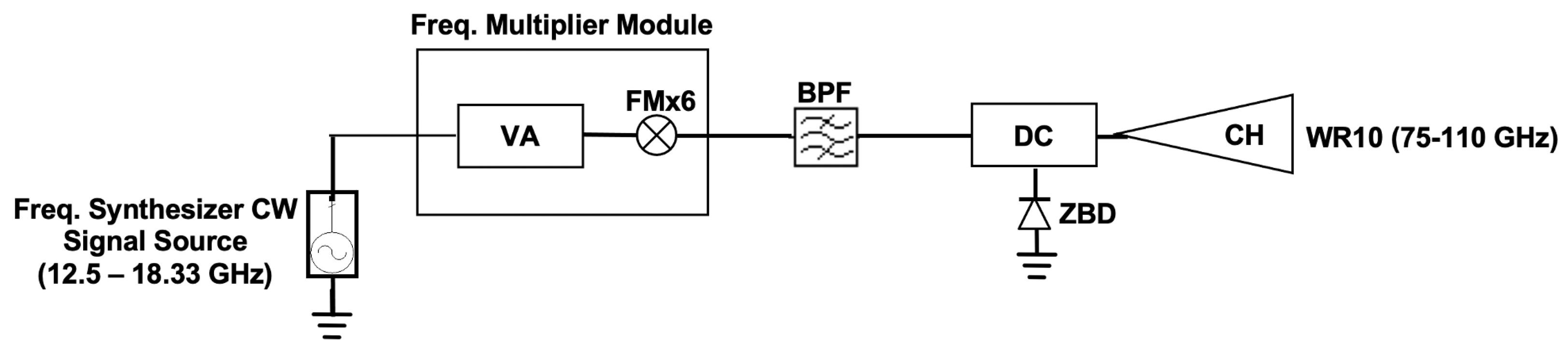
The first is composed of a frequency synthesizer, a
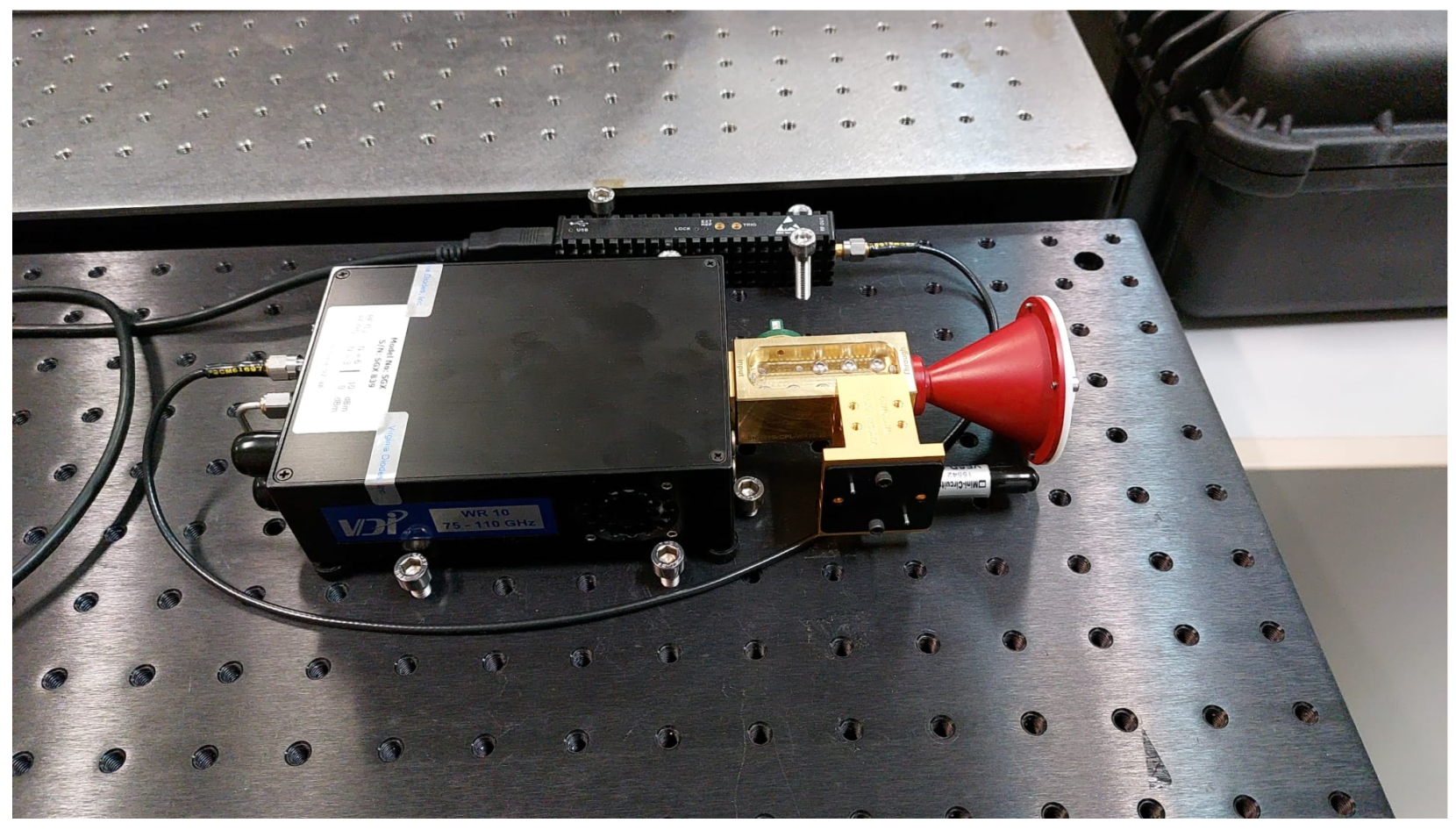
frequency multiplier with signal attenuation and modulation capabilities, a band pass filter (BPF), a directional coupler, a zero bias detector to monitor the emitted power, a horn antenna, and a wire grid polarizer (
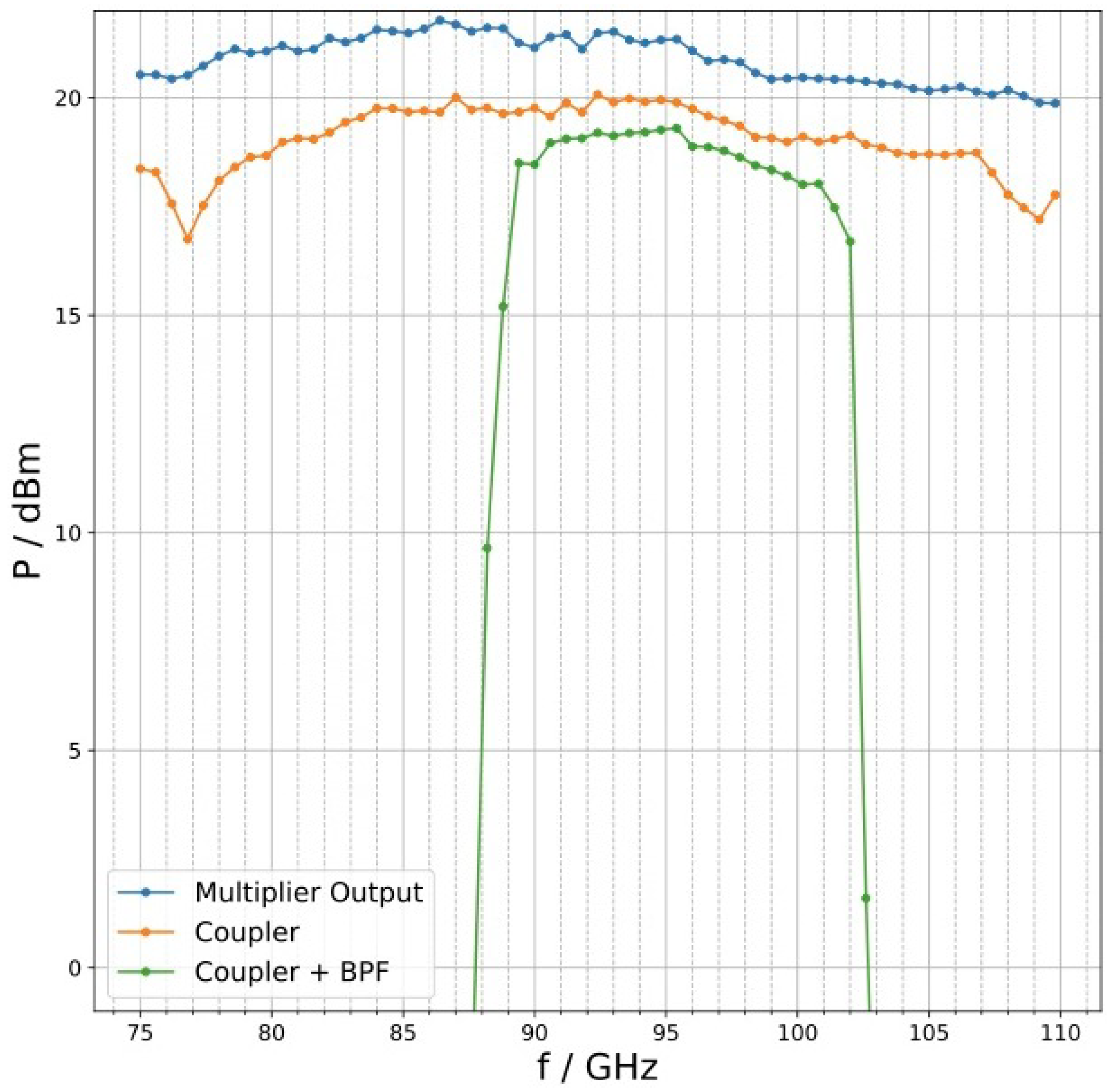
Figure 2). This version was designed for laboratory testing, but it was not suitable for the limited available space (2 U) onboard LEO-CalSat and other constraints related to the vacuum environment in space. In the laboratory characterization (
Figure 3), it was proved that it can emit around 20 dBm (100 mW) of power within the WR10 standard bandwidth (75–110 GHz).
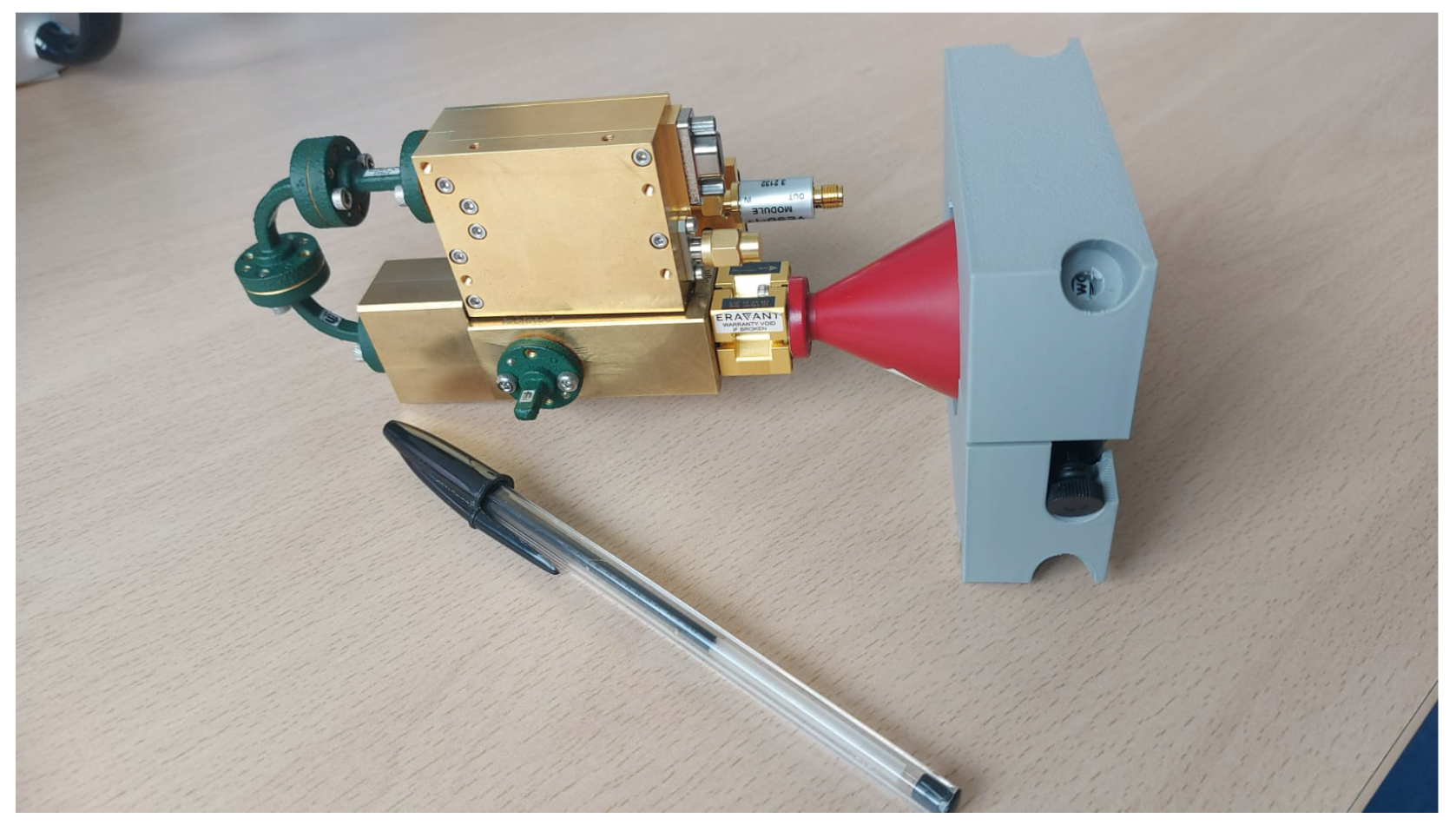
The second version (
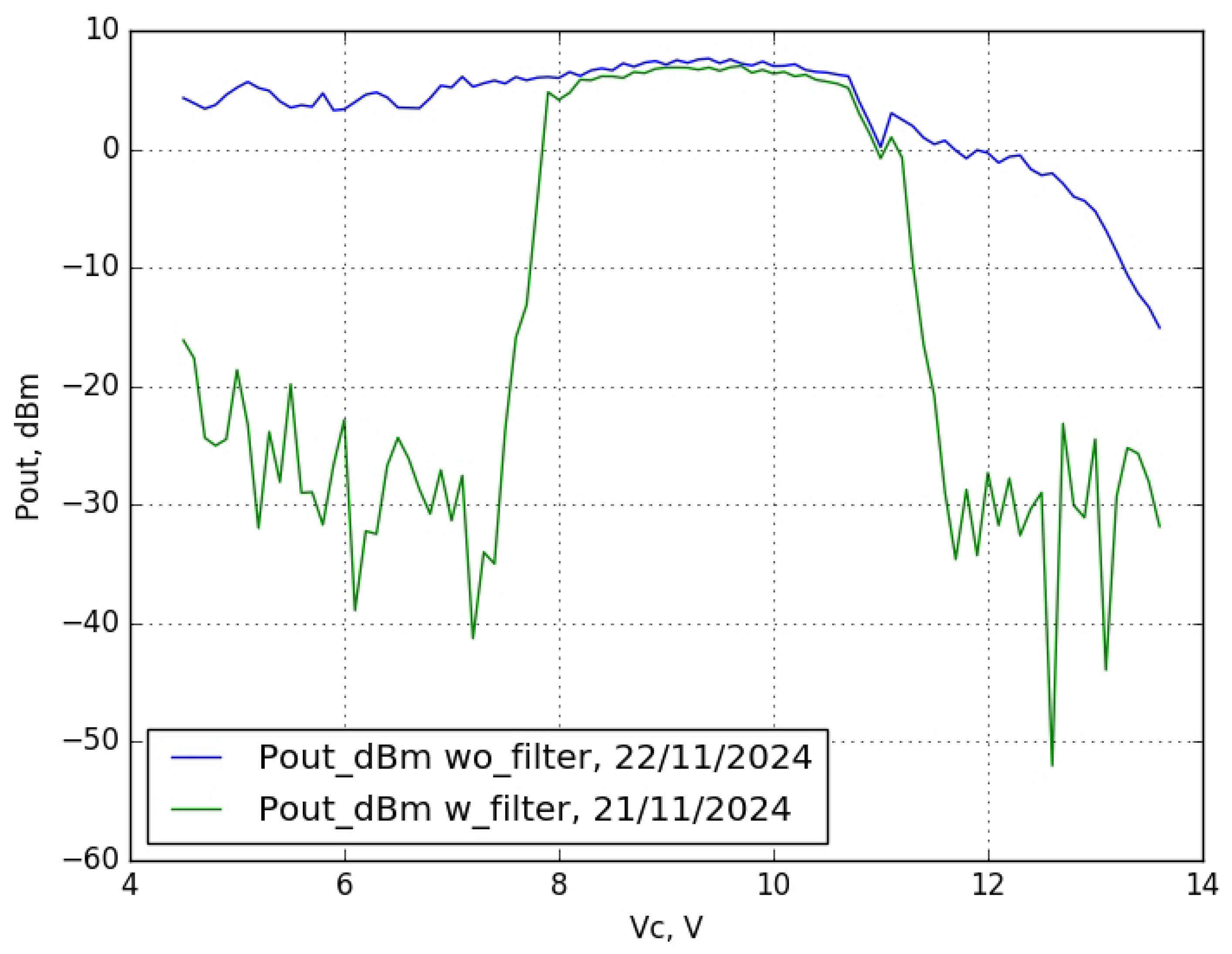
Figure 4) was refined to achieve reductions in size, volume, and power consumption. As a trade-off, its output power is also lower, reaching about 6 dBm (4 mW). This design relies on a frequency multiplier that integrates a Voltage-Controlled Oscillator (VCO), thus eliminating the need for a separate frequency synthesizer. The power values presented in the plot correspond to the control voltage (Vc) applied to the frequency multiplier. The selected voltage range covers the entire frequency span of interest (75–110 GHz).
Figure 5 compares the emitted power when using a band-pass filter (BPF, shown in green) and without it (shown in blue).
The system weighs approximately 1 kg and has a maximum power consumption of 9 W. As previously mentioned, its total volume remains below 2 U (10 × 10 × 20 cm). In contrast, the first version of the source exhibits a greater mass, a power consumption of 15 W, and a volume that barely fits within 2 U.
4. Results Analysis
Preliminary design outcomes are encouraging, confirming the feasibility of developing a compact calibration source that fits within a 2 U volume while maintaining full functionality and precision. Laboratory tests have verified its core performance; however, additional development and validation activities are required to ensure the robustness and suitability of the final design.
Substantial progress has been achieved to date. Depending on the ground-based experiment’s sensitivity, Signal-to-Noise Ratio (SNR) values of approximately 30 dB are expected for both versions of the calibration source, even considering the difference in output power. This is due to the fact that the emitted power of the source’s first version must be attenuated around 20 dB to avoid saturation in most of the experiments of interest [
8].
Notably, the SNR associated with the polarization angle is expected to be of a similar magnitude, as the emitted reference signals are fully polarized. While this value may be influenced by the polarization efficiency of the instrument under calibration, it is reasonable to assume an efficiency close to 100%, implying that, in practice, the SNR of the polarization angle will remain unaffected [
9].
The calibration source is planned for launch in the second half of 2026, enabling in-orbit operational verification of its performance.
5. Discussion and Conclusions
The CMB remains one of the most powerful observational tools for understanding the early Universe. Its minute temperature and polarization anisotropies encode information about the composition, geometry, and dynamics of the cosmos shortly after the Big Bang. Among these signals, the B-mode polarization pattern is of particular interest, as it could provide direct evidence for primordial gravitational waves predicted by inflationary models. However, detecting such weak signals requires unprecedented control of systematic uncertainties and extremely precise instrument calibration. Artificial calibration sources onboard small satellites, such as LEO-CalSat, thus represent a critical advancement for the next generation of CMB experiments aiming to detect these primordial signatures.
The development and preliminary testing of the LEO-CalSat calibration source demonstrate that a compact, fully functional W-band emitter can be integrated within a 2 U CubeSat platform without compromising signal quality or polarization purity. This represents a significant step toward enabling precise, space-based calibration of ground-based CMB experiments. The achieved performance in terms of output power and spectral coverage confirms the feasibility of the proposed concept and validates the main design assumptions.
The expected Signal-to-Noise Ratio (SNR) of around 30 dB—consistent across both intensity and polarization measurements—indicates that the system will provide reliable reference signals for ground-based telescopes operating in the W-band. Moreover, the high degree of polarization of the emitted radiation ensures that the calibration of polarization angles can be achieved with high fidelity, assuming an almost 100% polarization efficiency in the receiving instruments.
These results also highlight the importance of achieving an optimal balance between miniaturization and performance. The integration of a Voltage-Controlled Oscillator (VCO) within the frequency multiplier has proven effective in reducing both mass and power consumption, key constraints for CubeSat-class payloads. Nevertheless, the observed reduction in output power suggests that future iterations could benefit from enhanced thermal management and improved efficiency in the multiplier and antenna chain. Ongoing thermal control studies will be crucial to ensure long-term stability and operational reliability in orbit.
From a broader perspective, the LEO-CalSat concept contributes to the growing need for artificial calibration sources in cosmology. As the sensitivity of CMB polarization experiments continues to increase, systematic uncertainties arising from instrument calibration become a dominant limitation. A dedicated, well-characterized far-field source in low Earth orbit can help mitigate these effects and standardize calibration procedures across multiple observatories. The technology demonstrated here will also serve as a stepping stone for future missions operating from the L2, where environmental conditions and far-field geometry are even more favorable for absolute calibration.
The planned launch in the second half of 2026 will provide an invaluable opportunity to validate the source under actual space conditions, evaluate its long-term performance, and assess its compatibility with ground-based observation schedules. Data from this mission will inform the design of next-generation calibration satellites, enabling improved stability, spectral coverage, and polarization control.
In summary, the presented work demonstrates the feasibility and promise of a miniaturized, space-qualified calibration source for CMB polarization studies. Further developments focusing on thermal management, long-term stability, and radiometric characterization will consolidate its role as a key enabling technology for precision cosmology in the coming decade.



 ,
,