


Abstract
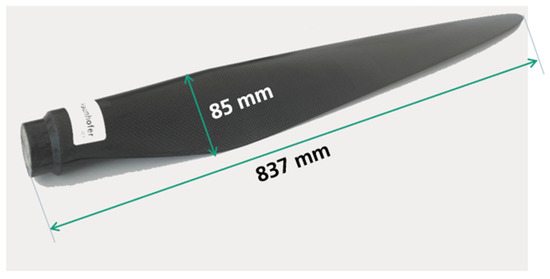
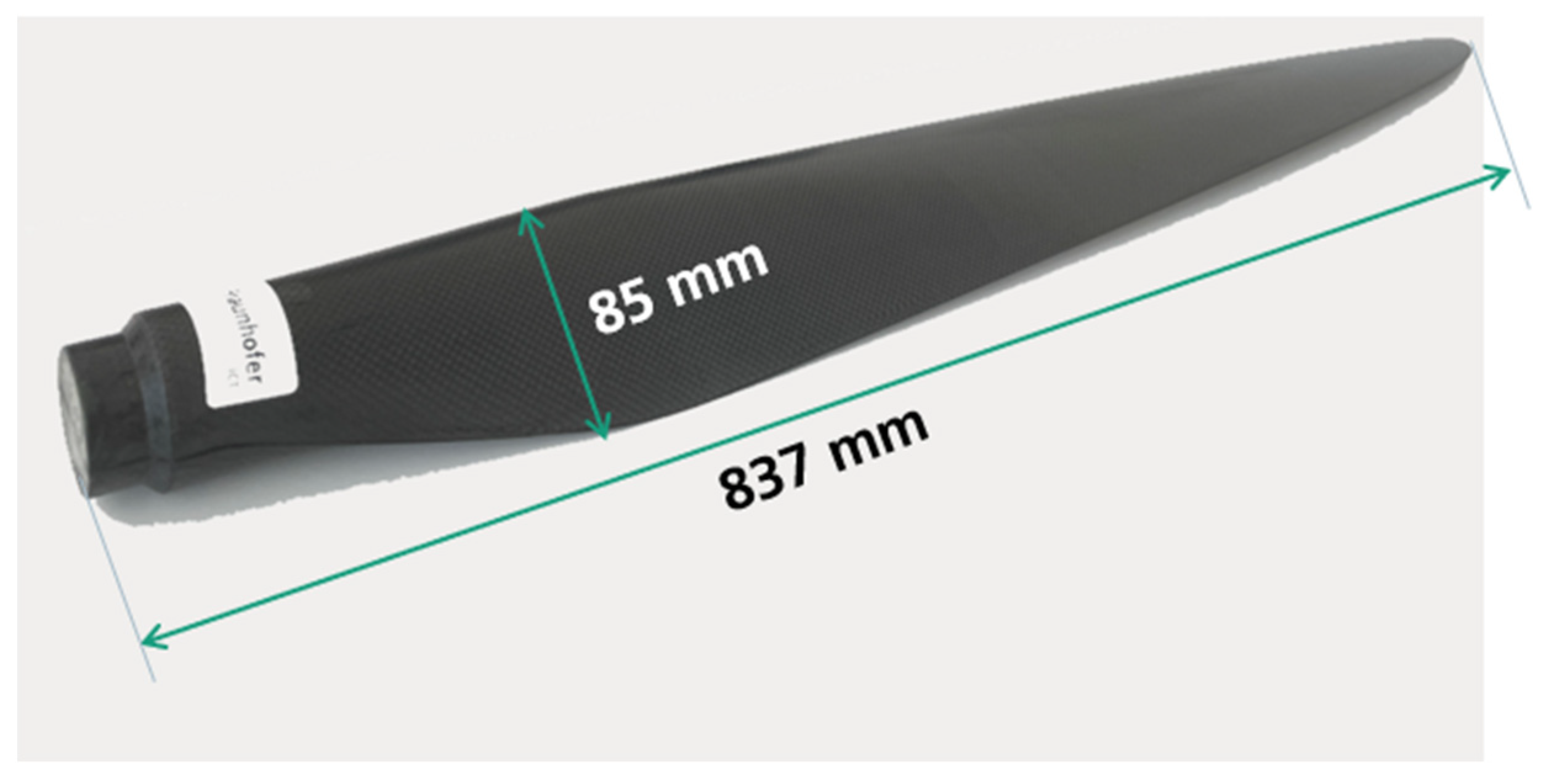
Urban Air Mobility (UAM) is increasingly recognized as one of the promising methods for future urban transportation, offering higher average speeds than conventional means of transportation. This study investigates the sustainable and efficient production of hollow propeller blades (837 × 85 × 40 mm) using high pressure resin transfer molding (HP-RTM), driven by high demand for UAM, particularly for wingless multicopters. Unlike conventional monolithic or sandwich structures, the propeller blade in this project features a hollow design using a lost core made from water soluble salt.
1. Introduction
Nowadays, 55% of the world population already lives in cities, which is more than at any time in history. By 2050, this share is expected to exceed 70%, especially in the major global economic entities [1,2].
The efficiency of ground transportation in metropolises is limited due to the increasing number of vehicles and the slow development of roads and infrastructure [3]. Consequently, attention has shifted to Urban Air Mobility (UAM), which offers higher average speeds and reduced carbon emissions than passenger vehicles, highlighting its significant potential as a future urban transportation mode. UAM development is a highly dynamic and rapidly growing market, marked by a multitude of startup companies. By 2022, the sector had attracted over $5 billion investment, bringing more than 50 companies and startups into the market [4]. In the next few years, cargo UAMs are expected to establish a noticeable market share. From 2026 to 2030, these will be supplemented by passenger air taxis in smaller quantities and will see widespread use from 2031 onward [5]. By 2035, the global eVTOL fleet is estimated to reach about 4800 units, with a market value exceeding $35,000 million [4,6].
A typical UAM aircraft consists of the airframe, wings, fuselage, window frames, propeller blades, batteries, electric motors, landing gear, flight controls, and interior. Using lightweight composite materials across these components significantly improves efficiency and reduces operational CO2 emissions. Consequently, approximately 70–80% of composite usage is concentrated in structural and propulsion parts [4,5]. Among UAM composite components, propeller blades are in particularly high demand, especially for wingless multicopter designs. For example, Eve Air Mobility has approximately 2900 pre-orders for its UAM aircraft; with 16 propeller blades per aircraft, that implies a total demand of 46,400 blades for just one of roughly 50 companies in the UAM industry [7]. This example makes it clear that propeller production plays a key role in the broad adoption of UAMs in the mobility sector.
Propeller blades are currently manufactured by small and medium-sized enterprises (SMEs) in time- and cost-intensive production processes. The production of commercially available fiber-reinforced propeller blades for use in UAMs is carried out mainly using manual laminating processes. It is reported that most propellers are produced by manual prepreg lamination [8], prepreg lamination combined with compression molding and foam cores as a sandwich structure [9], or also “wet in wet” manual lamination process [10]. Besides the high labor intensity, the manual lamination process lacks stable quality and reproductivity. Oftentimes, the propeller blades need dynamic balancing after curing as an extra step to ensure their weight distribution in high rotation speed. It can be stated that the existing manufacturing methods for propeller blades are insufficient to meet rising demand for a high series production. To enable high quantity and quality production of propeller blades, automated and efficient manufacturing processes need to be developed.
This study presents the development of a sustainable and efficient manufacturing process for producing large quantities of hollow propeller blades (837 × 85 × 40 mm) made of carbon fiber-reinforced plastic (CFRP). The high-pressure resin transfer molding (HP-RTM) process chain was being used for impregnation of the carbon fiber layup, draped around a water-soluble salt core that can be flushed after curing.
It is shown that by utilizing a lost salt core, the rotating mass of hollow propeller blades can be reduced by 14.2% compared to those with a sandwich structure featuring a polymer foam core (200 kg/m3 foam density). Moreover, this salt core also simplifies the core manufacturing process chain. Unlike currently used polymer foams, which require costly milling of foam blocks into the desired shape, the salt core is shaped by casting. Furthermore, the salt can be reused, enhancing cost-efficiency and sustainability. The use of the lost salt core not only reduces material and energy costs during manufacturing but also decreases operational energy in UAMs.
2. Methodology and Experiments
An efficient HP-RTM-based process chain for producing hollow propeller blades was developed. The formed salt core is placed in a semi-automated preforming station and combined with the carbon fiber layup. After the binder is cured in the preforming step, the preform is transferred to a HP-RTM mold in a hydraulic press. Using a snap-cure epoxy resin system enabled highly economical curing times of less than 5 min. Subsequently, the salt core is rinsed out with hot water, and the edges are then trimmed.
2.1. Salt Core Manufacturing
State-of-the-art of lost cores for HP-RTM are typically based on bonded inorganic molding material particles (e.g., ASK Insolve, AQUAPOUR, Reinsicht). The flexural strength of these core materials is comparatively low (approx. 2 MPa), and their open porosity requires an additional surface sealing step to prevent resin infiltration of the core during the HP-RTM process [11]. Consequently, a compatibility test was carried out to ensure the selected core material fulfills the requirements in the HP-RTM process. It is mandatory that the salt core material shows no chemical reactions with the chosen resin system but can be easily dissolved in water and rinsed out after curing.
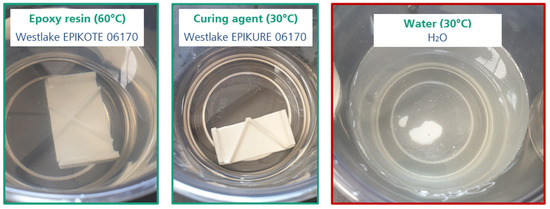
In the chemical compatibility test, samples of salt materials were immersed in epoxy resin, curing agent and water under certain conditions to simulate the real conditions during the HP-RTM trials. Both curing agent and water were kept at room temperature, while epoxy resin was at 60 °C, since it will be heated prior to mixing and injection into the mold to reduce its viscosity.
As a result, a mixture of potassium chloride (KCl) and sodium carbonate (Na2CO3) salt samples showed no chemical reactions with both epoxy resin and curing agent within the test duration of 1 h, see Figure 1. The sample slowly dissolved in water at room temperature, which is beneficial for the salt core to be removed after the curing process.
Figure 1.
Salt core samples consisting of potassium chloride (KCl) and sodium carbonate (Na2CO3) in the chemical compatibility test and solving test with water.
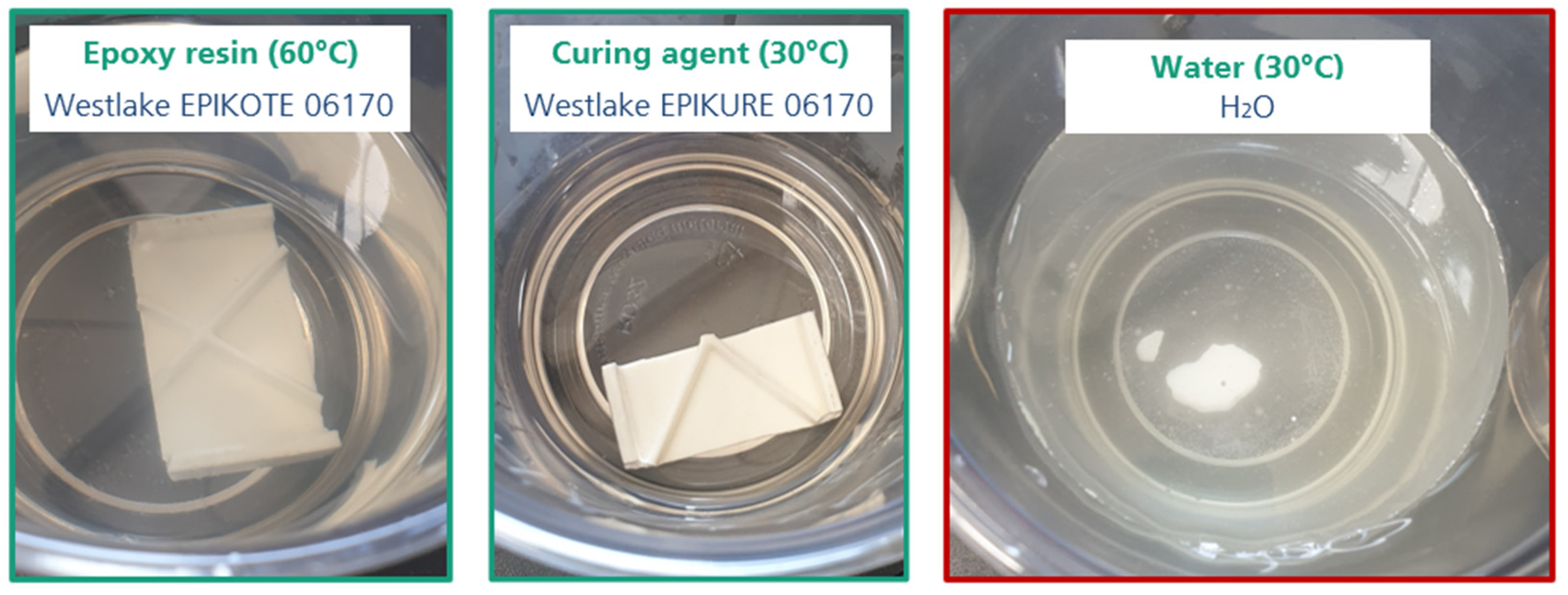
For manufacturing the propeller geometry, a low pressure casting die was manufactured and used to produce salt cores for use in the HP-RTM process chain, see Figure 2.
Figure 2.
Tool setup for casting the propeller salt cores (left); molded salt core geometry compared to a milled propeller foam core made of PEI (right).
2.2. Semi-Automated Preforming
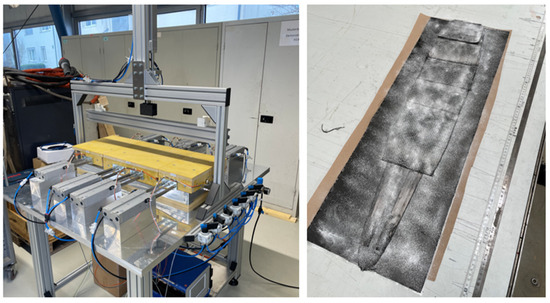
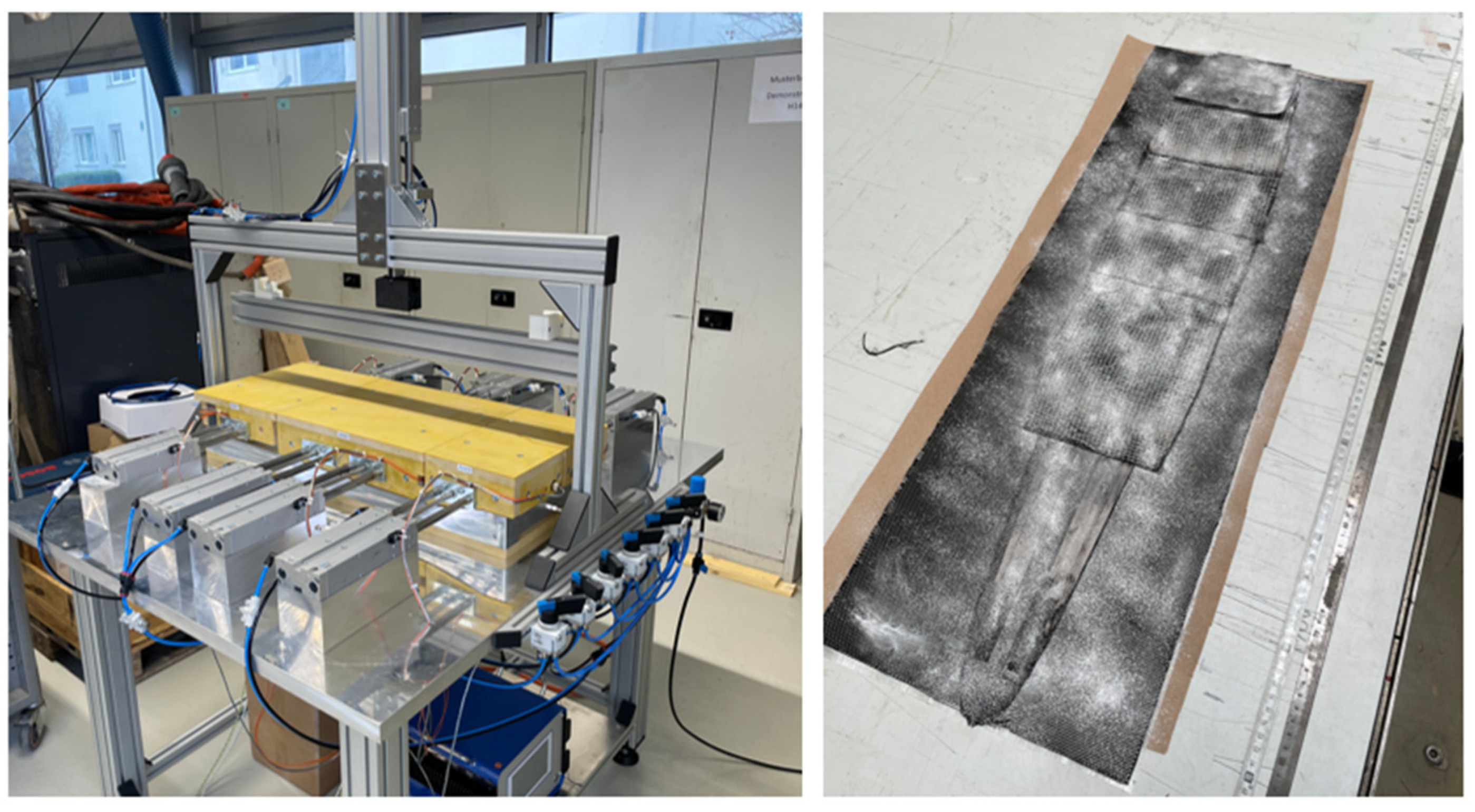
When using HP-RTM to produce composite parts with complex geometries, the textile reinforcement needs to be preformed before resin injection and curing. Since the propeller blade has a curved 3D geometry, a semi-automated preforming station was designed and built to pre-consolidate the carbon fiber stacks and the salt core. First, carbon fibers based on non-crimp fabrics (NCFs) were cut into the desired shapes and sizes according to FEA results. The fiber stacks were then assembled with binder materials in power form.
Figure 3 presents the semi-automated preforming station (left) and the carbon fiber layup with applied powder binder (right).
Figure 3.
Preforming station (left) and carbon fiber layup of the different cut outs according to the FEA results with powder binder for fixation of the preform (right).
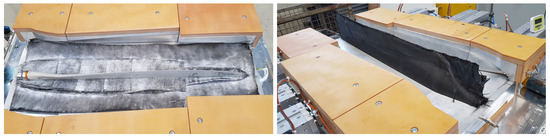
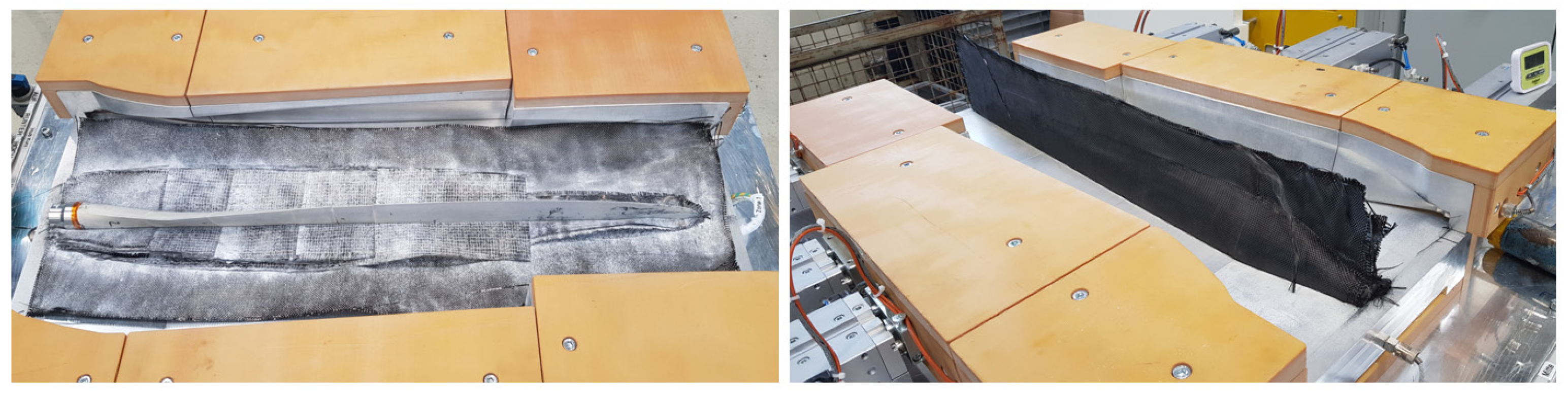
In the last preforming step, the fiber layup and salt core were put into the cavity of the preforming station, where multiple heated stamps closed sequentially to drape and pre-consolidate the materials to the target geometry, see Figure 4 (left). Within a 10 min cycle time, the stacked carbon fiber layups are pre-consolidated and tightly attached to the salt core. No fiber displacement was observed in the pre-consolidated parts, see Figure 4 (right).
Figure 4.
Fiber layup and salt core in the preforming tool for sequential draping (left) and final preform for subsequent processing in HP-RTM (right).
2.3. Processing in High-Pressure Resin Transfer Molding (HP-RTM)
In HP-RTM (High-Pressure Resin Transfer Molding), the resin and hardener of the reactive matrix are mixed at high pressure and are injected into a closed mold loaded with fiber stacks or preforms, enabling faster curing, shorter cycle times, and improved part quality. The method is particularly suitable for high quantities of lightweight, dimensionally stable components with complex geometries. To manufacture the propeller blades with HP-RTM process, a two-component mixing and dosing equipment for epoxy resin system, a hydraulic press and a single-cavity mold were used. The used epoxy system was provided by Westlake and consisted of Epikote 06170 (resin) and Epikure 06170 (hardener), mixed at the given ratio.
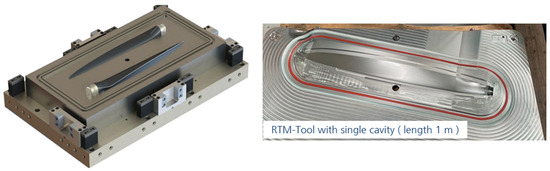
In manufacturing commercial products, propeller blades would be made in pairs as shown in the mold concept in Figure 5 (left). Since the objective of this study is to prove the concept of efficient manufacturing, a single-cavity RTM-Tool was built for the trials, see Figure 5 (right).
Figure 5.
Concept design for dual-cavity (left) and single-cavity RTM-Tool for propeller trial (right).
Table 1 shows the process parameters and materials used for this study.
Table 1.
Process parameters for the HP-RTM trial.
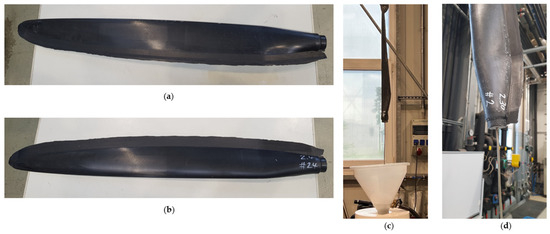
After infiltration of the preforms and curing of the propellers, the salt core still remains in the cured part, see Figure 6a,b. To rinse out the salt, the propeller blades are placed vertically (Figure 6c), while a metal pipe is inserted into the outlet hole on the aluminum blade root insert of the blade. Warm water, which flows continuously without excess pressure, is fed into the propeller to dissolve and rinse out the salt core (Figure 6d).
Figure 6.
Cured parts (a,b); salt core material is rinsed out with the flow of warm water (c,d).
Once the salt has been completely removed, the propellers undergo final processing, during which any excess resin areas resulting from the separation of the mold and any excess fiber areas of the cured preform are removed.
3. Results
To prove the efficient process chain of propeller blade manufacturing, 24 trials have been successfully carried out. The final parts of propeller blades showed excellent surface quality with no fiber displacement, dry areas, or uncured regions, see Figure 7.
Figure 7.
Final part of the propeller blade.
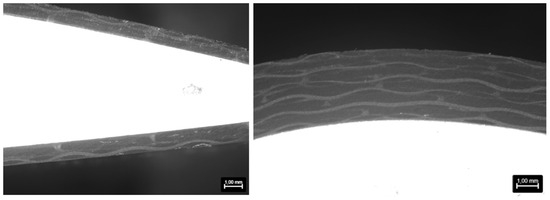
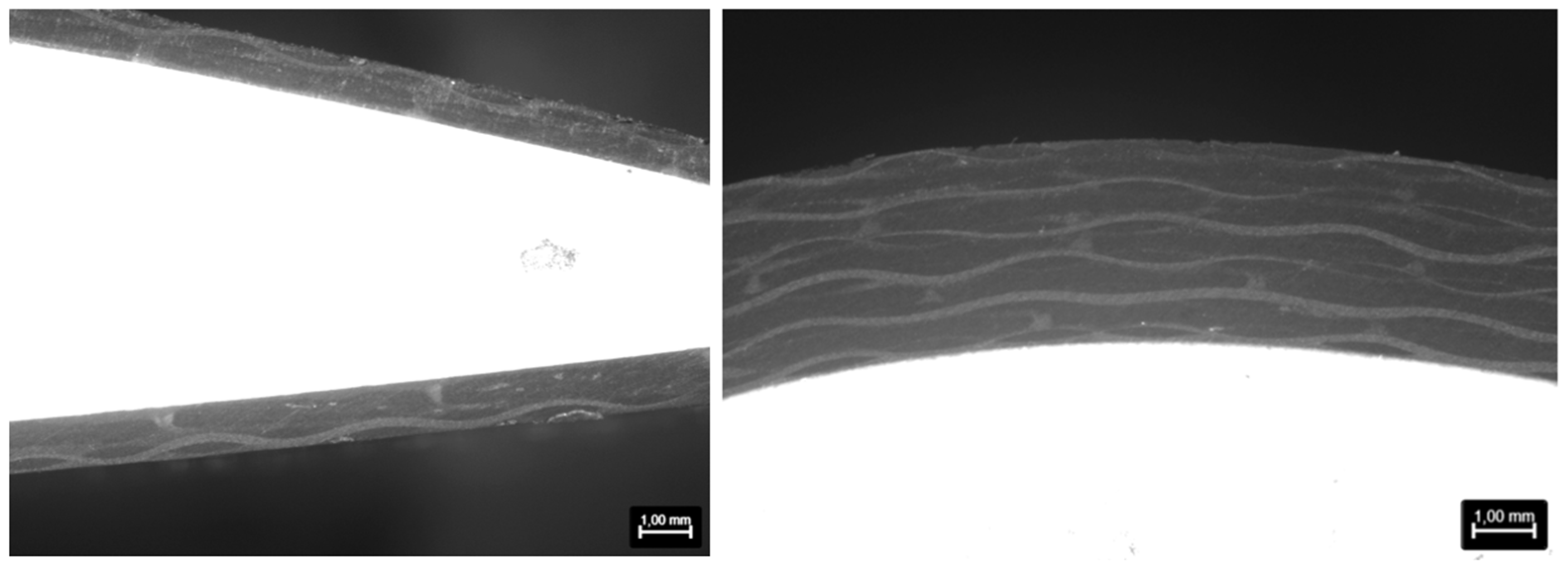
Compatibility of the salt core with the epoxy matrix, as well as matrix infusion of the salt core surface and laminate impregnation quality, was investigated by means of macroscopic images of transverse cut outs of the propeller on different sections, see Figure 8.
Figure 8.
Macroscopic images of different propeller sections.
The laminate quality can be rated as very good. As can be seen in Figure 8, the fibers are completely impregnated without pores and have a homogeneous layer configuration without wrinkles or other defects. In addition, a smooth interface between the laminate and the salt core is observed, which is characterized by no negative interaction between the reactive epoxy matrix and the salt core.
One of the expected main advantages of the hollow propeller blade is weight saving, compared with the sandwich variant with PEI foam core. The total weight of the preform includes the salt core, the carbon fiber patches, the blade root insert made from aluminum and PTFE tapes for fixation and sealing. The blade root insert has a weight of 55.7 g, the average weight of the cores is 1013.13 g.
The matrix volume injected is varying slightly, as the dosing unit shut-off is pressure-controlled by an in-mold pressure sensor set at a maximum of 50 bar near the injection port. As an example, one propeller with a dissolved salt core results in a final part weight of 411.8 g, which is 14.2% lighter than the average weight of a propeller made with a foam core and the same dimensions (483.0 g).
4. Conclusions and Outlook
Using the semi-automated preforming station and HP-RTM process, the total cycle time of the CFRP-propeller manufacture has been reduced to less than 45 min, which is significantly faster compared to conventional manual lamination. Additionally, the whole process chain ensures higher and more homogeneous manufacturing quality and repeatability.
It was shown that salt is suitable to be used as a lost core for hollow carbon fiber-reinforced propellers made in HP-RTM with an epoxy resin. By utilizing the lost salt core, the rotating mass of hollow propeller blades has been reduced by approx. 15% compared to those with a sandwich structure featuring a PEI foam core.
However, potential improvements were observed within the study. Currently, dissolving and rinsing the salt cores takes 25 min. A warm water pre-bath for the entire part before the rinse could reduce the cycle time. Also, the low bending strength of the brittle salt cores increases the risk of breaking during preforming or during the closing of the HP-RTM mold leading to neat resin ribs in the infiltrated part. Such neat resin rips make it impossible to fully solve the salt core and create hollow propellers. Moreover, the surface quality and tightness of the salt cores is of high importance to ensure no matrix penetration of the core.
As a next step, the propellers manufactured with HP-RTM need to be validated through different tests like bending, insert-pull-out test and dynamic testing on an electric propulsion unit (EPU) to simulate a real-world scenario.
Author Contributions
Conceptualization, F.Z.; methodology, F.Z. and M.W.; formal analysis, M.W.; investigation, M.R., T.V. and M.W.; resources, M.W.; data curation, T.V. and M.R.; writing—original draft preparation, F.Z.; writing—review and editing, M.W. and M.R.; visualization, T.V. and F.Z.; supervision, M.W.; project administration, M.W. All authors have read and agreed to the published version of the manuscript.
Funding
This research was funded by Fraunhofer in the framework of the SME-Program with the project name SALZKUNST.
Institutional Review Board Statement
Not applicable.
Informed Consent Statement
Not applicable.
Data Availability Statement
The data presented in this study are available on request from the corresponding author due to privacy restrictions.
Conflicts of Interest
The authors declare no conflicts of interest.
References
- Bundesministerium für Wirtschaftliche Zusammenarbeit und Entwicklung (BMZ). Nachhaltige Stadtentwicklung. Positionspapier. 2023. Available online: https://www.bmz.de/resource/blob/163312/positionspapier-nachhaltige-stadtentwicklung.pdf (accessed on 28 November 2025).
- Fleck, A. 7 in 10 People to Live in Urban Areas by 2050. Statista. 2024. Available online: https://www.statista.com/chart/32595/estimated-share-of-population-residing-in-urban-areas-at-mid-year/ (accessed on 28 November 2025).
- Small, K.A. Urban Transportation. In The Concise Encyclopedia of Economics; Henderson, D.R., Ed.; Liberty Fund: Indianapolis, IN, USA, 2008; pp. 507–510. [Google Scholar]
- Stratview Research. eVTOLs: The New “Vertical” for the Composites Industry; Stratview Research: Raipur, India, 2022. [Google Scholar]
- Altran. En-Route to Urban Air Mobility-on the Fast Track to Viable and Safe On-Demand Air Services. 2020. Available online: https://www.communityairmobility.org/overview-economic-papers/altran-en-route-to-urban-air-mobility (accessed on 26 April 2026).
- Stratview Research. eVTOLs: The New “Vertical” for the Composites Industry; Version 2025; Stratview Research: Raipur, India, 2025. [Google Scholar]
- Eve Air Mobility. Eve Air Mobility Unveils First Full-Scale eVTOL Prototype. 2024. Available online: https://www.eveairmobility.com/eve-air-mobility-unveils-first-full-scale-evtol-prototype/ (accessed on 28 November 2025).
- Mejzlík Propellers s.r.o. How We Do It. 2025. Available online: https://www.mejzlik.eu/ (accessed on 28 November 2025).
- Sensenich Propeller Manufacturing. 2 Blade 78″ Continental O-200/Lycoming O-235 Ground Adjustable STOL Propeller for Experimental Aircraft. 2025. Available online: https://www.sensenich.com/shop/aircraft/carbon-fiber/2-blade-continental-o-200-lycoming-o-235-ground-adjustable-stol-propeller/ (accessed on 28 November 2025).
- RWTH-Aachen University. Helix: Development of a System for Automated Laminating. 2025. Available online: https://www.igmr.rwth-aachen.de/cms/igmr/forschung/projekte/abgeschlossene-projekte/~wadec/helix/?lidx=1 (accessed on 28 November 2025).
- Hufenbach, W. Zur fertigungsgerechten Konstruktion von integrativen Strukturbauteilen aus Faser-Kunststoff-Verbunden. Konstr. —Z. Für Produktentwicklung Und Ing.-Werkst. 2011, 63, 73–78. [Google Scholar]

Disclaimer/Publisher’s Note: The statements, opinions and data contained in all publications are solely those of the individual author(s) and contributor(s) and not of MDPI and/or the editor(s). MDPI and/or the editor(s) disclaim responsibility for any injury to people or property resulting from any ideas, methods, instructions or products referred to in the content. |
© 2026 by the authors. Licensee MDPI, Basel, Switzerland. This article is an open access article distributed under the terms and conditions of the Creative Commons Attribution (CC BY) license.