1. Introduction
The rapid evolution of global communication infrastructure and airspace management has intensified the demand for flexible, resilient, and cost-effective space-based solutions. This project presents the development of a 2U CubeSat designed for deployment in LEO, with the goal of supporting ICNS [
1] systems. The mission is focused on enhancing global connectivity and demonstrating how small satellite platforms can effectively contribute to next-generation aerospace systems.
By targeting CNS applications, the CubeSat addresses emerging needs in aviation safety, situational awareness, and digital communication in underserved or remote regions. The project also aims to explore the viability of small, modular satellites as building blocks for future space-based constellations, emphasizing scalable design, rapid deployment, and system interoperability. Through this effort, the CubeSat functions both as a proof of concept and as a stepping stone toward broader adoption of distributed satellite architectures in the aerospace and communications sectors. Such architectures enable advanced capabilities like space-based multilateration [
2], which can significantly enhance tracking, navigation, and surveillance accuracy compared with traditional ground-based systems.
2. Small Satellites
Small satellites—particularly CubeSats—have revolutionized access to space by significantly reducing the cost, development time, and complexity traditionally associated with satellite missions [
3]. Built on a standardized form factor and modular architecture, CubeSats offer a highly adaptable platform for both research and operational missions.
Their compact size enables frequent and affordable launches, often as secondary payloads on larger missions, while their modularity allows for the tailored subsystem integration for a variety of objectives.
In the context of CNS applications, CubeSats are especially advantageous due to their ability to form constellations that provide continuous and distributed coverage across the globe. A 2U CubeSat is well-suited for hosting lightweight, low-power communication payloads such as SDRs, while still accommodating essential subsystems for power management, data handling, and stabilization. These capabilities make small satellites a compelling option for deploying scalable, resilient space-based infrastructure that supports global airspace management, emergency communications, and low-latency data services. The flexibility and rapid iteration cycle of CubeSats further enable ongoing technology validation and adaptation to evolving mission needs. Beyond technical benefits, CubeSats align with emerging regulatory and commercial trends in the aerospace sector.
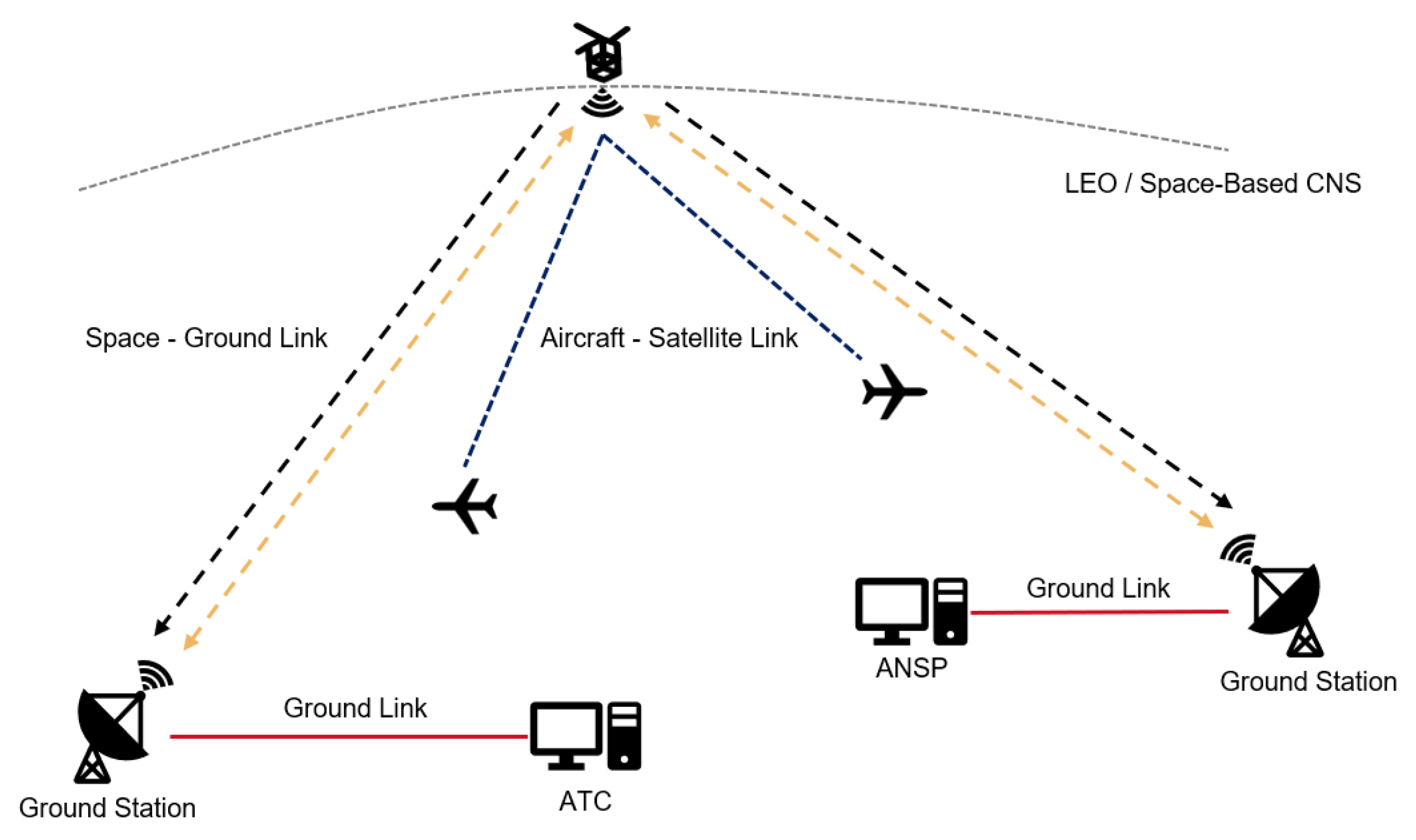
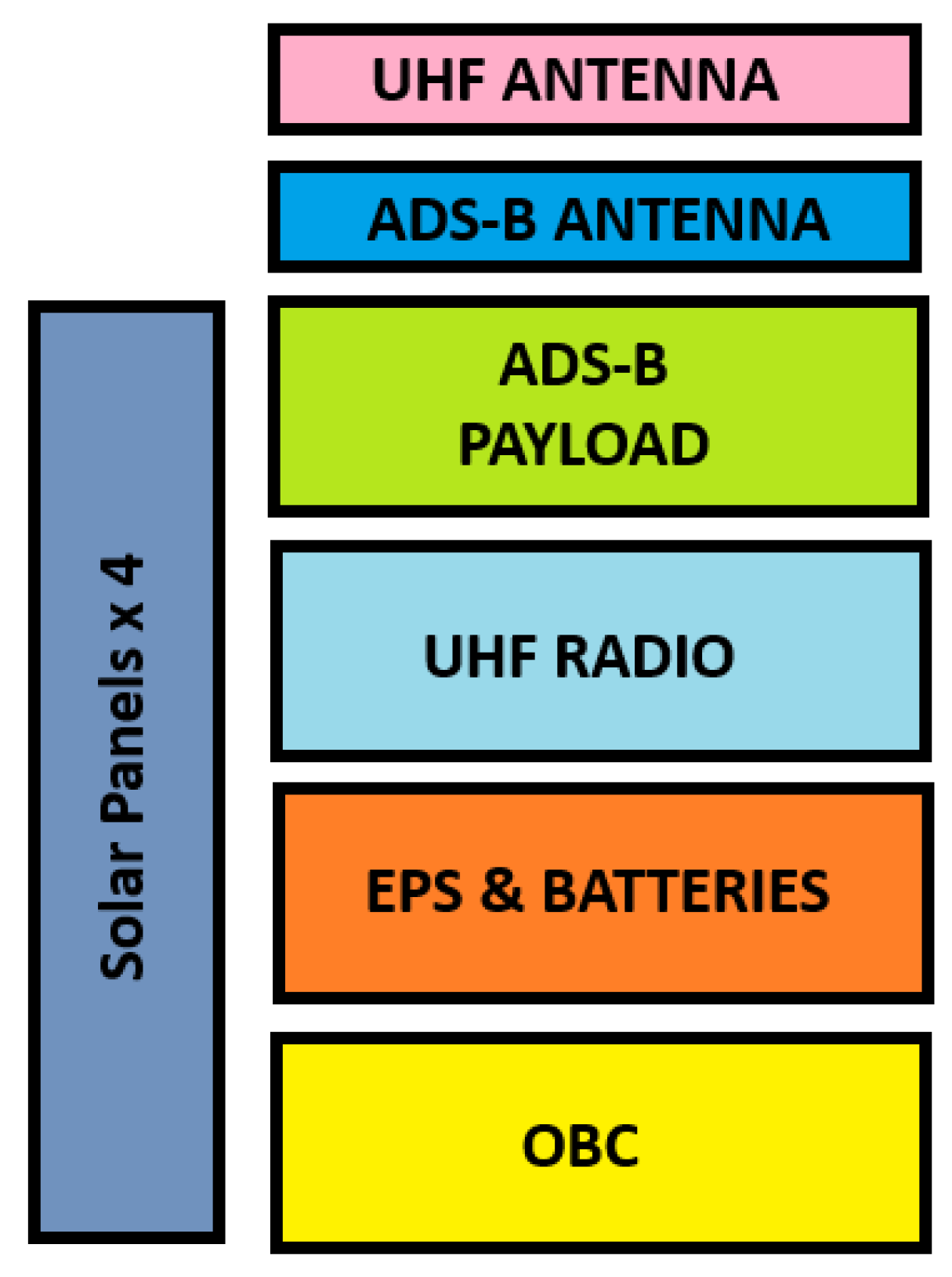
Standardized frameworks for spectrum coordination and licensing are streamlining their integration into global airspace systems. Commercially, the rise of small satellite launch services and ride-share opportunities has lowered entry barriers, allowing for broader participation from universities, startups, and government agencies. Environmentally, CubeSats in LEO typically deorbit within a few years due to atmospheric drag, reducing long-term space debris. These factors make CubeSats a compelling choice for developing agile, scalable, and sustainable CNS infrastructure (see the CubeSat’s system architecture in
Figure 1):
3. CubeSat Design
The CubeSat is designed as a compact, modular, and power-efficient platform tailored for communication-centric missions with emphasis on flexibility and scalability. Built around the standardized CubeSat [
4] form factor, the satellite integrates essential subsystems for power management, computing, stabilization, and data handling, along with a versatile tri-modal payload. The mission aims to demonstrate a cost-effective and reconfigurable platform capable of supporting CNS functions, particularly in remote and underserved regions. Emphasis is placed on low-power design and modular integration, ensuring adaptability for future enhancements or mission redefinitions.
3.1. Structure
The satellite adopts a 2U CubeSat structure (10 cm × 10 cm × 20 cm), providing the optimal balance between volume, mass, and subsystem accommodation. The 2U configuration allows for sufficient space to house the payload components alongside critical subsystems such as the EPS, OBC, and passive ADCS. This size class also facilitates the integration of deployable solar cells or panels and provides enough surface area for thermal regulation and antenna deployment. The structure complies with CubeSat deployment standards and is designed to endure launch vibrations and the thermal cycles of low Earth orbit, using lightweight aerospace-grade aluminum with internal mounting rails and modular panels for ease of assembly and maintenance.
3.2. Subsystems
The CubeSat integrates several essential subsystems, each fulfilling a specific role in ensuring mission success, operational autonomy, and system reliability in the space environment. These include the ADS-B and UHF antennae, SDR, Raspberry Pi Zero, and UHF transceiver. All subsystems are selected and designed with a focus on compactness, power efficiency, and interoperability within the 2U form factor. Together, they enable the CubeSat to generate and manage its own power, execute mission logic, maintain basic orientation, and perform core communication and surveillance functions. The following subsections describe each of these subsystems in detail.
3.2.1. Electronic Power System (EPS)
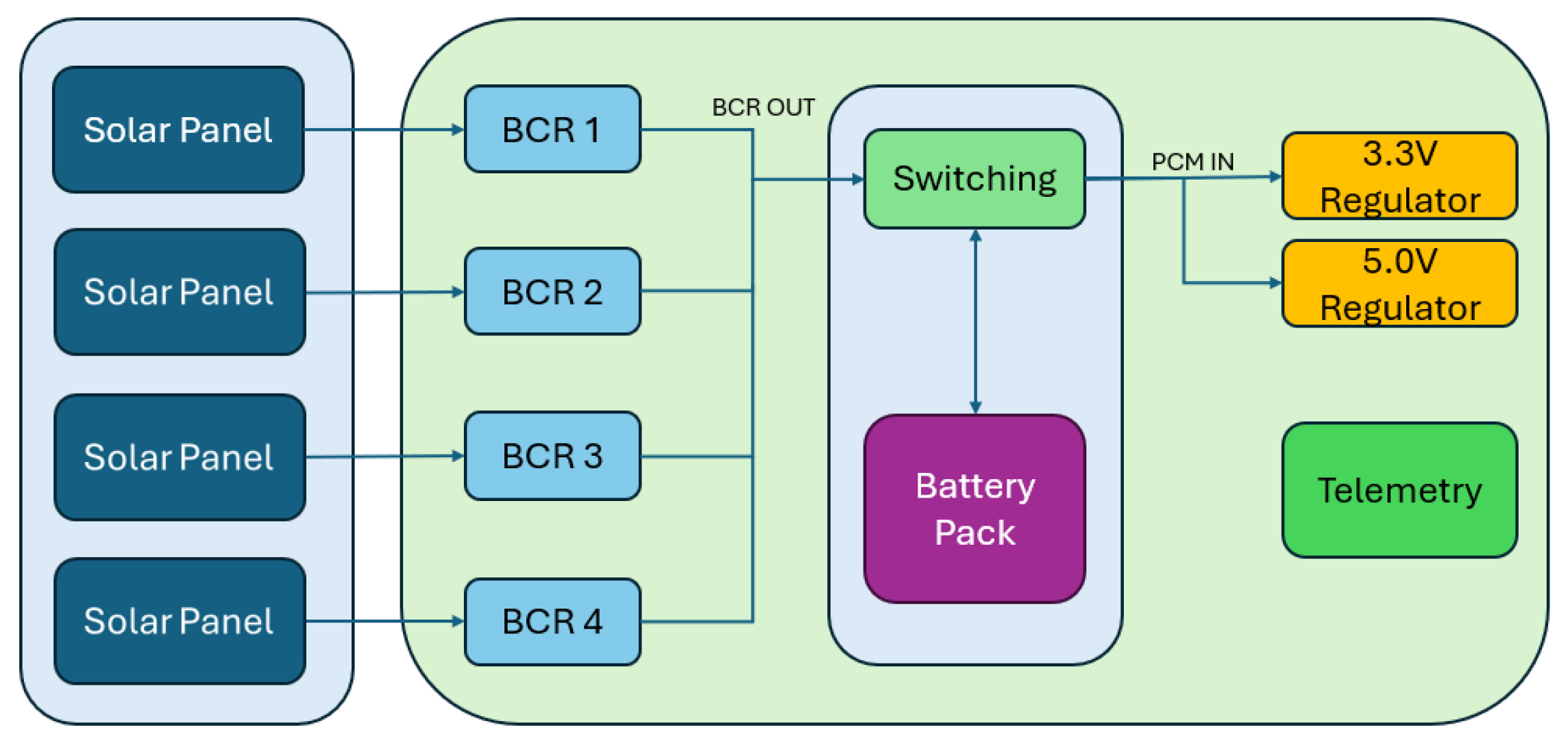
The EPS is engineered to provide high-efficiency power generation, regulation, and distribution across all CubeSat subsystems. It incorporates deployable solar panels optimized for maximum surface exposure and sunlight capture. The system (
Figure 2) includes advanced battery management for lithium-ion cells, ensuring optimal charge/discharge cycles, temperature control, and extended operational lifespan. Power conditioning units guarantee that critical systems receive stable, noise-free power, thereby improving overall system stability and mission reliability. Multiple Battery Charge Regulators (BCRs) connect the solar panels to the switching block, managing energy flow efficiently. Additionally, the Power Control Management (PCM) interface links the battery module to the 3.3 V and 5.0 V DC regulators, ensuring proper voltage distribution to the spacecraft’s subsystems.
3.2.2. On-Board Computer (OBC)
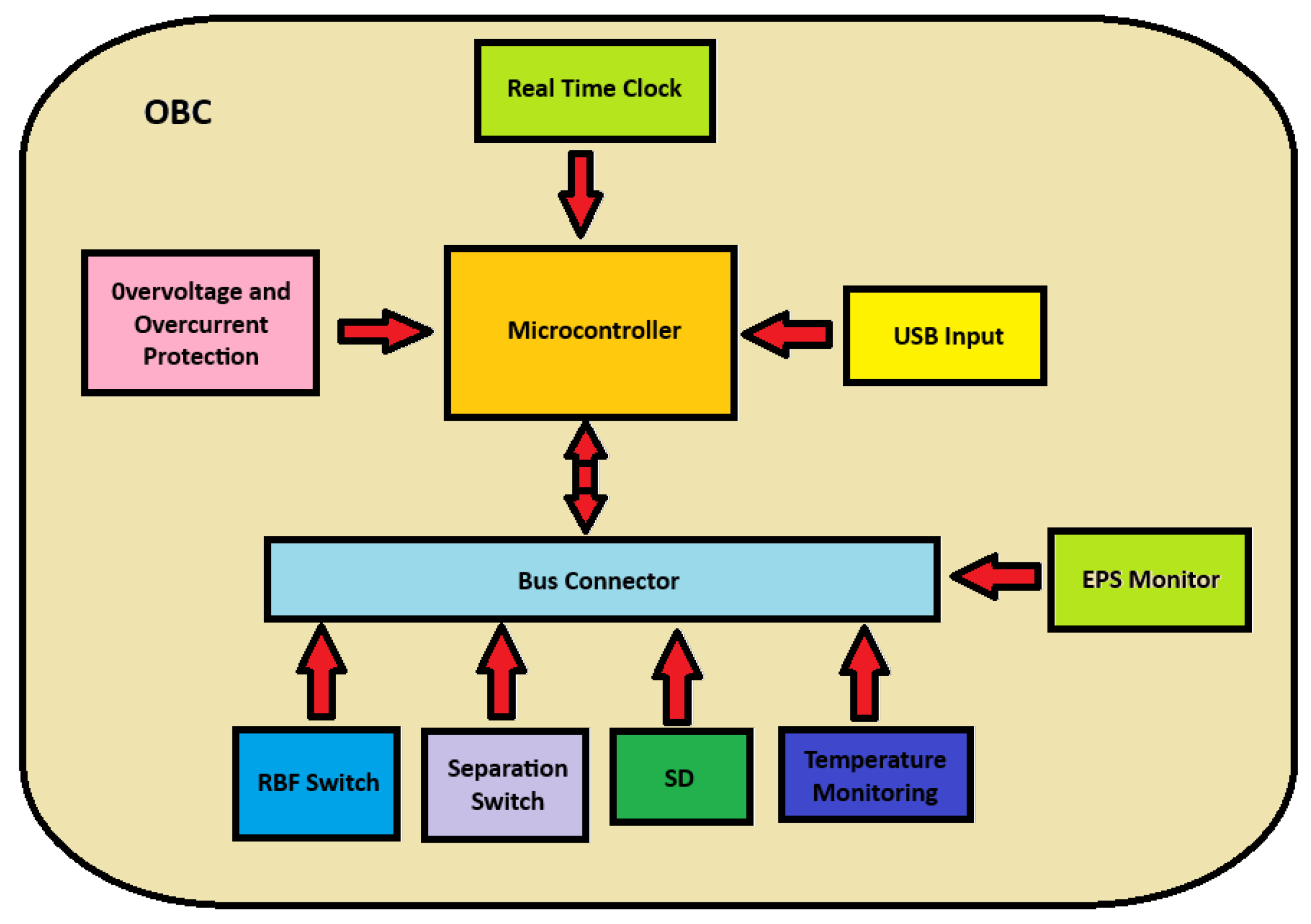
At the core of the CubeSat’s operations is a high-performance OBC, tasked with executing real-time data processing, system health monitoring, and mission sequencing. The OBC (
Figure 3) is capable of handling multithreaded processes, enabling simultaneous payload management, fault detection, and autonomous operational decision-making. Equipped with radiation-tolerant architecture and redundant storage, the OBC ensures reliability in the harsh space environment. It supports software-defined configuration to allow in-flight updates and flexibility in mission profiles.
3.2.3. Attitude Determination and Control System (ADCS)
The CubeSat features a passive ADCS that uses permanent magnets to align with Earth’s magnetic field and hysteresis rods to dampen rotational motion, providing basic stabilization without the need for active control elements. This low-power, low-complexity system supports coarse orientation using magnetometers and sun sensors, allowing the OBC to monitor and log attitude data. While it does not offer precise pointing, it is sufficient for communication-focused missions and ensures reliable antenna alignment and overall satellite stability.
3.3. Payload
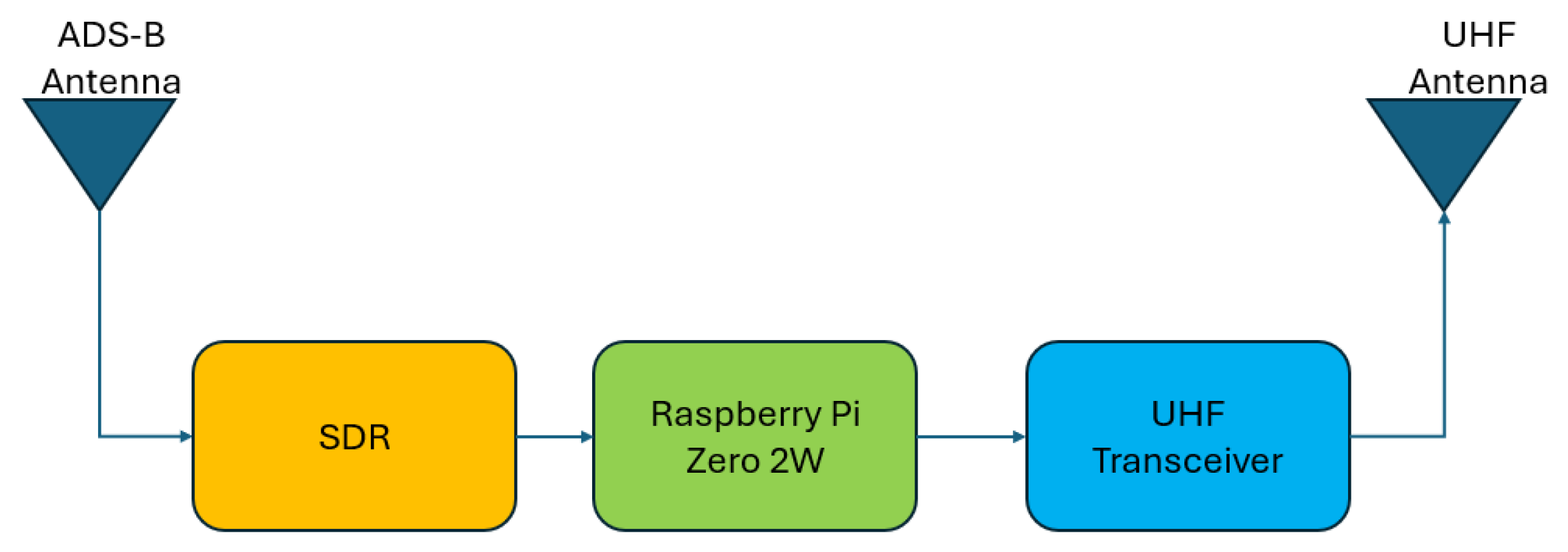
The payload subsystem (
Figure 4) is centered around a Raspberry Pi-based processing unit, integrated with an SDR module and a configurable antenna array, enabling a flexible and powerful platform for communication and signal monitoring tasks. This configuration supports ADS-B reception for real-time aircraft tracking as well as voice communication capabilities. The SDR allows for dynamic frequency tuning and protocol switching, enabling the CubeSat to adapt to multiple communication scenarios without hardware changes.
The Raspberry Pi Zero, selected for its balance between computational power and energy efficiency, manages preliminary signal processing, filtering, and payload-specific tasks before relaying data to the OBC. Communication between the payload and the OBC is established via high-speed serial or USB interfaces, enabling robust data exchange for real-time decision-making, health monitoring, and command execution. The UHF antenna system is optimized for multi-band operation, ensuring reliable transmission and reception across supported frequency ranges.
This modular, tri-modal payload architecture offers strong support for CNS applications and can be reprogrammed in orbit to serve emerging user needs or test new communication protocols, making it especially suitable for research, remote connectivity, and civil aviation applications.
3.4. CubeSat Layout
Figure 5 illustrates the detailed structural and functional layout of the CubeSat. In this exploded view, each major component is separated and individually visible, allowing for a clear understanding of its placement and role within the overall system. This representation highlights the integration of critical subsystems, including power, communication, attitude control, and payload modules, showing how they interconnect to enable the satellite’s operations. By visually isolating each component, the figure emphasizes the relationships between subsystems and their contributions to the CubeSat’s functionality, providing a comprehensive overview for both design analysis and educational purposes.
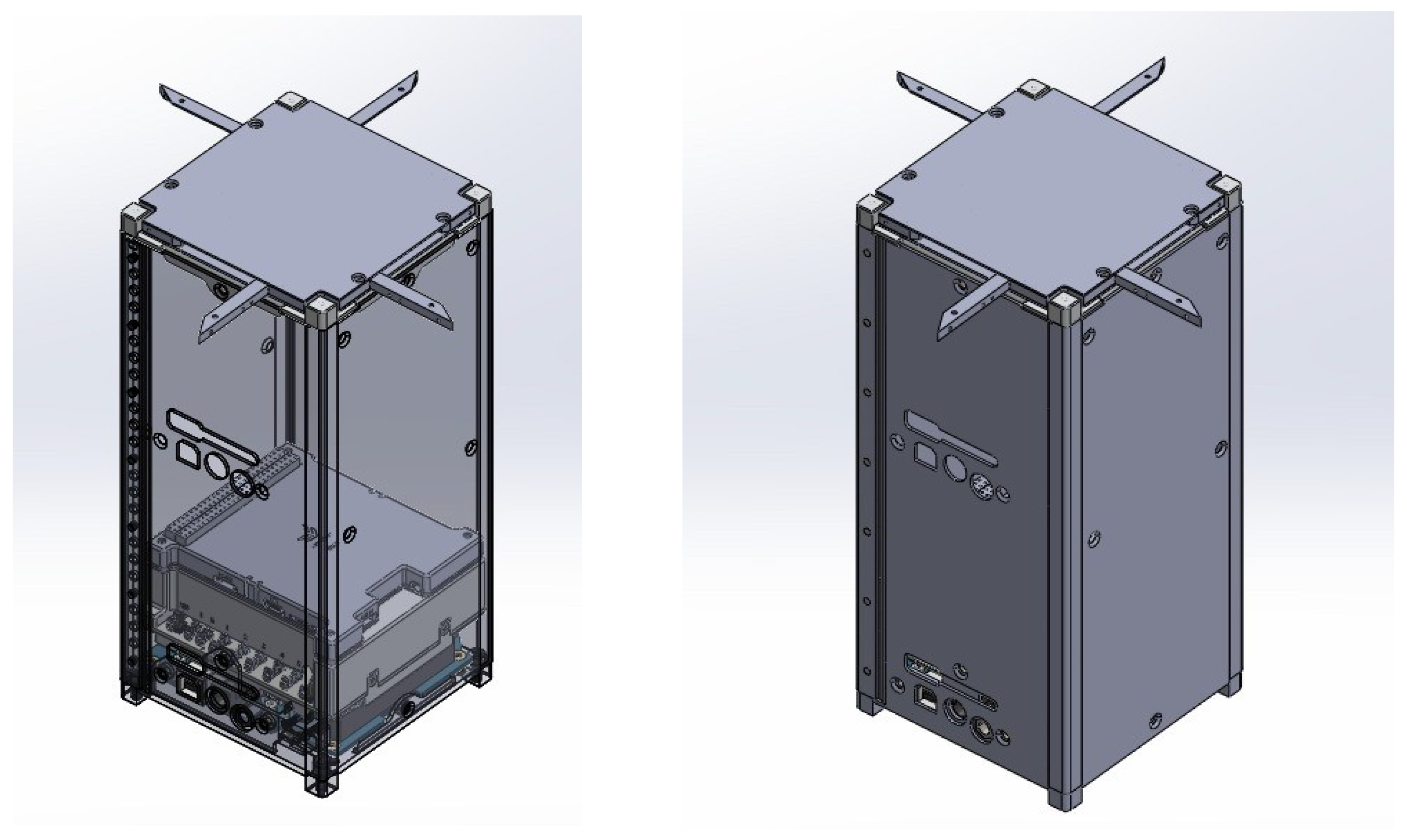
Figure 6 presents both the interior (left) and exterior (right) views of the CubeSat, providing a comprehensive perspective of its design. In the interior view, the various subsystem blocks—previously illustrated separately—are shown stacked within the CubeSat’s platform, demonstrating how power, communication, attitude control, and payload modules are spatially organized. The exterior view highlights the CubeSat’s structural casing and deployment interfaces, offering context on how the internal components are protected and integrated into the overall form factor. Together, these views convey a clear understanding of the CubeSat’s physical architecture and the spatial relationships between its subsystems, emphasizing both functional integration and structural layout.
4. Air–Ground Communications
The CubeSat mission will rely on a distributed ground station network to enable reliable data downlink and command uplink operations. Ground stations located in Bayamón, Puerto Rico (approximately 18.4014° N, 66.1561° W), and Cork, Ireland (approximately 51.8985° N, 8.4756° W), have been selected for their geographic advantages and existing infrastructure at these sites. This selection is intended to maximize communication windows during orbital passes, supporting robust data transfer and system monitoring.
These ground stations are equipped with high-gain directional antennas and tracking systems, enabling strong, line-of-sight communication links during satellite overpasses. Each pass facilitates the downlink of key payload data—including communications, navigation, and surveillance information—for integration into terrestrial systems. The dual-station configuration also offers redundancy and enhanced temporal coverage, reducing latency and enabling near-continuous monitoring.
The mission architecture leverages this distributed ground network to support real-time decision-making and ensure system health through continuous telemetry. Additionally, the ground segment is designed with scalability in mind, enabling expansion through networks like SATNOGS [
5], a collaborative platform supporting future constellation growth and broader geographic coverage, significantly enhancing mission resilience and operational efficiency.
5. Conclusions
This project showcases the potential of CubeSats to play a pivotal role in advancing global transportation safety, emergency response coordination, and communication accessibility in remote regions. By extending the capabilities of small satellite platforms, the mission highlights their value as foundational elements of future space-based infrastructure. In particular, the work proposes the use of CubeSats to enable ICNS services and support emerging U-space/UTM frameworks. As the airspace becomes increasingly populated with new types of aircraft under IAM/AAM concepts, integrating ICNS into low-altitude operations will be essential. This approach lays the groundwork for safe, efficient, and scalable management of next-generation airspace environments.
6. Benefits
This CubeSat project offers several strategic and technological advantages, particularly in advancing capabilities in space-based CNS systems. By leveraging CubeSat technology, the project strengthens its position in the rapidly evolving small satellite market and aligns with emerging trends in space-enabled aerospace solutions. It also contributes to the development of next-generation UTM and U-space operations by providing scalable and cost-effective platforms to extend CNS coverage to low-altitude airspace, where traditional infrastructure is limited or impractical.
Accelerated Innovation in Space-Based CNS: The project advances expertise in deploying CNS payloads on small satellites, enabling faster prototyping, in-orbit technology validation, and cost-effective expansion of satellite services, thereby reducing time-to-market for new aerospace communication solutions.
Enhanced U-space and UTM Capabilities: By improving surveillance and communication coverage at low altitudes, the CubeSat platform supports safer and more efficient management of unmanned and UAM traffic, addressing regulatory and operational challenges in congested airspace.
Improved Global Connectivity and Safety: The project enhances coverage in remote or underserved regions, supporting global transportation safety, emergency response coordination, and broader access to satellite services, aligning with the industry’s commitment to innovation in aerospace safety systems.
7. Future Work
Building on the current 2U CubeSat design, future efforts will focus on developing a more capable 6U CubeSat platform. The current 2U CubeSat is scheduled for launch and will begin capturing in-orbit data, which will be analyzed to evaluate subsystem performance, payload functionality, and overall mission effectiveness. Insights gained from this mission will directly inform the design and development of the next-generation 6U CubeSat. This larger form factor will provide increased volume and power capacity, enabling integration of higher-performance components and more advanced payloads. Key enhancements will include a more robust EPS with greater solar array surface area and battery capacity to support extended mission lifetimes and higher power demands.
Additionally, the upgraded payload will incorporate advanced communication technologies, notably the ability to handle 5G connectivity [
6]. This will expand the CubeSat’s role in supporting next-generation CNS services, particularly for high-bandwidth applications and low-latency communication essential for emerging U-space and UTM operations. The transition to a 6U platform will also facilitate more sophisticated onboard processing capabilities, improved thermal management, and enhanced attitude control systems.
Author Contributions
Conceptualization, A.G. and A.R.C.; Methodology, A.G. and A.R.C.; Software, A.G. and A.R.C.; Validation, A.G. and A.R.C.; Formal analysis, A.G. and A.R.C.; Investigation, A.G. and A.R.C.; Resources, A.G. and A.R.C.; Data curation, A.G. and A.R.C.; Writing—original draft preparation, A.G.; Writing—review and editing, A.G. and A.R.C.; Visualization, A.G. and A.R.C.; Supervision, A.R.C. All authors have read and agreed to the published version of the manuscript.
Funding
This research received no external funding.
Institutional Review Board Statement
Not applicable.
Informed Consent Statement
Not applicable.
Data Availability Statement
No new data were created or analyzed in this study. Data sharing is not applicable to this article.
Acknowledgments
The authors would like to express their gratitude to both Engine-4 and Collins Aerospace Puerto Rico for their valuable contributions and for allowing hands-on experiments to be conducted at their respective facilities.
Conflicts of Interest
The authors declare that Alex Ganau Sanchez and Amilcar Rincon Charris are employees of Collins Aerospace. The company had no role in the design of the study; in the collection, analyses, or interpretation of data; in the writing of the manuscript; or in the decision to publish the results.
Abbreviations
The following abbreviations are used in this manuscript:
| AAM | Advanced Air Mobility |
| ADCS | Attitude Determination and Control System |
| BCRs | Battery Charge Regulators |
| CNS | Communication, Navigation, and Surveillance |
| EPS | Electronic Power System |
| IAM | Innovative Air Mobility |
| ICNS | Integrated CNS |
| LEO | Low Earth Orbit |
| OBC | On-Board Computer |
| PCM | Power Control Management |
| UAM | Urban Air Mobility |
| UTM | Unmanned Traffic Management |
| SDR | Software-Defined Radio |
References
- Alshaer, H.; Ganau, A.; Brilhante, D.; Cleary, C.; Ullah, M.A.; Kramar, V. Next-Generation Integrated Communications, Navigation, and Surveillance Services. In Proceedings of the 2025 Integrated Communications, Navigation and Surveillance Conference (ICNS), Brussels, Belgium, 8–10 April 2025. [Google Scholar] [CrossRef] [Scilit]
- Monzonis, V.; Balbastre, J.V.; Ganau, A. SATERA Baseline: Identifying the Challenges of Space-Based Multilateration Systems. Presented at the SESAR Innovation Days 2024, Rome, Italy, 12–15 November 2024. [Google Scholar]
- Bouzoukis, K.-P.; Moraitis, G.; Kostopoulos, V.; Lappas, V. An Overview of CubeSat Missions and Applications. Aerospace 2025, 12, 550. [Google Scholar] [CrossRef] [Scilit]
- Asundi, S.A.; Fitz-Coy, N.G. CubeSat mission design based on a systems engineering approach. In Proceedings of the 2013 IEEE Aerospace Conference, Big Sky, MT, USA, 2–9 March 2013. [Google Scholar] [CrossRef] [Scilit]
- Surligas, M.; Zisimatos, A.; Daradimos, I.; Nikas, A.; Papadeas, D.M.P.; Papamathaiou, M.; Damkalis, A.-P.; Tsiligiannis, V.; Malyshkina, V. Satnogs-comms: Turnkey nanosatellite communications. In Proceedings of the 38th Annual Small Satellite Conference, Logan, UT, USA, 3–8 August 2024. [Google Scholar]
- Bassoli, R.; Granelli, F.; Sacchi, C.; Bonafini, S.; Fitzek, F.H.P. CubeSat-Based 5G Cloud Radio Access Networks: A Novel Paradigm for On-Demand Anytime/Anywhere Connectivity. IEEE Veh. Technol. Mag. 2020, 15, 39–47. [Google Scholar] [CrossRef] [Scilit]
| Disclaimer/Publisher’s Note: The statements, opinions and data contained in all publications are solely those of the individual author(s) and contributor(s) and not of MDPI and/or the editor(s). MDPI and/or the editor(s) disclaim responsibility for any injury to people or property resulting from any ideas, methods, instructions or products referred to in the content. |