1. Introduction
Space missions heavily depend on solar photovoltaic power because of the lack of alternative continuous energy sources in orbit. According to NASA, over 90% of nanosatellites rely on solar power and battery systems as the main source of power [
1]. Solar cells are fundamental to spacecraft, facilitating prolonged operations for satellites, space missions and the International Space Station. Current spacecraft engineers prefer multijunction solar cells to fulfill these requirements. Unlike typical single-junction cells (which convert only a tiny fraction of sunlight efficiently), multijunction cells include various semiconductor p–n junctions with varying bandgaps. Each junction is tuned to absorb a particular segment of the sun spectrum, enabling the cell to capture a broader range of wavelengths and convert a greater amount of incoming light into power. NASA and satellite manufacturers mostly use multijunction cells based on Group III–V semiconductor elements, which have become the dominant space photovoltaic technology. These triple-junction cells attain initial efficiencies of 30% under the AM0 (air mass zero) sun spectrum observed in space [
1]. Space solar cells are designed under the AM0 spectrum (unfiltered sunlight in space), containing a wide range of wavelengths including higher-energy ultraviolet and extended infrared compared to the terrestrial spectrum [
2]. Although multijunction solar cells significantly enhance light transmission, another priority is to reduce electrical losses in the solar cell especially at the front contact. The front electrode of a solar cell must efficiently conduct current while permitting light to pass through. Transparent conducting oxide (TCO) films such as indium tin oxide (ITO) are frequently used as the front electrode. Nevertheless, ITO alone faces a compromise between achieving superior electrical conductivity and maintaining enough optical transparency. This limitation originates the need for hybrid configurations for high lateral conductance and transmittance within an electrode [
3]. Carbon-based electrodes show significant potential for enhancing solar device performance [
4]. Among all options, graphene stands out as a potential option for transparent electrode applications due to its high carrier mobility and optical transparency [
5]. Graphene alone does not have sufficient antireflective properties for solar cell applications, but when integrated with conventional TCO in a hybrid configuration, it significantly improves overall performance [
6]. Through Raman spectroscopy (via Raman microscope (Renishaw plc, Wotton-under-Edge, United Kingdom)) and Tunneling Atomic Force Microscopy (TUNA-AFM) (via BrukerNanoScopeV multimodeAFM (Digital Instruments, Santa Barbara, CA, USA)), this study investigates a hybrid electrode structure that integrates monolayer graphene with indium tin oxide (ITO) to improve electrical conductivity while preserving optical transparency which is a critical requirement for multijunction solar cells. The hybrid electrode was prepared by transferring a chemical vapor deposition (CVD)-synthesized monolayer graphene sheet onto pre-patterned ITO-coated glass substrates via the thermal release tape method tape as reported in [
7]. This hybrid configuration aims to enhance charge carrier mobility, reduce sheet resistance, and maintain surface uniformity.
2. Materials and Methods
ITO electrodes with fully oxidized 100 nm indium tin oxide (ITO) were obtained from Ossila Ltd. (Sheffield, UK). A graphene monolayer was deposited on the ITO surface by using the optimum deposition parameters for the chemical vapor deposition method as described by [
8]. Raman measurements were conducted using an inVia Raman microscope (Renishaw plc, Wotton-under-Edge, United Kingdom) equipped with 532 nm laser excitation sources, a thermoelectrically cooled CCD camera, and 3000 grooves/mm grating. The laser beam was focused on a spot approximately 1 μm in diameter on the sample. Laser power at the sample was restricted to 0.5 mW. The Raman spectra were collected using a 50×/0.75 NA objective lens (Leica Microsystems GmbH, Wetzlar, Germany), and the total integration time was 500 s. Another useful technique is Tunneling Atomic Force Microscopy (TUNA-AFM) employed to determine the nanoscale electrical properties along with surface topography of hybrid electrodes. In contrast to traditional AFM, which solely analyzes mechanical characteristics, TUNA identifies ultra-low tunneling currents by imaging of localized conductive networks within the material [
9].
The TUNA measurements provide a direct correlation between surface morphology and local electrical response of the graphene/ITO hybrid. Operating in contact mode, the probe maps the tunneling current arising from conductive nanoregions, revealing a homogeneous coverage of graphene across the ITO surface. Consistent results obtained from multiple locations and repeated scans demonstrate that the measured electrical response reflects the intrinsic properties of the material rather than effects induced by surface topography.
3. Results and Discussion
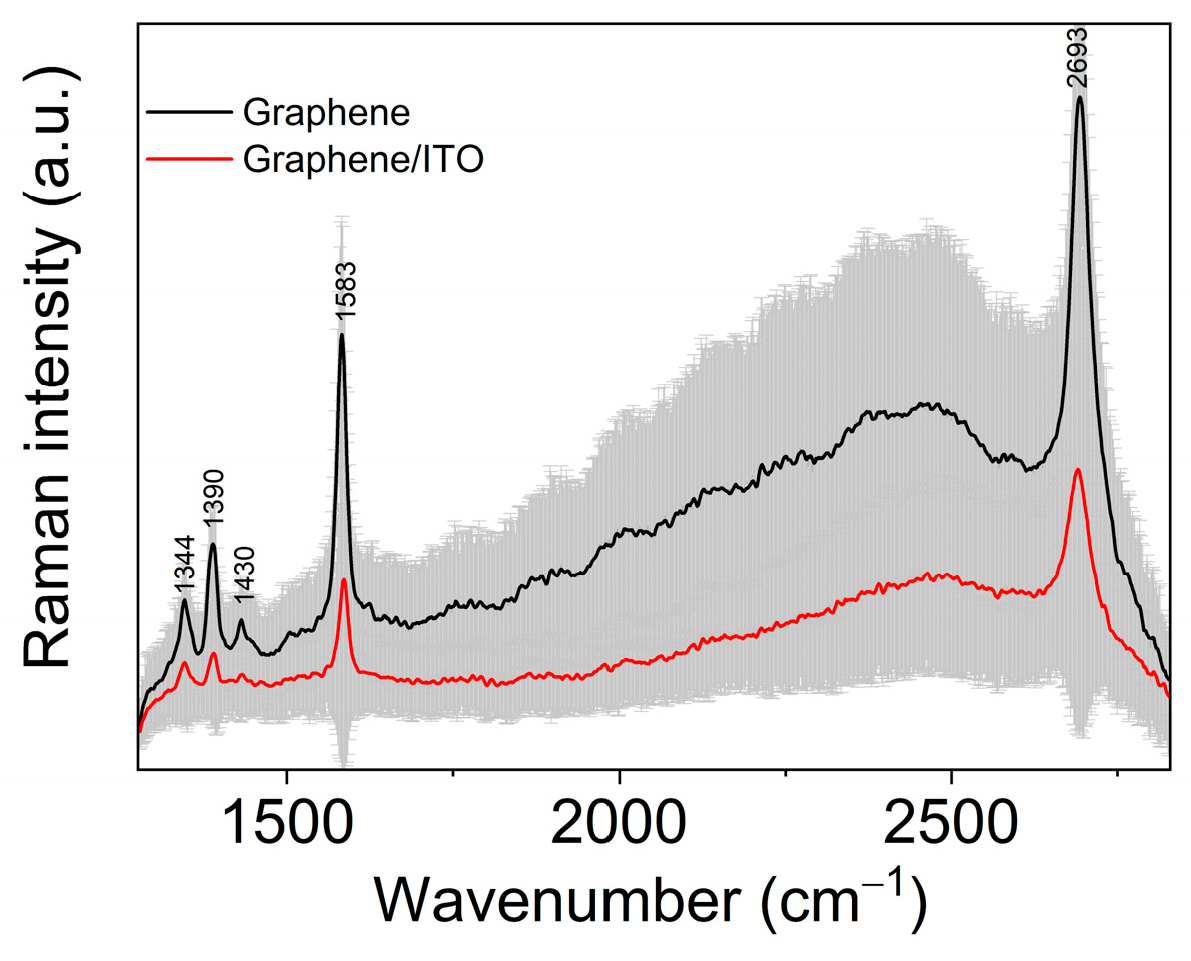
Figure 1 shows the Raman spectra of the graphene monolayer deposited on the glass substrate (black curve). The Raman spectra confirm the presence of peaks at 1344, 1390, 1430, 1583, and 2693 cm
−1, typical of graphene. The peak at 1583 cm
−1 corresponds to the doubly degenerated optical phonon mode present in the center point of the Brillouin zone of graphene. It symbolizes the in-plane stretching vibrations of sp
2-bonded carbon atoms [
10]. As the graphene layers increase, this band shifts to the lower wavenumbers. The 2D band peak is located at 2693 cm
−1. The 2D band arises from a double-resonant two-phonon vibrational process. This 2D band is overtone of the D band but it does not arise due to defects. It is the second order of the D band and related to the intrinsic characteristics of graphene. It is involved in the emission of phonons near the
k-point of the Brillouin zone. The spectra revealed weak-intensity peaks at 1390 and 1430 cm
−1 which might be due defect-related modes. Weak intensity of the D band at 1344 cm
−1 indicates minimal structural defects exist in the graphene material.
The Raman spectrum (red curve) shows a drop in the intensity of all peaks after transferring the graphene onto the ITO substrate. For the graphene/ITO sample (red line,
Figure 1), the D, G, and 2D bands show at roughly 1345 cm
−1, 1585 cm
−1, and 2692 cm
−1. The Raman spectra confirm the electron and hole doping to graphene from ITO by the 1–2 cm
−1 blueshift of the G band. More specifically, the electron doping from ITO to graphene can also be verified from the 1 cm
−1 redshift of the 2D band [
11,
12]. The I
2D/I
G ratio remains 1.45, which confirms the charge doping of graphene by the ITO substrate. This low doping is induced by the charge transfer from ITO to graphene [
13]. D peak Raman intensity can be decreased by the increased electron scattering in graphene due to its carrier concentration. This electron scattering originates from doping due to substrate effects [
14]. Both samples show a low intensity ratio of D to G bands (I
D/I
G), which only slightly rises (0.23–0.31) during transfer, suggesting no major defects in graphene (
Table A1).
The full width at half maximum (FWHM) is ~50 cm−1 for the 2D band while the G band has a FWHM of ~19.6 cm−1. The 2D peak of ITO/graphene is narrowed w.r.t. the graphene only and has a FWHM of about 40 cm−1 while the FWHM of G remains 19.2 cm−1. Raman analysis shows ~1 cm−1 uncertainty in peak position and width. In summary, Raman spectra reveal the succesful integration of graphene on ITO surface. TUNA-AFM was utilized to examine the nanoscale surface morphology and localized electrical characteristics of the generated samples: (i) glass/ITO interface and (ii) glass + ITO + graphene. Measurements were conducted in contact mode with a Pt-coated conductive tip with a DC bias of 1–2 V.
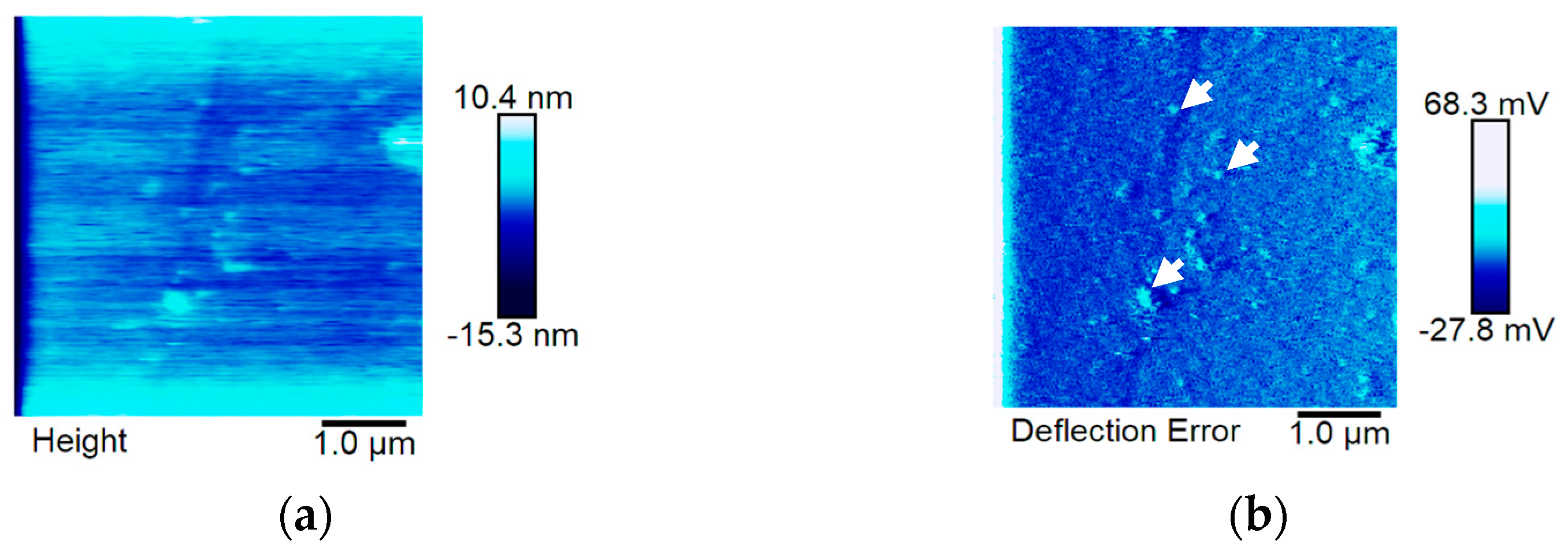
The bare ITO surface texture is characterized by a regular structure with well-defined grains. More precisely, for this sample, the two-dimensional (2D) height image in
Figure 2a demonstrates a compact and homogenous morphology with the vertical color scale extending from −15.3 nm to 10.4 nm which is a graphic representation of the topographic height of the analyzed surface, highlighting the polycrystalline characteristics of ITO films. The two-dimensional (2D) deflection error image in
Figure 2b reveals distinct grains (see white arrows) with clear boundaries, confirming a uniform surface texture typical of crystalline ITO layers. The two-dimensional (2D) friction image in
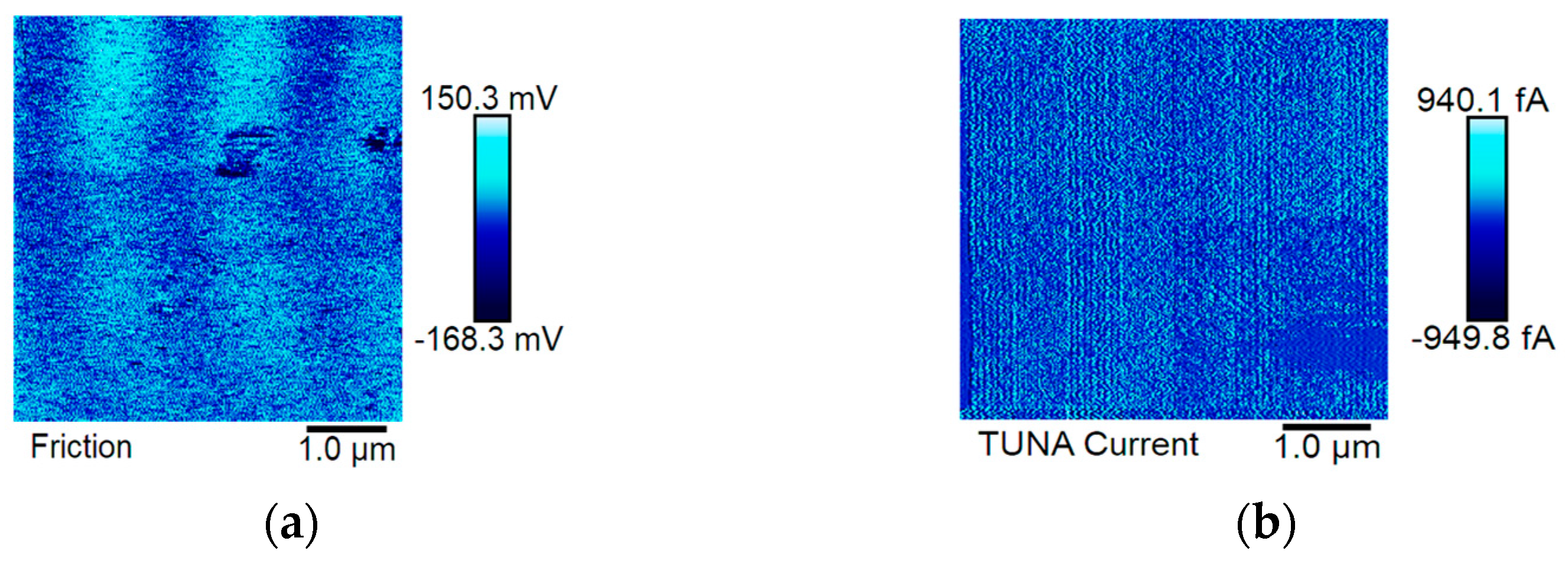
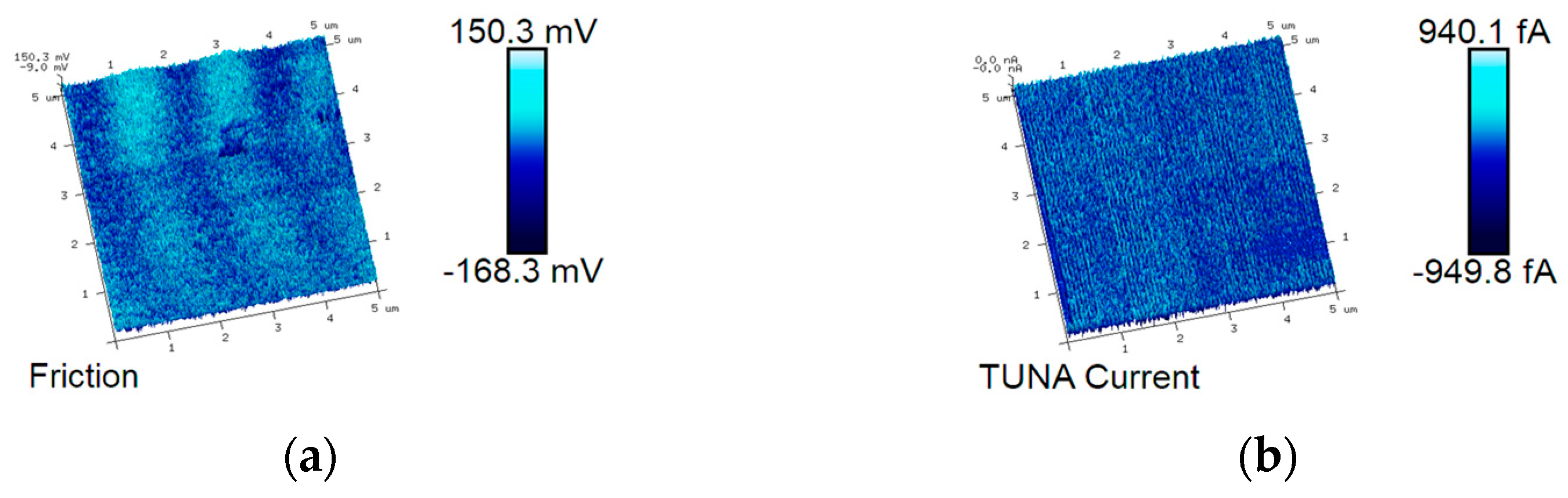
Figure 3a displays negligible contrast variation, signifying consistent mechanical properties over the scanned area. The two-dimensional (2D) TUNA current map in
Figure 3b exhibits measurable tunneling currents between −949.8 fA and 940.1 fA, indicating localized electron transport via the conductive grains. The maximum current signals were localized at grain boundaries, which serve as favored conduction pathways. The relatively small current magnitude indicates that charge transfer is mainly influenced by the inherent conductivity of the ITO layer rather than by extensive percolation networks.
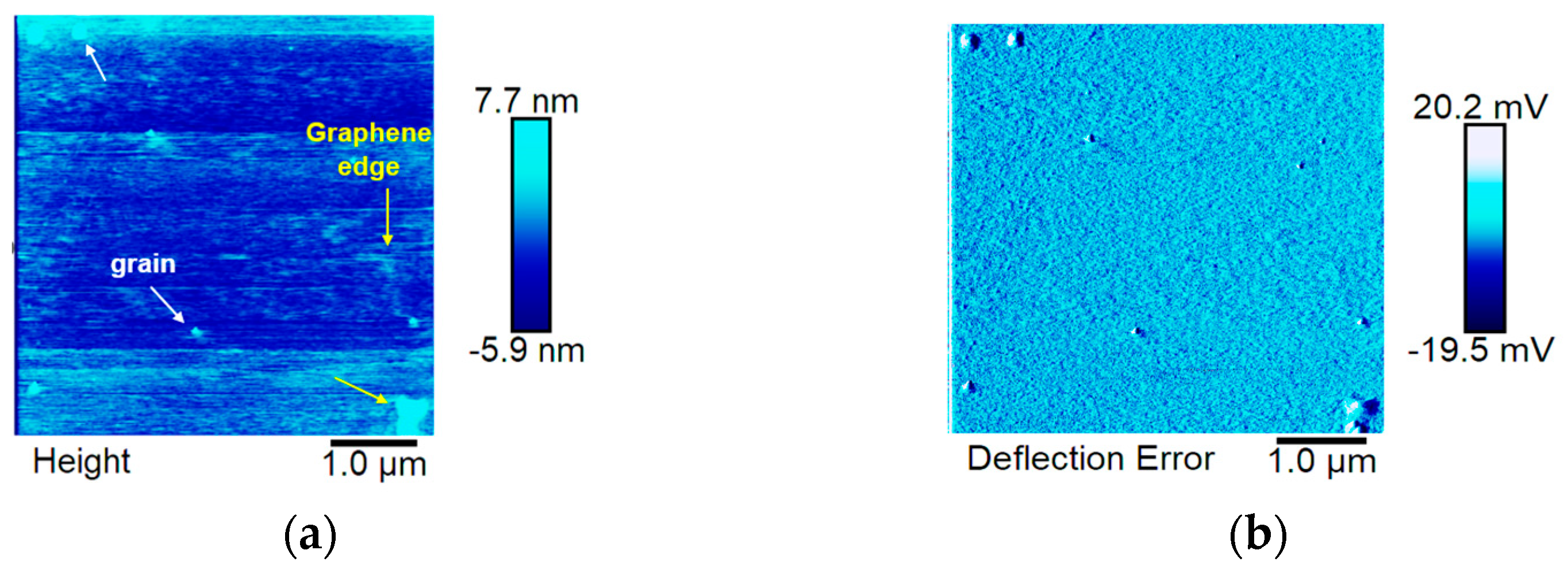
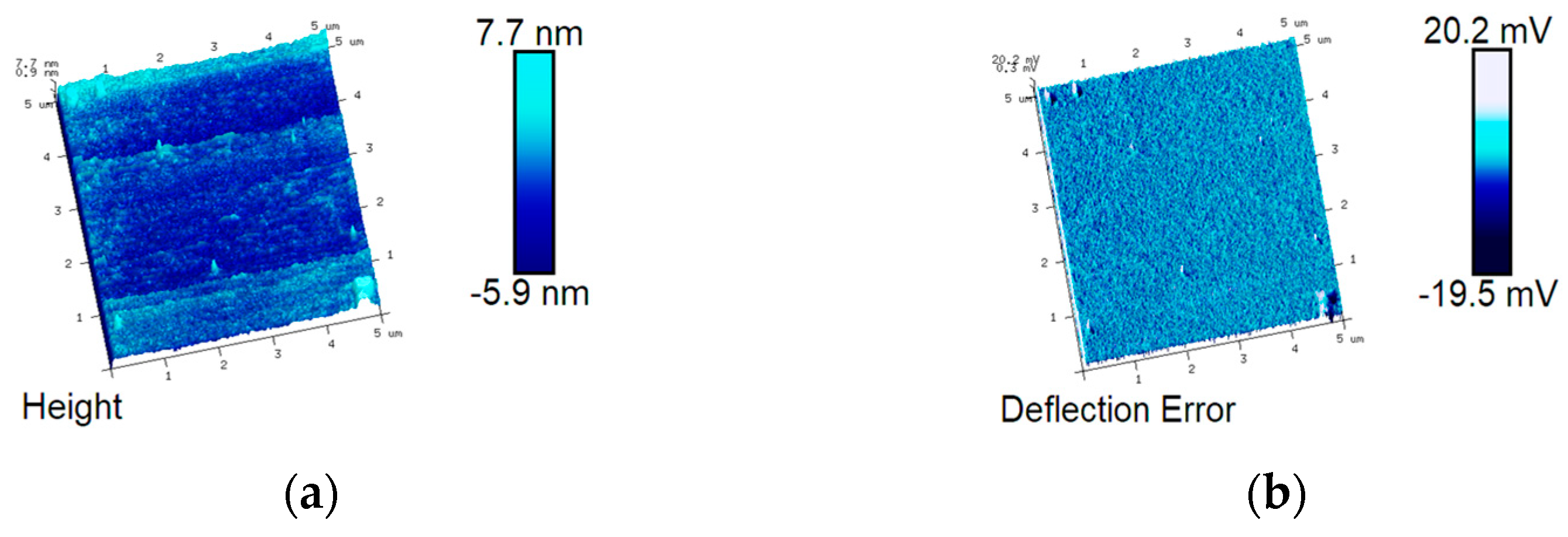
For ITO/graphene hybrid electrodes, the two-dimensional (2D) height image in
Figure 4a provides clear evidence of a regular surface texture characterized by well-defined grains and graphene edges that are easily identifiable on the ITO. In particular, the vertical color scale, varying from −5.9 nm to 7.7 nm, visually translates the topographical characteristics (namely, the well-defined grains indicated by the white arrows and graphene edges indicated by the yellow arrows), thus allowing for the immediate distinction of differences in height on the analyzed graphene/ITO hybrid surface. The proximity between the graphene sheet and the underlying ITO is also detectable. The deflection error image in
Figure 4b displays a smooth and uniform surface with minor contrast changes indicative of small topographical characteristics. The lack of significant discontinuities confirms the integrity and homogeneity of the graphene sheet placed on the ITO substrate. Thus, the two-dimensional (2D) deflection error image, showing no significant variations in lateral or vertical force, indicates that the scan during the measurement is stable and the surface appears homogeneous from the point of view of the error signal.
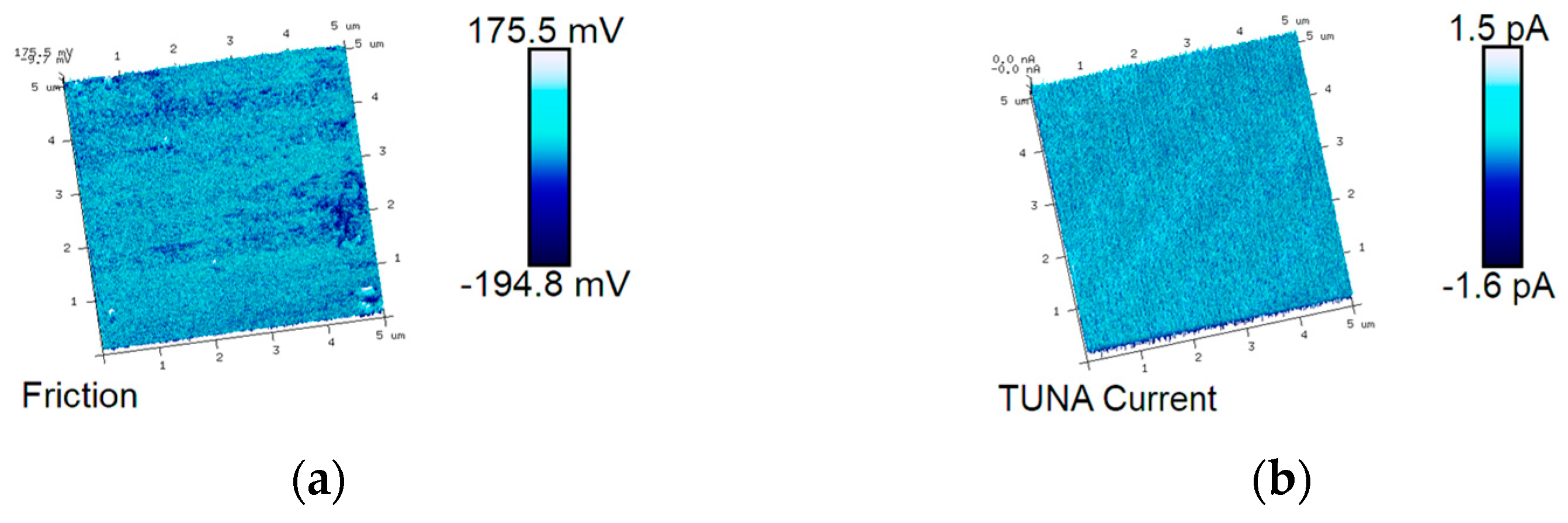
The two-dimensional (2D) friction image of the graphene-coated ITO surface in
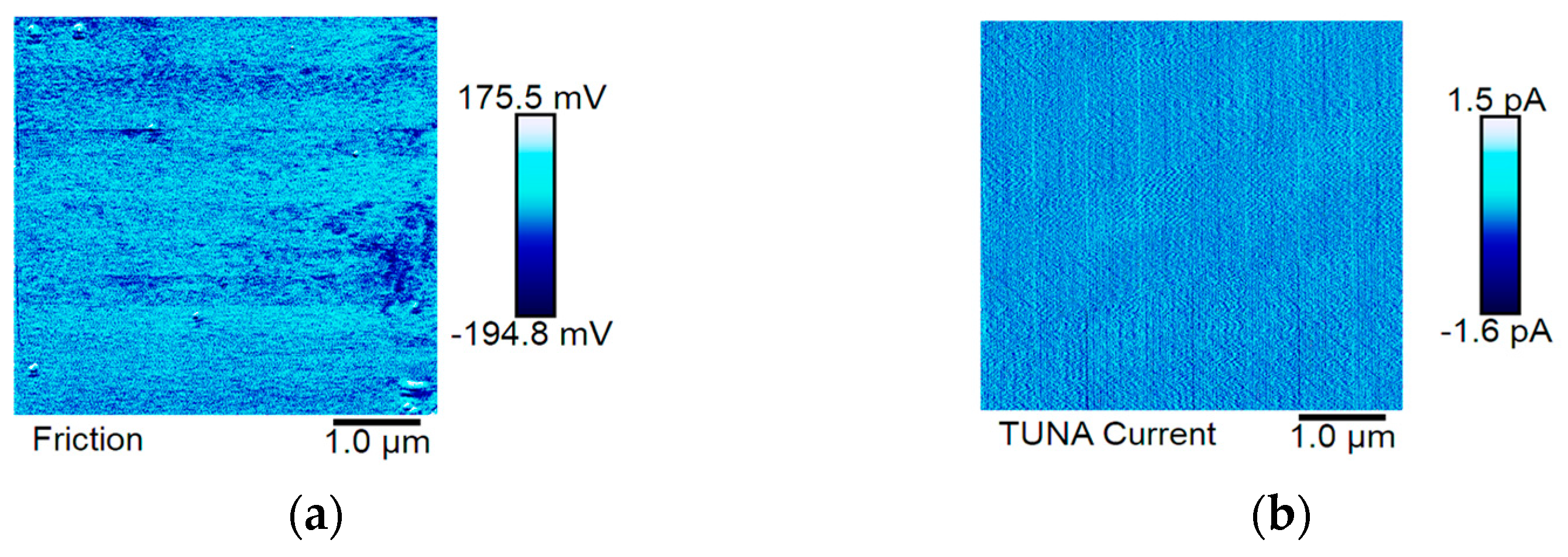
Figure 5a exhibits a smoother texture and reduced contrast relative to naked ITO. The two-dimensional (2D) TUNA current image in
Figure 5b reveals significantly enhanced tunneling currents varying from around −1.6 pA to 1.5 pA with bright, interconnected areas indicative of conductive graphene pathways. The incorporation of graphene significantly improved the local current density and electrical continuity across the surface.
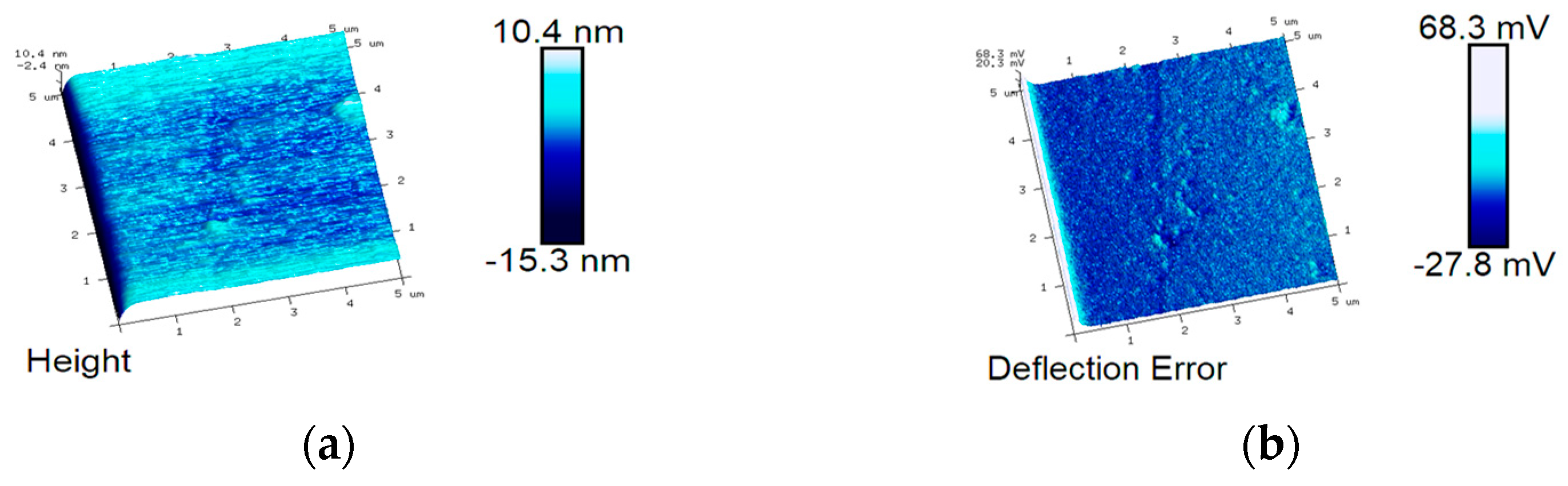
The maximum current values were obtained from the TUNA current maps and used to calculate the increase in percentage of conductivity. Both samples were measured under the same scan areas and bias; the extracted values are 940 fA for ITO alone and 1.5 pA ≅ 1500 fA for ITO/graphene. The 60% current enhancement is due to graphene’s superior in-plane conductivity and its strong interfacial interaction with the ITO layer, which promotes vertical charge tunneling. These findings indicate that the integration of graphene significantly enhances nanoscale electrical transport, facilitating the creation of large percolation channels that account for the improved conductivity observed at the macroscopic scale. The three-dimensional (3D) images of all the TUNA-AFM pictures are presented in
Appendix A of this paper.
This study focuses on local nanoscale conductivity and charge transfer mechanisms, while recognizing that macroscopic measurements are essential for assessing performance at the device level. Accordingly, a multiscale characterization approach is required to evaluate key properties that can be reliably translated into well-performing devices [
15].




 ,
,