Proceeding Paper

Fracture Assessment of DEMO Divertor Components by Submodeling Approach †

1
Department of Industrial Engineering, Università degli Studi di Salerno, 84084 Fisciano, Italy
2
Department of Enterprise Engineering, University of Rome Tor Vergata, Via del Politecnico 1, 00133 Rome, Italy
3
Department of Engineering, University of Palermo, Viale delle Scienze Ed. 6, 90128 Palermo, Italy
4
United Kingdom Atomic Energy Authority (UKAEA), Culham Science Centre, Abingdon OX14 3DB, UK
5
Max Planck Institute for Plasma Physics, Boltzmannstrasse 2, 85748 Garching, Germany
*
Author to whom correspondence should be addressed.
Presented at the 54th Conference of the Italian Scientific Society of Mechanical Engineering Design (AIAS 2025), Florence, Italy, 3–6 September 2025.
Eng. Proc. 2026, 131(1), 36; https://doi.org/10.3390/engproc2026131036
Published: 29 April 2026

Abstract

This study addresses, within the framework of fracture mechanics, the structural analysis of the DEMO (demonstration power plant) divertor—a key component in fusion reactors—subjected to particularly severe loading conditions. A global model of the divertor was developed using Finite Element Method (FEM) analysis through the software ANSYS Workbench 2024, including all structural subcomponents. Thermal and internal pressure load cases were considered. The FEM analysis enabled the identification of critical areas prone to stress concentration. Based on the global results, a submodeling technique was applied to analyze locally critical components with higher resolution. On these submodels, a Linear Elastic Fracture Mechanics (LEFM) analysis was performed using the FRANC3D (v 8.6.2) software. Static semi-elliptical cracks were introduced in various configurations, and the stress intensity factor was evaluated to assess their criticality. Subsequently, an incremental crack growth analysis was conducted to simulate crack propagation based on the local stress field, also accounting for directional variations. Finally, a lifetime analysis was carried out using Paris’ law, estimating the fatigue cycles for an arbitrary crack propagation under the given loading conditions. The entire procedure was repeated for each subcomponent and loading condition, resulting in a broad and detailed understanding of the fracture response of the system. This approach provides crucial insights for the design, inspection, and long-term maintenance of the divertor.

1. Introduction

The development of fusion energy represents one of the main scientific and technological challenges of our time, aiming to provide a safe, sustainable, and practically inexhaustible energy source. In this context, the DEMO reactor [1] is designed as a demonstration plant to bridge the gap between current experimental devices and future commercial fusion power plants. Among its components, the divertor plays a fundamental role in the neutralization and removal of helium produced in fusion reactions, in shielding the vacuum chamber, and in managing the extremely severe thermal and mechanical loads generated during normal reactor operation. Due to these particularly harsh operating conditions, the divertor is subject to strong cyclic thermal gradients, cyclic internal pressures, and intense mechanical stress states, which can promote the initiation and propagation of cracks in the materials. Ensuring its structural integrity [2] is therefore essential for the efficiency and service life of the reactor. Under cyclic loading conditions, the growth of cracks can instead be effectively described using Paris’ law, which correlates the crack growth rate with the range of the stress intensity factor. This formulation, combined with the results obtained from the imposed crack growth, allows estimating the number of cycles required to achieve such an extension, ultimately enabling the calculation of the service life of the individual component.
The present work aims to perform a structural and fracture assessment of the potential DEMO divertor inner vertical target through the use of numerical methods. A global finite element model is developed to describe the stress distribution over the entire component, while the submodeling technique is employed to analyze in greater detail the most critical regions. Furthermore, once some potential critical points in the configurations of various components are identified, Linear Elastic Fracture Mechanics (LEFM) analyses and crack propagation simulations are conducted in order to evaluate defect evolution under realistic loading conditions. Finally, Paris’ law is used to estimate the fatigue life of the critical subcomponents.
This approach provides a contribution to the understanding of the fracture response in the proposed design of the DEMO divertor target body and highlights methodological approaches useful for supporting design optimization activities, inspection planning, and long-term maintenance strategies for future fusion reactors.

2. Configuration and Structural Assessment for the DEMO Divertor

2.1. DEMO Divertor Loading Conditions

The divertor is one of the key components of a nuclear fusion reactor, serving to remove the heat generated by the plasma through the fluid refrigerant system. Under these conditions, the divertor is subjected to multiple types of loads, including the following:
  • Thermal loads, due to the particle and radiative flux from the plasma;
  • Internal pressure loads, generated by the coolant circulating in the cooling circuits that maintain component temperature stability;
  • Electromagnetic loads, arising from plasma currents and confinement magnetic fields;
  • Neutron irradiation, which induces material damage;
  • Swelling, i.e., material expansion caused by radiation damage.

2.2. Analyzed Load Cases

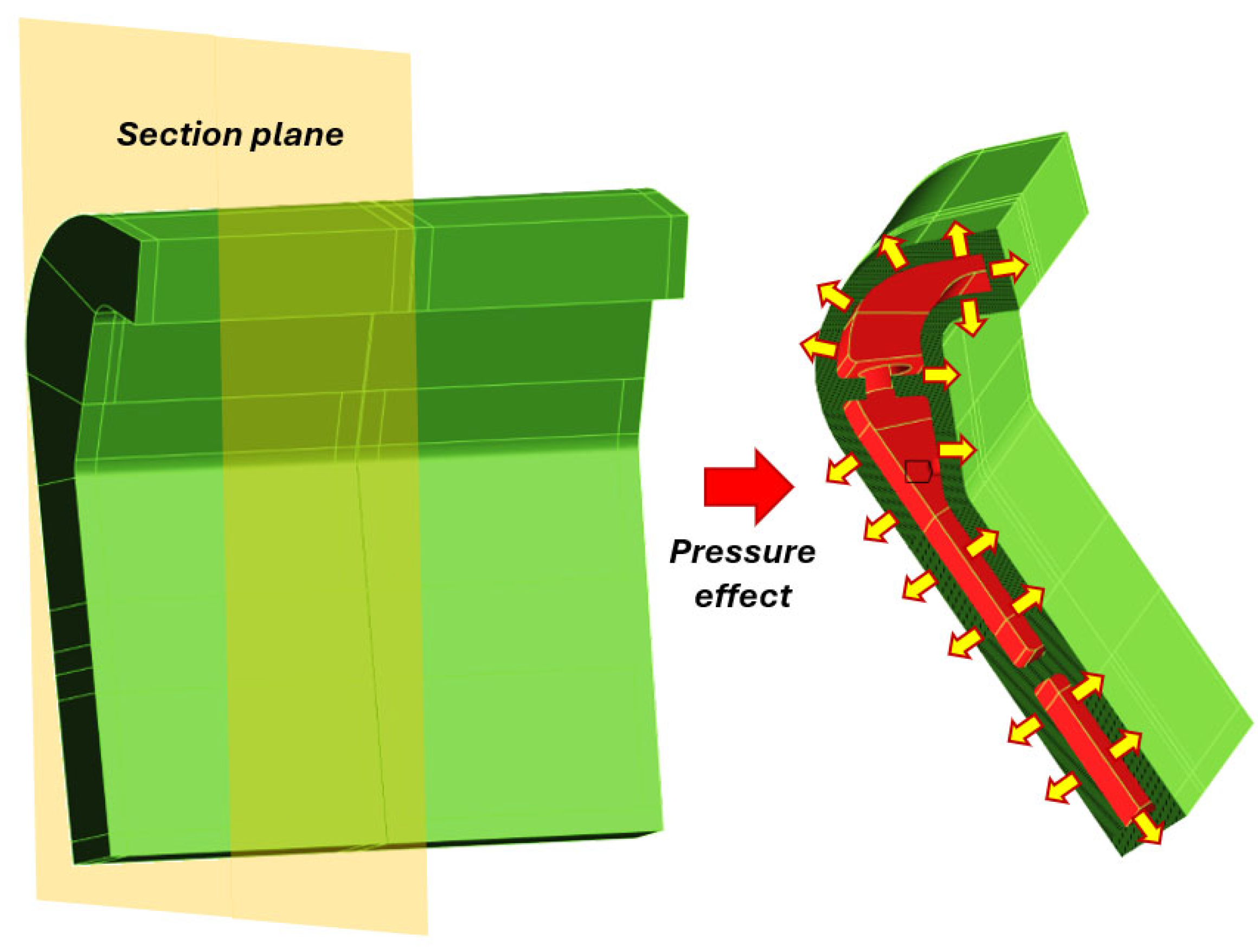
The DEMO divertor configuration features two separate coolant circuits [3], with the following operating pressures: 5 MPa for the Inner and Outer Vertical Targets (IVT and OVT), and 15.5 MPa for the other components (Figure 1). The adopted material is the AISI 316L.
In this study, the focus is on the thermal and pressure load cases (Figure 2), whose contributions are analyzed separately to simplify the assessment and isolate the effect of each load on the critical components.
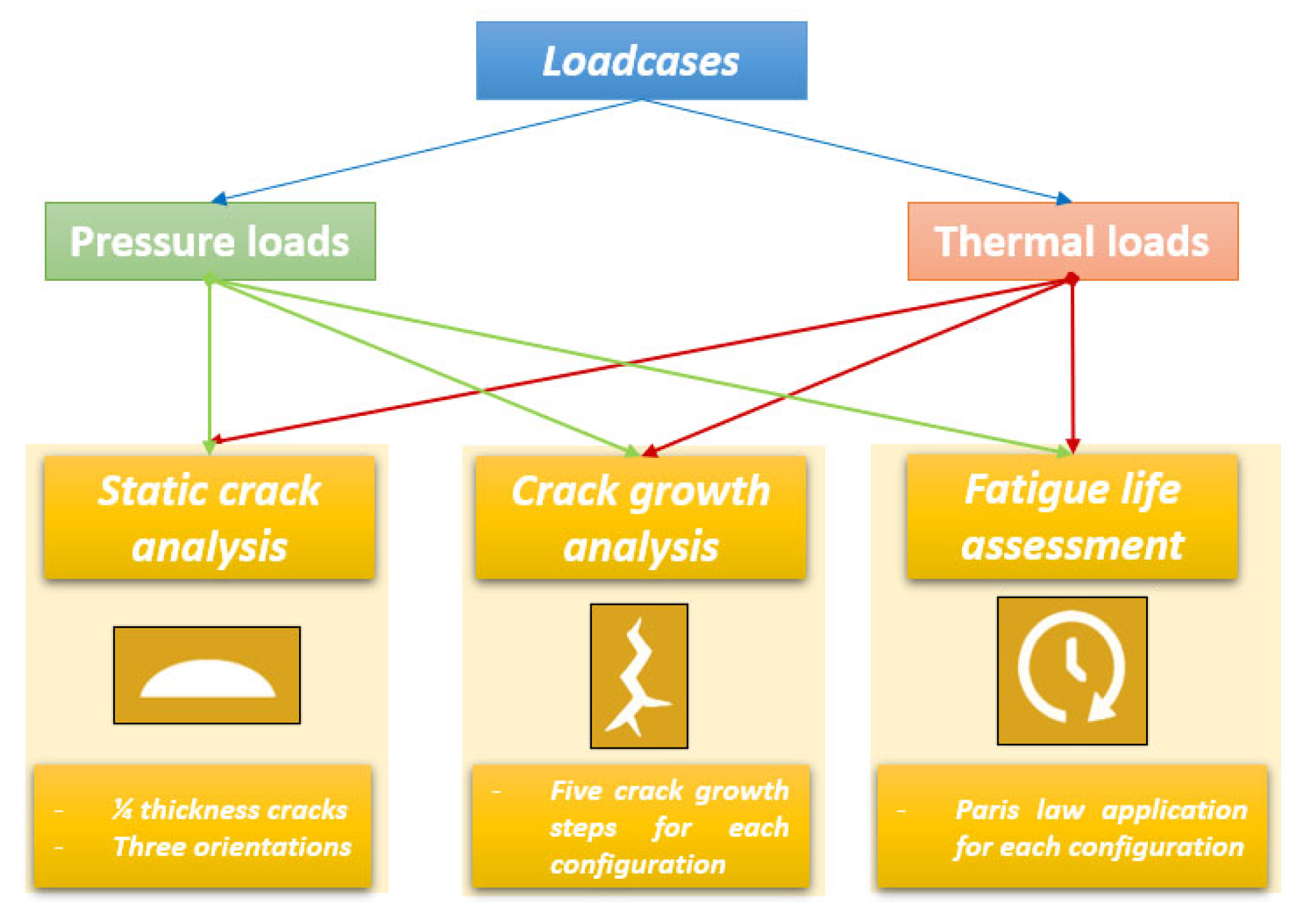
The workflow adopted in this analysis is schematized in Figure 2: the procedure starts with the separation of the applied load into thermal and pressure contributions, followed by a series of crack analyses, and concludes with growth and cycle assessment. The analysis begins with a global model of the divertor, in which pressure and thermal loads are applied independently:
  • In the first load case, the stress scenario produced on the vertical target by the refrigerant fluid pressure, equal to 5 MPa, is analyzed (Figure 3).
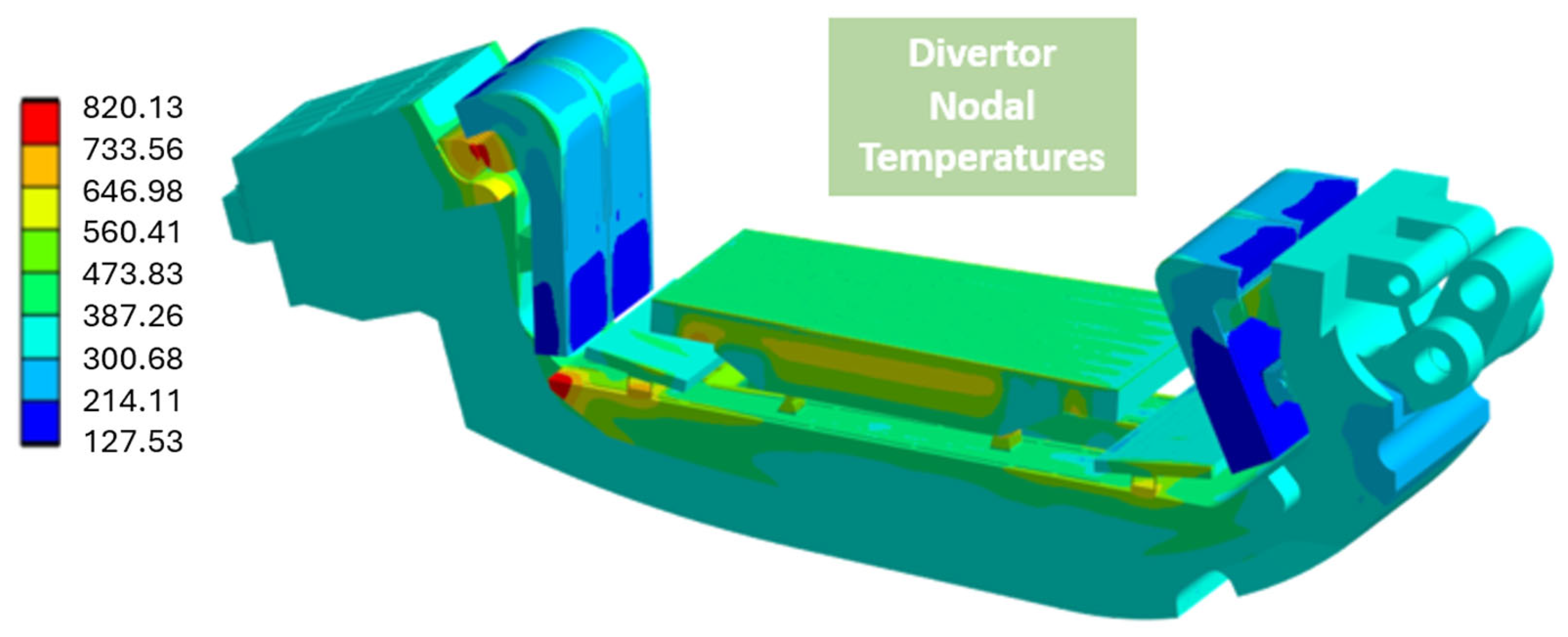
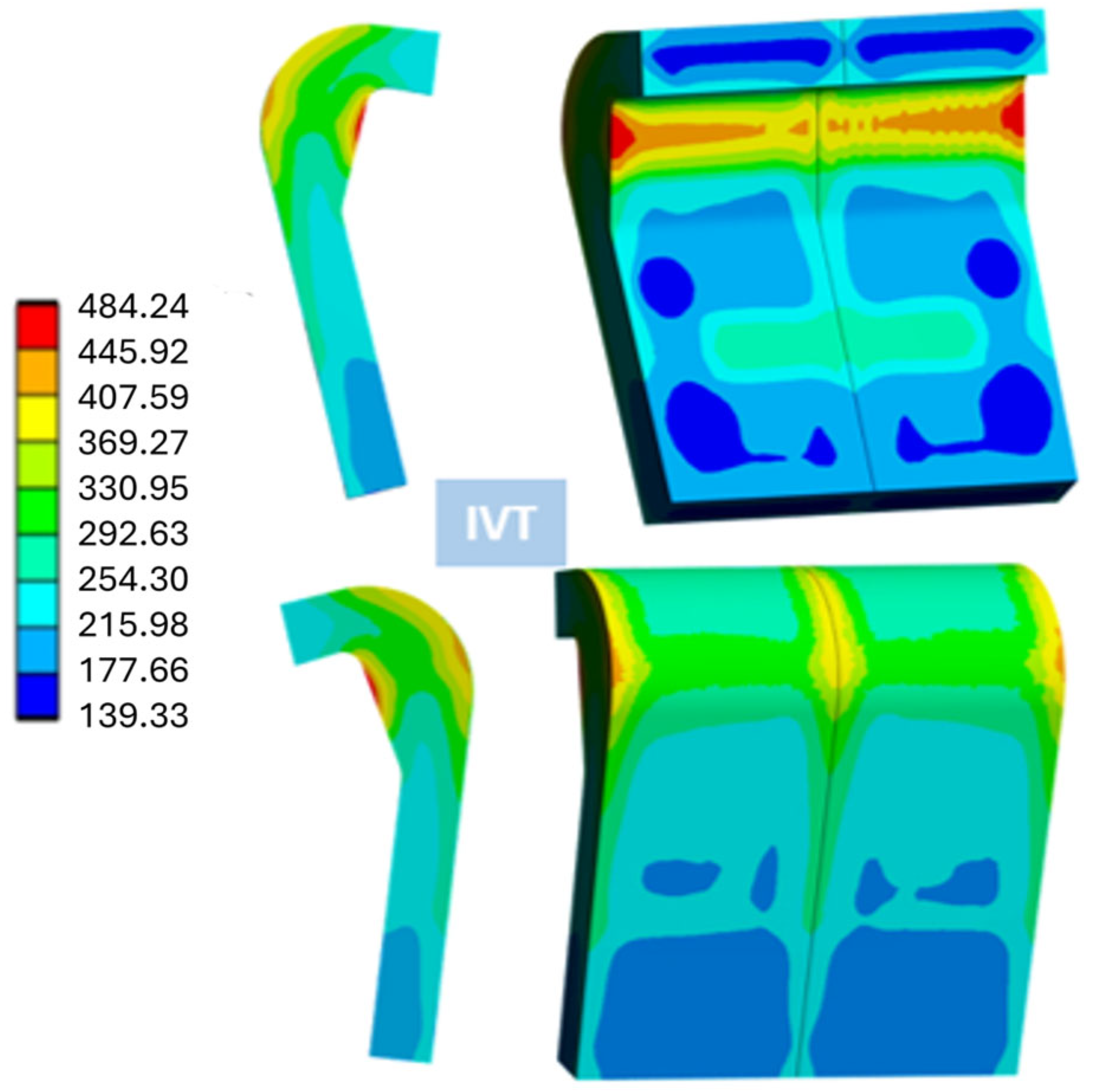
  • During the thermal load case, the nodal temperatures obtained from the Normal Operating Conditions (NoC) [3] are applied as thermal loads (Figure 4).
A synthetic resume of the applied loads in the two analyses is reported in Table 1:
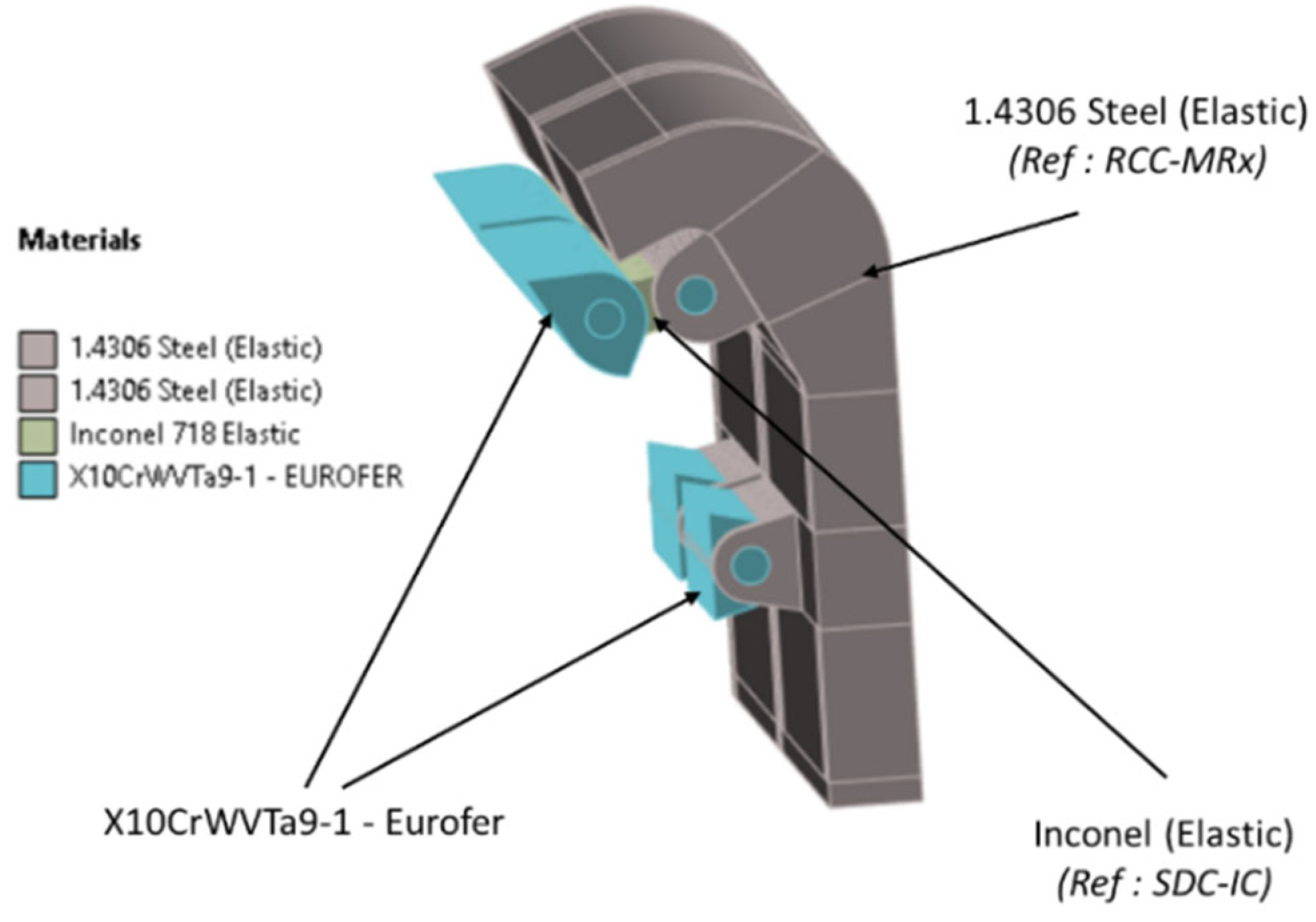
The materials adopted in the model are presented in Figure 5. The 1.4306 Steel Elastic material (Steel AISI 316L) is used for the vertical target body. The Inconel 718 elastic material is used for support links. The support brackets are made of Eurofer97. All the material properties are taken from reference [4]. The connection between the vertical target body and the cassette body is achieved through support brackets, pins, and links (Figure 5): both the IVT and OVT supports consist of two rows of brackets, one set attached to the target body and the other attached to the cassette side; these are connected via matching pins and links. A general joint is defined between the faces of the support bracket and the pin to prevent reciprocal sliding.
Regarding the global model, two boundary conditions are applied (Figure 6):
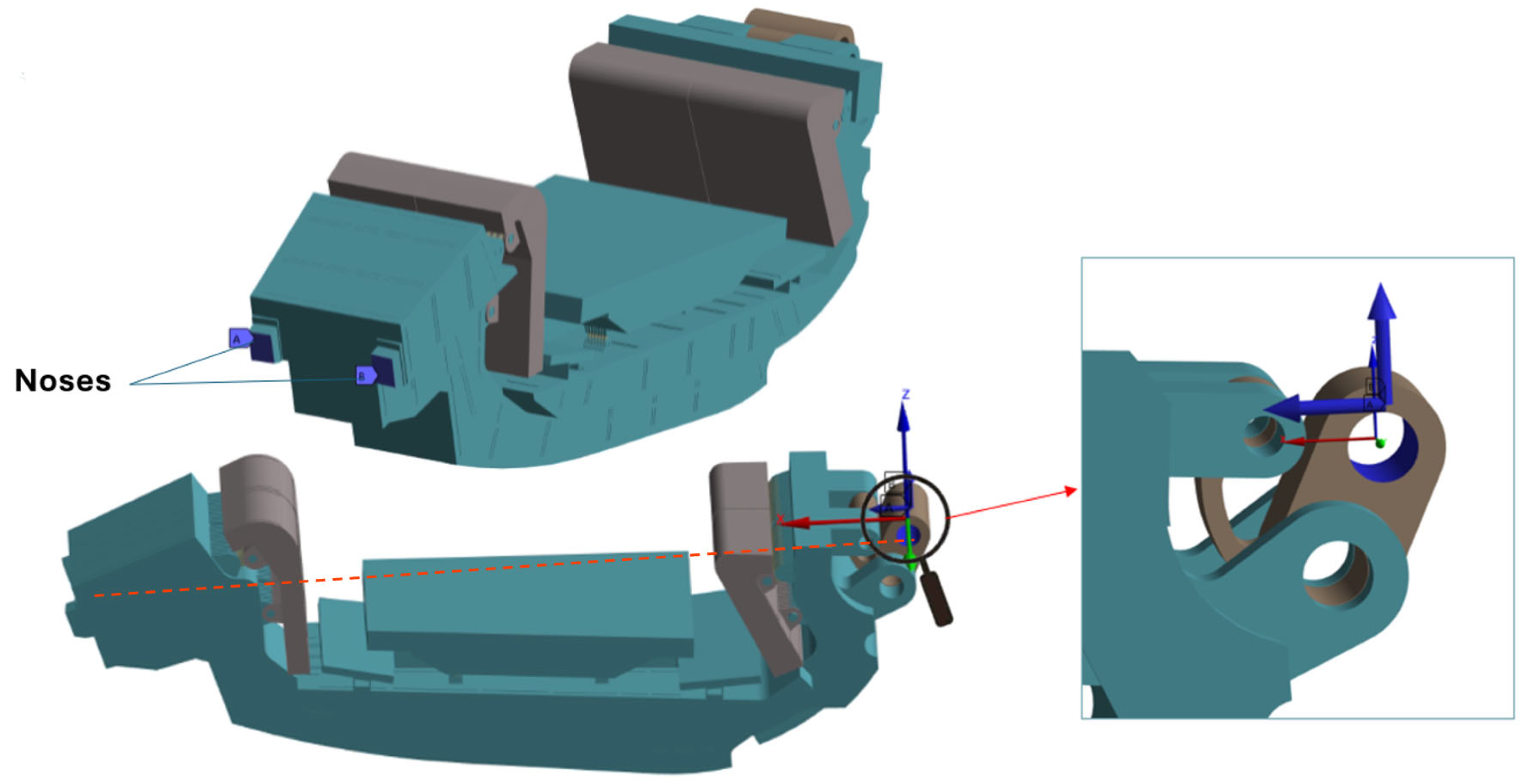
  • A fixed support is assigned to the two ‘noses’ of the cassette body.
  • An initial displacement is imposed on the wishbone to simulate a pre-load equal to 100 kN (acting in the direction of the red line).

3. Submodeling and Static Crack Analyses

Assuming crack nucleation at critical points, once these points are identified, cracks are introduced and their growth evaluated, followed by a simplified fatigue analysis. To achieve greater accuracy in the study of individual components without significantly increasing computation times, the submodeling technique is employed. This methodology, in the field of the structural integrity [5], allows for a locally refined mesh by focusing on a single component, enhancing result resolution and enabling detailed analysis of subcomponents.

3.1. Pressure Load Case

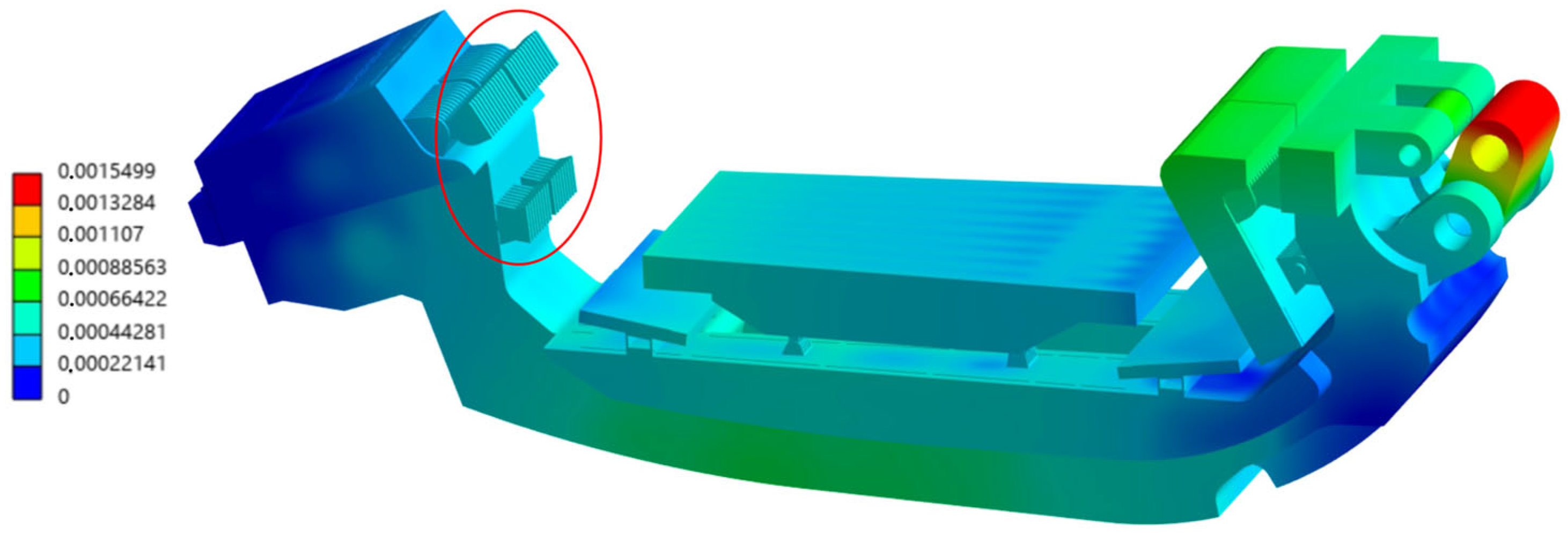
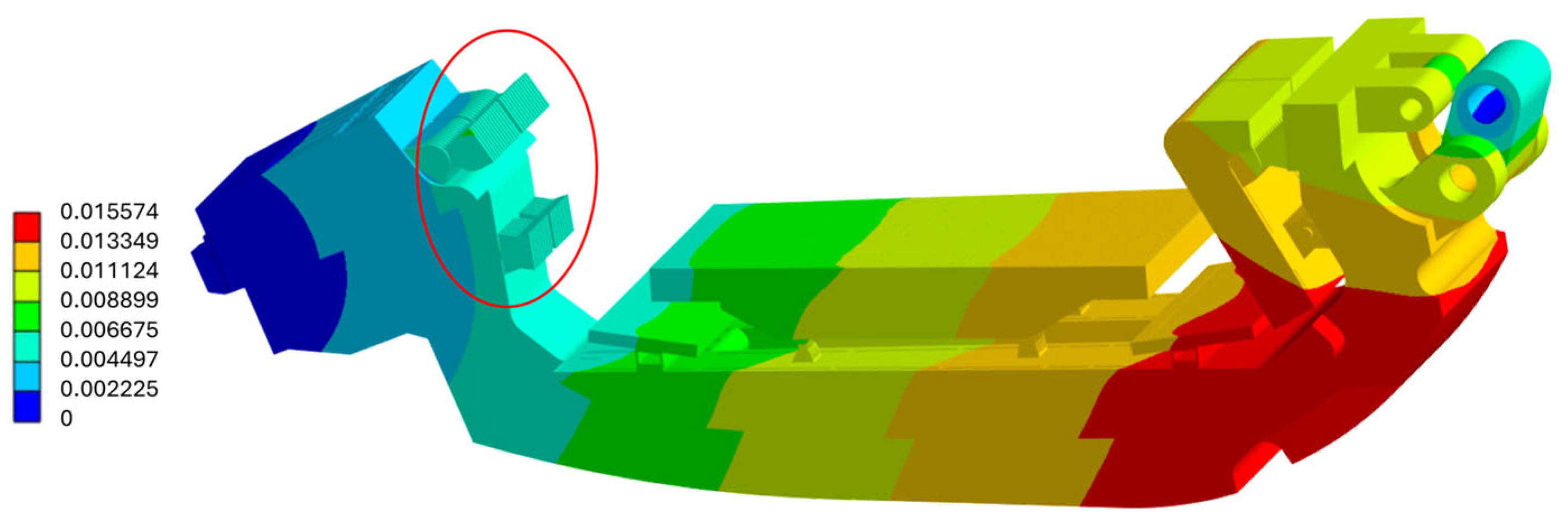
From the global analysis, the displacements, plotted in Figure 7, are obtained and subsequently applied as boundary conditions to the IVT submodel, transferred through the plate surfaces highlighted by the red circle. These displacement results are shown in Figure 7.
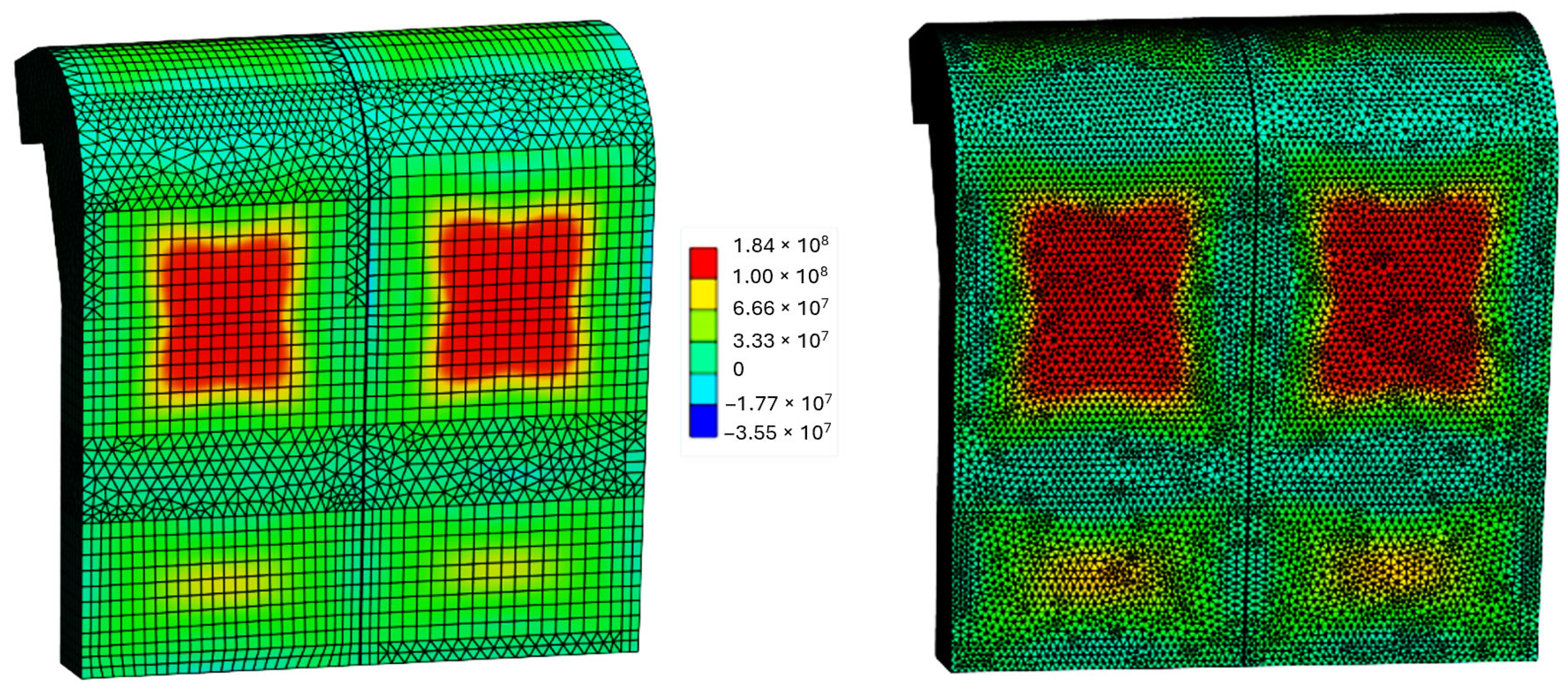
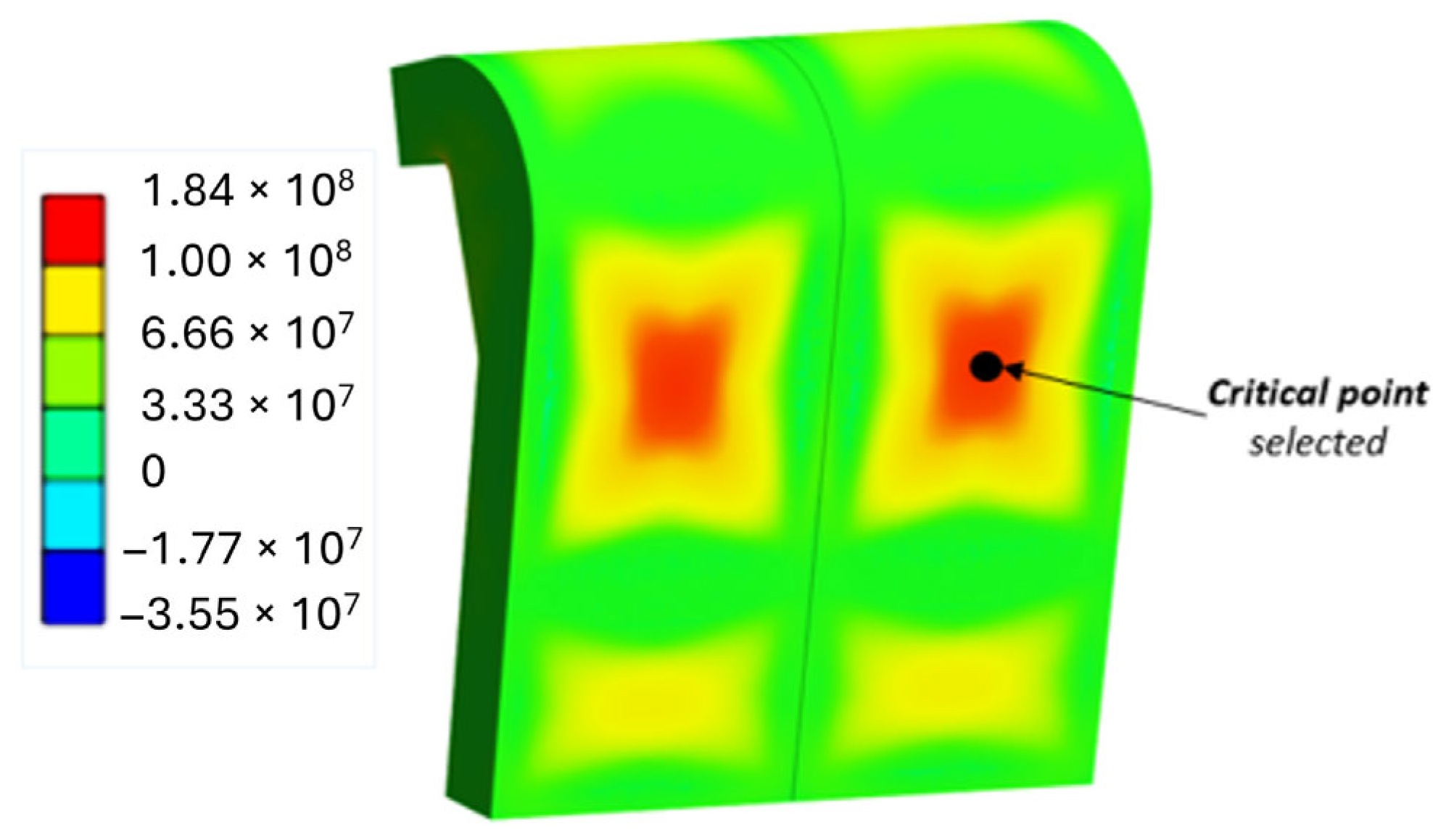
As shown in the case of the IVT, the comparison of maximum principal stress (MPS) between the global model and the submodel indicates that the stress contours retain the same shape, but with slightly different values (Figure 8). Thanks to the submodeling analysis, it is possible to identify the critical point of the component, that is, the region potentially most susceptible to crack initiation (Figure 9).
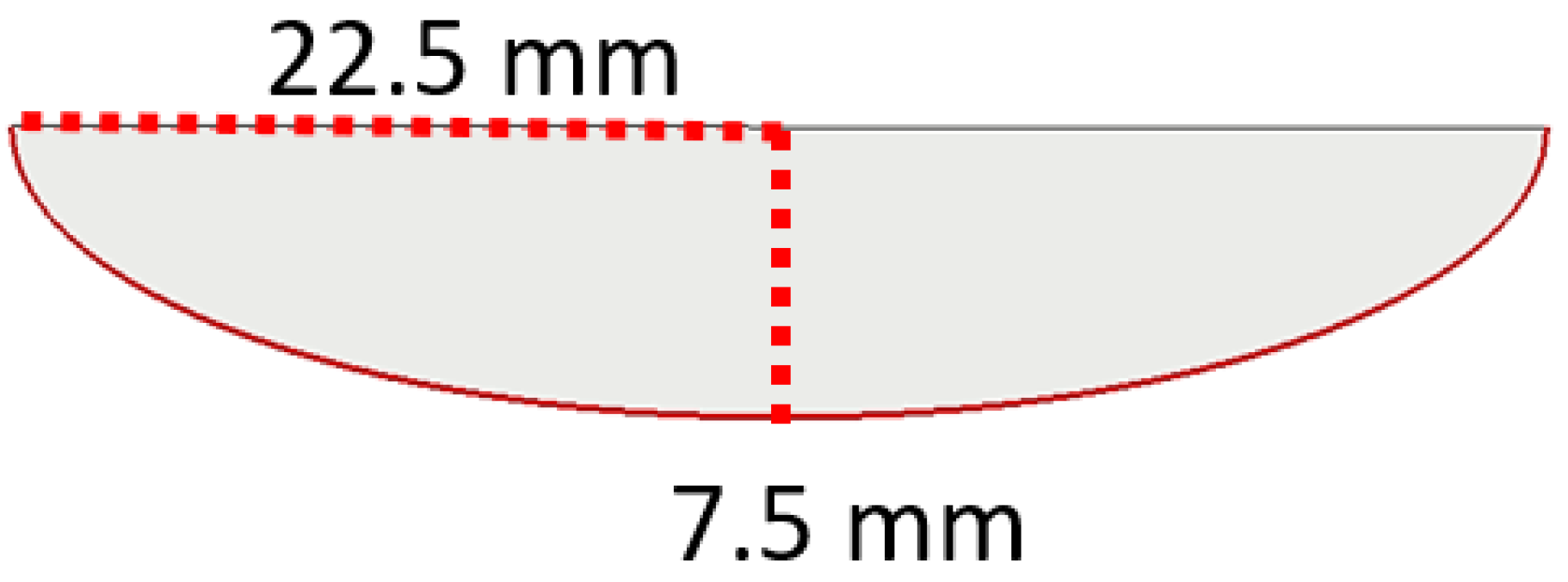
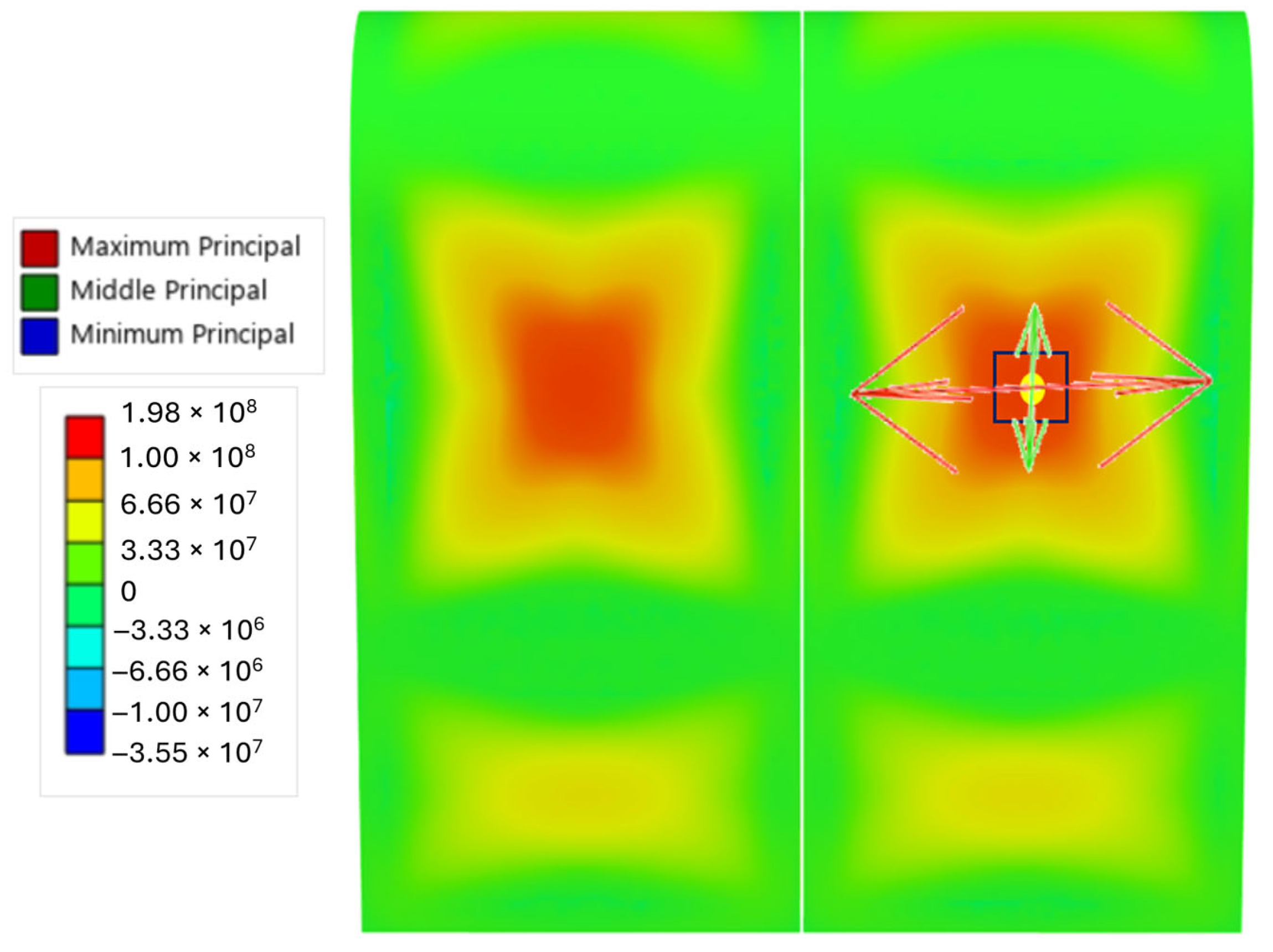
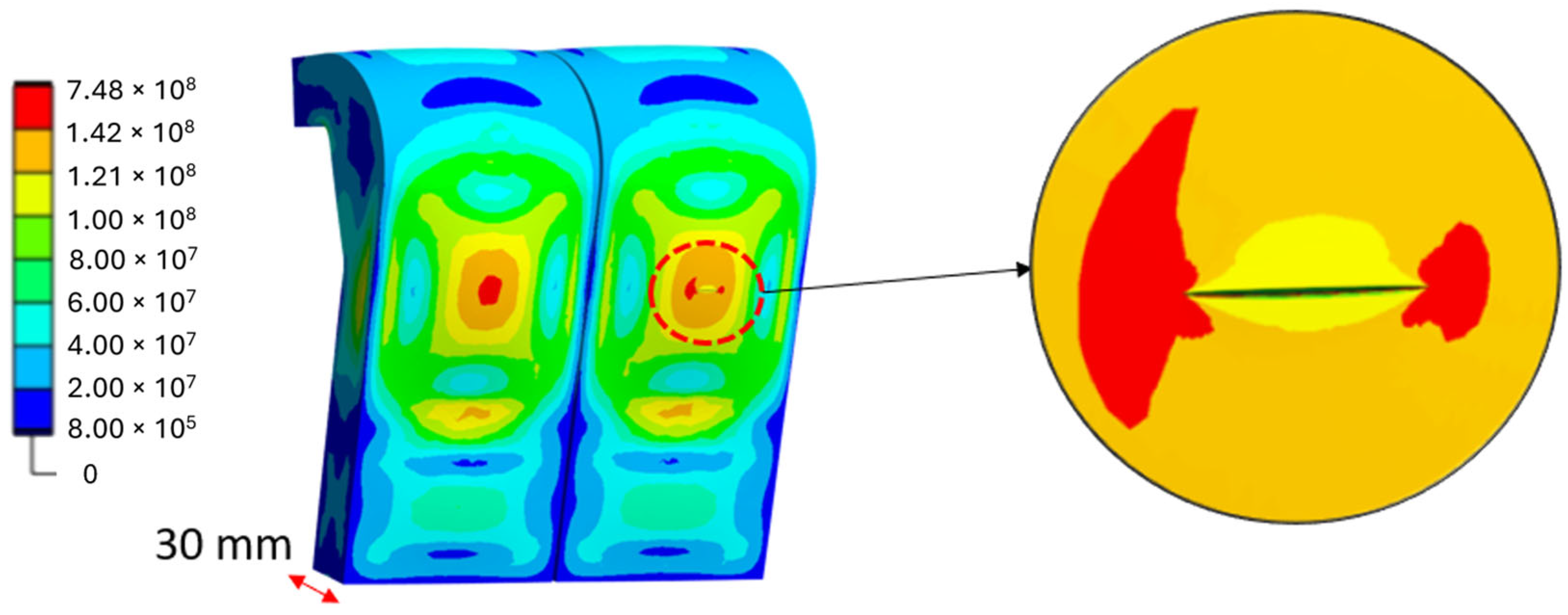
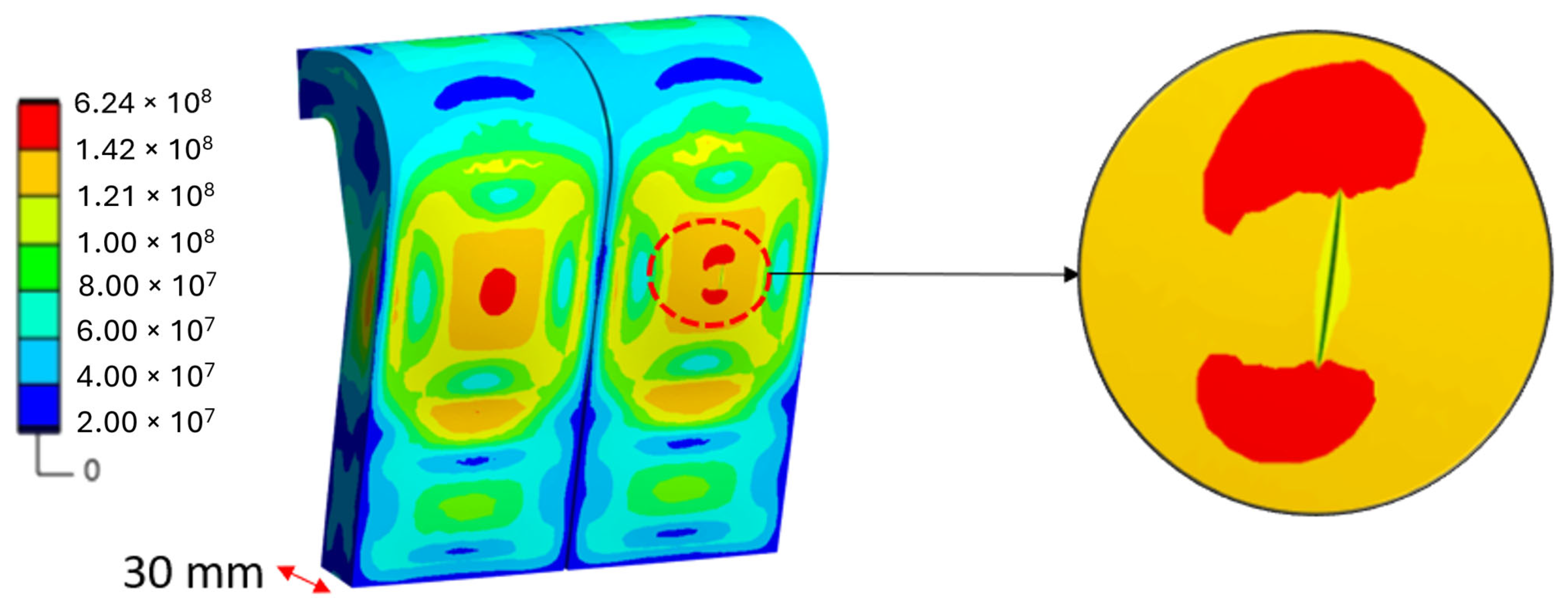
At this point, a semi-elliptical crack is introduced using the FRANC3D software, with a depth arbitrarily set to 1/4 of the local wall thickness and an aspect ratio of 1/3 (Figure 10). The plane experiencing the highest stress at the identified critical location is presented in Figure 11. Initially, the crack is oriented in the plane parallel to the base of the IVT and passing through the critical point. This will be referred to as the “0° crack”. In Figure 12, the crack and its associated stress state are shown. The analyzed crack is subsequently rotated first by 45° and then by 90° relative to its original plane (Figure 13 and Figure 14).
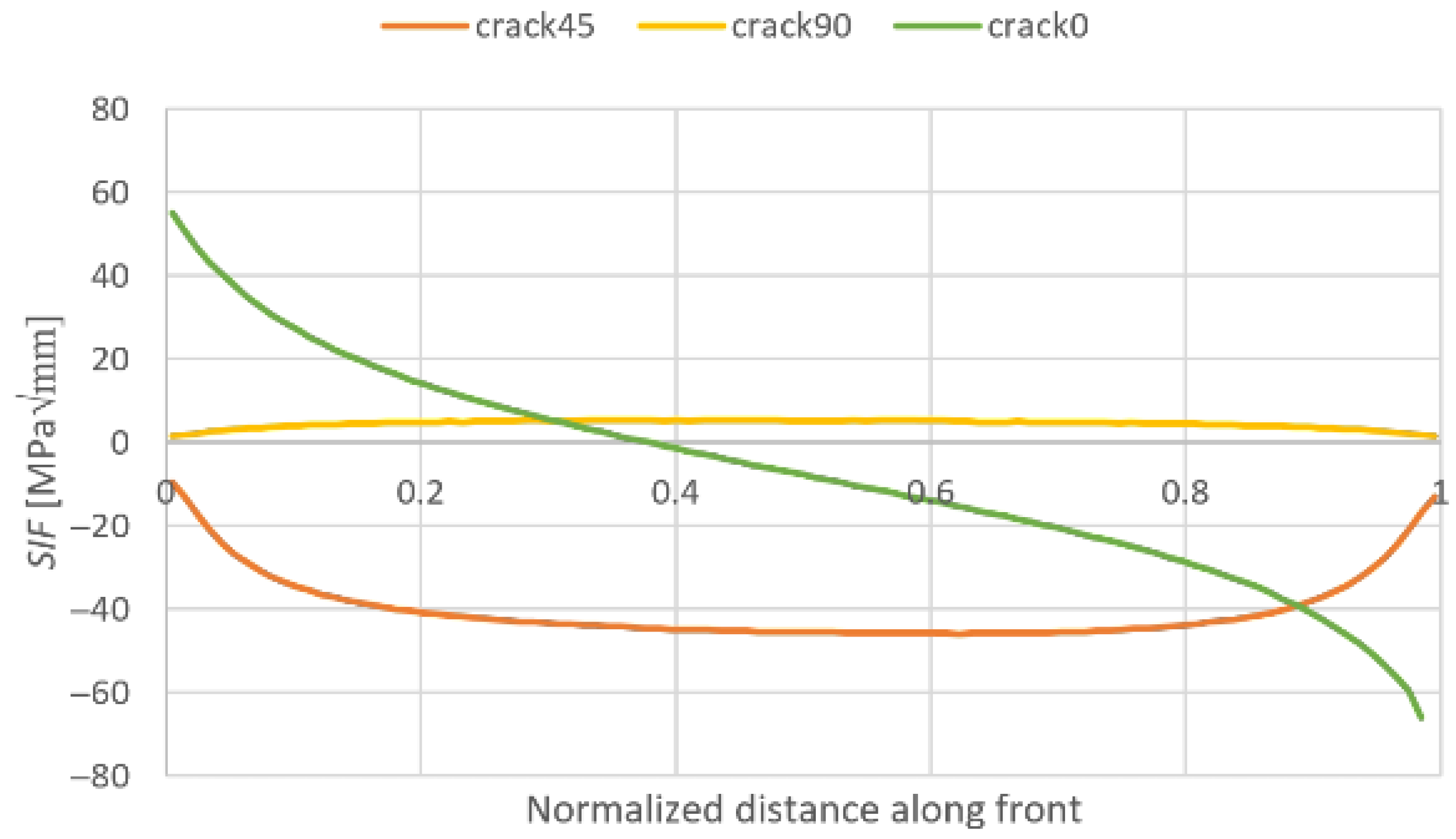
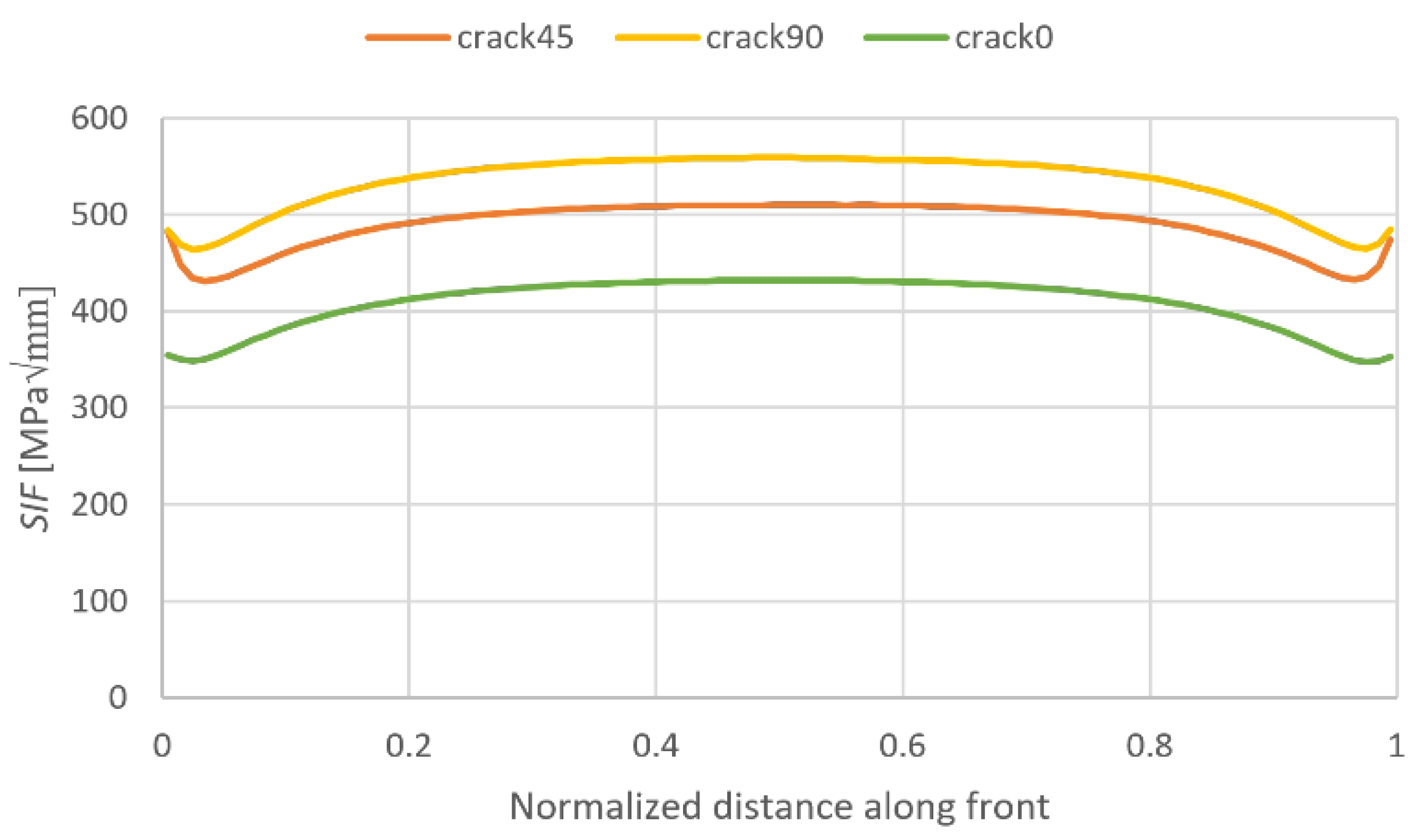
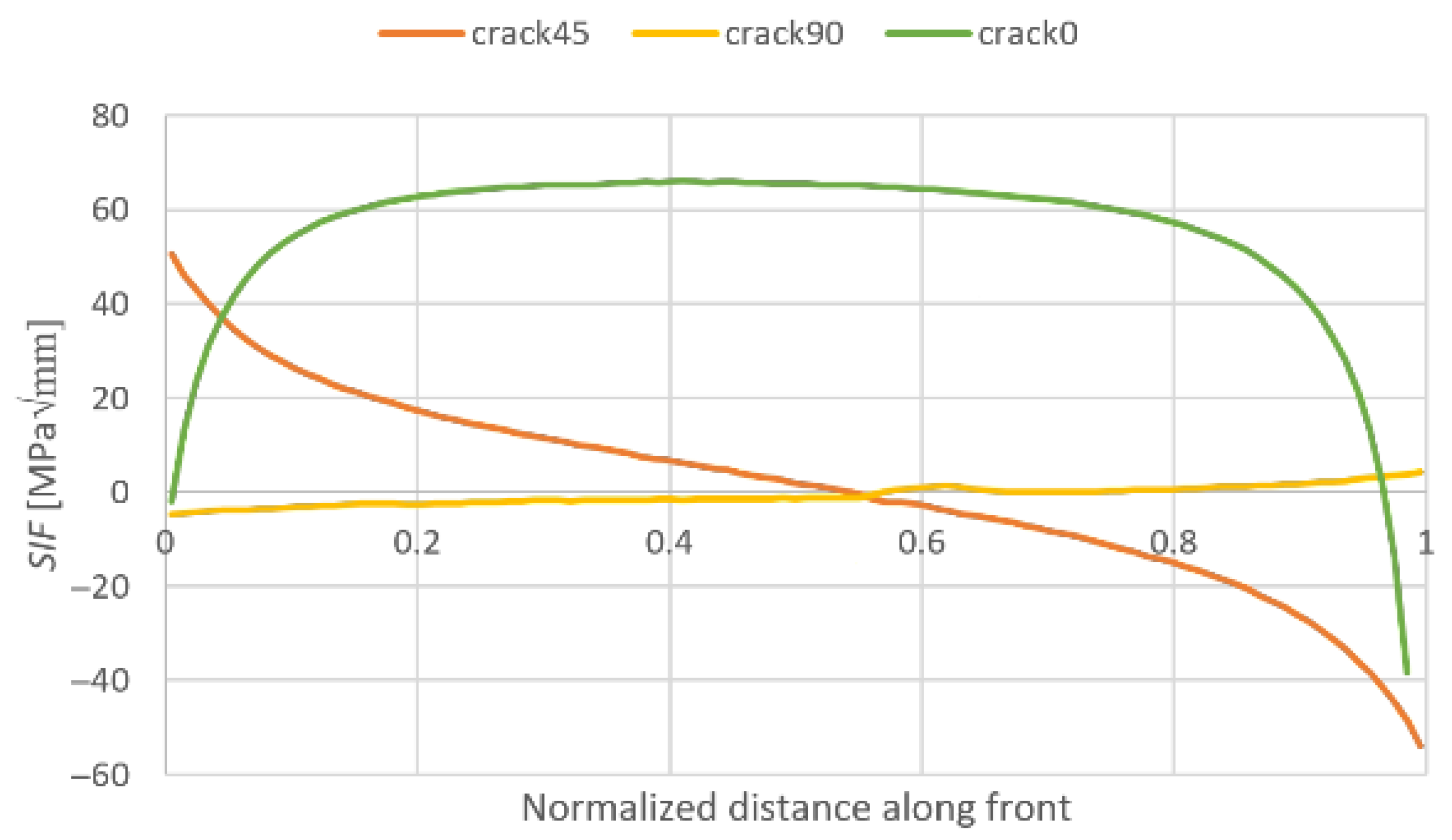
Then, using the M-integral method implemented in FRANC3D, it is possible to calculate for the modeled cracks the three SIFs contributions separately: K I , K I I , K I I I , corresponding to the crack opening modes I, II, and III (Figure 15, Figure 16 and Figure 17).
The results show that as the crack approaches the vertical configuration, there is an increase in the Mode I SIF and a decrease in the Mode II and Mode III SIFs. This confirms the premise that the 90° configuration is the most critical, as the crack is positioned orthogonally to the MPS calculated at the critical point (Figure 11).

3.2. Thermal Load Case

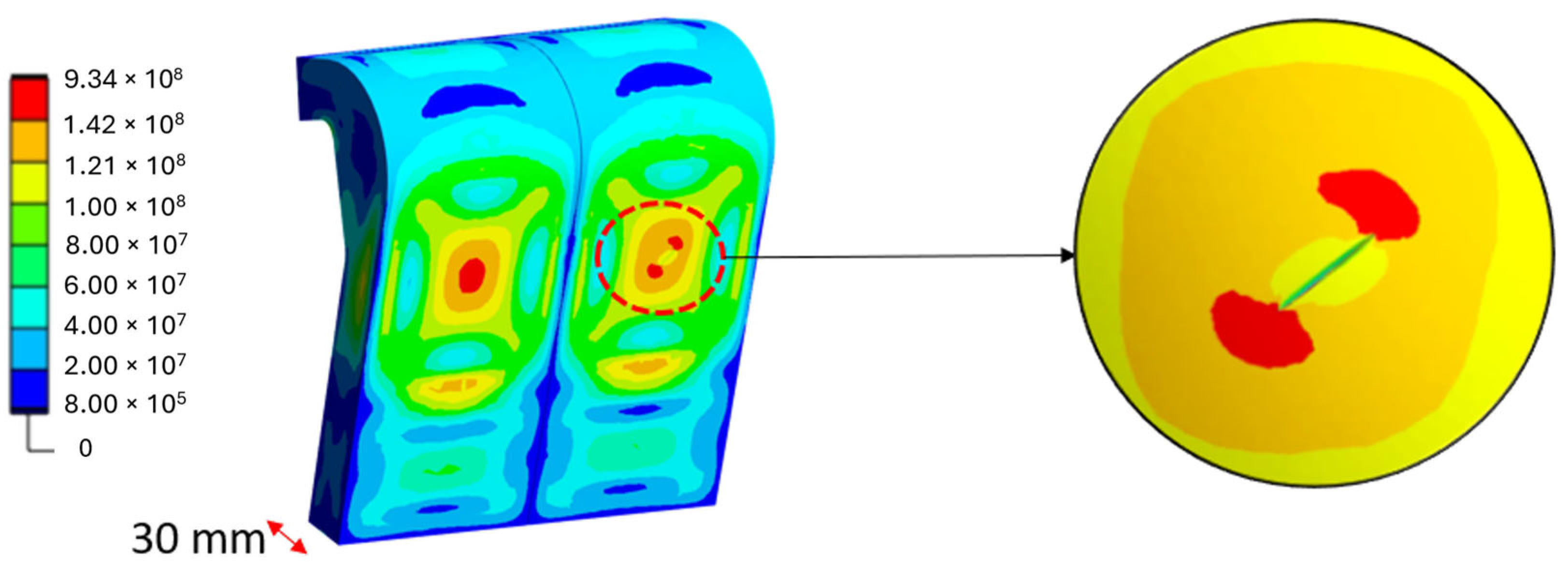
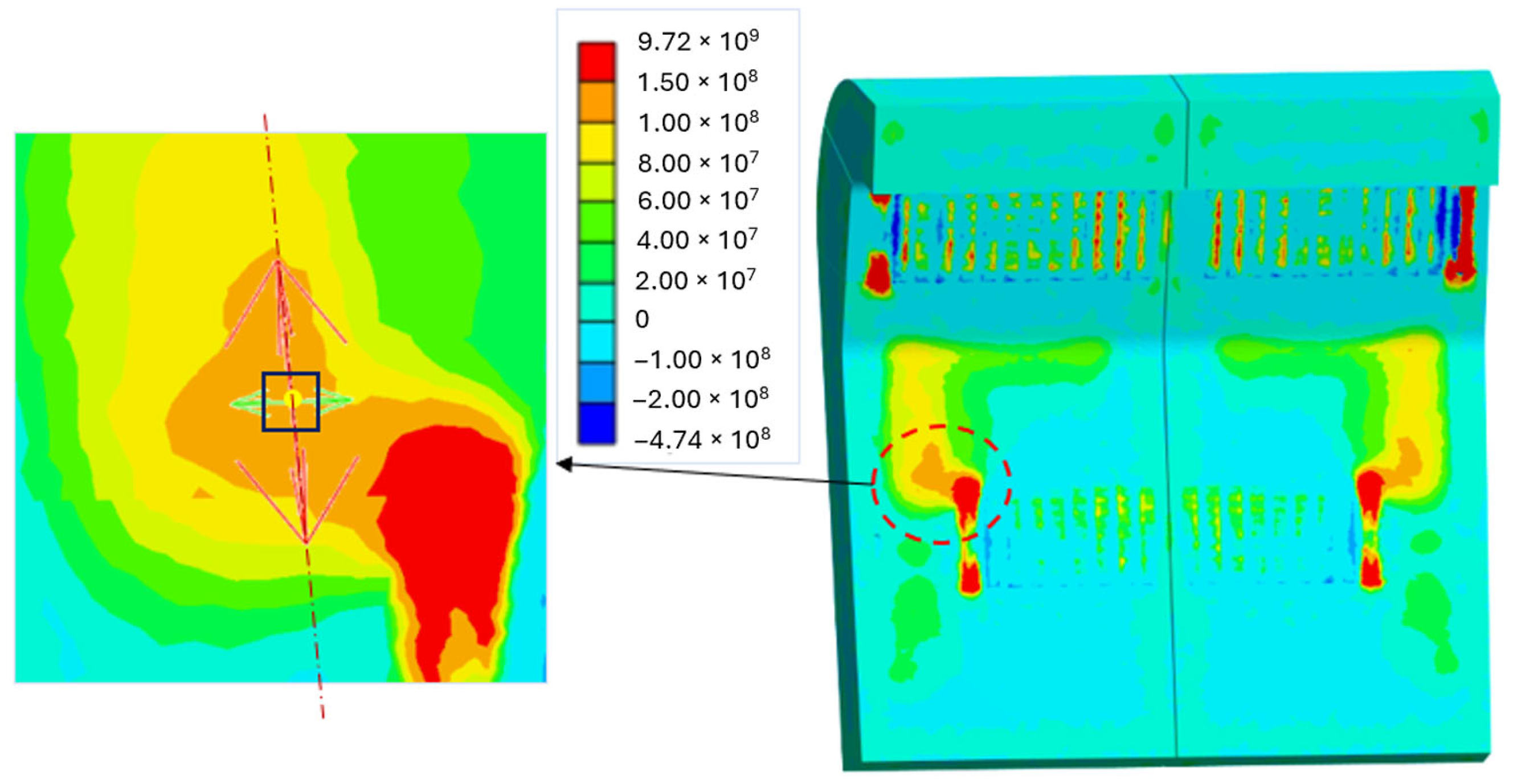
In addition to the pressure load case analysis, a thermal load case scenario is considered, in which only thermal loads are applied. In this scenario, the nodal temperature fields are imported from a previous thermo-fluid dynamic analysis [3] representative of the Normal Operating Conditions (NoC), that is, the steady-state operating conditions of the reactor. Figure 18 shows the temperature fields applied to the IVT. The application of these temperature distributions allows the reproduction of the actual effects of thermal gradients that develop during divertor operation, where intense heat fluxes occur in the plasma-exposed areas and volumetric thermal loads arise. These thermal gradients generate significant stress states that can be a critical factor in the initiation and propagation of cracks. As first, the global displacements are reported in Figure 19, and the red circle shows the boundary conditions transferred to the IVT submodel. In this case as well, starting from the global analysis, the maximum principal stresses are evaluated and subsequently recalculated using the submodeling technique on individual subcomponents (Figure 20).
Figure 20 shows the most critical orientation in terms of MPS among the various possibilities, highlighting that the maximum principal stress lies along the line indicated by the two red arrows. Therefore, the crack expected to be critical is the one positioned orthogonally to this line.
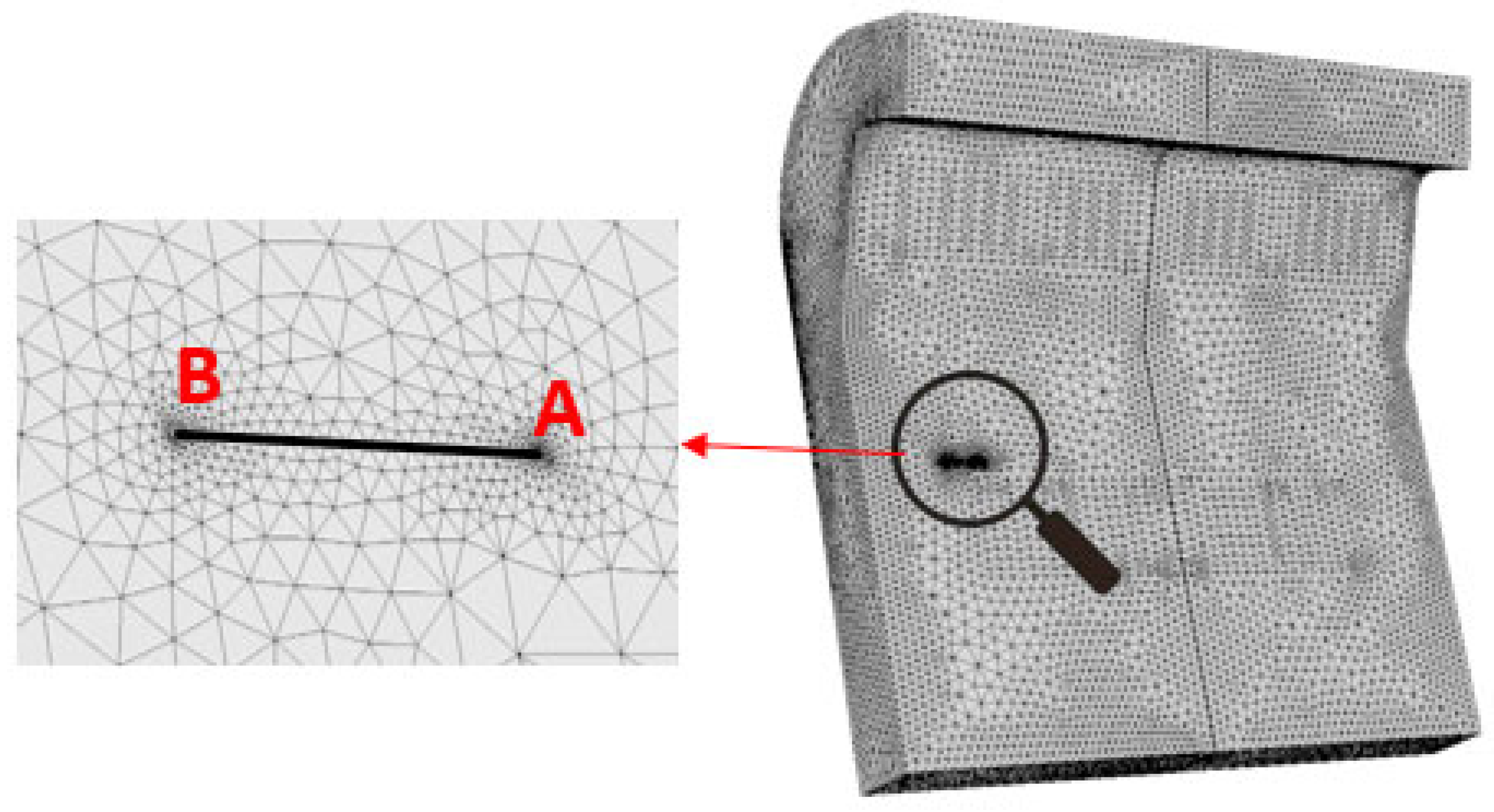
The objective is to identify the areas of the model most critical in terms of potential Mode I crack openings, and then proceed with a detailed fracture analysis. A clarification concerns the selection of the critical point, which is not chosen in the most stressed area of the model. This choice is due to the fact that the most critical zones highlighted by the contour plot are affected by boundary conditions resulting from the submodeling, meaning that neither the geometry nor the mesh can be modified. Figure 21 shows the placement of the crack in the model and the two tips that define it.
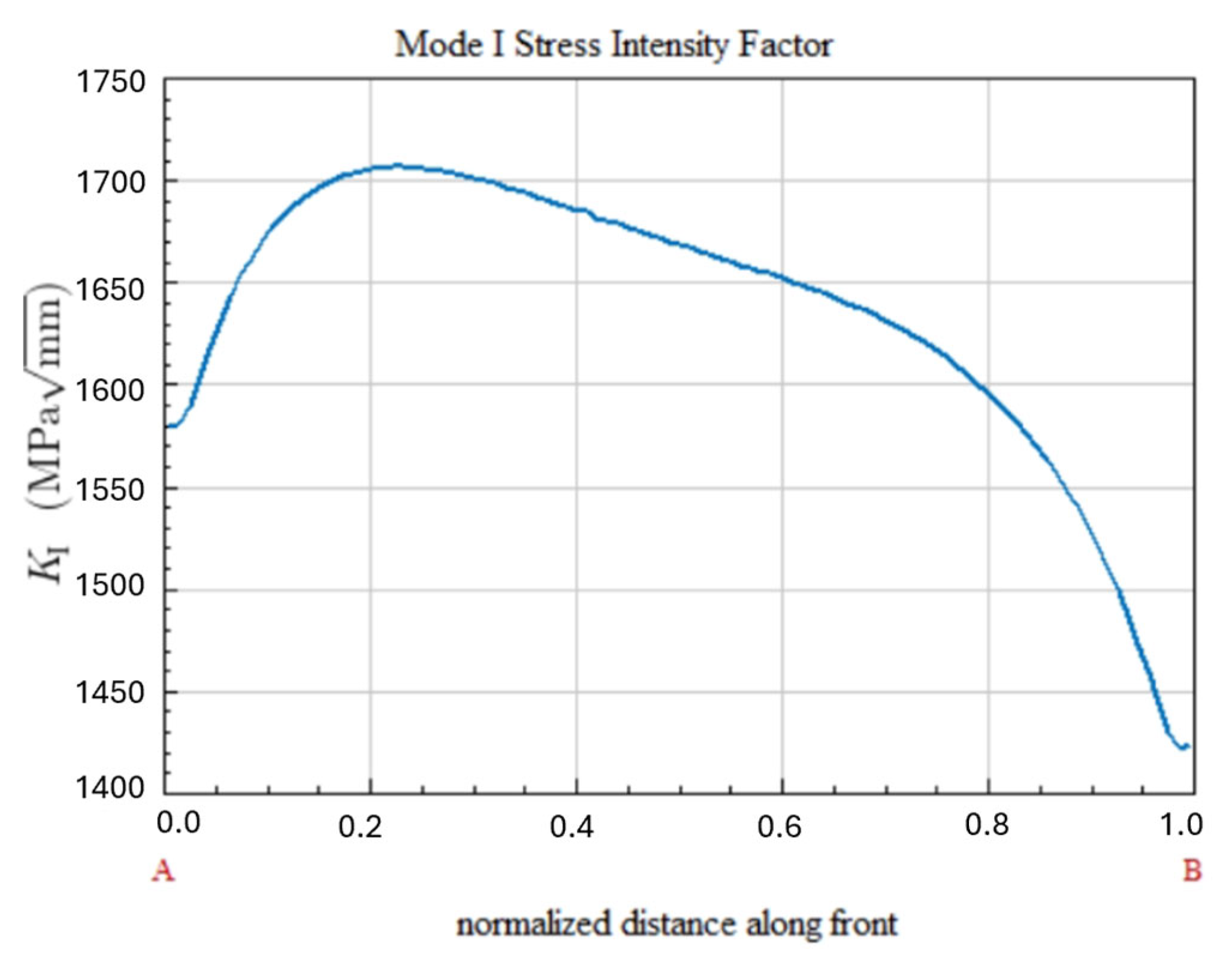
The calculated SIF is shown in Figure 22 and refers to the most critical case of the thermal load case, consisting of a crack inclined at 0° (as inferred from the critical orientation shown in Figure 20). This results in KI values much higher than those calculated in the pressure load case. Moreover, the asymmetry of the curve is due to the fact that one of the two crack tips is closer to the red-colored zone in the contour plot, which indicates a more critical stress state.

4. Crack Growth Analysis

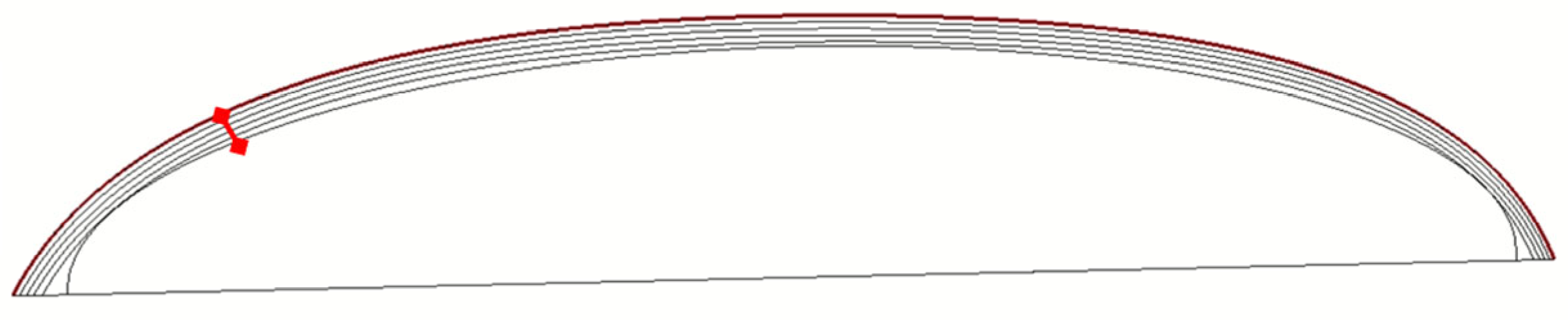
The growth of the previously introduced crack is simulated in five increments, each 0.2 mm, for a total advancement of 1 mm (Figure 23). The simulation is performed using the FRANC3D software, which allows evaluation of crack evolution based on local stress fields and component geometry. The underlying phenomenon driving crack propagation in this study is crack kinking [6], i.e., the deflection of the crack from its original plane. This behavior is governed by the Maximum Tensile Stress (MTS) criterion of Erdogan and Sih [7], according to which the crack tends to deflect orthogonally to the direction in which the maximum principal stress occurs. In other words, the local orientation where the principal stress reaches its maximum determines the preferential direction of crack propagation. This criterion allows for a realistic prediction of the crack front orientation, even in the presence of non-uniform or complex stress fields. The results of crack growth are evaluated for the most critical configuration of the two analyzed load cases, corresponding to the point and orientation of the crack identified during the static crack analysis phase.

4.1. Pressure Load Case Analysis

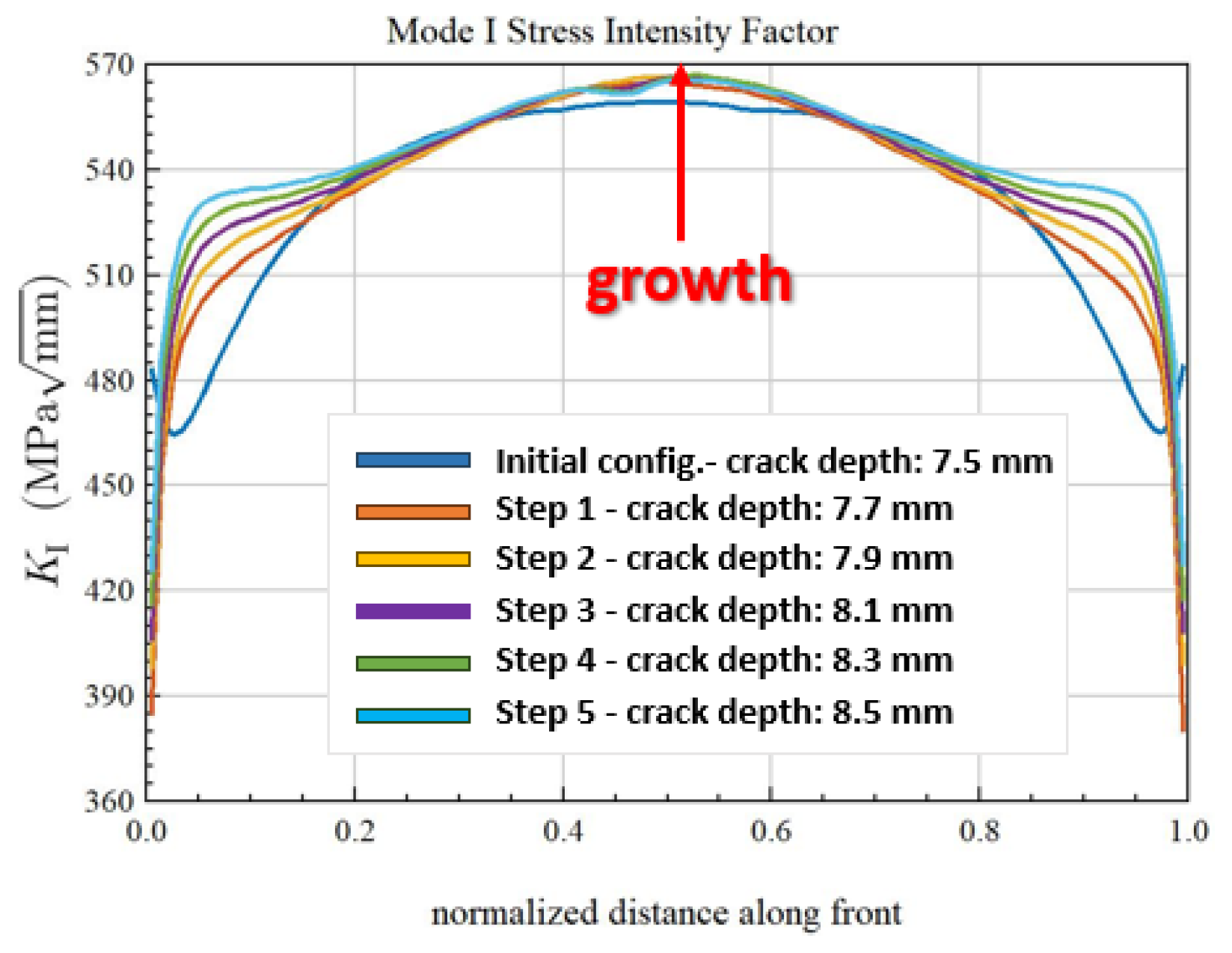
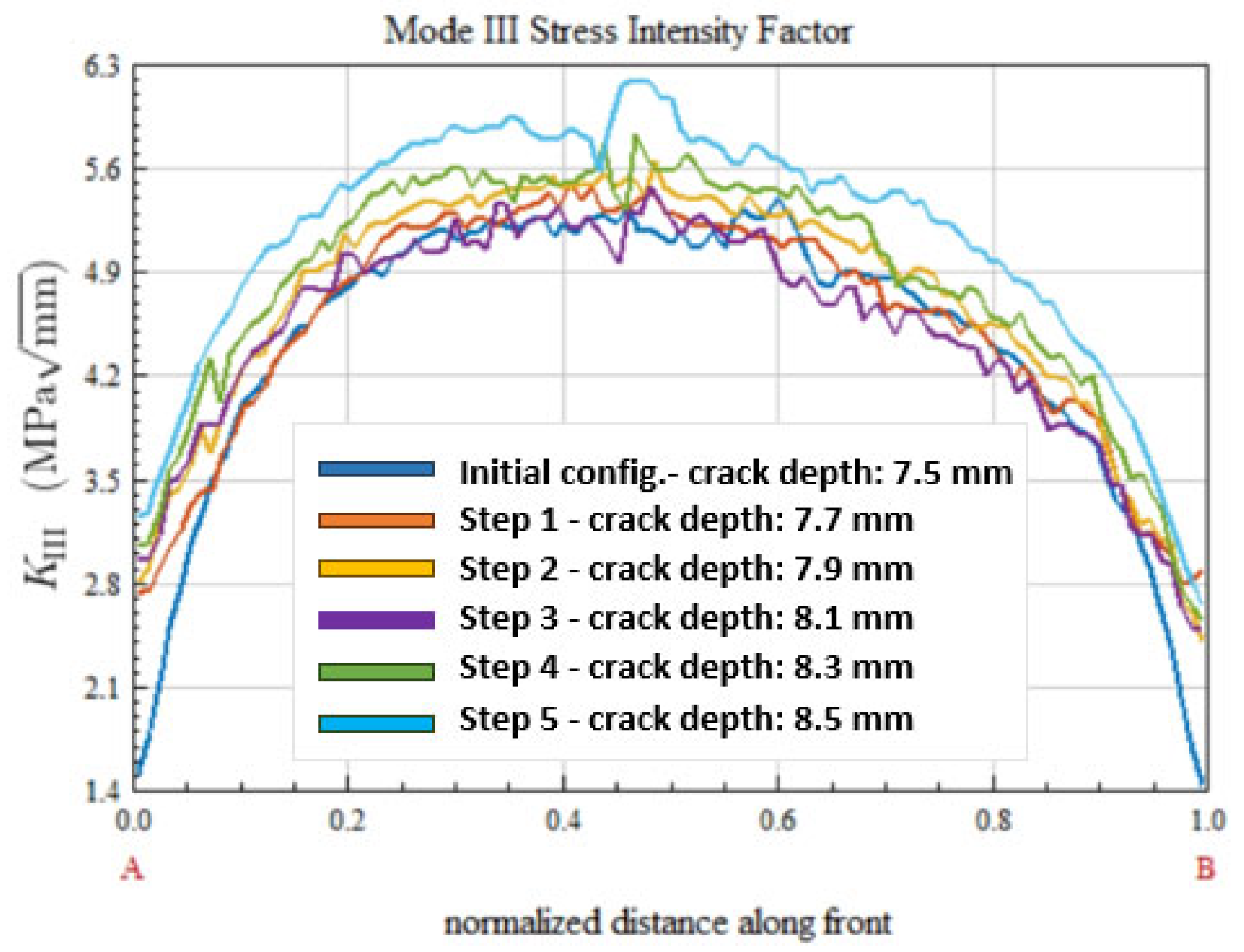
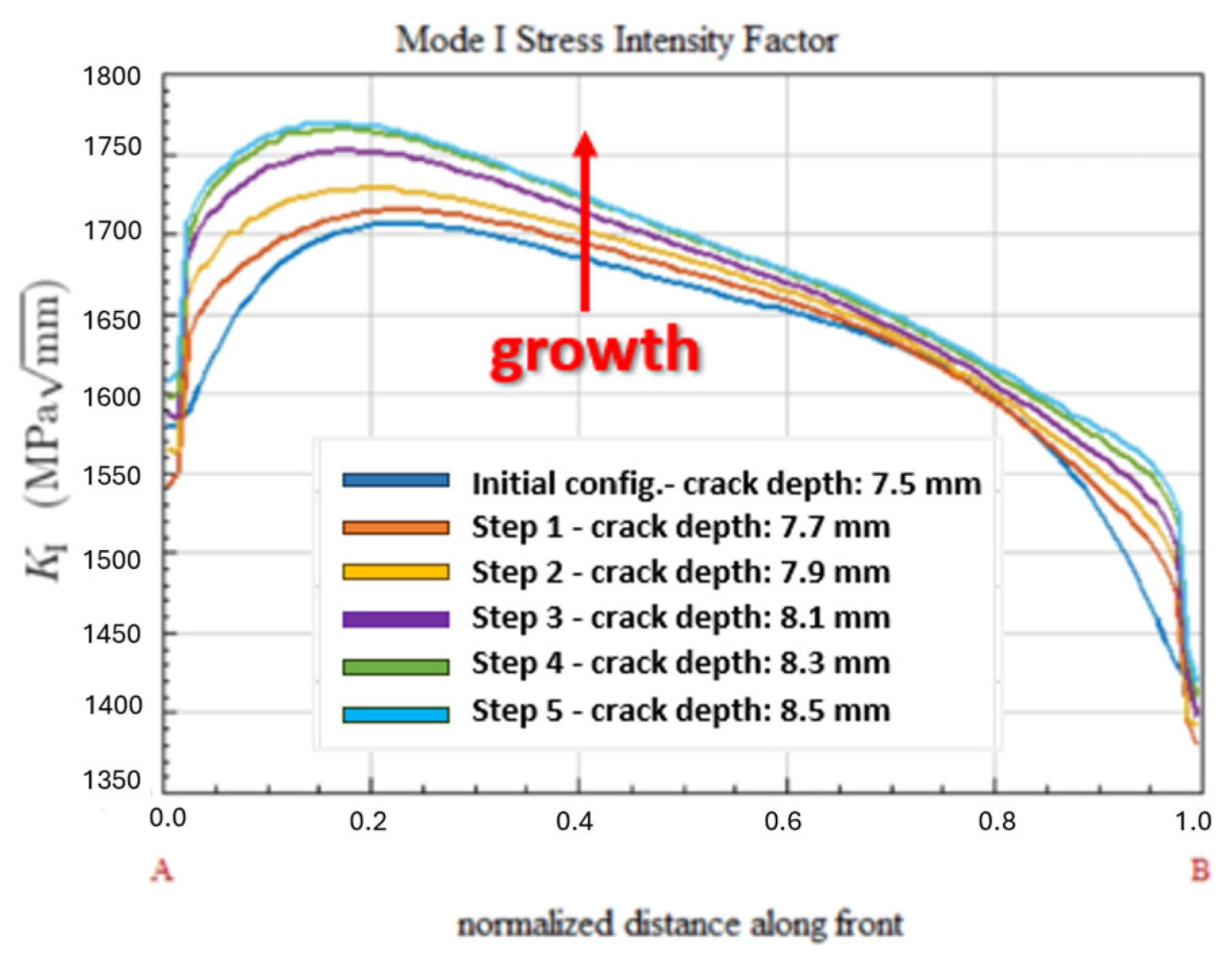
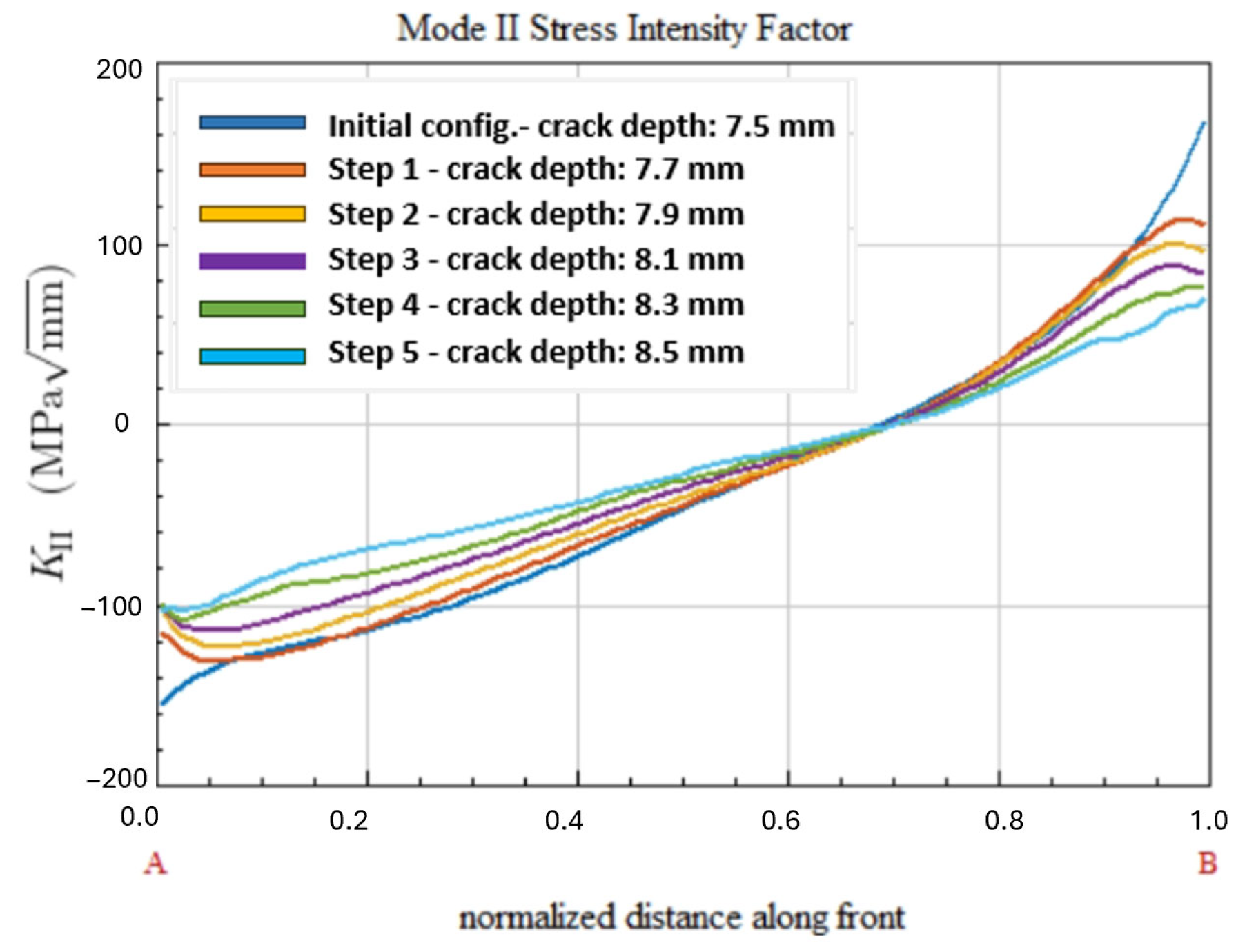
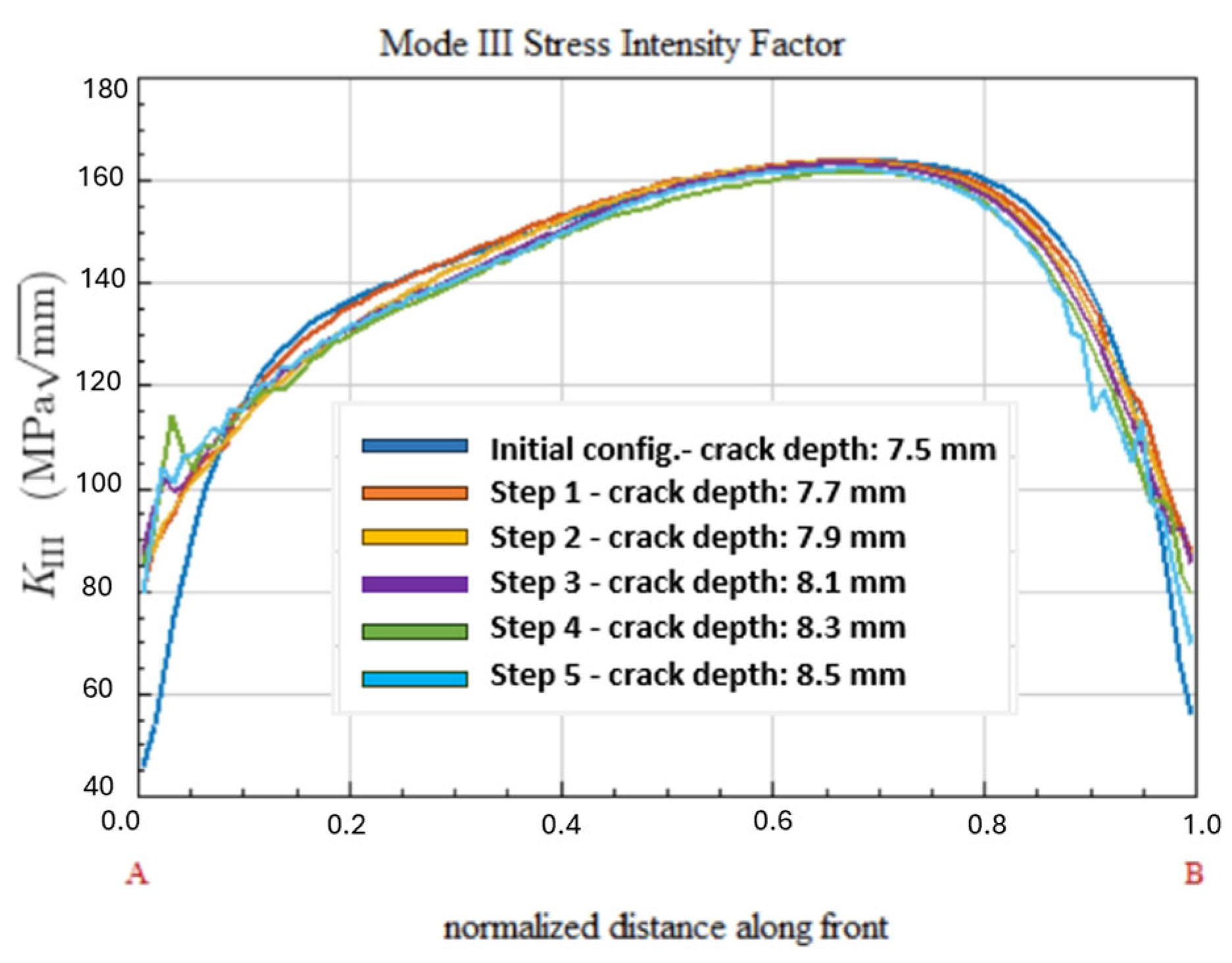
In the pressure load case, the following Figure 23 shows the step-by-step evolution of the crack, while the figures from Figure 24, Figure 25, Figure 26 and Figure 27 highlight the resulting SIFs.
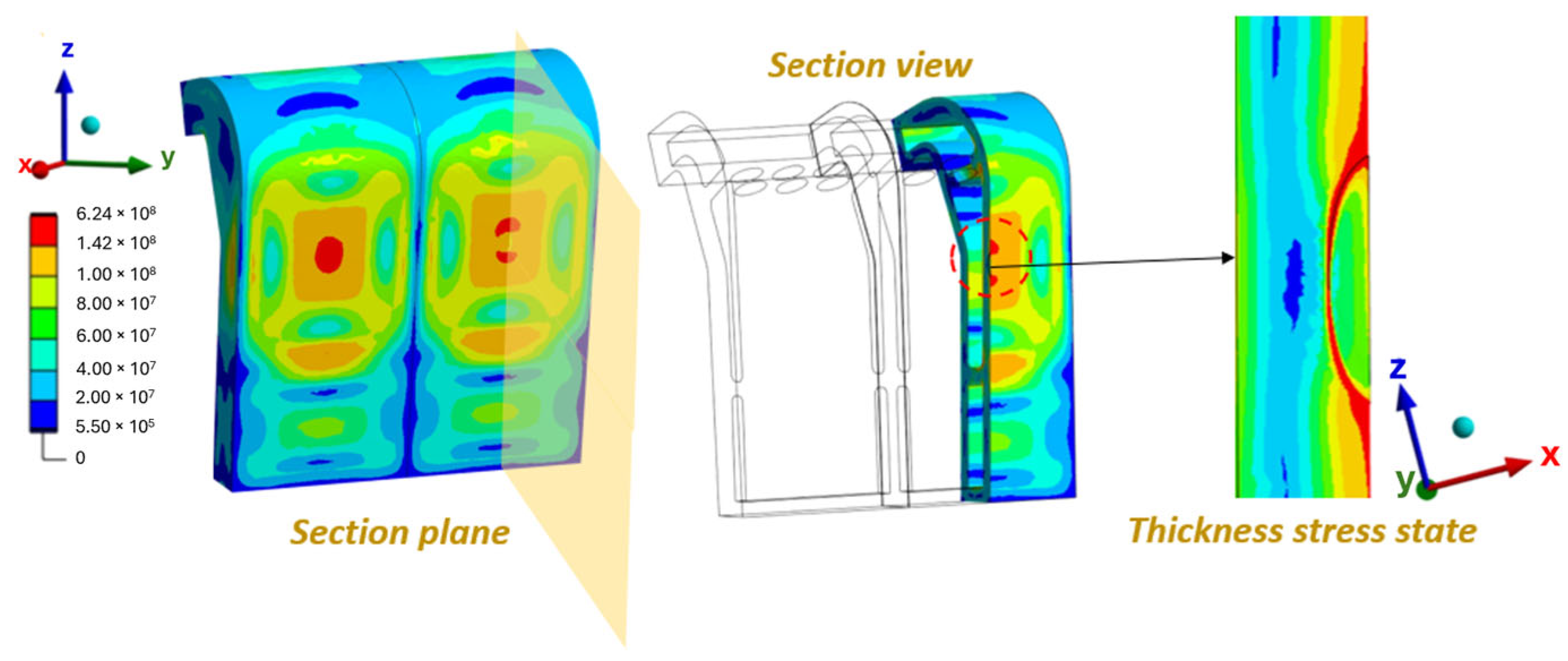
As can be seen from the graph in Figure 27, the KI values initially increase but then tend to decrease. This seemingly counterintuitive behavior can be explained by analyzing what happens within the thickness of the wall in which the crack is embedded (Figure 28):
It can be observed, in fact, that as the crack propagates, the central part of its front approaches a region in the contour plot representative of a low-stress state.

4.2. Thermal Load Case Analysis

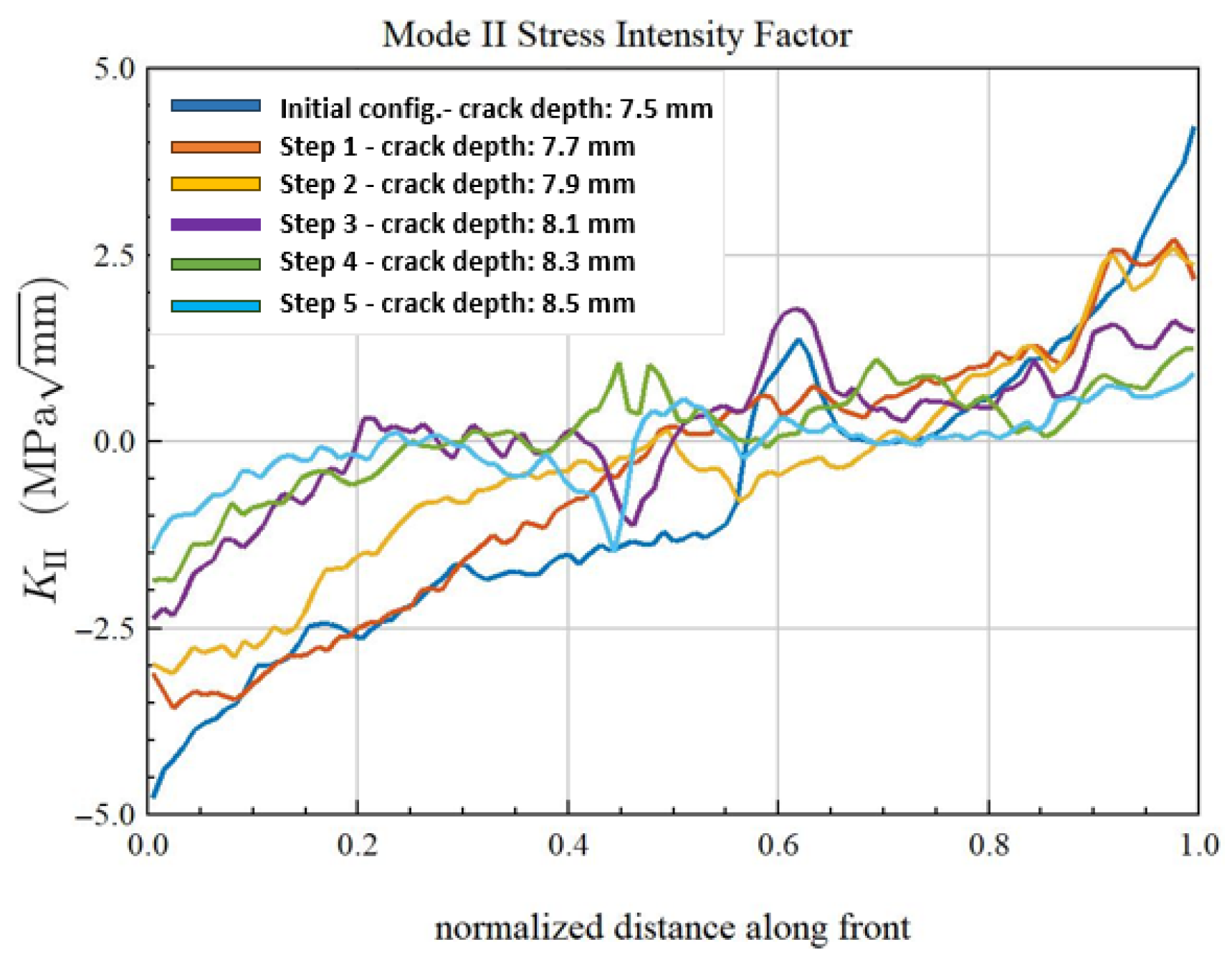
Performing the same steps for the thermal load case yields the following results (Figure 29, Figure 30, Figure 31 and Figure 32):
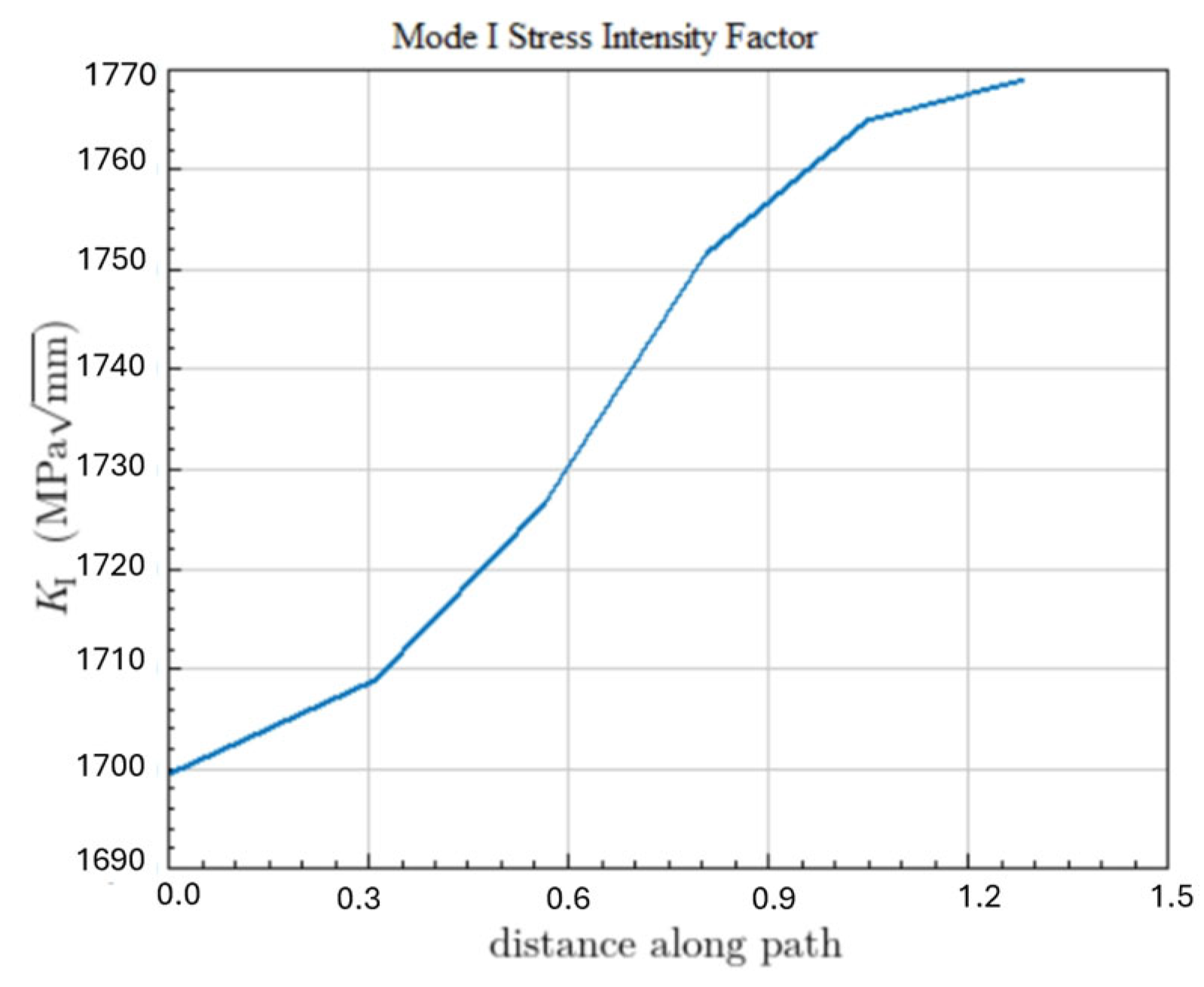
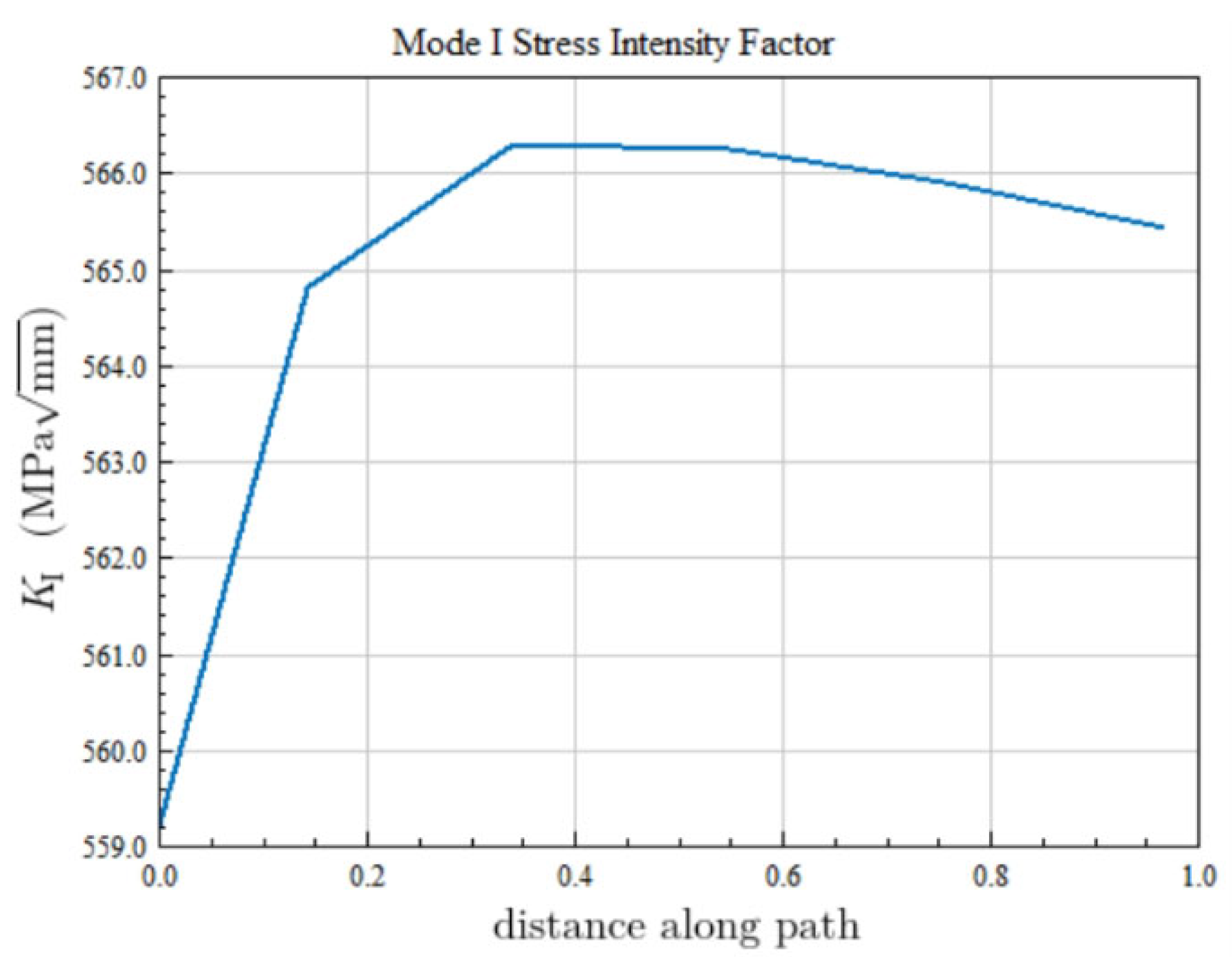
It can also be observed here that the Mode I SIF tends to increase during crack propagation, while the Mode II and III SIFs remain an order of magnitude lower. In Figure 32, unlike what is observed in the pressure load case, the curve shows a purely increasing trend along the path placed at a normalized distance of 0.15 (Figure 33), which corresponds to the direction of maximum stress intensity factor (SIF) increase during crack growth.

5. Lifetime Assessment

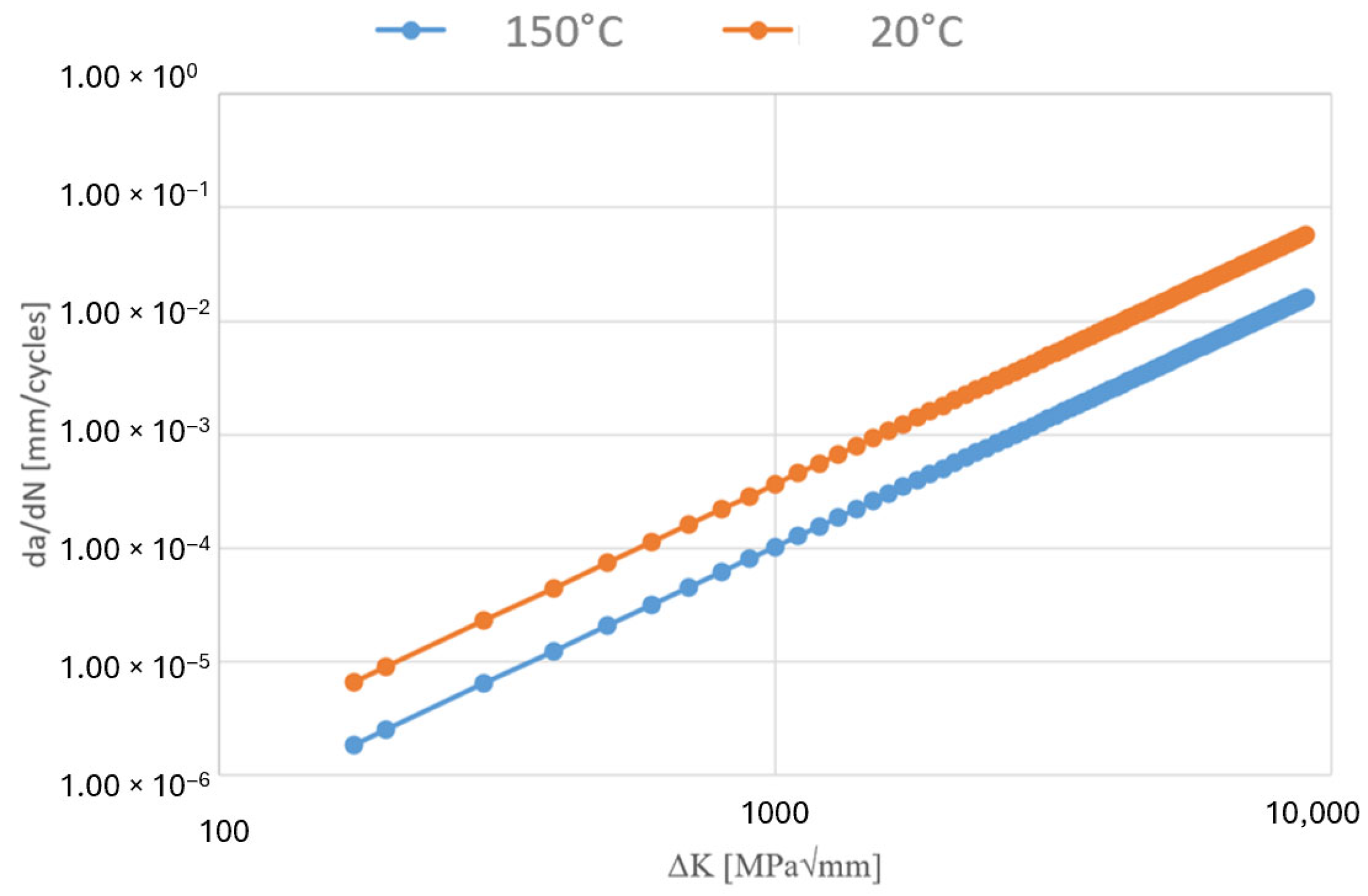
The final phase of the study is dedicated to an assessment of the necessary cycles to determine the analyzed crack growth in the component, with the aim of estimating its reliability under realistic operating conditions. The analysis is conducted in a simplified form, considering the cyclic effect of the thermal load or the pressure load independently. In the pressure load case, only on/off cycles of the applied pressure are analyzed, while in the thermal load case, the analysis focuses exclusively on the on/off application of the thermal load. Starting from the SIF values calculated in the crack growth simulations, the corresponding ΔK is determined, i.e., the stress intensity factor range associated with the load cycle. This parameter represents the key variable for predicting the crack propagation rate under fatigue conditions.
For modeling the phenomenon, Equation (1) is used, where da/dN is the crack growth rate per cycle, ΔK is the stress intensity factor range, and C and m are material-dependent coefficients developed by Equations (2)–(5):
d a d N = C · ( K ) m
In this study, the C and m parameters (Equations (2)–(5)) are computed with related data for AISI 316L, that is one of the reference materials for the divertor’s structural components. A stress ratio equal to zero is considered (Figure 34).
C = C · S R S T [ m m / ( cycle · ( MPa · m m ) m ) ]
C = 4.93 · 10 9   [ m m / ( cycle · ( MPa · m m ) m ) ]
S R = 1 + 1.11 · R 3
S T = 3.39 · 10 5 · e 2516 T 0.0301 · T
where
  • T is the temperature of the IVT in correspondence of the crack location;
  • R is the stress ratio.
The coefficients adopted for the curves in Figure 34 are reported in Table 2.
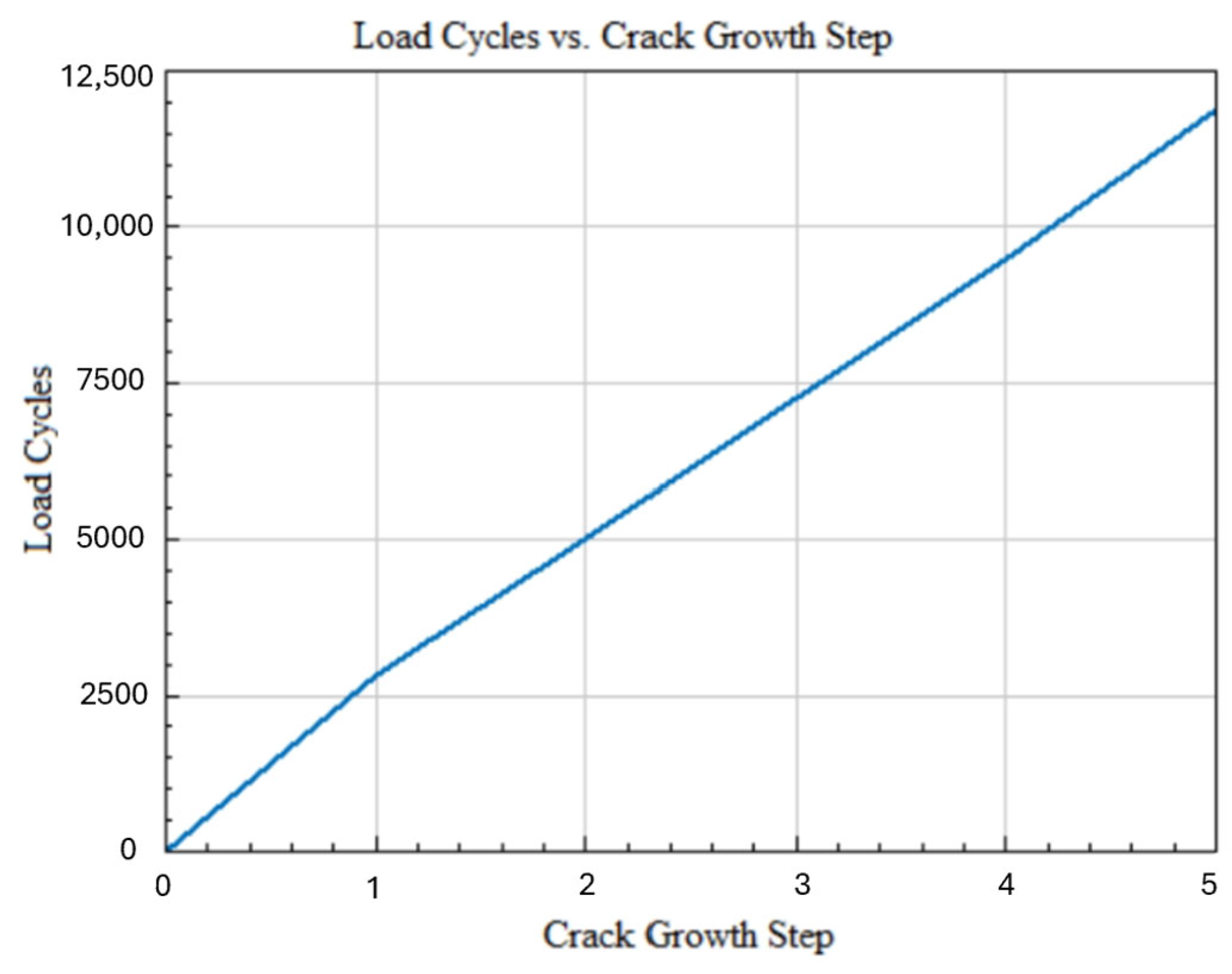
The critical crack for the thermal load case is located in a zone characterized by a temperature of 150 °C. The application of Paris’ law allowed estimating the number of cycles required for the crack to grow to the sizes calculated and indicated in the previous chapters. The results obtained from the crack propagation studies under the pressure and thermal load cases are reported below (Figure 35 and Figure 36):
This study highlights that, when considering the Paris’ law parameters calculated at 20 °C for the material, relatively low loads such as those in the pressure load case result in slow crack growth. Consequently, the number of cycles required for 1 mm propagation is quite high and equal to 11,865.
In the thermal load case, characterized by higher calculated SIFs, crack growth is faster. As a result, under thermal loading the crack propagates more rapidly, requiring only 2946 cycles to grow by 1 mm. This approach thus provides a first quantitative estimate of the component’s fatigue life in the presence of defects, a crucial element for defining design, inspection, and maintenance strategies for future DEMO reactors.

6. Conclusions

In this work, a procedure for structural and fracture assessment of the DEMO divertor in the unirradiated condition was developed, based on numerical approaches that combine global FEM modeling and submodeling techniques. Linear Elastic Fracture Mechanics (LEFM) simulations were performed using the software FRANC3D and ANSYS Workbench.
A preliminary analysis conducted on two distinct load cases allowed the identification of potentially critical areas, characterized by high concentrations of principal stresses and therefore susceptible to crack nucleation. In particular, the thermal load case proved more severe than the pressure load case, generating significantly higher SIF values.
Finally, using Paris’ law, the fatigue cycles required for crack propagation were estimated for the two different scenarios. The results of the lifetime analysis revealed that thousands of on–off cycles are necessary for the crack to propagate by one millimeter. However, this result should be interpreted with caution, as it assumes different loading conditions acting separately; on the other hand, the analysis starts from an already cracked scenario, where the crack exhibits a depth equal to one-quarter of the involved wall thickness.
This study therefore represents a first approach toward defining a more accurate procedure, which will need to be enriched with further developments and characterizations, such as the inclusion of irradiation effects on the material and the extension of load cases to the electromagnetic and realistic combined scenarios, as well as investigations on cracks with different aspect ratios, variable sizes, or multiple crack configurations.

Author Contributions

Conceptualization, J.H.Y. and R.C.; methodology, J.H.Y., R.C. and N.M.; software, A.C.; validation, A.C., V.B. and A.Q.; formal analysis, A.C., V.B. and A.Q.; investigation, A.C.; resources, J.H.Y., N.M. and R.C.; data curation, V.B., A.Q. and A.C.; writing—original draft preparation, A.C. and R.C.; writing—review and editing, J.H.Y., N.M., R.C. and A.Q.; supervision, J.H.Y. and R.C.; project administration, J.H.Y., N.M. and R.C. All authors have read and agreed to the published version of the manuscript.

Funding

This work has been carried out within the framework of the EUROfusion Consortium, funded by the European Union via the Euratom Research and Training Programme (Grant Agreement No 101052200—EUROfusion). The UK contribution has been funded by the Fusion Futures Programme. As announced by the UK Government in October 2023, Fusion Futures aims to provide holistic support for the development of the fusion sector. Views and opinions expressed are, however, those of the author(s) only and do not necessarily reflect those of the European Union or the European Commission. Neither the European Union nor the European Commission can be held responsible for them.

Institutional Review Board Statement

Not applicable.

Informed Consent Statement

Not applicable.

Data Availability Statement

The original contributions presented in this study are included in the article.

Conflicts of Interest

The authors declare no conflict of interest.

References

  1. Federici, G.; Biel, W.; Gilbert, M.R.; Kemp, R.; Taylor, N.; Wenninger, R. European DEMO design strategy and consequences for materials. Nucl. Fusion 2017, 57, 092002. [Google Scholar] [CrossRef]
  2. Castrovinci, F.M.; Quartararo, A.; Basile, S.; Bongiovi, G.; Burlon, R.; Chiovaro, P.; Di Maio, P.A.; Gioe, A.; Maggio, S.; Mazzone, G.; et al. Thermofluid-Dynamic Assessment of the Dual Cooling Scheme EU-DEMO Divertor Cassette. Fusion Eng. Des. 2025, 214, 114903. [Google Scholar] [CrossRef]
  3. Marzullo, D.; Spagnuolo, G.A.; Aiello, G.; Boscary, J.; Graziosi, G.; Moscato, I.; Quartararo, A.; You, J.H. Selection of EU-DEMO divertor operating condition: Design space and power exhaust capabilities. Fusion Eng. Des. 2024, 203, 114467. [Google Scholar] [CrossRef]
  4. Gaganidze, E.; Gillemot, F.; Szenthe, I.; Gorley, M.; Rieth, M.; Diegele, E. Development of EUROFER97 Database and Material Property Handbook. Available online: https://scientific-publications.ukaea.uk/wp-content/uploads/UKAEA-CCFE-PR1863.PDF (accessed on 30 August 2025).
  5. Testoni, P.; Fanni, A.; Sonato, P. A sub-modeling approach for the electromechanical disruption analysis of the ITER ICH antenna. Fusion Eng. Des. 2008, 83, 95–701. [Google Scholar] [CrossRef]
  6. FRANC3D. V7 Training Part 7: Crack Growth. Available online: https://www.franc3d.com/wp-content/uploads/2021/07/FRANC3D-V7-Training-Part-7-Crack-Growth.pdf (accessed on 30 August 2025).
  7. Erdogan, F.; Sih, G.C. On the Crack Extension in Plates Under Plane Loading and Transverse Shear. J. Basic Eng. 1963, 85, 519–525. [Google Scholar] [CrossRef]
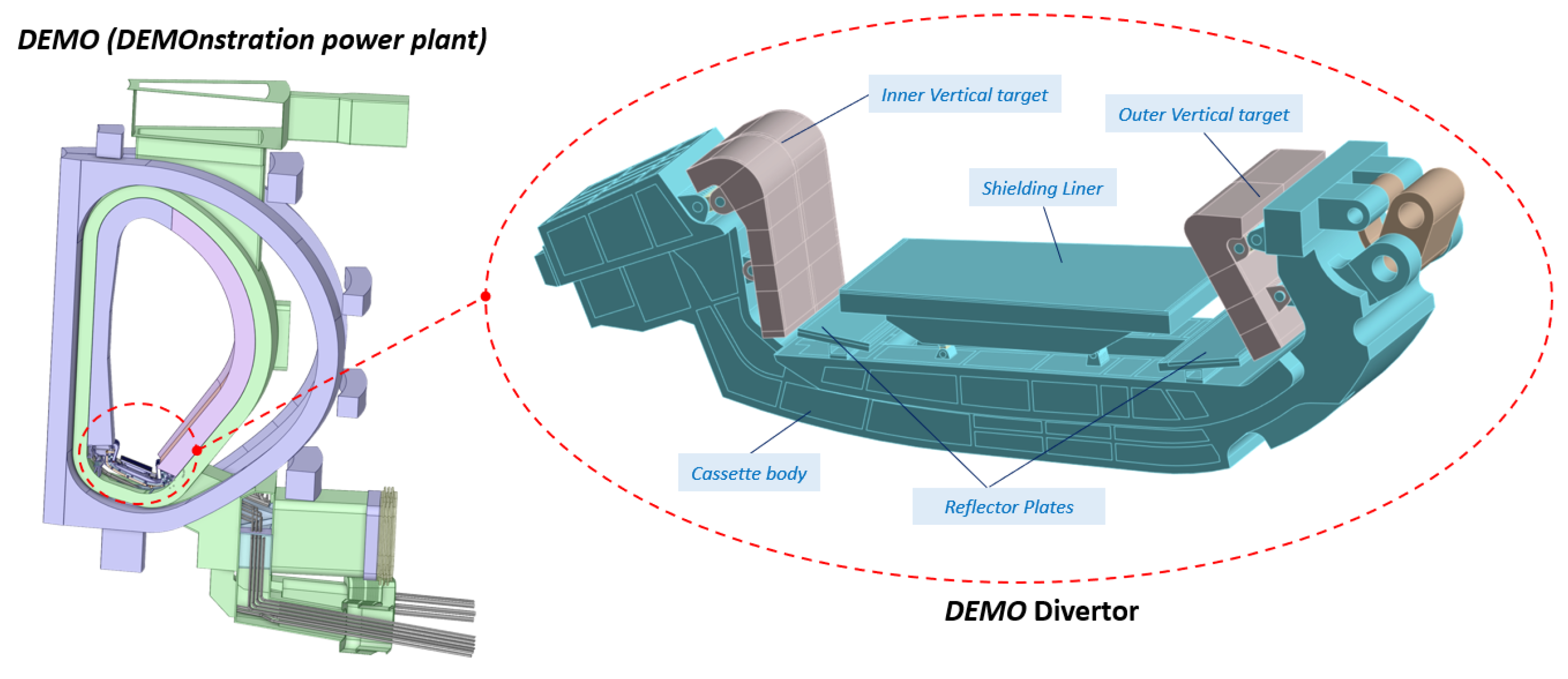
Figure 1. DEMO divertor components.
Engproc 131 00036 g001
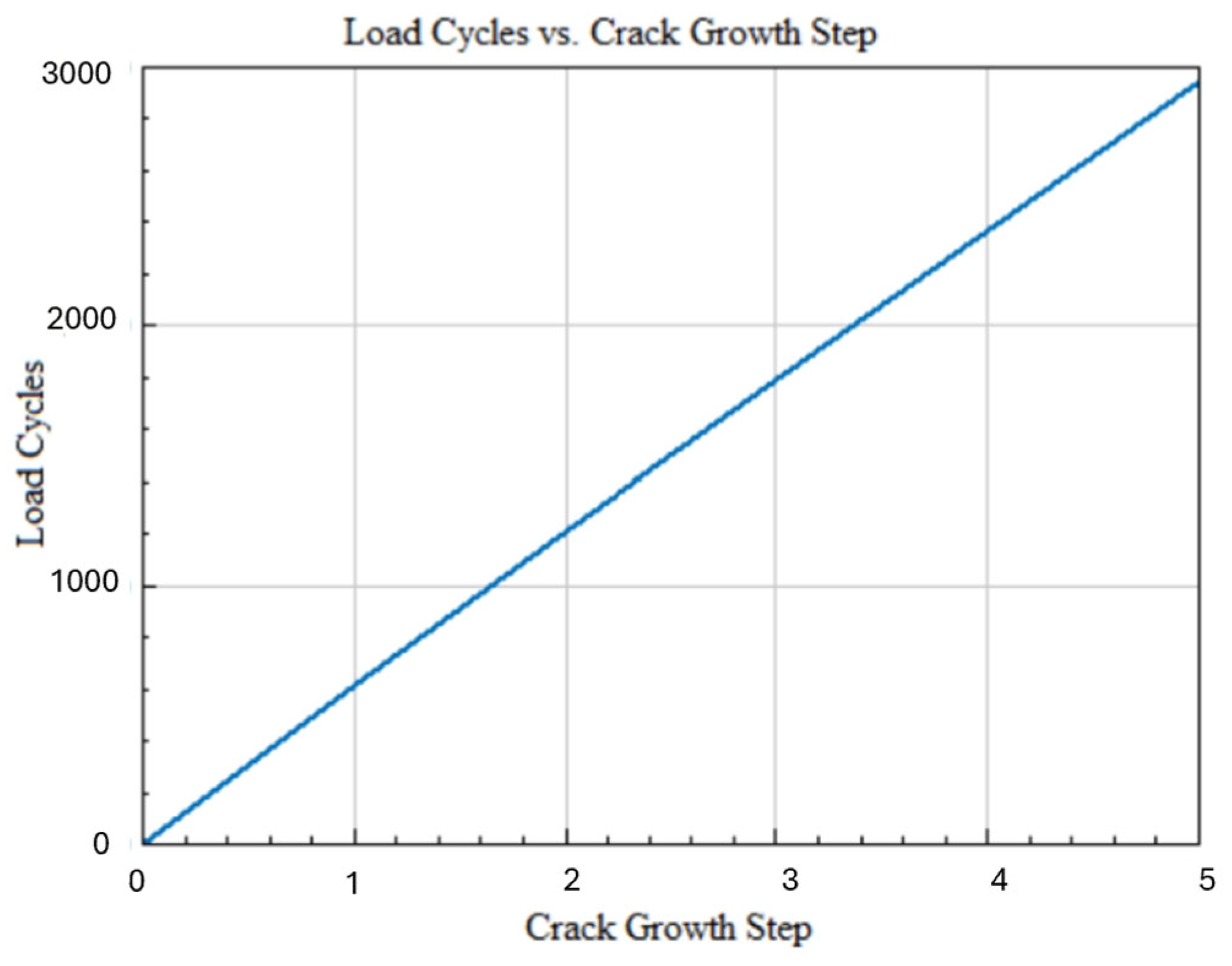
Figure 2. Divertor target body analysis workflow.
Engproc 131 00036 g002
Figure 3. Pressure due to the refrigerant system.
Engproc 131 00036 g003
Figure 4. Nodal temperatures [°C] applied in the thermal load case.
Engproc 131 00036 g004
Figure 5. Adopted materials and details of the IVT connections.
Engproc 131 00036 g005
Figure 6. Global boundary conditions details.
Engproc 131 00036 g006
Figure 7. Displacements [m] computed in the global model (pressure load case).
Engproc 131 00036 g007
Figure 8. Comparison between MPS [Pa] of the IVT in the global model (on the left) and submodel (on the right).
Engproc 131 00036 g008
Figure 9. Identification of the critical point in the IVT in terms of MPS [Pa] during the pressure load case.
Engproc 131 00036 g009
Figure 10. Critical crack sizes.
Engproc 131 00036 g010
Figure 11. Critical crack configuration for the pressure load case.
Engproc 131 00036 g011
Figure 12. 0° Crack detail and corresponding Von Mises stress state [Pa].
Engproc 131 00036 g012
Figure 13. 45° Crack detail and corresponding Von Mises stress state [Pa].
Engproc 131 00036 g013
Figure 14. 90° Crack detail and corresponding Von Mises stress state [Pa].
Engproc 131 00036 g014
Figure 15. KI results by the three cracks configurations.
Engproc 131 00036 g015
Figure 16. KII results by the three cracks configurations.
Engproc 131 00036 g016
Figure 17. KIII results by the three cracks configurations.
Engproc 131 00036 g017
Figure 18. Nodal temperatures [°C] applied to the divertor during the thermal load case.
Engproc 131 00036 g018
Figure 19. Displacement magnitudes [m] computed in the global model (thermal load case).
Engproc 131 00036 g019
Figure 20. MPS [Pa] computed in the IVT submodel (thermal load case).
Engproc 131 00036 g020
Figure 21. Position of the critical crack.
Engproc 131 00036 g021
Figure 22. KI computed in the critical point for the “0° crack”.
Engproc 131 00036 g022
Figure 23. Crack growth analyzed.
Engproc 131 00036 g023
Figure 24. KI related to the 90° crack growth (critical configuration).
Engproc 131 00036 g024
Figure 25. KII related to the 90° crack growth (critical configuration).
Engproc 131 00036 g025
Figure 26. KIII related to the 90° crack growth (critical configuration).
Engproc 131 00036 g026
Figure 27. Peak values of KI along the middle crack front obtained from the crack growth.
Engproc 131 00036 g027
Figure 28. Detail of the Von Mises contour plot [Pa] for the critical configuration of the “pressure load case”.
Engproc 131 00036 g028
Figure 29. KI related to the 0° crack growth (critical configuration).
Engproc 131 00036 g029
Figure 30. KII related to the 0° crack growth (critical configuration).
Engproc 131 00036 g030
Figure 31. KIII related to the 0° crack growth (critical configuration).
Engproc 131 00036 g031
Figure 32. Peak values of KI along the crack front.
Engproc 131 00036 g032
Figure 33. Path corresponding to the normalized distance of 0.15 along the crack front.
Engproc 131 00036 g033
Figure 34. Paris’ law curves of AISI 316L for the pressure and thermal load case.
Engproc 131 00036 g034
Figure 35. Correlation between load cycles and crack growth steps (pressure load case).
Engproc 131 00036 g035
Figure 36. Correlation between load cycles and crack growth step (thermal load case).
Engproc 131 00036 g036
Table 1. Scheme of the loads applied in the two studied analyses.
LOAD CASEIVT PressureIVT Thermal Loads
Pressure5 MPaNo thermal loads
ThermalNo pressuresNodal temperatures extracted by [3]
Table 2. Coefficients of the Paris’ law related to the AISI 316L in the analyzed load cases.
R-RatioTemperature (°C)Load Case C   ( mm / ( cycle   ( MPa · mm 0.5 ) m ) m
020Pressure4.61 × 10−112.3
0150Thermal1.29 × 10−112.3
Disclaimer/Publisher’s Note: The statements, opinions and data contained in all publications are solely those of the individual author(s) and contributor(s) and not of MDPI and/or the editor(s). MDPI and/or the editor(s) disclaim responsibility for any injury to people or property resulting from any ideas, methods, instructions or products referred to in the content.