1. Introduction
Traditional settlements are complex spatial systems that require rigorous engineering evaluation to ensure structural and functional sustainability. As a conglomerate of both tangible and intangible cultural heritages, traditional settlements serve as the core attractions for regional cultural tourism. Their appeal stems from architectural complexes with typical socio-historical significance, historical residential areas embodying unique planning ideologies, and settlement landscapes that boast widely recognized aesthetic values [
1,
2].
Traditional architectures in Guangdong, Anhui, and Fujian provinces serve essential tourism elements and act as spatial carriers of local knowledge, such as Hakka culture, Huizhou culture, and Southern Fujian culture. They address tourists’ deep-seated demands for diverse cultural experiences. From an economic perspective, these iconic settlement elements constitute the original capital and brand identity for regional tourism development, playing an irreplaceable foundational role in initiating and sustaining the tourism economy.
To promote industrial integration and extend the tourism value chain, the travel elements of traditional settlements demonstrate strong interconnectivity and extensibility. These elements effectively drive the development of the entire tourism industry, encompassing food, accommodation, transportation, sightseeing, shopping, and entertainment, while fostering deep integration with agriculture, handicrafts, and cultural and creative industries. The significance of industrial integration lies in its capacity to facilitate innovation, advance industrial transformation and upgrading, enhance value-added potential, optimize industrial structures, strengthen market and corporate systems, and improve overall performance.
The promotion of cultural inheritance and protection alongside sustainable resource utilization is also important. The optimization and development of travel elements in traditional settlements provide essential financial support and sustained momentum for tourism growth, contributing to the preservation of these settlements. Tourism revenue can be allocated to the restoration of ancient buildings, infrastructure improvement, and environmental remediation. Moreover, as cultural activities generate economic benefits, residents’ willingness to protect traditional culture increases significantly. This approach safeguards the important resources underpinning the tourism economy, ensuring the long-term preservation and appreciation of tourist attractions. Consequently, it supports sustainable tourism development and prevents decline caused by resource degradation.
Using Geographic Information System (GIS), we model the spatial distribution and socioeconomic parameters of settlements in Meizhou City. By constructing a multi-criteria evaluation model, we quantify resource endowment across cultural and ecological dimensions, focusing on technical factors such as infrastructure resilience and economic vitality. The integration of spatial informatics allows for a transition from experience- to data-driven engineering management, providing a spatial decision-support framework for heritage conservation.
Accordingly, by employing the Architecture GIS (ArcGIS10.8.1) software and a geographic information system, Kernel density analysis was conducted to examine the spatial distribution of tourism elements in historic districts using point-of-interest (POI) data. The results showed that it is necessary to integrate the resources of traditional settlements in Meizhou City and formulate optimization strategies for tourism elements in Meizhou City.
2. Research Area and Characteristics
2.1. Research Area
The research area’s topography, characterized by mountainous and hilly terrain and the Han and Mei River systems, presents significant engineering constraints for infrastructure development. Meizhou serves as a critical transportation hub and spatial node at the junction of Fujian, Guangdong, and Jiangxi. Despite the high density of Hakka cultural assets, its development is limited by spatial constraints and resource distribution gaps. Understanding these geographic parameters is essential for engineering practical optimization plans for regional tourism.
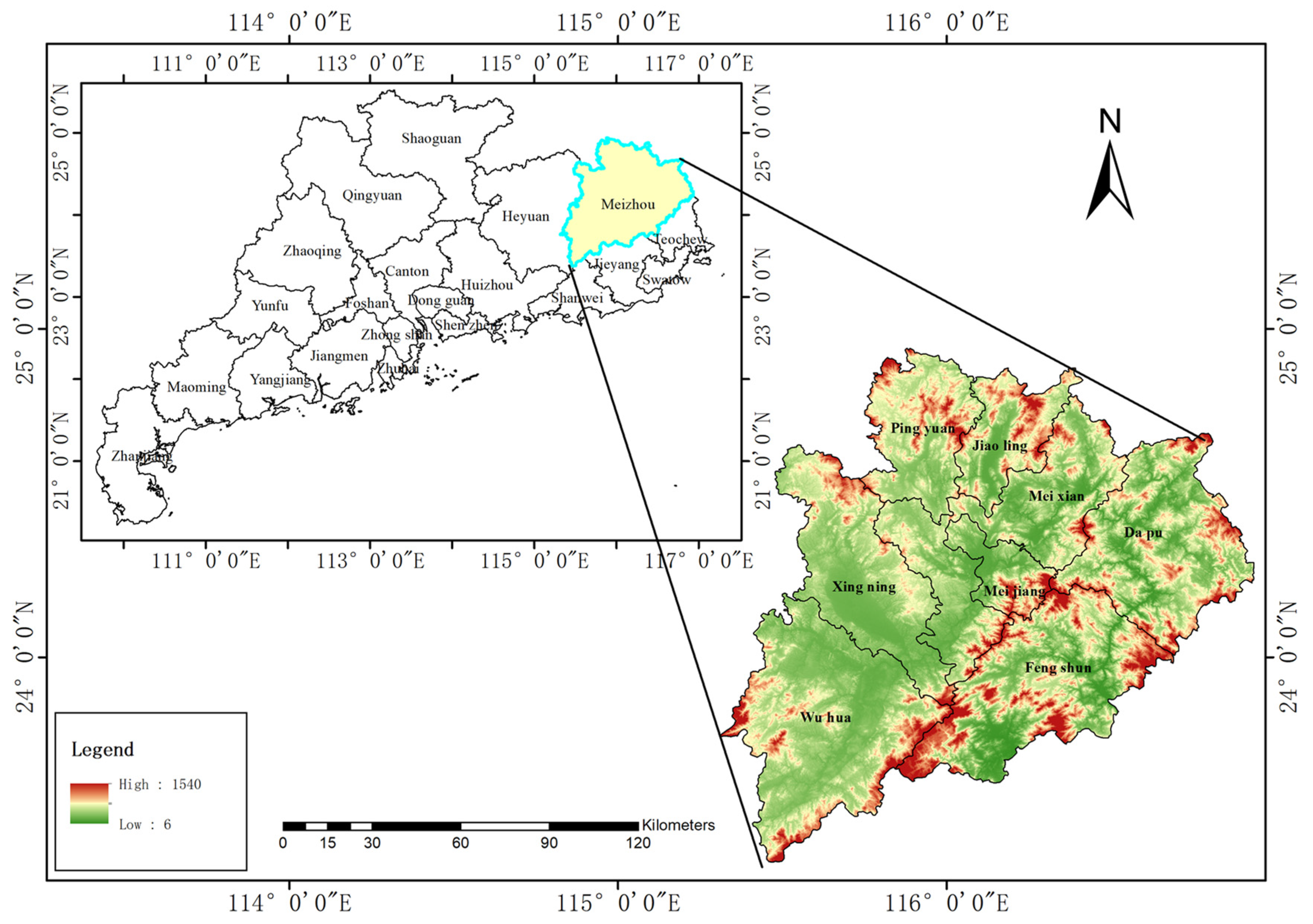
Meizhou is located in the northeast of Guangdong Province, bordering Longyan in Fujian to the east, Heyuan to the west, Jieyang and Shanwei to the south, and Ganzhou in Jiangxi to the north. It is a regional central city at the junction of Fujian, Guangdong, and Jiangxi provinces. The terrain is mainly mountainous and hilly, with rivers such as the Han River and Mei River running through the entire area. The climate is subtropical monsoon, with distinct seasons and abundant rainfall. This location makes Meizhou a transportation hub as well as an economic and cultural center in northeast Guangdong (
Figure 1).
2.2. Characteristics
Meizhou is the birthplace and core region of Hakka culture, boasting a millennium-long history of Hakka civilization. Since the Tang and Song dynasties, Han Chinese from the Central Plains have migrated southward to this area, gradually forming the unique Hakka ethnic subgroup. Meizhou has preserved an intact Hakka language, customs, and traditions, earning it the title of “The Living Fossil of Hakka Culture.” Meizhou, with its unique culture, scarce resources, integration of natural and human elements, and advantages as a hometown of overseas Chinese, has significant competitiveness in developing traditional settlement tourism resources. However, the development of traditional settlement tourism in Meizhou faces multiple constraints. Therefore, we investigated the tourism resources across the entire Meizhou City, providing practical optimization plans for the development of its tourism resources to position Meizhou as a key destination for Hakka cultural tourism both nationally and globally.
3. Research Methods
3.1. Literature Review
A literature review was conducted to identify parameters essential for constructing a scientific evaluation system. This review meticulously selected key indicators for assessing traditional settlement resources. The examined literature includes studies on cultural heritage tourism corridors [
3], intangible cultural heritage corridors, and cultural routes [
4,
5,
6,
7,
8], which collectively emphasize the critical role of spatial tools such as GIS, remote sensing, and spatial analysis models (e.g., minimum cumulative resistance model, Kernel density estimation (KDE)) in mapping and analyzing the distribution of heritage sites. Integrating spatial technologies with socioeconomic and cultural factors is imperative for achieving sustainable tourism development and heritage conservation [
9,
10]. Furthermore, the findings highlight the importance of community participation and stakeholder engagement in this process. Overall, the analysis underscores the need for a comprehensive framework that leverages spatial information technology to support the sustainable management of traditional settlement resources.
3.2. Kernel Density Estimation (KDE)
We focused on traditional settlements in Meizhou City, where resource distribution exhibits significant spatial heterogeneity. The spatial engineering method used in this study involves KDE to model the spatial probability density of settlement resources. The GIS framework used in this study facilitates multi-source data fusion, integrating point-of-interest (POI) data with line data (transportation networks) and polygon data (administrative boundaries). KDE is used to construct a continuous density surface to quantify aggregation intensity, using the kernel function and continuous density surfaces using point of interest (POI) data, enabling precise quantification of aggregation intensity and spatial patterns of settlement resources (e.g., Hakka round-dragon houses and historic villages) [
11]. For example, the high-density clustering of traditional settlement resources in the Meijiang and Meixian Districts, which are administrative and transportation hubs, can be visually represented through KDE maps, providing a scientific basis for optimized resource allocation.
KDE also facilitates multi-dimensional data fusion by integrating heterogeneous datasets relevant to traditional settlement resource assessment, including architectural characteristics, socioeconomic conditions, and other multi-source information. It accommodates point data (e.g., POIs), line data (e.g., transportation networks), and polygon data (e.g., administrative boundaries). By overlaying density surfaces from different data layers, KDE enables comprehensive analysis across spatial, cultural, and economic dimensions. For instance, incorporating road distribution data reveals the impact of transportation accessibility on settlement resource distribution, such as significantly higher settlement density along the Meida Expressway compared to remote mountainous areas.
As a nonparametric statistical method, KDE estimates the probability density function of an underlying continuous random variable from finite data samples (discrete points). Its core principle involves representing each data point with a smoothed kernel function. By superimposing and normalizing all kernel functions, KDE generates a smooth, continuous probability distribution curve that visually depicts data distribution characteristics (e.g., concentration zones, multimodality) using Equation (1).
Here, is the estimated probability density at point , K is the kernel function (e.g., Gaussian kernel), a non-negative function with an integral of 1 that determines the shape of each data point’s influence range, h is the bandwidth, the critical parameter controlling curve smoothness. (Larger h values yield smoother curves, while smaller h values produce more rugged curves), n is the sample size (total number of data points), and is the distance between the estimation point and the sample point .
KDE demonstrates high applicability and innovation in this study. Through spatial visualization, multi-source data fusion, and dynamic analysis capabilities, it effectively reveals the distribution patterns and developmental trends of traditional settlement resources in Meizhou City. Furthermore, by integrating nonparametric statistics, multi-criteria evaluation, and interdisciplinary methodologies, KDE promotes a paradigm shift in cultural heritage conservation from “experience-driven” to “data-driven” approaches, offering methodological references for similar studies.
4. Results and Discussions
The spatial analysis reveals that the distribution of resources in Meizhou is mainly governed by engineering dependencies on major transportation networks. Public facilities, such as parking lots and restrooms, display high-density clusters for urban cores, forming a belt-like distribution along significant engineering corridors. Transportation facilities, including railway stations and expressway toll points, operate as spatial hubs that are interconnected by national highways, thereby facilitating seamless multi-modal transitions across the region. In addition, the concentration of public security and fire stations in high-density areas ensures rapid emergency response capabilities. Such a distribution is critical for civil engineering efforts related to fire prevention, especially in the protection of ancient timber-frame architectural structures.
4.1. KDE for Catering Facilities
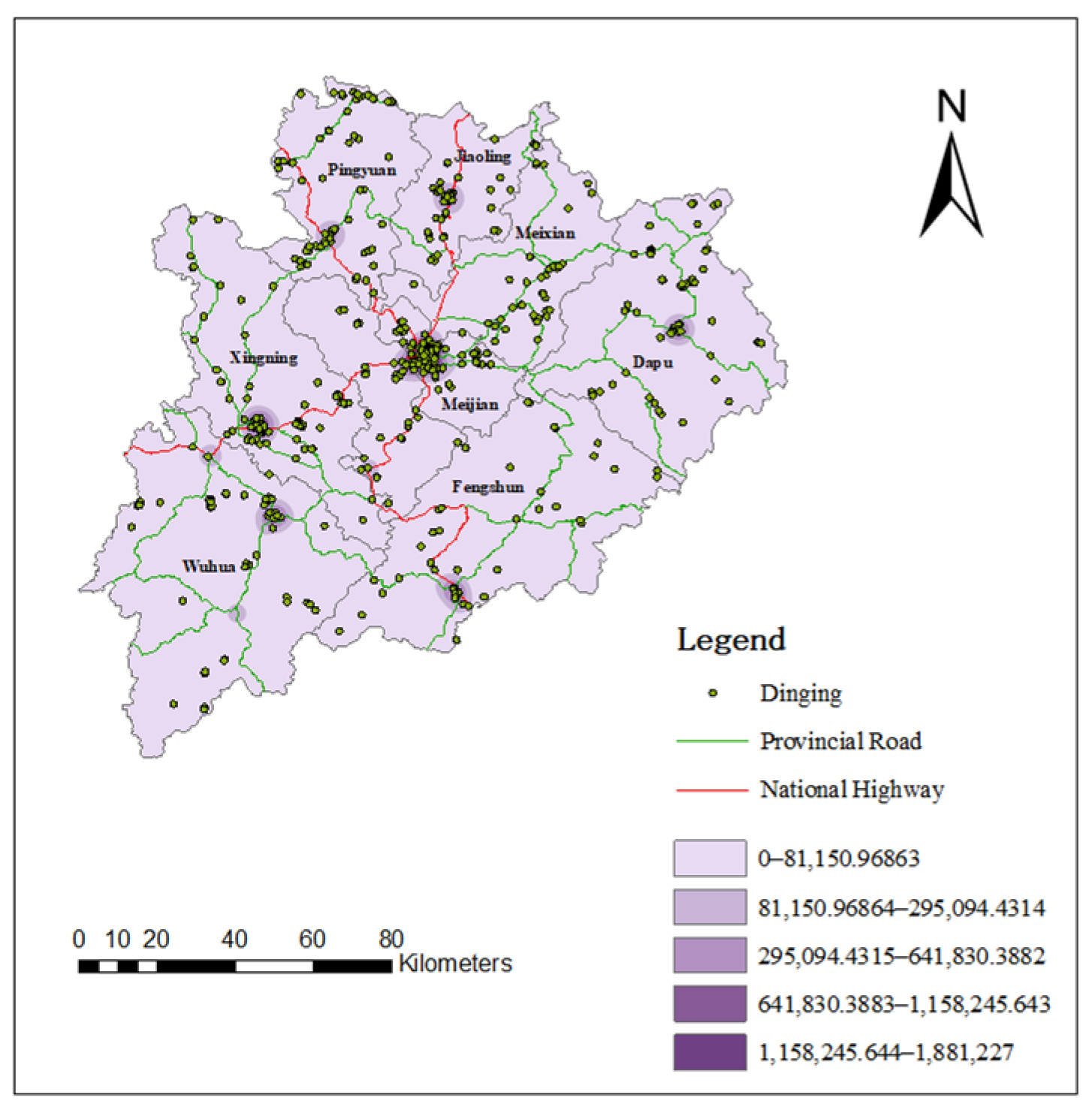
The catering establishment locations are closely associated with roads (provincial highways and national highways). Catering establishments are predominantly distributed along provincial and national highways, particularly with relatively high density along and in the vicinity of national highways (
Figure 2). The reasons for this phenomenon are identified as follows.
As a municipal district of Meizhou City and the seat of the municipal government, Meijiang District has remained administratively unchanged since the establishment of the prefecture (AD 971), accumulating a profound cultural heritage and rich commercial traditions.
- 2.
Absolute center of population and consumption
As the main urban area of Meizhou City, Meijiang District is the most densely populated region in the city. The combination of a large resident population and a high volume of floating population jointly creates a strong and stable demand for daily consumption. Whether it is fast food and simple meals on weekdays or family dinners and gatherings with friends during weekends and holidays, all of these provide an ample customer base for the catering industry.
- 3.
Absolute advantage in transportation and hub position
Meijiang District possesses the core transportation infrastructure of Meizhou City. Both Meizhou Railway Station and Meizhou West Railway Station are located within the district or in adjacent areas, serving as the city’s railway passenger transport centers. Meanwhile, Meijiang District has multiple expressway entrances and exits that connect the entire district, making it a distribution hub for self-driving tourists and freight across the country. This enables the catering market here to capture the maximum amount of external consumer spending.
Road distribution, population flow, and consumption demand are significant factors influencing the catering distribution in Meizhou City. The central city of Meizhou, Meijiang District, has the highest population flow in the city and is the first stop for incoming tourists. The abundance of food establishments ensures that tourists can quickly find the authentic local flavors of Meizhou, significantly enhancing their travel experience in the city.
4.2. KDE for Public Facilities
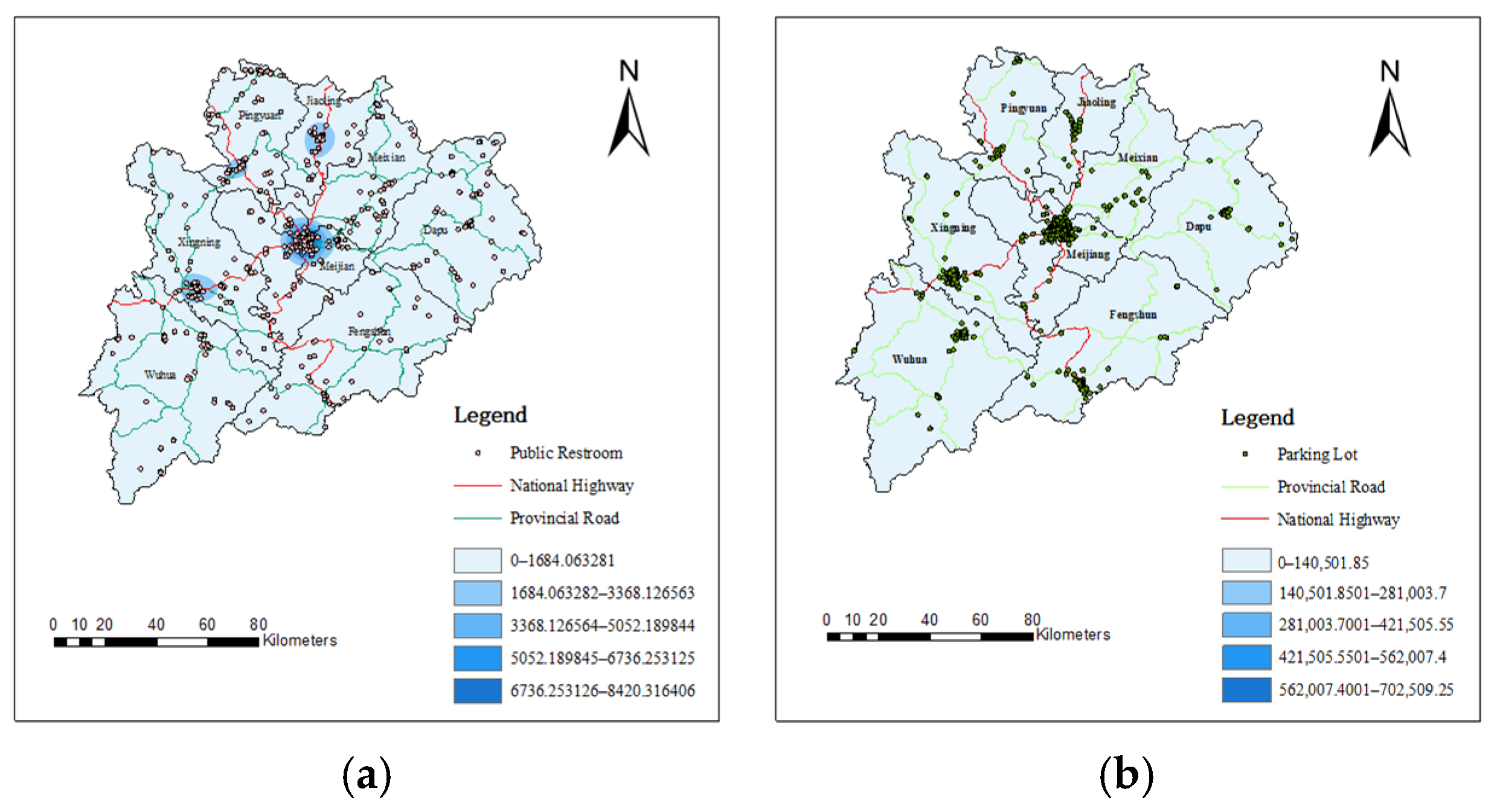
The distribution characteristics of public transportation facilities, such as public restrooms and parking lots in Meizhou City, exhibit a pattern of high density in the central area and low density in the peripheral regions. Moreover, these facilities are predominantly arranged along roads and also develop supporting resources around nearby scenic areas. As depicted in the figure, the urban area of Meizhou, especially Meijiang District, represents the region with the highest density of public restrooms and parking lots. In addition, public restrooms and parking lots are distributed in a belt-like pattern along major transportation arteries and tourist corridors (
Figure 3). Public service facilities in Meizhou City, such as public restrooms and public parking lots, are mainly set up along the city’s main roads. These roads are the essential routes for tourists to reach their travel destinations. Deploying parking lots and restrooms along the roads makes it convenient for tourists to park their vehicles and address personal needs, meeting the requirements of self-drive tourists and ensuring a satisfactory service experience during their travels.
4.3. KDE for Transport Facilities
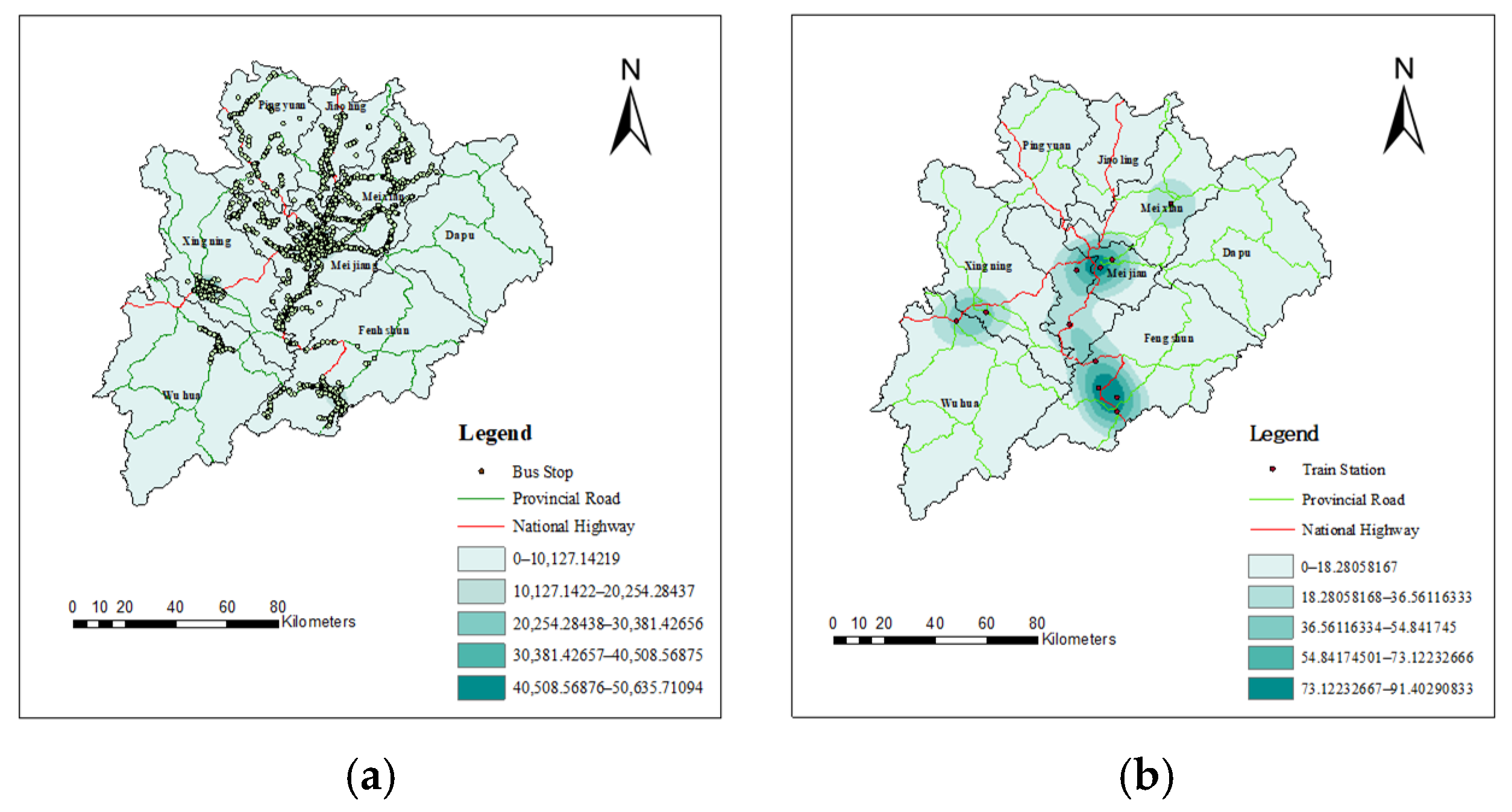
The data points of expressway toll stations and railway stations are closely connected to national highways, primarily concentrated along the national highways and their surrounding areas. As a vital transportation artery, national highways can generate a substantial flow of people to railway stations, enabling passengers to quickly arrive at or depart from the railway stations via national highways and facilitating the seamless connection of different transportation modes (
Figure 4). In addition, the distribution density and service scope of bus stops highly align with population density and urban functions. The highly core area is located in the urban district of Meizhou, where bus stops are extremely densely distributed, forming a relatively well-developed network of routes. This network can basically meet the daily travel needs of citizens, such as commuting, going to school, and seeking medical care.
The distribution of public transportation facilities in Meizhou City is the result of the combined effects of its geographical environment, economic development stage, and urban planning. It has successfully transformed the central urban area into an efficient transportation hub. However, it has not yet achieved better radiation and service provision for the vast county areas and rural regions, failing to establish a truly close connection between urban and rural public transportation.
4.4. KDE for Scenic Spots and Government Institutions
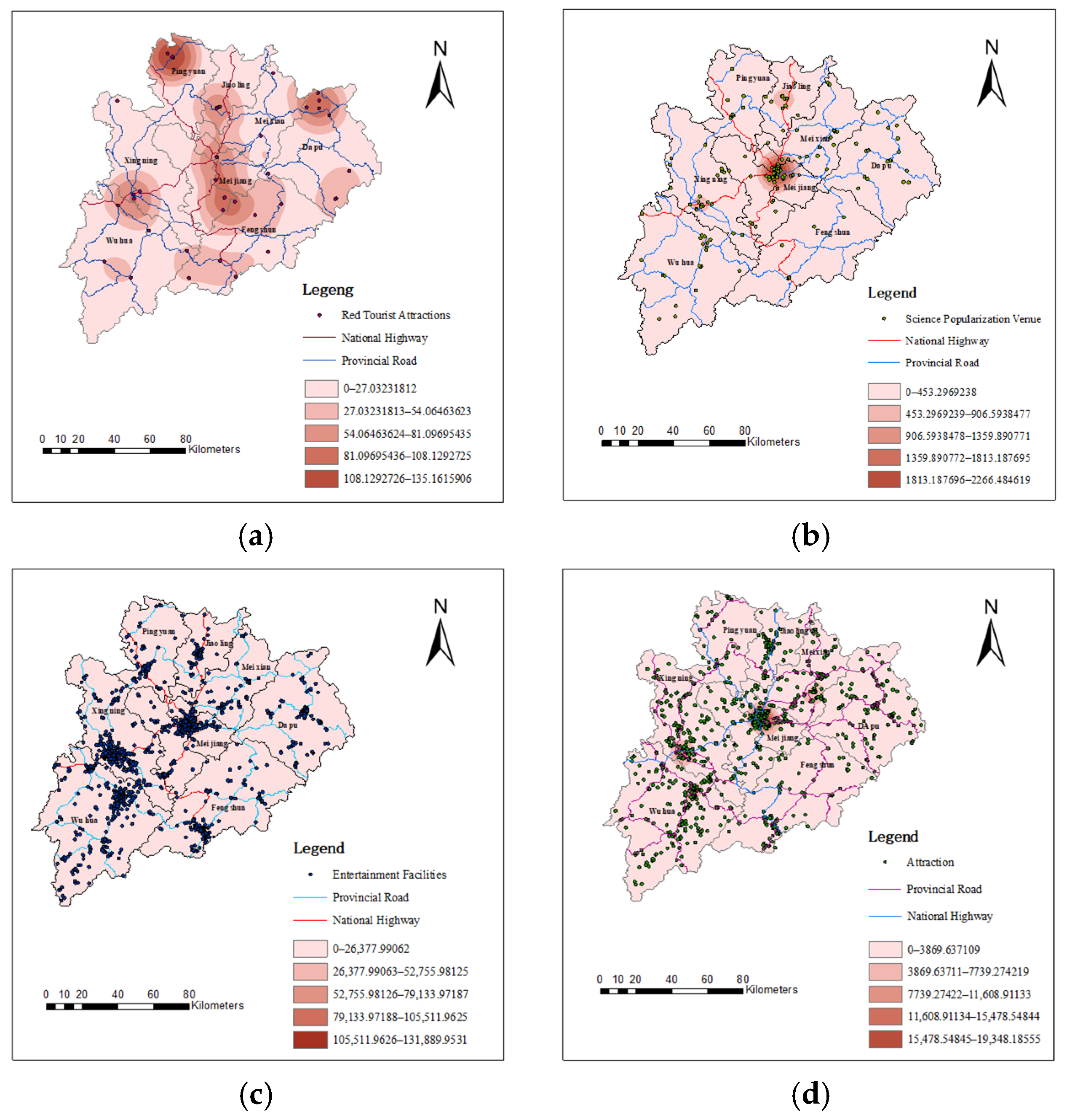
Revolutionary heritage sites are mainly distributed along the routes associated with the War of Resistance Against Japan, predominantly located in five regions: the gateway area to the Central Soviet Area in the northwest region, which served as the core activity zone of the Fourth Army of the Chinese Workers’ and Peasants’ Revolutionary Army, the hub of the Central Red Communication Line in the southeast region, which connects to the Western Fujian Soviet Area, an important area for armed struggles during the Dongjiang Revolution in the southwest region, the central region, which encompasses the former residences of revolutionary leaders and functions as the center of the Anti-Japanese National Salvation Movement, and the revolutionary base areas situated in the mountainous region.
Science popularization venues, tourist attractions, and recreational spots are predominantly concentrated in areas with relatively convenient transportation, showing a close connection with national highways and provincial highways. The flow of people brought by national and provincial highways can attract more visitors to these venues, while also facilitating easy access for citizens and tourists to visit and enjoy themselves (
Figure 5).
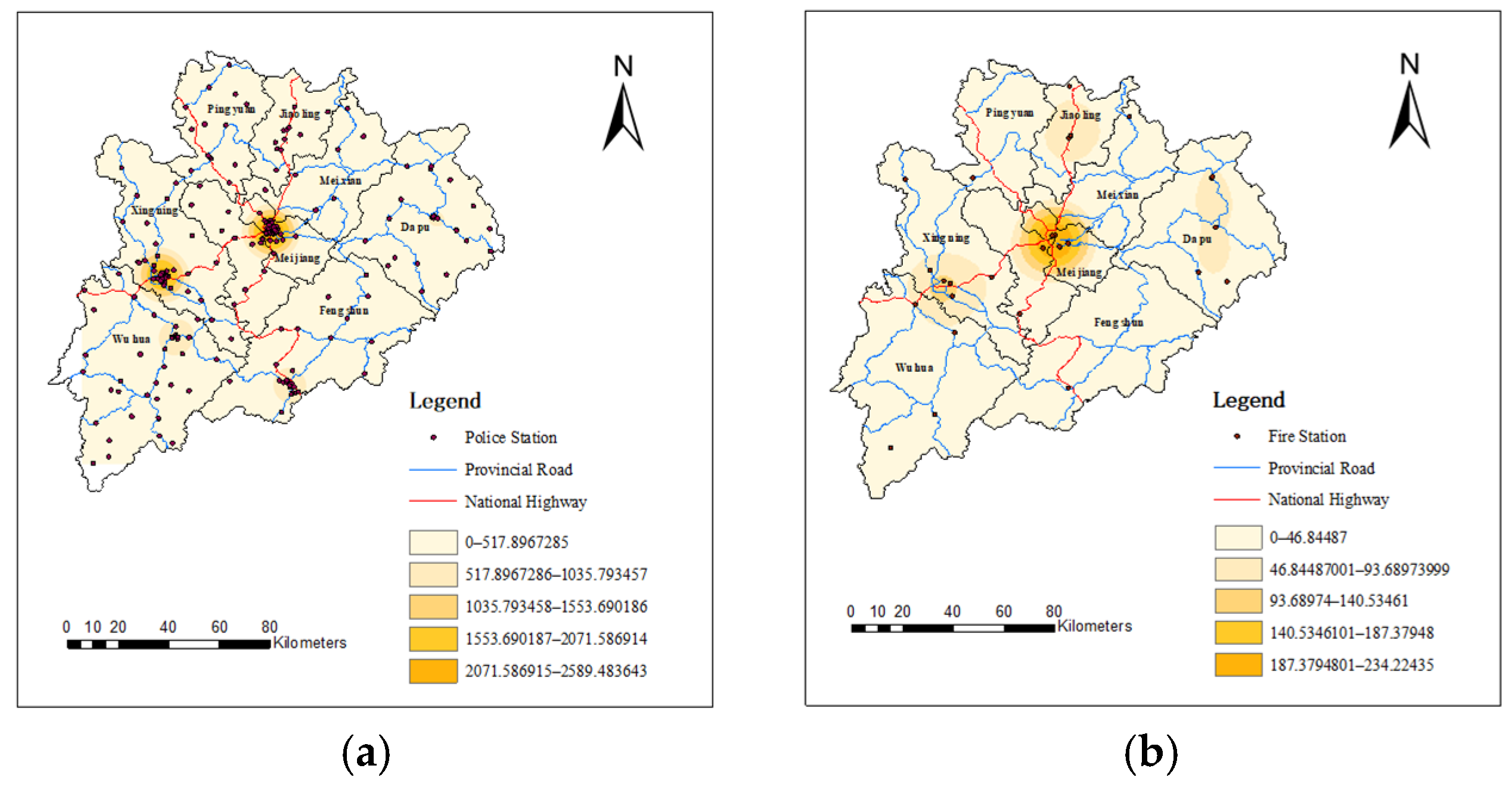
Government institutions, such as the Meizhou Municipal Government, Meijiang District Government, Meizhou Municipal Public Security Bureau, Fire Brigade, along with their primary subordinate detachments and stations, are highly concentrated in the central urban area and transportation hubs of Meizhou City (
Figure 6). The principal relationship between tourist attractions and government institutions can be elucidated as follows: Such a distribution layout guarantees the delivery of the most prompt and robust public safety responses in regions characterized by the highest population density, the most intense activity levels, and the utmost cultural preservation significance. The existence of public security bureaus and fire stations directly ensures order and safety (e.g., maintaining public order, traffic management) within core scenic areas and addresses emergency disaster relief requirements (e.g., fire prevention for ancient architectural structures).
4.5. KDE for Medical Facilities
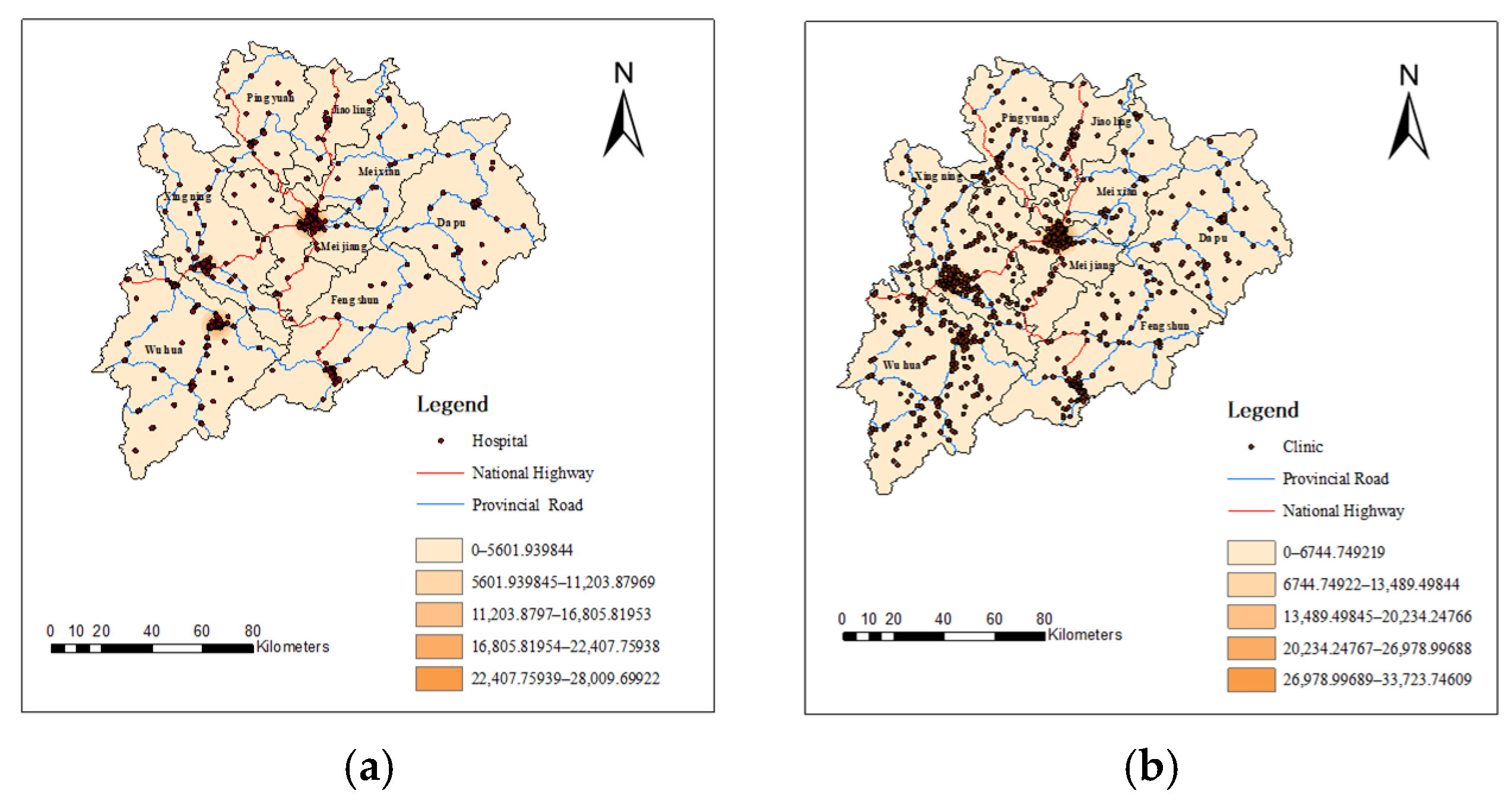
The distribution of hospitals and clinics is closely linked to national and provincial highways. In Meijiang District, hospitals are predominantly situated along these major roadways. This is because roads serve as crucial conduits for personnel movement. Positioning hospitals along them enables patients to reach medical facilities more swiftly via convenient transportation, while also providing timely medical support to tourists who may fall ill during their travels. Additionally, the distribution of clinic numbers in Meizhou City is primarily correlated with the number of local villages and towns. The main reason is that Meizhou City is characterized by a hilly and mountainous terrain, where a clinic located in a central village may have a service radius encompassing numerous natural villages. However, the actual geographical distances between these villages are often substantial. Consequently, the number of rural clinics increases correspondingly in areas with a higher concentration of villages (
Figure 7).
The public medical facilities in Meizhou City are predominantly arranged along major roads such as national and provincial highways, while smaller clinics, including rural health service stations, are established based on the needs of local villages and towns. This distribution pattern ensures that public medical facilities in Meizhou City are virtually ubiquitous across the entire municipality, facilitating the ability to meet the occasional medical needs of external tourists.
4.6. KDE for Accommodation Services
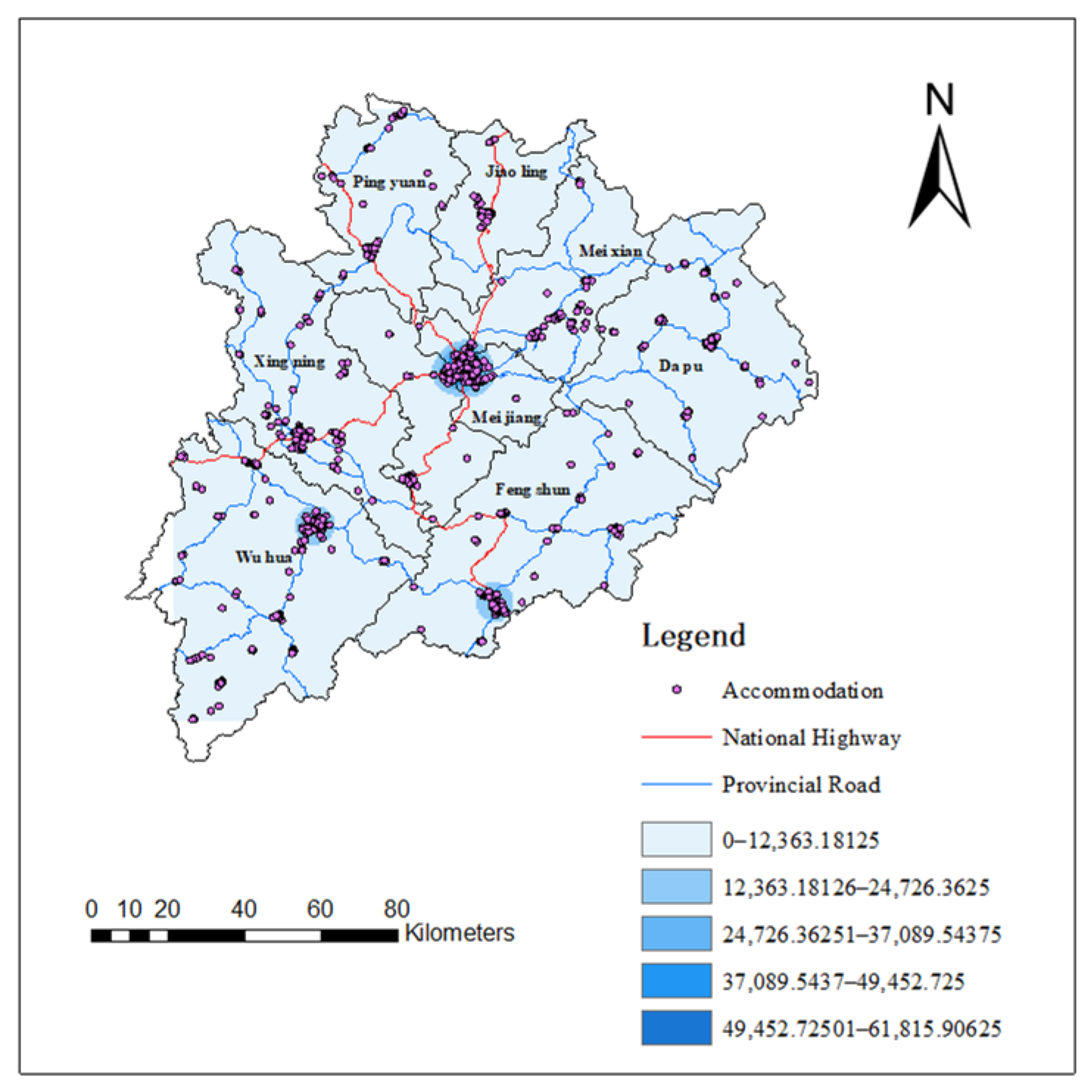
The data points representing accommodation services exhibit a notably close association with national and provincial highways. Accommodation establishments predominantly cluster along these major roadways, particularly at their intersections and along the stretches, where the density of lodging options is comparatively higher (
Figure 8). This is attributed to the fact that roads constitute the vital transportation arteries for tourists during their travels. By situating accommodation points along these routes, convenient lodging choices are provided for tourists, enabling them to readily locate suitable places to stay amidst their journeys and thereby satisfying their accommodation needs during travel. The accommodation distribution pattern in Meizhou City is characterized by a concentration in core areas while extending across the entire Meizhou region. For external tourists, this creates an ideal travel environment that is both convenient and efficient, as well as engaging, safe, and immersive. It effectively integrates the convenience of modern service industries with the unique allure of Hakka traditional culture, serving as a crucial infrastructural underpinning for Meizhou’s status as an exemplary tourist city.
5. Future Development
The travel elements and their distribution patterns in Meizhou City in Guangdong Province, known as the “Hakka Capital of the World,” were analyzed. The findings showed that it is required to integrate the resources of traditional settlements in Meizhou City, optimize its travel elements, and provide feasible recommendations for the protection and development of cultural heritage and other aspects in the city. As the “Hakka Capital of the World” and the “Hometown of Football,” Meizhou City plays a pivotal role in the development of tourism in Guangdong Province and has achieved notable accomplishments through years of effort. However, as a tourism resource-based city, significant disparities persist among its various tourist regions in terms of tourism resources, transportation conditions, and public services. Historical shortcomings in location and transportation infrastructure, delays in product development, weak brand marketing, and insufficient depth in industrial integration are key factors contributing to the slow economic development of tourism in Meizhou City, despite its abundant tourism resources. To realize the economic growth of tourism in Meizhou City, it is imperative to first optimize and adjust the aforementioned travel elements.
5.1. Thematic Positioning and Differentiated Development
Within the broader context of cultural tourism integration, differentiated development represents a critical issue for the tourism economy of Meizhou City. Clarifying distinct thematic positioning for each traditional settlement is essential to reducing homogeneous competition and strengthening market appeal. For example, Qiaoxi Village (Meixian District) can be positioned as the “Hakka Paradise · Landscape Elegance,” emphasizing its integration with natural landscapes. Baihou Town (Dabu County) may highlight its identity as the “Premier Town of Hakka Literati Culture,” drawing upon historical figures such as the “Three Literati from One Family” to enrich cultural narratives. Chashan Village (Meixian District) can be developed as the “Museum Corridor of Hakka Residential Architecture,” systematically presenting residential architectural styles across different historical periods. Establishing distinctive identities and cultivating a “thousand faces of villages” framework provides a structured approach to enhancing tourism development in Meizhou City.
5.2. Cultural Tourism Industry Integration
Closer integration of culture and tourism is essential to enrich tourism experiences with cultural content while simultaneously showcasing and disseminating culture through tourism. Developing new models for integrated cultural tourism development and establishing a paradigm of deep integration constitute both an objective requirement for achieving high-quality, synergistic growth and a practical necessity for advancing the modernization of this integration [
6]. The deep integration of traditional settlement tourism with industries such as agriculture, handicrafts, elderly care, and educational tourism contributes to the construction of a comprehensive industrial chain encompassing catering, accommodation, transportation, sightseeing, shopping, and entertainment. This approach enables benefits to extend across all segments of the chain. Through cultural empowerment, tourism resources are transformed into multi-industry competitive advantages, the industrial chain is extended, employment opportunities for residents are expanded, quality of life is enhanced, and household incomes in traditional settlements are increased.
5.3. Constructing Hakka Cultural Heritage Ecological Corridors
“The ‘Tourism Corridor’ as a new concept first appeared in Chinese government documents in 2016 and has attracted increasing attention from scholars in recent years. Research on the concept, composition, classification, core, framework construction, and practical significance of tourism corridors provides theoretical and methodological references for large-scale linear tourism development [
5,
6,
7,
8,
12]. Tourism corridors need to achieve a balance between protection and utilization by centering on collections of distinctive cultural resources as primary attractions. They must integrate elements such as products, interpretation, green spaces, scenic sites, and transportation, while connecting nodes, routes, and regions to form large-scale, comprehensive tourist destinations that combine cultural, economic, and natural dimensions. Main transportation routes need to serve as links to connect dispersed traditional settlements. Themed self-driving and cycling routes are carefully designed, with central towns along these routes functioning as service hubs that stimulate the development of villages throughout the corridor.
5.4. Digital Empowerment and Smart Transformation
The digital economy provides new momentum for high-quality development, driving the modernization of agriculture and rural areas while fostering innovation in tourism products and formats [
13]. In traditional settlements, digitalization introduces engineering-based strategies that enhance both cultural preservation and tourism management. Methods for such digitalization include the use of virtual and augmented reality (VR/AR) technologies to reconstruct historical scenes of ancient villages and create immersive online tour projects; the deployment of intelligent service systems such as automated guidance, online reservations, and contactless payments; and the adoption of new media marketing through short videos and live streaming to expand visibility and engage younger audiences. Such methods contribute to enriching tourist experiences, improving service efficiency, and strengthening promotional outreach. They also provide engineering solutions to persistent challenges faced by traditional villages, including geographic remoteness, limited visibility, and low management efficiency.
To modernize traditional settlements, digital twin empowerment needs to be applied. VR/AR technologies can be used to reconstruct historical settlement environments and to establish a dynamic digital heritage database for conservation and tourism planning. Smart infrastructure, including engineering intelligent guidance systems, online reservation frameworks, and automated environmental monitoring, must be adopted to ensure tourism activities remain within ecological carrying capacities. By implementing real-time monitoring of ecological conditions and architectural integrity, sustainable infrastructure management can be executed to safeguard vulnerable heritage structures through resilience engineering.
5.5. Sustainable and Ecological Development
For Meizhou City to develop its economy, sustainable and ecological development must be prioritized as a constraint and an opportunity. It does not imply abandoning development or slowing it down, but instead demands a paradigm shift toward a new path characterized by higher quality, greater efficiency, more pronounced advantages, and enhanced sustainability. Economic development in Meizhou must be achieved through conservation.
All development activities must comply with the Law of the People’s Republic of China on the Protection of Cultural Relics and the principle of minimal intervention to ensure the authenticity, integrity, and sustainability of historic settlements. It is necessary to collaborate with vocational institutions to train local professionals in areas such as historic building restoration, homestay operation, tour guiding, and intangible cultural heritage preservation, providing human capital support for sustainable development. It is also required to implement visitor quotas and conduct real-time monitoring of the ecological environment and architectural integrity of historic settlements to ensure tourism activities remain within environmental carrying capacity.
6. Conclusions
The spatial distribution of tourism elements in Meizhou City is fundamentally shaped by the topological efficiency of primary transportation arteries. Using ArcGIS engineering tools, POI data, and 2020 road spatial datasets, we conducted a quantitative structural analysis of settlement patterns. By applying KDE, the assessment advanced from qualitative observation to objective spatial modeling, highlighting the engineering mechanisms that govern tourism resource allocation.
Based on the results of this study, the following conclusions, with implications for engineering methodology, can be drawn.
Spatial gradient analysis: Tourism elements display a declining density gradient from the urban cores of the Meijiang and Meixian Districts, extending outward in a linear distribution along major infrastructure corridors.
Nodal correlation: Transportation accessibility strongly correlates with resource utilization, identifying road connectivity as the primary determinant of visitor volume and tourism element development.
Systemic redundancy: Public safety and emergency facilities, including police and fire stations, are strategically concentrated at high-intensity spatial nodes to ensure rapid response and structural preservation, particularly for historical architectural complexes.
Future efforts in engineering must be dedicated to integrating real-time spatial information systems and social media data to address current limitations in data timeliness. The application of digital twin technology and automated flow monitoring enables dynamic evaluation of how infrastructure improvements affect heritage resilience. This data-driven method establishes a scalable engineering strategy for the sustainable transformation of traditional settlements in Meizhou and comparable regions worldwide.
Tourism elements in Meizhou are predominantly concentrated in the Meijiang and Meixian Districts, with density declining outward from the urban core. Their linear distribution along transportation corridors underscores their dependency on traffic accessibility. Revolutionary heritage sites further illustrate this spatial clustering, as landmarks such as the former headquarters of the Sanheba Battle (part of the Nanchang Uprising), early organizational sites of the Meixian branch of the Communist Party of China, and activity sites of Comrade Zhou Enlai are all located in Meixian District. This reflects Meicheng’s historical role as the economic, political, and cultural center of the region.
The positive correlation between tourism elements and transportation networks highlights road accessibility as a critical factor influencing both distribution and visitor flows. Enhancing connectivity, therefore, is a key engineering factor for optimizing tourism resource utilization.
In further studies, it is necessary to integrate open-source mapping platforms and social media data to maintain updated POI and road databases. With advances in digital technology, spatial information systems can monitor tourist flows in real time, providing engineering-based evaluations of how infrastructure upgrades impact tourism development. Such approaches offer systematic tools for sustainable tourism management in Meizhou and similar regions globally.
Author Contributions
Conceptualization, S.H. and W.-L.H., methodology, S.H., software, S.H., validation, T.Y. and T.Z., formal analysis, H.L., investigation, T.Z., resources, W.L., data curation, S.H., writing—original draft preparation, S.H., writing—review and editing, W.-L.H., visualization, H.L., supervision, T.Y., project administration, W.L., funding acquisition, T.Z. All authors have read and agreed to the published version of the manuscript.
Funding
All authors gratefully acknowledge the financial support received from the 2025 College Student Innovation and Entrepreneurship Training Program of Jiaying University, grant number X202510582160, and Guangdong Science and Technology, grant number 2024A0505050031.
Institutional Review Board Statement
Not applicable.
Informed Consent Statement
Not applicable.
Data Availability Statement
The data that support the findings of this study are available on request from the corresponding author.
Acknowledgments
All authors appreciate the IEEE Conference for carefully reviewing my article.
Conflicts of Interest
The authors declare no conflicts of interest.
References
- Mu, Q.; Aimar, F. How Are Historical Villages Changed? A Systematic Literature Review on European and Chinese Cultural Heritage Preservation Practices in Rural Areas. Land 2022, 11, 982. [Google Scholar] [CrossRef]
- Dong, F.; Li, Y. How does industrial convergence affect regional high-quality development? Evidence from China. Asia Pac. Econ. 2024, 29, 1650–1683. [Google Scholar] [CrossRef]
- Lin, X.; Shen, Z.; Teng, X.; Mao, Q. Cultural Routes as Cultural Tourism Products for Heritage Conservation and Regional Development: A Systematic Review. Heritage 2024, 7, 2399–2425. [Google Scholar] [CrossRef]
- Liu, Y.; Qiao, J.; Xiao, J.; Han, D.; Pan, T. Evaluation of the effectiveness of rural revitalization and an improvement path: A typical old revolutionary cultural area as an example. Int. J. Environ. Res. Public Health 2022, 19, 13494. [Google Scholar] [CrossRef] [PubMed]
- Shishmanova, M.V. Cultural Tourism in Cultural Corridors, Itineraries, Areas and Cores Networked. Procedia—Soc. Behav. Sci. 2015, 188, 246–254. [Google Scholar] [CrossRef]
- Zhang, S.; Liu, J.; Pei, T.; Chan, C.S.; Wang, M.; Meng, B. Tourism value assessment of linear cultural heritage: The case of the Beijing–Hangzhou Grand Canal in China. Econ. Geogr. 2025, 45, 247–254. [Google Scholar] [CrossRef]
- Zhang, T.; Yang, Y.; Fan, X.; Ou, S. Corridors Construction and Development Strategies for Intangible Cultural Heritage: A Study about the Yangtze River Economic Belt. Sustainability 2023, 15, 13449. [Google Scholar] [CrossRef]
- Huang, Y.; Shen, S.; Hu, W.; Li, Y.; Li, G. Construction of Cultural Heritage Tourism Corridor for the Dissemination of Historical Culture: A Case Study of Typical Mountainous Multi-Ethnic Area in China. Land 2023, 12, 138. [Google Scholar] [CrossRef]
- Zhen, S.; Zhang, J.; Zhang, Z.; Zhao, J. Identifying the density of grassland fire points with KDE based on spatial distribution characteristics. Open Geosci. 2021, 13, 796–806. [Google Scholar] [CrossRef]
- Zhao, M.; Tang, G.; Shi, W.; Liu, Y. A GIS-based research on the distribution of rural settlements in Yulin, northern Shaanxi. Geogr. Sci. 2002, 12, 171–176. [Google Scholar] [CrossRef]
- Chen, Y.-C. A tutorial on KDE and recent advances. Biostat. Epidemiol. 2017, 1, 161–187. [Google Scholar] [CrossRef]
- Demonja, D. Cultural tourism in Croatia after the implementation of the strategy of development of cultural tourism. Int. Sci. J. —Turiz. 2013, 17, 1–17. [Google Scholar] [CrossRef]
- Xie, J.L.; Yang, Y.J.; Chen, J.L. Mechanisms of Digital Economy Empowering High-Quality Development in Manufacturing: A Case Study of Hebei Province, a Traditional Manufacturing Powerhouse in China. Organ. Technol. Entrep. 2023, 1, 47–57. [Google Scholar] [CrossRef]
| Disclaimer/Publisher’s Note: The statements, opinions and data contained in all publications are solely those of the individual author(s) and contributor(s) and not of MDPI and/or the editor(s). MDPI and/or the editor(s) disclaim responsibility for any injury to people or property resulting from any ideas, methods, instructions or products referred to in the content. |